

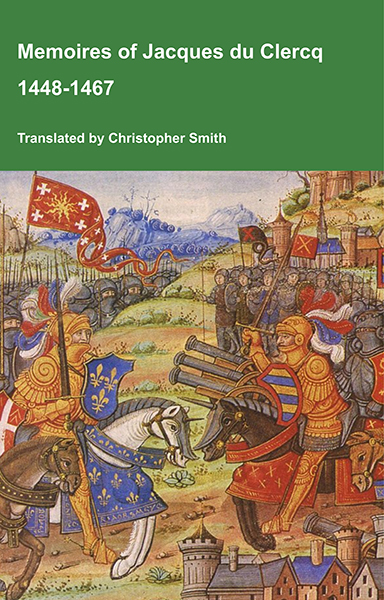
This is a translation of the 'Memoires of Jacques du Clercq', published in 1823 in two volumes, edited by Frederic, Baron de Reissenberg. In his introduction Reissenberg writes: 'Jacques du Clercq tells us that he was born in 1424, and that he was a licentiate in law and a counsellor to Philip the Good, Duke of Burgundy, in the castellany of Douai, Lille, and Orchies. It appears that he established his residence at Arras. In 1446, he married the daughter of Baldwin de la Lacherie, a gentleman who lived in Lille. We read in the fifth book of his Memoirs that his father, also named Jacques du Clercq, had married a lady of the Le Camelin family, from Compiègne. His ancestors, always attached to the counts of Flanders, had constantly served them, whether in their councils or in their armies.' The Memoires cover a period of nineteen years beginning in in 1448, ending in in 1467. It appears that the author had intended to extend the Memoirs beyond that date; no doubt illness or death prevented him from carrying out this plan. As Reissenberg writes the 'merit of this work lies in the simplicity of its narrative, in its tone of good faith, and in a certain air of frankness which naturally wins the reader’s confidence.' Du Clercq ranges from events of national and international importance, including events of the Wars of the Roses in England, to simple, everyday local events such as marriages, robberies, murders, trials and deaths, including that of his own father in Book 5; one of his last entries.
Available at Amazon in eBook and Paperback format.
Coronation of Henry II and Eleanor of Aquitaine is in 1130-1154 Anarchy.
On 19th December 1154 King Henry "Curtmantle" II of England [aged 21] was crowned II King of England at Westminster Abbey [Map]. Eleanor of Aquitaine Queen Consort Franks and England [aged 32] was crowned Queen Consort England. Archbishop Theobald of Bec [aged 64] presided.
Croyland Chronicle 1154. In the year from the Incarnation of our Lord, 1155, Henry the Second, duke of Normandy, was crowned by Theobald, archbishop of Canterbury, on the seventeenth day before the calends of January [16th December 1154].
Flowers of History by Roger of Wendover 1154. On the 7th of December he landed in England, and was received with much joy, both by the clergy and the laity, and on the 19th of December [1154], being the Sunday next before Christmas day, he was saluted king with universal acclamation, and crowned at Westminster by Theobald archbishop of Canterbury, in the presence of the archbishops, bishops, and barons of both England and Normandy. As soon as he was made king, he began to resume possession of the cities, castles, and towns which belonged to the crown, to destroy the rebellious castles, to expel the foreigners, and principally Flemings, from the kingdom, and to depose the pseudo-earls, on whom Stephen had lavishly bestowed almost all the proceeds of his exchequer.
Chronicle of Gervase of Canterbury. After gathering together his companions whom the sea had dispersed, he came to Winchester, and there received the oaths of loyalty of the nobles who flocked to him. Then he made for London, to be crowned on the Sunday immediately before the Nativity of the Lord. Accordingly, on the sixteenth day before the Kalends of January1 [17th December 1154], Henry, son of the Empress Matilda, was crowned king by Theobald, archbishop of Canterbury, primate of all England and legate of the Apostolic See, at Westminster, with two archbishops, fourteen bishops, counts and barons both English and overseas, and an innumerable multitude of the people standing by and taking part. Queen Eleanor also, repudiated by King Louis of France, was crowned together with him.
Congregatis vero quos mare disperserat sociis, Wintoniam pervenit, ibique confluentium ad se principum fidelitates accepit. Deinde Londoniam petiit, proxima Dominica ante Nativitatem Domini coronandus. Igitur sextodecimo kalendas Januarii coronatus est rex Henricus filius Matildis imperatricis a Theodbaldo Cantuariensi archiepiscopo totius Angliæ primate et apostolicæ sedis legato, apud Westmonasterium, astantibus et cooperantibus archiepiscopis duobus, episcopis xiiii, comitibus et baronibus [Anglicanis et] transmarinis, et innumera multitudine plebis. Regina quoque Alianor, a rege Francorum Lodovico repudiata, cum ipso coronata est.
Note 1. The 'the Sunday immediately before the Nativity of the Lord' is the 19th December 1154.
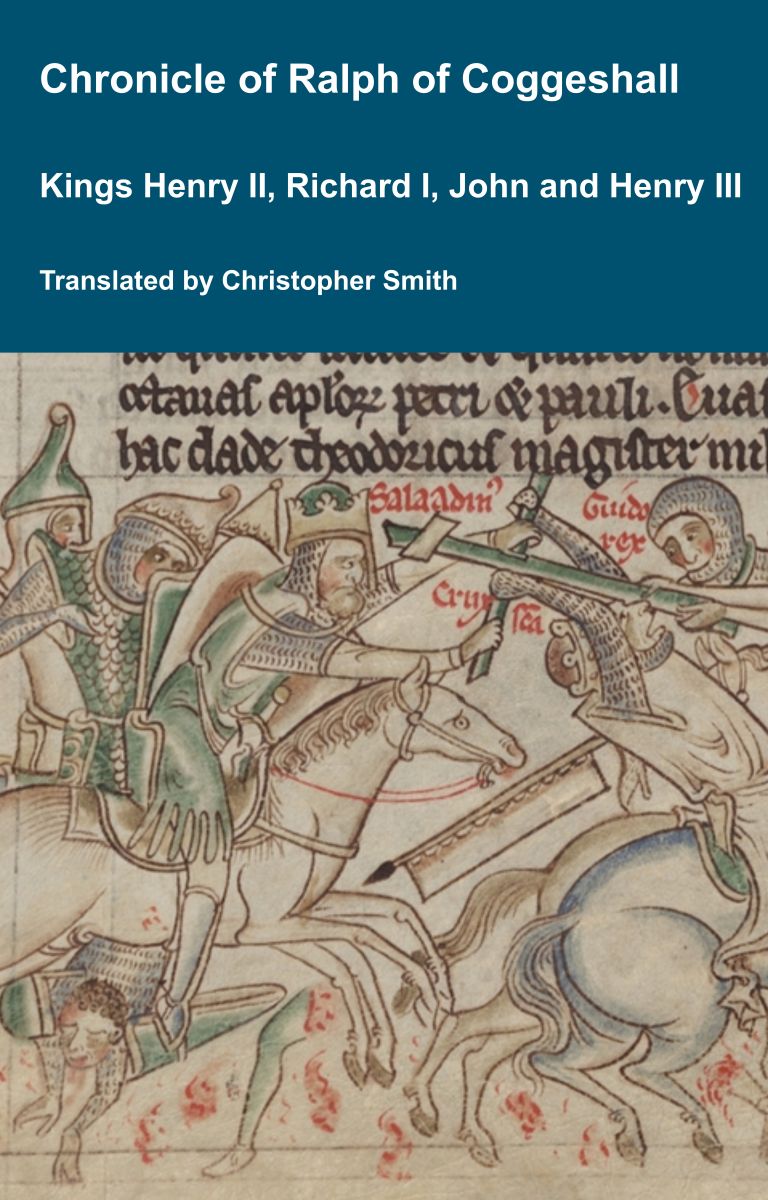 Chronicum Anglicanum by Ralph Coggeshall. He was succeeded in the kingdom by Henry, the son of the Empress, duke of Normandy and count of Aquitaine and Anjou. He was consecrated king at Westminster by Archbishop Theobald in the same year, on the Sunday before Christmas [19th December 1154]. From his wife Eleanor he begot four sons: William, who died in childhood; Henry, who became king; Richard of Poitou, who also became king; Geoffrey, count of Brittany; and John, king, formerly count of Gloucester and Mortain. He also had by her three daughters: one was given in marriage to William, king of Sicily; another to the king of "Little Spain"1; the third to Henry, duke of Saxony, who later, rebelling against his uncle the emperor Frederick, lost his duchy, though his son afterward recovered it.
Cui successit in regnum Henricus filius imperatricis, dux Normanniæ et comes Aquitaniæ et Andegaviæ; consecratusque est in regem apud Westmonasterium a Theobaldo archiepiscopo eodem anno, Dominica ante Natale Domini. Qui ex Alienoride conjuge sua genuit quatuor filios, videlicet Willelmum, qui in puerili ætate mortuus est, Henricum regem, Ricardum Pictavinum et regem, Galfridum comitem Britonum, Johannem regem, prius comitem Gloecestriæ, et Moretanniæ. Habuit etiam ex ea tres filias, quarum una tradita est Willelmo regi Siciliæ, alia regi Petit Hispaniæ, tertia Henrico duci Saxoniæ, qui dux postmodum rebellans contra imperatorem Frethericum avunculum suum, ducatum amisit; sed filius ejus postea recuperavit.
Note 1. Eleanor, 1161-1214, who married Alfonso, King of Castile.
Annals of Oseney by Thomas Wykes. 1155. Duke Henry, having heard of the death of King Stephen, immediately came from Normandy into England; and, being honorably received by the clergy and the people, he was solemnly crowned at Westminster by Theobald, then archbishop of Canterbury, on the fourteenth day before the Kalends of July [19th December 1154]. In the same year Pope Anastasius died, and was succeeded by Nicholas, an Englishman by birth, born at St Albans.
MCLV. Dux Henricus audita morte regis Stephani statim de Normannia venit in Angliam, et honorifice susceptus a clero et populo, solemniter coronatus est apud Westmonasterium a Theobaldo tune Cantuariensi archiepiscopo xiv. kal. Julii. Eodem anno obiit Anastasius Papa; cui successit Nicolaus natione Anglicus, natus apud Sanctum Albanum.
Annals of Tewkesbury. 1154. Pope Anastasius died. Adrian of England succeeded him. King Stephen of England died on the 31st of October, and in December, Henry, Duke of Normandy, was consecrated as king [19th December 1154]. Bishop William of York died, and Roger, the archdeacon, succeeded him.
MCLIV. Anastasius Papa obiit. Successit Adrianus Anglicus. Obiit Stephanus rex Angliæ ii. kal. Novembris, et in Decembri Henricus dux Normanniæ consecratur in regem. Obiit Willelmus episcopus Eboraci. Successit Rogerus archidiaconus.
Chronicle of John Brompton King Henry II. This King Henry, son of Geoffrey, count of Anjou, and of the Empress Matilda, in the year mentioned above, coming from Normandy into England, was consecrated king of England at Westminster on the feast day of Saint Leodegar1 or, according to some, on the fourteenth day before the Kalends of January [19th December 1154], on a Sunday, as has been stated above. And this Henry was called Henry the Second. In that same year Thomas Becket of London was made archdeacon of Canterbury and chancellor of the king.
Iste rex Henricus filius Galfridi Comitis Andegaviæ & Matildis imperatricis, anno quo supra de Normannia in Angliam veniens, die sancti Leodegarii vel secundum quosdam xiv. kal. Januarii die Dominico apud Westmonasterium in regem Angliæ ut præmittitur consecratur. Et iste Henricus dictus est Henricus secundus. Quo anno Thomas Beket de Londonia Cantuariensis archdiaconus factus est Regis Cancellarius.
Note 1. The Feast Day of St Leodegar is 2nd October.
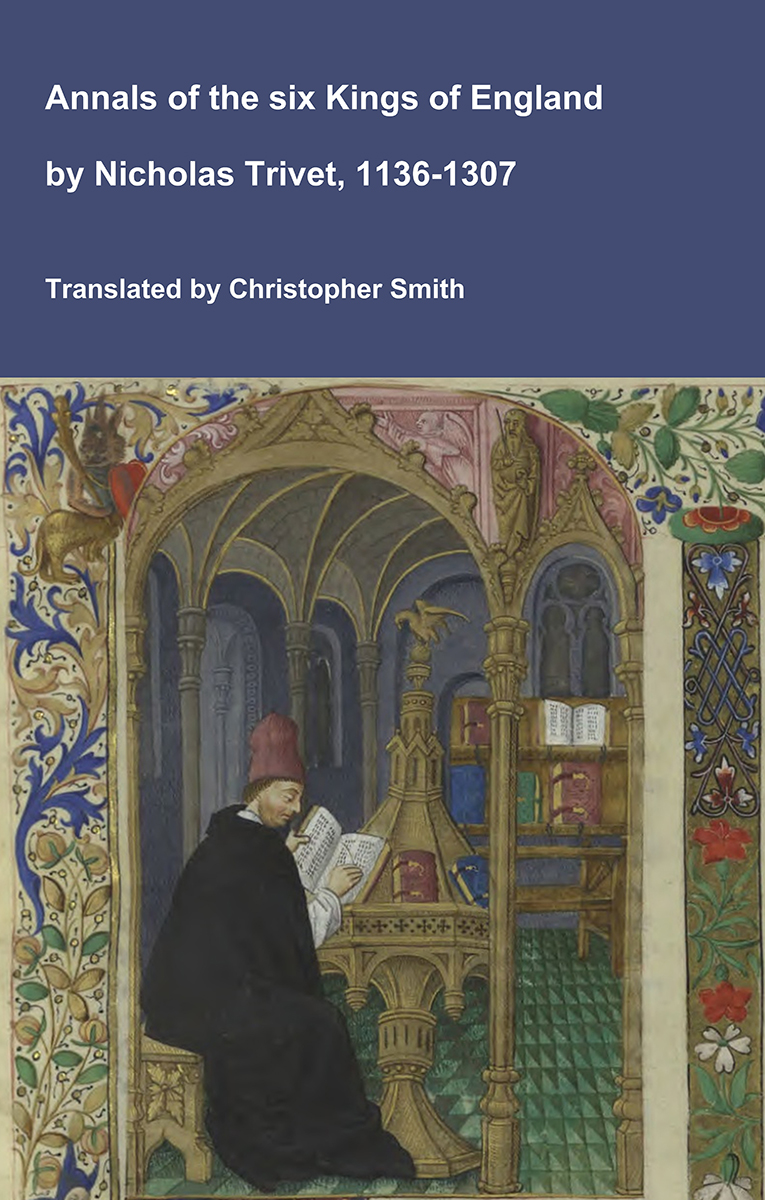 Annals of Six Kings of England by Nicholas Trivet [1258-1328]. On the Sunday before the Nativity of the Lord, which fell on the fourteenth day before the Kalends of January [19th December 1154], at Westminster Duke Henry was anointed king by Theobald, archbishop of Canterbury, and, in the presence of Hugh, archbishop of Rouen with three of his suffragans, Roger, archbishop of York with the other bishops of England, and Thierry, count of Flanders with the earls and nobles of the English kingdom, he was solemnly crowned. He was then in the twenty-second year of his age.
Dominica vero ante Nativitatem Domini, quæ fuit decimo quarto cal. Januarii, apud Westmonasterium a Cantuariensi archiepiscopo Theobaldo Henricus dux in regem inungitur, et, præsentibus archiepiscopis Hugone Rothomagensi cum tribus suffraganeis, Rogero Eboracensi cum ceteris episcopis Angliæ, ac Theodorico comite Flandrensi cum comitibus et proceribus Anglicani regni, solemniter coronatur; ætatis autem suæ annum vicesimum secundum agebat;
Annals of Margam. 1154. King Stephen died on the 25th of October, and Henry the Second succeeded to the throne, crowned on the 19th of December.
MCLIV. Stephanus rex obiit viii. kal. Novembris, et Henricus secundus successit in regnum, coronatus xiv. kal. Januarii.