

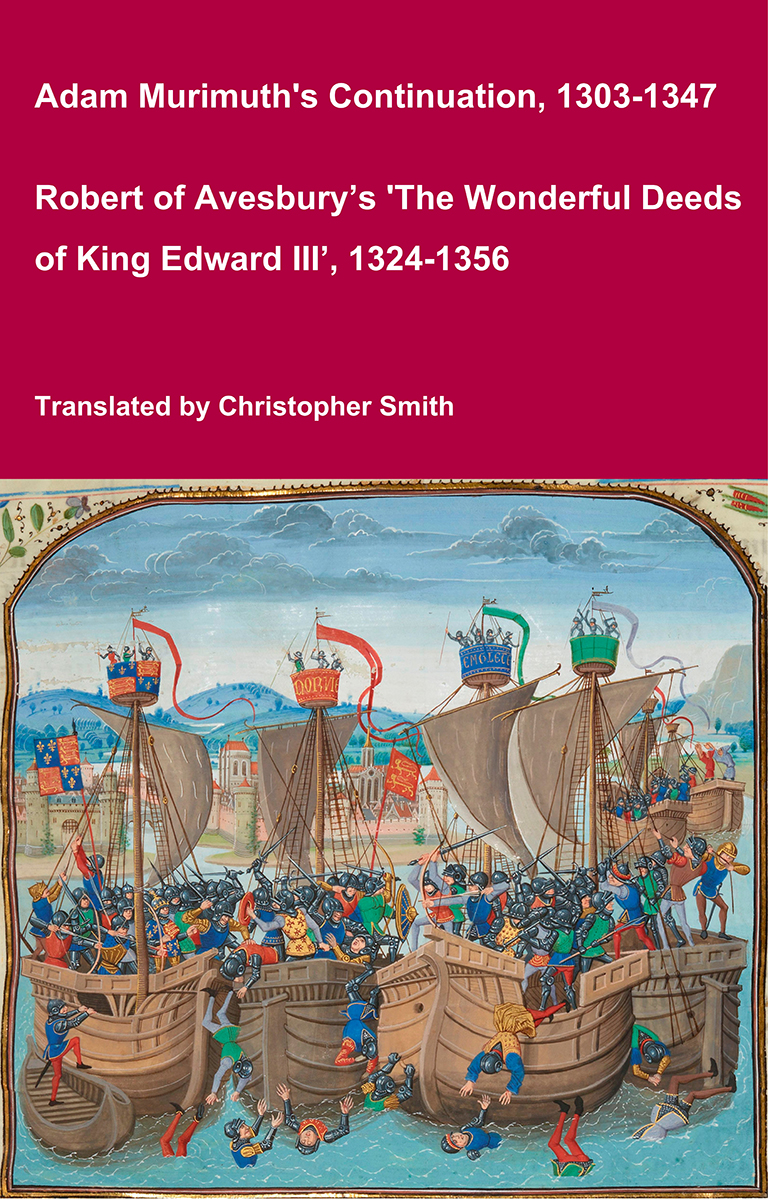
Adam Murimuth's Continuation and Robert of Avesbury’s 'The Wonderful Deeds of King Edward III'
This volume brings together two of the most important contemporary chronicles for the reign of Edward III and the opening phases of the Hundred Years’ War. Written in Latin by English clerical observers, these texts provide a vivid and authoritative window into the political, diplomatic, and military history of fourteenth-century England and its continental ambitions. Adam Murimuth Continuatio's Chronicarum continues an earlier chronicle into the mid-fourteenth century, offering concise but valuable notices on royal policy, foreign relations, and ecclesiastical affairs. Its annalistic structure makes it especially useful for establishing chronology and tracing the development of events year by year. Complementing it, Robert of Avesbury’s De gestis mirabilibus regis Edwardi tertii is a rich documentary chronicle preserving letters, treaties, and official records alongside narrative passages. It is an indispensable source for understanding Edward III’s claim to the French crown, the conduct of war, and the mechanisms of medieval diplomacy. Together, these works offer scholars, students, and enthusiasts a reliable and unembellished account of a transformative period in English and European history. Essential for anyone interested in medieval chronicles, the Hundred Years’ War, or the reign of Edward III.
Available at Amazon in eBook and Paperback format.
Henry Fuseli is in Painters.
On 7th February 1741 Henry Fuseli was born at Zurich, Switzerland.

1778. James Northcote [aged 31]. Portrait of Henry Fuseli [aged 36].
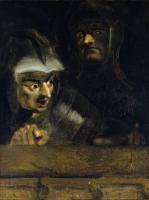
1780 to 1782. Henry Fuseli [aged 38]. "The two murderers of the Duke of Clarence".
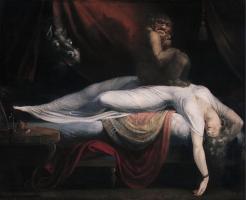
1781. Henry Fuseli [aged 39]. "The Nightmare".
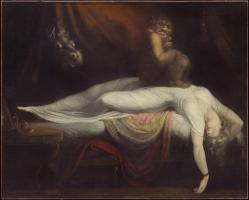
1781. Henry Fuseli [aged 39]. "The Nightmare". The painting was first shown in 1782 at the Royal Academy of London after which it became widely known. Fuseli painted other versions; the original was sold for twenty guineas.

In 1788 Henry Fuseli [aged 46] and Sophia Rawlins were married. She originally one of his models.

In or after 1788. Henry Fuseli [aged 46]. Portrait of Sophia Rawlins, the artist's wife.
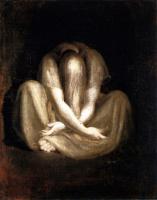
1789. Henry Fuseli [aged 47]. "Silence".
Around 1789 Henry Fuseli [aged 47] and Mary Wollstonecraft [aged 29] planned a trip with him to Paris. His wife Sophia Rawlins stopped any communication between the two.


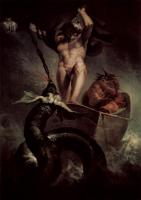
1790. Henry Fuseli [aged 48]. "Thor Battering the Midgard Serpent". Fuseli's diploma work for the Royal Academy
Jean de Waurin's Chronicle of England Volume 6 Books 3-6: The Wars of the Roses
Jean de Waurin was a French Chronicler, from the Artois region, who was born around 1400, and died around 1474. Waurin’s Chronicle of England, Volume 6, covering the period 1450 to 1471, from which we have selected and translated Chapters relating to the Wars of the Roses, provides a vivid, original, contemporary description of key events some of which he witnessed first-hand, some of which he was told by the key people involved with whom Waurin had a personal relationship.
Available at Amazon in eBook and Paperback format.

Around 1790. Henry Fuseli [aged 48]. Portrait of the artist's wife Sophia Rawlins.
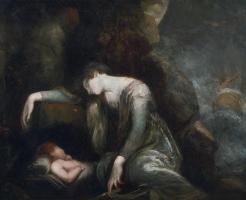
1790. Henry Fuseli [aged 48]. "Danaë and Perseus on Seriphos".

1792. Henry Fuseli [aged 50]. "The Apotheosis of Penelope Boothby".
Penelope Boothby: On 11th April 1785 she was born to Brooke Boothby 6th Baronet in Lichfield, Staffordshire [Map]. On 19th March 1791 Penelope Boothby died at Ashbourne Hall, Derbyshire [Map]. She was buried in St Oswald's Church, Ashbourne [Map].
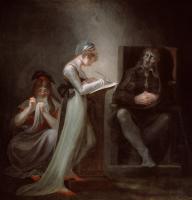
1794. Henry Fuseli [aged 52]. "Milton Dictating to His Daughter".

1794. John Opie [aged 32]. Portrait of Henry Fuseli [aged 52].
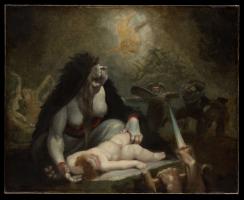
1796. Henry Fuseli [aged 54]. "The Night-Hag Visiting Lapland Witches". Hecate, the Greek goddess who presided over witchcraft and magical rites, was historically known as the "Night-Hag," hence the title that the artist gave this work. It illustrates a passage from Paradise Lost by the English poet John Milton
In 1799 Henry Fuseli [aged 57] was appointed Professor of Painting at the Royal Academy.

31st May 1800. Henry Fuseli [aged 59]. Sophia Rawlins, the artist's wife, in profile.
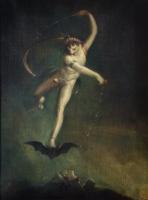
Around 1805. Henry Fuseli [aged 63]. "Ariel".

1817. George Henry Harlow [aged 29]. Portrait of Henry Fuseli [aged 75].
Jean de Waurin's Chronicle of England Volume 6 Books 3-6: The Wars of the Roses
Jean de Waurin was a French Chronicler, from the Artois region, who was born around 1400, and died around 1474. Waurin’s Chronicle of England, Volume 6, covering the period 1450 to 1471, from which we have selected and translated Chapters relating to the Wars of the Roses, provides a vivid, original, contemporary description of key events some of which he witnessed first-hand, some of which he was told by the key people involved with whom Waurin had a personal relationship.
Available at Amazon in eBook and Paperback format.
On 17th April 1825 Henry Fuseli [aged 84] died at the house of the Countess of Guildford [aged 55], on Putney Hill