

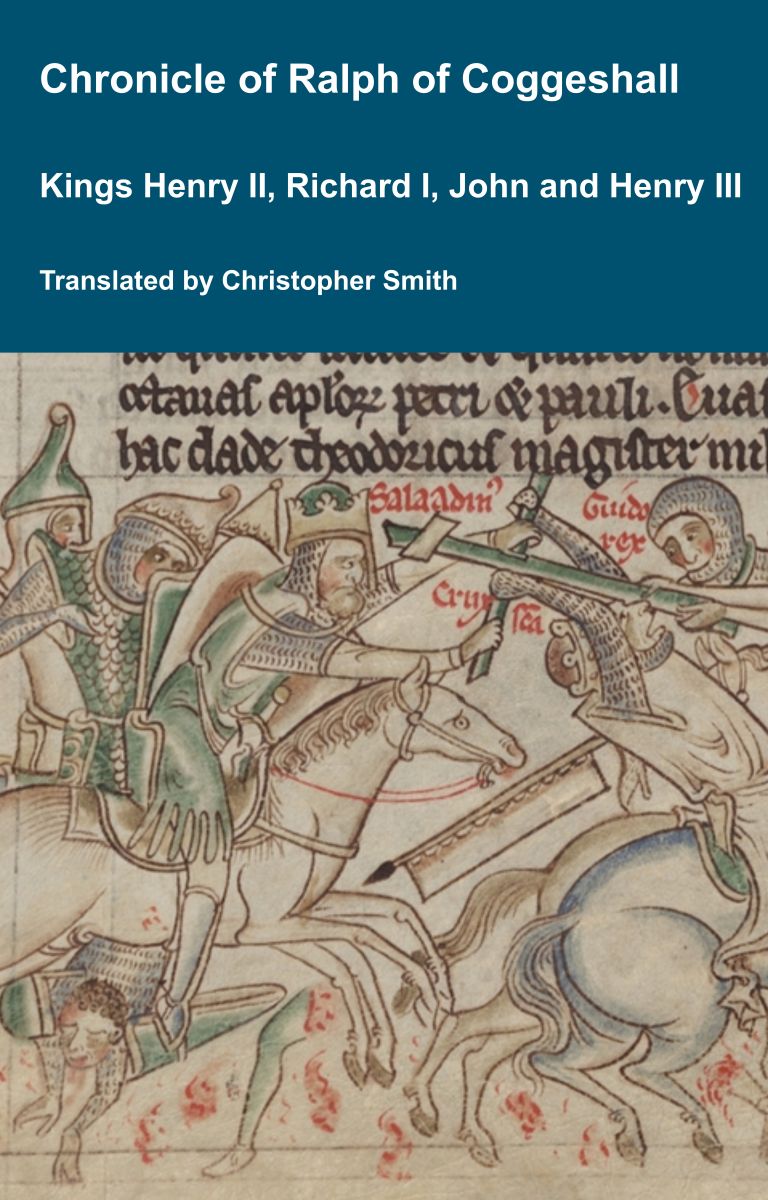
Chronicle of Abbot Ralph of Coggeshall
The Chronicle of Abbot Ralph of Coggeshall (Chronicon Anglicanum) is an indispensable medieval history that brings to life centuries of English and European affairs through the eyes of a learned Cistercian monk. Ralph of Coggeshall, abbot of the Abbey of Coggeshall in Essex in the early 13th century, continued and expanded his community’s chronicle, documenting events from the Norman Conquest of 1066 into the tumultuous reign of King Henry III. Blending eyewitness testimony, careful compilation, and the monastic commitment to record-keeping, this chronicle offers a rare narrative of political intrigue, royal power struggles, and social upheaval in England and beyond. Ralph’s work captures the reigns of pivotal figures such as Richard I and King John, providing invaluable insights into their characters, decisions, and the forces that shaped medieval rule. More than a simple annal, Chronicon Anglicanum conveys the texture of medieval life and governance, making it a rich source for scholars and readers fascinated by English history, monastic authorship, and the shaping of the medieval world.
Available at Amazon in eBook and Paperback format.
Architectural Detail is in Architecture.
After 29th April 1714. St Michael's Church, Stowe Nine Churches [Map]. Monument to Thomas Turner [deceased]. Sculpted by Thomas Stayner [aged 49]. Baldachin. Drapery. Baroque. The figure on the left is Faith who holds a model of a circular church. The figure on the right is Thomas Turner. Segmental Pediment. Moulded Cornice.


Around 1578. Church of the Holy Trinity, Bosbury [Map]. Monument to Richard Harford died 1578.
Large recessed wall Elizabethan Period monument commemorating Richard Harford died 1578, his wife Martha and Anthony Harford, attributed improbably to John Guldo of Hereford, caryatid-type figures possibly Adam and Eve flank central semi-circular headed arched recess with segmental pediment. Two recumbent effigies, male and female in civil costume on sarcophagus supported by two grotesque animals, the whole enriched with foliage and flock motifs and rather more primitive in style than John Harford memorial on opposite wall.


Before 1736. Monument to Anne Brudenell (wife of Charles Lennox) in St Peter's Church, Deene [Map] by Giovanni Battista Guelphi [aged 45] on the west wall of the transept. Bust set against square surround with flanking caryatids, metope frieze and pediment over.
Giovanni Battista Guelphi: Church of St Peter Kirkthorpe [Map]. The chief merit of the church is a fine collection of C18 wall monuments. The most important of these is the Stringer Monument by Guelfi: 2 detached busts on a sarcophagus with straight tapering sides; background by Kent with inscription, a frame starting from 2 big volutes and crowned by an open-segmental pediment carved coat-or-arms with putti. The Smyth chapel has numerous monuments dating from 1731; including that to John Smyth of 2 putti uncovering his portrait on an oval medallion, that to Lady Georgina Smyth and others signed by Flaxman; 1799. Around 1690 he was born. In 1736 he died.


After 29th April 1714. St Michael's Church, Stowe Nine Churches [Map]. Monument to Thomas Turner [deceased]. Sculpted by Thomas Stayner [aged 49]. Baldachin. Drapery. Baroque. The figure on the left is Faith who holds a model of a circular church. The figure on the right is Thomas Turner. Segmental Pediment. Moulded Cornice.
In 1406 John Curzon died. Monument in All Saints Church, Kedleston [Map]. Fluted Period. Lancastrian Esses Collar. Reset in tomb recess with depressed crocketed and pinnacled ogee arch, with shields above. This effigy is somewhat anomalous being much earlier than other Fluted Period effigies. It may have been decades after John Curzon died, or may be a mis-attribution, or the effigy may have been placed into the arch from another monument at a later date.
John Curzon: he was born to Roger Curzon. John Curzon and Eleanor Twyford were married.


Around 1230. The West Facade of Peterborough Cathedral [Map]. Early English Gothic style. The three arches with Recesses unique.

Beverley Minster [Map] West Facade.