


Chronicle of Walter of Guisborough
A canon regular of the Augustinian Guisborough Priory, Yorkshire, formerly known as The Chronicle of Walter of Hemingburgh, describes the period from 1066 to 1346. Before 1274 the Chronicle is based on other works. Thereafter, the Chronicle is original, and a remarkable source for the events of the time. This book provides a translation of the Chronicle from that date. The Latin source for our translation is the 1849 work edited by Hans Claude Hamilton. Hamilton, in his preface, says: 'In the present work we behold perhaps one of the finest samples of our early chronicles, both as regards the value of the events recorded, and the correctness with which they are detailed; Nor will the pleasing style of composition be lightly passed over by those capable of seeing reflected from it the tokens of a vigorous and cultivated mind, and a favourable specimen of the learning and taste of the age in which it was framed.'
Available at Amazon in eBook and Paperback format.
Paternal Family Tree: Norman
Maternal Family Tree: Sybil of Lansgtone Manor 1462-1502
In December 1629 [his father] James Butler 1st Duke Ormonde (age 19) and [his mother] Elizabeth Preston Duchess Ormonde (age 14) were married. She the daughter of [his grandfather] Richard Preston 1st Earl Desmond and [his grandmother] Elizabeth Butler. They were second cousin once removed.


On 15th July 1639 Richard Butler 1st Earl Arran was born to [his father] James Butler 1st Duke Ormonde (age 28) and [his mother] Elizabeth Preston Duchess Ormonde (age 23).
On 30th August 1642 [his father] James Butler 1st Duke Ormonde (age 31) was created 1st Marquess Ormonde. [his mother] Elizabeth Preston Duchess Ormonde (age 27) by marriage Marchioness Ormonde.
In 1649 [his father] James Butler 1st Duke Ormonde (age 38) was appointed 444th Knight of the Garter by King Charles II of England Scotland and Ireland (age 18).
John Evelyn's Diary. 7th May 1650. I went with Sir Richard Browne's (age 45) lady and my wife (age 15), together with the Earl of Chesterfield (age 66), [his brother] Lord Ossory (age 15) and his brother (age 10), to Vamber, a place near the city famous for butter; when, coming homeward, being on foot, a quarrel arose between Lord Ossory and a man in a garden, who thrust Lord Ossory from the gate with uncivil language; on which our young gallants struck the fellow on the pate, and bade him ask pardon, which he did with much submission, and so we parted. But we were not gone far before we heard a noise behind us, and saw people coming with guns, swords, staves, and forks, and who followed, flinging stones; on which, we turned, and were forced to engage, and with our swords, stones, and the help of our servants (one of whom had a pistol) made our retreat for near a quarter of a mile, when we took shelter in a house, where we were besieged, and at length forced to submit to be prisoners. Lord Hatton (age 44), with some others, were taken prisoners in the flight, and his lordship was confined under three locks and as many doors in this rude fellow's master's house, who pretended to be steward to Monsieur St. Germain, one of the presidents of the Grand Chambre du Parlement, and a Canon of Nôtre Dame. Several of us were much hurt. One of our lackeys escaping to Paris, caused the bailiff of St. Germain to come with his guard and rescue us. Immediately afterward, came Monsieur St. Germain himself, in great wrath, on hearing that his housekeeper was assaulted; but when he saw the King's officers, the gentlemen and noblemen, with his Majesty's Resident and understood the occasion, he was ashamed of the accident, requesting the fellow's pardon, and desiring the ladies to accept their submission and a supper at his house. It was ten o'clock at night ere we got to Paris, guarded by Prince Griffith (a Welsh hero going under that name, and well known in England for his extravagancies), together with the scholars of two academies, who came forth to assist and meet us on horseback, and would fain have alarmed the town we received the affront from: which, with much ado, we prevented.
 Become a Member via our Buy Me a Coffee page to read more.

After 1654 [his brother-in-law] Philip Stanhope 2nd Earl Chesterfield (age 20) and [his sister] Elizabeth Butler Countess Chesterfield (age 13) were married. She by marriage Countess Chesterfield. She the daughter of [his father] James Butler 1st Duke Ormonde (age 43) and [his mother] Elizabeth Preston Duchess Ormonde (age 38). He the son of Henry Stanhope and Katherine Wotton Countess Chesterfield (age 45).

On 14th November 1659 [his brother] Thomas Butler 6th Earl Ossory (age 25) and [his sister-in-law] Emilia Nassau Beverweert Countess Ossory (age 24) were married at Den Bosch. He the son of [his father] James Butler 1st Duke Ormonde (age 49) and [his mother] Elizabeth Preston Duchess Ormonde (age 44).
The History of William Marshal was commissioned by his son shortly after William’s death in 1219 to celebrate the Marshal’s remarkable life; it is an authentic, contemporary voice. The manuscript was discovered in 1861 by French historian Paul Meyer. Meyer published the manuscript in its original Anglo-French in 1891 in two books. This book is a line by line translation of the first of Meyer’s books; lines 1-10152. Book 1 of the History begins in 1139 and ends in 1194. It describes the events of the Anarchy, the role of William’s father John, John’s marriages, William’s childhood, his role as a hostage at the siege of Newbury, his injury and imprisonment in Poitou where he met Eleanor of Aquitaine and his life as a knight errant. It continues with the accusation against him of an improper relationship with Margaret, wife of Henry the Young King, his exile, and return, the death of Henry the Young King, the rebellion of Richard, the future King Richard I, war with France, the death of King Henry II, and the capture of King Richard, and the rebellion of John, the future King John. It ends with the release of King Richard and the death of John Marshal.
Available at Amazon in eBook and Paperback format.

On 10th August 1660 Esmé Stewart 2nd Duke Richmond 5th Duke Lennox (age 11) died of smallpox at Paris [Map]. He was buried in on 04 Sep 1660 in the Richmond Vault, Westminster Abbey. His first cousin Charles (age 21) succeeded 6th Duke Lennox, 3rd Duke Richmond, 4th Earl March. Elizabeth Rogers Duchess Richmond by marriage Duchess Richmond. His sister [his future wife] Mary (age 9) succeeded 5th Baroness Clifton of Leighton Bromswold in Huntingdonshire.
In 1662 [his brother] Thomas Butler 6th Earl Ossory (age 27) by writ of acceleration6th Earl Ossory. [his sister-in-law] Emilia Nassau Beverweert Countess Ossory (age 26) by marriage Countess Ossory.
In May 1662 Richard Butler 1st Earl Arran (age 22) was created 1st Earl Arran.
On 26th October 1662 [his brother-in-law] William Cavendish 1st Duke Devonshire (age 22) and [his sister] Mary Butler Duchess Devonshire (age 16) were married. She the daughter of [his father] James Butler 1st Duke Ormonde (age 52) and [his mother] Elizabeth Preston Duchess Ormonde (age 47). He the son of William Cavendish 3rd Earl Devonshire (age 45) and Elizabeth Cecil Countess Devonshire (age 43). They were fifth cousins.


Samuel Pepys' Diary. 11th August 1664. He gone, I late to my office, and cannot forbear admiring and consulting my new rule, and so home to supper and to bed. This day, for a wager before the King (age 34), my Lords of Castlehaven (age 47) and Arran (age 25) (a son of my [his father] Lord of Ormond's (age 53)), they two alone did run down and kill a stoute bucke in St. James's parke.
In September 1664 Richard Butler 1st Earl Arran (age 25) and Mary Stewart Countess Arran (age 13) were married. She by marriage Countess Arran. She the daughter of James Stewart 4th Duke Lennox 1st Duke Richmond and Mary Villiers Duchess Lennox Duchess Richmond (age 42). He the son of James Butler 1st Duke Ormonde (age 53) and Elizabeth Preston Duchess Ormonde (age 49). They were half fifth cousin once removed.
Samuel Pepys' Diary. 3rd February 1665. So home, and among other letters found one from Jane, that is newly gone, telling me how her mistresse won't pay her her Quarter's wages, and withal tells me how her mistress will have the boy sit 3 or 4 hours together in the dark telling of stories, but speaks of nothing but only her indiscretion in undervaluing herself to do it, but I will remedy that, but am vexed she should get some body to write so much because of making it publique. Then took coach and to visit my Lady Sandwich (age 40), where she discoursed largely to me her opinion of a match, if it could be thought fit by my Lord, for my Lady Jemimah, with Sir G. Carteret's (age 55) eldest son; but I doubt he hath yet no settled estate in land. But I will inform myself, and give her my opinion. Then Mrs. Pickering (age 23) (after private discourse ended, we going into the other room) did, at my Lady's command, tell me the manner of a masquerade1 before the King (age 34) and Court the other day. Where six women (my Baroness Castlemayne (age 24) and Duchesse of Monmouth being two of them) and six men (the Duke of Monmouth (age 15) and Lord Arran (age 25) and Monsieur Blanfort, being three of them) in vizards, but most rich and antique dresses, did dance admirably and most gloriously. God give us cause to continue the mirthe! So home, and after awhile at my office to supper and to bed.
Note 1. The masquerade at Court took place on the 2nd, and is referred to by Evelyn, who was present, in his Diary. Some amusing incidents connected with the entertainment are related in the "Grammont Memoirs (chapter vii.).
In July 1665 [his sister] Elizabeth Butler Countess Chesterfield (age 25) died.
Samuel Pepys' Diary. 24th July 1665. And then up and home, and there dressed myself, and by appointment to Deptford, Kent [Map], to Sir G. Carteret's (age 55), between six and seven o'clock, where I found him and my George Carteret 1st Baronet and Lady (age 63) almost ready, and by and by went over to the ferry, and took coach and six horses nobly for Dagenhams, himself and lady and their little daughter, Louisonne, and myself in the coach; where, when we come, we were bravely entertained and spent the day most pleasantly with the young ladies, and I so merry as never more. Only for want of sleep, and drinking of strong beer had a rheum in one of my eyes, which troubled me much. Here with great content all the day, as I think I ever passed a day in my life, because of the contentfulnesse of our errand, and the noblenesse of the company and our manner of going. But I find Mr. Carteret (age 24) yet as backward almost in his caresses, as he was the first day. At night, about seven o'clock, took coach again; but, Lord! to see in what a pleasant humour Sir G. Carteret hath been both coming and going; so light, so fond, so merry, so boyish (so much content he takes in this business), it is one of the greatest wonders I ever saw in my mind. But once in serious discourse he did say that, if he knew his son to be a debauchee, as many and, most are now-a-days about the Court, he would tell it, and my Lady Jem. should not have him; and so enlarged both he and she about the baseness and looseness of the Court, and told several stories of the Duke of Monmouth (age 16), and Richmond (age 26), and some great person, my [his father] Lord of Ormond's (age 54) second son (age 26), married to a Richard Butler 1st Earl Arran and [his wife] lady (age 14) of extraordinary quality (fit and that might have been made a wife for the King (age 35) himself), about six months since, that this great person hath given the pox to---; and discoursed how much this would oblige the Kingdom if the King would banish some of these great persons publiquely from the Court, and wished it with all their hearts.


Become a Member via our Buy Me a Coffee page to read more.
On 4th July 1668 [his wife] Mary Stewart Countess Arran (age 16) died. Her first cousin Charles (age 29) succeeded 6th Baron Clifton of Leighton Bromswold in Huntingdonshire.
Chronicle of a Bourgeois of Valenciennes
Récits d’un bourgeois de Valenciennes aka The Chronicle of a Bourgeois of Valenciennes is a vivid 14th-century vernacular chronicle written by an anonymous urban chronicler from Valenciennes in the County of Hainaut. It survives in a manuscript that describes local and regional history from about 1253 to 1366, blending chronology, narrative episodes, and eyewitness-style accounts of political, military, and social events in medieval France, Flanders, and the Low Countries. The work begins with a chronological framework of events affecting Valenciennes and its region under rulers such as King Philip VI of France and the shifting allegiances of local nobility. It includes accounts of conflicts, sieges, diplomatic manoeuvres, and the impact of broader struggles like the Hundred Years’ War on urban life in Hainaut. Written from the perspective of a burgher (bourgeois) rather than a monastery or royal court, the chronicle offers a rare lay viewpoint on high politics and warfare, reflecting how merchants, townspeople, and civic institutions experienced the turbulence of the 13th and 14th centuries. Its narrative style combines straightforward reporting of events with moral and civic observations, making it a valuable source for readers interested in medieval urban society, regional politics, and the lived experience of war and governance in pre-modern Europe.
Available at Amazon in eBook and Paperback format.
In 1672 [his brother] Thomas Butler 6th Earl Ossory (age 37) was appointed 477th Knight of the Garter by King Charles II of England Scotland and Ireland (age 41).

Before 19th February 1674 Richard Butler 1st Earl Arran (age 34) and Dorothy Ferrers Countess Arran (age 19) were married. She by marriage Countess Arran. He the son of James Butler 1st Duke Ormonde (age 63) and Elizabeth Preston Duchess Ormonde (age 58).
On 19th February 1674 [his son] James Butler was born to Richard Butler 1st Earl Arran (age 34) and [his wife] Dorothy Ferrers Countess Arran (age 19). He died aged two in 1676.
In 1675 [his son] Thomas Butler was born to Richard Butler 1st Earl Arran (age 35) and [his wife] Dorothy Ferrers Countess Arran (age 20). He died aged six in 1681.
In January 1675 [his brother] John Butler 1st Earl Gowran (age 32) and [his sister-in-law] Anne Chichester Countess Gowran and Longford were married. She the daughter of Arthur Chichester 1st Earl Donegal (age 68) and Letitia Hicks Countess Donegal (age 48). He the son of [his father] James Butler 1st Duke Ormonde (age 64) and [his mother] Elizabeth Preston Duchess Ormonde (age 59).
On 13th April 1676 [his brother] John Butler 1st Earl Gowran (age 33) was created 1st Earl Gowran, 1st Viscount Clonmore, 1st Baron Aghrim. [his sister-in-law] Anne Chichester Countess Gowran and Longford by marriage Countess Gowran.
In October 1676 [his son] James Butler (age 2) died.
In 1677 [his brother] John Butler 1st Earl Gowran (age 34) died at Paris [Map].
In 1679 [his daughter] Charlotte Butler Baroness Cornwallis was born to Richard Butler 1st Earl Arran (age 39) and [his wife] Dorothy Ferrers Countess Arran (age 24). She married 6th June 1699 Charles Cornwallis 4th Baron Cornwallis, son of Charles Cornwallis 3rd Baron Cornwallis and Elizabeth Fox Baroness Cornwallis, and had issue.
On 30th July 1680 [his brother] Thomas Butler 6th Earl Ossory (age 46) died. He was buried in the Duke of Ormonde Vault, King Henry VII Chapel, Westminster Abbey the next day.
On 16th March 1681 [his son] Thomas Butler was born to Richard Butler 1st Earl Arran (age 41) and [his wife] Dorothy Ferrers Countess Arran (age 26). He died aged four in 1685.
Abbot John Whethamstede’s Chronicle of the Abbey of St Albans
Abbot John Whethamstede's Register aka Chronicle of his second term at the Abbey of St Albans, 1451-1461, is a remarkable text that describes his first-hand experience of the beginning of the Wars of the Roses including the First and Second Battles of St Albans, 1455 and 1461, respectively, their cause, and their consequences, not least on the Abbey itself. His text also includes Loveday, Blore Heath, Northampton, the Act of Accord, Wakefield, and Towton, and ends with the Coronation of King Edward IV. In addition to the events of the Wars of the Roses, Abbot John, or his scribes who wrote the Chronicle, include details in the life of the Abbey such as charters, letters, land exchanges, visits by legates, and disputes, which provide a rich insight into the day-to-day life of the Abbey, and the challenges faced by its Abbot.
Available at Amazon in eBook and Paperback format.
In June 1681 [his son] Thomas Butler (age 6) died.
On 9th November 1682 [his father] James Butler 1st Duke Ormonde (age 72) was created 1st Duke Ormonde by King Charles II of England Scotland and Ireland (age 52). [his mother] Elizabeth Preston Duchess Ormonde (age 67) by marriage Duchess Ormonde.
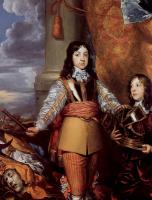


On 21st July 1684 [his mother] Elizabeth Preston Duchess Ormonde (age 68) died. On 24th July 1684 she was buried in the Duke of Ormonde Vault, King Henry VII Chapel, Westminster Abbey.
On 23rd November 1684 William Cavendish 3rd Earl Devonshire (age 67) died at his house in Roehampton, Surrey. He was buried in the Henry VII Chapel in Westminster Abbey [Map]. His son [his brother-in-law] William (age 44) succeeded 4th Earl Devonshire, 4th Baron Cavendish Hardwick. [his sister] Mary Butler Duchess Devonshire (age 38) by marriage Countess Devonshire.


On 25th January 1685 Richard Butler 1st Earl Arran (age 45) died.
On 30th November 1716 [his former wife] Dorothy Ferrers Countess Arran (age 61) died.
Grammont. The court, as we have mentioned before, was an entire scene of gallantry and amusements, with all the politeness and magnificence, which the inclinations of a prince, naturally addicted to tenderness and pleasure, could suggest; the beauties were desirous of charming, and the men endeavoured to please; all studied to set themselves off to the best advantage; some distinguished themselves by dancing; others by show and magnificence; some by their wit, many by their amours, but few by their constancy. There was a certain Italian at court, famous for the guitar; he had a genius for music, and he was the only man who could make any thing of the guitar: his style of play was so full of grace and tenderness, that he would have given harmony to the most discordant instruments. The truth is, nothing was so difficult as to play like this foreigner. The king's relish for his compositions had brought the instrument so much into vogue, that every person played upon it, well or ill; and you were as sure to see a guitar on a lady's toilette, as rouge or patches. The Duke of York played upon it tolerably well, and the Earl of Arran like Francisco himself. This Francisco had composed a saraband, which either charmed or infatuated every person; for the whole guitarery at court were trying at it, and God knows what an universal strumming there was. The Duke of York, pretending not to be perfect in it, desired Lord Arran to play it to him. [his sister] Lady Chesterfield had the best guitar in England. The Earl of Arran, who was desirous of playing his best, conducted his royal highness to his sister's apartments; she was lodged at court, at her father's, the [his father] Duke of Ormond's, and this wonderful guitar was lodged there too. Whether this visit had been preconcerted or not, I do not pretend to say; but it is certain that they found both the lady and the guitar at home; they likewise found there Lord Chesterfield, so much surprised at this unexpected visit, that it was a considerable time before he thought of rising from his seat, to receive them with due respect.
Jealousy, like a malignant vapour, now seized upon his brain; a thousand suspicions, blacker than ink, took possession of his imagination, and were continually increasing; for whilst the brother played upon the guitar to the duke, the sister ogled and accompanied him with her eyes, as if the coast had been clear, and no enemy to observe them. This saraband was at least repeated twenty times; the duke declared it was played to perfection. Lady Chesterfield found fault with the composition; but her husband, who clearly perceived that he was the person played upon, thought it a most detestable piece. However, though he was in the last agony, at being obliged to curb his passion, while others gave a free scope to theirs, he was resolved to find out the drift of the visit; but it was not in his power; for having the honour to be chamberlain to the queen, a messenger came to require his immediate attendance on her majesty. His first thought was to pretend sickness; the second to suspect that the queen, who sent for him at such an unseasonable time, was in the plot; but at last, after all the extravagant ideas of a suspicious man, and all the irresolutions of a jealous husband, he was obliged to go.
We may easily imagine what his state of mind was when he arrived at the palace. Alarms are to the jealous, what disasters are to the unfortunate: they seldom come alone, but form a series of persecution. He was informed that he was sent for to attend the queen at an audience she gave to seven or eight Muscovite ambassadors: he had scarce begun to curse the Muscovites, when his brother-in-law appeared, and drew upon himself all the imprecations he bestowed upon the embassy: he no longer doubted his being in the plot with the two persons he had left together; and in his heart sincerely wished him such recompense for his good offices as such good offices deserved. It was with great difficulty that he restrained himself from immediately acquainting him what was his opinion of such conduct: he thought that what he had already seen was a 'sufficient proof of his wife's infidelity; but before the end of the very same day, some circumstances occurred, which increased his suspicions, and persuaded him, that they had taken advantage of his absence, and of the honourable officiousness of his brother-in-law. He passed, however, that night with tranquillity; but the next morning, being reduced, to the necessity either of bursting or giving vent to his sorrows and conjectures, he did nothing but think and walk about the room until Park-time. He went to court, seemed very busy, as if seeking for some person or other, imagining that people guessed at the subject of his uneasiness: he avoided every body; but at length meeting with Hamilton, he thought he was the very man that he wanted; and having desired him to take an airing with him in Hyde Park, he took him up in his coach, and they arrived at the Ring, without a word having passed between them.


Become a Member via our Buy Me a Coffee page to read more.
Grammont. The Duke of York consented, and Lord Falmouth having assembled both his counsel and his witnesses, conducted them to his royal highness's cabinet, after having instructed them how to act: these gentlemen were the Earl of Arran, Jermyn, Talbot, and Killegrew, all men of honour; but who infinitely preferred the Duke of York's interest to Miss Hyde's reputation, and who, besides, were greatly dissatisfied, as well as the whole court, at the insolent authority of the prime minister. The duke having told them, after a sort of preamble, that although they could not be ignorant of his affection for Miss Hyde, yet they might be unacquainted with the engagements his tenderness for her had induced him to contract; that he thought himself obliged to perform all the promises he had made her; but as the innocence of persons of her age was generally exposed to court scandal, and as certain reports, whether false or true, had been spread abroad on the subject of her conduct, he conjured them as his friends, and charged them upon their duty, to tell him sincerely every thing they knew upon the subject, since he was resolved to make their evidence the rule of his conduct towards her. They all appeared rather reserved at first, and seemed not to dare to give their opinions upon an affair of so serious and delicate a nature; but the Duke of York having renewed his entreaties, each began to relate the particulars of what he knew, and perhaps of more than he knew, of poor Miss Hyde; nor did they omit any circumstance necessary to strengthen the evidence. For instance, the Earl of Arran, who spoke first, deposed, that in the gallery at Honslaerdyk, where the Countess of Ossory, his sister-in-law, and Jermyn, were playing at nine-pins, Miss Hyde, pretending to be sick, retired to a chamber at the end of the gallery; that he, the deponent, had followed her, and having cut her lace, to give a greater probability to the pretence of the vapours, he had acquitted himself to the best of his abilities, both to assist and to console her.
Talbot said, that she had made an appointment with him in the chancellor's cabinet, while he was in council; and, that not paying so much attention to what was upon the table, as to what they were engaged in, they had spilled a bottle full of ink upon a despatch of four pages, and that the king's monkey, which was blamed for this accident, had been a long time in disgrace.
Jermyn mentioned many places where he had received long and favourable audiences: however, all these articles of accusation amounted only to some delicate familiarities, or at most, to what is generally denominated the innocent part of an intrigue; but Killegrew, who wished to surpass these trivial depositions, boldly declared that he had had the honour of being upon the most intimate terms with her: he was of a sprightly and witty humour, and had the art of telling a story in the most entertaining manner, by the graceful and natural turn he could give it: he affirmed that he had found the critical minute in a certain closet built over the water, for a purpose very different from that of giving ease to the pains of love: that three or four swans had been witnesses to his happiness, and might perhaps have been witnesses to the happiness of many others, as the lady frequently repaired to that place, and was particularly delighted with it.


Become a Member via our Buy Me a Coffee page to read more.
Grammont. The [his father] Duke of Ormond's sons and his nephews had been in the king's court during his exile, and were far from diminishing its lustre after his return. The Earl of Arran had a singular address in all kinds of exercises, played well at tennis and on the guitar, and was pretty successful in gallantry: his elder brother, the [his brother] Earl of Ossory, was not so lively, but of the most liberal sentiments, and of great probity.
Kings Wessex: Great x 18 Grand Son of King Edmund "Ironside" I of England
Kings Gwynedd: Great x 16 Grand Son of Owain "Great" King Gwynedd
Kings Seisyllwg: Great x 19 Grand Son of Hywel "Dda aka Good" King Seisyllwg King Deheubarth
Kings Powys: Great x 17 Grand Son of Maredudd ap Bleddyn King Powys
Kings Godwinson: Great x 20 Grand Son of King Harold II of England
Kings England: Great x 10 Grand Son of King Edward III of England
Kings Scotland: Great x 17 Grand Son of King Duncan I of Scotland
Kings Franks: Great x 15 Grand Son of Louis VII King of the Franks
Kings France: Great x 17 Grand Son of Robert "Pious" II King of the Franks
Kings Duke Aquitaine: Great x 22 Grand Son of Ranulf I Duke Aquitaine
Great x 4 Grandfather: Piers "Red" Butler 8th Earl Ormonde 1st Earl Ossory  6 x Great Grand Son of King Edward I of England
Great x 3 Grandfather: James Butler 9th Earl Ormonde 2nd Earl Ossory 7 x Great Grand Son of King Edward I of England
Great x 4 Grandmother: Margaret Fitzgerald Countess Ormonde and Ossory 
Great x 2 Grandfather: Edward Butler 8 x Great Grand Son of King Edward I of England
Great x 4 Grandfather: James Fitzgerald 10th Earl Desmond 6 x Great Grand Son of King Edward I of England
Great x 3 Grandmother: Joan Fitzgerald Countess Ormonde and Ossory 7 x Great Grand Daughter of King Edward I of England
Great x 1 Grandfather: Walter Butler 11th Earl Ormonde 4th Earl Ossory 9 x Great Grand Son of King Edward I of England
Great x 4 Grandfather: Ulrick Burke 3rd Earl Clanricarde
Great x 3 Grandfather: Richard Burke 4th Earl Clanricarde 1st Earl St Albans
Great x 2 Grandmother: Mary Burke 10 x Great Grand Daughter of King Edward I of England
Great x 4 Grandfather: Francis Walsingham 8 x Great Grand Son of King Edward I of England
Great x 3 Grandmother: Frances Walsingham Countess Essex 9 x Great Grand Daughter of King Edward I of England
Great x 4 Grandmother: Ursula St Barbe
GrandFather: Thomas Butler Viscount Thurles 10 x Great Grand Son of King Edward I of England
Great x 4 Grandfather: Piers "Red" Butler 8th Earl Ormonde 1st Earl Ossory 6 x Great Grand Son of King Edward I of England
Great x 3 Grandfather: Richard Butler 1st Viscount Mountgarret 7 x Great Grand Son of King Edward I of England
Great x 4 Grandmother: Margaret Fitzgerald Countess Ormonde and Ossory
Great x 2 Grandfather: Edmund Butler 2nd Viscount Mountgarret 8 x Great Grand Son of King Edward I of England
Great x 4 Grandfather: Theobald Butler 6 x Great Grand Son of King Edward I of England
Great x 3 Grandmother: Eleanor Butler Viscountess Mountgarret 7 x Great Grand Daughter of King Edward I of England
Great x 1 Grandmother: Helen Butler Countess Ormonde and Ossory 9 x Great Grand Daughter of King Edward I of England
Great x 3 Grandfather: Barnaby Fitzpatrick 1st Baron Ossory
Great x 2 Grandmother: Grizzel Fitzpatrick Viscountess Mountgarret
Father: James Butler 1st Duke Ormonde 9 x Great Grand Son of King Edward III of England
Great x 4 Grandfather: Anthony Poyntz  8 x Great Grand Son of King Henry III of England
Great x 3 Grandfather: Nicholas Poyntz 6 x Great Grand Son of King Edward I of England
Great x 4 Grandmother: Elizabeth Huddersfield 5 x Great Grand Daughter of King Edward I of England
Great x 2 Grandfather: Nicholas Poyntz of Iron Acton 6 x Great Grand Son of King Edward III of England
Great x 4 Grandfather: Thomas Berkeley 5th Baron Berkeley  5 x Great Grand Son of King Edward I of England
Great x 3 Grandmother: Joan Berkeley 5 x Great Grand Daughter of King Edward III of England
Great x 4 Grandmother: Eleanor Constable Baroness Berkeley  4 x Great Grand Daughter of King Edward III of England
Great x 1 Grandfather: John Poyntz 7 x Great Grand Son of King Edward III of England
Great x 4 Grandfather: Ralph Verney 
Great x 3 Grandfather: Ralph Verney
Great x 4 Grandmother: Anne Weston 
Great x 2 Grandmother: Anne Verney 13 x Great Grand Daughter of King Henry I "Beauclerc" England
Great x 4 Grandfather: Edmund Braye 1st Baron Braye 
Great x 3 Grandmother: Elizabeth Braye 12 x Great Grand Daughter of King Henry I "Beauclerc" England
Great x 4 Grandmother: Jane Halwell Baroness Bray 11 x Great Grand Daughter of King Henry I "Beauclerc" England
GrandMother: Elizabeth Poyntz 8 x Great Grand Daughter of King Edward III of England
Great x 4 Grandfather: John Sydenham 8 x Great Grand Son of King John of England
Great x 3 Grandfather: John Sydenham III 9 x Great Grand Son of King John of England
Great x 2 Grandfather: Alexander Syndeham 10 x Great Grand Son of King John of England
Great x 1 Grandmother: Elizabeth Sydenham 11 x Great Grand Daughter of King John of England
Richard Butler 1st Earl Arran 10 x Great Grand Son of King Edward III of England
Great x 1 Grandfather: Richard Preston of Whitehill in Midlothian 
GrandFather: Richard Preston 1st Earl Desmond
Mother: Elizabeth Preston Duchess Ormonde 9 x Great Grand Daughter of King Edward III of England
Great x 4 Grandfather: James Butler 5 x Great Grand Son of King Edward I of England
Great x 3 Grandfather: Piers "Red" Butler 8th Earl Ormonde 1st Earl Ossory 6 x Great Grand Son of King Edward I of England
Great x 4 Grandmother: Sabh Macmurrough Kavanagh
Great x 2 Grandfather: James Butler 9th Earl Ormonde 2nd Earl Ossory 7 x Great Grand Son of King Edward I of England
Great x 4 Grandfather: Gerald Fitzgerald 8th Earl of Kildare
Great x 3 Grandmother: Margaret Fitzgerald Countess Ormonde and Ossory
Great x 4 Grandmother: Alice Fitzeustace Countess Kildare
Great x 1 Grandfather: Thomas "Black Tom" Butler 10th Earl Ormonde 3rd Earl Ossory 8 x Great Grand Son of King Edward I of England
Great x 4 Grandfather: Maurice Fitzgerald 9th Earl Desmond 5 x Great Grand Son of King Edward I of England
Great x 3 Grandfather: James Fitzgerald 10th Earl Desmond 6 x Great Grand Son of King Edward I of England
Great x 4 Grandmother: Ellen Roche Countess Desmond 7 x Great Grand Daughter of King Edward I of England
Great x 2 Grandmother: Joan Fitzgerald Countess Ormonde and Ossory 7 x Great Grand Daughter of King Edward I of England
GrandMother: Elizabeth Butler 8 x Great Grand Daughter of King Edward III of England
Great x 4 Grandfather: Robert Sheffield 8 x Great Grand Son of King Henry "Curtmantle" II of England
Great x 3 Grandfather: Edmund Sheffield 1st Baron Sheffield 5 x Great Grand Son of King Edward III of England
Great x 4 Grandmother: Jane Stanley  4 x Great Grand Daughter of King Edward III of England
Great x 2 Grandfather: John Sheffield 2nd Baron Sheffield 6 x Great Grand Son of King Edward III of England
Great x 4 Grandfather: John de Vere 15th Earl of Oxford  5 x Great Grand Son of King Edward I of England
Great x 3 Grandmother: Anne Vere Baroness Sheffield 6 x Great Grand Daughter of King Edward I of England
Great x 4 Grandmother: Elizabeth Trussell Countess of Oxford 11 x Great Grand Daughter of King Henry I "Beauclerc" England
Great x 1 Grandmother: Elizabeth Sheffield Countess Ormonde and Ossory 7 x Great Grand Daughter of King Edward III of England
Great x 4 Grandfather: Thomas Howard 2nd Duke of Norfolk  5 x Great Grand Son of King Edward I of England
Great x 3 Grandfather: William Howard 1st Baron Howard 6 x Great Grand Son of King Edward I of England
Great x 4 Grandmother: Agnes Tilney Duchess Norfolk 
Great x 2 Grandmother: Douglas Howard Baroness Sheffield 7 x Great Grand Daughter of King Edward I of England
Great x 4 Grandfather: Thomas Gamage
Great x 3 Grandmother: Margaret Gamage Baroness Howard 10 x Great Grand Daughter of King John of England
Great x 4 Grandmother: Margaret St John  9 x Great Grand Daughter of King John of England