

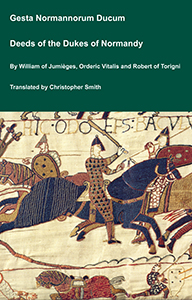
The Deeds of the Dukes of Normandy
The Gesta Normannorum Ducum [The Deeds of the Dukes of Normandy] is a landmark medieval chronicle tracing the rise and fall of the Norman dynasty from its early roots through the pivotal events surrounding the Norman Conquest of England. Originally penned in Latin by the monk William of Jumièges shortly before 1060 and later expanded at the behest of William the Conqueror, the work chronicles the deeds, politics, battles, and leadership of the Norman dukes, especially William’s own claim to the English throne. The narrative combines earlier historical sources with firsthand information and oral testimony to present an authoritative account of Normandy’s transformation from a Viking settlement into one of medieval Europe’s most powerful realms. William’s history emphasizes the legitimacy, military prowess, and governance of the Norman line, framing their expansion, including the conquest of England, as both divinely sanctioned and noble in purpose. Later chroniclers such as Orderic Vitalis and Robert of Torigni continued the history, extending the coverage into the 12th century, providing broader context on ducal rule and its impact. Today this classic work remains a foundational source for understanding Norman identity, medieval statesmanship, and the historical forces that reshaped England and Western Europe between 800AD and 1100AD.
Available at Amazon in eBook and Paperback format.
Earl Loudon is in Earl.
On 12th May 1633 John Campbell 1st Earl Loudon (age 35) was created 1st Earl Loudon.
Before 15th March 1662 John Campbell 1st Earl Loudon (age 64) died. His son James (age 42) succeeded 2nd Earl Loudon.
In 1684 James Campbell 2nd Earl Loudon (age 64) died. His son Hugh (age 9) succeeded 3rd Earl Loudon.
On 20th November 1731 Hugh Campbell 3rd Earl Loudon (age 56) died. His son John (age 26) succeeded 4th Earl Loudon.
On 27th April 1782 John Campbell 4th Earl Loudon (age 76) died. His first cousin James (age 56) succeeded 5th Earl Loudon.
On 28th April 1786 James Mure-Campbell 5th Earl Loudon (age 60) died. His daughter Flora (age 6) succeeded 6th Countess Loudon.
On 8th January 1840 Flora Mure-Campbell Marchioness of Hastings (age 60) died. Her son George (age 31) succeeded 7th Earl Loudon.
On 13th January 1844 George Augustus Francis Rawdon-Hastings 2nd Marquess Hastings (age 35) died. His son Paulyn (age 11) succeeded 3rd Marquess Hastings, 8th Earl Loudon, 4th Earl Moira, 19th Baron Botreaux, 18th Baron Hungerford, 16th Baron Moleyns and 16th Baron Hastings.
On 17th January 1851 Paulyn Reginald Serlo Rawdon-Hastings 3rd Marquess Hastings (age 18) died. His brother Henry (age 8) succeeded 4th Marquess Hastings, 9th Earl Loudon, 5th Earl Moira, 21st Baron Grey of Ruthyn, 20th Baron Botreaux, 19th Baron Hungerford, 17th Baron Moleyns and 17th Baron Hastings. Florence Cecilia Paget Marchioness Hastings (age 8) by marriage Marchioness Hastings.


On 10th November 1868 Henry Weysford Charles Plantagenet Rawdon-Hastings 4th Marquess Hastings (age 26) died. Marquess Hastings and Earl Moira extinct. Baron Botreaux, Baron Hungerford, Baron Hastings, Baron Moleyns and Baron Grey of Ruthyn abeyant. His sister Edith (age 34) succeeded 10th Countess Loudon.
On 23rd January 1874 Edith Maud Rawdon-Hastings 10th Countess Loudon (age 40) died. Her son Charles (age 19) succeeded 11th Earl Loudon, 22nd Baron Botreaux, 21st Baron Hungerford, 19th Baron Moleyns and 19th Baron Hastings. Alice Elizabeth Fitzalan Howard Countess Loudon by marriage Countess Loudon.
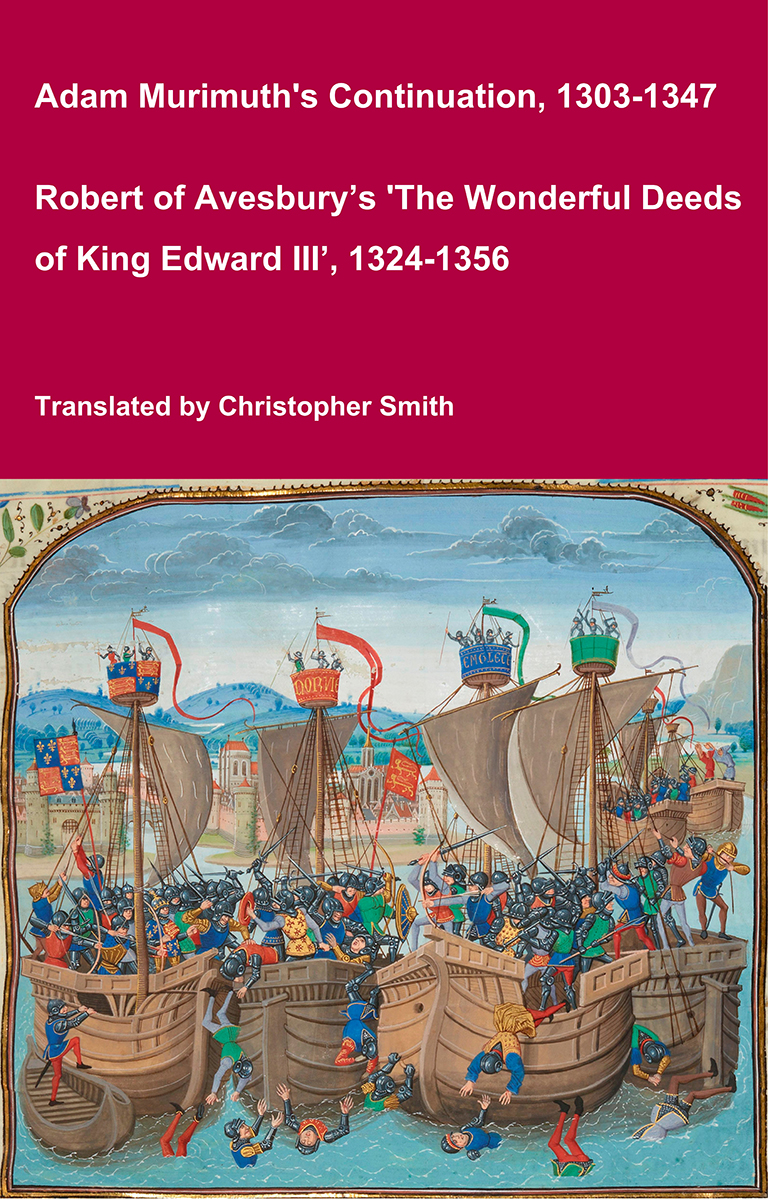
Adam Murimuth's Continuation and Robert of Avesbury’s 'The Wonderful Deeds of King Edward III'
This volume brings together two of the most important contemporary chronicles for the reign of Edward III and the opening phases of the Hundred Years’ War. Written in Latin by English clerical observers, these texts provide a vivid and authoritative window into the political, diplomatic, and military history of fourteenth-century England and its continental ambitions. Adam Murimuth Continuatio's Chronicarum continues an earlier chronicle into the mid-fourteenth century, offering concise but valuable notices on royal policy, foreign relations, and ecclesiastical affairs. Its annalistic structure makes it especially useful for establishing chronology and tracing the development of events year by year. Complementing it, Robert of Avesbury’s De gestis mirabilibus regis Edwardi tertii is a rich documentary chronicle preserving letters, treaties, and official records alongside narrative passages. It is an indispensable source for understanding Edward III’s claim to the French crown, the conduct of war, and the mechanisms of medieval diplomacy. Together, these works offer scholars, students, and enthusiasts a reliable and unembellished account of a transformative period in English and European history. Essential for anyone interested in medieval chronicles, the Hundred Years’ War, or the reign of Edward III.
Available at Amazon in eBook and Paperback format.
On 17th May 1920 Charles Rawdon-Hastings 11th Earl Loudon (age 65) died. Baron Botreaux, Baron Hungerford, Baron Moleyns and Baron Hastings abeyant. His niece Edith (age 37) succeeded 12th Countess Loudon. His brother Gilbert (age 60) succeeded 3rd Baron Donington of Dongington Park in Leicestershire.
After 24th February 1960 Edith Maud Rawdon-Hastings 12th Countess Loudon (deceased) died. Her daughter Barbara (age 40) succeeded 13th Countess Loudon. Peter Griffiths aka Abney-Hastings Earl Loudon (age 35) by marriage Earl Loudon. Baron Botreaux, Baron Stanley and Baron Hastings abeyant between her five daughters and their descendants.
On 1st November 2002 Barbara Abney-Hastings 13th Countess of Loudoun (age 83) died. Her son Michael (age 60) succeeded 14th Earl Loudon.