

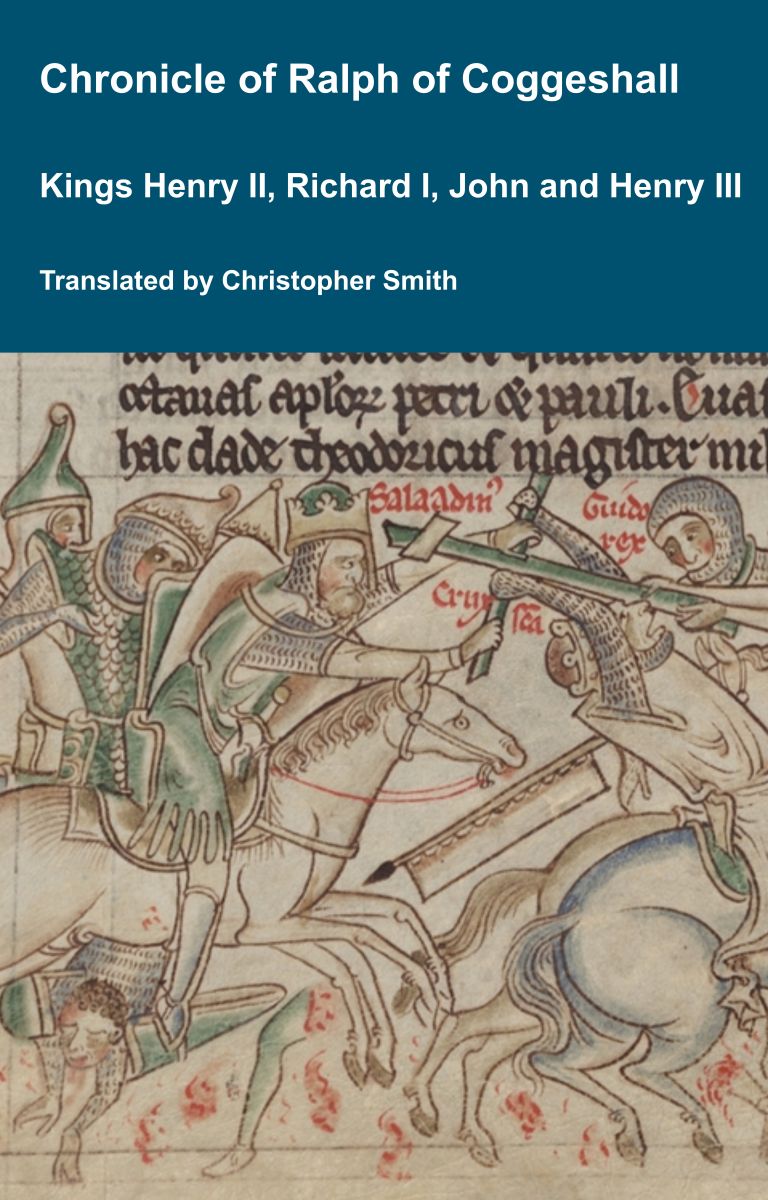
Chronicle of Abbot Ralph of Coggeshall
The Chronicle of Abbot Ralph of Coggeshall (Chronicon Anglicanum) is an indispensable medieval history that brings to life centuries of English and European affairs through the eyes of a learned Cistercian monk. Ralph of Coggeshall, abbot of the Abbey of Coggeshall in Essex in the early 13th century, continued and expanded his community’s chronicle, documenting events from the Norman Conquest of 1066 into the tumultuous reign of King Henry III. Blending eyewitness testimony, careful compilation, and the monastic commitment to record-keeping, this chronicle offers a rare narrative of political intrigue, royal power struggles, and social upheaval in England and beyond. Ralph’s work captures the reigns of pivotal figures such as Richard I and King John, providing invaluable insights into their characters, decisions, and the forces that shaped medieval rule. More than a simple annal, Chronicon Anglicanum conveys the texture of medieval life and governance, making it a rich source for scholars and readers fascinated by English history, monastic authorship, and the shaping of the medieval world.
Available at Amazon in eBook and Paperback format.
Ffyst Samson Burial Chamber is in St Nicholas, Pembrokeshire, Prehistoric Wales Neolithic Burials.
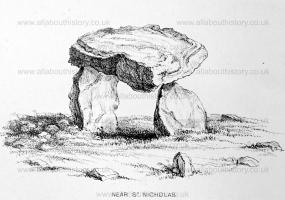
Archaeologia Cambrensis 1872 Pages 81-143. In the adjoining parish of St. Nicholas is a dolmen [Ffyst Samson Burial Chamber [Map]] which might pass for one of the free-standing or tripod ones, as all that is left of the original chamber are two supporters and the capstone, the latter resting on two separate points of one of the supporters. It is 7 ft. 9 ins. long by 6 ft. 7. ins.: measurements which do not agree with those given by Sir Gardner, who gives the breadth only 3 ft. 10 ins., and which is probably an error of the printer. The highest of the two supporters is 5 ft. 8 ins., being 2 ft. more than the other. The thickness of the capstone is a little under 2 ft. The chamber must have been small. Slight remains of the cairn still lie around. The situation is very conspicuous. At a short distance, In the lower ground, stand some pillar-stones; portions, in all probability, of a stone circle.