

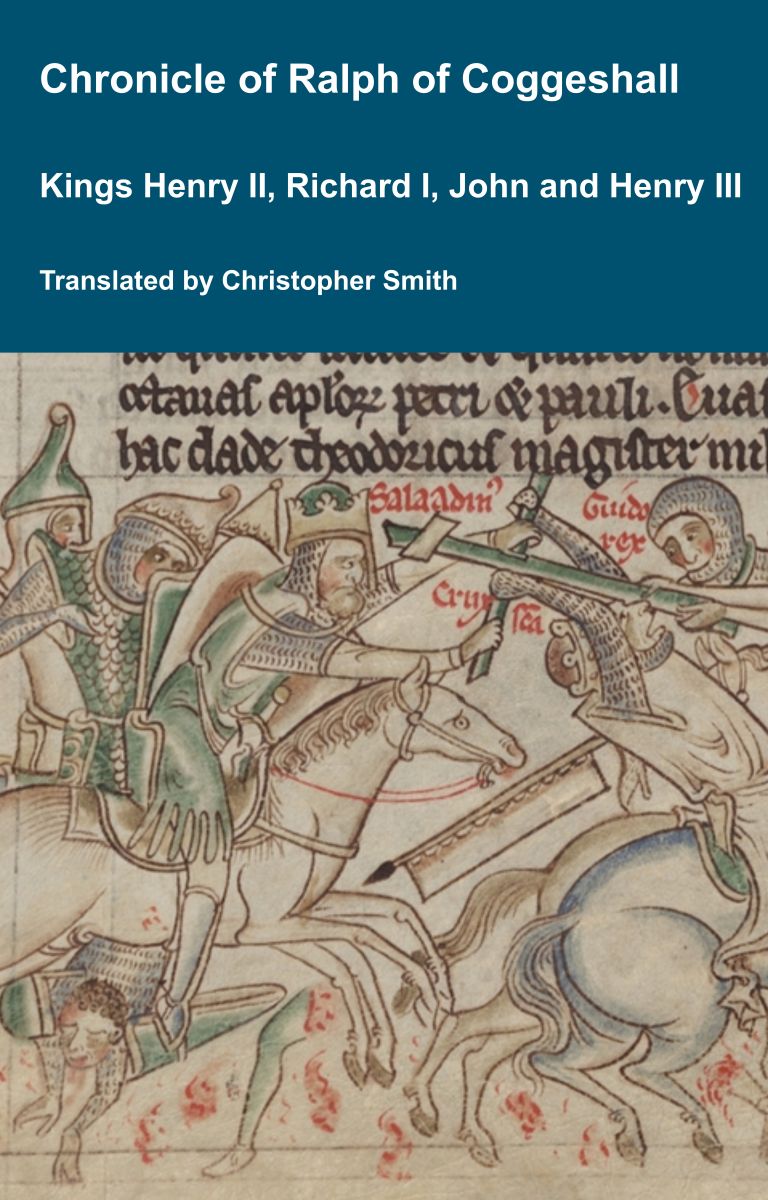
Chronicle of Abbot Ralph of Coggeshall
The Chronicle of Abbot Ralph of Coggeshall (Chronicon Anglicanum) is an indispensable medieval history that brings to life centuries of English and European affairs through the eyes of a learned Cistercian monk. Ralph of Coggeshall, abbot of the Abbey of Coggeshall in Essex in the early 13th century, continued and expanded his community’s chronicle, documenting events from the Norman Conquest of 1066 into the tumultuous reign of King Henry III. Blending eyewitness testimony, careful compilation, and the monastic commitment to record-keeping, this chronicle offers a rare narrative of political intrigue, royal power struggles, and social upheaval in England and beyond. Ralph’s work captures the reigns of pivotal figures such as Richard I and King John, providing invaluable insights into their characters, decisions, and the forces that shaped medieval rule. More than a simple annal, Chronicon Anglicanum conveys the texture of medieval life and governance, making it a rich source for scholars and readers fascinated by English history, monastic authorship, and the shaping of the medieval world.
Available at Amazon in eBook and Paperback format.
Ligwy Burial Chamber is in Anglesey, Prehistoric Anglesey Burial Chambers.
Ligwy Burial Chamber [Map] is a Neolithic burial chamber in Lligwy, near the east coast of Anglesey, Wales. It consists of a circle of upright stones, made into a low chamber by a very large roof slab estimated at 25 tonnes. Excavation in 1909 found the remains of some 15 to 30 people, and pottery suggesting a late Neolithic date.
Archaeological Journal Volume 28 1871 Pages 97-108. 27. Lligwy [Map], Penrhos Lligwy par. (N).
A remarkable example, called also Coetan Arthur, adjoining the road from Red Wharf to Lligwy Bay, and on the estates of Lord Boston. Cap-stone of massive dimensions, 16 ft. by 13 ft. and 3 ft. 6 in. thick. Lewis, Topogr. Diet, of Wales: Angh. Llwyd, p. 341: Memoir by Rev. W. Wynn Williams, in 1867, Arch. Cambr., third series, vol. xiii. p. 135, where a N.E. and a S.E. view are given, with a plan. In 1845, as related by the late Rev. Hugh Jones, D.D. diggings for treasure at Lligwy exposed to view a quantity of bones, but their nature has not been stated, Arch. Journ., vol. ii. p. 269.