The History of William Marshal was commissioned by his son shortly after William’s death in 1219 to celebrate the Marshal’s remarkable life; it is an authentic, contemporary voice. The manuscript was discovered in 1861 by French historian Paul Meyer. Meyer published the manuscript in its original Anglo-French in 1891 in two books. This book is a line by line translation of the first of Meyer’s books; lines 1-10152. Book 1 of the History begins in 1139 and ends in 1194. It describes the events of the Anarchy, the role of William’s father John, John’s marriages, William’s childhood, his role as a hostage at the siege of Newbury, his injury and imprisonment in Poitou where he met Eleanor of Aquitaine and his life as a knight errant. It continues with the accusation against him of an improper relationship with Margaret, wife of Henry the Young King, his exile, and return, the death of Henry the Young King, the rebellion of Richard, the future King Richard I, war with France, the death of King Henry II, and the capture of King Richard, and the rebellion of John, the future King John. It ends with the release of King Richard and the death of John Marshal.
Available at Amazon in eBook and Paperback format.
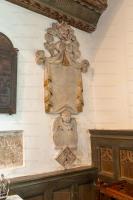
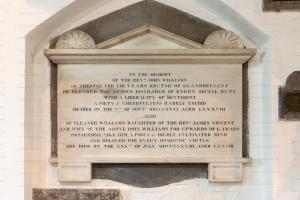
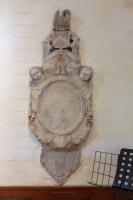
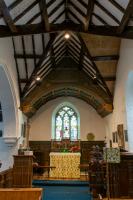
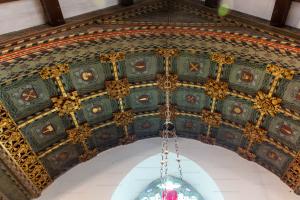
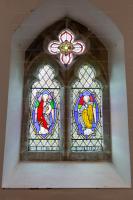
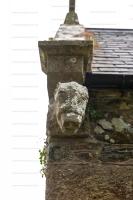
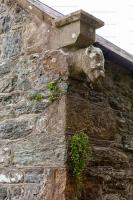
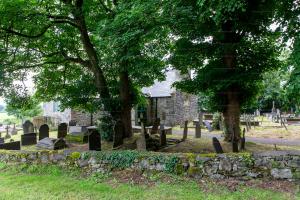
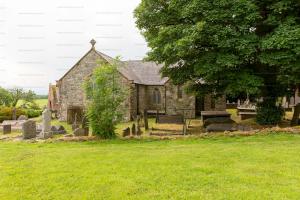
St Sadwrn's Church, Llansadwrn is in Llansadwrn, Anglesey.
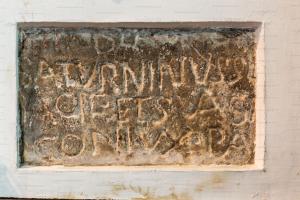
Around 500AD St Sadwrn founded St Sadwrn's Church, Llansadwrn [Map]. The stone was discovered in the graveyard before 1742. It is reputed to be the oldest memorial stone in Wales. The Latin inscription: "Here lies the blessed Saturnius and his saintly wife. Peace be with you both. The date of the stone is 520AD.

On 9th December 1891 Andrew Crombie Ramsay (age 77) died. He was buried at St Sadwrn's Church, Llansadwrn [Map] where his grave is marked by a glacial erratic.
St Sadwrn's Church, Llansadwrn [Map].