All About History Books on Amazon
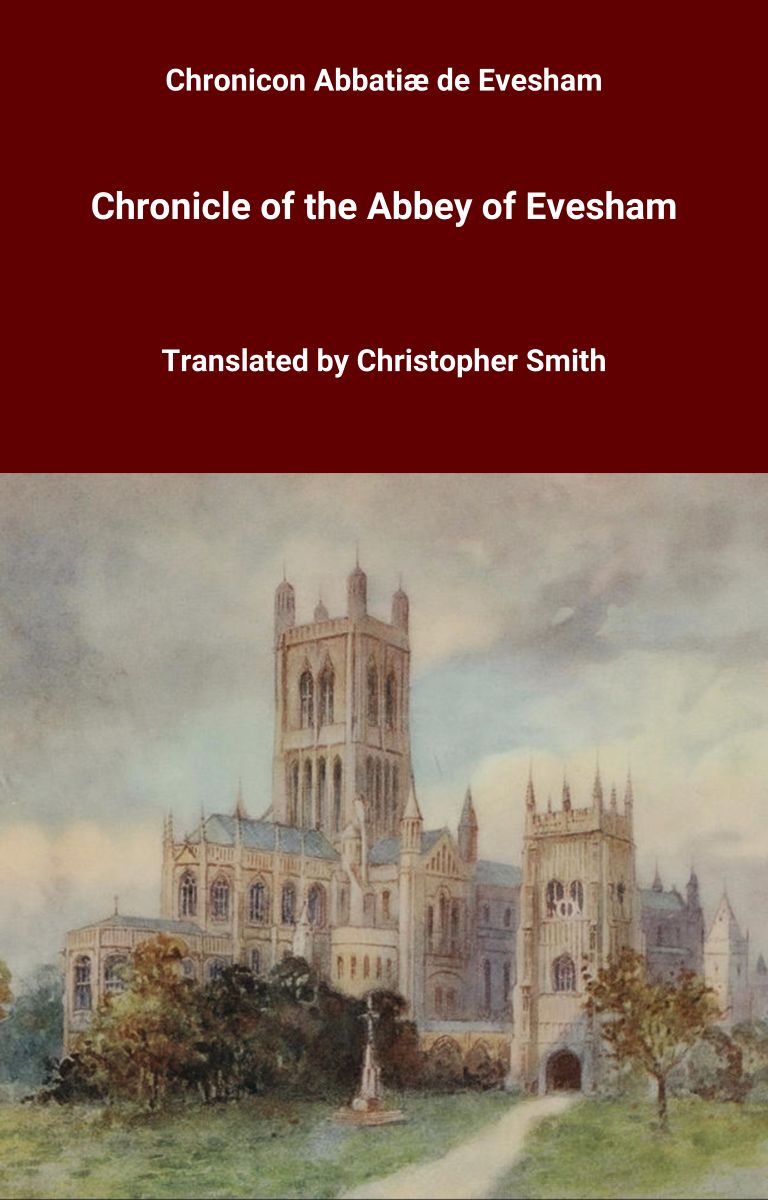
Chronicle of the Abbey of Evesham
The Chronicle of the Abbey of Evesham is a remarkable medieval history of one of England’s great Benedictine monasteries. Beginning with the abbey’s legendary and royal foundations, it traces the fortunes of Evesham through centuries of religious devotion, political conflict, legal struggle, rebuilding, reform, and royal patronage. At the heart of the chronicle is the abbey’s determination to defend its ancient liberties. Its monks record disputes with bishops, appeals to popes and papal legates, contested elections of abbots, lawsuits over lands and privileges, and the long struggle to preserve Evesham’s exemption from episcopal control. Alongside these institutional battles are vivid accounts of saints and miracles, including St Ecgwine, St Odulf and the royal martyr St Wistan, whose relics and cult formed an important part of the abbey’s identity. The chronicle also preserves a wealth of detail about everyday monastic life. It describes the building and repair of churches, cloisters, chapels, halls, mills, granges and fishponds; the acquisition of estates and revenues; the making of vestments, shrines, bells and liturgical books; and the provision of food, clothing, recreation and medical care for the monks. Successive abbots emerge not merely as religious superiors but as administrators, builders, patrons, diplomats and defenders of the community. Extending into the later Middle Ages, the narrative reflects the changing political world around Evesham, from the Norman Conquest and the Angevin kings to the Wars of the Roses and the reign of Henry VIII. The result is both a history of a single monastery and a richly detailed record of medieval English religious, legal, economic and political life. This edition offers modern readers direct access to one of the most important monastic chronicles of medieval England, revealing how the monks of Evesham understood their saints, their privileges, their rulers and their place in history.
Available at Amazon in eBook and Paperback format.
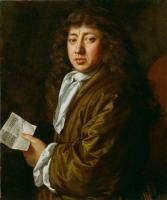
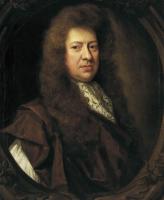
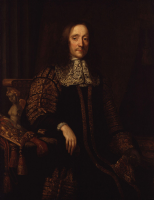
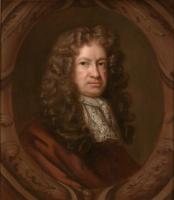
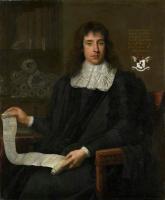
In 1633 Robert Sawyer was born to Edmund Sawyer of Heywood Lodge in White Waltham in Berkshire. He was educated at Magdalene College aka Buckingham, Cambridge University where he was a contemporary of Samuel Pepys.
After 1633 Robert Sawyer and Margaret Suckeley were married.
Samuel Pepys' Diary. 6th December 1667. So home, and there to dinner, and after dinner abroad with my wife and girle, set them down at Unthanke's, and I to White Hall to the Council chamber, where I was summoned about the business of paying of the seamen, where I heard my Lord Anglesey [aged 53] put to it by Sir W. Coventry [aged 39] before the King [aged 37] for altering the course set by the Council; which he like a wise man did answer in few words, that he had already sent to alter it according to the Council's method, and so stopped it, whereas many words would have set the Commissioners of the Treasury on fire, who, I perceive, were prepared for it. Here I heard Mr. Gawden speak to the King and Council upon some business of his before them, but did it so well, in so good words and to the purpose, that I could never have expected from a man of no greater learning. So went away, and in the Lobby met Mr. Sawyer [aged 34], my old chamber fellow, and stayed and had an hour's discourse of old things with him, and I perceive he do very well in the world, and is married he tells me and hath a child.
In 1673 Robert Sawyer [aged 40] was elected MP High Wycombe.
In 1678 Robert Sawyer [aged 45] was elected Speaker of the House of Commons but resigned a month later due to health.
Before 21st July 1683 Robert Sawyer [aged 50] prosecuted members of the Rye House Plot.
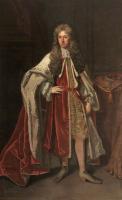
In 1684 [his son-in-law] Thomas Herbert 8th Earl Pembroke 5th Earl Montgomery [aged 28] and [his daughter] Margaret Sawyer Countess Pembroke and Montgomery were married. She by marriage Countess Pembroke, Countess Montgomery. He the son of Philip Herbert 5th Earl Pembroke 2nd Earl Montgomery and Catherine Villiers Countess Pembroke and Montgomery.
In 1685, following his accession, King James II of England Scotland and Ireland [aged 51] had Titus Oates [aged 35] retried. He was found guilty of perjury on two separate indictments.
His sentence read... First, The Court does order for a fine, that you pay 1000 marks upon each Indictment. Secondly, That you be stript of all your Canonical Habits. Thirdly, the Court does award, That you do stand upon the Pillory, and in the Pillory, here before Westminster-hall gate, upon Monday next, for an hour's time, between the hours of 10 and 12; with a paper over your head (which you must first walk with round about to all the Courts in Westminister-hall) declaring your crime. And that is upon the first Indictment.
Fourthly, (on the Second Indictment), upon Tuesday, you shall stand upon, and in the Pillory, at the Royal Exchange in London, for the space of an hour, between the hours of twelve and two; with the same inscription. You shall upon the next Wednesday be whipped from Aldgate to Newgate. Upon Friday, you shall be whipped from Newgate to Tyburn [Map], by the hands of the common hangman.
According to his sentence, Oates was to stand every year of his life in the pillory on five different days: "before the gate of Westminster Hall on the 9th of August, at Charing Cross on the 10th, at the Temple on the 11th, at the Royal Exchange on the 2nd of September, and at Tyburn [Map] on the 24th of April; but, fortunately for the infamous creature, the Revolution deprived his determined enemies of power, and turned the criminal into a pensioner on Government."
The presiding judge was George "Hanging Judge" Jeffreys 1st Baron Jeffreys [aged 39]. Robert Sawyer [aged 52] acted for the prosecution.
On 29th June 1688 the seven bishops were tried at the King's Bench. Robert Sawyer [aged 55] acted for the defence. They were found not guilty. Their acquittal resulted in wild celebrations throughout London
In 1689 Robert Sawyer [aged 56] was elected MP Cambridge University.
In 1690 Robert Sawyer [aged 57] was elected MP Cambridge University.
In 30th July 1692 Robert Sawyer [aged 59] died at his home Highclere Castle.
All About History Books on Amazon
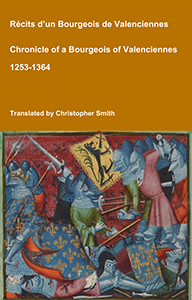
Chronicle of a Bourgeois of Valenciennes
Récits d’un bourgeois de Valenciennes aka The Chronicle of a Bourgeois of Valenciennes is a vivid 14th-century vernacular chronicle written by an anonymous urban chronicler from Valenciennes in the County of Hainaut. It survives in a manuscript that describes local and regional history from about 1253 to 1366, blending chronology, narrative episodes, and eyewitness-style accounts of political, military, and social events in medieval France, Flanders, and the Low Countries. The work begins with a chronological framework of events affecting Valenciennes and its region under rulers such as King Philip VI of France and the shifting allegiances of local nobility. It includes accounts of conflicts, sieges, diplomatic manoeuvres, and the impact of broader struggles like the Hundred Years’ War on urban life in Hainaut. Written from the perspective of a burgher (bourgeois) rather than a monastery or royal court, the chronicle offers a rare lay viewpoint on high politics and warfare, reflecting how merchants, townspeople, and civic institutions experienced the turbulence of the 13th and 14th centuries. Its narrative style combines straightforward reporting of events with moral and civic observations, making it a valuable source for readers interested in medieval urban society, regional politics, and the lived experience of war and governance in pre-modern Europe.
Available at Amazon in eBook and Paperback format.
[his daughter] Margaret Sawyer Countess Pembroke and Montgomery was born to Robert Sawyer. She married 1684 Thomas Herbert 8th Earl Pembroke 5th Earl Montgomery, son of Philip Herbert 5th Earl Pembroke 2nd Earl Montgomery and Catherine Villiers Countess Pembroke and Montgomery, and had issue.