All About History Books on Amazon

Jean de Waurin's Chronicle of England Volume 6 Books 3-6: The Wars of the Roses

Jean de Waurin was a French Chronicler, from the Artois region, who was born around 1400, and died around 1474. Waurin’s Chronicle of England, Volume 6, covering the period 1450 to 1471, from which we have selected and translated Chapters relating to the Wars of the Roses, provides a vivid, original, contemporary description of key events some of which he witnessed first-hand, some of which he was told by the key people involved with whom Waurin had a personal relationship.

Available at Amazon in eBook and Paperback format.

Bishops of Scotland

Bishops of Scotland is in Scotland Lords Spiritual.

Bishop Aberdeen

Around January 1547 William Gordon Bishop Aberdeen was consecrated as Bishop Aberdeen.

Bishop Argyll

In 1497 David Hamilton Bishop Argyll was appointed Bishop Argyll.

Bishop Brechin

John Hepburn Bishop Brechin was appointed Bishop Brechin.

Bishop Caithness

On 14th December 1517 Andrew Stewart Bishop Caithness was appointed Bishop Caithness.

Bishop Isles

In 1510 George Hepburn Bishop Isles [aged 56] was appointed Bishop Isles.

Bishop of Dunkeld

In 1288 Bishop Matthew de Crambeth was consecrated Bishop of Dunkeld.

Bishop Gavin Douglas was appointed Bishop of Dunkeld.

Bishop of Glasgow

On 29th January 1273 Bishop Robert Wishart was consecrated Bishop of Glasgow.

Bishop Floris Gerulfing was appointed Bishop of Glasgow.

Bishop of Moray

All About History Books on Amazon

Annals of Kings Richard II and Henry IV 1393-1406

The Annals of Kings Richard II and Henry IV offers a vivid contemporary account of one of the most turbulent periods in late medieval England. Covering the reigns of Richard II and Henry IV, the chronicle records royal ceremonies, political conflict, rebellion, war, taxation, religious controversy, executions, popular unrest and remarkable portents. Its pages include a detailed description of Richard II’s coronation, the fall and deposition of the king, Henry IV’s seizure of the throne, the Percy rebellion, the execution of Archbishop Richard Scrope, the campaigns of Owain Glyndŵr, and England’s relations with Scotland, France, Portugal and Scandinavia. Alongside affairs of state, the annalist preserves reports of miracles, eclipses, prophecies, supernatural events and the experiences of ordinary townspeople, clergy, soldiers and travellers. Written from a monastic perspective, the work combines political observation with moral judgement, presenting victories and disasters as evidence of divine favour or punishment. At once a historical record and a reflection of medieval belief, the Annals provides an invaluable window into the challenges, ceremonies and conflicts of England at the turn of the fifteenth century.

Available at Amazon in eBook and Paperback format.

In 1171 Bishop Simon de Tosny was appointed Bishop of Moray.

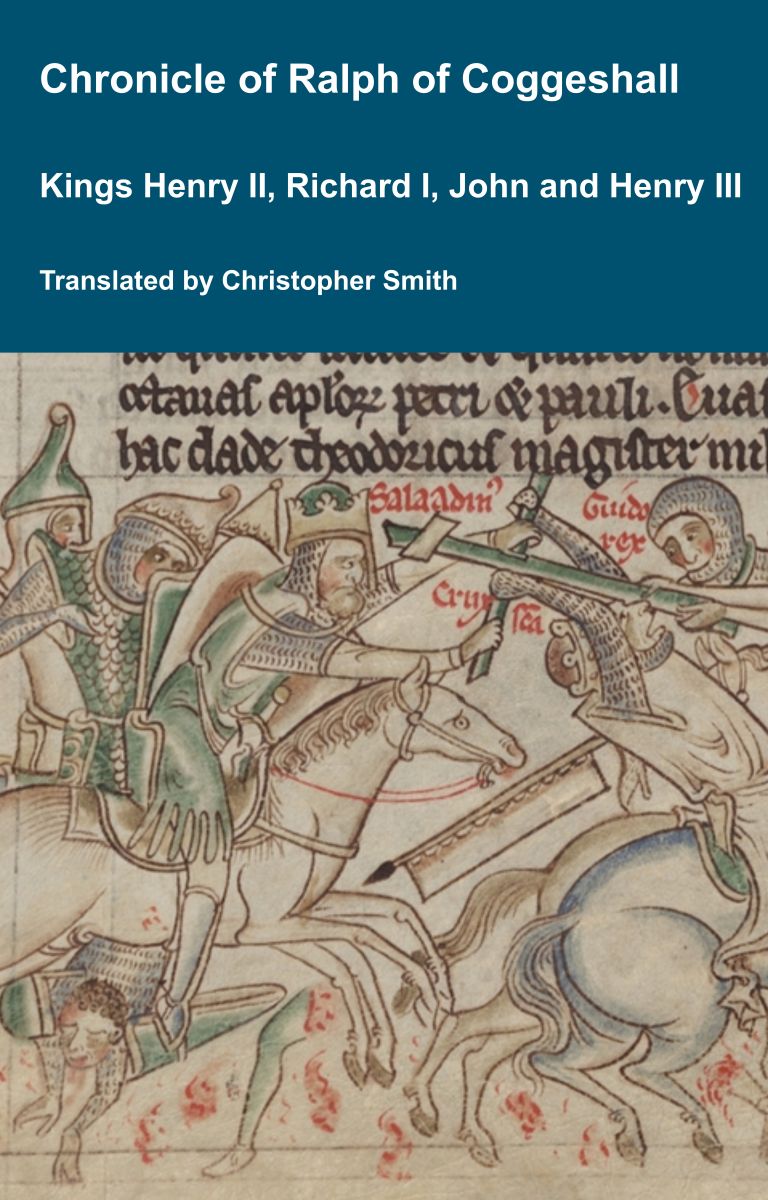
On 23rd January 1172 Bishop Simon de Tosny was consecrated Bishop of Moray. See Chronicum Anglicanum by Ralph of Coggeshall.

On 28th June 1299 Bishop David de Moravia was consecrated Bishop of Moray at Anagni by Matthew of Aquasparta, Cardinal-Bishop of Porto.

On 30th March 1326 John de Pilmuir was consecrated Bishop of Moray at Avignon [Map] by Pope John XXII.

In 1482 Bishop Andrew Stewart [aged 39] was appointed Bishop of Moray.

On 26th November 1501 Bishop Andrew Forman [aged 36] was appointed Bishop of Moray.

Bishop of Ross

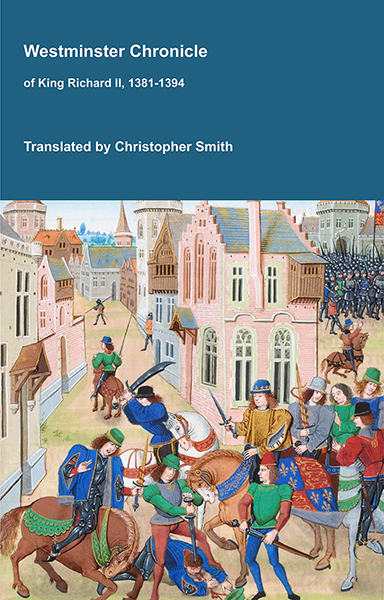
Westminster Chronicle. Also, on the 4th day of May, the Lord de la Warre and Sir David Lindsay, a Scottish knight, well armed, first charged against one another on horseback with very sharp lances; then they fought on foot with axes, and finally with daggers. All these things, according to report, they performed very vigorously. Also, on the 8th day of May, Brother Alexander1 was consecrated Bishop of Ross at Westminster by the Archbishop of Canterbury [aged 48]. He was the lord king’s confessor, of the Order of Preachers, and a master in theology. The king and queen, and other noble and gentle persons, came to that solemnity. Indeed, when this friar first came to the king, he was very humble and devout in gesture, expression, diet, manner of seeking, and in all his actions plainly moderate. He would not ride, but, following the court, went on foot from one place to another. At first he refused the bishopric; but a little afterwards, his will having changed, he began to act more insolently against all the aforesaid things, as the outcome of the matter has now proved.

Quarto quoque die Maii dominus de la Welle, et dominus David Lyndeseye miles Scoticus, bene armati primo cum lanceis acutissimis in equis hostiliter concurrerunt, deinde cum securibus postremo cum daggeris pedestres certarunt, quæ omnia peregerunt satis strenue seeundum relata. Item octavo die Maii consecratus est frater Alexander in episcopum Assanensem apud Westmonasterium ab archiepiscopo Cantuariensi, qui fuit et est confessor domini regis, de ordine prædicatorum magister in theologia. Ad istam solemnitatem accesserunt rex et regina ac alii nobiles generosi. Erat nempe frater iste quando primo venit ad regem satis humilis et devotus in gestu, vultu, in victu, in quæstu et in omnibus suis actibus perspicue moderatus nec voluit equitare, sed de uno loco ad alium sequendo curiam pedester transire, episcopatum vero primitus recusabat, sed parum postea mutata voluntate cœpit insolentius agere contra universa præmissa, ut jam rei effectus probavit.

Note 1. The surname is absent from the Latin text. Bishop Alexander de Kylwos, died 1398.

Click to read more ...

Bishop of St Andrews

On 4th August 1279 Bishop William Fraser was elected Bishop of St Andrews.

In 1297 Bishop William de Lamberton was consecrated Bishop of St Andrews.

On 25th March 1306, King Robert the Bruce I of Scotland [aged 31] was crowned King Scotland at Scone Abbey [Map] by Bishop of St Andrews and Bishop Robert Wishart. Elizabeth Burgh Queen Consort Scotland [aged 22] was crowned Queen Consort Scotland. Christopher Seton [aged 28] and Bishop David de Moravia were present. He was wearing royal robes and vestments previously hidden from the English by Bishop Robert Wishart.

The following day, 26th March 1306, King Robert the Bruce I of Scotland was crowned by Isabella Countess Buchan whose family held the hereditary right to place the crown on the King's head; she had arrived too late for the coronation the day before. The right was held by her brother Duncan Fife 4th Earl Fife [aged 18] who was under-age and held by the English so she assumed the right in his place.

On 30th April 1388 Archbishop Alexander Neville [aged 47] was translated to Bishop of St Andrews. He never took possession of the see because the Scots acknowledged the Avignon papacy with their own candidate, Bishop Walter Trail.

All About History Books on Amazon

The History of William Marshal, Earl of Chepstow and Pembroke, Regent of England. Book 1 of 2, Lines 1-10152.

The History of William Marshal was commissioned by his son shortly after William’s death in 1219 to celebrate the Marshal’s remarkable life; it is an authentic, contemporary voice. The manuscript was discovered in 1861 by French historian Paul Meyer. Meyer published the manuscript in its original Anglo-French in 1891 in two books. This book is a line by line translation of the first of Meyer’s books; lines 1-10152. Book 1 of the History begins in 1139 and ends in 1194. It describes the events of the Anarchy, the role of William’s father John, John’s marriages, William’s childhood, his role as a hostage at the siege of Newbury, his injury and imprisonment in Poitou where he met Eleanor of Aquitaine and his life as a knight errant. It continues with the accusation against him of an improper relationship with Margaret, wife of Henry the Young King, his exile, and return, the death of Henry the Young King, the rebellion of Richard, the future King Richard I, war with France, the death of King Henry II, and the capture of King Richard, and the rebellion of John, the future King John. It ends with the release of King Richard and the death of John Marshal.

Available at Amazon in eBook and Paperback format.

In 1408 Bishop John Trevor was translated to Bishop of St Andrews. As Bishop of St. Andrews, he was an anti-Bishop and never took possession of the see. This situation was the product of the Western Schism, in which the Scots supported the Avignon Popes, and so only candidates of the Avignon Popes could take possession of the see.

Bishop Roger Beaumont was appointed Bishop of St Andrews.

Bishop Walter Trail was appointed Bishop of St Andrews.