All About History Books on Amazon

Chronicles of the Reigns of Edward I and II Volume 1 Annals of London and Annals of St Paul's

This volume brings together two important medieval chronicles of the reigns of Edward I and Edward II: the Annals of London (Annales Londonienses) and the Annals of St Paul’s (Annales Paulini). Written close to the events they describe, these chronicles offer a vivid contemporary record of English political, military, ecclesiastical and civic life from the late thirteenth to the early fourteenth century. Their particular strength lies in their London perspective, recording not only the affairs of kings, nobles and bishops, but also parliaments, royal proclamations, civic disputes, elections of mayors and sheriffs, executions, tournaments, religious ceremonies, fires, floods, disturbances and the everyday concerns of the capital. The chronicles cover some of the most dramatic events of the period, including the wars of Edward I, conflict with Scotland, the turbulent reign of Edward II, the rise and fall of Piers Gaveston and the Despensers, the rebellion of Thomas of Lancaster, Queen Isabella’s invasion of England, the deposition of Edward II, and the accession of Edward III. The Annales Paulini, associated with St Paul’s Cathedral, is particularly rich in detailed observations of London and its clergy and citizens. An essential primary source for students and readers interested in medieval England, London history, Edward I, Edward II, Edward III, the Scottish wars, medieval politics, and ecclesiastical history, this volume provides an unusually immediate view of a kingdom undergoing profound political upheaval.

Available at Amazon in eBook and Paperback format.

Chertsey, Surrey, South-East England, British Isles

Chertsey, Surrey is in Surrey.

On 1st July 1175 Reginald de Dunstanville Fitzroy 1st Earl Cornwall [aged 65] died at Chertsey, Surrey. He was buried at Reading Abbey, Berkshire [Map]. Earl Cornwall extinct. His son appears to have predeceaseed him by months.

Archaeologia Volume 35 1853 XXXIII. On the following day, the 16th of April [1358], Isabella [aged 63] set out on a journey from Hertford, and the movements of her household are recorded to have been - on the 16th to Tottenham; on the 17th to London; on the 20th to Shene [Map]; on the 21st to Upton ( near Windsor ), the Queen herself going, it is stated, to Chertsey; on the 26th to Shene again; and on the 30th to London, where it remained till the 13th of May.

Chertsey Abbey, Surrey, South-East England, British Isles [Map]

In 666 Bishop Earconwald founded Chertsey Abbey [Map] for men and Barking Abbey [Map] for women. He served as Abbot Chertsey Abbey whilst his sister Æthelburh of Barking served as Abbess of Barking.

Bede. 674. This man, before he was made bishop, had built two famous monasteries, the one [Map] for himself, and the other [Map] for his sister Ethelberga, and established them both in regular discipline of the best kind. That for himself was in the county of Surrey, by the river Thames, at a place called Ceortesei [Map], that is, the Island of Ceorot; that for his sister in the province of the East Saxons, at the place called Bercingum [Map], wherein she might be a mother and nurse of devout women. Being put into the government of that monastery, she behaved herself in all respects as became the sister of such a brother, living herself regularly, and piously, and orderly, providing for those under her, as was also manifested by heavenly miracles.

Anglo-Saxon Chronicle. 964. This year drove King Edgar [aged 21] the priests of Winchester out of the old minster, and also out of the new minster; and from Chertsey [Map]; and from Milton [Map]; and replaced them with monks. And he appointed Ethelgar abbot to the new minster, and Ordbert to Chertsey, and Cyneward to Milton [Map].

Anglo-Saxon Chronicle. 1110. This year also died Earl Elias, who held Maine in fee-tail140 of King Henry [aged 42]; and after his death the Earl of Anjou [aged 21] succeeded to it, and held it against the king. This was a very calamitous year in this land, through the contributions which the king received for his daughter's [aged 7] portion, and through the badness of the weather, by which the fruits of the earth were very much marred, and the produce of the trees over all this land almost entirely perished. This year men began first to work at the new minster at Chertsey [Map].

Note 140. That is, the territory was not a "fee simple", but subject to "taillage" or taxation; and that particular species is probably here intended which is called in old French "en queuage", an expression not very different from that in the text above.

English Historical Literature in the Fifteenth Century Appendix 13. [21st May 14711] In the same year, Henry VI, formerly called King of England, died in the Tower of London, and was buried in the monastery of Chertsey [Map], near the Thames, in the diocese of Winchester. And thus, no one remains among the living who may claim the crown from his line.

Eodem anno decessit Henricus sextus, olim dictus rex Anglie, apud turrim London., et sepultus est in monasterio de Chertesey iuxta Tamisiam, Winton. diocesis. Et sic nemo relinquitur in humanis qui ex illo stipite coronam petat.

Note 1. The date inferred from the following paragraph.

A Brief Latin Chronicle. 21st May 1471. Immediately after this battle, more than forty knights were created; and Henry [aged 49], the former king, was returned to the Tower of London, and dying there happily on the Eve of the Ascension of the Lord, was transported by boat along the Thames to the abbey of Chertsey [Map], where he was buried."

Creati sunt statim post istud bellum plures quam xl milities; et Henricus nuper Rex reponitur in Turim London., et in Vigilia Ascensionis Dominice, ibidem feliciter moriens, per Tamisiam navicula usque ad abbahiam de Cheltesye deductus, ibi sepultus est.

Chertsey Bridge, Surrey, South-East England, British Isles [Map]

Chertsey Bridge [Map] is on the River Thames.

Porch House, Chertsey, Surrey, South-East England, British Isles

All About History Books on Amazon

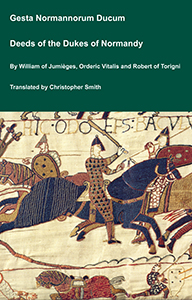
The Deeds of the Dukes of Normandy

The Gesta Normannorum Ducum [The Deeds of the Dukes of Normandy] is a landmark medieval chronicle tracing the rise and fall of the Norman dynasty from its early roots through the pivotal events surrounding the Norman Conquest of England. Originally penned in Latin by the monk William of Jumièges shortly before 1060 and later expanded at the behest of William the Conqueror, the work chronicles the deeds, politics, battles, and leadership of the Norman dukes, especially William’s own claim to the English throne. The narrative combines earlier historical sources with firsthand information and oral testimony to present an authoritative account of Normandy’s transformation from a Viking settlement into one of medieval Europe’s most powerful realms. William’s history emphasizes the legitimacy, military prowess, and governance of the Norman line, framing their expansion, including the conquest of England, as both divinely sanctioned and noble in purpose. Later chroniclers such as Orderic Vitalis and Robert of Torigni continued the history, extending the coverage into the 12th century, providing broader context on ducal rule and its impact. Today this classic work remains a foundational source for understanding Norman identity, medieval statesmanship, and the historical forces that reshaped England and Western Europe between 800AD and 1100AD.

Available at Amazon in eBook and Paperback format.

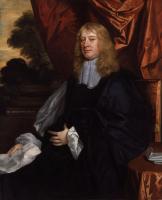
On 28th July 1667 Abraham Cowley [aged 49] died in Porch House. He was buried in Westminster Abbey [Map] where John Sheffield 1st Duke of Buckingham and Normanby [aged 19] subsequently commissioned a monument.