All About History Books on Amazon
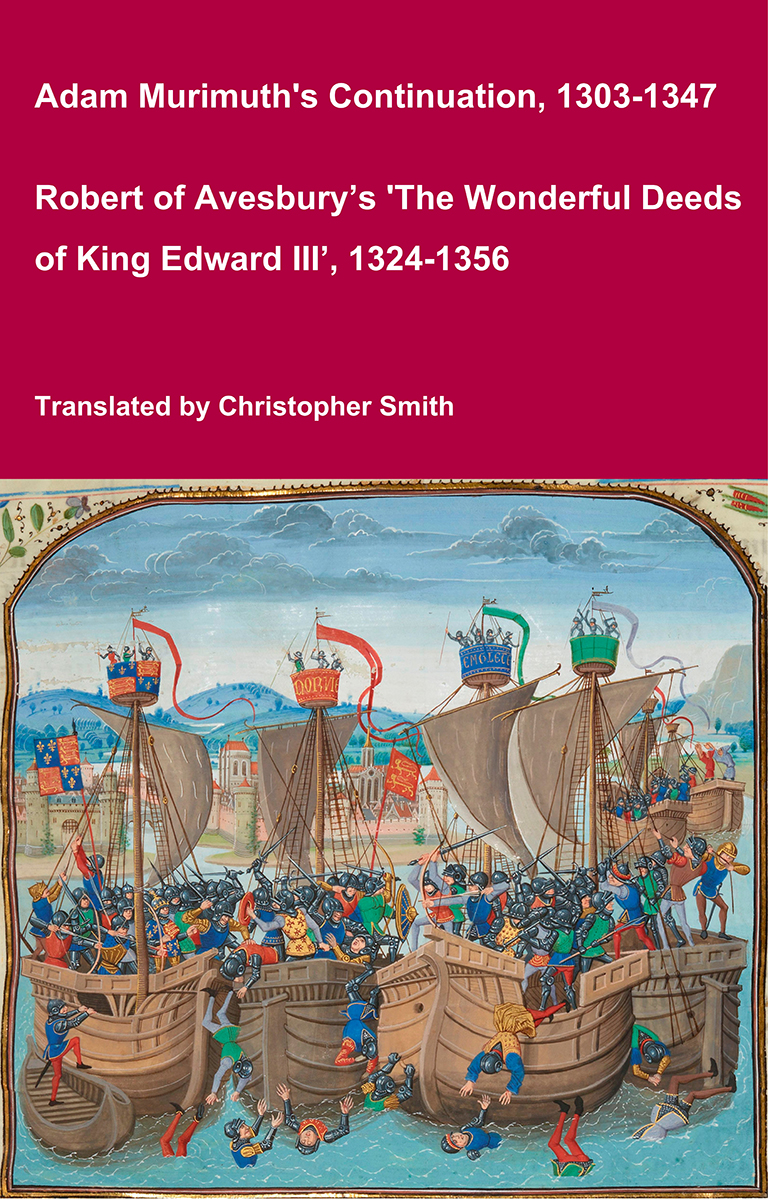
Adam Murimuth's Continuation and Robert of Avesbury’s 'The Wonderful Deeds of King Edward III'
This volume brings together two of the most important contemporary chronicles for the reign of Edward III and the opening phases of the Hundred Years’ War. Written in Latin by English clerical observers, these texts provide a vivid and authoritative window into the political, diplomatic, and military history of fourteenth-century England and its continental ambitions. Adam Murimuth Continuatio's Chronicarum continues an earlier chronicle into the mid-fourteenth century, offering concise but valuable notices on royal policy, foreign relations, and ecclesiastical affairs. Its annalistic structure makes it especially useful for establishing chronology and tracing the development of events year by year. Complementing it, Robert of Avesbury’s De gestis mirabilibus regis Edwardi tertii is a rich documentary chronicle preserving letters, treaties, and official records alongside narrative passages. It is an indispensable source for understanding Edward III’s claim to the French crown, the conduct of war, and the mechanisms of medieval diplomacy. Together, these works offer scholars, students, and enthusiasts a reliable and unembellished account of a transformative period in English and European history. Essential for anyone interested in medieval chronicles, the Hundred Years’ War, or the reign of Edward III.
Available at Amazon in eBook and Paperback format.
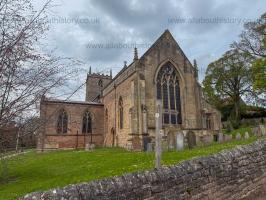
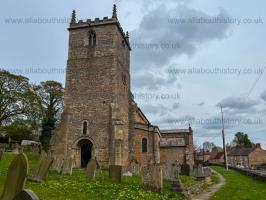
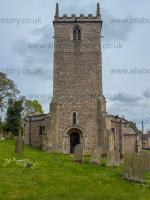
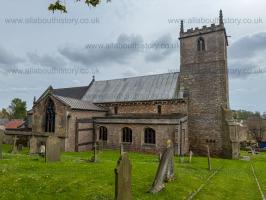
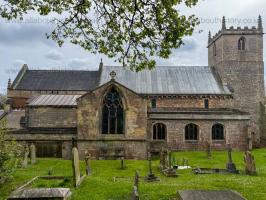
Church of St Lawrence, Whitwell is in Whitwell, Derbyshire, Churches in Derbyshire.
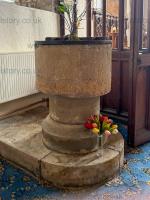
Font at the Church of St Lawrence, Whitwell [Map] carved from a single block of stone. Probably early Norman or Anglo-Saxon.
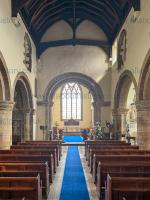
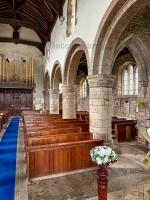
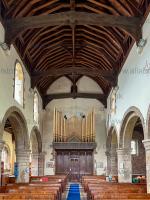
The greater part of the Church of St Lawrence, Whitwell [Map] dates from the 12th Century when the Normans built the nave with round arches and massive columns, the clerestory, the tower (except for the 15th Century belfry), the great chancel arch and most of the chancel.


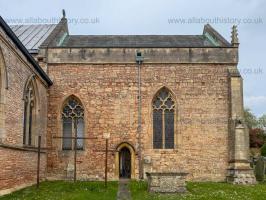
The transepts of the Church of St Lawrence, Whitwell [Map] were added between 1300 and 1350 to give the church the shape of a cross.


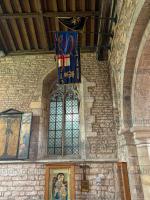
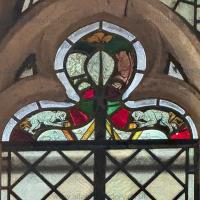
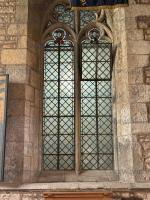
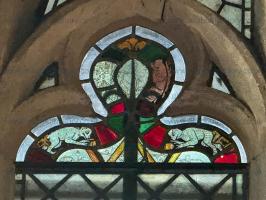
The North Transept of the Church of St Lawrence, Whitwell [Map] with the "Monkey Window". The border glass included seated figures of apes holding urine flasks, probably early 14th Century. Apes were kept as pets by the wealthy. In medieval symbolism apes represented fraud and indecortum, and were used by carvers and glass painters to satirise.


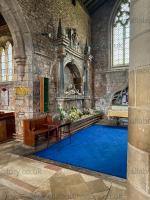
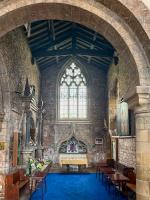
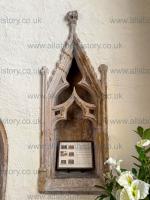
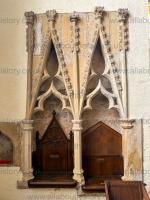
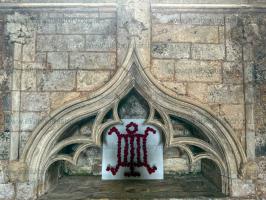
Two 14th Century piscinas in the Sanctuary of the Church of St Lawrence, Whitwell [Map].

Church of St Lawrence, Whitwell [Map]. Unknown tomb.
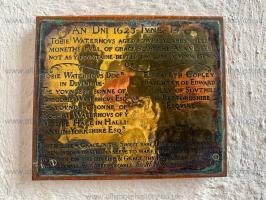
1623. Memorial to various members of the Waterhouse family at the Church of St Lawrence, Whitwell [Map]
On 17th July 1632 Roger Manners [aged 57] died from wounds after, so it is said, a skirmish between two groups of armed retainers on Whitwell Common. He was unmarried. He was buried at the Church of St Lawrence, Whitwell [Map]. The estate passed through the Manner's cousins to the Dukes of Rutland.
Sir Roger asked to be buried in Whitwell church with as "small funeral pomp as may be, having respect to my birth and calling". The Manners tomb on the west wall of the North Transept, composed of Chellaston marble, is notable for Sir Roger's recumbent effigy in armour. The visor on the helmet is known to be very unusual, even rare for the 1630s when the figure was carved. The carvings on the plinths at the base of the columns refer to military matters and those on the sides would appear to be places connected with his life, such as parliament, a temple (eastern) for the Inner Temple, a church with a spire (Lichfield or Bakewell?) and a fortified dwelling (Haddon or Belvoir?).
The cryptic verse on his monument suggests a Renaissance man; a eulogy to a military knight with a love of learning and study:
A living academic was this knight
Divinity, the arts, the tongs, what might
In learned schooles exactly be profest
Tooke up theire lodgings in his noble brest
Till death, like church despoilers, did pull down
Manners true fabrique and the arts renowne
Roger Manners: Around 1575 he was born to John Manners and Dorothy Vernon In 1594 Roger Manners studied law at Middle Temple. In 1601 Roger Manners was elected MP East Retford. In 1619 he was appointed High Sheriff of Derbyshire.


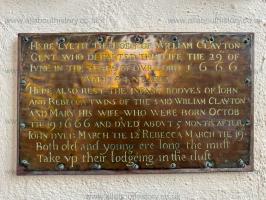
Memorial at the Church of St Lawrence, Whitwell [Map] to William Clayton, died 29th June 1666.
All About History Books on Amazon
This is a translation of the 'Memoires of Jacques du Clercq', published in 1823 in two volumes, edited by Frederic, Baron de Reissenberg. In his introduction Reissenberg writes: 'Jacques du Clercq tells us that he was born in 1424, and that he was a licentiate in law and a counsellor to Philip the Good, Duke of Burgundy, in the castellany of Douai, Lille, and Orchies. It appears that he established his residence at Arras. In 1446, he married the daughter of Baldwin de la Lacherie, a gentleman who lived in Lille. We read in the fifth book of his Memoirs that his father, also named Jacques du Clercq, had married a lady of the Le Camelin family, from Compiègne. His ancestors, always attached to the counts of Flanders, had constantly served them, whether in their councils or in their armies.' The Memoires cover a period of nineteen years beginning in in 1448, ending in in 1467. It appears that the author had intended to extend the Memoirs beyond that date; no doubt illness or death prevented him from carrying out this plan. As Reissenberg writes the 'merit of this work lies in the simplicity of its narrative, in its tone of good faith, and in a certain air of frankness which naturally wins the reader’s confidence.' Du Clercq ranges from events of national and international importance, including events of the Wars of the Roses in England, to simple, everyday local events such as marriages, robberies, murders, trials and deaths, including that of his own father in Book 5; one of his last entries.
Available at Amazon in eBook and Paperback format.
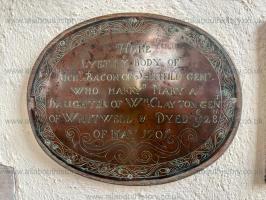
Memorial at the Church of St Lawrence, Whitwell [Map] to Richard Bacon of Sheffield who married Mary, daughter of William Clayton, died 28th May 1701.
In 1785 Charles Manners-Sutton [aged 29] was appointed Rector of the Church of St Lawrence, Whitwell [Map]. He would later
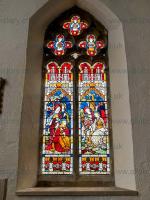
The Boothby Memorial Window in the Sancuary of the Church of St Lawrence, Whitwell [Map] in memory of Reverend Evelyn Boothby, 1851-1874, placed in June 1876.
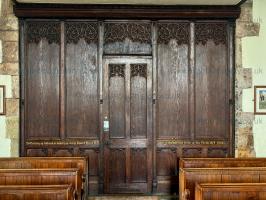
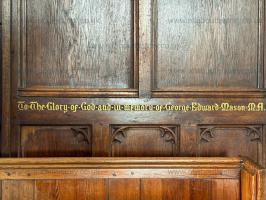
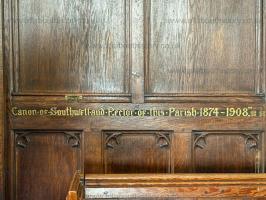
Tower Screen at the Church of St Lawrence, Whitwell [Map] in memory George Edward Mason, Canon of Southwell Minster [Map], Rector of Whitwell 1874-1908.


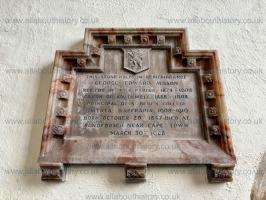
Memorial to George Edward Mason, Rector of the Church of St Lawrence, Whitwell [Map] 1874-1908, Conon of Southwell Minster [Map] 1888-1908, Principal of St Bede's College, Umtata Kaffraria, 1908-1919. Died at Rondebosch near Cape Town, 30th March 1928.
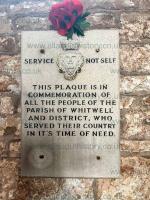
After 1945. War Memorial at the Church of St Lawrence, Whitwell [Map].
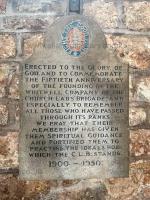
1950. Church of St Lawrence, Whitwell [Map]. Commemoration of the fiftieth anniversary of the founding of the Whitwell Company of the Church Lad's Brigade.
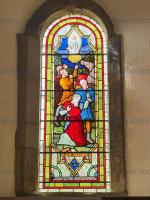
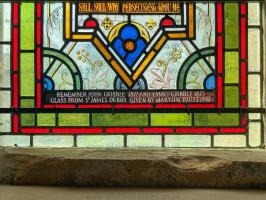
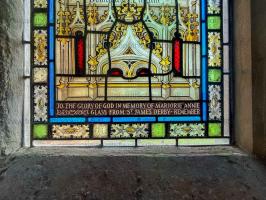
Gribble Memorial Window at the Church of St Lawrence, Whitwell [Map]. The window was originally at the church of St James, Derby, and given to Whitwell by the Maryam Trust in 1993.

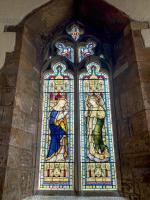
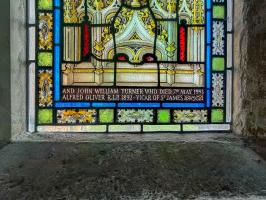
Turner Memorial Window at the Church of St Lawrence, Whitwell [Map]. The window was originally at the church of St James, Derby. Marjorie and John Turner of Whitwell lost their lives in a fire at Littlewood Stores in Chesterfield on 7th May 1993. The window was donated by Littlewoods Stores Ltd. The fire was started deliberately by a young arsonist who had a history for lighting fires and enjoyed watching fire engines and firefighters arrive. He was sentenced after admitting two charges of manslaughter and three of damaging property. Following his sentencing he attempted to commit suicide by setting fire to a room in a secure unit.

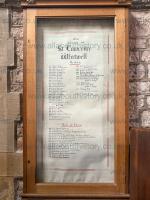
2014. List of the Rectors of the Church of St Lawrence, Whitwell [Map].