

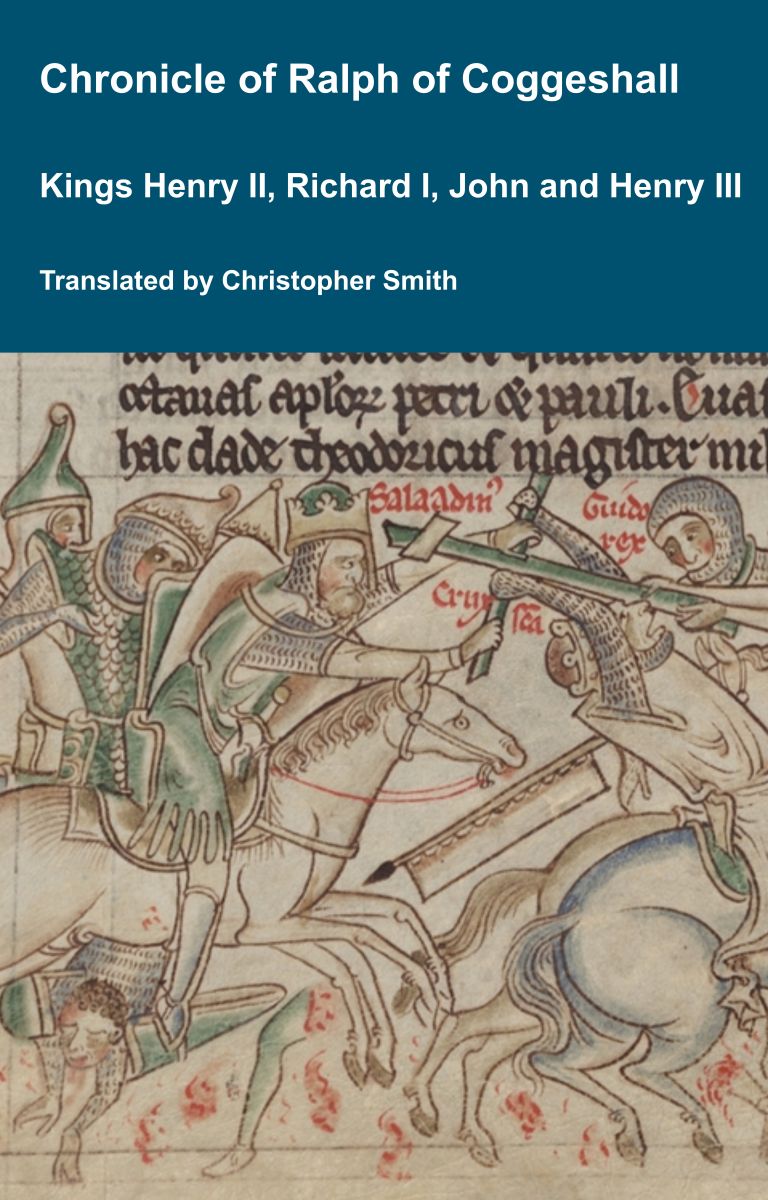
Chronicle of Abbot Ralph of Coggeshall
The Chronicle of Abbot Ralph of Coggeshall (Chronicon Anglicanum) is an indispensable medieval history that brings to life centuries of English and European affairs through the eyes of a learned Cistercian monk. Ralph of Coggeshall, abbot of the Abbey of Coggeshall in Essex in the early 13th century, continued and expanded his community’s chronicle, documenting events from the Norman Conquest of 1066 into the tumultuous reign of King Henry III. Blending eyewitness testimony, careful compilation, and the monastic commitment to record-keeping, this chronicle offers a rare narrative of political intrigue, royal power struggles, and social upheaval in England and beyond. Ralph’s work captures the reigns of pivotal figures such as Richard I and King John, providing invaluable insights into their characters, decisions, and the forces that shaped medieval rule. More than a simple annal, Chronicon Anglicanum conveys the texture of medieval life and governance, making it a rich source for scholars and readers fascinated by English history, monastic authorship, and the shaping of the medieval world.
Available at Amazon in eBook and Paperback format.
Bath, Somerset is in Somerset.
973 Coronation of King Edgar Peaceful
1477 Trial and Execution of Ankarette Twynyho
1495 Death of Jasper Tudor Duke Bedford
The Roman Road from Silchester to Bath connected Silchester, Hampshire [Map] with Bath, Somerset [Map] via Speen, Newbury [Map], Cunetio Roman Town [Map], Verlucio Roman Town [Map] and Lacock [Map] where it crossed the Gloucestershire River Avon.
In 577 Ceawlin King Wessex and his son Cuthwine [aged 12] won a major victory over the Britons at the Battle of Dyrham at Hinton Hill Dyrham, Gloucestershire. The victory of resulted in the capture of Gloucester [Map], Cirencester, Gloucestershire [Map] and Bath, Somerset [Map].
Coinmail Briton, Condidan Briton and Farinmail Briton were killed.
In 973 King Edgar I of England [aged 30] was crowned In Bath, Somerset [Map]. The service forms the basis of the present English Coronation ceremony.
Anglo-Saxon Chronicle. 1106. At Easter was the king [aged 38] at Bath, Somerset [Map], and at Pentecost at Salisbury [Map]; because he would not hold his court when he was beyond the sea.
On 5th January 1411 Margaret Clivedon [aged 64] died at Bath, Somerset [Map].
On 12th April 1477 Ankarette Hawkeston aka Twynyho was arrested at Keyford, Somerset and taken to Bath, Somerset [Map]. George York 1st Duke of Clarence [aged 27] believed she had murdered his wife Isabel Neville Duchess Clarence who had died four months before.
On 19th January 1503 Richard Beauchamp 2nd Baron Beauchamp Powick [aged 68] died at Bath, Somerset [Map]. Baron Beauchamp Powick in Worcestershire extinct.
In 1559 Edward St Lo [aged 40] was elected MP Bath.
On 4th June 1606 Edmund Pelham [aged 73] died at Bath, Somerset [Map].
In 1614 Robert Killigrew [aged 34] was elected MP Helston at Bath, Somerset [Map].
In July 1614 Robert Killigrew [aged 34] was appointed MP Bath and Heytesbury.
In 1621 Robert Pye [aged 36] was elected MP Bath.
In 1624 John Malet [aged 30] was elected MP Bath.
In 1624 Robert Pye [aged 39] was elected MP Bath and Heytesbury.
Abbot John Whethamstede’s Chronicle of the Abbey of St Albans
Abbot John Whethamstede's Register aka Chronicle of his second term at the Abbey of St Albans, 1451-1461, is a remarkable text that describes his first-hand experience of the beginning of the Wars of the Roses including the First and Second Battles of St Albans, 1455 and 1461, respectively, their cause, and their consequences, not least on the Abbey itself. His text also includes Loveday, Blore Heath, Northampton, the Act of Accord, Wakefield, and Towton, and ends with the Coronation of King Edward IV. In addition to the events of the Wars of the Roses, Abbot John, or his scribes who wrote the Chronicle, include details in the life of the Abbey such as charters, letters, land exchanges, visits by legates, and disputes, which provide a rich insight into the day-to-day life of the Abbey, and the challenges faced by its Abbot.
Available at Amazon in eBook and Paperback format.
John Evelyn's Diary. 20th May 1639. Accompanied with one Mr. J. Crafford (who afterward being my fellow-traveler in Italy, there changed his religion), I took a journey of pleasure to see the Somersetshire baths [Map], Bristol, Gloucestershire [Map], Cirencester, Gloucestershire [Map], Malmesbury, Wiltshire [Map], Abington, and divers other towns of lesser note; and returned the 25th.
On 3rd July 1639 George Chaworth 1st Viscount Chaworth [aged 85] died at Bath, Somerset [Map]. He was buried at St Andrew's Church, Langar. His son John [aged 34] succeeded 2nd Viscount Chaworth in County Armagh.
In 1640 Charles Berkeley 2nd Viscount Fitzhardinge [aged 40] was elected MP Bath during the Short Parliament.
John Evelyn's Diary. 10th June 1640. London, and especially the Court, were at this period in frequent disorders, and great insolences were committed by the abused and too happy City: in particular, the Bishop of Canterbury's [aged 66] Palace [Map] at Lambeth was assaulted by a rude rabble from Southwark, Surrey [Map], my Lord Chamberlain [aged 55] imprisoned and many scandalous libels and invectives scattered about the streets, to the reproach of Government, and the fermentation of our since distractions: so that, upon the 25th of June, I was sent for to Wotton, Surrey [Map], and the 27th after, my father's [aged 53] indisposition augmenting, by advice of the physicians he repaired to the Bath, Somerset [Map].


On 17th December 1640 Francis Foljambe 1st Baronet [aged 50] died at Bath, Somerset [Map]. Baronet Foljambe of Walton in Derbyshire extinct.
John Evelyn's Diary. 27th June 1654. We all went to see Bath [Map], where I bathed in the cross bath. Among the rest of the idle diversions of the town, one musician was famous for acting a changeling, which indeed he personated strangely.
On 8th May 1661 King Charles II of England Scotland and Ireland [aged 30] summoned his second Parliament.
John Bennet 1st Baron Ossulston [aged 44] was elected MP Wallingford.
James Thynne [aged 56] was elected MP Wiltshire.
Adam Browne 2nd Baronet [aged 35] was elected MP Surrey.
Henry Cavendish 2nd Duke Newcastle upon Tyne [aged 30] was elected MP Northumberland.
William Compton [aged 36] was elected MP Cambridge.
Thomas Coventry 1st Earl Coventry [aged 32] was elected MP Camelford.
Charles Berkeley 2nd Viscount Fitzhardinge [aged 61] was elected MP Bath and Heytesbury.
Edward Hungerford [aged 28] was elected MP Chippenham.
Robert Pierrepont [aged 24] was elected MP Nottingham.
John Melbury Sampford Strangeways [aged 75] was elected MP Weymouth.
Giles Strangeways [aged 45] was elected MP Dorset.
John Strangeways [aged 24] was elected MP Bridport.
William Wyndham 1st Baronet [aged 29] was elected MP Taunton.
James Herbert [aged 38] was elected MP Queenborough.
William Alington 1st and 3rd Baron Alington [aged 21] was elected MP Cambridge.
William Bowes of Streatlam [aged 4] was elected MP Durham.
Robert Brooke [aged 24] was elected MP Aldeburgh.
Josiah Child [aged 30] was elected MP Dartmouth.
Gervase Clifton 1st Baronet [aged 73] was elected MP Nottinghamshire.
Thomas Crew 2nd Baron Crew [aged 37] was elected MP Brackley.
Richard Jennings [aged 42] was elected MP St Albans.
Robert Kemp 2nd Baronet [aged 33] was elected MP Norfolk.
Edward Phelips [aged 48] was elected MP Somerset.
Robert Robartes [aged 27] was elected MP Bossiney.
Hender Robartes [aged 25] was elected MP Bodmin.
Clement Fisher 2nd Baronet [aged 48] was elected MP Coventry.
William Portman 6th Baronet [aged 17] was elected MP Taunton.
John Robinson 1st Baronet [aged 46] was elected MP Rye.
Samuel Pepys' Diary. 11th August 1663. After the Queen [aged 24] is come back she goes to the Bath, Somerset [Map]; and so to Oxford, Oxfordshire [Map], where great entertainments are making for her.
Samuel Pepys' Diary. 25th August 1663. To-morrow they say the King [aged 33] and the Duke [aged 29] set out for the Bath, Somerset [Map].

Samuel Pepys' Diary. 25th August 1663. Up very early and removed the things out of my chamber into the dining room, it being to be new floored this day. So the workmen being come and falling to work there, I to the office, and thence down to Lymehouse [Map] to Phin. Pett's about masts, and so back to the office, where we sat; and being rose, and Mr. Coventry [aged 35] being gone, taking his leave, for that he is to go to the Bath, Somerset [Map] with the Duke [aged 29] to-morrow, I to the 'Change [Map] and there spoke with several persons, and lastly with Sir W. Warren, and with him to a Coffee House, and there sat two hours talking of office business and Mr. Wood's knavery, which I verily believe, and lastly he tells me that he hears that Captain Cocke [aged 46] is like to become a principal officer, either a Controller or a Surveyor, at which I am not sorry so either of the other may be gone, and I think it probable enough that it may be so.
Samuel Pepys' Diary. 26th August 1663. Up, and after doing something in order to the putting of my house in order now the joynery is done, I went by water to White Hall, where the Court full of waggons and horses, the King [aged 33] and Court going this day out towards the Bath, Somerset [Map], and I to St. James's, where I spent an hour or more talking of many things to my great content with Mr. Coventry [aged 35] in his chamber, he being ready to set forth too with the Duke [aged 29] to-day, and so left him, and I meeting Mr. Gauden, with him to our offices and in Sir W. Pen's [aged 42] chamber did discourse by a meeting on purpose with Mr. Waith about the victualling business and came to some issue in it.

Samuel Pepys' Diary. 31st August 1663. This noon came Jane Gentleman to serve my wife as her chamber mayde. I wish she may prove well. So ends this month, with my mind pretty well in quiett, and in good disposition of health since my drinking at home of a little wine with my beer; but no where else do I drink any wine at all. The King [aged 33] and Queen [aged 24] and the Court at the Bath, Somerset [Map], my Lord Sandwich [aged 38] in the country newly gone.


Samuel Pepys' Diary. 13th June 1668. So to the Three Crowns Tavern I was directed; but, when I come in, the master told me that he had newly given over the selling of wine; it seems, grown rich; and so went to the Sun; and there Deb. going with W. Hewer [aged 26] and Betty Turner [aged 15] to see her uncle [Butts], and leaving my wife with the mistress of the house, I to see the quay, which is a most large and noble place; and to see the new ship building by Bally, neither he nor Furzer being in town. It will be a fine ship. Spoke with the foreman, and did give the boys that kept the cabin 2s. Walked back to the Sun, where I find Deb. come back, and with her, her uncle, a sober merchant, very good company, and so like one of our sober, wealthy, London merchants, as pleased me mightily. Here we dined, and much good talk with him, 7s. 6d.: a messenger to Sir John Knight, who was not at home, 6d. Then walked with him [Butts] and my wife and company round the quay, and to the ship; and he shewed me the Custom-house, and made me understand many things of the place, and led us through Marsh Street, where our girl was born. But, Lord! the joy that was among the old poor people of the place, to see Mrs. Willet's daughter, it seems her mother being a brave woman and mightily beloved! And so brought us a back way by surprize to his house, where a substantial good house, and well furnished; and did give us good entertainment of strawberries, a whole venison-pasty, cold, and plenty of brave wine, and above all Bristoll milk1, where comes in another poor woman, who, hearing that Deb. was here, did come running hither, and with her eyes so lull of tears, and heart so full of joy, that she could not speak when she come in, that it made me weep too: I protest that I was not able to speak to her, which I would have done, to have diverted her tears. His wife a good woman, and so sober and substantiall as I was never more pleased anywhere. Servant-maid, 2s. So thence took leave, and he with us through the city, where in walking I find the city pay him great respect, and he the like to the meanest, which pleased me mightily. He shewed us the place where the merchants meet here, and a fine Cross yet standing, like Cheapside. And so to the Horseshoe, where paid the reckoning, 2s. 6d. We back, and by moonshine to the Bath [Map] again, about ten-o'clock: bad way; and giving the coachman 1s., went all of us to bed.
Note 1. A sort of rum punch (milk punch), which, and turtle, were products of the trade of Bristol with the West Indies. So Byron says in the first edition of his "English Bards and Scotch Reviewers" "Too much in turtle Bristol's sons delight, Too much oer bowls of rack prolong the night". These lines will not be found in the modern editions; but the following are substituted: "Four turtle feeder's verse must needs he flat, Though Bristol bloat him with the verdant fat". Lord Macaulay says of the collations with which the sugar-refiners of Bristol regaled their visitors: "The repast was dressed in the furnace, And was accompanied by a rich brewage made of the best Spanish wine, and celebrated over the whole kingdom as Bristol milk" ("Hist. of England", vol. i., p. 335) B.

Chronicle of a Bourgeois of Valenciennes
Récits d’un bourgeois de Valenciennes aka The Chronicle of a Bourgeois of Valenciennes is a vivid 14th-century vernacular chronicle written by an anonymous urban chronicler from Valenciennes in the County of Hainaut. It survives in a manuscript that describes local and regional history from about 1253 to 1366, blending chronology, narrative episodes, and eyewitness-style accounts of political, military, and social events in medieval France, Flanders, and the Low Countries. The work begins with a chronological framework of events affecting Valenciennes and its region under rulers such as King Philip VI of France and the shifting allegiances of local nobility. It includes accounts of conflicts, sieges, diplomatic manoeuvres, and the impact of broader struggles like the Hundred Years’ War on urban life in Hainaut. Written from the perspective of a burgher (bourgeois) rather than a monastery or royal court, the chronicle offers a rare lay viewpoint on high politics and warfare, reflecting how merchants, townspeople, and civic institutions experienced the turbulence of the 13th and 14th centuries. Its narrative style combines straightforward reporting of events with moral and civic observations, making it a valuable source for readers interested in medieval urban society, regional politics, and the lived experience of war and governance in pre-modern Europe.
Available at Amazon in eBook and Paperback format.
Samuel Pepys' Diary. 14th June 1668. Sunday. Up, and walked up and down the town [Map], and saw a pretty good market-place, and many good streets, and very fair stone-houses. And so to the great Church [Map], and there saw Bishop Montagu's tomb1 and, when placed, did there see many brave people come, and, among others, two men brought in, in litters, and set down in the chancel to hear: but I did not know one face. Here a good organ; but a vain, pragmatical fellow preached a ridiculous, affected sermon, that made me angry, and some gentlemen that sat next me, and sang well.
Note 1. James Montagu, Bishop of Bath and Wells in 1608, and of Winchester in 1616-died 1618. He was uncle to the Earl of Sandwich, whose mother was Pepys's aunt. Hence Pepys's curiosity respecting the tomb. B.
In 1669 Francis Popham [aged 23] was elected MP Bath.
John Evelyn's Diary. 21st September 1674. I went to see the great loss that Lord Arlington [aged 56] had sustained by fire at Goring House [Map], this night consumed to the ground, with exceeding loss of hangings, plate, rare pictures, and cabinets; hardly anything was saved of the best and most princely furniture that any subject had in England. My lord and lady [aged 40] were both absent at the Bath, Somerset [Map].


On 17th February 1677 Robert Greville 4th Baron Brooke [aged 38] died at Bath, Somerset [Map]. His brother Fulke [aged 33] succeeded 5th Baron Brooke of Beauchamps Court in Warwickshire. Sarah Dashwood Baroness Brooke [aged 31] by marriage Baroness Brooke of Beauchamps Court in Warwickshire.
In 1679 Walter Long 2nd Baronet [aged 52] was elected MP Bath during the Habeas Corpus Parliament 3C2.
In 1681 Maurice Berkeley 3rd Viscount Fitzhardinge [aged 52] was elected MP Bath.
John Evelyn's Diary. 2nd December 1688. Dr. Tenison [aged 52] preached at St. Martin's [Map] on Psalm xxxvi. 5, 6, 7, concerning Providence. I received the blessed Sacrament. Afterward, visited my Lord Godolphin [aged 43], then going with the Marquis of Halifax [aged 55] and Earl of Nottingham [aged 41] as Commissioners to the Prince of Orange [aged 38]; he told me they had little power. Plymouth, Devon [Map] declared for the Prince. Bath, Somerset [Map], York [Map], Hull [Map], Bristol, Gloucestershire [Map], and all the eminent nobility and persons of quality through England, declare for the Protestant religion and laws, and go to meet the Prince, who every day sets forth new Declarations against the Papists. The great favorites at Court, Priests and Jesuits, fly or abscond. Everything, till now concealed, flies abroad in public print, and is cried about the streets. Expectation of the Prince coming to Oxford, Oxfordshire [Map]. The Prince of Wales and great treasure sent privily to Portsmouth, Hampshire [Map], the Earl of Dover [aged 52] being Governor. Address from the Fleet not grateful to his Majesty [aged 55]. The Papists in offices lay down their commissions, and fly. Universal consternation among them; it looks like a revolution.


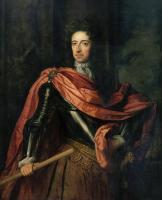

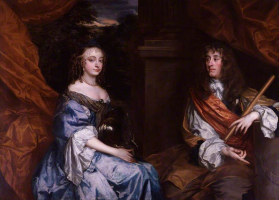


Around 1699 Edward Harley 3rd Earl of Oxford and Earl Mortimer was born to Edward Harley [aged 34] and Sarah Foley in Bath, Somerset [Map]. He married 16th March 1725 Martha Morgan Countess of Oxford and Mortimer and had issue.
John Evelyn's Diary. 27th June 1702. I went to Wotton, Surrey [Map] with my family for the rest of the summer, and my son-in-law, Draper, with his family, came to stay with us, his house at Addiscombe being new-building, so that my family was above thirty. Most of the new Parliament were chosen of Church of England principles, against the peevish party. The Queen [aged 37] was magnificently entertained at Oxford and all the towns she passed through on her way to Bath, Somerset [Map].


On 29th January 1706 Charles Sackville 6th Earl Dorset 1st Earl Middlesex [aged 63] died at Bath, Somerset [Map]. His son Lionel [aged 18] succeeded 7th Earl Dorset, 2nd Earl Middlesex, 7th Baron Buckhurst, 2nd Baron Cranfield of Cranfield in Middlesex.
In 1710 John Codrington [aged 31] was elected MP Bath. He was returned again in 1713, 1715 and 1722. He lost the seat in 1727.
On 2nd February 1714 Archbishop John Sharp [aged 68] died in Bath, Somerset [Map].
The History of William Marshal was commissioned by his son shortly after William’s death in 1219 to celebrate the Marshal’s remarkable life; it is an authentic, contemporary voice. The manuscript was discovered in 1861 by French historian Paul Meyer. Meyer published the manuscript in its original Anglo-French in 1891 in two books. This book is a line by line translation of the first of Meyer’s books; lines 1-10152. Book 1 of the History begins in 1139 and ends in 1194. It describes the events of the Anarchy, the role of William’s father John, John’s marriages, William’s childhood, his role as a hostage at the siege of Newbury, his injury and imprisonment in Poitou where he met Eleanor of Aquitaine and his life as a knight errant. It continues with the accusation against him of an improper relationship with Margaret, wife of Henry the Young King, his exile, and return, the death of Henry the Young King, the rebellion of Richard, the future King Richard I, war with France, the death of King Henry II, and the capture of King Richard, and the rebellion of John, the future King John. It ends with the release of King Richard and the death of John Marshal.
Available at Amazon in eBook and Paperback format.
On 23rd February 1714 Charles Godfrey [aged 68] died in Bath, Somerset [Map]. He was buried in Bath Abbey [Map].
On or before 29th January 1716 Joseph Alston 3rd Baronet [aged 51] died at Bath, Somerset [Map]. He was buried at Long Ditton, Surrey on 29th January 1716. His son Joseph [aged 24] succeeded 4th Baronet Alston of Chelsea.
On 26th October 1717 Catherine Sedley Countess Dorchester and Portmore [aged 59] died in Bath, Somerset [Map]. Earl Dorchester extinct.


On 29th September 1719 Henry Johnson Baron Wentworth [aged 58] died of gout at Bath, Somerset [Map].

On 10th May 1726 Charles Beauclerk 1st Duke St Albans [aged 56] died at Bath, Somerset [Map]. He was buried at Westminster Abbey [Map]. His son Charles [aged 30] succeeded 2nd Duke St Albans, 2nd Earl Burford, 2nd Baron Heddington. Lucy Werden Duchess St Albans [aged 27] by marriage Duchess St Albans.
On 2nd May 1728 John Eden 2nd Baronet [aged 50] died at Bath, Somerset [Map]. His son Robert [aged 10] succeeded 3rd Baronet Eden of West Auckland.
In 1730 John Alleyne [aged 34] died in Bath, Somerset [Map].
In 1734 John Codrington [aged 55] was elected MP Bath which seat he held until 1741.
On 1st May 1738 Charles Howard 3rd Earl Carlisle [aged 69] died at Bath, Somerset [Map]. He was buried at Castle Howard Mausoleum. His son Henry [aged 43] succeeded 4th Earl Carlisle. Frances Spencer Countess Carlisle [aged 42] by marriage Countess Carlisle.
On 4th October 1738 Edmund Bacon 5th Baronet [aged 45] died in Bath, Somerset [Map]. His son Edmund [aged 13] succeeded 6th Baronet Bacon of Mildenhall in Suffolk.
Chronicle of Walter of Guisborough
A canon regular of the Augustinian Guisborough Priory, Yorkshire, formerly known as The Chronicle of Walter of Hemingburgh, describes the period from 1066 to 1346. Before 1274 the Chronicle is based on other works. Thereafter, the Chronicle is original, and a remarkable source for the events of the time. This book provides a translation of the Chronicle from that date. The Latin source for our translation is the 1849 work edited by Hans Claude Hamilton. Hamilton, in his preface, says: 'In the present work we behold perhaps one of the finest samples of our early chronicles, both as regards the value of the events recorded, and the correctness with which they are detailed; Nor will the pleasing style of composition be lightly passed over by those capable of seeing reflected from it the tokens of a vigorous and cultivated mind, and a favourable specimen of the learning and taste of the age in which it was framed.'
Available at Amazon in eBook and Paperback format.
On 21st September 1744 William Neville 1st Baron Abergavenny [aged 49] died at Bath, Somerset [Map]. On 30th September 1744 he was buried at East Grinstead. His son George [aged 17] succeeded 2nd Baron Abergavenny.
On 20th October 1750 Edward Nightingale [aged 54] died at Bath, Somerset [Map]. His son Edward [aged 24] de jure 8th Baronet Nightingale of Newport Pond in Essex.


In 1755 Prince Hoare was born to William Hoare [aged 48] at Bath, Somerset [Map].
Before 27th February 1755 Mary Jenkinson Lady Cope [aged 64] died at Bath, Somerset [Map]. On 27th February 1755 she was buried at Hanwell, Oxfordshire.

On 6th January 1756 John Mytton [aged 65] died in Bath, Somerset [Map].

On 12th February 1761 Richard "Beau King of Bath" Nash [aged 86] died in Bath, Somerset [Map]. He was buried in Bath Abbey [Map].
Before 1762 Charles Bingham 1st Earl Lucan [aged 26] and Margaret Smith Countess Lucan [aged 21] were married at Bath, Somerset [Map]. She by marriage Lady Bingham of Castlebar in County Mayo.
On 21st July 1764 Mary Digby Lady Buck died at Bath, Somerset [Map].
On 27th January 1765 Dean Edward Townshend [aged 45] died in Bath, Somerset [Map].
On 23rd August 1767 Richard Bedingfeld 5th Baronet was born to Richard Henry Bedingfield 4th Baronet [aged 46] and Mary Browne [aged 45] at Bath, Somerset [Map]. He married 16th June 1795 his third cousin twice removed Charlotte Georgiana Jerningam, daughter of William Jerningham of Cossey Park 6th Baronet and Frances Dillon, and had issue.
On 10th September 1772 Henry Herbert 1st Earl Powis [aged 69] died at Bath, Somerset [Map]. He was buried at St Mary's Church, Welshpool. His son George [aged 17] succeeded 2nd Earl Powis.


On 14th January 1773 William Pitt Amherst 1st Earl Amherst was born to William Amherst [aged 40] and Elizabeth Patterson at Bath, Somerset [Map]. He married (1) 1800 Sarah Archer Countess Plymouth and Amherst, daughter of Andrew Archer 2nd Baron Archer and Sarah West Baroness Archer, and had issue (2) 1839 Mary Sackville Countess Plymouth Amherst, daughter of John Frederick Sackville 3rd Duke Dorset and Arabella Diana Cope 3rd Duchess Dorset.
In 1774 Elizabeth Amherst was born to William Amherst [aged 41] and Elizabeth Patterson at Bath, Somerset [Map]. She married 1799 John Hale.
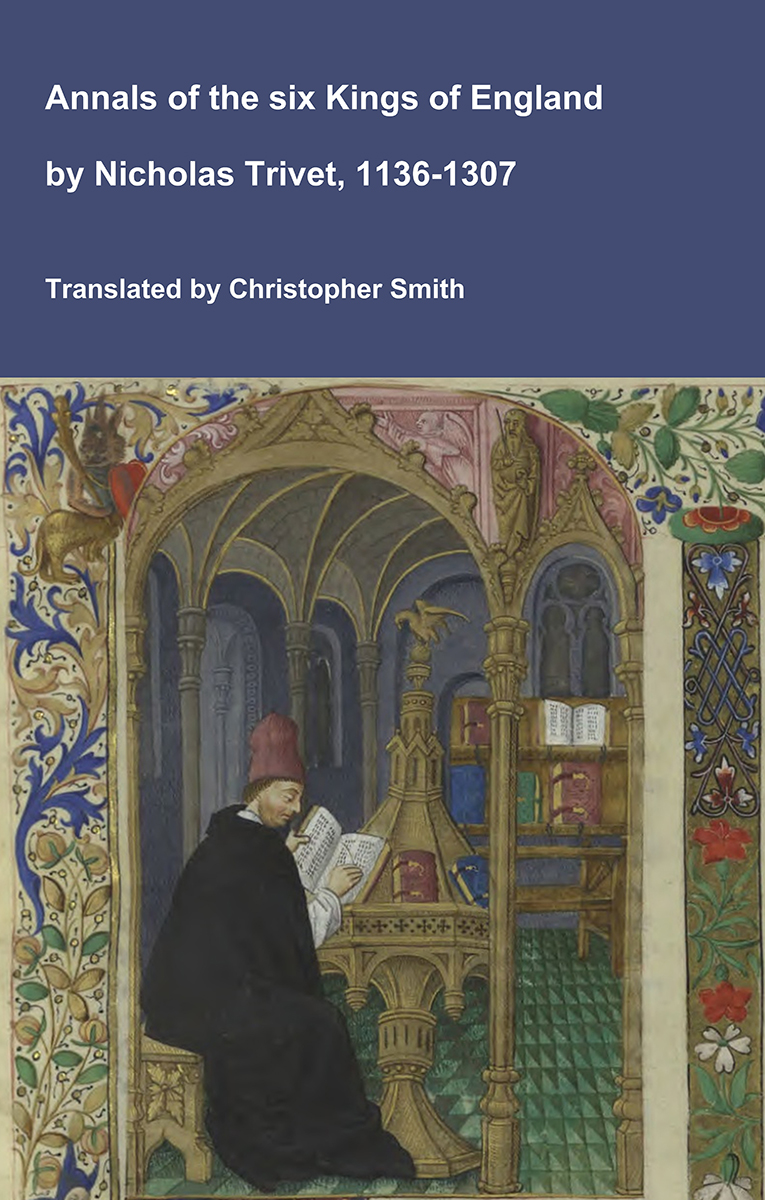
Annals of the six Kings of England by Nicholas Trivet
Translation of the Annals of the Six Kings of England by that traces the rise and rule of the Angevin aka Plantagenet dynasty from the mid-12th to early 14th century. Written by the Dominican scholar Nicholas Trivet, the work offers a vivid account of English history from the reign of King Stephen through to the death of King Edward I, blending political narrative with moral reflection. Covering the reigns of six monarchs—from Stephen to Edward I—the chronicle explores royal authority, rebellion, war, and the shifting balance between crown, church, and nobility. Trivet provides detailed insight into defining moments such as baronial conflicts, Anglo-French rivalry, and the consolidation of royal power under Edward I, whose reign he describes with particular immediacy. The Annals combines careful year-by-year reporting with thoughtful interpretation, presenting history not merely as a sequence of events but as a moral and political lesson. Ideal for readers interested in medieval history, kingship, and the origins of the English state, this chronicle remains a valuable and accessible window into the turbulent world of the Plantagenet kings.
Available at Amazon in eBook and Paperback format.

On 12th April 1775 William Henry Kerr 4th Marquess Lothian [aged 65] died at Bath, Somerset [Map]. His son William [aged 38] succeeded 5th Marquess Lothian, 8th Earl Lothian, 6th Earl Lothian. Elizabeth Fortescue 5th Marchioness Lothian [aged 30] by marriage Marchioness Lothian.
On 7th March 1779 Henry Howard 12th Earl Suffolk 5th Earl Berkshire [aged 39] died at Bath, Somerset [Map]. He was buried at All Saints Church, Charlton-All-Saints [Map]. On 8th August 1779 his postumous son His son Henry succeeded 13th Earl Suffolk, 6th Earl Berkshire, 6th Viscount Andover in Hampshire, 6th Baron Howard of Charlton in Wiltshire although he died two days later.
On 31st October 1783 John Spencer 1st Earl Spencer [aged 48] died at Bath, Somerset [Map]. He was buried at St Mary the Virgin Church, Great Brington, Northamptonshire. His son George [aged 25] succeeded 2nd Earl Spencer, 2nd Viscount Althorp, 2nd Viscount Spencer, 2nd Baron Spencer Althorp. Lavinia Bingham Countess Spencer [aged 21] by marriage Countess Spencer.


On 27th April 1784 Heinrich Uhthoff [aged 55] died at Bath, Somerset [Map].
On 21st November 1784 Thomas Frankland 5th Baronet [aged 66] died at Bath, Somerset [Map]. His son Thomas [aged 34] succeeded 6th Baronet Frankland of Thirkleby in Yorkshire. Dorothy Smelt Lady Thirkleby [aged 34] by marriage Lady Frankland of Thirkleby in Yorkshire.
On 5th April 1785 Thomas Hay-Drummond 11th Earl Kinnoull was born to Robert Hay-Drummond 10th Earl Kinnoul [aged 34] and Sarah Harley Countess Kinnoul at Bath, Somerset [Map]. He married 17th August 1824 Louisa Burton Rowley Countess Kinnoul, daughter of Admiral Charles Rowley 1st Baronet and Elizabeth King, and had issue.
On 15th March 1786 Catherine Cochrane Countess Galloway [aged 77] died in Bath, Somerset [Map].

On 29th August 1789 Anna-Maria Vanneck [aged 55] died at Bath, Somerset [Map].
In 1790 Thomas Thynne 2nd Marquess of Bath [aged 24] was elected MP Bath.
On 7th November 1790 John Thornton of Clapham [aged 70] died at Clapham, Surrey or Bath, Somerset [Map].
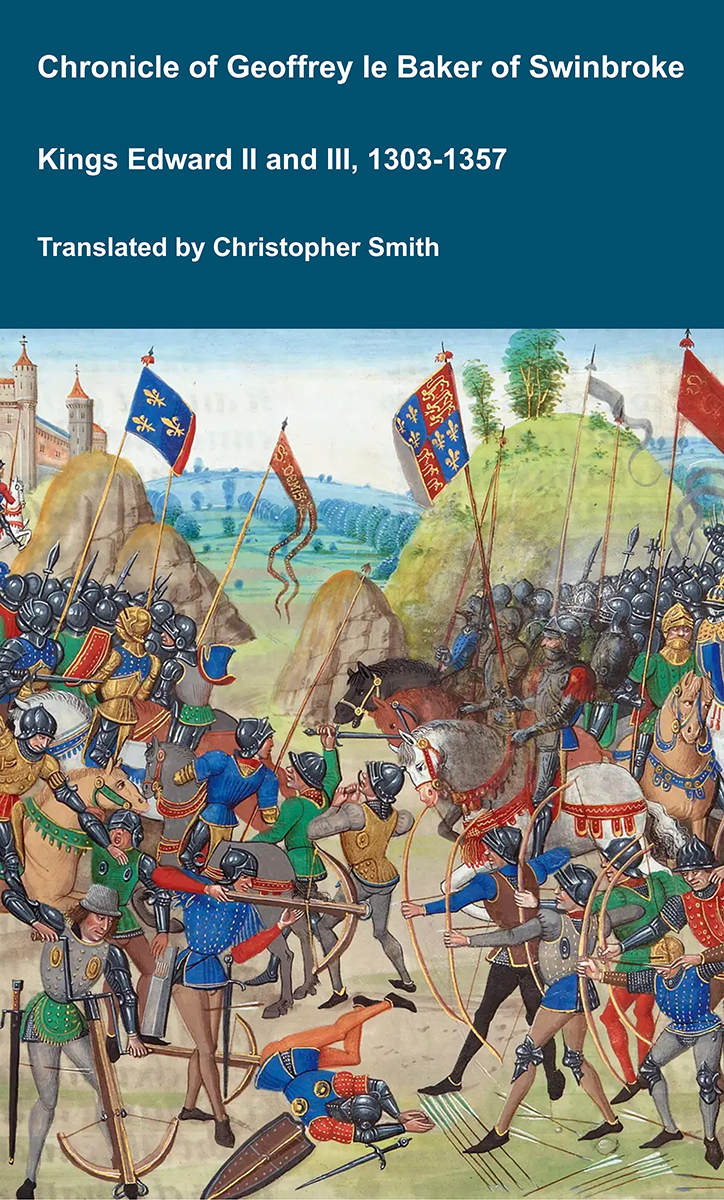
Chronicle of Geoffrey le Baker of Swinbroke
Baker was a secular clerk from Swinbroke, now Swinbrook, an Oxfordshire village two miles east of Burford. His Chronicle describes the events of the period 1303-1356: Gaveston, Bannockburn, Boroughbridge, the murder of King Edward II, the Scottish Wars, Sluys, Crécy, the Black Death, Winchelsea and Poitiers. To quote Herbert Bruce 'it possesses a vigorous and characteristic style, and its value for particular events between 1303 and 1356 has been recognised by its editor and by subsequent writers'. The book provides remarkable detail about the events it describes. Baker's text has been augmented with hundreds of notes, including extracts from other contemporary chronicles, such as the Annales Londonienses, Annales Paulini, Murimuth, Lanercost, Avesbury, Guisborough and Froissart to enrich the reader's understanding. The translation takes as its source the 'Chronicon Galfridi le Baker de Swynebroke' published in 1889, edited by Edward Maunde Thompson.
Available at Amazon in eBook and Paperback format.
On 3rd November 1795 Bishop John Hotham 9th Baronet [aged 59] died at Bath, Somerset [Map]. He was buried at St Mary's Church, South Dalton. His son Charles [aged 29] succeeded 10th Baronet Hotham of Scorborough in Yorkshire.
On 13th July 1797 Bacon Bedingfield [aged 51] died in Bath, Somerset [Map].
In 1800 Julia Colyear [aged 26] died in Bath, Somerset [Map].
In 1800 Mary Colyear [aged 27] died in Bath, Somerset [Map].
On 2nd June 1800 Jane Dutton [aged 46] died at Bath, Somerset [Map]. Monument in Church of St Mary the Virgin, Tittleshall [Map] sculpted by Joseph Nollekens [aged 62]. Flat obelisk background. Pedestal with inscription and supporting the carving which is centred around a broken column with standing figure of woman leaning on it in front of opened book. Angel on cloud above and putto below holding up a flaming heart.
Jane Dutton: On 29th November 1753 she was born to James Lenox Dutton and Jane Bond at Sherborne, Gloucestershire. On 25th October 1775 Thomas Coke 1st Earl of Leicester and she were married at Sherborne, Gloucestershire.


On 2nd February 1802 Armar Lowry-Corry 1st Earl Belmore [aged 61] died at Bath, Somerset [Map]. His son Somerset [aged 27] succeeded 2nd Earl Belmore in the County of Fermanagh, Viscount Belmore of Fermanagh and Baron Belmore of Castle Coole in the County of Fermanagh. Juliana Butler Countess Belmore [aged 18] by marriage Countess Belmore in the County of Fermanagh.


On 23rd June 1805 Albert Way was born to Lewis Way [aged 33] and Mary Drewe at Bath, Somerset [Map].
On 4th April 1808 Charlotte Murray [aged 53] died in Bath, Somerset [Map].
In May 1811 Elizabeth Hamilton Countess Aldborough [aged 54] died at Bath, Somerset [Map].
On 1st June 1821 John Campbell 1st Baron Cawdor [aged 68] died at Bath, Somerset [Map]. He was buried at Bath Abbey [Map]. His son John [aged 30] succeeded 2nd Baron Cawdor of Castlemartin in Pembrokeshire. Elizabeth Thynne Countess Cawdor [aged 26] by marriage Baroness Cawdor of Castlemartin in Pembrokeshire.
In 1837 Richard Wingfield 6th Viscount Powerscourt [aged 21] was elected MP Bath which seat he held until 1841.
Henrici Quinti, Angliæ Regis, Gesta, is a first-hand account of the Agincourt Campaign, and subsequent events to his death in 1422. The author of the first part was a Chaplain in King Henry's retinue who was present from King Henry's departure at Southampton in 1415, at the siege of Harfleur, the battle of Agincourt, and the celebrations on King Henry's return to London. The second part, by another writer, relates the events that took place including the negotiations at Troye, Henry's marriage and his death in 1422.
Available at Amazon in eBook and Paperback format.

Diary of a Dean by Merewether. 1st August 1849. Aug. 1st. The next day was to witness the assemblage of the neighbourhood to inspect Silbury; and this very picturesque event I have already described in the former paper. Our party occupied the morning, till the time of repairing to Silbury, in visiting the barrows lying near Beckhampton, between the Calne and Devizes roads. In some of these, very curious urns and remains had been discovered, some of which I shall describe hereafter; but most appeared to have been disturbed. One high up on the hill in the northern direction was examined, but without success. It would be an indication of ungrateful disrespect —for it could not he forgetfulness —were I to omit, though briefly, to record the employment of the evening of this day, and the route we took; albeit it were well to start somewhat earlier than we did, specially if so splendid a moon as conducted us home might not be reckoned upon. But then, as we had been very fully occupied during the day, some regard was needful to he had toward such discoveries as we might be able to make at the Archæological Hotel, calculated to recruit our exhausted strength, which being satisfactorily accomplished, we proceeded with a very docile pair of horses and driver, both desiderata in such an expedition, first to Oldbury Castle [Map], a splendid position, overlooking the rich vale of Caine, Chippenham, Christian Malford, and Malmsbury, and bearing in its entrenchments the characteristics of Roman occupation, enlarged possibly at some time on the south-west side, but very possibly having been previously a British position, and even subsequently occupied by later warriors. I possess an iron spear-head, and one of those curious circular stones with a hole in the centre, found here. Thence we cut across the down towards the Roman road, the Via Badonica leading from Cunetio [Map] to Aquæ-solis [Map], and which, on arriving at Silbury Hill, which it would otherwise have cut at one-third of its base, deflects its course. We cannot boast that any of the dii deœque minors much less Diana herself, Bivia, Trivia, or whatever she might here have been called of old, were very propitious to us; though, in truth, she made ample amende by her bright guidance, when it was subsequently so much needed. The devotees of Ceres had strangely cut up this ancient road; so that, to traverse it with its full complement was not so easy a matter, either to the wheels of our vehicle, to the poor animals who had to draw it, or, indeed, to its occupants; to say nothing of the conductor. So that we traced the ancient way on foot, and were ready, not unneeded, to replace in its vertical position our tottering and almost subverted equipage, at a spot where the descent to Calston below would have been facile enough per saltum, or per volutationem, for the road in this part runs on the very edge of the abrupt and steep precipice of the hill. After some time spent in these corrective and directive pursuits, having fairly landed the really patient driver on the turf, to seek in advance the summit of the hill, we again became viatores in the strict sense of the word, and in its cognate road, until we reached its junction with the famous Wansdyke, the high vallum of which, in most places from 30 to 40 ft. high, is here and for a considerable distance cut down to fill up the foss and form the road. From this point our explorations were by moonlight, bright as day; we had every reason to be grateful for the propitious aid; by it we traced the some what sinuous range of the Wansdyke; I marked, after thirty years' absence, a barrow almost on its bank, which I had meis manibus excavated some 7 or 8 ft. in depth, finding one solitary glass bead (N), which I still possess. The Wansdyke, ere it makes its turn to the right by Shepherd's shore, forms, without any apparent reason, two right angles; and its trench at this point is very deep, and its vallum marvellously high and steep. From hence we were reluctantly obliged, having succeeded in finding our equipage, to return towards Silbury. Some of our party (and one was a lady, precious as an Archmologist and deserving of all our consideration, as well as her excellent brother) had to return the same night to Marlborough. The plain over which we travelled possesses some earthworks worthy of inspection, especially one enclosing, with an approaching avenue to it, some curious barrows. Towards the right Wansdyke boldly ascends the downs to Tan Hill; some say St. Ann's, others the Hill of Tanaris. The whole of this range is replete with exceeding interest, and Madlv should I be the conductor once more of the whole Archæological Institute amidst its varied treasures.
On 7th March 1857 Major Sutherland George Gordon Orr [aged 41] and Alexandra Leighton [aged 28] were married at Bath, Somerset [Map]. He died fifteen months later.


On 28th February 1858 Olivia Letitia Catherine Fitzgerald [aged 70] died at Bath, Somerset [Map].
On 16th May 1859 Augusta Mary Coates was born at Bath, Somerset [Map].
On 14th July 1859 John "The Younger" Bacon [aged 82] died at Bath, Somerset [Map].
On 26th June 1860 Mary Florence Baring Marchioness Northampton was born to Bingham Baring 2nd Baron Ashburton [aged 61] and Louisa Caroline Stewart Baroness Ashburton [aged 33] in Bath, Somerset [Map]. She was named after Florence Nightingale. She married 1884 William George Spencer Scott Compton 5th Marquess Northampton, son of William Compton 4th Marquess Northampton and Eliza Harriet Elliot Marchioness Northampton, and had issue.
In 1873 Arthur Egerton 3rd Earl Wilton [aged 40] was elected MP Bath which seat he held until 1874.
On 5th January 1893 Henry St John 5th Viscount Bolingbroke 6th Viscount St John [aged 72] and Mary Emily Elizabeth Howard Viscountess Bolingbroke and St John were married at the Registry Office in Bath, Somerset [Map]. She by marriage Viscountess St John, Viscountess Bolingbroke. She had been his servant, subsequently housekeeper. The marriage was not revealed until after his death becoming something of a national scandal.
The Gloucestershire River Avon rises near Acton Turville, Gloucestershire [Map] after which it flows past Luckington, Wiltshire [Map], Sherston, Wiltshire [Map], Easton Grey, Wiltshire [Map], Malmesbury, Wiltshire [Map], Great Somerford, Wiltshire [Map], Christian Malford, Wiltshire [Map], Chippenham, Wiltshire [Map], Melksham, Wiltshire [Map], Bradford on Avon [Map], under the Dundas Aquaduct, Wiltshire [Map], through Bath, Somerset [Map], past Keynsham, Gloucestershire [Map], through Bristol [Map] under the Clifton Suspension Bridge [Map] to Avonmouth, Gloucestershire [Map] where it joins the Severn Estuary.
On 3rd October 1722 Edward Montagu Viscount Hinchingbrooke [aged 30] died at Abbey House. He was buried at All Saints Church, Barnwell [Map].
Fosse Way. After Batheaston the Fosse Way continues along Bannerdown Road [Map] where it curves around Solsbury Hill, Somerset [Map] to reach the high ground where the road straightens out passing Three Shires Stone [Map], Fosse Gate, Wiltshire [Map], crossing the Gloucestershire River Avon 1.2km south-west of Easton Grey [Map] before reaching the Cotswold Airport, Gloucestershire [Map] after which it travels to Corinium Dobunnorum [Map] aka Cirencester.
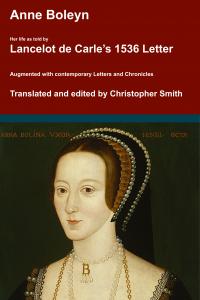
Anne Boleyn. Her Life as told by Lancelot de Carle's 1536 Letter.
In 1536, two weeks after the execution of Anne Boleyn, her brother George and four others, Lancelot du Carle, wrote an extraordinary letter that described Anne's life, and her trial and execution, to which he was a witness. This book presents a new translation of that letter, with additional material from other contemporary sources such as Letters, Hall's and Wriothesley's Chronicles, the pamphlets of Wynkyn the Worde, the Memorial of George Constantyne, the Portuguese Letter and the Baga de Secrets, all of which are provided in Appendices.
Available at Amazon in eBook and Paperback format.
Fosse Way 5b Ilchester to Bath. From Lindinis [Map] aka Ilchester the Fosse Way crosses the River Yeo at Northover, Somerset [Map], then travels just west of the Podimore Roundabout, Somerset [Map], to Wraxall, Somerset [Map] where there is a slight deviation to climb Wraxall Hill, Somerset [Map], and then descend Pye Hill, Somerset [Map]. Then through Cannard's Grave, Somerset [Map] to Beacon's Hill, Somerset [Map] where the Fosse Way is crossed by the Sorviodunum [Map] aka Old Sarum to Charterhouse, Somerset [Map] Roman Road. Then through Stratton-on-the-Fosse, Somerset [Map], Midsomer Norton, Somerset [Map], Clandown, Somerset [Map], Peasdown, Somerset [Map], Dunkerton Bottom, Somerset [Map], Wellsway, Somerset [Map], Holloway [Map] to the Roman Bridge [Map] over the Gloucestershire River Avon into Aquae Sulis aka Bath.
Fosse Way Bath. In Aquae Sulis aka Bath the Fosse Way continues along Southgate Street [Map], Stall Street [Map] past the [Map]. Here the Fosse Way had to turn right and combine with the London to Sea Mills Roman Road along Cheap Street [Map] before turning left into High Street [Map] then along either, or both, Walcot Street [Map] and/or Broad Street [Map], both were Roman roads. Thereafter the Fosse Way passes through Batheaston [Map] along London Road [Map].
St Mary the Virgin's Church, Bathwick is also in Churches in Somerset.
In 1841 Harry Mengden Scarth [aged 26] was presented to the Rectory of St Mary the Virgin's Church, Bathwick [Map] by William Henry Vane 1st Duke Cleveland [aged 74].
Fosse Way Bath. In Aquae Sulis aka Bath the Fosse Way continues along Southgate Street [Map], Stall Street [Map] past the [Map]. Here the Fosse Way had to turn right and combine with the London to Sea Mills Roman Road along Cheap Street [Map] before turning left into High Street [Map] then along either, or both, Walcot Street [Map] and/or Broad Street [Map], both were Roman roads. Thereafter the Fosse Way passes through Batheaston [Map] along London Road [Map].

On 26th January 1914 Jane Morris nee Burden [aged 74] died at 5 Brock Street, Bath. On 29th January 1914 she was buried at St George's Church, Kelmscott [Map] in the same grave as her husband William Morris. Her body was driven in a 'motor' from Bath to the manor house just before the service. Her coffin was 17th century style and in oak with brass furniture and a simple inscription of her name and date of death, and was carried into the church by six village men. The church was well attended by the villagers as well as familiar names from the world of art and literature including Marie Stillman [aged 69] whose wreath was noted in the papers. The hymn 'Now the labourer's task is o'er' was sung and the organist played the Dead March as the coffin was carried out to where William was already buried.
Fosse Way Bath. In Aquae Sulis aka Bath the Fosse Way continues along Southgate Street [Map], Stall Street [Map] past the [Map]. Here the Fosse Way had to turn right and combine with the London to Sea Mills Roman Road along Cheap Street [Map] before turning left into High Street [Map] then along either, or both, Walcot Street [Map] and/or Broad Street [Map], both were Roman roads. Thereafter the Fosse Way passes through Batheaston [Map] along London Road [Map].
Fosse Way Bath. In Aquae Sulis aka Bath the Fosse Way continues along Southgate Street [Map], Stall Street [Map] past the [Map]. Here the Fosse Way had to turn right and combine with the London to Sea Mills Roman Road along Cheap Street [Map] before turning left into High Street [Map] then along either, or both, Walcot Street [Map] and/or Broad Street [Map], both were Roman roads. Thereafter the Fosse Way passes through Batheaston [Map] along London Road [Map].
Fosse Way 5b Ilchester to Bath. From Lindinis [Map] aka Ilchester the Fosse Way crosses the River Yeo at Northover, Somerset [Map], then travels just west of the Podimore Roundabout, Somerset [Map], to Wraxall, Somerset [Map] where there is a slight deviation to climb Wraxall Hill, Somerset [Map], and then descend Pye Hill, Somerset [Map]. Then through Cannard's Grave, Somerset [Map] to Beacon's Hill, Somerset [Map] where the Fosse Way is crossed by the Sorviodunum [Map] aka Old Sarum to Charterhouse, Somerset [Map] Roman Road. Then through Stratton-on-the-Fosse, Somerset [Map], Midsomer Norton, Somerset [Map], Clandown, Somerset [Map], Peasdown, Somerset [Map], Dunkerton Bottom, Somerset [Map], Wellsway, Somerset [Map], Holloway [Map] to the Roman Bridge [Map] over the Gloucestershire River Avon into Aquae Sulis aka Bath.
Around 1492 John Hussey 1st Baron Hussey of Sleaford [aged 27] and Margaret Blount [aged 17] were married at Keynsham, Gloucestershire [Map].
In 1617 Thomas Brydges was born to Edward Brydges [aged 27] at Keynsham, Gloucestershire [Map]. He married his sixth cousin Ann Rodney and had issue.
Anne Boleyn. Her Life as told by Lancelot de Carle's 1536 Letter.
In 1536, two weeks after the execution of Anne Boleyn, her brother George and four others, Lancelot du Carle, wrote an extraordinary letter that described Anne's life, and her trial and execution, to which he was a witness. This book presents a new translation of that letter, with additional material from other contemporary sources such as Letters, Hall's and Wriothesley's Chronicles, the pamphlets of Wynkyn the Worde, the Memorial of George Constantyne, the Portuguese Letter and the Baga de Secrets, all of which are provided in Appendices.
Available at Amazon in eBook and Paperback format.
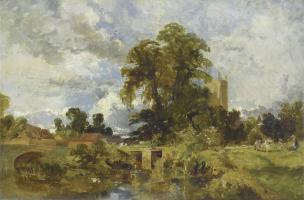
Around 1841. William James Müller [aged 28]. Keynsham [Map], near Bristol.
The Gloucestershire River Avon rises near Acton Turville, Gloucestershire [Map] after which it flows past Luckington, Wiltshire [Map], Sherston, Wiltshire [Map], Easton Grey, Wiltshire [Map], Malmesbury, Wiltshire [Map], Great Somerford, Wiltshire [Map], Christian Malford, Wiltshire [Map], Chippenham, Wiltshire [Map], Melksham, Wiltshire [Map], Bradford on Avon [Map], under the Dundas Aquaduct, Wiltshire [Map], through Bath, Somerset [Map], past Keynsham, Gloucestershire [Map], through Bristol [Map] under the Clifton Suspension Bridge [Map] to Avonmouth, Gloucestershire [Map] where it joins the Severn Estuary.
The River Chew rises near Chewton Mendip, Somerset [Map] then flows north past Litton, Somerset [Map], Coley, Somerset [Map], North Widcombe, Somerset [Map] where it joins the Chew Valley Lake [Map], Chew Magna, Somerset [Map], Pensford, Somerset [Map], Compton Dando, Somerset [Map] joining the Gloucestershire River Avon at Keynsham, Gloucestershire [Map].
Keynsham Abbey is also in Abbeys in England.
On 21st December 1495 Jasper Tudor 1st Duke Bedford [aged 64] died at Thornbury Manor without legitimate issue. He was buried at Keynsham Abbey [Map]. Duke Bedford, Earl Pembroke extinct.
On 25th December 1744 Henry Brydges 2nd Duke Chandos [aged 36] and Anne Wells Duchess Chandos were married at Keith's Chapel, Mayfair. She by marriage Duchess Chandos. Two versions of their meeting are related... He the son of James Brydges 1st Duke Chandos and Mary Lake.
Notes & Queries 1870 4th Series, Vol. 6, p.179: Lord Omery remarked, on 15th January 1745, "Of her person & character people speak variously, but all agree that both are very bad." He was speaking of Anne, Duchess of Chandos. She was the daughter of one John Wells of Newbury (& St. Marylebone) whose arms appear as azure, three fountains proper, on her hatchment at Keynsham Church. She was chambermaid at the Pelican Inn Newbury, and married to Jeffries the Ostler there. There is a story about the Duchess told by an old lady of Newbury, who was ten years old at the time. Henry Bridges, 2nd Duke of Chandos, while on his way to London, dined at the Pelican Inn in Newbury, with a companion (it has been claimed that the Inn was the Marlborough Castle, but this is incorrect). After dinner there was a stir and a bustle in the Inn Yard. The explanation came that "A man is going to sell his wife and they are leading her up the yard with a halter round her neck". "We will go and see the sale, " said the Duke. On entering the yard, however, he was so smitten with the woman's beauty and the patient way she waited to be set free from her ill‑conditioned husband, the Inn's ostler, that he bought her himself. She was his mistress for some years. In August 1738 his wife died, and by 1744 the ostler was dead also, and the two were finally married at Mr. Keith's Chapel, Mayfair on 25th December 1744.
The Gentleman's Magazine 1832. The Duke of Chandos, while staying at a small country inn, saw the ostler beating his wife in a most cruel manner; he interfered and literally bought her for half a crown. She was a young and pretty woman; the Duke had her educated; and on the husband's death he married her. On her death-bed, she had her whole household assembled, told them her history, and drew from it a touching moral of reliance on Providence; as from the most wretched situation, she had been suddenly raised to one of the greatest prosperity; she entreated their forgiveness if at any time she had given needless offence, and then dismissed them with gifts; dying almost in the very act.
On 16th June 1752 Bishop Joseph Butler [aged 60] died unmarried at Rosemead House Kingsmead Square Bath, Somerset. He was buried at Bristol Cathedral [Map].
On 2nd May 1844 William Beckford [aged 83] died at Lansdown Crescent Bath, Somerset.
On 5th May 1643 Charles Leke was killed at Lansdown Hill, Bath.

On 5th July 1643 the Battle of Lansdowne was an inconclusive battle between a Royalist army commanded by Ralph Hopton 1st Baron Hopton [aged 47] and a Parliamentary Army commanded by William Waller [aged 46] at Lansdown Hill, Bath. The two commanders being old friends.
Edward Leke was killed.
Bevil Grenville [aged 48] was killed at the at the head of the Cornish infantry as it reached the top of Lansdown Hill. He received a blow to the head with a pole-axe and was taken to the rectory at nearby Cold Ashton, Gloucestershire where he died.
On 10th January 1900 Trevor Wheler 11th Baronet [aged 71] died at Charlecote, Lansdown. He was buried at All Saints' Church, Leamington Hastings. His son Edward [aged 42] succeeded 12th Baronet Wheler of the City of Westminster.

On 14th August 1960 Elizabeth Maude Guinness died at 7 Lime Gardens Bath.
Fosse Way Bath. In Aquae Sulis aka Bath the Fosse Way continues along Southgate Street [Map], Stall Street [Map] past the [Map]. Here the Fosse Way had to turn right and combine with the London to Sea Mills Roman Road along Cheap Street [Map] before turning left into High Street [Map] then along either, or both, Walcot Street [Map] and/or Broad Street [Map], both were Roman roads. Thereafter the Fosse Way passes through Batheaston [Map] along London Road [Map].
In 1600 William Prynne was born in Painswick Bath.
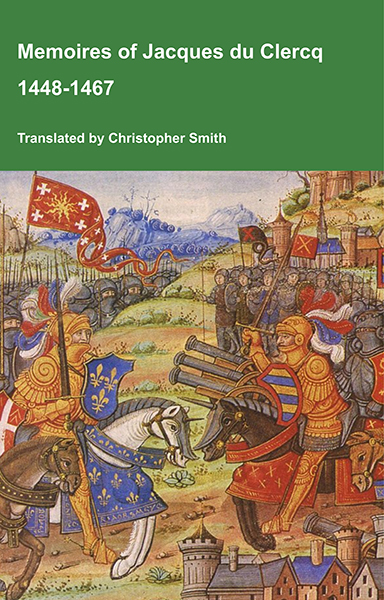
This is a translation of the 'Memoires of Jacques du Clercq', published in 1823 in two volumes, edited by Frederic, Baron de Reissenberg. In his introduction Reissenberg writes: 'Jacques du Clercq tells us that he was born in 1424, and that he was a licentiate in law and a counsellor to Philip the Good, Duke of Burgundy, in the castellany of Douai, Lille, and Orchies. It appears that he established his residence at Arras. In 1446, he married the daughter of Baldwin de la Lacherie, a gentleman who lived in Lille. We read in the fifth book of his Memoirs that his father, also named Jacques du Clercq, had married a lady of the Le Camelin family, from Compiègne. His ancestors, always attached to the counts of Flanders, had constantly served them, whether in their councils or in their armies.' The Memoires cover a period of nineteen years beginning in in 1448, ending in in 1467. It appears that the author had intended to extend the Memoirs beyond that date; no doubt illness or death prevented him from carrying out this plan. As Reissenberg writes the 'merit of this work lies in the simplicity of its narrative, in its tone of good faith, and in a certain air of frankness which naturally wins the reader’s confidence.' Du Clercq ranges from events of national and international importance, including events of the Wars of the Roses in England, to simple, everyday local events such as marriages, robberies, murders, trials and deaths, including that of his own father in Book 5; one of his last entries.
Available at Amazon in eBook and Paperback format.
Fosse Way Bath. In Aquae Sulis aka Bath the Fosse Way continues along Southgate Street [Map], Stall Street [Map] past the [Map]. Here the Fosse Way had to turn right and combine with the London to Sea Mills Roman Road along Cheap Street [Map] before turning left into High Street [Map] then along either, or both, Walcot Street [Map] and/or Broad Street [Map], both were Roman roads. Thereafter the Fosse Way passes through Batheaston [Map] along London Road [Map].
Fosse Way Bath. In Aquae Sulis aka Bath the Fosse Way continues along Southgate Street [Map], Stall Street [Map] past the [Map]. Here the Fosse Way had to turn right and combine with the London to Sea Mills Roman Road along Cheap Street [Map] before turning left into High Street [Map] then along either, or both, Walcot Street [Map] and/or Broad Street [Map], both were Roman roads. Thereafter the Fosse Way passes through Batheaston [Map] along London Road [Map].
Fosse Way Bath. In Aquae Sulis aka Bath the Fosse Way continues along Southgate Street [Map], Stall Street [Map] past the [Map]. Here the Fosse Way had to turn right and combine with the London to Sea Mills Roman Road along Cheap Street [Map] before turning left into High Street [Map] then along either, or both, Walcot Street [Map] and/or Broad Street [Map], both were Roman roads. Thereafter the Fosse Way passes through Batheaston [Map] along London Road [Map].
Church of St Swithin, Walcot, Bath is also in Churches in Somerset.
On 26th April 1764 George Austen [aged 33] and Cassandra Leigh [aged 25] were married at the Church of St Swithin, Walcot, Bath [Map].
On 28th May 1796 Henry Thomas Cary 8th Viscount Falkland [aged 30] died unmarried at the White Lion Inn. His brother Charles [aged 27] succeeded 9th Viscount Falkland.
Around 1755 Edward Astley was born to Edward Astley 4th Baronet [aged 25] and Rhoda Delaval [aged 29]. She died before 12th May 1755 when she was buried at St Matthew's Church Widcombe. Given the close of the dates he may have been a twin. Before 1757 Edward Astley died.


On 14th April 1755 Editha Rhoda Astley was born to Edward Astley 4th Baronet [aged 25] and Rhoda Delaval [aged 29]. She died before 12th May 1755 when she was buried at St Matthew's Church Widcombe.