


 Lincoln Cathedral Close
 Lincoln Cathedral Angel Choir
 Lincoln Cathedral Cloisters
 Lincoln Cathedral Judgement Portal
 Lincoln Cathedral Nave
 Lincoln Cathedral North Transept
 Lincoln Cathedral West Front
 Monument to Bishop Wordsworth
 Ruined Shrine of Little Hugh
 Soldiers Chapel Lincoln Cathedral
 St Hugh's Choir
 Tomb of Katherine Swynford
 Tomb of the Viscera of Eleanor of Castile
Lincoln Cathedral is in Lincoln, Lincolnshire [Map], Cathedrals in England.
1290 Death of Queen Eleanor of Castile
1396 Marriage of John of Gaunt and Katherine Roet

Lincoln Cathedral [Map] stands on the end of the ridge that runs north-south through Lincolnshire. An important croosing point of the River Witham. Lincoln Castle on the left.
In 1092 Lincoln Cathedral [Map] was consecrated. The lower part of the West Front [Map] is believed to be from this date.


In 1093 Bishop Roger Bloet was elected Bishop of Lincoln.
Chronicon ex Chronicis by Florence and John of Worcester. 3rd June 1123. Henry, king of England, went over sea after the feast of Whitsuntide [3rd June]. William (age 53), archbishop of Canterbury, having received the pallium from pope Calixtus, and Thurstan (age 53), archbishop of York, with their companions, on their return from Rome, paid a visit to the king, who was still in Normandy: after a short stay, archbishop William came back to England, and, on the eleventh of the calends of August [22nd July], at Canterbury, consecrated Alexander as bishop of Lincoln; and, on the seventh of the calends of September [26th August], in the church of St. Paul the Apostle, at London, consecrated Godfrey, the queen's chancellor, to the bishopric of Bath.
On 13th December 1148 Bishop Robert de Chesney was elected Bishop of Lincoln.
On 19th December 1148 Bishop Robert de Chesney was consecrated Bishop of Lincoln by Archbishop Theobald of Bec (age 58) at Canterbury Cathedral [Map]. He had been ordained as a Priest the day before.
Before 1170 Archbishop Geoffrey Plantagenet (age 17) was appointed Archdeacon of Lincoln.
In 1173 Archbishop Geoffrey Plantagenet (age 21) was appointed Bishop of Lincoln.
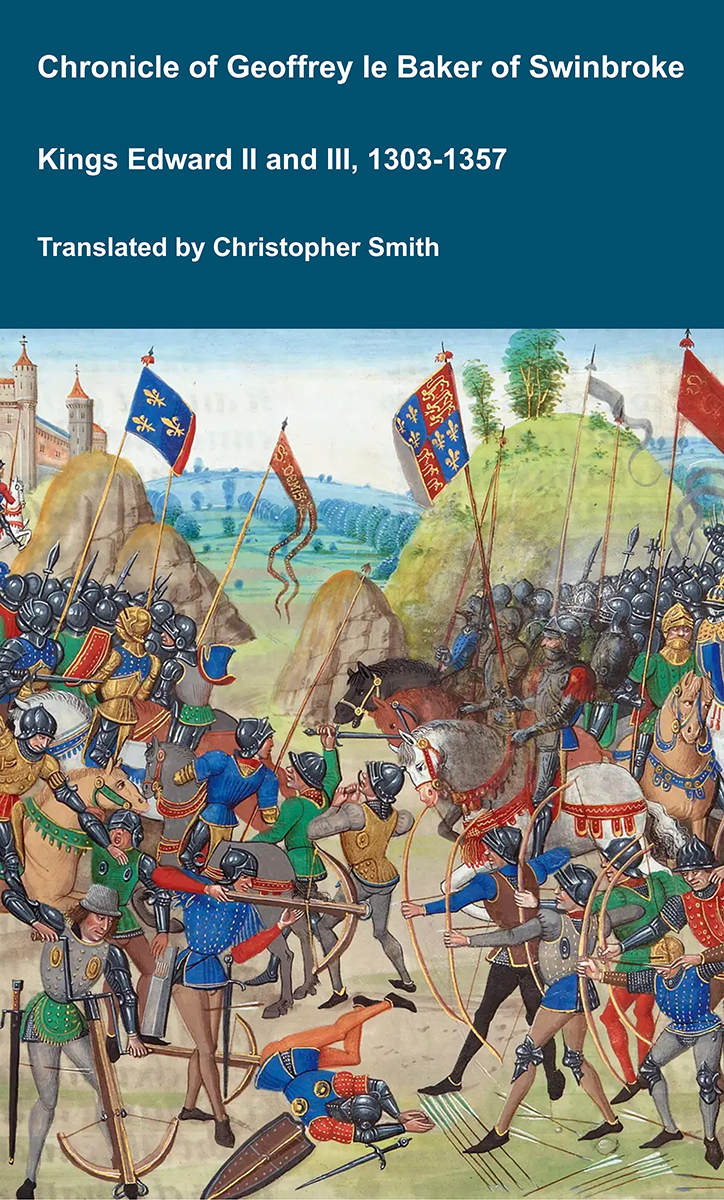
Chronicle of Geoffrey le Baker of Swinbroke
Baker was a secular clerk from Swinbroke, now Swinbrook, an Oxfordshire village two miles east of Burford. His Chronicle describes the events of the period 1303-1356: Gaveston, Bannockburn, Boroughbridge, the murder of King Edward II, the Scottish Wars, Sluys, Crécy, the Black Death, Winchelsea and Poitiers. To quote Herbert Bruce 'it possesses a vigorous and characteristic style, and its value for particular events between 1303 and 1356 has been recognised by its editor and by subsequent writers'. The book provides remarkable detail about the events it describes. Baker's text has been augmented with hundreds of notes, including extracts from other contemporary chronicles, such as the Annales Londonienses, Annales Paulini, Murimuth, Lanercost, Avesbury, Guisborough and Froissart to enrich the reader's understanding. The translation takes as its source the 'Chronicon Galfridi le Baker de Swynebroke' published in 1889, edited by Edward Maunde Thompson.
Available at Amazon in eBook and Paperback format.
On 11th May 1183 Archbishop Walter de Coutances was elected Bishop of Lincoln being selected by King Henry "Curtmantle" II of England (age 50) over three other candidates.
On 3rd July 1183 Archbishop Walter de Coutances was consecrated Bishop of Lincoln at Angers Cathedral [Map] by Archbishop Richard de Dover.
On 11th December 1183 Archbishop Walter de Coutances was enthroned Bishop of Lincoln.
On 21st November 1186 Bishop Hugh of Lincoln (age 46) was consecrated Bishop of Lincoln.
After 1200. Shrine of Bishop Hugh at Lincoln Cathedral [Map].


After 1210. The Pulpitum at Lincoln Cathedral [Map].

Around 1220 the North Transept [Map] of Lincoln Cathedral [Map] was constructed.
In 1229 Bishop Robert Grosseteste (age 61) was appointed Archdeacon of Lincoln.
On 17th June 1235 Bishop Robert Grosseteste (age 67) was consecrated Bishop of Lincoln.
On 8th October 1253 Bishop Robert Grosseteste (age 85) died. He was buried at Lincoln Cathedral [Map]. "In this place lies the body of ROBERT GROSSETESTE who was born at Stradbroke in Suffolk, studied in the University of Paris – and in 1224 became the Chancellor of Oxford University where he befriended and taught the newly founded orders of Friars : In 1229 he became Archdeacon of Leicester and a Canon of this Cathedral – reigning as Bishop of Lincoln from 17th. June 1235 until his death. He was a man of learning and an inspiration to scholars a wise administrator whilst a true shepherd of his flock, ever concerned to lead them to Christ in whose service he strove to temper justice with mercy, hating the sin while loving the sinner, not sparing the rod though cherishing the weak – He died on 8 October 1253."


After 1255. Lincoln Cathedral [Map].
All too often, in too many places, communities identify themselves as who they are not, rather than who they are. It is but a short step from this to distrust, dislike and even to hatred of 'the other' - frequently neighbours, who happen to be people of different faith or race.
Fictional 'ritual murder' accusations by Christians against Jews began in England in the 12th century and then spread to the Continent. In 1255 a Lincoln boy called Hugh was found dead and the city's long-established Jewish community was accused of murdering him. As a result, 92 Jews were imprisoned in the Tower of London and 18 were hanged for a crime they did not commit. Although Hugh was never canonised, the boy was venerated as a saint. Legends and ballads blaming the Jews circulated widely. His tomb in Lincoln Cathedral was a place of pilgrimage for the rest of the 13th century, but its popularity began to decrease after the Jews were expelled from England by King Edward I in 1290. When the tomb was opened in 1791, the child's body was found intact, bearing no evidence of the mutilation alleged to have taken place.
The tomb chest of Little Hugh's shrine [Map] is to the left of this sign. Above is a picture of its original appearance, as recorded before its partial destruction in the Civil War, from a facsimile of Dugdale's Monuments of 1641.
This libel against the Jews is a shameful example of religious and racial hatred, which, continuing down through the ages, violently divides many people in the present day. Let us unite, here, in a prayer for an end to bigotry, prejudice and persecution.


Before 30th June 1275 Bishop Oliver Sutton (age 56) was appointed Dean of Lincoln.
In 1280 the Angel Choir [Map] was dedicated at Lincoln Cathedral [Map]. The Angel Choir got its name from the 28 Angels which are carved into this part of the Cathedral.


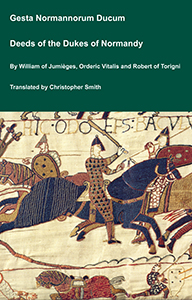
The Deeds of the Dukes of Normandy
The Gesta Normannorum Ducum [The Deeds of the Dukes of Normandy] is a landmark medieval chronicle tracing the rise and fall of the Norman dynasty from its early roots through the pivotal events surrounding the Norman Conquest of England. Originally penned in Latin by the monk William of Jumièges shortly before 1060 and later expanded at the behest of William the Conqueror, the work chronicles the deeds, politics, battles, and leadership of the Norman dukes, especially William’s own claim to the English throne. The narrative combines earlier historical sources with firsthand information and oral testimony to present an authoritative account of Normandy’s transformation from a Viking settlement into one of medieval Europe’s most powerful realms. William’s history emphasizes the legitimacy, military prowess, and governance of the Norman line, framing their expansion, including the conquest of England, as both divinely sanctioned and noble in purpose. Later chroniclers such as Orderic Vitalis and Robert of Torigni continued the history, extending the coverage into the 12th century, providing broader context on ducal rule and its impact. Today this classic work remains a foundational source for understanding Norman identity, medieval statesmanship, and the historical forces that reshaped England and Western Europe between 800AD and 1100AD.
Available at Amazon in eBook and Paperback format.
On 6th February 1280 Bishop Oliver Sutton (age 61) was elected Bishop of Lincoln.
On 19th May 1280 Bishop Oliver Sutton (age 61) was consecrated Bishop of Lincoln at Lambeth Palace [Map].
On 8th September 1280 Bishop Oliver Sutton (age 61) was enthroned Bishop of Lincoln at Lincoln Cathedral [Map].
On 28th November 1290 Eleanor of Castile Queen Consort England (age 49) died at Harby Manor. Her viscera were buried at Lincoln Cathedral [Map]. Her heart was buried at Blackfriars, City of London on the 19th December 1290 where her son Alfonso Plantagenet had been buried eight years beforew.
Her corpse was taken from Harby, Nottinghamshire [Map] to Westminster Abbey [Map]. At each of the locations at which her body rested overnight King Edward I of England (age 51) commissioned the building of an Eleanor Cross. Three remain at Geddington, Northamptonshire [Map], Hardingstone, Northamptonshire and Waltham Abbey, Essex [Map].


Archaeologia Volume 29 Section XIII. The corpse (age 49) was opened and embalmed. The heart was reserved to be deposited, probably at her own desire, in the church of the Friars Predicants in London. What else was removed was interred in the chapel of the Blessed Virgin in the Minster at Lincoln [Map]. Writs are found tested by the King (age 51) at Lincoln on the 2nd and 3rd of December. On the 5th they are tested at Casterton, which is on the road from Grantham to Stamford; on the 9th at Northampton; on the 13th at Saint Alban's and London. It is manifest, therefore, that the funeral procession, in which the King was personally present, must have set out very soon after the death. It would seem that the body was taken from Hardby to Lincoln, and that the procession set out from Lincoln on the morning of the 4th.
Before 1300. Lincoln Cathedral [Map] Judgement Portal [Map], with a central figure of Christ flanked by richly carved angels, while about are arrayed souls rising to heaven or being dragged down to hell by demons. Just beside the porch are carvings of a king and queen thought to be either Edward I and Eleanor of Castle, or Margaret of Valois, his second wife.


On 15th January 1300 Bishop John D'Aldreby was elected Bishop of Lincoln.
On 12th June 1300 Bishop John D'Aldreby was consecrated Bishop of Lincoln at Canterbury Cathedral [Map].
The Deeds of the Dukes of Normandy
The Gesta Normannorum Ducum [The Deeds of the Dukes of Normandy] is a landmark medieval chronicle tracing the rise and fall of the Norman dynasty from its early roots through the pivotal events surrounding the Norman Conquest of England. Originally penned in Latin by the monk William of Jumièges shortly before 1060 and later expanded at the behest of William the Conqueror, the work chronicles the deeds, politics, battles, and leadership of the Norman dukes, especially William’s own claim to the English throne. The narrative combines earlier historical sources with firsthand information and oral testimony to present an authoritative account of Normandy’s transformation from a Viking settlement into one of medieval Europe’s most powerful realms. William’s history emphasizes the legitimacy, military prowess, and governance of the Norman line, framing their expansion, including the conquest of England, as both divinely sanctioned and noble in purpose. Later chroniclers such as Orderic Vitalis and Robert of Torigni continued the history, extending the coverage into the 12th century, providing broader context on ducal rule and its impact. Today this classic work remains a foundational source for understanding Norman identity, medieval statesmanship, and the historical forces that reshaped England and Western Europe between 800AD and 1100AD.
Available at Amazon in eBook and Paperback format.
In 1306 Robert Burghesh 1st Baron Burghesh (age 52) died. He was buried in the St Catherine Chantry at Lincoln Cathedral [Map]. His son Stephen (age 23) succeeded 2nd Baron Burghesh.
Before 14th August 1317 John Montagu died. On 14th August 1317 John Montagu was buried at Lincoln Cathedral [Map].
On 27th May 1320 Bishop Henry Burghesh (age 28) was appointed Bishop of Lincoln due to the influence of his uncle Bartholomew Badlesmere 1st Baron Badlesmere (age 44) despite the chapter having already elected a new bishop.
On 20th July 1320 Bishop Henry Burghesh (age 28) was consecrated Bishop of Lincoln.
On 4th December 1340 Bishop Henry Burghesh (age 48) died at Ghent [Map]. He was buried in the St Catherine Chantry at Lincoln Cathedral [Map].
Around 1st March 1341 Bishop Thomas Bek (age 59) was elected Bishop of Lincoln.
On 7th July 1342 Bishop Thomas Bek (age 60) was consecrated Bishop of Lincoln.
In 1344 John de Ufford was appointed Dean of Lincoln.

On 3rd August 1355 Bartholomew "The Elder" Burghesh 1st Baron Burghesh (age 68) died at Dover, Kent [Map]. He was buried in the St Catherine Chantry at Lincoln Cathedral [Map] with his father and brother. His son Bartholomew (age 27) succeeded 2nd Baron Burghesh.
In January 1361 Edward III (age 48) and John II of France (age 41) jointly petitioned Pope Innocent VI, to make Bishop William of Wykeham (age 41) a canon at Lincoln Cathedral [Map].
On 13th January 1396 John of Gaunt 1st Duke Lancaster (age 55) and Katherine Swynford aka Roet Duchess Lancaster (age 45) were married at Lincoln Cathedral [Map]. She by marriage Duchess Lancaster. He the son of King Edward III of England and Philippa of Hainaut Queen Consort England.
On 27th February 1398 Cardinal Henry Beaufort (age 23) was appointed Bishop of Lincoln.
On 10th May 1403 Katherine Swynford aka Roet Duchess Lancaster (age 52) died. She was buried in Lincoln Cathedral [Map]. The monument is thought to be the work of Henry Yevele.
"Katherine's fine tomb chest of Purbeck marble, with its moulded plinth and lid, had armorial shields encircled by garters along each side; it was surmounted by a canopied brass depicting Katherine in her widow's weeds, and bearing her arms impaled with those of John of Gaunt, while above it was raised a vaulted canopy with trefoiled arches, cusped lozenges and miniature rose bosses. The canopy and associated stonework would have been painted in bright colours."
When John Leland visited the Cathedral in about 1540, he recorded that: "In the southe parte of the presbytery lyithe in 2. severalle highe marble tumbes in a chapell Catarine Swineforde, the 3. wife to John of Gaunt Duke of Lancaster, and Jane her dougtar Countes of Westmerland".
In 1654 John Evelyn's Diary: "The soldiers had lately knocked off most of the brasses from the gravestones".
At some point after this the position of the two monuments was changed and they now stand end to end.


On 20th November 1419 Bishop Richard Fleming (age 32) was nominated by papal provision to be Bishop of Lincoln.
Chronicle of Geoffrey le Baker of Swinbroke
Baker was a secular clerk from Swinbroke, now Swinbrook, an Oxfordshire village two miles east of Burford. His Chronicle describes the events of the period 1303-1356: Gaveston, Bannockburn, Boroughbridge, the murder of King Edward II, the Scottish Wars, Sluys, Crécy, the Black Death, Winchelsea and Poitiers. To quote Herbert Bruce 'it possesses a vigorous and characteristic style, and its value for particular events between 1303 and 1356 has been recognised by its editor and by subsequent writers'. The book provides remarkable detail about the events it describes. Baker's text has been augmented with hundreds of notes, including extracts from other contemporary chronicles, such as the Annales Londonienses, Annales Paulini, Murimuth, Lanercost, Avesbury, Guisborough and Froissart to enrich the reader's understanding. The translation takes as its source the 'Chronicon Galfridi le Baker de Swynebroke' published in 1889, edited by Edward Maunde Thompson.
Available at Amazon in eBook and Paperback format.
On 28th April 1420 Bishop Richard Fleming (age 33) was consecrated Bishop of Lincoln by Martin V in Florence.
On 25 or 26th January 1431 Bishop Richard Fleming (age 44) died. He was buried at Lincoln Cathedral [Map] where he has a Chantrey Chapel with an effigy above and cadaver beneath.
Bishop Richard Fleming: Around 1387 he was born to Robert Fleming of Woodhall. On 20th November 1419 Bishop Richard Fleming was nominated by papal provision to be Bishop of Lincoln. On 28th April 1420 Bishop Richard Fleming was consecrated Bishop of Lincoln by Martin V in Florence.


On 30th April 1431 Bishop William Grey aka Gray was translated to Bishop of Lincoln.
On 13th November 1440 Joan Beaufort Countess of Westmoreland (age 61) died at Howden. She was buried at Lincoln Cathedral [Map] next to her mother Katherine Swynford aka Roet Duchess Lancaster.
In 1450 Bishop Marmaduke Lumley was appointed Bishop of Lincoln.
On 24th August 1458 Bishop Richard of Gravesend was elected Bishop of Lincoln.
On 2nd June 1463 Margaret Dymoke died. She was buried at Lincoln Cathedral [Map].
In 1472 Archbishop Thomas Rotherham (age 48) was appointed Bishop of Lincoln.
Abbot John Whethamstede’s Chronicle of the Abbey of St Albans
Abbot John Whethamstede's Register aka Chronicle of his second term at the Abbey of St Albans, 1451-1461, is a remarkable text that describes his first-hand experience of the beginning of the Wars of the Roses including the First and Second Battles of St Albans, 1455 and 1461, respectively, their cause, and their consequences, not least on the Abbey itself. His text also includes Loveday, Blore Heath, Northampton, the Act of Accord, Wakefield, and Towton, and ends with the Coronation of King Edward IV. In addition to the events of the Wars of the Roses, Abbot John, or his scribes who wrote the Chronicle, include details in the life of the Abbey such as charters, letters, land exchanges, visits by legates, and disputes, which provide a rich insight into the day-to-day life of the Abbey, and the challenges faced by its Abbot.
Available at Amazon in eBook and Paperback format.
On 7th July 1480 Bishop John Russell was appointed Bishop of Lincoln.
On 30th December 1494 Bishop John Russell died at Nettleham. He was buried at Lincoln Cathedral [Map].
On 6th November 1496 Bishop William Smyth (age 36) was translated to Bishop of Lincoln.
In 1505 Bishop Thomas Ruthall (age 33) was appointed Prebendary of Lincoln Cathedral.
In 1514 Bishop William Atwater (age 74) was appointed Bishop of Lincoln.

On 2nd January 1514 Bishop William Smyth (age 54) died at the Bishop of Lincoln's Palace, Buckden [Map]. He was buried at Lincoln Cathedral [Map].
In 5th May 1521 Bishop John Longland (age 48) was consecrated Bishop of Lincoln by Archbishop William Warham (age 71) assisted by Bishop John Fisher (age 51), Bishop Nicholas West (age 60) and Bishop John Vesey aka Harman (age 59).


On 7th January 1527 Bishop Robert King was appointed suffragan Bishop of Lincoln.
Abbot John Whethamstede’s Chronicle of the Abbey of St Albans
Abbot John Whethamstede's Register aka Chronicle of his second term at the Abbey of St Albans, 1451-1461, is a remarkable text that describes his first-hand experience of the beginning of the Wars of the Roses including the First and Second Battles of St Albans, 1455 and 1461, respectively, their cause, and their consequences, not least on the Abbey itself. His text also includes Loveday, Blore Heath, Northampton, the Act of Accord, Wakefield, and Towton, and ends with the Coronation of King Edward IV. In addition to the events of the Wars of the Roses, Abbot John, or his scribes who wrote the Chronicle, include details in the life of the Abbey such as charters, letters, land exchanges, visits by legates, and disputes, which provide a rich insight into the day-to-day life of the Abbey, and the challenges faced by its Abbot.
Available at Amazon in eBook and Paperback format.
In 1528 Bishop Richard Pate was appointed Archdeacon of Lincoln.

On 21st September 1538 George Tailboys 9th Baron Kyme (age 71) died. He was buried at Lincoln Cathedral [Map]. His grandson George (age 15) de jure 10th Baron Kyme.
In 1547 Bishop Henry Holbeach (age 70) was elected Bishop of Lincoln.
In 1552 Bishop John Taylor (age 49) was elected Bishop of Lincoln.
On 1st April 1554 the Lord Chancellor Bishop Edmund "Bloody" Bonner of London (age 54), assisted by Bishop Stephen Gardiner (age 71), Bishop Nicholas Ridley (age 54) and Bishop Cuthbert Tunstall (age 80), consecrated seven bishops at Southwark Cathedral [Map]:
Bishop George Cotes was consecrated Bishop of Chester.
Bishop Gilbert Bourne was consecrated Bishop of Bath and Wells.
Bishop James Brooks (age 41) was consecrated Bishop of Gloucester.
Bishop Maurice Griffiths (age 47) was consecrated Bishop of Rochester.
Bishop Henry Morgan was consecrated Bishop of St David's.
Bishop John White (age 44) was consecrated Bishop of Lincoln.
Bishop Robert Parfew aka Warton was consecrated Bishop of Hereford.
 Become a Member via our Buy Me a Coffee page to read more.
Henry Machyn's Diary. 1st April 1554. [The first day of April my lord chancellor (age 54) did consecrate six new bishops at St. Mary Overy's [Map], before the high altar; and a goodly mass was said. And when all] was done thay yede unto my lord ch[ancellor's,] for ther was as grett a dener as youe ha[ve seen.] Thes be the bysshopes names that wher consecrated, [doctor] Whyt (age 44), warden of Wynchastur, the bysshope of Ly[ncoln]; doctur Borne, bysshope of Bathe; doctur Morgan, bishop of sant Davys; doctur Brokes (age 41), bysshope of Gloss [ter]; doctur Cottes, bysshope of Westtchastur; bysshope of sant Asse changyd to be bysshope of Arfford; master [Griffith] (age 47) parsun of sant Magnus bysshope of Rochastur.
On 15th April 1556 Bishop Thomas Watson (age 41) was elected Bishop of Lincoln.
On 15th August 1557 Bishop Thomas Watson (age 42) was consecrated Bishop of Lincoln by Archbishop Nicholas Heath (age 56).
In 1559 Elizabeth Gascoigne Baroness Kyme (age 88) died at Lincoln, Lincolnshire [Map]. She was buried at Lincoln Cathedral [Map].
On 25th November 1559 Bishop Nicholas Bullingham (age 39) was elected Bishop of Lincoln.
On 21st January 1560 two Bishops were consecrated...
Bishop Nicholas Bullingham (age 40) was consecrated Bishop of Lincoln.
Archbishop Thomas Young (age 53) was consecrated Bishop of St David's at Lambeth Palace [Map] by Archbishop Matthew Parker (age 55).
Jean de Waurin's Chronicle of England Volume 6 Books 3-6: The Wars of the Roses
Jean de Waurin was a French Chronicler, from the Artois region, who was born around 1400, and died around 1474. Waurin’s Chronicle of England, Volume 6, covering the period 1450 to 1471, from which we have selected and translated Chapters relating to the Wars of the Roses, provides a vivid, original, contemporary description of key events some of which he witnessed first-hand, some of which he was told by the key people involved with whom Waurin had a personal relationship.
Available at Amazon in eBook and Paperback format.
In 1584 Bishop William Wickham (age 45) was appointed Bishop of Lincoln.
On 1st March 1599 Lucy Montagu died. She was buried at Lincoln Cathedral [Map].
In 1614 Archbishop Richard Neale (age 51) was elected Bishop of Lincoln.
In 1621 Archbishop John Williams (age 38) was appointed Bishop of Lincoln by King James I (age 54).


After 1623. Memorial at Lincoln Cathedral [Map] to William Byrd.
John Evelyn's Diary. 19th August 1654. All marsh ground till we came to Brigg, famous for the plantations of licorice, and then had brave pleasant riding to Lincoln [Map], much resembling Salisbury Plain. Lincoln is an old confused town, very long, uneven, steep, and ragged; formerly full of good houses, especially churches and abbeys. The Minster [Map] almost comparable to that of York [Map] itself, abounding with marble Pillars, and having a fair front (herein was interred Queen Eleanora, the loyal and loving wife who sucked the poison out of her husband's wound); the abbot founder, with rare carving in the stone; the great bell, or Tom, as they call it. I went up the steeple, from whence is a goodly prospect all over the country. The soldiers had lately knocked off most of the brasses from the gravestones, so as few inscriptions were left; they told us that these men went in with axes and hammers, and shut themselves in, till they had rent and torn off some barge loads of metal, not sparing even the. Monuments of the dead; so hellish an avarice possessed them: beside which, they exceedingly ruined the city.
John Evelyn's Diary. 31st August 1654. Trinity College [Map] is said by some to be the fairest quadrangle of any university in Europe; but in truth is far inferior to that of Christ Church, in Oxford; the hall is ample and of stone, the fountain in the quadrangle is graceful, the chapel and library fair. There they showed us the prophetic manuscript of the famous Grebner, but the passage and emblem which they would apply to our late King, is manifestly relating to the Swedish; in truth, it seems to be a mere fantastic rhapsody, however the title may bespeak strange revelations. There is an office in manuscript with fine miniatures, and some other antiquities, given by the Countess of Richmond, mother of Henry VIII, and the before-mentioned Archbishop Williams, when Bishop of Lincoln. The library is pretty well stored. The Greek Professor had me into another large quadrangle cloistered and well built, and gave us a handsome collation in his own chamber.


John Evelyn's Diary. 18th December 1659. Preached that famous divine, Dr. Sanderson (age 72) (since Bishop of Lincoln), now eighty years old, on Jer. xxx. 13, concerning the evil of forsaking God.
In 1660 Bishop Thomas Sprat (age 25) was appointed Prebendary of Lincoln Cathedral.
In 1660 Bishop Robert Sanderson (age 72) was appointed Bishop of Lincoln.
On 3rd October 1660 Bishop Robert Saunderson (age 73) was elected Bishop of Lincoln.
On 12th October 1660 Michael Honywood (age 64) was installed as Dean of Lincoln.
William of Worcester's Chronicle of England
William of Worcester, born around 1415, and died around 1482 was secretary to John Fastolf, the renowned soldier of the Hundred Years War, during which time he collected documents, letters, and wrote a record of events. Following their return to England in 1440 William was witness to major events. Twice in his chronicle he uses the first person: 1. when writing about the murder of Thomas, 7th Baron Scales, in 1460, he writes '… and I saw him lying naked in the cemetery near the porch of the church of St. Mary Overie in Southwark …' and 2. describing King Edward IV's entry into London in 1461 he writes '… proclaimed that all the people themselves were to recognize and acknowledge Edward as king. I was present and heard this, and immediately went down with them into the city'. William’s Chronicle is rich in detail. It is the source of much information about the Wars of the Roses, including the term 'Diabolical Marriage' to describe the marriage of Queen Elizabeth Woodville’s brother John’s marriage to Katherine, Dowager Duchess of Norfolk, he aged twenty, she sixty-five or more, and the story about a paper crown being placed in mockery on the severed head of Richard, 3rd Duke of York.
Available at Amazon in eBook and Paperback format.
On 28th November 1660 Bishop Robert Saunderson (age 73) was consecrated Bishop of Lincoln.
On 17th September 1667 Bishop William Fuller (age 59) was elected Bishop of Lincoln.
Before 27th June 1675 Bishop Thomas Barlow (age 67) was elected Bishop of Lincoln.
John Evelyn's Diary. 27th June 1675. At Ely House, I went to the consecration of my worthy friend, the learned Dr. Barlow (age 51), Warden of Queen's College, Oxford, now made Bishop of Lincoln. After it succeeded a magnificent feast, where were the Duke of Ormond (age 64), Earl of Lauderdale (age 59), the Lord Treasurer (age 43), Lord Keeper, etc.
On 27th June 1675 Bishop Thomas Barlow (age 67) was consecrated Bishop of Lincoln by Bishop George Morley (age 77) at the Chapel at the Palace of the Bishop of Ely, Holborn rather than Lambeth Palace [Map] since Gilbert Sheldon (age 77), the Archbishop of Canterbury, was opposed to his election.

On 7th September 1681 Michael Honywood (age 84) died. He has a memorial at Lincoln Cathedral [Map].
Michael Honywood: On 1st October 1596 he was born to Robert Honywood and Elizabeth Browne. On 12th October 1660 Michael Honywood was installed as Dean of Lincoln.
On 7th January 1682 Daniel Brevint (age 65) was appointed Dean of Lincoln which position he held for life.
In 1691 Archbishop Thomas Tenison (age 54) was appointed Bishop of Lincoln.
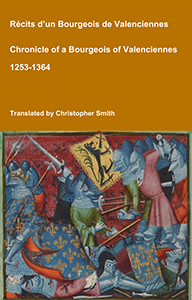
Chronicle of a Bourgeois of Valenciennes
Récits d’un bourgeois de Valenciennes aka The Chronicle of a Bourgeois of Valenciennes is a vivid 14th-century vernacular chronicle written by an anonymous urban chronicler from Valenciennes in the County of Hainaut. It survives in a manuscript that describes local and regional history from about 1253 to 1366, blending chronology, narrative episodes, and eyewitness-style accounts of political, military, and social events in medieval France, Flanders, and the Low Countries. The work begins with a chronological framework of events affecting Valenciennes and its region under rulers such as King Philip VI of France and the shifting allegiances of local nobility. It includes accounts of conflicts, sieges, diplomatic manoeuvres, and the impact of broader struggles like the Hundred Years’ War on urban life in Hainaut. Written from the perspective of a burgher (bourgeois) rather than a monastery or royal court, the chronicle offers a rare lay viewpoint on high politics and warfare, reflecting how merchants, townspeople, and civic institutions experienced the turbulence of the 13th and 14th centuries. Its narrative style combines straightforward reporting of events with moral and civic observations, making it a valuable source for readers interested in medieval urban society, regional politics, and the lived experience of war and governance in pre-modern Europe.
Available at Amazon in eBook and Paperback format.
John Evelyn's Diary. 12th January 1692. My granddaughter was christened by Dr. Tenison (age 55), now Bishop of Lincoln, in Trinity Church (assumed to be a reference to the new church described on 18 Jul 1691), being the first that was christened there. She was named Jane.
John Evelyn's Diary. 9th December 1694. I had news that my dear and worthy friend, Dr. Tenison (age 58), Bishop of Lincoln, was made Archbishop of Canterbury, for which I thank God and rejoice, he being most worthy of it, for his learning, piety, and prudence.

On 10th March 1695 Bishop James Gardiner (age 58) was consecrated Bishop of Lincoln by Archbishop Thomas Tenison (age 58) [who had formerly been Bishop of Lincoln before becoming Archbishop of Canterbury].

On 5th May 1695 Daniel Brevint (age 78) died. He was buried at Lincoln Cathedral [Map].
Daniel Brevint: On or before 11th May 1616 he was born. He was baptised 11th May 1616. In December 1660 he was appointed Rector of St Brandon's Church, Brancepeth. On 7th January 1682 he was appointed Dean of Lincoln which position he held for life. Before 5th May 1695 he and Anne Carteret were married.

After 1699. Monument to Samuel Fuller at Lincoln Cathedral [Map].

In 1705 Archbishop William Wake (age 47) was consecrated Bishop of Lincoln.

On 1st March 1705 Bishop James Gardiner (age 68) died. He was buried at Lincoln Cathedral [Map].
On 8th November 1708 Anne Carteret (age 79) died. She was buried at Lincoln Cathedral [Map].
Anne Carteret: Around 1629 she was born to Philippe Carteret 3rd Seigneur Sark and Anne Dowse.
In 1716 Bishop Edmund Gibson (age 47) was appointed In Bishop of Lincoln.
Henrici Quinti, Angliæ Regis, Gesta, is a first-hand account of the Agincourt Campaign, and subsequent events to his death in 1422. The author of the first part was a Chaplain in King Henry's retinue who was present from King Henry's departure at Southampton in 1415, at the siege of Harfleur, the battle of Agincourt, and the celebrations on King Henry's return to London. The second part, by another writer, relates the events that took place including the negotiations at Troye, Henry's marriage and his death in 1422.
Available at Amazon in eBook and Paperback format.

In December 1716 Jane Gardiner (age 31) died. She was buried at Lincoln Cathedral [Map].
Jane Gardiner: In June 1685 she was born to Bishop James Gardiner and Susan Unknown.

On 5th March 1719 Adrian Scrope (age 7) died. He was buried at Lincoln Cathedral [Map].
Adrian Scrope: On 20th May 1711 he was born to Gervase Scrope of Cockeringham and Elizabeth Cresswell.
On 25th July 1719 Elizabeth Cresswell (age 27) died. Monument at Lincoln Cathedral [Map].
Elizabeth Cresswell: Around 1692 she was born. Before 15th June 1713 Gervase Scrope of Cockeringham and she were married.


On 20th April 1723 Frances Lister (age 25) died in childbirth. She was buried at Lincoln Cathedral [Map].
Frances Lister: On 7th September 1697 she was born to Thomas Lister of Coleby in Lincolnshire. After 25th July 1719 Gervase Scrope of Cockeringham and she were married.

On 22nd May 1724 Elizabeth Scroggs died. Memorial at Lincoln Cathedral [Map] commissioned by her only surviving son William Gylby (age 55).
Elizabeth Scroggs: Before 1669 Anthony Gilby and she were married. Before January 1708 Charles Hatton and she were married.
William Gylby: In 1669 he was born to Anthony Gilby and Elizabeth Scroggs. On 10th May 1744 he died.

After 15th March 1728. Grave of Anne, wife of Archdeacon Thomas Howson at Lincoln Cathedral [Map].

After 9th September 1728. Grave of Joseph Nicholson Chancellor of Lincoln Cathedral [Map].

On 12th July 1730 Katherine Knollys (age 33) died. She was buried at Lincoln Cathedral [Map].
Katherine Knollys: Around 1697 she was born to Charles Knollys 4th Earl Banbury and Elizabeth Lister Countess of Banbury.

On 31st December 1730 Newcomen Wallis (age 34) died. He was buried at Lincoln Cathedral [Map].
Newcomen Wallis: In 1696 he was born. In or before 1724 he and Catherine Collingwood were married.

In 1731 Margaret Warterer, relict of John Thorold 4th Baronet, transferred lands for the benefit six poor men. The deed was signed at Lincoln Cathedral [Map].
Margaret Warterer: she was born to John Waterer. Before 1680 Francis Coventry and she were married. On 7th August 1701 John Thorold 4th Baronet and she were married at Westminster Abbey [Map]. On 23rd January 1733 she died.
John Thorold 4th Baronet: In 1664 he was born to Anthony Thorold and Grisilla Wray. In 1685 Anthony Thorold 3rd Baronet died. His brother John succeeded 4th Baronet Thorold of Marston in Lincolnshire. On 14th January 1717 John Thorold 4th Baronet died without issue. He was buried at Syston, South Kesteven [Map]. His first cousin William succeeded 5th Baronet Thorold of Marston in Lincolnshire.

On 27th January 1735 Reverend Robert Dymoke of Grebby Hall in Lincolnshire (age 35) drowned in the Chequer Well, Lincoln. He was buried at Lincoln Cathedral [Map].
Reverend Robert Dymoke of Grebby Hall in Lincolnshire: On or before 17th October 1699, the date he was baptised, he was born to Robert Dymoke of Scremby in Lincolnshire.
Chronicle of Walter of Guisborough
A canon regular of the Augustinian Guisborough Priory, Yorkshire, formerly known as The Chronicle of Walter of Hemingburgh, describes the period from 1066 to 1346. Before 1274 the Chronicle is based on other works. Thereafter, the Chronicle is original, and a remarkable source for the events of the time. This book provides a translation of the Chronicle from that date. The Latin source for our translation is the 1849 work edited by Hans Claude Hamilton. Hamilton, in his preface, says: 'In the present work we behold perhaps one of the finest samples of our early chronicles, both as regards the value of the events recorded, and the correctness with which they are detailed; Nor will the pleasing style of composition be lightly passed over by those capable of seeing reflected from it the tokens of a vigorous and cultivated mind, and a favourable specimen of the learning and taste of the age in which it was framed.'
Available at Amazon in eBook and Paperback format.
Before 6th February 1737 Edward Fane (age 63) was appointed Prebendary of Lincoln Cathedral.

After 14th May 1737. Grave of Archdeacon Thomas Howson at Lincoln Cathedral [Map].
On 16th June 1737 Mary Lister Countess of Deloraine (age 32) died. She was buried at Lincoln Cathedral [Map].
Mary Lister Countess of Deloraine: On 4th November 1704 she was born to Matthew Lister. Before 1732 Thomas Heardson and she were married. On 29th October 1732 Francis Scott 2nd Earl Deloraine and she were married. She by marriage Countess Deloraine. He the son of Henry Scott 1st Earl Deloraine and Anne Duncombe Countess Deloraine.


On 10th April 1739 Francis Scott 2nd Earl Deloraine (age 28) died. He was buried at Lincoln Cathedral [Map]. His brother Henry (age 27) succeeded 3rd Earl Deloraine.
Francis Scott 2nd Earl Deloraine: On 5th October 1710 he was born to Henry Scott 1st Earl Deloraine and Anne Duncombe Countess Deloraine. He a great grandson of King Charles II of England Scotland and Ireland. On 25th December 1730 Henry Scott 1st Earl Deloraine died. His son Francis succeeded 2nd Earl Deloraine. On 6th July 1737 Francis Scott 2nd Earl Deloraine and Mary Scrope Countess of Deloraine were married at Cockerington, Lincolnshire. She by marriage Countess Deloraine. He the son of Henry Scott 1st Earl Deloraine and Anne Duncombe Countess Deloraine.
Henry Scott 3rd Earl Deloraine: In 1712 he was born to Henry Scott 1st Earl Deloraine and Anne Duncombe Countess Deloraine. He a great grandson of King Charles II of England Scotland and Ireland. In 1740 Henry Scott 3rd Earl Deloraine died.

On 1st March 1741 Elizabeth Oates died. Memorial at Lincoln Cathedral [Map].
Elizabeth Oates: she was born to Richard Oates of Pontefract. Before 2nd January 1726 William Yorke of Lessingham and she were married.

Before 1742. Joseph Baker. A View of Lincoln Cathedral [Map] from the West [Map].
Before 1755 Henry Best (age 23) was appointed Prebendary of Lincoln Cathedral.

In 1755 Henry Best (age 57) died. Monument at Lincoln Cathedral [Map].
Henry Best: Around 1698 he was born.
In 1755 Reverend John Gordon (age 29) was appointed Precentor of Lincoln Cathedral [Map].
The History of William Marshal was commissioned by his son shortly after William’s death in 1219 to celebrate the Marshal’s remarkable life; it is an authentic, contemporary voice. The manuscript was discovered in 1861 by French historian Paul Meyer. Meyer published the manuscript in its original Anglo-French in 1891 in two books. This book is a line by line translation of the first of Meyer’s books; lines 1-10152. Book 1 of the History begins in 1139 and ends in 1194. It describes the events of the Anarchy, the role of William’s father John, John’s marriages, William’s childhood, his role as a hostage at the siege of Newbury, his injury and imprisonment in Poitou where he met Eleanor of Aquitaine and his life as a knight errant. It continues with the accusation against him of an improper relationship with Margaret, wife of Henry the Young King, his exile, and return, the death of Henry the Young King, the rebellion of Richard, the future King Richard I, war with France, the death of King Henry II, and the capture of King Richard, and the rebellion of John, the future King John. It ends with the release of King Richard and the death of John Marshal.
Available at Amazon in eBook and Paperback format.

Around 1760. Joseph Baker. A View of Lincoln Cathedral [Map] and City of Lincoln from the River.

On 13th April 1761 Thomas Wallis (age 37) died. He was buried at Lincoln Cathedral [Map].
Thomas Wallis: Around 1724 he was born to Newcomen Wallis and Catherine Collingwood.
In 1769 Reverend John Gordon (age 43) was appointed Archdeacon of Lincoln.
On 6th February 1777 Harriet Churchill (age 52) died. She was buried at Lincoln Cathedral [Map].
Harriet Churchill: Around 1725 she was born illegitimately to Charles Churchill. In 1747 Everard Fawkener and she were married. The difference in their ages was 31 years. After 1758 Thomas Pownall and she were married.


On 15th June 1781 Ann Dighton (age 63) died. Memorial at Lincoln Cathedral [Map].
Ann Dighton: Around 1718 she was born to Reverend Dighton of Newmarket. On 14th June 1762 Reverend John Gordon and she were married.
Before 1782 Henry Best (age 50) was appointed Prebendary of Lincoln Cathedral.
In 1782 Henry Best (age 51) died. Monument at Lincoln Cathedral [Map].
Henry Best: Around 1731 he was born. Before 1755 he was appointed Prebendary of Lincoln Cathedral. Before 1782 he and Magdalene Digby were married. Before 1782 he was appointed Prebendary of Lincoln Cathedral.
In 1783 Reverend Richard Kaye 6th Baronet (age 46) was appointed Dean of Lincoln and a Prebendary for life.
Chronicle of Walter of Guisborough
A canon regular of the Augustinian Guisborough Priory, Yorkshire, formerly known as The Chronicle of Walter of Hemingburgh, describes the period from 1066 to 1346. Before 1274 the Chronicle is based on other works. Thereafter, the Chronicle is original, and a remarkable source for the events of the time. This book provides a translation of the Chronicle from that date. The Latin source for our translation is the 1849 work edited by Hans Claude Hamilton. Hamilton, in his preface, says: 'In the present work we behold perhaps one of the finest samples of our early chronicles, both as regards the value of the events recorded, and the correctness with which they are detailed; Nor will the pleasing style of composition be lightly passed over by those capable of seeing reflected from it the tokens of a vigorous and cultivated mind, and a favourable specimen of the learning and taste of the age in which it was framed.'
Available at Amazon in eBook and Paperback format.
On 4th January 1793 Reverend John Gordon (age 67) died. Memorial at Lincoln Cathedral [Map].

1795. Joseph Mallord William Turner (age 19). Lincoln Cathedral [Map]
In 1797 Magdalene Digby (age 63) died. Monument at Lincoln Cathedral [Map].
Magdalene Digby: Around 1734 she was born to Kenelm Digby of North Luffenham in Rutlandshire.

November 1803. Frederick Mackenzie (age 15). Lincoln Cathedral [Map] interior. A detailed line drawing of the interior of Lincoln Cathedral, viewed from the south aisle of the Angel Choir [Map] (this part of the choir was sometimes referred to as the presbytery as it was traditionally reserved for the clergy) with its 13th-century clerestory. On the far wall is the famous 15th century transi tomb (a tomb with a sculpture of a cadaver) of Bishop Richard Fleming, in front of the Fleming family's chantry chapel. The elaborate tombs on the right are those of Sir Nicholas de Cantilupe (d. 1355) and Canon Wimbishe of Norton.
In 1820 Bishop George Pelham (age 53) was translated to Bishop of Lincoln.
In 1827 George Gordon (age 64) was appointed Dean of Lincoln.
In 1827 Bishop John Kaye (age 43) was translated to Bishop of Lincoln in which office he served for twenty-six years until his death in 1853.

On 30th December 1839 William Hilton (age 53) died. Monument at Lincoln Cathedral [Map].
On 2nd August 1845 George Gordon (age 82) died. Memorial at Lincoln Cathedral [Map].
George Gordon: Around 1763 he was born to Reverend John Gordon and Ann Dighton. In 1827 he was appointed Dean of Lincoln.
In 1848 John La Forey Butler (age 62) died. She was buried beside her husband at Lincoln Cathedral [Map].
Abbot John Whethamstede’s Chronicle of the Abbey of St Albans
Abbot John Whethamstede's Register aka Chronicle of his second term at the Abbey of St Albans, 1451-1461, is a remarkable text that describes his first-hand experience of the beginning of the Wars of the Roses including the First and Second Battles of St Albans, 1455 and 1461, respectively, their cause, and their consequences, not least on the Abbey itself. His text also includes Loveday, Blore Heath, Northampton, the Act of Accord, Wakefield, and Towton, and ends with the Coronation of King Edward IV. In addition to the events of the Wars of the Roses, Abbot John, or his scribes who wrote the Chronicle, include details in the life of the Abbey such as charters, letters, land exchanges, visits by legates, and disputes, which provide a rich insight into the day-to-day life of the Abbey, and the challenges faced by its Abbot.
Available at Amazon in eBook and Paperback format.

After 14th April 1848. Memorial at Lincoln Cathedral [Map] to Air Vice-Marshal Sir Edward Arthur Beckton Rice.
After 1849. Memorial at Lincoln Cathedral [Map] to those of the 10th or North Lincoln Regiment of Infantry who fell in the campaign of 1845-6 in Sutlej and 1848-9 in the Punjaub sculpted by Edward Richardson (age 37).


Around 1850. Frederick Mackenzie (age 62). Lincoln Cathedral [Map] from the North West.

Before 1854. Frederick Mackenzie (age 65). Lincoln Cathedral [Map] from the Cloisters [Map].
In 1860 Dean Thomas Garnier (age 50) was appointed Dean of Lincoln.
On 22nd February 1869 Bishop Christopher Wordsworth (age 61) was appointed Bishop of Lincoln.
On 24th February 1869 Bishop Christopher Wordsworth (age 61) was ordained and consecrated Bishop of Lincoln by Archbishop Campbell Tait.
In 1870 Bishop John Wordsworth (age 27) was appointed Prebendary of Lincoln Cathedral.

1875. William Logsdail (age 15). Lincoln Cathedral [Map].
The History of William Marshal was commissioned by his son shortly after William’s death in 1219 to celebrate the Marshal’s remarkable life; it is an authentic, contemporary voice. The manuscript was discovered in 1861 by French historian Paul Meyer. Meyer published the manuscript in its original Anglo-French in 1891 in two books. This book is a line by line translation of the first of Meyer’s books; lines 1-10152. Book 1 of the History begins in 1139 and ends in 1194. It describes the events of the Anarchy, the role of William’s father John, John’s marriages, William’s childhood, his role as a hostage at the siege of Newbury, his injury and imprisonment in Poitou where he met Eleanor of Aquitaine and his life as a knight errant. It continues with the accusation against him of an improper relationship with Margaret, wife of Henry the Young King, his exile, and return, the death of Henry the Young King, the rebellion of Richard, the future King Richard I, war with France, the death of King Henry II, and the capture of King Richard, and the rebellion of John, the future King John. It ends with the release of King Richard and the death of John Marshal.
Available at Amazon in eBook and Paperback format.

1881. Frederick Hall (age 20). The Judgement Porch [Map] at Lincoln Cathedral [Map].
In 1885 William John Butler (age 66) was appointed Dean of Lincoln.

On 20th March 1885 Bishop Christopher Wordsworth (age 77) died. He was buried at St Mary's Church, Riseholme. Monument at Lincoln Cathedral [Map] where he has a monument by Bodley and Garner. The design by Thomas Garner is supposed to have been influenced by the nearby Burghersh tombs.
Bishop Christopher Wordsworth: On 30th October 1807 he was born to Christopher Wordsworth and Priscilla Lloyd. On 22nd February 1869 he was appointed Bishop of Lincoln. On 24th February 1869 Bishop Christopher Wordsworth was ordained and consecrated Bishop of Lincoln by Archbishop Campbell Tait.

On 14th January 1894 William John Butler (age 75) died. He was buried at Lincoln Cathedral [Map] on 18th January 1894. On 25th April 1896 a monument by Farmer & Brindley of red Verona marble with an alabaster effigy carved by Léon-Joseph Chavalliaud (age 35) was unveiled.

After 1898. Memorial at Lincoln Cathedral [Map] to Dean Thomas Garnier and Caroline Elizabeth Keppel (age 83).
Caroline Elizabeth Keppel: On 3rd April 1814 she was born to William Charles Keppel 4th Earl Albermarle and Elizabeth Southwell Countess Albermarle. She a great x 3 granddaughter of King Charles II of England Scotland and Ireland. Before 22nd February 1841 Dean Thomas Garnier and she were married. She the daughter of William Charles Keppel 4th Earl Albermarle and Elizabeth Southwell Countess Albermarle.

After 1898. Memorial at Lincoln Cathedral [Map] to the Lincolnshire Regiment who fell in Nile Expedition of 1898.
On 26th May 1898 Caroline Elizabeth Keppel (age 84) died. Memorial at Lincoln Cathedral [Map].

After 1902. Memorial at Lincoln Cathedral [Map] to the Lincolnshire Regiment who fell in South Africe during the Campaign 1899 to 1902.

1904. William Logsdail (age 44). Picture of Lincoln Cathedral [Map].
After 1910. Monument to Bishop Edward King at Lincoln Cathedral [Map] sculpted by W. B. Richmond, founded by A. B. Burton.


Chronicle of a Bourgeois of Valenciennes
Récits d’un bourgeois de Valenciennes aka The Chronicle of a Bourgeois of Valenciennes is a vivid 14th-century vernacular chronicle written by an anonymous urban chronicler from Valenciennes in the County of Hainaut. It survives in a manuscript that describes local and regional history from about 1253 to 1366, blending chronology, narrative episodes, and eyewitness-style accounts of political, military, and social events in medieval France, Flanders, and the Low Countries. The work begins with a chronological framework of events affecting Valenciennes and its region under rulers such as King Philip VI of France and the shifting allegiances of local nobility. It includes accounts of conflicts, sieges, diplomatic manoeuvres, and the impact of broader struggles like the Hundred Years’ War on urban life in Hainaut. Written from the perspective of a burgher (bourgeois) rather than a monastery or royal court, the chronicle offers a rare lay viewpoint on high politics and warfare, reflecting how merchants, townspeople, and civic institutions experienced the turbulence of the 13th and 14th centuries. Its narrative style combines straightforward reporting of events with moral and civic observations, making it a valuable source for readers interested in medieval urban society, regional politics, and the lived experience of war and governance in pre-modern Europe.
Available at Amazon in eBook and Paperback format.

After 29th October 1910. Memorial to William O'Neill at Lincoln Cathedral [Map].

After 9th October 1916. Memorial to Henry Wollaston Hutton at Lincoln Cathedral [Map].
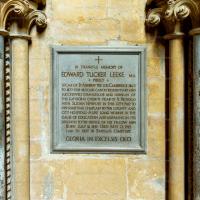
After 23rd May 1925. Memorial to Edward Ticker Leeke at Lincoln Cathedral [Map].

After 1930. Memorial at Lincoln Cathedral [Map] to Organist and Master of Choristers George John Bennet.
In 1933 Bishop Nugent Hicks (age 61) was appointed Bishop of Lincoln.

On 12th February 1933 Field Marshal William Robertson 1st Baronet (age 73) died. Memorial at Lincoln Cathedral [Map]. His son Brian (age 36) succeeded 2nd Baronet Robertson of Welbourn in Lincolnshire.
Field Marshal William Robertson 1st Baronet: On 29th January 1860 he was born to Thomas Charles Robertson and Ann Dexter Beet.
Brian Robertson 1st Baron Robertson of Oakridge: On 22nd July 1896 he was born to Field Marshal William Robertson 1st Baronet. On 29th April 1974 he died. His son William succeeded 2nd Baron Robertson of Oakridge in Gloucestershire, 3rd Baronet Robertson of Welbourn in Lincolnshire.

On 10th February 1942 Bishop Nugent Hicks (age 70) died. He was buried at Lincoln Cathedral [Map].
Bishop Nugent Hicks: In 1872 he was born. In 1933 he was appointed Bishop of Lincoln.

After 1945. Bomber Command Memorial Window at Lincoln Cathedral [Map].
On 12th June 1946 Bishop Leslie Owen (age 60) was nominated Bishop of Lincoln which office he held for ten months.
William of Worcester's Chronicle of England
William of Worcester, born around 1415, and died around 1482 was secretary to John Fastolf, the renowned soldier of the Hundred Years War, during which time he collected documents, letters, and wrote a record of events. Following their return to England in 1440 William was witness to major events. Twice in his chronicle he uses the first person: 1. when writing about the murder of Thomas, 7th Baron Scales, in 1460, he writes '… and I saw him lying naked in the cemetery near the porch of the church of St. Mary Overie in Southwark …' and 2. describing King Edward IV's entry into London in 1461 he writes '… proclaimed that all the people themselves were to recognize and acknowledge Edward as king. I was present and heard this, and immediately went down with them into the city'. William’s Chronicle is rich in detail. It is the source of much information about the Wars of the Roses, including the term 'Diabolical Marriage' to describe the marriage of Queen Elizabeth Woodville’s brother John’s marriage to Katherine, Dowager Duchess of Norfolk, he aged twenty, she sixty-five or more, and the story about a paper crown being placed in mockery on the severed head of Richard, 3rd Duke of York.
Available at Amazon in eBook and Paperback format.
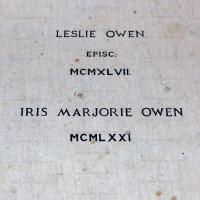
On 2nd March 1947 Bishop Leslie Owen (age 61) died. He was buried at Lincoln Cathedral [Map].
Bishop Leslie Owen: On 3rd February 1886 he was born. In July 1920 he and Iris Marjorie Lawrence were married. On 12th June 1946 Bishop Leslie Owen was nominated Bishop of Lincoln which office he held for ten months.

On 17th October 1961 Harry Frederick Crookshank 1st Viscount Crookshank (age 68) died. Viscount Crookshank of Gainsborough in Lincolnshire extinct.
Memorial to Harry Frederick Crookshank 1st Viscount Crookshank and his sister Helen Elizabeth at Lincoln Cathedral [Map] where both he and his sister are buried.
Harry Frederick Crookshank 1st Viscount Crookshank: On 27th May 1893 he was born at Cairo, Egypt. The London Gazette 40684. Whitehall, January 13, 1956. The Queen has been pleased by Letters Patent under the Great Seal of the Realm, bearing date the 13th instant, to confer the dignity of a Viscounty of the United Kingdom upon Captain the Right Honourable Harry Frederick Comfort Crookshank, C.H., and the heirs male of his body lawfully begotten, by the name, style and title of Viscount Crookshank, of Gainsborough in the County of Lincoln.
In 1971 Iris Marjorie Lawrence (age 81) died. She was buried at Lincoln Cathedral [Map].
Iris Marjorie Lawrence: Around 1890 she was born.

On 19th December 1995 Bishop Gerald Fitzmaurice Colin (age 82) died. He was buried at Lincoln Cathedral [Map].
Bishop Gerald Fitzmaurice Colin: On 19th July 1913 he was born. In 1966 he was appointed Bishop of Grimsby. Before 19th December 1995 he and Iris Susan Stuart Colin were married.
On 8th March 2021 Iris Susan Stuart Colin died. She was buried at Lincoln Cathedral [Map].
Iris Susan Stuart Colin: On 12th January 1921 she was born.
Archdeacon George Heneage was appointed Archdeacon of Lincoln.

Lincoln Cathedral Close [Map].
On 25th May 1859 William Logsdail was born to George Logsdail (age 32) at 19 Lincoln Cathedral Close. He married 1892 May Ashman of Necton and had issue.
George Logsdail: In 1827 he was born. In 1905 he died.


In 1280 the Angel Choir [Map] was dedicated at Lincoln Cathedral [Map]. The Angel Choir got its name from the 28 Angels which are carved into this part of the Cathedral.
November 1803. Frederick Mackenzie (age 15). Lincoln Cathedral [Map] interior. A detailed line drawing of the interior of Lincoln Cathedral, viewed from the south aisle of the Angel Choir [Map] (this part of the choir was sometimes referred to as the presbytery as it was traditionally reserved for the clergy) with its 13th-century clerestory. On the far wall is the famous 15th century transi tomb (a tomb with a sculpture of a cadaver) of Bishop Richard Fleming, in front of the Fleming family's chantry chapel. The elaborate tombs on the right are those of Sir Nicholas de Cantilupe (d. 1355) and Canon Wimbishe of Norton.
Around 1295 the Cloisters [Map] at Lincoln Cathedral [Map] were constructed.


Chronicle of Abbot Ralph of Coggeshall
The Chronicle of Abbot Ralph of Coggeshall (Chronicon Anglicanum) is an indispensable medieval history that brings to life centuries of English and European affairs through the eyes of a learned Cistercian monk. Ralph of Coggeshall, abbot of the Abbey of Coggeshall in Essex in the early 13th century, continued and expanded his community’s chronicle, documenting events from the Norman Conquest of 1066 into the tumultuous reign of King Henry III. Blending eyewitness testimony, careful compilation, and the monastic commitment to record-keeping, this chronicle offers a rare narrative of political intrigue, royal power struggles, and social upheaval in England and beyond. Ralph’s work captures the reigns of pivotal figures such as Richard I and King John, providing invaluable insights into their characters, decisions, and the forces that shaped medieval rule. More than a simple annal, Chronicon Anglicanum conveys the texture of medieval life and governance, making it a rich source for scholars and readers fascinated by English history, monastic authorship, and the shaping of the medieval world.
Available at Amazon in eBook and Paperback format.
Before 1854. Frederick Mackenzie (age 65). Lincoln Cathedral [Map] from the Cloisters [Map].
Before 1300. Lincoln Cathedral [Map] Judgement Portal [Map], with a central figure of Christ flanked by richly carved angels, while about are arrayed souls rising to heaven or being dragged down to hell by demons. Just beside the porch are carvings of a king and queen thought to be either Edward I and Eleanor of Castle, or Margaret of Valois, his second wife.
1881. Frederick Hall (age 20). The Judgement Porch [Map] at Lincoln Cathedral [Map].
Around 1200 the Nave [Map] at Lincoln Cathedral [Map] was built in the Early English Gothic architectural style following damage caused by an eartquake.


Around 1220 the North Transept [Map] of Lincoln Cathedral [Map] was constructed.
In 1092 Lincoln Cathedral [Map] was consecrated. The lower part of the West Front [Map] is believed to be from this date.
Before 1742. Joseph Baker. A View of Lincoln Cathedral [Map] from the West [Map].
On 20th March 1885 Bishop Christopher Wordsworth (age 77) died. He was buried at St Mary's Church, Riseholme. Monument at Lincoln Cathedral [Map] where he has a monument by Bodley and Garner. The design by Thomas Garner is supposed to have been influenced by the nearby Burghersh tombs.
Bishop Christopher Wordsworth: On 30th October 1807 he was born to Christopher Wordsworth and Priscilla Lloyd. On 22nd February 1869 he was appointed Bishop of Lincoln. On 24th February 1869 Bishop Christopher Wordsworth was ordained and consecrated Bishop of Lincoln by Archbishop Campbell Tait.
Abbot John Whethamstede’s Chronicle of the Abbey of St Albans
Abbot John Whethamstede's Register aka Chronicle of his second term at the Abbey of St Albans, 1451-1461, is a remarkable text that describes his first-hand experience of the beginning of the Wars of the Roses including the First and Second Battles of St Albans, 1455 and 1461, respectively, their cause, and their consequences, not least on the Abbey itself. His text also includes Loveday, Blore Heath, Northampton, the Act of Accord, Wakefield, and Towton, and ends with the Coronation of King Edward IV. In addition to the events of the Wars of the Roses, Abbot John, or his scribes who wrote the Chronicle, include details in the life of the Abbey such as charters, letters, land exchanges, visits by legates, and disputes, which provide a rich insight into the day-to-day life of the Abbey, and the challenges faced by its Abbot.
Available at Amazon in eBook and Paperback format.
After 1255. Lincoln Cathedral [Map].
All too often, in too many places, communities identify themselves as who they are not, rather than who they are. It is but a short step from this to distrust, dislike and even to hatred of 'the other' - frequently neighbours, who happen to be people of different faith or race.
Fictional 'ritual murder' accusations by Christians against Jews began in England in the 12th century and then spread to the Continent. In 1255 a Lincoln boy called Hugh was found dead and the city's long-established Jewish community was accused of murdering him. As a result, 92 Jews were imprisoned in the Tower of London and 18 were hanged for a crime they did not commit. Although Hugh was never canonised, the boy was venerated as a saint. Legends and ballads blaming the Jews circulated widely. His tomb in Lincoln Cathedral was a place of pilgrimage for the rest of the 13th century, but its popularity began to decrease after the Jews were expelled from England by King Edward I in 1290. When the tomb was opened in 1791, the child's body was found intact, bearing no evidence of the mutilation alleged to have taken place.
The tomb chest of Little Hugh's shrine [Map] is to the left of this sign. Above is a picture of its original appearance, as recorded before its partial destruction in the Civil War, from a facsimile of Dugdale's Monuments of 1641.
This libel against the Jews is a shameful example of religious and racial hatred, which, continuing down through the ages, violently divides many people in the present day. Let us unite, here, in a prayer for an end to bigotry, prejudice and persecution.
After 14th April 1848. Memorial at Lincoln Cathedral [Map] to Air Vice-Marshal Sir Edward Arthur Beckton Rice.
After 1849. Memorial at Lincoln Cathedral [Map] to those of the 10th or North Lincoln Regiment of Infantry who fell in the campaign of 1845-6 in Sutlej and 1848-9 in the Punjaub sculpted by Edward Richardson (age 37).
After 1898. Memorial at Lincoln Cathedral [Map] to the Lincolnshire Regiment who fell in Nile Expedition of 1898.
After 1902. Memorial at Lincoln Cathedral [Map] to the Lincolnshire Regiment who fell in South Africe during the Campaign 1899 to 1902.
After 1945. Bomber Command Memorial Window at Lincoln Cathedral [Map].
. Between 1192 and 1210 the Choir [Map] and Eastern Transepts of Lincoln Cathedral [Map] were rebuilt.


On 10th May 1403 Katherine Swynford aka Roet Duchess Lancaster (age 52) died. She was buried in Lincoln Cathedral [Map]. The monument is thought to be the work of Henry Yevele.
"Katherine's fine tomb chest of Purbeck marble, with its moulded plinth and lid, had armorial shields encircled by garters along each side; it was surmounted by a canopied brass depicting Katherine in her widow's weeds, and bearing her arms impaled with those of John of Gaunt, while above it was raised a vaulted canopy with trefoiled arches, cusped lozenges and miniature rose bosses. The canopy and associated stonework would have been painted in bright colours."
When John Leland visited the Cathedral in about 1540, he recorded that: "In the southe parte of the presbytery lyithe in 2. severalle highe marble tumbes in a chapell Catarine Swineforde, the 3. wife to John of Gaunt Duke of Lancaster, and Jane her dougtar Countes of Westmerland".
In 1654 John Evelyn's Diary: "The soldiers had lately knocked off most of the brasses from the gravestones".
At some point after this the position of the two monuments was changed and they now stand end to end.
On 28th November 1290 Eleanor of Castile Queen Consort England (age 49) died at Harby Manor. Her viscera were buried at Lincoln Cathedral [Map]. Her heart was buried at Blackfriars, City of London on the 19th December 1290 where her son Alfonso Plantagenet had been buried eight years beforew.
Her corpse was taken from Harby, Nottinghamshire [Map] to Westminster Abbey [Map]. At each of the locations at which her body rested overnight King Edward I of England (age 51) commissioned the building of an Eleanor Cross. Three remain at Geddington, Northamptonshire [Map], Hardingstone, Northamptonshire and Waltham Abbey, Essex [Map].

On 3rd June 1786 William Hilton was born to William Hilton (age 34) at Vicar's Court, Lincoln Cathedral Close. He was baptised at St Mary le Wigford Church, Lincoln. He married 26th February 1828 Justinia Kent.