

The History of William Marshal was commissioned by his son shortly after William’s death in 1219 to celebrate the Marshal’s remarkable life; it is an authentic, contemporary voice. The manuscript was discovered in 1861 by French historian Paul Meyer. Meyer published the manuscript in its original Anglo-French in 1891 in two books. This book is a line by line translation of the first of Meyer’s books; lines 1-10152. Book 1 of the History begins in 1139 and ends in 1194. It describes the events of the Anarchy, the role of William’s father John, John’s marriages, William’s childhood, his role as a hostage at the siege of Newbury, his injury and imprisonment in Poitou where he met Eleanor of Aquitaine and his life as a knight errant. It continues with the accusation against him of an improper relationship with Margaret, wife of Henry the Young King, his exile, and return, the death of Henry the Young King, the rebellion of Richard, the future King Richard I, war with France, the death of King Henry II, and the capture of King Richard, and the rebellion of John, the future King John. It ends with the release of King Richard and the death of John Marshal.
Available at Amazon in eBook and Paperback format.
Woodstock Palace, Oxfordshire is in Woodstock, Oxfordshire [Map].
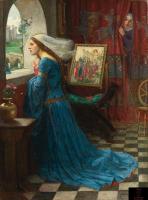
In 1176 Rosamund Clifford [aged 40] died at Woodstock Palace, Oxfordshire [Map]. She was buried at Godstow Abbey [Map]. Paul Hentzner, a German traveller who visited England around 1599, recorded that her faded tombstone inscription read in part: "... Adorent, Utque tibi detur requies Rosamunda precamur. Hic jacet in tumba Rosamundi non Rosamunda, Non redolet sed olet, quae redolere solet." i.e. "Let them adore, And we pray that rest be given to you, Rosamund. Here in the tomb lies the rose of the world, not a pure rose; She who used to smell sweet, still smells—but not sweet." Her tombstone was destroyed during the dissolution of the monasteries.

On 5th September 1186 King William I of Scotland [aged 43] and Ermengarde Beaumont Sarthe Queen Consort Scotland [aged 16] were married at Woodstock Palace, Oxfordshire [Map] by Archbishop Baldwin of Forde [aged 61]. She by marriage Queen Consort Scotland at Woodstock Palace, Oxfordshire [Map]. His bride had been chosen by King Henry "Curtmantle" II of England [aged 53] as part of the Treaty of Falaise. William received Edinburgh Castle [Map] as a wedding gift from King Henry "Curtmantle" II of England. The difference in their ages was 27 years. He the son of Henry Dunkeld 3rd Earl Huntingdon 1st Earl of Northumbria and Ada Warenne Countess Huntingdon and Northumbria. They were half fourth cousins. She a great granddaughter of King Henry I "Beauclerc" England.
Chronicle of Roger de Hoveden. 13th April 1194. On the thirteenth day of April, the king arrived at Woodstock [Map].
Tertia decima die mensis Aprilis venit rex ad Wudestoc.
Liber de Antiquis Legibus 1255. 15th August 1255. In the same year, the King of Scotland [aged 13] and his Queen [aged 14], daughter of the King of England, came into England, and, on the Assumption of Saint Mary [15 August] were with his lordship the King at Wudestok [Map]; upon which day, the said King held a great and most noble Court, nearly all his Earls and Barons being present.
On 11th March 1279 Mary of Woodstock was born to King Edward I of England [aged 39] and Eleanor of Castile Queen Consort England [aged 38] at Woodstock Palace, Oxfordshire [Map].
On 5th August 1301 Edmund of Woodstock 1st Earl Kent was born to King Edward I of England [aged 62] and Margaret of France Queen Consort England [aged 22] at Woodstock Palace, Oxfordshire [Map]. Coefficient of inbreeding 3.81%. He married 1325 his half second cousin twice removed Margaret Wake Countess Kent, daughter of John Wake 1st Baron Wake of Liddell and Joan Fiennes Baroness Wake Liddell, and had issue.
On 18th June 1318 Eleanor of Woodstock Plantagenet was born to King Edward II of England [aged 34] and Isabella of France Queen Consort England [aged 23] at Woodstock Palace, Oxfordshire [Map]. She was named for her paternal grandmother Eleanor of Castile. Coefficient of inbreeding 2.17%. She married May 1332 her second cousin once removed Reginald "Black" I Duke Guelders, son of Reginald I Count Guelders and Margaret Dampierre Countess Guelders, and had issue.
On 29th September 1328 Joan "Fair Maid of Kent" Princess Wales was born to Edmund of Woodstock 1st Earl Kent [aged 27] and Margaret Wake Countess Kent [aged 31] at Woodstock Palace, Oxfordshire [Map]. She a granddaughter of King Edward I of England. She married (1) March 1340 her fourth cousin once removed Thomas Holland 1st Earl Kent, son of Robert Holland 1st Baron Holand and Maud Zouche Baroness Holand, and had issue (2) November 1340 William Montagu 2nd Earl Salisbury, son of William Montagu 1st Earl Salisbury and Catherine Grandison Countess of Salisbury (3) 10th October 1361 her half first cousin once removed Edward "Black Prince", son of King Edward III of England and Philippa of Hainaut Queen Consort England, and had issue.
On 15th June 1330 Edward "Black Prince" was born to King Edward III of England [aged 17] and Philippa of Hainaut Queen Consort England [aged 19] at Woodstock Palace, Oxfordshire [Map]. Coefficient of inbreeding 3.00%. He married 10th October 1361 his half first cousin once removed Joan "Fair Maid of Kent" Princess Wales, daughter of Edmund of Woodstock 1st Earl Kent and Margaret Wake Countess Kent, and had issue.
On 16th June 1332 Isabella Countess Bedford and Soissons was born to King Edward III of England [aged 19] and Philippa of Hainaut Queen Consort England [aged 21] at Woodstock Palace, Oxfordshire [Map]. Coefficient of inbreeding 3.00%. She married 27th July 1365 her fourth cousin once removed Enguerrand de Coucy 1st Earl Bedford 1st Count Soissons and had issue.
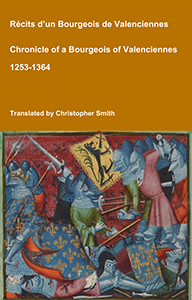
Chronicle of a Bourgeois of Valenciennes
Récits d’un bourgeois de Valenciennes aka The Chronicle of a Bourgeois of Valenciennes is a vivid 14th-century vernacular chronicle written by an anonymous urban chronicler from Valenciennes in the County of Hainaut. It survives in a manuscript that describes local and regional history from about 1253 to 1366, blending chronology, narrative episodes, and eyewitness-style accounts of political, military, and social events in medieval France, Flanders, and the Low Countries. The work begins with a chronological framework of events affecting Valenciennes and its region under rulers such as King Philip VI of France and the shifting allegiances of local nobility. It includes accounts of conflicts, sieges, diplomatic manoeuvres, and the impact of broader struggles like the Hundred Years’ War on urban life in Hainaut. Written from the perspective of a burgher (bourgeois) rather than a monastery or royal court, the chronicle offers a rare lay viewpoint on high politics and warfare, reflecting how merchants, townspeople, and civic institutions experienced the turbulence of the 13th and 14th centuries. Its narrative style combines straightforward reporting of events with moral and civic observations, making it a valuable source for readers interested in medieval urban society, regional politics, and the lived experience of war and governance in pre-modern Europe.
Available at Amazon in eBook and Paperback format.
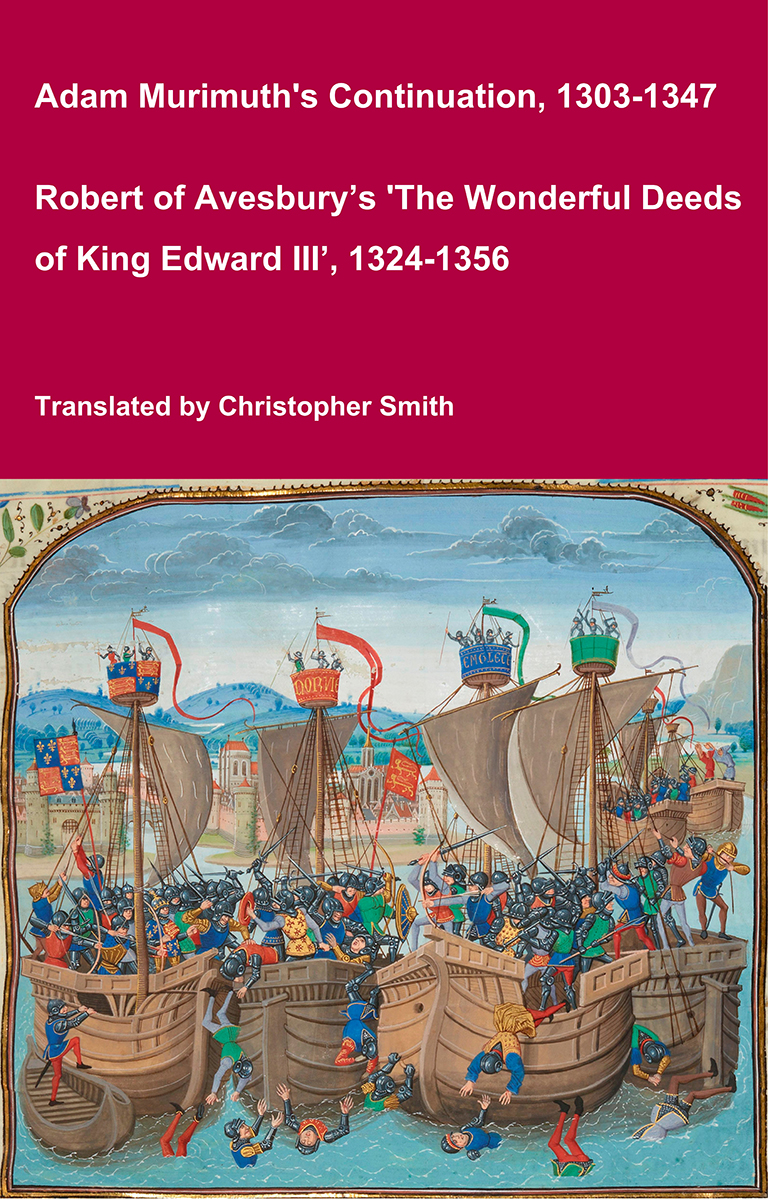 Adam Murimuth Continuation. In the same year [1333] the king of England celebrated Christmas at Wallingford with the queen, who was pregnant. When the festival ended he left her at Woodstock [Map] to give birth1. After the feast of the Purification of the Blessed Virgin Mary [2nd February] he himself travelled to York in order to hold a parliament there, which began on the Monday of the second week of Lent. Edward Balliol, king of Scotland, had been summoned to this parliament but did not come because of enemies lying in wait for him on islands near Scotland. Instead he sent distinguished representatives, namely Henry Beaumont, William Montagu, and certain other knights and barons.
Hoc anno tenuit rex Angliæ Natale Domini apud Walingfordiam, cum regina prægnante, et, finito festo, dimisit eam apud Wodestok ad pariendum. Et ipse, post Purificationem beatæ Mariæ, transtulit se versus Eboracum, ad tenendum parliamentum ibidem, quod die Lunæ in secunda hebdomada Quadragesimæ inchoavit. Ad quod parliamentum vocatus fuit Edwardus rex Scociæ, sed non venit propter insidias inimicorum suorum in insulis juxta Scociam latitantium; propter quod misit excusatores solempnes, scilicet dominos Henricum de Bello monte et Willelmum de Monte acuto et quosdam alios milites seu barones.
Note 1. Philippa of Hainaut [aged 21] gave birth to Isabella of Woodstock on 16th June. The year of her birth is given by other sources as 1332. In 1365 she and Enguerrand de Coucy were married. They had two daughters, Marie and Philippa. She died in 1382.
On 7th January 1355 Thomas of Woodstock 1st Duke of Gloucester was born to King Edward III of England [aged 42] and Philippa of Hainaut Queen Consort England [aged 44] at Woodstock Palace, Oxfordshire [Map]. Coefficient of inbreeding 3.00%. He married 1374 his second cousin once removed Eleanor Bohun Duchess Gloucester, daughter of Humphrey Bohun 7th Earl Hereford 6th Earl Essex 2nd Earl of Northampton and Joan Fitzalan Countess Essex, Hereford and Northampton, and had issue.
In December 1389 King Richard II of England [aged 22] held his Christmas Court at Woodstock Palace, Oxfordshire [Map].


On 30th December 1389 John Hastings 3rd Earl Pembroke [aged 17] was killed in a tournament during the Christmas Court at Woodstock Palace, Oxfordshire [Map]. Earl Pembroke and Baron Manny, Baron Abergavenny Feudal Creation extinct. He was struck in the groin by the lance of Sir John Des.
John Hastings 6th Baron Hastings [aged 61] de jure 6th Baron Hastings. His claim was contested by Reginald Grey 3rd Baron Grey Ruthyn [aged 27] who was the son of Elizabeth Hastings Baroness Grey Ruthyn daughter of John Hastings 13th Baron Abergavenny 1st Baron Hastings his case being that he was of the full blood whereas John Hastings 6th Baron Hastings was of the half-blood ie Reginald Grey 3rd Baron Grey Ruthyn, like John Hastings 3rd Earl Pembroke, was descended from John Hastings 13th Baron Abergavenny 1st Baron Hastings and Isabel Valence Baroness Bergavenny Baroness Hastings, whereas John Hastings 6th Baron Hastings was descended from John Hastings 13th Baron Abergavenny 1st Baron Hastings and Isabel Despencer Baroness Hastings and Bergavenny.
Wriothesley's Chronicle [1508-1562]. 19th May 1554. The xixth of May, beinge Saterday and the eeven of the feast of the Holie Trinitie, Ladye Elizabeth [aged 20] was had out of the Tower [Map] and went thorowe London Bridge in her barge at 3 of the clock in the afternoone, lyeinge at Richmond [Map] that night; and from thence conveyed to Woodstock [Map], Mr. Benyfield [aged 45]b, Lorde Williams of Tame, and Sir Leonard Chamberlayne, waytinge on her, with iic horsemen, there to remayne at the Queenes pleasure.
Note b. Sir Henry Bedingfield, the recently appointed Constable of the Tower.
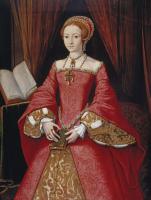


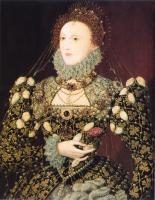
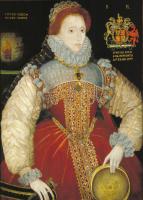


On 22nd May 1554 Queen Elizabeth I of England and Ireland [aged 20] was imprisoned at Woodstock Palace, Oxfordshire [Map].