

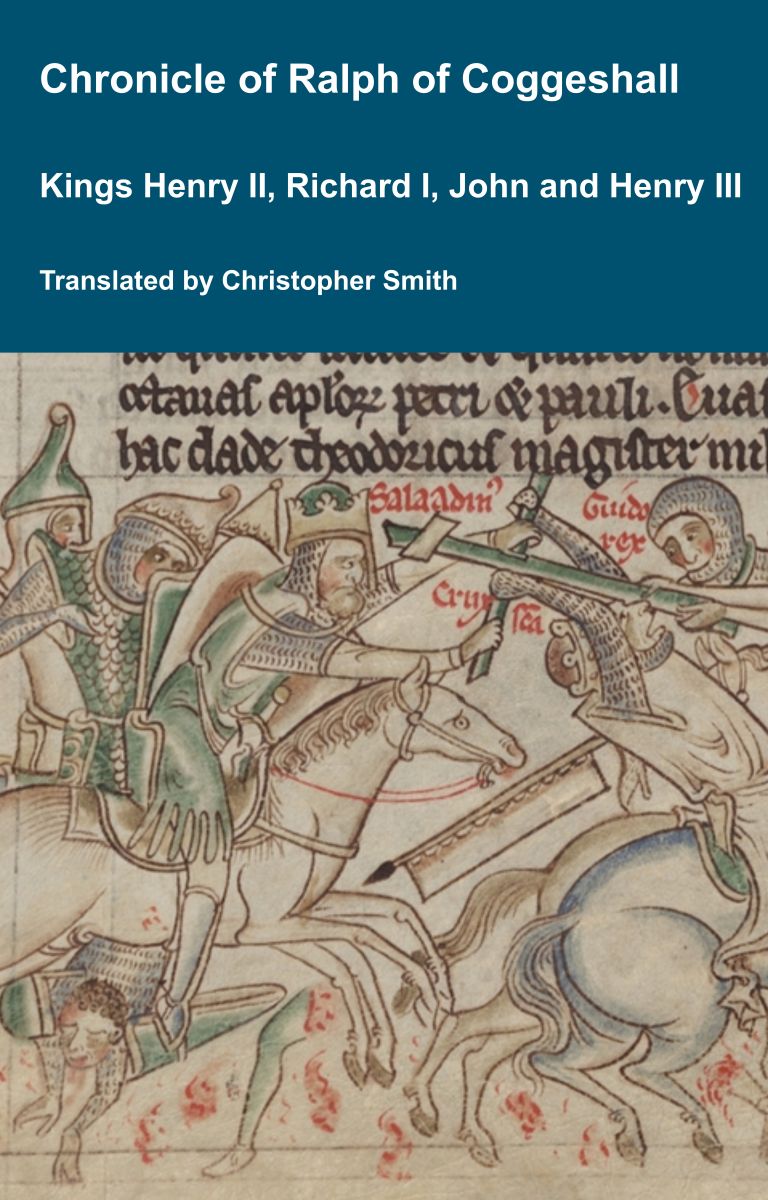
Chronicle of Abbot Ralph of Coggeshall
The Chronicle of Abbot Ralph of Coggeshall (Chronicon Anglicanum) is an indispensable medieval history that brings to life centuries of English and European affairs through the eyes of a learned Cistercian monk. Ralph of Coggeshall, abbot of the Abbey of Coggeshall in Essex in the early 13th century, continued and expanded his community’s chronicle, documenting events from the Norman Conquest of 1066 into the tumultuous reign of King Henry III. Blending eyewitness testimony, careful compilation, and the monastic commitment to record-keeping, this chronicle offers a rare narrative of political intrigue, royal power struggles, and social upheaval in England and beyond. Ralph’s work captures the reigns of pivotal figures such as Richard I and King John, providing invaluable insights into their characters, decisions, and the forces that shaped medieval rule. More than a simple annal, Chronicon Anglicanum conveys the texture of medieval life and governance, making it a rich source for scholars and readers fascinated by English history, monastic authorship, and the shaping of the medieval world.
Available at Amazon in eBook and Paperback format.
Extinct Marquessates of England is in Marquessates of England.
On 14th February 1492 William Berkeley 1st Marquess Berkeley [aged 66] died. Marquess Berkeley, Earl Nottingham, Viscount Berkeley extinct.
Baron Berkeley Feudal retained by the King.
Maurice Berkeley 3rd Baron Berkeley [aged 57] succeeded 3rd Baron Berkeley. Isabel Meade 3rd Baroness Berkeley by marriage Baroness Berkeley.
On 19th May 1536 Queen Anne Boleyn of England [aged 35] was beheaded at Tower Green, Tower of London [Map]. Unusually a sword was used. Her execution was witnessed by Charles Brandon 1st Duke of Suffolk [aged 52], Catherine Carey [aged 12] and Henry Fitzroy 1st Duke Richmond and Somerset [aged 16]. Marquess Pembroke extinct.
She was buried at St Peter ad Vincula Church, Tower of London [Map]. There is myth that her corpse was subsequently removed for burial at the Boleyn family church Church of St Peter and St Paul, Salle [Map] as described in Agnes Strickland's 1852 Lives of the Queens of England Volume 4. Page 212.


On 28th October 1571 William Parr 1st Marquess Northampton [aged 59] died at Warwick Priory, Warwickshire [Map]. He was buried in the Chancel of St Mary's Church, Warwick [Map]. His funeral was paid for by Queen Elizabeth I of England and Ireland [aged 38]. Marquess Northampton and Earl Essex, Baron Parr of Kendal extinct.





On 29th April 1675 John Seymour 4th Duke of Somerset [aged 30] died. He was buried at Salisbury Cathedral [Map]. Marquess Hertford extinct. His first cousin once removed Francis [aged 17] succeeded 5th Duke Somerset, 5th Earl Hertford, 5th Baron Beauchamp of Hatch Beauchamp in Somerset.
On 8th December 1680 Henry Pierrepont 1st Marquess Dorchester [aged 74] died. He was buried at Holme Pierrepoint, Nottinghamshire [Map]. Marquess Dorchester extinct. His great nephew Robert [aged 20] succeeded 3rd Earl Kingston upon Hull, 3rd Viscount Newark, 3rd Baron Pierrepont of Holme Pierrepoint.
On 16th April 1687 George Villiers 2nd Duke of Buckingham [aged 59] died. Duke of Buckingham, Marquess of Buckingham, Earl Buckingham extinct. Baron Ros Helmsley abeyant.


On 31st August 1700 William Savile 2nd Marquess Halifax [aged 35] died without male issue. Marquess Halifax, Earl Halifax, Viscount Halifax and Baron Savile of Elland extinct. His first cousin twice removed John [aged 50] succeeded 6th Baronet Savile of Thornhill

On 1st February 1718 Charles Talbot 1st Duke Shrewsbury [aged 57] died. Duke Shrewsbury and Marquess Alton extinct. His first cousin Gilbert [aged 45] succeeded 13th Earl of Shrewsbury, 14th Earl Waterford.

On 31st May 1731 Philip Wharton 1st Duke Wharton died. Duke Wharton, Marquess Wharton and Earl Wharton extinct. Baron Wharton abeyant between Jane Wharton [aged 25] and Lucy Wharton Lady Morice.
On 5th June 1740 Henry Grey 1st Duke Kent [aged 69] died without surviving male issue. Duke Kent, Marquess Kent, Earl Kent and Viscount Gooderich extinct. His granddaughter Jemima [aged 16] succeeded 2nd Marchioness Grey.
Monument at the De Grey Mausoleum, St John the Baptist Church, Flitton [Map] sculpted by Edward Shepherd.


William of Worcester's Chronicle of England
William of Worcester, born around 1415, and died around 1482 was secretary to John Fastolf, the renowned soldier of the Hundred Years War, during which time he collected documents, letters, and wrote a record of events. Following their return to England in 1440 William was witness to major events. Twice in his chronicle he uses the first person: 1. when writing about the murder of Thomas, 7th Baron Scales, in 1460, he writes '… and I saw him lying naked in the cemetery near the porch of the church of St. Mary Overie in Southwark …' and 2. describing King Edward IV's entry into London in 1461 he writes '… proclaimed that all the people themselves were to recognize and acknowledge Edward as king. I was present and heard this, and immediately went down with them into the city'. William’s Chronicle is rich in detail. It is the source of much information about the Wars of the Roses, including the term 'Diabolical Marriage' to describe the marriage of Queen Elizabeth Woodville’s brother John’s marriage to Katherine, Dowager Duchess of Norfolk, he aged twenty, she sixty-five or more, and the story about a paper crown being placed in mockery on the severed head of Richard, 3rd Duke of York.
Available at Amazon in eBook and Paperback format.
On 8th March 1748 William Herbert 3rd Marquess Powis [aged 50] died unmarried. Marquess Powis, Earl Powis, 6th Baron Powis of Powis Castle in Powys, 5th Baronet Powis of Red Castle in Montgomeryshire extinct.

On 17th November 1768 Thomas Pelham Holles 1st Duke Newcastle-under-Lyne [aged 75] died without issue. He was buried in the Pelham family vault at All Saint's Church, Laughton. Duke Newcastle upon Tyne, Marquess Clare, Earl Clare, Viscount Haughton and Baron Pelham of Laughton extinct.
Henry Fiennes Pelham-Clinton 2nd Duke Newcastle-under-Lyne [aged 48] succeeded 2nd Duke Newcastle under Lyme.
Thomas Pelham 1st Earl Chichester [aged 40] succeeded 2nd Baron Pelham of Stanmer in Sussex and 6th Baronet Pelham of Laughton.
On 22nd September 1773 Evelyn Pierrepont 2nd Duke Kingston upon Hull [aged 62] died without issue at Holme Pierrepoint Hall, Nottinghamshire. He was buried at the Church of St Edmund, Holme Pierrepoint [Map]. Duke Kingston upon Hull and Marquess Dorchester, Earl Kingston upon Hull, Viscount Newark, Baron Pierrepont of Holme Pierrepoint extinct. He left all his wealth and property to his wife Elizabeth Chudleigh Duchess Kingston upon Hull [aged 52] on the condition she remain a widow.

On 29th September 1789 James Brydges 3rd Duke Chandos [aged 57] died without male issue. Duke Chandos, Marquess Carnarvon, Earl Carnarvon, Viscount Wilton, Baron Chandos of Sudeley and Baronet Brydges of Wilton in Herefordshire extinct. His wife Anne Eliza Gamon Duchess Chandos [aged 52] had pulled away a chair, whether inadvertently or deliberately is unknown, he was about to sit in causing him injuries from which he ultimately died. She was, thereafter, declared a lunatic and confined to their London home, 2 Queen Anne Street aka Chandos House Marylebone.
On 11th January 1797 Jemima Campbell 2nd Marchioness Grey [aged 73] died at the family's London House, 4 Saint James' Square. Marquess Grey extinct. Her daughter Amabel [aged 45] succeeded 5th Baroness Lucas of Crudwell. She was buried at the De Grey Mausoleum, St John the Baptist Church, Flitton [Map] on 21st January 1797. Her will stated that she was to be buried in the vault "in as private a manner as may be consistent with proper decency. A Hearse with six horses, without any Ornament or Escutcheons and two Coaches with six horses each will be sufficient, without any Family Coach or Livery Servant. I would not have the Church hung with black or any Escutcheons to be used there nor any mourning rings given". It went on to give £50 to the poor of Flitton with Silsoe and of Clophill. She also gave her servant Jane Band an annuity of £40 per annum. She also stated: "It is my intention to erect a Monument in the Church at Flitton to the memory of my late Lord. If it shall happen that I do not carry this my intention into execution I then direct that one shall be placed there to his memory and mine plain and neat in the design but not magnificent or expensive and that the same be placed in the Division now empty on the right hand side of the Duke of Kent's Monument". In fact she did raise Hardwicke's monument in his lifetime as it states that she did so and 'waits to follow him'. The eulogy on the monument reads: "Her excellent & cultivated understanding, her serene & benevolent temper, her polished manners, her domestic virtues and exemplary piety will ever be revered and regretted by her children, relations and friends". In a codicil to her will she wrote: "I desire my Body to be kept as long as is proper and then buried with Lime in the Coffin to promote a speedier dissolution". She also willed "If any letters or papers are found in my handwriting which have been returned to me from Friends I correspond with not burnt (which it is my intention to do) I desire my Executrix will burn them".
Amabel Yorke Countess Grey: On 22nd February 1751 she was born to Philip Yorke 2nd Earl of Hardwicke and Jemima Campbell 2nd Marchioness Grey. In 1816 Amabel Yorke Countess Grey was created 1st Countess de Grey with a special remainder to her sister Mary Jemima Yorke Baroness Grantham and her sister's male heirs.


 Become a Member via our Buy Me a Coffee page to read more.
On 8th February 1809 Brownlow Bertie 5th Duke Ancaster and Kesteven [aged 79] died without male issue at Grimsthorpe, South Kesteven. He was buried at St Mary's Church, Swinstead [Map] on 17th February 1809. Duke Ancaster and Kesteven, Marquess Lindsay extinct. His third cousin Albermarle [aged 64] succeeded 9th Earl Lindsey.
Sculpted by Richard Westmacott [aged 33]. A handsome white marble wall tablet in Grecian style depicting deceased and wife on a catafalque with mourning female figure, flanked by mother, children and angel. Above a scrolled cornice with Ducal coronet and palm. Beneath a rectangular inscription panel, flanked by scrolled brackets.


On 9th August 1823 Charles Cornwallis 2nd Marquess Cornwallis [aged 48] died. Marquess Cornwallis extinct. His uncle James [aged 80] succeeded 4th Earl Cornwallis, 8th Baron Cornwallis.
On 10th November 1868 Henry Weysford Charles Plantagenet Rawdon-Hastings 4th Marquess Hastings [aged 26] died. Marquess Hastings and Earl Moira extinct. Baron Botreaux, Baron Hungerford, Baron Hastings, Baron Moleyns and Baron Grey of Ruthyn abeyant. His sister Edith [aged 34] succeeded 10th Countess Loudon.
On 26th March 1889 Richard Temple-Nugent-Brydges-Chandos-Grenville 3rd Duke of Buckingham and Chandos [aged 65] died from diabetes at 2 Queen Anne Street aka Chandos House Marylebone. Duke of Buckingham and Chandos, Marquess Buckingham, Marquess of Chandos, Earl Temple, Earl Nugent extinct.
William Stephen Temple Gore-Langton 4th Earl Temple [aged 41] succeeded 4th Earl Temple of Stowe according to the special remainder in its patent. Helen Mabel Graham-Montgomery Countess Temple of Stowe by marriage Countess Temple of Stowe.
Charles Lyttelton 8th Viscount Cobham [aged 46] succeeded 8th Viscount Cobham. Mary Susan Cavendish Viscountess Cobham [aged 36] by marriage Viscountess Cobham.
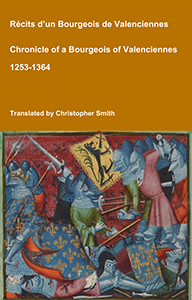
Chronicle of a Bourgeois of Valenciennes
Récits d’un bourgeois de Valenciennes aka The Chronicle of a Bourgeois of Valenciennes is a vivid 14th-century vernacular chronicle written by an anonymous urban chronicler from Valenciennes in the County of Hainaut. It survives in a manuscript that describes local and regional history from about 1253 to 1366, blending chronology, narrative episodes, and eyewitness-style accounts of political, military, and social events in medieval France, Flanders, and the Low Countries. The work begins with a chronological framework of events affecting Valenciennes and its region under rulers such as King Philip VI of France and the shifting allegiances of local nobility. It includes accounts of conflicts, sieges, diplomatic manoeuvres, and the impact of broader struggles like the Hundred Years’ War on urban life in Hainaut. Written from the perspective of a burgher (bourgeois) rather than a monastery or royal court, the chronicle offers a rare lay viewpoint on high politics and warfare, reflecting how merchants, townspeople, and civic institutions experienced the turbulence of the 13th and 14th centuries. Its narrative style combines straightforward reporting of events with moral and civic observations, making it a valuable source for readers interested in medieval urban society, regional politics, and the lived experience of war and governance in pre-modern Europe.
Available at Amazon in eBook and Paperback format.

On 21st August 1891 Harry George Powlett 4th Duke Cleveland [aged 88] died at Cleveland House, 16 St James' Square, St James'. Duke of Cleveland, Marquess of Cleveland, Earl Darlington and Viscount Barnard, Baron Raby of Raby Castle in County Durham extinct.
Henry de Vere Vane 9th Baron Barnard [aged 37] succeeded 9th Baron Barnard. Catherine Sarah Cecil Baroness Barnard [aged 30] by marriage Baroness Barnard.
On 23rd September 1923 Frederick Oliver Robinson 2nd Marquess Ripon [aged 71] died on Dallowgill Moor Studley Royal Park, North Yorkshire having collapsed after shooting fifty-two birds that morning. Marquess Ripon, Earl de Grey, Earl Ripon, Viscount Gooderich of Nocton in Lincolnshire, Baron Grantham, Baronet Robinson of Newby in Yorkshire extinct.
On 20th March 1925 George Nathaniel Curzon 1st Marquess Kedleston [aged 66] died. Marquess Curzon of Kedleston, Earl Curzon of Kedleston extinct. His nephew Richard [aged 26] succeeded 2nd Viscount Scarsdale of Scarsdale in Derbyshire, 6th Baron Scarsdale, 10th Baronet Curzon of Kedleston in Derbyshire, 10th Baronet Curzon of Nova Scotia. His daughter Mary [aged 29] succeeded 2nd Baroness Ravensdale of Ravensdale in Derbyshire.


On 13th June 1928 Charles Robert Wynn-Carington 1st Marquess of Lincolnshire [aged 85] died. Marquess of Lincolnshire, Earl Carrington, Viscount Wendover of Chepping Wycombe in Buckinghamshire extinct. His brother Rupert [aged 75] succeeded 4th Baron Carrington of Bulcote Lodge, 4th Baron Carrington of Upton in Nottinghamshire.
On 20th June 1945 Robert Offley Ashburton Crewe Milnes 1st Marquess of Crewe [aged 87] died without surviving male issue. Marquess of Crewe, Earl of Crewe in Cheshire and Baron Houghton of Great Houghton in the West Riding of Yorkshire extinct. He was buried at St Bertoline's Church, Barthomley [Map].
In 1890 Richard Charles Rodes Crewe Milnes [aged 8] died. He was buried at St Bertoline's Church, Barthomley [Map].
Richard Charles Rodes Crewe Milnes: In 1882 he was born to Robert Offley Ashburton Crewe Milnes 1st Marquess of Crewe and Sibyl Marcia Graham Baroness Houghton.


On 16th April 1981 George Cambridge 2nd Marquess Cambridge [aged 85] died without male issue at Little Abington. He was buried at Royal Burial Ground Frogmore Estate Home Park Windsor, Berkshire. Marquess Cambridge extinct.
On 29th May 1988 Sheriden Frederick Terence Hamilton-Temple-Blackwood 5th Marquess of Dufferin and Ava [aged 49] died. Marquess of Dufferin and Ava, Earl of Ava in County Down and Burma, Earl of Dufferin in County Down, Viscount Dufferin of Claneboye in County Down, Baron Claneboye of Claneboye in County Down, Baronet Blackwood of Killyleagh in County Down extinct. His fourth cousin once removed Francis [aged 72] succeeded 10th Baron Dufferin and Claneboye of Ballyleidy and Killyleagh in County Down.