

This is a translation of the 'Memoires of Jacques du Clercq', published in 1823 in two volumes, edited by Frederic, Baron de Reissenberg. In his introduction Reissenberg writes: 'Jacques du Clercq tells us that he was born in 1424, and that he was a licentiate in law and a counsellor to Philip the Good, Duke of Burgundy, in the castellany of Douai, Lille, and Orchies. It appears that he established his residence at Arras. In 1446, he married the daughter of Baldwin de la Lacherie, a gentleman who lived in Lille. We read in the fifth book of his Memoirs that his father, also named Jacques du Clercq, had married a lady of the Le Camelin family, from Compiègne. His ancestors, always attached to the counts of Flanders, had constantly served them, whether in their councils or in their armies.' The Memoires cover a period of nineteen years beginning in in 1448, ending in in 1467. It appears that the author had intended to extend the Memoirs beyond that date; no doubt illness or death prevented him from carrying out this plan. As Reissenberg writes the 'merit of this work lies in the simplicity of its narrative, in its tone of good faith, and in a certain air of frankness which naturally wins the reader’s confidence.' Du Clercq ranges from events of national and international importance, including events of the Wars of the Roses in England, to simple, everyday local events such as marriages, robberies, murders, trials and deaths, including that of his own father in Book 5; one of his last entries.
Available at Amazon in eBook and Paperback format.
01 Jul is in July.
1497 Battle of Blackheath aka Deptford Bridge
1528 Sweating Sickness Outbreak
1535 Execution of Bishop Fisher and Thomas More
Anglo-Saxon Chronicle. 690. This year Archbishop Theodore (age 88), who had been bishop twenty-two winters, departed this life22, and was buried within the city of Canterbury [Map]. Bertwald, who before this was abbot of Reculver [Map], on the calends of July succeeded him in the see; which was ere this filled by Romish bishops, but henceforth with English. Then were there two kings in Kent, Wihtred (age 20) and Webherd.
Note 22. He was a native of Tarsus in Cilicia, the birth-place of St. Paul.
On 1st July 692 Archbishop Berhtwald was elected Archbishop of York.
Bede. Bertwald succeeded Theodore in the archbishopric, being abbot of the monastery called Racuulfe [Map], which stands at the northern mouth of the river Genlade. He was a man learned in the Scriptures, and perfectly instructed in ecclesiastical and monastic teaching, yet in no wise to be compared to his predecessor. He was chosen bishop in the year of our Lord 692, on the first day of July, when Wictred (age 22) and Suaebhard were kings in Kent; but he was ordained the next year, on Sunday the 29th of June, by Godwin, metropolitan bishop of Gaul, and was enthroned on Sunday the 31st of August. Among the many bishops whom he ordained was Tobias, a man instructed in the Latin, Greek, and Saxon tongues, and otherwise of manifold learning, whom he consecrated in the stead of Gedmund, bishop of the Church of Rochester, who had died.
History of the Dukes of Normandy by William of Jumieges. Soon afterward, having returned to Normandy, he [King William] ordered the church of Saint Mary at Jumièges to be dedicated with great honour. When this most holy rite was celebrated with the greatest reverence and with all festivity, he, the always devoted servant of the Bridegroom1 of these mystical nuptials, was present in person with deepest devotion of heart. This dedication was completed with spiritual rejoicing by these bishops, in the year of the Lord's Incarnation 1067, on the Kalends of July [1st July 1067], namely Maurilius, Archbishop of Rouen, and Baldwin, Bishop of Évreux. Maurilius, still living in that same month, laid aside the burden of the flesh on the fifth day before the Ides of August, departing free and rejoicing to live now with his King, Christ. He was succeeded by John, bishop of the city of Avranches, a man most distinguished in noble character, fortunately imbued in spiritual wisdom, and greatly endowed with worldly prudence, being, according to his noble lineage, the son of Count Rodulf. And since we have mentioned this Rodulf, it is fitting to recall a few things from earlier times.
Dehinc vero paulo post in Northmanniam regressus, ecclesiam Sanctæ Mariæ in Gemmetico cum honore magno dedicari jussit. Ubi, cum sacrosanctum hoc mysterium summa cum reverentia tam religiosissime quam festivissime celebraretur, ipse harum nuptiarum sponsi semper studiosus cultor devotissimo animo interfuit. Quam dedicationem hi episcopi cum spirituali jucunditate, 1067 Dominicæ Incarnationis anno, Kal. Julii compleverunt; Maurilius scilicet archiepiscopus Rothomagensis et Balduinus Ebroicencis. Maurilius archipræsul mense illo vivens, v Idus Augusti, carnis onere deposito, cum suo rege Christo jam victurus, liber et gaudens decessit. Cui successit Joannes Abrincatinæ urbis præsul, vir ingenuitate plurimum conspicuus sapientia spirituali feliciter imbutus, prudentia sæculari summe præditus, secundum quippe nobilitatem generis, comitis Rudolphi filius. Et quia hujus Rudolphi fecimus mentionem, libet superiora paulisper repetere.
Note 1. The 'Bridegroom' is Christ, the Bride, the holy church. A wedding is frequently used as a metaphor for the dedication of Saint Mary at Jumièges.
On 1st July 1109 Alfonso "Brave" VI King Leon VI King Castile (age 68) died. His daughter Urracca (age 30) succeeded Queen Leon, Queen Castile and Queen Galicia.
Close Rolls Edward I. 1st July 1298. Chillingham Castle, Northumberland [Map]. To the treasurer and barons of the exchequer. Order to cause Richard, bishop of Hereford, to be acquitted of the demand for the service of five knights' fees in the king's army of Wales for the tenth year of his reign, as the king learns by an inquisition taken by the sheriff of Hereford that Thomas, the late bishop of Hereford, did his service in the said army by the king's order at Buelt for five knights' fees by John Tregoz and John Danyel, knights, for two fees, and by Thomas de la Mare, Nicholas le Seculer, John de Hurtesleye, Roger de Hurtesleye, John de Walford, and Robert le Venur, esquires, for three fees, to wit by each of the said knights and esquires with a barded horse, and that they continued the service fully for forty days, which service the bishop acknowledged to the king in the same army, as appears by inspection of the rolls of the marshalsea of that army. [Prynne, Records, iii, p. 787.]
To the same. Order to acquit the said Richard of scutage for five knights' fees in the kings army of Wales in the fifth, year of his reign, which the aforesaid Thomas acknowledged to him in that army, as Thomas had his service aforesaid with the king in that army, as appears to the king by inspection of the rolls of the marshalsea of that army.
 Chronicle of Walter of Guisborough. For some time now1, between our dearest sons in Christ, Philip, the King of the French, on one side, and Edward, the illustrious King of England, on the other, due to the suggestion of the enemy of the human race, the adversary of peace, there had arisen material for discord and dissension over various matters. At length, however, these same kings, through their special envoys and agents duly authorized by them for this purpose, decided to refer the matter to us, Boniface, by Divine Providence Pope Boniface VIII, in our private capacity, and to Lord Benedict Gaetani, in the role of arbitrator, judge, umpire, decision-maker, friendly mediator, director, organizer, disposer, and pronouncer, to restore peace and concord between the said kings and concerning all matters related to peace, and concerning all and each of the disputes, wars, lawsuits, controversies, causes, questions, damages, and injuries, petitions and actions, whether real or personal or mixed, which had arisen or were arising, or could arise or come to be between the said kings on any occasion whatsoever, both high and low, they took care to fully and freely entrust and commit to arbitration, as is more fully contained in the public instruments of compromise drawn up thereon.
We therefore, the aforesaid Pope Boniface, who desire to bring disputes to an end, and especially between the aforesaid kings, whose peace we unceasingly seek, and whose prosperous outcomes we the more fervently wish to flourish, insofar as we pursue them with fuller affection and embrace them with purer charity, having received the said agreements of arbitration, and having held careful deliberation with ourselves, and having summoned the aforesaid envoys and agents to hear the arbitration, decision, mandate, and arbitral sentence, and they having been specially appointed for this purpose in our presence, to the praise of Almighty God, who is the author of peace and lover of salvation, and of His glorious Virgin Mother, we, acting as arbiter, arbitrator, judge, and friendly mediator, and also in our private person and in that of Benedict Gaetani, by virtue and authority of the aforementioned agreements and in every manner and by every right by which we best may, following the path of arbitration, judgment, and amicable composition, declare, arbitrate, judge, define, sentence by arbitration, command, order, arrange, and pronounce on this occasion that between the said kings there shall be and remain a perpetual and stable peace, and that the truces or voluntary armistices previously declared, undertaken, and agreed between them shall be inviolably observed, in the manner and form, and by all those persons and lands, and under the same penalties, conditions, and time periods under which they were declared, undertaken, and agreed.
And in order to confirm, strengthen, and preserve such peace, within a period of time which we shall see fit to determine, the aforementioned King of England shall receive and take Margaret, the sister of the aforesaid King of France, with a dowry of fifteen thousand pounds of Tours, to be assigned by the said King of England in suitable places as shall be agreed upon between the parties, or, if they do not reach agreement, as we shall arbitrate, as his wife; and the same King of France shall be bound to give and deliver his said sister to the said King of England in marriage, with a dispensation from the Apostolic See. And that Isabella, the daughter of the said King of France, who is said to be under the age of seven years, shall, at the proper time, be joined in marriage, with a similar dispensation, to Edward, son of the aforesaid King of England, who has already completed his thirteenth year, with a dowry of eighteen thousand pounds of Tours, similarly to be assigned by the said King of England for his said son in suitable places agreed upon by the parties, or as we shall arbitrate if they do not reach agreement on the matter. And this shall be ratified and made valid immediately, in the following manner, namely, that the said King of England, on behalf of his son, and the son himself, who is of sufficient age for this, shall contract the said betrothal, which shall be confirmed by the oaths of both the King and his son; and that the King of France, in the name of his said daughter, shall likewise contract this betrothal for her. In order for these to be valid and binding, we will, declare, and arbitrate that the King of France shall swear on his soul to deliver his said daughter to the aforesaid Edward in marriage, at the time agreed upon by them or arbitrated or judged by us. And for the faithful and full fulfilment of these matters, we declare, judge, and arbitrate that a penalty, as shall be agreed upon between the parties or, if they do not agree, to be arbitrated and assessed by us, shall be established and promised by both parties, to be paid by the party failing to perform to the party that does perform. Through this penalty, the matter shall be made secure, and the parties more effectively led to its final execution. We will, decree, and declare that the promise and obligation of this penalty shall be valid and binding, notwithstanding the laws which prohibit such penalties for the sake of matrimonial freedom, which laws we hereby, with full knowledge and for such a great good, suspend in this case.
Nevertheless adding that the aforesaid kings shall cause some of their more notable barons to bind themselves by oath to promote and secure the said betrothals and marriages, and to remove, to the best of their ability, any impediments that might be found in regard to or against this matter. And because we desire the aforesaid betrothals to reach a happy and effective outcome all the more, insofar as we reasonably believe that through this the aforesaid peace will be more firmly and faithfully observed, we therefore, for the sake of such a great good of peace, decree by apostolic authority that the land of whichever king, through whose fault or malice the said betrothals are not contracted and the marriage not consummated, shall be placed under ecclesiastical interdict, unless, upon being duly requested, he corrects the matter effectively within one month. Further, we declare, approve, arbitrate, and even determine that regarding all movable goods or things that move, taken or otherwise wrongfully removed, and all damages inflicted on either side before the outbreak or arising of the present war, especially those that are still extant and not consumed, particularly ships and any other goods taken before the war by the English, Gascons, or their allies, whether on land or at sea: the King of England shall ensure that all such goods still existing shall, in good faith, without dispute or the form of a legal process, and without any fraud, be fully restored immediately at the request of the King of France or his envoy. Likewise, the King of France, if any such goods taken or seized before the said war are found to exist in his possession or within his power, shall also cause them to be fully restored at the request of the said King of England or his envoy. As for goods that are no longer extant, that is, those lost or consumed, we declare, arbitrate, or even determine that the King of England, upon the request of the King of France or his envoy, shall provide compensation, and shall be bound to do so without legal dispute or process, in good faith and with all fraud excluded. And the King of France shall do likewise, if it is found that his men took, lost, or consumed any such items; and he shall ensure compensation at the request of the King of England or his envoy. In the event that agreement is not reached between the parties over the valuation of such items, the task of assessing and determining compensation shall be fully reserved to us, against either party. Furthermore, we declare, approve, arbitrate, or even determine that the same King of England shall retain that quantity and portion of lands, vassals, and goods, within the Kingdom of France, which he now holds and possesses, or held before the present war began, in accordance with what we, by virtue of the aforesaid compromises, shall award and order to be assigned to him, or as may be agreed upon between the said kings. And he shall hold them under the same fealty, homage, terms, and conditions under which he and his father are known to have held and possessed them up to this point. We shall apply appropriate methods and measures if any abuses are found to have been committed by the French side in the exercise of feudal jurisdiction, and likewise apply such methods and measures for abuses committed by the English side, that is, if any abuse by the King of England or his men is found to have violated proper feudal jurisdiction, so that such actions may not be committed again in the future.
Furthermore, we impose and apply such conditions, procedures, and securities as we see fit regarding the lands, vassals, goods, and other matters which, by our pronouncement or by agreement between the parties, the aforesaid King of England is to receive, so that henceforth neither he nor his successors may be able to rebel against the King of France or his successors. We also declare, approve, and arbitrate, indeed, we definitively pronounce, that, from this moment, all the aforesaid lands, vassals, goods, and other matters, both those which the King of France now holds that formerly belonged to the King of England before the current war, and those which the King of England now holds in the Kingdom of France, shall be, in good faith and without any fraud, absolutely and freely placed in our hands and power. They shall be assigned to be held by us in the name of the King of France (for his part), and in the name of the King of England (for his part), in accordance with what shall have been assigned to us by each party. However, through this assignment, no new right of ownership or possession shall be acquired by either party, nor shall any previously held rights be diminished. In case any doubt or ambiguity arises between the parties concerning these assignments, we reserve that matter for our own declaration and arbitration. If, perhaps, the said kings reach an agreement between themselves regarding these lands and goods, then we will, approve, and arbitrate from now on that whatever they agree shall be perpetually and inviolably observed. Otherwise, by virtue of the said compromise, we shall apply whatever remedy the Lord provides, and which our given authority permits. If, however, by some circumstance, we are unable to carry this out, we will, declare, and arbitrate that both parties shall retain their previous rights unharmed and unimpaired. Moreover, by this assignment to us of the said lands, vassals, and goods, no prejudice shall arise against either king, or either party, with respect to possession, ownership, abandonment, or otherwise. As for all the above matters arbitrated, approved, determined, and decided by us by way of arbitration, we declare, arbitrate, and command that they shall be inviolably observed by both parties under the penalties contained in the compromise and under such further penalties as we may see fit to impose, with our authority in arbitration remaining firm. Furthermore, we reserve to ourselves full freedom and plenary power, as granted to us by the terms of the aforementioned compromises, to arbitrate, approve, compose, determine, and pronounce upon all and singular matters which still remain between the said kings and which have not yet been arbitrated, approved, determined, or pronounced here. Likewise, we retain the power to add to, reduce, correct, interpret, and declare both once and repeatedly, and as often as we shall see fit or deem expedient, both in the matters now arbitrated, approved, determined, and pronounced in this present decision and in those matters still remaining to be decided, as outlined above. Finally, that the right hand of the Lord, which performs wonders in carrying out His works, may more effectively and perfectly bring this matter to a prosperous conclusion, we now assign a peremptory deadline to the said kings. By this deadline, they must appear before us, on the day and at the place which we shall notify them of in our letters, concerning all the matters in the present arbitration which we have reserved and which pertain to the same cause, so that, with the help of the Lord, we may provide for these matters in a manner conducive to their peace, the welfare of the world, and the benefit of the cause of the Holy Land.2
Dudum inter carissimos in Christo filios nos tros, Philippum Francorum ex parte una et Edwardum Angliæ reges illustres ex altera, suggerente inimico humani generis pacis æmulo, super diversis articulis materia discordiæ ac dissensionis exorta, tandem iidem reges, per speciales nuncios et procuratores ipsorum ad hoc ab eis mandatum habentes, in nos Bonifacium, Divina providentia papam VIII, tanquam in privatam personam et dominum Benedictum Gaytanum, tanquam in arbitrum, arbitratorem, laudatorem, diffinitorem, arbitralem sententiatorem, amicabilem compositorem, præceptorem, ordinatorem, dispositorem et pronunciatorem, super reformanda pace et concordia inter ipsos reges, ac super hiis quæ ad pacem pertinent, et super omnibus et singulis discordiis, guerris, litibus, controversiis, causis, quæstionibus, damnis, et injuriis, petitionibus, et actionibus, realibus et personalibus atque mixtis, quæ fuerant et erant seu vertebantur, et esse vel verti possent inter ipsos reges occasione quacunque, de alto et basso, absolute ac libere, compromittere curaverunt, prout in compromissorum instrumentis publicis inde confectis plenius continetur.
Nos igitur Bonifacius papa prædictus, qui finem imponere litibus affectamus, sed præcipue inter reges prædictos quorum quietem indesinenter appetimus, et tanto ferventius felices cupimus vigere successus quanto pleniori eos affectione prosequimur, et puriori complectimur caritate, hujusmodi compromissis receptis, et nobiscum deliberatione præhabita diligenti, vocatis quoque nunciis et procuratoribus supradictis ad arbitrium, laudum, mandatum, et arbitralem sententiam, audiendum, eisque coram nobis ad hoc specialiter constitutis, ad laudem omnipotentis Dei qui est pacis actor et salutis amator, et gloriosa virginis matris ejus, sicut arbiter, arbitrator, laudator, et amicabilis compositor, ac sicut privata persona et Benedictus Gaytanus, ex virtute ac forma compromissorum prædictorum et omni modo et jure quo melius possumus viam arbitratoris, laudatoris, et amicabilis compositoris sequentes, dicimus, arbitramur, laudamus, diffinimus, arbitraliter sententiamus, mandamus, ordinamus, disponimus, et pronunciamus hac vice, ut inter eosdem reges fiat et sit perpetua et stabilis pax, et quod treugæ vel sufferentiæ voluntariæ dudum indictæ, initæ, ac firmatæ inter eos, eo modo et forma, ac omnibus et illis personis et terris, et sub illis pœnis, conditionibus, et temporibus sub quibus indictæ, initæ, ac firmatæ fuerunt, inviolabiliter observentur.
Ad hujusmodi autem pacem confirmandam, roborandam, atque servandam, infra tempus quod duxerimus moderandum, præfatus rex Angliæ Margaretam sororem prædicti regis Franciæ recipere ac ducere, cum dotalitio quindecim millium librarum Turonensium, assignando per ipsum regem Angliæ in locis competentibus de quibus inter partes fuerit concordatum, vel ubi partes ipsæ non concordarent per nos arbitratum fuerit, in uxorem; et idem rex Franciæ eandem sororem suam eidem regi Angliæ in uxorem dare et tradere, cum dispensatione sedis apostolicæ, teneantur. Quodque Isabellis filia prælibati regis Franciæ, quæ infra annum septennem dicitur constituta, suo tempore, Edwardo prædicti regis Angliæ filio qui jam tertium decimum ætatis suæ annum exegit, cum simili dispensatione, matrimonialiter, cum dotalitio decem et octo millium librarum Turonensium similiter assignando per eundem regem Angliæ pro dicto filio suo in competentibus locis de quibus concordaverint ipsæ partes, vel de quibus nos duxerimus arbitrandum si super hoc inter eos non proveniret concordia, copuletur. Idque firmetur atque valletur ex nunc modis inferius annotatis, videlicet, quod idem rex Angliæ pro filio suo, idemque filius pro se qui ad hoc sufficientem habet ætatem, contrahant sponsalia prædicta, eorundem regis et filii juramentis firmanda; et rex Franciæ, nomine filiæ suæ prædictæ, contrahat hujusmodi sponsalia pro eadem. Quæ ut valida sint et firma, volumus, dicimus, et arbitramur quod rex Franciæ promittat per juramentum pro ipso, in animam suam præstandum, se tradere prædictam filiam suam Pope prædicto Edwardo nuptui, tempore quo concordatum extiterit inter ipsos vel per nos arbitratum fuerit vel laudatum. Pro quibus attendendis firmiter et fideliter adimplendis, dicimus, laudamus, et arbitramur quod poena de qua inter partes fuerit concordatum, vel ubi partes ipsæ non concordarent per nos arbitranda et taxanda firmetur, et ab utraque parte promissa valletur solvenda parti parenti a parte non parente, per quam pœnam negotium istud in tuto ponatur, et partes ad ejus finalem executionem efficacius inducantur. Cujus pœnæ promissionem et obligationem efficaciter valere volumus et decernimus ac tenere, non obstantibus juribus quæ pro libertate matrimoniorum hujusmodi poenas inhibent, quæ ex certa scientia pro tanto bono tollimus in hoc casu.
Addentes nihilominus quod reges prædicti aliquos de baronibus suis notabiliores per juramenta faciant obligare ad sponsalia prædicta et matrimonia procuranda, et ad tollenda impedimenta pro viribus quæ possent circa hoc vel contra hoc inveniri. Quia vero sponsalia prædicta tanto amplius desideramus habere felicem effectum et efficacem eventum quanto per hoc probabiliter credimus pacem prædictam firmius et fidelius observari, pro tanto pacis bono decernimus auctoritate apostolica quod terra regis illius cujus culpa vel malitia steterit quominus contrahanprædicta sponsalia et matrimonium consummetur, ecclesiastico subjaceat interdicto, nisi, super hoc requisitus, prædicta cum effectu correxerit infra mensem. Item dicimus, laudamus, arbitramur, seu etiam diffinimus quod de omnibus bonis mobilibus vel se moventibus, ablatis vel alias male subtractis, et de omnibus damnis datis hinc inde ante tempus motæ vel ortæ guerræ præsentis, primo de omnibus quæ extant et consumpta non sunt, præsertim de navibus et aliis quibuscunque bonis per Anglicos et Vascones et eorum complices ante guerram occupatis in mari vel in terra, quod rex Angliæ omnia quæ de prædictis extant, bona fide, sine lite, et absque figura judicii, omni fraude cessante, ad requisitionem regis Franciæ vel nuncii sui statim faciat ad plenum restitui. Et rex Franciæ similiter, si quatalia ante dictam guerram capta vel ablata apud ipsum vel in sua potestate exstantia reperta fuerint, similiter ad plenum restitui faciat, a præfato rege Angliæ vel ejus nuncio requisitus. De ablatis vero non exstantibus, sed deperditis et consumptis, laudamus, arbitramur, seu etiam diffinimus quod rex Angliæ, ad requisitionem regis Franciæ vel ejus nuncii, satisfieri faciat, et ad hoc faciendum etiam teneatur sine lite ac figura judicii, bona fide, et omni fraude cessante. Et rex Franciæ similiter, si qua per gentes suas ablata, deperdita, seu consumpta inventa fuerint, ad requisitionem regis Angliæ vel nuncii sui faciat satisfieri, taxatione nobis circa prædictorum æstimationem contra utramque partem, ubi per concordiam partium negotium super prædictis sopitum non esset, plenarie reservata. Item dicimus, laudamus, arbitramur, Pope seu etiam diffinimus quod idem rex Angliæ de omnibus terris, vassallis, et bonis quæ ipse nunc habet et tenet in regno Franciæ, seu tenebat ante motam guerram præsentem, habeat illam quantitatem et illam partem terrarum, vassallorum, et bonorum eorundem, quam sibi, ex virtute compromissorum prædictorum, laudaverimus et mandaverimus assignari, vel inter ipsos reges fuerit concordatum, et sub illis fidelitate, homagio, modis et conditionibus habeat, sub quibus ipse ac pater suus habuisse hactenus et tenuisse noscuntur; modis et temperamentis per nos adhibendis in abusu, si quis ex parte gentis regis Francia hactenus commissus, inventus fuerit in exercitio resorti; modis etiam et temperamentis per nos adhibendis in abusu partis alterius, si quis videlicet ex parte regis Angliæ vel suorum hactenus commissus, contra jus resorti fuerit inventus, ne talia in posterum committantur.
Conditionibus etiam, modis et securitatibus per nos imponendis et adhibendis in terris, vassallis, et bonis, et aliis quæ per nostram pronunciationem seu concordiam partium, præfatus rex Angliæ habiturus est de prædictis, ne amodo idem rex Angliæ vel successores ejus contra regem Franciæ vel successores ipsius valeant rebellare. Dicimus etiam, laudamus, et arbitramur, seu etiam diffinimus, quod ex nunc omnes terræ, vassalli, et bona prædicta, et alia, tam quæ tenet rex Franciæ de hiis quæ tenebat rex Angliæ ante guerram præsentem, quam quæ tenet rex Angliæ in regno Franciæ, bona fide ac sine omni fraude, absolute ac libere, in manibus et posse nostris ponantur et assignentur, tenenda a nobis nomine regis Franciæ quæ ex parte sua et nomine regis Angliæ quæ ex parte ejusdem, nobis fuerint assignata. Ita tamen quod per hoc in possessione vel proprietate nihil novi juris accrescat alterutri partium vel antiquis decrescat. Super quorum assignatione, si qua fuerit exorta dubitatio vel ambiguitas inter partes, illam nostræ declarationi et arbitrio reservamus. Quod si forsan dicti reges de ipsis terris et bonis ad invicem concordaverint, volumus, laudamus, et arbitramur ex nunc id in quo concordaverint perpetuo ac inviolabiliter observari; alioquin nos, ex compromissi prædicti virtute, apponemus ad id illud remedium quod Dominus ministrabit, et ex tradita nobis potestate licebit. Si vero, casu aliquo contingente, hoc facere non possemus, volumus, dicimus, et arbitramur quod utrique parti pristina jura sua salva remaneant et illæsa. Porro per hujusmodi assignationem faciendam nobis de terris, vassallis, et bonis prædictis, nullum ipsis regibus vel eorum alteri quoad possessionem vel proprietatem seu desertationem vel aliter præjudicium generetur. Omnia autem et singula supradicta per nos arbitrata, laudata, diffinita et arbitraliter sententiata et pronunciata, dicimus, arbitramur, et præcipimus, sub pœnis in compromissis contentis et aliis de quibus nobis videbitur, arbitrio nostro nihilominus firmo manente, a Pope partibus inviolabiliter observari. Et insuper reservamus nobis liberum arbitrium et plenariam potestatem, prout ex forma compromissorum prædictorum nobis competit, super omnibus et singulis quæ inter eosdem reges ex compromissis prædictis arbitranda, laudanda, componenda, diffinienda et pronuncianda restant, et hic arbitrata, laudata, diffinita et pronunciata non sunt, arbitrandi, laudandi, diffiniendi, arbitraliter sententiandi, præcipiendi, ordinandi, disponendi, atque pronunciandi, necnon et tam in omnibus et singulis arbitratis, laudatis, diffinitis, et pronunciatis in præsenti arbitrio atque laudo, quam in hiis quæ arbitranda, laudanda, arbitraliter sententienda, diffinienda, et pronuncianda, ut præmittitur, restant, addendi, minuendi, corrigendi, interpretandi et declarandi semel et pluries et quotiens nobis placuerit ac videbitur expedire. Cæterum, ut dextera Domini, quæ miram facit in suorum operum executione virtutem, efficacius et perfectius huic negotio prosperetur, terminum peremptorium ex nunc ipsis regibus assignamus, ut super omnibus in præsenti arbitrio nobis super dicto negotio reservatis, et ad ea pertinentibus, illis die ac loco compareant coram nobis, de quibus eis ad id per nostras duxerimus literas nunciandum; cum quibus super hiis, pro ipsorum quiete, ac prospero statu mundi, et pro utilitate negotii Terræ Sanctæ, providere salubriter dante Domino valeamus.
Note 1. This instrument is printed from an original letter in the Treasury of the Court of the Receipt of the Exchequer, commencing with the following introduction:
Boniface, Bishop, Servant of the Servants of God, to his dearest sons in Christ, Philip, King of France, and Edward, King of England, illustrious rulers: greeting and apostolic blessing. We have recently issued a pronouncement regarding the restoration of peace and harmony between you, and concerning those matters that pertain to peace, as well as other issues which, through your envoys and agents, were committed to us, in our private capacity, and to Benedict Gaetani, in your name and on your behalf, for the purpose of arbitrating, approving, defining, pronouncing arbitral sentence, commanding, ordering, arranging, and declaring. We considered that such a pronouncement should be made at that time, as is more fully set forth in the public instrument prepared for this matter. We now declare that this pronouncement and all its contents are to hold the force of law by apostolic authority, and we decree that it is to have full legal and binding effect. We hereby command, based on certain knowledge, that the text of the instrument be included here word for word, which is as follows: In the name of the Lord, Amen. In the year of our Lord 1298, in the eleventh indiction, in the fourth year of the pontificate of Lord Boniface VIII, on the 27th day of the month of June, the most holy father and lord Boniface, by divine providence Pope VIII, recited, caused to be read aloud, gave, and pronounced the following arbitration, decision, award, arbitral sentence, friendly settlement, command, order, and other matters written below, in the following form: For some time now, etc.
Bonifacius episcopus servus servorum Dei carissimis in Christo filiis Phylippo Franciæ et Edwardo Angliæ regibus illustribus salutem et apostolicam benedictionem. Pronunciationem quandam super reformanda inter vos pace et concordia et super hiis qua ad pacem pertinent ac super aliis super quibus per nuncios et procuratores vestros in nos tamquam in privatam personam et Benedictum Gaytanum nomine vestro et pro vobis extitit compromissum, arbitrando, laudando, diffiniendo, arbitraliter sententiando, mandando, ordinando, disponendo, et pronunciando, ea vice nuper duximus faciendum, prout in instrumento publico inde confecto plenius continetur, Quam pronunciationem et qua in ea continentur auctoritate apostolica valere volumus et plenam habere decernimus roboris firmitatem; tenorem ipsius instrumenti de verbo ad verbum ex certa scientia praesentibus annotari facientes, qui talis est. In nomine Domini, Amen. Anno Domini millesimo ducentesimo nonagesimo octavo, indictione undecima, pontificatus domini Bonifacii papa VIII anno quarto, die vicesima septima mensis Junii, sanctissimus pater et dominus dominus Bonifacius Divina providentia papa VIII arbitrium, laudum, diffinitionem, arbitralem sententiam, amicabilem compositionem, mandatum, ordinationem, et alia infrascripta recitavit, legi fecit, dedit, et protulitin hunc modum. Dudum, etc.
Note 2. The original letter in the Treasury of the Court of the Receipt of the Exchequer continues thus: "The arbitration, judgment, arbitral sentence, mandate, decision, ordinance, disposition, and all the above were enacted, issued, and pronounced by the same Lord Pope, as recounted above, in the year, indiction, month, and day previously mentioned, at Rome, at Saint Peter's, in the papal palace, in a public consistory held in the great hall, in the presence of a great multitude of people. Also present were the reverend fathers, the Lords, by the grace of God: Gerard, Bishop of Sabina; Brother Matthew, Bishop of Porto and Santa Rufina; and John, Bishop of Tusculum; John, Cardinal Priest of the title of Saints Marcellinus and Peter; Nicholas, of the title of Saint Lawrence in Damasus; Brother James, of the title of Saint Clement; Thomas, of the title of Saint Cecilia; and Robert, of the title of Saint Potentiana. Also present were the deacons of the Holy Roman Church and Cardinals: Matthew of Santa Maria in Portico; Napoleon of Saint Adrian; William of Saint Nicholas in Carcere Tulliano; Francis of Santa Maria in Cosmedin; Peter of Santa Maria Nova; and James of Saint George at the Golden Veil. And the venerable men: Lords John the Judge, Matthew Carazulo, Guido of Anagni, and Adenulph of Supino, notaries of the Lord Pope. And the noble men: Lords Urso and Berthold, sons of Urso of the City (Rome); Bartholomew of Capua, Logothete of the Kingdom of Sicily; and James of Pisa, familiar of the Lord Pope, witnesses. And also Lord Deo Datus of the City, chaplain of the Lord Pope, who, by the mandate of the said Lord Pope, publicly read and proclaimed aloud the arbitration, judgment, arbitral sentence, mandate, decision, ordinance, disposition, and all the aforesaid, like a herald. And I, Nicholas, called Novellus of Vico, notary by apostolic and imperial authority, was present for all the aforesaid. And I wrote and published all of it, as read above, by the order of the said Lord Pope, and signed it with my customary sign. Let no person whatsoever presume to violate this page of our constitution and enactment, or to oppose it with rash audacity. But if anyone shall presume to attempt such a thing, let him know that he will incur the wrath of Almighty God and of the blessed apostles Peter and Paul. Given at Rome, at Saint Peter's, on the Kalends of July [1st July 1298], in the fourth year of our pontificate."
Acta, lata, et pronunciata fuerunt arbitrium, laudum, arbitralis sententia, mandatum, diffinitio, ordinatio, dispositio, et omnia supradicta per eundem dominum papam, ut superius enarrantur, anno, indictione, mense, ac die prædictis, Romæ, apud Sanctum Petrum, in palatio papali, in consistorio publico facto in sala majori, præsente ibi gentium multitudine copiosa, et præsentibus reverendis patribus dominis, Dei gratia, Gerardo Sabinensi, fratre Matheo Portuensi et Sanctæ Rufinæ, ac Johanne Tusculanensi episcopis. Johanne titulo Sanctorum Marcellini et Petri, Nicolao titulo Sancti Laurentii in Damasco, fratre Jacobo titulo Sancti Clementis, Thoma titulo Sanctæ Ceciliæ, ac Roberto titulo Sanctæ Potentianæ, presbyteris. Matheo Sanctæ Mariæ in Porticu Nepoleone Sancti Adriani, Guillielmo Sancti Nicolai in carcere Tulliano, Francisco Sanctæ Mariæ in Cosmedin, Petro Sanctæ Mariæ novæ, ac Jacobo Sancti Georgii ad velum aureum, diaconibus sanctæ Romanæ ecclesiæ cardinalibus. Et venerabilibus viris dominis Johanne Judicis, Matheo Carazulo, Guidone de Anagnia, et Adenulpho de Supin, domini papa notariis. Ac nobilibus viris dominis Urso et Bertuldo de filiis Ursi de Urbe, Bartholomeo de Capua regni Siciliæ logotheta; et Jacobo de: Pisis familiare ipsius domini papæ testibus; ac domino Deo dato de Urbe ipsius domini papæ capellano, qui arbitrium, laudum, arbitralem sententiam, man datum, diffinitionem, ordinatio nem, et omnia supradicta, de mandato prædicti domini pape, ibidem publice legit, et voce quasi præconia recitavit. Et ego Nicolaus, dictus Novellus de Vico, apostolica et imperiali auc toritate notarius, prædictis interfui; et ea omnia ut supra legitur, de mandato præfati do mini papæ, scripsi et publicavi, ac meo signo consueto signavi. Nulli ergo omnino hominum liceat hanc paginam nostra constitutionis et annotationis infringere vel et ausu temerario contraire. Si quis autem hoc attemptare præsumpserit, indignationem omnipotentis Dei et beatorum Petri et Pauli apostolorum ejus, se noverit incursurum. Datum Romæ, apud Sanctum Petrum, kalendas Julii, pontificatus nostri anno quarto.
Chronicle of Walter of Guisborough. In the same year, on the octave of the Feast of Saint John the Baptist [1st July 1302], the king held his parliament in London, and exacted from the clergy and the people a fifteenth part of their temporal goods. He also levied scutage that same year in Lent, and granted to the other knights that they might collect it from their own tenants.
Eodem anno in octavis Sancti Johannis Baptistæ tenuit rex parliamentum suum Londoniis, et exegit a clero et populo quintum decimum denarium de suis temporalibus; scutagium etiam exegit eodem anno in Quadragesima, et cæteris militibus concessit ut a suis tenentibus illud facerent.
The Deeds of the Dukes of Normandy
The Gesta Normannorum Ducum [The Deeds of the Dukes of Normandy] is a landmark medieval chronicle tracing the rise and fall of the Norman dynasty from its early roots through the pivotal events surrounding the Norman Conquest of England. Originally penned in Latin by the monk William of Jumièges shortly before 1060 and later expanded at the behest of William the Conqueror, the work chronicles the deeds, politics, battles, and leadership of the Norman dukes, especially William’s own claim to the English throne. The narrative combines earlier historical sources with firsthand information and oral testimony to present an authoritative account of Normandy’s transformation from a Viking settlement into one of medieval Europe’s most powerful realms. William’s history emphasizes the legitimacy, military prowess, and governance of the Norman line, framing their expansion, including the conquest of England, as both divinely sanctioned and noble in purpose. Later chroniclers such as Orderic Vitalis and Robert of Torigni continued the history, extending the coverage into the 12th century, providing broader context on ducal rule and its impact. Today this classic work remains a foundational source for understanding Norman identity, medieval statesmanship, and the historical forces that reshaped England and Western Europe between 800AD and 1100AD.
Available at Amazon in eBook and Paperback format.
 Chronicle of Geoffrey le Baker of Swinbroke [-1360]. Of all the kings of Scotland, he was the first to be anointed with holy oil at his coronation. The Scots petitioned in the Parliament at York that the great stone1 which is fastened with iron bands beneath the royal throne, beside the high altar in Westminster, and anchored to the foundations of the church, should be restored to them. This was the stone upon which the kings of the Scots used to be enthroned and is, therefore, called the 'Royal Stone of the Scots.' They requested it so that, according to ancient custom, they might consecrate their king upon it. To this request, the king's council gave its assent, and so solemn envoys were sent to retrieve the stone. But the Abbot of Westminster, having heard the envoys, wrote to the king and the council that this stone once taken from Scotland with great effort by King Edward's grandfather, and devoutly offered to his church could not and should not be removed from that church. With this response, the envoys returned to the Scots without the stone.
Omnium regum Scocie iste primus fuit oleo sancto perunctus in sua coronacione. Pecierunt Scoti in parliamento Eboraci quod lapis ille grandis, qui iuxta magnum altare in Westmonasterio sub regali cathedra ligaturis ferreis ecclesie fundamento incatenatur, super quern solebant reges Scotorum intronizari, et ideo vocatur regale Scotorum, foret eiis liberatus, ut super ipsum antiquato more suum regem possent consecrare. Illis hoc petentibus consilium regis assentivit; unde nuncii solempnes pro lapide mittuntur. Set abbas Westmonasterii, nunciis audits, scripsit regi et concilio quod lapis iste, quondam per avum regis Edwardum de Scocia magnis laboribus abductus et ecclesie sue devote oblatus, non posset nec deberet ab ecclesia illa deportari. Cum tali responsione nuncii ad Scotos sunt sine lapide reversi.
Note 1. On the 1st July 1328 a writ was issued to the abbot and convent of Westminster to deliver the stone to the sheriffs who were to carry it to the queen mother, then preparing for her journey to Berwick. Ayloffe, Calendars of Ancient Charters, Introduction LVIIJ. The Chronicle of Lanercost 261 The stone is thus referred to in the Vita Edwardi II, 276.
On 1st July 1336 Philip Duke Valois was born to King Philip "Fortunate" VI of France (age 42) and Joan "Lame" Burgundy Queen Consort France (age 43) at the Château de Vincennes. Coefficient of inbreeding 5.00%. He married 8th January 1345 his first cousin once removed Blanche Évreux Queen Consort France, daughter of Philip "Noble" III King Navarre and Joan Capet II Queen Navarre.
On 1st July 1347 Reginald II Duke Guelders (age 14) and Marie of Brabant Duchess of Guelders (age 22) were married. She the daughter of John Brabant III Duke Brabant (age 47) and Marie Évreux Duchess of Brabant. He the son of Reginald "Black" I Duke Guelders and Eleanor of Woodstock Plantagenet (age 29). They were second cousins. He a grandson of King Edward II of England. She a great granddaughter of King Edward I of England.
On 1st July 1363 King John "The Good" II of France (age 44) was informed that his son had escaped from his captivity. John announced he would return to England as a matter of honour. He left around Dec 1363 arriving in London to parades and feasts.
Chronicle of Gregory [1400-1467]. 1st July 1450. Ande aftyr that, uppon the first day of Juylle, the same captayne come agayne, as the Kenttysche men said, but it was a-nothyr that namyd hymselfe the captayne, and he come to the Blacke Hethe [Map]. And uppon the morowe he come whythe a grette hoste yn to Sowtheworke [Map], and at the Whythe Herte he toke his loggynge.
Patent Rolls. 1st July 1453. Grant to Edmund, earl of Richemond (age 23), and Jasper, earl of Pembroke (age 21), and their heirs, of the manors or lordships of Solyhull and Sheldon, co. Warwick, and of a messuage called "le Hide," 100 acres of land, 2 acres of meadow and 20 acres of wood in Langley Abbots, co. Hertford, with all their appurtenances; in lieu of a grant of the keeping of the said messuage and land to Bartholomew Halley, esquire, by letters patent dated 12 July, 29 Henry VI, and a grant of the keeping of the said messuage and manors to the said earls by letters patent dated 28 March last, surrendered. By K. etc.
On 1st July 1480 Bishop Thomas Langton was presented to All Hallows Church, Bread Street.
On 1st July 1481 Christian II King of Denmark II King Norway was born to John King of Denmark Norway and Sweden (age 26) and Christina Queen Consort Denmark Norway and Sweden (age 19). He married 1515 his third cousin Isabella of Austria Queen Consort Denmark and Norway, daughter of Philip "Handsome Fair" King Castile and Joanna "The Mad" Trastámara Queen Castile, and had issue.
On 1st July 1482 Unamed Trastámara was born to Ferdinand II King Aragon (age 30) and Isabella Queen Castile (age 31). He a great x 3 grandson of King Edward III of England. Coefficient of inbreeding 3.23%. He died aged less than one years old.


Chronicles of London Vitellius A XVI. And vpon Saterday [1st July 1497] next folowyng was their three hedes set vpon London Brigge. And the IIIJ quarters of the forenamed flammok wer set vpon IIIJ Gates of the Citie of London, that is to wete Ludgate, Newgate, Crepylgate, and Aldrichgate. And the IIIJ quarters of the Smyth wer sent into Devenshire and Cornewaill, as it was Reported. And the Trunke of the lord Awdley was buryed wt in the chirch of the blak ffreres wtin Ludgate, fast by the Chapell of the Erle of Worcetir.
On 1st July 1503 Louis Amboise Bishop Albi (age 24) was elected Bishop Albi.
On 1st July 1522 Thomas Howard 2nd Duke of Norfolk (age 79) was present at Morlaix during the Sacking of Morlaix. Giles Hussey (age 27) was knighted by Thomas Howard 2nd Duke of Norfolk.
The Love Letters of Henry VIII to Anne Boleyn. [1st July 1527] Letter 3. Henry VIII (age 36) to Anne Boleyn (age 26).
Although my Mistress, it has not pleased you to remember the promise you made me when I was last with you — that is, to hear good news from you, and to have an answer to my last letter; yet it seems to me that it belongs to a true servant (seeing that otherwise he can know nothing) to inquire the health of his mistress, and to acquit myself of the duty of a true servant, I send you this letter, beseeching you to apprise me of your welfare, which I pray to God may continue as long as I desire mine own. And to cause you yet oftener to remember me, I send you, by the bearer of this, a buck killed late last night by my own hand, hoping that when you eat of it you may think of the hunter; and thus, for want of room, I must end my letter, written by the hand of your servant, who very often wishes for you instead of your brother. H. R.


Letters and Papers Foreign and Domestic Henry VIII 1528. 1st July 1528. R. O. 4450. Sir William Sandys (age 58) to Wolsey.
Does not presume to visit the King or Wolsey, as he has had the sweat in his house. Desires to have some of the offices of the late Sir William Compton (deceased). He was steward to Cicester, Malmesbury, and many other religious places. Desires Wolsey would write letters to them, willing them to give the said stewardships to Sandys. At the Vyne, 1 July.
P.S.—Begs some of the offices for his poor brother, who has much chargeable business. Sends a schedule of the vacant places.
On 1st July 1534 Frederick II King of Denmark was born to Christian III King of Denmark (age 30) and Dorothea of Saxe Lauenburg Queen Consort Denmark and Norway (age 23). He married 20th July 1572 his second cousin once removed Sophie Mecklenburg-Schwerin Queen Consort Denmark and had issue.
Wriothesley's Chronicle [1508-1562]. 1st July 1535. This yeare allso, the first day of Julie, beinge Thursdaye, Sir Thomas More (age 57), knight, sometyme Chauncellor of England, was death, arreigned at Westminster for highe treason and there condemned,c and the Tuesday after, beinge the 6th of Julie, he was beheaded at the Tower Hill, and his bodie was buried within the chappell in the Tower of London [Map], and his head was sett on London Bridge. The effect of his death was for the same causse that the Bishopp of Rochester (deceased) died for.d
Note c. The interrogatories and answers of Sir Thomas More and Bishop Fisher will he found printed in the first rolume of State Papers, pp. 431-6.
Note d. For refusing to subscribe the new Oath of Supremacy as enacted hy the last parliament "This Act," said Sir Thomas More, "is like a sword with two edges, for if a man answer one way it will destroy the soul, and if he answer another it will destroy the body."


Chronicle of Geoffrey le Baker of Swinbroke
Baker was a secular clerk from Swinbroke, now Swinbrook, an Oxfordshire village two miles east of Burford. His Chronicle describes the events of the period 1303-1356: Gaveston, Bannockburn, Boroughbridge, the murder of King Edward II, the Scottish Wars, Sluys, Crécy, the Black Death, Winchelsea and Poitiers. To quote Herbert Bruce 'it possesses a vigorous and characteristic style, and its value for particular events between 1303 and 1356 has been recognised by its editor and by subsequent writers'. The book provides remarkable detail about the events it describes. Baker's text has been augmented with hundreds of notes, including extracts from other contemporary chronicles, such as the Annales Londonienses, Annales Paulini, Murimuth, Lanercost, Avesbury, Guisborough and Froissart to enrich the reader's understanding. The translation takes as its source the 'Chronicon Galfridi le Baker de Swynebroke' published in 1889, edited by Edward Maunde Thompson.
Available at Amazon in eBook and Paperback format.
On 1st July 1555 John Bradford (age 45) was burned at the stake.
Henry Machyn's Diary. 1st July 1559. The furst day of July all the craftes of London send owt a (blank) men of armes, as well be-sene as ever was when owt of London, boyth waffelers in cott of velvet and cheynes, with gunes, mores-pykes, and halbardes, and flages, and in-to the duke of Suffoke('s) parke in Sowthwarke, and ther they mustered a-for my lord mayre (age 50); and ther was a howsse for bred and dryng [drink], to gyffe the sawgyars [soldiers] to ett and drynke, and they then after thay lay and mustered in sant Gorges ffeld tyll x of the cloke. [The next morning they removed towards Greenwich, Kent [Map] to the court there, and thence into Greenwich park, where they tarried] tyll viij of the cloke, and then thay [marched] to the lawne, and ther thay mustered in harnes, [and the gunners] in shurttes of maylle, and at v of the cloke at nyght the Quen (age 25) [came] in to the galere of the parke gatt, and the inbassadurs and lordes [and ladies, to a] grett nombur, and my lord marques, and my lord admerall (age 49), and my [lord Robert Dudley (age 27), and] dyvers mo lordes and knyghtes, and they rod to and fro [to view them, and] to sett the ij batelles in a-ray; and after cam trumpeters bluwing [on] boyth partes, and the drumes and fluttes; and iij ansettes [onsets] in evere bat[elle]; so thay marchyd forward, and so the gunes shott and the morespykes [en]contered to-gether with gratt larum, and after reculyd bake [again]; after the towne army lost ther pykes and ther gunes and bylle .. rely, and contenent they wher sturyd with a-larum; and so evere man toke to ther weypons agayne; by and by the trumpetes and the drumes and gones playd, and shott, and so they whent to-gether as fast as they could. Al thys wyll the Quen('s) grace and the inbasadurs and the lordes and lades be-held the skymychsyng; and after they reculyd bake agayn; and after master chamburlayn and dyvers of the commenars and the wyffelers cam to the Quen, and ther the Quen('s) grace thankyd them hartely, and all the cette [city]; and contenent ther was the grettest showtt that ever was hard, and hurlyng up of capes [caps], that her grace was so mere [merry], for ther was a-buyff above lyk M [1000] pepull besyd the men that mustered; and after ther was runyng at the tyltt, and after evere [man] home to London and odur plasses.
Note. P. 202. Muster before the queen in Greenwich park. Stowe has described this muster at some length. The Grocers' company were, by a precept from the lord mayor, required to contribute to it "190 personnes, apte and picked men; whereof 60 to be with calyvers, flaskes, touche-boxes, morions, swordes, and daggers; 95 to be in corselettes, with halbertes, swordes, and daggers, for a shewe at Greenwich." Heath's Hist, of the Grocers' Company, p. 65.

Henry Machyn's Diary. 1st July 1562. The furst day of July was the Marchand-tayllers' fest, and dynyd my lord mare (age 66), the yerle of Sussex (age 37), the yerle of Kyldare (age 37), ser (blank) Stanley, and ser Thomas Whytt, ser Thomas Offeley (age 62) and master Ro .., ser Wyllyam Huett, ser Marten Bowes (age 65), master Cowper, master Allen, master Gyl[bert,] master Chamburlayn altherman, master Champyon, master Avenon, master Malere, and master Baskerfeld, and the master and the iiij wardens and the clarkes and the bedyll of the Skynnars, and mony worshephull men, and mony lades and gentyllwomen, and they had agaynst the dynner iijxx and (blank) bukes [bucks] and iiij stages; and master Wylliam Allen (age 47) electyd shreyff for the quen, and master Whettelle the master, and master Raff Whytt hed warden and master Mar .. and master serjant Halle and master Browne wardens; and master Garter (age 52) and master Clarenshux (age 52) dynyd there.
Note. P. 287. The Skinners attend the Merchant-taylors' feast. In the 1st Rich. III. a dispute for precedency between the Skinners and Merchant-taylors was determined by agreement that either should take precedence in alternate years, and that the master and wardens of each should dine with the other company on their respective feasts of Corpus Christi and the Nativity of St. John the Baptist. See the ordinance effecting this arrangement in Herbert's Twelve City Companies, vol. ii. p. 319; and see remarks by the present writer in Archæologia, vol. xxx. p. 500.
On 1st July 1614 Archbishop Gilbert Sheldon (age 16) was educated at Trinity College, Oxford University.

Diary of Anne Clifford. 1st July 1616. Upon the 1st Lord Hobart came to Dorset House where I acknowledged a fine to him of a great part of my thirds in my Lord's (age 27) land but my Lord gave me his faithful word and promise that in Michaelmas 'Term next he would make me a jointure of the full thirds of his living. About 1 o'clock I set forward on my journey. My Lord brought me down to the coach side where we had a loving and kind parting1.
Note 1. About this time Acton (Note: Acton Curvett, chief footman) my Lord's Footman, lost his race to my Lord Salisbury and my Lord lost 200 twenty shilling pieces by betting on his side.
On 1st July 1638 Edward Mosley (age 68) died unmarried. He was buried at St Mary's Church, Rolleston on Dove [Map]. In his will, dated 16 Decermber 1637, he made generous charitable bequests in both Rolleston and London. His entire estate, worth over £3,000 a year, was inherited by his nephew, Edward Mosley (age 22).
Monument to Edward Mosley at St Mary's Church, Rolleston on Dove [Map]. He dressed in judges robes. Corinthian Columns. Stuart Period.
Edward Mosley 1st Baronet: In 1616 he was born to Rowland Mosley . On 10th July 1640 Edward Mosley 1st Baronet was created 1st Baronet Mosley of Rolleston in Staffordshire. In 1657 Edward Mosley 1st Baronet died. His son Edward succeeded 2nd Baronet Mosley of Rolleston in Staffordshire.


On 1st July 1641 George Hastings (age 51) died of plague.
John Evelyn's Diary. 1st July 1648. I sate for my picture, in which there is a Death's head, to Mr. Walker (age 49), that excellent painter.
Note 1. See Portrait by Robert Walker.

After 1st July 1657. St Bartholemew's Church, Tong [Map]. Monument to Elizabeth Harries aka Harris (deceased).
Elizabeth Harries aka Harris: Around 1597 she was born to Thomas Harries aka Harris 1st Baronet and Eleanor Gifford. On 8th June 1628 William Pierrepont of Thoresby and she were married at St Martin's Church, Ludgate. He the son of Robert Pierrepont 1st Earl Kingston and Gertrude Talbot Baroness Pierrepont Holme Pierrepoint. On 1st July 1657 she died. She was buried at St Bartholemew's Church, Tong [Map].
Samuel Pepys' Diary. 1st July 1662. So by water home, and after half an hour sitting talking with my wife, who was afeard I did intend to go with my Lord to fetch the Queen mother (age 52) over, in which I did clear her doubts, I went to bed by daylight, in order to my rising early to-morrow.


Samuel Pepys' Diary. 1st July 1663. By and by comes Roger, and he told us the whole passage of my Lord Digby (age 50) to-day, much as I have said here above; only that he did say that he would draw his sword against the Pope himself, if he should offer any thing against his Majesty, and the good of these nations; and that he never was the man that did either look for a Cardinal's cap for himself, or any body else, meaning Abbot Montagu (age 60); and the House upon the whole did vote Sir Richard Temple (age 29) innocent; and that my Lord Digby hath cleared the honour of his Majesty, and Sir Richard Temple's, and given perfect satisfaction of his own respects to the House.


This is a translation of the 'Memoires of Jacques du Clercq', published in 1823 in two volumes, edited by Frederic, Baron de Reissenberg. In his introduction Reissenberg writes: 'Jacques du Clercq tells us that he was born in 1424, and that he was a licentiate in law and a counsellor to Philip the Good, Duke of Burgundy, in the castellany of Douai, Lille, and Orchies. It appears that he established his residence at Arras. In 1446, he married the daughter of Baldwin de la Lacherie, a gentleman who lived in Lille. We read in the fifth book of his Memoirs that his father, also named Jacques du Clercq, had married a lady of the Le Camelin family, from Compiègne. His ancestors, always attached to the counts of Flanders, had constantly served them, whether in their councils or in their armies.' The Memoires cover a period of nineteen years beginning in in 1448, ending in in 1467. It appears that the author had intended to extend the Memoirs beyond that date; no doubt illness or death prevented him from carrying out this plan. As Reissenberg writes the 'merit of this work lies in the simplicity of its narrative, in its tone of good faith, and in a certain air of frankness which naturally wins the reader’s confidence.' Du Clercq ranges from events of national and international importance, including events of the Wars of the Roses in England, to simple, everyday local events such as marriages, robberies, murders, trials and deaths, including that of his own father in Book 5; one of his last entries.
Available at Amazon in eBook and Paperback format.
Samuel Pepys' Diary. 1st July 1663. I to St. James's, and there discoursed a while with Mr. Coventry (age 35), between whom and myself there is very good understanding and friendship, and so to Westminster Hall [Map], and being in the Parliament lobby, I there saw my Lord of Bristol (age 50) come to the Commons House to give his answer to their question, about some words he should tell the King (age 33) that were spoke by Sir Richard Temple (age 29), a member of their House. A chair was set at the bar of the House for him, which he used but little, but made an harangue of half an hour bareheaded, the House covered. His speech being done, he came out and withdrew into a little room till the House had concluded of an answer to his speech; which they staying long upon, I went away. And by and by out comes Sir W. Batten (age 62); and he told me that his Lordship had made a long and a comedian-like speech, and delivered with such action as was not becoming his Lordship. He confesses he did tell the King such a thing of Sir Richard Temple, but that upon his honour they were not spoke by Sir Richard, he having taken a liberty of enlarging to the King upon the discourse which had been between Sir Richard and himself lately; and so took upon himself the whole blame, and desired their pardon, it being not to do any wrong to their fellow-member, but out of zeal to the King. He told them, among many other things, that as to his religion he was a Roman Catholique, but such a one as thought no man to have right to the Crown of England but the Prince that hath it; and such a one as, if the King should desire his counsel as to his own, he would not advise him to another religion than the old true reformed religion of this country, it being the properest of this kingdom as it now stands; and concluded with a submission to what the House shall do with him, saying, that whatever they shall do, says he, "thanks be to God, this head, this heart, and this sword (pointing to them all), will find me a being in any place in Europe". The House hath hereupon voted clearly Sir Richard Temple to be free from the imputation of saying those words; but when Sir William Batten came out, had not concluded what to say to my Lord, it being argued that to own any satisfaction as to my Lord from his speech, would be to lay some fault upon the King for the message he should upon no better accounts send to the impeaching of one of their members.

Samuel Pepys' Diary. 1st July 1663. Walking out, I hear that the House of Lords are offended that my Lord Digby (age 50) should come to this House and make a speech there without leave first asked of the House of Lords. I hear also of another difficulty now upon him; that my Lord of Sunderland (age 21) (whom I do not know) was so near to the marriage of his daughter (age 17) as that the wedding-clothes were made, and portion and every thing agreed on and ready; and the other day he goes away nobody yet knows whither, sending her the next morning a release of his right or claim to her, and advice to his friends not to enquire into the reason of this doing, for he hath enough for it; but that he gives them liberty to say and think what they will of him, so they do not demand the reason of his leaving her, being resolved never to have her, but the reason desires and resolves not to give.


Samuel Pepys' Diary. 1st July 1663. Thence by water with Sir W. Batten (age 62) to Trinity House, Deptford [Map], there to dine with him, which we did; and after dinner we fell talking, Sir J. Minnes (age 64), Mr. Batten and I; Mr. Batten telling us of a late triall of Sir Charles Sydly (age 24) the other day, before my Lord Chief Justice Foster and the whole bench, for his debauchery a little while since at Oxford Kate's1, coming in open day into the Balcone and showed his nakedness,.... and abusing of scripture and as it were from thence preaching a mountebank sermon from the pulpit, saying that there he had to sell such a powder as should make all the (women) in town run after him, 1000 people standing underneath to see and hear him, and that being done he took a glass of wine.... and then drank it off, and then took another and drank the King's health. It seems my Lord and the rest of the judges did all of them round give him a most high reproof; my Lord Chief justice saying, that it was for him, and such wicked wretches as he was, that God's anger and judgments hung over us, calling him sirrah many times. It's said they have bound him to his good behaviour (there being no law against him for it) in £5000. It being told that my Lord Buckhurst (age 20) was there, my Lord asked whether it was that Buckhurst that was lately tried for robbery; and when answered Yes, he asked whether he had so soon forgot his deliverance at that time, and that it would have more become him to have been at his prayers begging God's forgiveness, than now running into such courses again...
Note 1. The details in the original are very gross. Dr. Johnson relates the story in the "Lives of the Poets", in his life of Sackville, Lord Dorset "Sackville, who was then Lord Buckhurst, with Sir Charles Sedley and Sir Thomas Ogle, got drunk at the Cock, in Bow Street, by Covent Garden [Map], and going into the balcony exposed themselves to the populace in very indecent postures. At last, as they grew warmer, Sedley stood forth naked, and harangued the populace in such profane language, that the publick indignation was awakened; the crowd attempted to force the door, and being repulsed, drove in the performers with stones, and broke the windows of the house. For this misdemeanour they were indicted, and Sedley was fined five hundred pounds; what was the sentence of the others is not known. Sedley employed Henry Killigrew and another to procure a remission from the King (age 33), but (mark the friendship of the dissolute!) they begged the fine for themselves, and exacted it to the last groat". (The woman known as Oxford Kate appears to have kept the notorious Cock Tavern in Bow Street at this date.
Samuel Pepys' Diary. 1st July 1663. Thence home, and my clerks being gone by my leave to see the East India ships that are lately come home, I staid all alone within my office all the afternoon. This day I hear at dinner that Don John of Austria (age 34), since his flight out of Portugall, is dead of his wounds: (not true) so there is a great man gone, and a great dispute like to be ended for the crown of Spayne, if the King (age 58) should have died before him.


Samuel Pepys' Diary. 1st July 1664. By and by comes Dr. Burnett, who assures me that I have an ulcer either in the kidneys or bladder, for my water, which he saw yesterday, he is sure the sediment is not slime gathered by heat, but is a direct pusse. He did write me down some direction what to do for it, but not with the satisfaction I expected. Dr. Burnett's advice to mee. The Originall is fyled among my letters. "Take of ye Rootes of Marsh-Mallows foure ounces, of Cumfry, of Liquorish, of each two ounces, of ye Mowers of St. John's Wort two Handsfull, of ye Leaves of Plantan, of Alehoofe, of each three handfulls, of Selfeheale, of Red Roses, of each one Handfull, of Cynament, of Nutmegg, of each halfe an ounce. Beate them well, then powre upon them one Quart of old Rhenish wine, and about Six houres after strayne it and clarify it with ye white of an Egge, and with a sufficient quantity of sugar, boyle it to ye consistence of a Syrrup and reserve it for use. Dissolve one spoonefull of this Syrrup in every draught of Ale or beere you drink. Morning and evening swallow ye quantity of an hazle-nutt of Cyprus Terebintine. If you are bound or have a fit of ye Stone eate an ounce of Cassia new drawne, from ye poynt of a knife. Old Canary or Malaga wine you may drinke to three or 4 glasses, but noe new wine, and what wine you drinke, lett it bee at meales".1. I did give him a piece, with good hopes, however, that his advice will be of use to me, though it is strange that Mr. Hollyard (age 55) should never say one word of this ulcer in all his life to me. He being gone, I to the 'Change [Map], and thence home to dinner, and so to my office, busy till the evening, and then by agreement came Mr. Hill (age 34) and Andrews and one Cheswicke, a maister who plays very well upon the Spinette, and we sat singing Psalms till 9 at night, and so broke up with great pleasure, and very good company it is, and I hope I shall now and then have their company. They being gone, I to my office till towards twelve o'clock, and then home and to bed. Upon the 'Change [Map], this day, I saw how uncertain the temper of the people is, that, from our discharging of about 200 that lay idle, having nothing to do, upon some of our ships, which were ordered to be fitted for service, and their works are now done, the towne do talk that the King (age 34) discharges all his men, 200 yesterday and 800 to-day, and that now he hath got £100,000 in his hand, he values not a Dutch warr. But I undeceived a great many, telling them how it is.
Note 1. From a slip of paper inserted in the Diary at this place.
Samuel Pepys' Diary. 1st July 1665. At noon dined at home, and then to the Duke of Albemarle's (age 56), by appointment, to give him an account of some disorder in the Yarde at Portsmouth, Hampshire [Map], by workmen's going away of their owne accord, for lacke of money, to get work of hay-making, or any thing else to earne themselves bread1.
Note 1. There are several letters among the State Papers from Commissioner Thomas Middleton relating to the want of workmen at Portsmouth, Hampshire [Map] Dockyard. On June 29th Middleton wrote to Pepys, "The ropemakers have discharged themselves for want of money, and gone into the country to make hay". The blockmakers, the joiners, and the sawyers all refused to work longer without money ("Calendar", 1664-65, p. 453).
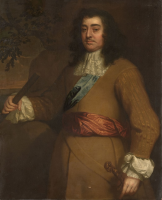

Samuel Pepys' Diary. 1st July 1665. Thence to Westminster, where I hear the sicknesse encreases greatly, and to the Harp and Ball with Mary talking, who tells me simply her losing of her first love in the country in Wales, and coming up hither unknown to her friends, and it seems Dr. Williams do pretend love to her, and I have found him there several times.
Samuel Pepys' Diary. 1st July 1665. Thence by coach and late at the office, and so to bed. Sad at the newes that seven or eight houses in Bazing Hall street, are shut up of the plague.
Samuel Pepys' Diary. 1st July 1666. Sunday. Up betimes, and to the office receiving letters, two or three one after another from Sir W. Coventry (age 38), and sent as many to him, being full of variety of business and hurry, but among the chiefest is the getting of these pressed men out of the City down the river to the fleete. While I was hard at it comes Sir W. Pen (age 45) to towne, which I little expected, having invited my Lady (age 42) and her daughter Pegg (age 15) to dine with me to-day; which at noon they did, and Sir W. Pen with them: and pretty merry we were. And though I do not love him, yet I find it necessary to keep in with him; his good service at Shearnesse [Map] in getting out the fleete being much taken notice of, and reported to the King (age 36) and Duke (age 32) [of York], even from the Prince (age 46) and Duke of Albemarle (age 57) themselves, and made the most of to me and them by Sir W. Coventry: therefore I think it discretion, great and necessary discretion, to keep in with him.

Samuel Pepys' Diary. 1st July 1668. Thence I set him down at the Temple [Map], and Commissioner Middleton dining the first time with me, he and I to White Hall, and so to St. James's, where we met; and much business with the Duke of York (age 34). And I find the Duke of York very hot for regulations in the Navy; and, I believe, is put on it by W. Coventry (age 40); and I am glad of it; and particularly, he falls heavy on Chatham-yard [Map], and is vexed that Lord Anglesey (age 53) did, the other day, complain at the Council-table of disorders in the Navy, and not to him. So I to White Hall to a Committee of Tangier; and there vexed, with the importunity and clamours of Alderman Backewell (age 50), for my acquittance for money supplied by him to the garrison, before I have any order for paying it: so home, calling at several places-among others, the 'Change [Map], and on Cooper (age 59), to know when my wife shall come to sit for her picture, which will be next week, and so home and to walk with my wife, and then to supper and to bed.

On 1st July 1690 the Battle of the Boyne was fought between the armies of Protestant King William III of England, Scotland and Ireland (age 39) and Catholic King James II of England Scotland and Ireland (age 56).
The English army was commanded by Frederick Schomberg 1st Duke Schomberg (age 74).
The English or Protestant army included Colonel Albert Conyngham, Richard Lumley 1st Earl Scarborough (age 40), Osmund Mordaunt and Henry Sidney 1st Earl Romney (age 49).
For the Irish or Catholic army James Fitzjames 1st Duke Berwick (age 19) and Henry Hobart 4th Baronet (age 33) fought. Richard Hamilton was captured.
Drury Wray 9th Baronet (age 56) fought for James II for which he subsequently forfeit his lands.

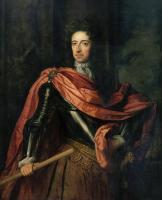
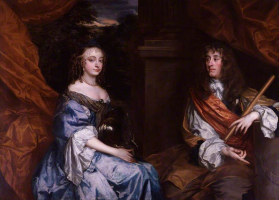


On 1st July 1690 Frederick Schomberg 1st Duke Schomberg (age 74) was killed at the Battle of the Boyne. He was buried at St Patrick's Cathedral, Dublin. His son Charles (age 44) succeeded 2nd Duke Schomberg.
John Evelyn's Diary. 1st July 1700. The Duke of Gloucester (age 10), son of the Princess Anne of Denmark (age 35), died of the smallpox.


Chronicle of Geoffrey le Baker of Swinbroke
Baker was a secular clerk from Swinbroke, now Swinbrook, an Oxfordshire village two miles east of Burford. His Chronicle describes the events of the period 1303-1356: Gaveston, Bannockburn, Boroughbridge, the murder of King Edward II, the Scottish Wars, Sluys, Crécy, the Black Death, Winchelsea and Poitiers. To quote Herbert Bruce 'it possesses a vigorous and characteristic style, and its value for particular events between 1303 and 1356 has been recognised by its editor and by subsequent writers'. The book provides remarkable detail about the events it describes. Baker's text has been augmented with hundreds of notes, including extracts from other contemporary chronicles, such as the Annales Londonienses, Annales Paulini, Murimuth, Lanercost, Avesbury, Guisborough and Froissart to enrich the reader's understanding. The translation takes as its source the 'Chronicon Galfridi le Baker de Swynebroke' published in 1889, edited by Edward Maunde Thompson.
Available at Amazon in eBook and Paperback format.
John Evelyn's Diary. 1st July 1701. My Lord Treasurer (age 56) made my grandson (age 19) one of the Commissioners of the prizes, salary £500 per annum.

On 1st July 1726 George Brudenell aka Montagu 1st Duke Montagu (age 13) was educated at Queen's College, Oxford University.
On 1st July 1735 Jean Ranc (age 61) died.
On 1st July 1741 Mary Fairfax Viscountess Fairfax died of smallpox.
On 1st July 1752 Thomas Pelham-Clinton 3rd Duke Newcastle-under-Lyne was born to Henry Fiennes Pelham-Clinton 2nd Duke Newcastle-under-Lyne (age 32) and Catherine Pelham Countess of Lincoln (age 25). Coefficient of inbreeding 6.31%. He married 2nd May 1782 his sixth cousin Anna Maria Stanhope Countess Lincoln, daughter of William Stanhope 2nd Earl of Harrington and Caroline Fitzroy Countess Harrington, and had issue.
On 1st July 1794 Gertrude Leveson-Gower Duchess Bedford died.
On 1st July 1809 William Russell 8th Duke Bedford was born to Francis Russell 7th Duke Bedford (age 21) and Anna Maria Stanhope Duchess Bedford (age 25).
The London Gazette 19285. 1st July 1835. St James's Palace [Map]. The King (age 69) was this day pleased to confer the honour of Knighthood upon Francis Chantrey (age 54), Esq. Member of the Royal Academy of Arts.
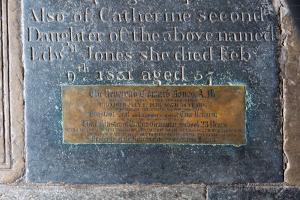
After 1st July 1836. St Marcella's Church, Denbigh [Map]. Grave of Reverend Edward Jones. Headmaster of Ruthin Grammar School for 23 Years.
Ten Years' Digging. July 1st [1848], examined the site of a barrow, near Winkhill, called Martin's Low [Map], which had been some time removed; where we found only a spear point of grey flint. We observed, as a rather remarkable circumstance, that, after making a hole to the depth of a foot, the earth appeared perfectly dry, notwithstanding the abundance of rain that had fallen; whilst, on sinking a little lower, the excavation suddenly filled with water, although the barrow is placed on the highest point of the land.
On 1st July 1857 George Spencer-Churchill 6th Duke of Marlborough (age 63) died. His son John (age 35) succeeded 7th Duke Marlborough, 7th Marquess of Blandford, 7th Earl of Marlborough, 7th Baron Churchill of Sandridge in Hertfordshire, 9th Earl of Sunderland, 11th Baron Spencer Wormleighton. Frances Anne Emily Vane Duchess of Marlborough (age 35) by marriage Duchess Marlborough.
The History of William Marshal was commissioned by his son shortly after William’s death in 1219 to celebrate the Marshal’s remarkable life; it is an authentic, contemporary voice. The manuscript was discovered in 1861 by French historian Paul Meyer. Meyer published the manuscript in its original Anglo-French in 1891 in two books. This book is a line by line translation of the first of Meyer’s books; lines 1-10152. Book 1 of the History begins in 1139 and ends in 1194. It describes the events of the Anarchy, the role of William’s father John, John’s marriages, William’s childhood, his role as a hostage at the siege of Newbury, his injury and imprisonment in Poitou where he met Eleanor of Aquitaine and his life as a knight errant. It continues with the accusation against him of an improper relationship with Margaret, wife of Henry the Young King, his exile, and return, the death of Henry the Young King, the rebellion of Richard, the future King Richard I, war with France, the death of King Henry II, and the capture of King Richard, and the rebellion of John, the future King John. It ends with the release of King Richard and the death of John Marshal.
Available at Amazon in eBook and Paperback format.

On 1st July 1862 Prince Louis Hesse Darmstadt IV Grand Duke (age 24) and Princess Alice Saxe Coburg Gotha (age 19) were married at Osborne House, Isle of Wight. She the daughter of Prince Albert Saxe Coburg Gotha and Queen Victoria of the United Kingdom (age 43).
The London Gazette 25486. Whitehall, July 1, 1885. The Queen (age 66) has been pleased to direct Letters Patent to be passed under the Great Seal of the United Kingdom of Great Britain and Ireland, appointing the Right Honourable Orlando George Charles (age 66), Earl of Bradford, to be Master of the Horse to Her Majesty.
On 1st July 1895 Captain John Macfarlane Charlton was born to John Charlton (age 46) and Kate Vaughan.
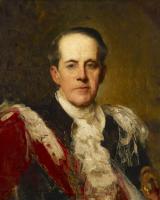
The London Gazette 27385. To be extra Aides-de-Camp to the Right Honourable G H., Earl Cadogan (age 61), K.G., Lieutenant-General and General Governor of Ireland. Dated 1st July, 1901:
Captain the Honourable A. W. de B. S. Foljambe (age 31), M.V.O., the Rifle Brigade (the Prince Consort's Own).
Captain J. C. Brinton, D.S.O., 2nd Life Guards.
Major C. Heseltine, 7th Battalion the Royal Fusiliers (City of London Regiment).
On 1st July 1904 George Frederick Watts (age 87) died.
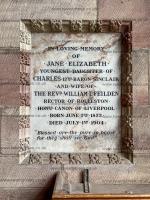
After 1st July 1904. St Mary's Church, Rolleston on Dove [Map]. Memorial to Jane Elizabeth St Clair (deceased).
Jane Elizabeth St Clair: On 2nd June 1822 she was born to Charles St Clair 13th Lord Sinclair and Isabella Mary Chatto. In 1853 Reverend William Feilden and she were married. On 1st July 1904 she died.
On 1st July 1906, at 2:40 in the morning, the Salisbury Railway Disaster resulted in the death of twenty-eight people including a number from America and Canada.
A boat train from Plymouth to London failed to negotiate a sharp bend at more than twice the speed limit and crashed into a milk train. The curve had a maximum permitted speed of 30 miles per hour, but the express had been travelling at a much higher speed.
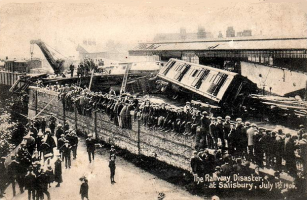
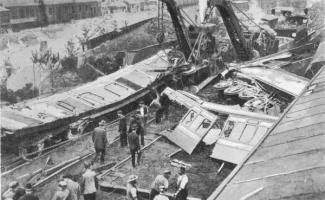
After 1st July 1906. Salisbury Cathedral [Map]. Tablet in memory of those who lost their lives in the Salisbury Railway Disaster.


On 1st July 1916 Lieutenant Geoffrey Evan Sanderson (age 27) was killed in action at Theipval leading his men in a charge.
On 1st July 1916 Captain George Henry Hall Scott (age 34) was killed in action at the Battle of the Somme. He was serving with The Queen's (Royal West Surrey Regiment) "C" Coy. 7th Bn. He was buried at Dantzig Alley British Cemetery, Mametz.
The 7th West Surrey Regiment gained and held their objective, Montauban. George was at the Battalion report centre. He was with 'C' Company, which was then the Battalion Reserve and at about 8.30 am he advanced towards the front line to find out what was happening to his company as nothing had been heard from them at all, he was killed in front of the German Lines. His company had moved at 7.55am to BRESLAU trench, to join the remainder of the Battalion.
On 1st July 1916 Captain John Macfarlane Charlton (age 21) was killed in action on his twenty-first birthday on the first day of the Battle of the Somme seven days after the death of his elder brother Lieutenant Hugh Vaughan Charlton.
After 1st July 1916. Memorial plaque and window showing Saint George to Captain George Henry Hall Scott (deceased) at the Church of St Mary the Virgin, Lesbury [Map] by Archibald Keightley Nicholson (age 45) .
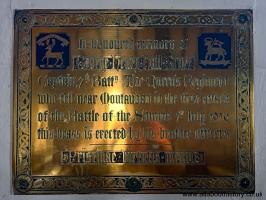
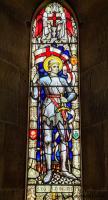
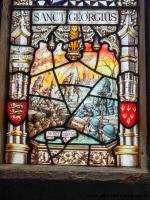
On 1st July 1916 Lieutenant John Francis Cragg (age 28) was killed in action at the Battle of Fricourt.

Memorial at St Peter's Church, Elmton [Map] to brothers William Milnes, died of wounds, 15th May 1918, aged 26, Thomas Milnes, killed in action, 11th March 1917 aged 23, and Joseph Milnes, killed in action 1st July 1917, aged 27.
William of Worcester's Chronicle of England
William of Worcester, born around 1415, and died around 1482 was secretary to John Fastolf, the renowned soldier of the Hundred Years War, during which time he collected documents, letters, and wrote a record of events. Following their return to England in 1440 William was witness to major events. Twice in his chronicle he uses the first person: 1. when writing about the murder of Thomas, 7th Baron Scales, in 1460, he writes '… and I saw him lying naked in the cemetery near the porch of the church of St. Mary Overie in Southwark …' and 2. describing King Edward IV's entry into London in 1461 he writes '… proclaimed that all the people themselves were to recognize and acknowledge Edward as king. I was present and heard this, and immediately went down with them into the city'. William’s Chronicle is rich in detail. It is the source of much information about the Wars of the Roses, including the term 'Diabolical Marriage' to describe the marriage of Queen Elizabeth Woodville’s brother John’s marriage to Katherine, Dowager Duchess of Norfolk, he aged twenty, she sixty-five or more, and the story about a paper crown being placed in mockery on the severed head of Richard, 3rd Duke of York.
Available at Amazon in eBook and Paperback format.
Sunday Morning Star 1st July 1928. Divorced Duke (age 49) and Duchess (age 53) Entertain Together
It is getting to be so that a thing like a divorce seems to amount to nothing here in England. For example, the other night, the Duke of Westminster and his first wife, who is now the spouse of Captain James Fitzpatrick Lewis, acted as joint host and hostess at & ball given in honour of their daughter, Lady Mary Grosvenor (age 18), on the occasion of her debut1.
The ball was a very grand affair in the ancient town house of the Duke of Westminster, which the lady (once his duchess) had not entered since some time before she divorced him several years ago.
London has rarely seen a more brilliant and fashionable assemblage and the most interesting part of it was that couple standing at the top of the great stairway to receive their guests. Their charming daugher, Lady Mary Grosvenor, seemed quite at ease in spite of this astonishing detail of her coming out ball, and it is noteworthy that all the very brilliant and blue blooded‘ members of the smartest set in the world who were guests, took it as if they thought it quite a matter of course for a divorced couple, one of them remarried, to be standing side by side bowing and smiling at their friends. The Duke and Duchess were divorced in in 1910. They have met in public many times since then and always have seemed to be the very best of friends in spite of their agreement to disagree. The Duke is one of the richest men in the world, being surely worth $100,000,000. He spends much of his time on a vast estate in France which is stocked for the hunting of wild boar, or on his wonderful yacht, on which he cruises much in the Mediterrancan. This divorce was not his first experience of the kind. Before he married the lady who received with him the other night, he had made one unsatisfactory matrimonial venture.
Note 1. Lady Mary's 18th Birthday was on the 27th June.
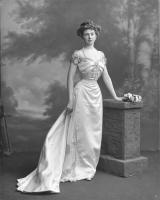


On 1st July 1953 Henry Percy 11th Duke of Northumberland was born to Hugh Algernon Percy 10th Duke Northumberland (age 39) and Elizabeth Diana Montagu-Douglas-Scott Duchess Northumberland (age 31). One of his godparents was Queen Elizabeth II of the United Kingdom (age 27).
On 1st July 1961 Diana Spencer Princess Wales was born to John Spencer 8th Earl Spencer (age 37) and Frances Ruth Roche Countess Spencer (age 25) at Park House, Sandringham Estate. She was baptised on 30th August 1961 by Bishop Percy Herbert (age 76) at St Mary Magdalene's Church, Sandringham. She married 29th July 1981 King Charles III, son of Philip Mountbatten Duke Edinburgh and Queen Elizabeth II of the United Kingdom, and had issue.
On 1st July 1336 Philip Duke Valois was born to King Philip "Fortunate" VI of France (age 42) and Joan "Lame" Burgundy Queen Consort France (age 43) at the Château de Vincennes. Coefficient of inbreeding 5.00%. He married 8th January 1345 his first cousin once removed Blanche Évreux Queen Consort France, daughter of Philip "Noble" III King Navarre and Joan Capet II Queen Navarre.
On 1st July 1464 Clara Gonzaga was born to Frederico Gonzaga Marquess Mantua (age 23) and Margaret Wittelsbach (age 22) at Mantua. She married 24th February 1482 her sixth cousin Gilbert Bourbon Count of Monpensier and had issue.
On 1st July 1481 Christian II King of Denmark II King Norway was born to John King of Denmark Norway and Sweden (age 26) and Christina Queen Consort Denmark Norway and Sweden (age 19). He married 1515 his third cousin Isabella of Austria Queen Consort Denmark and Norway, daughter of Philip "Handsome Fair" King Castile and Joanna "The Mad" Trastámara Queen Castile, and had issue.
On 1st July 1482 Unamed Trastámara was born to Ferdinand II King Aragon (age 30) and Isabella Queen Castile (age 31). He a great x 3 grandson of King Edward III of England. Coefficient of inbreeding 3.23%. He died aged less than one years old.
On 1st July 1534 Frederick II King of Denmark was born to Christian III King of Denmark (age 30) and Dorothea of Saxe Lauenburg Queen Consort Denmark and Norway (age 23). He married 20th July 1572 his second cousin once removed Sophie Mecklenburg-Schwerin Queen Consort Denmark and had issue.
On 1st July 1564 Elizabeth Cecil was born to William Cecil 1st Baron Burghley (age 43) and Mildred Cooke Baroness Burghley (age 38). She married 26th February 1582 William Wentworth, son of Thomas Wentworth 2nd Baron Wentworth and Anne Wentworth Baroness Wentworth.


On 1st July 1574 Bishop Joseph Hall was born at Bristow Park. He was educated at Ashby Grammar School, Ashby-de-la-Zouch, Leicestershire.
The Deeds of the Dukes of Normandy
The Gesta Normannorum Ducum [The Deeds of the Dukes of Normandy] is a landmark medieval chronicle tracing the rise and fall of the Norman dynasty from its early roots through the pivotal events surrounding the Norman Conquest of England. Originally penned in Latin by the monk William of Jumièges shortly before 1060 and later expanded at the behest of William the Conqueror, the work chronicles the deeds, politics, battles, and leadership of the Norman dukes, especially William’s own claim to the English throne. The narrative combines earlier historical sources with firsthand information and oral testimony to present an authoritative account of Normandy’s transformation from a Viking settlement into one of medieval Europe’s most powerful realms. William’s history emphasizes the legitimacy, military prowess, and governance of the Norman line, framing their expansion, including the conquest of England, as both divinely sanctioned and noble in purpose. Later chroniclers such as Orderic Vitalis and Robert of Torigni continued the history, extending the coverage into the 12th century, providing broader context on ducal rule and its impact. Today this classic work remains a foundational source for understanding Norman identity, medieval statesmanship, and the historical forces that reshaped England and Western Europe between 800AD and 1100AD.
Available at Amazon in eBook and Paperback format.
On 1st July 1667 Francis Greville was born to Fulke Greville 5th Baron Brooke (age 24) and Sarah Dashwood Baroness Brooke (age 21). He married before 1694 Anne Wilmot, daughter of John Wilmot 2nd Earl Rochester and Elizabeth Malet Countess Rochester, and had issue.
On 1st July 1700 Hendrie Lyon was born to John Lyon 4th Earl Strathmore and Kinghorne (age 37) and Elizabeth Stanhope Countess Strathmore and Kinghorne (age 37).
On 1st July 1731 Adam Duncan 1st Viscount Duncan was born. He married 6th June 1777 Henrietta Dundas and had issue.


On 1st July 1750 Henry William Bunbury was born to William Bunbury 5th Baronet (age 40). He married August 1771 Catherine Horneck and had issue.
On 1st July 1752 Thomas Pelham-Clinton 3rd Duke Newcastle-under-Lyne was born to Henry Fiennes Pelham-Clinton 2nd Duke Newcastle-under-Lyne (age 32) and Catherine Pelham Countess of Lincoln (age 25). Coefficient of inbreeding 6.31%. He married 2nd May 1782 his sixth cousin Anna Maria Stanhope Countess Lincoln, daughter of William Stanhope 2nd Earl of Harrington and Caroline Fitzroy Countess Harrington, and had issue.

On 1st July 1756 John Douglas was born to James Douglas 14th Earl Morton (age 54) and Bridget Heathcote Countess Morton. He married 4th October 1784 Frances Lascelles, daughter of Edward Lascelles 1st Earl Harewood and Anne Chaloner Baroness Harewood, and had issue.
On 1st July 1764 William Conyngham Plunket 1st Baron Plunket was born.
On 1st July 1779 Henry Peyton 2nd Baronet was born to Henry Dashwood aka Peyton 1st Baronet (age 43) and Frances Rous Lady Peyton.
On 1st July 1784 Paul Thompson 1st Baron Wenlock was born to Robert Lawley 5th Baronet (age 48) and Jane Thompson (age 41). He married 1817 Caroline Griffin Baroness Wenlock, daughter of Richard Griffin 2nd Baron Braybrook and Catherine Granville, and had issue.
On 1st July 1786 Pownoll Bastard Pellew 2nd Viscount Exmouth was born to Edward Pellew 1st Viscount Exmouth (age 29) and Susan Frowde Viscountess Exmouth (age 30). He married (1) 1st October 1808 Eliza Harriet Barlow, daughter of George Hilaro Barlow 1st Baronet and Elizabeth Smith, and had issue (2) 15th April 1822 Georgiana Janet Dick Viscountess Pellew and had issue.
Chronicle of Geoffrey le Baker of Swinbroke
Baker was a secular clerk from Swinbroke, now Swinbrook, an Oxfordshire village two miles east of Burford. His Chronicle describes the events of the period 1303-1356: Gaveston, Bannockburn, Boroughbridge, the murder of King Edward II, the Scottish Wars, Sluys, Crécy, the Black Death, Winchelsea and Poitiers. To quote Herbert Bruce 'it possesses a vigorous and characteristic style, and its value for particular events between 1303 and 1356 has been recognised by its editor and by subsequent writers'. The book provides remarkable detail about the events it describes. Baker's text has been augmented with hundreds of notes, including extracts from other contemporary chronicles, such as the Annales Londonienses, Annales Paulini, Murimuth, Lanercost, Avesbury, Guisborough and Froissart to enrich the reader's understanding. The translation takes as its source the 'Chronicon Galfridi le Baker de Swynebroke' published in 1889, edited by Edward Maunde Thompson.
Available at Amazon in eBook and Paperback format.
On 1st July 1790 John Vereker 3rd Viscount Gort was born to Charles Vereker 2nd Viscount Gort (age 22) and Jane Westropp. He married 15th December 1814 Maria O'Grady Viscountess Gort and had issue.
On 1st July 1790 Joseph Thaddeus Dormer 11th Baron Dormer was born to John Dormer (age 60). He married 5th May 1829 Elizabeth Anne Tichborne Baroness Dormer, daughter of Henry Joseph Tichborne 8th Baronet, and had issue.
On 1st July 1802 Susan Sherard was born to Philip Sherard 5th Earl Harborough (age 35). She married in or before 1816 General John Reeve of Leadenham House.
On 1st July 1809 William Russell 8th Duke Bedford was born to Francis Russell 7th Duke Bedford (age 21) and Anna Maria Stanhope Duchess Bedford (age 25).

On 1st July 1812 Juliana Pole-Carew Baroness Robartes was born to Reginald Pole aka Pole-Carew (age 58) and Caroline Anne Lyttelton (age 37). She married 8th January 1839 Thomas James Agar aka Agar-Robartes 1st Baron Robartes and had issue.
On 1st July 1821 Daniel Cooper 1st Baronet was born.
On 1st July 1839 Victoria Noel Lady Buxton was born to Charles Noel 1st Earl Gainsborough (age 57) and Frances Jocelyn Countess Gainsborough (age 24). She married 21st June 1862 Thomas Fowell Buxton 3rd Baronet, son of Edward North Buxton 2nd Baronet and Catherine Gurney Lady Buxton, and had issue.
On 1st July 1843 Mary Enid Evelyn Guest was born to John Josiah Guest 1st Baronet (age 58) and Charlotte Elizabeth Bertie (age 31).
On 1st July 1843 Henry Gore-Booth 5th Baronet was born to Robert Gore-Booth 4th Baronet (age 37). He married 1867 Georgina Mary Hill and had issue.

On 1st July 1854 Henry John Vane-Tempest was born to George Henry Vane-Tempest 5th Marquess Londonderry (age 33) and Mary Cornelia Edwards Marchioness Londonderry (age 25).
On 1st July 1879 Walter Alexander Hepburn-Stuart-Forbes-Trefusis was born to Charles Hepburn-Stuart-Forbes-Trefusis 20th Baron Clinton (age 45) and Margaret Walrond Baroness Clinton (age 29).
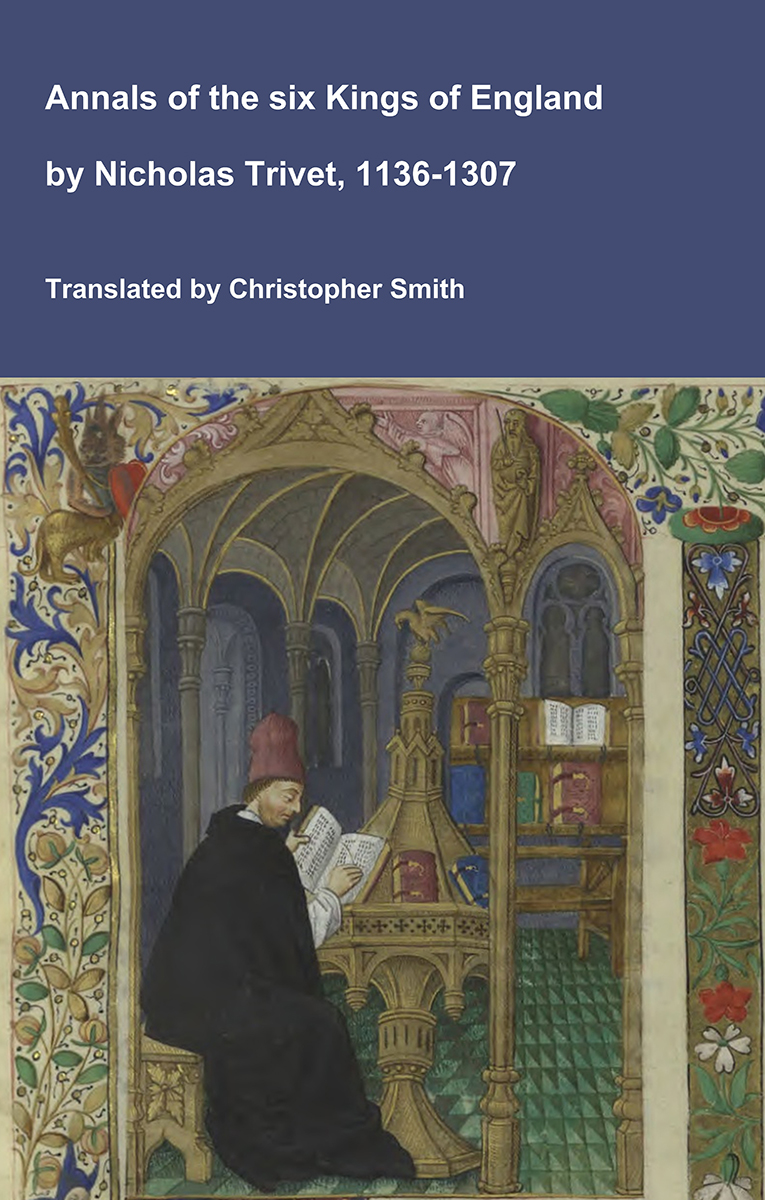
Annals of the six Kings of England by Nicholas Trivet
Translation of the Annals of the Six Kings of England by that traces the rise and rule of the Angevin aka Plantagenet dynasty from the mid-12th to early 14th century. Written by the Dominican scholar Nicholas Trivet, the work offers a vivid account of English history from the reign of King Stephen through to the death of King Edward I, blending political narrative with moral reflection. Covering the reigns of six monarchs—from Stephen to Edward I—the chronicle explores royal authority, rebellion, war, and the shifting balance between crown, church, and nobility. Trivet provides detailed insight into defining moments such as baronial conflicts, Anglo-French rivalry, and the consolidation of royal power under Edward I, whose reign he describes with particular immediacy. The Annals combines careful year-by-year reporting with thoughtful interpretation, presenting history not merely as a sequence of events but as a moral and political lesson. Ideal for readers interested in medieval history, kingship, and the origins of the English state, this chronicle remains a valuable and accessible window into the turbulent world of the Plantagenet kings.
Available at Amazon in eBook and Paperback format.
On 1st July 1882 George Heneage Lawrence Dundas was born to Lawrence Dundas 1st Marquess Zetland (age 37) and Lilian Selina Elizabeth Lumley Marchioness Zetland (age 30).
On 1st July 1882 Captain Edward Simons Ward 2nd Baronet was born to Edward Ward 1st Baronet (age 28) and Florence Caroline Simons Lady Ward (age 24).
On 1st July 1888 Robert Henry Hepburn-Stuart-Forbes-Trefusis was born to Charles Hepburn-Stuart-Forbes-Trefusis 20th Baron Clinton (age 54) and Margaret Walrond Baroness Clinton (age 38). He married before 1st July 1958 Marguerite Elizabeth Herbert.
On 1st July 1895 Captain John Macfarlane Charlton was born to John Charlton (age 46) and Kate Vaughan.
On 1st July 1897 Edward Wyndham Tennant was born to Edward Tennant 1st Baron Glenconner (age 38) and Pamela Wyndham Viscountess Grey (age 26).


On 1st July 1907 John Harbord 8th Baron Suffield was born to Charles Harbord 6th Baron Suffield (age 52).
On 1st July 1915 Philip Lever 3rd Viscount Leverhulme was born to William Lever 2nd Viscount Leverhulme (age 27).
On 1st July 1953 Henry Percy 11th Duke of Northumberland was born to Hugh Algernon Percy 10th Duke Northumberland (age 39) and Elizabeth Diana Montagu-Douglas-Scott Duchess Northumberland (age 31). One of his godparents was Queen Elizabeth II of the United Kingdom (age 27).
On 1st July 1961 Diana Spencer Princess Wales was born to John Spencer 8th Earl Spencer (age 37) and Frances Ruth Roche Countess Spencer (age 25) at Park House, Sandringham Estate. She was baptised on 30th August 1961 by Bishop Percy Herbert (age 76) at St Mary Magdalene's Church, Sandringham. She married 29th July 1981 King Charles III, son of Philip Mountbatten Duke Edinburgh and Queen Elizabeth II of the United Kingdom, and had issue.
On 1st July 1986 Jasset David Cody Ormsby-Gore 7th Baron Harlech was born to Francis David Ormsby-Gore 6th Baron Harlech (age 32).
William of Worcester's Chronicle of England
William of Worcester, born around 1415, and died around 1482 was secretary to John Fastolf, the renowned soldier of the Hundred Years War, during which time he collected documents, letters, and wrote a record of events. Following their return to England in 1440 William was witness to major events. Twice in his chronicle he uses the first person: 1. when writing about the murder of Thomas, 7th Baron Scales, in 1460, he writes '… and I saw him lying naked in the cemetery near the porch of the church of St. Mary Overie in Southwark …' and 2. describing King Edward IV's entry into London in 1461 he writes '… proclaimed that all the people themselves were to recognize and acknowledge Edward as king. I was present and heard this, and immediately went down with them into the city'. William’s Chronicle is rich in detail. It is the source of much information about the Wars of the Roses, including the term 'Diabolical Marriage' to describe the marriage of Queen Elizabeth Woodville’s brother John’s marriage to Katherine, Dowager Duchess of Norfolk, he aged twenty, she sixty-five or more, and the story about a paper crown being placed in mockery on the severed head of Richard, 3rd Duke of York.
Available at Amazon in eBook and Paperback format.
On 1st July 1276 Hugh XIII of Lusignan VIII Count of La Marche IV Count Angoulême (age 17) and Beatrice Burgundy Countess Lusignan, La Marche and Angoulême (age 16) were married. She by marriage Seigneur of Lusignan, Countess La Marche, Countess Angoulême. She the daughter of Hugh IV Duke Burgundy. He the son of Hugh XII of Lusignan VII Count of La Marche III Count Angoulême and Jeanne Fougères Countess Lusignan Countess La Marche and Angoulême.
On 1st July 1347 Reginald II Duke Guelders (age 14) and Marie of Brabant Duchess of Guelders (age 22) were married. She the daughter of John Brabant III Duke Brabant (age 47) and Marie Évreux Duchess of Brabant. He the son of Reginald "Black" I Duke Guelders and Eleanor of Woodstock Plantagenet (age 29). They were second cousins. He a grandson of King Edward II of England. She a great granddaughter of King Edward I of England.
On 1st July 1608 Thomas Arundell 1st Baron Arundel (age 48) and Anne Philipson Baroness Arundel Wardour were married. She by marriage Baroness Arundel of Wardour in Wiltshire.
On 1st July 1625 Edward Montagu 2nd Earl Manchester (age 23) and Anne Rich Viscountess Mandeville (age 21) were married. She the daughter of Robert Rich 2nd Earl Warwick (age 38) and Frances Hatton Countess Warwick. He the son of Henry Montagu 1st Earl Manchester (age 62) and Catherine Spencer.


On 1st July 1678 Richard Maitland 4th Earl Lauderdale (age 25) and Anne Campbell were married. She the daughter of Archibald Campbell 9th Earl Argyll (age 49) and Mary Stewart Countess Argyll. He the son of Charles Maitland 3rd Earl Lauderdale.
On 1st July 1738 Coventry Carew 6th Baronet (age 21) and Mary Bampfylde Lady Carew were married at Church of St George the Martyr, Queen Square. They were first cousins.
On 1st July 1740 John Smith Burgh 11th Earl Clanricarde (age 19) and Hester Amelia Vincent Countess Clanricarde were married. She by marriage Countess Clanricarde. He the son of Michael Burke 10th Earl Clanricarde.
On 1st July 1745 John Hynde Cotton 4th Baronet (age 28) and Anne Parsons Lady Cotton (age 20) were married.
On 1st July 1862 Prince Louis Hesse Darmstadt IV Grand Duke (age 24) and Princess Alice Saxe Coburg Gotha (age 19) were married at Osborne House, Isle of Wight. She the daughter of Prince Albert Saxe Coburg Gotha and Queen Victoria of the United Kingdom (age 43).
On 1st July 1889 Lewis Vernon-Harcourt 1st Viscount Harcourt (age 26) and Mary Burns Viscountess Harcourt (age 14) were married at St Margaret's Church, Westminster [Map].
On 1st July 1924 Francis Savile Crossley 2nd Baron Somerleyton (age 35) and Bridget Hoare Baroness Somerleyton (age 25) were married.
On 1st July 1933 Robert Grosvenor 5th Baron Ebury (age 19) and Anne Acland-Troyte (age 21) were married.
This is a translation of the 'Memoires of Jacques du Clercq', published in 1823 in two volumes, edited by Frederic, Baron de Reissenberg. In his introduction Reissenberg writes: 'Jacques du Clercq tells us that he was born in 1424, and that he was a licentiate in law and a counsellor to Philip the Good, Duke of Burgundy, in the castellany of Douai, Lille, and Orchies. It appears that he established his residence at Arras. In 1446, he married the daughter of Baldwin de la Lacherie, a gentleman who lived in Lille. We read in the fifth book of his Memoirs that his father, also named Jacques du Clercq, had married a lady of the Le Camelin family, from Compiègne. His ancestors, always attached to the counts of Flanders, had constantly served them, whether in their councils or in their armies.' The Memoires cover a period of nineteen years beginning in in 1448, ending in in 1467. It appears that the author had intended to extend the Memoirs beyond that date; no doubt illness or death prevented him from carrying out this plan. As Reissenberg writes the 'merit of this work lies in the simplicity of its narrative, in its tone of good faith, and in a certain air of frankness which naturally wins the reader’s confidence.' Du Clercq ranges from events of national and international importance, including events of the Wars of the Roses in England, to simple, everyday local events such as marriages, robberies, murders, trials and deaths, including that of his own father in Book 5; one of his last entries.
Available at Amazon in eBook and Paperback format.

On 1st July 1948 Gerald Legge 9th Earl of Dartmouth (age 24) and Raine McCorquodale Countess Dartmouth and Spencer (age 18) were married. He the son of Humphry Legge 8th Earl Dartmouth (age 60).
On 1st July 1109 Alfonso "Brave" VI King Leon VI King Castile (age 68) died. His daughter Urracca (age 30) succeeded Queen Leon, Queen Castile and Queen Galicia.
On 1st July 1175 Reginald de Dunstanville Fitzroy 1st Earl Cornwall (age 65) died at Chertsey, Surrey. He was buried at Reading Abbey, Berkshire [Map]. Earl Cornwall extinct. His son appears to have predeceaseed him by months.
On 1st July 1322 John Somery 4th Baron Dudley (age 43) died. His son doesn't appear to have been summoned to Parliament so Baron Dudley of Somery extinct.
On 1st July 1421 Avice Cromwell Baroness Bardolf (age 51) died at Tattershall [Map].
On 1st July 1433 Elizabeth Bourchier 4th Baroness Bourchier Baroness Stafford (age 34) died. Her second cousin Henry (age 29) succeeded 5th Baron Bourchier. Isabel York Countess Eu and Essex (age 24) by marriage Baroness Bourchier.
On 1st July 1566 Thomas Dacre 4th Baron Dacre Gilsland 8th Baron Greystoke (age 39) died. His son George (age 5) succeeded 5th Baron Dacre Gilsland, 9th Baron Greystoke.
On 1st July 1591 William Douglas 9th Earl Angus (age 58) died at Glenbervie. His son William (age 39) succeeded 10th Earl Angus.

On 1st July 1622 William Parker 4th Baron Monteagle 14th Baron Marshal 13th Baron Morley (age 47) died at Great Hallingbury, Essex. His son Henry (age 22) succeeded 15th Baron Marshal, 14th Baron Morley, 5th Baron Monteagle.

On 1st July 1631 Nicholas Tufton 1st Earl of Thanet (age 53) died at Sapcote, Leicestershire [Map]. His son John (age 22) succeeded 2nd Earl of Thanet, 2nd Baron Tufton, 3rd Baronet Tufton of Hothfield. Margaret Sackville Countess Isle Thanet (age 16) by marriage Countess of Thanet.
On 1st July 1638 Edward Mosley (age 68) died unmarried. He was buried at St Mary's Church, Rolleston on Dove [Map]. In his will, dated 16 Decermber 1637, he made generous charitable bequests in both Rolleston and London. His entire estate, worth over £3,000 a year, was inherited by his nephew, Edward Mosley (age 22).
Monument to Edward Mosley at St Mary's Church, Rolleston on Dove [Map]. He dressed in judges robes. Corinthian Columns. Stuart Period.
Edward Mosley 1st Baronet: In 1616 he was born to Rowland Mosley . On 10th July 1640 Edward Mosley 1st Baronet was created 1st Baronet Mosley of Rolleston in Staffordshire. In 1657 Edward Mosley 1st Baronet died. His son Edward succeeded 2nd Baronet Mosley of Rolleston in Staffordshire.
Chronicle of Geoffrey le Baker of Swinbroke
Baker was a secular clerk from Swinbroke, now Swinbrook, an Oxfordshire village two miles east of Burford. His Chronicle describes the events of the period 1303-1356: Gaveston, Bannockburn, Boroughbridge, the murder of King Edward II, the Scottish Wars, Sluys, Crécy, the Black Death, Winchelsea and Poitiers. To quote Herbert Bruce 'it possesses a vigorous and characteristic style, and its value for particular events between 1303 and 1356 has been recognised by its editor and by subsequent writers'. The book provides remarkable detail about the events it describes. Baker's text has been augmented with hundreds of notes, including extracts from other contemporary chronicles, such as the Annales Londonienses, Annales Paulini, Murimuth, Lanercost, Avesbury, Guisborough and Froissart to enrich the reader's understanding. The translation takes as its source the 'Chronicon Galfridi le Baker de Swynebroke' published in 1889, edited by Edward Maunde Thompson.
Available at Amazon in eBook and Paperback format.
On 1st July 1670 Sarah Rayney Lady North died.
On 1st July 1681 John Stepney 4th Baronet (age 49) died. His son Thomas (age 13) succeeded 5th Baronet Stepney of Prendergast in Pembrokeshire.
On 1st July 1690 Frederick Schomberg 1st Duke Schomberg (age 74) was killed at the Battle of the Boyne. He was buried at St Patrick's Cathedral, Dublin. His son Charles (age 44) succeeded 2nd Duke Schomberg.
On 1st July 1697 John Noel 4th Baronet (age 29) died. His son Clobery (age 2) succeeded 5th Baronet Noel.
On 1st July 1718 Thomas Tipping 1st Baronet (age 65) died in debt in prison in Southwark, Surrey [Map]. His son Thomas (age 18) succeeded 2nd Baronet Tipping of Wheatfield in Oxfordshire.
On 1st July 1726 Robert Chaplin 1st Baronet (age 56) died. His great nephew John (age 15) succeeded 2nd Baronet Chaplin of the Inner Temple in London.
On 1st July 1729 John Every 4th Baronet died without issue. His brother Simon (age 74) succeeded 5th Baronet Every of Egginton in Derbyshire.
On 1st July 1735 Jean Ranc (age 61) died.
On 1st July 1741 Mary Fairfax Viscountess Fairfax died of smallpox.

On 1st July 1757 Elizabeth Wilmot Countess Sandwich (age 82) died.
On 1st July 1767 Benet Garrard 6th Baronet (age 63) died. Baronet Garrard of Lamer extinct.
On 1st July 1774 Henry Fox 1st Baron Holland (age 68) died. His son Stephen (age 29) succeeded 2nd Baron Holland of Foxley in Wiltshire.
Chronicle of Walter of Guisborough
A canon regular of the Augustinian Guisborough Priory, Yorkshire, formerly known as The Chronicle of Walter of Hemingburgh, describes the period from 1066 to 1346. Before 1274 the Chronicle is based on other works. Thereafter, the Chronicle is original, and a remarkable source for the events of the time. This book provides a translation of the Chronicle from that date. The Latin source for our translation is the 1849 work edited by Hans Claude Hamilton. Hamilton, in his preface, says: 'In the present work we behold perhaps one of the finest samples of our early chronicles, both as regards the value of the events recorded, and the correctness with which they are detailed; Nor will the pleasing style of composition be lightly passed over by those capable of seeing reflected from it the tokens of a vigorous and cultivated mind, and a favourable specimen of the learning and taste of the age in which it was framed.'
Available at Amazon in eBook and Paperback format.
On 1st July 1777 John Glynne 6th Baronet (age 65) died. His son Stephen (age 33) succeeded 7th Baronet Glynne of Bicester aka Bisseter in Oxfordshire.
On 1st July 1784 Patrick Blake 1st Baronet (age 42) died. His son Patrick (age 16) succeeded 2nd Baronet Blake of Langham in Suffolk.
On 1st July 1788 Major-General Thomas Twisleton 7th or 13th Baron Saye and Sele (age 53) died. His son Gregory (age 19) succeeded 8th or 14th Baron Saye and Sele.
On 1st July 1794 Gertrude Leveson-Gower Duchess Bedford died.
On 1st July 1831 Archibald Cochrane 9th Earl of Dundonald (age 83) died. His son Thomas (age 55) succeeded 9th Earl Dundonald.
On 1st July 1845 Charles Ellis 1st Baron Seaford (age 73) died. His son Charles (age 46) succeeded 2nd Baron Seaford of Seaford in Sussex.
On 1st July 1857 George Spencer-Churchill 6th Duke of Marlborough (age 63) died. His son John (age 35) succeeded 7th Duke Marlborough, 7th Marquess of Blandford, 7th Earl of Marlborough, 7th Baron Churchill of Sandridge in Hertfordshire, 9th Earl of Sunderland, 11th Baron Spencer Wormleighton. Frances Anne Emily Vane Duchess of Marlborough (age 35) by marriage Duchess Marlborough.
On 1st July 1857 William Pole Tylney Long Wellesley 4th Earl Mornington (age 69) died at Thayer Street Manchester Square Marylebone. He was buried at Catacomb B Kensal Green Cemetery. His son William (age 43) succeeded 5th Earl Mornington, 5th Viscount Wellesley of Dangan Castle.
On 1st July 1860 George Bowyer 6th and 2nd Baronet (age 77) died at Dresden. He was buried at the Church of St James the Great, Radley. His son George (age 48) succeeded 7th Baronet Bowyer of Denham Court, 3rd Baronet Bowyer of Radley.
On 1st July 1868 Henry Thompson 3rd Baronet (age 71) died without male issue. Baronet Virkees extinct.
On 1st July 1903 Charles Colville 1st Viscount Colville (age 84) died. His son Charles (age 49) succeeded 2nd Viscount Colville of Culrossin Perthshire.
The History of William Marshal was commissioned by his son shortly after William’s death in 1219 to celebrate the Marshal’s remarkable life; it is an authentic, contemporary voice. The manuscript was discovered in 1861 by French historian Paul Meyer. Meyer published the manuscript in its original Anglo-French in 1891 in two books. This book is a line by line translation of the first of Meyer’s books; lines 1-10152. Book 1 of the History begins in 1139 and ends in 1194. It describes the events of the Anarchy, the role of William’s father John, John’s marriages, William’s childhood, his role as a hostage at the siege of Newbury, his injury and imprisonment in Poitou where he met Eleanor of Aquitaine and his life as a knight errant. It continues with the accusation against him of an improper relationship with Margaret, wife of Henry the Young King, his exile, and return, the death of Henry the Young King, the rebellion of Richard, the future King Richard I, war with France, the death of King Henry II, and the capture of King Richard, and the rebellion of John, the future King John. It ends with the release of King Richard and the death of John Marshal.
Available at Amazon in eBook and Paperback format.
On 1st July 1904 George Frederick Watts (age 87) died.
On 1st July 1906 Wilfrid Lawson 2nd Baronet (age 76) died at 18 Ovington Square, Knightsbridge. His funeral was held at St Margaret's Church, Westminster [Map] amidst a large gathering of members of Parliament, family members, personal friends, and representatives of public bodies. He was buried at St Kentigern's Church, Aspatria. His son Wilfrid (age 43) succeeded 3rd Baronet Lawson of Brayton House in Cumberland. Mary Camilla Macan Lady Lawson (age 41) by marriage Lady Lawson of Brayton House in Cumberland.

On 1st July 1919 John Brunner 1st Baronet (age 77) died. His son John (age 54) succeeded 2nd Baronet Brunner of Druids Cross in Lancashire.
On 1st July 1928 Alfred Wyatt-Edgell 5th Baron Braye (age 78) died. His son Adrian (age 53) succeeded 6th Baron Braye. Ethel Mary Bouverie-Pusey Baroness Braye by marriage Baroness Braye.
On 1st July 1960 William Law Williams 8th Baronet (age 53) died. His first cousin once removed Robert (age 37) succeeded 9th Baronet Williams of Tregullow in Cornwall.
On 1st July 1998 David Montagu 4th Baron Swaythling (age 69) died. His son Charles (age 44) succeeded 5th Baron Swaythling of Swaythling in Hampshire, 5th Baronet Montagu of South Stoneham House in Hampshire and of Kensington Palace Gardens in London.