


Text this colour links to Pages. Text this colour links to Family Trees. Text this colour are links that disabled for Guests.
Place the mouse over images to see a larger image. Click on paintings to see the painter's Biography Page.
Mouse over links for a preview. Move the mouse off the painting or link to close the popup.
Chronicle of Walter of Guisborough
A canon regular of the Augustinian Guisborough Priory, Yorkshire, formerly known as The Chronicle of Walter of Hemingburgh, describes the period from 1066 to 1346. Before 1274 the Chronicle is based on other works. Thereafter, the Chronicle is original, and a remarkable source for the events of the time. This book provides a translation of the Chronicle from that date. The Latin source for our translation is the 1849 work edited by Hans Claude Hamilton. Hamilton, in his preface, says: 'In the present work we behold perhaps one of the finest samples of our early chronicles, both as regards the value of the events recorded, and the correctness with which they are detailed; Nor will the pleasing style of composition be lightly passed over by those capable of seeing reflected from it the tokens of a vigorous and cultivated mind, and a favourable specimen of the learning and taste of the age in which it was framed.'
Available at Amazon in eBook and Paperback format.
04 Nov is in November.
1396 Marriage of Richard II and Isabella of Valois
1539 Death and Funeral of Mary Tudor
1616 Investiture of Charles as Prince of Wales
1677 Marriage of William of Orange and Princess Mary Stewart
On 4th November 1265 Alfonso III King Aragon was born to Peter III King Aragon (age 25) and Constance Hohenstaufen Queen Consort Aragon (age 16).
Patent Rolls. 4th November 1379. Westminster. Pardon, at the supplication of the king's kinswoman, Margaret, countess of Norfolk, to Robert Frost of Stylton for the death of David Walssheman Tuesday on the feast of the Exaltation of the Cross [14th September], 2 Richard II. By p.s.
On 4th November 1393 Edmund of Langley 1st Duke of York (age 52) and Joan Holland Duchess York (age 13) were married. She by marriage Duchess York. The difference in their ages was 38 years. She the daughter of Thomas Holland 2nd Earl Kent (age 43) and Alice Fitzalan Countess Kent (age 43). He the son of King Edward III of England and Philippa of Hainaut Queen Consort England. They were half second cousin once removed. She a great x 2 granddaughter of King Edward I of England.
On 4th November 1396 King Richard II of England (age 29) and Isabella Valois Queen Consort England (age 6) were married. The marriage being one of the terms of a twenty-eight year peace treaty with France. He twenty-nine, she six. The marriage sowed the seeds subsequent rebellion since there was no prospect of an heir to secure the Crown. The difference in their ages was 22 years. She the daughter of Charles "Beloved Mad" VI King France (age 27) and Isabeau Wittelsbach Queen Consort France (age 26). He the son of Edward "Black Prince" and Joan "Fair Maid of Kent" Princess Wales. They were half third cousins. He a grandson of King Edward III of England. She a great x 5 granddaughter of King Henry III of England.
William Ros 6th Baron Ros Helmsley (age 26) attended.


Thomas Walsingham [~1422]. On Monday [30th October 1396] the King of France came to the tent of the King of England. At that time the Queen was brought to our King's pavilion. The King of France gave her to our King; and our King took her by the hand and kissed her, giving thanks to her father, the King of France, for so noble and gracious a gift; declaring that he accepted her on the conditions made between them, so that through this alliance each king might live in peace and tranquility, and that they might come to a good end and conclusion of a perpetual peace to be made between the realms, and lest Christian blood be shed, the shedding of which might very likely occur if this alliance were not made at this time.
When these events had taken place, the Kings went to dine in the tent of the King of England. The King of France was seated on the right side of the hall, where he was served in regal fashion according to the custom of his country: all the dishes of the first course were brought together on a grand serving tray, and the same was done for the second course. The King of England, on the other hand, was served in the custom of his own country. After the meal, the Kings embraced and mounted their horses. The King of England accompanied the King of France on his way, and finally, holding hands, they parted from each other on horseback. The King of France rode to Ardres, while the King of England returned to Calais, where he married [on 4th November 1396] the daughter of the King of France, a young girl of seven or eight years old.
This gathering of the Kings was indeed grand and lavish in gifts and expenses; for beyond the gifts that the King of England gave to the King of France and other nobles of that kingdom, which exceeded the sum of ten thousand marks, the King is said to have spent three hundred thousand marks or more on this occasion. Soon afterward, he returned safely to England with his wife, but during the return journey, a sudden storm caused him to lose his tents and a large portion of his household furnishings.
Now, this royal undertaking was magnificent and costly in gifts and expenses; for besides the presents which the King of England gave to the King of France and to other lords of that kingdom, which exceeded the sum of ten thousand marks, the King spent, as it is said, three hundred thousand marks and more on that occasion. He therefore soon returned safely to England, and his wife likewise; but, when the weather turned against them, he lost his tents and a great part of the furnishings of his household.
Die Lunæ venit Rex Franciæ ad tentorium Regis Angliæ. Ea hora Regina fuit adducta ad tentoria Regis nostri. Rex Francæ donavit earn Regi nostro; quam Rex noster cepit per manum, et osculabatur earn, regratiando patri suo, Regi Franciæ, de dono tam honorabili et gratioso; asserens se eam sub conditionibus accipere factis inter cos, ut, per istam affinitatem possit uterque Rex vivere in pace et tranquillitate, et pervenire ad bonum finem et conclusionem pacis perpctuæ faciendæ inter regna, et ne sanguis Christianus effundatur, cujus effusio possit verisimiliter evenire, si ista affinitas inter cos non fieret ista vice.
Quibus ita gestis, Reges accesserunt ad prandium in tentorio Regis Anglorum. Rex Francie consedit in dextera parte aula; cui servitum fuit regaliter more sue patrie, id est, de omnibus cibariis primi cursus simul in magna parapside, et de secundo cursu eodem modo. Regi vero Angliz servitum fuit patriee sue more. Post prandium Reges osculati sunt pariter, et ascenderunt equos; duxitque Rex Angliz Regem Francie in viam suam, et tandem, vinetis manibus, super equos discesserunt ab invicem. Rex Francie equitavit ad Arde, Rex autem Anglie ad Calesiam se convertit, ubi filiam Regis Francie duxit uxorem, pusiolam septennem vel octennem.
Fuit autem iste Regum apparatus grandis, et sumptuosus in donariis et expeusis; nam praeter dona quaæ Rex Angliæ dedit Regi Franciæ, aliisque proceribus illius regni, quæ superaverunt summam decem millium marcarum, Rex expendit, ut dicitur, trecenta millia marcarum et amplius, ea vice. Rediit igitur cito post in Angliam salvus, et uxor sua, sed aversa tempestate perdidit tentoria sua, et magnam partem supellectilis domus suæ.
Fuit autem iste Regum apparatus grandis, et sumptuosus in donariis et expensis; nam proster dona quæ Rex Angliæ dedit Regi Franciæ, aliisque proceribus illius regni, quæ superaverunt summam decern millium marcarum, Rex expendit, ut dicitur, trecenta millia marcarum et amplius, ea vice. Rediit igitur cito post in Angliam salvus, et uxor sua, sed aversa tempestate perdidit tentoria sua, et magnam partem supellectilis domus suæ.
 Become a Member via our Buy Me a Coffee page to read more.
Life Charles VI by a Monk of St Denis [~1420]. That the King of England might not seem a contemptor of ecclesiastical observances, but desiring to strengthen what he had promised to his most beloved consort in the sight of divine majesty, on the fourth day of November [1396], he went to the church of Saint Nicholas in Calais in royal attire and with musical instruments preceding him, and having received the blessing from the Archbishop of Canterbury, he espoused his most beloved bride with the ring blessed by him. After the solemn masses were performed, he celebrated a lavish meal for the queen and the French attendants, not without gifts being made to them; and then keeping with him the Dukes of Bittory and Burgundy for many days, after having held secret councils, he maturely deliberated with them on the following matters: And first that in the kingdoms of England and France, both by sea and land, truces should be proclaimed, and they should be observed inviolably by all under the penalty of high treason. Again that for the perpetual confirmation of peace between both kingdoms, on the Sunday when the Holy Church of God would sing Letare Jerusalem, both dukes would again meet with the King of England. Furthermore, that on the fifteenth of the Purification of the Blessed Mary, both kings would send legates to either side who bore themselves for the pope, who, signifying that they would agree on the path of cession, would petition that it also be accepted, so that within the feast of Saint Michael, the unique pastor could provide for the Church. Finally, it was also concluded that both kings would amicably encourage King Wenceslaus of the Romans with messengers and letters to labor to accept the path of cession with them to extirpate the most nefarious schism.
When these things were thus properly accomplished, the aforementioned dukes, having bid farewell to the king and queen, returned to their most beloved nephew, the King of France.
Ne observanciarum ecclesiasticarum contemptor rex Anglie videretur, sed quod patri dilectissime consortis promiserat in conspectu divine majestatis cupiens corroborare, mensis novembris quarta die, Calesio ad ecclesiam sancti Nicholai in habitu regali et instrumentis precedentibus musicis accessit, perceptaque benedictione ab archiepiscopo Cantebrie, anulo ab eo benedicto dilectissimam sponsam subarravit. Peractis missarum solemniis, regine et sibi assistentibus Galicis lautum prandium celebravit, non sine muneribus eis factis; indeque secum duces Biturie et Burgundie retinens multis diebus, post habita secreta consilia, mature cum eis deliberavit que sequntur: Et primo quod in Anglie et Francie regnis tam per mare quam per terram inducie promulgarentur jurate, preciperenturque sub pena lese majestatis a cunctis inviolabiliter servari. Iterum quod pro pace amborum regnorum perpetua confirmanda, dominica qua cantaretur in Ecclesia sancta Dei Letare Jherusalem, ambo duces cum ipso rege Anglie iterum convenirent. Ulterius quod, quindena Purificacionis beate Marie exacta, ambo reges ad utrumque qui se pro papa gerebat legatos mitterent, qui significantes eos viam cessionis concorditer cetera, et elegisse ad unionem habendam, supplicarent ut eam eciam acceptantes, sic infra festum sancti Michaelis de pastore unico posset Ecclesia provideri. Finaliter eciam conclusum est, quod. ambo reges regem Romanorum Winceslaum nunciis et apicibus amicabiliter hortarentur, ut viam cessionis cum eis acceptando ad extirpandum scisma nephandissimum laboraret.
Quibus sic rite peractis, duces prefati, regi et regine vale dicto, ad regem Francie dilectissimum nepotem redierunt.
Become a Member via our Buy Me a Coffee page to read more.
Chronicle of Adam of Usk [~1352-1430]. [4th November 1396]. And so, a matter for wonder, he [King Richard II] took to wife [Isabella Valois Queen Consort England (age 6)] a child not yet seven years old, rejecting the daughter and heiress of the king of Aragon, though very fair and of marriageable years1, But why he chose this young child,—and though a child she was married to him at Calais with much outlay of money and show, they say was that, eager to pour forth his pent-up venom, he thought by help and favour of the king of France to destroy his enemies. Yet this in the end turned to the ruin of himself and his confederates, as will afterwards appear2.
Note 1. The actual age of Isabella of France was eight years. The marriage took place at Calais, on the 1st November, 1396. The daughter of the king of Aragon, referred to above, appears to have been Yolande (age 15), daughter of John I. She married, in 1400, Louis II (age 19), titular king of Naples and count of Provence, and thus became grandmother to Margaret of Anjou, the wife of Henry VI.
Note 2. The surrender by Richard, in 1393 and 1397, of Cherbourg and Brest, which were held in pawn of the king of Navarre and duke of Brittany, was most distasteful to the English. Men recalled the conquests of Edward III and their speedy loss, and had come to look upon even the givitig up of towns held in pledge as a national wrong. This, added to the French marriage, gave rise to various rumours of Richard's designs in favour of the French: among others, that Calais, too, was to be handed over to them. See the story of Richard's quarrel, on this score, with the duke of Gloucester, as told in the Chronique de la Tratson et Mort de Richart II, ed. B. Williams (English Hist. Soc.), 1846.

Letters. 4th November 1405. Letter XXXI. Philippa Queen of Portugal (age 45) to her brother Henry IV (age 38).
Most high and most puissant prince, my most supremely beloved brother.
I recommend myself to your high nobleness as humbly and entirely as I can or know how with all my entire heart, supremely desiring to hear and know often of your estate and health; and in special of the prosperity of your most genteel person, as good, pleasant, and joyous news as you yourself, most noble prince, could best devise, or in any manner desire, for your sovereign ease and comfort. And because I am certain that you would most willingly hear similar things from here, I signify to you that the king my sovereign lord, all my children, your own nephews, who wish always to be most humbly recommended to you, and I their mother, your own sister, at the making of these presents were all well and hearty of body, thanks to our Creator, who ever maintain you in honour and prosperity according to your desire.
Most high and puissant prince, my best beloved brother, please it you to know that by Mr. John Wiltshire, knight and ambassador of our cousin the Earl of Arundel (age 20), I am here informed how a sum of gold is yet owing to you by the said earl, which he pledged himself to pay you for the license which it pleased your gracious lordship to grant and give him in his nonage, that he might marry according to his wish, and in whatever place he saw fitting to his estate. And since you know well, my supremely best-loved brother, that he is now married not after his own seeking but as by your commandment, in part at my instance, I therefore supplicate you, since you are so great and noble a prince, as entirely as I know how, that it will please you to quit claim to the said sum at this my request, in order that I, who am in part the cause of his marriage, may be the cause of the acquittal of the said sum. And if there be anything in these parts which might give you pleasure, may it please you to command and certify it to me, and I will do it to my utmost power without hypocrisy. So I pray our sovereign Lord Jesu ever to give you prosperity, plesaunce, and joy, and very long to endure. Written at the palace of Lisbon [Map], the 4th day of November.
Your entire and loyal sister, P. de P.
Become a Member via our Buy Me a Coffee page to read more.
Abbot John Whethamstede’s Chronicle of the Abbey of St Albans
Abbot John Whethamstede's Register aka Chronicle of his second term at the Abbey of St Albans, 1451-1461, is a remarkable text that describes his first-hand experience of the beginning of the Wars of the Roses including the First and Second Battles of St Albans, 1455 and 1461, respectively, their cause, and their consequences, not least on the Abbey itself. His text also includes Loveday, Blore Heath, Northampton, the Act of Accord, Wakefield, and Towton, and ends with the Coronation of King Edward IV. In addition to the events of the Wars of the Roses, Abbot John, or his scribes who wrote the Chronicle, include details in the life of the Abbey such as charters, letters, land exchanges, visits by legates, and disputes, which provide a rich insight into the day-to-day life of the Abbey, and the challenges faced by its Abbot.
Available at Amazon in eBook and Paperback format.
On 4th November 1448 Alfonso II King Naples was born to Ferdinand I King Naples (age 25) and Isabella Clermont Queen Consort Naples (age 24) at Naples [Map]. He married 10th October 1465 Ippolita Maria Sforza, daughter of Francesco Sforza I Duke Milan and Bianca Maria Visconti, and had issue.
On 4th November 1461 Henry Beaufort 2nd or 3rd Duke of Somerset (age 25) was attainted. Duke Somerset, Marquess Dorset, Earl Somerset, Earl Dorset forfeit.

On 4th November 1530 Cardinal Thomas Wolsey (age 57) was arrested by Henry Percy 6th Earl of Northumberland (age 28) and Walter Walsh, a groom of King Henry VIII's privy chamber, at Cawood Castle, North Yorkshire [Map] on a charge of treason.
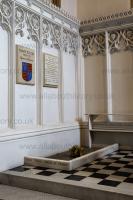
During the dissolution, around 4th November 1539, the remains of Mary Tudor Queen Consort France were reburied at St Mary's Church, Bury St Edmunds.

Wriothesley's Chronicle [1508-1562]. The fourth daie of November, 1547, the Kinges Majestie (age 10) beganne his High Court of Parliament at his cittie of Westminster, his Edward the Majestic ryding from his pallace of Westminster to the church of Saint Peter [Map] in his perliament robes, with all his Lordes Spirituall and Temporall riding in their robes also; and afore the masse of the Holic Ghost there was a sermon made before the King by Doctor Ridley, Bishopp of Rochester (age 47); and after that the masse beganne, Gloria in eacelsis, the Creede, Sanctus, Benedictus, and the Agnus were all songen in Englishe; the masse ended, his Majestie with his Lordes went into the Perliament Chamber, where my Lord Chauncelor (age 50) made a grete proposition for the assembly of the said Parliament, and, that donne, the King putt of his robes, and went to his pallace at Westminster by water. Sir John Baker, knight, Chauncelor of the Tenthes, was chosen Speaker of the Commens Howse for the said Perliament.


Wriothesley's Chronicle [1508-1562]. 4th November 1551. The 4 of November the sayd Quene (age 35) rode from the sayd place to the Kinges pallace at Whitehall by Westminster in hir charyot, accompanyed with diuers knightes and gentlemen, carles and lordes, the Lady Margaret Dowglas (age 36), the Duches of Richmond (age 32), the Duches of Suffolke (age 32), the Duches of Northumberland (age 42), with diuers other noble women of England and ladyes of Scotland followinge after them; the Dukes of Northumberland (age 47) and Suffolke and the Lord Treasurer (age 68) receivinge her within the Court gate, all the guard standinge on euery syde of the Court; and at her entringe in at the hall the Kinges Maiestie (age 14) stode in the upper ende of the hall, the Earle of Warwicke (age 24) [Note. assumed to be referring to the subsiduary title of the Duke of Northumberland] houldinge the sworde afore the Kinge; she kneelinge downe, the Kinges Maiestie tooke her up and, kissinge her, he tooke her by the hand, she comminge with him, he led her up into the chamber of presence, and so from thence to the Queues chamber of presence, where he kissed all the ladyes of Scotland, and so departed for a while; and that daye she dyned on the Quenes syde with the Kinges Maiestie, the Kinges service and hers comminge both togeather, richely serued in gylt plate; the Kinges seruice on the right hand of the table, and the Quenes on the left hand, she sittinge by the Kinge apart by his cloth of estate; the goodly cupbord of plate of gould and gylte that day there occupyed, with the rich hanginges and costly meates, was wondrous to see. All the ladyes of England and Scotland dyned in the Quenes great chamber, and were serued in siluer all theyr meates; dinner ended, the Kinges Maiestie shewed her his galleries and gardens, with other commodityes of that place; and about foure of the clocke he brought her downe againe by the hand into the hall, where he received her and there kissed hir, and so she departed to the Bishops house againe to Pawles in lyke manner as she went thither.


Become a Member via our Buy Me a Coffee page to read more.

Henry Machyn's Diary. 4th November 1551. [The iiij day of November the Queen (age 35) rode unto the court, attended with a great train of noblemen, gentlemen, and ladies. At the Court gate stood all the guards in their best coats. Ther the yerle of Pembroke (age 50) saluted her and brought her to the hall dore, and ther mett her the duke [of Northumberland] (age 47) and broyth her into the hall, and ther mett the [King's (age 14) grace, who salu]tyd her, and dyd inbrasse her and kyssyd her, and [took her by] the hand, and led her up in to the chambur of [presence; and] so ther was a bankett, and so when all was [done, the Queen] toke her horsse and was browght unto the bysshopes palesse to soper, and ther she laye ther tyll the (blank)
On 4th November 1568 Eleanor Habsburg Spain was born to Maximilian Habsburg Spain II Holy Roman Emperor (age 41) and Maria of Spain Holy Roman Empress (age 40). Coefficient of inbreeding 10.03%. She died aged eleven in 1580.


On 4th November 1590 George Home 1st Earl Dunbar (age 34) was knighted.
On 4th November 1592 Gerrit van Honthorst was born.
On 4th November 1605 William Parker 4th Baron Monteagle 14th Baron Marshal 13th Baron Morley (age 30) searched the basement with Thomas Howard 1st Earl Suffolk (age 44) and discovered the gunpowder and explosives at Westminster Palace [Map].


On 4th November 1616 King Charles I of England, Scotland and Ireland (age 15) was created Prince of Wales. Robert Radclyffe 5th Earl of Sussex (age 43) carried the Purple Ermined Robe.
James Wriothesley (age 11), brothers Robert Howard (age 32) and William Howard, George Berkeley 8th Baron Berkeley (age 15), Henry Carey 1st Viscount Falkland (age 41) and John Cavendish were appointed Knight of the Bath.


Chronicle of Geoffrey le Baker of Swinbroke
Baker was a secular clerk from Swinbroke, now Swinbrook, an Oxfordshire village two miles east of Burford. His Chronicle describes the events of the period 1303-1356: Gaveston, Bannockburn, Boroughbridge, the murder of King Edward II, the Scottish Wars, Sluys, Crécy, the Black Death, Winchelsea and Poitiers. To quote Herbert Bruce 'it possesses a vigorous and characteristic style, and its value for particular events between 1303 and 1356 has been recognised by its editor and by subsequent writers'. The book provides remarkable detail about the events it describes. Baker's text has been augmented with hundreds of notes, including extracts from other contemporary chronicles, such as the Annales Londonienses, Annales Paulini, Murimuth, Lanercost, Avesbury, Guisborough and Froissart to enrich the reader's understanding. The translation takes as its source the 'Chronicon Galfridi le Baker de Swynebroke' published in 1889, edited by Edward Maunde Thompson.
Available at Amazon in eBook and Paperback format.
On 4th November 1619 Frederick Palatinate Simmern V Elector Palatine Rhine (age 23) was crowned King Bohemia. Princess Elizabeth Stewart Queen Bohemia (age 23) crowned Queen Consort Bohemia.


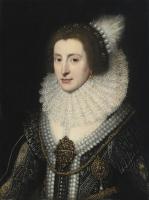

On 4th November 1631 Mary Stewart Princess Orange was born to King Charles I of England, Scotland and Ireland (age 30) and Henrietta Maria Bourbon Queen Consort England (age 21). She married 2nd May 1641 William Orange Nassau II Prince Orange and had issue.


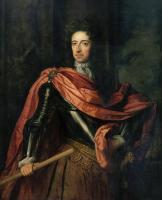
On 4th November 1650 King William III of England, Scotland and Ireland was born to William Orange Nassau II Prince Orange (age 24) and Mary Stewart Princess Orange (age 19). He a grandson of King Charles I of England, Scotland and Ireland. He married 4th November 1677 his first cousin Mary Stewart II Queen England Scotland and Ireland, daughter of King James II of England Scotland and Ireland and Anne Hyde Duchess of York.

John Evelyn's Diary. 4th November 1662. I was invited to the wedding of the daughter of Sir George Carteret (age 52) (The Treasurer of the Navy and King's Vice-Chamberlain), married to Sir Nicholas Slaning (age 19), Knight of the Bath, by the Bishop of London (age 64), in the Savoy chapel [Map]; after which was an extraordinary feast.
Samuel Pepys' Diary. 4th November 1663. This morning Captain Cocke (age 46) did give me a good account of the Guinny trade. The Queene (age 53) is in a great way to recovery.
Samuel Pepys' Diary. 4th November 1664. Waked very betimes and lay long awake, my mind being so full of business. Then up and to St. James's, where I find Mr. Coventry (age 36) full of business, packing up for his going to sea with the Duke (age 31). Walked with him, talking, to White Hall, where to the Duke's lodgings, who is gone thither to lodge lately. I appeared to the Duke, and thence Mr. Coventry and I an hour in the Long gallery, talking about the management of our office, he tells me the weight of dispatch will lie chiefly on me, and told me freely his mind touching Sir W. Batten (age 63) and Sir J. Minnes (age 65), the latter of whom, he most aptly said, was like a lapwing; that all he did was to keepe a flutter, to keepe others from the nest that they would find. He told me an old story of the former about the light-houses, how just before he had certified to the Duke against the use of them, and what a burden they are to trade, and presently after, at his being at Harwich, Essex [Map], comes to desire that he might have the setting one up there, and gets the usefulness of it certified also by the Trinity House, Deptford [Map]. After long discoursing and considering all our stores and other things, as how the King (age 34) hath resolved upon Captain Taylor1 and Colonell Middleton, the first to be Commissioner for Harwich, Essex [Map] and the latter for Portsmouth, Hampshire [Map], I away to the 'Change [Map], and there did very much business, so home to dinner, and Mr. Duke, our Secretary for the Fishery, dined with me.
Note 1. Coventry, writing to Secretary Bennet (age 46) (November 14th, 1664), refers to the objections made to Taylor, and adds: "Thinks the King will not easily consent to his rejection, as he is a man of great abilities and dispatch, and was formerly laid aside at Chatham, Kent [Map] on the Duchess of Albemarle's (age 45) earnest interposition for another. He is a fanatic, it is true, but all hands will be needed for the work cut out; there is less danger of them in harbour than at sea, and profit will convert most of them" ("Calendar of State Papers", Domestic, 1664-65, p. 68).


Become a Member via our Buy Me a Coffee page to read more.
Samuel Pepys' Diary. 4th November 1666. Lord's Day. Comes my taylor's man in the morning, and brings my vest home, and coate to wear with it, and belt, and silver-hilted sword. So I rose and dressed myself, and I like myself mightily in it, and so do my wife. Then, being dressed, to church; and after church pulled my Lady Pen (age 42) and Mrs. Markham into my house to dinner, and Sir J. Minnes (age 67) he got Mrs. Pegg along with him. I had a good dinner for them, and very merry; and after dinner to the waterside, and so, it being very cold, to White Hall, and was mighty fearfull of an ague, my vest being new and thin, and the coat cut not to meet before upon my breast. Here I waited in the gallery till the Council was up, and among others did speak with Mr. Cooling, my Lord Camberlain's secretary, who tells me my Lord Generall is become mighty low in all people's opinion, and that he hath received several slurs from the King (age 36) and Duke of York (age 33). The people at Court do see the difference between his and the Prince's (age 46) management, and my Lord Sandwich's (age 41). That this business which he is put upon of crying out against the Catholiques and turning them out of all employment, will undo him, when he comes to turn-out the officers out of the Army, and this is a thing of his own seeking. That he is grown a drunken sot, and drinks with nobody but Troutbecke, whom nobody else will keep company with. Of whom he told me this story: That once the Duke of Albemarle (age 57) in his drink taking notice as of a wonder that Nan Hide (age 29) should ever come to be Duchesse of York, "Nay", says Troutbecke, "ne'er wonder at that; for if you will give me another bottle of wine, I will tell you as great, if not greater, a miracle". And what was that, but that our dirty Besse (meaning his Duchesse (age 47)) should come to be Duchesse of Albemarle? Here we parted, and so by and by the Council rose, and out comes Sir G. Carteret (age 56) and Sir W. Coventry (age 38), and they and my Lord Bruncker (age 46) and I went to Sir G. Carteret's lodgings, there to discourse about some money demanded by Sir W. Warren, and having done that broke up. And Sir G. Carteret and I alone together a while, where he shows a long letter, all in cipher, from my Lord Sandwich to him. The contents he hath not yet found out, but he tells me that my Lord is not sent for home, as several people have enquired after of me. He spoke something reflecting upon me in the business of pursers, that their present bad behaviour is what he did foresee, and had convinced me of, and yet when it come last year to be argued before the Duke of York I turned and said as the rest did. I answered nothing to it, but let it go, and so to other discourse of the ill state of things, of which all people are full of sorrow and observation, and so parted, and then by water, landing in Southwarke [Map], home to the Tower, and so home, and there began to read "Potter's Discourse upon 1666", which pleases me mightily, and then broke off and to supper and to bed.
Become a Member via our Buy Me a Coffee page to read more.
Samuel Pepys' Diary. 4th November 1667. Thence home, and there met Sir H. Cholmly (age 35), and he and I to the Excise Office to see what tallies are paying, and thence back to the Old Exchange [Map], by the way talking of news, and he owning Sir W. Coventry (age 39), in his opinion, to be one of the worthiest men in the nation, as I do really think he is. He tells me he do think really that they will cut off my Chancellor's (age 58) head, the Chancellor at this day showing as much pride as is possible to those few that venture their fortunes by coming to see him; and that the Duke of York (age 34) is troubled much, knowing that those that fling down the Chancellor cannot stop there, but will do something to him, to prevent his having it in his power hereafter to avenge himself and father-in-law upon them. And this Sir H. Cholmly fears may be by divorcing the Queen (age 28) and getting another, or declaring the Duke of Monmouth (age 18) legitimate; which God forbid! He tells me he do verily believe that there will come in an impeachment of High Treason against my Lord of Ormond (age 57); among other things, for ordering the quartering of soldiers in Ireland on free quarters; which, it seems, is High Treason in that country, and was one of the things that lost the Lord Strafford his head, and the law is not yet repealed; which, he says, was a mighty oversight of him not to have it repealed, which he might with ease have done, or have justified himself by an Act. From the Exchange [Map] I took a coach, and went to Turlington, the great spectacle-maker, for advice, who dissuades me from using old spectacles, but rather young ones, and do tell me that nothing can wrong my eyes more than for me to use reading-glasses, which do magnify much.
Samuel Pepys' Diary. 4th November 1667. Thence home, and there dined, and then abroad and left my wife and Willett at her tailor's, and I to White Hall, where the Commissioners of the Treasury do not sit, and therefore I to Westminster to the Hall, and there meeting with Col. Reames I did very cheaply by him get copies of the D. Gawden's and Duke of Albemarle's (age 58) Narratives, which they did deliver the other day to the House, of which I am mighty glad, both for my present information and for my future satisfaction. So back by coach, and took up my wife, and away home, and there in my chamber all the evening among my papers and my accounts of Tangier to my great satisfaction, and so to supper and to bed.
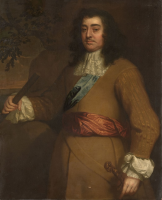

Chronicle of Geoffrey le Baker of Swinbroke
Baker was a secular clerk from Swinbroke, now Swinbrook, an Oxfordshire village two miles east of Burford. His Chronicle describes the events of the period 1303-1356: Gaveston, Bannockburn, Boroughbridge, the murder of King Edward II, the Scottish Wars, Sluys, Crécy, the Black Death, Winchelsea and Poitiers. To quote Herbert Bruce 'it possesses a vigorous and characteristic style, and its value for particular events between 1303 and 1356 has been recognised by its editor and by subsequent writers'. The book provides remarkable detail about the events it describes. Baker's text has been augmented with hundreds of notes, including extracts from other contemporary chronicles, such as the Annales Londonienses, Annales Paulini, Murimuth, Lanercost, Avesbury, Guisborough and Froissart to enrich the reader's understanding. The translation takes as its source the 'Chronicon Galfridi le Baker de Swynebroke' published in 1889, edited by Edward Maunde Thompson.
Available at Amazon in eBook and Paperback format.
Samuel Pepys' Diary. 4th November 1667. Up betimes, and by water with Sir R. Ford (age 53) (who is going to Parliament) to Westminster; and there landing at the New Exchange stairs, I to Sir W. Coventry (age 39): and there he read over to me the D. Gawden's and the Duke of Albemarle's (age 58) Narratives; wherein they are very severe against him and our Office. But Sir W. Coventry do contemn them; only that their persons and qualities are great, and so I do perceive (he) is afeard of them, though he will not confess it. But he do say that, if he can get out of these briars, he will never trouble himself with Princes nor Dukes again. He finds several things in their Narratives, which are both inconsistent and foolish, as well as untrue, especially as to what the Duke of Albemarle avers of his knowing of the enemy's being abroad sooner than he says it, which Sir W. Coventry will shew him his own letter against him, for I confess I do see so much, that, were I but well possessed of what I should have in the world, I think I could willingly retreat, and trouble myself no more with it.
Samuel Pepys' Diary. 4th November 1668. Up, and by coach to White Hall; and there I find the King (age 38) and Duke of York (age 35) come the last night, and every body's mouth full of my Lord Anglesey's (age 54) suspension being sealed; which it was, it seems, yesterday; so that he is prevented in his remedy at the Council; and, it seems, the two new Treasurers did kiss the King's hand this morning, brought in by my Lord Arlington (age 50). They walked up and down together the Court this day, and several people joyed them; but I avoided it, that I might not be seen to look either way. This day also I hear that my Lord Ormond (age 58) is to be declared in Council no more Deputy Governor of Ireland, his commission being expired: and the King is prevailed with to take it out of his hands; which people do mightily admire, saying that he is the greatest subject of any Prince in Christendome, and hath more acres of land than any, and hath done more for his Prince than ever any yet did. But all will not do; he must down, it seems, the Duke of Buckingham (age 40) carrying all before him. But that, that troubles me most is, that they begin to talk that the Duke of York's regiment is ordered to be disbanded; and more, that undoubtedly his Admiralty will follow: which do shake me mightily, and I fear will have ill consequences in the nation, for these counsels are very mad. The Duke of York do, by all men's report, carry himself wonderfull submissive to the King, in the most humble manner in the world; but yet, it seems, nothing must be spared that tends to, the keeping out of the Chancellor (age 59); and that is the reason of all this. The great discourse now is, that the Parliament shall be dissolved and another called, which shall give the King the Deane (age 34) and Chapter lands; and that will put him out of debt. And it is said that Buckingham do knownly meet daily with Wildman and other Commonwealth-men; and that when he is with them, he makes the King believe that he is with his wenches; and something looks like the Parliament's being dissolved, by Harry Brouncker's (age 41) being now come back, and appears this day the first day at White Hall; but hath not been yet with the King, but is secure that he shall be well received, I hear. God bless us, when such men as he shall be restored! But that, that pleases me most is, that several do tell me that Pen is to be removed; and others, that he hath resigned his place; and particularly Spragg tells me for certain that he hath resigned it, and is become a partner with Gawden in the Victualling: in which I think he hath done a very cunning thing; but I am sure I am glad of it; and it will be well for the King to have him out of this Office.
Become a Member via our Buy Me a Coffee page to read more.
Samuel Pepys' Diary. 4th November 1668. Thence by coach, doing several errands, home and there to dinner, and then to the Office, where all the afternoon till late at night, and so home. Deb. hath been abroad to-day with her friends, poor girle, I believe toward the getting of a place. This day a boy is sent me out of the country from Impington by my cozen Roger Pepys' (age 51) getting, whom I visited this morning at his chamber in the Strand and carried him to Westminster Hall [Map], where I took a turn or two with him and Sir John Talbot (age 38), who talks mighty high for my Lord of Ormond (age 58): and I perceive this family of the Talbots hath been raised by my Lord. When I come home to-night I find Deb. not come home, and do doubt whether she be not quite gone or no, but my wife is silent to me in it, and I to her, but fell to other discourse, and indeed am well satisfied that my house will never be at peace between my wife and I unless I let her go, though it grieves me to the heart. My wife and I spent much time this evening talking of our being put out of the Office, and my going to live at Deptford, Kent [Map] at her brother's, till I can clear my accounts, and rid my hands of the town, which will take me a year or more, and I do think it will be best for me to do so, in order to our living cheap, and out of sight.


John Evelyn's Diary. 4th November 1670. I now also saw that famous beauty, but in my opinion of a childish, simple, and baby face, Mademoiselle Querouaille (age 21), lately Maid of Honor to Madame (age 26), and now to be so to the Queen (age 31).


John Evelyn's Diary. 4th November 1670. Saw the Prince of Orange (age 20), newly come to see the King (age 40), his uncle; he has a manly, courageous, wise countenance, resembling his mother and the Duke of Gloucester, both deceased.
On 4th November 1675 Remigius van Leemput (age 67) died.
On 4th November 1677 King William III of England, Scotland and Ireland (age 27) and Mary Stewart II Queen England Scotland and Ireland (age 15) were married. She by marriage Princess Orange. She the daughter of King James II of England Scotland and Ireland (age 44) and Anne Hyde Duchess of York. They were first cousins. He a grandson of King Charles I of England, Scotland and Ireland.


John Evelyn's Diary. 4th November 1684. Dr. Turner (age 47), now translated from Rochester to Ely upon the death of Dr. Peter Gunning, preached before the King (age 54) at White-hall on 3 Romans 8, a very excellent sermon, indicating the Church of England against the pernicious doctrines of the Church of Rome. He challenged the producing but of five Cleargymen who forsooke our Church and went over to that of Rome, during all the troubles & rebellion In England, which lasted neere twenty yeares; and this was to my certaine observation a greate truth.


John Evelyn's Diary. 4th November 1688. Fresh reports of the Prince (age 38) being landed somewhere about Portsmouth [Map], or the Isle of Wight [Map], whereas it was thought it would have been northward. The Court in great hurry.
On 4th November 1699 Elizabeth Greville Baroness Guildford died in childbirth.

August 1702. The West Indies Action was a naval engagement between the English West-Indies Fleet commanded by Vice Admiral John Benbow (age 49) and the French Fleet commanded by Admiral Jean du Casse (age 55). The action lasted five days during with the English eventually being beaten off and Vice Admiral John Benbow being mortally wounded. The action was notable for a number of English ships refusing to engage with the French. Following the action the English Fleet returned to Port Royal where a number of captains were court-martialed for cowardice and disobedience. Found guilty Captains Richard Kirkby and Copper Wade were returned to Plymouth, Devon [Map] where they were shot aboard Bristol in the presence of other officers. Captain Constable was cleared of the charge of cowardice, but was convicted on other charges and cashiered. Captain Hudson died before he could be tried. Captains Fogg and Vincent were charged with having signed a paper with the other captains of the squadron, stating they would not fight, but they represented this as a device to keep Captain Kirkby from deserting; Benbow testifying in their favour, they were merely suspended.
Benbow's leg was amputated; but a fever developed. On 4th November 1702 he died.

On 4th November 1702 John Mainwaring 2nd Baronet (age 46) died. His son Thomas (age 21) succeeded 3rd Baronet Mainwaring of Over Peover.
On 4th November 1719 Elizabeth Whitley died.
Monument at St Lawrence's Church, Over Peover [Map].
John Mainwaring 2nd Baronet: On 8th May 1656 he was born to Thomas Mainwaring 1st Baronet and Mary Delves. Before 7th August 1681 John Mainwaring 2nd Baronet and Elizabeth Whitley were married. They were fourth cousins. On 28th June 1689 Thomas Mainwaring 1st Baronet died. His son John succeeded 2nd Baronet Mainwaring of Over Peover.
Thomas Mainwaring 3rd Baronet: On 7th August 1681 he was born to John Mainwaring 2nd Baronet and Elizabeth Whitley. Before 20th September 1726 Thomas Mainwaring 3rd Baronet and Martha Lloyd were married. On 20th September 1726 Thomas Mainwaring 3rd Baronet died. His nephew Henry succeeded 4th Baronet Mainwaring of Over Peover.
Chronicle of Walter of Guisborough
A canon regular of the Augustinian Guisborough Priory, Yorkshire, formerly known as The Chronicle of Walter of Hemingburgh, describes the period from 1066 to 1346. Before 1274 the Chronicle is based on other works. Thereafter, the Chronicle is original, and a remarkable source for the events of the time. This book provides a translation of the Chronicle from that date. The Latin source for our translation is the 1849 work edited by Hans Claude Hamilton. Hamilton, in his preface, says: 'In the present work we behold perhaps one of the finest samples of our early chronicles, both as regards the value of the events recorded, and the correctness with which they are detailed; Nor will the pleasing style of composition be lightly passed over by those capable of seeing reflected from it the tokens of a vigorous and cultivated mind, and a favourable specimen of the learning and taste of the age in which it was framed.'
Available at Amazon in eBook and Paperback format.
On 4th November 1775 or 7th November 1775 William Robert Fitzgerald 2nd Duke Leinster (age 26) and Emilia St George Duchess Leinster were married. She by marriage Duchess Leinster. He the son of James Fitzgerald 1st Duke Leinster and Emilia Mary Lennox Duchess Leinster (age 44). They were sixth cousins. He a great x 2 grandson of King Charles II of England Scotland and Ireland.


After 4th November 1803. Monument at St Mary the Virgin Church, Overton to Thomas Bennion and his wife Jane.
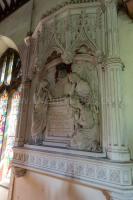
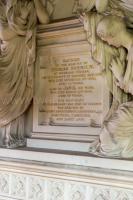
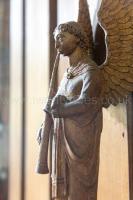
On 4th November 1833 John Gibson (age 43) was elected Associate of the Royal Academy despite not meeting the criterion of being resident in Britain.
On 4th November 1847 Felix Mendelssohn (age 38) died.
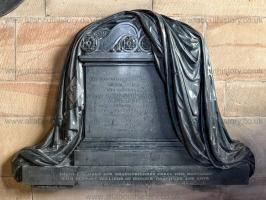
On 4th November 1860 Frances Anne Port (age 77) died. Memorial at St Peter's Church, Ellastone.
Frances Anne Port: Around 1783 she was born to John Port of Ilam Hall, Staffordshire and Mary Pauline D'Ewes. On 11th August 1803 Abel John Ram of Clonattin, County Wexford and she were married.
On 4th November 1861 George Frederick Osborne Osborne was born to George Godolphin Osborne 9th Duke Leeds (age 33) and Fanny Georgiana Pitt-Rivers Duchess Leeds (age 24). Coefficient of inbreeding 3.94%. He died aged less than one years old.
On 4th November 1881 Guy Bertrand Spencer was born illegitimately to George Charles Spencer-Churchill 8th Duke of Marlborough (age 37) and Edith Williams Countess Aylesford (age 37).
On 4th November 1922 the tomb of Tutankhamun 1341BC 1323BC was discovered by Howard Carter (age 48).
On 4th November 1934 Alfred Gilbert (age 80) died.
Chronicle of Abbot Ralph of Coggeshall
The Chronicle of Abbot Ralph of Coggeshall (Chronicon Anglicanum) is an indispensable medieval history that brings to life centuries of English and European affairs through the eyes of a learned Cistercian monk. Ralph of Coggeshall, abbot of the Abbey of Coggeshall in Essex in the early 13th century, continued and expanded his community’s chronicle, documenting events from the Norman Conquest of 1066 into the tumultuous reign of King Henry III. Blending eyewitness testimony, careful compilation, and the monastic commitment to record-keeping, this chronicle offers a rare narrative of political intrigue, royal power struggles, and social upheaval in England and beyond. Ralph’s work captures the reigns of pivotal figures such as Richard I and King John, providing invaluable insights into their characters, decisions, and the forces that shaped medieval rule. More than a simple annal, Chronicon Anglicanum conveys the texture of medieval life and governance, making it a rich source for scholars and readers fascinated by English history, monastic authorship, and the shaping of the medieval world.
Available at Amazon in eBook and Paperback format.
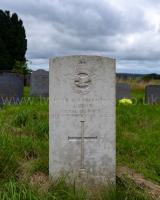
Leading Aircraftman James Benn (1076715). Son of Braithwaite And Sarah Benn, of Lamplugh, Cumberland. On 4th November 1943, early in the morning, he took his service rifle from the rack in a hut in East Anglia, went outside and shot himself. Lancashire Evening Post, 5 November 1943. He is buried at St Michael's Church, Lamplugh [Map].
On 4th November 1981 Edwina Grosvenor was born to Gerald Cavendish Grosvenor 6th Duke Westminster (age 29) and Natalia Phillips Duchess of Westminster (age 22).
On 4th November 1988 Henry Pelham-Clinton-Hope 9th Duke of Newcastle-under-Lyne (age 81) died. His second cousin once removed Edward (age 68) succeeded 10th Duke Newcastle under Lyme, 17th Earl Lincoln; he died seven and a half weeks later on Christmas day.
On 4th November 1265 Alfonso III King Aragon was born to Peter III King Aragon (age 25) and Constance Hohenstaufen Queen Consort Aragon (age 16).
On 4th November 1448 Alfonso II King Naples was born to Ferdinand I King Naples (age 25) and Isabella Clermont Queen Consort Naples (age 24) at Naples [Map]. He married 10th October 1465 Ippolita Maria Sforza, daughter of Francesco Sforza I Duke Milan and Bianca Maria Visconti, and had issue.
On 4th November 1568 Eleanor Habsburg Spain was born to Maximilian Habsburg Spain II Holy Roman Emperor (age 41) and Maria of Spain Holy Roman Empress (age 40). Coefficient of inbreeding 10.03%. She died aged eleven in 1580.
On 4th November 1592 Gerrit van Honthorst was born.
On 4th November 1630 Richard Barry 2nd Earl Barrymore was born to David Barry 1st Earl Barrymore (age 25) and Alice Boyle Countess Barrymore (age 23).
Abbot John Whethamstede’s Chronicle of the Abbey of St Albans
Abbot John Whethamstede's Register aka Chronicle of his second term at the Abbey of St Albans, 1451-1461, is a remarkable text that describes his first-hand experience of the beginning of the Wars of the Roses including the First and Second Battles of St Albans, 1455 and 1461, respectively, their cause, and their consequences, not least on the Abbey itself. His text also includes Loveday, Blore Heath, Northampton, the Act of Accord, Wakefield, and Towton, and ends with the Coronation of King Edward IV. In addition to the events of the Wars of the Roses, Abbot John, or his scribes who wrote the Chronicle, include details in the life of the Abbey such as charters, letters, land exchanges, visits by legates, and disputes, which provide a rich insight into the day-to-day life of the Abbey, and the challenges faced by its Abbot.
Available at Amazon in eBook and Paperback format.
On 4th November 1631 Mary Stewart Princess Orange was born to King Charles I of England, Scotland and Ireland (age 30) and Henrietta Maria Bourbon Queen Consort England (age 21). She married 2nd May 1641 William Orange Nassau II Prince Orange and had issue.
On 4th November 1650 King William III of England, Scotland and Ireland was born to William Orange Nassau II Prince Orange (age 24) and Mary Stewart Princess Orange (age 19). He a grandson of King Charles I of England, Scotland and Ireland. He married 4th November 1677 his first cousin Mary Stewart II Queen England Scotland and Ireland, daughter of King James II of England Scotland and Ireland and Anne Hyde Duchess of York.
On 4th November 1669 Charles Stourton was born to William Stourton 12th Baron Stourton (age 25) and Elizabeth Preston.

On 4th November 1704 Mary Lister Countess of Deloraine was born to Matthew Lister. She married (1) before 1732 Thomas Heardson (2) 29th October 1732 Francis Scott 2nd Earl Deloraine, son of Henry Scott 1st Earl Deloraine and Anne Duncombe Countess Deloraine.
On 4th November 1737 Charles Medows aka Pierrepont 1st Earl Manvers was born to Philip Medows (age 29) and Frances Pierrepont (age 24). He married 14th March 1774 Anne Mills Countess Manvers and had issue.
On 4th November 1749 Randal William MacDonnell 1st Marquess of Antrim was born to Alexander MacDonnell 5th Earl of Antrim (age 36).
On 4th November 1752 George Finch 9th Earl Winchilsea 4th Earl Nottingham was born to William Finch (age 61) and Charlotte Finch nee Fermor (age 27).
On 4th November 1789 Henry Shiffner 2nd Baronet was born to George Shiffner 1st Baronet (age 26) and Mary Bridger.
Chronicle of Geoffrey le Baker of Swinbroke
Baker was a secular clerk from Swinbroke, now Swinbrook, an Oxfordshire village two miles east of Burford. His Chronicle describes the events of the period 1303-1356: Gaveston, Bannockburn, Boroughbridge, the murder of King Edward II, the Scottish Wars, Sluys, Crécy, the Black Death, Winchelsea and Poitiers. To quote Herbert Bruce 'it possesses a vigorous and characteristic style, and its value for particular events between 1303 and 1356 has been recognised by its editor and by subsequent writers'. The book provides remarkable detail about the events it describes. Baker's text has been augmented with hundreds of notes, including extracts from other contemporary chronicles, such as the Annales Londonienses, Annales Paulini, Murimuth, Lanercost, Avesbury, Guisborough and Froissart to enrich the reader's understanding. The translation takes as its source the 'Chronicon Galfridi le Baker de Swynebroke' published in 1889, edited by Edward Maunde Thompson.
Available at Amazon in eBook and Paperback format.
On 4th November 1791 Reverend Richard le Fleming 6th Baronet was born to Roger Fleming (age 58).
On 4th November 1791 Sophia Coussmaker 22nd Baroness Clifford was born to George Kein Hayward Coussmaker (age 32) and Catherine Southwell (age 23). She married 20th August 1822 her sixth cousin John Russell and had issue.
On 4th November 1814 George Bertie 10th Earl Lindsey was born to Albermarle Bertie 9th Earl Lindsey (age 70) and Charlotte Layard Countess Lindsey (age 34).
On 4th November 1819 Arthur Edwin Hill aka Hill-Trevor 1st Baron Trevor was born to Arthur Blundell Sandys Trumbull Hill 3rd Marquess Downshire (age 31) and Maria Windsor Marchioness Downshire (age 29). He married (1) 27th June 1848 his fourth cousin Emily Mary Sutton, daughter of Richard Sutton 2nd Baronet, and had issue (2) 15th April 1858 Mary Catherine Curzon Baroness Trevor and had issue.
On 4th November 1821 Frances Julia Murray was born to James Murray 1st Baron Glenlyon (age 39) and Emily Frances Percy Baroness Goldolphin Helston (age 33). She was baptised at St George's Church, Hanover Square on 25th July 1829. She married (1) 16th January 1840 Charles Henry Maynard, son of Charles Henry Maynard 3rd Viscount Maynard.

On 4th November 1823 Charles Tennant 1st Baronet was born to John Tennant of St Rollox (age 27) and Robina Arrol. He married (1) 1849 Emma Winsloe Lady Tennant and had issue (2) 1898 Marguerite Agaranthe Miles and had issue.
On 4th November 1831 Thomas Brinsley Norton 4th Baron Grantley was born to George Chapple Norton (age 31) and Caroline Elizabeth Sheridan (age 19).
On 4th November 1837 Hubert Francis Dormer was born to Joseph Thaddeus Dormer 11th Baron Dormer (age 47) and Elizabeth Anne Tichborne Baroness Dormer. He married 11th November 1865 Mary Jane Elizabeth Digby and had issue.
On 4th November 1852 Henry Charles Legge was born to William Legge 5th Earl Dartmouth (age 29) and Augusta Finch Countess Dartmouth (age 30). Coefficient of inbreeding 1.69%.
On 4th November 1861 George Frederick Osborne Osborne was born to George Godolphin Osborne 9th Duke Leeds (age 33) and Fanny Georgiana Pitt-Rivers Duchess Leeds (age 24). Coefficient of inbreeding 3.94%. He died aged less than one years old.
On 4th November 1866 Francis William Clegg-Hill 5th Viscount Hill was born to Rowland Hill aka Clegg-Hill 3rd Viscount Hill (age 32) and Mary Madax (age 37).
On 4th November 1873 William Charles Wynn 4th Baron Newborough was born to Thomas John Wynn (age 32) and Sybil Anna Catherine Corbet.
On 4th November 1876 Lionel Ernest Bingham was born to Charles George Bingham 4th Earl Lucan (age 46) and Cecilia Catherine Gordon-Lennox Countess Lucan (age 38).
Jean de Waurin's Chronicle of England Volume 6 Books 3-6: The Wars of the Roses
Jean de Waurin was a French Chronicler, from the Artois region, who was born around 1400, and died around 1474. Waurin’s Chronicle of England, Volume 6, covering the period 1450 to 1471, from which we have selected and translated Chapters relating to the Wars of the Roses, provides a vivid, original, contemporary description of key events some of which he witnessed first-hand, some of which he was told by the key people involved with whom Waurin had a personal relationship.
Available at Amazon in eBook and Paperback format.
On 4th November 1876 Drummond Cospatric Hamilton-Spencer-Smith 5th Baronet was born to Reverend Spencer Compton Hamilton-Spencer-Smith (age 34) and Mary Baillie-Hamilton.
On 4th November 1881 Guy Bertrand Spencer was born illegitimately to George Charles Spencer-Churchill 8th Duke of Marlborough (age 37) and Edith Williams Countess Aylesford (age 37).
On 4th November 1884 William Hay 11th Marquess of Tweeddale was born to William Hay 10th Marquess of Tweeddale (age 58).
On 4th November 1896 Phillida Shirley was born to Walter Shirley 11th Earl Ferrers (age 32) and Mary Jane Moon Countess Ferrers.
On 4th November 1906 Patrick Charles Mills 5th Baron Hillingdon was born to Geoffrey Edward Mills (age 31).
On 4th November 1932 Robert Milo Leicester Devereux 18th Viscount Hereford was born to Robert Godfrey de Bohun Devereux (age 37).
On 4th November 1981 Edwina Grosvenor was born to Gerald Cavendish Grosvenor 6th Duke Westminster (age 29) and Natalia Phillips Duchess of Westminster (age 22).
On 4th November 1393 Edmund of Langley 1st Duke of York (age 52) and Joan Holland Duchess York (age 13) were married. She by marriage Duchess York. The difference in their ages was 38 years. She the daughter of Thomas Holland 2nd Earl Kent (age 43) and Alice Fitzalan Countess Kent (age 43). He the son of King Edward III of England and Philippa of Hainaut Queen Consort England. They were half second cousin once removed. She a great x 2 granddaughter of King Edward I of England.
On 4th November 1396 King Richard II of England (age 29) and Isabella Valois Queen Consort England (age 6) were married. The marriage being one of the terms of a twenty-eight year peace treaty with France. He twenty-nine, she six. The marriage sowed the seeds subsequent rebellion since there was no prospect of an heir to secure the Crown. The difference in their ages was 22 years. She the daughter of Charles "Beloved Mad" VI King France (age 27) and Isabeau Wittelsbach Queen Consort France (age 26). He the son of Edward "Black Prince" and Joan "Fair Maid of Kent" Princess Wales. They were half third cousins. He a grandson of King Edward III of England. She a great x 5 granddaughter of King Henry III of England.
William Ros 6th Baron Ros Helmsley (age 26) attended.
On 4th November 1597 John Kennedy 5th Earl Cassilis (age 22) and Jean Fleming Countess Cassilis (age 43) were married. She by marriage Countess Cassilis. The difference in their ages was 21 years; she, unusually, being older than him. He the son of Gilbert Kennedy 4th Earl Cassilis and Margaret Lyon Marchioness Hamilton. They were third cousins.

On 4th November 1604 William Herbert 3rd Earl Pembroke (age 24) and Mary Talbot Countess Pembroke (age 10) were married at Shrewsbury, Shropshire [Map]. She by marriage Countess Pembroke. She the daughter of Gilbert Talbot 7th Earl of Shrewsbury (age 51) and Mary Cavendish Countess Shrewsbury and Waterford (age 48). He the son of Henry Herbert 2nd Earl Pembroke and Mary Sidney Countess Pembroke (age 43). They were fourth cousin once removed.
On 4th November 1677 King William III of England, Scotland and Ireland (age 27) and Mary Stewart II Queen England Scotland and Ireland (age 15) were married. She by marriage Princess Orange. She the daughter of King James II of England Scotland and Ireland (age 44) and Anne Hyde Duchess of York. They were first cousins. He a grandson of King Charles I of England, Scotland and Ireland.
William of Worcester's Chronicle of England
William of Worcester, born around 1415, and died around 1482 was secretary to John Fastolf, the renowned soldier of the Hundred Years War, during which time he collected documents, letters, and wrote a record of events. Following their return to England in 1440 William was witness to major events. Twice in his chronicle he uses the first person: 1. when writing about the murder of Thomas, 7th Baron Scales, in 1460, he writes '… and I saw him lying naked in the cemetery near the porch of the church of St. Mary Overie in Southwark …' and 2. describing King Edward IV's entry into London in 1461 he writes '… proclaimed that all the people themselves were to recognize and acknowledge Edward as king. I was present and heard this, and immediately went down with them into the city'. William’s Chronicle is rich in detail. It is the source of much information about the Wars of the Roses, including the term 'Diabolical Marriage' to describe the marriage of Queen Elizabeth Woodville’s brother John’s marriage to Katherine, Dowager Duchess of Norfolk, he aged twenty, she sixty-five or more, and the story about a paper crown being placed in mockery on the severed head of Richard, 3rd Duke of York.
Available at Amazon in eBook and Paperback format.
On 4th November 1775 or 7th November 1775 William Robert Fitzgerald 2nd Duke Leinster (age 26) and Emilia St George Duchess Leinster were married. She by marriage Duchess Leinster. He the son of James Fitzgerald 1st Duke Leinster and Emilia Mary Lennox Duchess Leinster (age 44). They were sixth cousins. He a great x 2 grandson of King Charles II of England Scotland and Ireland.

On 4th November 1784 Thomas Gascoigne 8th Baronet (age 39) and Mary Shuttleworth Lady Turner and Gascoigne (age 33) were married at All Saints Church, Aston-on-Trent [Map]. She by marriage Lady Gascoigne of Barnbow and Parlington in Yorkshire.
On 4th November 1879 Major Charles Norton (age 44) and Katharine Buckner McVickar Baroness Grantley were divorced after she became pregnant by his cousin John Brinsley Norton 5th Baron Grantley (age 24) who she married the following day. The child was born five days later.
On 4th November 1937 Christopher Addison 1st Viscount Addison (age 69) and Dorothy Low Viscountess Addison were married. She by marriage Baroness Addison of Stallingborough in Lincolnshire.
On 4th November 1203 Dirk Gerulfing VII Count Holland died. His daughter Ada (age 15) succeeded I Countess Holland.
On 4th November 1369 Robert Ufford 1st Earl Suffolk (age 71) died. His son William (age 31) succeeded 2nd Earl Suffolk, 3rd Baron Ufford. Joan Montagu Countess Suffolk (age 20) by marriage Countess Suffolk.
On 4th November 1576 John Paulet 2nd Marquess Winchester (age 66) died. His son William (age 44) succeeded 3rd Marquess Winchester, 3rd Earl Wiltshire, 3rd Baron St John. Agnes Howard Marchioness Winchester (age 41) by marriage Marchioness Winchester.
On 4th November 1576 Elizabeth Paulett Countess Devon died.
On 4th November 1639 Thomas Finch 2nd Earl Winchilsea (age 61) died. His son Heneage (age 11) succeeded 3rd Earl Winchilsea, 3rd Viscount Maidstone, 4th Baronet Finch of Eastwell in Kent.
The Deeds of the Dukes of Normandy
The Gesta Normannorum Ducum [The Deeds of the Dukes of Normandy] is a landmark medieval chronicle tracing the rise and fall of the Norman dynasty from its early roots through the pivotal events surrounding the Norman Conquest of England. Originally penned in Latin by the monk William of Jumièges shortly before 1060 and later expanded at the behest of William the Conqueror, the work chronicles the deeds, politics, battles, and leadership of the Norman dukes, especially William’s own claim to the English throne. The narrative combines earlier historical sources with firsthand information and oral testimony to present an authoritative account of Normandy’s transformation from a Viking settlement into one of medieval Europe’s most powerful realms. William’s history emphasizes the legitimacy, military prowess, and governance of the Norman line, framing their expansion, including the conquest of England, as both divinely sanctioned and noble in purpose. Later chroniclers such as Orderic Vitalis and Robert of Torigni continued the history, extending the coverage into the 12th century, providing broader context on ducal rule and its impact. Today this classic work remains a foundational source for understanding Norman identity, medieval statesmanship, and the historical forces that reshaped England and Western Europe between 800AD and 1100AD.
Available at Amazon in eBook and Paperback format.
On 4th November 1670 Francis Duncombe 1st Baronet died. His son William (age 12) succeeded 2nd Baronet Duncombe of Tangley Park in Surrey.
On 4th November 1675 Remigius van Leemput (age 67) died.
On 4th November 1699 Elizabeth Greville Baroness Guildford died in childbirth.
On 4th November 1702 John Mainwaring 2nd Baronet (age 46) died. His son Thomas (age 21) succeeded 3rd Baronet Mainwaring of Over Peover.
On 4th November 1719 Elizabeth Whitley died.
Monument at St Lawrence's Church, Over Peover [Map].
John Mainwaring 2nd Baronet: On 8th May 1656 he was born to Thomas Mainwaring 1st Baronet and Mary Delves. Before 7th August 1681 John Mainwaring 2nd Baronet and Elizabeth Whitley were married. They were fourth cousins. On 28th June 1689 Thomas Mainwaring 1st Baronet died. His son John succeeded 2nd Baronet Mainwaring of Over Peover.
Thomas Mainwaring 3rd Baronet: On 7th August 1681 he was born to John Mainwaring 2nd Baronet and Elizabeth Whitley. Before 20th September 1726 Thomas Mainwaring 3rd Baronet and Martha Lloyd were married. On 20th September 1726 Thomas Mainwaring 3rd Baronet died. His nephew Henry succeeded 4th Baronet Mainwaring of Over Peover.

On 4th November 1710 Mary Sackville Countess Orrery (age 62) died.

On 4th November 1724 Francis Dashwood 1st Baronet (age 66) died. He was buried at West Wycombe, Buckinghamshire. His son Francis (age 15) succeeded 2nd Baronet Dashwood of West Wycombe in Buckinghamshire.
On 4th November 1745 Lewis Watson 2nd Earl Rockingham (age 31) died without issue. His brother Thomas (age 29) succeeded 3rd Earl Rockingham, 5th Baron Rockingham of Northampton, 5th Baronet Watson of Rockingham Castle in Northamptonshire.
On 4th November 1754 Jasper Cullum 4th Baronet (age 80) died. His son John (age 55) succeeded 5th Baronet Cullum of Hastede in Suffolk. Susanna Gery Lady Cullum by marriage Lady Cullum of Hastede in Suffolk.
Chronicle of Abbot Ralph of Coggeshall
The Chronicle of Abbot Ralph of Coggeshall (Chronicon Anglicanum) is an indispensable medieval history that brings to life centuries of English and European affairs through the eyes of a learned Cistercian monk. Ralph of Coggeshall, abbot of the Abbey of Coggeshall in Essex in the early 13th century, continued and expanded his community’s chronicle, documenting events from the Norman Conquest of 1066 into the tumultuous reign of King Henry III. Blending eyewitness testimony, careful compilation, and the monastic commitment to record-keeping, this chronicle offers a rare narrative of political intrigue, royal power struggles, and social upheaval in England and beyond. Ralph’s work captures the reigns of pivotal figures such as Richard I and King John, providing invaluable insights into their characters, decisions, and the forces that shaped medieval rule. More than a simple annal, Chronicon Anglicanum conveys the texture of medieval life and governance, making it a rich source for scholars and readers fascinated by English history, monastic authorship, and the shaping of the medieval world.
Available at Amazon in eBook and Paperback format.
On 4th November 1754 Edward Mansel 2nd Baronet died. His son Edward succeeded 3rd Baronet Mansel of Trimsaran in Carmarthenshire.
On 4th November 1784 Anne Seymour-Conway Countess Drogheda (age 40) died.
On 4th November 1790 Henry Gough-Calthorpe (age 6) died. His brother Charles (age 4) succeeded 2nd Baron Calthorpe of Calthorpe in Norfolk, 3rd Gough-Calthorpe of Edgbaston in Warwickshire.
On 4th November 1832 Charles Abbott 1st Baron Tenterden (age 70) died. His son John (age 36) succeeded 2nd Baron Tenterden of Hendon in Middlesex.
On 4th November 1844 Charles Callis Western 1st Baron Western (age 77) died. Baron Western of Rivenhall in Essex extinct.
On 4th November 1847 Felix Mendelssohn (age 38) died.
On 4th November 1905 Henry John Montagu-Douglas-Scott 1st Baron Montagu Beaulieu (age 70) died. His son John (age 39) succeeded 2nd Baron Montagu of Beaulieu. Cecil Victoria Kerr Baroness Montagu of Beaulieu (age 39) by marriage Baroness Montagu of Beaulieu.
On 4th November 1918 Mary Jane Maitland Countess Meath (age 71) died.
The History of William Marshal was commissioned by his son shortly after William’s death in 1219 to celebrate the Marshal’s remarkable life; it is an authentic, contemporary voice. The manuscript was discovered in 1861 by French historian Paul Meyer. Meyer published the manuscript in its original Anglo-French in 1891 in two books. This book is a line by line translation of the first of Meyer’s books; lines 1-10152. Book 1 of the History begins in 1139 and ends in 1194. It describes the events of the Anarchy, the role of William’s father John, John’s marriages, William’s childhood, his role as a hostage at the siege of Newbury, his injury and imprisonment in Poitou where he met Eleanor of Aquitaine and his life as a knight errant. It continues with the accusation against him of an improper relationship with Margaret, wife of Henry the Young King, his exile, and return, the death of Henry the Young King, the rebellion of Richard, the future King Richard I, war with France, the death of King Henry II, and the capture of King Richard, and the rebellion of John, the future King John. It ends with the release of King Richard and the death of John Marshal.
Available at Amazon in eBook and Paperback format.
On 4th November 1931 William Spencer Bateman-Hanbury 3rd Baron Bateman (age 75) died without issue. Baron Bateman of Shobdon extinct.
On 4th November 1934 Hamilton John Agmondesham Cuffe 5th Earl of Desart (age 86) died. Earl Desart extinct.
On 4th November 1934 Alfred Gilbert (age 80) died.
On 4th November 1938 James de Hoghton 11th Baronet (age 87) died. His son Cuthbert (age 58) succeeded 12th Baronet Hoghton of Hoghton Tower in Lancashire.
On 4th November 1943 George Yarburgh-Bateson 4th Baron Deramore (age 72) died. His son Stephen (age 40) succeeded 5th Baron Deramore of Belvoir in County Down, 6th Baronet Bateson of Belvoir Park in County Down.
On 4th November 1949 Henry Gerald St John-Mildmay 9th Baronet (age 23) died unmarried. His great uncle Aubrey (age 84) succeeded 10th Baronet St John-Mildmay of Farley in Southampton.

On 4th November 1952 Georgiana Wharton Burdon Baroness Joicey (age 72) died.
On 4th November 1961 John James Dalrymple 12th Earl of Stair (age 82) died. His son John (age 55) succeeded 13th Earl of Stair.
Chronicle of Walter of Guisborough
A canon regular of the Augustinian Guisborough Priory, Yorkshire, formerly known as The Chronicle of Walter of Hemingburgh, describes the period from 1066 to 1346. Before 1274 the Chronicle is based on other works. Thereafter, the Chronicle is original, and a remarkable source for the events of the time. This book provides a translation of the Chronicle from that date. The Latin source for our translation is the 1849 work edited by Hans Claude Hamilton. Hamilton, in his preface, says: 'In the present work we behold perhaps one of the finest samples of our early chronicles, both as regards the value of the events recorded, and the correctness with which they are detailed; Nor will the pleasing style of composition be lightly passed over by those capable of seeing reflected from it the tokens of a vigorous and cultivated mind, and a favourable specimen of the learning and taste of the age in which it was framed.'
Available at Amazon in eBook and Paperback format.
On 4th November 1988 Henry Pelham-Clinton-Hope 9th Duke of Newcastle-under-Lyne (age 81) died. His second cousin once removed Edward (age 68) succeeded 10th Duke Newcastle under Lyme, 17th Earl Lincoln; he died seven and a half weeks later on Christmas day.
On 4th November 2012 Kenneth Ray Reade 13th Baronet (age 87) died. Baronet Reade of Barton in Berkshire extinct.
On 4th November 2013 Pamela Wyndham-Quin Baroness Leconfield and Egremont (age 88) died.