

Jean de Waurin's Chronicle of England Volume 6 Books 3-6: The Wars of the Roses
Jean de Waurin was a French Chronicler, from the Artois region, who was born around 1400, and died around 1474. Waurin’s Chronicle of England, Volume 6, covering the period 1450 to 1471, from which we have selected and translated Chapters relating to the Wars of the Roses, provides a vivid, original, contemporary description of key events some of which he witnessed first-hand, some of which he was told by the key people involved with whom Waurin had a personal relationship.
Available at Amazon in eBook and Paperback format.
04 Oct is in October.
In 1043 Coventry Priory [Map] was founded by Leofric Earldorman Mercia and Godgifu aka Lady Godiva. It was consecrated on 4th October 1043 by Archbishop Eadsige. Among the witnesses to this foundation charter were Edward the Confessor (age 40), the archbishop of Canterbury, the bishops of Worcester and Lichfield, the abbots of Winchcombe and Pershore, and the earls Godwin (age 42), Harold (age 21), Siward (age 33), and Ordgar.


On 4th October 1160 Alys Capet Countess Ponthieu was born to Louis VII King of the Franks (age 40) and Constance of Castile Queen of the Franks (age 20). Her mother died in childbirth. Coefficient of inbreeding 1.85%. She married 20th August 1195 her third cousin once removed William Montgomery IV Count Ponthieu, son of John Montgomery I Count Ponthieu and Beatrice St Pol Countess Ponthieu, and had issue.
On 4th October 1190 King Richard "Lionheart" I of England (age 33) attacked and captured Messina, Sicily [Map].
Gesta Regis Henrici by Benedict of Peterborough. Meanwhile, by the counsel of the elders of the city, that discord subsided; and with arms laid aside on both sides, each man returned to his own house. But when morning came, namely on the fourth day of October [1190], there came to the lodging of the king of England Richard, archbishop of Messina, and William, archbishop of Monreale, and William, archbishop of Pisa, and Margaritus the admiral, and many others of the household of the king of Sicily. And they brought with them Philip, king of France, and Reginald, bishop of Chartres, and Manasser, bishop of Langres, and Hugh, duke of Burgundy, and Peter, count of Nevers, and Geoffrey, count of Perche, and the count of Louvain, and many others of the household of the king of France; and Walter, archbishop of Rouen, Gerard, archbishop of Auxerre, the archbishop of Apamea, and John, bishop of Évreux, and many others of the household of the king of England, in whom they had confidence for making peace between them and the king of England.
When therefore they [the mediators] had long been negotiating a peace between the king of England and the citizens of Messina, and had nearly restored it, the citizens assembled in great multitude upon the hills and waited: some of them ready and prepared treacherously to rush upon the king of England; while others made an assault upon the lodging of Hugh le Brun. And their great outcry came to the ears of the king of England. Who, straightway leaving the counsel of the king of France and the aforesaid men, ordered all his followers to arm; and he himself with a few ascended a great and steep mountain, which no one would have thought could possibly be climbed. When therefore he had reached the summit of the mountain with great effort, all who had been upon the mountain fled swiftly into hiding. Meanwhile the knights and retainers at the city gates and walls fought hard, and, enduring many hard blows of stones, sometimes forced their way in through the gates, sometimes were driven out again by force. And five knights of the king's household and twenty of his retainers were killed, in the sight of the king of France, who gave them no help, but rather harmed them as much as he could, although they were his comrades in that pilgrimage. The king of France and his men entered the city, and passed through the midst of them in perfect safety, as if they were at home. At last, however, after the greatest labours, the men of the king of England grew into such strength that by force they broke the gates of the city, and climbed the wall on every side, and thus entering the city they gained possession of it, and at once set up the standards of the king of England on the fortifications.
Interim per consilinm seniorum clvitatis discordia, ilia quievit ; et depositis ex utraque parte arm is, reersus est unusquisque in domum suam. Mane autem facto, scilicet quarta die Octobris, venerunt ad hospitium regis Angliæ, Ricardus archiepiscopus Messanæ, et Willelmus archiepiscopus de Monte Regali, et Willelmus archiepiscopus de Risa, et Margaritus admiralis, et multi alii de familiaribus regis Siciliæ, Et adduxerunt secum Philippum regem Franciæ, et Reginaldum Carnotensern episcopum, et Manasser episcopum de Legris, et Hugonem ducem Burgundiæ. et Petrum comitem de Nevers, et Gaufridum comitem de Pertico, et comitem de Luvein, et alios multos de familiaribus regis Franciæ, et Walterum Rotomagensem archiepiscopum, Girardum Auciensem archiepiscopum, et archiepiscopum de Appamia, et Joliannem Ebroicensem episcopum, et multos alios de familia regis Angliæ, in quibus fiduciam habebant ad faciendam pacem inter ipsos et regem Angliæ.
Cum ergo ipsi de pace facienda inter regem Angliæ et cives Messanæ diu tractassent, et eam pene reformassent, processerunt cives in magna multitudine, congregati super montes, et exspectaverunt: quidam prompti et parati proditiose in regem Angliæ irruere: quidam vero eorum insultum fecerunt in hospitium Hugonis le Brun. Et clamor eorum non modicus venit ad aures regis Angliæ. Qui statim relicto consilio regis Franciæ et prædictorum, preecepit omnes suos armari; et ipse cum paucis ascendit montem magnum et arduum quod nemo putaret ullo modo posse contingere. Cum igitur ad summitatem montis pervenisset cum magno labore, quotquot in monte fuerant cum fuga celerrima intraverunt. Milites autem et servientes ad portas civitatis et ad muros fortiter congressi sunt, et multos duros lapidum ictus sustinentes, aliquando portas intraverunt, aliquando vi exierunt. Et occisi sunt de familia regis quinque milites et viginti servieutes, vidente rege Franciæ et nullum auxilium illis faciente, immo nocente in quantum potuit, quamvis confratres essent ipsius in illa peregrinatione. Rex vero Franciæ et sui civitatem intraverunt, et per medium illorum ibant tutissime ac si domi essent. Tandem vero post maximos labores, in tantam virtutem excreverunt homines regis Anglize, quod per vim fregerunt portas civitatis, et murum undique ascenderunt, et ita ingredientes civitatem obtinuerunt, et statim signa regis Angliæ in munitionibus collocaverunt.
Chronicle of Richard of Devizes. The Griffons, on the other side, locked the gates of the city and stood in arms at the ramparts of the walls and towers, fearing nothing as yet, and shot at the army incessantly. The king, who knew nothing better than storming cities and overthrowing castles, first let them empty their quivers. Then at length he made the first assault by his bowmen, who went in front of the army. The sky was hidden by a violent rain of arrows; a thousand darts pierced the shields extended along the ramparts; and nothing could save the rebels from the force of the javelins. The walls were left without guards, for noone could look out without getting an arrow in his eye immediately. In the meantime the king, with his army, came up to the gates of the city unopposed, freely, and, as it were, without restraint. When the battering ram was moved up, he broke down the gates more quickly than it takes to tell about it. He led the army into the city and captured all the fortified places up to Tancred's palace and the quarters of the French around their king's lodging, which he spared out of respect for his lord the king. The victors' banners were placed on the towers of the city in a circle. He turned over the captured fortifications to the leaders of the army, one to each, and he made his nobles take up quarters in the city. He took as hostages the sons of all the nobles of the city and the province, so that either they might be ransomed according to the king's valuation of them or else the remainder of the city might be given up to him without a struggle and his demands from its king, Tancred, might be satisfied. He began the assault of the city at the fifth hour of the day [4th October 1190] and took it on the tenth hour. Then he recalled his army and returned victorious to the camp. King Tancred, terrified when the news of the outcome of the engagement was brought to him, hastened to make a settlement with him. He sent him 20,000 ounces of gold for his sister's dower and another 20,000 ounces of gold as King William's legacy and to ensure the observance of a perpetual peace with him and his subjects. That small sum of money was received very reluctantly and indignantly ; the hostages were returned, and a firm peace was sworn to by the great men on both sides.
Grifones, (e diuerso,) clausis ianuis claui (ciuitatis), armati stabant ad propugnacula murorum et turrium, (nichil adhuc metuentes,) et eiaculabantur incessanter in hostes. Rex, qui nichil melius nouit quam expugnare ciuitates et euertere castra, permisit primo pharetras eorum euacuari, et sic demum per suos sagitarios qui preibant exercitum primum fecit insultum. Sagittarum imbre celum tegitur, protensos per propugnacula clipeos mille tela transfodiunt, nichil contra pilorum impetum poterat saluare rebelles. Relinquuntur muri sine custodia, quia (nullus) potuit foris prospicere, quin in ictu oculi sagittam haberet in oculo. Accedit interim rex cum milite suo sine repulsa libere ac si licenter ad ianuas ciuitatis, quas, admoto ariete, dicto citius contriuit, et, inducto exercitu, omnia cepit munita urbis usque ad palatium Tancredi et hospicia Francorum circa sui regis hospitium, quibus pepercit ob reuerentiam domini sui regis. Ponuntur uexilla uictorum super turres ciuitatis in girum, et deditas munitiones singulas singulis tradidit ex principibus exercitus, et hospitari fecit magnates suos in ciuitate. Suscepit obsides filios omnium nobilium ciuitatis et prouincie, ut aut redimantur ad regis estimationem aut reliqua pars ciuitatis illi sine Marte reddetur, et a rege suo Tancredo de exigenciis suis sibi satisfiat. Hora diei quinta oppugnare ceperat urbem, et cepit eam hora decima, et, reuocato exercitu, reuersus est uictor in castra. Tancredus rex, ad nunciantium sibi rerum exitus uerba perterritus, festinauit cum eo finem facere, missis illi xx unciarum auri pro dodario sororis, et aliis xx unciarum auri pro legato Willelmi regis et perpetua sibi et suis pace seruanda. Suscipitur satis egre et indignanter illud parum pecunie, redduntur obsides, et ab utriusque partis optimatibus pax firma iuratur.
On 4th October 1274 Rudolf Wittelsbach I Duke Bavaria was born to Louis "Strict" Wittelsbach II Duke Upper Bavaria (age 45) and Matilda Habsburg Duchess Bavaria (age 21). He a great x 3 grandson of King Henry "Curtmantle" II of England.
On 4th October 1289 Louis X King France I Navarre was born to King Philip IV of France (age 21) and Joan Blois I Queen Navarre (age 16). Coefficient of inbreeding 2.11%. He married (1) his third cousin Clementia Hungary Queen Consort France, daughter of Charles Martel King Hungary and Clementia Habsburg, and had issue (2) 21st September 1305 his first cousin once removed Margaret of Burgundy Queen Consort France, daughter of Robert II Duke Burgundy and Agnes Capet Duchess Burgundy, and had issue.
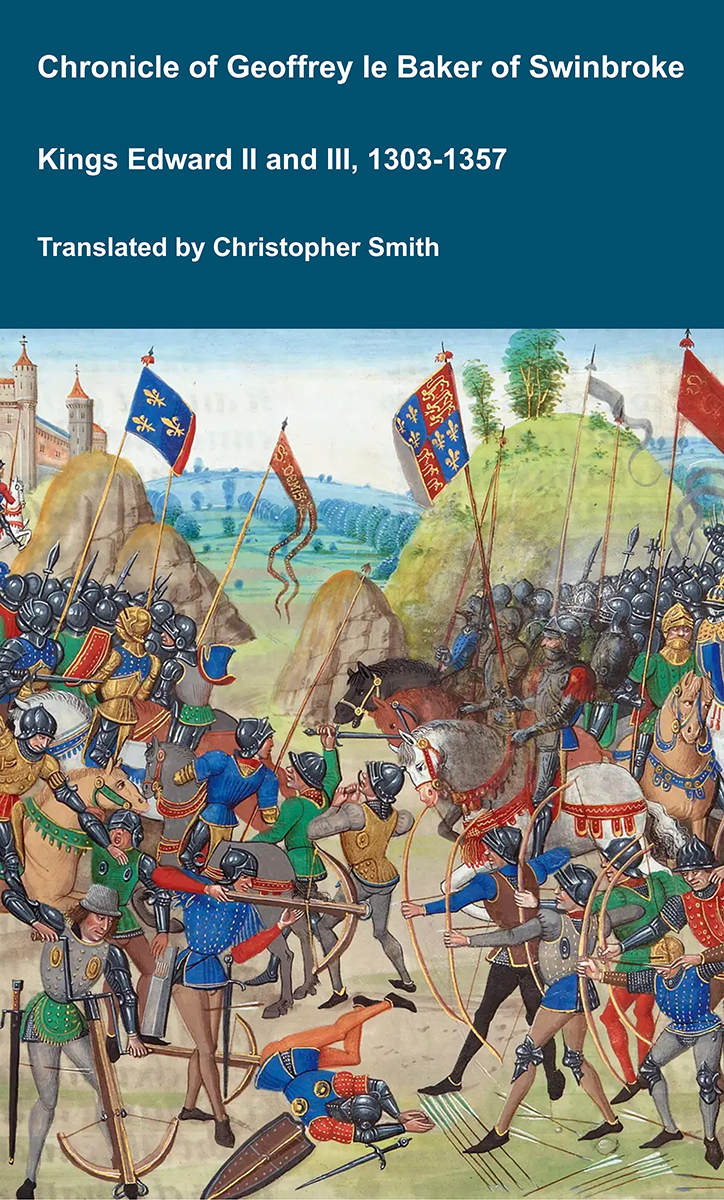 Chronicle of Geoffrey le Baker of Swinbroke [-1360]. On the first Sunday of that month,1 namely the 4th of October [1355], after devoutly completing the divine praises, on the Monday following, the Prince set out from Bordeaux against the enemy, and lodged two miles from Bordeaux in the castle of Urnoun. On the next day, he passed along a narrow and wooded route, through the walled town of Langon, a long march that caused the loss of many horses, arriving at the strong castle of Audert. On Thursday, they reached the city of Bazas, which has a cathedral and a convent of the Friars Minor [Franciscans]. There, on Friday, it was proclaimed throughout the army that everyone should bear the arms of Saint George, and it was said that the enemy also bore the same insignia. On Saturday, they came to the castle of Nau, where three castles of three different lords appear from afar. On Sunday, namely the 11th of that month, the army marched through the Landes of Bordeaux, which are part of the domain of the Count of Foix. This was a long, desolate, and difficult march, during which many horses perished. That day, in the desolate area called the Landes, two miles from the town of Arue, the banners were unfurled and the army was divided into formations. In the vanguard,2 which included 3,000 men-at-arms, were: the Earl of Warwick, constable, Reginald de Cobham, marshal, the Lord of Beauchamp of Somerset, Lord Clifford, Lord Thomas of Hampton with his banner, and with them seven Gascon barons. In the main body, containing 7,000 men-at-arms, excluding clerks and servants, were: the Prince himself with his double banner, the Earl of Oxford, Lord Bartholomew de Burghersh, Lord John de Lisle, Lord Willoughby, Lord de la Warre, Lord Maurice de Berkeley, son of the aging Thomas, Lord John Boursers, Lord John de Roos, mayor of Bordeaux, the captain of La Bûche, Lord de Camount, and Lord de Montferrand, each under their own banners. In the rearguard, 4,000 more men-at-arms were under the Earl of Suffolk, the Earl of Salisbury, and Lord de Pommiers, who led the men of Béarn. The entire army, so organized, included over sixty thousand men: men-at-arms, clerics, servants, archers, brigands, and bidowers.3 On that day, Janekinus de Berefort and others were knighted, and the town of Arue, along with three other towns, whose captain was Lord William de Reymon, a loyal Englishman, were newly surrendered to the Prince. In those towns, the army camped, and after two days' rest, those who wished to ventured out to seize provisions and fodder, and they ravaged the enemy territory with fire, as they continued to do generally until they returned to friendly lands.
Prima die Dominica illius mensis, scilicet quarto die Octobris divinis laudibus devote consummata, die Lune subsequente princeps contra inimicos de Burdegali profectus ospitabatur duobus miliaribus a Burdegali, in castro scilicet de Urnoun. In crastino transivit per iter strictum atque silvestre per medium ville de Longan murate, longa dieta, in perdicionem multorum equorum, ad forte castrum de Audert. Die Iovis ad civitatem de Besas habentem ecclesiam cathedralem et conventum Minorum. Illic die Veneris in exercitu fuit proclamatum quod quilibet gestaret arma sancti Georgii, et dicebatur quod inimici eadem gestarunt. Die Sabbati ad castrum Nau ubi tria castra trium dominorum unum apparent de longe. Die Dominica, scilicet XJ illius mensis, transivit exercitus per Laundes de Bordeaux que sunt de dominio comitis Fluxensis. Ista dieta longa, vasta et mala, multos perdidit equos. Isto die, in predicto vasto vocato Laundes, duobus miliaribus a villa de Areule fuerunt vexilla displicata et exercitus in turmas divisus. In prima custodia, in qua ter mille viri armorum, fuerunt comes Warewici constabularius, Reginaldus de Cobham marescallus, dominus de Bealchaump Somersetensis, dominus de Clifford, dominus Thomas de Hamptone ad vexilla, et cum eiis Vasconum VIJ barones. In media custodia, in qua VIJ mille viri armorum preter clericos et servientes, fuerunt dominus princeps cum duplici vexillo, comes Oxonie, dominus Bartholomeus de Bourghasshe, dominus Iohannes de Insula, dominus de Wylby, dominus de la Ware, dominus Mauricius de Berkeleye, filius domini Thome tunc viventis decrepiti, dominus Iohannes Boursers, dominus Iohannes de Roos maior Burdegalis, capitaneus de la Busche, dominus de Camount, dominus de Mountferant ad vexilla. In custodia postrema alii quatuor mille virorum armorum sub comite Suthfolchie et comite Sarisburie et domino de Pomers, qui duxit Bernenses. In toto exercitu taliter ordinato fuerunt virorum armorum, clericorum, serviencium, sagittariorum et brigancium et biduers ultra sexagesies mille viri. Etillo die fuerunt Ianekinus de Berefort et alii milites ordinati, et villa de Arule cum tribus aliis villis, quarum erat capitaneus dominus Willelmus de Reymon, fidelis Anglicus, tunc de novo fuerunt reddite domino principi; in quibus exercitus ospitabatur et, biduo ibidem ipso perendinante, exierunt qui volebant et ceperunt victualia et foragia, et patriam hostilem combusserunt, et ita fecerunt generaliter quousque revertebantur ad terram pacis.
Note 1. Baker's itinerary of the prince of Wales's raid across the south of France, from Bordeaux to Narbonne and back, is by far the most complete one to be found anywhere. That it has not received more attention is, no doubt, chiefly due to the fact that the names of the various places on the line of march are a good deal disguised by uncouth and corrupt mispronunciation and spelling; faults which Stow aggravated in his translation. Barnes refers to it as containing full details, 'though the names of the places are there most corruptly written; for which reason, as well as for the dryness and prolixity thereof, we forbear to add the particulars here.' With the aid of the French maps published by the Depot de la Guerre there is not much difficulty in following the track; although here and there a corruption, or perhaps the absolute disappearance of a place from the face of the country, may baffle all attempts at identification.
It is not improbable that a certain document quoted by Beltz in his Memorials of the Order of the Garter, appendix iv (p. 390), may contain information which would help to identify the doubtful places. This document is the roll of payments made by the prince's comptroller, John Henxeworth, from the 20th September 1355, to the 30th June 1356, and is preserved among the records of the Duchy of Cornwall. I have not had access to these records; and Beltz's extracts are unfortunately very meagre. I had hoped that possibly he might have taken a copy of Henxeworth's roll, which would be still in existence among his papers at the College of Arms; but this is unhappily not the case, for an examination of the papers, which were kindly placed at my disposal by Sir Albert Woods, Garter, proved that Beltz contented himself with little more than the few extracts which he has printed.
In the following outline of the expedition, it should be noticed that the writer of the itinerary marched with the prince of Wales's 'battle' or division. In some instances he names the halting places of all three 'battles' into which the army was divided; but generally he mentions only a single place, which, unless the whole force happened to be quartered there, would be the prince's bivouac. The distances between places, as given below, have been calculated by measurements from the maps; they must not therefore be accepted as perfectly accurate, for no allowance is made for the inequalities of the surface of the country. For our present purpose, however, they may suffice.
5 October, Monday. The army marches from Bordeaux, south, having the Garonne on its left, and halts at 'Urnoun,' said to be at a distance of 2 miles from the city. This place is probably Villenave d'Ornon, a little more than 4 miles from Bordeaux. Henxeworth's roll calls the place 'Ornoun.'
6 October, Tuesday. Along the course of the Garonne to Langon, about 21 miles, and thence to the castle of 'Andert' or 'Audert'. Henxeworth calls it 'Andotte,' 'Andorte,' and 'Endorte', no doubt Castets-en-Dorthe, about 4 miles E. of Langon.
7 October, Wednesday. Halt.
8 October, Thursday. To Bazas, 9 miles S. of Langon.
9 October, Friday. Halt.
10 October, Saturday. To 'castrum Nau', Castelnau, in the Landes, 11 miles S.S.E.
11 October, Sunday. To Arouille: a long march of 21 miles S. by W. Here, being about to enter the enemy's country, the army was arrayed in ' battles,' the whole numbering more than 60,000 men. It should be noticed that MS. C. confounds Arouille with La Rdole on the Garonne.
12 October, Monday. Halt. Various forays.
13 October, Tuesday. To Monclar, a short march of 7 or 8 miles S.E., in a hilly country. Three neighbouring towns burnt, one being Estang, 4 miles S. of Monclar.
14, 15 October, Wednesday, Thursday. Halt.
16 October, Friday. To 'Logeron' [Nogaro], 12 miles S.E., through hill country: a strong place which was not entered.
17 October, Saturday. To Plaisance, on the Arros, 12 miles S. by E.
18 October, Sunday. Halt. Capture and destruction of Galiax, 2 miles N.W. of Plaisance.
19 October, Monday. Plaisance burnt. March through hill country, leaving Beaumarchez 2½ miles on the right, and halting before 'le Basse' [Bassoues], 10 miles E. by S.
20 October, Tuesday. Surrender of Bassoues.
21 October, Wednesday. 'Escamont' [Montesquieu] passed on the left, 4 miles, to Mirande, 8 miles E. by S.; the prince's quarters being in the Cistercian monastery of Berdoues, 2 miles S. of Mirande.
22 October, Thursday. Halt.
23 October, Friday. Leaving the province of Armagnac, enter Astarac; to 'Saxante' [Seissan], 10 miles E. by S., which was burnt against the prince's orders. In this and the three following marches, near the 'lofty mountains of Aragon.'
24 October, Saturday. To 'Seint Morre' [Simorre], 8 miles S.E., quarters of the rear-guard; Villefranche, 2 miles S. of Simorre, middle-guard; and 'Tourmayn' [Tournan], 3 miles S.E. of Simorre, van-guard.
25 October, Sunday. Cross a stream [the Gimone], leaving Sauveterre on the left, marching near 'Wynbers' [Lombez], to 'Sotamon' [Samatan] on the Save,
11 miles N.E. of Villefranche. Samatan burnt.
26 October, Monday. Through a wide, level, fair country, passing through SaintFoi [11 miles] to Saint-Lys, 13 miles E.
27 October, Tuesday. Halt.
28 October, Wednesday. Cross the Garonne and the Ariege, probably some little distance S. of their confluence, and advance down-stream towards Toulouse. The prince's quarters at La-Croix-Falgarde, about 12 miles E. of Saint-Lys, and 7 miles [not 1 mile, as stated in the text] S. of Toulouse.
29 October, Thursday. To Montgiscard, 8 miles S.E.
30 October, Friday. Through Baziege [2 miles] and Villefranche [7 miles] to Avignonet, 13 miles S.E. Burning of windmills.
31 October, Saturday. To Castelnaudary, destroying Mas-Saintes-Puelles on the way, 10 miles S.E.
1 November Sunday. Halt. A town taken and ransomed.
2 November Monday. Pass through 'S.-Marthe-le-Port' [Saint-Martin-Lalande, 3½ miles] and 'Vilkapinche' [Villepinte, 4 miles], entering the district of Carcassonne, to 'Alse' [Alzonne], 12 miles S.E.
3 November Tuesday. To the 'bourg' of Carcassonne, 9 miles E. by S. 4, 5 November, Wednesday and Thursday. Halt.
6 November Friday. The 'bourg' burnt. Through a difficult country, leaving on the left the castle of 'Botenake' [Bouillonac, 4½ miles], through the district of Rustiques, 6 miles E. of Carcassonne.
7 November Saturday. Passing on the left the great lake called 'Esebon,' i.e. the now dried-up lake of Marseillette, to 'Syloine' [Lezignan], 14 miles E. by S.; the prince quartering at Canet, 5 miles N.E. of Lezignan.
8 November Sunday. Cross the 'Saude' [the Orbieu, near its junction with the Aude] by the ford of 'Chastel-de-terre' and a bridge, to Narbonne, 9 miles S.E.; [The river Aude flows north of Narbonne; not through it, as stated in the text. A canal runs through the town.]
9 November Monday. Halt.
10 November Tuesday. The 'bourg' burnt. Retreat from Narbonne, across the 'torrens' [the Aude], the prince quartering at 'Ambian' [Aubian], a small place on the south-western shore of the Etang de Capestang, 8 miles N. of Narbonne.
11 November Wednesday. Difficult march through a rocky and waterless country. Wine used in place of water.
12 November Thursday. Through 'Ulmes' [Homps], 16 miles N.W. of Narbonne, to Auille, 3 miles W. of Homps. Pépieux, N. of Atille, destroyed.
13 November Friday. Through a difficult country to 'Lamyane' [probably Comigne], crossing the Aude, 9 miles S. by W. of Azille.
14 November Saturday. March westward, leaving the lake of 'Esebon' and Carcassonne on the right, to 'Alieir' [rear-guard], 'Puchsiaucier' [middle-guard], and 'Pezence' [van-guard]. I cannot identify the first two places, unless they be Saint-Hilaire and Pech, both of which are on the small river Lanquet, a tributary of the Aude. 'Pezence' is probably Preixan, beyond the Aude.
15 November Sunday. Through a fair country to the abbey of 'Prolian' [Prouille], near Fanjeaux, about 13 miles N.W. Towns burnt on this day: 'Lemoyns' [Limoux], 'Falanges' [Fanjeaux], 'Vularde,' and 'Serre' [perhaps Lasserre, near Fanjeaux].
16 November Monday. To 'Ayollpuhbone,' probably Pechluna, 11 miles N.W. of Prouille.
17 November Tuesday. Cross the 'Besyle,' apparently a corruption of Vixitge, the name of one of the tributaries of the Hers. The passage, however, must have been lower down stream than the junction, in fact across the Hers. To the monastery of 'Burgbone' [Boulbonne], near Mazéres. [This monastery, destroyed by the Calvinists at the end of the 16th century, was rebuilt in its present position, further west.] Through 'Maselle' [Mazéres] and Calmont, passing 'Seint Cavele' [Cintegabelle] and 'Hautripe' [Auterive], across the Aridge to Miremont. A long day's march of 25 miles N.W.
18 November Wednesday. Through Montaut; across the Garonne to 'North' [Nog], which was taken by storm; thence up the stream to Marquefave, which was captured; across the river again, and thence further up to Carbonne, also taken by storm. 13 miles.
19 November Thursday. Halt.
20 November Friday. Skirmish with the French. To 'Muwos' [Mauvesin], 15 miles N.W.
21 November Saturday. To 'Oradrie' [Auradé], 14 miles N.E.,
22 November Sunday. Across the Save towards Gimont, where the enemy appeared in force. Skirmishing. Occupation of Aurimont and the small town of 'Celymont,' near Gimont. 11 miles.
23 November Monday. At Aurimont, reconnoitring.
24 November Tuesday. March continued. Camp in the open.
25 November Wednesday. March N.W., leaving Fleurance on the right, through 'Silarde' [probably Ste. Radegonde, in the neighbourhood of which is the castle of Saint Lary, possibly the 'Silarde' of the text], to 'Realmont' [Réjaumont]; 21 miles.
26 November Thursday. Halt.
27 November Friday. Cross 'a great water,' no doubt the Baise, swollen by rains, to 'Le Serde,' said to be a league from Condom. This place may be Lagardére, west of the Baise.
28 November Saturday. Cross a river, perhaps the Losse, to Mezin, 15 miles N. of Lagardére. Here a part of the troops dismissed, and the standards furled.
29 November Sunday. Halt.
30 November Monday. To 'Gelous' [Castel-Jaloux], 19 miles N. by W.
1 December Tuesday. To 'Melan' [Meilhan] on the Garonne, 16 miles N. Part of the prince's household traverse the forest near the monastery of 'Montguilliam' Montpouillon.
2 December, Wednesday. To La Réole.
Froissart's account of the raid differs materially from this. According to him, the Anglo-Gascon force crossed the Garonne from the northern bank at Port Sainte-Marie, between Aiguillon and Agen, and thence marched on Toulouse, and so to Montgiscard, Villefranche, Avignonet, Castelnaudary, Carcassonne, Trebes, Homps, Capestang, Narbonne. It will be seen that here are several places not mentioned in our itinerary, but these may very well have been visited by one or other of the two battles not immediately under the prince's command. The return route Froissart traces through Limoux, Montreal, 'Fougans,' 'Rodais,' recrossing the Garonne at Port-Sainte-Marie. This, as we know, is totally insufficient. 'Fougans' and 'Rodais ' have caused some trouble. They have been identified with Fougax-et-Barrineuf and Bastide-de-Se"rou, in Foix. But these two places are much too far to the south. 'Fougans' is no doubt a corrupt reading of 'Fongaus,' which there is no trouble in recognizing as Fanjeaux; and 'Rodais' is probably Routier, a town between Limoux and Fanjeaux.
The letters of the prince of Wales and sir John Wingfield to the bishop of Winchester, as far as they go, agree in detail with the itinerary. They mention the despatch of papal envoys from Avignon, who sought a safeconduct from the prince at Narbonne, which he refused.
Henxeworth's accompt-roll shows that the prince was at Saint-Macaire on the Garonne, opposite Langon, on the 5th, and back in Bordeaux on the 9th December.
Note 2. The leaders here named are: Thomas Beauchamp, earl of Warwick, 1315-1369, K.G. (founder); Reginald, lord Cobham, 1342-1361, K.G. 1352; John, lord Beauchamp of Hache, 1343-1360 (son-in-law of Warwick); Roger, afterwards lord Clifford, 1357-1390 (another son-in-law of Warwick); sir Thomas Hampton, warden of the Channel Isles in 1341-2, and now seneschal of the Landes of Bordeaux; John de Vere, earl of Oxford, 13311360; Bartholomew, lord Burghersh, 1355-1369, K.G. (founder); Robert, lord Lisle of Rougemont, 1342-1355, K.G. (founder), killed at Estang in this expedition; John, lord Willoughby de Eresby, 1349-1372; Roger, lord de la Warr, 1347-1370, sir Maurice Berkeley, afterwards lord Berkeley, 1361-1368 (Dugdale is in error in stating that his father Thomas, lord Berkeley, was also present); John, lord Bourchier, 1349-1400, K.G. 1392; Thomas (not John), lord Roos, 1352-1384, still a minor; the mayor of Bordeaux; Jean de Grailly, captal de Buch, K.G. (founder), died a prisoner of the French, 1377; Jean, sire de Caumont; Aimeri de Biron, sire de Montferrand; Robert Ufford, earl of Suffolk, 1337-1369, K.G. 1348; William Montacute, earl of Salisbury, 1343-1397, K.G. (founder); Guillaume de Pommiers.
Note 3. 'Bidowers': lightly-armed troops. The bidowe was some kind of side arm; derived by some from 'bidubium,' a bill-hook, by others, from Welsh 'bidog,' a dagger. Murray, New England Dictionary.
On 4th October 1361 John Mowbray 3rd Baron Mowbray (age 50) died of plague. His son John (age 21) succeeded 4th Baron Mowbray.
On 4th October 1379 Henry III King Castile was born to John I King Castile (age 21) and Eleanor Barcelona Queen Consort Castile (age 21) at Burgos [Map]. He married before 17th September 1388 his half second cousin Catherine of Lancaster Queen Consort Castile, daughter of John of Gaunt 1st Duke Lancaster and Constance of Castile Duchess of Lancaster, and had issue.
The True Chronicles of Jean le Bel Volume 1 Chapters 1-60 1307-1342
The True Chronicles of Jean le Bel offer one of the most vivid and immediate accounts of 14th-century Europe, written by a knight who lived through the events he describes, and experienced some of them first hand. Covering the early decades of the Hundred Years’ War, this remarkable chronicle follows the campaigns of Edward III of England, the politics of France and the Low Countries, and the shifting alliances that shaped medieval warfare. Unlike later historians, Jean le Bel writes with a strong sense of eyewitness authenticity, drawing on personal experience and the testimony of fellow soldiers. His narrative captures not only battles and sieges, but also the realities of military life, diplomacy, and the ideals of chivalry that governed noble society. A key source for Jean Froissart, Le Bel’s chronicle stands on its own as a compelling and insightful work, at once historical record and literary achievement. This translation builds on the 1905 edition published in French by Jules Viard, adding extensive translations from other sources Rymer's Fœdera, the Chronicles of Adam Murimuth, William Nangis, Walter of Guisborough, a Bourgeois of Valenciennes, Geoffrey le Baker of Swinbroke and Richard Lescot to enrich the original text and Viard's notes.
Available at Amazon in eBook and Paperback format.
On 4th October 1437 John Wittelsbach IV Duke Bavaria was born to Albert Wittelsbach III Duke Bavaria (age 36) and Anna Brunswick Grubenhagen Duchess Bavaria (age 23).
Chronicle of Gregory [1400-1467]. 4th October 1445. Ande that same year there was a pechyng i-made uppon the Erle of Ormounde (age 52) by the pryour of Kylmayn (age 24)1 for certayne poyntys of treson, the whyche was takyn in to the kyngys grace, where uppon it lykyd our sovereign lorde (age 23) to graunte a generalle pardon unto the said Erle. But nevyrtheles the said pryour appayryde in Smethefylde [Map] the iiij day of the monythe of October, as it was apoyntyde, full clenly harnyssyd, redy whythe alle his fetys and whythe alle his wepyns, kepynge the fylde tylle hyghe none.
Note 1. Thomas Fitzgerald grandson of Thomas Earl of Kildare, was at this time Prior of the Knights of St. John at Kilmainham in Ireland.
Polydore Vergil [1470-1555]. 4th October 1497. Learning that Peter (age 23) had decamped, Henry sent out horsemen in every direction to follow him and seek his capture, but he, having covered most of the distance, was not seen before he reached the asylum. But not so his captains, who were taken in mid-flight and brought to the king. And the mob, when they could not see Peter nor his captains' standards, having no idea where he was, whether he had been killed by some trick or had fled, were unsure of what counsel to take or what was best to do. In the end, learning of his shameful flight, everybody, immediately unhinged by their common evil, their common fear, their common danger, cast aside their weapons and began to hold up their hands, and out of his kindness the king (age 40) readily forgave them. Being a victor without having had a fight, he went to Exeter, Devon [Map], where he praised the citizenry for having done its duty and extended his thanks, and while there he presided over the execution of some of the Cornishmen responsible for the recent rising. Meanwhile the king's horsemen rode as far as St. Michael's Mount, and there they found Peter's wife Catherine and brought her captive to the king. Henry, marveling at the woman's beauty, thought she was not plunder for soldiers, but worthy of an emperor, and forthwith sent her to the queen (age 31) at London with an escort of honorable matrons, as a sure harbinger of the victory he had won.


On 4th October 1497 King Henry VII of England and Ireland (age 40) received the surrender of the Cornish Army at Taunton, Somerset [Map].
Calendar of State Papers of Spain. 4th October 1501. Voyage of the Princess of Wales [Catherine of Aragon (age 15)], and arrival in England. 305. The Licentiate Alcares to Queen Isabella (age 50).
The Princess of Wales embarked1 on Monday the 27th of September. At five o'clock in the afteroon the ship weighed anchor, and set sail. The weather was favourable at first, but changed after midnight. Continued their voyage until they were off Ushant [Map], without any great inconvenience. The winds were variable, but the sea was not rough. When they had passed Ushant [Map], however, they were overtaken by a most furious vendabal2, thunderstorms, and immense waves. Had a thunderstorm every four or five hours during the rest of the voyage. "It was impossible not to be frightened."
The following Saturday [2nd October 1501], at 3 o'clock in the afternoon, the Princess entered the harbour of Plymouth [Map], which is the first on the coast of England. "She could not have been received with greater rejoicings, if she had been the Saviour of the world." As soon as she left the boat, she went in procession to the church [Plymouth Monastery [Map]], where, it is to be hoped, God gave her the possession of all these realms for such a period as would be long enough to enable her to enjoy life, and to leave heirs to the throne.—4th of October.
Addressed: "To the very powerful Queen of Spain, our excellent Lady." Spanish. Holograph, pp. 2.
Note 2. "Viento de abajo" (wind from below), that is, according to Castilian phraseology, south wind.


On 4th October 1515 Lucas Cranach "The Younger" was born to Lucas Cranach "The Elder" (age 43).
On 4th October 1536 the Lincolnshire Rising began. Dr Raynes, the chancellor of the Bishop of Lincoln, who was staying nearby at Bolingbroke, after having held a session of the commissionary's court there, was dragged from his sickbed and taken to Horncastle. Francis Aidan Gasquet writes in his book 'Henry VIII and the English Monasteries': "As the chancellor rode into the field with his captors the passions of the mob were stirred, and there occurred one of the two acts of violence, which alone in this or the subsequent Yorkshire rising, disgraced the movement!" "At his coming into the field," declares Brian Staines, "the rebels, whereof were many parsons and vicars, cried out with a loud voice, 'Kill him, kill him.' And upon that one William Hutchinson, of Horncastle, and William Balderstone, by the procurement of the said parsons and vicars, pulled him violently off his horse, kneeling upon his knees, and with their staves they slew him. And being dead, this deponent saith the priests continually crying, 'Kill him, kill him,' he also struck the said chancellor upon the arm with a staff."
The Lincolnshire Rising was sparked off by a sermon at evensong on the 1st October at St James's Church, Louth, and by a visitation from a registrar on 2nd October. Mary Polito, author of "Governmental Arts in Tudor England" describes how Nicholas Melton, a local shoemaker who came to be known as "Captain Cobbler", seized the registrar, burned his papers and then forced him and the priests to swear an oath of loyalty to the rebel cause. The rebels then marched to the nunnery at Legbourne where they took the royal commissioners hostage. The nunnery had been formally suppressed a few weeks earlier.
On 4th October 1563 Dorothea of Saxony was born to Augustus Wettin Elector of Saxony (age 37) and Anna Oldenburg (age 30). She married 26th September 1585 Henry Julius Duke of Brunswick-Lüneburg and had issue.

On 4th October 1570 Henry 1st Duke Guise (age 19) and Catherine of Cleves (age 22) were married. He the son of Francis II Duke Guise and Anna d'Este (age 38). They were second cousins.
On 4th October 1585 Anna of Austria Holy Roman Empress was born to Ferdinand Habsburg Spain II Archduke Austria (age 56) and Anna Caterina Gonzaga Archduchess Austria (age 19). Coefficient of inbreeding 13.08%. She married 4th December 1611 her first cousin Matthias I Holy Roman Emperor, son of Maximilian Habsburg Spain II Holy Roman Emperor and Maria of Spain Holy Roman Empress.

Diary of Anne Clifford. 4th October 1617. Upon the 4th came Sir Percival Hart (age 48) and Sir Edward to dine, and after dinner my Lord (age 28) shewed them his stables and all his great horses.
On 4th October 1626 Richard Cromwell Lord Protector was born to Oliver Cromwell (age 27) and Elizabeth Bourchier (age 28).


John Evelyn's Diary. 4th October 1641. The lodgings here are very handsome and convenient. I lost little time; but, with the aid of one Mr. Lewkner, our conductor, we visited divers churches, colleges, and monasteries. The Church of the Jesuits is most sumptuous and magnificent; a glorious fabric without and within, wholly incrusted with marble, inlaid and polished into divers representations of histories, landscapes, and flowers. On the high altar is placed the statue of the Blessed Virgin and our Saviour in white marble, with a boss in the girdle set mth very fair and rich sapphires, and divers other stones of price. The choir is a glorious piece of architecture; the pulpit supported by four angels, and adorned with other carvings, and rare pictures by Rubens, now lately dead, and divers votive tables and relics. Hence, to the Vrou Kirk, or N6tre Dame of Antwerp: it is a very venerable fabric, built after the Gothic manner, especially the tower, which I ascended, the better to take a view of the country adjacent; which, happening on a day when the sun shone exceedingly bright, and darted his rays without any interruption, afforded so bright a reflection to us who were above, and had a full prospect of both land and water about it, that I was much confirmed in my opinion of the moon's being of some such substance as this earthly globe. Perceiving all the subjacent country, at so small an horizontal distance, to repercuss such a light as I could hardly look against, save where the river and other large water within our view, appeared of a more dark and uniform colour, resembling those spots in the moon supposed to be seas there, according to Hevelius, and as they appear in our late telescopes. I numbered in this church thirty privileged altars, that of St. Sebastian adorned with a painting of his martyrdom.
Samuel Pepys' Diary. 4th October 1660. This morning I was busy looking over papers at the office all alone, and being visited by Lieut. Lambert (age 41) of the Charles (to whom I was formerly much beholden), I took him along with me to a little alehouse hard by our office, whither my cozen Thomas Pepys the turner had sent for me to show me two gentlemen that had a great desire to be known to me, one his name is Pepys, of our family, but one that I never heard of before, and the other a younger son of Sir Tho. Bendishes, and so we all called cozens. After sitting awhile and drinking, my two new cozens, myself, and Lieut. Lambert went by water to Whitehall, and from thence I and Lieut. Lambert to Westminster Abbey, where we saw Dr. Frewen (age 72) translated to the Archbishoprick of York. Here I saw the Bishops of Winchester (age 71), Bangor (age 75), Rochester (age 79), Bath and Wells (age 80), and Salisbury (age 68), all in their habits, in King Henry Seventh's chappell [Map]. But, Lord! at their going out, how people did most of them look upon them as strange creatures, and few with any kind of love or respect.


Samuel Pepys' Diary. 4th October 1665. This night comes Sir George Smith to see me at the office, and tells me how the plague is decreased this week 740, for which God be praised! but that it encreases at our end of the town still, and says how all the towne is full of Captain Cocke's (age 48) being in some ill condition about prize-goods, his goods being taken from him, and I know not what. But though this troubles me to have it said, and that it is likely to be a business in Parliament, yet I am not much concerned at it, because yet I believe this newes is all false, for he would have wrote to me sure about it.
Samuel Pepys' Diary. 4th October 1667. And so to my Lord Ashly's (age 46), where after dinner Sir H. Cholmly (age 35), Creed and I, with his Lordship, about Mr. Yeabsly's business, where having come to agreement with him abating him £1000 of what he demands for ships lost, I to Westminster, to Mrs. Martin's lodging, whither I sent for her, and there hear that her husband is come from sea, which is sooner than I expected; and here I staid and drank, and so did toucher elle and away, and so by coach to my tailor's, and thence to my Lord Crew's (age 69), and there did stay with him an hour till almost night, discoursing about the ill state of my Lord Sandwich (age 42), that he can neither be got to be called home, nor money got to maintain him there; which will ruin his family. And the truth is, he do almost deserve it, for by all relation he hath, in a little more than a year and a half, spent £20,000 of the King's money, and the best part of £10,000 of his own; which is a most prodigious expence, more than ever Embassador spent there, and more than these Commissioners of the Treasury will or do allow. And they demand an account before they will give him any more money; which puts all his friends to a loss what to answer. But more money we must get him, or to be called home. I offer to speak to Sir W. Coventry (age 39) about it; but my Lord will not advise to it, without consent of Sir G. Carteret (age 57).


Jean de Waurin's Chronicle of England Volume 6 Books 3-6: The Wars of the Roses
Jean de Waurin was a French Chronicler, from the Artois region, who was born around 1400, and died around 1474. Waurin’s Chronicle of England, Volume 6, covering the period 1450 to 1471, from which we have selected and translated Chapters relating to the Wars of the Roses, provides a vivid, original, contemporary description of key events some of which he witnessed first-hand, some of which he was told by the key people involved with whom Waurin had a personal relationship.
Available at Amazon in eBook and Paperback format.
On 4th October 1677 Johann Wilhelm Saxe Coburg Altenburg was born to Frederick Saxe Coburg Altenburg I Duke Saxe Gotha Altenburg (age 31) and Duchess Magdalena Sibylle of Saxe Gotha Altenburg (age 29) at Gotha.
John Evelyn's Diary. 4th October 1683. I went to London, on receiving a note from the Countess of Arlington (age 49), of some considerable charge or advantage I might obtain by applying myself to his Majesty (age 53) on this signal conjuncture of his Majesty entering up judgment against the city charter; the proposal made me I wholly declined, not being well satisfied with these violent transactions, and not a little sorry that his Majesty was so often put upon things of this nature against so great a city, the consequence whereof may be so much to his prejudice; so I returned home. At this time, the Lord Chief-Justice Pemberton (age 59) was displaced. He was held to be the most learned of the judges, and an honest man. Sir George Jeffreys (age 38) was advanced, reputed to be most ignorant, but most daring. Sir George Treby, Recorder of London, was also put by, and one Genner, an obscure lawyer, set in his place. Eight of the richest and chief aldermen were removed and all the rest made only justices of the peace, and no more wearing of gowns, or chains of gold; the Lord Mayor and two sheriffs holding their places by new grants as custodes, at the King's pleasure. The pomp and grandeur of the most august city in the world thus changed face in a moment; which gave great occasion of discourse and thoughts of hearts, what all this would end in. Prudent men were for the old foundations.


John Evelyn's Diary. 4th October 1683. Following his Majesty (age 53) this morning through the gallery, I went with the few who attended him, into the Duchess of Portsmouth's (age 34) Dressing Room within her bedchamber, where she was in her morning loose garment, her maids combing her, newly out of her bed, his Majesty and the gallants standing about her; but that which engaged my curiosity, was the rich and splendid furniture of this woman's apartment, now twice or thrice pulled down and rebuilt to satisfy her prodigal and expensive pleasures, while her Majesty's does not exceed some gentlemen's ladies in furniture and accommodation. Here I saw the new fabric of French tapestry, for design, tenderness of work, and incomparable imitation of the best paintings, beyond anything I had ever beheld. Some pieces had Versailles, St. Germains, and other palaces of the French King, with huntings, figures, and landscapes, exotic fowls, and all to the life rarely done. Then for Japan cabinets, screens, pendule clocks, great vases of wrought plate, tables, stands, chimney-furniture, sconces, branches, braseras, etc., all of massy silver and out of number, besides some of her Majesty's best paintings.


On or before 4th October 1684, the date she was buried at the Church of St Peter and St Paul, Coleshill [Map], Frances Noel Baroness Digby (age 23) died in childbirth.
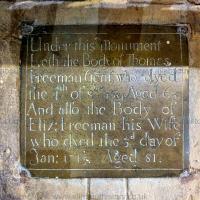
St Mary's Church, Sutton Scarsdale [Map]. Grave of Thomas Freeman who died 4th October 1684; the spelling of October as 8ber. And Eliz: Freeman his wife who died 3rd of Jan 1713.
On 4th October 1693 Charles Schomberg 2nd Duke Schomberg (age 48) fought for Spain and Savoy at Marsaglia at the Battle of Marsaglia.
On 4th October 1694 George Murray was born to John Murray 1st Duke Atholl (age 34) and Catherine Hamilton Duchess Atholl (age 32) at Huntingtower, Perth.
On 4th October 1699 Rachel Cavendish was born to William Cavendish 2nd Duke Devonshire (age 27) and Rachel Russell Duchess Devonshire (age 25). She married 1724 William Morgan.


On 4th October 1743 John Campbell 2nd Duke Argyll (age 62) died. His brother Archibald (age 61) succeeded 3rd Duke Argyll. Duke of Greenwich, Earl of Greenwich and Baron Chatham extinct.


On 4th October 1744 William Hamilton (age 23) drowned when Victory sank near Alderney.
On 4th October 1770 Charles William Oldenburg was born to Frederick Christian Oldenburg I Duke Schleswig Holstein Sonderburg Augustenburg (age 49) and Charlotte Amalie Wilhelmine Unknown Duchess Schleswig Holstein Sonderburg Augustenburg. He died aged less than one years old.

On 4th October 1798 Frances Mordaunt (age 61) died. She was buried at St Etheldreda's Church, Hatfield [Map].
Frances Mordaunt: On 29th December 1736 she was born to Charles Mordaunt 4th Earl Peterborough 2nd Earl Monmouth and Mary Cox Countess Peterborough and Monmouth. On 10th October 1765 Reverend Samuel Bulkeley and she were married at St George's Church, Hanover Square. She the daughter of Charles Mordaunt 4th Earl Peterborough 2nd Earl Monmouth and Mary Cox Countess Peterborough and Monmouth.
Wiltshire Archaeological Magazine 1885 V22 Pages 234-238. "Sunday, 4 October [1807]. From Bath to Devizes in a chaise. From Devizes to Marlborough on horseback — came to the Roman road leading from Bath to Spinse or Speen, a little on this side Beckhampton Inn — followed it to Silbury Hill which it leaves a little to the left — from thence into the turnpike, and to Overton down, where the ridge is again very visible — this hill is covered with many large and fine tumuli. In the adjoining field visited the few remains now left of the celebrated stones called the Grey-Wethers, from whence Stonehenge dates its origin. One year will scarcely elapse before the traveller may justly exclaim ' Stat nominis umbra.' The larger masses are employed in building, and the smaller in mending the roads. The line of the Roman causeway is I think nearly certain to the top of the hill overlooking Fifield. Quere did it then cross the stream? I think not— the ground being firmer on the side of the present turnpike though somewhat deviating from the direct line.
Annals of the six Kings of England by Nicholas Trivet
Translation of the Annals of the Six Kings of England by that traces the rise and rule of the Angevin aka Plantagenet dynasty from the mid-12th to early 14th century. Written by the Dominican scholar Nicholas Trivet, the work offers a vivid account of English history from the reign of King Stephen through to the death of King Edward I, blending political narrative with moral reflection. Covering the reigns of six monarchs—from Stephen to Edward I—the chronicle explores royal authority, rebellion, war, and the shifting balance between crown, church, and nobility. Trivet provides detailed insight into defining moments such as baronial conflicts, Anglo-French rivalry, and the consolidation of royal power under Edward I, whose reign he describes with particular immediacy. The Annals combines careful year-by-year reporting with thoughtful interpretation, presenting history not merely as a sequence of events but as a moral and political lesson. Ideal for readers interested in medieval history, kingship, and the origins of the English state, this chronicle remains a valuable and accessible window into the turbulent world of the Plantagenet kings.
Available at Amazon in eBook and Paperback format.

On 4th October 1809 Prince Albert Hohenzollern was born to Frederick William III King Prussia (age 39) and Queen Louise of Prussia (age 33). He married 14th September 1830 his fourth cousin Marianne Orange Nassau.
On 4th October 1815 Caroline Anne Julie Campbell died. Monument in St Oswald's Church, Malpas [Map]. Sculpted by Richard Westmacott (age 40).
Caroline Anne Julie Campbell: she was born to Colin Campbell. On 20th October 1812 George Cholmondeley 2nd Marquess Cholmondeley and she were married at Gibraltar. He the son of George Cholmondeley 1st Marquess Cholmondeley and Georgina Charlotte Bertie Marchioness Cholmondeley.


On 4th October 1829 Arabella Hamlyn-Williams died from childbirth shortly after the birth of her fourth child Catherine Hamilton Noel.

On 4th October 1889 Sylvia Storey Countess Poulett was born to William Frederick Clayton Storey. She married 1908 William John Lydston Poulett 7th Earl Poulett, son of William Henry Paulett 6th Earl Paulett and Rosa Melville Countess Poulett, and had issue.

4th October 1932. Bassano Ltd. Photograph of Margaret Whigham Duchess of Argyll (age 19).
Source: National Portrait Gallery
On 4th October 1957 Clarence Bruce 3rd Baron Aberdare (age 72) died in a car accident. He and his wife Griselda Hervey Baroness Aberdare were returning from Yugoslavia where he had attended the 53rd Session of the International Olympic Committe in Sofia, as part of their honeymoon. Their car left the road near Risan and fell into the sea. He was drowned, his wife injured.
Morys George Lyndhurst Bruce 4th Baron Aberdare (age 38) succeeded 4th Baron Aberdare of Duffryn in Glamorganshire.
On 4th October 1973 Walter Scott 8th Duke Buccleuch 10th Duke Queensberry (age 78) died. His son Walter (age 50) succeeded 9th Duke Buccleuch, 11th Duke Queensberry, 9th Earl Doncaster, 9th Baron Scott of Tynedale. Jane McNeill Duchess of Buccleuch (age 43) by marriage Duchess Buccleuch.
On 4th October 1160 Alys Capet Countess Ponthieu was born to Louis VII King of the Franks (age 40) and Constance of Castile Queen of the Franks (age 20). Her mother died in childbirth. Coefficient of inbreeding 1.85%. She married 20th August 1195 her third cousin once removed William Montgomery IV Count Ponthieu, son of John Montgomery I Count Ponthieu and Beatrice St Pol Countess Ponthieu, and had issue.
On 4th October 1274 Rudolf Wittelsbach I Duke Bavaria was born to Louis "Strict" Wittelsbach II Duke Upper Bavaria (age 45) and Matilda Habsburg Duchess Bavaria (age 21). He a great x 3 grandson of King Henry "Curtmantle" II of England.
On 4th October 1282 Thomas Bardolf 2nd Baron Bardolf was born to Hugh Bardolf 1st Baron Bardolf (age 23). He married 1331 Agnes Grandison Baroness Bardolf, daughter of William Grandison 1st Baron Grandison and Sibylla Tregoz Baroness Grandison, and had issue.
On 4th October 1289 Louis X King France I Navarre was born to King Philip IV of France (age 21) and Joan Blois I Queen Navarre (age 16). Coefficient of inbreeding 2.11%. He married (1) his third cousin Clementia Hungary Queen Consort France, daughter of Charles Martel King Hungary and Clementia Habsburg, and had issue (2) 21st September 1305 his first cousin once removed Margaret of Burgundy Queen Consort France, daughter of Robert II Duke Burgundy and Agnes Capet Duchess Burgundy, and had issue.
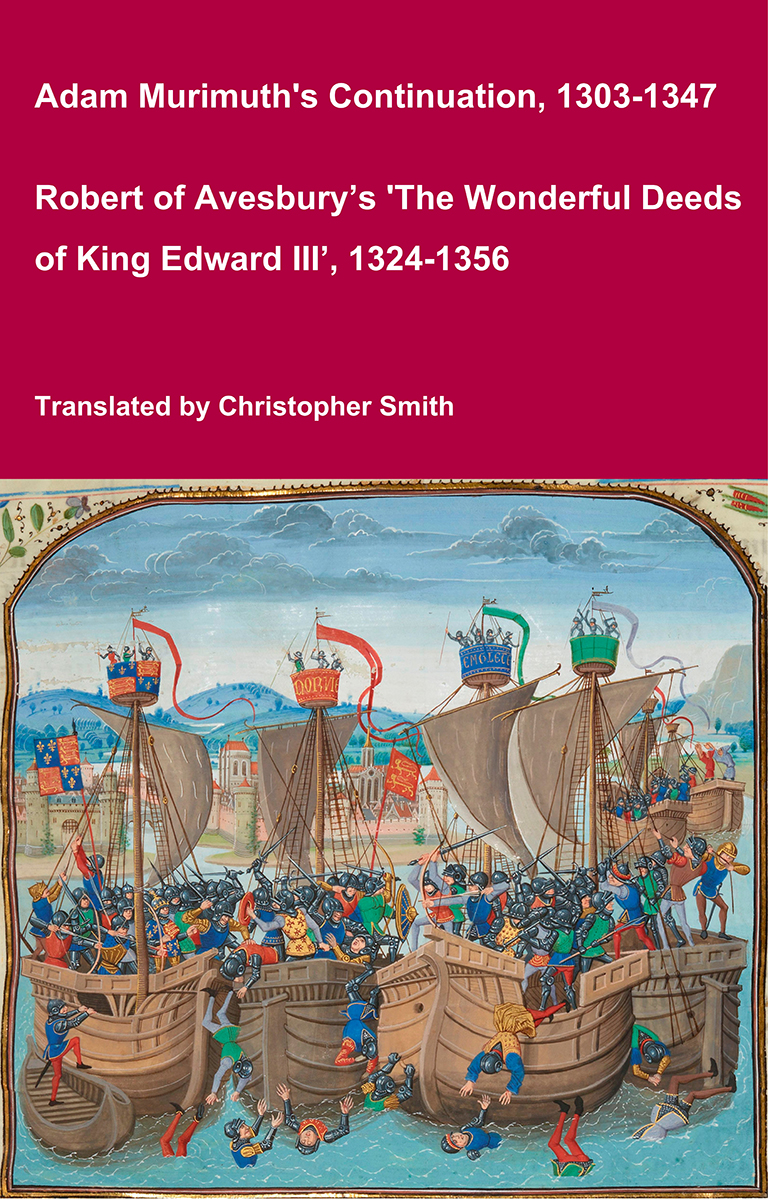
Adam Murimuth's Continuation and Robert of Avesbury’s 'The Wonderful Deeds of King Edward III'
This volume brings together two of the most important contemporary chronicles for the reign of Edward III and the opening phases of the Hundred Years’ War. Written in Latin by English clerical observers, these texts provide a vivid and authoritative window into the political, diplomatic, and military history of fourteenth-century England and its continental ambitions. Adam Murimuth Continuatio's Chronicarum continues an earlier chronicle into the mid-fourteenth century, offering concise but valuable notices on royal policy, foreign relations, and ecclesiastical affairs. Its annalistic structure makes it especially useful for establishing chronology and tracing the development of events year by year. Complementing it, Robert of Avesbury’s De gestis mirabilibus regis Edwardi tertii is a rich documentary chronicle preserving letters, treaties, and official records alongside narrative passages. It is an indispensable source for understanding Edward III’s claim to the French crown, the conduct of war, and the mechanisms of medieval diplomacy. Together, these works offer scholars, students, and enthusiasts a reliable and unembellished account of a transformative period in English and European history. Essential for anyone interested in medieval chronicles, the Hundred Years’ War, or the reign of Edward III.
Available at Amazon in eBook and Paperback format.
On 4th October 1301 Thomas Monthermer 2nd Baron Monthermer was born to Ralph Monthermer 1st Earl of Gloucester and Hertford (age 31) and Joan of Acre Countess Gloucester and Hertford (age 29) at Ham Stoke, Wiltshire. He a grandson of King Edward I of England. He married before 1340 Margaret Brewes Baroness Monthermer, daughter of Peter Brewes Count Flanders, and had issue.
On 4th October 1306 John Beauchamp 2nd Baron Beauchamp Somerset was born to John Beauchamp 1st Baron Beauchamp Somerset (age 32) and Joan Cheduit Baroness Beauchamp Somerset at Stoke sub Hambdon, Somerset. He married in or before 1321 his fourth cousin once removed Margaret St John Baroness Beauchamp Somerset, daughter of John St John 1st Baron St John of Basing and Isabel Courtenay Baroness St John of Basing, and had issue.
On 4th October 1331 James Butler 2nd Earl Ormonde was born to James Butler 1st Earl Ormonde (age 26) and Eleanor Bohun Countess Ormonde (age 26). He a great grandson of King Edward I of England. He married 15th May 1346 his third cousin once removed Elizabeth Darcy Countess Ormonde, daughter of John Darcy 1st Baron Darcy of Knayth and Joan Burgh Countess Kildare, and had issue.
On 4th October 1379 Henry III King Castile was born to John I King Castile (age 21) and Eleanor Barcelona Queen Consort Castile (age 21) at Burgos [Map]. He married before 17th September 1388 his half second cousin Catherine of Lancaster Queen Consort Castile, daughter of John of Gaunt 1st Duke Lancaster and Constance of Castile Duchess of Lancaster, and had issue.
On 4th October 1437 John Wittelsbach IV Duke Bavaria was born to Albert Wittelsbach III Duke Bavaria (age 36) and Anna Brunswick Grubenhagen Duchess Bavaria (age 23).
On 4th October 1515 Lucas Cranach "The Younger" was born to Lucas Cranach "The Elder" (age 43).
On 4th October 1563 Dorothea of Saxony was born to Augustus Wettin Elector of Saxony (age 37) and Anna Oldenburg (age 30). She married 26th September 1585 Henry Julius Duke of Brunswick-Lüneburg and had issue.
On 4th October 1585 Anna of Austria Holy Roman Empress was born to Ferdinand Habsburg Spain II Archduke Austria (age 56) and Anna Caterina Gonzaga Archduchess Austria (age 19). Coefficient of inbreeding 13.08%. She married 4th December 1611 her first cousin Matthias I Holy Roman Emperor, son of Maximilian Habsburg Spain II Holy Roman Emperor and Maria of Spain Holy Roman Empress.
On 4th October 1626 Richard Cromwell Lord Protector was born to Oliver Cromwell (age 27) and Elizabeth Bourchier (age 28).
On 4th October 1639 John Gawdy 2nd Baronet was born to William Gawdy 1st Baronet (age 27) and Elizabeth Duffield. He married in or before 1656 Anne Grey and had issue.
On 4th October 1652 Thomas Delves 4th Baronet was born to Thomas Delves 3rd Baronet (age 22) and Elizabeth Ravenscroft (age 23). He married (1) 13th August 1674 Jane Knightley and had issue (2) in or before 1697 his half fourth cousin twice removed Elizabeth Booth, daughter of Henry Booth 1st Earl Warrington and Mary Langham Countess Warrington (3) in or before 1700 Elizabeth Barker and had issue.
On 4th October 1677 Johann Wilhelm Saxe Coburg Altenburg was born to Frederick Saxe Coburg Altenburg I Duke Saxe Gotha Altenburg (age 31) and Duchess Magdalena Sibylle of Saxe Gotha Altenburg (age 29) at Gotha.
Adam Murimuth's Continuation and Robert of Avesbury’s 'The Wonderful Deeds of King Edward III'
This volume brings together two of the most important contemporary chronicles for the reign of Edward III and the opening phases of the Hundred Years’ War. Written in Latin by English clerical observers, these texts provide a vivid and authoritative window into the political, diplomatic, and military history of fourteenth-century England and its continental ambitions. Adam Murimuth Continuatio's Chronicarum continues an earlier chronicle into the mid-fourteenth century, offering concise but valuable notices on royal policy, foreign relations, and ecclesiastical affairs. Its annalistic structure makes it especially useful for establishing chronology and tracing the development of events year by year. Complementing it, Robert of Avesbury’s De gestis mirabilibus regis Edwardi tertii is a rich documentary chronicle preserving letters, treaties, and official records alongside narrative passages. It is an indispensable source for understanding Edward III’s claim to the French crown, the conduct of war, and the mechanisms of medieval diplomacy. Together, these works offer scholars, students, and enthusiasts a reliable and unembellished account of a transformative period in English and European history. Essential for anyone interested in medieval chronicles, the Hundred Years’ War, or the reign of Edward III.
Available at Amazon in eBook and Paperback format.
On 4th October 1678 Elizabeth Delves was born to Thomas Delves 4th Baronet (age 26) and Jane Knightley (age 25). She married 10th February 1710 Brian Broughton 3rd Baronet, son of Thomas Broughton 2nd Baronet and Rhoda Amcotts Lady Broughton, and had issue.
On 4th October 1692 Francis Willoughby 2nd Baron Middleton was born to Thomas Willoughby 1st Baron Middleton (age 20) and Elizabeth Rothwell Baroness Willoughby and Middleton. He married 1723 Mary Edwards Baroness Middleton and had issue.
On 4th October 1694 George Murray was born to John Murray 1st Duke Atholl (age 34) and Catherine Hamilton Duchess Atholl (age 32) at Huntingtower, Perth.
On 4th October 1699 Rachel Cavendish was born to William Cavendish 2nd Duke Devonshire (age 27) and Rachel Russell Duchess Devonshire (age 25). She married 1724 William Morgan.
On 4th October 1702 John Lindsay 20th Earl of Crawford, 4th Earl Lindsay was born to John Lindsay 19th Earl of Crawford, 3rd Earl of Lindsay. He married 1747 his third cousin once removed Jean Murray, daughter of James Murray 2nd Duke Atholl and Jane Frederick Duchess Atholl.
On 4th October 1716 Phoebe Hollins Lady Boothby was born to William Hollins. She married 1742 Brooke Boothby 5th Baronet and had issue.
On 4th October 1751 Thomas Clarges 3rd Baronet was born to Thomas Clarges (age 30).

On 4th October 1763 William Kerr 6th Marquess Lothian was born to William John Kerr 5th Marquess Lothian (age 26) and Elizabeth Fortescue 5th Marchioness Lothian (age 18). He married (1) 4th April 1793 Harriet Hobart Viscountess Belmore, daughter of John Hobart 2nd Earl Buckinghamshire and Mary Anne Drury Countess Buckinghamshire, and had issue (2) before 1807 his fourth cousin Harriet Scott Marchioness Lothian, daughter of Henry Scott 3rd Duke Buccleuch and Elizabeth Montagu Duchess Buccleuch, and had issue.
On 4th October 1770 Charles William Oldenburg was born to Frederick Christian Oldenburg I Duke Schleswig Holstein Sonderburg Augustenburg (age 49) and Charlotte Amalie Wilhelmine Unknown Duchess Schleswig Holstein Sonderburg Augustenburg. He died aged less than one years old.
On 4th October 1771 John Wrottesley 1st Baron Wrottesley was born to John Wrottesley 8th Baronet (age 26) and Frances Courtenay Lady Wrottesley. He married 1795 Caroline Bennett Lady Wrottesley, daughter of Charles Bennet 4th Earl Tankerville and Emma Colebrooke Countess Tankerville, and had issue.
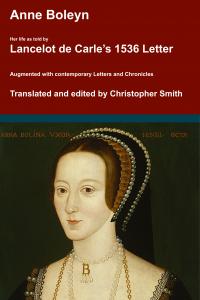
Anne Boleyn. Her Life as told by Lancelot de Carle's 1536 Letter.
In 1536, two weeks after the execution of Anne Boleyn, her brother George and four others, Lancelot du Carle, wrote an extraordinary letter that described Anne's life, and her trial and execution, to which he was a witness. This book presents a new translation of that letter, with additional material from other contemporary sources such as Letters, Hall's and Wriothesley's Chronicles, the pamphlets of Wynkyn the Worde, the Memorial of George Constantyne, the Portuguese Letter and the Baga de Secrets, all of which are provided in Appendices.
Available at Amazon in eBook and Paperback format.
On 4th October 1781 Francis Wheler Hood was born to Henry Hood 2nd Viscount Hood (age 28) and Jane Wheler Viscountess Hood (age 27). He married 11th October 1804 Caroline Hamond, daughter of Andrew Snape Hamond 1st Baronet and Anne Graeme Lady Hamond, and had issue.
On 4th October 1796 Robert King 4th Earl Kingston was born to George King 3rd Earl Kingston (age 25) and Helena Moore Countess Kingston (age 23).

On 4th October 1798 Caroline Waldegrave was born to William Waldegrave 1st Baron Radstock (age 45). She a great x 3 granddaughter of King James II of England Scotland and Ireland. She married 16th December 1830 Venerable Carew Antony St John Milmay, son of Henry Paulet St John-Mildmay 3rd Baronet and Jane Mildmay Lady St-John Mildmay, and had issue.
On 4th October 1809 Prince Albert Hohenzollern was born to Frederick William III King Prussia (age 39) and Queen Louise of Prussia (age 33). He married 14th September 1830 his fourth cousin Marianne Orange Nassau.
On 4th October 1822 Arthur Chichester 8th Baronet was born to Arthur Chichester 7th Baronet (age 32) and Charlotte Hamlyn-Williams (age 24). He married (1) 20th November 1847 Mary Nicholetts and had issue (2) 23rd January 1883 Rosalie Amelia Chamberlayne.
On 4th October 1831 Slingsby Bethell was born to Richard Bethell 1st Baron Westbury (age 31).
On 4th October 1834 Henry Cholmondeley was born to William Cholmondeley 3rd Marquess Cholmondeley (age 34) and Marcia Emma Georgiana Arbuthnot Marchioness Cholmondeley (age 30). He married Fanny Isabella Catherine Spencer.

On 4th October 1835 Rear Admiral Albert Denison was born to Albert Conygham aka Denison 1st Baron Londesborough (age 29) and Henrietta Maria Weld-Forester.
On 4th October 1855 George Henry Lowther 4th Earl Lonsdale was born to Henry Lowther 3rd Earl Lonsdale (age 37). He married 6th July 1878 Constance Gwladys Herbert Marchioness Ripon, daughter of Sidney Herbert 1st Baron Herbert Lea, and had issue.
On 4th October 1858 John Lubbock 2nd Baron Avebury was born to John Lubbock 1st Baron Avebury (age 24) and Ellen Frances Horden Lady Lubbock.


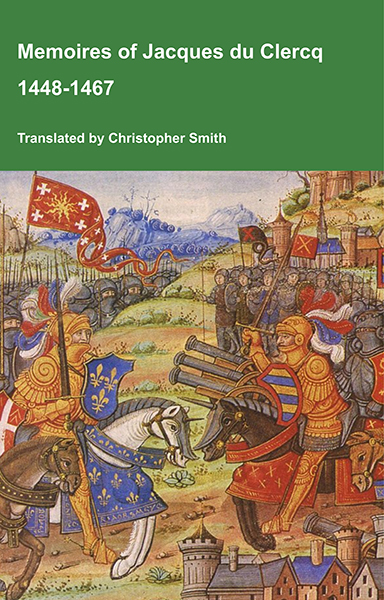
This is a translation of the 'Memoires of Jacques du Clercq', published in 1823 in two volumes, edited by Frederic, Baron de Reissenberg. In his introduction Reissenberg writes: 'Jacques du Clercq tells us that he was born in 1424, and that he was a licentiate in law and a counsellor to Philip the Good, Duke of Burgundy, in the castellany of Douai, Lille, and Orchies. It appears that he established his residence at Arras. In 1446, he married the daughter of Baldwin de la Lacherie, a gentleman who lived in Lille. We read in the fifth book of his Memoirs that his father, also named Jacques du Clercq, had married a lady of the Le Camelin family, from Compiègne. His ancestors, always attached to the counts of Flanders, had constantly served them, whether in their councils or in their armies.' The Memoires cover a period of nineteen years beginning in in 1448, ending in in 1467. It appears that the author had intended to extend the Memoirs beyond that date; no doubt illness or death prevented him from carrying out this plan. As Reissenberg writes the 'merit of this work lies in the simplicity of its narrative, in its tone of good faith, and in a certain air of frankness which naturally wins the reader’s confidence.' Du Clercq ranges from events of national and international importance, including events of the Wars of the Roses in England, to simple, everyday local events such as marriages, robberies, murders, trials and deaths, including that of his own father in Book 5; one of his last entries.
Available at Amazon in eBook and Paperback format.
On 4th October 1868 Reverend Hugh Smith-Marriott 9th Baronet was born to Hugh Forbes Smith-Marriott (age 27) and Frances Catherine Mary Cavendish.
On 4th October 1874 Maurice Egerton 4th Baron Egerton was born to Alan Egerton 3rd Baron Egerton Tatton (age 29) and Anna Louisa Taylor Baroness Egerton (age 23).
On 4th October 1877 Hugh Wyndham 4th Baron Leconfield was born to Henry Wyndham 2nd Baron Leconfield (age 47) and Constance Evelyn Primrose Baroness Leconfield (age 31) at Petworth House. He married 1908 his fourth cousin once removed Maud Mary Lyttelton Baroness Leconfield, daughter of Charles Lyttelton 8th Viscount Cobham and Mary Susan Cavendish Viscountess Cobham.
On 4th October 1889 Sylvia Storey Countess Poulett was born to William Frederick Clayton Storey. She married 1908 William John Lydston Poulett 7th Earl Poulett, son of William Henry Paulett 6th Earl Paulett and Rosa Melville Countess Poulett, and had issue.
On 4th October 1891 Louisa Hazel Agnew Viscountess Combermere was born to Henry de Courcy Agnew (age 39) and Ethel Anne Goff (age 24). She a great x 2 granddaughter of King William IV of the United Kingdom. She married (1) 30th October 1917 Francis Stapleton-Cotton 4th Viscount Combermere, son of Robert Wellington Stapleton-Cotton 3rd Viscount Combermere and Isabel Marion Chetwynd Viscountess Combermere.
On 4th October 1895 Ivy Mary Stapleton was born to Miles Stapleton 10th Baron Beaumont (deceased) posthumously three weeks after the death of her father.

On 4th October 1896 John Russell 3rd Baron Ampthill was born to Oliver Russell 2nd Baron Ampthill (age 27) and Margaret Lygon Baroness Ampthill (age 21). He married (1) 18th October 1918 Christabel Hulme Hart Baroness Ampthill and had issue (2) 22nd February 1937 Sibell Faithfull Lumley Baroness Ampthill (3) 24th July 1948 Adeline Mary Constance Hone Baroness Ampthill and had issue.
On 4th October 1900 Major Anthony Ashley-Cooper was born to Anthony Ashley-Cooper 9th Earl of Shaftesbury (age 31) and Constance Grosvenor Countess of Shaftesbury (age 25). He married (1) 3rd February 1927 Sylvia Hawkes Baroness Stanley (2) 31st March 1937 Françoise Soulier and had issue.
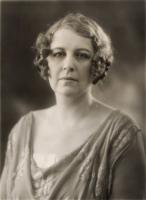
On 4th October 1903 Massey Lopes 2nd Baron Roborough was born to Henry Lopes 1st Baron Roborough (age 44) and Alberta Louise Edgcumbe Baroness Roborough (age 42).
On 4th October 1904 Robert Renwick 1st Baron Renwick was born to Harry Bennedetto Renwick 1st Baronet (age 43). He married (1) 10th June 1929 Dorothy Mary Parkes and had issue (2) 28th July 1953 Edith Joan Clarke Baroness Renwick.
On 4th October 1914 Nancy Diana Mary Lubbock Lady Schuckburgh was born to Captain Rupert Egerton Lubbock (age 28). She married 22nd May 1937 Charles Gerald Shuckburgh 12th Baronet, son of Gerald Shuckburgh 11th Baronet, and had issue.
On 4th October 1921 Anne Rachel Pearl Douglas-Scott-Montagu was born to John Douglas-Scott-Montagu 2nd Baron Montagu of Beaulieu (age 55) and Alice Pearl Crake Baroness Montagu (age 26). She married (1) 2nd March 1946 Howel Joseph Moore-Gwyn (2) 23rd May 1950 Edward John Chichester 11th Baronet, son of Edward George Chichester 10th Baronet, and had issue.
This is a translation of the 'Memoires of Jacques du Clercq', published in 1823 in two volumes, edited by Frederic, Baron de Reissenberg. In his introduction Reissenberg writes: 'Jacques du Clercq tells us that he was born in 1424, and that he was a licentiate in law and a counsellor to Philip the Good, Duke of Burgundy, in the castellany of Douai, Lille, and Orchies. It appears that he established his residence at Arras. In 1446, he married the daughter of Baldwin de la Lacherie, a gentleman who lived in Lille. We read in the fifth book of his Memoirs that his father, also named Jacques du Clercq, had married a lady of the Le Camelin family, from Compiègne. His ancestors, always attached to the counts of Flanders, had constantly served them, whether in their councils or in their armies.' The Memoires cover a period of nineteen years beginning in in 1448, ending in in 1467. It appears that the author had intended to extend the Memoirs beyond that date; no doubt illness or death prevented him from carrying out this plan. As Reissenberg writes the 'merit of this work lies in the simplicity of its narrative, in its tone of good faith, and in a certain air of frankness which naturally wins the reader’s confidence.' Du Clercq ranges from events of national and international importance, including events of the Wars of the Roses in England, to simple, everyday local events such as marriages, robberies, murders, trials and deaths, including that of his own father in Book 5; one of his last entries.
Available at Amazon in eBook and Paperback format.
On 4th October 1940 Juliet Auriol Sally Nelson Lady Cholmeley was born to General John Nelson (age 28) and Margaret Jane Fitzroy (age 24). She married 18th October 1960 Montague John Cholmeley 6th Baronet, son of Hugh John Francis Sibthorp Cholmeley 5th Baronet, and had issue.
On 4th October 1957 Philip Roland Anson 8th Baronet was born to Rear-Admiral Peter Anson 7th Baronet (age 33).
On 4th October 1570 Henry 1st Duke Guise (age 19) and Catherine of Cleves (age 22) were married. He the son of Francis II Duke Guise and Anna d'Este (age 38). They were second cousins.
On 4th October 1633 John Paulet 5th Marquess Winchester (age 35) and Honora Burke Marchioness Winchester (age 28) were married. She by marriage Marchioness Winchester. She the daughter of Richard Burke 4th Earl Clanricarde 1st Earl St Albans (age 61) and Frances Walsingham Countess Essex. He the son of William Paulet 4th Marquess Winchester and Lucy Cecil Marchioness Winchester.
On 4th October 1655 Nicholas Knollys 3rd Earl Banbury (age 24) and Anne or Abigail Sherard (age 22) were married. He the son of William Knollys 1st Earl Banbury and Elizabeth Howard Countess Banbury (age 72).
On 4th October 1750 John Anstruther 2nd Baronet (age 31) and Janet "Queen of the Gypsies" Fall (age 33) were married.


On 4th October 1849 John George Brabazon Ponsonby 5th Earl Bessborough (age 39) and Caroline Amelia Gordon-Lennox Countess Bessborough (age 30) were married. She by marriage Countess Bessborough. She the daughter of Charles Gordon-Lennox 5th Duke Richmond (age 58) and Caroline Paget Duchess Richmond (age 53). He the son of John Ponsonby 4th Earl Bessborough and Maria Fane. They were fifth cousins. She a great x 4 granddaughter of King Charles II of England Scotland and Ireland.
On 4th October 1864 Edward Robert Bulwer-Lytton 1st Earl (age 32) and Edith Villiers Countess Lytton (age 23) were married.


On 4th October 1870 Clotworthy Skeffington 11th Viscount Massereene, 5th Viscount Ferrard (age 27) and Florence Elizabeth Whyte-Melville Viscountess Massereene and Ferrard were married.
On 4th October 1883 Ernest William Beckett 2nd Baron Grimthorpe (age 26) and Lucy Tracy Lee were married.


The True Chronicles of Jean le Bel Volume 1 Chapters 1-60 1307-1342
The True Chronicles of Jean le Bel offer one of the most vivid and immediate accounts of 14th-century Europe, written by a knight who lived through the events he describes, and experienced some of them first hand. Covering the early decades of the Hundred Years’ War, this remarkable chronicle follows the campaigns of Edward III of England, the politics of France and the Low Countries, and the shifting alliances that shaped medieval warfare. Unlike later historians, Jean le Bel writes with a strong sense of eyewitness authenticity, drawing on personal experience and the testimony of fellow soldiers. His narrative captures not only battles and sieges, but also the realities of military life, diplomacy, and the ideals of chivalry that governed noble society. A key source for Jean Froissart, Le Bel’s chronicle stands on its own as a compelling and insightful work, at once historical record and literary achievement. This translation builds on the 1905 edition published in French by Jules Viard, adding extensive translations from other sources Rymer's Fœdera, the Chronicles of Adam Murimuth, William Nangis, Walter of Guisborough, a Bourgeois of Valenciennes, Geoffrey le Baker of Swinbroke and Richard Lescot to enrich the original text and Viard's notes.
Available at Amazon in eBook and Paperback format.
On 4th October 1933 John Verney 28th Baron Latimer 20th Baron Willoughby de Broke (age 37) and Rachel Wrey Baroness Latimer and Willoughby were married. She by marriage Baroness Latimer of Corby, Baroness Willoughby Broke.
On 4th October 1945 Gavin Astor 2nd Baron Astor (age 27) and Irene Haig Baroness Astor (age 25) were married.
On 4th October 1221 William Montgomery IV Count Ponthieu (age 42) died. His daughter Marie (age 22) succeeded Countess Ponthieu.
On 4th October 1290 John Dampierre Bishop Metz Bishop of Liège (age 40) died.
On 4th October 1305 Dietrich Cleves VII Count Cleves (age 49) died. His son Otto (age 27) succeeded Count Cleves.
On 4th October 1325 John Segrave 2nd Baron Segrave (age 69) died at Chacombe Priory [Map]. His son Stephen (age 40) succeeded 3rd Baron Segrave.
On 4th October 1361 John Mowbray 3rd Baron Mowbray (age 50) died of plague. His son John (age 21) succeeded 4th Baron Mowbray.
On 4th October 1518 William IX Marquis of Montferrat (age 32) died. His son Boniface (age 5) succeeded Marquis Montferrat.
On 4th October 1581 Henry Wriothesley 2nd Earl of Southampton (age 36) died. His son Henry (age 7) succeeded 3rd Earl of Southampton. His wardship was sold by the Queen to her kinsman, Charles, Lord Howard of Effingham (age 45), for £1000. Howard then transferred his wardship to William Cecil 1st Baron Burghley (age 61).


On 4th October 1637 John Holles 1st Earl de Clare (age 73) died. He was buried at St Mary's Church, Nottingham. His son John (age 42) succeeded 2nd Earl Clare, 2nd Baron Haughton.
On 4th October 1646 Thomas Howard 14th or 21st Earl of Arundel 4th Earl of Surrey 1st Earl Norfolk (age 61) died. His son Henry (age 38) succeeded 14th or 22nd Earl Arundel, 5th Earl Surrey, 2nd Earl Norfolk, 12th Baron Maltravers, 12th Baron Arundel, 15th Baron Mowbray, 16th Baron Segrave. Elizabeth Stewart Countess Arundel and Norfolk (age 36) by marriage Countess Arundel, Countess Norfolk, Countess Norfolk.


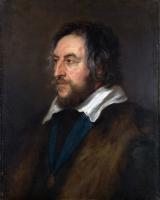

On 4th October 1679 Richard Byron 2nd Baron Byron (age 73) died at Rochdale, Lancashire. His son William (age 43) succeeded 3rd Baron Byron of Rochdale in Lancashire.
Chronicle of Geoffrey le Baker of Swinbroke
Baker was a secular clerk from Swinbroke, now Swinbrook, an Oxfordshire village two miles east of Burford. His Chronicle describes the events of the period 1303-1356: Gaveston, Bannockburn, Boroughbridge, the murder of King Edward II, the Scottish Wars, Sluys, Crécy, the Black Death, Winchelsea and Poitiers. To quote Herbert Bruce 'it possesses a vigorous and characteristic style, and its value for particular events between 1303 and 1356 has been recognised by its editor and by subsequent writers'. The book provides remarkable detail about the events it describes. Baker's text has been augmented with hundreds of notes, including extracts from other contemporary chronicles, such as the Annales Londonienses, Annales Paulini, Murimuth, Lanercost, Avesbury, Guisborough and Froissart to enrich the reader's understanding. The translation takes as its source the 'Chronicon Galfridi le Baker de Swynebroke' published in 1889, edited by Edward Maunde Thompson.
Available at Amazon in eBook and Paperback format.
On 4th October 1738 Edmund Bacon 5th Baronet (age 45) died in Bath, Somerset [Map]. His son Edmund (age 13) succeeded 6th Baronet Bacon of Mildenhall in Suffolk.
On 4th October 1743 John Campbell 2nd Duke Argyll (age 62) died. His brother Archibald (age 61) succeeded 3rd Duke Argyll. Duke of Greenwich, Earl of Greenwich and Baron Chatham extinct.
On 4th October 1752 Ralph Verney 1st Earl Verney (age 69) died. His son Ralph (age 38) succeeded 2nd Earl Verney, 3rd Viscount Fermanagh, 3rd Baron Verney of Belturbet in Cavan, 4th Baronet Verney of Middle Claydon in Buckinghamshire.
On 4th October 1815 Caroline Anne Julie Campbell died. Monument in St Oswald's Church, Malpas [Map]. Sculpted by Richard Westmacott (age 40).
Caroline Anne Julie Campbell: she was born to Colin Campbell. On 20th October 1812 George Cholmondeley 2nd Marquess Cholmondeley and she were married at Gibraltar. He the son of George Cholmondeley 1st Marquess Cholmondeley and Georgina Charlotte Bertie Marchioness Cholmondeley.
On 4th October 1823 Frances Charlotte Chetwynd-Talbot Countess Dartmouth (age 22) died.
On 22nd September 1828 or 4th October 1828 Thomas Whichcote 5th Baronet (age 65) died. He was buried at St Denys' Church, Aswarby. His son Thomas (age 41) succeeded 6th Baronet Whichcote of the Inner Temple in the City of London. Sophia Sherard Lady Whichcote (age 32) by marriage Lady Whichcote of the Inner Temple in the City of London.
On 4th October 1828 Thomas Hanmer 2nd Baronet (age 81) died. His son John (age 18) succeeded 3rd Baronet Hamner of Hamner in Flintshire.
On 4th October 1834 Henry Maturin Farrington 3rd Baronet (age 56) died. His son Henry (age 23) succeeded 4th Baronet Farrington of Blackheath in Kent.
On 4th October 1851 George William Stafford-Jerningham 8th Baron Stafford (age 80) died. His son Henry (age 49) succeeded 9th Baron Stafford, 8th Baronet Jerningham of Cossey.
On 4th October 1857 Charles Wentworth-Fitzwilliam 5th and 3rd Earl Fitzwilliam (age 71) died. His son William (age 41) succeeded 6th Earl Fitzwilliam, 4th Earl Fitzwilliam, 8th Baron Fitzwilliam of Liffer in Donegal. Frances Harriet Douglas Countess Fitzwilliam by marriage Countess Fitzwilliam.
Adam Murimuth's Continuation and Robert of Avesbury’s 'The Wonderful Deeds of King Edward III'
This volume brings together two of the most important contemporary chronicles for the reign of Edward III and the opening phases of the Hundred Years’ War. Written in Latin by English clerical observers, these texts provide a vivid and authoritative window into the political, diplomatic, and military history of fourteenth-century England and its continental ambitions. Adam Murimuth Continuatio's Chronicarum continues an earlier chronicle into the mid-fourteenth century, offering concise but valuable notices on royal policy, foreign relations, and ecclesiastical affairs. Its annalistic structure makes it especially useful for establishing chronology and tracing the development of events year by year. Complementing it, Robert of Avesbury’s De gestis mirabilibus regis Edwardi tertii is a rich documentary chronicle preserving letters, treaties, and official records alongside narrative passages. It is an indispensable source for understanding Edward III’s claim to the French crown, the conduct of war, and the mechanisms of medieval diplomacy. Together, these works offer scholars, students, and enthusiasts a reliable and unembellished account of a transformative period in English and European history. Essential for anyone interested in medieval chronicles, the Hundred Years’ War, or the reign of Edward III.
Available at Amazon in eBook and Paperback format.
On 4th October 1861 Archibald William Montgomerie 13th Earl Eglinton (age 49) died. His son Archibald (age 19) succeeded 14th Earl Eglinton.
On 4th October 1862 Reverend William Marriott Smith-Marriott 4th Baronet (age 61) died. His son William (age 27) succeeded 5th Baronet Smith of Sydling St Nicholas.
On 4th October 1872 Charles Mills 1st Baronet (age 80) died. His son Charles (age 42) succeeded 2nd Baronet Mills of Hillingdon.
On 4th October 1891 Isaac Newton Wallop 5th Earl of Portsmouth (age 66) died. His son Newton (age 35) succeeded 6th Earl Portsmouth, 6th Viscount Lymington, 6th Baron Wallop of Farley Wallop Hampshire.
On 4th October 1911 Frederick Edward Baker aka Rhodes 4th Baronet (age 68) died unmarried. His brother George (age 66) succeeded 5th Baronet Baker of Loventor in Totnes in Devon. Katharine Frances Wilbraham Lady Wilbraham (age 62) by marriage Lady Baker of Loventor in Totnes in Devon.
On 4th October 1922 John Henry Thorold 12th Baronet (age 80) died. His son John (age 52) succeeded 13th Baronet Thorold of Marston in Lincolnshire.
On 4th October 1925 Arthur John Henniker-Hughan 6th Baronet (age 59) died. His second cousin once removed Robert (age 37) succeeded 7th Baronet Henniker of Newton Hall in Essex.
On 4th October 1927 Margaret Francis Graham Countess Verulam (age 74) died.
On 4th October 1933 Gerald Oakley Cadogan 6th Earl Cadogan (age 64) died. His son William (age 19) succeeded 7th Earl Cadogan, 7th Viscount Chelsea, 9th Baron Cadogan.
On 4th October 1940 Charles John Hubert Miller 8th Baronet (age 82) died. His first cousin Henry (age 73) succeeded 9th Baronet Miller of Chichester in Sussex.
On 4th October 1957 Clarence Bruce 3rd Baron Aberdare (age 72) died in a car accident. He and his wife Griselda Hervey Baroness Aberdare were returning from Yugoslavia where he had attended the 53rd Session of the International Olympic Committe in Sofia, as part of their honeymoon. Their car left the road near Risan and fell into the sea. He was drowned, his wife injured.
Morys George Lyndhurst Bruce 4th Baron Aberdare (age 38) succeeded 4th Baron Aberdare of Duffryn in Glamorganshire.
On 4th October 1973 Walter Scott 8th Duke Buccleuch 10th Duke Queensberry (age 78) died. His son Walter (age 50) succeeded 9th Duke Buccleuch, 11th Duke Queensberry, 9th Earl Doncaster, 9th Baron Scott of Tynedale. Jane McNeill Duchess of Buccleuch (age 43) by marriage Duchess Buccleuch.