

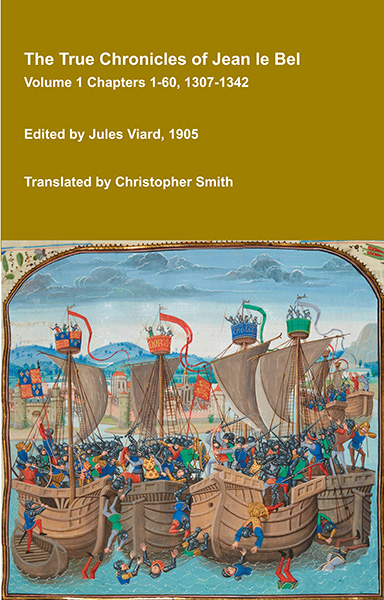
The True Chronicles of Jean le Bel Volume 1 Chapters 1-60 1307-1342
The True Chronicles of Jean le Bel offer one of the most vivid and immediate accounts of 14th-century Europe, written by a knight who lived through the events he describes, and experienced some of them first hand. Covering the early decades of the Hundred Years’ War, this remarkable chronicle follows the campaigns of Edward III of England, the politics of France and the Low Countries, and the shifting alliances that shaped medieval warfare. Unlike later historians, Jean le Bel writes with a strong sense of eyewitness authenticity, drawing on personal experience and the testimony of fellow soldiers. His narrative captures not only battles and sieges, but also the realities of military life, diplomacy, and the ideals of chivalry that governed noble society. A key source for Jean Froissart, Le Bel’s chronicle stands on its own as a compelling and insightful work, at once historical record and literary achievement. This translation builds on the 1905 edition published in French by Jules Viard, adding extensive translations from other sources Rymer's Fœdera, the Chronicles of Adam Murimuth, William Nangis, Walter of Guisborough, a Bourgeois of Valenciennes, Geoffrey le Baker of Swinbroke and Richard Lescot to enrich the original text and Viard's notes.
Available at Amazon in eBook and Paperback format.
07 Apr is in April.
1461 Proclamation of Edward IV as King
29th March 1461 Battle of Towton
1461 Second Battle of St Albans
28th March 1461 Battles of Ferrybridge and Dintingdale
On 7th April 1174 Archbishop Richard de Dover was consecrated Archbishop of Canterbury in Anagni Frosinone Latium by Pope Alexander III.
On 7th April 1174 Archbishop Richard of Dover was consecrated Archbishop of Canterbury at Anagni by Pope Alexander III. Richard returned to England at the close of the year bearing his pallium which he had received directly from the pope.
On 7th April 1206 Frederick Metz I Duke Lorraine [aged 63] died. His son Frederick succeeded II Duke Lorraine.
On 7th April 1206 Otto "Illustrious" Wittelsbach II Duke Bavaria was born to Louis Wittelsbach I Duke Bavaria [aged 32] and Ludmilla Bohemia Duchess Bavaria. He married 1222 Agnes Welf Duchess Bavaria and had issue.
On 7th April 1234 Sancho "Strong" VII King Navarre [aged 79] died. His nephew Theobald [aged 32] succeeded IV King Navarre. Margaret Bourbon Queen Consort Navarre [aged 17] by marriage Queen Consort Navarre.
Rymer's Fœdera Volume 1. The king grants to his son Edward the duchy of Aquitaine with its appurtenances, so that he may be better able to maintain his estate.
The King to all to whom the present letters shall come, greeting. Know that whereas we have ordained that Edward, our most beloved son, shall be girded with the belt of knighthood at the feast of Pentecost next to come, we, that the same our son may the better and more honourably maintain his estate, have given and granted, and by this our charter confirmed to the same our son, all our duchy of Aquitaine, with all its appurtenances: to have and to hold to him, and after him, to the kings of England reigning hereditarily, as fully, well, and in peace, freely and quietly, with all liberties and free customs, lordships, homages, services, rents, and all other things in any wise pertaining to the aforesaid duchy, just as we or our progenitors have held, or ought at any time to have held, the same duchy with its aforesaid appurtenances more fully, freely, and quietly. Provided always that our aforesaid son shall not be able to alienate the aforesaid duchy, nor in any way take away or diminish anything from it or from its appurtenances. In testimony whereof, &c. Witness the King, at Winchester, on the 7th day of April. By writ of the privy seal, and the whole council.
Rex concedit Edwardo filio suo ducatum Aquitaniæ cum pertinentiis, ut possit melius manutenere statum suum.
Rex omnibus, ad quos præsentes litteræ pervenerint, salutem. Sciatis quod cum ordinaverimus, quod Edwardus, filius noster carissimus, in festo Pentecostes proximò futuro, militiæ cingulo decoretur; Nos, ut idem filius noster meliùs & honorificentiùs manuteneat statum suum, dedimus, & concessimus; & hâc cartâ nostrâ confirmavimus, eidem filio nostro totum ducatum nostrum Aquitanniæ, cum omnibus pertinentiis suis: Habendum, & tenendum sibi, &, post ipsum, Regibus, in regno Angliæ hæreditariè regnantibus, adeò integrè, benè & in pace, liberè & quietè, cum omnibus libertatibus, & liberis consuetudinibus, dominiis, homagiis, servitiis, redditibus, & omnibus aliis, ad prædictum ducatum qualitercumque spectantibus, sicut nos, vel progenitores nostri eundem ducatum, cum pertinentiis suis prædictis, integriùs, liberiùs, & quietiùs tenuimus, vel tenere aliquo tempore debuimus; Ita tamen quod præfatus filius noster ducatum antedictum alienare non possit, nec quicquam de eodem, aut pertinentiis ejusdem, detrahere vel diminuere quoquo modo. In cujus rei testimonium, &c. Teste Rege, apud Wynton', vii. die Aprilis. Per breve de privato sigillo, & totum concilium.
Archaeologia Volume 35 1853 XXXIII. On the 7th [Apr 1358], the Maréchal D'Audenham visited the Queen and slept at the castle.
Life Charles VI by a Monk of St Denis [~1420]. [7th April 1415]. To the most serene prince Charles, by the grace of God, our dearest cousin of France, Henry, by the same grace King of England and France, health and peace be done in our days. This is our glory, a testimony of our conscience, that from the days when we are crowned and adorned with the insignia of royalty, eager for peace, for the reverence of him who is the author of peace, we have fervently and with all our mind sought that peace be made between us and our kingdoms, through which that lamentable division may be exiled, from which so many inconveniences of bodies have followed and the unfortunate ruin of souls has taken birth; whence at various times and very recently we have sent our ambassadors to your serenity for this most fortunate cause of peace, through whom we have made our intention known to him, both in the matter of justice, through which restitution of rights would be made to us and our successors, which have been long subtracted from us and our crown, so to speak, from the centuries, as well as in the matter of affinity and the renewal of kinship and marital alliance between us in the event of your most beloved cousin, your daughter, the illustrious Catherine, if circumstances permit, under God's guidance, to be joined. These ambassadors and our envoys, under the protests necessary for such a great cause, in our name, have made various pleas and such conclusions, of which we are only contented, God as our witness, with regard to such a great good of peace. For if the sound discretion of our lord the King of England, without which even our actions in arduous matters may falter, gently favors our intention in this matter, yet this does not become a cause, considering the conscience and the law of what is owed, to be publicly judged by us. On these petitions a certain offering on your part has proceeded, which written under your seal, together with the faithful report of our said ambassadors, has come to us as authentic, from which we have conceived that, because in this part to consent to such offerings, nor to diminish from the petitions conclusively made by us, without consulting us, our envoys dared not. As you have written, your serenity desires quickly to send to us your solemn embassy, which in both matters, as well of justice as of affinity, should communicate with us fully, and declare notable and special various things concerning these matters. But, which we marvel at, it has not yet been made known to us about the coming of your ambassadors by your title, nor even about the names that are to be sent, especially since the truce between us is very soon about to lapse, and then it will be necessary for us to insist on the protection and public safety of our subjects from the debt of justice and the bond of the sacrament. Therefore, if your serenity firmly considers to pursue further the ongoing negotiations, we ask that your envoys come quickly, so that while there is time, we may do good, and that it may be happily concluded for such a universal good. And we, on our part, are led and guided by such zeal in this cause of peace, that God himself will know and the whole world will understand, how much the public good is preferred in our private intention, and how great the nausea of our souls is over the effusion of Christian blood. Nor will it stand by us that between kingdoms, which are perpetual, we and our successors, to the praise of God himself, may the peace desired by all nations follow. And since, whether peace and power are increased in our days, or, which may be prevented, they may be dissolved, he will require an account from us, who has committed to us such great powers of safeguarding, of the shepherds Lot and Abraham, who contended because of greed, let us not become vile successors, but, with a proper report, let the increase to our reduction, which is so great, justly respond on your part. For neither will the lust to dominate in us hastily free our consciences or souls from the insolent incitement of those who advise wars or the violent detention of alien rights, but we alone, or he through whom this cause has been impeded, shall be obliged to render an account of our villication and to specify why we have received the grace of God in vain, while our age has not consummated this merit of such great good, which in our times divine dispensation has reserved. — Given under our signet at Westminster, on the seventh day of the month of April.
"Serenissime princeps, consanguinee carissime, gloria nostra hec est, testimonium consciencie nostre quod a diebus hiis quibus corona potimur et insigniis regalie, pacis avidi, ob illius reverenciam qui pacis est auctor, fervido spiritu et tota mente fecimus ut inter nos et regna pax fieret, per quam exularet illa divisio flebilis, ex qua tot sequta sunt incommoda corporum et infelix ortum habuit naufragium animarum; unde vicibus variis et nuperrime nuncios nostros in et pro hac felicissima causa pacis serenitati vestre transmisimus, per quos eidem apperiri fecimus intencionem nostram, tam in negocio justicie, per quod nobis et successoribus nostris fieret restitucio jurium, nobis et corone nostre ab antiquo, ut sic loquamur, seculis subtractorum, quam in negocio affinitatis et renovacionis parentele federisque conjugalis inter nos in eventu et carissimam consanguineam nostram, filiam vestram, inclitam Katerinam, si requisita concurrent, Deo duce, ineundi. Qui quidem ambassiatores et nuncii nostri, sub protestacionibus cause tante necessariis, nomine nostro, varia peeierunt, et talia conclusive, de quibus ea solum, Deo teste, de causa contentamur, quod de tanto bono pacis contentari debere non ambigimus ipsum Deum. Nam et si dominorum regni nostri Anglie sana discrecio, sine qua et facta nostra in arduis inconsulti non prolabimur, intencioni nostre benigne tacens faveat in hac causa, non fit causa tamen, attento de consciencia et de jure quid debetur, de tam modico contentari nobis publica judicari consultrix1. Super quibus peticionibus certa pro parte vestra processit oblacio, que sub sigillo vestro scripta, una cum dictorum ambaxiatorum nostrorum relatu fido, auttentica nobis insinuacione devenit, ex qua concepimus quod, quia oblacionibus hujusmodi in hac parte consentire, nec de peticionibus per nos conclusive factis diminuendo detrahere, nobis inconsultis, nuncii nostri iidem non audebant, habet, ut scripsisti, menti vestra serenitas, inde cito versus nos ambassiatam vestram sollenpnem mittere, que in utraque materia, tam justicie quam affinitatis, una nobiscum communicare plenius, et notabilia et specialia varia, dictas materias concernencia, debeat declarare. Sed, de quo miramur, nec dum nobis de adventu ambaxiatorum vestro titulo, nec de nominibus eciam innotuit mittendorum, maxime cum inter nos treuge prorogate de presenti citissime prolabentur, et tunc subditorum nostrorum tuicioni et saluti publice nos opportebit insistere ex debito justicie et vinculo sacramenti. Unde si firme penset vestra serenitas inchoati tractatus ulterius seriem prosequi, veniant celeriter, quesumus, nuncii vestri, ut, dum tempus est, operemur bonum, et ut feliciter in tam universalis boni merito concludatur. Et nos pro parte nostra zelo tanto in hac causa pacis ducimur et ducemur, quod Deus ipse sciet et mundus intelliget universus, quanto in intencione nostra privato bonum preferatur publicum, et quanta sit anime nostre nausea sanguinis effusio christiani. Nec per nos stabit quin inter regna, que perpetua sunt, nos et successores nostros, ad ipsius Dei laudem, cunctis desiderata gentibus pax sequatur. Et quia, sive augeantur pax et imperia diebus nostris, sive, quod absit, dissolvantur, ille a nobis racionem exiget, qui tuenda nobis imperia tanta commisit, pastorum Loth et Abraham, qui propter avariciam rixabantur, viles non contendamus fieri successores, sed, relatu congruo, diminucioni nostre, que tanta est, augmentacio pro parte vestra justa respondebit. Nam nec dominandi in nobis libido preceps, nec ad guerras consulencium insolens suasio aut alieni juris violenta detencio consciencias nostras aut animas liberabit, quin soli nos, aut nostrum ille per quem hujus cause steterit impedita conclusio, simus reddituri villicacionis nostre racionem et specifice responsuri cur in vacuum graciam Dei receperimus, dum non consummat hec etas nostra tanti boni meritum, quod temporibus nostris arcana divini dispensacio consilii reservavit. — Datum sub signeto nostro Westmonasterii, mensis apprilis die septima."
Note 1. These three words offer no meaning. The text is obviously altered in this passage.
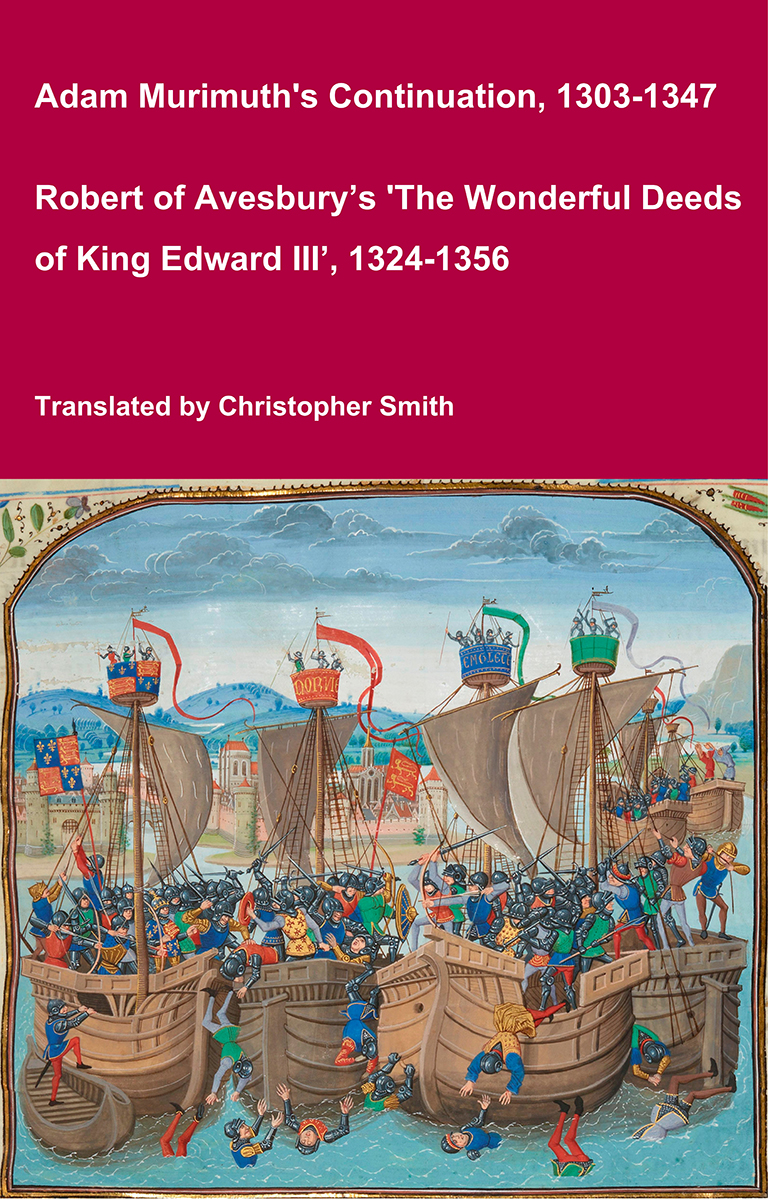
Adam Murimuth's Continuation and Robert of Avesbury’s 'The Wonderful Deeds of King Edward III'
This volume brings together two of the most important contemporary chronicles for the reign of Edward III and the opening phases of the Hundred Years’ War. Written in Latin by English clerical observers, these texts provide a vivid and authoritative window into the political, diplomatic, and military history of fourteenth-century England and its continental ambitions. Adam Murimuth Continuatio's Chronicarum continues an earlier chronicle into the mid-fourteenth century, offering concise but valuable notices on royal policy, foreign relations, and ecclesiastical affairs. Its annalistic structure makes it especially useful for establishing chronology and tracing the development of events year by year. Complementing it, Robert of Avesbury’s De gestis mirabilibus regis Edwardi tertii is a rich documentary chronicle preserving letters, treaties, and official records alongside narrative passages. It is an indispensable source for understanding Edward III’s claim to the French crown, the conduct of war, and the mechanisms of medieval diplomacy. Together, these works offer scholars, students, and enthusiasts a reliable and unembellished account of a transformative period in English and European history. Essential for anyone interested in medieval chronicles, the Hundred Years’ War, or the reign of Edward III.
Available at Amazon in eBook and Paperback format.
Calendar of State Papers of Milan 1461.78. 7th April 1461. Potenze Estere. Inghilterra. Milan Archives.
78. George Nevill [aged 29], Bishop of Exeter, Chancellor of England, to Francesco Coppino, Bishop of Terni, Apostolic Legate in Flanders11.
In order that I may not appear ungrateful or forgetful of the countless benefits received by me and mine, if I do not write at least one letter, especially as you seem to have been absent a long while from me, and as some fresh events have occurred since you left, I think it right to write and inform your lordship in a few words about these events, as we have learned them by messengers and letters, as well as by popular report, although you may be occupied in many other great affairs.
Note 11. Venetian Calendar, vol. i, No. 370, from the Latin. Contemporary copies exist both in Latin and Italian.
Calendar of State Papers of Milan 1461.78. [7th April 1461] The king, the valiant Duke of Norfolk [aged 45], my brother [aged 30] aforesaid and my uncle, Lord Faucomberge [aged 56], travelling by different routes, finally united with all their companies and armies near the country round York. The armies having been re-formed and marshalled separately (refacti et ordinati li exerciti a la despicata), they set forth against the enemy, and at length on Palm Sunday, near a town called Ferrybridge, about sixteen miles from the city, our enemies were routed and broken in pieces. Our adversaries had broken the bridge which was our way across, and were strongly posted on the other side, so that our men could only cross by a narrow way which they had made themselves after the bridge was broken. But our men forced a way by the sword, and many were slain on both sides. Finally the enemy took to flight, and very many of them were slain as they fled.
Calendar of State Papers of Milan 1461.79. [7th April 1461] Thus when after a few days the said duke arrived at the city of London with a stately retinue, they acclaimed him unanimously and with enthusiasm, giving him the royal title and honours, raising him to the sovereign dignity, and recognised him as their liege lord as if he was the sole and true heir of the realm. This ceremony of the new king was celebrated on the 4th of March, but the coronation and anointing were postponed (venienti post pauca dicto Duci ad civitatem Londoniarum cum solenni comitiva unanimi ac admiranda voce virum tituli sui Regias laudes acclamarunt, ipsumque in Regali solio sublimatum ut erat unicus ac verus Regni heres Dominum suum ligium recognoverunt, que solennitas novi Regis, coronatione tum ac unctione dilatis, quarto die mensis Martii celebrata est).13
Note 13. Mr. Rawdon Brown translates: 'which ceremony of the king's coronation was performed … on the 4th March.' He has probably been misled by his transcriber, in a passage not easy to read, though the meaning is perfectly clear, while the postponement of the coronation is mentioned by other writers.
Calendar of State Papers of Milan 1461.78. [7th April 1461] In the meantime our King Edward, then commonly known as the Earl of March, betook himself with an army of 30,000 men to London. With him went my brother the Earl of Warwick, as he had departed from the first battle and gone to join him. On the 25th they entered the city, and were joyfully received by all the people, and on the 4th of March he [Edward] was nominated and practically by force created king by the nobles and people universally, near Westminster (fu nominato et quasi per forza creato Re generalmente et da gentilhomini et da plebei apresso del Monastero Vuest). They postponed the celebration of his coronation only for most urgent reasons. Then on the 12th of March he set out towards the North with a large and magnificent army, having previously, on the 7th, sent on my brother to the West to collect troops.
Calendar of State Papers of Milan 1461.80. Enclosed in the preceding despatch. [7th April 1461] The northern lords who fell in the battle near York.
Earls Northumberland [deceased].
Devon.
Barons Lord de Clifford.
Lord John Bemond [deceased].
Lord John Wellys [deceased].
Lord John Nevyle [deceased].
Lord John Dacres.
Anthony [aged 21]1, son of Lord le Ryver, who was recently made Lord le Scales, Ralph Bygot [deceased], commonly called Lord le Malley.
Henry [aged 36]2, son of the Duke of Buckingham.
Knights Sir Henry Bellingham.
Sir Ralph Grey.
Sir Andrew Trollop.
Those who fell on the field, exclusive of the drowned and wounded, 28,000; but on the side of our Edward no lord fell except Lord John Phywater.
[Latin.]
Note 1. An error; Anthony was not killed at the battle.
Note 2. An error; Henry Stafford was killed at the Battle of Barnet.
Calendar of State Papers of Milan 1461.78. [7th April 1461] That day there was a great conflict, which began with the rising of the sun, and lasted until the tenth hour of the night, so great was the pertinacity and boldness of the men, who never heeded the possibility of a miserable death. Of the enemy who fled, great numbers were drowned in the river near the town of Tadcaster, eight miles from York, because they themselves had broken the bridge to cut our passage that way, so that none could pass, and a great part of the rest who got away who gathered in the said town and city, were slain and so many dead bodies were seen as to cover an area six miles long by three broad and about four furlongs. In this battle eleven lords of the enemy fell, including the Earl of Devon, the Earl of Northumberland, Lord Clifford and Nevill with some cavaliers; and from what we hear from persons worthy of confidence, some 28,000 persons perished on one side and the other. O miserable and luckless race and powerful people, would you have no spark of pity for our own blood, of which we have lost so much of fine quality by the civil war, even if you had no compassion for the French! (o gente infelice et disgratiata et popolo potente che non deveria havere compassione ali franzosi se bene non havessero alcuna scintilla di pieta verso el sangue nostro che habiamo perduto si bella compagnia per la bataglia civile).
Calendar of State Papers of Milan 1461.79. [7th April 1461] Thereupon, with more and more flocking to him every day in countless multitudes, on the 13th day of the same month, our most glorious King Edward set out from London towards the northern parts of the realm to confound his enemies there. Among those who accompanied the king, or who went before him, were the Duke of Norfolk, the Earl of Warwick, Lord Falconbridge, Lord John Stanley and Lord Fitz-Walter [deceased] (Phyuater), the only one as we hear, of the nobility who fell on that side. Before the battle the king's army was increased to nearly 200,000 men. The spontaneous flocking together of the people of all the cities and places of the kingdom, and even more the rejoicing at this event, are marvellous (mira et vero populi omnium civitatum ac locorum Regni tum spontanea concursio tum hujus eventus precipua jubilatio).14 It is even more wonderful, and to many will seem almost incredible, that there has been no difficulty in buying food even in the barren soil of our parts. We therefore hope that God, who has hitherto permitted a sinful race to be scourged with dire strokes under an unhappy prince, being now appeased by our tears and prayers, has at length sent us this saviour, in whose sight I have found such a grace and favour that he has chosen me to be the chief of the three to whose judgment all the most secret matters of the Council are referred. From the king his predecessor, under whom I grew up almost from the cradle, I could not presume on such favour. Your paternity need have no fear that wherever I am able I shall be a safe and most trusty agent there, so that a sound conclusion of so great an affair may be expected. In the meantime we will give you the news of current events. The foremost of these things is, that on Palm Sunday last King Edward began a very hard fought battle near York, in which the result remained doubtful the whole day, until at length victory declared itself on his side, at a moment when those present declared that almost all on our side despaired of it, so great was the strength and dash of our adversaries, had not the prince single-handed cast himself into the fray as he did so notably with the greatest of human courage (si non is solus princeps partes suas ut humanissimo choragio fecit tam notabiliter interposuisset).
The heralds counted 28,000 slain, a number unheard of in our realm for almost a thousand years, without counting those wounded and drowned (cecidit quo numerus hominum pene mille annis ante in nostro regno inauditus xxviiim. numeratus per haraldos preter lesos et summersos).15 Of these, ten were notable lords of great power, whose names are given in the enclosed schedule. Of the rest only a few escaped with a few followers, and, ere this, we hope they have either been taken or are so surrounded that they will not be able to escape. The leaders of these are the Dukes of Exeter and Somerset, Lord le Roos with their and our former King Henry, the prince and queen. So much for the present, when we know more you shall hear more, but this will suffice for the moment. The whole kingdom is now under one sovereign, and the power of the others has utterly vanished away. Farewell now, and rejoice with us.
London, the 7th Ides of April, 1461.
Postscript.—With respect to our summons to the Curia, as our service is acceptable to the king and he considers us necessary to his honour, so that we cannot conveniently go to his Holiness, we beg you to write back, excusing us from that charge for the present. We expect shortly to cross the sea and may even go to the Curia for more honourable causes, and when it may be done with greater advantage to ourselves.
[Signed.] R. Beauchamp. Episcopus Sarum.
[Latin.]
Note 14. Mr. Brown's transcriber appears to have left out the words Spontanea concursio.
Note 15. The transcriber was apparently unable to read the first part of this sentence.
Calendar of State Papers of Milan 1461.79. 7th April 1461. Potenze Estere Inghilterra. Milan Archives.
79. Richard Beauchamp [aged 40], Bishop of Salisbury, to Francesco Coppino, Bishop of Terni, Apostolic Legate in Flanders12.
We have received at London on the 2nd of April your letters sent from Bruges on the 20th of March. Fortune has smiled upon us since you left our shores before the beginning of the worst disasters. The Lord heard our great tribulations. After that unlucky battle of St. Albans, the late king fell into the hands of the aggressors, amid a very great slaughter of his subjects (antiquus Rex cum plurima strage suorum manibus aggredientium captus fuit). The kingdom was convulsed on every hand by this event. For me and for many thousands besides no place seemed safe; a general dread prevailed of the destruction of cities, of rapine without respect of persons, sex or place; and lastly, there was scarcely anyone who did not feel that his head was in danger. Many also of the nobles, who in these straits sought to consult their safety by flight, were prevented by the treachery of the common people, who may have thought they would procure peace for themselves by the heads of such great men (vix quisque erat qui sibi periculum capitis imminente non formidabat multi autem nobilium qui inter has angustias sue saluti fugam capiendo consulere cupiebant, popularium insidiis forsan extimantium se cum tantorum virorum capitibus posse pacem procurar a suo proposito impediti sunt). Even of those, who, by keeping more secrecy, escaped beforehand by stealth, some of our side, as we have recently learned, most unfortunately fell into the hands of enemies or of pirates, with a great quantity of the treasure of the realm. I therefore congratulate you on your good fortune in escaping safe and sound from these perils of our country, perils by sea, perils from false brethren, to a safe place of refuge. We, however, were harassed by fear of utter destruction until the northerners with their captive king returned straggling northwards, being reckless with so much booty (donec boreales cum suo Rege captivo tam magna preda omissi) or having possibly heard of Edward, Duke of York, who, thank God, was not present at that unlucky battle. Our people perceived that ruin was imminent, not only of things in general, but their own, but the most cruel design of men, as the treaty, peace and composition of the last Parliament were not observed by the other side.
Note 12. Venetian Calendar, vol. i, No. 371.
Calendar of State Papers of Milan 1461.78. [7th April 1461] On the 15th of February, as I think your lordship will have learned from others, we had an action with the enemy to our loss, near St. Albans, the details of which would be equally painful and lengthy to narrate, and everyone who heard of it must have been much astonished. However, I think it right to give you a summary account of this battle. The Lord Barni, brother of my lord of Canterbury, together with my brother Lord Montacute and Sir Thomas Carletone, knight, were taken and carried away to York. The strenuous cavalier, Lord de Bonavilla, with the spirited and valiant knight Sir Thomas Bryel were taken and beheaded. I forbear to name the other persons of lower rank who perished; they say that some 3,000 fell on one side and the other; but we, being fortunate, amid so many misfortunes, escaped and lost that puppet of a king (quel idolo del Re) as that statue of a king turned his face towards the North, pillaging in the country, and at length the wife, with her husband, arrived at York, glorying in their very bloody victory.

On 7th April 1498 Charles VIII King France [aged 27] died after he hit his head on a door lintel at Château d'Amboise, Amboise. His second cousin once removed Louis [aged 35] succeeded XII King France: Capet Valois.
Letters and Papers Foreign and Domestic Henry VIII 1518. 7th April 1518. R.O. 4061. Pace [aged 36] to WOLSEY.
The Council here have desired him to advertise Wolsey that the change in the King's mind anent his return to London has procceded of himself. As far as Pace can perceive, the King is afraid of the sickness. When the Duke of Suffolk moved the King and Sir Henry Marney "that no conclusion might be taken for his grace's abode here unto such time that his grace had been advertised from your grace of the great sickness in those parts, if any be, his grace made answer that he was well at ease here, where no man cometh [to] tell him of the death of any person, as they were wont daily." He has ordered each man to provide horse meat as he can. The Dukes of Buckingham and Suffolk will leave shortly; but, by reason of his sister, the King is content Suffolk shall remain till after St. George's feast. After Suffolk had received the sacrament on Easter Day, he desired Pace to hear him speak, and said "that he had been accused as untrue to the King's grace, as well in the accepting of a protection offered unto him by the French King, as in putting the French orators at their late being here, or afore their coming, in comfort of the restitution of Tournay." This he denies upon oath. Abingdon, 7 April.
P.S.—The King wishes to know Wolsey's opinion touching his journey to the North. He hears there is some death at Nottingham.
Hol., pp. 3. Add.: To my Lord Cardinal's grace.
Calendar of State Papers of Spain. 15th April 1533. 1061. Eustace Chapuys [aged 43] to the Emperor [aged 33].
On Tuesday the 7th inst., having been informed of the strange and outrageous conduct and proceedings of this king [aged 41] against the Queen [aged 47], whereof I have written to Your Majesty, I went to Court at the hour appointed for the King's audience, that I might there duly remonstrate against the Queen's treatment. I took with me Mr. Hesdin, who by the consent of the Queen [of Hungary] is now here to claim the arrears of his pension, in order that he might be present, and hear the remonstrances I had to address the King, hoping also that if I had to use threatening language the King might not be so much offended if uttered in the presence of the said Hesdin. On my arrival at Greenwich [Map] the earl of Vulchier [aged 56] (Wiltshire) came to meet me, and leading me to the apartments of the duke of Norfolk [aged 60], who had just gone to see the Queen, said to me that the King being very much engaged at that hour had deputed him to listen to what I had to say, and report thereupon. My answer was that my communication was of such a nature and so important that I could not possibly make it to anyone but to the King in person. Until now he had never refused me audience, or put me off, and I could not think that he would now break through the custom without my having given him any occasion for it, especially as the King knew that Your Majesty most willingly received the English ambassadors at all hours, whatever might be their errand or business. The Earl repeated his excuses, and seemed at first disinclined to take my answer back to the King, until at last, perceiving my firm determination, he went in and came back saying the King would see me immediately, though he still tried to ascertain what my business was, and advised me to put off my communication until after the festivals. It was settled at last that I should see the King on Thursday in Holy Week, on which day having about me a copy of my last despatch [to Your Majesty], I took again the road to Court, accompanied as before by the said Master Hesdin, and was introduced to the Royal presence by the same earl of Wiltshire. The King received us graciously enough. After the usual salutations and inquiries about Your Majesty's health, the King asked me what news I had of your movements. I answered that the letters I had received last were rather old, but that I had reason to believe you had already embarked to return to Spain at the beginning of this present month. This statement the King easily believed, and was rejoiced to hear (such is his wish to see you fairly out of Italy). I added that the weather for the last days could not have been more favourable, and therefore that it was to be hoped Your Majesty had reached Spain in safety. Having then asked me whether I had other news to communicate, I told him that your brother, the king of the Romans [aged 30], had made his peace with the Turk, and that the latter had sent an embassy, at which piece of intelligence the King remained for some time in silent astonishment as if he did not know what to answer.
Lisle Letters Volume 5. 1137. Thomas Warley to Honor Grenville Viscountess Lisle [aged 44]. 7th April 1538.
Right honourable and my special good Lady, my bounden duty most humbly evermore remembered to my good lord and your good ladyship, pleaseth it your goodness to be advertised that Mistress Katharine and Mistress Anne are merry and in good health, and desire your ladyship of your daily blessing. And Mrs. Katharine desires you to be so good lady to her as to give her a gown of Russells worsted and a kirtle Bruges satin, a neck-collar, a partlet of velvet, and some money, for she is moneyless and lacks shoon, which she would buy if she had money. And Mrs. Anne saith that your ladyship promised her a frontlet, which she looks for, and she saith the vj score pearls which she hath received be all rags, and too few to serve for a past.
Also, my Lady of Wiltshire [deceased] deceased on Wednesday last past in London besides Baynards Castle, and Mistress Elizabeth Plantagenet [aged 22], my lord's daughter, is sick of an ague at her brother's in the Whitefriars: but thanks be to God the worst is past, and to-morrow Sir John Dudley, my lady, and Mrs. Elizabeth and all the household remove to Kew besides Richmond. Also, my Lord Mayor, Sir Richard Gresham [aged 53], desires my lord to send him a piece of French wine that is very good, and the price, and he will pay the money to the bringer thereof incontinent.
News here be none but such as I think your ladyship hath heard of ere this; which be but coarse; that is, to wit Mr. Mantell and his servants did hurt George Wynkfeld, and much business had [....1], but that the King's Council have taken up the cause. Item, o[ne]1 Wolfe, the Earl of Hertford's servant, fought with a master of fence in Saint Martin's and killed him, and is now in sanctuary in Westminster. And one of my Lord Admiral's servants did kill another in Westminster; and Mr. Gawen Carew and [his serva]nt fought with a sergeant and his yeoman, and the yeoman [w]as slain and the sergeant sore hurt; and Mr. Carew is in the Counter and his servant in Newgate. Also one of my Lord Privy Seal's servants called Gawen should have be[en] arrested, and fought with the sergeants, and he is sore hurt; and after xl gentlemen and serving men beat all the officers at the Counter into houses. And because these news be no better I am sorry to write them.
This day or tomorrow I trust my Lord's licence to come over shall be signed and sealed, and incontinent, all matters laid apart, both Husy and I will come to Calais with the licence, and wait on my Lord.
Tomorrow the King's Grace removes from Westminster to Croydon, and will keep his Easter at Greenwich. Also Sir Francis Bryan will be at Calais within these iij days for he rides ambassador to the French King. And Doctor Bonner and Doctor Haynes ride ambassadors to the Emperor this week.
Other news as yet I know none whereof I may make your Ladyship participant; trusting that your Ladyship, considering my suits and business, of your special goodness will pardon and hold me excused that I have not written to your good Ladyship according to my duty, and as I gladly would, as knoweth the most blessed Trinity, who increase and conserve my good Lord and your good Ladyship in honour and long life, and make [you] shortly a merry grandfather and grandame.
ffrom London, the vij'" day of Aperll with the Rude hand of your most bownden servant
Thomas Warley
Mr. Nedham, Clerk of the Council, desireth my lord to send up Mr. Cokeson's answer shortly, or else he feareth a 'tachment will be awarded against him, for my Lord Chancellor's controller laboureth sore on Mr. Wingfield's side, for he was brought up with the Wingfields. And he said that my Lord Chancellor would write a letter to my Lord concerning the same. Also Mr. [....]1 shewed me that when my lord cometh he shall be sure of a lodging in his house where Sir Francis Bryan did lie when he was here continuing. And I have enquired of Sir Francis Bryan's servants of Mr. George Basset, and they say he is at Ampthill, merry; and applieth his learning very well with certain of the King's wards, and every man praiseth him for his towardness and good conditions.
(XIII i 696; XIV 44)
Note 1. The edge of manuscript is demaged here.

On 7th April 1547 Thomas Cawarden of Bletchingly and Nonsuch came into the possession of Bletchingley, Surrey [Map]. Anne of Cleves Queen Consort England [aged 31] had formerly owned it.
Henry Machyn's Diary. 7th April 1560. The sam day dyd pryche at the court my lord the byshope of Canturbere [aged 55], and made a nobull sermon.
Henry Machyn's Diary. 7th April 1561. The vij day of Aprell dyd pryche at sant Mare spytyll the nuwe byshope of Wynchester master Horne [aged 51], and ther was all the masters of the hospetall, and the chylderyn in bluw cotes, and my lord mayre [aged 52] and the althermen, and mony worshephull men.
On 7th April 1606 Humphrey Lyttelton [aged 44] was hanged, drawn and quartered at Red Hill, Worcester for his involvement in the Gunpowder Plot.
Anne Boleyn. Her Life as told by Lancelot de Carle's 1536 Letter.
In 1536, two weeks after the execution of Anne Boleyn, her brother George and four others, Lancelot du Carle, wrote an extraordinary letter that described Anne's life, and her trial and execution, to which he was a witness. This book presents a new translation of that letter, with additional material from other contemporary sources such as Letters, Hall's and Wriothesley's Chronicles, the pamphlets of Wynkyn the Worde, the Memorial of George Constantyne, the Portuguese Letter and the Baga de Secrets, all of which are provided in Appendices.
Available at Amazon in eBook and Paperback format.

Diary of Anne Clifford. 7th April 1617. Upon the 7th my Lord [aged 28] lay in my chamber.
On 7th April 1629 John "The Younger" Habsburg Spain was born illegitimately to Philip IV King Spain [aged 23] and María Calderón.


On 7th April 1648 John Sheffield 1st Duke of Buckingham and Normanby was born to Edmund Sheffield 2nd Earl Mulgrave [aged 36] and Elizabeth Cranfield Countess Mulgrave [aged 40]. He married (1) 18th March 1686 Ursula Stawell Countess Mulgrave and Conway and had issue (2) 12th March 1699 his sixth cousin Catherine Greville Duchess Buckingham and Normandby, daughter of Fulke Greville 5th Baron Brooke and Sarah Dashwood Baroness Brooke (3) 16th March 1705 Catherine Darnley Duchess Buckingham and Normandby, daughter of King James II of England Scotland and Ireland and Catherine Sedley Countess Dorchester and Portmore, and had issue.
Samuel Pepys' Diary. 7th April 1661. Lord's Day. All the morning at home making up my accounts (God forgive me!) to give up to my Lord this afternoon. Then about 11 o'clock out of doors towards Westminster and put in at Paul's, where I saw our minister, Mr. Mills, preaching before my Lord Mayor. So to White Hall, and there I met with Dr. Fuller [aged 53] of Twickenham, newly come from Ireland; and took him to my Lord's, where he and I dined; and he did give my Lord and me a good account of the condition of Ireland, and how it come to pass, through the joyning of the Fanatiques and the Presbyterians, that the latter and the former are in their declaration put together under the names of Fanatiques.
Samuel Pepys' Diary. 7th April 1665. Thence to Westminster Hall [Map] and up and down, doing not much; then to London, but to prevent Povy's [aged 51] dining with me (who I see is at the 'Change [Map]) I went back again and to Herbert's at Westminster, there sent for a bit of meat and dined, and then to my Lord Treasurer's [aged 58], and there with Sir Philip Warwicke [aged 55], and thence to White Hall in my Lord Treasurer's chamber with Sir Philip Warwicke till dark night, about fower hours talking of the business of the Navy Charge, and how Sir G. Carteret [aged 55] do order business, keeping us in ignorance what he do with his money, and also Sir Philip did shew me nakedly the King's condition for money for the Navy; and he do assure me, unless the King [aged 34] can get some noblemen or rich money-gentlemen to lend him money, or to get the City to do it, it is impossible to find money: we having already, as he says, spent one year's share of the three-years' tax, which comes to £2,500,000. Being very glad of this day's discourse in all but that I fear I shall quite lose Sir G. Carteret, who knows that I have been privately here all this day with Sir Ph. Warwicke. However, I will order it so as to give him as little offence as I can.

Samuel Pepys' Diary. 7th April 1665. Up betimes to the Duke of Albemarle [aged 56] about money to be got for the Navy, or else we must shut up shop.

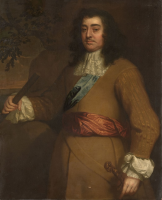
Samuel Pepys' Diary. 7th April 1666. Thence took them to the cakehouse, and there called in the coach for cakes and drank, and thence I carried them to my Chancellor's [aged 57] new house to shew them that, and all mightily pleased, thence set each down at home, and so I home to the office, where about ten of the clock W. Hewer [aged 24] comes to me to tell me that he has left my wife well this morning at Bugden, which was great riding, and brings me a letter from her. She is very well got thither, of which I am heartily glad.


Samuel Pepys' Diary. 7th April 1666. Thence took her by coach to Hales's [aged 66], and there find Mrs. Pierce and her boy and Mary. She had done sitting the first time, and indeed her face is mighty like at first dash.
Samuel Pepys' Diary. 7th April 1667. Thence back to White Hall, and there saw the King [aged 36] come out of chapel after prayers in the afternoon, which he is never at but after having received the Sacrament: and the Court, I perceive, is quite out of mourning; and some very fine; among others, my Lord Gerard [aged 49], in a very rich vest and coat. Here I met with my Lord Bellasses [aged 52]: and it is pretty to see what a formal story he tells me of his leaving, his place upon the death of my Lord Cleveland [deceased], by which he is become Captain of the Pensioners; and that the King did leave it to him to keep the other or take this; whereas, I know the contrary, that they had a mind to have him away from Tangier. He tells me he is commanded by the King to go down to the Northward to satisfy the Deputy Lieutenants of Yorkshire, who have desired to lay down their commissions upon pretence of having no profit by their places but charge, but indeed is upon the Duke of Buckingham's [aged 39] being under a cloud (of whom there is yet nothing heard), so that the King is apprehensive of their discontent, and sends him to pacify them, and I think he is as good a dissembler as any man else, and a fine person he is for person, and proper to lead the Pensioners, but a man of no honour nor faith I doubt.


Samuel Pepys' Diary. 7th April 1668. Here I hear Sir W. Davenant is just now dead; and so who will succeed him in the mastership of the house is not yet known. The eldest Davenport is, it seems, gone from this house to be kept by somebody; which I am glad of, she being a very bad actor. I took her then up into a coach and away to the Park, which is now very fine after some rain, but the company was going away most, and so I took her to the Lodge, and there treated her and had a deal of good talk, and now and then did baiser la, and that was all, and that as much or more than I had much mind to because of her paint. She tells me mighty news, that my Baroness Castlemayne [aged 27] is mightily in love with Hart [aged 42] of their house: and he is much with her in private, and she goes to him, and do give him many presents; and that the thing is most certain, and Becke Marshall only privy to it, and the means of bringing them together, which is a very odd thing; and by this means she is even with the King's love to Mrs. Davis [aged 20]. This done, I carried her and set her down at Mrs. Manuel's, but stayed not there myself, nor went in; but straight home, and there to my letters, and so home to bed.


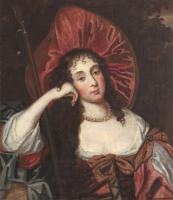


Annals of the six Kings of England by Nicholas Trivet
Translation of the Annals of the Six Kings of England by that traces the rise and rule of the Angevin aka Plantagenet dynasty from the mid-12th to early 14th century. Written by the Dominican scholar Nicholas Trivet, the work offers a vivid account of English history from the reign of King Stephen through to the death of King Edward I, blending political narrative with moral reflection. Covering the reigns of six monarchs—from Stephen to Edward I—the chronicle explores royal authority, rebellion, war, and the shifting balance between crown, church, and nobility. Trivet provides detailed insight into defining moments such as baronial conflicts, Anglo-French rivalry, and the consolidation of royal power under Edward I, whose reign he describes with particular immediacy. The Annals combines careful year-by-year reporting with thoughtful interpretation, presenting history not merely as a sequence of events but as a moral and political lesson. Ideal for readers interested in medieval history, kingship, and the origins of the English state, this chronicle remains a valuable and accessible window into the turbulent world of the Plantagenet kings.
Available at Amazon in eBook and Paperback format.
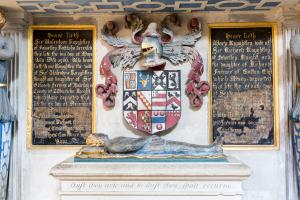
On 31st March 1678 Richard Sanford was born to John Sanford of Nynehead Florey, Somerset [aged 40] and Elizabeth Knightley [aged 24]. He was baptised the same day. On 7th April 1678 he died. On 9th April 1638 he was buried at St Mary's Church, Fawsley [Map].
John Sanford of Nynehead Florey, Somerset: In 1638 he was born. On 21st June 1670 he and Elizabeth Knightley were married at St Katharine Cree Church. In 1711 he died.
Elizabeth Knightley: On 8th July 1653 she was born to Lucius Knightley and Elizabeth Dent. On 26th September 1711 Elizabeth Knightley died.

On 7th April 1694 John Campbell 2nd Duke Argyll [aged 13] was commissioned as Colonel of Lord Lorne's Regiment of Foot, a regiment entirely raised by the Argyll family.

John Evelyn's Diary. 7th April 1695. Lord Halifax [deceased] died suddenly at London, the day his daughter [aged 18] was married to the Earl of Nottingham's [aged 61] son [aged 22] at Burleigh. Lord H. was a very rich man, very witty, and in his younger days somewhat positive.
On 17th September 1766 Lieutenant-General Bennett Noel [aged 51] died. He was buried at the Church of St Peter and St Paul, Exton, Rutlandshire [Map]. After 7th April 1784 Elizabeth Adams [aged 51] was buried with her husband.
Monument sculpted by Joseph Nollekens [aged 29].
Lieutenant-General Bennett Noel: Lieutenant-General Bennett Noel and Elizabeth Adams were married. In 1715 he was born to John Noel and Elizabeth Sherard.
Elizabeth Adams: Around 1715 she was born to Robert Adams. In 1736 Robert Adams died. His estate, reputedly worth £100,000 was divided between his two daughters Margaretta Anna Adams and Elizabeth Adams. On 7th April 1784 she died.


On 7th April 1770 William Wordsworth was born to John Wordsworth and Ann Cookson at Wordsworth House. He married 1802 Mary Hutchinson.
On 7th April 1781 Francis Leggatt Chantrey was born to Francis Chantrey [aged 33] and Sarah Leggatt [aged 36] in Jordanthorpe Hall Farm, Norton, South Yorkshire [Map]. He married 23rd November 1808 Mary Ann Wale.

On 7th April 1801 Charles Whitworth 1st Earl Whitworth [aged 48] and Arabella Diana Cope 3rd Duchess Dorset [aged 32] were married. She the daughter of Charles Cope 2nd Baronet and Catherine Bishopp Countess Liverpool [aged 56].

On 7th April 1815 Aubrey Beauclerk 7th Duke St Albans was born to Aubrey Beauclerk 6th Duke St Albans [aged 49] and Louisa Grace Manners Duchess St Albans [aged 38]. His father died four months later. He a great x 3 grandson of King Charles II of England Scotland and Ireland.
On 7th April 1839 Susan Charlotte Catherine Pelham-Clinton was born to Henry Pelham-Clinton 5th Duke Newcastle-under-Lyne [aged 27] and Susan Harriet Catherine Hamilton Duchess Newcastle under Lyne [aged 24]. She married 23rd April 1860 Adolphus Frederick Charles William Vane-Tempest, son of Charles William Vane 3rd Marquess Londonderry and Frances Vane Tempest Marchioness Londonderry.


On 7th April 1848 Archbishop Randall Davidson was born at Edinburgh. He was educated at Harrow School.
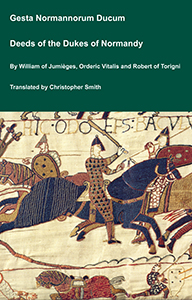
The Deeds of the Dukes of Normandy
The Gesta Normannorum Ducum [The Deeds of the Dukes of Normandy] is a landmark medieval chronicle tracing the rise and fall of the Norman dynasty from its early roots through the pivotal events surrounding the Norman Conquest of England. Originally penned in Latin by the monk William of Jumièges shortly before 1060 and later expanded at the behest of William the Conqueror, the work chronicles the deeds, politics, battles, and leadership of the Norman dukes, especially William’s own claim to the English throne. The narrative combines earlier historical sources with firsthand information and oral testimony to present an authoritative account of Normandy’s transformation from a Viking settlement into one of medieval Europe’s most powerful realms. William’s history emphasizes the legitimacy, military prowess, and governance of the Norman line, framing their expansion, including the conquest of England, as both divinely sanctioned and noble in purpose. Later chroniclers such as Orderic Vitalis and Robert of Torigni continued the history, extending the coverage into the 12th century, providing broader context on ducal rule and its impact. Today this classic work remains a foundational source for understanding Norman identity, medieval statesmanship, and the historical forces that reshaped England and Western Europe between 800AD and 1100AD.
Available at Amazon in eBook and Paperback format.
Ten Years' Digging. On the 7th of April, we opened a barrow [Stonesteads Barrow [Map]] in a field called Stonesteads, a quarter of a mile from the village of Waterhouses, measuring 17 yards across, composed of earth, limestones, and boulders. Slightly South-East from the centre of the barrow, upon a pavement of thin flat stones raised 6 inches above the natural level of the land, lay the skeleton of a tall and strongly-built man, apparently beyond the middle period of life, who had been placed in the common flexed posture, with the head towards the outside of the tumulus. Near his feet was the tusk of a large boar, rubbed down on the inner surface to abput half the natural thickness, near the shoulders were two instruments of burnt flint, one round ended, the other, part of a neat arrow-point; and a section about half-an-inch long, cut from a large rib, and neatly dressed round the edge of the cut surfaces. On the floor of the barrow were indications of fire, and a few pieces of calcined bone, which render it probable that there had been a more ancient interment in the barrow, which was about eighteen inches in central elevation.
Ten Years' Digging. The remainder of the day was occupied by another barrow on a rocky and elevated xidge in the neighbourhood, called Lomberlow [Map]. The mound, about 16 yards diameter, is crossed by a hedge and double stone wall, so tbat we could not dig out the middle, but we worked as near to it as practicable. It is composed of stones broken from the upper beds of the rocky masses around, mingled with soil just sufficient to fill the interstices, and stands upon a very uneven floor of rock, in a depression of which, enlarged by artificial means, a cist was erected of well-defined, rectangular form, composed of four massive stones, measuring inside three feet by two feet, and covered by three large stones laid across, two being of limestone, each a yard long by eighteen inches wide and six thick; the other, covering the joint, was a slab of sandstone, brought from the bed of the River Hamps, which flows through, and gives the name to the village of Waterhouses, about a mile from the barrow. The cist was south of the centre, and its covering stones not more than eighteen inches below the turf, though its floor was four feet; it was built with the longest diameter East and West, and was filled with earth, amongst which lay the skeleton of a full-grown young person, with the head to the West, and necessarily in an extremely contracted posture. At the shoulders we found a very good spear-head of mottled grey flint, and an uncertain instrument of white flint, very highly polished. Above the cist were numerous small pebbles, the leg-bone of a large dog, and a little charcoal.
On 7th April 1853 Leopold Saxe Coburg Gotha 1st Duke Albany was born to Prince Albert Saxe Coburg Gotha [aged 33] and Queen Victoria of the United Kingdom [aged 33] at Buckingham Palace [Map]. Coefficient of inbreeding 7.25%. He married 27th April 1882 Helena Waldeck Duchess Albany and had issue.
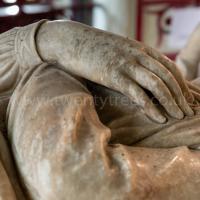
On 7th April 1854 Catherine Louise Georgina Marlay [aged 23] died from childbirth three weeks after giving birth to her daughter Edith Katherine Manners [deceased] who had died at twelve days old. She was buried at Highgate Cemetery on 15th April 1854. Monument by William Calder Marshall [aged 41] erected in 1862 in a chapel at St Katherine's Church, Rowsley [Map] built for the purpose commissioned by her husband John Manners [aged 35], the future 7th Duke of Rutland.




The Diary of George Price Boyce 1855-1857. 7th April 1857. Went to Solomon's [aged 33]. He has a grand picture, "Waiting for the Verdict." Saw some remarkable designs by his young brother (Simeon [aged 16]) showing much Rossetti-like feeling.


On 7th April 1875 William Kingdon Clifford [aged 29] and Lucy Lane [aged 28] were married. They had two children.
On 7th April 1930 Anne Lea aka Merritt [aged 85] died.

On 7th April 1973 Ian Campbell 11th Duke of Argyll [aged 69] died. His son Ian [aged 35] succeeded 12th Duke Argyll, 9th Baron Hamilton of Hameldon in Leicestershire.
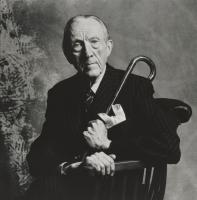
7th April 1982. Lord Snowdon [aged 52]. Photograph of Sacheverell Reresby Sitwell 6th Baronet [aged 84].
On 5th November 2004, his second wedding anniversary, Anthony Ashley-Cooper 10th Earl of Shaftesbury [aged 66] was murdered by Mohammed M'Barek, brother of his wife Jamila Ben M'Barek Countess of Shaftesbury [aged 43] on her behalf. On 7th April 2005 the remains of Anthony Ashley-Cooper 10th Earl of Shaftesbury were discovered in a valley at Théoule-sur-Mer, Alpes-Maritimes on the outskirts of Cannes. His son Anthony [aged 27] succeeded 11th Earl Shaftesbury, 11th Baron Ashley of Wimborne St Giles, 12th Baronet Cooper of Rockbourne in Southampton. He died six weeks after assuming the title following the discovery of his father's remains.
Abbot John Whethamstede’s Chronicle of the Abbey of St Albans
Abbot John Whethamstede's Register aka Chronicle of his second term at the Abbey of St Albans, 1451-1461, is a remarkable text that describes his first-hand experience of the beginning of the Wars of the Roses including the First and Second Battles of St Albans, 1455 and 1461, respectively, their cause, and their consequences, not least on the Abbey itself. His text also includes Loveday, Blore Heath, Northampton, the Act of Accord, Wakefield, and Towton, and ends with the Coronation of King Edward IV. In addition to the events of the Wars of the Roses, Abbot John, or his scribes who wrote the Chronicle, include details in the life of the Abbey such as charters, letters, land exchanges, visits by legates, and disputes, which provide a rich insight into the day-to-day life of the Abbey, and the challenges faced by its Abbot.
Available at Amazon in eBook and Paperback format.
On 7th April 2011 Hugh Denis Charles Fitzroy 11th Duke Grafton [aged 92] died at Euston Hall, Suffolk. His grandson Henry [aged 33] succeeded 12th Duke Grafton, 12th Earl Euston, 12th Viscount Ipswich, 12th Baron Sudbury. Olivia Staden Duchess Grafton by marriage Duchess Grafton.
On 7th April 2021 Richard Lexington Sutton 9th Baronet [aged 83] was murdered at his Dorset home. His net worth was estimated at £301 million in May 2020 which included the Sheraton Grand Hotel on Park Lane and the Athenaeum in Mayfair, and thousands of acres of land across the country, including estates in Lincolnshire, Dorset, and Aberdeenshire. His son David [aged 61] succeeded 10th Baronet Sutton of Norwood Park in Nottinghamshire.
On 7th April 1206 Otto "Illustrious" Wittelsbach II Duke Bavaria was born to Louis Wittelsbach I Duke Bavaria [aged 32] and Ludmilla Bohemia Duchess Bavaria. He married 1222 Agnes Welf Duchess Bavaria and had issue.
On 7th April 1330 John Plantagenet 3rd Earl Kent was born to Edmund of Woodstock 1st Earl Kent [deceased] and Margaret Wake Countess Kent [aged 33] at Arundel Castle [Map]. He a grandson of King Edward I of England. He married 3rd April 1348 his half second cousin once removed Isabella aka Elizabeth Julich Countess Kent, daughter of William Jülich V Duke Jülich and Joanna Hainaut Duchess Guelders.
On 7th April 1428 Bishop William Percy was born to Henry Percy 2nd Earl of Northumberland [aged 35] and Eleanor Neville Countess Northumberland [aged 31]. He a great x 2 grandson of King Edward III of England. Coefficient of inbreeding 3.49%.
On 7th April 1470 Edward Stafford 2nd Earl Wiltshire was born to John Stafford 1st Earl Wiltshire [aged 42] and Constance Green Countess Wiltshire [aged 43]. He a great x 3 grandson of King Edward III of England. He married after 13th July 1494 his fourth cousin once removed Margaret Grey Countess Wiltshire, daughter of Edward Grey 1st Viscount Lisle and Elizabeth Talbot Viscountess Lisle.
On 7th April 1589 Richard Lumley 1st Viscount Lumley was born to Roger Lumley and Anne Kurtwich. He a great x 3 grandson of King Edward IV of England. He married (1) Frances Shelley and had issue (2) 11th May 1630 his fifth cousin once removed Elizabeth Cornwallis Viscountess Lumley.
On 7th April 1623 Thomas Mainwaring 1st Baronet was born to Philip Mainwaring [aged 32] and Ellen Minshull [aged 28] He married before 8th May 1656 Mary Delves, daughter of Henry Delves 2nd Baronet and Mary Wilbraham, and had issue.
On 7th April 1629 John "The Younger" Habsburg Spain was born illegitimately to Philip IV King Spain [aged 23] and María Calderón.
On 7th April 1643 Francis Hungate 2nd Baronet was born to Francis Hungate [aged 28].
On 7th April 1648 John Sheffield 1st Duke of Buckingham and Normanby was born to Edmund Sheffield 2nd Earl Mulgrave [aged 36] and Elizabeth Cranfield Countess Mulgrave [aged 40]. He married (1) 18th March 1686 Ursula Stawell Countess Mulgrave and Conway and had issue (2) 12th March 1699 his sixth cousin Catherine Greville Duchess Buckingham and Normandby, daughter of Fulke Greville 5th Baron Brooke and Sarah Dashwood Baroness Brooke (3) 16th March 1705 Catherine Darnley Duchess Buckingham and Normandby, daughter of King James II of England Scotland and Ireland and Catherine Sedley Countess Dorchester and Portmore, and had issue.
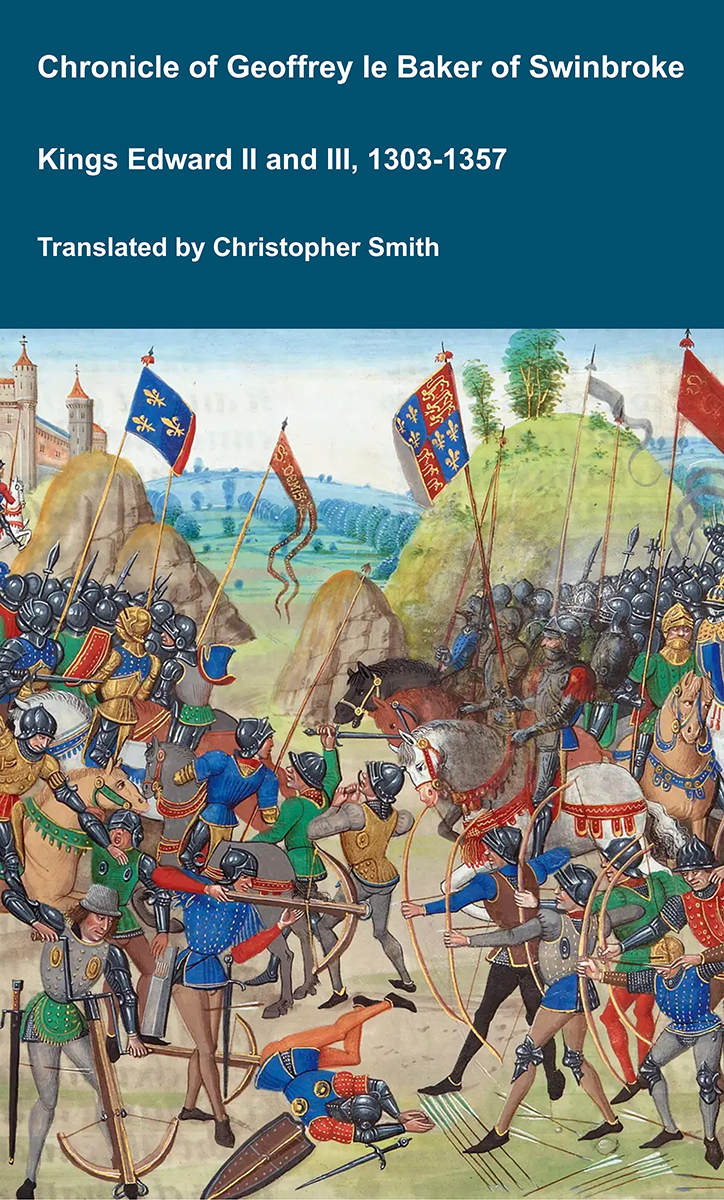
Chronicle of Geoffrey le Baker of Swinbroke
Baker was a secular clerk from Swinbroke, now Swinbrook, an Oxfordshire village two miles east of Burford. His Chronicle describes the events of the period 1303-1356: Gaveston, Bannockburn, Boroughbridge, the murder of King Edward II, the Scottish Wars, Sluys, Crécy, the Black Death, Winchelsea and Poitiers. To quote Herbert Bruce 'it possesses a vigorous and characteristic style, and its value for particular events between 1303 and 1356 has been recognised by its editor and by subsequent writers'. The book provides remarkable detail about the events it describes. Baker's text has been augmented with hundreds of notes, including extracts from other contemporary chronicles, such as the Annales Londonienses, Annales Paulini, Murimuth, Lanercost, Avesbury, Guisborough and Froissart to enrich the reader's understanding. The translation takes as its source the 'Chronicon Galfridi le Baker de Swynebroke' published in 1889, edited by Edward Maunde Thompson.
Available at Amazon in eBook and Paperback format.
On 7th April 1661 Charles Carnegie 4th Earl Southesk was born to Robert Carnegie 3rd Earl Southesk [aged 12] and Anne Hamilton Countess Southesk [aged 22] He married 15th July 1691 his third cousin once removed Mary Maitland, daughter of Charles Maitland 3rd Earl Lauderdale, and had issue.
On 7th April 1704 Paulet St John 1st Baronet was born.
On 7th April 1709 William Stewart 1st Earl of Blessington was born to William Stewart 2nd Viscount Monutjoy [aged 34] and Anne Boyle Viscountess Mountjoy.
On 7th April 1736 Elizabeth Powys Viscountess Sydney was born to Richard Powys and Mary Brudenell [aged 19]. She married 19th May 1789 her sixth cousin Thomas Townshend 1st Viscount Sydney and had issue.

On 7th April 1740 Armar Lowry-Corry 1st Earl Belmore was born to Galbraith Lowry aka Lowry-Corry. He married (1) 3rd October 1771 Margaret Butler and had issue (2) 2nd March 1780 Harriet Hobart Viscountess Belmore, daughter of John Hobart 2nd Earl Buckinghamshire and Mary Anne Drury Countess Buckinghamshire, and had issue (3) 1st March 1794 Mary Anne Caldwell Countess Belmore.
On 7th April 1760 Edmund Phipps was born to Constantine Phipps 1st Baron Mulgrave [aged 37] and Lepell Hervey Baroness Mulgrave [aged 36]. He a great x 2 grandson of King James II of England Scotland and Ireland.


On 7th April 1770 William Wordsworth was born to John Wordsworth and Ann Cookson at Wordsworth House. He married 1802 Mary Hutchinson.
On 7th April 1779 Charles Miles Lambert Monck 6th Baronet was born to William Middleton 5th Baronet [aged 41] and Jane Monck Lady Middleton. He married (1) 1804 Louisa Lucia Cook and had issue (2) 26th July 1831 Mary Elizabeth Bennet, daughter of Charles Bennet 4th Earl Tankerville and Emma Colebrooke Countess Tankerville.


On 7th April 1781 Francis Leggatt Chantrey was born to Francis Chantrey [aged 33] and Sarah Leggatt [aged 36] in Jordanthorpe Hall Farm, Norton, South Yorkshire [Map]. He married 23rd November 1808 Mary Ann Wale.
On 7th April 1797 Louisa Elizabeth Grey Countess Durham was born to Charles Grey 2nd Earl Grey [aged 33] and Mary Elizabeth Ponsonby Countess Grey [aged 21]. She married 9th December 1816 John "Radical Jack" Lambton 1st Earl Durham and had issue.


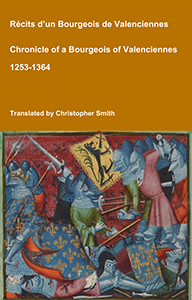
Chronicle of a Bourgeois of Valenciennes
Récits d’un bourgeois de Valenciennes aka The Chronicle of a Bourgeois of Valenciennes is a vivid 14th-century vernacular chronicle written by an anonymous urban chronicler from Valenciennes in the County of Hainaut. It survives in a manuscript that describes local and regional history from about 1253 to 1366, blending chronology, narrative episodes, and eyewitness-style accounts of political, military, and social events in medieval France, Flanders, and the Low Countries. The work begins with a chronological framework of events affecting Valenciennes and its region under rulers such as King Philip VI of France and the shifting allegiances of local nobility. It includes accounts of conflicts, sieges, diplomatic manoeuvres, and the impact of broader struggles like the Hundred Years’ War on urban life in Hainaut. Written from the perspective of a burgher (bourgeois) rather than a monastery or royal court, the chronicle offers a rare lay viewpoint on high politics and warfare, reflecting how merchants, townspeople, and civic institutions experienced the turbulence of the 13th and 14th centuries. Its narrative style combines straightforward reporting of events with moral and civic observations, making it a valuable source for readers interested in medieval urban society, regional politics, and the lived experience of war and governance in pre-modern Europe.
Available at Amazon in eBook and Paperback format.
On 7th April 1815 Aubrey Beauclerk 7th Duke St Albans was born to Aubrey Beauclerk 6th Duke St Albans [aged 49] and Louisa Grace Manners Duchess St Albans [aged 38]. His father died four months later. He a great x 3 grandson of King Charles II of England Scotland and Ireland.
On 7th April 1818 Simon Haughton Clarke 10th Baronet was born to Simon Haughton Clarke 9th Baronet [aged 53].
On 7th April 1832 Lionel Dawson-Damer 4th Earl of Portarlington was born to George Lionel Dawson-Damer [aged 43] and Mary Georgiana Seymour [aged 33]. He a great x 4 grandson of King James II of England Scotland and Ireland. He married 19th April 1855 Harriet Lydia Robinson Montagu Countess Portarlington, daughter of Henry Robinson Montagu 6th Baron Rokeby, and had issue.
On 7th April 1839 Susan Charlotte Catherine Pelham-Clinton was born to Henry Pelham-Clinton 5th Duke Newcastle-under-Lyne [aged 27] and Susan Harriet Catherine Hamilton Duchess Newcastle under Lyne [aged 24]. She married 23rd April 1860 Adolphus Frederick Charles William Vane-Tempest, son of Charles William Vane 3rd Marquess Londonderry and Frances Vane Tempest Marchioness Londonderry.
On 7th April 1848 Archbishop Randall Davidson was born at Edinburgh. He was educated at Harrow School.
On 7th April 1849 Henry Peter Pitt-Rivers 5th Baron Rivers was born to George Pitt-Rivers 4th Baron Rivers [aged 38] and Susan Georgiana Leveson-Gower Baroness Rivers [aged 39].
On 7th April 1853 Leopold Saxe Coburg Gotha 1st Duke Albany was born to Prince Albert Saxe Coburg Gotha [aged 33] and Queen Victoria of the United Kingdom [aged 33] at Buckingham Palace [Map]. Coefficient of inbreeding 7.25%. He married 27th April 1882 Helena Waldeck Duchess Albany and had issue.

On 7th April 1856 Llewelyn Nevill Vaughan Lloyd-Mostyn 3rd Baron Mostyn was born to Thomas Edward Lloyd-Mostyn [aged 26] and Henrietta Augusta Neville [aged 26]. He married 1st May 1879 Mary Florence Edith Clements and had issue.
On 7th April 1861 Madeline Holme-Sumner Lady Jenkinson was born to Arthur Holme-Sumner [aged 24] and Georgina Emily Kingscote [aged 25]. She married before 9th June 1881 George Banks Jenkinson 12th Baronet, son of George Samuel Jenkinson 11th Baronet and Emily Sophia Lyster Lady Jenkinson, and had issue.
On 7th April 1863 Derek William George Keppel was born to William Keppel 7th Earl Albermarle [aged 30] and Sophia Mary MacNab of Dundurn Castle [aged 30]. He married 20th June 1898 Bridget Louisa Harbord, daughter of Charles Harbord 5th Baron Suffield and Cecilia Annetta Baring Baroness Suffield.
Chronicle of Walter of Guisborough
A canon regular of the Augustinian Guisborough Priory, Yorkshire, formerly known as The Chronicle of Walter of Hemingburgh, describes the period from 1066 to 1346. Before 1274 the Chronicle is based on other works. Thereafter, the Chronicle is original, and a remarkable source for the events of the time. This book provides a translation of the Chronicle from that date. The Latin source for our translation is the 1849 work edited by Hans Claude Hamilton. Hamilton, in his preface, says: 'In the present work we behold perhaps one of the finest samples of our early chronicles, both as regards the value of the events recorded, and the correctness with which they are detailed; Nor will the pleasing style of composition be lightly passed over by those capable of seeing reflected from it the tokens of a vigorous and cultivated mind, and a favourable specimen of the learning and taste of the age in which it was framed.'
Available at Amazon in eBook and Paperback format.
On 7th April 1863 John Esplen 1st Baronet was born.
On 7th April 1868 Mary Wheeler Lady Pocock was born.
On 7th April 1879 John Kennaway 4th Baronet was born to John Henry Kennaway 3rd Baronet [aged 41] and Frances Arbuthnot Lady Kennaway [aged 36]. He married 6th October 1931 Mary Felicité Ponsonby Lady Kennaway and had issue.
On 7th April 1884 Robert Pollock Somerville Head 4th Baronet was born to Robert Garnet Head 3rd Baronet [aged 39].
On 7th April 1891 William Wynne Honywood 10th Baronet was born to John William Honywood 8th Baronet [aged 33]
On 7th April 1898 Arthur William Milborne-Swinnerton-Pilkington 13th Baronet was born to Thomas Edward Milborne-Swinnerton-Pilkington 12th Baronet [aged 40] and Kathleen Mary Alexina Cuffe Lady Milborne-Swinnerton-Pilkington [aged 26].
On 7th April 1898 Alexander Baring 6th Baron Ashburton was born to Francis Denzil Edward Baring 5th Baron Ashburton [aged 31] and Mabel Edith Hood Baroness Ashburton [aged 31]. He married 17th November 1924 Doris Mary Thérèse Harcourt, daughter of Lewis Vernon-Harcourt 1st Viscount Harcourt and Mary Burns Viscountess Harcourt, and had issue.
On 7th April 1900 Noel Lytton 4th Earl of Lytton was born to Neville Bulwer-Lytton 3rd Earl of Lytton [aged 21] and Judith Blunt-Lytton 16th Baroness Wentworth [aged 27].
On 7th April 1908 Robert Alan Clayton-East-Clayton 9th and 5th Baronet was born to George Frederick Lancelot Clayton-East 8th and 4th Baronet [aged 35].
On 7th April 1914 James Heron Walker 5th Baronet was born to Robert Walker 4th Baronet [aged 24] and Synolda Emily Thursby-Pelham Lady Walker and Jaffray.
On 7th April 1926 Basil Fitzherbert 14th Baron Stafford was born to Thomas Charles Fitzherbert [aged 57].
On 7th April 1600 Anthony Cope 1st Baronet [aged 52] and Anne Paston Lady Hanwell [aged 47] were married.

On 7th April 1778 Thomas Orde-Powlett 1st Baron Bolton [aged 37] and Jean Mary Browne Powlett Baroness Bolton [aged 27] were married. She the daughter of Charles Powlett 5th Duke Bolton.
The History of William Marshal was commissioned by his son shortly after William’s death in 1219 to celebrate the Marshal’s remarkable life; it is an authentic, contemporary voice. The manuscript was discovered in 1861 by French historian Paul Meyer. Meyer published the manuscript in its original Anglo-French in 1891 in two books. This book is a line by line translation of the first of Meyer’s books; lines 1-10152. Book 1 of the History begins in 1139 and ends in 1194. It describes the events of the Anarchy, the role of William’s father John, John’s marriages, William’s childhood, his role as a hostage at the siege of Newbury, his injury and imprisonment in Poitou where he met Eleanor of Aquitaine and his life as a knight errant. It continues with the accusation against him of an improper relationship with Margaret, wife of Henry the Young King, his exile, and return, the death of Henry the Young King, the rebellion of Richard, the future King Richard I, war with France, the death of King Henry II, and the capture of King Richard, and the rebellion of John, the future King John. It ends with the release of King Richard and the death of John Marshal.
Available at Amazon in eBook and Paperback format.
On 7th April 1801 Charles Whitworth 1st Earl Whitworth [aged 48] and Arabella Diana Cope 3rd Duchess Dorset [aged 32] were married. She the daughter of Charles Cope 2nd Baronet and Catherine Bishopp Countess Liverpool [aged 56].

On 7th April 1825 Francis Baring 1st Baron Northbrook [aged 28] and Jane Grey [aged 20] were married at Dockyard Chapel, Portsmouth.
On 7th April 1875 William Kingdon Clifford [aged 29] and Lucy Lane [aged 28] were married. They had two children.
On 7th April 1877 Thomas Lister 4th Baron Ribblesdale [aged 22] and Charlotte Monckton "Charty" Tennant [aged 19] were married at Savoy Chapel Royal [Map].
On 7th April 1206 Frederick Metz I Duke Lorraine [aged 63] died. His son Frederick succeeded II Duke Lorraine.
On 7th April 1234 Sancho "Strong" VII King Navarre [aged 79] died. His nephew Theobald [aged 32] succeeded IV King Navarre. Margaret Bourbon Queen Consort Navarre [aged 17] by marriage Queen Consort Navarre.
On 7th April 1287 Robert Mortimer 2nd Baron Mortimer [aged 62] died at Richard's Castle, Herefordshire [Map]. He was buried at Worcester Cathedral [Map]. His son Hugh [aged 32] succeeded 3rd Baron Mortimer Burford aka Richard's Castle. Matilda Baroness Mortimer by marriage Baroness Mortimer Burford aka Richard's Castle.
On 7th or 17th April 1354 Bishop Ralph Stratford [aged 54] died. He was buried in St Paul's Cathedral.
On 7th April 1419 Joan Fitzalan Countess Essex, Hereford and Northampton [aged 72] died. She was buried at Waldon Priory and Abbey [Map].
On 7th April 1498 Charles VIII King France [aged 27] died after he hit his head on a door lintel at Château d'Amboise, Amboise. His second cousin once removed Louis [aged 35] succeeded XII King France: Capet Valois.
On 7th April 1578 Mary Dacre [aged 14] died in Naworth Castle [Map].
On 7th April 1596 Katherine Howard Baroness Berkeley [aged 58] died at Caludon, Coventry. She was buried at Draper's Chapel, St Michael's Church, Coventry.
On 7th April 1681 William Gerard 3rd Baronet [aged 69] died. His son William [aged 43] succeeded 4th Baronet Gerard of Bryn in Lancashire.
The True Chronicles of Jean le Bel Volume 1 Chapters 1-60 1307-1342
The True Chronicles of Jean le Bel offer one of the most vivid and immediate accounts of 14th-century Europe, written by a knight who lived through the events he describes, and experienced some of them first hand. Covering the early decades of the Hundred Years’ War, this remarkable chronicle follows the campaigns of Edward III of England, the politics of France and the Low Countries, and the shifting alliances that shaped medieval warfare. Unlike later historians, Jean le Bel writes with a strong sense of eyewitness authenticity, drawing on personal experience and the testimony of fellow soldiers. His narrative captures not only battles and sieges, but also the realities of military life, diplomacy, and the ideals of chivalry that governed noble society. A key source for Jean Froissart, Le Bel’s chronicle stands on its own as a compelling and insightful work, at once historical record and literary achievement. This translation builds on the 1905 edition published in French by Jules Viard, adding extensive translations from other sources Rymer's Fœdera, the Chronicles of Adam Murimuth, William Nangis, Walter of Guisborough, a Bourgeois of Valenciennes, Geoffrey le Baker of Swinbroke and Richard Lescot to enrich the original text and Viard's notes.
Available at Amazon in eBook and Paperback format.
On 7th April 1732 John Gordon 3rd Earl Aboyne died. His son Charles [aged 6] succeeded 4th Earl Aboyne.

On 7th April 1750 George Byng 3rd Viscount Torrington [aged 48] died. His son George [aged 9] succeeded 4th Viscount Torrington. Lucy Boyle Viscountess Torrington by marriage Viscountess Torrington.
On 7th April 1762 Harry Trelawny 5th Baronet [aged 75] died. His nephew William [aged 40] succeeded 6th Baronet Trelawny of Trelawny in Cornwall.
On 17th September 1766 Lieutenant-General Bennett Noel [aged 51] died. He was buried at the Church of St Peter and St Paul, Exton, Rutlandshire [Map]. After 7th April 1784 Elizabeth Adams [aged 51] was buried with her husband.
Monument sculpted by Joseph Nollekens [aged 29].
Lieutenant-General Bennett Noel: Lieutenant-General Bennett Noel and Elizabeth Adams were married. In 1715 he was born to John Noel and Elizabeth Sherard.
Elizabeth Adams: Around 1715 she was born to Robert Adams. In 1736 Robert Adams died. His estate, reputedly worth £100,000 was divided between his two daughters Margaretta Anna Adams and Elizabeth Adams. On 7th April 1784 she died.
On 7th April 1771 Harriet Benson Baroness Bingley [aged 66] died.
On 7th April 1775 Anthony Thomas Abdy 5th Baronet [aged 55] died without issue. His brother William [aged 43] succeeded 6th Baronet Abdy of Felix Hall in Kelveden in Essex.
On 7th April 1777 Anne Chamber Countess Temple died.
On 7th April 1794 Mary Colley Viscountess Hamberton died.
On 7th April 1796 Spencer Compton 8th Earl of Northampton [aged 57] died. His son Charles [aged 36] succeeded 9th Earl of Northampton. Maria Smith Marchioness Northampton [aged 30] by marriage Countess of Northampton.
On 7th April 1803 Patrick Mcdouall Crichton 6th Earl Dumfries [aged 76] died.
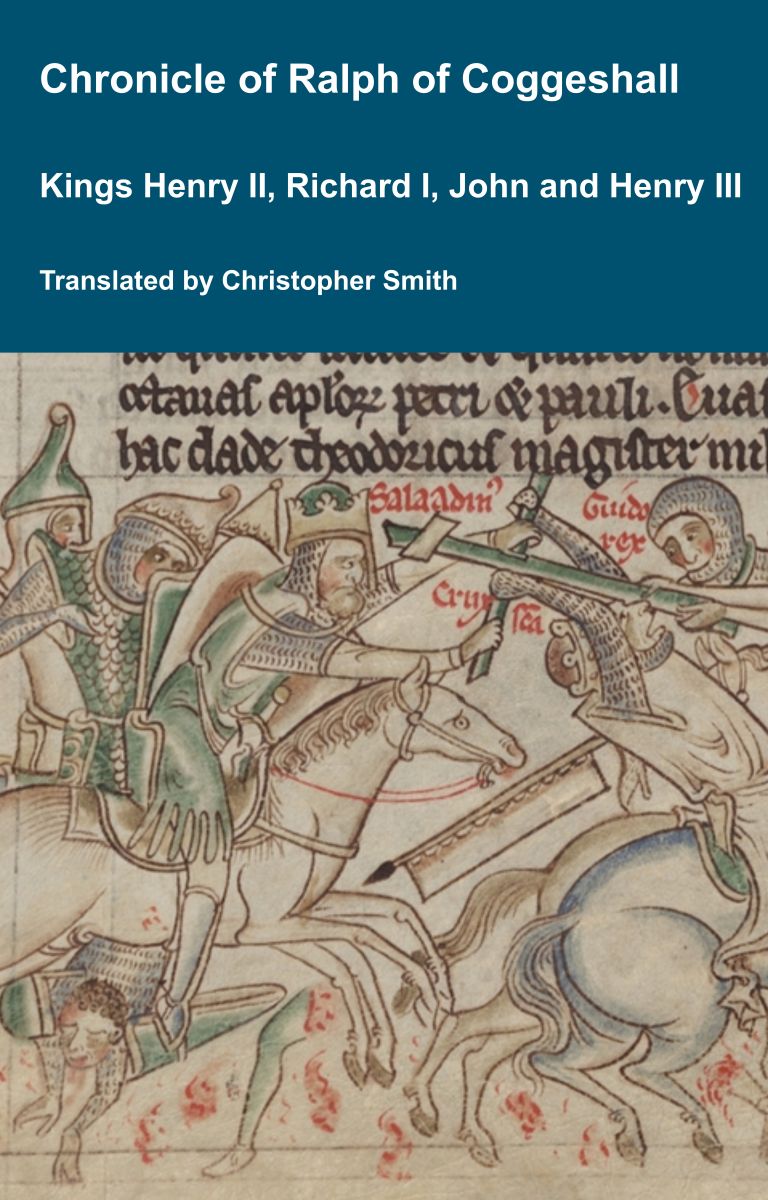
Chronicle of Abbot Ralph of Coggeshall
The Chronicle of Abbot Ralph of Coggeshall (Chronicon Anglicanum) is an indispensable medieval history that brings to life centuries of English and European affairs through the eyes of a learned Cistercian monk. Ralph of Coggeshall, abbot of the Abbey of Coggeshall in Essex in the early 13th century, continued and expanded his community’s chronicle, documenting events from the Norman Conquest of 1066 into the tumultuous reign of King Henry III. Blending eyewitness testimony, careful compilation, and the monastic commitment to record-keeping, this chronicle offers a rare narrative of political intrigue, royal power struggles, and social upheaval in England and beyond. Ralph’s work captures the reigns of pivotal figures such as Richard I and King John, providing invaluable insights into their characters, decisions, and the forces that shaped medieval rule. More than a simple annal, Chronicon Anglicanum conveys the texture of medieval life and governance, making it a rich source for scholars and readers fascinated by English history, monastic authorship, and the shaping of the medieval world.
Available at Amazon in eBook and Paperback format.
On 7th April 1811 Reverend Henry Worsley 8th Baronet [aged 55] died. His son Leonard [aged 23] succeeded 9th Baronet Worsley of Appuldurcombe.

On 7th April 1821 George Pitt 1st Baron Rivers [aged 99] died. His son George [aged 69] succeeded 2nd Baron Rivers of Stratfield Saye in Hampshire, 2nd Baron Rivers of Sudeley Castle in Gloucestershire.
On 7th April 1830 George Fermor 3rd Earl Pomfret [aged 62] died without issue. On His brother Thomas [aged 59] succeeded 4th Earl Pomfret aka Pontefract. Amabel Borough [aged 30] by marriage Countess Pomfret aka Pontefract.
On 7th April 1831 Henry Phipps 1st Earl Mulgrave [aged 76] died. His son Constantine [aged 33] succeeded 2nd Earl Mulgrave, 2nd Viscount Normanby, 4th Baron Mulgrave of New Ross in Wexford and 2nd Baron Mulgrave. Maria Liddell Marchioness Normanby [aged 32] by marriage Countess Mulgrave.
On 7th April 1835 Elizabeth Compton Countess Burlington [aged 74] died in Compton Place Eastbourne.
On 7th April 1841 Henry Meux 1st Baronet [aged 70] died. His son Henry [aged 23] succeeded 2nd Baronet Meux of Theobald's Park in Hertfordshire.
On 7th April 1852 Randall Edward Plunkett 15th Baron Dunsany [aged 47] died. His brother Edward [aged 43] succeeded 16th Baron Dunsany. Anne Constance Dutton Baroness Dunsany [aged 35] by marriage Baroness Dunsany.
On 7th April 1854 Catherine Louise Georgina Marlay [aged 23] died from childbirth three weeks after giving birth to her daughter Edith Katherine Manners [deceased] who had died at twelve days old. She was buried at Highgate Cemetery on 15th April 1854. Monument by William Calder Marshall [aged 41] erected in 1862 in a chapel at St Katherine's Church, Rowsley [Map] built for the purpose commissioned by her husband John Manners [aged 35], the future 7th Duke of Rutland.
On 7th April 1855 Maria Windsor Marchioness Downshire [aged 65] died.
On 7th April 1869 Helena Paterson Bligh Countess Mornington died.
Chronicle of Walter of Guisborough
A canon regular of the Augustinian Guisborough Priory, Yorkshire, formerly known as The Chronicle of Walter of Hemingburgh, describes the period from 1066 to 1346. Before 1274 the Chronicle is based on other works. Thereafter, the Chronicle is original, and a remarkable source for the events of the time. This book provides a translation of the Chronicle from that date. The Latin source for our translation is the 1849 work edited by Hans Claude Hamilton. Hamilton, in his preface, says: 'In the present work we behold perhaps one of the finest samples of our early chronicles, both as regards the value of the events recorded, and the correctness with which they are detailed; Nor will the pleasing style of composition be lightly passed over by those capable of seeing reflected from it the tokens of a vigorous and cultivated mind, and a favourable specimen of the learning and taste of the age in which it was framed.'
Available at Amazon in eBook and Paperback format.
On 7th April 1893 Edwin Abercromby Dashwood 8th Baronet [aged 38] died. His brother Robert [aged 33] succeeded 9th Baronet Dashwood of West Wycombe in Buckinghamshire.
On 7th April 1901 Henry Wilmot 5th Baronet [aged 70] died. He was buried at St Mary's Church, Chaddesden [Map]. His nephew Ralph [aged 25] succeeded 6th Baronet Wilmot of Chaddesden in Derbyshire.
On 7th April 1903 Charles Edmund Isham 10th Baronet [aged 83] died. His first cousin once removed Vere [aged 40] succeeded 11th Baronet Isham of Lamport in Northamptonshire.
On 7th April 1930 Anne Lea aka Merritt [aged 85] died.
On 7th April 1958 John Roseberry Monson 10th Baron Monson [aged 51] died. His son John [aged 25] succeeded 11th Baron Monson of Burton in Lincolnshire, 15th Baronet Monson of Carleton in Lincolnshire.
On 7th April 1973 Ian Campbell 11th Duke of Argyll [aged 69] died. His son Ian [aged 35] succeeded 12th Duke Argyll, 9th Baron Hamilton of Hameldon in Leicestershire.
On 5th November 2004, his second wedding anniversary, Anthony Ashley-Cooper 10th Earl of Shaftesbury [aged 66] was murdered by Mohammed M'Barek, brother of his wife Jamila Ben M'Barek Countess of Shaftesbury [aged 43] on her behalf. On 7th April 2005 the remains of Anthony Ashley-Cooper 10th Earl of Shaftesbury were discovered in a valley at Théoule-sur-Mer, Alpes-Maritimes on the outskirts of Cannes. His son Anthony [aged 27] succeeded 11th Earl Shaftesbury, 11th Baron Ashley of Wimborne St Giles, 12th Baronet Cooper of Rockbourne in Southampton. He died six weeks after assuming the title following the discovery of his father's remains.
On 7th April 2011 Hugh Denis Charles Fitzroy 11th Duke Grafton [aged 92] died at Euston Hall, Suffolk. His grandson Henry [aged 33] succeeded 12th Duke Grafton, 12th Earl Euston, 12th Viscount Ipswich, 12th Baron Sudbury. Olivia Staden Duchess Grafton by marriage Duchess Grafton.
On 7th April 2013 John St Aubyn 4th Baron St Levan [aged 94] died. His nephew James [aged 62] succeeded 5th Baron St Levan of St Michael's Mount in Cornwall, 6th Baronet St Aubyn of St Michael's Mount in Cornwall.
On 7th April 2017 Mary Katharine Fitzalan 15th Lady Herries [aged 76] died. Her sister Theresa [aged 71] succeeded 16th Lord Herries of Terregles.
Abbot John Whethamstede’s Chronicle of the Abbey of St Albans
Abbot John Whethamstede's Register aka Chronicle of his second term at the Abbey of St Albans, 1451-1461, is a remarkable text that describes his first-hand experience of the beginning of the Wars of the Roses including the First and Second Battles of St Albans, 1455 and 1461, respectively, their cause, and their consequences, not least on the Abbey itself. His text also includes Loveday, Blore Heath, Northampton, the Act of Accord, Wakefield, and Towton, and ends with the Coronation of King Edward IV. In addition to the events of the Wars of the Roses, Abbot John, or his scribes who wrote the Chronicle, include details in the life of the Abbey such as charters, letters, land exchanges, visits by legates, and disputes, which provide a rich insight into the day-to-day life of the Abbey, and the challenges faced by its Abbot.
Available at Amazon in eBook and Paperback format.
On 7th April 2021 Richard Lexington Sutton 9th Baronet [aged 83] was murdered at his Dorset home. His net worth was estimated at £301 million in May 2020 which included the Sheraton Grand Hotel on Park Lane and the Athenaeum in Mayfair, and thousands of acres of land across the country, including estates in Lincolnshire, Dorset, and Aberdeenshire. His son David [aged 61] succeeded 10th Baronet Sutton of Norwood Park in Nottinghamshire.