

Chronicle of Geoffrey le Baker of Swinbroke
Baker was a secular clerk from Swinbroke, now Swinbrook, an Oxfordshire village two miles east of Burford. His Chronicle describes the events of the period 1303-1356: Gaveston, Bannockburn, Boroughbridge, the murder of King Edward II, the Scottish Wars, Sluys, Crécy, the Black Death, Winchelsea and Poitiers. To quote Herbert Bruce 'it possesses a vigorous and characteristic style, and its value for particular events between 1303 and 1356 has been recognised by its editor and by subsequent writers'. The book provides remarkable detail about the events it describes. Baker's text has been augmented with hundreds of notes, including extracts from other contemporary chronicles, such as the Annales Londonienses, Annales Paulini, Murimuth, Lanercost, Avesbury, Guisborough and Froissart to enrich the reader's understanding. The translation takes as its source the 'Chronicon Galfridi le Baker de Swynebroke' published in 1889, edited by Edward Maunde Thompson.
Available at Amazon in eBook and Paperback format.
08 Sep is in September.
1051 Banishment of the Godwins
1299 Marriage of King Edward I and Margaret of France
1397 Murder of Thomas of Woodstock
1470 September 1470 Warwick and Clarence land in England
1483 Edward of Middleham created Prince of Wales
Chronicon ex Chronicis by Florence and John of Worcester. 8th September 1051. Meanwhile, Godwin (age 50) and his sons [Note. Sweyn (age 30), Harold (age 29), Tostig (age 25), Gyrth (age 19), Leofwine (age 16) and Wulfnoth (age 11); it isn't clear whether all were present?], with their respective armies, entered Gloucestershire after the feast of the nativity of St. Mary [8th September], and encamping at a place called Langtreo, sent envoys to the king at Gloucester, demanding the surrender of count Eustace (age 36) and his followers, as well as of the Normans and men of Boulogne, who were in possession of the castle on the cliff at Dover, Kent [Map], on pain of hostilities. The king, alarmed for a time at this message, was in great distress, and in the utmost perplexity what to do. But when he found that the troops of the earls Leofric, Siward (age 41), and Ralph were on their march, he replied with firmness that he would by no means consent to give up Eustace and the rest who were demanded. On hearing this, the envoys returned from their bootless errand. As they were departing, the army entered Gloucester, so exasperated, and unanimously ready to fight, that, if the king had given permission, they would have instantly engaged earl Godwin's army. But earl Leofric considering that all the men of greatest note in England were assembled either on his side or the other, it appeared to him and some others a great folly to fight with their own countrymen, and he proposed that, hostages having been given by both parties, the king and Godwin should meet at London on a day appointed, and settle their controversy in a legal way. This advice being approved, and after the exchange of messages, hostages having been given and received, the earl returned into Wessex; and the king assembled a more powerful army from the whole of Mercia and Northumbria, and led it to London. Meanwhile, Godwin and his sons came to Southwark with a vast multitude of the people of Wessex; but his army gradually dwindling away and deserting him, he did not venture to abide the judgment of the king's court, but fled, under cover of night. When, therefore, the morning came, the king, in his witan, with the unanimous consent of the whole army, made a decree that Godwin and his five sons should be banished. Thereupon he and his wife Githa, and Tosti and his wife Judith (age 18), the daughter of Baldwin, count of Flanders, and two of his. other sons, namely, Sweyn and Gurth, went, without loss of time, to Thorney, where a ship had been got ready for them. They quickly laded her with as much gold, silver, and other valuable articles as she could hold, and, embarking in great haste, directed her course towards Flanders and Baldwin (age 39) the count. His sons Harold and Leofwine, making their way to Brycgstowe [Map], went on board a ship which their brother Sweyn had prepared for them, and crossed over to Ireland. The king (age 48) repudiated the queen Edgitha (age 25), on account of his wrath against her father Godwin, and sent her in disgrace, with only a single handmaid, to Wherwell [Map], where she was committed to the custody of the abbess (age 60).67
Note 67. She was a sister of the king.
Chronicon ex Chronicis by Florence and John of Worcester. 8th September 1069. Before the Nativity of St. Mary [8th September] Harold (age 29) and Canute (age 27), sons of Sweyn (age 50), king of Denmark, and their uncle, earl Asbiorn, with earl Thurkill, arriving from Denmark with two hundred and forty ships, landed at the mouth of the river Humber, where they were met by Edgar (age 18) the etheling, earl Waltheof, Marlesweyn, and many others, with a fleet they had assembled. Aldred, archbishop of York, was so distressed at their arrival, that he fell dangerously sick, and departed this life, as he besought of God, on Friday the third of the ides [the 11th] of September, in the tenth year after he became archbishop, and was buried in the church of St. Peter on the eighth day afterwards, namely, on Saturday the thirteenth of the calends of October [19th September]. The Normans, who garrisoned the forts, set fire to the adjacent houses, fearing that they might be of service to the Danes in filling up the trenches; and the flames spreading, destroyed the whole city, together with the monastery of St. Peter. But they were speedily punished for this by an infliction of the divine vengeance; for on Monday the Danish fleet arrived before the city was entirely consumed, and the forts being stormed the same day, and more than three thousand of the Normans killed (the lives of William Malet and his wife and two children, with very few others, being spared), the ships drew off laden with plunder.
On 8th September 1157 King Richard "Lionheart" I of England was born to King Henry "Curtmantle" II of England (age 24) and Eleanor of Aquitaine Queen Consort Franks and England (age 35) at Beaumont Palace, Oxfordshire [Map]. He married 12th May 1191 his half fourth cousin Berengaria of Navarre Queen Consort England, daughter of Sancho "Wise" King Navarre and Sancha Ivrea.
On 8th September 1209 Sancho "Pious" II King Portugal was born to Alfonso "Fat" II King Portugal (age 24) and Urraca Ivrea Queen Consort Portugal (age 22). He a great grandson of King Henry "Curtmantle" II of England.
On 8th September 1271 Charles Martel King Hungary was born to Charles II King Naples (age 17) and Mary of Hungary Queen Consort Naples (age 14). He a great x 3 grandson of King Henry "Curtmantle" II of England. He married 1281 Clementia Habsburg and had issue.
Annals of Worcester. On the sixth day before the Ides of September [8th September 1299], Margaret, the sister of Philip, King of France, arrived in England at Dover. Through her arrival, our captives were freely released from French custody.
Sexto idus Septembris Margareta soror Philippi regis Franciæ in Angliam applicuit apud Dovere; per cujus adventum captivi nostri libere redierunt de custodia Gallicana;
 Chronicle of Walter of Guisborough. And the wedding ceremony1 itself took place in London, on the Thursday within the octave of the Nativity of the Blessed Virgin Mary [10th September 1299], with all the nobles rejoicing and the people of both realms celebrating in gladness.
Factaque est ipsa matrimonialis solemnitas Londoniis1, in ipso die Jovis infra octavas Nativitatis Beatæ Virginis, congaudentibus optimatibus cunctis et lætante populo utriusque terræ.
Note 1. Margaret, Philip's sister, arrived at Dover September 8, and was married two days after to King Edward at Canterbury. Matthew of Westminster, Flores Historium, 432: "In that year, Lady Margaret, sister of Lord Philip, King of France, arrived at Dover around the Nativity of the Blessed Mary [8th September 1299], and two days later, Lord Edward, King of England, joined her to himself in marriage at Canterbury by the authority of the Pope." Amadeus Duke of Savoy had been appointed proxy to contract the espousals, as appears by the instrument dated on the 12th of May. Rot. Alemann. 27 Edward I m. 11. in Turr. Lond.; Rymer, Fœdera, 1.904.
Chronicle of Henry Knighton. 8th September 1346. The Siege of Calais. King Edward set up tents around the town of Calais for himself and his army, and he stationed himself in a city-like formation on the land and placed strong naval forces in the sea port, so that no relief could reach the citizens, neither by sea nor by land, as they were thus encircled in misery by the English. Then King Edward had siege engines and other masterful instruments brought from England, which were suitable for such a siege, to breach the walls.
Obsidio Calesie. Rex Edwardus finxit tentoria circa uillam Calesie pro se et exercitu suo, et hospitatus est in modum ciuitatis per terram et posuit nauigium forte in portu maris, ita quod nullum subsidium potuit ciuibus occurrere, nec per mare neque per terram, per Anglicos sic in miseria inclusis. Deinde rex Edwardus fecit afferri machinas et alia instrumenta magistralia de Anglia queque ad talem obsidionem pertinencia, ad infringendum muros.
Before 8th September 1397 Thomas of Woodstock 1st Duke of Gloucester (age 42) was imprisoned in Calais [Map] to await trial for treason for being the leader of the Lords Appellant.
Around 8th September 1397 Thomas of Woodstock 1st Duke of Gloucester (age 42) was murdered in Calais [Map] for his role as leader of the Lords Appellant. Duke Albemarle, Duke Gloucester, Earl Essex forfeit. His son Humphrey (age 16) succeeded 2nd Earl Buckingham.
Walter Clopton was part of the inquiry into his death the outcome of which is not known. A John Hall was executed for the murder.
Thomas Walsingham [~1422]. [8th September 1397] Meanwhile, because it did not seem safe to the king that the Duke of Gloucester (age 42) should make his defense publicly, on account of the favor of the people, who were excessively devoted to him, the king ordered the Earl Marshal (age 29) to have him secretly killed. And he, having sent instruments of wickedness, caused him to be suffocated, mattresses and feather-beds being heaped over his face. Thus perished that most noble man, both the king's son and the king's uncle, in whom had been placed the hopes and consolation of the whole community of the realm. Afterwards the king craftily arranged for that parliament to be postponed until after Christmas, when it was to be resumed, or rather continued, at Shrewsbury, on the borders of Wales.
Interea, quia non videbatur tutum Regi ut Dux Gloverniæ responsis astaret publice, propter favorem populi, qui ei nimis afficiebatur, Rex jussit Comiti Marescallo, ut eum occulte occideret; qui, missis iniquitatis ministris, fecit eum suffocari, superjectis culcitris et lectis, pluma refertis, super os ejus: sic que mortuus est ille vir optimus, Regis filius et Regis patruus, in quo posita fuere spes et solatium totius regni communitatis. Postea Rex astute fecit illud Parliamentum differri usque post Natale Domini, quod reincipitur, vel potius, continuaretur apud Salopian in confinibus Walliarum.
Froissart Book 4 Chapter 92. Around 8th September 1397. When the duke of Gloucester (age 42) saw himself confined in the castle of Calais [Map], abandoned by his brothers, and deprived of his attendants, he began to be much alarmed. He addressed himself to the earl-marshal (age 29): "For what reason am I thus carried from England and confined here? It seems that you mean to imprison me. Let me go and view the castle, its garrison, and the people of the town." "My lord," replied the earl, "I dare not comply with your demands, for you are consigned to my guard, under pain of death. The king (age 30) our lord is at this moment somewhat wroth with you; and it is his orders that you abide here a while, in banishment with us, which you must have patience to do, until we have other news, and God grant that it may be soon! for, as the Lord may help me, I am truly concerned for your disgrace, and would cheerfully aid you if I could, but you know the oath I have taken to the king, which I am bound in honour to obey." The duke of Gloucester could not obtain any other answer. He judged, from appearances of things around him, that he was in danger of his life, and asked a priest who had said mass, if he would confess him. This he did, with great calmness and resignation, and with a devout and contrite heart cried before the altar of God, the Creator of all things, for his mercy. He was repentant of all his sins, and lamented them greatly. He was in the right thus to exonerate his conscience, for his end was nearer than he imagined. I was informed, that on the point of his sitting down to dinner, when the tables were laid, and he was about to wash his hands, four men rushed out from an adjoining chamber, and, throwing a towel round his neck, strangled him, by two drawing one end and two the other1. When he was quite dead, they carried him to his chamber, undressed him, and placed the body between two sheets, with his head on a pillow, and covered him with furred mantles. They then re-entered the hall, properly instructed what to say and how to act, and declared the duke of Gloucester had been seized with a fit of apoplexy as he was washing his hands before dinner, and that they had great difficulty to carry him to bed. This was spoken of in the castle and town, where some believed it, but others not. "Within two days after, it was published abroad that the duke of Gloucester had died in his bed at the castle of Calais; and, in consequence, the earl marshal put on mourning, for he was nearly related to him, as did all the knights and squires in Calais.
Note 1. He was smothered with pillows, not strangled. Hall, one of the accomplices, made a particular confession of all the circumstances. See Parl Plac[?] viii p. 452. Ed.
On 8th September 1425 Charles III King Navarre (age 64) died.
Chronicle of Gregory [1400-1467]. 8th September 1443. And on the same year, the viij day of Septembyr, there was done a grete vyage yn Fraunce by the Duke of Somesette (age 40) and his retynowe; and at the same viage were slayne and takyn to the nombyr of iij M vij c [3700], whereof were ix lordys and a squyer, whyche that was a grete captayne.
Memoirs of Philip de Commines [1447-1511]. 8th September 1470. Upon the Earl of Warwick's landing1, great numbers came in to him; and King Edward when he heard it, was much alarmed; and (when very late) he began to look about him, and sent to the Duke of Burgundy to desire that his fleet might be ready at sea to intercept the Earl of Warwick on his return to France, for on land he knew how to deal with him. The Duke of Burgundy was not well pleased with these words, for he looked upon it as a greater piece of policy to have hindered the earl from landing, than to be forced to run the hazard of a battle, to drive him out again. The Earl of Warwick had not been landed above five or six days before the whole country came in to him, and he encamped within three leagues of the king, whose army was superior to the earl's (had they been all true to his interest), and waited on purpose to give him battle: the king was possessed of a fortified village or house1, to which (as he told me himself) there was no access but by one bridge, which proved of great service to him; the rest of his forces were quartered in the neighbouring villages. As he sate at dinner, news was suddenly brought him that the Marquis of Montague, the Earl of Warwick's brother, and several other persons of quality, were mounted on horseback, and had caused their soldiers to cry, "God bless King Henry." At first King Edward would give no credit to it, but despatched other messengers to inquire, and in the meantime armed himself, and posted guards to defend the bridge in case of any assault. There was with him at that time a very prudent gentleman called the Lord Hastings2, High Chamberlain of England, in great authority with the king; and he deserved it, for though his wife was the Earl of Warwick's sister, he continued loyal to his king, and was then in his service (as he told me afterwards) with a body of 3000 horse. There was likewise with him the Lord Scales3 (brother to King Edward's queen) besides several good knights and gentlemen who began to think that all was not well, for the messengers confirmed what had been told the king before, and that the enemy was marching boldly on, with a design to surprise him in his quarters.
Note 1. Rapin states that Edward was at Lynn at this time.
Note 2. William, Lord Hastings, son of Richard Hastings, and Alice, daughter of Lord Camoys. He married Catherine, daughter of Richard Neville, last Earl of Salisbury; and was beheaded by order of Richard III on the 13th of June, 1483.
Note 3. Anthony Woodville, Lord Scales and Earl Rivers, was the son of Richard Woodville and Jacquetta of Luxembourg. He married 1. Elizabeth, daughter of Lord Scales, and 2. Mary, daughter of Henry Fitz Lewes. He was beheaded in 1483,
Annals of the six Kings of England by Nicholas Trivet
Translation of the Annals of the Six Kings of England by that traces the rise and rule of the Angevin aka Plantagenet dynasty from the mid-12th to early 14th century. Written by the Dominican scholar Nicholas Trivet, the work offers a vivid account of English history from the reign of King Stephen through to the death of King Edward I, blending political narrative with moral reflection. Covering the reigns of six monarchs—from Stephen to Edward I—the chronicle explores royal authority, rebellion, war, and the shifting balance between crown, church, and nobility. Trivet provides detailed insight into defining moments such as baronial conflicts, Anglo-French rivalry, and the consolidation of royal power under Edward I, whose reign he describes with particular immediacy. The Annals combines careful year-by-year reporting with thoughtful interpretation, presenting history not merely as a sequence of events but as a moral and political lesson. Ideal for readers interested in medieval history, kingship, and the origins of the English state, this chronicle remains a valuable and accessible window into the turbulent world of the Plantagenet kings.
Available at Amazon in eBook and Paperback format.
Chronicle of Jean de Waurin Books 3-5 [1400-1474]. In the month of September of the year seventy [8th September 1470], the aforementioned Warwick and Clarence and their company found themselves in England. Upon their arrival there, they disembarked at Bristol1, where they mustered seven or eight thousand men to aid them. Then they set out into the fields, heading straight towards King Edward, and their ranks were continually bolstered by people from all quarters. Especially, passing through the duchy of Somerset, they were joined by Lord Shrewsbury, son of Lord Talbot, and Sir Stanley, both of whom had five thousand men with them.
Ou mois de septembre an soixante dix se trouverent lesdis Warewic et Clarence et leur compaignie en Angleterre, lesquelz illec arrivez descendirent a Bristo, ou ilz recouvrerent sept ou huit mille hommes en leur ayde, puis se misrent auz champz, tyrant droit vers le roy Edouard, et tousjours leur croissoient gens de toutes pars; mesmement passant parmy la duchie de Sombresset se vindrent joindre a eulz le seigneur de Chirosbury, filz du seigneur de Thalboth, et le sire de Stanlay, lesquelz seigneurs avoient avec [eulz] chincq mille hommes.
Note 1. "Bristo". Other sources including Fabyan say Dartmouth, Devon.
Chronicle of Robert Fabyan [-1512]. In the moneth of Septembre [8th September 1470], & X yere of the kyng, the foresayd duke of Clarence, accompanyed with ye erlys of Warwyke, of Penbroke, & of Oxenforde, & other many gentylmen, ladyd at Dartmouth in Deuynshyre, & there made theyr proclamacions in the name of kynge Henry the VI and so drewe ferther into the lande. Wherof herynge, ye comons of that coutre and other drewe vnto theim by great companyes.
Warkworth's Chronicle [1461-1474]. 8th September 1470. And in the same x. yere aforeseide, a lytelle before Michaelmesse, the Duke of Clarence (age 20) and the Earl of Warwick (age 41) londede in the west countre, and gadered there a grete peple.
Collectanea by John Leland [1502-1552]. [8th September 1470] This x. Yere of Edwarde the Duke of Clarence, and Erle of Warwike, aboute Michelmes, landid in the West Cuntery, and gatherid People.
Croyland Chronicle 1470. [8th September 1470] Hardly had these men been six months in exile, when, behold! recruited by means of the treasures of the king of the French, they landed in the same parts of England from which they had taken their departure. All the English in the neighbourhood felt compassion, as always is the case, for the exiles who had thus returned, and, not so much joining them, as waiting upon them to show them every attention, increased their forces to such numbers, that the troops of king Edward, for which he was waiting at Doncaster, withdrew from a contest so doubtful in its results. There was then living in the neighbourhood, at his own mansion at Pomfret, John Neville, brother of the earl of Warwick, and who at this time had the title of marquis of Montague. Although he had sworn fealty to king Edward, still, on hearing of the arrival of his brother, he had recourse to treachery; and entered into a conspiracy, the object of which was to seize the king's person by means of the large body of men, which, by virtue of the royal proclamation, he had levied.
A Brief Latin Chronicle. In the year of our Lord 1470, around the feast of the Nativity of the Blessed Mary [8th September 1470], the Duke of Clarence and the Earl of Warwick, along with many others who had been expelled to France by King Edward a little earlier because of their rebellions, returned to England. Landing in Devon, they gathered an army.
Anno Domini millesimo lxx°, circiter festum Nativitatis Beate Marie regressi sunt in Angliam dux Clarencie, comes de Warwic, cum multis aliis, qui paulo ante per regem Edwardum in Franciam propter suas rebelliones effugati fuerant, et in Devonia applicantes exercitum colligerunt.
On 8th September 1476 John Valois II Duke Alençon (age 67) died. His son Rene (age 22) succeeded Duke Alençon.
On 8th September 1483 Edward York Prince of Wales (age 9) was created Prince of Wales and 1st Earl Chester at York Minster [Map]. His parents Richard III (age 30) and Anne Neville (age 27) attended as did Edward Stafford 2nd Earl Wiltshire (age 13).
Edward "Last Plantagenet" York 17th Earl Warwick (age 8) and John York (age 12) were knighted.
Note. Hall's Chronicle places the date at 05 Jul 1483.
Croyland Chronicle 1483. [8th September 1483]. Being now desirous, with all speed, to show in the north, where in former years he had chiefly resided, the high and kingly station which he had by these means acquired, he entered the royal city of London, and passing through Windsor, Oxford, and Coventry, at length arrived at York. Here, on a day appointed for repeating his coronation in the metropolitan church, he also presented his only son, Edward, whom, on the same day, he had elevated to the rank of Prince of Wales, with the insignia of the golden wand, and the wreath upon the head; while, at the same time, he gave most gorgeous and sumptuous feasts and banquets, for the purpose of gaining the affections of the people. Nor were treasures by any means then wanting, with which to satisfy the desires of his haughty mind; since he had taken possession of all those which the most glorious king Edward, his deceased brother, had, by dint of the greatest care and scrupulousness, amassed, as already stated, many years before, and had entrusted to the disposal of his executors as a means whereby to carry out the dispositions of his last will: all these he had seized, the very moment that he had contemplated the usurpation of the throne.
On 8th September 1496 Charles Valois was born to Charles VIII King France (age 26) and Anne of Brittany Queen Consort France (age 19). Coefficient of inbreeding 2.27%. He died aged less than one years old.


On 8th September 1524 Charlotte Valois (age 7) died of measles. She had been in the care of her aunt Marguerite Valois Orléans Queen Consort Navarre (age 32) who was with her when she died.


Henry Machyn's Diary. 8th September 1559. The viij day of September at after-none [was] the obseque of Henry the Frenche kyng, the herse garnyshed with grett skochyons of armes bosted [Note. Possibly embossed] with grett crownes, and all under ther fett [feet] with blake, and a grett palle of cloth of gold, and ys helmett and mantyll of cloth of gold and cott armur, targett and sworde, and crest, and angyd [hanged] all the quer [choir] with blake and armes, and my lord tresorer (age 76) the cheyff [mourner], and next my lord chamburlen, my lord of Burgany, my lord of Hunsdon (age 33), and my lord Cobam (age 31), my lord Dacurs of the Sowth, and my lord Pallett, ser Recherd Sakefeld (age 52), and ser Edward Warner (age 48), and mony mo morners all in blake; and contenent songe durge, and a xiiij [14] haroldes of armes in ther cott armur afor the lordes, and after to the bysshope('s) palles to drynke.

On 8th September 1560, the day of the Abingdon Fair, Amy Robsart (age 28) died from falling down stairs at Cumnor Place, Abingdon [Map]. She was married to Robert Dudley 1st Earl of Leicester (age 28), favourite of Queen Elizabeth I of England and Ireland (age 27), who was with Queen Elizabeth I of England and Ireland at Windsor Castle [Map] at the time. Foul play was suspected but not proven. The event was regarded as suspicious by many. The Queen's reputation being tarnished she could not risk a marriage with Dudley.
The inquest into her death concluded...
Inquisition as indenture held at Cumnor [Map] in the aforesaid county [Oxfordshire] on 9 September in the second year of the reign of the most dread Lady Elizabeth, by the grace of God queen of England, France, and Ireland, defend of the faith, etc., before John Pudsey, gent, a coroner of the said lady queen in the aforesaid county, on inspection of the body of Lady Amy Dudley, late wife of Robert Dudley, knight of the most noble order of the garter, there lying dead: by oath of Richard Smith, gent., Humphrey Lewis, gent., Thomas Moulder, gent., Richard Knight, Thomas Spyre, Edward Stevenson, John Stevenson, Richard Hughes, William Cantrell, William Noble, John Buck, John Keene, Henry Lanlgey, Stephen Ruffyn, and John Sire: which certain jurors, sworn to tell the truth at our request, were adjourned from the aforesaid ninth day onwards day by day very often; and finally various several days were given to them by the selfsame coroner to appear both before the justices of the aforesaid lady queen at the assizes assigned to be held in the aforesaid county and before the same coroner in order there to return their verdict truthfully and speedily, until 1 August in the third year of the reign of the said lady queen; on which day the same jurors say under oath that the aforesaid Lady Amy on 8 September in the aforesaid second year of the reign of the said lady queen, being alone in a certain chamber within the home of a certain Anthony Forster, esq., in the aforesaid Cumnor, and intending to descend the aforesaid chamber by way of certain steps (in English called 'steyres') of the aforesaid chamber there and then accidentally fell precipitously down the aforesaid steps to the very bottom of the same steps, through which the same Lady Amy there and then sustained not only two injuries to her head (in English called 'dyntes') - one of which was a quarter of an inch deep and the other two inches deep - but truly also, by reason of the accidental injury or of that fall and of Lady Amy's own body weight falling down the aforesaid stairs, the same Lady Amy there and then broke her own neck, on account of which certain fracture of the neck the same Lady Amy there and then died instantly; and the aforesaid Lady Amy was found there and then without any other mark or wound on her body; and thus the jurors say on their oath that the aforesaid Lady Amy in the manner and form aforesaid by misfortune came to her death and not otherwise, as they are able to agree at present; in testimony of which fact for this inquest both the aforesaid coroner and also the aforesaid jurors have in turn affixed their seals on the day.
On 8th September 1589 Jane Kennedy drowned when crossing the River Forth when the boat in which she was travelling between Burntisland and Leith. capsized.
Henrici Quinti, Angliæ Regis, Gesta, is a first-hand account of the Agincourt Campaign, and subsequent events to his death in 1422. The author of the first part was a Chaplain in King Henry's retinue who was present from King Henry's departure at Southampton in 1415, at the siege of Harfleur, the battle of Agincourt, and the celebrations on King Henry's return to London. The second part, by another writer, relates the events that took place including the negotiations at Troye, Henry's marriage and his death in 1422.
Available at Amazon in eBook and Paperback format.
On 8th September 1633 Ferdinand IV King of the Romans was born to Ferdinand III Holy Roman Emperor (age 25) and Maria Anna of Spain Holy Roman Empress (age 27) at Vienna [Map]. Coefficient of inbreeding 15.19%.


Samuel Pepys' Diary. 8th September 1663. Up and to my viall a while, and then to my office on Phillips having brought me a draught of the Katherine yacht, prettily well done for the common way of doing it. At the office all the morning making up our last half year's account to my Lord Treasurer (age 56), which comes to £160,000 or there abouts, the proper expense of this half year, only with an addition of £13,000 for the third due of the last account to the Treasurer for his disbursements, and £1100 for this half year's; so that in three years and a half his thirds come to £14,100.
Samuel Pepys' Diary. 8th September 1666. Thence with Sir W. Batten (age 65) to the Cock-pit [Map], whither the Duke of Albemarle (age 57) is come. It seems the King (age 36) holds him so necessary at this time, that he hath sent for him, and will keep him here. Indeed, his interest in the City, being acquainted, and his care in keeping things quiet, is reckoned that wherein he will be very serviceable. We to him; he is courted in appearance by every body. He very kind to us; I perceive he lays by all business of the fleete at present, and minds the City, and is now hastening to Gresham College, to discourse with the Aldermen. Sir W. Batten and I home (where met by my brother John (age 25), come to town to see how things are with us), and then presently he with me to Gresham College; where infinity of people, partly through novelty to see the new place, and partly to find out and hear what is become one man of another. I met with many people undone, and more that have extraordinary great losses. People speaking their thoughts variously about the beginning of the fire, and the rebuilding; of the City. Then to Sir W. Batten's, and took my brothet with me, and there dined with a great company of neighbours; and much good discourse; among others, of the low spirits of some rich men in the City, in sparing any encouragement to the poor people that wrought for the saving their houses. Among others, Alderman Starling, a very rich man, without; children, the fire at next door to him in our lane, after our men had saved his house, did give 2s. 6d. among thirty of them, and did quarrel with some that would remove the rubbish out of the way of the fire, saying that they come to steal. Sir W. Coventry (age 38) told me of another this morning, in Holborne, which he shewed the King that when it was offered to stop the fire near his house for such a reward that came but to 2s. 6d. a man among the neighbours he would, give but 18d.
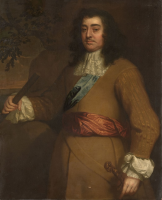


Samuel Pepys' Diary. 8th September 1667. I went to the King's Chapel to the closet, and there I hear Cresset sing a tenor part along with the Church musick very handsomely, but so loud that people did laugh at him, as a thing done for ostentation. Here I met Sir G. Downing (age 42), who would speak with me, and first to inquire what I paid for my kid's leather gloves I had on my hand, and shewed me others on his, as handsome, as good in all points, cost him but 12d. a pair, and mine me 2s. He told me he had been seven years finding out a man that could dress English sheepskin as it should be-and, indeed, it is now as good, in all respects, as kid, and he says will save £100,000 a-year, that goes out to France for kid's skins. Thus he labours very worthily to advance our own trade, but do it with mighty vanity and talking. But then he told me of our base condition, in the treaty with Holland and France, about our prisoners, that whereas before we did clear one another's prisoners, man for man, and we upon the publication of the peace did release all our's, 300 at Leith, and others in other places for nothing, the Dutch do keep theirs, and will not discharge them with[out] paying their debts according to the Treaty. That his instruments in Holland, writing to our Embassadors about this to Bredagh, they answer them that they do not know of any thing that they have done therein, but left it just as it was before. To which, when they answer, that by the treaty their Lordships had [not] bound our countrymen to pay their debts in prison, they answer they cannot help it, and we must get them off as cheap as we can. On this score, they demand £1100 for Sir G. Ascue (age 51), and £5000 for the one province of Zealand, for the prisoners that we have therein. He says that this is a piece of shame that never any nation committed, and that our very Lords here of the Council, when he related this matter to them, did not remember that they had agreed to this article; and swears that all their articles are alike, as the giving away Polleroon, and Surinam, and Nova Scotia, which hath a river 300 miles up the country, with copper mines more than Swedeland, and Newcastle [Map] coals, the only place in America that hath coals that we know of; and that Cromwell did value those places, and would for ever have made much of them; but we have given them away for nothing, besides a debt to the King of Denmarke (age 58). But, which is most of all, they have discharged those very particular demands of merchants of the Guinny company and others, which he, when he was there, had adjusted with the Dutch, and come to an agreement in writing, and they undertaken to satisfy, and that this was done in black and white under their hands; and yet we have forgiven all these, and not so much as sent to Sir G. Downing to know what he had done, or to confer with him about any one point of the treaty, but signed to what they would have, and we here signed to whatever in grosse was brought over by Mr. Coventry (age 39). And [Sir G. Downing] tells me, just in these words, "My Chancellor (age 58) had a mind to keep himself from being questioned by clapping up a peace upon any terms". When I answered that there was other privy-councillors to be advised with besides him, and that, therefore, this whole peace could not be laid to his charge, he answered that nobody durst say any thing at the council-table but himself, and that the King (age 37) was as much afeard of saying any thing there as the meanest privy-councillor; and says more, that at this day the King, in familiar talk, do call the Chancellor "the insolent man", and says that he would not let him speak himself in Council: which is very high, and do shew that the Chancellor is like to be in a bad state, unless he can defend himself better than people think. And yet Creed tells me that he do hear that my Lord Cornbury do say that his father do long for the coming of the Parliament, in order to his own vindication, more than any one of his enemies.
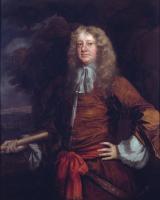


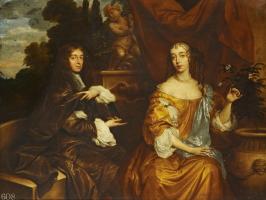
Samuel Pepys' Diary. 8th September 1667. He tells me he do believe that my Baroness Castlemayne (age 26) is compounding with the King (age 37) for a pension, and to leave the Court; but that her demands are mighty high: but he believes the King is resolved, and so do every body else I speak with, to do all possible to please the Parliament; and he do declare that he will deliver every body up to them to give an account of their actions: and that last Friday, it seems, there was an Act of Council passed, to put out all Papists in office, and to keep out any from coming in.


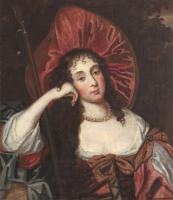


Samuel Pepys' Diary. 8th September 1667. Lord's Day. Up, and walked to St. James's; but there I find Sir W. Coventry (age 39) gone from his chamber, and Mr. Wren (age 38) not yet come thither. But I up to the Duke of York (age 33), and there, after being ready, my Lord Bruncker (age 47) and I had an audience, and thence with my Lord Bruncker to White Hall, and he told me, in discourse, how that, though it is true that Sir W. Coventry did long since propose to the Duke of York the leaving his service, as being unable to fulfill it, as he should do, now he hath so much public business, and that the Duke of York did bid him to say nothing of it, but that he would take time to please himself in another to come in his place; yet the Duke's doing it at this time, declaring that he hath found out another, and this one of the Chancellor's (age 58) servants, he cannot but think was done with some displeasure, and that it could not well be otherwise, that the Duke of York should keep one in that place, that had so eminently opposed him in the defence of his father-in-law, nor could the Duchesse ever endure the sight of him, to be sure. But he thinks that the Duke of York and he are parted upon clear terms of friendship.
Samuel Pepys' Diary. 8th September 1667. And here it comes into my head to set down what Mr. Rawlinson (age 53), whom I met in Fenchurch Street [Map] on Friday last, looking over his ruines there, told me, that he was told by one of my Chancellor's (age 58) gentlemen lately (----byname), that a grant coming to him to be sealed, wherein the King (age 37) hath given her [Baroness Castlemaine (age 26)], or somebody by her means, a place which he did not like well of, he did stop the grant; saying, that he thought this woman would sell everything shortly: which she hearing of, she sent to let him know that she had disposed of this place, and did not doubt, in a little time, to dispose of his. This Rawlinson do tell me my Chancellor's own gentleman did tell him himself.
Samuel Pepys' Diary. 8th September 1667. I to Sir G. Carteret's (age 57) to dinner; where Mr. Cofferer (age 63) Ashburnham; who told a good story of a prisoner's being condemned at Salisbury for a small matter. While he was on the bench with his father-in-law, judge Richardson, and while they were considering to transport him to save his life, the fellow flung a great stone at the judge, that missed him, but broke through the wainscoat. Upon this, he had his hand cut off, and was hanged presently! Here was a gentleman, one Sheres, one come lately from my Lord Sandwich (age 42), with an express; but, Lord! I was almost ashamed to see him, lest he should know that I have not yet wrote one letter to my Lord since his going. I had no discourse with him, but after dinner Sir G. Carteret and I to talk about some business of his, and so I to Mrs. Martin, where was Mrs. Burroughs, and also fine Mrs. Noble, my partner in the christening of Martin's child, did come to see it, and there we sat and talked an hour, and then all broke up and I by coach home, and there find Mr. Pelling and Howe, and we to sing and good musique till late, and then to supper, and Howe lay at my house, and so after supper to bed with much content, only my mind a little troubled at my late breach of vowes, which however I will pay my forfeits, though the badness of my eyes, making me unfit to read or write long, is my excuse, and do put me upon other pleasures and employment which I should refrain from in observation of my vowes.


Samuel Pepys' Diary. 8th September 1668. Up, and by water to White Hall, and to St. James's, there to talk a little with Mr. Wren (age 39) about the private business we are upon, in the Office, where he tells me he finds that they all suspect me to be the author of the great letter, which I value not, being satisfied that it is the best thing I could ever do for myself; and so, after some discourse of this kind more, I back to the Office, where all the morning; and after dinner to it again, all the afternoon, and very late, and then home to supper, where met W. Batelier and Betty Turner; and, after some talk with them, and supper, we to bed. This day, I received so earnest an invitation again from Roger Pepys (age 51), to come to Sturbridge-Fair [at Cambridge] that I resolve to let my wife go, which she shall do the next week, and so to bed. This day I received two letters from the Duke of Richmond (age 29) about his yacht, which is newly taken into the King's service, and I am glad of it, hoping hereby to oblige him, and to have occasions of seeing his noble Duchess, which I admire.

After 8th September 1668. Memorial at St Mary's Church, Sprotbrough [Map] to Sam Bower, Rector of St Mary's Church, Sprotbrough [Map] for thirty-seven years.
On 8th September 1669 Françoise Lorraine Duchess Vendôme (age 76) died.
Annals of the six Kings of England by Nicholas Trivet
Translation of the Annals of the Six Kings of England by that traces the rise and rule of the Angevin aka Plantagenet dynasty from the mid-12th to early 14th century. Written by the Dominican scholar Nicholas Trivet, the work offers a vivid account of English history from the reign of King Stephen through to the death of King Edward I, blending political narrative with moral reflection. Covering the reigns of six monarchs—from Stephen to Edward I—the chronicle explores royal authority, rebellion, war, and the shifting balance between crown, church, and nobility. Trivet provides detailed insight into defining moments such as baronial conflicts, Anglo-French rivalry, and the consolidation of royal power under Edward I, whose reign he describes with particular immediacy. The Annals combines careful year-by-year reporting with thoughtful interpretation, presenting history not merely as a sequence of events but as a moral and political lesson. Ideal for readers interested in medieval history, kingship, and the origins of the English state, this chronicle remains a valuable and accessible window into the turbulent world of the Plantagenet kings.
Available at Amazon in eBook and Paperback format.

John Evelyn's Diary. 8th September 1678. While I was at church came a letter from Mr. Godolphin (age 33), that my dear friend his lady (age 26) was exceedingly ill, and desiring my prayers and assistance. My wife (age 43) and I took boat immediately, and went to Whitehall [Map], where, to my inexpressible sorrow, I found she had been attacked with a new fever, then reigning this excessive hot autumn, and which was so violent, that it was not thought she could last many hours.
John Evelyn's Diary. 8th September 1686. Dr. Compton, Bishop of London (age 54), was on Monday suspended, on pretense of not silencing Dr. Sharp (age 41) [NOTE. Assumed to be the subsequent Archbishop?] at St. Giles's [Map], for something of a sermon in which he zealously reproved the doctrine of the Roman Catholics. The Bishop having consulted the civilians, they told him he could not by any law proceed against Dr. Sharp without producing witnesses, and impleaded according to form; but it was overruled by my Lord Chancellor (age 41), and the Bishop sentenced without so much as being heard to any purpose. This was thought a very extraordinary way of proceeding, and was universally resented, and so much the rather for that two Bishops, Durham (age 53) and Rochester (age 51), sitting in the commission and giving their suffrages the Archbishop of Canterbury (age 69) refused to sit among them. He was only suspended ab officio, and that was soon after taken off. He was brother to the Earl of Northampton, had once been a soldier, had traveled in Italy, but became a sober, grave, and excellent prelate.


On 8th September 1692 Ralph Montagu 1st Duke Montagu (age 53) and Elizabeth "Mad Duchess" Cavendish Duchess Albermarle Duchess of Montagu (age 38) were married at Newcastle House. She the daughter of Henry Cavendish 2nd Duke Newcastle upon Tyne who had died the year before and the widow of Christopher Monck 2nd Duke Albemarle. She the daughter of Henry Cavendish 2nd Duke Newcastle upon Tyne and Frances Pierrepont Duchess Newcastle upon Tyne (age 62).


On 8th September 1755 James Graham 3rd Duke Montrose was born to William Graham 2nd Duke Montrose (age 43) and Lucy Manners Duchess Montrose (age 38). He married (1) 1785 Jemima Elizabeth Ashburnham, daughter of John Ashburnham 2nd Earl Ashburnham and Elizabeth Crowley Countess Ashburham, and had issue (2) 1790 his fifth cousin once removed Caroline Maria Montagu Duchess Montrose, daughter of George Montagu 4th Duke Manchester and Elizabeth Dashwood Duchess Manchester, and had issue.


On 8th September 1761 King George III of Great Britain and Ireland (age 23) and Charlotte Mecklenburg Strelitz Queen Consort England (age 17) were married at Chapel Royal, St James's Palace. She by marriage Queen Consort England. He the son of Frederick Louis Hanover Prince of Wales and Augusta Saxe Coburg Altenburg (age 41). They were third cousins. He a grandson of King George II of Great Britain and Ireland.
On 25th April 1785 Charles Tynte 5th Baronet (age 74) died. Baronet Tynte of Halswell in Somerset extinct. He was buried on 8th September 1785 at the Church of St Edward King and Martyr, Goathurst [Map] where he has amonument by Joseph Nollekens (age 47). His estates were inherired by his niece Jane Hassell, daughter of his sister Jane Tynte, who had married Colonel John Johnson aka Kemeys-Tynte who changed his name from Johnson to Kemeys-Tynte.

On 8th September 1785 Henry Hoare "The Magnificient" (age 80) died. He was buried at St Peter's Church, Stourton. His great-nephew Richard Colt Hoare 2nd Baronet (age 26) inherited his Stourhead, Wiltshire [Map] estates.
On 8th September 1800 Ernest Frederick Saxe Coburg Saalfeld Duke Saxe Coburg Saalfeld (age 76) died at Coburg. His son Francis (age 50) succeeded I Duke Saxe Coburg Gotha.
On 8th September 1801 John "The Younger" Bacon (age 24) and Susanna Sophia Taylor (age 19) were married at St George the Martyr Church, Southwark [Map]. He the son of John "The Elder" Bacon and Elizabeth Wade.
On 8th September 1823 Anthony Lechmere 1st Baronet (age 56) and Eleanor Villiers Lady Lechmere were married. She by marriage Lady Lechmere of Rhyd in Worcestershire.
On 8th September 1831 King William IV of the United Kingdom (age 66) was crowned IV King Great Britain and Ireland at Westminster Abbey [Map].
Kenneth Alexander Howard 1st Earl of Effingham (age 63) attended as Deputy Earl Marshal as a result of Henry Howard-Molyneux-Howard being ill.
Thomas William Anson 1st Earl Lichfield (age 35) was created 1st Earl Lichfield. Louisa Barbara Catherine Phillips Countess Lichfield (age 31) by marriage Countess Lichfield.


On 8th September 1831 Arthur Chichester 1st Baron Templemore (age 34) was created 1st Baron Templemore of Templemore in Donegal during the Coronation of William IV. Augusta Paget Baroness Templemore (age 29) by marriage Baroness Templemore of Templemore in Donegal.
This is a translation of the 'Memoires of Jacques du Clercq', published in 1823 in two volumes, edited by Frederic, Baron de Reissenberg. In his introduction Reissenberg writes: 'Jacques du Clercq tells us that he was born in 1424, and that he was a licentiate in law and a counsellor to Philip the Good, Duke of Burgundy, in the castellany of Douai, Lille, and Orchies. It appears that he established his residence at Arras. In 1446, he married the daughter of Baldwin de la Lacherie, a gentleman who lived in Lille. We read in the fifth book of his Memoirs that his father, also named Jacques du Clercq, had married a lady of the Le Camelin family, from Compiègne. His ancestors, always attached to the counts of Flanders, had constantly served them, whether in their councils or in their armies.' The Memoires cover a period of nineteen years beginning in in 1448, ending in in 1467. It appears that the author had intended to extend the Memoirs beyond that date; no doubt illness or death prevented him from carrying out this plan. As Reissenberg writes the 'merit of this work lies in the simplicity of its narrative, in its tone of good faith, and in a certain air of frankness which naturally wins the reader’s confidence.' Du Clercq ranges from events of national and international importance, including events of the Wars of the Roses in England, to simple, everyday local events such as marriages, robberies, murders, trials and deaths, including that of his own father in Book 5; one of his last entries.
Available at Amazon in eBook and Paperback format.

On 8th September 1831 William Henry Vane 1st Duke Cleveland (age 65) bore the Third Sword at the Coronation of William IV.
Greville Memoirs. 8th September 1831. His Majesty, I hear, was in great ill-humour at the levee yesterday; contrary to his usual custom he sent for nobody, and gave no audiences, but at ten minutes after one flounced into the levee room; not one Minister was come but the Duke of Richmond. Talleyrand and Esterhazy alone of the Corps Diplomatique were in the next room. He attacked the officer of the Guards for not having his cap on his head, and sent for the officer on guard, who was not arrived, at which he expressed great ire. It is supposed that the peerages have put him out of temper. His Majesty did a very strange thing about them. Though their patents are not made out, and the new Peers are no more Peers than I am, he desired them to appear as such in Westminster Abbey and do homage. Colonel Berkeley asked me what he should do, and said what the King had desired of him. I told him he should do no such thing, and he said he would go to the Chancellor and ask him. I don't know how it ended. Howe told me yesterday morning in Westminster Abbey that Lord Cleveland (age 65) is to be a duke, though it is not yet acknowledged if it be so. There has been a battle about that; they say that he got his boroughs to be made a marquis, and got rid of them to be made a duke.8
Note 8. The Earl of Darlington had been made Marquis of Cleveland in 1827, and was raised to the dukedom in January 1833.

On 8th September 1836 Janetta Hughan was born to Thomas Hughan of Airds (age 23) and Louisa Georgiana Beauclerk (age 29). She married 1862 her fifth cousin once removed John Manners 7th Duke Rutland, son of John Henry Manners 5th Duke Rutland and Elizabeth Howard Duchess Rutland, and had issue.
On 8th September 1845 William James Müller (age 33) died.
Memoir of the Life of William James Müller. A few more lines, brief and sad, and this memoir will be finished. On Monday morning, the 8th of September [1845], Edmund Muller had commenced to set his brother's palette after breakfast, as was his wont; and William Muller (age 33), who was propped up, seemed about as well as he had been of late, when suddenly a change came over him. He appears to have broken an internal blood-vessel. He had just strength to call to his brother for help, and then said, "Remember Gooden and — and — that other." He could not pronounce the name, but it was supposed to be Charles Bentley, to whom he was much attached. Soon after this, exhausted nature gave way, his head fell, and he never spoke again. He had entered "the Silent Land," and all his work and sufferings were over.
On Friday, the 12th, he was quietly laid to rest in the old Lewin's Mead burial-ground, situated in a retired part of Bristol, leading out of Brunswick Square. Several of his mother's relatives, the Jameses, had long been buried there. It is a small and secluded cemetery, with a few trees, shrubs, and flowers ; and the grave of Muller, marked only with a flat stone and a simple inscription, is situated at its furthest end, and is placed underneath an overhanging elder-bush. As Tennyson sang in memory of another young Englishman, we may say of Muller —
"'Tis well; 'tis something ; we may stand
Where he in English earth is laid.
And from his ashes may be made
The violets of his native land.
'Tis little; but it looks in truth
As if the quiet bones were blest
Among familiar names to rest.
And in the places of his youth."
The Battle of the Great Redan was a major battle during the Crimean War, fought between British forces against Russia on 18 June [1855] and 8th of September 1855.
On the 7th September the bombardment opened, and continued until noon of the 8th. The signal for the British to begin their assault (the flag of St. George raised over the Mamelon) was then made and the British then assaulted the Great Redan.
The London Gazette 21997. 7th Regiment. Lieutenant William Hope. Date of Act of Bravery, 18th June, 1855.
After the troops had retreated on the morning of the 18th June, 1855, Lieutenant W. Hope being informed by the late Serjeant-Major William Bacon, who was himself wounded, that Lieutenant and Adjutant Hobson was lying outside the trenches badly wounded, went out to look for him, and found him lying in the old agricultural ditch running towards the left flank of the Redan. He then returned, and got four men to bring him in. Finding, however, that Lieutenant Hobson could not be removed without a stretcher, he then ran back across the open to Egerton's Pit, where he procured one, and carried it to where Lieutenant Hobson was lying.
All this was done under a very heavy fire from the Russian batteries.
7th Regiment. Assistant-Surgeon Thomas Egerton Hale, M.D. Date of Act of Bravery, 8th September, 1855
First. For remaining with an officer who was dangerously wounded, (Captain H. M. Jones, 7th Regiment), in the fifth parallel, on 8th September, 1855, when all the men in the immediate neighbourhood retreated, excepting Lieutenant W. Hope and Dr. Hale; and for endeavouring to rally the men, in conjunction with Lieutenant W. Hope, 7th Royal Fusiliers.
Secondly. For having, on 8th September, 1855, after the regiments had retired into the trenches, cleared the most advanced sap of the wounded, and carried, into the sap, under a heavy fire, several wounded men from the open ground, being assisted by Serjeant Charles Fisher, 7th Royal Fusiliers, Coldstream Guards (late of the 49th Regiment). Brevet-Major John Augustus Conolly Date of Act of Bravery, 26th October, 1854.
In the attack by the Russians against the position held by the Second Division, 26th October, 1854, Major Conolly, then a Lieutenant in the 49th Regiment, while in command of a company of that regiment, on outlying picket, made himself most conspicuous by the gallantry of his behaviour. He came particularly under the observation of the late Field-Marshal Lord Raglan (age 66), while in personal encounter with several Russians, in defence of his post. He ultimately fell, dangerously wounded. Lieutenant Conolly was highly praised in General Orders, and promoted into the Coldstream Guards, as a reward for his exemplary behaviour on this occasion.
The London Gazette 21997. 7th Regiment.Assistant-Surgeon Thomas Egerton Hale, M.D. Date of Act of Bravery, 8th September, 1855
First. For remaining with an officer who was dangerously wounded, (Captain H. M. Jones, 7th Regiment), in the fifth parallel, on 8th September, 1855, when all the men in the im mediate neighbourhood retreated, excepting Lieutenant W. Hope and Dr. Hale; and for endeavouring.to rally the men, in conjunction with Lieutenant W. Hope, 7th Royal Fusi liers.
Secondly. For having, on 8th September, 1855, after the regiments had retired into the trenches, cleared the most advanced sap of the wounded, and carried, into the sap, under a heavy fire, several wounded men from the open ground, being assisted by Serjeant Charles Fisher, 7th Royal Fusiliers
St Bartholomew's Church, Whittingham [Map]. Memorial to Reginald Cyril Goodenough, killed in action 8th September 1855 at Sebastapol by Craigs of Newcastle.


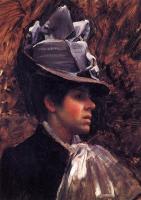
On 8th September 1883 John William Waterhouse (age 34) and Esther Kenworthy (age 25) were married at St Mary's Church, Ealing [Map]. There was no issue from the marriage.
On 8th September 1886 Siegfried Sassoon was born to Alfred Ezra Sassoon (age 25) and Theresa Thornycroft (age 33).


William of Worcester's Chronicle of England
William of Worcester, born around 1415, and died around 1482 was secretary to John Fastolf, the renowned soldier of the Hundred Years War, during which time he collected documents, letters, and wrote a record of events. Following their return to England in 1440 William was witness to major events. Twice in his chronicle he uses the first person: 1. when writing about the murder of Thomas, 7th Baron Scales, in 1460, he writes '… and I saw him lying naked in the cemetery near the porch of the church of St. Mary Overie in Southwark …' and 2. describing King Edward IV's entry into London in 1461 he writes '… proclaimed that all the people themselves were to recognize and acknowledge Edward as king. I was present and heard this, and immediately went down with them into the city'. William’s Chronicle is rich in detail. It is the source of much information about the Wars of the Roses, including the term 'Diabolical Marriage' to describe the marriage of Queen Elizabeth Woodville’s brother John’s marriage to Katherine, Dowager Duchess of Norfolk, he aged twenty, she sixty-five or more, and the story about a paper crown being placed in mockery on the severed head of Richard, 3rd Duke of York.
Available at Amazon in eBook and Paperback format.
On 8th September 1945 Cecil Reginald John Manners (age 77) committed suicide by jumping in front of a train at Crowborough Railway Station Crowborough East Sussex.
The Liverpool Echo reported on the 11th September 1945: "A fully loaded six-chambered revolver was found on the body of a man believed to be Lord Cecil Manners, it wa stated at the inquest at Cromborough (Sussex), to-day. The man was killed by a train at Crowborough Station on Saturday. Detective-Constable Gray said he found an identity card on the body with the name Cecil R. J. Manners. A visiting card bore the name of Lord Cecil Manners, Tunbridge Wells. The coroner said he was satisfied that the man was Lord Cecil Manners. He recorded a verdict of "Death by decapitation by throwing himself in front of a train while the balance of mind was disturbed."

On 8th September 2022 Queen Elizabeth II of the United Kingdom (age 96) died. Her son Charles (age 73) succeeded 3rd King of the United Kingdom.
On 8th September 1157 King Richard "Lionheart" I of England was born to King Henry "Curtmantle" II of England (age 24) and Eleanor of Aquitaine Queen Consort Franks and England (age 35) at Beaumont Palace, Oxfordshire [Map]. He married 12th May 1191 his half fourth cousin Berengaria of Navarre Queen Consort England, daughter of Sancho "Wise" King Navarre and Sancha Ivrea.
On 8th September 1209 Sancho "Pious" II King Portugal was born to Alfonso "Fat" II King Portugal (age 24) and Urraca Ivrea Queen Consort Portugal (age 22). He a great grandson of King Henry "Curtmantle" II of England.
On 8th September 1271 Charles Martel King Hungary was born to Charles II King Naples (age 17) and Mary of Hungary Queen Consort Naples (age 14). He a great x 3 grandson of King Henry "Curtmantle" II of England. He married 1281 Clementia Habsburg and had issue.
On 8th September 1296 William Boteler 2nd Baron Wem and Oversley was born to William Boteler 1st Baron Wem and Oversley (age 22) and Beatrice Unknown. He married (1) his half fifth cousin once removed Margaret Fitzalan Baroness Wem and Oversley, daughter of Richard Fitzalan 1st or 8th Earl of Arundel and Alice Saluzzo Countess Arundel, and had issue (2) before 1358 Joan Sudeley Baroness Boteler, daughter of John Sudeley 2nd Baron Sudeley and Eleanor Scales Baroness Sudeley, and had issue.
On 8th September 1335 Geoffrey Cornwall 3rd Baron Burford was born to Richard Cornwall 2nd Baron Burford (age 22) and Sibella Bodrugan Baroness Burford at Stapleton Castle, Herefordshire [Map]. He a great x 3 grandson of King John of England.
On 8th September 1442 John de Vere 13th Earl of Oxford was born to John de Vere 12th Earl of Oxford (age 34) and Elizabeth Howard Countess of Oxford (age 32). He married (1) in or before 1465 his third cousin once removed Margaret Neville Countess of Oxford, daughter of Richard Neville Earl Salisbury and Alice Montagu 5th Countess of Salisbury (2) 14th January 1507 his fourth cousin once removed Elizabeth Scrope Countess of Oxford.
On 8th September 1496 Charles Valois was born to Charles VIII King France (age 26) and Anne of Brittany Queen Consort France (age 19). Coefficient of inbreeding 2.27%. He died aged less than one years old.
On 8th September 1615 John Cotton 1st Baronet was born to John Cotton (age 72).
On 8th September 1623 James Bellingham 2nd Baronet was born to Henry Bellingham 1st Baronet. He married before 26th October 1650 Catherine Willoughby, daughter of Henry Willoughby 1st Baronet and Lettice Darcy.
Abbot John Whethamstede’s Chronicle of the Abbey of St Albans
Abbot John Whethamstede's Register aka Chronicle of his second term at the Abbey of St Albans, 1451-1461, is a remarkable text that describes his first-hand experience of the beginning of the Wars of the Roses including the First and Second Battles of St Albans, 1455 and 1461, respectively, their cause, and their consequences, not least on the Abbey itself. His text also includes Loveday, Blore Heath, Northampton, the Act of Accord, Wakefield, and Towton, and ends with the Coronation of King Edward IV. In addition to the events of the Wars of the Roses, Abbot John, or his scribes who wrote the Chronicle, include details in the life of the Abbey such as charters, letters, land exchanges, visits by legates, and disputes, which provide a rich insight into the day-to-day life of the Abbey, and the challenges faced by its Abbot.
Available at Amazon in eBook and Paperback format.
On 8th September 1626 Bishop Simon Patrick was born in Gainsborough [Map]. He married 1675 Penelope Jephson.
On 8th September 1633 Ferdinand IV King of the Romans was born to Ferdinand III Holy Roman Emperor (age 25) and Maria Anna of Spain Holy Roman Empress (age 27) at Vienna [Map]. Coefficient of inbreeding 15.19%.
On 8th September 1636 Sarah Harvey Viscountess Bulkeley was born to Daniel Harvey (age 49). She married Robert Bulkeley 2nd Viscount Bulkeley, son of Thomas Bulkeley 1st Viscount Bulkeley and Blanche Cotymore Viscountess Bulkeley, and had issue.
On 8th September 1663 Mary Elizabeth Savile was born to John Savile 1st Baronet (age 23) at Copley. She married before 9th November 1689 Thomas Howard, son of Henry Howard 6th Duke of Norfolk and Anne Somerset Countess Norfolk, and had issue.
On 8th September 1707 Mary Fitzwilliam Countess Pembroke and Montgomery was born to Richard Fitzwilliam 5th Viscount Fitzwilliam (age 30) and Frances Shelley Viscountess Fitzwilliam (age 22). She married 28th August 1733 her half sixth cousin Henry Herbert 6th Earl Montgomery 9th Earl Pembroke, son of Thomas Herbert 8th Earl Pembroke 5th Earl Montgomery and Margaret Sawyer Countess Pembroke and Montgomery, and had issue.
On 8th September 1731 George Hobart 3rd Earl Buckinghamshire was born to John Hobart 1st Earl Buckinghamshire (age 37) and Elizabeth Bristow Countess Buckinghamshire. He married 16th May 1757 Albinia Bertie Countess Buckinghamshire and had issue.
On 8th September 1755 James Graham 3rd Duke Montrose was born to William Graham 2nd Duke Montrose (age 43) and Lucy Manners Duchess Montrose (age 38). He married (1) 1785 Jemima Elizabeth Ashburnham, daughter of John Ashburnham 2nd Earl Ashburnham and Elizabeth Crowley Countess Ashburham, and had issue (2) 1790 his fifth cousin once removed Caroline Maria Montagu Duchess Montrose, daughter of George Montagu 4th Duke Manchester and Elizabeth Dashwood Duchess Manchester, and had issue.

On 8th September 1766 Caroline Sidney Kerr was born to William John Kerr 5th Marquess Lothian (age 29) and Elizabeth Fortescue 5th Marchioness Lothian (age 21).

On 8th September 1780 Henry Gould Yelverton 19th Baron Grey Ruthyn was born to Colonel Edward Thoroton Gould and Barbara Yelverton (age 20). He married before 20th May 1810 Anna Maria Kellam.
On 8th September 1790 Venerable Charles Nourse Wodehouse was born to Reverend Philip Wodehouse (age 45). He married 19th December 1821 Dulcibella Hay, daughter of William Hay 17th Earl Erroll and Jane Bell Countess Erroll, and had issue.

On 8th September 1801 Georgiana Elizabeth Charlotte Hervey was born to Frederick William Hervey 1st Marquess of Bristol (age 31) and Elizabeth Albana Upton (age 26). She married July 1836 John Grey, son of Charles Grey 2nd Earl Grey and Mary Elizabeth Ponsonby Countess Grey.
On 8th September 1806 Admiral Plantagenet Cary 11th Viscount Falkland was born to Charles John Cary 9th Viscount Falkland (age 37) and Christiana Anton Viscountess Falkland.
Chronicle of Abbot Ralph of Coggeshall
The Chronicle of Abbot Ralph of Coggeshall (Chronicon Anglicanum) is an indispensable medieval history that brings to life centuries of English and European affairs through the eyes of a learned Cistercian monk. Ralph of Coggeshall, abbot of the Abbey of Coggeshall in Essex in the early 13th century, continued and expanded his community’s chronicle, documenting events from the Norman Conquest of 1066 into the tumultuous reign of King Henry III. Blending eyewitness testimony, careful compilation, and the monastic commitment to record-keeping, this chronicle offers a rare narrative of political intrigue, royal power struggles, and social upheaval in England and beyond. Ralph’s work captures the reigns of pivotal figures such as Richard I and King John, providing invaluable insights into their characters, decisions, and the forces that shaped medieval rule. More than a simple annal, Chronicon Anglicanum conveys the texture of medieval life and governance, making it a rich source for scholars and readers fascinated by English history, monastic authorship, and the shaping of the medieval world.
Available at Amazon in eBook and Paperback format.
On 8th September 1808 Priscilla Cecilia Moore was born to Colonel Hugh Moore (age 46) and Priscilla Cecilia Armitage. She married 15th July 1828 William Richard Annesley 3rd Earl Annesley, son of Richard Annesley 2nd Earl Annesley, and had issue.
On 8th September 1820 John Gay Newton Alleyne 3rd Baronet was born to Reynold Abel Alleyne 2nd Baronet (age 31) and Rebecca Alton Lady Alleyne (age 26) in Barbados. He married 11th March 1851 Augusta Isabella Fitzherbert Lady Alleyne, daughter of Henry FitzHerbert 3rd Baronet and Agnes Beresford Lady Fitzherbert, and had issue.
On 8th September 1836 Janetta Hughan was born to Thomas Hughan of Airds (age 23) and Louisa Georgiana Beauclerk (age 29). She married 1862 her fifth cousin once removed John Manners 7th Duke Rutland, son of John Henry Manners 5th Duke Rutland and Elizabeth Howard Duchess Rutland, and had issue.
On 8th September 1851 Chandos Stanhope Reade 8th Baronet was born to Lieutenant George Reade (age 39). He married 11th March 1880 Emma Elizabeth Conway Griffith.
On 8th September 1853 Cyril Walter Ponsonby was born to Walter William Brabazon Ponsonby 7th Earl Bessborough (age 32) and Louisa Susan Cornwallis Eliot Countess Bessborough (age 27).
On 8th September 1860 Charles Lindsay Orr-Ewing was born to Archibald Orr-Ewing 1st Baronet (age 42) and Elizabeth Lindsay Reid. He married (1) 5th December 1888 Beatrice Mary Leslie Hore-Ruthven and had issue (2) 28th April 1898 Augusta Boyle.
On 8th September 1868 Florence Edith Louise Dormer was born to John Baptist Dormer 12th Baron Dormer (age 38) and Louisa Frances Mary King-Tenison.
On 8th September 1873 Captain Chandos Graham Temple-Gore-Langton was born to William Stephen Temple Gore-Langton 4th Earl Temple (age 26) and Helen Mabel Graham-Montgomery Countess Temple of Stowe.
On 8th September 1876 Helen Vane-Tempest-Stewart Countess Ilchester was born to Charles Stewart Vane-Tempest-Stewart 6th Marquess Londonderry (age 24) and Theresa Susey Helen Chetwynd-Talbot Marchioness Londonderry (age 20). She married 25th January 1902 Giles Fox-Strangways 6th Earl of Ilchester, son of Henry Edward Fox-Strangways 5th Earl of Ilchester, and had issue.


On 8th September 1877 John Grey was born illegitimately to Harry Grey 8th Earl Stamford 4th Earl Warrington (age 65) and Martha Solomon Countess Stamford and Warrington (age 39).
On 8th September 1880 Reginald Herbert 15th Earl Pembroke 12th Earl Montgomery was born to Sidney Herbert 14th Earl Pembroke 11th Earl Montgomery (age 27) and Beatrix Louisa Lambton Countess Pembroke and Montgomery (age 21). He married 21st January 1904 his third cousin once removed Beatrice Eleanor Paget Countess Pembroke and Montgomery and had issue.
Annals of the six Kings of England by Nicholas Trivet
Translation of the Annals of the Six Kings of England by that traces the rise and rule of the Angevin aka Plantagenet dynasty from the mid-12th to early 14th century. Written by the Dominican scholar Nicholas Trivet, the work offers a vivid account of English history from the reign of King Stephen through to the death of King Edward I, blending political narrative with moral reflection. Covering the reigns of six monarchs—from Stephen to Edward I—the chronicle explores royal authority, rebellion, war, and the shifting balance between crown, church, and nobility. Trivet provides detailed insight into defining moments such as baronial conflicts, Anglo-French rivalry, and the consolidation of royal power under Edward I, whose reign he describes with particular immediacy. The Annals combines careful year-by-year reporting with thoughtful interpretation, presenting history not merely as a sequence of events but as a moral and political lesson. Ideal for readers interested in medieval history, kingship, and the origins of the English state, this chronicle remains a valuable and accessible window into the turbulent world of the Plantagenet kings.
Available at Amazon in eBook and Paperback format.

On 8th September 1882 Charles Chetwynd-Talbot was born to Charles Chetwynd-Talbot 20th Earl of Shrewsbury 5th Earl Talbot (age 21) and Ellen Palmer Morewood Countess Shrewsbury Waterford Talbot (age 26). He married 23rd April 1904 Winifred Contance Hester Paget and had issue.
On 8th September 1883 Robert Jocelyn 8th Earl Roden was born to Robert Jocelyn 7th Earl Roden (age 38). He married 19th July 1905 his fifth cousin once removed Elinor Jessie Parr Countess Roden and had issue.
On 8th September 1886 Siegfried Sassoon was born to Alfred Ezra Sassoon (age 25) and Theresa Thornycroft (age 33).
On 8th September 1906 Clyde Nixon Reade 12th Baronet was born to George Franklin Reade 10th Baronet (age 36).
On 8th September 1908 George Peregrine Young 5th Baronet was born to George Young 4th Baronet (age 35). He married 14th February 1939 Elisabeth Knatchbull-Hugessen Lady Young and had issue.
On 8th September 1917 William Craven 6th Earl Craven was born to William Craven 5th Earl Craven (age 20) and Mary Williamina George Countess Craven.
On 8th September 1922 Peter Francis Walter Kerr 12th Marquess Lothian was born to Andrew William Kerr (age 45).
On 8th September 1923 Patrick Plunket 7th Baron Plunket was born to Terence Plunket 6th Baron Plunket (age 24) and Dorothé Mabel Lewis (age 23).
On 8th September 1476 Jean Foix Count Étampes (age 30) and Marie Valois Viscountess Narbonne (age 18) were married. She the daughter of Charles Valois Duke Orléans and Mary La Marck Duchess Orléans. He the son of Gaston IV Count Foix and Eleanor Trastámara Queen Consort Navarre (age 50). They were third cousin once removed.
On 8th September 1679 William Robinson 1st Baronet (age 23) and Mary Aislabie were married.
The Deeds of the Dukes of Normandy
The Gesta Normannorum Ducum [The Deeds of the Dukes of Normandy] is a landmark medieval chronicle tracing the rise and fall of the Norman dynasty from its early roots through the pivotal events surrounding the Norman Conquest of England. Originally penned in Latin by the monk William of Jumièges shortly before 1060 and later expanded at the behest of William the Conqueror, the work chronicles the deeds, politics, battles, and leadership of the Norman dukes, especially William’s own claim to the English throne. The narrative combines earlier historical sources with firsthand information and oral testimony to present an authoritative account of Normandy’s transformation from a Viking settlement into one of medieval Europe’s most powerful realms. William’s history emphasizes the legitimacy, military prowess, and governance of the Norman line, framing their expansion, including the conquest of England, as both divinely sanctioned and noble in purpose. Later chroniclers such as Orderic Vitalis and Robert of Torigni continued the history, extending the coverage into the 12th century, providing broader context on ducal rule and its impact. Today this classic work remains a foundational source for understanding Norman identity, medieval statesmanship, and the historical forces that reshaped England and Western Europe between 800AD and 1100AD.
Available at Amazon in eBook and Paperback format.
On 8th September 1692 Ralph Montagu 1st Duke Montagu (age 53) and Elizabeth "Mad Duchess" Cavendish Duchess Albermarle Duchess of Montagu (age 38) were married at Newcastle House. She the daughter of Henry Cavendish 2nd Duke Newcastle upon Tyne who had died the year before and the widow of Christopher Monck 2nd Duke Albemarle. She the daughter of Henry Cavendish 2nd Duke Newcastle upon Tyne and Frances Pierrepont Duchess Newcastle upon Tyne (age 62).
On 8th September 1731 William Morice 3rd Baronet (age 24) and Lucy Wharton Lady Morice were married. She by marriage Lady Morice of Werrington in Devon. She the daughter of Thomas Wharton 1st Marquess Wharton.
On 8th September 1748 George Augustus Eliott 1st Baron Heathfield (age 30) and Anne Pollexfen Drake (age 22) were married at St Sepulchre without Newgate Church.
On 8th September 1757 Frederick St John 3rd Viscount St John 2nd Viscount Bolingbroke (age 24) and Diana Spencer Viscountess St John and Bolingbroke (age 23) were married. She by marriage Viscountess St John, Viscountess Bolingbroke. She the daughter of Charles Spencer 3rd Duke of Marlborough (age 50) and Elizabeth Trevor Duchess of Marlborough (age 44).
On 8th September 1761 King George III of Great Britain and Ireland (age 23) and Charlotte Mecklenburg Strelitz Queen Consort England (age 17) were married at Chapel Royal, St James's Palace. She by marriage Queen Consort England. He the son of Frederick Louis Hanover Prince of Wales and Augusta Saxe Coburg Altenburg (age 41). They were third cousins. He a grandson of King George II of Great Britain and Ireland.
On 8th September 1801 John "The Younger" Bacon (age 24) and Susanna Sophia Taylor (age 19) were married at St George the Martyr Church, Southwark [Map]. He the son of John "The Elder" Bacon and Elizabeth Wade.
On 8th September 1812 James Lamb aka Burges 1st Baronet (age 60) and Margaret Lindsay (age 59) were married. She the daughter of James Lindsay 5th Earl Balcarres and Anne Dalrymple Countess Balcarres (age 85).
On 8th September 1819 Arthur Chichester 7th Baronet (age 29) and Charlotte Hamlyn-Williams (age 21) were married at Clovelly, Devon.
On 8th September 1823 Anthony Lechmere 1st Baronet (age 56) and Eleanor Villiers Lady Lechmere were married. She by marriage Lady Lechmere of Rhyd in Worcestershire.
On 8th September 1832 William Trench 3rd Earl of Clancarty (age 28) and Sarah Juliana Butler (age 20) were married. He the son of Richard Le Poer Trench 2nd Earl Clancarty (age 65) and Henrietta Margaret Staples Countess Clancarty (age 62).
Adam Murimuth's Continuation and Robert of Avesbury’s 'The Wonderful Deeds of King Edward III'
This volume brings together two of the most important contemporary chronicles for the reign of Edward III and the opening phases of the Hundred Years’ War. Written in Latin by English clerical observers, these texts provide a vivid and authoritative window into the political, diplomatic, and military history of fourteenth-century England and its continental ambitions. Adam Murimuth Continuatio's Chronicarum continues an earlier chronicle into the mid-fourteenth century, offering concise but valuable notices on royal policy, foreign relations, and ecclesiastical affairs. Its annalistic structure makes it especially useful for establishing chronology and tracing the development of events year by year. Complementing it, Robert of Avesbury’s De gestis mirabilibus regis Edwardi tertii is a rich documentary chronicle preserving letters, treaties, and official records alongside narrative passages. It is an indispensable source for understanding Edward III’s claim to the French crown, the conduct of war, and the mechanisms of medieval diplomacy. Together, these works offer scholars, students, and enthusiasts a reliable and unembellished account of a transformative period in English and European history. Essential for anyone interested in medieval chronicles, the Hundred Years’ War, or the reign of Edward III.
Available at Amazon in eBook and Paperback format.
On 8th September 1835 John George Brabazon Ponsonby 5th Earl Bessborough (age 25) and Frances Charlotte Lambton (age 22) were married. She the daughter of John "Radical Jack" Lambton 1st Earl Durham (age 43) and Harriet Cholmondeley. He the son of John Ponsonby 4th Earl Bessborough (age 54) and Maria Fane. They were fifth cousins.
On 8th September 1883 John William Waterhouse (age 34) and Esther Kenworthy (age 25) were married at St Mary's Church, Ealing [Map]. There was no issue from the marriage.
On 8th September 1887 Henry Alfred Doughty-Tichborne 12th Baronet (age 21) and Mary Gwendoline Petre (age 21) were married. They were half second cousin once removed.
On 8th September 1107 Richard de Vernon 1st Baron Shipbrook (age 57) died. His son Guillaume (age 12) succeeded 2nd Baron Shipbrook.
On 8th September 1308 Piers Mauley 1st Baron de Mauley (age 59) died at Mulgrave Castle. His son Piers (age 24) succeeded 2nd Baron Mauley. Eleanor Furnival Baroness Mauley (age 32) by marriage Baroness Mauley.
On 8th September 1398 John Clinton 3rd Baron Clinton (age 72) died at Maxstoke, Warwickshire. His grandson William (age 20) succeeded 4th Baron Clinton.
On 8th September 1425 Charles III King Navarre (age 64) died.
On 8th September 1473 Elizabeth Butler Countess Shrewsbury and Waterford (age 49) died at Shrewsbury, Shropshire [Map].
On 8th September 1476 John Valois II Duke Alençon (age 67) died. His son Rene (age 22) succeeded Duke Alençon.
On 8th September 1524 Charlotte Valois (age 7) died of measles. She had been in the care of her aunt Marguerite Valois Orléans Queen Consort Navarre (age 32) who was with her when she died.
On 8th September 1539 Bishop John Stokesley (age 64) died.
On 8th September 1603 George Carey 2nd Baron Hunsdon (age 56) died. His brother John (age 53) succeeded 3rd Baron Hunsdon. Mary Hyde Baroness Hunsdon (age 49) by marriage Baroness Hunsdon.
Chronicle of Abbot Ralph of Coggeshall
The Chronicle of Abbot Ralph of Coggeshall (Chronicon Anglicanum) is an indispensable medieval history that brings to life centuries of English and European affairs through the eyes of a learned Cistercian monk. Ralph of Coggeshall, abbot of the Abbey of Coggeshall in Essex in the early 13th century, continued and expanded his community’s chronicle, documenting events from the Norman Conquest of 1066 into the tumultuous reign of King Henry III. Blending eyewitness testimony, careful compilation, and the monastic commitment to record-keeping, this chronicle offers a rare narrative of political intrigue, royal power struggles, and social upheaval in England and beyond. Ralph’s work captures the reigns of pivotal figures such as Richard I and King John, providing invaluable insights into their characters, decisions, and the forces that shaped medieval rule. More than a simple annal, Chronicon Anglicanum conveys the texture of medieval life and governance, making it a rich source for scholars and readers fascinated by English history, monastic authorship, and the shaping of the medieval world.
Available at Amazon in eBook and Paperback format.
On 8th September 1624 Henry Felton 1st Baronet died. His son Henry (age 5) succeeded 2nd Baronet Felton of Playford in Suffolk.
On 8th September 1656 Bishop Joseph Hall (age 82) died.
On 8th September 1661 Edward Vaux 4th Baron Vaux Harrowden (age 72) died. His brother Henry (age 70) succeeded 5th Baron Vaux Harrowden. He left all of his estates to his presumed son Nicholas Knollys 3rd Earl Banbury (age 30).
On 8th September 1669 Françoise Lorraine Duchess Vendôme (age 76) died.
On 8th September 1690 William Glynne 1st Baronet (age 52) died. His son William (age 27) succeeded 2nd Baronet Glynne of Bicester aka Bisseter in Oxfordshire. Mary Evelyn Lady Bicester aka Bisseter (age 14) by marriage Lady Glynne of Bicester aka Bisseter in Oxfordshire.
On 8th September 1740 William Bruce 8th Earl Kincardine died. His son Charles (age 8) succeeded 9th Earl Kincardine.
On 8th September 1760 William Seton Hatton 2nd Viscount Hatton (age 70) died. His brother Henry (age 60) succeeded 3rd Viscount Hatton, 4th Baron Hatton.
On 25th April 1785 Charles Tynte 5th Baronet (age 74) died. Baronet Tynte of Halswell in Somerset extinct. He was buried on 8th September 1785 at the Church of St Edward King and Martyr, Goathurst [Map] where he has amonument by Joseph Nollekens (age 47). His estates were inherired by his niece Jane Hassell, daughter of his sister Jane Tynte, who had married Colonel John Johnson aka Kemeys-Tynte who changed his name from Johnson to Kemeys-Tynte.
On 8th September 1785 Henry Hoare "The Magnificient" (age 80) died. He was buried at St Peter's Church, Stourton. His great-nephew Richard Colt Hoare 2nd Baronet (age 26) inherited his Stourhead, Wiltshire [Map] estates.
On 8th September 1797 Edward King 1st Earl Kingston (age 71) died. His son Robert (age 43) succeeded 2nd Earl Kingston, 2nd Viscount Kingston, 2nd Baron Kingston of Rockingham in Roscommon. Caroline Fitzgerald by marriage Countess Kingston.
On 8th September 1800 Ernest Frederick Saxe Coburg Saalfeld Duke Saxe Coburg Saalfeld (age 76) died at Coburg. His son Francis (age 50) succeeded I Duke Saxe Coburg Gotha.
Annals of the six Kings of England by Nicholas Trivet
Translation of the Annals of the Six Kings of England by that traces the rise and rule of the Angevin aka Plantagenet dynasty from the mid-12th to early 14th century. Written by the Dominican scholar Nicholas Trivet, the work offers a vivid account of English history from the reign of King Stephen through to the death of King Edward I, blending political narrative with moral reflection. Covering the reigns of six monarchs—from Stephen to Edward I—the chronicle explores royal authority, rebellion, war, and the shifting balance between crown, church, and nobility. Trivet provides detailed insight into defining moments such as baronial conflicts, Anglo-French rivalry, and the consolidation of royal power under Edward I, whose reign he describes with particular immediacy. The Annals combines careful year-by-year reporting with thoughtful interpretation, presenting history not merely as a sequence of events but as a moral and political lesson. Ideal for readers interested in medieval history, kingship, and the origins of the English state, this chronicle remains a valuable and accessible window into the turbulent world of the Plantagenet kings.
Available at Amazon in eBook and Paperback format.
On 8th September 1808 Peter Isaac Thellusson 1st Baron Rendlesham (age 46) died. His son John (age 23) succeeded 2nd Baron Rendlesham of Rendlesham in Suffolk.
On 8th September 1821 Isabella Powlett Countess Egmont died.
On 8th September 1831 Thomas Gery Cullum 7th Baronet (age 89) died. His son Thomas (age 53) succeeded 8th Baronet Cullum of Hastede in Suffolk.
On 8th September 1839 Thomas Grey 4th Baron Walsingham (age 61) died at Merton, Norfolk. His son Thomas (age 35) succeeded 5th Baron Walsingham of Walsingham in Norfolk.
On 8th September 1843 Henry Chamberlain 2nd Baronet (age 46) died. His son Henry (age 15) succeeded 3rd Baronet Chamberlain of London.
On 8th September 1845 William James Müller (age 33) died.

On 8th September 1846 Archibald Kennedy 1st Marquess of Ailsa (age 76) died. His grandson Archibald (age 30) succeeded 2nd Marquess Ailsa.
On 8th September 1863 Henry Beauchamp Lygon 4th Earl Beauchamp (age 79) died. His son Henry (age 34) succeeded 5th Earl Beauchamp, 5th Viscount Elmley of Worcestershire, 5th Baron Beauchamp Powick in Worcestershire.
On 8th September 1869 James King 5th Earl Kingston (age 69) died. His first cousin Robert (age 65) succeeded 6th Earl Kingston.
On 8th September 1888 Charles Robert Rowley 4th Baronet (age 88) died. His son Joshua (age 50) succeeded 5th Baronet Rowley of Tendring Hall in Suffolk.
This is a translation of the 'Memoires of Jacques du Clercq', published in 1823 in two volumes, edited by Frederic, Baron de Reissenberg. In his introduction Reissenberg writes: 'Jacques du Clercq tells us that he was born in 1424, and that he was a licentiate in law and a counsellor to Philip the Good, Duke of Burgundy, in the castellany of Douai, Lille, and Orchies. It appears that he established his residence at Arras. In 1446, he married the daughter of Baldwin de la Lacherie, a gentleman who lived in Lille. We read in the fifth book of his Memoirs that his father, also named Jacques du Clercq, had married a lady of the Le Camelin family, from Compiègne. His ancestors, always attached to the counts of Flanders, had constantly served them, whether in their councils or in their armies.' The Memoires cover a period of nineteen years beginning in in 1448, ending in in 1467. It appears that the author had intended to extend the Memoirs beyond that date; no doubt illness or death prevented him from carrying out this plan. As Reissenberg writes the 'merit of this work lies in the simplicity of its narrative, in its tone of good faith, and in a certain air of frankness which naturally wins the reader’s confidence.' Du Clercq ranges from events of national and international importance, including events of the Wars of the Roses in England, to simple, everyday local events such as marriages, robberies, murders, trials and deaths, including that of his own father in Book 5; one of his last entries.
Available at Amazon in eBook and Paperback format.
On 8th September 1918 Sophia Harriett Waller Baroness Ravensworth died.
On 8th September 1931 John Bennet Lawes-Wittewronge 3rd Baronet (age 59) died. His son John (age 32) succeeded 4th Baronet Lawes of Rothamsted in Hertfordshire.
On 8th September 1937 Theodore Francis Brinckman 3rd Baronet (age 75) died. His son Theodore (age 39) succeeded 4th Baronet Broadhead aka Brinckman of Burton or Monk-Bretton in Yorkshire.
On 8th September 1968 Margaret Eleanor Furneaux Countess of Birkenhead (age 90) died.
On 8th September 1993 David Fane 15th Earl of Westmoreland (age 69) died. His son Anthony (age 42) succeeded 16th Earl of Westmoreland.
On 8th September 2019 Christopher James 5th Baron Northbourne (age 93) died. His son Charles (age 59) succeeded 6th Baron Northbourne of Betteshanger in Kent and Jarrow Grange in County Durham, 7th Baronet James of Langley Hall and Denford Court in Berkshire.
On 8th September 2022 Queen Elizabeth II of the United Kingdom (age 96) died. Her son Charles (age 73) succeeded 3rd King of the United Kingdom.