


Abbot John Whethamstede’s Chronicle of the Abbey of St Albans
Abbot John Whethamstede's Register aka Chronicle of his second term at the Abbey of St Albans, 1451-1461, is a remarkable text that describes his first-hand experience of the beginning of the Wars of the Roses including the First and Second Battles of St Albans, 1455 and 1461, respectively, their cause, and their consequences, not least on the Abbey itself. His text also includes Loveday, Blore Heath, Northampton, the Act of Accord, Wakefield, and Towton, and ends with the Coronation of King Edward IV. In addition to the events of the Wars of the Roses, Abbot John, or his scribes who wrote the Chronicle, include details in the life of the Abbey such as charters, letters, land exchanges, visits by legates, and disputes, which provide a rich insight into the day-to-day life of the Abbey, and the challenges faced by its Abbot.
Available at Amazon in eBook and Paperback format.
10 Aug is in August.
30BC Death of Antony and Cleopatra
1327 Murder of the Bishop of Exeter
1420 Funeral of Thomas Fitzgerald
1503 Marriage of James IV of Scotland and Margaret Tudor
1564 Elizabeth I's visit to Cambridge University
On 10th August 30BC Cleopatra VII Philopator 69BC 30BC (age 39) committed suicide.
Cassius Dio Roman History Book 51 Chapter 14. 10th August 30BC. 1. And no one knows clearly by what means she [Cleopatra VII Philopator 69BC 30BC (age 39)] was destroyed: for only small punctures were found around her arm: some say that an asp was brought to her in a water jar or even in some flowers.
1. καὶ τὸ μὲν σαφὲς οὐδεὶς οἶδεν ᾧ τρόπῳ διεφθάρη: κεντήματα γὰρ λεπτὰ περὶ τὸν βραχίονα αὐτῆς μόνα εὑρέθη: λέγουσι δὲ οἱ μὲν ὅτι ἀσπίδα ἐν ὑδρίᾳ ἢ καὶ ἐν ἄνθεσί τισιν ἐσκομισθεῖσάν οἱ.
Cassius Dio Roman History Book 51 Chapter 13. 10th August 30BC. 5. She [Cleopatra VII Philopator 69BC 30BC (age 39)] gave orders to Epaphroditus, so that under the pretext of taking him away, she could have something else cleared from her path, and thus she attended to the task. After putting on her most splendid clothing, arranging herself in the most becoming manner, and assuming her entire royal appearance, she died.
5. Ἐπαφροδίτῳ σεσημασμένον, ὅπως προφάσει τῆς ἀποκομιδῆς αὐτοῦ ὡς καὶ ἄλλο τι ἔχοντος ἐκποδών οἱ γένηται, δοῦσα ἔργου εἴχετο. τήν τε γὰρ ἐσθῆτα τὴν περικαλλεστάτην ἐνδῦσα, καὶ ἑαυτὴν εὐπρεπέστατα εὐθετήσασα, τό τε σχῆμα τὸ βασιλικὸν πᾶν ἀναλαβοῦσα, ἀπέθανε.
On 10th August 794 Fastrada Queen of the Franks and Lombardy, Holy Roman Empress (age 29) died in Frankfurt. She was buried in St Alban's Abbey Mainz.
On 10th August 955 Conrad "Red" Saxony I Duke Lorraine (age 33) died.
 History of the Dukes of Normandy by William of Jumieges. After Turstin's death, the Norman leaders chose Ranulf and Richard under their leadership, they avenged the death of Turstin, they fought fiercely against the Lombards. After some time, Drogo (age 41), son of Tancred of Hauteville, of the Cotentin, became leader of the Normans in Apulia. He was renowned for his Christian devotion and military prowess. While he and Wazo, count of Naples, his kinsman by spiritual relationship, were keeping vigil in the church of Saint Lawrence on the fourth day before the Ides of August [10th August 1051], Wazo murdered him as he invoked God and Saint Lawrence before the altar. Then his brother Humphrey succeeded him and subdued all Apulia for the Normans. When he saw his death approaching, he entrusted his son Abelard and the duchy of Apulia to his brother Robert (age 36), whom he had nicknamed the Crafty for his cunning.
Defuncto autem Turstino, Northmanni principes sibi Ranulfum et Richardum elegerunt, quibus ductoribus mortem Turstini ulciscentes, contra Longobardos aspere rebellaverunt. Post aliquot tempus, Constantiniensis Drogo filius Tancredi de Altavilla princeps Northmannorum in Apulia factus est. Hic Christiana religione et militari probitate laudabilis exstitit. Quem Wazo Neapolitanus comes compater ejus dum vigilias in ecclesia Beati Laurentii iv Idus Augusti agerent, coram altari Deum et sanctum Laurentium invocantem trucidavit. Porro Unfridus frater ejus in principatu ei successit, totamque Apuliam Northmannis subegit. Qui postquam finem vitæ sibi adesse perspexit, Abailardum filium suum Roberto fratri suo, quem pro versutiis Wischardum cognominaverat, cum ducatu Apuliæ commendavit.
On 10th August 1180 Archbishop Baldwin of Forde (age 55) was appointed Bishop of Worcester.
On 10th August 1186 Bishop William de Saltmarsh was consecrated Bishop of Llandaff.
On 10th August 1241 Eleanor "Fair Maid of Britanny" 4th Countess of Richmond (age 57) died at Bristol Castle, Gloucestershire [Map]. She was initially buried at St James Priory, Bristol [Map] then reburied at Amesbury Abbey, Wiltshire [Map].
Chronicle of Abbot Ralph of Coggeshall
The Chronicle of Abbot Ralph of Coggeshall (Chronicon Anglicanum) is an indispensable medieval history that brings to life centuries of English and European affairs through the eyes of a learned Cistercian monk. Ralph of Coggeshall, abbot of the Abbey of Coggeshall in Essex in the early 13th century, continued and expanded his community’s chronicle, documenting events from the Norman Conquest of 1066 into the tumultuous reign of King Henry III. Blending eyewitness testimony, careful compilation, and the monastic commitment to record-keeping, this chronicle offers a rare narrative of political intrigue, royal power struggles, and social upheaval in England and beyond. Ralph’s work captures the reigns of pivotal figures such as Richard I and King John, providing invaluable insights into their characters, decisions, and the forces that shaped medieval rule. More than a simple annal, Chronicon Anglicanum conveys the texture of medieval life and governance, making it a rich source for scholars and readers fascinated by English history, monastic authorship, and the shaping of the medieval world.
Available at Amazon in eBook and Paperback format.
On 10th August 1250 King Eric IV of Denmark (age 34) was assassinated. Many suspected the assassination was ordered by his brother King Abel of Denmark (age 32).. His brother Abel succeeded King of Denmark.
On 10th August 1250 Alphonse Count Poitiers II Count Toulouse (age 29) sailed for home.
On 10th August 1294 Latino Malabranca Orsini Cardinal died.
On 10th August 1296 King John I of Bohemia was born to Henry Luxemburg VII Holy Roman Emperor (age 21) and Margaret Brabant Countess Luxemburg and Namur. He married (1) Beatrice Bourbon Queen Bohemia and had issue (2) before 8th July 1313 Queen Elizabeth of Bohemia, daughter of King Wenceslaus II of Bohemia and Poland and Queen Judith of Bohemia and Poland, and had issue.
 Chronicle of Walter of Guisborough. When such reports reached our lord the king, he was at first reluctant to believe them easily; but he sent the Bishop of Durham, ordering that the truth of the matter be carefully investigated. The bishop, hurrying quickly to the scene, found a large host of Scots assembled, so large that he did not dare resist them, and returned to the king, reporting everything in detail. The king, however, being already in Flanders and practically ready to embark, refused to change his plan of crossing the sea. Instead, he assigned all the military force of the county of York, from the River Trent to Scotland, to the Earl of Warenne, instructing him to hasten and suppress the boldness of the Scots, and punish the instigators of the rebellion with due justice. He also sent back into Scotland both John of Badenoch and John of Buchan, commanding them, upon their faith, to calm the unrest and remain loyal. Of the two, Buchan at first feigned loyalty and tried to check the excesses of some, but eventually turned completely against us. Badenoch, unable to sway his supporters from their rebellion, remained with our forces, at least in body, though whether in loyalty is uncertain. The Earl of Warenne, raising an army in Yorkshire, sent ahead his kinsman Lord Henry de Percy, who gathered troops from the county of Carlisle and entered Annandale around the feast of St. Lawrence the Martyr [10th August 1297], with 300 knights and 40,000 select foot soldiers. Our forces camped at Lochmaben without fear. But around midnight, locals, seeking to terrify them, shouted loudly, not "Philistines upon you!" but "Scots upon you!" Roused from sleep, our men rushed to arms. To avoid confusion, each soldier set fire to the house he had slept in, and they regrouped under the light of the flames, moving out cautiously. Advancing by short marches, they arrived at the town of Ayr, near Galloway, to negotiate peace with the men of that region. Only a few mounted men came, however.
Cum ad audientiam regis nostri talia pervenissent de facili fidem non adhibuit, sed misso Dunolmensi episcopo, præcepit super hoc veritatem inquiri. Qui festinando convolans, invenit multitudinem Scotorum conglobatam cui resistere non audebat, et reversus ad regem omnia per ordinem nunciavit. Rex vero in Flandriam quasi accinctus ad iter, transfretandi propositum mutare noluit, sed omnem militiam Eborum comitatus a Trenta usque in Scotiam ipsi comiti de Warenna assignans, præcepit ut Scotorum audaciam festinando reprimeret, et auctores mali debita justitia castigaret. Remisit etiam in terram Scotia ambos illos comites Johannem de Badenaugh et Johannem de Bughan, præcipiens eis in fide sua ut tumultum populi sedarent, et manerent in fidelitate promissa. Quorum ille de Bughan, colorem primo simulans, cœpit reprimere quorundam audaciam, sed tamen in fine factus est nobis de converso perversus alter vero de Badenagh, suorum animos mutare non valens, mansit cum nostris, saltem corpore, nescio tamen utrum fide. Comes vero de Warenna, de comitatu Eborum exercitum congregans, præmisit interim ante se cognatum suum dominum Henricum de Percy, qui congregato exercitu comitatus Carliolensis, Vallem Anandiæ ingressus est cum trecentis armatis, et quadraginta millibus peditum electorum, circa festum beati Laurentii martyris. Cumque pernoctassent nostri apud Loghmaban, non timentes sibi in aliquo, ecce incolæ ejusdem patriæ, eos exterrere volentes, quasi nocte media conclamabant, non quidem Philistini sed "Scoti super vos." At illi currentes ad arma, mox unusquisque domum in qua manserat accendit igni, et conglobati continuo recesserunt cum lumine; profectique sunt inde per modicas dietas usque villam de Are juxta Galewaliam, ut ad pacem admitterent Galwalienses.
 Become a Member via our Buy Me a Coffee page to read more.
Annales Paulini. 10th August 1317. In the same year, on the Monday just before the feast of Saint Lawrence [10th August 1317], peace was restored by the cardinals and the prelates of England between the lord king and the Earl of Lancaster; and they met, exchanging kisses of peace, at a certain village called Hathern near Loughborough.
Eodem anno, die Lune proxima ante festum Sancti Laurentii, fuit pax reformata per cardinales et prælatos Angliæ, inter dominum regem et comitem Lancastriæ; et obviaverunt se, adinvicem oscula dantes, ad quandam villam qua vocatur Hazerne juxta Lutheborh.
Annales Paulini. [10th August 1327] On the feast of Saint Lawrence, a certain penitent came from the Roman Curia to St Paul's, who had been present at the killing of the Bishop of Exeter. He confessed before the entire people during the procession that, when the bishop was about to die, he cried out and commanded, 'Kill him, kill him!' and handed over his bread-knife, with which the bishop's head had been cut off. During the procession, kneeling in the church nave, completely naked except for his breeches and wearing a cord around his neck, he received absolution from the Archdeacon of Essex. Thus, greatly contrite, he went through the whole city carrying a white rod, and at several churches he received discipline from the penitentiary who followed him.
In festo Sancti Laurentii venit quidam pœnitens de curia Romana apud Sanctum Paulum, qui interfuit neci episcopi Exonim, et fatebatur coram omni populo in processione, quod quando episcopus erat moriturus clamavit et preecepit "Occide, occide;" et ad hoc tradidit suum panade, unde caput episcopi fuerat abscisum; et in processione in navi ecclesia genuflectens totus nudus praler braceas, et in collo quiddam vinculum portans, absolutionem recepit ab archidiacono Essexiæ; et sic valde contritus ibat per totam civitatem bajulans albam virgam, et ad plures ecclesias disciplinam recepit a peenitentiario ipsum sequente.
 Chronicle of Geoffrey le Baker of Swinbroke [-1360]. And around the feast of Saint Lawrence [10th August 1331] following, Lord Edward Balliol, son and heir of John, formerly King of Scots, came into England, an exile, as it was said, declaring his right to the kingdom of Scotland. With him joined Lord Henry de Beaumont, David, Earl of Atholl, Richard Talbot, Lord Ralph de Stafford the baron, Fulk FitzWarin, and many other nobles, asserting that they held rightful claims to lands and possessions in the said kingdom of Scotland, either by inheritance or as dower belonging to their wives, which were, unjustly, withheld by the Scottish magnates. Wherefore they petitioned the King of England for license and assistance to recover the kingdom and the estates owed to them. But the King of England, in consideration of the recent peace established between the kingdoms, and of his sister, the Queen of Scotland, did not permit them to invade Scotland by land with an armed force.
Et circa festum sancti Laurencii proximo sequens venit in Angliam dominus Edwardus de Baylol, filius et heres Iohannis regis Scotorum, quondam, ut dictum est, exulatus, declarans ius quod habuit in regnum Scocie; cui adeserunt dominus Henricus de Bello monte et David comes Dassels et Ricardus Talebot et dominus Radulfus de Stafford baro et Fulco filius Willelmi et multi alii nobiles, asserentes se ius habere ad terras et possessiones in dicto regno Scocie, iure hereditario vel dotum uxorum suarum sibi debitas, set per magnates Scocie detentas iniuste. Unde postularunt licenciam et auxilium a rege Anglie regnum et predia sibi debita recuperandi. Verum rex Anglie, contemplacione pacis inter regna nuper facte atque sororis sue regine Scocie, non permisit ipsos per terram suam aggredi Scociam cum manu armatorum.
Archaeologia Volume 35 1853 XXXIII. On the 10th of August [Aug 1358], the Earl of Warwick (age 45) came to supper.

After 10th August 1358. Monument to Piers Grandison 2nd Baron Grandison (deceased). Lady Chapel of Hereford Cathedral [Map]. Mid 14th-century, altar-tomb with effigy and canopy, altar-tomb with range of cinquefoil-headed panels in front and panelled buttresses at ends carried up to the cornice of the canopy, effigy in mixed mail and plate-armour with camail and ridged bascinet, hauberk with scalloped lower edge, cyclas, enriched Hip Belt with dagger hanging in front and sword at side, head on cushions and feet on hound; recess with panelled back, moulded jambs and square head enriched with Paterae and trefoiled and sub-cusped pendant tracery below the head; vaulted soffit to canopy; canopy with range of six bays of open arcading with trefoiled and sub-cusped heads, crockets and finials, in arcading two headless figures of the Coronation of the Virgin, headless figure with book, archbishop with cross-staff, St. John the Baptist holding a roundel with the Agnus Dei, and a bishop, last four figures brought from elsewhere; canopy finished with enriched cornice and pierced parapet with quatrefoils and cusped cresting.
On 10th August 1377 Afonso Aviz I Duke Braganza was born illegitimately to King John I of Portugal (age 25) and Ines Peres. He married 8th November 1400 Beatriz Pereira de Alvim and had issue.
On 10th August 1399 Piers Legh (age 79) was beheaded on the orders of Henry of Bolingbroke, the future King Henry IV. See MS. Harleian 1989. fol. 381.. His head was 'set upon the east gate of Chester'. He was initially burie aat the Carmelite Friars at Chester, subsequently at the Legh Chapel, St Michael and All Angels Church, Macclesfield. The inscription: "Here lyeth the bodie of Perkin a Legh that for King Richard the death did die betrayed for righteousness And the bones of Sir Piers his sonne that with King Henrie the fift did wonne in Paris."
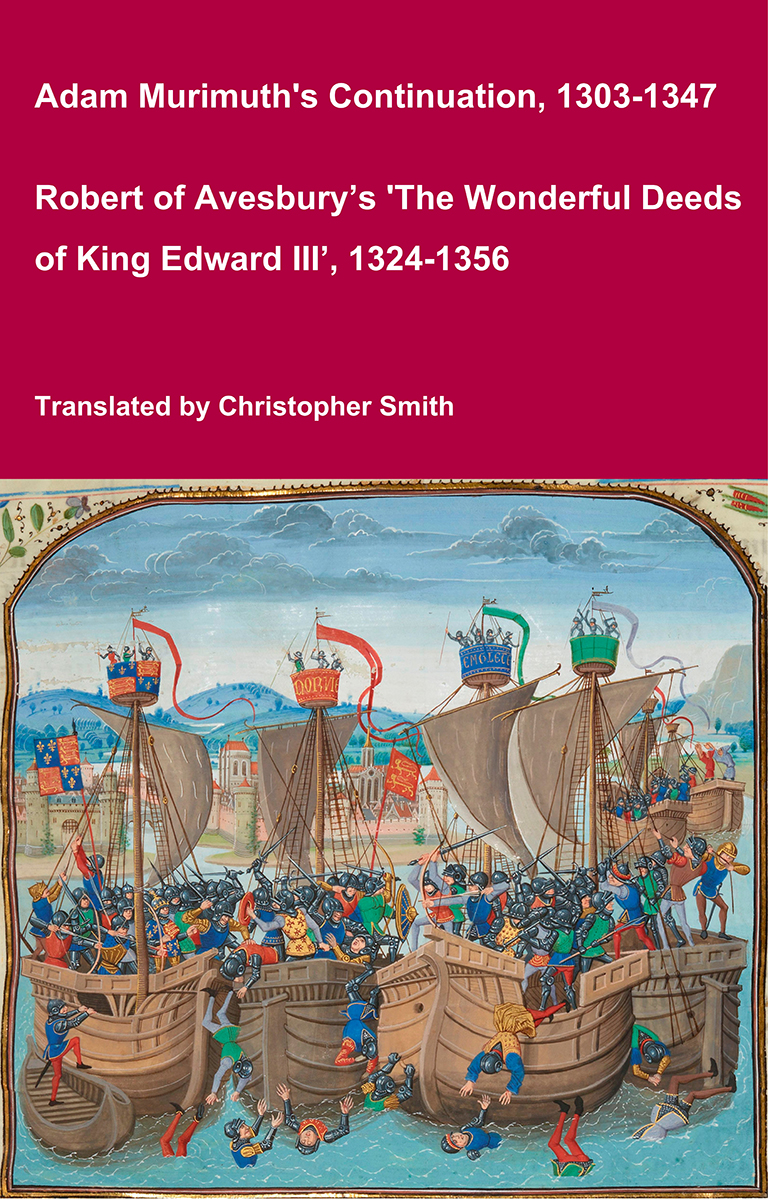
Adam Murimuth's Continuation and Robert of Avesbury’s 'The Wonderful Deeds of King Edward III'
This volume brings together two of the most important contemporary chronicles for the reign of Edward III and the opening phases of the Hundred Years’ War. Written in Latin by English clerical observers, these texts provide a vivid and authoritative window into the political, diplomatic, and military history of fourteenth-century England and its continental ambitions. Adam Murimuth Continuatio's Chronicarum continues an earlier chronicle into the mid-fourteenth century, offering concise but valuable notices on royal policy, foreign relations, and ecclesiastical affairs. Its annalistic structure makes it especially useful for establishing chronology and tracing the development of events year by year. Complementing it, Robert of Avesbury’s De gestis mirabilibus regis Edwardi tertii is a rich documentary chronicle preserving letters, treaties, and official records alongside narrative passages. It is an indispensable source for understanding Edward III’s claim to the French crown, the conduct of war, and the mechanisms of medieval diplomacy. Together, these works offer scholars, students, and enthusiasts a reliable and unembellished account of a transformative period in English and European history. Essential for anyone interested in medieval chronicles, the Hundred Years’ War, or the reign of Edward III.
Available at Amazon in eBook and Paperback format.
On 10th August 1410 Louis Bourbon II Duke Bourbon (age 73) died. His son John (age 29) succeeded I Duke Bourbon.
After 10th August 1420 Thomas Fitzgerald 5th Earl Desmond (deceased) was buried in Paris [Map]. Henry V (age 33) and Charles V (age 51) were present.
On 10th August 1439 Anne York Duchess Exeter was born to Richard Plantagenet 3rd Duke of York (age 27) and Cecily "Rose of Raby" Neville Duchess York (age 24) at Fotheringhay Castle, Northamptonshire [Map]. She a great x 2 granddaughter of King Edward III of England. Coefficient of inbreeding 2.42%. She married (1) 1447 her half second cousin Henry Holland 3rd Duke Exeter, son of John Holland 2nd Duke Exeter and Anne Stafford Duchess Exeter, and had issue (2) 1474 her fourth cousin twice removed Thomas St Leger and had issue.
On 10th August 1443 Christopher Talbot (age 24) was killed in a tournament at Caus Castle [Map] by Gruffudd Vychan (age 48) who was outlawed, captured and beheaded in 1447.
Around 10th August 1453 John Neville 1st Marquess Montagu (age 22) summoned with Thomas Percy 1st Baron Egremont (age 30) to appear before a Royal Council; he ignored it.
An English Chronicle. 10th August 1460. Thys same yeere, in the monethe of August, the kyng of Scottes beseged the castelle of Rokesburghe in Northumbreland, and on seynt Laurence day in the mornyng, er he had herde masse, he wolde haue fyred a grete gonne for to have shot to the castelle, and the chambre of the gonne brake and slowe hym.
Collectanea by John Leland [1502-1552]. The Xth Day of the sayd Moneth [10th August 1503], being Saunt Lawrens Day, the Qwene was led to the Hyghe Churche, acompayned of hyr noble Trayn, and of the Ladyes of the Countre honnestly appoynted. The said Qwene was varey well delibered, and arayd of a nche Robbe of Cloth of Gold with a ryche Coller, and was put within hyr Courtayne, of red, blew, and grene. Before hyr was prepared an Awter rychely enorned with vary ryches Ymaiges.
After hyr cam the Kynge, varey honnestly acompayned of hys Lords, varey noble arrayed as in the Dayes before. The Officers of Armes, the Sergents at Maces, and the Trompetts wer in fayr Ordre, the Lord Honteley berrynge the Swerde. The Kynge was arayd of a Gowne of cramsyn fygured Velvett fourred of Yenetts, a Dowblett of blak Satyn, Hosys of Scarlatte, the Bonnett of the Day before, and hys Beerde kyted of Shers. Whan he was arrived within hys Cortyne, he maid humble Reverence to the Qwene, and so sche did in lyke wys to hym. Incontynent the Masse begon to be synge by one of the Religyous of the Place, and by the Syngers. At the Offring the King and Qwene both offred togeder.
The Masse doon, the Kynge, for the Luffe of the present Qwene and hyr Ladyes, did make XLI [41] Knyghts. After the Othe sworne and taken, the Erle Bothweil chaussed them the gylt Spourreys, and the Kynge gaffe them the Stroke of his Swerde, wich was born before hym. This doon, he sayed to the Qwene, and Lady — These are your Knyghts, and taking hyr by the Haund, led hyr to the Doore of hyr Chammer, when they war well and honnestly served, as was also all the Felischyp with Plenty of Ypocras.
After the Dynnar begon, Jousts war apoynted in the basse Courte before the Wyndowes. The Place was without Barreres, and only the Tyllt. The Challengers war my Lord of Kylmars, and my Lord Treithoun. Ther Aids wer Syr Alexandre Seytoun, the Maister of Mewgumery, Syr Patryk Hamylton, and Syr John of Treytom, to all the Comers duryng the Jousts.
The Deffenders for that Day wer my Lord of Hamilton, Cosin of the Kynge, dressed in red Satyn, my Lord Roos, Syre Davy Hume, William of Cokbwrn of Langtown, Patryck Synklars, in Jackets borded of blak Velvett, and Henry Brws. Ychon of them tuke a Corse of a Spere, and a Swerde with the Poynte broken, sum brak Speres, the others not. At the Wyndowes was the Kynge acompayned of th Archebyschops of Saunt Andrew (age 27) and York (age 54), and of the Byshop of Durham, and of other Prelatts, the said Wyndows being well apoynted. The Qwene was at the Windowes of hyr grett Chammer, acompayned of hyr Ladyes, and of the others of the Reyme, with my Lord hyr chyf Chamberlaine. The said Wyndowes wer arayd in like wise, and more rychly. Ageynst them was a Scarfawld, wheron was my Lord of Surrey (age 60), and the Erle Bothweil only; my Lord Morley the Constable, the Officers of Armes, and many other Officers and Trompetts stood by the Feild.
After the Courses and Tornay, the Kyng and the Qwene went to Soupper, the wiche war varey well served, according to the Custome of the Dayes before, and after that daunced, and then every Men went to hys Lodgyng.
The sam Day my Lord Archbyshop of Yorke, the Byschop of Durham, and many others tuked Licence of the Kinge and of the Qwene, and departed the next Morning.
Become a Member via our Buy Me a Coffee page to read more.
On 10th August 1512 Edward Howard (age 36) commanded at Brest during the Battle of Saint Mathieu.
Thomas Knyvet (age 27) was killed in the fight between The Regent and La Reine
Wriothesley's Chronicle [1508-1562]. 10th August 1512. This yeare the Regent of England, a shippe, and a carike of France, were burnt in Bristowe haveng, and Sir Thomas Knyvett (age 27) in her with all his men.
Note g. Note. This engagement, one of the most striking recorded in the annals of the English nayy, was fought off Brest Harbour on the 10th August, 1512, in which the Regent, a first-class English vessel, commanded by Sir Thomas Knyvett, Master of the Horse, and the French vessel Cordeliere, commanded by Primanget, called by the English chroniclers Sir Piers Morgan, were blown up with the loss of all their men. Hall's Chronicle, pp. 634-6. A letter of Wolsey, describing the loss of the Regent, may be seen in MS. Cotton. Vitcl. B. ii. p. 180.
On 10th August 1520 Madeleine Valois was born to King Francis I of France (age 25) and Claude Valois Orléans Queen Consort France (age 20). Coefficient of inbreeding 4.52%. She married 1st January 1537 her third cousin once removed King James V of Scotland, son of King James IV of Scotland and Margaret Tudor Queen Scotland.


On 10th August 1528 Eric Guelph II Duke Brunswick-Calenburg was born to Eric "The Elder" Guelph I Duke Brunswick-Lüneburg (age 58).
Wriothesley's Chronicle [1508-1562]. The Duke of Norfolke (age 80) and my Lord Courtney (age 26) were deliuered out of the Tower this 10th of August[ 1553].


Wriothesley's Chronicle [1508-1562]. The morrowe, beinge Thursday the 10 of August [1553], the Quenes highnes had a solemne masse of Requiem songe within the chappell in the Tower for the Kinge; hir Highnes offringe at the masse with all her ladyes and gentlewomen.
Allso this day the corps of the Kinges Maiestie was solemnely caryed from Whitehall, at Westminster, to the minster of St. Peters Church, where was a rich hearse made like an imperiall crowne without lightes afore the steps where the high aulter stoode; where his Highnes body remayned, till the Communion seruice and a sermon made by Doctor Day (age 52), Bishop of Chichester, was done; and then the corps was honourably conveyed from thence up into the chappell, where Kinge Henry the VIIth lyeth, where the Kinges Majesties body was buryed. The solemnity of the offringe by the estates, mourners, and other was lyke the enterment of Kinge Henry the VIII his father, savinge the seruice of the Communion and buryall, which was all in Englishe, without any copes or vestmentes, but onely surples, accordinge to the Booke of Common Prayer last sett forth by Act of Parliament.
And this day was a great dole of mony geven within euery warde within the City of London, euery poore house-hould havinge viii d. the peece.
On 10th August 1557 Henry Manners 2nd Earl of Rutland (age 30) fought being Captain-General of the cavalry at the Battle of St Quentin.
Jean Bourbon Count Soissons and Enghien (age 29) was killed at the Battle of St Quentin. His brother Louis (age 27) succeeded Count Soissons.
Henry Dudley (age 26) was killed.
Henry Machyn's Diary. 10th August 1559. The x day of August, the wyche was sant Laurans day, the Quen('s) (age 25) grace removyd from Non-shyche [Map] unto Hamtun cowrte [Map].
Note. P. 206. Nonsuch. A memoir by the present writer on the royal palace of Nonesuch will be found in the Gentleman's Magazine for August 1837, New Series, vol. VIII. pp. 135–144. The earl of Arundel, as lord steward of the household, had obtained an interest in it, which seems almost to have amounted to an alienation, but it reverted to the Crown in 1591. His first dealings with it were resisted by sir Thomas Cawarden, (the subject of the following Note,) who had been the previous keeper.




Henry Machyn's Diary. 10th August 1560. The x day of August was bered within the Towre [Map] withowt a offeser of armes, and (with) master Alley (age 50) the nuw byshope of Excetur, and the chyrch hangyd with blake and armes, my lade Warner (deceased), the wyff of ser Edward Warner (age 49).
Note. P. 241. Funeral of lady Warner. "Elizabeth, late wiff to sir Edward Warner knight, lieutenaunte of the tower of London; she was doter of Thomas Cobham, and dysceased the 8. of August 1560, and left issue a [son] whosse name is Edward." (MS. Harl. 897, f. 19.)
In August 1564 Queen Elizabeth I of England and Ireland (age 30) visited Cambridge University accompanied by William Howard 1st Baron Howard (age 54) and William Cecil 1st Baron Burghley (age 43). William Cecil 1st Baron Burghley was created Master of Arts: Cambridge University.
John Astley (age 57) was created Master of Arts: Cambridge University.
On 10th August 1564 Edward Manners 3rd Earl of Rutland (age 15) was created Master of Arts: Cambridge University.
On 10th August 1629 Henry Carey 1st Viscount Falkland (age 54) was directed to hand over his authority as Lord Deputy of Ireland to the lords justices on the pretext that his services were required in England. King Charles I (age 28), recognising his good intentions, continued to hold him in favour.


Between 10th August 1642 and 7th September 1642 Portsmouth, Hampshire [Map] was besieged by Parliamentary forces.
September 1642 William Waller (age 45) concluded the Siege of Portsmouth.
Chronicle of Walter of Guisborough
A canon regular of the Augustinian Guisborough Priory, Yorkshire, formerly known as The Chronicle of Walter of Hemingburgh, describes the period from 1066 to 1346. Before 1274 the Chronicle is based on other works. Thereafter, the Chronicle is original, and a remarkable source for the events of the time. This book provides a translation of the Chronicle from that date. The Latin source for our translation is the 1849 work edited by Hans Claude Hamilton. Hamilton, in his preface, says: 'In the present work we behold perhaps one of the finest samples of our early chronicles, both as regards the value of the events recorded, and the correctness with which they are detailed; Nor will the pleasing style of composition be lightly passed over by those capable of seeing reflected from it the tokens of a vigorous and cultivated mind, and a favourable specimen of the learning and taste of the age in which it was framed.'
Available at Amazon in eBook and Paperback format.
On 10th August 1644 William Sydenham (age 29) and Anthony Ashley-Cooper 1st Earl Shaftesbury (age 23) captured Wareham, Dorset [Map].


John Evelyn's Diary. 10th August 1655. To Albury, to visit Mr. Howard (age 27), who had begun to build, and alter the gardens much. He showed me many rare pictures, particularly the Moor on horseback; Erasmus, as big as the life, by Holbein; a Madonna, in miniature, by Oliver; but, above all, the skull, carved in wood, by Albert Durer, for which his father was offered £100; also Albert's head, by himself, with divers rare agates, intaglios, and other curiosities.


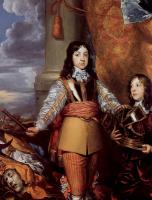
In August 1660 King Charles II of England Scotland and Ireland (age 30) rewarded those who supported his Restoration by awarding them Baronetcies...
On 2nd August 1660 Hugh Smithson 1st Baronet (age 62) was created 1st Baronet Smithson of Stanwick in Yorkshire.
On 10th August 1660 Peter Leicester 1st Baronet (age 46) was created 1st Baronet Leicester of Tabley in Cheshire. Elizabeth Gerard Lady Leicester by marriage Lady Leicester of Tabley in Cheshire.
On 11th August 1660 William wheler 1st Baronet 1611 1666 (age 49) was created 1st Baronet Wheler of the City of Westminster with a special remainder failing the heirs male of his body, "to Charles Wheeler (age 40) [rectius Wheler], cosin to the said Sir William and the heires males of the body of the said Sir Charles."
On 16th August 1660 Thomas Lee 1st Baronet (age 25) was created 1st Baronet Lee of Hartwell in Buckinghamshire.
On 16th August 1660 John Newton 1st Baronet (age 49) was created 1st Baronet Newton of Barrs Court.
On 16th August 1660 Thomas Smith 1st Baronet (age 38) was created 1st Baronet Smith of Hatherton in Cheshire.
On 31st August 1660 John Drake 1st Baronet (age 35) was created 1st Baronet Drake of Ashe in Devon. Dionise Strode Lady Drake by marriage Lady Drake of Ashe in Devon.


Become a Member via our Buy Me a Coffee page to read more.

On 10th August 1660 Esmé Stewart 2nd Duke Richmond 5th Duke Lennox (age 11) died of smallpox at Paris [Map]. He was buried in on 04 Sep 1660 in the Richmond Vault, Westminster Abbey. His first cousin Charles (age 21) succeeded 6th Duke Lennox, 3rd Duke Richmond, 4th Earl March. Elizabeth Rogers Duchess Richmond by marriage Duchess Richmond. His sister Mary (age 9) succeeded 5th Baroness Clifton of Leighton Bromswold in Huntingdonshire.
Samuel Pepys' Diary. 10th August 1663. By and by water to White Hall, and so to St. James's, and anon called into the Duke's (age 29) chamber, and being dressed we were all as usual taken in with him and discoursed of our matters, and that being done, he walked, and I in the company with him, to White Hall, and there he took barge for Woolwich, Kent [Map], and, I up to the Committee of Tangier, where my Lord Sandwich (age 38), pay Lord Peterborough (age 41), (whom I have not seen before since his coming back,) Sir Wm. Compton (age 38), and Mr. Povy (age 49). Our discourse about supplying my Lord Teviott with money, wherein I am sorry to see, though they do not care for him, yet they are willing to let him for civility and compliment only have money almost without expecting any account of it; but by this means, he being such a cunning fellow as he is, the King (age 33) is like to pay dear for our courtiers' ceremony.


Samuel Pepys' Diary. 10th August 1663. Thence by coach with my Lords Peterborough (age 41) and Sandwich to my Lord Peterborough's house; and there, after an hour's looking over some fine books of the Italian buildings, with fine cuts; and also my Lord Peterborough's bowes and arrows, of which he is a great lover, we sat down to dinner, my Lady (age 41) coming down to dinner also, and there being Mr. Williamson (age 30), that belongs to Sir H. Bennet (age 45), whom I find a pretty understanding and accomplished man, but a little conceited.


Samuel Pepys' Diary. 10th August 1663. Here I am told that my Lord Bristoll (age 50) is either fled or concealed himself; having been sent for to the King (age 33), it is believed to be sent to the Tower, but he is gone out of the way.


Samuel Pepys' Diary. 10th August 1663. Hither came W. Howe about business, and he and I had a great deal of discourse about my Lord Sandwich (age 38), and I find by him that my Lord do dote upon one of the daughters of Mrs. [Becke] where he lies, so that he spends his time and money upon her. He tells me she is a woman of a very bad fame and very impudent, and has told my Lord so, yet for all that my Lord do spend all his evenings with her, though he be at court in the day time, and that the world do take notice of it, and that Pickering (age 45) is only there as a blind, that the world may think that my Lord spends his time with him when he do worse, and that hence it is that my Lord has no more mind to go into the country than he has. In fine, I perceive my Lord is dabbling with this wench, for which I am sorry, though I do not wonder at it, being a man amorous enough, and now begins to allow himself the liberty that he says every body else at Court takes.
Samuel Pepys' Diary. 10th August 1665. By and by to the office, where we sat all the morning; in great trouble to see the Bill this week rise so high, to above 4,000 in all, and of them above 3,000 of the plague. And an odd story of Alderman Bence's stumbling at night over a dead corps in the streete, and going home and telling his wife, she at the fright, being with child, fell sicke and died of the plague.

On 9th August 1666 and 10th August 1666 Holme's Bonfire was an attack by the English fleet commanded by Admiral Robert Holmes (age 44) on a Dutch merchant fleet of 140 ships at the Vlie estuary. The town of West-Terschelling was burnt down.
Samuel Pepys' Diary. 10th August 1666. After dinner to the office, and anon with my wife and sister abroad, left them in Paternoster Row [Map], while Creed, who was with me at the office, and I to Westminster; and leaving him in the Strand, I to my Chancellor's (age 57), and did very little business, and so away home by water, with more and more pleasure, I every time reading over my Lord Bacon's "Faber Fortunae".


Samuel Pepys' Diary. 10th August 1668. Up, and by water to White Hall, and thence to Sir W. Coventry (age 40), but he is gone out of town this morning, so thence to my Lord Arlington's (age 50) house, the first time I there since he come thither, at Goring House [Map], a very fine, noble place; and there he received me in sight of several Lords with great respect. I did give him an account of my journey; and here, while I waited for him a little, my Lord Orrery (age 47) took notice of me, and begun discourse of hangings, and of the improvement of shipping: I not thinking that he knew me, but did then discover it, with a mighty compliment of my abilities and ingenuity, which I am mighty proud of; and he do speak most excellently.

Samuel Pepys' Diary. 10th August 1668. Thence to Westminster Hall [Map], and so by coach to the Old Exchange [Map], and there did several businesses, and so home to dinner, and then abroad to Duck Lane [Map], where I saw my belle femme of the book vendor, but had no opportunity para hazer con her. So away to Cooper's (age 59), where I spent all the afternoon with my wife and girl, seeing him-make an end of her picture, which he did Jo my great content, though not so great as, I confess, I expected, being not satisfied in the greatness of the resemblance, nor in the blue garment: but it is most certainly a most rare piece of work, as to the painting. He hath £30 for his work-and the chrystal, and case, and gold case comes to £8 3s. 4d.; and which I sent him this night, that I might be out of debt.
On 10th August 1675 John Flamsteed (age 28) laid the foundation stone of the Royal Greenwich Observatory.
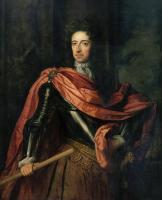
John Evelyn's Diary. 10th August 1688. Dr. Tenison (age 51) now told me there would suddenly be some great thing discovered. This was the Prince of Orange (age 37) intending to come over.

William of Worcester's Chronicle of England
William of Worcester, born around 1415, and died around 1482 was secretary to John Fastolf, the renowned soldier of the Hundred Years War, during which time he collected documents, letters, and wrote a record of events. Following their return to England in 1440 William was witness to major events. Twice in his chronicle he uses the first person: 1. when writing about the murder of Thomas, 7th Baron Scales, in 1460, he writes '… and I saw him lying naked in the cemetery near the porch of the church of St. Mary Overie in Southwark …' and 2. describing King Edward IV's entry into London in 1461 he writes '… proclaimed that all the people themselves were to recognize and acknowledge Edward as king. I was present and heard this, and immediately went down with them into the city'. William’s Chronicle is rich in detail. It is the source of much information about the Wars of the Roses, including the term 'Diabolical Marriage' to describe the marriage of Queen Elizabeth Woodville’s brother John’s marriage to Katherine, Dowager Duchess of Norfolk, he aged twenty, she sixty-five or more, and the story about a paper crown being placed in mockery on the severed head of Richard, 3rd Duke of York.
Available at Amazon in eBook and Paperback format.
On 10th August 1690 Johannes Spilberg (age 71) died.
On 10th August 1710 Luise Dorothea Saxe Meiningen Duchess Saxe Gotha Altenburg was born to Ernst Ludwig I Duke of Saxe Meiningen (age 37). She married 17th September 1729 Duke Frederick III of Saxe Coburg Altenburg III, son of Frederick Saxe Coburg Altenburg II Duke Saxe Gotha Altenburg and Magdalena Augusta Anhalt-Zerbst Duchess Saxe Gotha Altenburg, and had issue.
On 10th August 1735 Garrett Wellesley 1st Earl Mornington was baptised at St Andrew's Church, Dublin.
Diary of a Dean by Merewether. 10th August 1749. 10th - Return we now to our former ground, where our examinations were concluded in the following days with singular success. It. had been thought that some of the barrows on Windmill Hill which the plough had worn down might be worth examination, and two not having crops upon them were tried, but without producing any thing more than bones of animals, fragments of pottery and burnt wood; the second, burnt wood in considerable quantity. I therefore resolved to pass on to the Avebury Down, where we had left two of the range of five unexplored, and these were the next operated upon, as we have already reported of Nos. 2 and 3. Whilst the excavation of these was in its early progress, I had directed my eye to the more distant range of the hill on the north-east; and near the foot of it, on Monkton Down, attention was soon arrested by very remarkable and unquestionable indications of British occupation. Commencing from the cultivated land at the foot of the hill, we observed, in a central position, a somewhat long mound of considerable elevation. On the right and left of this, at some ten paces each way, were two lower circular but not regular mounds. Above the long mound, with 6 or 8 feet intervening, was a large mound of an oval form, the upper portion being the smallest part, and on the top of this were three large sarsen stones. Above this, at some 50 yards and at considerable elevation, the hill had been formed into a flat cone (a road passing on two sides), with a single trench and slight mound surrounding it, in diameter 25 feet. Towards the centre of this were disposed four sarsen stones of considerable size. At the verge of the lowest long mound, towards the north-west, were eight sarsen stones of about 2 feet square above the ground, forming the segment of a circle, the two horns of which were lost in the mound, and these had been brought to light by the cultivation of the land below. At the same level, about 8 feet within the mound, was a large flat sarsen placed on its edge, and forming with two others part of an interior circle, or segment. At the verge of the oval mound above, and cutting its range, were, on the south side, five large sarsen stones, and on the opposite or northern side one, evidently the remains of a larger circle of stones, containing, but not concentrically, those already noticed. This curious arrangement must be explained with the aid of a ground-plan.
Become a Member via our Buy Me a Coffee page to read more.
On 10th August 1759 Ferdinand VI King Spain (age 45) died without issue. His half brother Charles (age 43) succeeded King Spain.


On 10th August 1762 Arthur William Devis was born to Arthur Devis (age 50) and Elizabeth Faulkener (age 43). He married in or before 1810 Margaret Lanchester and had issue.
On 10th August 1769 Sophie Amelie Oldenburg was born to Frederick Christian Oldenburg I Duke Schleswig Holstein Sonderburg Augustenburg (age 48) and Charlotte Amalie Wilhelmine Unknown Duchess Schleswig Holstein Sonderburg Augustenburg. She died aged less than one years old.
On 10th August 1779 Henry Howard 13th Earl Suffolk 6th Earl Berkshire, who had been born posthumously, died two days old. His great uncle Thomas (age 58) succeeded 14th Earl Suffolk, 7th Earl Berkshire, 7th Viscount Andover in Hampshire, 7th Baron Howard of Charlton in Wiltshire.
On 10th August 1784 Allan Ramsay (age 70) died at Dover, Kent [Map].
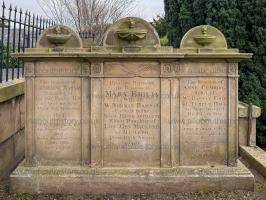
On 10th August 1809 Mary Emilia MacLeod died. Monument at St Michal's Church, Inveresk [Map].
Mary Emilia MacLeod: she was born to Major-General Norman MacLeod 23rd of MacLeod.
Derbyshire Archaeological Journal Volume 30 1908 Page 155. Extract of letter. Fol. 24.
An opportunity was lately given by the Reverend Mr Thornhill to make further inquiry as to the opening of Gib-Hill [Map], by him and he says, that if it ever was cut into by a Thornhill, it must have been by his late brother, Coll Henry T[hornhill]. This will, I fancy, make it very clear that it was not the gentleman described by the labourers. He could not tell where any coins were, that might have been found; but as they had them not at Stanton, they might probably be in the possession of Mrs Henry T[hornhill]. the widow, who resides near Derby.
Aug 10. 1824.
Derbyshire Archaeological Journal Volume 30 1908 Page 155. Extract of letter from Mr. William Bateman.
Of the curious circumstance of the former opening by Reverend Mr Thornhill, you heard both sides, I have reconsidered it, and find myself placed in a curious situation, between a desire to give every light in my power to our researches, and a disinclination to wound the feelings of so good a neighbour and friend as Mr T[hornhill] by even attempting to refresh his memory, I have come to this conclusion, that if Mr T[hornhill] did open it, he must have entirely forgot it, and that what was then found denote it to have been a Roman interment upon an aboriginal (or, at least much earlier) barrow. Pray give me your opinion upon this'.... As to the opening of the barrow Fidler of Biggin mentioned to you by Mr Bowman, I have inquired, and he informs me that he saw his uncle open two barrows in Hartington township, but never either saw, or heard of, Gib-Hill opened1.
Note 1. It is evident, from Ten Years' Diggings, p. 20, that Mr. Thomas Bateman considered that an attempt hed been made to open Gib-Hill about the year 1812, and that the fibula may have been associated with a late interment near the sumnit, which was destroyecl on that occasion.
William of Worcester's Chronicle of England
William of Worcester, born around 1415, and died around 1482 was secretary to John Fastolf, the renowned soldier of the Hundred Years War, during which time he collected documents, letters, and wrote a record of events. Following their return to England in 1440 William was witness to major events. Twice in his chronicle he uses the first person: 1. when writing about the murder of Thomas, 7th Baron Scales, in 1460, he writes '… and I saw him lying naked in the cemetery near the porch of the church of St. Mary Overie in Southwark …' and 2. describing King Edward IV's entry into London in 1461 he writes '… proclaimed that all the people themselves were to recognize and acknowledge Edward as king. I was present and heard this, and immediately went down with them into the city'. William’s Chronicle is rich in detail. It is the source of much information about the Wars of the Roses, including the term 'Diabolical Marriage' to describe the marriage of Queen Elizabeth Woodville’s brother John’s marriage to Katherine, Dowager Duchess of Norfolk, he aged twenty, she sixty-five or more, and the story about a paper crown being placed in mockery on the severed head of Richard, 3rd Duke of York.
Available at Amazon in eBook and Paperback format.

On 10th August 1826 Cornelius Smelt (age 78) attended a meeting at the George Inn, Castletown, there being present some of the highest officials then residing in Castletown, Chairman of the meeting being Colonel Mark Wilks. At the meeting a resolution was passed to commission a portrait of Governor Smelt by Thomas Barber (age 55). The portrait was purchased by Captain Caesar Bacon, husband of Smelt's daughter, and was placed in his home at Seafield, Santon. The portrait stayed in the family until 1925 when it was presented to the Manx Museum.

Greville Memoirs. 10th August 1830. In the meantime the French Revolution has been proceeding rapidly to its consummation, and the Duke of Orleans is King. Montrond, who was at Stoke, thinks that France will gravitate towards a republic, and principally for this reason, that there is an unusual love of equality, and no disposition to profit by the power of making majorats, therefore that there never can be anything like an aristocracy. We are so accustomed to see the regular working of our constitutional system, with all its parts depending upon each other, and so closely interwoven, that we have difficulty in believing that any monarchical Government can exist which is founded on a basis so different. This is the great political problem which is now to be solved. I think, however, that in the present settlement it is not difficult to see the elements of future contention and the working of a strong democratical spirit. The Crown has been conferred on the Duke of Orleans by the Chamber of Deputies alone, which, so far from inviting the Chamber of Peers to discuss the question of succession, has at the same time decreed a material alteration in that Chamber itself. It has at a blow cut off all the Peers of Villèle's great promotion, which is an enormous act of authority, although the measure may be advisable. There is also a question raised of the hereditary quality of the peerage, and I dare say that for the future at least peerages will not be hereditary, not that I think this signifies as to the existence of an aristocracy, for the constant subdivision of property must deprive the Chamber of all the qualities belonging to an English House of Lords, and it would perhaps be better to establish another principle, such as that of promoting to the Chamber of Peers men (for life) of great wealth, influence, and ability, who would constitute an aristocracy of a different kind indeed, but more respectable and efficient, than a host of poor hereditary senators. What great men are Lord Lonsdale, the Duke of Rutland, and Lord Cleveland (age 64)! but strip them, of their wealth and power, what would they be? Among the most insignificant of mankind; but they all acquire a factitious consideration by the influence they possess to do good and evil, the extension of it over multitudes of dependents. The French can have no aristocracy but a personal one, ours is in the institution; theirs must be individually respectable, as ours is collectively looked up to. In the meantime it will be deemed a great step gained to have a monarchy established in France at all, even for the moment, but some people are alarmed at the excessive admiration which the French Revolution has excited in England, and there is a very general conviction that Spain will speedily follow the example of France, and probably Belgium also. Italy I don't believe will throw off the yoke; they have neither spirit nor unanimity, and the Austrian military force is too great to be resisted. But Austria will tremble and see that the great victory which Liberalism has gained has decided the question as to which principle, that of light or darkness, shall prevail for the future in the world.

Diary of a Dean by Merewether. 10th August 1849 and 11th August 1849. No. 2, the first of a range of five large barrows in the rising ground to the north of the last, nearly in a line, a mile and a half north-east of Avebury. These differ in form, 2 and 3 being of the bowl-shape, the others of the more elegant bell-shape, as described by Sir R. C. Hoare in his Ancient Wilts. Although the second and third of this range were not opened until the 10th and 11th of August, I shall describe their produce with the others as belonging to a separate class. After a laborious excavation of the first (No. 2), from the apex to a depth of 10 feet, until we came to the natural chalk through a thin layer, at about 9 feet,—i e. about the level of the surrounding ground,—of black mould composed of burnt wood, we were obliged to give up the hope of any marked discoveries here. The earth throughout was peculiarly moist, and probably indicated that this barrow had been examined before; there were, however, many fragments of the usual sort of bones and teeth and charred wood.

Diary of a Dean by Merewether. 10th August 1849. No. 3 (August 10th). Somewhat smaller in dimensions than the others. Large fragments of bone, teeth, burnt wood; at about 8 feet deep a cist, 18 inches diameter, formed in the natural chalk bed, containing burnt human bones and two small pieces (B) of bronze; (C) a smooth stone tapering towards one end, which had been broken off—it may have been a spear-head, and a rather large flint arrow-head (D), were discovered in the progress of the excavation, as well as a small one of iron (E).
On 10th August 1868 James Hamilton 1st Duke of Abercorn (age 57) was created 1st Duke Abercorn, 1st Marquess Hamilton.
After 10th August 1875. St Mary's Church, Sprotbrough [Map]. Memorial to Charlotte Anderson-Pelham Lady Copley (deceased), wife of Joseph William Copley 4th Baronet (age 71).
Charlotte Anderson-Pelham Lady Copley: On 21st October 1810 she was born to Charles Anderson-Pelham 1st Earl Yarborough. On 19th November 1831 Joseph William Copley 4th Baronet and she were married. She the daughter of Charles Anderson-Pelham 1st Earl Yarborough. He the son of Joseph Copley 3rd Baronet and Cecil Hamilton Marchioness Abercorn. On 10th August 1875 Charlotte Anderson-Pelham Lady Copley died. She was buried at All Saints' Church, Brocklesby [Map].
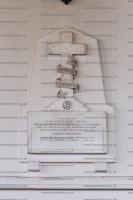
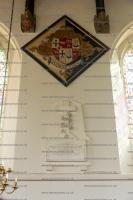
On 10th August 1896 William Harold Cubley (age 79) died at Bryndu, Llanberis [Map] whilst on a painting trip in Wales. He was buried at Newark-on-Trent Cemetery.
On 10th August 1915 Frances Laura Charteris Duchess of Marlborough was born to Guy Lawrence Charteris (age 29). She married (1) 14th November 1933 Walter Francis David Long (2) 23rd February 1943 William Humble Eric Ward 3rd Earl of Dudley, son of William Humble Ward 2nd Earl of Dudley (3) 13th June 1960 Michael Temple Canfield, son of Prince George Windsor 1st Duke Kent and Alice "Kiki" Preston aka Gwynne (4) 26th January 1972 John Albert William Spencer-Churchill 10th Duke of Marlborough, son of Charles Richard John Spencer-Churchill 9th Duke of Marlborough and Consuelo Vanderbilt Duchess of Marlborough.
On 10th August 1920 Kathleen Lucille Payne-Gallwey (age 36) died of consumption contracted in Greece during the Revelution of 1917.
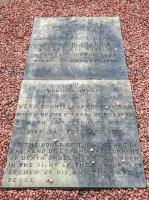
On 10th August 1939 James St Clair-Erskine 5th Earl of Rosslyn (age 70) died. He was buried at the Rosslyn Chapel [Map].
On 10th August 1956 Francis Charles Edward Seymour was born to Percy Hamilton Seymour 18th Duke of Somerset (age 45) and Gwendoline Collette Jane Thomas Duchess Somerset.
Chronicle of Geoffrey le Baker of Swinbroke
Baker was a secular clerk from Swinbroke, now Swinbrook, an Oxfordshire village two miles east of Burford. His Chronicle describes the events of the period 1303-1356: Gaveston, Bannockburn, Boroughbridge, the murder of King Edward II, the Scottish Wars, Sluys, Crécy, the Black Death, Winchelsea and Poitiers. To quote Herbert Bruce 'it possesses a vigorous and characteristic style, and its value for particular events between 1303 and 1356 has been recognised by its editor and by subsequent writers'. The book provides remarkable detail about the events it describes. Baker's text has been augmented with hundreds of notes, including extracts from other contemporary chronicles, such as the Annales Londonienses, Annales Paulini, Murimuth, Lanercost, Avesbury, Guisborough and Froissart to enrich the reader's understanding. The translation takes as its source the 'Chronicon Galfridi le Baker de Swynebroke' published in 1889, edited by Edward Maunde Thompson.
Available at Amazon in eBook and Paperback format.
On 10th August 1285 Henry Tyeys 2nd Baron Tyeys was born to Henry Tyeys 1st Baron Tyeys (age 20).
On 10th August 1289 Roger Moels 3rd Baron Moels was born to John Moels 1st Baron Moels (age 20).
On 10th August 1289 Nicholas Moels 2nd Baron Moels was born to John Moels 1st Baron Moels (age 20). He married before 29th January 1316 Margaret Courtenay Baroness Maynard, daughter of Hugh Courtenay 3rd Baron Okehampton and Eleanor Despencer Baroness Okehampton.
On 10th August 1296 King John I of Bohemia was born to Henry Luxemburg VII Holy Roman Emperor (age 21) and Margaret Brabant Countess Luxemburg and Namur. He married (1) Beatrice Bourbon Queen Bohemia and had issue (2) before 8th July 1313 Queen Elizabeth of Bohemia, daughter of King Wenceslaus II of Bohemia and Poland and Queen Judith of Bohemia and Poland, and had issue.
On 10th August 1310 Margaret Verdun Baroness Hussey was born to Theobald Verdun 2nd Lord Verdun (age 31) and Maud Mortimer Lady Verdun (age 24) at Alton Castle, Staffordshire. Coefficient of inbreeding 1.90%. She married (1) John Crophull and had issue (2) her fourth cousin William Blount and had issue (3) before 1343 Mark Hussey 3rd Baron Hussey, son of Henry Hussey 2nd Baron Hussey, and had issue.
On 10th August 1377 Afonso Aviz I Duke Braganza was born illegitimately to King John I of Portugal (age 25) and Ines Peres. He married 8th November 1400 Beatriz Pereira de Alvim and had issue.
On 10th August 1426 Boniface III Marquis of Montferrat was born to John Jacob Marquis of Montferrat (age 31) and Joan of Savoy. He married (1) 1483 his fifth cousin Helena of Brosse Marquis Montferrat (2) in or after 1485 Maria of Serbia Marchioness of Montferrat and had issue.
On 10th August 1439 Anne York Duchess Exeter was born to Richard Plantagenet 3rd Duke of York (age 27) and Cecily "Rose of Raby" Neville Duchess York (age 24) at Fotheringhay Castle, Northamptonshire [Map]. She a great x 2 granddaughter of King Edward III of England. Coefficient of inbreeding 2.42%. She married (1) 1447 her half second cousin Henry Holland 3rd Duke Exeter, son of John Holland 2nd Duke Exeter and Anne Stafford Duchess Exeter, and had issue (2) 1474 her fourth cousin twice removed Thomas St Leger and had issue.
On 10th August 1466 Francesco Gonzaga II Marquess of Mantua was born to Frederico Gonzaga Marquess Mantua (age 25) and Margaret Wittelsbach (age 24). He married Isabella Este, daughter of Ercole Este I Duke Ferrara, and had issue.
On 10th August 1486 William IX Marquis of Montferrat was born to Boniface III Marquis of Montferrat (age 60) and Maria of Serbia Marchioness of Montferrat (age 20). He married 1508 his half second cousin once removed Anne Valois Marchioness of Montferrat, daughter of Rene Valois Duke Alençon and Margaret Lorraine Duchess Alençon, and had issue.
On 10th August 1520 Madeleine Valois was born to King Francis I of France (age 25) and Claude Valois Orléans Queen Consort France (age 20). Coefficient of inbreeding 4.52%. She married 1st January 1537 her third cousin once removed King James V of Scotland, son of King James IV of Scotland and Margaret Tudor Queen Scotland.
On 10th August 1528 Eric Guelph II Duke Brunswick-Calenburg was born to Eric "The Elder" Guelph I Duke Brunswick-Lüneburg (age 58).
On 10th August 1562 Henry Windsor 5th Baron Windsor was born to Edward Windsor 3rd Baron Windsor (age 30) and Katherine Vere Baroness Windsor (age 22).
Chronicle of Abbot Ralph of Coggeshall
The Chronicle of Abbot Ralph of Coggeshall (Chronicon Anglicanum) is an indispensable medieval history that brings to life centuries of English and European affairs through the eyes of a learned Cistercian monk. Ralph of Coggeshall, abbot of the Abbey of Coggeshall in Essex in the early 13th century, continued and expanded his community’s chronicle, documenting events from the Norman Conquest of 1066 into the tumultuous reign of King Henry III. Blending eyewitness testimony, careful compilation, and the monastic commitment to record-keeping, this chronicle offers a rare narrative of political intrigue, royal power struggles, and social upheaval in England and beyond. Ralph’s work captures the reigns of pivotal figures such as Richard I and King John, providing invaluable insights into their characters, decisions, and the forces that shaped medieval rule. More than a simple annal, Chronicon Anglicanum conveys the texture of medieval life and governance, making it a rich source for scholars and readers fascinated by English history, monastic authorship, and the shaping of the medieval world.
Available at Amazon in eBook and Paperback format.
On 10th August 1585 Anne Carey Lady Leke was born to Edward Carey (age 45) and Catherine Knyvet Baroness Geneville Beaudasert (age 42). She married before 1612 her fifth cousin Francis Leke 1st Earl Scarsdale and had issue.
On 10th August 1602 Robert Napier 2nd Baronet was born to Robert Napier 1st Baronet (age 42) and Mary Robinson. He married (1) 30th April 1623 Frances Thornhurst and had issue (2) before 31st January 1633 Penelope Egerton Lady Napier, daughter of John Egerton 1st Earl Bridgewater and Frances Stanley Countess Bridgewater, and had issue.
On 10th August 1605 Edmund Anderson 1st Baronet was born to William Anderson (age 26) and Magdalena Smith (age 61).
On 10th August 1694 John Leveson-Gower 1st Earl Gower was born to John Leveson-Gower 1st Baron Gower (age 19) and Catherine Manners Baroness Gower (age 19). He married (1) 13th March 1712 his fourth cousin Evelyn Pierrepont Baroness Gower, daughter of Evelyn Pierrepont 1st Duke Kingston upon Hull and Mary Fielding Countess Kingston upon Hull, and had issue (2) 31st October 1733 Penelope Stonhouse Baroness Gower, daughter of John Stonhouse 3rd Baronet and Penelope Dashwood (3) 16th May 1736 his fourth cousin Mary Tufton Countess Gower, daughter of Thomas Tufton 6th Earl of Thanet and Catherine Cavendish Countess Isle Thanet, and had issue.

On 10th August 1695 Samuel Sandys 1st Baron Sandes was born to Edwin Sandes (age 36) and Alice Rushout. He married 9th July 1725 Letitia Tipping, daughter of Thomas Tipping 1st Baronet, and had issue.
On 10th August 1698 John Stratford 1st Earl Aldborough was born to Edward Stratford at Ormond, County Tipperary. He married in or before 1736 Martha O'Neale Countess Aldborough and had issue.
On 10th August 1710 Luise Dorothea Saxe Meiningen Duchess Saxe Gotha Altenburg was born to Ernst Ludwig I Duke of Saxe Meiningen (age 37). She married 17th September 1729 Duke Frederick III of Saxe Coburg Altenburg III, son of Frederick Saxe Coburg Altenburg II Duke Saxe Gotha Altenburg and Magdalena Augusta Anhalt-Zerbst Duchess Saxe Gotha Altenburg, and had issue.
On 10th August 1729 William Howe 5th Viscount Howe was born to Emanuel Howe 2nd Viscount Howe (age 29) and Sophia Von Keilmansegg Viscountess Howe (age 25). He married 1765 Frances Conolly Viscountess Howe.
On 10th August 1730 Admiral Richard King 1st Baronet was born to Curtis King (age 30) and Mary Barnett (age 27) at Gosport, Hampshire. He married 30th November 1769 Susanna Margaretta Coker and had issue.

On 10th August 1753 George Cranfield Berkeley was born to Augustus Berkeley 4th Earl Berkeley (age 38) and Elizabeth Drax Countess Berkeley and Nugent (age 33). He a great x 2 grandson of King Charles II of England Scotland and Ireland. He married 1784 his second cousin Emily Charlotte Lennox and had issue.
On 10th August 1762 Arthur William Devis was born to Arthur Devis (age 50) and Elizabeth Faulkener (age 43). He married in or before 1810 Margaret Lanchester and had issue.
Chronicle of Walter of Guisborough
A canon regular of the Augustinian Guisborough Priory, Yorkshire, formerly known as The Chronicle of Walter of Hemingburgh, describes the period from 1066 to 1346. Before 1274 the Chronicle is based on other works. Thereafter, the Chronicle is original, and a remarkable source for the events of the time. This book provides a translation of the Chronicle from that date. The Latin source for our translation is the 1849 work edited by Hans Claude Hamilton. Hamilton, in his preface, says: 'In the present work we behold perhaps one of the finest samples of our early chronicles, both as regards the value of the events recorded, and the correctness with which they are detailed; Nor will the pleasing style of composition be lightly passed over by those capable of seeing reflected from it the tokens of a vigorous and cultivated mind, and a favourable specimen of the learning and taste of the age in which it was framed.'
Available at Amazon in eBook and Paperback format.
On 10th August 1769 Sophie Amelie Oldenburg was born to Frederick Christian Oldenburg I Duke Schleswig Holstein Sonderburg Augustenburg (age 48) and Charlotte Amalie Wilhelmine Unknown Duchess Schleswig Holstein Sonderburg Augustenburg. She died aged less than one years old.
On 10th August 1782 Lieutenant-General Charles James Napier was born to Colonel George Napier (age 31) and Sarah Lennox Lady Bunbury (age 37). He a great x 2 grandson of King Charles II of England Scotland and Ireland.
On 10th August 1787 Thomas Whichcote 6th Baronet was born to Thomas Whichcote 5th Baronet (age 24) and Diana Turnor Lady Whichcote (age 24). He married 9th April 1812 Sophia Sherard Lady Whichcote, daughter of Philip Sherard 5th Earl Harborough, and had issue.
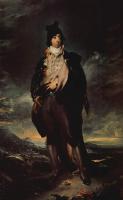
On 10th August 1793 John Crichton-Stuart 2nd Marquis of the Isle of Bute was born to John Stuart (age 25) and Elizabeth Penelope Mcdouall Crichton (age 20). He married (1) 1818 Maria North Marchioness Bute, daughter of George Augustus North 3rd Earl Guildford and Maria Frances Hobart Countess Guilford (2) 1845 Sophia Frederica Christina Rawdon-Hastings Marchioness Bute, daughter of Francis Rawdon-Hastings 1st Marquess Hastings and Flora Mure-Campbell Marchioness of Hastings, and had issue.
On 10th August 1807 Corisande Emma Bennet Countess Malmesbury was born to Charles Augustus Bennet 5th Earl Tankerville (age 31) and Corisande Armandine Sophie Léonie Hélène Gramont Countess Tankerville (age 24). She married 13th May 1830 James Harris 3rd Earl Malmesbury, son of James Edward Harris 2nd Earl Malmesbury and Harriet Susan Dashwood.


On 10th August 1812 Hungerford Crewe 3rd Baron Crewe was born to John Crewe 2nd Baron Crewe (age 40) and Henrietta Maria Anna Walker-Hungerford.
On 10th August 1818 Henrietta Charlotte Williams-Wynn was born to Watkin Williams-Wynn 5th Baronet (age 45) and Henrietta Antonia Clive Lady Williams-Wynn. She married 16th May 1843 Hugh Williams 3rd Baronet, son of John Williams 1st Baronet and Margaret Williams Lady Williams, and had issue.
On 10th August 1828 George Gunning 5th Baronet was born to Reverend Henry Gunning 4th Baronet (age 30) and Mary Catherine Cartwright.
On 10th August 1860 Edward Nelson 5th Earl Nelson was born to Horatio Nelson 3rd Earl Nelson (age 37) and Mary Jane Agar Countess Nelson (age 38).

On 10th August 1870 Charles Sackville-West 4th Baron Sackville was born to William Sackville-West (age 40) and Georgina Dodwell.
The Deeds of the Dukes of Normandy
The Gesta Normannorum Ducum [The Deeds of the Dukes of Normandy] is a landmark medieval chronicle tracing the rise and fall of the Norman dynasty from its early roots through the pivotal events surrounding the Norman Conquest of England. Originally penned in Latin by the monk William of Jumièges shortly before 1060 and later expanded at the behest of William the Conqueror, the work chronicles the deeds, politics, battles, and leadership of the Norman dukes, especially William’s own claim to the English throne. The narrative combines earlier historical sources with firsthand information and oral testimony to present an authoritative account of Normandy’s transformation from a Viking settlement into one of medieval Europe’s most powerful realms. William’s history emphasizes the legitimacy, military prowess, and governance of the Norman line, framing their expansion, including the conquest of England, as both divinely sanctioned and noble in purpose. Later chroniclers such as Orderic Vitalis and Robert of Torigni continued the history, extending the coverage into the 12th century, providing broader context on ducal rule and its impact. Today this classic work remains a foundational source for understanding Norman identity, medieval statesmanship, and the historical forces that reshaped England and Western Europe between 800AD and 1100AD.
Available at Amazon in eBook and Paperback format.

On 10th August 1891 Beatrice Edith Mildred Gascoyne-Cecil Baroness Harlech was born to James Gascoyne-Cecil 4th Marquess Salisbury (age 29) and Cicely Anne Gore Marchioness Salisbury (age 24). She married 12th April 1913 George Arthur Ormsby-Gore 4th Baron Harlech, son of Ralph Ormsby-Gore 3rd Baron Harlech and Margaret Ethel Gordon Baroness Harlech, and had issue.
On 10th August 1897 Humphrey Thomas Tollemache 6th Baronet was born to Lyonel Felix Carteret Eugene Tollemache 4th Baronet (age 43).
On 10th August 1907 Hugo Robert Brooke Boothby 14th Baronet was born to Seymour William Brooke Boothby 13th Baronet (age 41).
On 10th August 1909 Frederic Raymond Clegg-Hill was born to Charles Rowland Clegg-Hill 6th Viscount Hill (age 33). He married 18th November 1938 his second cousin Alice Dorothy Chapman and had issue.
On 10th August 1915 Frances Laura Charteris Duchess of Marlborough was born to Guy Lawrence Charteris (age 29). She married (1) 14th November 1933 Walter Francis David Long (2) 23rd February 1943 William Humble Eric Ward 3rd Earl of Dudley, son of William Humble Ward 2nd Earl of Dudley (3) 13th June 1960 Michael Temple Canfield, son of Prince George Windsor 1st Duke Kent and Alice "Kiki" Preston aka Gwynne (4) 26th January 1972 John Albert William Spencer-Churchill 10th Duke of Marlborough, son of Charles Richard John Spencer-Churchill 9th Duke of Marlborough and Consuelo Vanderbilt Duchess of Marlborough.
On 10th August 1923 Humphrey Villiers Cæsar Hawkins 7th Baronet was born to Villiers Geoffrey Cæsar Hawkins 6th Baronet (age 32).
On 10th August 1938 George Dawson-Damer 7th Earl of Portarlington was born to George Dawson-Damer (age 31).
On 10th August 1946 Patricia Ann Souter was born to Richard Souter 25th Baron Audley (age 32).
On 10th August 1954 Joshua Charles Vanneck 7th Baron Huntingfield was born to Gerard Charles Arcedeckne Vanneck 6th Baron Huntingfield (age 39).
On 10th August 1956 Francis Charles Edward Seymour was born to Percy Hamilton Seymour 18th Duke of Somerset (age 45) and Gwendoline Collette Jane Thomas Duchess Somerset.
On 10th August 1968 Clifton Hugh Lancelot de Verdon Wrottesley 6th Baron Wrottesley was born to Richard Francis Gerard Wrottesley (age 25).
On 10th August 1562 Hugh Montgomerie 3rd Earl Eglinton (age 31) and Agnes Drummond Countess Eglinton (age 39) were married. She by marriage Countess Eglinton. See Memorials of the Montgomeries Pages 185-187 He the son of Hugh Montgomerie 2nd Earl Eglinton and Marion Seton Countess Eglinton. They were fourth cousins.

On 10th August 1682 John Vaughan 3rd Earl Carbery (age 43) and Anne Savile Countess Carbery (age 19) were married. The difference in their ages was 23 years. She the daughter of George Savile 1st Marquess Halifax (age 48) and Dorothy Spencer Lady Savile. He the son of Richard Vaughan 2nd Earl Carbery (age 82) and Frances Altham Countess Carbery.

On 10th August 1749 George Lyttelton 1st Baron Lyttelton (age 40) and Elizabeth Rich Baroness Lyttelton were married.
The Deeds of the Dukes of Normandy
The Gesta Normannorum Ducum [The Deeds of the Dukes of Normandy] is a landmark medieval chronicle tracing the rise and fall of the Norman dynasty from its early roots through the pivotal events surrounding the Norman Conquest of England. Originally penned in Latin by the monk William of Jumièges shortly before 1060 and later expanded at the behest of William the Conqueror, the work chronicles the deeds, politics, battles, and leadership of the Norman dukes, especially William’s own claim to the English throne. The narrative combines earlier historical sources with firsthand information and oral testimony to present an authoritative account of Normandy’s transformation from a Viking settlement into one of medieval Europe’s most powerful realms. William’s history emphasizes the legitimacy, military prowess, and governance of the Norman line, framing their expansion, including the conquest of England, as both divinely sanctioned and noble in purpose. Later chroniclers such as Orderic Vitalis and Robert of Torigni continued the history, extending the coverage into the 12th century, providing broader context on ducal rule and its impact. Today this classic work remains a foundational source for understanding Norman identity, medieval statesmanship, and the historical forces that reshaped England and Western Europe between 800AD and 1100AD.
Available at Amazon in eBook and Paperback format.
On 10th August 1850 John Paulet 14th Marquess Winchester (age 49) and Joan Granville were married. He the son of Charles Burroughs-Paulet 13th Marquess Winchester and Anne Andrews Marchioness of Winchester.
On 10th August 1871 Richard Knight Causton 1st Baron Southwark (age 27) and Selina Mary Chambers Baroness Southwark (age 19) were married at St Mary's Church, Bryanston Square, Marylebone.
On 10th August 1876 Archibald Brabazon Sparrow Acheson 4th Earl Gosford (age 35) and Louisa Augusta Beatrice Montagu Countess Gosford (age 20) were married. She by marriage Countess Gosford. She the daughter of William Drogo Montagu 7th Duke Manchester (age 52) and Louisa Vonalten Duchess Devonshire and Manchester (age 44). He the son of Archibald Acheson 3rd Earl Gosford and Theodosia Brabazon Countess Gosford. They were half second cousin once removed.
On 10th August 1880 Alexander Entwisle Ramsay 4th Baronet (age 43) and Caroline Charlotte Ireland Lady Ramsay (age 36) were married. She by marriage Lady Ramsay of Balmain in Kincardineshire.
On 10th August 1883 Charles Bertram Bellew 3rd Baron Bellew (age 28) and Mildred Mary Josephine de Trafford Baroness Bellow (age 27) were married at All Saints Roman Catholic Church, Barton-upon-Irwell.
On 10th August 1920 John Douglas-Scott-Montagu 2nd Baron Montagu of Beaulieu (age 54) and Alice Pearl Crake Baroness Montagu (age 25) were married. She by marriage Baroness Montagu of Beaulieu. The difference in their ages was 28 years.
On 10th August 30BC Cleopatra VII Philopator 69BC 30BC (age 39) committed suicide.
On 10th August 794 Fastrada Queen of the Franks and Lombardy, Holy Roman Empress (age 29) died in Frankfurt. She was buried in St Alban's Abbey Mainz.
On 10th August 955 Conrad "Red" Saxony I Duke Lorraine (age 33) died.
On 10th August 1241 Eleanor "Fair Maid of Britanny" 4th Countess of Richmond (age 57) died at Bristol Castle, Gloucestershire [Map]. She was initially buried at St James Priory, Bristol [Map] then reburied at Amesbury Abbey, Wiltshire [Map].
On 10th August 1250 King Eric IV of Denmark (age 34) was assassinated. Many suspected the assassination was ordered by his brother King Abel of Denmark (age 32).. His brother Abel succeeded King of Denmark.
On 10th August 1294 Latino Malabranca Orsini Cardinal died.
On 10th August 1346 Philip Burgundy I Count Auvergne (age 22) died.
On 10th August 1358 Piers Grandison 2nd Baron Grandison (age 67) died at Ashperton, Ledbury. His brother John (age 66) succeeded 3rd Baron Grandison.
On 10th August 1410 Louis Bourbon II Duke Bourbon (age 73) died. His son John (age 29) succeeded I Duke Bourbon.
On 10th August 1420 Thomas Fitzgerald 5th Earl Desmond (age 34) died at Rouen, France [Map].
On 10th August 1430 James Dunbar 4th Earl of Moray (age 30) died. His daughter Elizabeth (age 5) succeeded 5th Countess Moray.
On 10th August 1503 Elizabeth Beauchamp Baroness Willoughby of Broke (age 35) died.
On 10th August 1550 John Zouche 8th Baron Zouche Harringworth (age 64) died at Harringworth, Northamptonshire [Map]. His son Richard (age 40) succeeded 9th Baron Zouche Harringworth. Margaret Cheney Baroness Zouche Harringworth by marriage Baroness Zouche Harringworth.
On 10th August 1557 Henry Manners 2nd Earl of Rutland (age 30) fought being Captain-General of the cavalry at the Battle of St Quentin.
Jean Bourbon Count Soissons and Enghien (age 29) was killed at the Battle of St Quentin. His brother Louis (age 27) succeeded Count Soissons.
Henry Dudley (age 26) was killed.
William of Worcester's Chronicle of England
William of Worcester, born around 1415, and died around 1482 was secretary to John Fastolf, the renowned soldier of the Hundred Years War, during which time he collected documents, letters, and wrote a record of events. Following their return to England in 1440 William was witness to major events. Twice in his chronicle he uses the first person: 1. when writing about the murder of Thomas, 7th Baron Scales, in 1460, he writes '… and I saw him lying naked in the cemetery near the porch of the church of St. Mary Overie in Southwark …' and 2. describing King Edward IV's entry into London in 1461 he writes '… proclaimed that all the people themselves were to recognize and acknowledge Edward as king. I was present and heard this, and immediately went down with them into the city'. William’s Chronicle is rich in detail. It is the source of much information about the Wars of the Roses, including the term 'Diabolical Marriage' to describe the marriage of Queen Elizabeth Woodville’s brother John’s marriage to Katherine, Dowager Duchess of Norfolk, he aged twenty, she sixty-five or more, and the story about a paper crown being placed in mockery on the severed head of Richard, 3rd Duke of York.
Available at Amazon in eBook and Paperback format.
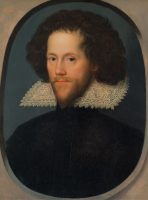
On 10th August 1621 Grey Brydges 5th Baron Chandos (age 41) died. His son George (age 1) succeeded 6th Baron Chandos of Sudeley.
On 10th August 1650 Andrew Stewart 3rd Baron Castle Stuart died. His brother Josias (age 14) succeeded 4th Baron Castle Stuart of County Tyrone.
On 10th August 1658 George Berkeley 8th Baron Berkeley (age 56) died. His son George (age 30) succeeded 9th Baron Berkeley. Elizabeth Massingberd Couness Berkeley by marriage Baroness Berkeley.
On 10th August 1660 Esmé Stewart 2nd Duke Richmond 5th Duke Lennox (age 11) died of smallpox at Paris [Map]. He was buried in on 04 Sep 1660 in the Richmond Vault, Westminster Abbey. His first cousin Charles (age 21) succeeded 6th Duke Lennox, 3rd Duke Richmond, 4th Earl March. Elizabeth Rogers Duchess Richmond by marriage Duchess Richmond. His sister Mary (age 9) succeeded 5th Baroness Clifton of Leighton Bromswold in Huntingdonshire.
On 10th August 1671 John Evelyn 1st Baronet (age 38) died. Baronet Evelyn of Godstone extinct.
On 10th August 1690 Johannes Spilberg (age 71) died.
On 10th August 1715 Henrietta Somerset Countess Suffolk (age 46) died at Audley End House, Saffron Walden [Map].
On 10th August 1739 William Craven 3rd Baron Craven (age 39) died. His brother Fulwar succeeded 4th Baron Craven of Hamstead Marshall in Berkshire.

On 10th August 1755 William Yonge 4th Baronet (age 62) died at Escot Honiton, Devon. His son George (age 24) succeeded 5th Baronet Yonge of Colyton in Devon.
On 10th August 1755 Latitia Owen (age 59) died. Charlton Leighton 4th Baronet (age 8) inherited Condover Hall, Shropshire.
On 10th August 1756 William Fitzwilliam 1st and 3rd Earl Fitzwilliam (age 36) died. His son William (age 8) succeeded 4th Earl Fitzwilliam, 2nd Earl Fitzwilliam, 6th Baron Fitzwilliam of Liffer in Donegal. Charlotte Ponsonby Countess Fitzwilliam by marriage Countess Fitzwilliam.
On 10th August 1759 Ferdinand VI King Spain (age 45) died without issue. His half brother Charles (age 43) succeeded King Spain.
On 10th August 1773 Charles Schuckburgh 5th Baronet (age 51) died without issue. He was buried at St Mary's Church, Warwick [Map]. His nephew George (age 21) succeeded 6th Baronet Schuckburgh of Schuckburgh in Warwickshire.
The Deeds of the Dukes of Normandy
The Gesta Normannorum Ducum [The Deeds of the Dukes of Normandy] is a landmark medieval chronicle tracing the rise and fall of the Norman dynasty from its early roots through the pivotal events surrounding the Norman Conquest of England. Originally penned in Latin by the monk William of Jumièges shortly before 1060 and later expanded at the behest of William the Conqueror, the work chronicles the deeds, politics, battles, and leadership of the Norman dukes, especially William’s own claim to the English throne. The narrative combines earlier historical sources with firsthand information and oral testimony to present an authoritative account of Normandy’s transformation from a Viking settlement into one of medieval Europe’s most powerful realms. William’s history emphasizes the legitimacy, military prowess, and governance of the Norman line, framing their expansion, including the conquest of England, as both divinely sanctioned and noble in purpose. Later chroniclers such as Orderic Vitalis and Robert of Torigni continued the history, extending the coverage into the 12th century, providing broader context on ducal rule and its impact. Today this classic work remains a foundational source for understanding Norman identity, medieval statesmanship, and the historical forces that reshaped England and Western Europe between 800AD and 1100AD.
Available at Amazon in eBook and Paperback format.
On 10th August 1779 Henry Howard 13th Earl Suffolk 6th Earl Berkshire, who had been born posthumously, died two days old. His great uncle Thomas (age 58) succeeded 14th Earl Suffolk, 7th Earl Berkshire, 7th Viscount Andover in Hampshire, 7th Baron Howard of Charlton in Wiltshire.
On 10th August 1784 Allan Ramsay (age 70) died at Dover, Kent [Map].
On 10th August 1793 Anne Windsor Lady Broughton (age 32) died.
On 10th August 1820 Walter Butler 1st Marquess Ormonde (age 50) died without issue. Marquess Ormonde extinct. His brother James (age 43) succeeded 19th Earl Ormonde, 13th Earl Ossory. Grace Louisa Staples Marchioness Ormonde by marriage Countess Ormonde Countess Ossory.
On 10th August 1839 John St Aubyn 5th Baronet (age 81) died. Baronet St Aubyn of Clowance in Cornwall extinct. His illegitimate son Edward St Aubyn 1st Baronet (age 39) was ineligible to succeed to the title. He was subsequently created 1st Baronet St Aubyn of St Michael's Mount in Cornwall.
On 10th August 1844 Joshua Vanneck 2nd Baron Huntingfield (age 65) died at Heveningham Hall, Suffolk. His son Charles (age 26) succeeded 3rd Baron Huntingfield of Heveningham Hall in Suffolk, 5th Baronet Vanneck of Putney.
On 10th August 1852 William Edwardes 2nd Baron Kensington (age 75) died. His son William (age 51) succeeded 3rd Baron Kensington.
On 10th August 1853 Henry Greville 3rd Earl Warwick 3rd Earl Brooke Warwick Castle (age 74) died. His son George (age 35) succeeded 4th Earl Warwick, 4th Earl Brooke Warwick Castle, 11th Baron Brooke of Beauchamps Court in Warwickshire. Anne Charteris Countess Warwick (age 24) by marriage Countess Warwick.
On 10th August 1874 William Richard Annesley 4th Earl Annesley (age 44) died unmarried. His brother Hugh (age 43) succeeded 5th Earl Annesley of Castlewellan in County Down, 6th Viscount Glerawly of County Fermanagh, 6th Baron Annesley of Castle Wellan in County Down.
On 10th August 1875 Charlotte Anderson-Pelham Lady Copley (age 64) died. She was buried at All Saints' Church, Brocklesby [Map].
Chronicle of Abbot Ralph of Coggeshall
The Chronicle of Abbot Ralph of Coggeshall (Chronicon Anglicanum) is an indispensable medieval history that brings to life centuries of English and European affairs through the eyes of a learned Cistercian monk. Ralph of Coggeshall, abbot of the Abbey of Coggeshall in Essex in the early 13th century, continued and expanded his community’s chronicle, documenting events from the Norman Conquest of 1066 into the tumultuous reign of King Henry III. Blending eyewitness testimony, careful compilation, and the monastic commitment to record-keeping, this chronicle offers a rare narrative of political intrigue, royal power struggles, and social upheaval in England and beyond. Ralph’s work captures the reigns of pivotal figures such as Richard I and King John, providing invaluable insights into their characters, decisions, and the forces that shaped medieval rule. More than a simple annal, Chronicon Anglicanum conveys the texture of medieval life and governance, making it a rich source for scholars and readers fascinated by English history, monastic authorship, and the shaping of the medieval world.
Available at Amazon in eBook and Paperback format.
On 10th August 1877 John Blencowe Robinson 8th Baronet (age 47) died. His brother Frederick (age 34) succeeded 9th Baronet Robinson of London.

On 10th August 1896 Emily Sellwood Baroness Tennyson (age 83) died.
On 10th August 1896 William Harold Cubley (age 79) died at Bryndu, Llanberis [Map] whilst on a painting trip in Wales. He was buried at Newark-on-Trent Cemetery.
On 10th August 1897 Bishop William Walsham How (age 73) died at Leenane whilst on holiday. he weas buried at Whittington, Shropshire.
On 10th August 1904 Richard Wellesley Barlow 4th Baronet (age 68) died. His son Hilaro (age 43) succeeded 5th Baronet Barlow of Fort William in Bengal.
On 10th August 1919 George Montgomerie 15th Earl of Eglinton (age 71) died. His son Archibald (age 39) succeeded 16th Earl Eglinton. Beatrice Susan Dalrymple Countess Eglinton by marriage Countess Eglinton.
On 10th August 1922 Edward Heneage 1st Baron Heneage (age 82) died. His son George (age 56) succeeded 2nd Baron Heneage of Hainton in Lincolnshire.
On 10th August 1958 Oliver Baldwin 2nd Earl Baldwin of Bewdley (age 59) died unmarried. His brother Arthur (age 54) succeeded 3rd Earl Baldwin of Bewdley in Shropshire.
On 10th August 1974 Joan Buxton Lady Ramsden (age 93) died.
On 10th August 1982 William Wynne Honywood 10th Baronet (age 91) died. His son Filmer (age 52) succeeded 11th Baronet Honywood of Evington in Kent.
On 10th August 2008 Jacob Pleydell-Bouverie 8th Earl of Radnor (age 80) died. His son William (age 53) succeeded 9th Earl Radnor, 10th Viscount Folkestone, 10th Baron Longford, 12th Baronet Bouverie of St Catherine Cree Church in London.