

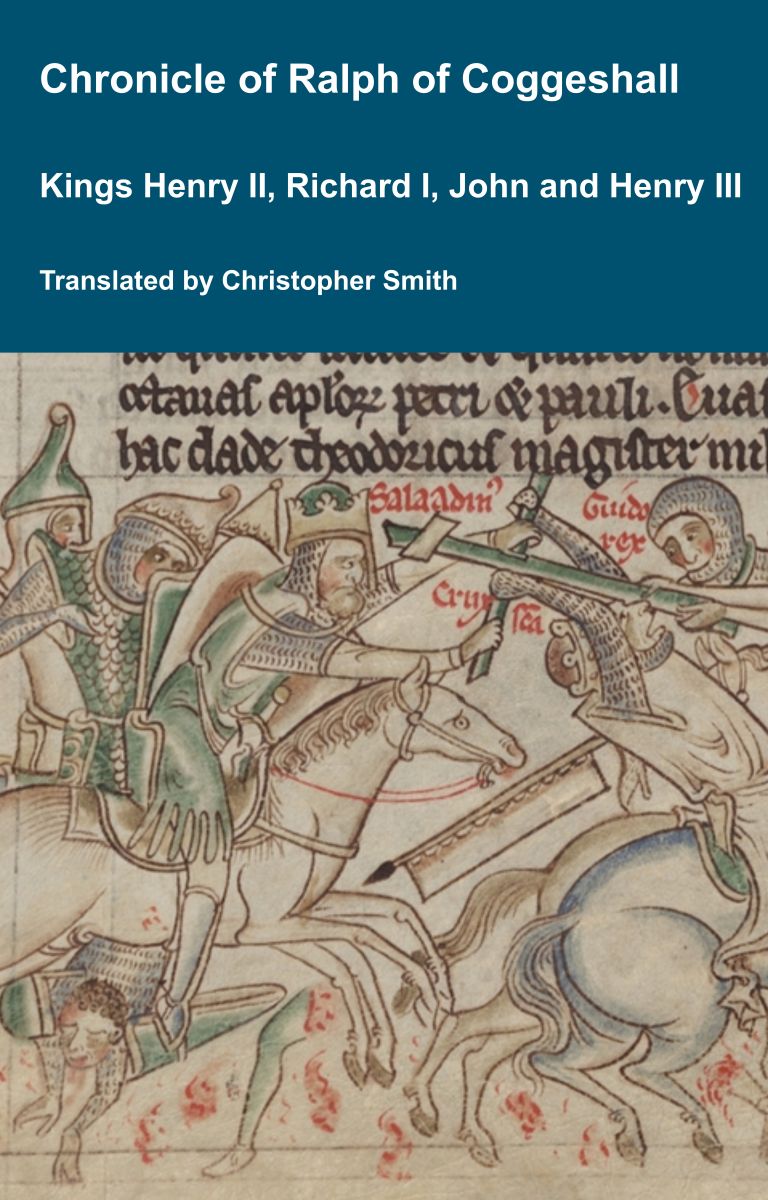
Chronicle of Abbot Ralph of Coggeshall
The Chronicle of Abbot Ralph of Coggeshall (Chronicon Anglicanum) is an indispensable medieval history that brings to life centuries of English and European affairs through the eyes of a learned Cistercian monk. Ralph of Coggeshall, abbot of the Abbey of Coggeshall in Essex in the early 13th century, continued and expanded his community’s chronicle, documenting events from the Norman Conquest of 1066 into the tumultuous reign of King Henry III. Blending eyewitness testimony, careful compilation, and the monastic commitment to record-keeping, this chronicle offers a rare narrative of political intrigue, royal power struggles, and social upheaval in England and beyond. Ralph’s work captures the reigns of pivotal figures such as Richard I and King John, providing invaluable insights into their characters, decisions, and the forces that shaped medieval rule. More than a simple annal, Chronicon Anglicanum conveys the texture of medieval life and governance, making it a rich source for scholars and readers fascinated by English history, monastic authorship, and the shaping of the medieval world.
Available at Amazon in eBook and Paperback format.
10 Oct is in October.
1136 Battle of Crug Mawr aka Cardigan
1297 Confirmation of Magna Carta
1361 Marriage of Edward "The Black Prince" and Joan "The Fair Maid of Kent"
1532 Henry VIII and Francis I meet at Calais
Anglo-Saxon Chronicle. 644. This year died at Rochester, Kent [Map], on the tenth of October, Paulinus, who was first Archbishop at York, and afterwards at Rochester. He was bishop nineteen winters, two months, and one and twenty days. This year the son of Oswy's uncle (Oswin), the son of Osric, assumed the government of Deira, and reigned seven winters.
On 10th October 644 Archbishop Paulinus of York died at Rochester, Kent [Map].
Chronicum Anglicanum by Ralph Coggeshall. 1114. The River Thames dried up on the 6th day before the Ides of October [10th October]. Matilda, daughter of King Henry, was betrothed at Mainz and consecrated as Empress.
MCXIV. Tamisia exsiccata est sexto idus Octobris. Mathildis, filia regis Henrici, apud Magontiam desponsata est, et in imperatricem consecrata.
On 10th October 1136 [the date is uncertain] the Battle of Crug Mawr aka Cardigan between Welsh and Normans for control of Ceredigion, West Wales. The Welsh, led by Owain "Great" King Gwynedd (age 36), Cadwaladr ap Gruffudd Aberffraw (age 36) and Gruffudd ap Rhys King Deheubarth (age 55) defeated Normans led by Robert Fitzmartin,; a significant setback to Norman expansion in Wales.
Einion Aberffraw was killed.
The exact location of the battle is unknown. Possibly near Crug Mawr [Map]. However, Annales Cambriae has "A battle was fought before the castle" followed by "others drowned in the river Teifi" suggesting the castle referred to may have been Cilgerran Castle [Map] which is on the River Teifi.
Chronicon ex Chronicis by Florence and John of Worcester. Another bloody battle was afterwards fought at Cardigan, in the second week of the month of October [10th October 1136], in this same year, in which the slaughter was so great that, without reckoning the men who were carried off into captivity, there remained ten thousand women, whose husbands, with numberless children, were either drowned, or burnt, or put to the sword. When the bridge over the river Tivy was broken down it was a wretched spectacle to see crowds passing to and fro across a bridge formed by the horrible mass of human corpses and horses drowned in the river.
Annales Cambriae. [10th October 1136] Later, Owain (age 36) and Cadwaladr (age 36) again came into Ceredigion, and to their aid came Gruffydd (age 55) son of Rhys, Rhys son of Hywel, Madog son of Idnerth, and the sons of Hywel, who mustered in strength at Aberteifi (Cardigan). Against them stood Stephen the Constable, the sons of Gerald, and all the Normans from the Severn Sea as far as St Davids, together with the Flemings of Rhos. A battle was fought before the castle [Map]: the Normans and Flemings were put to flight; some were captured, some killed, some burned, some trampled under horses' hooves, others drowned in the river Teifi, and very many were led away into wretched captivity. The Welsh, having accomplished their aims, returned to their own lands, the castle remaining in the hands of the Normans. [Einion son of Owain was slain there.]
Owinus et Catwaladrus iterum ad Keredigean venerunt, quibus in adjutorium Grifinus filius Eesi, et Resus filius Hoeli, et Madocus filius Idnerth, et filii Hoeli ad Abertewy potenter venerunt; quibus ex alia parte resisterunt Steplianus constabularius et filii Geraldi et omnes Franci ab hoste Sabrinse usque ad Meneviam, et Flandrenses de Ros: et prœlio coram castellum inito, Franci et Flandrenses in fugam versi capti sunt, occisi sunt, combusti et equorum pedibus conculcati et in fluvio Tewy submersi sunt, plurimi in captivitatem miserrime ducti Walenses vero his ad votum peractis, in sua redierunt, castello Francis remanente. [Eynaun filius Owein ibi occiditur.]
The Itinerary of Archbishop Baldwin through Wales: Book 2 Chapter 14. We proceeded on our journey from Cilgarran towards Pont-Stephen1, leaving Cruc Mawr, i. e. the great hill, near Aberteivi2, on our left hand. On this spot Grruffydh (age 55), son of Rhys ap Theodor [Tudor], soon after the death of king Henry I, by a furious onset gained a signal victory [1136 Battle of Crug Mawr aka Cardigan] against the English army, which, by the murder of the illustrious Richard de Clare, near Abergevenny (before related), had lost its leader and chief3. A tumulus is to be seen on the summit of the aforesaid hill, and the inhabitants affirm that it will adapt itself to persons of all stature ; and that if any armour is left there entire in the evening, it will be found, according to vulgar tradi- tion, broken to pieces in the morning.
Note 1. Our author having made a long digression, in order to introduce the history of the beaver, now continues his Itinerary, Prom Cardigan, the archbishop proceeded towards Pont Stephen, leaving a hill, called
Note 2. The signal victory of the Welsh, here alluded to by Griraldus, happened in 1135, soon after the death of Henry I, and the cruel murder of Richard de Clare and his son Gilbert, near Abergavenny, by Morgan ap Owen, of Caerleon.
Note 3. Though Emelyn is mentioned in the title of the preceding chapter, no notice is taken of it in the text. This village, on the direct road from Cardigan to Llanbedr, now bears the name of Newcastle Emlyn.
On 10th October 1144 Alfonso Hauteville Duke Naples (age 23) died.
On 10th October 1213 Frederick Metz II Duke Lorraine died. His son Theobald succeeded I Duke Lorraine. Gertrude Dagsburg Duchess Lorraine by marriage Duchess Lorraine.
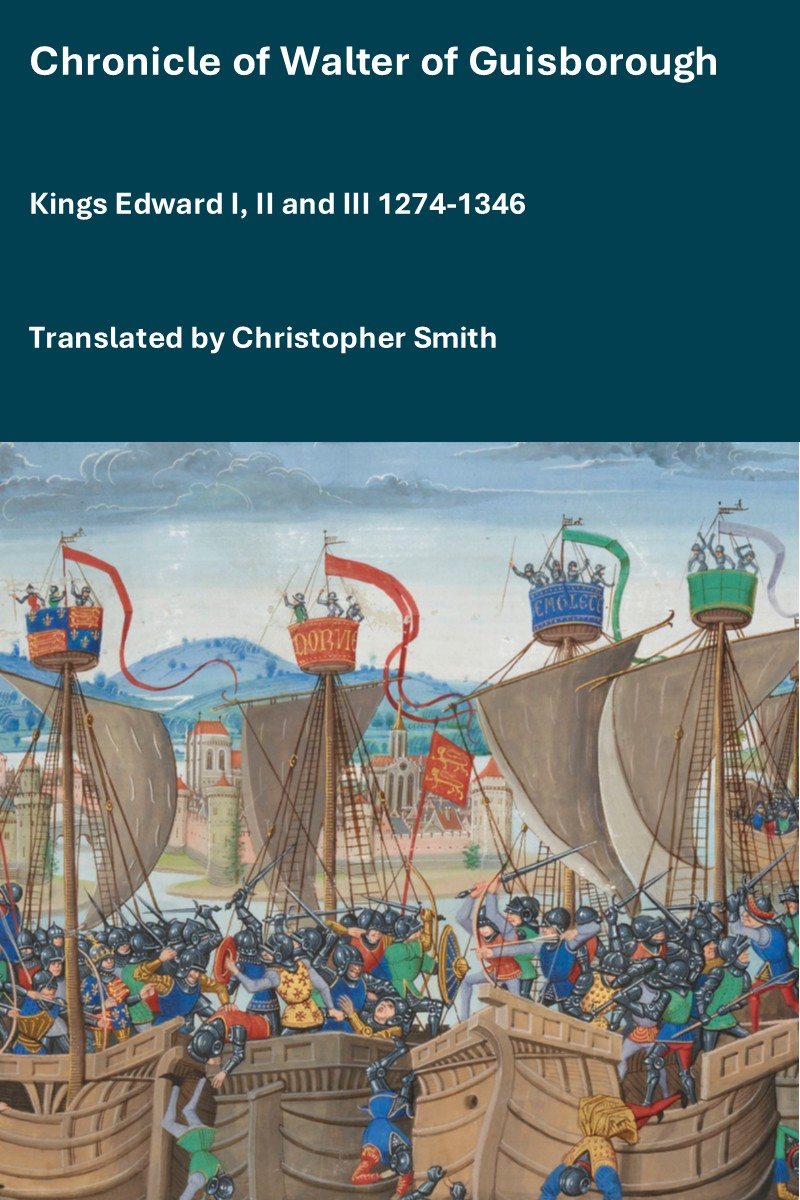 Chronicle of Walter of Guisborough. Edward, by the grace of God King of England, Lord of Ireland, and Duke of Aquitaine, to all those who shall see or hear these present letters, greetings. Know that we, to the honour of God and of Holy Church and to the benefit of our whole realm, have granted, for us and for our heirs, that the Great Charter of Liberties and the Charter of the Forest, which were made by common consent of the whole kingdom in the time of King Henry our father, shall be held and kept in all their points, without any breach. And we will that these same charters, under our seal, shall be sent to our justices, as well of the forest as of the others, and to all our sheriffs of counties, and to all our other officials, and to all our cities throughout the land, together with our writs, in which it shall be contained that they cause the aforementioned charters to be published, and that they make it known to the people that we have granted to have them observed in all their points. And to our justices, sheriffs, mayors, and other officials who hold law for us and under us, we command that the same charters shall be allowed before them in pleas and in judgments, that is to say, the Great Charter of Liberties as the common law, and the Charter of the Forest according to the assize of the forest, for the amendment of our people. And we will that if any judgments from now on shall be given against the points of the said charters by our justices or by any of our ministers who hold pleas before them, they shall be undone and held for nothing. And we will that the same charters, under our seal, be sent to the cathedral churches throughout our realm, and remain there, and shall be read twice a year before the people. And that the archbishops and bishops shall pronounce sentence of great excommunication against all those who shall infringe the said charters in deed, word, counsel, or any point of them, and against all those who aid, abet, or counsel such infringement. And that these sentences be publicly announced and published twice a year by the said prelates. And if the same prelates or any of them are negligent in making the said denunciation, they shall be compelled to do it by the archbishops of Canterbury and York who shall be in office at the time. And because some people of our realm are in doubt as to the aids and charges which they have given to us before this time, for our wars and other needs, by their own good will, whatever manner they were made in, that these could become a custom and burden to them and their heirs, because they might be found in records, or because of certain levies made throughout the realm by our officials in our name: We have granted for us and our heirs that such aids, charges, or levies shall not be taken as a precedent or custom, and that nothing shall be drawn from them as a future obligation. And also, we have granted for us and our heirs to the archbishops, bishops, abbots, priors, and other people of Holy Church, and to the earls, barons, and all the community of the land, that for no need or cause will we take such aids, charges, or levies from our realm without the common assent of all the realm and for the common benefit of the same realm, saving the ancient aids and charges due and customary. And because the greater part of the common people of the realm feel themselves heavily burdened by the evil toll on wool, that is, forty shillings on each sack, they have prayed us to remit it. We, at their request, have fully remitted it, and we have granted that neither this nor any other similar levy shall be taken without their common assent and good will, saving to us and our heirs the custom on wool, hides, and leather previously granted by the community of the said realm. In testimony whereof, we have caused these our letters to be made open. Given at London the tenth day of October [1297], in the twenty-fifth year of our reign. Witness: Edward our son.
Edward par la grace de Dieu roy d'Engleterre, seignur dIrland, et ducs d'Aquitaine a toutz ceus qui cestes presentes lettres verront ou orront, saluz. Sachiez nous al honeur de Dieu et de seinte eglise et au profit de tut nostre roiaume, aver grante, pour nous e pour nos heirs, qe la Grand Chartre des franchises et la Chartre de la Forest lesqueles furent faites par commun assent de tut le roiaume en tens le rey Henry nostre pere, seient tenuz en toutz leur pointz, sanz nul blemisement. E voloms qe meismes celes chartres desuth nostre seal seient envoiez a nos justices ausibien de la forest come as autres, e a toutz les viscontes des contez, et a toutz nos autres ministres, et a totes nos citees parmi la terre, ensemblement ove nos briefs en les queux serra contenu qil facent les avantdites chartres pupplier, e qil facent dire au poeple qe nous les avoms grauntees de tenir les en toutz leur pointz; e a nos justices, viscontes, maires, e autres ministres qi la ley de la terre desouth nous et pour nous ount a guier, meismes les chartres en toutz leur pointzen plez devaunt eus e en jugementz les facent alower, cest asavoir la Grand Chartre des franchises come ley commune e la Chartre de la Forest solom lassise de la forest, al amendement de nostre poeple. E voloms que si nuls jugementz soient donez desoremes encontre les pointz des chartres avantdites par justices et par autres nos ministres, qui contre les pointz des chartres tenent plez devant eus, seient defaitz e pour nient tenuz. E voloms qe mesmes celes chartres desuth nostre seal seient envoiez as eglises cathedrales parmi nostre roiaume, et la demorgent. E seient deu foitz par an lues devant le poeple. E qe ercevesques et evesques doignent sentences du grant escomenge contre toutz ceus qui contre les avantdites chartres vendront en fait, ou en ayde, ou en conseil, ou nul point enfreindront, ou encontre vendront. E que celes sentences seient denuncies e pupplies deu foitz par an par les avantditz prelatz. E si mesmes les prelatz evesques ou nul de eus seient negligentz en la denunciacion susdite faire, par les ercevesques de Canterbire et de Everwyk, qui pur tens serront, sicome covient, soient repris, et destreinz a mesme cele denunciacion faire en la fourme avauntdite. E pur ceo qe aucunes gentz de nostre roiaume se doutent qe les aides, e les mises, les queles il nous ount fait avant ces oures, pur nos guerres et autres bosoignes, de leur graunt e leur bone volunte, en quele manere qe faitz seient, pussent turner en servage a eus e a leur heirs, parce qil serroient autrefoitz trovez en roule, e ausi prises qe ont este faites parmi le roiaume par nos ministres en nostre noun, avoms grante pur nous et pur nos heirs qe mes tieles aides, mises, ne prises, ne treroms Edward I a custume pur nule chose qe soit fait, ou Confirmation qe par roule ou en autre maniere peust of Magna estre trove. E ausi avoms grante pour nous e pour nos heirs as ercevesques, evesques, abbes, e priurs, e as autres gentz de seinte eglise, et as contes, et barons, et a tote la communaute de la terre que mes pur nule busoigne tieu manere des aides, mises, ne prises de nostre roiaume ne prendroms fors que par commun assent de tut le roiaume, et a commun profit de meisme le roiaume, sauve les auncienes aides et prises, dues et custumees. E pour ceo que tut le plus de la communaute del roiaume se sentent durement grevez de la maletoute des leines, cest asavoir de chescun sak de leine quarant soudz, e nous ont prie que nous les vousissoms relesser, nous a leur priere les avoms pleinement relesse, e avoms graunte qe cele ne autre mes ne prendroms sanz lour commun assent e leur bone volunte; sauve a nous et a nos heirs la custume des leines, peaus, e quirs, avant grantez par la communaute du roiaume avauntdit. En tesmoignance de queux choses nous avoms fait faire cestes nos lettres overtes. Tesmoigne Edward nostre fitz a Londres le disme jour de Octobre, lan de notre regne vintisme quynt.
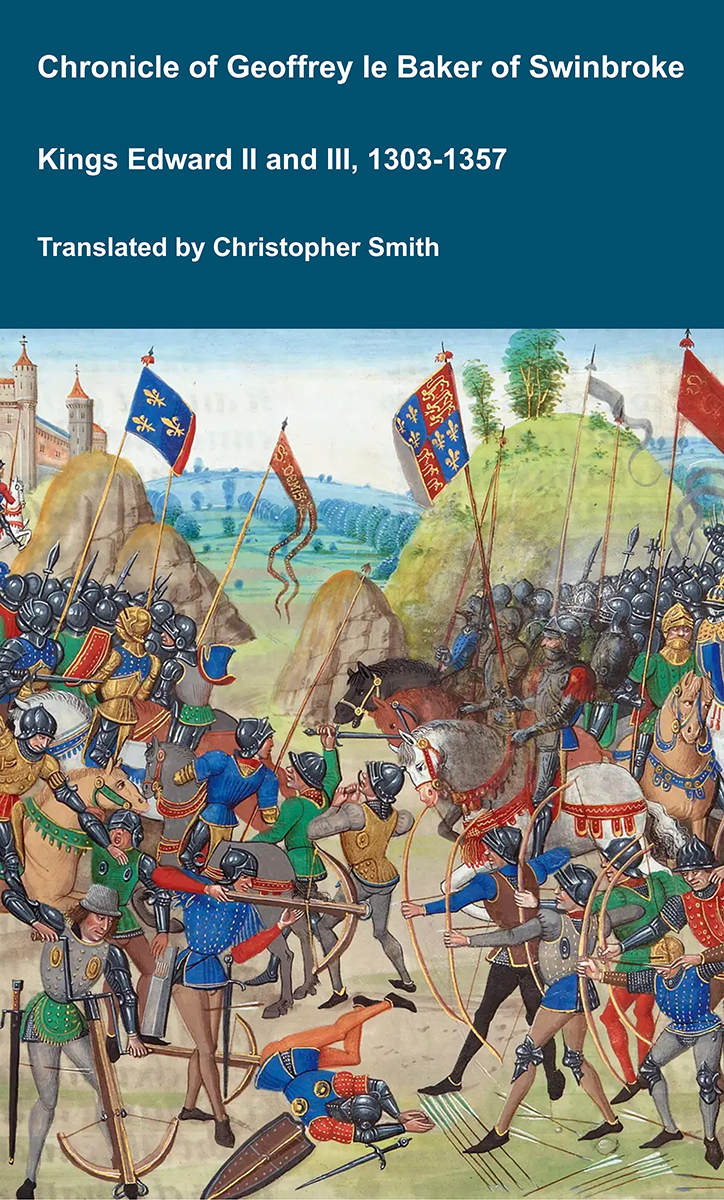 Chronicle of Geoffrey le Baker of Swinbroke [-1360]. In this same year, on the Vigil of the Nativity of the Blessed Mary, Pope Boniface was captured in Campania, in the city of Anagni, where he had been born, through the machinations of the King of France, by his envoys William of Nogaret1 and William of Plasian, and with the consent of the Pope's own household and neighbours. The treasury of the Church was also plundered. Moreover, the Pope himself, placed unwillingly and bound upon an unbroken horse, with his face turned toward the horse's tail and without a bridle, was exhausted by its furious gallop. At last, on the 10th of October 1303, he breathed his last, uttering with terrible force a sentence of excommunication upon the degenerate sons of the royal blood of France down to the ninth generation.
Isto quoque anno, in vigilia Nativitatis beate Marie, captus est Bonefacius papa predictus in Campania, civitate Agnanie, de qua extitit oriundus, procurante rege Francie per suos nuncios Willelmum de Nogarito et Willelmum de Plasiano, atque consencientibus ipsius pape familiaribus et vicinis; tesaurus quoque ecclesie depredatus. Ipse insuper papa, equo indomito insidens invitus et alligatus, facie versus caudam effrenis equi conversa, cursu nimio deferentis fatigatus, spiritum cum sentencia excommunicacionis in degeneres filios propaginis regalis sanguinis Francorum adusque nonum gradum terribiliter exspiravit, VJ idus Octobris, anno 1304.
Note 1. Guillaume de Nogaret, Philip's chancellor, and Guillaume Duplessis, who were despatched, together with Sciarra Colonna, to seize Boniface at Anagni. The pope did not die in the hands of his enemies. He was rescued by the people of Anagni; and went to Rome, and there died a little more than a month after his captivity.
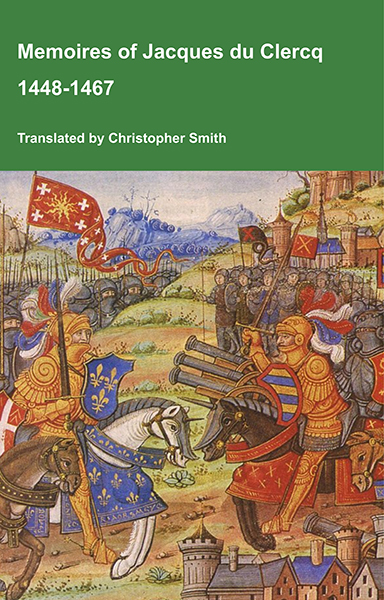
This is a translation of the 'Memoires of Jacques du Clercq', published in 1823 in two volumes, edited by Frederic, Baron de Reissenberg. In his introduction Reissenberg writes: 'Jacques du Clercq tells us that he was born in 1424, and that he was a licentiate in law and a counsellor to Philip the Good, Duke of Burgundy, in the castellany of Douai, Lille, and Orchies. It appears that he established his residence at Arras. In 1446, he married the daughter of Baldwin de la Lacherie, a gentleman who lived in Lille. We read in the fifth book of his Memoirs that his father, also named Jacques du Clercq, had married a lady of the Le Camelin family, from Compiègne. His ancestors, always attached to the counts of Flanders, had constantly served them, whether in their councils or in their armies.' The Memoires cover a period of nineteen years beginning in in 1448, ending in in 1467. It appears that the author had intended to extend the Memoirs beyond that date; no doubt illness or death prevented him from carrying out this plan. As Reissenberg writes the 'merit of this work lies in the simplicity of its narrative, in its tone of good faith, and in a certain air of frankness which naturally wins the reader’s confidence.' Du Clercq ranges from events of national and international importance, including events of the Wars of the Roses in England, to simple, everyday local events such as marriages, robberies, murders, trials and deaths, including that of his own father in Book 5; one of his last entries.
Available at Amazon in eBook and Paperback format.
Letters. 10th October 1316. Letter XXIII. Isabella of France Queen Consort England (age 21) to her nephew John of Eltham 1st Earl Cornwall.
Most dear and beloved nephew,.
We have well understood what you have sent us word by your letters; and, as to our estate, we give you to know that we are even in great trouble of heart, but, considering the condition we are in, we were in good health of body at the setting forth of these letters, which our Lord ever grant to you. Dearest nephew, we pray you that you will leave off all excuses, and come to the king our son in the best manner you can, and as he commands you more fully by his letters. For you well know, dearest nephew, if you come not, considering the necessity that now exists, it will be greatly talked of, and will be a great dishonour to you. Wherefore make an effort to come at this time as hastily as you can, and you know well, dearest nephew, that we shall ever be ready to counsel you as well as we can in all things that shall be to your honour and profit. Most dear and beloved nephew, our Lord have you in his keeping. Given at Nottingham [Map], the 10th day of October.
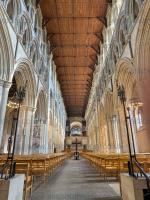
At 85 metres, the longest nave in England. On 10 October 1323 two piers on the south side of the nave of St Albans Cathedral [Map] collapsed dragging down much of the roof and wrecking five bays. Mason Henry Wy undertook the rebuilding, matching the Early English style of the rest of the bays but adding distinctly 14th-century detailing and ornaments.
On 10th October 1332 Charles "Bad" II King Navarre was born to Philip "Noble" III King Navarre (age 26) and Joan Capet II Queen Navarre (age 20). He a great x 3 grandson of King Henry III of England. Coefficient of inbreeding 5.86%. He married 12th February 1352 his second cousin Joan Valois Queen Consort Navarre, daughter of King John "The Good" II of France and Bonne Luxemburg Queen Consort France, and had issue.
On 10th October 1339 Thomas Poynings 1st Baron Poynings (age 45) was killed at the 1339 Attack on Honnecourt.
On 10th October 1344 Mary Plantagenet Duchess Brittany was born to King Edward III of England (age 31) and Philippa of Hainaut Queen Consort England (age 30) at Bishop Waltham's Palace, Hampshire [Map]. Coefficient of inbreeding 3.00%. She married 3rd July 1361 her third cousin John Montfort V Duke Brittany.
On 10th October 1361 Edward "Black Prince" (age 31) and Joan "Fair Maid of Kent" Princess Wales (age 33) were married at Windsor Castle [Map]. She by marriage Princess of Wales. His first wife, her second (or third depending on how you count them) husband. She had four children already. They had known each other since childhood. Thirty-one and thirty-three respectively. A curious choice for the heir to the throne; foreign princesses were usual. They were married nearly fifteen years and had two children. She the daughter of Edmund of Woodstock 1st Earl Kent and Margaret Wake Countess Kent. He the son of King Edward III of England (age 48) and Philippa of Hainaut Queen Consort England (age 47). They were half first cousin once removed. She a granddaughter of King Edward I of England.
On 10th October 1460 Richard Plantagenet 3rd Duke of York (age 49) claimed the Kingdom of England in Westminster Hall [Map] witnessed by Cardinal Thomas Bourchier (age 42).
Chronicle of St Albans by Abbot John Whethamstede [-1465]. [10th October 1460] However, while the people wavered in such uncertainty, and as the King stood with the prelates, nobles, and commons gathered in Parliament at Westminster for the good governance of his kingdom, soon, almost at the beginning of the Parliament, the aforementioned Duke of York arrived, with great pomp and exuding a sense of elevation, accompanied by trumpets and horns, with men of arms, and a very large retinue. As he entered the Palace there, he proceeded straight through the great hall until he reached that solemn chamber where the King usually holds Parliament. Upon arriving there, he walked straight until he came to the King's throne, upon which he placed his hand, acting as if asserting his rightful possession. Eventually withdrawing it from there, he turned his face to the people, standing in peace beneath the royal standard, observing their reactions and gaze.
Dum autem populus fluctuaret taliter sub dubio, staretque Dominus Rex cum Prælatis, Proceribus, et Communibus, in Parliamento apud Westmonuterium, pro bono regimine sui regni, congregato, mox, et Parliamenti quasi in principio, supervenit dictus Dominus Dux Eboracensis, cum pompa apparatus magni, in non parvaque exaltatione spiritus, quia cum tubis et bucinis, cum hominibusque armorum, familia multa nimis; ingredienesque Palatium ibidem, perrexit recto itinere per aulam majorem, quousque veniret ad cameram illam solemnem, ubi Rex, cum Communibus, tenere solet Parliamentum num. Illuc utique veniens, perrexit passu recto, quousque veniret ad solium Regis, super cujus centonem, sive culcitram, manum suam ponens, in eo facto similis homini sumpturo possessionem sui juris, tenuit illam super ipsam per morulam temporis parvulam. Demum tamen eam inde retrahens, vertit faciem suam ad populum, stansque in pace sub panno status regii, intuebatur concurrentiam contuentiamque illorum.
Chronicle of St Albans by Abbot John Whethamstede [-1465]. [10th October 1460] However, as he stood in this manner, turning his face towards the people and deeming them to be applauding him, Master Thomas Bourchier, Archbishop of Canterbury, approached. After offering appropriate greetings, he asked if the Duke would like to come and see the King. Somewhat displeased by this request, he responded rather curtly, in the following manner, "I do not recall knowing anyone within the realm who should rather come to see me and behold my person, than for me to approach and visit theirs."
Dum autem sic staret, vultumque deflecteret ad populum, et ipsum sibi applaudentem æstimaret, supervenit Magister Thomas Boucher, Archiepiscopus Cantuariæ, præmissaque salutatione congrua, petiit an vellet venire, et Dominum Regem videre. De qua petitione ipse quasi stomachatus in animo, respondebat iterum breviter satis, sub isto modo, "Non memini me nosse aliquem infra regnum, quin deceret eum citius venire ad me, et videre personam meam, quam me accedere, et visitare suam."
A Chronicle of London. 10th October 1460 ... the kyng taken and brought to London, and callid a parliament; and the duke of Yorke came out of Irland, and to Westm' the xth day of Octobre, and there made clayme to the crowne; aggrement was made bitwene the kyng and him, and he was made protectour, his title allowid to be kyng after the kyngs deceas;
Chronicle of William of Worcester [1415-1482]. [10th October 1460] On [....] October, the parliament began, to which the lords, the Earls of Warwick, March, and Salisbury, and almost all the archbishops, bishops, and abbots convened. But the Dukes of Exeter and Somerset, as well as the Earls of Northumberland and Devonshire, and many others from the north did not come, etc. On the third day of parliament, the Duke of York, with five hundred armed men, entered the Palace of Westminster, and thus into the parliamentary chamber, where he declared with his own mouth that he was to be the heir to the crown of England. And on that day, few lords favoured him, but most were simply absent. On All Saints' Eve [October 31st], the King and the Duke of York were reconciled by the authority of parliament; namely, that the Henry should be King during his lifetime, and the Duke should be regent, and after the death of the King, inherit the crown of England and France.
Die [....] Octobris inceptum est parliamentum, ad quod convenerunt domini comites Warwyk, Marche, et Sarum, et quasi omnes archiepiscopi, episcopi, et abbates. Sed duces Exoniæ et Somersetiæ, ac comites Northumbriæ, Deveniæ, ac etiam multi de borialibus non venerunt, etc. Tertio die parliamenti dux Eboraci, cum v. c. armatis, intravit palatium Westmonasterii, et sic in camera parliamenti, ubi proprio ore suo declaravit se fore hæredem regum coronæ Angliæ. Et illo die pauci dominorum sibi favebant, sed solummodo absentabant. In vigilia Omnium Sanctorum concordati sunt rex et dux Eboraci auctoritate parliamenti; videlicet, ut rex [esset] Henricus, durante vita sua, et dux esset regens, ac post mortem dicti regis coronam Angliæ et Franciæ hæreditaret.
On 10th October 1465 Alfonso II King Naples (age 16) and Ippolita Maria Sforza (age 19) were married at Milan. She the daughter of Francesco Sforza I Duke Milan (age 64) and Bianca Maria Visconti (age 40). He the son of Ferdinand I King Naples (age 42) and Isabella Clermont Queen Consort Naples.
On 10th October 1486 Charles 3rd Duke Savoy was born to Philip "Landless" Savoy II Duke Savoy (age 48) and Claudine Brosse (age 36). He married 8th April 1521 Beatrice Aviz Duchess Savoy, daughter of Manuel "Fortunate" I King Portugal and Maria Trastámara Queen Consort Portugal, and had issue.
This is a translation of the 'Memoires of Jacques du Clercq', published in 1823 in two volumes, edited by Frederic, Baron de Reissenberg. In his introduction Reissenberg writes: 'Jacques du Clercq tells us that he was born in 1424, and that he was a licentiate in law and a counsellor to Philip the Good, Duke of Burgundy, in the castellany of Douai, Lille, and Orchies. It appears that he established his residence at Arras. In 1446, he married the daughter of Baldwin de la Lacherie, a gentleman who lived in Lille. We read in the fifth book of his Memoirs that his father, also named Jacques du Clercq, had married a lady of the Le Camelin family, from Compiègne. His ancestors, always attached to the counts of Flanders, had constantly served them, whether in their councils or in their armies.' The Memoires cover a period of nineteen years beginning in in 1448, ending in in 1467. It appears that the author had intended to extend the Memoirs beyond that date; no doubt illness or death prevented him from carrying out this plan. As Reissenberg writes the 'merit of this work lies in the simplicity of its narrative, in its tone of good faith, and in a certain air of frankness which naturally wins the reader’s confidence.' Du Clercq ranges from events of national and international importance, including events of the Wars of the Roses in England, to simple, everyday local events such as marriages, robberies, murders, trials and deaths, including that of his own father in Book 5; one of his last entries.
Available at Amazon in eBook and Paperback format.
On 10th October 1503 Peter Bourbon II Duke Bourbon (age 64) died. His daughter Suzanne (age 12) succeeded Duchess Bourbon.
On 10th October 1530 Thomas Grey 2nd Marquess Dorset (age 53) died. His son Henry (age 13) succeeded 3rd Marquess Dorset, 3rd Earl Huntingdon, 9th Baron Ferrers of Groby, 9th Baron Harington, 4th Baron Bonville.
Chronicle of Edward Hall [1496-1548]. [10th October 1532]. The 10th day of October, the King came to Dover, and on the 11th day in the morning being Friday, at three of the clock, he took ship in Dover Road, and before ten of the clock the same day, he with the lady Marchioness of Pembroke (age 31), landed at Calais, where he was honourably received with procession, and brought to Saint Nicholas church, where he heard Mass, and so to his place called The Exchequer, where he lodged. And on the Sunday after came to Calais, the Lorde Roche Baron, and Monsieur de Mountpesat, messengers from the French King, advertising the King of England, that the French King would repair to Abuile the same night marching towards Boulogne, of which tidings the King was very glad, but suddenly came a messenger, and reported that the great Master of France, and the Archbishop of Rouen, with diverse noble men of France, were come to Sandifeld, intending to come to Calais, to salute the King, from the King their Master. He being thereof advertised, sent in great haste the fifteenth day of October, the Duke of Norfolk, the Marques of Exeter (age 36), the Earles of Oxford (age 61), Derby (age 23), and Rutland (age 40), the Lord Sandys, and the Lord Fitzwater, with three hundred gentlemen, which honourably received the French Lords, at the English pale, and so brought them to the King's presence in Calais, which stood under a rich clothe of estate of such value that they much mused of the riches. The King (as he that knew all honour and nurture) received the French Lords, very lovingly and amiably, and with them took a day and place of meeting: these Lords were highly feasted, and after diner departed to Boulogne.


Henry Machyn's Diary. 10th October 1558. The x day of October was bered in sant Faythe [Map] mastores Alene, the wyff of master (blank) Allen [Note. possibly Bishop Edmund Allen (age 39)], with ij [white] branchys, and xviij torchys, and iiij gret tapurs, and [many] morners in blake, and all the belles of Powlles, and ....
Henry Machyn's Diary. 10th October 1561. The x day of October [the] quen('s) (age 28) grace dyd gret cost at Westmynster boyth with-in here plase, and pavyng from the end of the Tyltt rond abowt the sydes, and closyd in the tylt.
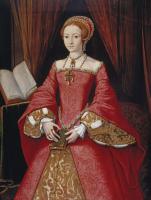


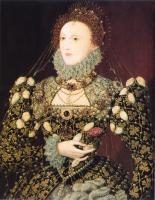
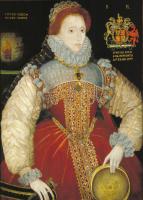


On 10th October 1567 Catherine Habsburg Spain Duchess Savoy was born to Philip "The Prudent" II King Spain (age 40) and Elizabeth Valois Queen Consort Spain (age 22). She married 1584 her first cousin once removed Charles Emmanuel Savoy I Duke Savoy, son of Emmanuel Philibert Duke of Savoy and Margaret Valois Duchess Berry and Savoy, and had issue.


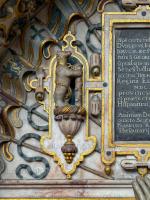
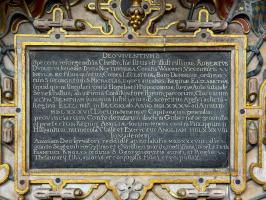
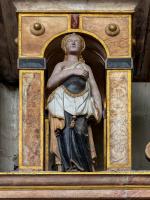
On 10th October 1588 Robert Dudley 1st Earl of Leicester (deceased) was buried at the Beauchamp Chapel, St Mary's Church, Warwick [Map].
His wife Lettice Knollys Countess Essex and Leicester (age 44) commissioned a monument with the inscription:
"Sacred to the God of the Living. In certain hope of a resurrection in Christ, here lieth the most illustrious Robert Dudley, fifth son of John, Duke of Northumberland, Earl of Warwick, Viscount Lisle, & c. He was Earl of Leicester, Baron of Denbigh. Knight both of the order of the Garter and St. Michael. Master of the Horse to Queen Elizabeth, (who distinguished him by particular favor) soon after Steward of the Queen's Household, Privy councellor, Justice in Eyre of the Forests, Parks, Chases, & c. on this side Trent, from the year 1585 to the year 1587, Lieutenant and Captain General of the English Army sent by the said Queen Elizabeth to the Netherlands; Governor General and Commander of the Provinces united in that place; Lieutenant Governor of England against Philip the Second of Spain, in the year 1588, when he was preparing to invade England with a numerous fleet and army."
He gave up his soul to God his Saviour, on the 4th day of September, in the year of Salvation, 1588. His most sorrowful wife Letitia, daughter of Francis Knolles, Knight of the order of the Garter, and Treasurer to the Queen, through a sense of conjugal love and fidelity, hath put up this monument to the best and dearest of husbands.
Spe certa resorgendi in Christo, hic situs est illustrissimus Robertus Dudleyus, Johannis, Ducis Northumbriæ Comitis Wawwici, Vicecomitis: Insulæ, &c. filius quintus; Comes Lecestriæ; Baro Denbighie, ordinis tum S. Georgii, tum S. Michaelis, Eques auratus; Reginæ Elizabethæ [apud quem Singulari gratia florebat] Hippocomus, Regæ Aulæ subinde Seneschallus; ab intimis Consilijs: Forestarum, Parcorum, Chacearum, &c. citra Trentham summus Justiciarius: Exercitus Anglici a dicta Regina Eliz: missi in Belgio, ab Anno MDLXXXV, ad Annum MBLXXXVII. Locum tenens et Capitaneus generalis: Provinciarum Confederatarum, ibidem Gubinator generalis et præfectus; Regnique Angliæ locum tenens contra Phalipum II. Hispanum, numerosa Classe et Excercitu Angliam MD MDLXXXVIII. Invadentem.
Animam Deo servatori reddidit Anno salutis MDLXXXVIII. Die quarto Septembris. Optimo et charissimo marito, mœstissima uxor Leticia Francisci Knoiles ordinis S Georgii equitis aurati et Regiæ Thesauraij filia, amoris et conjugalis fidei ergo, posuit.
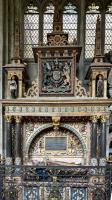
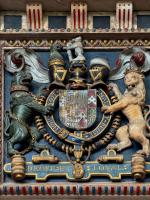
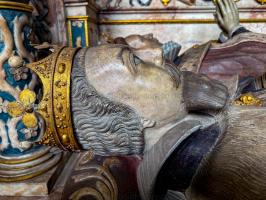
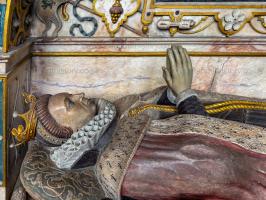
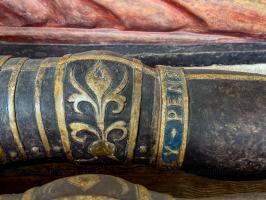
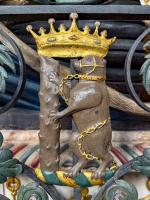
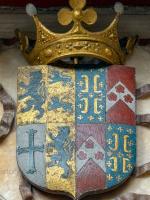


On 10th October 1619 Robert "The Elder" Peake (age 68) made his will.
On 10th October 1619 Elisabeth Sophie Saxe Altenburg Duchess Saxe Gotha was born to Johann Philipp Wettin Duke Saxe Altenburg (age 22) and Elisabeth of Brunswick-Wolfenbüttel Duchess of Saxe-Altenburg (age 26). She married 24th October 1636 her first cousin once removed Ernest "The Pious" Saxe Gotha I Duke Saxe Gotha, son of Johann Wettin II Duke Saxe Weimar and Dorothea Maria Anhalt, and had issue.
John Evelyn's Diary. 10th October 1641. At our going off, the fort, against which our pinnace anchored, saluted my Lord Marshal (age 56) with twelve gi'eat guns, which we answered with three. Not having the wind favourable, we anchored that night before Calais [Map]. About midnight, we weighed; and, at four in the morning, though not far from Dover [Map], we could not make the pier till four that afternoon, the wind proving contrary and driving us westward; but at last we got on shore, October the 12th.


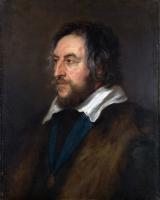

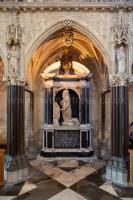
On 8th October 1655 Michael Wharton (age 78) died. He was buried at Beverley Minster [Map] on 10th October 1655. Monument attributed to Thomas Stanton.
Michael Wharton: In 1577 he was born. Before 23rd October 1593 he and Elizabeth Hansby were married. In 1616 he was appointed High Sheriff of Yorkshire.

Jean de Waurin's Chronicle of England Volume 6 Books 3-6: The Wars of the Roses
Jean de Waurin was a French Chronicler, from the Artois region, who was born around 1400, and died around 1474. Waurin’s Chronicle of England, Volume 6, covering the period 1450 to 1471, from which we have selected and translated Chapters relating to the Wars of the Roses, provides a vivid, original, contemporary description of key events some of which he witnessed first-hand, some of which he was told by the key people involved with whom Waurin had a personal relationship.
Available at Amazon in eBook and Paperback format.
Samuel Pepys' Diary. 10th October 1660. Office day all the morning. In the afternoon with the upholster seeing him do things to my mind, and to my content he did fit my chamber and my wife's. At night comes Mr. Moore, and staid late with me to tell me how Sir Hards. Waller (age 56)1 (who only pleads guilty), Scott, Coke, Peters, Harrison2, &c. were this day arraigned at the bar at the Sessions House, there being upon the bench the Lord Mayor, General Monk (age 51), my Lord of Sandwich, &c.; such a bench of noblemen as had not been ever seen in England! They all seem to be dismayed, and will all be condemned without question.
Note 1. Sir Hardress Waller, Knt., one of Charles I judges. His sentence was commuted to imprisonment for life.
Note 2. General Thomas Harrison (age 44), son of a butcher at Newcastle-under-Lyme, appointed by Cromwell to convey Charles I from Windsor to Whitehall, in order to his trial. He signed the warrant for the execution of the King. He was hanged, drawn and quartered on the 13th.

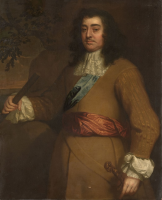

Samuel Pepys' Diary. 10th October 1663. Up, and not in any good ease yet, but had pain in making water, and some course. I see I must take besides keeping myself warm to make myself break wind and go freely to stool before I can be well, neither of which I can do yet, though I have drank the other bottle of Mr. Hollyard's (age 54) against my stomach this morning. I did, however, make shift to go to the office, where we sat, and there Sir J. Minnes (age 64) and Sir W. Batten (age 62) did advise me to take some juniper water, and Sir W. Batten sent to his Lady for some for me, strong water made of juniper. Whether that or anything else of my draught this morning did it I cannot tell, but I had a couple of stools forced after it.... but whether I shall grow better upon it I cannot tell.
Samuel Pepys' Diary. 10th October 1663. This evening Mr. Hollyard (age 54) sends me an electuary to take (a walnut quantity of it) going to bed, which I did. 'Tis true I slept well, and rose in a little ease in the morning.
Samuel Pepys' Diary. 10th October 1664. Up and, it being rainy, in Sir W. Pen's (age 43) coach to St. James's, and there did our usual business with the Duke (age 30), and more and more preparations every day appear against the Dutch, and (which I must confess do a little move my envy) Sir W. Pen do grow every day more and more regarded by the Duke1, because of his service heretofore in the Dutch warr which I am confident is by some strong obligations he hath laid upon Mr. Coventry (age 36); for Mr. Coventry must needs know that he is a man of very mean parts, but only a bred seaman.
Note 1. "The duke had decided that the English fleet should consist of three squadrons to be commanded by himself, Prince Rupert (age 44), and Lord Sandwich (age 39), from which arrangement the two last, who were land admirals; had concluded that Penn would have no concern in this fleet. Neither the duke, Rupert, nor Sandwich had ever been engaged in an encounter of fleets.... Penn alone of the four was familiar with all these things. By the duke's unexpected announcement that he should take Penn with him into his own ship, Rupert and Sandwich at once discovered that they would be really and practically under Penn's command in everything"..


Samuel Pepys' Diary. 10th October 1664. So home to dinner at 4 o'clock, and then to the office, and there late, and so home to supper and to bed, having sat up till past twelve at night to look over the account of the collections for the Fishery, and the loose and base manner that monies so collected are disposed of in, would make a man never part with a penny in that manner, and, above all, the inconvenience of having a great man, though never so seeming pious as my Lord Pembroke (age 43) is. He is too great to be called to an account, and is abused by his servants, and yet obliged to defend them for his owne sake.
Samuel Pepys' Diary. 10th October 1665. Up, and receive a stop from the Duke of Albemarle (age 56) of setting out any more ships, or providing a pleasure boat for himself, which I am glad of, and do see, what I thought yesterday, that this resolution of his was a sudden one and silly.
Samuel Pepys' Diary. 10th October 1665. So that being done, I left the goods to be watched by men on their part and ours, and so to the office by noon, whither by and by comes Captain Cocke (age 48), whom I had with great care sent for by expresse the last night, and so I with him to his house and there eat a bit, and so by coach to Lambeth, Surrey [Map], and I took occasion first to go to the Duke of Albemarle (age 56) to acquaint him with some thing of what had been done this morning in behalf of a friend absent, which did give a good entrance and prevented their possessing the Duke with anything of evil of me by their report, and by and by in comes. Captain Cocke and tells his whole story.
Samuel Pepys' Diary. 10th October 1666. Thence with him to Westminster, to the parish church, where the Parliament-men, and Stillingfleete (age 31) in the pulpit. So full, no standing there; so he and I to eat herrings at the Dog taverne [Map]. And then to church again, and there was Mr. Frampton (age 44) in the pulpit, they cry up so much, a young man, and of a mighty ready tongue. I heard a little of his sermon, and liked it; but the crowd so great, I could not stay.


Samuel Pepys' Diary. 10th October 1666. He and I did bemoan our public condition. He tells me the Duke of Albemarle (age 57) is under a cloud, and they have a mind at Court to lay him aside. This I know not; but all things are not right with him, and I am glad of it, but sorry for the time.
John Evelyn's Diary. 10th October 1666. This day was ordered a general Fast through the Nation, to humble us on the late dreadful conflagration, added to the plague and war, the most dismal judgments that could be inflicted; but which indeed we highly deserved for our prodigious ingratitude, burning lusts, dissolute court, profane and abominable lives, under such dispensations of God's continued favour in restoring Church, Prince, and People from our late intestine calamities, of which we were altogether unmindful, even to astonishment. This made me resolve to go to our parish assembly, where our Doctor preached on Luke xix. 41: piously applying it to the occasion. After which, was a collection for the distressed losers in the late fire.

Samuel Pepys' Diary. 10th October 1667. Then in to my Lady (age 42) again, and staid till it was almost night again, and then took leave for a great while again, but with extraordinary kindness from my Lady, who looks upon me like one of her own family and interest.
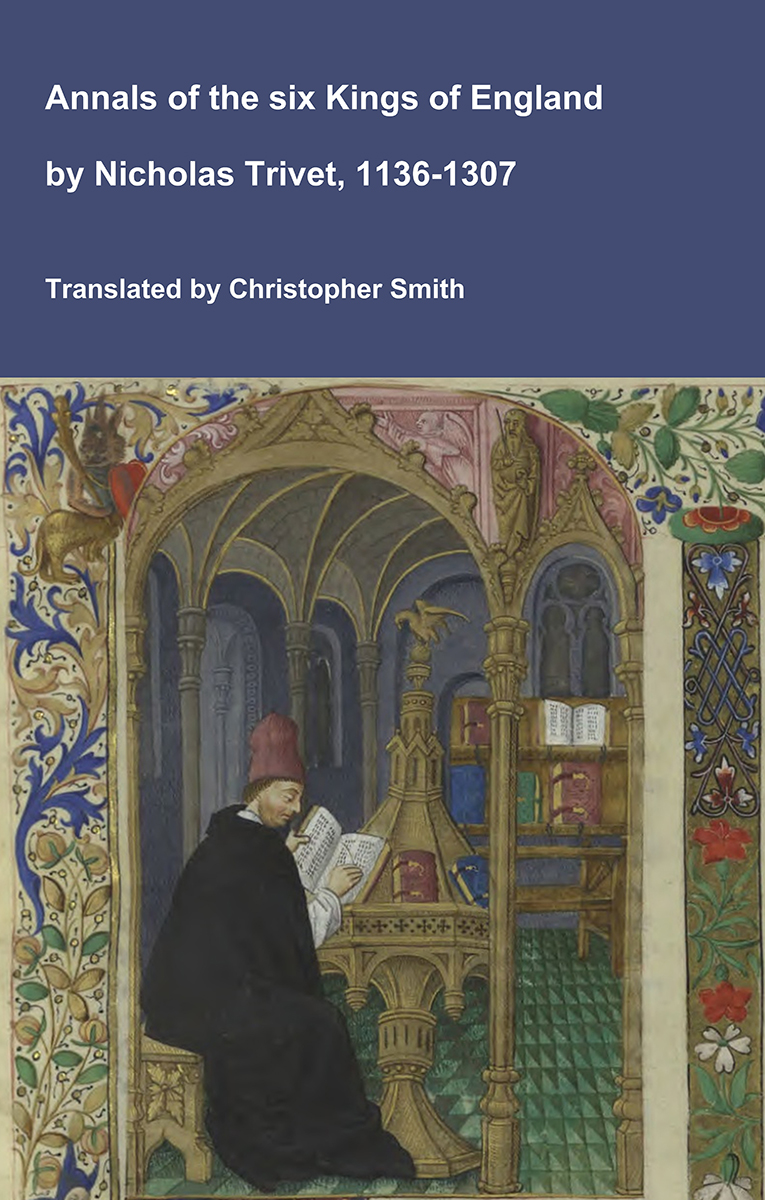
Annals of the six Kings of England by Nicholas Trivet
Translation of the Annals of the Six Kings of England by that traces the rise and rule of the Angevin aka Plantagenet dynasty from the mid-12th to early 14th century. Written by the Dominican scholar Nicholas Trivet, the work offers a vivid account of English history from the reign of King Stephen through to the death of King Edward I, blending political narrative with moral reflection. Covering the reigns of six monarchs—from Stephen to Edward I—the chronicle explores royal authority, rebellion, war, and the shifting balance between crown, church, and nobility. Trivet provides detailed insight into defining moments such as baronial conflicts, Anglo-French rivalry, and the consolidation of royal power under Edward I, whose reign he describes with particular immediacy. The Annals combines careful year-by-year reporting with thoughtful interpretation, presenting history not merely as a sequence of events but as a moral and political lesson. Ideal for readers interested in medieval history, kingship, and the origins of the English state, this chronicle remains a valuable and accessible window into the turbulent world of the Plantagenet kings.
Available at Amazon in eBook and Paperback format.
Samuel Pepys' Diary. 10th October 1667. By this time it was almost noon, and then my father and I and wife and Willet abroad, by coach round the towne of Brampton [Map], to observe any other place as good as ours, and find none; and so back with great pleasure; and thence went all of us, my sister and brother, and W. Hewer (age 25), to dinner to Hinchingbroke [Map], where we had a good plain country dinner, but most kindly used; and here dined the Minister of Brampton and his wife, who is reported a very good, but poor man. Here I spent alone with my Lady (age 42), after dinner, the most of the afternoon, and anon the two twins were sent for from schoole, at Mr. Taylor's, to come to see me, and I took them into the garden, and there, in one of the summer-houses, did examine them, and do find them so well advanced in their learning, that I was amazed at it: they repeating a whole ode without book out of Horace, and did give me a very good account of any thing almost, and did make me very readily very good Latin, and did give me good account of their Greek grammar, beyond all possible expectation; and so grave and manly as I never saw, I confess, nor could have believed; so that they will be fit to go to Cambridge in two years at most. They are both little, but very like one another, and well-looked children.

John Evelyn's Diary. 9th October 1671 and 10th October 1671. I went, after evening service, to London, in order to a journey of refreshment with Mr. Treasurer (age 41), to Newmarket, Suffolk, where the King (age 41) then was, in his coach with six brave horses, which we changed thrice, first, at Bishop-Stortford [Map], and last, at Chesterford; so, by night, we got to Newmarket, Suffolk, where Mr. Henry Jermain (age 35) (nephew to the Earl of St. Alban (age 66)) lodged me very civilly. We proceeded immediately to Court, the King and all the English gallants being there at their autumnal sports. Supped at the Lord Chamberlain's; and, the next day, after dinner, I was on the heath, where I saw the great match run between Woodcock and Flatfoot, belonging to the King, and to Mr. Eliot, of the bedchamber, many thousands being spectators; a more signal race had not been run for many years.


On 10th October 1680 John Campbell 2nd Duke Argyll was born to Archibald Campbell 1st Duke Argyll (age 22) and Elizabeth Tollemache Duchess Argyll (age 21) at Ham House, Richmond, Surrey. He married (1) 1701 Mary Duncombe Duchess of Argyll (2) 6th June 1717 Jane Warburton Duchess of Argyll and had issue.
John Evelyn's Diary. 10th October 1683. Visited the Duchess of Grafton (age 15), not yet brought to bed, and dining with my Lord Chamberlain (her father) (age 65), went with them to see Montague House, a palace lately built by Lord Montague (age 44), who had married the most beautiful Countess of Northumberland (age 29). It is a stately and ample palace. Signor Verrio's (age 47) fresco paintings, especially the funeral pile of Dido, on the staircase, the labors of Hercules, fight with the Centaurs, his effeminacy with Dejanira, and Apotheosis or reception among the gods, on the walls and roof of the great room above,-I think exceeds anything he has yet done, both for design, coloring, and exuberance of invention, comparable to the greatest of the old masters, or what they so celebrate at Rome. In the rest of the chamber are some excellent paintings of Holbein, and other masters. The garden is large, and in good air, but the fronts of the house not answerable to the inside. The court at entry, and wings for offices seem too near the street, and that so very narrow and meanly built, that the corridor is not in proportion to the rest, to hide the court from being overlooked by neighbours; all which might have been prevented, had they placed the house further into the ground, of which there was enough to spare. But on the whole it is a fine palace, built after the French pavilion-way, by Mr. Hooke, the Curator of the Royal Society. There were with us my Lady Scroope, the great wit, and Monsieur Chardine (age 39), the celebrated traveler.


On 10th October 1738 Benjamin West was born. He married 1765 Elizabeth Shewell.
On 10th October 1746 George Greville 2nd Earl Warwick and Brooke was baptised at St Mary's Church, Warwick [Map]. His godfather was King George II of Great Britain and Ireland (age 62).
On 10th October 1757 Archbishop Edward Venables-Vernon-Harcourt was born to George Venables-Vernon 1st Baron Vernon (age 48) and Martha Harcourt Baroness Vernon of Kinderton (age 42) at Sudbury Hall, Derbyshire [Map]. He married 5th February 1784 Anne Leveson-Gower, daughter of Granville Leveson-Gower 1st Marquess Stafford and Louisa Egerton Countess Gower, and had issue.


On 10th October 1765 Lionel Cranfield Sackville 1st Duke Dorset (age 77) died at Knole House, Sevenoaks. His son Charles (age 54) succeeded 2nd Duke Dorset, 8th Earl Dorset, 3rd Earl Middlesex, 8th Baron Buckhurst, 3rd Baron Cranfield of Cranfield in Middlesex.
On 10th October 1796 Juliana Maria Welf Queen Consort Denmark and Norway (age 67) died.
Wiltshire Archaeological Magazine 1885 V22 Pages 234-238. "Saturday, October 10, 1807. Mild and fine day. Went in a chaise to Marden [Map], a village on the right of the great road leading to Devizes. Here there is a very singular earthen work that has been unnoticed by antiquaries. From the circumstance of the ditch being on the inside, and the vallum without, we may safely pronounce it to have been a religious, not a military work. Its form, however, is not circular like that of Abury, but very irregular. Though no traces whatever of its complete continuation remain at present, I have no doubt of such a continuance, and that in forming the water meadows, where only the vallum is interrupted, these vestiges were removed. This work, though certainly laborious and expensive, was much facilitated by the light sandy nature of the soil, and the value of water meadows to a Wiltshire farmer is such as to render my supposition of that part of the vallum which stood in their way having been removed highly probable.
"Curiosity is not alone confined to this outward and stupendous vallum. The interior of the arc contains two very interesting fragments of antiquity.
"A large tumulus, the third, I think, in size after Silbury [Map] and the Castle hill at Marlborough [Map]. This tumulus is named in the map Hatfield barrow [Map]. The etymology of which, as given me by a native farmer, was derived from the unproductive quality of the soil — which occasioned its being called Hate-field. This tumulus is not placed in the centre of the area, but towards the northern angle of it, or rather north-western. As our operations on it are not yet terminated I can give no account either of its contents or destination. From the moisture of the substratum of sand I have much doubt if we shall be able effectually to explore it.
"Our workmen had a most providential escape, by being taken off to another spot by Mr. Cunnington, when during their absence several ton weight of earth fell in, at a time when the floor of the barrow was nearly uncovered.
"On the south-west side of the enclosure is a low circular work — very similar to one we know near Southley Wood, Warminster— it is intersected by a hedge.
On 10th October 1813 Charles Beauclerk was born to William Beauclerk 8th Duke St Albans (age 46) and Maria Janetta Nelthorpe Duchess St Albans. He a great x 3 grandson of King Charles II of England Scotland and Ireland.
On 10th October 1827 Otho Augustus Fitzgerald was born to Augustus Fitzgerald 3rd Duke Leinster (age 36) and Charlotte Augusta Stanhope Duchess Leinster (age 34). He married 14th December 1861 his sixth cousin Ursula Lucy Grace Bridgeman.
On 10th October 1827 Catherine Bishopp Countess Liverpool (deceased) was buried Buxted.
On 10th October 1830 Isabella II Queen Spain was born to Ferdinand VII King Spain (age 45) and Maria Christina of the Two Sicilies Queen Consort Spain (age 24). Coefficient of inbreeding 19.31%. She married her first cousin Francisco de Asís King Consort Spain and had issue.


Greville Memoirs. 10th October 1831. Riddlesworth. At Newmarket all last week; all the Peers absent; here since Friday. Yesterday morning the newspapers (all in black1) announced the defeat of the Reform Bill by a majority of forty-one, at seven o'clock on Saturday morning, after five nights' debating. By all accounts the debate was a magnificent display, and incomparably superior to that in the House of Commons, but the reports convey no idea of it. The great speakers on either side were:—Lords Grey, Lansdowne, Goderich, Plunket, and the Chancellor, for the Bill; against it, Lords Wharncliffe (who moved the amendment), Harrowby, Carnarvon, Dudley, Wynford, and Lyndhurst. The Duke of Wellington's speech was exceedingly bad; he is in fact, and has proved it in repeated instances, unequal to argue a great constitutional question. He has neither the command of language, the power of reasoning, nor the knowledge requisite for such an effort. Lord Harrowby's speech was amazingly fine, and delivered with great effect; and the last night the Chancellor is said to have surpassed all his former exploits, Lyndhurst to have been nearly as good, and Lord Grey very great in reply. There was no excitement in London the following day, and nothing particular happened but the Chancellor being drawn from Downing Street to Berkeley Square in his carriage by a very poor mob. The majority was much greater than anybody expected, and it is to be hoped may be productive of good by showing the necessity of a compromise; for no Minister can make sixty Peers, which Lord Grey must do to carry this Bill; it would be to create another House of Lords. Nobody knows what the Ministers would do, but it was thought they would not resign. A meeting of members of the House of Commons was held under the auspices of Ebrington (age 78) to agree upon a resolution of confidence in the Government this day. The majority and the magnificent display of eloquence and ability in the House of Lords must exalt the character and dignity of that House, and I hope increase its efficacy for good purposes and for resistance to this Bill. It may be hoped, too, that the apathy of the capital may have some effect in the country, though the unions, which are so well disciplined and under the control of their orators, will make a stir. On the whole I rejoice at this result, though I had taken fright before, and thought it better the Bill should be read a second time than be thrown out by a very small majority.
Note 1. Not all of them; neither the 'Times' nor the 'Morning Herald.'

On 10th October 1846 two Spanish Princesses were married...
Francisco de Asís King Consort Spain (age 24) and Isabella II Queen Spain (age 16) were married. They were double first cousins. She was forced to marry by the Moderare Party. She, apparently commented, "what shall I tell you about a man whom I saw wearing more lace than I was wearing on our wedding night?". She the daughter of Ferdinand VII King Spain and Maria Christina of the Two Sicilies Queen Consort Spain (age 40). They were first cousins.
Antoine Orléans Duke Montpensier (age 22) and Infanta Luisa Fernanda Duchess of Montpensier (age 14) were married. She the daughter of Ferdinand VII King Spain. He the son of King Louis Philippe I of France (age 73). They were fifth cousins.

On 10th October 1846 Margaret Elizabeth Montagu-Douglas-Scott was born to Walter Scott 5th Duke Buccleuch 7th Duke Queensberry and Charlotte Anne Thynne Duchess Buccleuch Duchess Queensbury (age 35).
On 8th October 1881 Florence Chaplin was born to Henry Chaplin 1st Viscount Chaplin (age 40) and Florence Sutherland Leveson-Gower (age 26). Florence Sutherland Leveson-Gower died from childbirth two days later. She was buried in the churchyard of St Oswald's Church, Blankney. Her husband's account of her last days .... Lady Florence's second daughter was born on Saturday, and her birth was followed by convulsions from which she never recovered consciousness. Through the night Dr. Brook and her husband watched by her, and on Sunday there was a slight improvement which continued throughout the day. "At that time ", says Mr. Chaplin," my spirit had revived, and I allowed myself, foolishly perhaps, to become quite sanguine—only, alas, to be bitterly disappointed." On Sunday evening the breathing again became more rapid, and on Monday afternoon "my darling passed away, with her head resting on my shoulder, and with the most beautiful expression on her face as she died".


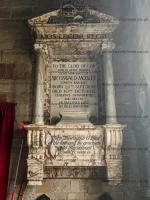
On 10th October 1915 Oswald Mosley 4th Baronet (age 67) died. His son Oswald (age 41) succeeded 5th Baronet Mosley of Ancoats. Monument at St Mary's Church, Rolleston on Dove [Map].
Oswald Mosley 4th Baronet: On 25th September 1848 he was born to Tonman Mosley 3rd Baronet and Catherine Wood. On 28th April 1890 Tonman Mosley 3rd Baronet died. His son Oswald succeeded 4th Baronet Mosley of Ancoats.
Oswald Mosley 5th Baronet: On 29th December 1873 he was born to Oswald Mosley 4th Baronet at Beaumaris, Anglesey. On 12th December 1895 Oswald Mosley 5th Baronet and Katharine Maud Edwards-Heathcote were married.
Abbot John Whethamstede’s Chronicle of the Abbey of St Albans
Abbot John Whethamstede's Register aka Chronicle of his second term at the Abbey of St Albans, 1451-1461, is a remarkable text that describes his first-hand experience of the beginning of the Wars of the Roses including the First and Second Battles of St Albans, 1455 and 1461, respectively, their cause, and their consequences, not least on the Abbey itself. His text also includes Loveday, Blore Heath, Northampton, the Act of Accord, Wakefield, and Towton, and ends with the Coronation of King Edward IV. In addition to the events of the Wars of the Roses, Abbot John, or his scribes who wrote the Chronicle, include details in the life of the Abbey such as charters, letters, land exchanges, visits by legates, and disputes, which provide a rich insight into the day-to-day life of the Abbey, and the challenges faced by its Abbot.
Available at Amazon in eBook and Paperback format.
On 10th October 1918 Alexandra Phyllis Hamilton (age 42) drowned whilst travelling from Dún Laoghaire, County Dublin to Holyhead, Anglesey aboard the mailboat RMS Leinster that was torpedoed and sunk by German submarine UB-123.
On 10th October 1931 Bertram Mackennal (age 68) died.
On 10th October 1944 Harold Philips (age 34) and Georgina Wernher (age 24) were married at St Margaret's Church, Westminster [Map]. Guests included The King of Hellenes (age 54), Prince Bertil of Sweden (age 32), and The Duchess of Kent (age 37). Princess Alexandra of Kent (age 7) and Gina's sister, Myra, were bridesmaids.


On 10th October 1994 Richard J C Atkinson (age 74) died.
On 10th October 1332 Charles "Bad" II King Navarre was born to Philip "Noble" III King Navarre (age 26) and Joan Capet II Queen Navarre (age 20). He a great x 3 grandson of King Henry III of England. Coefficient of inbreeding 5.86%. He married 12th February 1352 his second cousin Joan Valois Queen Consort Navarre, daughter of King John "The Good" II of France and Bonne Luxemburg Queen Consort France, and had issue.
On 10th October 1344 Mary Plantagenet Duchess Brittany was born to King Edward III of England (age 31) and Philippa of Hainaut Queen Consort England (age 30) at Bishop Waltham's Palace, Hampshire [Map]. Coefficient of inbreeding 3.00%. She married 3rd July 1361 her third cousin John Montfort V Duke Brittany.
On 10th October 1358 Thomas Boteler 4th Baron Sudeley was born to William Boteler 2nd Baron Wem and Oversley (age 62) and Joan Sudeley Baroness Boteler (age 28) at Tyrley Hales, Staffordshire. He married before 1385 Alice Beauchamp Baroness Sudeley and had issue.
On 10th October 1486 Charles 3rd Duke Savoy was born to Philip "Landless" Savoy II Duke Savoy (age 48) and Claudine Brosse (age 36). He married 8th April 1521 Beatrice Aviz Duchess Savoy, daughter of Manuel "Fortunate" I King Portugal and Maria Trastámara Queen Consort Portugal, and had issue.
On 10th October 1567 Catherine Habsburg Spain Duchess Savoy was born to Philip "The Prudent" II King Spain (age 40) and Elizabeth Valois Queen Consort Spain (age 22). She married 1584 her first cousin once removed Charles Emmanuel Savoy I Duke Savoy, son of Emmanuel Philibert Duke of Savoy and Margaret Valois Duchess Berry and Savoy, and had issue.
On 10th October 1584 Philip Herbert 4th Earl Pembroke 1st Earl Montgomery was born to Henry Herbert 2nd Earl Pembroke (age 46) and Mary Sidney Countess Pembroke (age 22) at Wilton House. He married (1) 27th December 1605 Susan Vere Countess Montgomery, daughter of Edward de Vere 17th Earl of Oxford and Anne Cecil Countess of Oxford, and had issue (2) 1630 his half third cousin twice removed Anne Clifford Countess Dorset and Pembroke, daughter of George Clifford 3rd Earl of Cumberland and Margaret Russell Countess Cumberland.


On 10th October 1585 Edward Hussey 1st Baronet was born to Charles Hussey of Honington (age 50) and Ellen Birch. He married 1610 Elizabeth Anton and had issue.
On 10th October 1617 William Cavendish 3rd Earl Devonshire was born to William Cavendish 2nd Earl Devonshire (age 27) and Christian Bruce Countess Devonshire. He married 4th March 1639 Elizabeth Cecil Countess Devonshire, daughter of William Cecil 2nd Earl Salisbury and Catherine Howard Countess Salisbury, and had issue.


Henrici Quinti, Angliæ Regis, Gesta, is a first-hand account of the Agincourt Campaign, and subsequent events to his death in 1422. The author of the first part was a Chaplain in King Henry's retinue who was present from King Henry's departure at Southampton in 1415, at the siege of Harfleur, the battle of Agincourt, and the celebrations on King Henry's return to London. The second part, by another writer, relates the events that took place including the negotiations at Troye, Henry's marriage and his death in 1422.
Available at Amazon in eBook and Paperback format.
On 10th October 1619 Elisabeth Sophie Saxe Altenburg Duchess Saxe Gotha was born to Johann Philipp Wettin Duke Saxe Altenburg (age 22) and Elisabeth of Brunswick-Wolfenbüttel Duchess of Saxe-Altenburg (age 26). She married 24th October 1636 her first cousin once removed Ernest "The Pious" Saxe Gotha I Duke Saxe Gotha, son of Johann Wettin II Duke Saxe Weimar and Dorothea Maria Anhalt, and had issue.
On 10th October 1680 John Campbell 2nd Duke Argyll was born to Archibald Campbell 1st Duke Argyll (age 22) and Elizabeth Tollemache Duchess Argyll (age 21) at Ham House, Richmond, Surrey. He married (1) 1701 Mary Duncombe Duchess of Argyll (2) 6th June 1717 Jane Warburton Duchess of Argyll and had issue.
On 10th October 1719 Francis Greville 1st Earl Brooke Warwick Castle 1st Earl Warwick was born to William Greville 7th Baron Brooke (age 24) and Mary Thynne Baroness Brooke (age 17). He married 15th May 1742 Elizabeth Hamilton Countess Brooke Warwick Castle and Warwick and had issue.
On 10th October 1726 Berney Brograve 1st Baronet was born to Thomas Brograve (age 35).
On 10th October 1732 William Burrell 2nd Baronet was born to Peter Burrell (age 40) and Amy Raymond (age 33) in Leadenhall Street [Map]. He married 13th April 1773 his half second cousin Sophia Raymond Lady Burrell, daughter of Charles Raymond 1st Baronet and Sarah Webster Lady Raymond.
On 10th October 1732 Walter Aston 8th Baronet was born to Edward Aston (age 45).
On 10th October 1738 Benjamin West was born. He married 1765 Elizabeth Shewell.
On 10th October 1757 Archbishop Edward Venables-Vernon-Harcourt was born to George Venables-Vernon 1st Baron Vernon (age 48) and Martha Harcourt Baroness Vernon of Kinderton (age 42) at Sudbury Hall, Derbyshire [Map]. He married 5th February 1784 Anne Leveson-Gower, daughter of Granville Leveson-Gower 1st Marquess Stafford and Louisa Egerton Countess Gower, and had issue.
On 10th October 1763 Hamilton Douglas was born to Sholto Charles Douglas 15th Earl Morton (age 32).
On 10th October 1767 George Grey 1st Baronet was born to Charles Grey 1st Earl Grey (age 37) and Elizabeth Grey Countess Grey (age 23) at Fallodon Hall, Northumberland [Map]. He married 18th June 1795 Mary Whitbread Lady Grey and had issue.
On 10th October 1769 Colonel John Hill was born to John Hill 3rd Baronet (age 29).
On 10th October 1803 Bishop George Moberly was born in St Petersburg.
Chronicle of Walter of Guisborough
A canon regular of the Augustinian Guisborough Priory, Yorkshire, formerly known as The Chronicle of Walter of Hemingburgh, describes the period from 1066 to 1346. Before 1274 the Chronicle is based on other works. Thereafter, the Chronicle is original, and a remarkable source for the events of the time. This book provides a translation of the Chronicle from that date. The Latin source for our translation is the 1849 work edited by Hans Claude Hamilton. Hamilton, in his preface, says: 'In the present work we behold perhaps one of the finest samples of our early chronicles, both as regards the value of the events recorded, and the correctness with which they are detailed; Nor will the pleasing style of composition be lightly passed over by those capable of seeing reflected from it the tokens of a vigorous and cultivated mind, and a favourable specimen of the learning and taste of the age in which it was framed.'
Available at Amazon in eBook and Paperback format.
On 10th October 1813 Charles Beauclerk was born to William Beauclerk 8th Duke St Albans (age 46) and Maria Janetta Nelthorpe Duchess St Albans. He a great x 3 grandson of King Charles II of England Scotland and Ireland.
On 10th October 1819 Charles Stanley Monck 4th Viscount Monck was born to Charles Monck 3rd Viscount Monck (age 28) and Bridget Willington (age 29). He married 23rd June 1844 his first cousin Elizabeth Louise Mary Monck, daughter of Henry Monck 1st Earl of Rathdowne, and had issue.
On 10th October 1827 Julian Henry Charles Fane was born to John Fane 11th Earl of Westmoreland (age 43) and Priscilla Anne Wellesley-Pole Countess of Westmoreland (age 34). He married 1866 his sixth cousin Adine Eliza Anne Cowper, daughter of George Augustus Frederick Cowper 6th Earl Cowper and Ann Florence Robinson Countess Cowper, and had issue.


On 10th October 1827 Otho Augustus Fitzgerald was born to Augustus Fitzgerald 3rd Duke Leinster (age 36) and Charlotte Augusta Stanhope Duchess Leinster (age 34). He married 14th December 1861 his sixth cousin Ursula Lucy Grace Bridgeman.

On 10th October 1830 Alice Leveson-Gower aka Egerton Countess Strafford was born to Francis Leveson Gower aka Egerton 1st Earl Ellesmere (age 30) and Harriet Greville Countess Ellesmere (age 27). She married 25th July 1854 her half third cousin once removed George Byng 3rd Earl Strafford, son of George Byng 2nd Earl Strafford and Agnes Paget.
On 10th October 1830 Isabella II Queen Spain was born to Ferdinand VII King Spain (age 45) and Maria Christina of the Two Sicilies Queen Consort Spain (age 24). Coefficient of inbreeding 19.31%. She married her first cousin Francisco de Asís King Consort Spain and had issue.
On 10th October 1836 Charles Rowley Drummond of Cromlix and Innerpefray was born to Thomas Hay-Drummond 11th Earl Kinnoull (age 51) and Louisa Burton Rowley Countess Kinnoul. He married 4th February 1858 Arabella Augusta Meyrick and had issue.
On 10th October 1837 Edward Baldwin Malet 4th Baronet was born to Alexander Malet 2nd Baronet (age 37) and Marianne Dora Spalding Lady Malet (age 27). After three years at Eton College, Edward Malet entered the foreign service at the age of 17. He served as attaché to his father in Frankfurt, then in Brussels. He married 19th March 1885 Ermytrude Sackville Russell Lady Malet, daughter of Francis Russell 9th Duke Bedford and Elizabeth Sackville-West Duchess Bedford.
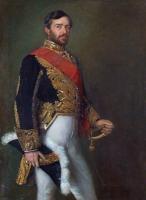
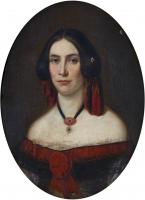
On 10th October 1840 Hugh Forbes Smith-Marriott was born to Reverend William Marriott Smith-Marriott 4th Baronet (age 39). He married 17th November 1864 Frances Catherine Mary Cavendish and had issue.
On 10th October 1842 Duncombe Pleydell-Bouverie was born to Jacob Pleydell-Bouverie 4th Earl Radnor (age 27) and Mary Augusta Frederica Grimston (age 21).
On 10th October 1846 Margaret Elizabeth Montagu-Douglas-Scott was born to Walter Scott 5th Duke Buccleuch 7th Duke Queensberry and Charlotte Anne Thynne Duchess Buccleuch Duchess Queensbury (age 35).

On 10th October 1849 Lavinia Lyttelton was born to George William Lyttelton 4th Baron Lyttelton (age 32) and Mary Glynne Lady Lyttelton (age 36). She married 29th June 1870 Bishop Edward Stuart Talbot.
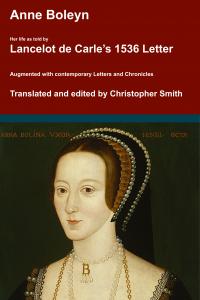
Anne Boleyn. Her Life as told by Lancelot de Carle's 1536 Letter.
In 1536, two weeks after the execution of Anne Boleyn, her brother George and four others, Lancelot du Carle, wrote an extraordinary letter that described Anne's life, and her trial and execution, to which he was a witness. This book presents a new translation of that letter, with additional material from other contemporary sources such as Letters, Hall's and Wriothesley's Chronicles, the pamphlets of Wynkyn the Worde, the Memorial of George Constantyne, the Portuguese Letter and the Baga de Secrets, all of which are provided in Appendices.
Available at Amazon in eBook and Paperback format.
On 10th October 1850 Reverend Anthony Aylmer Astley was born to Francis Dugdale Astley 2nd Baronet (age 45) and Emma Dorothea Lethbridge Lady Astley.
On 10th October 1860 George Maryon Maryon-Wilson was born to Spencer Maryon Wilson 10th Baronet (age 30).
On 10th October 1870 Herbert Hervey 5th Marquess of Bristol was born to Augustus Henry Charles Hervey (age 33) in Ickworth House Ickworth, Bury St Edmunds. He married (1) 19th October 1914 Jean Cochrane and had issue (2) 15th December 1952 Dora Frances Emblin Marchioness Bristol.
On 10th October 1871 David Lindsay 27th Earl of Crawford 10th Earl Balcarres was born to James Ludovic Lindsay 26th Earl of Crawford 9th Earl of Balcarrie (age 24). He married 25th January 1900 Constance Lilian Pelly Countess Crawford and Balcarres, daughter of Henry Pelly 3rd Baronet and Lilian Harriet Charteris, and had issue.
On 8th October 1881 Florence Chaplin was born to Henry Chaplin 1st Viscount Chaplin (age 40) and Florence Sutherland Leveson-Gower (age 26). Florence Sutherland Leveson-Gower died from childbirth two days later. She was buried in the churchyard of St Oswald's Church, Blankney. Her husband's account of her last days .... Lady Florence's second daughter was born on Saturday, and her birth was followed by convulsions from which she never recovered consciousness. Through the night Dr. Brook and her husband watched by her, and on Sunday there was a slight improvement which continued throughout the day. "At that time ", says Mr. Chaplin," my spirit had revived, and I allowed myself, foolishly perhaps, to become quite sanguine—only, alas, to be bitterly disappointed." On Sunday evening the breathing again became more rapid, and on Monday afternoon "my darling passed away, with her head resting on my shoulder, and with the most beautiful expression on her face as she died".
On 10th October 1897 William Francis Gresley 13th Baronet was born to William Stuckley Gresley (age 44).
On 10th October 1907 Sibell Lygon was born to William Lygon 7th Earl Beauchamp (age 35) and Lettice Mary Elizabeth Grosvenor Countess Beauchamp (age 30). She married 11th February 1939 Michael Richard Bernard Rowley.
On 10th October 1935 Harry Andrew Renwick 2nd Baron Renwick was born to Robert Renwick 1st Baron Renwick (age 31) and Dorothy Mary Parkes.
On 10th October 1943 Alexander Daniel Macmillan 2nd Earl of Stockton was born to Maurice Victor Macmillan (age 22) and Katharine Margaret Alice Ormsby-Gore (age 22).
On 10th October 1959 Roderick Alexander Cavendish 8th Baron Waterpark was born to Frederick Caryll Philip Cavendish 7th Baron Waterpark (age 33).
On 10th October 1962 Hugh Stanley 19th Earl of Derby was born to Hugh Stanley (age 36). He married 21st October 1995 his sixth cousin Caroline Neville Countess of Derby, daughter of Robin Neville 10th Baron Braybrooke.
On 10th October 1982 Daniel Mosley 4th Baron Ravensdale was born to Nicholas Mosley 3rd Baron Ravensdale (age 59).
On 10th October 1361 Edward "Black Prince" (age 31) and Joan "Fair Maid of Kent" Princess Wales (age 33) were married at Windsor Castle [Map]. She by marriage Princess of Wales. His first wife, her second (or third depending on how you count them) husband. She had four children already. They had known each other since childhood. Thirty-one and thirty-three respectively. A curious choice for the heir to the throne; foreign princesses were usual. They were married nearly fifteen years and had two children. She the daughter of Edmund of Woodstock 1st Earl Kent and Margaret Wake Countess Kent. He the son of King Edward III of England (age 48) and Philippa of Hainaut Queen Consort England (age 47). They were half first cousin once removed. She a granddaughter of King Edward I of England.
On 10th October 1371 Peter Valois II Count Alençon (age 31) and Marie Chamaillart Countess Alençon were married. He the son of Charles II Count Alençon and Maria de la Cerda Y Lara Countess Alençon (age 52).
The History of William Marshal was commissioned by his son shortly after William’s death in 1219 to celebrate the Marshal’s remarkable life; it is an authentic, contemporary voice. The manuscript was discovered in 1861 by French historian Paul Meyer. Meyer published the manuscript in its original Anglo-French in 1891 in two books. This book is a line by line translation of the first of Meyer’s books; lines 1-10152. Book 1 of the History begins in 1139 and ends in 1194. It describes the events of the Anarchy, the role of William’s father John, John’s marriages, William’s childhood, his role as a hostage at the siege of Newbury, his injury and imprisonment in Poitou where he met Eleanor of Aquitaine and his life as a knight errant. It continues with the accusation against him of an improper relationship with Margaret, wife of Henry the Young King, his exile, and return, the death of Henry the Young King, the rebellion of Richard, the future King Richard I, war with France, the death of King Henry II, and the capture of King Richard, and the rebellion of John, the future King John. It ends with the release of King Richard and the death of John Marshal.
Available at Amazon in eBook and Paperback format.
On 10th October 1423 Arthur Montfort III Duke Brittany (age 30) and Margaret Valois (age 29) were married at Dijon. She the daughter of John "Fearless" Valois Duke Burgundy and Margaret Wittelsbach Duchess Burgundy. He the son of John Montfort V Duke Brittany and Joanna of Navarre Queen Consort England (age 53). They were second cousins. He a great x 3 grandson of King Henry III of England. She a great x 4 granddaughter of King Edward I of England.
On 10th October 1465 Alfonso II King Naples (age 16) and Ippolita Maria Sforza (age 19) were married at Milan. She the daughter of Francesco Sforza I Duke Milan (age 64) and Bianca Maria Visconti (age 40). He the son of Ferdinand I King Naples (age 42) and Isabella Clermont Queen Consort Naples.

On 10th October 1675 Robert Ker 3rd Earl Roxburghe (age 17) and Margaret Hay Countess Roxburghe were married. She by marriage Countess Roxburghe. She the daughter of John Hay 1st Marquess Tweeddale (age 50) and Jean Scott Marchioness Teviotdale. He the son of William Ker 2nd Earl Roxburghe and Jane Ker Countess Roxburgh. They were second cousin once removed.
On 10th October 1752 Lucius Charles Carey 7th Viscount Falkland (age 45) and Sarah Inwen Countess Suffolk were married.
On 10th October 1767 Francis Eliott 5th Baronet (age 36) and Euphan Dixon (age 22) were married at Canongate Kirk.
On 10th October 1846 two Spanish Princesses were married...
Francisco de Asís King Consort Spain (age 24) and Isabella II Queen Spain (age 16) were married. They were double first cousins. She was forced to marry by the Moderare Party. She, apparently commented, "what shall I tell you about a man whom I saw wearing more lace than I was wearing on our wedding night?". She the daughter of Ferdinand VII King Spain and Maria Christina of the Two Sicilies Queen Consort Spain (age 40). They were first cousins.
Antoine Orléans Duke Montpensier (age 22) and Infanta Luisa Fernanda Duchess of Montpensier (age 14) were married. She the daughter of Ferdinand VII King Spain. He the son of King Louis Philippe I of France (age 73). They were fifth cousins.
On 10th October 1871 Richard Fitzherbert 5th Baronet (age 25) and Mary Anne Arkwright Lady Fitzherbert (age 21) were married at St Mary's Church, Cromford [Map].
On 10th October 1944 Harold Philips (age 34) and Georgina Wernher (age 24) were married at St Margaret's Church, Westminster [Map]. Guests included The King of Hellenes (age 54), Prince Bertil of Sweden (age 32), and The Duchess of Kent (age 37). Princess Alexandra of Kent (age 7) and Gina's sister, Myra, were bridesmaids.
On 10th October 644 Archbishop Paulinus of York died at Rochester, Kent [Map].
On 10th October 1136 [the date is uncertain] the Battle of Crug Mawr aka Cardigan between Welsh and Normans for control of Ceredigion, West Wales. The Welsh, led by Owain "Great" King Gwynedd (age 36), Cadwaladr ap Gruffudd Aberffraw (age 36) and Gruffudd ap Rhys King Deheubarth (age 55) defeated Normans led by Robert Fitzmartin,; a significant setback to Norman expansion in Wales.
Einion Aberffraw was killed.
The exact location of the battle is unknown. Possibly near Crug Mawr [Map]. However, Annales Cambriae has "A battle was fought before the castle" followed by "others drowned in the river Teifi" suggesting the castle referred to may have been Cilgerran Castle [Map] which is on the River Teifi.
On 10th October 1144 Alfonso Hauteville Duke Naples (age 23) died.
On 10th October 1174 Adela Montgomery Countess of Salisbury and Surrey died.
On 10th October 1213 Frederick Metz II Duke Lorraine died. His son Theobald succeeded I Duke Lorraine. Gertrude Dagsburg Duchess Lorraine by marriage Duchess Lorraine.
On 10th October 1229 Henry Beaumont 5th Earl Warwick (age 37) died. His son Thomas (age 21) succeeded 6th Earl Warwick. Ela Longespee Countess Warwick by marriage Countess Warwick.
William of Worcester's Chronicle of England
William of Worcester, born around 1415, and died around 1482 was secretary to John Fastolf, the renowned soldier of the Hundred Years War, during which time he collected documents, letters, and wrote a record of events. Following their return to England in 1440 William was witness to major events. Twice in his chronicle he uses the first person: 1. when writing about the murder of Thomas, 7th Baron Scales, in 1460, he writes '… and I saw him lying naked in the cemetery near the porch of the church of St. Mary Overie in Southwark …' and 2. describing King Edward IV's entry into London in 1461 he writes '… proclaimed that all the people themselves were to recognize and acknowledge Edward as king. I was present and heard this, and immediately went down with them into the city'. William’s Chronicle is rich in detail. It is the source of much information about the Wars of the Roses, including the term 'Diabolical Marriage' to describe the marriage of Queen Elizabeth Woodville’s brother John’s marriage to Katherine, Dowager Duchess of Norfolk, he aged twenty, she sixty-five or more, and the story about a paper crown being placed in mockery on the severed head of Richard, 3rd Duke of York.
Available at Amazon in eBook and Paperback format.
On 10th October 1369 David IV Strathbogie 12th Earl Atholl (age 42) died at Strathbogie. His 3 x great grandson Edward succeeded 4th Baron Strabolgi
On 10th October 1415 John Chidiock 5th Baron Fitzpayn (age 40) died. His son John (age 13) succeeded 6th Baron Fitzpayn.
On 10th October 1425 Margaret Jülich Countess Cleves and Mark (age 75) died.
On 10th October 1503 Peter Bourbon II Duke Bourbon (age 64) died. His daughter Suzanne (age 12) succeeded Duchess Bourbon.
On 10th October 1505 William Boleyn (age 54) died. His son Thomas Boleyn (age 28) inherited Hever Castle, Kent [Map].
On 10th October 1530 Thomas Grey 2nd Marquess Dorset (age 53) died. His son Henry (age 13) succeeded 3rd Marquess Dorset, 3rd Earl Huntingdon, 9th Baron Ferrers of Groby, 9th Baron Harington, 4th Baron Bonville.
On 10th October 1544 Charles Blount 5th Baron Mountjoy (age 26) died at Hooke, Dorset. His son James (age 11) succeeded 6th Baron Mountjoy.
On 10th October 1582 James Blount 6th Baron Mountjoy (age 49) died in Hook Okehampton, Devon. His son William (age 21) succeeded 7th Baron Mountjoy.
On 10th October 1649 Cicely Skeffington Lady Brereton (age 34) died.
On 10th October 1654 John Savage 2nd Earl Rivers (age 51) died at Frodsham Castle [Map]. His son Thomas (age 26) succeeded 3rd Earl Rivers, 3rd Viscount Colchester, 3rd Viscount Savage, 3rd Baron Darcy of Chiche, 4th Baronet Savage of Rocksavage in Cheshire. Elizabeth Scrope Countess Rivers (age 27) by marriage Countess Rivers.
Jean de Waurin's Chronicle of England Volume 6 Books 3-6: The Wars of the Roses
Jean de Waurin was a French Chronicler, from the Artois region, who was born around 1400, and died around 1474. Waurin’s Chronicle of England, Volume 6, covering the period 1450 to 1471, from which we have selected and translated Chapters relating to the Wars of the Roses, provides a vivid, original, contemporary description of key events some of which he witnessed first-hand, some of which he was told by the key people involved with whom Waurin had a personal relationship.
Available at Amazon in eBook and Paperback format.
On 8th October 1655 Michael Wharton (age 78) died. He was buried at Beverley Minster [Map] on 10th October 1655. Monument attributed to Thomas Stanton.
Michael Wharton: In 1577 he was born. Before 23rd October 1593 he and Elizabeth Hansby were married. In 1616 he was appointed High Sheriff of Yorkshire.
On 10th October 1655 Robert Arbuthnot 1st Viscount Arbuthnott (age 30) died. His son Robert succeeded 2nd Viscount Arbuthnot.
On 10th October 1658 Henry Waldegrave 2nd Baronet (age 60) died. His son Charles (age 32) succeeded 3rd Baronet Waldegrave of Hever Castle.
On 10th October 1698 George Berkeley 1st Earl Berkeley (age 70) died. He was buried at St Dunstan Church, Cranford. His son Charles (age 49) succeeded 2nd Earl Berkeley, 2nd Viscount Dursley, 10th Baron Berkeley. Elizabeth Noel Countess Berkeley (age 44) by marriage Countess Berkeley.
On 10th October 1706 Alexander Bruce 4th Earl Kincardine died. His son Robert (age 46) succeeded 5th Earl Kincardine.
On 10th October 1712 Thomas Twysden 4th Baronet (age 36) died. His brother William (age 35) succeeded 5th Baronet Twysden of Roydon in Kent.
On 10th October 1723 Bassingbourne Gawdy 3rd Baronet died. Baronet Gawdy of West Harling extinct.

On 10th October 1723 William Cowper 1st Earl Cowper (age 58) died. His son William (age 14) succeeded 2nd Earl Cowper, 2nd Baron Cowper of Wingham in Kent, 4th Baronet Cowper of Ratling Court in Kent.
On 10th October 1730 Bishop William Talbot (age 72) died at Hanover Square.
On 10th October 1733 William Douglas 2nd Baronet (age 58) died. His son John (age 25) succeeded 3rd Baronet Kelhead.
Chronicle of Abbot Ralph of Coggeshall
The Chronicle of Abbot Ralph of Coggeshall (Chronicon Anglicanum) is an indispensable medieval history that brings to life centuries of English and European affairs through the eyes of a learned Cistercian monk. Ralph of Coggeshall, abbot of the Abbey of Coggeshall in Essex in the early 13th century, continued and expanded his community’s chronicle, documenting events from the Norman Conquest of 1066 into the tumultuous reign of King Henry III. Blending eyewitness testimony, careful compilation, and the monastic commitment to record-keeping, this chronicle offers a rare narrative of political intrigue, royal power struggles, and social upheaval in England and beyond. Ralph’s work captures the reigns of pivotal figures such as Richard I and King John, providing invaluable insights into their characters, decisions, and the forces that shaped medieval rule. More than a simple annal, Chronicon Anglicanum conveys the texture of medieval life and governance, making it a rich source for scholars and readers fascinated by English history, monastic authorship, and the shaping of the medieval world.
Available at Amazon in eBook and Paperback format.
On 10th October 1738 George Chudleigh 4th Baronet (age 28) died. His nephew Thomas succeeded 5th Baronet Chudleigh of Ashton in Devon. Henrietta Chudleigh Lady Chudleigh by marriage Lady Chudleigh of Ashton in Devon.
On 10th October 1748 Yelverton Peyton 5th Baronet died. His nephew Charles succeeded 6th Baronet Peyton of Isleham.
On 10th October 1765 Lionel Cranfield Sackville 1st Duke Dorset (age 77) died at Knole House, Sevenoaks. His son Charles (age 54) succeeded 2nd Duke Dorset, 8th Earl Dorset, 3rd Earl Middlesex, 8th Baron Buckhurst, 3rd Baron Cranfield of Cranfield in Middlesex.
On 10th October 1772 Abraham Hume 1st Baronet (age 69) died. His son Abraham (age 23) succeeded 2nd Baronet Hume of Wormleybury in Hertfordshire.
On 10th October 1788 John Ward 2nd Viscount Dudley and Ward (age 63) died. His brother William (age 38) succeeded 3rd Viscount Dudley and Ward of Dudley in Worcestershire, 8th Baron Ward of Birmingham.
On 10th October 1792 Constantine Phipps 1st and 2nd Baron Mulgrave (age 48) died at Liège. Baron Mulgrave of Mulgrave in Yorkshire extinct. His brother Henry (age 37) succeeded 3rd Baron Mulgrave of New Ross in Wexford.
On 10th October 1794 Archbishop Richard Robinson 1st Baron Rokeby (age 86) died at Clifton Bristol, Gloucestershire. His third cousin Matthew (age 81) succeeded 2nd Baron Rokeby.
On 10th October 1796 Juliana Maria Welf Queen Consort Denmark and Norway (age 67) died.
On 10th October 1815 George Robinson 5th Baronet (age 85) died. His son George (age 49) succeeded 6th Baronet Robinson of London.
On 10th October 1857 Colonel William Berkeley 1st Earl Fitzhardinge (age 70) died at Berkeley Castle [Map]. Earl Fitzhardinge and Baron Segrave extinct.
On 10th October 1874 John Weld-Forester 2nd Baron Forester (age 73) died at Willey Hall, Shropshire. His brother George (age 67) succeeded 3rd Baron Forester of Willey Park in Shropshire.

On 10th October 1876 George Hay 8th Marquess Tweedale (age 89) died. His son Arthur (age 51) succeeded 9th Marquess Tweeddale. Julia Charlotte Sophia Stewart-Mackenzie Marchoness Tweedale (age 30) by marriage Marchioness Teviotdale.
The History of William Marshal was commissioned by his son shortly after William’s death in 1219 to celebrate the Marshal’s remarkable life; it is an authentic, contemporary voice. The manuscript was discovered in 1861 by French historian Paul Meyer. Meyer published the manuscript in its original Anglo-French in 1891 in two books. This book is a line by line translation of the first of Meyer’s books; lines 1-10152. Book 1 of the History begins in 1139 and ends in 1194. It describes the events of the Anarchy, the role of William’s father John, John’s marriages, William’s childhood, his role as a hostage at the siege of Newbury, his injury and imprisonment in Poitou where he met Eleanor of Aquitaine and his life as a knight errant. It continues with the accusation against him of an improper relationship with Margaret, wife of Henry the Young King, his exile, and return, the death of Henry the Young King, the rebellion of Richard, the future King Richard I, war with France, the death of King Henry II, and the capture of King Richard, and the rebellion of John, the future King John. It ends with the release of King Richard and the death of John Marshal.
Available at Amazon in eBook and Paperback format.
On 10th October 1887 William Miller 1st Baronet (age 78) died. His son James (age 22) succeeded 2nd Baronet Miller of Manderston in Berwickshire.
On 10th October 1890 Henry William Parnell 3rd Baron Congleton (age 81) died. His son Henry (age 51) succeeded 4th Baron Congleton of Congleton in Cheshire, 7th Baronet Parnell of Rathleague Queen's County.
On 10th October 1894 John Dugdale Astley 3rd Baronet (age 66) died. His son Francis (age 35) succeeded 4th Baronet Astley of Everleigh in Wiltshire.
On 10th October 1901 Constance Harriet Mahonesa Talbot Marchioness Lothian (age 65) died without issue at Blickling Hall, Norfolk [Map].
On 10th October 1905 Hugh Fortescue 3rd Earl Fortescue (age 87) died. His son Hugh (age 51) succeeded 4th Earl Fortescue, 4th Viscount Ebrington of Ebrington in Gloucestershire, 6th Baron Fortescue of Castle Hill.
On 10th October 1912 Emily Charlotte Burgh Countess Cork (age 83) died.
On 10th October 1915 Oswald Mosley 4th Baronet (age 67) died. His son Oswald (age 41) succeeded 5th Baronet Mosley of Ancoats. Monument at St Mary's Church, Rolleston on Dove [Map].
Oswald Mosley 4th Baronet: On 25th September 1848 he was born to Tonman Mosley 3rd Baronet and Catherine Wood. On 28th April 1890 Tonman Mosley 3rd Baronet died. His son Oswald succeeded 4th Baronet Mosley of Ancoats.
Oswald Mosley 5th Baronet: On 29th December 1873 he was born to Oswald Mosley 4th Baronet at Beaumaris, Anglesey. On 12th December 1895 Oswald Mosley 5th Baronet and Katharine Maud Edwards-Heathcote were married.
On 10th October 1931 Bertram Mackennal (age 68) died.
On 10th October 1932 George Cecil Beaumont Weld-Forester 6th Baron Forester (age 65) died. His son Cecil (age 33) succeeded 7th Baron Forester of Willey Park in Shropshire.
On 10th October 1940 Augustus Debonnaire John Monson 9th Baron Monson (age 72) died. His son John (age 33) succeeded 10th Baron Monson of Burton in Lincolnshire, 14th Baronet Monson of Carleton in Lincolnshire.
Chronicle of Walter of Guisborough
A canon regular of the Augustinian Guisborough Priory, Yorkshire, formerly known as The Chronicle of Walter of Hemingburgh, describes the period from 1066 to 1346. Before 1274 the Chronicle is based on other works. Thereafter, the Chronicle is original, and a remarkable source for the events of the time. This book provides a translation of the Chronicle from that date. The Latin source for our translation is the 1849 work edited by Hans Claude Hamilton. Hamilton, in his preface, says: 'In the present work we behold perhaps one of the finest samples of our early chronicles, both as regards the value of the events recorded, and the correctness with which they are detailed; Nor will the pleasing style of composition be lightly passed over by those capable of seeing reflected from it the tokens of a vigorous and cultivated mind, and a favourable specimen of the learning and taste of the age in which it was framed.'
Available at Amazon in eBook and Paperback format.
On 10th October 1951 Edmund Parker 4th Earl Morley (age 74) died unmarried. His brother Montagu (age 72) succeeded 5th Earl Morley, 5th Viscount Boringdon of North Malton in Devon, 6th Baron Boringdon.
On 10th October 1981 Gerald Guy Domville 7th Baronet (age 85) died. Baronet Domville of St Albans extinct.
On 10th October 1994 Richard J C Atkinson (age 74) died.
On 10th October 2010 Richard Lyon-Dalberg-Acton 4th Baron Acton (age 69) died. His son John (age 44) succeeded 5th Baron Acton of Aldenham in Shropshire, 12th Baronet Acton of Aldenham Hall.