

Annals of the six Kings of England by Nicholas Trivet
Translation of the Annals of the Six Kings of England by that traces the rise and rule of the Angevin aka Plantagenet dynasty from the mid-12th to early 14th century. Written by the Dominican scholar Nicholas Trivet, the work offers a vivid account of English history from the reign of King Stephen through to the death of King Edward I, blending political narrative with moral reflection. Covering the reigns of six monarchs—from Stephen to Edward I—the chronicle explores royal authority, rebellion, war, and the shifting balance between crown, church, and nobility. Trivet provides detailed insight into defining moments such as baronial conflicts, Anglo-French rivalry, and the consolidation of royal power under Edward I, whose reign he describes with particular immediacy. The Annals combines careful year-by-year reporting with thoughtful interpretation, presenting history not merely as a sequence of events but as a moral and political lesson. Ideal for readers interested in medieval history, kingship, and the origins of the English state, this chronicle remains a valuable and accessible window into the turbulent world of the Plantagenet kings.
Available at Amazon in eBook and Paperback format.
14 Aug is in August.
On 14th August 1040 King Duncan I of Scotland (age 39) was killed in action by the army of King Macbeth of Scotland (age 35). King Macbeth of Scotland succeeded King Scotland.
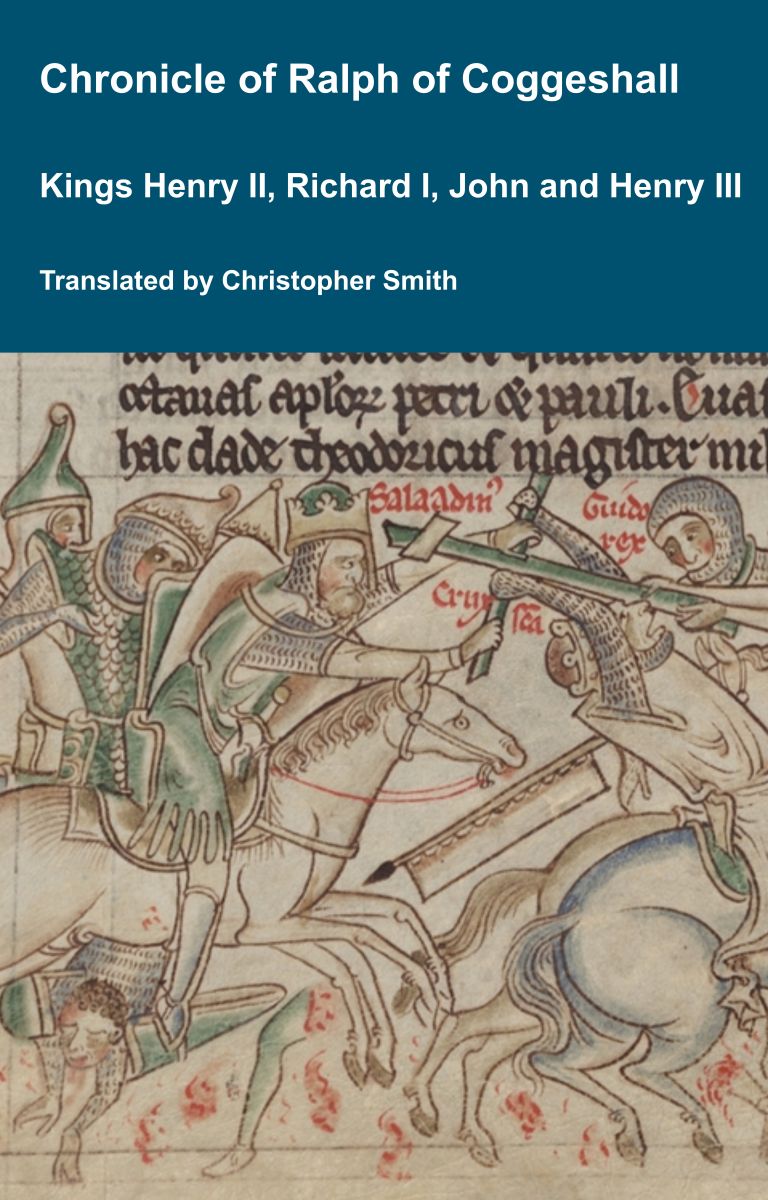 Chronicum Anglicanum by Ralph Coggeshall. But when the king of the French had thus departed, King Richard, on the vigil of the Assumption of the Blessed Mary [14th August 1191], was the first to go boldly forth from the trenches of the city of Acre to besiege and storm the remaining coastal cities, and ordered his tents to be pitched there, while the army of Saladin looked on close by. There he condemned to capital punishment three thousand Saracens and seven hundred and fifty more, from among those who had been taken at Acre and seemed to be under his jurisdiction. When this became known to the Saracens who were occupying the coastal cities, fearing lest he should rage against them with the same fury as he had against the men of Acre, and despairing of the aid of Saladin, who had refused to grant what had been demanded for the ransom of the others, they abandoned their cities empty and fled as soon as they heard of the king's approach. This was done by those who had lived in Haifa and in Caesarea, in Arsuf and in Jaffa, in Gaza and in Ascalon. And thus, by the will of God, it came to pass that all that coastal region in that quarter was taken by the king, and being taken was inhabited by Christians, yet not without battles, since the army of Saladin always followed hard on the flank of the Christian army, and in narrower places grievously harassed the rearguard, laying ambushes everywhere; and from both armies many often fell.
Rege autem Francorum sic discedente, continuo rex Ricardus, in vigilia Assumptionis beatæ Mariæ, ad obsidendum et expugnandum reliquas maritimas civitates, de fossatis urbis Achon primus audacter progreditur, figique ibi tentoria jussit, spectante e vicino exercitu Saláádini, ubi tria millia Sarracenorum et septingentos et quinquaginta capitali sententia damnavit de his quos in Ptolomaida ceperant, suique juris esse videbantur. Quod ubi Sarracenis innotuit, qui urbes maritimas occupaverant, metuentes ne simili rabie, in eos, sicut in Ptolomenses debaccharetur, diffidentesque de subventione Saláádini, qui pro redemptione cæterorum postulata negaverat, relictis urbibus vacuis, diffugerunt statim ut adventum regis audierunt. Hoc illi qui in Caipha et qui in Cæsarea, in Assur et in Joppen, in Gaza et qui in Ascalonia habitaverant, egerunt. Sicque, Deo volente, actum est ut omnis illa maritima regio versus plagam illam a rege caperetur, et capta a Christianis inhabitaretur, nec tamen absque prælii certamine, cum exercitus Saláádini semper a latere exercitum Christianorum subsequeretur, atque extremas acies in angustioribus locis graviter infestaret, ubique insidias tendens; un
Chronicum Anglicanum by Ralph Coggeshall. In the same year [1193], the same king took to wife1 the sister of the King of Denmark, named Ingeborg, a maiden endowed with marvellous beauty. But after the marriage he repudiated her, and placed her among the nuns at Soissons; and he immediately ordered all the Danes who had come with her to return home.
Eodem anno, idem rex sororem regis Daciæ, nomine Ingelburgh, puellam mirabili decore præditam, accepit in uxorem, quam post nuptias repudians, inter sanctimoniales apud Suessionem collocavit; omnesque Dacos, qui cum illa advenerant, illico repatriare jussit.
Note 1. King Philip II of France (age 27) married Ingeborg of Denmark (age 19) on 14th August 1193. Three months later he sought an annulment of the marriage on the grounds of her consanguinity with his first wife Isabel of Hainault. Ingeborg was held in captivity for twenty years before being reconciled with Philip in 1213. Ralph de Decito: "Philip, king of the Franks, took to wife the sister of the king of Denmark; but because the divorce between them was solemnly carried out unexpectedly, this was spoken of among the people far more than the royal wedding which had previously taken place at the city of Amiens on the feast of the Assumption of the Blessed Virgin [15th August 1193]. Separated from the king, the queen preferred to live among the nuns at Soissons rather than to return to her father's home in Denmark."
On 14th August 1196 Henry "Blind" Namur IV Count Luxemburg I Count Namur (age 84) died. His daughter Erminsende (age 9) succeeded Countess Luxemburg.
 Chronicle of Walter of Guisborough. On the following day, when all had again assembled, the same bishop of Durham spoke thus in French: "Most dear lords, yesterday you asked our lord the king concerning two things: First, that of his pure grace he might deign to send envoys to the king of Germany, to incline his heart toward consenting to peace and fully confirming it. Second, that he might grant a truce until a fixed time, within which a full peace could be treated, or at least further prorogue the truce already made." To the first article our lord the king replies thus: "That, out of reverence for the Roman church, which is the head and teacher of the whole world, and in regard to your own persons, who are members of that church, and considering your toil and long journey, the king freely grants to you that he will send his envoys on this matter." To the other thus: "It is well known to you and to all the people that the army of the king of France and all his men are already prepared to inflict upon him and his own whatever evils they may, as they have done hitherto, by land and sea. Wherefore it would not be safe for the king to command his men not to defend themselves, unless on the other side there were prohibition that they should not further prosecute [the war]. For this reason he replies to you that, as soon as it shall be established to him that the king of the French has so prohibited on his part or wishes to prohibit, straightway he also will command the same of his men, but not before." And when such an answer had been made, and leave taken1, the cardinals returned into France, whence they had come. But they returned not empty: rather, emptying the purses [of England]; for from every cathedral or collegiate chapter throughout all England, in the name of procurations and expenses, they had six marks of silver, and this by papal grant, besides many other gifts. And where the chapters of poor religious or of holy nuns could not suffice by themselves on account of poverty, the neighbouring parish churches were joined to them for the payment, so that the papal privilege should not remain void, nor the least coin fail of the sum. In the following year one of them returned, when the king was then at war in Scotland, at Berwick, to receive an answer to the aforesaid matters. In the meantime the envoys who had been sent to the king of Germany had returned, reporting that he would have neither peace nor any friendship; and so that cardinal returned with the business unfinished. Yet he left there eight of his men slain by the Scots, who, when one day they had gone forth with others to seek hay and straw, and proceeded incautiously, were surrounded by the Scots and slain. Once again that cardinal received expenses, namely, according to the taxation of Winchester and Lincoln, three pence from each mark. In the same year the clergy granted a tenth, the citizens a sixth, and the people a twelfth penny to the king.
Crastina autem die cum convenirent iterum universi, idem Dunolmensis in Gallico sic ait: "Domini carissimi, requisistis hesterna die dominum nostrum regem de duobus; Uno scilicet, quod ex gratia sua mera dignaretur nuncios mittere ad regem Alemaniæ, ut ejus animum alliciat ad pacem annuendam et plene confirmandam. Alio, quod scilicet treugas concederet usque certum tempus, infra quod de plena pace tractari posset; vel ipsas saltem treugas ulterius prorogare." Ad primum articulum respondet vobis dominus noster rex sic: "Quod, ratione et reverentia Romanæ ecclesiæ, quæ totius orbis caput est et magistra, et occasione personarum vestrarum, qui illius ecclesiæ estis membra, habitaque consideratione vestri labouris et longi itineris, liberaliter concedit vobis rex nuncios suos super hoc ibidem destinare." Ad aliud sic: "Satis vobis constat et omni populo quod exercitus regis Franciæ et gens sua tota jam parati existunt ut sibi et suis inferant mala quæ possunt, sicut hucusque fecerunt, in terra et in mari; unde regi non esset securum suis præcipere ne se defenderent, nisi ex parte altera esset inhibitum ne ulterius prosequerentur: propter quod vobis respondet quod quam cito constiterit ei regem Francourum ex parte sua hoc inhibuisse vel inhibere velle, statim et ipse suis hoc illud idem præcipiendo mandabit, sed ante non." Factoque tali responso, et accepta licentia, reversi sunt cardinales in Franciam, unde prius venerant. Sed non sunt reversi vacui; immo bursas vacuantes ex unoquoque enim capitulo cathedrali vel collegiato per totam Angliam, nomine procurationis et expensarum, sex marcas argenti habuerunt, et hoc ex concessione papali, præter alia donaria multa. Et ubi capitula religiosorum pauperum vel sanctarum monialium propter tenuitatem non sufficerent per se, adjungebantur eis circum adjacentes ecclesiæ parochiales, ad solutionem peragendam; ita quod papale privilegium non remaneret vacuum, nec deficeret obolus in summa. Sequenti vero anno reversus est unus eorum, cum esset tunc rex in guerra Scotiæ refuses to apud Berewyk, ut de præmissis responsum acciperet, et interim missi nuncii ad regem Alemaniæ reversi sunt, nunciantes quod nec pacem voluit nec ullum amorem, sicque reversus est ille cardinalis infecto negotio. Reliquit tamen ibidem octo personas ex suis interfectos a Scotis, qui quum ad quærendum fœnum et paleas die quadam cum aliis processissent, et incaute procederent, a Scotis circumsepti sunt et interfecti. Iterumque expensas accepit idem cardinalis, videlicet, secundum taxationem Wyntoniensem et Lincolniensem, de unaquaque marca III denarios. Eodem anno clerus decimum, cives sextum, populus duodecimum denarium regi contulerunt.
Note 1. The king granted to the legates letters-patent, dated on the 14th of August [1295], authorizing them to conclude, in his name, a truce with Philip, to last till the Feast of All Saints next ensuing, if that monarch should desire it. Rot. Pat. 23 Edward I m. 10; Rymer, Fœdera, 1.824.
Rymer's Fœdera Volume 1. Letters to the Supreme Pontiff, concerning the truce to be made between the Kings of England and France.
To the most holy Father in Christ and lord, Lord Boniface, by divine providence supreme Pontiff of the holy Roman and universal Church, Edward, by the same grace, etc., devoutly kissing the blessed feet. When the venerable fathers, Lords B., Bishop of Albano, and S., Bishop of Palestrina, cardinals of the holy Roman Church (sent by the diligence of your Holiness to the kingdoms of France and England for the purpose of calming the dissension or war which has arisen between the illustrious Prince, the King of France, and us, on your part and his), came into our presence, as faithful and zealous promoters of peace and concord they urgently and earnestly pressed that we would incline our mind to the restoration of peace. And since, as they said, the beginning of a truce could be very conducive to such a peace, they supplicated us to give our assent for a truce to be made. With great urgency they further requested that we would consent that, until full negotiation could be had with those whom the matter concerns, touching upon the making of such a truce, both by land and by sea, there should altogether cease all acts of war and hostile invasions, from either side, between the people of the aforesaid King of France and ours, and between whatsoever supporters of the same King of France and our own. Now we, wishing devoutly to obey our mother, the Roman Church, and also desiring to honor those cardinals, for the reverence of that same Roman Church and of yourself, and for the honor of those cardinals, have assented as far as we are able to their petitions. In their presence we granted (if the aforesaid King of France will also agree and shall indeed consent) that, according to their petition, until the feast of All Saints next to come, both by land and by sea, there shall cease altogether, between the people of the said King and ours, and between his supporters and ours, all acts of war and hostile invasions on either side. We committed to the same cardinals, by the authority of our letters, that, if the said King of France will likewise do and effectually perform the same, then those cardinals, in our name and by our authority, may cause our people everywhere, both by land and by sea, in England, Gascony, and in other places subject to our power, altogether to cease from the aforesaid acts. And we promised to the same cardinals, and bound ourselves and our goods by our letters, that (if the said King of France does the same in like manner) should it happen that, after our people have been commanded by the aforesaid cardinals and such command has reached them, that they abstain from hostile aggressions as above expressed, any harm should nevertheless be done or inflicted by our people or supporters, by land or by sea, upon the persons or property of the said King of France or his supporters, we shall cause full amends for such harm to be made, as is more fully contained in our letters drawn up on this matter. In which matter, most holy Father and lord, the integrity of our honor seems, in the reputation of many, to suffer no small wound; although it does not seem to us that these things, or others which we have done for the persuasion, reverence, and honor of your Holiness, ought to be imputed to us as harm or dishonor. May the Most High preserve you, etc. Given at Westminster, the 14th day of August [1295], in the 23rd year of our reign.
Litteræ summo Pontifici, de treugis inter Reges Angliæ & Franciæ ineundis.
SANCTISSIMO patri in CHRISTO & domino, domino B. divinâ providentiâ, sacrosanctæ Romanæ, ac universalis ecclesiæ summo Pontifici, Edwardus, ejusdem gratiâ, &c. devota pedum oscula beatorum. Venientes ad nostram præsentiam venerabiles patres, domini B. Albanensis & S. Penestrensis, episcopi, sacrosanctæ Romanæ ecclesiæ cardinales (pro sedandâ dissensione seu guerrâ, inter illustrem principem Franciæ Regem, & nos exortâ, per vestræ sanctitatis sollicitudinem, ad regna Franciæ & Angliæ destinati, ex parte vestrâ & suâ) apud nos, tanquain pacis & concordiæ fideles & fervidi zelatores, instanter & sollicitè institerunt, ut reformationi pacis nostrum vellemus animum inclinare. Et, quia, ut dixerunt, treugarum initio pacis hujusmodi posset esse plurimùm inductiva, supplicaverunt ut, super treugis ineundis, nostrum præstare vellemus assensum. Instantiâ nichilominus magnâ petentes, ut consentire vellemus quod, donec plenus tractatus cum hiis, quos res tangit, super dictis treugis ineundis, posset haberi, tam per terram, quam per mare, hinc indè, inter gentes præfati Franciæ Regis & nostras, ac inter ipsius Franciæ Regis quoscumque valitores & nostros, omninò à quibuscumque processibus bellicis, & invasionibus hostilibus cessaretur. Nos autem, devotè parere Romanæ ecclesiæ, matri nostræ, necnon & dictos cardinales honorare volentes, ob ipsius ecclesiæ Romanæ & vestri reverentiam, & cardinalium eorumdem honorem, ipsorum petitionibus, quantum possumus, annuentes, in ipsorum cardinalium præsentiâ concessimus (si præfatus Rex Franciæ idem velit concedere & concedat) ut, juxta ipsorum petitionem cardinalium; Usque ad festum Omnium Sanctorum, proximò venturum, tam per terram, quam per mare, inter gentes prædicti Regis & nostras, ac inter ipsius Regis Franciæ quoscumque valitores & nostros à quibuscumque bellicis actibus, & hostilibus invasionibus, hinc indè cessetur omninò; Eisdem cardinalibus, auctoritate litterarum nostrarum, committentes quod, si dictus Rex Franciæ velit idem facere, & effectu compleat prosequente, iidem cardinales, vice & auctoritate nostrâ, gentes nostras ubicumque, tam per terram, quam per mare, in Anglia, Vasconia, & in potestate nostrâ alibi constitutas, omninò cessare faciant à præmissis. Promittentes eisdem, & nos, ac bona nostra, per nostras litteras obligantes, (si dictus Rex Franciæ idem, & eodem modo fecerit) quod, si postquam, à præfatis cardinalibus, gentibus nostris mandatum fuerit, & mandatum hujusmodi pervenerit ad easdem, ut ab hostilibus aggressionibus abstineant, ut superiùs est expressum, aliqua dampna per mare, sive per terram, gentibus dicti Regis Franciæ, vel valitoribus suis, per gentes, seu valitores nostros, in personis, vel rebus, dari seu inferri contigerit, nos de dampnis hujusmodi plenam emendaın fieri faciemus; prout in nostris litteris, super hoc confectis, pleniùs continetur. In quibus, sanctissime pater & domine, nostri honoris integritas magnam pati videtur, reputatione plurium, læsionem; quanquam nobis non videatur quod ista vel alia, quæ pro sanctitatis vestræ suasionibus, reverentiâ, & honore fecimus, nobis ad malum vel dedecus debeant imputari. Conservet vos Altissimus, &c. Dat' apud Westm', XIV die Augusti, anno regni, &c. XXIII.
Chronicle of Walter of Guisborough. "Philip, by the grace of God, King of France, to Edward, King of England, knowledge of the truth. By every way and means you have been able, without reasonable cause, you have stirred up war against us, coming and acting against the faith, fealty, and liege homage by which, as our liege man, you are bound to us. And now again, persisting in your unreasonable purpose, you have entered our kingdom of France with your army, burning, devastating, and plundering our land, our people, and our subjects; and if none were to resist you, you would attempt still worse, striving day by day to heap evil upon evil to the utmost of your power. Wherefore, we, considering the unjust burdens and depredations which you have not feared to inflict upon our people and subjects, and desiring to preserve our right and our honour unimpaired, endure no small hardship in the affliction of our people. Not in pride or arrogance, presumption, nor in reliance on the power of our nation, but in confidence in God and in the justice of our cause, and that this war may come to a swifter end, we make known to you: that if you, who in arrogance and presumption have entered our land, dare and are willing to await us, between Saint-Germain-des-Prés outside Paris and Vallé Gérard, or between Franconville and Pontoise, on the next Thursday, Saturday, Sunday, or the Tuesday immediately following, or on such other day as you may determine and assign to accept battle against us and our army together with our subjects and friends, we shall embrace the fortune which Almighty God shall deign to grant us. Therefore, you who seek to conquer our land, if you desire battle as you say, ought not to refuse this offer. And, that it may be manifest to all that any further delay shall not arise from us, we offer and promise to choose and secure for you a common place, where armies such as those of France and England may, in fitting and proper manner, meet in conflict. Meanwhile, we require that you and your men shall not commit the damages, burnings, and depredations which you now perpetrate. And without delay, by your letters, you shall take care to certify to us your will concerning this matter. For if, by you, who, as is said, so greatly desire battle, the aforesaid offer is not neglected but accepted, then, in the manner prescribed, the combat cannot fail to take place. In witness whereof we have caused these letters to be sealed with our great seal. Given at Saint-Denis in France, the 14th day of August, in the year of grace 1346."
"Philippus, Dei gratia, rex Franciæ, Edwardo regi Angliæ veritatis cognitionem. Viis omnibus et modis quibus potuistis sine causa rationabili, nobis guerram commovistis, veniendo et faciendo contra fidem et fidelitatem ac ligiantiam quibus nobis, sicut homo noster ligius, astricti estis. Et de novo, in proposito vestro irrationabili perseverantes, regnum nostrum Franciæ cum exercitu vestro intrastis, concremastis, devastastis, et deprædati estis patriam et populum nostrum et subditos nostros, et si nullus resisteret pejora pro posse vestro, et mala malis indies nitimini cumulare. Quocirca nos considerantes gravamina injusta et deprædationes quæ populo nostro et subditis nostris inferre non timuistis, et pro jure nostro et honore illibate conservandis, molestias populi nostri grave non modicum sustinemus, non in superbia et elatione, præsumptione, nec in fiducia potestatis gentis nostræ, sed in confidentia Dei et justitiæ quas habemus et quod guerra ista finem sortiatur breviorem, vobis scire facimus quod si vos qui in elatione et præsumptione terram nostram intrastis, ausi fueritis et expectare vultis inter Sanctum Germanum de Pratis extra Parisius et Vallem Girardi, vel inter Francam-villam et Pontasium, proximo die Jovis, Sabbati, die Dominica, vel die Martis proximo sequente, vel quo die assignato acceptare decreveritis pugnandum contra nos et exercitum nostrum una cum subditis nostris et amicis, fortunam quam nobis Omnipotens donare dignetur amplexabimur: idcirco enim vos, qui terram vultis conquirere, si bellum affectatis sicut asseritis, oblationem istam refutare non debetis. Et quod omnibus palam fiat, quod per nos mora prolixior fieri non contingat, locum communem ubi tales exercitus Franciæ et Angliæ forma congrua et decente congressum habere poterunt, vobis capere offerimus et liberare. Et quod interim vos et gens vestra damna, combustiones, et deprædationes quales facitis non committatis: et sine dilatione per literas vestras super hiis voluntatem vestram nobis certificare curetis; si enim per vos qui multum, ut asseritur, bellum affectatis, oblatio præfata neglecta non fuerit sed acceptata, modo præscripto conflictum possidendum deficere non potestis. In quorum testimonio sigillo nostro magno literas istas fecimus sigillari. Datum apud Sanctum Dionisium in Francia XIV die Augusti, anno gratiæ MCCCXLVI."
On 14th August 1349 Walram Jülich Archbishop Cologne (age 46) died.
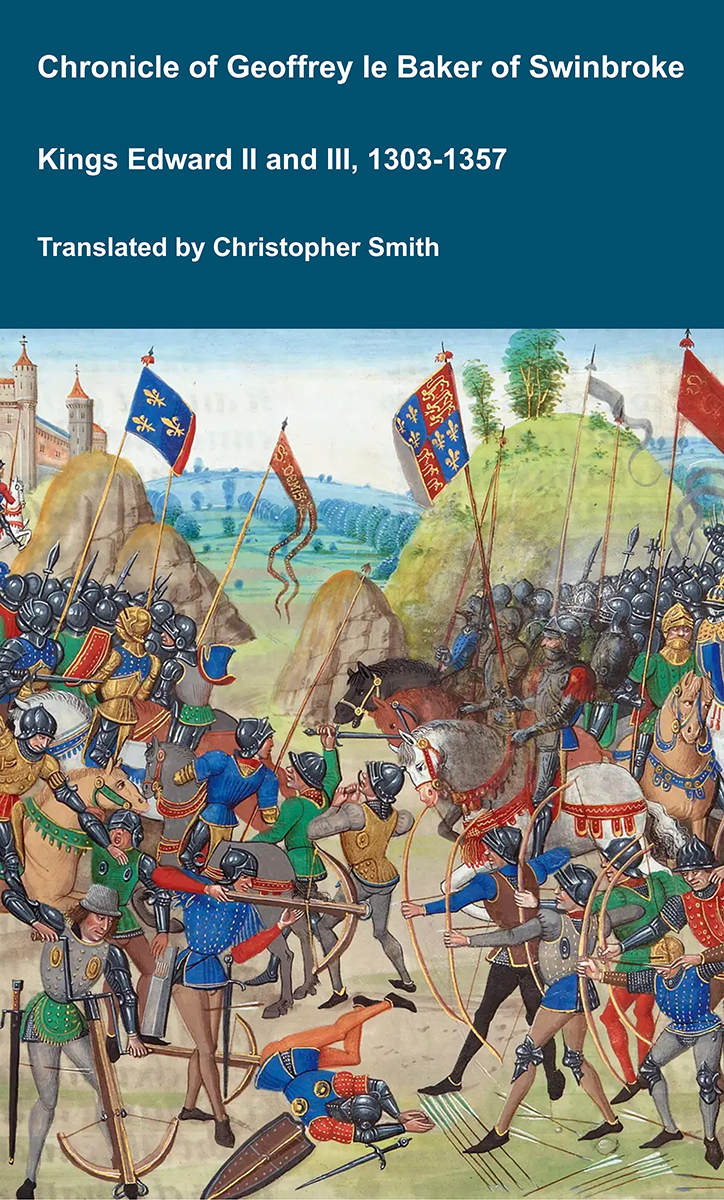 Chronicle of Geoffrey le Baker of Swinbroke [-1360]. In this year, on the eve of the Assumption of the Virgin Mary, Mother of God1 [14th August 1352], Walter de Bentley, captain, Robert Knolles, and other loyal supporters of the king, encountered the enemy with great valour in the marches of Brittany. In the fierce and prolonged battle, the following were killed: the chief Marshal of France (age 26), the lords of Quintin, Courtenoc (Curtunoke), Richemonte, Montauban, Lagenel, Launay, Montboucher, Villechastel, La Marche, and other knights, numbering 140, along with some 500 squires, whose coats of arms and armour were taken as spoils. The number of common soldiers slain was not counted. Among the captured were: Lord de Brusebeke, the son of Marshal Bertram, Tristram de Maleis, Lord de Maletret, the Viscount of Comminges, Geoffrey de Goanes, William de la Val, Charles d'Archeville, John de Bause, and other knights and squires numbering more than 130. This French army, under the command of the aforementioned marshal, had been intentionally positioned behind the slope of a hill, a location from which there was no escape, so that desperation might fuel their bravery, as often happens with courageous men. There were also present many from the company of the Knights of the Star,2 who had sworn in their order never to turn their backs on the English. Of them, 45 were among the dead and captured. Few escaped unwounded from that engagement. In it, the English captain Walter de Bentley, though horribly wounded, ordered thirty archers to be executed, these had, in the height of battle, fled in terror from the overwhelming number of French and turned their backs.
Isto anno, in vigilia Assumpcionis Virginis, matris Dei, Walterus de Benteleye, capitaneus, Robertus Knollis et alii regis fideles in marchia Britannie hostibus egregie obviarunt, ubi in certamine diu periculoso fuerant occisi marescallus Francie principalis, item domini de Quintin, de Curtunoke, de Richemont, de Mountalban, de Lagenel, de Launey, de Mountboche, de Vilechastel, de la Marche, et alii milites numero centum quadraginta, atque domicelli ad summam quingentorum, quorum toge armature fuerunt reportate, numero popularium non taxato. Ibidem capti fuerunt dominus de Brusebeke, filius marescalli Bertram, item Tristram de Maleis, item dominus de Maletret item vicecomes de Comayn, item Galfridus de Goanes, Willelmus de la Val, Carolus Darchefil, Iohannes de Bause et alii milites cum domicellis amplius quam centum et triginta. Iste Francorum exercitus sub ducatu predicti marescalli ex proposito ductoris fuerat a tergo declivo cuiusdam montis vallatus, quod non poterat fugam inire, ut ex fuge desperacione cresceret eiis audacia pugnandi, sicud solet animosis. Fuerunt eciam ibidem plures de comitiva militum Stelle, qui in sua professione coniurarunt se nunquam Anglico terga territa versuros, de quibus fuerunt inter captos et occisos numerati quadraginta quinque. Ab illo discrimine pauci non wlnerati evaserunt, in quo ipsorum capitaneus prefatus Walterus horribiliter wineratus iussit triginta sagittarios decapitari, qui in maximo belli fervore teriti a Gallicorum immensitate fugam inierunt.
Note 1. The information in the first part of this paragraph is obtained from sir Walter Bentley's letter to the chancellor, the bishop of Worcester, describing the action, which was fought near Mauron on the 14th August 1352. The letter is given in Avesbury 416 below. The names of the killed and prisoners, which are so disguised in the text, are: Gui de Nesle, sire d'Offemont, marshal of France; the sire de Quintin; Jean, sire de Tinteniac; the sires de Rochemont, de Montauban, and de Raguenel; Guillaume de Lannoy; Aufray de Montbouchier; Guillaume de Vielcastel; and Guillaume de la Marche, killed: and the sire de Briquebecq, son of Robert Bertrand, baron de Briquebecq, marshal; Tristan de Maignelais; the sire de Malestroit; the vicomte de Coalmen; Geoffroi de Coeyghem; Gui(?) de Laval; Charles d'Argeville; and Jean de la Muce, prisoners. The particulars of bringing the French to bay and punishing the runaway archers are not given elsewhere.
Note 2. The Order of the Knights of the Star was founded on the 16th November 1351; Jean Le Bel 2.17.
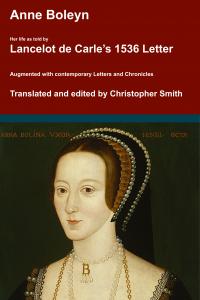
Anne Boleyn. Her Life as told by Lancelot de Carle's 1536 Letter.
In 1536, two weeks after the execution of Anne Boleyn, her brother George and four others, Lancelot du Carle, wrote an extraordinary letter that described Anne's life, and her trial and execution, to which he was a witness. This book presents a new translation of that letter, with additional material from other contemporary sources such as Letters, Hall's and Wriothesley's Chronicles, the pamphlets of Wynkyn the Worde, the Memorial of George Constantyne, the Portuguese Letter and the Baga de Secrets, all of which are provided in Appendices.
Available at Amazon in eBook and Paperback format.
. [14th August 1352] Reverend Father in God, please you to know that, since my coming into Brittany, tho people that were appointed unto me and I, before that we entered into any stronghold, have ridden abroad on this side and have so much accomplished, praised be God therefor, that the town and castle of Ploérmel and of Fougéres have been right well comforted and victualled, and there hath been taken by assault a stronghold which had been made by the enemy before Fougéres. And, this done, my comrades and I rode through the land against the enemy, until the marshal of France, with all his power of France, Normandy, Anjou, Maine, Poitou, Touraine, Saintogne, and Brittany, with a mighty great number of men of arms and of other folk without number, came against us, near to a town called Mauron, between Rennes and Ploérmel, upon the open fields, without woods, ditches, or other defences; and there we fought with them. And it was on the eve of the Assumption of our Lady, between the hour of vespers and sunset; and, by the grace of God and the righteous cause which He upholdeth, the enemy were sore discomfited and with scarcely loss of men on our side, praised be God therefor. And there were slain there the seneschal of Anjou, the seneschal of Benavent, the viscount of Rohan, my lord John Frère, the lord of Quintin, the lord of Tinténiac, the lord of Rochemont, the lord of Montauban, my lord Reginald of Montauban, my lord Robert Raguenel, my lord William of Launay, my lord Aufray of Montbouchier, my lord William of Vielcastel, my lord William of La Marche, and other knights slain to the number of seven score, with squires which amount unto five hundred dead upon the field, all bearing coat armour, and common folk without number. And there were taken there the lord of Briquebecq, son of the marshal Bertrand, my lord Tristram of Maignelais, the lord of Malestroit, the viscount of Coótmen, my lord Geoffrey of Coeyghem, my lord John of Laval, the lord Incher, my lord Charles of Argeville, my lord John of La Muce, and many other knighte and squires, up to eight score, of whom, as well slain as taken, are full five and forty knights of rank.
Reverent piere en Dieu, vous please savoir qe, puis mon ariver en Bretaigne, lez gentz qe maveient este ordeignez et moy, avaunt entrer en nul forteresse, avons chivachez par decea et avons taunt esploites, loiez ent soit Dieu, qe la ville et le chastiel de Ploermelle et de Founger ount este mult bien oonfortez et vitaillez, et pris par assaut une bastille qavoit este fait par les enemys devaunt Fouger. Et, ceo fait, mes compaignouns et moy chevachons sur le pais sur enemys et taunt ge le marschal du Fraunce, od tut son poar du Fraunce, de Normandie, de Angou, de Maine, de Peyto, de Toraigne, de Xantoigne, et de Bretaigne, ou mult graunt nombre des gentz darmes et dautres gentz sauntz nombre vindrent a lencountre de nous, pres dun ville appelle Maurone, entre Rennes et Ploermelle, sur les plaines champs, saung boys, saunz fossez, od aultre forteresce; et illesqes nous combatoms ovesqe eaux. Et fust la veille de lassumpcion de nostre Dame, entre heure de vespre et solail recussant; et, par la grace de Dieu et le bon droit qe le maintent, fasrent lez enemys pleinement descomfits et saunz perdre gaires dez gentz de nostre couste, loiez ent soit Dien. Et illesqes fasrent mortz le seneschal Dangou, le seneschal de Bennofyn, le viscounte de Roane, mounsire Johan Frere, le sire de Quyntine, le sire de Tynteneake, le sire de Rogemond, le siro de Montauban, le mounsire Renaud de Moncauban, mounsire Robert Raguenel, monsire William de Lamay, mounsire Aufray de Montboucher, mounsire Guilham de Vielchastel, mounsire Guilliam de la Marche, et autres chivalers mortz jesqes a VIJxx", ou les esquiers qamountent jusqes a D. mortz sur les champs, totes cotes a armer, et de comune people saunz nombre. Et y fusrent pris le sire de Byquebeke, filtz a marschal Bertram, monsire Tristram de Maleloyse, le sire de Malestret, le viscounte de Coyman, mounsire Geaffray de Coayms, mounsire Johan do la Vaale, le sire Incher, mounsire Charles Dargeville, mounsire Johan de la Muce, et plusors aultres chivalers et esquiers, jusqes a VIIJxx, dez queux qe mortz qe pris sount bien jusqes a XLV chivalers de estaille.
On 14th August 1352 Guy II de Clermont-Nesle (age 26) was killed at the Battle of Mauron.
On 14th August 1414 Guy Montfort Baron Laval (age 29) died of plague following his return from the Holy Land.
On 14th August 1433 King John I of Portugal (age 81) died at Lisbon [Map]. His son Edward (age 41) succeeded I King Portugal.

On 14th August 1473 Margaret York aka Pole Countess of Salisbury was born to George York 1st Duke of Clarence (age 23) and Isabel Neville Duchess Clarence (age 21) at Farleigh Hungerford Castle [Map]. She a great x 3 granddaughter of King Edward III of England. Coefficient of inbreeding 5.41%. She married 1491 Richard Pole and had issue.
On 14th August 1479 Catherine York Countess Devon was born to King Edward IV of England (age 37) and Elizabeth Woodville Queen Consort England (age 42). She married October 1495 her sixth cousin William Courtenay 1st Earl Devon, son of Edward Courtenay 1st Earl Devon and Elizabeth Courtenay, and had issue.
Close Rolls Edward IV Edward V Richard III 1476-1485. 14th August 1483 Francis Lovell 1st Viscount Lovell (age 27) was appointed Chief Butler of England. King Richard III of England (age 30). Westminster Palace [Map]. Grant for life to the king's kinsman Francis Lovell, knight, Viscount Lovel, the king's chamberlain, of the office of Chief Butler of England, void by the death of Anthony, late earl Rivers, receiving fees of 100l yearly from the customs and prises of wines and other issues of his office, with all other profits. By p.s.
Manuscripts of J Eliot Hodgkin. 14th August 1514. Sir Thomas Boleyn (age 37) to Margaret of Austria (age 34), Governor of the Netherlands. Greenwich.
My dearest and most revered lady, with as humble a heart as I can, I commend myself to your kind favor. It will please you to know that the sister of the King, my master, Madame Marie, Queen of France, has asked to have my daughter, the little Boleyn [Queen Anne Boleyn of England (age 13)], with her. My very revered lady, my daughter is presently with you at your court, and I could not and would not refuse this request. So, my very revered lady, I humbly beseech you to grant my daughter permission to return to me with my people, whom I have sent to you for this purpose. My very revered lady, I feel very much obliged to your kind favour because of the great honor you have bestowed on my daughter. Although I cannot deserve it, I do not desire anything else but to be able to do some service that is agreeable to you, which I hope to do now and in the future, God willing. I pray to God that He may grant you the full accomplishment of your noble and good desires. Written below my sign manual at the royal court of Greenwich in England, the 14th day of August in the year 1514. Your most humble servant, Sir Thomas Boleyn.
Ma treschiere et tres redoubtee dame dans sy humble cuer quil mest possible a votre bonne grace me recommande. II vous playra a savoir comment ia seur du Roy mon maistre madame marie Reyne fyancee de France ma requyse davoir avecques elle ma fille la petitte Boulain laquelle ma tresredoubtee dame est a present avecques vous en votre court a laquelle requeste je nay peult ne sceut refuzer nullement sy est ma tresredoubtee dame que je vous supplie treshumblement quil vous plaise de donner et octroyer congiet a ma fille de povoir retourner pardevers moy avecques mes gens lesquelz jay envoyet devers vous a ceste cause ma tresredoubte dame je me tiens fort obligiet envers votre bonne grace a cause de la grant honneur que fait aves a ma fille et que ne mest possible a desservir devers votre bonne grace non obstant que je ne dezire aultre chose synon que je vous puisse faire auleun service agreable ce que jespere de faire encores cy en apres au plaisir de dieu auquel je prie ma tres redoubtee dame quil vous doinst lentier aecomplissement de vos nobles et bon desirs escript desouhz mon signe manuel a la court royalle de Grynewiths en engleterre, le xiiii jour daoust anno xv° et xiiii. Votre treshumble serviteur, Sr Thomas Boleyn."


Letters and Papers Foreign and Domestic Henry VIII 1528. 14th August 1528. R. O. 4633. The Sweating Sickness.
Number of the persons who died with the plague, or otherwise, in the city of London, from 5 to 12 Aug. Also, of the parishes clear from the infection.
ii. Similar list for the 14th Aug.
Pp. 10. Endd.: "So appeareth there be dead within the city of London, of the plague and otherwise, from the 6th day of this month of August to the 14th day, which be 8 days complete, the full number of 152 persons. And this day se'night your mastership shall be certified of the number that shall chance to depart in the meantime. Yours, as I am bound, John Champeneys."
On 14th August 1532 Magdalena Habsburg Spain was born to Ferdinand I Holy Roman Emperor (age 29) and Anne Jagiellon (age 29).


Letters and Papers Foreign and Domestic Henry VIII 1535. 14th August 1535. Titus, B. xi. 425. B. M. St. P. i. 439. 90. Sir Thomas Audeley, Chancellor, to Cromwell.
Has put the following Irish Acts in order:—The Supreme Head of the Church in Ireland; the King's Succession; the declaration of treasons; licenses and dispensations; the annates and election and consecration of bishops; appeals in spiritual matters to be made to the King, and not the bishop of Rome; first-fruits, which does not extend to abbots and priors, for this time; Kildare's attainder; subsidy; resumption of the lands of the duke of Norfolk and his coparceners, the earl of Shrewsbury, the heirs general of the earl of Ormond, and divers abbots and priors in England. Wishes him to ask the King whether that Act is to be set forth without declaring his pleasure to the Duke, Earl, and heirs general of the earl of Ormond. Has seen the Act made in Ponynges' time, and delivered it again to Mr. Gostwyk. Does not take that Act as they take it in Ireland, but has made a short Act that everything done in this Parliament shall be effectual, notwithstanding that or any other Act. These Acts should be sent to Ireland with a letter ordering the Deputy and Council to return a transumpt under the seal of Ireland. Asks whether the commission to hold the Parliament is to be made to the Deputy alone or to others, and what day it is to begin. Asks him to remind the King of the barons he wished to make to increase the number of temporal lords. They shall be all ready written by Monday next. Does not think the Acts of heresy and submission of the clergy necessary for that land, for the Statute of Henry IV. was never put in execution; and as to the submission, after the laws for the spiritual jurisdiction are ratified here in England by the 32 assigned by the King, and confirmed by Parliament here, it were necessary they should be received in Ireland by authority of Parliament there. Advises that the Acts of probate of testament, mortuaries, and pluralities of benefices should be spared at this time. The Earl of Wiltshire (age 58) has asked that the Act for the Earl of Ossory may be deferred till he and his coparcener Selenger may search their evidences, and declare what prejudice they might take. If the King wishes the Act to go forward, he should write to the Earl, and cause him to make a sufficient proviso. The King might also order the Deputy to take a bond from the earl of Ossory not to take any advantage of the Earl of Wiltshire by the Act.
Sends a commission of oyer and determiner concerning the prior of Wurcetter and his monk. Thinks the words spoken in March last by the monk touching appeals will hardly bear treason but misprision, for there is no express mention of the King nor Queen. The words spoken of the King and Queen at Christmas or before February would have been treason if they had been spoken since February 1.
It were best to have them indicted truly upon the fact, and then let them remain in ward till further opinions be known.
Christchurch, in London, Saturday, the eve of the Assumption. Is going to Colchester on Tuesday; there is so great death in London.
Hol. Add: Chief Secretary.
On 14th August 1539 Ralph Sacheverell (age 33) died at Ratcliffe on Soar, Nottinghamshire [Map]. He was buried at Holy Trinity Church Ratcliffe on Soar [Map].
On 27th June 1538 Cecilia Durance (age 30) died. She was buried at Holy Trinity Church Ratcliffe on Soar [Map].
Decorated Gabled Headress. Lancastrian Esses Collar with Big Esses with Tudor Rose Pendant. Possibly second hand monuments. Gabled Headress.
Ralph Sacheverell: Ralph Sacheverell and Cecilia Durance were married. Ralph Sacheverell and Anna Unknown were married. In 1506 he was born to Richard Sacheverell Baron Hungerford, Botreaux and Moleyns and Mary Hungerford Baroness Hastings, 4th Baroness Hungerford, 5th Baroness Botreaux and 2nd Baroness Moleyns at Ratcliffe on Soar, Nottinghamshire [Map].
Cecilia Durance: In 1508 she was born to John Durance at Isham, Northamptonshire.


Henry Machyn's Diary. 14th August 1557. The xiiij day of August cam tydynges from beyond the see that the Kyng (age 30) our master had taken mony nobull men of France gohyng to vetell Sant Qwynten, the constabull of Fransse and a vj m. presonares taken, and vj .. cartes and wagens laden with tresur and vetell, at a plasse callyd Sant Qwynten, and ther my lord Hare Dudley (deceased) was slayn at the wynnyng of ytt.


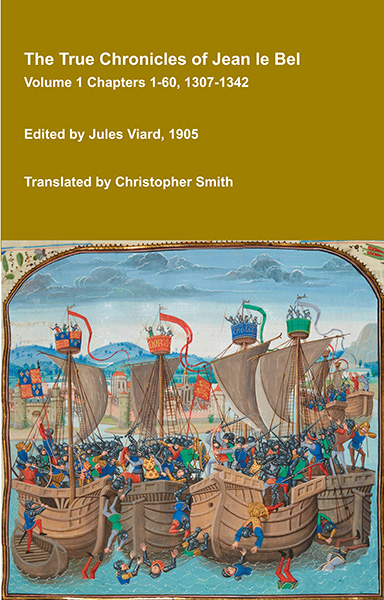
The True Chronicles of Jean le Bel Volume 1 Chapters 1-60 1307-1342
The True Chronicles of Jean le Bel offer one of the most vivid and immediate accounts of 14th-century Europe, written by a knight who lived through the events he describes, and experienced some of them first hand. Covering the early decades of the Hundred Years’ War, this remarkable chronicle follows the campaigns of Edward III of England, the politics of France and the Low Countries, and the shifting alliances that shaped medieval warfare. Unlike later historians, Jean le Bel writes with a strong sense of eyewitness authenticity, drawing on personal experience and the testimony of fellow soldiers. His narrative captures not only battles and sieges, but also the realities of military life, diplomacy, and the ideals of chivalry that governed noble society. A key source for Jean Froissart, Le Bel’s chronicle stands on its own as a compelling and insightful work, at once historical record and literary achievement. This translation builds on the 1905 edition published in French by Jules Viard, adding extensive translations from other sources Rymer's Fœdera, the Chronicles of Adam Murimuth, William Nangis, Walter of Guisborough, a Bourgeois of Valenciennes, Geoffrey le Baker of Swinbroke and Richard Lescot to enrich the original text and Viard's notes.
Available at Amazon in eBook and Paperback format.

On 14th August 1587 William Gonzaga I Duke Mantua (age 49) died. His son Vincenzo (age 24) succeeded III Duke Mantua.
On 14th August 1621 Maria Margaret Habsburg Spain was born to Philip IV King Spain (age 16) and Elisabeth Bourbon Queen Consort Spain (age 18). Coefficient of inbreeding 4.39%. He died aged less than one years old.


On 14th August 1653 Christopher Monck 2nd Duke Albemarle was born to George Monck 1st Duke Albemarle (age 44) and Anne Clarges Duchess Albermarle (age 34) seven months after his parents were married. He married 30th December 1669 Elizabeth "Mad Duchess" Cavendish Duchess Albermarle Duchess of Montagu, daughter of Henry Cavendish 2nd Duke Newcastle upon Tyne and Frances Pierrepont Duchess Newcastle upon Tyne.


John Evelyn's Diary. 14th August 1654. Went by Newark-on-Trent [Map], a brave town and garrison. Next, by Wharton House, belonging to the Lord Chaworth, a handsome seat; then by Home, a noble place belonging to the Marquis of Dorchester (age 48), and passed the famous River Trent, which divides the South from the North of England; and so lay that night at Nottingham [Map].
John Evelyn's Diary. 14th August 1662. This afternoon, the Queen-Mother (age 52), with the Earl of St. Alban's (age 57) and many great ladies and persons, was pleased to honor my poor villa with her presence, and to accept of a collation. She was exceedingly pleased, and staid till very late in the evening.


Samuel Pepys' Diary. 14th August 1664. Lord's Day. After long lying discoursing with my wife, I up, and comes Mr. Holliard (age 55) to see me, who concurs with me that my pain is nothing but cold in my legs breeding wind, and got only by my using to wear a gowne, and that I am not at all troubled with any ulcer, but my thickness of water comes from my overheat in my back. He gone, comes Mr. Herbert, Mr. Honiwood's man, and dined with me, a very honest, plain, well-meaning man, I think him to be; and by his discourse and manner of life, the true embleme of an old ordinary serving-man.
Samuel Pepys' Diary. 14th August 1665. Up, and my mind being at mighty ease from the dispatch of my business so much yesterday, I down to Deptford, Kent [Map] to Sir G. Carteret (age 55), where with him a great while, and a great deale of private talke concerning my Lord Sandwich's (age 40) and his matters, and chiefly of the latter, I giving him great deale of advice about the necessity of his having caution concerning Fenn, and the many ways there are of his being abused by any man in his place, and why he should not bring his son in to look after his business, and more, to be a Commissioner of the Navy, which he listened to and liked, and told me how much the King (age 35) was his good Master, and was sure not to deny him that or any thing else greater than that, and I find him a very cunning man, whatever at other times he seems to be, and among other things he told me he was not for the fanfaroone1 to make a show with a great title, as he might have had long since, but the main thing to get an estate; and another thing, speaking of minding of business, "By God", says he, "I will and have already almost brought it to that pass, that the King shall not be able to whip a cat, but I must be at the tayle of it". Meaning so necessary he is, and the King and my Lord Treasurer (age 58) and all do confess it; which, while I mind my business, is my own case in this office of the Navy, and I hope shall be more, if God give me life and health.
Note 1. Fanfaron, French, from fanfare, a sounding of trumpets; hence, a swaggerer, or empty boaster.



Samuel Pepys' Diary. 14th August 1665. Thence by agreement to Sir J. Minnes's (age 66) lodgings, where I found my Lord Bruncker (age 45), and so by water to the ferry, and there took Sir W. Batten's (age 64) coach that was sent for us, and to Sir W. Batten's, where very merry, good cheer, and up and down the garden with great content to me, and, after dinner, beat Captain Cocke (age 48) at billiards, won about 8s. of him and my Lord Bruncker. So in the evening after, much pleasure back again and I by water to Woolwich, Kent [Map], where supped with my wife, and then to bed betimes, because of rising to-morrow at four of the clock in order to the going out with Sir G. Carteret (age 55) toward Cranborne to my Lord Hinchingbrooke (age 17) in his way to Court.

Samuel Pepys' Diary. 14th August 1666. So I away not pleased, and to White Hall, where I find them at Chappell, and met with Povy (age 52), and he and I together, who tells me how mad my letter makes my Lord Peterborough (age 44), and what a furious letter he hath writ to me in answer, though it is not come yet. This did trouble me; for though there be no reason, yet to have a nobleman's mouth open against a man may do a man hurt; so I endeavoured to have found him out and spoke with him, but could not.
Samuel Pepys' Diary. 14th August 1666. Thanksgiving Day1. Up, and comes Mr. Foley and his man, with a box of a great variety of carpenter's and joyner's tooles, which I had bespoke, to me, which please me mightily; but I will have more. Then I abroad down to the Old Swan [Map], and there I called and kissed Betty Michell, and would have got her to go with me to Westminster, but I find her a little colder than she used to be, methought, which did a little molest me.
Note 1. A proclamation ordering August 14th to be observed in London and Westminster, and August 23rd in other places, as a day of thanksgiving for the late victory at sea over the Dutch, was published on August 6th.
Calendar of State Papers Charles II 14 Aug 1666. 14th August 1666. 20 leagues from land. 132. Duke of Albemarle (age 57) to the King. Thanks for his gracious letter. Prince Rupert (age 46) and he think it their greatest honour to serve His Majesty. They are sailing for Solebay [Map] with a fair wind, and hope to find provisions, having sent to Comr. Taylor to forward them. Wishes to clear a gallant man falsely accused, Sir Jeremiah Smith, who had more men killed and hurt, and his ship received more shot than any in the fleet. There is not a more spirited man serves in the fleet. A vessel is taken laden with masts and iron. Endorsed, "Received 16th August." [2 pages.] Encloses, 132. 1. Account of the masts, de., on the above ship.


Chronicle of a Bourgeois of Valenciennes
Récits d’un bourgeois de Valenciennes aka The Chronicle of a Bourgeois of Valenciennes is a vivid 14th-century vernacular chronicle written by an anonymous urban chronicler from Valenciennes in the County of Hainaut. It survives in a manuscript that describes local and regional history from about 1253 to 1366, blending chronology, narrative episodes, and eyewitness-style accounts of political, military, and social events in medieval France, Flanders, and the Low Countries. The work begins with a chronological framework of events affecting Valenciennes and its region under rulers such as King Philip VI of France and the shifting allegiances of local nobility. It includes accounts of conflicts, sieges, diplomatic manoeuvres, and the impact of broader struggles like the Hundred Years’ War on urban life in Hainaut. Written from the perspective of a burgher (bourgeois) rather than a monastery or royal court, the chronicle offers a rare lay viewpoint on high politics and warfare, reflecting how merchants, townspeople, and civic institutions experienced the turbulence of the 13th and 14th centuries. Its narrative style combines straightforward reporting of events with moral and civic observations, making it a valuable source for readers interested in medieval urban society, regional politics, and the lived experience of war and governance in pre-modern Europe.
Available at Amazon in eBook and Paperback format.

Samuel Pepys' Diary. 14th August 1666. So to the chappell, and heard a piece of the Dean of Westminster's (age 41) sermon, and a special good anthemne before the King (age 36), after a sermon, and then home by coach with Captain Cocke (age 49), who is in pain about his hempe, of which he says he hath bought great quantities, and would gladly be upon good terms with us for it, wherein I promise to assist him. So we 'light at the 'Change [Map], where, after a small turn or two, taking no pleasure now-a-days to be there, because of answering questions that would be asked there which I cannot answer; so home and dined, and after dinner, with my wife and Mercer to the Beare-garden1, where I have not been, I think, of many years, and saw some good sport of the bull's tossing of the dogs: one into the very boxes. But it is a very rude and nasty pleasure. We had a great many hectors in the same box with us (and one very fine went into the pit, and played his dog for a wager, which was a strange sport for a gentleman), where they drank wine, and drank Mercer's health first, which I pledged with my hat off; and who should be in the house but Mr. Pierce the surgeon, who saw us and spoke to us.
Note 1. The Bear Garden was situated on Bankside, close to the precinct of the Clinke Liberty, and very near to the old palace of the bishops of Winchester. Stow, to his "Survey", says: "There be two Bear Gardens, the old and new Places". The name still exists in a street or lane at the foot of Southwark, Surrey [Map] Bridge, and in Bear Garden Wharf.
On 14th August 1671 John Lewis 1st Baronet (age 56) died without male issue. Baronet Lewis of Ledstone extinct. His daughters Elizabeth Lewis Countess Huntingdon (age 17) and Mary Lewis Countess Scarsdale (age 13) inherited his estates. He and his wife Sarah Foote Lady Lewis (age 43) were buried at All Saints Church, Ledsham [Map]. Hand On Skull. Sculpted by Thomas Cartwright (age 36).
Elizabeth Lewis Countess Huntingdon: In 1654 she was born to John Lewis 1st Baronet and Sarah Foote Lady Lewis. John Evelyn's Diary. 24th June 1670. Came the Earl of Huntington and Countess, with the Lord Sherard, to visit us. On 19th February 1672 Theophilus Hastings 7th Earl Huntingdon and she were married. She by marriage Countess Huntingdon. He the son of Ferdinando Hastings 6th Earl Huntingdon and Lucy Davies Countess Huntingdon. In 1688 she died.
Mary Lewis Countess Scarsdale: In 1658 she was born to John Lewis 1st Baronet and Sarah Foote Lady Lewis. On 11th February 1672 Robert Leke 3rd Earl Scarsdale and she were married. He the son of Nicholas Leke 2nd Earl Scarsdale and Frances Rich Countess Scarsdale. On 27th January 1681 Nicholas Leke 2nd Earl Scarsdale died. His son Robert succeeded 3rd Earl Scarsdale, 3rd Baron Deincourt of Sutton, 3rd Baronet Leke of Sutton in Derbyshire. She by marriage Countess Scarsdale. In 1684 she died.
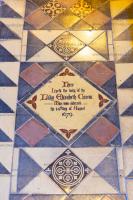
On or before 14th August 1679, the day she was buried at St James' Church, Antony [Map], Elizabeth Norton (age 28) died.
Elizabeth Norton: Before 22nd September 1650 she was born. After 1671 John Carew 3rd Baronet and she were married.
On 14th August 1687 Maria Anna Savoy was born to Victor Amadeus King Sardinia (age 21) and Anne Marie Bourbon Queen Consort Sardinia (age 17) at Turin. She a great granddaughter of King Charles I of England, Scotland and Ireland. Coefficient of inbreeding 4.95%. She died aged two in 1690.
On 14th August 1688 Mary Osborne Duchess Beaufort was born to Peregrine Osborne 2nd Duke Leeds (age 29) and Bridget Hyde Duchess Leeds (age 26). She married 14th September 1711 her fourth cousin once removed Henry Somerset 2nd Duke Beaufort.
On 14th August 1688 Frederick William "Soldier King" I King Prussia was born to Frederick I King Prussia (age 31) and Sophia Charlotte Hanover Queen Consort Prussia (age 19). He a great x 2 grandson of King James I of England and Ireland and VI of Scotland. Coefficient of inbreeding 1.96%. He married 28th November 1706 his first cousin Sophia Dorothea Hanover Queen Consort Prussia and had issue.
On 14th August 1724 Anne Cochrane Duchess Hamilton Duchess Brandon (age 18) died in childbirth.
On 14th August 1727 Stephen Cornwallis (age 23) was elected MP Eye.
On 14th August 1727 Thomas Frankland 3rd Baronet (age 42) was elected MP Thirsk.

On 14th August 1727 Louise Elisabeth of France was born to Louis XV King France (age 17) and Marie Leszczyńska Queen Consort France (age 24). She a great x 3 granddaughter of King Charles I of England, Scotland and Ireland. She married 25th October 1739 her first cousin once removed Infante Philip of Spain and had issue.
On 14th August 1728 Ernest Augustus Hanover 1st Duke of York and Albany (age 53) died at Osnabrück, Lower Saxony. Duke York and Albany extinct.

On 14th August 1742 Hugh Percy 2nd Duke Northumberland was born to Hugh Percy 1st Duke Northumberland (age 26) and Elizabeth Seymour Duchess Northumberland (age 25). He married (1) 2nd July 1764 his fourth cousin once removed Anne Stuart, daughter of John Stuart 3rd Earl Bute and Mary Wortley-Montagu Countess Bute (2) 23rd May 1779 Frances Julia Burrell Duchess Northumberland and had issue.
Henrici Quinti, Angliæ Regis, Gesta, is a first-hand account of the Agincourt Campaign, and subsequent events to his death in 1422. The author of the first part was a Chaplain in King Henry's retinue who was present from King Henry's departure at Southampton in 1415, at the siege of Harfleur, the battle of Agincourt, and the celebrations on King Henry's return to London. The second part, by another writer, relates the events that took place including the negotiations at Troye, Henry's marriage and his death in 1422.
Available at Amazon in eBook and Paperback format.
On 14th August 1747 August Saxe Coburg Altenburg was born to Duke Frederick III of Saxe Coburg Altenburg III (age 48) and Luise Dorothea Saxe Meiningen Duchess Saxe Gotha Altenburg (age 37) at Gotha.

After 14th August 1775. St Margaret's Church, Wrenbury [Map]. Monument to Lynch Salusbury Cotton 4th Baronet (deceased) and Elizabeth Abigail Cotton Lady Cotton (age 62).
Lynch Salusbury Cotton 4th Baronet: Around 1705 he was born to Thomas Cotton 2nd Baronet and Philadelphia Lynch Lady Cotton. In or before 1739 Lynch Salusbury Cotton 4th Baronet and Elizabeth Abigail Cotton Lady Cotton were married. She by marriage Lady Cotton of Combermere in Cheshire. On 27th August 1748 Robert Salusbury Cotton 3rd Baronet died. His brother Lynch succeeded 4th Baronet Cotton of Combermere in Cheshire. On 14th August 1775 Lynch Salusbury Cotton 4th Baronet died. His son Robert succeeded 5th Baronet Cotton of Combermere in Cheshire.
Elizabeth Abigail Cotton Lady Cotton: In 1713 she was born to Rowland Cotton and Mary Sleigh. Combermere Papers. 1745. Sir Thomas was succeeded by his son Sir Robert who married Lady Betty Tollemache daughter of the Earl of Dysart and dying in 1748 without issue was succeeded by his brother Lynch. He married his cousin Miss Cotton of Ethwall and died in 1775 leaving behind him besides other issue Robert who succeeded him and was the father of Lord Combermere Roland an Admiral in the Royal Navy and father of General Sir Willoughby Cotton GCB at one time Commander in Chief at Bombay; Lynch; George, Dean of Chester; Thomas; William; Richard, an officer in the Army killed in action; Henry; and Calveley, Captain 1st Life Guards who married Miss Lockwood by whom he had Major General Sir Sidney Cotton KCB Admiral Frank Cotton and Major General Sir Arthur Cotton Kt., Madras Engineers, celebrated for his irrigation labours in India. On 4th January 1777 Elizabeth Abigail Cotton Lady Cotton died.
On 14th August 1784 Nathaniel Hone the Elder (age 66) died.
On 14th August 1819 Agénor 10th Duc de Gramont was born to Antoine Héraclius Agénor 9th Duc de Gramont (age 30).
On 14th August 1846 Giuseppe Calì was born in Valetta, Malta.
Ten Years' Digging. On the 14th of August we opened a barrow, six miles north of Pickering, twenty-seven yards round the base, and four feet six in central elevation, by digging as usual from the north to the middle. After clearing away a layer of sand, large stones appeared, their position indicating that they were intentionally placed to guard the interments which were discovered on removing them. These were the calcined remains of probably two persons, enclosed in two fine sepulchral urns, embedded in sand and covered by a flat stone, which was too short to extend over the mouths of both. The bones were accompanied by a neat lance-head of flint, near two inches long, and two circular-ended flints, which had been calcined. The urns are respectively ten and eleven inches high: the former has a border of diagonal lines, occasionally crossed by others in the contrary direction; the latter is bordered by a simple pattern of a single chevrony line, running between two horizontal ones. They are both of coarse material and workmanship.
Ten Years' Digging. On the 14th of August, we excavated another barrow, near to that containing the Saxon thegn, having a tolerably perfect appearance, and crossed by two walls; but after much labour, we found that the whole of the centre had been disturbed as low as the natural surface; we consequently met with nothing more satisfactory than a piece of unburnt human skull, a few calcined bones, and some pieces of bone of different animals.
Ten Years' Digging. On the 14th of August we opened the companion barrow, which was about the same size, by turning over much of the centre, when we found nothing but three pieces of late pottery, apparently of Romano-British ware; but on the 20th of December we again made an excavation on the eastern side of the mound, where it was partly constructed of loose stones, and there found the greatest part of the skeleton of an ox, accompanied by a few rats' bones and some more pieces of the same kind of earthenware.
On 28th June 1853 Francis Charteris 8th Earl of Wemyss Douglas 4th Earl March (age 81) died. His son Francis (age 56) succeeded 9th Earl Wemyss, 2nd Baron Wemyss of Wemyss in Fife. Louisa Bingham Countess Wemyss (age 55) by marriage Countess Wemyss.
His obituary in the Gentleman's Magazine by Sylvanus Urban Volume XL reads as follows:
THE EARL OF WEMYSS AND MARCH June 28 At Gosford House East Lothian in his 81st year the Right Hon Francis Wemyss Charteris Wemyss sixth Earl of Wemyss and Lord Elcho and Methel 1633 Baron Wemyss of Elcho 1628 Earl of March Viscount of Peebles and Lord Niedpath, Lyne and Munard 1697 all dignities in the peerage of Scotland Baron Wemyss of Wemyss co Fife 1821 and Lord Lieutenant of Peebleshire.
He was born on the 15th April 1772 the only son of Francis Lord Elcho son and heir apparent of the fifth Earl by Miss Susan Tracy Keck one of the Maids of Honour to Queen Charlotte the second daughter of Anthony Tracy Keck esq of Great Tew co Oxford by Lady Susan Hamilton fourth daughter of James fourth Duke of Hamilton and first Duke of Brandon KG and KT.
In early life his lordship had a commission in the army and from 1793 to 1797 was aide de camp to his grand uncle Lord Adam Gordon Commander in chief of the forces in Scotland He quitted the army in 1797.
His father Lord Elcho died on the 20th June 1808 and his grandfather on the 24th August following whereupon he succeeded to the Earldom of Wemyss and its attendant titles. On the death of William fourth Duke of Queensberry (age 83) in Dec 1810 he inherited the barony of Niedpath and the extensive property which had belonged to his Grace in the county of Peebles in pursuance of the terms of the marriage contract of the first Earl of March his Grace's grandfather. He also succeeded to the dignities of Earl of March, Viscount of Peebles and Lord Douglas of Niedpath, Lyne and Munard the patent of creation being to Lord William Douglas et heredes masculos de ejus corpore quibus deficientibus alios ejus hæredes masin culos et talliæ contentos in ejus infeofa mentis terrarum et dominii de Niedpath.
His Lordship was created a peer of the united kingdom by the title of Baron Wemyss at the Coronation of King George IV by patent dated 17th July 1821. He supported the Conservative party in parliament but took but little interest in politics.
He married May 31 1794 Margaret (age 16) fourth daughter of Walter Campbell esq of Shawfield (age 54) by his first wife Eleanor daughter of Robert Kerr of Newfield eldest son of Lord Charles Kerr second son of Robert first Marquess of Lothian. By that lady who died in 1850 he had issue two sons and nine daughters 1 Francis his successor 2 Lady Eleanor (age 1) married in 1820 to Walter Frederick Campbell of Woodhall co Lanark esq eldest son of Colonel John Campbell (age 26) by Lady Charlotte (age 21) daughter of John fifth Duke of Argyle (age 73) and died in 1832 3 the Hon Walter died 1818 4 Susan who died in infancy 5 Lady Margaret married in 1824 to Lieut Colonel John Wildman and died in 1825 6 Lady Katharine married in 1824 to her cousin George Harry Lord Grey of Groby who died in 1835 and she died in 1844 leaving issue the present Earl of Stamford and Warrington and Lady Margaret Milbanke 7 Lady Charlotte (age 1) married in 1825 to Andrew Fletcher esq of Salton Castle East Lothian 8 Lady Louisa Antoinetta (age 1) married in 1832 to William Forbes esq of Callendar co Stirling late MP for Stirlingshire 9 Lady Harriet (age 1) married in 1829 to Sir George Grant Suttie Bart 10 Lady Jane and 11 Lady Caroline. The present Earls in 1796 married in 1817 Lady Louisa Bingham fourth daughter of Richard 2d Earl Lucan (age 31) by whom he has issue Francis Lord Elcho four other sons and daughters.


On 14th August 1862 Prince Henry Hohenzollern was born to Frederick III King Prussia (age 30) and Victoria Empress Germany Queen Consort Prussia (age 21). He a grandson of Queen Victoria of the United Kingdom. He married 24th May 1888 his first cousin Irene Hesse Darmstadt, daughter of Prince Louis Hesse Darmstadt IV Grand Duke and Princess Alice Saxe Coburg Gotha, and had issue.


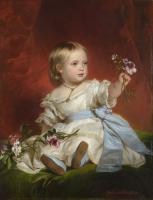


On 14th August 1905 Simeon Solomon (age 64) died in the dining-room of St Gile's Workshouse, Bloomsbury [Map] from complications brought on by alcoholism. He was buried at Willesden Cemetery.
"Inquest." The Times, 18 August 1905:
Mr. Walter Schroder held an inquest at St. Giles's Coroner's Court yesterday regarding the death of Simeon Solomon, aged 63, bachelor, an oil-painter, who was described as of the pre-Raphaelite school and at one time an associate of Rossetti and Burne-Jones. Solomon, according to his cousin, Mr. G. J. Nathan, of late years had led an intemperate and irregular life. The witness last saw him alive in May, when he gave him an outfit of clothes and money. He also gave him a commission for a drawing which was never executed. People highly placed in society would have liked him to paint pictures for them, but he could not be relied on to execute any commission. Other evidence showed that Solomon had been "off and on" an inmate of St. Giles's Workhouse during the past five years. On Wednesday, May 24 last, after the visit to his cousin, he was found lying on the footpath in Great Turnstile, High Holborn. He complained of illness and was conveyed to King's College Hospital, whence he was transferred to St. Giles's Workhouse. He was then suffering from bronchitis and alcoholism. He remained in the house, and on Monday morning last suddenly expired in the dining hall from, as Dr. A. C. Allen, the medical officer testified, heart failure consequent on aortic disease of that organ and other ailments. The jury returned a verdict accordingly. It was stated that a picture by the deceased recently sold at Christie's realised 250 guineas and that in former days several of his paintings were exhibited at the Royal Academy.


Chronicle of Walter of Guisborough
A canon regular of the Augustinian Guisborough Priory, Yorkshire, formerly known as The Chronicle of Walter of Hemingburgh, describes the period from 1066 to 1346. Before 1274 the Chronicle is based on other works. Thereafter, the Chronicle is original, and a remarkable source for the events of the time. This book provides a translation of the Chronicle from that date. The Latin source for our translation is the 1849 work edited by Hans Claude Hamilton. Hamilton, in his preface, says: 'In the present work we behold perhaps one of the finest samples of our early chronicles, both as regards the value of the events recorded, and the correctness with which they are detailed; Nor will the pleasing style of composition be lightly passed over by those capable of seeing reflected from it the tokens of a vigorous and cultivated mind, and a favourable specimen of the learning and taste of the age in which it was framed.'
Available at Amazon in eBook and Paperback format.
The London Gazette 28870. 14th August 1914. 4th Battalion, The Leicestershire Regiment; the announcements of the resignations of Lieutenant Arthur Silver and Second Lieutenant John H. M., The Marquis of Granby (age 27), which appeared in the London Gazettes of the 23rd June, 1914, and 14th July, 1914, respectively, are cancelled.

St Peter's Church, Edensor [Map]. Memorial to Andrew Pepys Cockerell, 2nd Lieutenant 2nd Battalion The Kings Royal Rifle Corps, who was killed in action aged nineteen on 14th August 1916 at Mametz Wood.
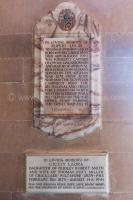
On 14th August 1919 Rupert Leigh (age 62) died. Memorial at the Church of the Virgin Mary, Stoneleigh [Map].
Rupert Leigh: On 10th December 1856 he was born to William Henry Leigh 2nd Baron Leigh and Caroline Amelia Grosvenor Baroness Leigh.
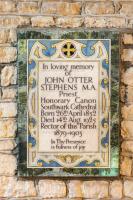
After 14th August 1925. Monument to Reverend John Otter Stephens (deceased) at St Oswald's Church, Blankney.
Reverend John Otter Stephens: On 26th April 1832 he was born. In 1879 he was appointed Rector of St Oswald's Church, Blankney which office he held until 1903. On 16th June 1887 he and Emma Charlotte Leslie-Melville were married. On 14th August 1925 he died.

On 14th August 1940 Mary Katharine Fitzalan 15th Lady Herries was born to Bernard Fitzalan 16th Duke of Norfolk (age 32) and Lavinia Mary Strutt Duchess Norfolk (age 24).
On 14th August 1409 John Beaumont 1st Viscount Beaumont was born to Henry Beaumont 5th Baron Beaumont (age 29) and Elizabeth Willoughby Baroness Beaumont (age 25) at Folkingham Castle [Map]. He married (1) 1436 his sixth cousin Elizabeth Phelip Viscountess Beaumont (2) October 1441 his fourth cousin Katherine Neville Duchess Norfolk, daughter of Ralph Neville 1st Earl of Westmoreland and Joan Beaufort Countess of Westmoreland, and had issue.
On 14th August 1473 Margaret York aka Pole Countess of Salisbury was born to George York 1st Duke of Clarence (age 23) and Isabel Neville Duchess Clarence (age 21) at Farleigh Hungerford Castle [Map]. She a great x 3 granddaughter of King Edward III of England. Coefficient of inbreeding 5.41%. She married 1491 Richard Pole and had issue.
On 14th August 1479 Catherine York Countess Devon was born to King Edward IV of England (age 37) and Elizabeth Woodville Queen Consort England (age 42). She married October 1495 her sixth cousin William Courtenay 1st Earl Devon, son of Edward Courtenay 1st Earl Devon and Elizabeth Courtenay, and had issue.
On 14th August 1499 John de Vere 14th Earl of Oxford was born to George de Vere (age 56) and Margaret Stafford (age 49). He married 1511 his half third cousin Anne Howard Countess of Oxford, daughter of Thomas Howard 2nd Duke of Norfolk and Agnes Tilney Duchess Norfolk.
On 14th August 1532 Magdalena Habsburg Spain was born to Ferdinand I Holy Roman Emperor (age 29) and Anne Jagiellon (age 29).
Henrici Quinti, Angliæ Regis, Gesta, is a first-hand account of the Agincourt Campaign, and subsequent events to his death in 1422. The author of the first part was a Chaplain in King Henry's retinue who was present from King Henry's departure at Southampton in 1415, at the siege of Harfleur, the battle of Agincourt, and the celebrations on King Henry's return to London. The second part, by another writer, relates the events that took place including the negotiations at Troye, Henry's marriage and his death in 1422.
Available at Amazon in eBook and Paperback format.
On 14th August 1597 Margaret Spencer was born to Robert Spencer 1st Baron Spencer (age 27) and Margaret Willoughby (age 30).
On 14th August 1621 Maria Margaret Habsburg Spain was born to Philip IV King Spain (age 16) and Elisabeth Bourbon Queen Consort Spain (age 18). Coefficient of inbreeding 4.39%. He died aged less than one years old.
On 14th August 1653 Christopher Monck 2nd Duke Albemarle was born to George Monck 1st Duke Albemarle (age 44) and Anne Clarges Duchess Albermarle (age 34) seven months after his parents were married. He married 30th December 1669 Elizabeth "Mad Duchess" Cavendish Duchess Albermarle Duchess of Montagu, daughter of Henry Cavendish 2nd Duke Newcastle upon Tyne and Frances Pierrepont Duchess Newcastle upon Tyne.
On 14th August 1677 William Twysden 5th Baronet was born to William Twysden 3rd Baronet (age 41).
On 14th August 1687 Maria Anna Savoy was born to Victor Amadeus King Sardinia (age 21) and Anne Marie Bourbon Queen Consort Sardinia (age 17) at Turin. She a great granddaughter of King Charles I of England, Scotland and Ireland. Coefficient of inbreeding 4.95%. She died aged two in 1690.
On 14th August 1688 Henry O'Brien 8th Earl Thomond was born to Henry Horatio O'Brien and Henrietta Somerset Countess Suffolk (age 19). He married 1707 his half fifth cousin Elizabeth Seymour Countess Thomond, daughter of Charles Seymour 6th Duke of Somerset and Elizabeth Percy Duchess Somerset.
On 14th August 1688 Mary Osborne Duchess Beaufort was born to Peregrine Osborne 2nd Duke Leeds (age 29) and Bridget Hyde Duchess Leeds (age 26). She married 14th September 1711 her fourth cousin once removed Henry Somerset 2nd Duke Beaufort.
On 14th August 1688 Frederick William "Soldier King" I King Prussia was born to Frederick I King Prussia (age 31) and Sophia Charlotte Hanover Queen Consort Prussia (age 19). He a great x 2 grandson of King James I of England and Ireland and VI of Scotland. Coefficient of inbreeding 1.96%. He married 28th November 1706 his first cousin Sophia Dorothea Hanover Queen Consort Prussia and had issue.
On 14th August 1694 James Hamilton 1st Earl Clanbrassil was born to James Hamilton and Anne Mordaunt (age 28). He married 15th October 1728 Harriet Bentinck Countess Clanbrassil, daughter of William Bentinck 1st Earl of Portland and Jane Martha Temple Countess Portland, and had issue.
On 14th August 1694 Henry Howard 4th Earl Carlisle was born to Charles Howard 3rd Earl Carlisle (age 25) and Anne Capell Countess Carlisle (age 20). He was educated at Eton College [Map] and Trinity College, Cambridge University [Map]. He married (1) 1717 his third cousin once removed Frances Spencer Countess Carlisle, daughter of Charles Spencer 3rd Earl of Sunderland and Arabella Cavendish, and had issue (2) 1743 his fourth cousin Isabella Byron Countess Carlisle, daughter of William Byron 4th Baron Byron and Frances Berkeley Baroness Byron, and had issue.


Anne Boleyn. Her Life as told by Lancelot de Carle's 1536 Letter.
In 1536, two weeks after the execution of Anne Boleyn, her brother George and four others, Lancelot du Carle, wrote an extraordinary letter that described Anne's life, and her trial and execution, to which he was a witness. This book presents a new translation of that letter, with additional material from other contemporary sources such as Letters, Hall's and Wriothesley's Chronicles, the pamphlets of Wynkyn the Worde, the Memorial of George Constantyne, the Portuguese Letter and the Baga de Secrets, all of which are provided in Appendices.
Available at Amazon in eBook and Paperback format.
On 14th August 1720 Frederick Hesse-Kassel was born to William Hesse-Kassel (age 38) at Kassel. He married (1) 8th May 1740 his fourth cousin Mary Hanover, daughter of King George II of Great Britain and Ireland and Caroline Hohenzollern Queen Consort England, and had issue (2) 10th January 1773 his third cousin Princess Philippine Hohenzollern, daughter of Friedrich Wilhelm Hohenzollern and Sophia Dorothea Hohenzollern.
On 14th August 1722 John Dyke Acland 7th Baronet was born to Hugh Acland 6th Baronet (age 25) and Cicely Wroth. He married 7th January 1745 Elizabeth Dyke Lady Acland and had issue.
On 14th August 1727 Louise Elisabeth of France was born to Louis XV King France (age 17) and Marie Leszczyńska Queen Consort France (age 24). She a great x 3 granddaughter of King Charles I of England, Scotland and Ireland. She married 25th October 1739 her first cousin once removed Infante Philip of Spain and had issue.
On 14th August 1742 Hugh Percy 2nd Duke Northumberland was born to Hugh Percy 1st Duke Northumberland (age 26) and Elizabeth Seymour Duchess Northumberland (age 25). He married (1) 2nd July 1764 his fourth cousin once removed Anne Stuart, daughter of John Stuart 3rd Earl Bute and Mary Wortley-Montagu Countess Bute (2) 23rd May 1779 Frances Julia Burrell Duchess Northumberland and had issue.
On 14th August 1743 Mary Aston Lady Blount was born to James Aston 5th Baronet (age 20) and Barbara Maria Talbot (age 23). She married 21st September 1766 her half third cousin Walter Blount 6th Baronet, son of Edward Blount 4th Baronet and Apollonia Throckmorton.
On 14th August 1747 August Saxe Coburg Altenburg was born to Duke Frederick III of Saxe Coburg Altenburg III (age 48) and Luise Dorothea Saxe Meiningen Duchess Saxe Gotha Altenburg (age 37) at Gotha.
On 14th August 1749 Thomas Egerton 1st Earl Wilton was born to Thomas Egerton 6th Baronet (age 28). He married 12th September 1769 Eleanor Assheton Viscountess Wilton, daughter of Ralph Assheton 3rd Baronet, and had issue.
On 14th August 1769 Richard Barry 7th Earl Barrymore was born to Richard Barry 6th Earl Barrymore (age 24) and Amelia Stanhope Countess Barrymore (age 20). He a great x 3 grandson of King Charles II of England Scotland and Ireland.

On 14th August 1769 George Chichester 2nd Marquess Donegal was born to Arthur Chichester 1st Marquess Donegal (age 30) and Anne Hamilton Countess Donegal (age 31) at St James'. He married before 1818 Anna May.
On 14th August 1779 Hans Francis Hastings 12th Earl Huntingdon was born to George Hastings (age 44) and Sarah Fowler. He married 12th May 1803 Frances Cobbe Countess Huntingdon and had issue.
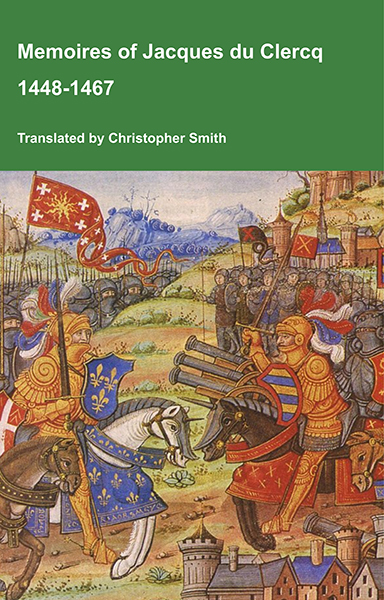
This is a translation of the 'Memoires of Jacques du Clercq', published in 1823 in two volumes, edited by Frederic, Baron de Reissenberg. In his introduction Reissenberg writes: 'Jacques du Clercq tells us that he was born in 1424, and that he was a licentiate in law and a counsellor to Philip the Good, Duke of Burgundy, in the castellany of Douai, Lille, and Orchies. It appears that he established his residence at Arras. In 1446, he married the daughter of Baldwin de la Lacherie, a gentleman who lived in Lille. We read in the fifth book of his Memoirs that his father, also named Jacques du Clercq, had married a lady of the Le Camelin family, from Compiègne. His ancestors, always attached to the counts of Flanders, had constantly served them, whether in their councils or in their armies.' The Memoires cover a period of nineteen years beginning in in 1448, ending in in 1467. It appears that the author had intended to extend the Memoirs beyond that date; no doubt illness or death prevented him from carrying out this plan. As Reissenberg writes the 'merit of this work lies in the simplicity of its narrative, in its tone of good faith, and in a certain air of frankness which naturally wins the reader’s confidence.' Du Clercq ranges from events of national and international importance, including events of the Wars of the Roses in England, to simple, everyday local events such as marriages, robberies, murders, trials and deaths, including that of his own father in Book 5; one of his last entries.
Available at Amazon in eBook and Paperback format.
On 14th August 1785 George Allanson-Winn was born to George Winn aka Allanson-Winn 1st Baron Headley (age 60) and Jane Blennerhassett.
On 14th August 1796 Francis Charles Charteris 9th Earl of Wemyss was born to Francis Charteris 8th Earl of Wemyss Douglas 4th Earl March (age 24). He married 22nd August 1817 Louisa Bingham Countess Wemyss, daughter of Richard Bingham 2nd Earl Lucan and Elizabeth Belasyse Duchess Norfolk, and had issue.
On 14th August 1797 Anne Legge was born to George Legge 3rd Earl Dartmouth (age 41) and Frances Finch Countess Dartmouth (age 36).

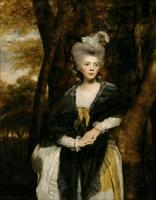
On 14th August 1801 Lewen Powell Glyn 3rd Baronet was born to George Glynn 2nd Baronet (age 62).
On 14th August 1806 Harriot Mary Anne Bloomfield was born to Benjamin Bloomfield 1st Baron Bloomfield (age 38). She married 5th June 1833 Colonel Thomas Henry Kingscote of Kingscote Park in Gloucestershire and had issue.
On 14th August 1810 George Harris 3rd Baron Harris was born to William Harris 2nd Baron Harris (age 28).
On 14th August 1819 Agénor 10th Duc de Gramont was born to Antoine Héraclius Agénor 9th Duc de Gramont (age 30).
On 14th August 1824 William Parker 2nd Baronet was born to Admiral William Parker 1st Baronet (age 42) and Frances Anne Biddulph (age 40). He married 6th June 1885 his first cousin Jane Constance Biddulph, daughter of Theophilus Biddulph 6th Baronet and Jane Rebecca Vyner Lady Biddulph.


On 14th August 1825 Henry Seymour Moore 3rd Marquess Drogheda was born to Henry Seymour Moore (deceased) and Mary Letitia Parnell. He married 25th August 1847 his third cousin Mary Caroline Stuart-Wortley-Mackenzie Marchioness Drogheda, daughter of John Stuart-Wortley-Mackenzie 2nd Baron Wharncliffe and Georgiana Elizabeth Ryder Baroness Wharncliffe.
On 14th August 1846 Giuseppe Calì was born in Valetta, Malta.
The History of William Marshal was commissioned by his son shortly after William’s death in 1219 to celebrate the Marshal’s remarkable life; it is an authentic, contemporary voice. The manuscript was discovered in 1861 by French historian Paul Meyer. Meyer published the manuscript in its original Anglo-French in 1891 in two books. This book is a line by line translation of the first of Meyer’s books; lines 1-10152. Book 1 of the History begins in 1139 and ends in 1194. It describes the events of the Anarchy, the role of William’s father John, John’s marriages, William’s childhood, his role as a hostage at the siege of Newbury, his injury and imprisonment in Poitou where he met Eleanor of Aquitaine and his life as a knight errant. It continues with the accusation against him of an improper relationship with Margaret, wife of Henry the Young King, his exile, and return, the death of Henry the Young King, the rebellion of Richard, the future King Richard I, war with France, the death of King Henry II, and the capture of King Richard, and the rebellion of John, the future King John. It ends with the release of King Richard and the death of John Marshal.
Available at Amazon in eBook and Paperback format.

On 14th August 1850 Andrew Agnew 9th Baronet was born to Andrew Agnew 8th Baronet (age 32) and Mary Arabella Louisa Noel. He married 15th October 1889 his sixth cousin Gertrude Vernon Lady Agnew.
On 14th August 1862 Prince Henry Hohenzollern was born to Frederick III King Prussia (age 30) and Victoria Empress Germany Queen Consort Prussia (age 21). He a grandson of Queen Victoria of the United Kingdom. He married 24th May 1888 his first cousin Irene Hesse Darmstadt, daughter of Prince Louis Hesse Darmstadt IV Grand Duke and Princess Alice Saxe Coburg Gotha, and had issue.
On 14th August 1887 Charles Pelham was born to Charles Alfred Worsley Anderson 4th Earl Yarborough (age 28) and Marcia Amelia Mary Lane-Fox Countess Yarborough (age 23). He married 31st January 1911 Alexandra Vivian, daughter of Hussey Vivian 3rd Baron Vivian.
On 14th August 1923 Simon Francis Bethell Codrington 3rd Baronet was born to Christopher William Gerald Henry Codrington 2nd Baronet (age 28).
On 14th August 1928 Richard La Touche Colthurst 9th Baronet was born to Richard St John Jefferyes Colthurst 8th Baronet (age 41).
On 14th August 1931 George Ponsonby was born to Vere Brabazon Ponsonby 9th Earl Bessborough (age 51).
On 14th August 1933 Thomas Francis Pakenham 8th Earl of Longford was born to Frank Pakenham 7th Earl of Longford (age 27).
On 14th August 1940 Mary Katharine Fitzalan 15th Lady Herries was born to Bernard Fitzalan 16th Duke of Norfolk (age 32) and Lavinia Mary Strutt Duchess Norfolk (age 24).
On 14th August 1959 Richard Charles Rowley 9th and 8th Baronet was born to Charles Robert Rowley 8th and 7th Baronet (age 33).

On 14th August 1684 Thomas Tufton 6th Earl of Thanet (age 39) and Catherine Cavendish Countess Isle Thanet (age 19) were married. She by marriage Countess of Thanet. The difference in their ages was 20 years. She the daughter of Henry Cavendish 2nd Duke Newcastle upon Tyne (age 54) and Frances Pierrepont Duchess Newcastle upon Tyne (age 53). He the son of John Tufton 2nd Earl of Thanet and Margaret Sackville Countess Isle Thanet. They were fifth cousin once removed.
The History of William Marshal was commissioned by his son shortly after William’s death in 1219 to celebrate the Marshal’s remarkable life; it is an authentic, contemporary voice. The manuscript was discovered in 1861 by French historian Paul Meyer. Meyer published the manuscript in its original Anglo-French in 1891 in two books. This book is a line by line translation of the first of Meyer’s books; lines 1-10152. Book 1 of the History begins in 1139 and ends in 1194. It describes the events of the Anarchy, the role of William’s father John, John’s marriages, William’s childhood, his role as a hostage at the siege of Newbury, his injury and imprisonment in Poitou where he met Eleanor of Aquitaine and his life as a knight errant. It continues with the accusation against him of an improper relationship with Margaret, wife of Henry the Young King, his exile, and return, the death of Henry the Young King, the rebellion of Richard, the future King Richard I, war with France, the death of King Henry II, and the capture of King Richard, and the rebellion of John, the future King John. It ends with the release of King Richard and the death of John Marshal.
Available at Amazon in eBook and Paperback format.
On 14th August 1693 Uvedale Corbet 3rd Baronet (age 25) and Mildred Cecil Baroness Hotham were married. She the daughter of James Cecil 3rd Earl Salisbury and Margaret Manners Countess of Salisbury. They were fourth cousin once removed.
On 14th August 1762 John Stewart 7th Earl Galloway (age 26) and Charlotte Mary Greville (age 17) were married. She the daughter of Francis Greville 1st Earl Brooke Warwick Castle 1st Earl Warwick (age 42) and Elizabeth Hamilton Countess Brooke Warwick Castle and Warwick (age 42). He the son of Alexander Stewart 6th Earl Galloway (age 68) and Catherine Cochrane Countess Galloway (age 53). They were half fifth cousin once removed.
On 14th August 1777 Henry Howard 12th Earl Suffolk 5th Earl Berkshire (age 38) and Charlotte Finch Countess Suffolk and Berkshire (age 23) were married. She by marriage Countess Suffolk, Countess Berkshire. She the daughter of Heneage Finch 3rd Earl Aylesford and Charlotte Seymour Countess Aylesford (age 46). They were first cousins.
On 14th August 1800 Brook William Bridges 4th Baronet (age 33) and Eleanor Foote (age 29) were married. She by marriage Lady Bridges of Goodneston in Kent.
On 14th August 1828 John Barker aka Barker-Mill 1st Baronet (age 24) and Jane Swinburne Lady Barker-Mill (age 30) were married at Keynsham, Somerset.
On 14th August 1855 John William Cradock-Hartopp 4th Baronet (age 26) and Charlotte Frances Howard Lady Cradock-Hartopp were married.
On 14th August 1860 Sackville George Lane-Fox 15th Baron Darcy of Knayth 12th Baron Conyers (age 32) and Mary Curteis were married.
On 14th August 1948 Angus Josslyn Gore-Booth 8th Baronet (age 28) and Rosemary Myra Vane were married.
On 14th August 1952 Robert Anthony Eden 1st Earl Avon (age 55) and Anne Clarissa Spencer-Churchill (age 32) were married. The difference in their ages was 23 years.
On 14th August 1040 King Duncan I of Scotland (age 39) was killed in action by the army of King Macbeth of Scotland (age 35). King Macbeth of Scotland succeeded King Scotland.
On 14th August 1196 Henry "Blind" Namur IV Count Luxemburg I Count Namur (age 84) died. His daughter Erminsende (age 9) succeeded Countess Luxemburg.
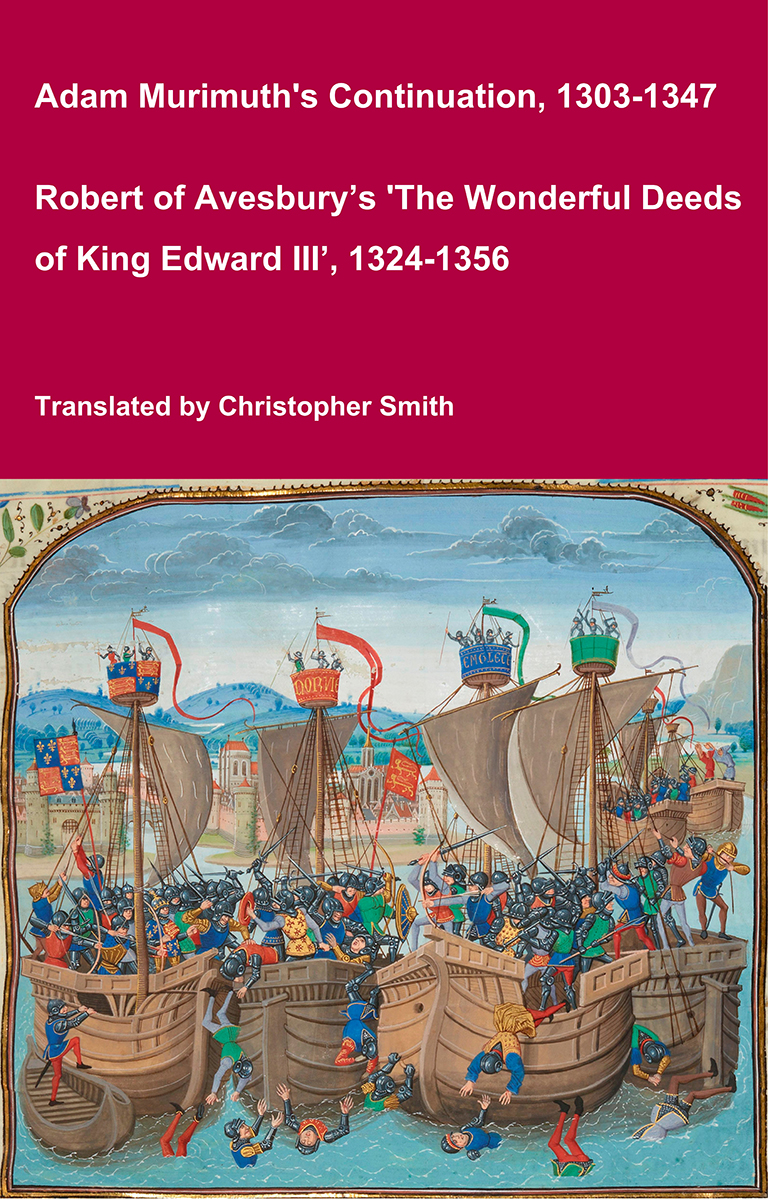
Adam Murimuth's Continuation and Robert of Avesbury’s 'The Wonderful Deeds of King Edward III'
This volume brings together two of the most important contemporary chronicles for the reign of Edward III and the opening phases of the Hundred Years’ War. Written in Latin by English clerical observers, these texts provide a vivid and authoritative window into the political, diplomatic, and military history of fourteenth-century England and its continental ambitions. Adam Murimuth Continuatio's Chronicarum continues an earlier chronicle into the mid-fourteenth century, offering concise but valuable notices on royal policy, foreign relations, and ecclesiastical affairs. Its annalistic structure makes it especially useful for establishing chronology and tracing the development of events year by year. Complementing it, Robert of Avesbury’s De gestis mirabilibus regis Edwardi tertii is a rich documentary chronicle preserving letters, treaties, and official records alongside narrative passages. It is an indispensable source for understanding Edward III’s claim to the French crown, the conduct of war, and the mechanisms of medieval diplomacy. Together, these works offer scholars, students, and enthusiasts a reliable and unembellished account of a transformative period in English and European history. Essential for anyone interested in medieval chronicles, the Hundred Years’ War, or the reign of Edward III.
Available at Amazon in eBook and Paperback format.
On 14th August 1241 Matilda Lusignan Countess Hereford and Essex (age 31) died.
On 14th August 1297 Frederick Hohenzollern Burgrave Nuremburg (age 77) died. His son Frederick (age 10) succeeded IV Burgrave Nuremberg.
On 14th August 1349 Walram Jülich Archbishop Cologne (age 46) died.
On 14th August 1369 William Boteler 3rd Baron Wem and Oversley (age 59) died. Baron Wem and Oversley abeyant between his two daughters Alice Boteler (age 29) and Elizabeth Boteler Baroness Ferrers Wem (age 24).
On 14th August 1390 John Fitzalan Baron Maltravers 2nd Baron Arundel (age 25) died. He was buried at Missenden Abbey [Map]. His son John (age 5) succeeded 3rd Baron Arundel.
On 14th August 1433 King John I of Portugal (age 81) died at Lisbon [Map]. His son Edward (age 41) succeeded I King Portugal.
On 14th August 1516 Elizabeth Greystoke 6th Baroness Greystoke Baroness Dacre of Gilsland (age 45) died. Her son William (age 23) succeeded 7th Baron Greystoke.
On 14th August 1587 William Gonzaga I Duke Mantua (age 49) died. His son Vincenzo (age 24) succeeded III Duke Mantua.
On 14th August 1620 Katherine Dudley Countess Huntingdon (age 82) died.
On 14th August 1667 Robert Carr 2nd Baronet (age 52) died. His son Robert (age 30) succeeded 3rd Baronet Carr of Sleaford in Lincolnshire. Elizabeth Bennet Lady Carr by marriage Lady Carr of Sleaford in Lincolnshire.
On 14th August 1671 John Lewis 1st Baronet (age 56) died without male issue. Baronet Lewis of Ledstone extinct. His daughters Elizabeth Lewis Countess Huntingdon (age 17) and Mary Lewis Countess Scarsdale (age 13) inherited his estates. He and his wife Sarah Foote Lady Lewis (age 43) were buried at All Saints Church, Ledsham [Map]. Hand On Skull. Sculpted by Thomas Cartwright (age 36).
Elizabeth Lewis Countess Huntingdon: In 1654 she was born to John Lewis 1st Baronet and Sarah Foote Lady Lewis. John Evelyn's Diary. 24th June 1670. Came the Earl of Huntington and Countess, with the Lord Sherard, to visit us. On 19th February 1672 Theophilus Hastings 7th Earl Huntingdon and she were married. She by marriage Countess Huntingdon. He the son of Ferdinando Hastings 6th Earl Huntingdon and Lucy Davies Countess Huntingdon. In 1688 she died.
Mary Lewis Countess Scarsdale: In 1658 she was born to John Lewis 1st Baronet and Sarah Foote Lady Lewis. On 11th February 1672 Robert Leke 3rd Earl Scarsdale and she were married. He the son of Nicholas Leke 2nd Earl Scarsdale and Frances Rich Countess Scarsdale. On 27th January 1681 Nicholas Leke 2nd Earl Scarsdale died. His son Robert succeeded 3rd Earl Scarsdale, 3rd Baron Deincourt of Sutton, 3rd Baronet Leke of Sutton in Derbyshire. She by marriage Countess Scarsdale. In 1684 she died.


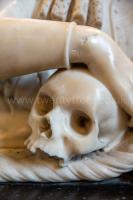


 Hastings Arms impaled
  Lewis Arms.

Unknown Arms impaled Lewis Arms.
Jean de Waurin's Chronicle of England Volume 6 Books 3-6: The Wars of the Roses
Jean de Waurin was a French Chronicler, from the Artois region, who was born around 1400, and died around 1474. Waurin’s Chronicle of England, Volume 6, covering the period 1450 to 1471, from which we have selected and translated Chapters relating to the Wars of the Roses, provides a vivid, original, contemporary description of key events some of which he witnessed first-hand, some of which he was told by the key people involved with whom Waurin had a personal relationship.
Available at Amazon in eBook and Paperback format.
On 14th August 1698 Margaret Burke Lady Muskerry died.
On 14th August 1724 Anne Cochrane Duchess Hamilton Duchess Brandon (age 18) died in childbirth.
On 14th August 1728 Ernest Augustus Hanover 1st Duke of York and Albany (age 53) died at Osnabrück, Lower Saxony. Duke York and Albany extinct.
On 14th August 1771 Andrew Agnew 5th Baronet (age 83) died. His son Stair (age 37) succeeded 5th Baronet Agnew of Lochnaw in Wigtownshire.
On 14th August 1775 Lynch Salusbury Cotton 4th Baronet (age 70) died. His son Robert (age 36) succeeded 5th Baronet Cotton of Combermere in Cheshire.
On 14th August 1782 Rebecca May Lady Hoskyns died.
On 14th August 1784 Nathaniel Hone the Elder (age 66) died.
On 14th August 1797 John Turner aka Dryden 1st Baronet (age 44) died. His son John (age 14) succeeded 2nd Baronet Dryden of Canons Ashby in Northamptonshire.
On 14th August 1809 William Jerningham of Cossey Park 6th Baronet (age 73) died. George William Stafford-Jerningham 8th Baron Stafford (age 38) de jure 8th Baron Stafford. His son George succeeded 7th Baronet Jerningham of Cossey.
On 14th August 1814 Barbara St Aubyn Lady Molesworth (age 84) died.
Chronicle of Geoffrey le Baker of Swinbroke
Baker was a secular clerk from Swinbroke, now Swinbrook, an Oxfordshire village two miles east of Burford. His Chronicle describes the events of the period 1303-1356: Gaveston, Bannockburn, Boroughbridge, the murder of King Edward II, the Scottish Wars, Sluys, Crécy, the Black Death, Winchelsea and Poitiers. To quote Herbert Bruce 'it possesses a vigorous and characteristic style, and its value for particular events between 1303 and 1356 has been recognised by its editor and by subsequent writers'. The book provides remarkable detail about the events it describes. Baker's text has been augmented with hundreds of notes, including extracts from other contemporary chronicles, such as the Annales Londonienses, Annales Paulini, Murimuth, Lanercost, Avesbury, Guisborough and Froissart to enrich the reader's understanding. The translation takes as its source the 'Chronicon Galfridi le Baker de Swynebroke' published in 1889, edited by Edward Maunde Thompson.
Available at Amazon in eBook and Paperback format.
On 14th August 1818 Jane Biddulph Lady Biddulph (age 91) died.
On 14th August 1831 Benjamin Hobhouse 1st Baronet (age 74) died at Berkeley Square, Mayfair. His son John (age 45) succeeded 2nd Baronet Hobhouse of Chantry House Wiltshire and Westbury College in Gloucestershire. Julia Tomasina Hay Lady Hobhouse by marriage Lady Hobhouse of Chantry House Wiltshire and Westbury College in Gloucestershire.

On 14th August 1837 Robert Brudenell 6th Earl Cardigan (age 68) died at Marylebone. His son James (age 39) succeeded 7th Earl Cardigan, 7th Baron Brudenell of Stonton in Leicestershire, 3rd Baron Brudenell Deene in Northamptonshire. Elizabeth Tollemache Countess Cardigan (age 39) by marriage Countess Cardigan.
On 28th June 1853 Francis Charteris 8th Earl of Wemyss Douglas 4th Earl March (age 81) died. His son Francis (age 56) succeeded 9th Earl Wemyss, 2nd Baron Wemyss of Wemyss in Fife. Louisa Bingham Countess Wemyss (age 55) by marriage Countess Wemyss.
His obituary in the Gentleman's Magazine by Sylvanus Urban Volume XL reads as follows:
THE EARL OF WEMYSS AND MARCH June 28 At Gosford House East Lothian in his 81st year the Right Hon Francis Wemyss Charteris Wemyss sixth Earl of Wemyss and Lord Elcho and Methel 1633 Baron Wemyss of Elcho 1628 Earl of March Viscount of Peebles and Lord Niedpath, Lyne and Munard 1697 all dignities in the peerage of Scotland Baron Wemyss of Wemyss co Fife 1821 and Lord Lieutenant of Peebleshire.
He was born on the 15th April 1772 the only son of Francis Lord Elcho son and heir apparent of the fifth Earl by Miss Susan Tracy Keck one of the Maids of Honour to Queen Charlotte the second daughter of Anthony Tracy Keck esq of Great Tew co Oxford by Lady Susan Hamilton fourth daughter of James fourth Duke of Hamilton and first Duke of Brandon KG and KT.
In early life his lordship had a commission in the army and from 1793 to 1797 was aide de camp to his grand uncle Lord Adam Gordon Commander in chief of the forces in Scotland He quitted the army in 1797.
His father Lord Elcho died on the 20th June 1808 and his grandfather on the 24th August following whereupon he succeeded to the Earldom of Wemyss and its attendant titles. On the death of William fourth Duke of Queensberry (age 83) in Dec 1810 he inherited the barony of Niedpath and the extensive property which had belonged to his Grace in the county of Peebles in pursuance of the terms of the marriage contract of the first Earl of March his Grace's grandfather. He also succeeded to the dignities of Earl of March, Viscount of Peebles and Lord Douglas of Niedpath, Lyne and Munard the patent of creation being to Lord William Douglas et heredes masculos de ejus corpore quibus deficientibus alios ejus hæredes masin culos et talliæ contentos in ejus infeofa mentis terrarum et dominii de Niedpath.
His Lordship was created a peer of the united kingdom by the title of Baron Wemyss at the Coronation of King George IV by patent dated 17th July 1821. He supported the Conservative party in parliament but took but little interest in politics.
He married May 31 1794 Margaret (age 16) fourth daughter of Walter Campbell esq of Shawfield (age 54) by his first wife Eleanor daughter of Robert Kerr of Newfield eldest son of Lord Charles Kerr second son of Robert first Marquess of Lothian. By that lady who died in 1850 he had issue two sons and nine daughters 1 Francis his successor 2 Lady Eleanor (age 1) married in 1820 to Walter Frederick Campbell of Woodhall co Lanark esq eldest son of Colonel John Campbell (age 26) by Lady Charlotte (age 21) daughter of John fifth Duke of Argyle (age 73) and died in 1832 3 the Hon Walter died 1818 4 Susan who died in infancy 5 Lady Margaret married in 1824 to Lieut Colonel John Wildman and died in 1825 6 Lady Katharine married in 1824 to her cousin George Harry Lord Grey of Groby who died in 1835 and she died in 1844 leaving issue the present Earl of Stamford and Warrington and Lady Margaret Milbanke 7 Lady Charlotte (age 1) married in 1825 to Andrew Fletcher esq of Salton Castle East Lothian 8 Lady Louisa Antoinetta (age 1) married in 1832 to William Forbes esq of Callendar co Stirling late MP for Stirlingshire 9 Lady Harriet (age 1) married in 1829 to Sir George Grant Suttie Bart 10 Lady Jane and 11 Lady Caroline. The present Earls in 1796 married in 1817 Lady Louisa Bingham fourth daughter of Richard 2d Earl Lucan (age 31) by whom he has issue Francis Lord Elcho four other sons and daughters.
On 14th August 1876 Charles Howard 17th Earl Suffolk 10th Earl Berkshire (age 70) died. His son Henry (age 42) succeeded 18th Earl Suffolk, 11th Earl Berkshire, 11th Viscount Andover in Hampshire, 11th Baron Howard of Charlton in Wiltshire. Mary Eleanor Coventry Countess Suffolk and Berkshire (age 28) by marriage Countess Suffolk, Countess Berkshire.
On 14th August 1877 Blanche Mary Boyd died at Boulogne sur Mer [Map]. Her son Henry Cyril "Toppy" Paget 5th Marquess Anglesey (age 2) was fostered by her sister Edith Marion Boyd until he was eight years old. She, Edith, subsequently married Gustavce Coquelin, brother of Toppy's putative father Benoît Constant Coquelin (age 36).


On 14th August 1889 Henry Chudleigh Oxenden 8th Baronet (age 94) died. His nephew Henry (age 63) succeeded 9th Baronet Oxenden of Dene in Kent.
On 14th August 1893 Bishop William Clifford (age 69) died.
On 14th August 1905 Simeon Solomon (age 64) died in the dining-room of St Gile's Workshouse, Bloomsbury [Map] from complications brought on by alcoholism. He was buried at Willesden Cemetery.
"Inquest." The Times, 18 August 1905:
Mr. Walter Schroder held an inquest at St. Giles's Coroner's Court yesterday regarding the death of Simeon Solomon, aged 63, bachelor, an oil-painter, who was described as of the pre-Raphaelite school and at one time an associate of Rossetti and Burne-Jones. Solomon, according to his cousin, Mr. G. J. Nathan, of late years had led an intemperate and irregular life. The witness last saw him alive in May, when he gave him an outfit of clothes and money. He also gave him a commission for a drawing which was never executed. People highly placed in society would have liked him to paint pictures for them, but he could not be relied on to execute any commission. Other evidence showed that Solomon had been "off and on" an inmate of St. Giles's Workhouse during the past five years. On Wednesday, May 24 last, after the visit to his cousin, he was found lying on the footpath in Great Turnstile, High Holborn. He complained of illness and was conveyed to King's College Hospital, whence he was transferred to St. Giles's Workhouse. He was then suffering from bronchitis and alcoholism. He remained in the house, and on Monday morning last suddenly expired in the dining hall from, as Dr. A. C. Allen, the medical officer testified, heart failure consequent on aortic disease of that organ and other ailments. The jury returned a verdict accordingly. It was stated that a picture by the deceased recently sold at Christie's realised 250 guineas and that in former days several of his paintings were exhibited at the Royal Academy.
On 14th August 1910 William Archer Amherst 3rd Earl Amherst (age 74) died without issue as a result of an operation he received three months prior for a throat infection at Montreal Park, Sevenoaks. His brother Hugh (age 54) succeeded 4th Earl Amherst, 5th Baron Amherst of Montreal in Kent.
Annals of the six Kings of England by Nicholas Trivet
Translation of the Annals of the Six Kings of England by that traces the rise and rule of the Angevin aka Plantagenet dynasty from the mid-12th to early 14th century. Written by the Dominican scholar Nicholas Trivet, the work offers a vivid account of English history from the reign of King Stephen through to the death of King Edward I, blending political narrative with moral reflection. Covering the reigns of six monarchs—from Stephen to Edward I—the chronicle explores royal authority, rebellion, war, and the shifting balance between crown, church, and nobility. Trivet provides detailed insight into defining moments such as baronial conflicts, Anglo-French rivalry, and the consolidation of royal power under Edward I, whose reign he describes with particular immediacy. The Annals combines careful year-by-year reporting with thoughtful interpretation, presenting history not merely as a sequence of events but as a moral and political lesson. Ideal for readers interested in medieval history, kingship, and the origins of the English state, this chronicle remains a valuable and accessible window into the turbulent world of the Plantagenet kings.
Available at Amazon in eBook and Paperback format.
On 14th August 1914 Eleanor Warren Lady Leighton (age 73) died.
On 14th August 1921 Edward Feetham Coates 1st Baronet (age 68) died. His son Edward (age 42) succeeded 2nd Baronet Milnes Coates of Helperby Hall in the North Riding of Yorkshire. Celia Hermione Crewe Milnes Lady Milnes-Coates (age 37) by marriage Lady Milnes Coates of Helperby Hall in the North Riding of Yorkshire.
On 14th August 1922 William Thomas Orde-Powlett 4th Baron Bolton (age 77) died. His son William (age 52) succeeded 5th Baron Bolton of Bolton in Yorkshire.
On 14th August 1924 Mary Anna Morgan Viscountess Hereford died.
On 14th August 1927 Henry Finch-Hatton 8th Earl Nottingham 13th Earl Winchilsea (age 74) died. His son Guy (age 42) succeeded 9th Earl Nottingham, 14th Earl Winchilsea, 14th Viscount Maidstone, 15th Baronet Finch of Eastwell in Kent.
On 14th August 1935 William Bridgeman 1st Viscount Bridgeman (age 70) died. His son Robert (age 39) succeeded 2nd Viscount Bridgeman of Leigh in Shropshire. Mary Kathleen Lane-Fox Viscountess Bridgeman (age 29) by marriage Viscountess Bridgeman of Leigh in Shropshire.
On 14th August 1937 James Ian Macpherson 1st Baron Strathcarron (age 57) died. His son David (age 13) succeeded 2nd Baron Strathcarron of Banchor in Invernessshire.
On 14th August 1938 Montagu Frederick Montagu-Pollock 3rd Baronet (age 74) died. His son George (age 37) succeeded 4th Baronet Pollock of The Khyber Pass.
On 14th August 1956 John Crichton-Stuart 5th Marquess of Bute (age 49) died. His son John (age 23) succeeded 6th Marquis of the Isle of Bute, 9th Earl Bute, 6th Earl of Windsor, 6th Viscount Mountjoy of the Isle of Wight.
On 14th August 1971 John Randolph Leslie 3rd Baronet (age 85) died. His son John (age 54) succeeded 4th Baronet Leslie of Glaslough in County Monaghan.
