

Abbot John Whethamstede’s Chronicle of the Abbey of St Albans
Abbot John Whethamstede's Register aka Chronicle of his second term at the Abbey of St Albans, 1451-1461, is a remarkable text that describes his first-hand experience of the beginning of the Wars of the Roses including the First and Second Battles of St Albans, 1455 and 1461, respectively, their cause, and their consequences, not least on the Abbey itself. His text also includes Loveday, Blore Heath, Northampton, the Act of Accord, Wakefield, and Towton, and ends with the Coronation of King Edward IV. In addition to the events of the Wars of the Roses, Abbot John, or his scribes who wrote the Chronicle, include details in the life of the Abbey such as charters, letters, land exchanges, visits by legates, and disputes, which provide a rich insight into the day-to-day life of the Abbey, and the challenges faced by its Abbot.
Available at Amazon in eBook and Paperback format.
14 Jun is in June.
1467 Tournament Bastard of Burgundy
1535 Execution of Bishop Fisher and Thomas More
1555 Banning of Protestant Books
1660 June Creation of Baronets
1661 Creation of Baronets and Peerages by Charles II Post Coronation
1662 Trial and Execution of Henry Vane "The Younger"
Anglo-Saxon Chronicle. 776. This year died Bishop Petwin, on the thirteenth day [18th September 776] before the calends of October, having been bishop fourteen winters. The same year Ethelbert was consecrated Bishop of Whitern, at York, on the seventeenth day before the calends of July.
On 14th June 776 Archbishop Æthelbert of York was consecrated Bishop of Whithorn aka Galloway.
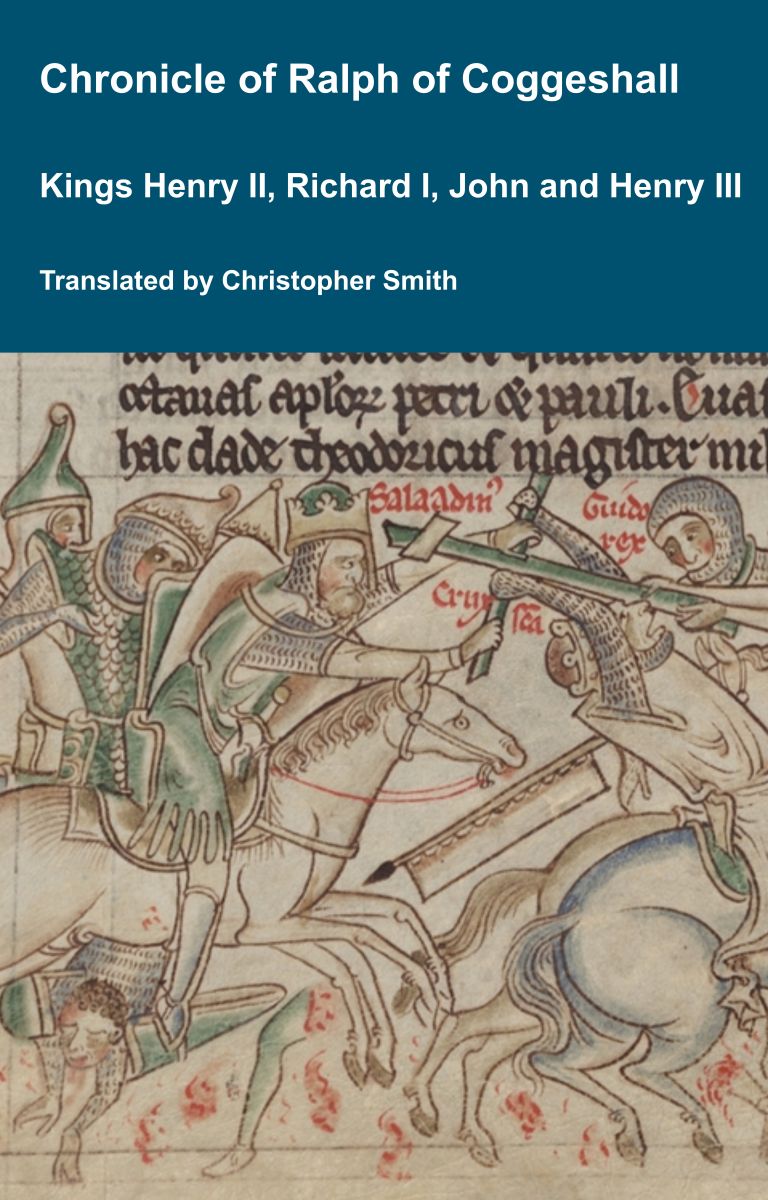 Chronicum Anglicanum by Ralph Coggeshall. 1170. Henry, son of King Henry, still a youth, while his father was alive, was imprudently crowned1 at Westminster by Roger, archbishop of York.
MCLXX. Henricus, filius Henrici regis, adhuc juvenis, vivente patre, inconsulte ab archiepiscopo Eboracensi Rogero apud Westmonasterium coronatus est.
Note 1. Henry the Young King was crowned on 14th June 1170. He died in 1183 having spent much of his reign in rebellion against his father.
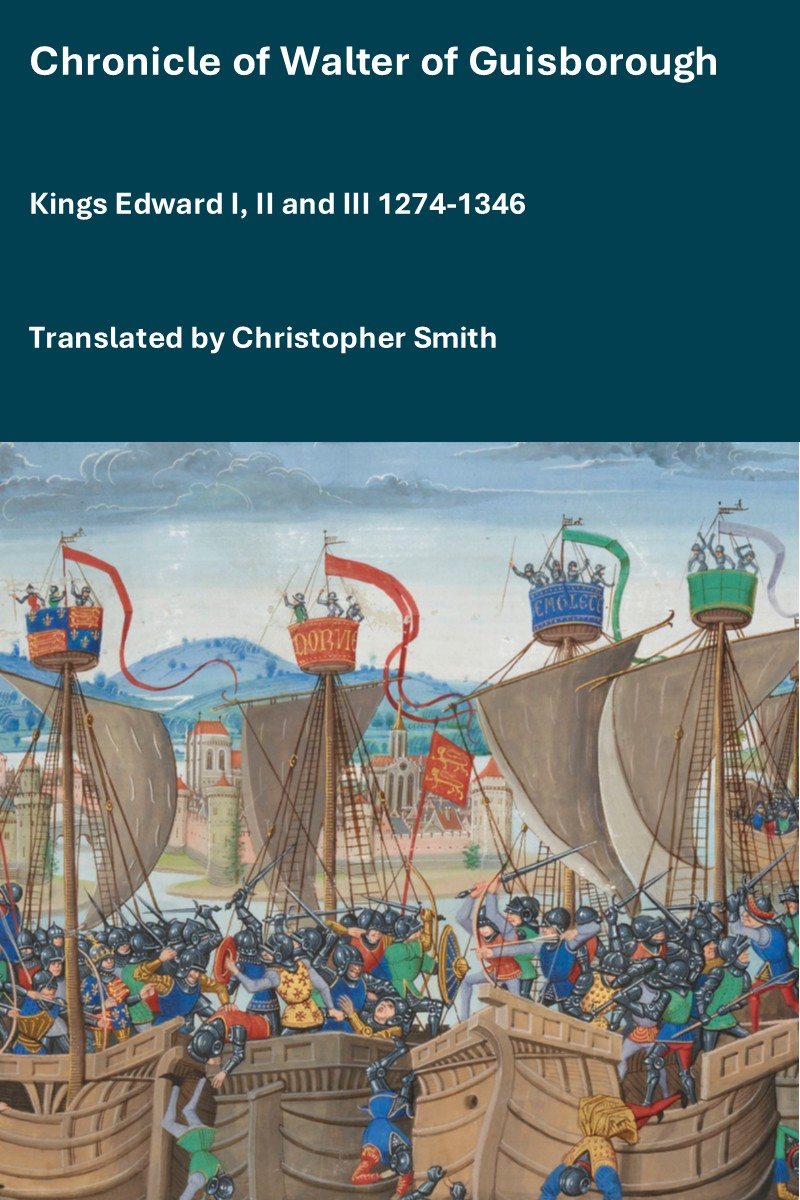 Chronicle of Walter of Guisborough. The King to all to whom the present letters shall come, greeting. We do not doubt that it has come to public knowledge how, when Charles, King of France of famous memory, brother of the most serene lady Isabella, Queen of England, our mother, departed the way of all flesh, the said kingdom unchangeably devolved upon us, as the nearest male heir of the said king then living among men. Nevertheless, Lord Philip of Valois, son of the uncle of the said king, and thus standing to him in a more remote degree of kinship, usurped that kingdom for himself by force, against God and justice, while we were still underage, and so detains it occupied. Furthermore, he invades, devastates, and occupies our lands in our duchy of Aquitaine, and joins himself to the Scots, our rebels, and otherwise strives and exerts himself with all his might, both by land and by sea, for our destruction and that of our people. And although, in order to avoid the inestimable damages which were to be feared from the outbreak of war between us and him, we offered to the aforesaid Philip many amicable ways of peace, not without great detriment to our own rights, so that, against the blasphemers of the Christian name in the holy crusade overseas, we might, as we desire, devote ourselves to the war of Christ (which, alas! is neglected, to the no small disgrace of Christian knighthood), nevertheless he, by a foxlike cunning, long kept us in suspense with uncertainty, and was willing to bring nothing to effect for us, but always, while feigned negotiations were pending, heaped evil upon evil. Wherefore, unwilling to neglect the gift of God, who, in the devolution of the said kingdom, has manifested His wondrous grace with us, but rather desiring, as is fitting, to labour under hope of heavenly aid and in confidence of our justice, for the recovery and defence of our hereditary rights, since through the proffered peaceful means we could make no progress, we have, compelled by necessity, taken up armed force. We have come into Brittany to redress the injuries inflicted upon us and to ward off those threatened by him, and to obtain our hereditary rights, wishing rather to meet openly in the field the dangers he prepares against us, together with those who adhere to us, than to await the perils menaced against us within our own borders. And while we were engaged there in the expedition of our war, there came to us the reverend fathers, Peter, Cardinal of Palestrina, and Annibaldo, Cardinal of Tusculum, nuncios of the most holy father in Christ, Lord Clement, Pope the Sixth, and of the Apostolic See, requesting on behalf of the said lord supreme pontiff that truces be made with the aforesaid Philip for a time, within which negotiations could be held before the said lord supreme pontiff concerning the conclusion of a final peace. They added also that the said lord supreme pontiff believed he could find a way by which peace might conveniently be restored. Upon hope of good peace to be made through his holy mediation, and especially out of reverence for the said lord supreme pontiff and the Apostolic See, we agreed to the said truces, and for this reason we sent envoys with sufficient authority to his presence. And thus truces were entered into between us and the said Philip, so that they should be observed everywhere within the power of both parties, and especially in the duchy of Brittany, between us and him and those adhering to us or to him, even if they claim to have right in the said duchy; and that all helpers and allies of the parties should remain in such possession of lands and goods as they had at the time the truces were made, and under other forms and conditions more fully expressed therein. And so, with the hope of peace smiling upon us, and trusting in the security of the said truces, we returned to England, having left a few of our ministers in Brittany for the governance of those parts and of our allies there. We had arranged to send our envoys to the presence of the said lord supreme pontiff for the negotiation of peace, as had been agreed. But then there came to us fresh and certain reports, which most grievously pierced our mind: namely, of the death of certain nobles adhering to us, who had been captured in Brittany, and by the special command of the said Philip were, at Paris, treacherously handed over to a shameful death, tyrannically, and against the form of the said truces; likewise of the slaughter and great devastation of our faithful people and our goods in Brittany, Gascony, and elsewhere; and of underhand and secret negotiations held with our allies and subjects, whom he strove thus to draw away from us and attract to himself; and of other injuries and outrages, too many to be easily numbered, perpetrated and attempted by the party of the aforesaid Philip, both by land and by sea, against the said truces, by reason of which the said truces are known, through the deed of the said Philip's party, to have been notoriously broken. And although, the truces having thus been dissolved through the fault of the said Philip, we could lawfully have at once resumed war against him, as indeed even now by right we may, yet, wishing to avoid the perils of wars, and desiring first to test whether we might obtain an amicable redress of such breaches, we sent at various times different envoys of ours to the presence of the said lord supreme pontiff, both to negotiate concerning the aforesaid peace and to seek the redress of the said breaches, repeatedly extending the appointed terms for so doing, while reserving to ourselves the liberty of resuming war, which, as has been said, had accrued to us through the fault of Philip. Now the appointed terms for negotiation have elapsed, and still no reasonable way of peace has been opened either to us or to our said envoys, nor has the same Philip cared in any respect to redress the aforesaid breaches, although he was requested and admonished to do so by letters sent to him from the said supreme pontiff, as the same lord supreme pontiff has written to us in his letters. Instead, conspiracies and alliances are ever multiplied against us by the aforesaid Philip, tyrannically and treacherously contrived for our subversion, contrary to the form of the said truces, to say nothing of the excesses committed by the nuncio of the said supreme pontiff, who was formerly sent into Brittany for the conservation of the aforesaid truces. For he, where he ought to have allayed discord, stirred it up the more vehemently, showing himself not as the preserver of the truces, but rather as a party against us and our men. Upon which matter the same lord supreme pontiff, saving his peace, did not provide remedy, although he was duly requested, as was fitting. Therefore, before God and men, we ought to be held excused if we repel by force the violence and injuries inflicted upon us, when no other remedy is to be found, especially since we have a cause most just, and most well known to the whole world. And therefore, reckoning, as indeed they are, that the aforesaid truces, for the reasons aforesaid (which we know and are willing, in due place and time, to prove to be true), and that the said Philip and those adhering to him, especially those in the said duchy of Brittany who claim to have right there, stand dissolved, and that we are free and released from their observance, we do declare the said Philip, as violator of the said truces, as our chief enemy and persecutor, and as the unjust occupier of our kingdom of France, and as the rash invader of our other rights. And, as necessity compels, we defy him. Protesting, however, that we do not wish, far be it!, to attempt anything in offense of the said lord supreme pontiff or of the Apostolic See, whom we desire, as we ought, to revere in all things, nor to inflict injury upon anyone; but solely, with due moderation, to pursue our rights, and to defend ourselves and what is ours. Yet it is always our intention to admit a reasonable peace in a friendly spirit, whenever we may have it by proper means. And this declaration, which we make only through lack of remedy and unwillingly, we have determined to signify to the said lord supreme pontiff and to the aforesaid cardinals, through whose mediation we agreed to the said truces, so that they, as mediating persons, may further intimate it to the other party. And, lest flying rumour, carried by false and slanderous reports, cause you to think otherwise of us in this matter, or disturb the hearts of friends, we have judged it proper to explain to you the pure and just truth of the case, commending to you all our innocence and the truth of our justice. Given at Westminster, on the 14th day of June [1345], in the nineteenth year of our reign of England, and the sixth of our reign of France.
Rex omnibus ad quos præsentes literæ pervenerint, salutem. In publicam non ambigimus notitiam devenisse qualiter celebris memoriæ Carolo, rege Franciæ, fratre serenissimæ dominæ Isabellæ, reginæ Angliæ matris nostræ, viam universæ carnis ingresso, dicto regno ad nos, ut ad proximum hæredem masculum dicti regis, tunc in humanis agentis, incommutabiliter devoluto, dominus Philippus de Valesio, filius avunculi dicti regis, et sic ipsum in gradu remotiori consanguinitatis attingens, dictum regnum, dum eramus in annis minoribus constituti, sibi per potentiam, contra Deum et justitiam, usurpavit, et sic illud detinet occupatum, invadens ulterius, vastans, et occupans terras nostras in ducatu nostro Aquitanniæ, et contra nos Scotis rebellibus nostris se adjungens, et alias ad nostri nostrorumque subversionem, tam in terra quam in mari, laborans pro viribus et innitens. Et licet nos pro vitandis damnis inæstimabilibus, quæ timentur ex commotione guerræ inter nos et ipsum posse verisimiliter provenire, obtulerimus præfato Philippo plures amabiles vias pacis, non sine magno nostrorum jurium detrimento, ut sic contra blasphemos Christiani nominis, in sancto passagio transmarino, possemus, sicut cupimus, intendere guerræ Christi, quæ negligitur, proh dolor! in ignominiam non modicam militiæ Christianæ. Ipse tamen, vulpina calliditate diu sub incerto nos protrahens, nihil nobis facere voluit in effectum, sed semper, pendentibus simulatis tractatibus, cumulavit peramplius mala malis. Propter quod donum Dei, qui nobiscum in devolutione dicti regni suam mirificavit gratiam, nolentes negligere, sed voinfringement lentes, ut convenit, circa recuperanda et defendenda jura nostra hæreditaria sub spe cœlestis auxilii et justitiæ nostræ fiducia laborare, ex quo per oblatas vias pacificas proficere nequivimus, impellente necessitate, vim armatam induimus; venientes Britanniam pro reformandis illatis et propulsandis inferendis nobis per eum injuriis, et juribus nostris hæreditariis obtinendis, volentes potius ad succursum nobis adhærentium sibi patenter occurrere quam comminata nobis pericula in laribus expectare. Et, cum ibidem in expeditione guerræ nostræ ageremus, supervenerunt reverendi patres P. Penestrinus et A. Tusculanus episcopi cardinales, sanctissimi in Christo patris domini Clementis papæ sexti et sedis apostolicæ nuncii, de treugis cum præfato Philippo ad tempus infra quod coram dicto domino summo pontifice tractari posset de pace finali ineundis, ex parte ejusdem domini summi pontificis nos rogantes, adjicientesque quod præfatus dominus summus pontifex crederet invenire viam per quam pax posset commode reformari. sub spe pacis bonæ per sanctam mediationem suam faciendæ, specialiter ob ipsius domini summi pontificis dictæque sedis reverentiam, consensimus dictis treugis, et propter hoc nuncios, cum potestate sufficienti, ad præsentiam suam destinavimus. Fueruntque treugæ sic initæ inter nos et dictum Philippum, ita quod servarentur ubique infra potestatem partium, et specialiter in ducatu Britanniæ, inter nos et ipsum Philippum et adhærentes nobis vel sibi, etiamsi jus in dicto ducatu se habere prætendant, et quod omnes coadjutores et alligati partium remanerent in tali possessione rerum et bonorum qua fuerant tempore treuinitarum, et sub aliis modis et conditionibus expressis plenius in eisdem. Et sic cum spe pacis arridente, sub dictarum treugarum fiducia redeuntes in Angliam, dimissis paucis ministris nostris in Britannia pro regimine dictarum partium et coadjutorum nostrorum ibidem, ordinassemus nuncios nostros ad dicti domini summi pontificis præsentiam pro tractatu pacis, prout condictum fuerat, transmittendos, supervenerunt nobis nova certa, non leviter pungentia mentem nostram, de morte videlicet quorundam nobilium nobis adhærentium, captorum in Britannia, et de speciali præcepto dicti Philippi Parisius ignominiosæ morti, contra contra formam dictarum treugarum, tyrannice traditorum; necnon de strage et depopulatione magna fidelium et bonorum nostrorum in Britannia, Vasconia, et alibi, ac tractatibus subdolis et occultis cum alligatis et subditis nostris habitis, quos sic a nobis auferre et sibi attrahere nitebatur, ac aliis, de facili non numerandis, injuriis et flagitiis, contra dictas treugas, per partem præfati Philippi, tam in terra quam in mari factis et attemptatis, per quæ dictæ treugæ noscuntur per partem dicti Philippi notorie dissolutæ. Et licet treugis per culpam dicti Philippi sic dissolutis, potuissemus, sicut adhuc de jure possumus, guerram contra eum statim licite resumpsisse, ad vitanda tamen guerrarum discrimina, volentes primitus experiri si possemus reformationem attemptatorum hujusmodi amabiliter obtinere, misimus diversis vicibus diversos nuncios nostros ad ipsius domini summi pontificis præsentiam, tam ad tractandum de pace prædicta quam ad petendum reformationem attemptatorum prædictorum, statutos terminos ad sic pluries prorogando, reservata nobis libertate resumendi guerram, per culpam Philippi nobis, ut prædicitur, acquisita. jam elapsi sunt statuti termini ad tractandum, et adhuc nulla via pacis rationabilis nobis seu dictis nunciis nostris est aperta, nec idem Philippus attemptata prædicta in aliquo reformare curavit, licet per literas dicti summi pontificis super hoc sibi missas rogatus fuisset et monitus, sicut idem dominus summus pontifex per literas suas nobis scripsit, sed semper multiplicantur contra nos tyrannide conspirationes et alligantiæ, in subversionem nostram per præfatum Philippum contra formam dictarum treugarum subdole machinatæ, ut taceamus de excessibus per nuncium dicti summi pontificis, pridem pro conservatione treugarum prædictarum missum in Britanniam, perpetratis; qui quod sedasse debuit dissidium propensius excitavit, non conservatorem treugarum, sed partem contra nos et nostros potius se ostendens; super quo idem dominus summus pontifex, salva pace sua, remedium non adhibuit, licet super hoc fuisset, ut decuit, requisitus, penes Deum et homines excusari debemus, si illatas nobis vim et injurias, cum aliud non reperiamus remedium, propulsemus, præsertim cum causam justissimam et mundo notissimam habeamus. Et ideo reputantes, sicut sunt, treugas prædictas, ex causis prædictis quas scimus, et pro loco et tempore probare volumus esse veras, et præfatum Philippum et adhærentes sibi, maxime in dicto ducatu Britanniæ prætendentes se jus habere, fore dissolutas, nosque ab earum observatione liberos et exutos; præfatum Philippum, ut violatorem dictarum treugarum, ac inimicum et persecuinfringement torem nostrum capitalem, et regni nostri Franciæ by the occupatorem injustum, et aliorum jurium nostrorum temerarium invasorem, sicut impellit necessitas, diffidamus; protestantes nos nolle quicquam in offensam, quod absit, ipsius domini summi pontificis vel sedis apostolicæ, quos revereri cupimus in omnibus, ut debemus, nec in alicujus injuriam attemptare; sed solum cum ordinato moderamine jura nostra prosequi, et defendere nos et nostra. Est tamen semper intentionis nostræ pacem rationabilem amabiliter admittere, cum eam habere poterimus bono modo; hæc autem, quæ propter defectum remedii facimus et inviti, dicto domino summo pontifici præfatisque cardinalibus, per quorum mediationem dictis treugis consensimus, significare duximus, per eos, ut personas medias, parti alteri ulterius intimanda. Et, ne fama volatilis, fictis et detractoriis conducta relatibus, vos in hac parte aliud de nobis sentire faciat, vel amicorum corda perturbet, puram et justam facti veritatem vobis duximus explicandam, universitati vestræ nostram recommendantes innocentiam et justitiæ veritatem. Datum apud Westmonasterium XIV die Junii, anno regni nostri Angliæ decimo nono, regni vero nostri Franciæ sexto.

On 14th June 1381 the mob gained access to the Tower of London [Map] capturing Joan "Fair Maid of Kent" Princess Wales (age 52), the future King Henry IV of England (age 14), Joan Holland Duchess York (age 1) and Archbishop Simon Sudbury (age 65).
Archbishop Simon Sudbury was beheaded at Tower Hill [Map]. He was buried at Canterbury Cathedral [Map].
Lord Treasurer Robert Hales (age 56), who had only been appointed on the 1st February 1381, was beheaded at Tower Hill [Map].
Froissart Book 10: 1380-1382. [219] 14th June 1381 Then the common people from the villages began to depart and make their way toward that place, but not all of them went, nor were they all of one mind. There were many among them who sought nothing but riot and the destruction of the nobles, and who wanted all of London to be overrun and pillaged. That was, in truth, their main purpose for starting the revolt, and they made it clear by their actions. For as soon as the gate of the Tower was opened and the king had come out with his two brothers, the Earls of Salisbury, Warwick, and Oxford, Sir Robert of Namur, the Lord of Vertain, the Lord of Gommegnies, and many others, Walter Tyler, Jack Straw, and John Ball, along with more than four hundred men, entered the Tower and took control of it. They burst from room to room and found the Archbishop of Canterbury, named Simon, a truly valiant and upright man, who had just finished celebrating Mass before the king. These brutes seized him and immediately beheaded him. They also killed the Grand Prior of the Order of St. John of the Hospital and a Franciscan friar, a physician to the Duke of Lancaster, this man was killed out of hatred for his master, and a sergeant-at-arms of the king named John Legge. These four heads were then placed on long spears and carried through the streets of London, and when they had had enough of their gruesome display, they fixed them on London Bridge, as though they had been traitors to the king and the realm.
Adont se commenchièrent à departir ces gens les communs des villages et iaus à traire et à aler celle part, mais tout n'i alèrent mies, et n'estoient mies tout de une condition, car il en i avoit pluiseurs qui ne demandoient que le rihote et le destrution des nobles et Londres estre toute courue et pillie. Che estoit le principaulx matère pour quoi il avoient commenchiet, et bien le monstroient, car, sitrestos que la porte dou castiel fu ouverte et que li rois en fu issus et si doi frère, li contes de Sasleberi, li contes de Waruich, li contes d'Aquesufort, messires Robers de Namur, li sires de Vertaing, li sires de Goumegnies et pluiseur autre, Wautre Tieullier, Jaques Strau et Jehan Balle et plus de quatre cent entrèrent ens ou castiel et l'efforchièrent, et sallirent de cambre en cambre et trouvèrent l'arcevesque de Cantorbie, que on appeloit Simon, vaillant homme et preudomme durement, cancelier d'Engletière, liquelx avoit tantos fait le divin office et celebré messe devant le roi; il fu pris de ces gloutons et là tantos decollés. Ossi fu li grans prieus de Saint Jehan de l'Ospital et uns frères meneurs, maistres en medechine, liquels estoit au duc de Lancastre; et pour che fu il mors ou despit de son maistre, et uns sergans d'armes dou roi, que on appelloit Jehan Laige, et ces quatre testes missent il sus longes glaves et les faissoient porter devant iaulx parmi les rues de Londres; et, quant il eurent assés joué, il les missent sus le pont de Londres, comme il euissent esté traïteur au roi et au roiaulme.
Froissart Book 10: 1380-1382. [220] 14th June 1381. When the king had arrived, accompanied by the lords previously mentioned, at the place of Mile End, he found more than sixty thousand men from various places and villages throughout the regions of England. He went into their midst and said to them very gently: 'Good people, I am your king and your lord. What is it you need? What do you wish to say?' Then those who heard him responded and said: 'We want you to free us forever, us, our heirs, and our lands, and that we should never again be called or considered serfs.' The king said: 'I grant it to you. Now return peacefully to your homes and villages, just as you came here from the countryside, and leave two or three men from each village here. I will have letters written and sealed with my seal for them, so that they may carry them back with them, granting freely and entirely all that you have asked. And, so that you may be more comforted and assured, I will have my banners delivered through the seneschalties, the castellanies, and the mayoralties.'
[220] Quant li rois fu venus, et li baron dessus nommé en sa compaignie, en la place de la Milinde, il trouva plus de soissante mille homme[s] de divers lieux et de divers villages des contrées d'Engletiére. Il se mist tout enmi eux et leur dist moult doucement: "Bonnes gens, je sui vostres rois et vostres sires. Que vous fault? Que vollés vous dire?" Adont respondirent cil qui 'entendirent et dissent: "Nous volons que tu nous afranchisses a tous les jours dou monde, nous, nos hoirs et nos terres, et que jamais nous ne soions tenu ne nommeé serf." Dist li rois: "Je le vous acorde. Retraiiés vous bellement en vos lieux et en vos maissons, enssi que vous estes chi venu par villages et laissiés de par vous de cascun village deus ou trois hommes, et je leur ferai escripre a pooir lettres et seeler de mon seel, que il en reporteront avoec euls quitement, liegement et francement tout ce que vous demandés. Et, afin que vous en soiés mieux conforté et aseuré, je vous feral par senescaudies, par casteleries et par mairies delivrer mes baniéres."
Close Rolls Richard II 1396 1399 V6. 14th June 1399. Westminster Palace [Map]. To the keepers, farmers, occupiers or receivers of the manor of Lopham co. Norffolk for the time being. Order every year to pay to Roger Bliklynge his raiment or 13s. 4d. for it, and 3d. a day, and to pay him the arrears since 5 February 8 Richard II, on which date the king confirmed letters patent whereby Margaret late duchess of Norffolk, by name of Margaret Countess of Norffolk, granted to the said Roger for life the office of keeper of the park, warren and game to the said manor pertaining, raiment once a year at Christmas of the suit of her esquires or 13s. 4d., and 3d. a day of the agistments of the park at the feast of St. Peter in autumn.
On 14th June 1467 the Tournament ended with a great banquet attended by King Edward IV of England (age 25) and Elizabeth Woodville Queen Consort England (age 30) at the Grocer's Hall. John "Butcher of England" Tiptoft 1st Earl of Worcester (age 40) and William Fitzalan 9th or 16th Earl of Arundel (age 49) were present.
On 14th June 1516 Jean III King Navarre (age 47) died. His wife Catherine Grailly I Queen Navarre (age 48) continued to reign.
The History of William Marshal was commissioned by his son shortly after William’s death in 1219 to celebrate the Marshal’s remarkable life; it is an authentic, contemporary voice. The manuscript was discovered in 1861 by French historian Paul Meyer. Meyer published the manuscript in its original Anglo-French in 1891 in two books. This book is a line by line translation of the first of Meyer’s books; lines 1-10152. Book 1 of the History begins in 1139 and ends in 1194. It describes the events of the Anarchy, the role of William’s father John, John’s marriages, William’s childhood, his role as a hostage at the siege of Newbury, his injury and imprisonment in Poitou where he met Eleanor of Aquitaine and his life as a knight errant. It continues with the accusation against him of an improper relationship with Margaret, wife of Henry the Young King, his exile, and return, the death of Henry the Young King, the rebellion of Richard, the future King Richard I, war with France, the death of King Henry II, and the capture of King Richard, and the rebellion of John, the future King John. It ends with the release of King Richard and the death of John Marshal.
Available at Amazon in eBook and Paperback format.
On 14th June 1529 Ferdinand Habsburg Spain II Archduke Austria was born to Ferdinand I Holy Roman Emperor (age 26) and Anne Jagiellon (age 25). He married (1) before 1558 Philippine Welser Archduchess Austria (2) 14th May 1582 his niece Anna Caterina Gonzaga Archduchess Austria, daughter of William Gonzaga I Duke Mantua and Eleanor of Austria Duchess Mantua, and had issue.


Letters and Papers Foreign and Domestic Henry VIII 1530. 14th June 1530. Add. MS. 28,580, f. 145. B. M. 6452. Mai to Charles V (age 30). Arguments used to the Pope against delay. They say it is the Duke of Norfolk's (age 57) daughter-in-law who is dead, and that Boleyn desires to marry his (the Duke's) son to Mistress Anne (age 29),-which may be believed as being good for all parties; first, for her, as she cannot marry the King, that she should marry the greatest lord in the realm; and secondly, to the King, as he cannot marry her. This is the third version of the story; I hope the true one at last. Yesterday the auditor of the Chamber and Benet asked brother Felice de Prato to write for the King, and he refused, neither would he show them what he had written on our behalf. Rome, 14 June 1530.
Note. Unclear as to who the Duke of Norfolk's daughter-in-law is since his son Henry Howard Earl of Surrey (age 14) appears to have only married Frances Vere Countess of Surrey (age 13) who survived until 1577.
Letters and Papers Foreign and Domestic Henry VIII 1535. 14th June 1535. R. O. St. P. i. 431. 867. Bishop Fisher (age 65) and Sir Thomas More (age 57).
"Interrogatories ministered on the King's behalf [unto] John Fisher, D.D., late bishop [of Rochester]," in the Tower of London, 14 June 27 Hen. VIII., by Mr. Thomas Bedyll, [Dr. Aldridge,] Ric. Layton, and Ric. [Curwen], of the King's Council, in presence of Harry [Polstede and John] Whalley, and of John Ap Rice, notary public; with Fisher's answers.
1. Whether he would obey the King as Supreme Head of the Church of England? —He stands by the answer he made at his last examination, but will write with his own hand more at length.
2. Whether he will acknowledge the King's marriage with queen Anne to be lawful, and that with the lady Katharine to be invalid?—He would obey and swear to the Act of Succession; but desires to be pardoned answering this interrogatory absolutely.
3. For what cause he would not answer resolutely to the said interrogatories?—He desires not to be driven to answer, lest he fall in danger of the statutes.
Signed by John ap Rice as notary: J. R. Mutilated.
ii. Interrogatories ministered to Sir Thomas More.
1. Whether he had any communication with any person since he came to the Tower touching the Acts of Succession, of Supreme Head, or the Act wherein speaking certain words by (i.e. of) the King is made treason; and, if so, when, how often, with whom, and to what effect?
2. Whether he received letters of any man, or wrote to any, touching any of the said Acts; and, if so, how many, of whom, &c.
3. Whether these letters are forthcoming; and, if not, why they were done away, and by whose means?
4. Whether any man of this realm or without this realm sent him any letters or message exhorting him to persist in his opinion; and, if so, how many, of whom, when, and to what effect?
iii. The answers of Sir Thomas More to interrogatories ministered to him, 14 June 27 Hen. VIII., within the Tower of London, before Mr. Bedle, Dr. Aldridge, Dr. Layton, Dr. Curwen, in the presence of Polstede, Whalley and Rice aforesaid.
1. Never had any communication of such matters since he came to the Tower.
2. Had written divers scrolls or letters since then to Dr. Fisher, and received others from him, containing for the most part nothing but comforting words and thanks for meat and drink sent by one to the other. But about a quarter of a year after his coming to the Tower he wrote to Fisher, saying he had refused the oath of succession, and never intended to tell the Council why; and Fisher made him answer, showing how he had not refused to swear to the Succession. No other letters passed between them touching the King's affairs till the Council came to examine this deponent upon the Act of Supreme Head; but after his examination he received a letter of Fisher, desiring to know his answer. Replied by another letter, stating that he meant not to meddle, but fix his mind upon the passion of Christ; or that his answer was to that effect. He afterwards received another letter from Fisher, stating that he was informed the word maliciously was used in the statute, and suggesting that, therefore, a man who spoke nothing of malice did not offend the statute. He replied that he agreed with Fisher, but feared it would not be so interpreted. Did not report to Fisher his answer to the Council with the advice to make his own answer different lest the Council should suspect confederacy between them. After his last examination sent Fisher word by a letter, that Mr. Solicitor had informed him it was all one not to answer, and to say against the statute what a man would, as all the learned men of England would justify. He therefore said he could only reckon on the uttermost, and desired Fisher to pray for him as he would for Fisher.
Also considering that it would come to the ears of his daughter, Mr. Roper's wife, how the Council had been with him, and other things might be reported which would cause her to take sudden flight, and fearing that, being, as he thought, with child, she might take harm, he sent to her, both after his first examination and after his last, letters telling her the answers he had given, and that he could not tell what the end might be, but whatever it were he prayed her to take it patiently and pray for him. She had written him before divers letters advising him to accommodate himself to the King's pleasure, especially urging this in her last. Other letters he neither sent nor received from any person. George, the lieutenant's servant, carried the letters to and fro.
3. There is none of these letters forthcoming, where he knoweth. He would have had George to keep them, and George always said there was no better keeper than the fire. When he saw this he desired George to let some trusty friend read them, and if he saw any matter of importance in them he might report it to the Council and get thanks before any man, otherwise that he should deliver them. But George said he feared his master, the lieutenant, who had ordered him not to meddle with such matters, and so burned them.
4. No.
Examined further, why he sent the said letters to Dr. Fisher? Replies that as they were both in one prison, and for one cause, he was glad to send to him, and hear from him again.
Signed as above: J. R.
iv. Interrogatories ministered to Sir Thomas More, the day, year, and place above recited, by the Council aforenamed, and in presence of the said witnesses; with his answers.
1. Whether he would obey the King as Supreme Head?—He can make no answer.
2. Whether he will acknowledge the King's marriage with queen Anne to be lawful, and that with lady Katharine invalid?—Never spoke against it, "nor thereunto [can] make no answer."
3. Where it was objected to him that by the said statute he, as one of the King's subjects, is bound to answer the said question, and re[cogni]se the King as Supreme Head, like all other subjects.—He can make no answer.
Notarial signature mutilated.
Mutilated.
All the above papers are in the same hand, and form one document.


Letters and Papers. 14th June 1536. Royal MS. 7 C. xvi. 36. B. M. 1132. Apparel and Jewels.
Receipt by William Ibgrave, embroiderer to the King, from Antony Denny, of 18 emeralds and 29 letters of I., each containing nine pearls, all set in gold, to be set upon the foresleeves and placard of a doublet. 14 June 28 Henry VIII. Signed. Endd.
Royal MS. 7 C. xvi. 37. B. M. 2. Receipt by William Ibgrave from the King of 28 score pearls, to be bestowed on his doublet and the Queen's (age 27) sleeves, and the rest to be returned to the King. 10 May. Signed.
Royal MS. 7 C. xvi. 33. B. M. 3. Memorandum of the delivery of 1,562 pearls to Epigrave, embroiderer, for the hinder part of the Queen's kirtle. Signed: Per me, Wyllm. Ibgrave.
Endd.: The embroiderer's bills, testifying the receipt of certain jewels.


On 14th June 1541 William La Marck Duke of Jülich Cleves Berg (age 24) and Maria Habsburg Spain Duchess Cleves (age 10) were married. She the daughter of Ferdinand I Holy Roman Emperor (age 38) and Anne Jagiellon (age 37). He the son of John La Marck III Duke Cleves and Maria Jülich Berg Duchess Cleves. They were fourth cousin once removed. She a great x 5 granddaughter of King Edward III of England.

On 14th June 1544 Antoine Lorraine II Duke Lorraine (age 55) died. His son Francis (age 26) succeeded I Duke Lorraine. Christina Oldenburg Duchess Lorraine (age 22) by marriage Duchess Lorraine.
Diary of Edward VI. 14th June 1550. The duke of Somerset, with 5 other of the counsel, went to the bishop of Winchester (age 67), to whom he made this answer:— "I, having deliberatly seen the book of common praier, although I wold not have made it so my self, yet I find such thinges in it as satisfieth my conscience, and therefor both I wil execut it myself, and also see other my parishoners to doe it." This was subscribed by the foresaid counsailurs, that they herd him saing thies wordes.2
Note 2. "Parish, in the dialect of a bishop, is notoriously known to be his diocese. Yet I deny not but that the numerous parishioners of St. Mary Ovary's (wherein Winchester house) are herein particularly intended." Note on this passage of the Journal by Dr. Fuller, in his Church History.

Henry Machyn's Diary. 14th June 1555. The xiiij day (of) Juin was a proclamassyon [that all] bokes shuld be broyth [brought] in of Luter, Tendalles, .... and Coverdals (age 67) and bysshope Cremer (age 65), and all shyche as .... shuys and all hereses bokes, and he that dyd nott [bring them] in with-in the xv days after shuld go to presun with-owt prysse, of what degre they be of.
Note. P. 90. Proclamation for bringing in heretical books. A printed copy of this, dated 13 June, is in the collection at the Society of Antiquaries: it is inserted in Foxe's Actes and Monuments, vol. iii. p. 271. Of its objects see also Strype, Mem. vol. iii. p. 250.
Henry Machyn's Diary. 14th June 1562. The xiiij day of June whent unto the quen (age 28) at Greenwich [Map] the sam prophett that men calle hym Helyas Hall; and master (blank) dyd pryche - master Pylkyntun (age 42), and declared of hym and off ys levyng.
Note. P. 284. Helyas Hall. The real name of this prophet was Elizeus Hall: many particulars respecting him will be found in Strype, Annals, chap. 25.


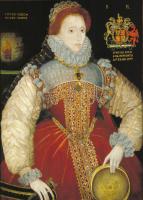


Henry Machyn's Diary. 14th June 1563. The xiiij day of June the Quen('s) (age 29) grace removyd from Whythall by water toward Grenwyche [Map], and a-bowt Ratclyff [Map] and Lymhowse [Map] capten Stukely dyd shuwe here grace the pleysur that cold be on the water with shuttyng of gones after lyke warle with plahhyng of drumes and trum[pets.]
On 14th June 1595 Godfrey Foljambe (age 36) died at Bedale. On 12th February 1623 Isabel Wray Baroness Darcy died. Monument in St Mary and All Saints Church, Chesterfield [Map] to Godfrey Foljambe and Isabel Wray Baroness Darcy.
Godfrey Foljambe: Godfrey Foljambe and Isabel Wray Baroness Darcy were married. On 21st November 1558 he was born to Godfrey Foljambe and Troth Tyrwhitt at Walton, Derbyshire [Map].
Isabel Wray Baroness Darcy: she was born to Christopher Wray and Anne Girlington. After 14th June 1595 William Bowes and she were married. On 7th May 1617 John Darcy 3rd Baron Darcy Aston and she were married. She by marriage Baroness Darcy of Aston.


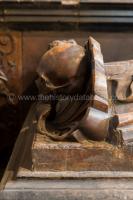
On 14th June 1603 Henry Frederick Stewart Prince of Wales (age 9) was appointed 393rd Knight of the Garter by King James I of England and Ireland and VI of Scotland (age 36).


On 14th June 1645 Maurice Palatinate Simmern (age 24) fought at Naseby, Northamptonshire [Map] during the Battle of Naseby for the Royalist army.
John Lucas 1st Baron Lucas Shenfield (age 38) fought for the King.
Colonel John Russell (age 25) was wounded.


Henrici Quinti, Angliæ Regis, Gesta, is a first-hand account of the Agincourt Campaign, and subsequent events to his death in 1422. The author of the first part was a Chaplain in King Henry's retinue who was present from King Henry's departure at Southampton in 1415, at the siege of Harfleur, the battle of Agincourt, and the celebrations on King Henry's return to London. The second part, by another writer, relates the events that took place including the negotiations at Troye, Henry's marriage and his death in 1422.
Available at Amazon in eBook and Paperback format.
Diary of Isabella Twysden 1645. 14th June 1645. the 14 of June Sr Tho: farfax had a great victory at nasby where he took 12 peces of ornance 4000 foote sholders, and the Sc. letters.
On 14th June 1658 the French and English Commonwealth armies were victorious over the Spanish and English Royalist armies at the Battle of the Dunes near Dunkirk. Vice-Admiral William Goodson took part.
In June 1660 King Charles II of England Scotland and Ireland (age 30) rewarded those who supported his Restoration...
6th William Wray 1st Baronet (age 35) and John Talbot of Lacock (age 29) were knighted.
7th Geoffrey Palmer 1st Baronet (age 62) was created 1st Baronet Palmer of Carlton in Northampton
7th Orlando Bridgeman 1st Baronet (age 54) was created 1st Baronet Bridgeman of Great Lever in Lancashire.
7th John Langham 1st Baronet (age 76) was created 1st Baronet Langham of Cottesbrooke in Northamptonshire.
11th Henry Wright 1st Baronet (age 23) was created 1st Baronet Wright of Dagenham. Ann Crew Lady Wright by marriage Lady Wright of Dagenham.
13th Nicholas Gould 1st Baronet was created 1st Baronet Gould of the City of London.
14th Thomas Allen 1st Baronet (age 27) was created 1st Baronet Allen of Totteridge in Middlesex.
18th Thomas Cullum 1st Baronet (age 73) was created 1st Baronet Cullum of Hastede in Suffolk.
19th Thomas Darcy 1st Baronet (age 28) was created 1st Baronet Darcy of St Osith's.
22nd Robert Cordell 1st Baronet was created 1st Baronet Cordell of Long Melford.
22nd John Robinson 1st Baronet (age 45) was created 1st Baronet Robinson of London. Anne Whitmore Lady Robinson (age 48) by marriage Lady Robinson of London.
25th William Bowyer 1st Baronet (age 47) was created 1st Baronet Bowyer of Denham Court. Margaret Weld Lady Bowyer (age 43) by marriage Lady Bowyer of Denham Court.
25th Thomas Stanley 1st Baronet (age 63) was created 1st Baronet Stanley of Alderley in Cheshire.
26th Jacob Astley 1st Baronet (age 21) was created 1st Baronet Astley of Hill Morton.
27th William Wray 1st Baronet was created 1st Baronet Wray of Ashby in Lincolnshire. Olympia Tufton Lady Ashby (age 36) by marriage Lady Wray of Ashby in Lincolnshire.
28th Oliver St John 1st Baronet (age 36) was created 1st Baronet St John of Woodford in Northamptonshire.
29th Ralph Delaval 1st Baronet (age 37) was created 1st Baronet Delaval of Seaton in Northumberland. Anne Leslie Lady Delaval by marriage Lady Delaval of Seaton in Northumberland.
30th Andrew Henley 1st Baronet (age 38) was created 1st Baronet Henley of Henley in Somerset.
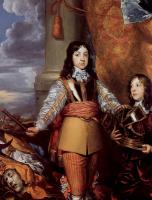


In June 1661 King Charles II of England Scotland and Ireland (age 31) created new Baronetcies and Peerages...
5th June 1661 James Clavering 1st Baronet (age 41) was created 1st Baronet Clavering of Axwell in County Durham.
13th June 1661 Thomas Adams 1st Baronet (age 75) was created 1st Baronet Adams of London.
14th June 1661 Henry Moore 1st Earl Drogheda (age 39) was created 1st Earl Drogheda.
On 17th June 1661...
Godfrey Copley 1st Baronet (age 38) was created 1st Baronet Copley Sprotborough.
Abraham Cullen 1st Baronet (age 37) was created 1st Baronet Cullen of East Sheen in Surrey.
James Rushout 1st Baronet (age 17) was created 1st Baronet Rushout of Northwick Park in Worcestershire aged only seveneteen.
William Stanley 1st Baronet (age 33) was created 1st Baronet Stanley of Hooton in Cheshire. Charlotte Molyneux Lady Stanley by marriage Lady Stanley of Hooton in Cheshire.
Griffith Williams 1st Baronet was created 1st Baronet Williams of Penrhyn in Caernarfonshire.
18th June 1661 Thomas Vyner 1st Baronet (age 72) was created 1st Baronet Vyner of London.
18th June 1661 Henry Winchcombe 1st Baronet (age 18) was created 1st Baronet Winchcombe of Bucklebury in Berkshire.
26th June 1661 Theobald Taaffe 1st Earl Carlingford (age 58) was created 1st Earl Carlingford.

Before 14th June 1662 Henry Vane "The Younger" (age 49) was arrested. He was exempted from the Indemnity and Oblivion Act. He was indicted on high treason by a Middlesex grand jury after charges were presented by the king's attorney general Sir Geoffrey Palmer (age 64) assisted by John Kelyng (age 54).
On 14th June 1662 Henry Vane "The Younger" (age 49) was beheaded at Tower Hill [Map] for treason against King Charles II (age 32). He had been sentenced to be hanged, drawn and quartered, however, King Charles II commuted the sentence to beheading.
Samuel Pepys' Diary. 14th June 1662. Up by four o'clock in the morning and upon business at my office. Then we sat down to business, and about 11 o'clock, having a room got ready for us, we all went out to the Tower-hill [Map]; and there, over against the scaffold, made on purpose this day, saw Sir Henry Vane (age 49) brought1. A very great press of people. He made a long speech, many times interrupted by the Sheriff and others there; and they would have taken his paper out of his hand, but he would not let it go. But they caused all the books of those that writ after him to be given the Sheriff; and the trumpets were brought under the scaffold that he might not be heard. Then he prayed, and so fitted himself, and received the blow; but the scaffold was so crowded that we could not see it done. But Boreman, who had been upon the scaffold, came to us and told us, that first he began to speak of the irregular proceeding against him; that he was, against Magna Charta, denied to have his exceptions against the indictment allowed; and that there he was stopped by the Sheriff. Then he drew out his, paper of notes, and begun to tell them first his life; that he was born a gentleman, that he was bred up and had the quality of a gentleman, and to make him in the opinion of the world more a gentleman, he had been, till he was seventeen years old, a good fellow, but then it pleased God to lay a foundation of grace in his heart, by which he was persuaded, against his worldly interest, to leave all preferment and go abroad, where he might serve God with more freedom. Then he was called home, and made a member of the Long Parliament; where he never did, to this day, any thing against his conscience, but all for the glory of God. Here he would have given them an account of the proceedings of the Long Parliament, but they so often interrupted him, that at last he was forced to give over: and so fell into prayer for England in generall, then for the churches in England, and then for the City of London: and so fitted himself for the block, and received the blow. He had a blister, or issue, upon his neck, which he desired them not hurt: he changed not his colour or speech to the last, but died justifying himself and the cause he had stood for; and spoke very confidently of his being presently at the right hand of Christ; and in all, things appeared the most resolved man that ever died in that manner, and showed more of heat than cowardize, but yet with all humility and gravity. One asked him why he did not pray for the King (age 32). He answered, "Nay", says he, "you shall see I can pray for the King: I pray God bless him!" the King had given his body to his friends; and, therefore, he told them that he hoped they would be civil to his body when dead; and desired they would let him die like a gentleman and a Christian, and not crowded and pressed as he was.
Note 1. Sir Harry Vane the younger was born 1612. Charles signed on June 12th a warrant for the execution of Vane by hanging at Tyburn [Map] on the 14th, which sentence on the following day "upon humble suit made" to him, Charles was "graciously pleased to mitigate", as the warrant terms it, for the less ignominious punishment of beheading on Tower Hill [Map], and with permission that the head and body should be given to the relations to be by them decently and privately interred.- Lister's Life of Clarendon, ii, 123.
Samuel Pepys' Diary. 14th June 1662. So home and to bed. This day, I hear, my Lord Peterborough (age 40) is come unexpected from Tangier [Map], to give the King (age 32) an account of the place, which, we fear, is in none of the best condition. We had also certain news to-day that the Spaniard is before Lisbon with thirteen sail; six Dutch, and the rest his own ships; which will, I fear, be ill for Portugall. I writ a letter of all this day's proceedings to my Lord, at Hinchingbroke, who, I hear, is very well pleased with the work there.
Samuel Pepys' Diary. 14th June 1663. By and by in comes Sir J. Minnes (age 64) and Sir W. Batten (age 62), and so we sat talking. Among other things, Sir J. Minnes brought many fine expressions of Chaucer, which he doats on mightily, and without doubt he is a very fine poet1. Sir W. Pen (age 42) continues lame of the gout, that he cannot rise from his chair. So after staying an hour with him, we went home and to supper, and so to prayers and bed.
Note 1. Pepys continued through life an admirer of Chaucer, and we have the authority of Dryden (age 31) himself for saying that we owe his character of the Good Parson to Pepys's recommendation.


Samuel Pepys' Diary. 14th June 1664. So home to dinner, and after dinner by coach to Kensington. In the way overtaking Mr. Laxton, the apothecary, with his wife and daughters, very fine young lasses, in a coach; and so both of us to my Lady Sandwich (age 39), who hath lain this fortnight here at Deane Hodges's. Much company came hither to-day, my Baroness Carteret (age 62), &c., Sir William Wheeler (age 53) and his lady, and, above all, Mr. Becke, of Chelsy, and wife and daughter, my Lord's mistress, and one that hath not one good feature in her face, and yet is a fine lady, of a fine taille, and very well carriaged, and mighty discreet. I took all the occasion I could to discourse with the young ladies in her company to give occasion to her to talk, which now and then she did, and that mighty finely, and is, I perceive, a woman of such an ayre, as I wonder the less at my Lord's favour to her, and I dare warrant him she hath brains enough to entangle him. Two or three houres we were in her company, going into Sir H. Finche's (age 42) garden, and seeing the fountayne, and singing there with the ladies, and a mighty fine cool place it is, with a great laver of water in the middle and the bravest place for musique I ever heard. After much mirthe, discoursing to the ladies in defence of the city against the country or court, and giving them occasion to invite themselves to-morrow to me to dinner, to my venison pasty, I got their mother's leave, and so good night, very well pleased with my day's work, and, above all, that I have seen my Lord's mistresse.


John Evelyn's Diary. 8th June 1665. Came news of his highness's (age 35) victory, which indeed might have been a complete one, and at once ended the war, had it been pursued, but the cowardice of some, or treachery, or both, frustrated that. We had, however, bonfires, bells, and rejoicing in the city. Next day, the 9th, I had instant orders to repair to the Downs, so as I got to Rochester, Kent [Map] this evening. Next day I lay at Deal, Kent [Map], where I found all in readiness: but, the fleet being hindered by contrary winds, I came away on the 12th, and went to Dover, Kent [Map], and returned to Deal, Kent [Map]; and on the 13th, hearing the fleet was at Solbay, I went homeward, and lay at Chatham, Kent [Map], and on the 14th, I got home. On the 15th, came the eldest son of the present Secretary of State to the French King, with much other company, to dine with me. After dinner, I went with him to London, to speak to my Lord General for more guards, and gave his Majesty an account of my journey to the coasts under my inspection. I also waited on his Royal Highness (age 31), now come triumphant from the fleet, gotten into repair. See the whole history of this conflict in my "History of the Dutch War"..
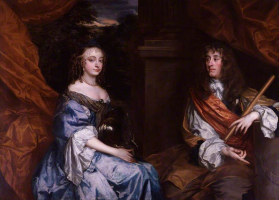


Samuel Pepys' Diary. 14th June 1665. And I this day met with a letter of Captain Ferrers, wherein he tells [us] my Lord was with his ship in all the heat of the day, and did most worthily. Met with Creed, and he and I to Westminster; and there saw my Lord Marlborough (deceased)1 brought to be buried, several Lords of the Council carrying him, and with the herald in some state. Thence, vexed in my mind to think that I do so little in my Tangier [Map] business, and so home, and after supper to bed.
Note 1. Of the four distinguished men who died after the late action with the Dutch and were buried in Westminster Abbey, the Earl of Marlborough was interred on June 14th, Viscount Muskerry on the 19th, the Earl of Falmouth (deceased) on the 22nd, and Sir Edward Broughton on the 26th. After the entries in the Abbey Registers is this note: "These four last Honble Persons dyed in his Majy's service against the Dutch, excepting only that ST Ed Br received his death's wound at sea, but dyed here at home" (Chester's "Westminster Abbey Registers", p. 162).
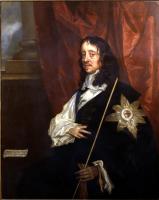
Samuel Pepys' Diary. 14th June 1665. Up, and to Sir Ph. Warwicke's (age 55) and other places, about Tangier business, but to little purpose. Among others to my Lord Treasurer's (age 58), there to speak with him, and waited in the lobby three long hours for to speake with him, to the trial of my utmost patience, but missed him at last, and forced to go home without it, which may teach me how I make others wait.
Samuel Pepys' Diary. 14th June 1665. Home to dinner and staid Mr. Hater with me, and after dinner drew up a petition for Mr. Hater to present to the Councill about his troublesome business of powder, desiring a trial that his absence may be vindicated, and so to White Hall, but it was not proper to present it to-day. Here I met with Mr. Cowling, who observed to me how he finds every body silent in the praise of my Lord Sandwich (age 39), to set up the Duke (age 31) and the Prince (age 45); but that the Duke did both to the King (age 35) and my Chancellor (age 56) write abundantly of my Lord's courage and service1.
Note 1. Charles II's letter of thanks to Lord Sandwich, dated "Whitehall, June 9th, 1665", written entirely in the King's hand, is printed in Ellis's "Original Letters", 1st series, vol. iii., p. 327.


Samuel Pepys' Diary. 14th June 1666. Thence took Creed with some kind of violence and some hard words between us to St. James's, to have found out Sir W. Coventry (age 38) to have signed the order for his payment among others that did stay on purpose to do it (and which is strange among the rest my Lord Ashly (age 44), who did cause Creed to write it presently and kept two or three of them with him by cunning to stay and sign it), but Creed's ill nature (though never so well bribed, as it hath lately in this case by twenty pieces) will not be overcome from his usual delays.


Samuel Pepys' Diary. 14th June 1666. Up, and to the office, and there sat all the morning. At noon dined at home, and thence with my wife and father to Hales's (age 66), and there looked only on my father's picture (which is mighty like); and so away to White Hall to a Committee for Tangier, where the Duke of York (age 32) was, and Sir W. Coventry (age 38), and a very full committee; and instead of having a very prejudiced meeting, they did, though indeed inclined against Yeabsly, yield to the greatest part of his account, so as to allow of his demands to the value of £7,000 and more, and only give time for him to make good his pretence to the rest; which was mighty joy to me: and so we rose up. But I must observe the force of money, which did make my Lord Ashly (age 44) to argue and behave himself in the business with the greatest friendship, and yet with all the discretion imaginable; and [it] will be a business of admonition and instruction to me concerning him (and other men, too, for aught I know) as long as I live.
John Evelyn's Diary. 14th June 1667. I went to see the work at Woolwich, Kent [Map], a battery to prevent them coming up to London, which Prince Rupert (age 47) commanded, and sunk some ships in the river.


Samuel Pepys' Diary. 14th June 1667. Up, and to the office; where Mr. fryer comes and tells me that there are several Frenchmen and Flemish ships in the River, with passes from the Duke of York (age 33) for carrying of prisoners, that ought to be parted from the rest of the ships, and their powder taken, lest they do fire themselves when the enemy comes, and so spoil us; which is good advice, and I think I will give notice of it; and did so. But it is pretty odd to see how every body, even at this high time of danger, puts business off of their own hands! He says that he told this to the Lieutenant of the Tower (age 52), to whom I, for the same reason, was directing him to go; and the Lieutenant of the Tower bade him come to us, for he had nothing to do with it; and yesterday comes Captain Crew, of one of the fireships, and told me that the officers of the Ordnance would deliver his gunner's materials, but not compound them1,2 but that we must do it; whereupon I was forced to write to them about it; and one that like a great many come to me this morning by and by comes-Mr. Wilson, and by direction of his, a man of Mr. Gawden's; who come from Chatham, Kent [Map] last night, and saw the three ships burnt, they lying all dry, and boats going from the men-of-war and fire them. But that, that he tells me of worst consequence is, that he himself, I think he said, did hear many Englishmen on board the Dutch ships speaking to one another in English; and that they did cry and say, "We did heretofore fight for tickets; now we fight for dollars!" and did ask how such and such a one did, and would commend themselves to them: which is a sad consideration.
Note 1. Meaning, apparently, that the Ordnance would deliver the charcoal, sulphur, and saltpetre separately, but not mix them as gunpowder.
Note 2. The want of ammunition when the Dutch burnt the fleet, and the revenge of the deserter sailors, are well described by Marvell "Our Seamen, whom no danger's shape could fright, Unpaid, refuse to mount their ships, for spite Or to their fellows swim, on board the Dutch, Who show the tempting metal in their clutch.
Abbot John Whethamstede’s Chronicle of the Abbey of St Albans
Abbot John Whethamstede's Register aka Chronicle of his second term at the Abbey of St Albans, 1451-1461, is a remarkable text that describes his first-hand experience of the beginning of the Wars of the Roses including the First and Second Battles of St Albans, 1455 and 1461, respectively, their cause, and their consequences, not least on the Abbey itself. His text also includes Loveday, Blore Heath, Northampton, the Act of Accord, Wakefield, and Towton, and ends with the Coronation of King Edward IV. In addition to the events of the Wars of the Roses, Abbot John, or his scribes who wrote the Chronicle, include details in the life of the Abbey such as charters, letters, land exchanges, visits by legates, and disputes, which provide a rich insight into the day-to-day life of the Abbey, and the challenges faced by its Abbot.
Available at Amazon in eBook and Paperback format.
Samuel Pepys' Diary. 14th June 1667. At noon I am told that my Lord Duke of Albemarle (age 58) is made Constable of England; the meaning whereof at this time I know not, nor whether it, be true or no.

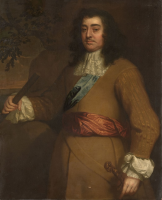
Samuel Pepys' Diary. 14th June 1667. This evening having sent a messenger to Chatham, Kent [Map] on purpose, we have received a dull letter from my Lord Bruncker (age 47) and Peter Pett (age 56), how matters have gone there this week; but not so much, or so particularly, as we knew it by common talk before, and as true. I doubt they will be found to have been but slow men in this business; and they say the Duke of Albemarle (age 58) did tell my Lord Bruncker to his face that his discharging of the great ships there was the cause of all this; and I am told that it is become common talk against my Lord Bruncker. But in that he is to be justified, for he did it by verbal order from Sir W. Coventry (age 39), and with good intent; and it was to good purpose, whatever the success be, for the men would have but spent the King (age 37) so much the more in wages, and yet not attended on board to have done the King any service; and as an evidence of that, just now, being the 15th day in the morning that I am writing yesterday's passages, one is with me, Jacob Bryan, Purser of "The Princesse", who confesses to me that he hath about 180 men borne at this day in victuals and wages on that ship lying at Chatham, Kent [Map], being lately brought in thither; of which 180 there was not above five appeared to do the King any service at this late business. And this morning also, some of the Cambridge's men come up from Portsmouth, Hampshire [Map], by order from Sir Fretcheville Hollis (age 25), who boasted to us the other day that he had sent for 50, and would be hanged if 100 did not come up that would do as much as twice the number of other men: I say some of them, instead of being at work at Deptford, Kent [Map], where they were intended, do come to the office this morning to demand the payment of their tickets; for otherwise they would, they said, do no more work; and are, as I understand from every body that has to do with them, the most debauched, damning, swearing rogues that ever were in the Navy, just like their prophane commander.

Samuel Pepys' Diary. 14th June 1667. I have this morning good news from Gibson; three letters from three several stages, that he was safe last night as far as Royston [Map], at between nine and ten at night. The dismay that is upon us all, in the business of the Kingdom and Navy at this day, is not to be expressed otherwise than by the condition the citizens were in when the City was on fire, nobody knowing which way to turn themselves, while every thing concurred to greaten the fire; as here the easterly gale and spring-tides for coming up both rivers, and enabling them to break the chaine. D. Gauden did tell me yesterday, that the day before at the Council they were ready to fall together by the ears at the Council-table, arraigning one another of being guilty of the counsel that brought us into this misery, by laying up all the great ships. Mr. Hater tells me at noon that some rude people have been, as he hears, at my Chancellor's (age 58), where they have cut down the trees before his house and broke his windows; and a gibbet either set up before or painted upon his gate, and these three words writ: "Three sights to be seen; Dunkirke, Tangier, and a barren Queene (age 57)"1.
Note 1. "Pride, Lust, Ambition, and the People's Hate, the Kingdom's broker, ruin of the State, Dunkirk's sad loss, divider of the fleet, Tangier's [Map] compounder for a barren sheet This shrub of gentry, married to the crown, His daughter to the heir, is tumbled down". Poems on State Affairs, vol. i., p. 253. B.


Samuel Pepys' Diary. 14th June 1667. At dinner we discoursed of Tom of the Wood, a fellow that lives like a hermit near Woolwich, Kent [Map], who, as they say, and Mr. Bodham, they tell me, affirms that he was by at the justice's when some did accuse him there for it, did foretell the burning of the City, and now says that a greater desolation is at hand. Thence we read and laughed at Lilly's prophecies this month, in his Almanack this year! So to the office after dinner; and thither comes Mr. Pierce, who tells me his condition, how he cannot get his money, about £500, which, he says, is a very great part of what he hath for his family and children, out of Viner's (age 36) hand: and indeed it is to be feared that this will wholly undo the bankers. He says he knows nothing of the late affronts to my Chancellor's (age 58) house, as is said, nor hears of the Duke of Albemarle's (age 58) being made High Constable; but says that they are in great distraction at White Hall, and that every where people do speak high against Sir W. Coventry (age 39): but he agrees with me, that he is the best Minister of State the King (age 37) hath, and so from my heart I believe.

Samuel Pepys' Diary. 14th June 1667. At night come home Sir W. Batten (age 66) and W. Pen (age 46), who only can tell me that they have placed guns at Woolwich, Kent [Map] and Deptford, Kent [Map], and sunk some ships below Woolwich, Kent [Map] and Blackewall [Map], and are in hopes that they will stop the enemy's coming up. But strange our confusion! that among them that are sunk they have gone and sunk without consideration "The Franakin",' one of the King's ships, with stores to a very considerable value, that hath been long loaden for supply of the ships; and the new ship at Bristoll, and much wanted there; and nobody will own that they directed it, but do lay it on Sir W. Rider. They speak also of another ship, loaden to the value of £80,000, sunk with the goods in her, or at least was mightily contended for by him, and a foreign ship, that had the faith of the nation for her security: this Sir R. Ford (age 53) tells us: And it is too plain a truth, that both here and at Chatham, Kent [Map] the ships that we have sunk have many, and the first of them, been ships completely fitted for fire-ships at great charge. But most strange the backwardness and disorder of all people, especially the King's people in pay, to do any work, Sir W. Pen tells me, all crying out for money; and it was so at Chatham, Kent [Map], that this night comes an order from Sir W. Coventry (age 39) to stop the pay of the wages of that Yard; the Duke of Albemarle (age 58) having related, that not above three of 1100 in pay there did attend to do any work there.
Samuel Pepys' Diary. 14th June 1668. Sunday. Up, and walked up and down the town [Map], and saw a pretty good market-place, and many good streets, and very fair stone-houses. And so to the great Church [Map], and there saw Bishop Montagu's tomb1 and, when placed, did there see many brave people come, and, among others, two men brought in, in litters, and set down in the chancel to hear: but I did not know one face. Here a good organ; but a vain, pragmatical fellow preached a ridiculous, affected sermon, that made me angry, and some gentlemen that sat next me, and sang well.
Note 1. James Montagu, Bishop of Bath and Wells in 1608, and of Winchester in 1616-died 1618. He was uncle to the Earl of Sandwich, whose mother was Pepys's aunt. Hence Pepys's curiosity respecting the tomb. B.
On 14th June 1672 Louis François Bourbon was born to Louis "Sun King" XIV King France (age 33) and Maria Theresa of Spain Queen Consort France (age 33). Coefficient of inbreeding 17.28%. He died aged less than one years old.


On 7th June 1673 and 14th June 1673 two naval battles took place between an allied Anglo-French fleet commanded by Prince Rupert Palatinate Simmern 1st Duke Cumberland (age 53) on his flagship the Royal Charles, and the fleet of the United Provinces, commanded by Admiral Michiel de Ruyter (age 66). The Dutch won both battles.
The Gloucester took part.

John Evelyn's Diary. 14th June 1680. Came to dine with us the Countess of Clarendon, Dr. Lloyd (age 52), Dean of Bangor (since Bishop of St. Asaph), Dr. Burnet (age 36), author of the "History of the Reformation", and my old friend, Mr. Henshaw (age 62). After dinner we all went to see the Observatory, and Mr. Flamsted (age 33), who showed us divers rare instruments, especially the great quadrant.


On 14th June 1685 the Duke of Monmouth's (age 36) forces commanded by Ford Grey 1st Earl Tankerville (age 29) were defeated by the Dorset Militia and withdrew to Axminster.
Wadham Strangeways (age 39) was killed.


John Evelyn's Diary. 14th June 1685. There was now certaine intelligence of the Duke of Monmouth (age 36) landing at Lyme in Dorsetshire, and of his having set up his standard as King of England. I pray God deliver us from the confusion which these beginnings threaten! Such a dearth for want of raine was never in my memory.
On 14th June 1690 three hundred ships arrived in Belfast Lough carrying nearly 31,000 men, a combination of Dutch, English and Danish regiments.
On 14th June 1726 Thomas Pennant was born.
The History of William Marshal was commissioned by his son shortly after William’s death in 1219 to celebrate the Marshal’s remarkable life; it is an authentic, contemporary voice. The manuscript was discovered in 1861 by French historian Paul Meyer. Meyer published the manuscript in its original Anglo-French in 1891 in two books. This book is a line by line translation of the first of Meyer’s books; lines 1-10152. Book 1 of the History begins in 1139 and ends in 1194. It describes the events of the Anarchy, the role of William’s father John, John’s marriages, William’s childhood, his role as a hostage at the siege of Newbury, his injury and imprisonment in Poitou where he met Eleanor of Aquitaine and his life as a knight errant. It continues with the accusation against him of an improper relationship with Margaret, wife of Henry the Young King, his exile, and return, the death of Henry the Young King, the rebellion of Richard, the future King Richard I, war with France, the death of King Henry II, and the capture of King Richard, and the rebellion of John, the future King John. It ends with the release of King Richard and the death of John Marshal.
Available at Amazon in eBook and Paperback format.
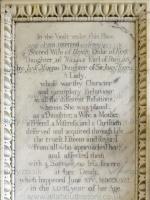
On 14th June 1741 Sophia Bentinck Duchess Kent (age 40) died. Memorial panel on the monument to her husband Henry Grey 1st Duke Kent at the De Grey Mausoleum, St John the Baptist Church, Flitton [Map].
Sophia Bentinck Duchess Kent: On 4th April 1701 she was born to William Bentinck 1st Earl of Portland and Jane Martha Temple Countess Portland. On 24th March 1729 Henry Grey 1st Duke Kent and she were married. She by marriage Duchess Kent. The difference in their ages was 30 years. She the daughter of William Bentinck 1st Earl of Portland and Jane Martha Temple Countess Portland. He the son of Anthony Grey 11th Earl Kent and Mary Lucas Countess Kent. In 1740 Henry Grey 1st Duke Kent was created 1st Marquess Grey. She by marriage Marchioness Grey.
On 14th June 1814 Frederick Christian Oldenburg II Duke Schleswig Holstein Sonderburg Augustenburg (age 48) died at Augustenborg, Als Island. His son Christian (age 15) succeeded Aug II Duke Schleswig Holstein Sonderburg Augustenburg.
On 14th June 1825 Alexander Francis Charles Gordon-Lennox was born to Charles Gordon-Lennox 5th Duke Richmond (age 33) and Caroline Paget Duchess Richmond (age 29). He married before 22nd January 1892 his fourth cousin once removed Emily Towneley.
On 14th June 1834 Darcy Osborne was born to George Godolphin Osborne 8th Duke Leeds (age 31) and Harriet Emma Arundel Stewart (age 33).
Thomas Bateman 1845. Also on the 14th of June, 1845, was opened, at Castern [Map], about a mile and a half distant from Wetton, a large barrow, measuring about thirty-five yards in diameter, and from four to five feet in height. About four yards from the centre, on the south side of the mound, a small square cist, constructed of thin limestones, was discovered. It contained the skeleton of an infant, which lay amongst the mould in the upper part of the vault; whilst upon the floor of the cist was a deposit of calcined human bones, accompanied by two bone pins, also burnt, one of which is perforated with an eye, and a fine spear-head of flint, with a small arrow-head of the same material. On the natural level, in the centre of the tumulus, lay the skeleton of a female with the knees contracted, completely imbedded in rats' bones, amongst which was found the upper mandible of the beak of a species of hawk. In a deep cist, cut in the rock, beneath the last-named skeleton was another interment evidently the skeleton of a man who had been buried in a sitting posture with whom was deposited part of a flint spear-head. In other parts of this tumulus were found portions of skeletons pertaining to two children and one full-grown person; the various bones of two human feet in a perfect and undisturbed state pieces of stag's horn, horses' teeth, a small whetstone, a large piece of rubbed sandstone, a circular instrument, and various chippings of flint, and the handle of a knife, composed of stag's horn, riveted upon the steel in the modern way; nevertheless it must be of considerable antiquity, being found eighteen inches deep in the barrow, and where the soil was as solid as though it had never been removed. Still its high antiquity is doubtful, though some future discovery may decide the question favorably. In Douglas's 'Nenia Britannica,' plate 19, fig. 4, one very similar is figured, which is of undoubted antiquity, having been found with the interment in one of the barrows upon Chartham Downs, in Kent.
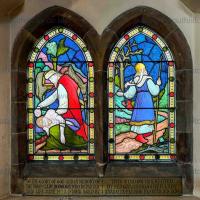
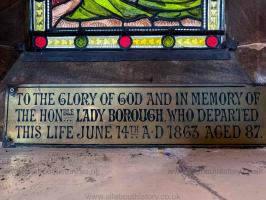
On 14th June 1863 Anna Maria Lake (age 88) died. Memorial window at St Mary The Virgin Church, Rufford [Map] commissioned by her grand-daughter Arabella Fermor Lady Hesketh (age 35).
Anna Maria Lake: In 1775 she was born to Gerard Lake 1st Viscount Lake and Elizabeth Barker. On 21st August 1799 Richard Borough 1st Baronet and she were married.

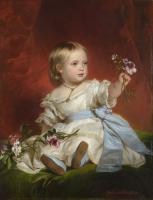
On 14th June 1870 Sophia Hohenzollern Queen Consort Greece was born to Frederick III King Prussia (age 38) and Victoria Empress Germany Queen Consort Prussia (age 29). She a granddaughter of Queen Victoria of the United Kingdom. She married 27th October 1889 her second cousin once removed Constantine I King Greece and had issue.




On 14th June 1906 James Graham 6th Duke Montrose (age 28) and Mary Louise Douglas Hamilton Duchess Montrose (age 21) were married. She the daughter of William Douglas Hamilton 12th Duke Hamilton 9th Duke Brandon and Mary Louisa Elizabeth Montagu Duchess Hamilton Duchess Brandon (age 51). He the son of Douglas Graham 5th Duke Montrose (age 53) and Violet Hermione Graham Duchess Montrose (age 51). They were third cousin once removed.

14th June 1913. The Central News reported:
Emily Wilding Davison's (deceased) funeral procession passing Piccadilly Circus [Map], 14th June 1913. Following her tragic death, Davison was instantly embraced as a martyr to the cause. On 14 June 1913 her body was borne on an open hearse through London to a memorial service at St George's Church, Bloomsbury before being taken by train to Morpeth, Northumberland [Map] for a family funeral. The funeral procession (the last great suffrage march) was organised by fellow suffragette Grace Roe, and the memorial service was presided over by clergy from the Church League for Women's Suffrage.

14th June 1913. Coffin of Emily Wilding Davison (deceased) at Victoria Station [Map].
14th June 1913. Funeral Procession of Emily Wilding Davison (deceased) at Morpeth, Northumberland [Map].


After 14th June 1918. Monument to Reverend Robert Behoe Radcliffe at St Helen's Church Ashby-de-la-Zouch, Leicestershire [Map]. This monument replacing one that fell on 14 Jun 1918.


Abbot John Whethamstede’s Chronicle of the Abbey of St Albans
Abbot John Whethamstede's Register aka Chronicle of his second term at the Abbey of St Albans, 1451-1461, is a remarkable text that describes his first-hand experience of the beginning of the Wars of the Roses including the First and Second Battles of St Albans, 1455 and 1461, respectively, their cause, and their consequences, not least on the Abbey itself. His text also includes Loveday, Blore Heath, Northampton, the Act of Accord, Wakefield, and Towton, and ends with the Coronation of King Edward IV. In addition to the events of the Wars of the Roses, Abbot John, or his scribes who wrote the Chronicle, include details in the life of the Abbey such as charters, letters, land exchanges, visits by legates, and disputes, which provide a rich insight into the day-to-day life of the Abbey, and the challenges faced by its Abbot.
Available at Amazon in eBook and Paperback format.

On 14th June 1923 Henry Hugh Arthur Fitzroy Somerset 10th Duke Beaufort (age 23) and Mary Cambridge Duchess Beaufort (age 26) were married. She by marriage Duchess Beaufort. She the daughter of Adolphus Cambridge Duke Teck (age 54) and Margaret Evelyn Grosvenor Duchess Teck (age 50). He the son of Henry Adelbert Wellington Fitzroy 9th Duke Beaufort (age 76) and Louise Emily Harford 9th Duchess Beaufort (age 58). They were half fourth cousins. She a great x 2 granddaughter of King George III of Great Britain and Ireland.
On 14th June 1929 the Duke of Windsor (age 34) and Thelma Morgan Viscountess Furness (age 24) met at the Leicestershire Agricultural Show. Edward asked her to dine and they met regularly until she joined him on safari in East Africa early in 1930, when a closer relationship developed. On Edward's return to Britain in April 1930 she was his regular weekend companion at the newly acquired Fort Belvedere until January 1934.

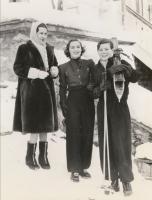
On 14th June 1930 Colonel Stanier Waller (age 85) died from wounds.
On 14th June 1939 Johanna Hesse Darmstadt (age 2) died of meningitis.
On 14th June 1529 Ferdinand Habsburg Spain II Archduke Austria was born to Ferdinand I Holy Roman Emperor (age 26) and Anne Jagiellon (age 25). He married (1) before 1558 Philippine Welser Archduchess Austria (2) 14th May 1582 his niece Anna Caterina Gonzaga Archduchess Austria, daughter of William Gonzaga I Duke Mantua and Eleanor of Austria Duchess Mantua, and had issue.

On 14th June 1657 Margaret Coventry was born to George Coventry 3rd Baron Coventry (age 29) and Margaret Tufton Baroness Coventry (age 20). She married 10th July 1679 her third cousin Charles Paulet 2nd Duke Bolton, son of Charles Paulet 1st Duke Bolton and Mary Scrope 6th Marchioness Winchester.
On 14th June 1657 William Blackett 1st Baronet was born to William Blackett 1st Baronet (age 36) and Elizabeth Kirkley. He married 22nd January 1685 Julia Conyers, daughter of Christopher Conyers 2nd Baronet and Julia Lumley, and had issue.


On 14th June 1667 Thomas Stourton 14th Baron Stourton was born to William Stourton 12th Baron Stourton (age 23) and Elizabeth Preston Baroness Stourton.
On 14th June 1672 Louis François Bourbon was born to Louis "Sun King" XIV King France (age 33) and Maria Theresa of Spain Queen Consort France (age 33). Coefficient of inbreeding 17.28%. He died aged less than one years old.
On 14th June 1676 John Rogers 2nd Baronet was born to John Rogers 1st Baronet (age 27) and Mary Vincent. He was baptised at St Andrew's Church, Plymouth [Map] on 14th June 1676. He married 9th May 1698 Mary Henley Lady Rogers and had issue.
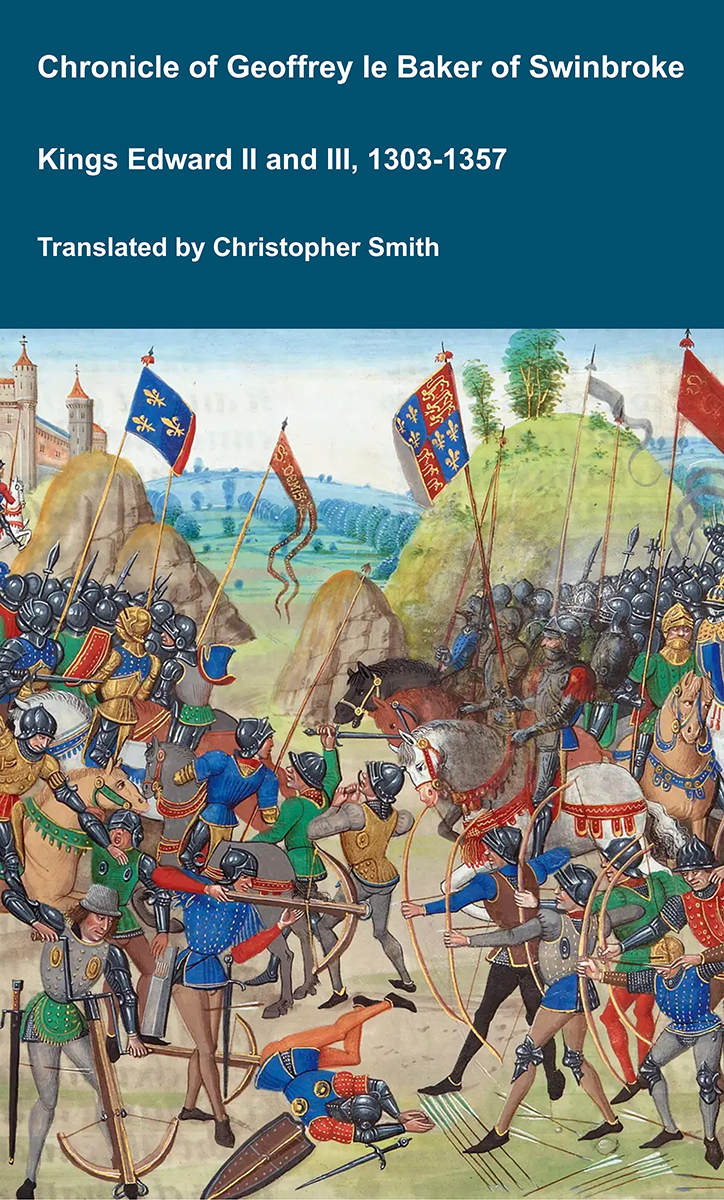
Chronicle of Geoffrey le Baker of Swinbroke
Baker was a secular clerk from Swinbroke, now Swinbrook, an Oxfordshire village two miles east of Burford. His Chronicle describes the events of the period 1303-1356: Gaveston, Bannockburn, Boroughbridge, the murder of King Edward II, the Scottish Wars, Sluys, Crécy, the Black Death, Winchelsea and Poitiers. To quote Herbert Bruce 'it possesses a vigorous and characteristic style, and its value for particular events between 1303 and 1356 has been recognised by its editor and by subsequent writers'. The book provides remarkable detail about the events it describes. Baker's text has been augmented with hundreds of notes, including extracts from other contemporary chronicles, such as the Annales Londonienses, Annales Paulini, Murimuth, Lanercost, Avesbury, Guisborough and Froissart to enrich the reader's understanding. The translation takes as its source the 'Chronicon Galfridi le Baker de Swynebroke' published in 1889, edited by Edward Maunde Thompson.
Available at Amazon in eBook and Paperback format.
On 14th June 1726 Thomas Pennant was born.
On 14th June 1729 George Colebrooke 2nd Baronet was born to James Colebrooke (age 49) at Chilham, Kent [Map]. He married 1754 Mary Gaynor and had issue.
On 14th June 1771 John Dalrymple 8th Earl of Stair was born to John Dalrymple 4th Baronet (age 45).
On 14th June 1783 Horatio Walpole 3rd Earl Orford was born to Horatio Walpole 2nd Earl Orford (age 30) and Sophia Churchill (age 27). He married 1812 his second cousin Mary Fawkener Countess Orford and had issue.
On 14th June 1790 Frederick Gough 4th Baron Calthorpe was born to Henry Gough-Calthorpe 1st Baron Calthorpe (age 41) and Frances Carpenter Baroness Calthorpe (age 29). He married 12th August 1823 Charlotte Sophia Somerset Baroness Calthorpe, daughter of Henry Charles Somerset 6th Duke Beaufort and Charlotte Sophia Leveson-Gower Duchess Beaufort, and had issue.
On 14th June 1799 George Musgrave 10th Baronet was born to John Chardin Musgrave 7th Baronet (age 42) and Mary Filmer (age 38). He married before 21st August 1838 Charlotte Graham Lady Musgrave, daughter of James Graham 1st Baronet and Catherine Stewart Lady Graham, and had issue.

On 14th June 1809 Charles Cockerell aka Rushout 2nd Baronet was born to Charles Cockerell 1st Baronet (age 54) and Harriet Rushout (age 39). He married 5th August 1834 Cecilia Olivia Foley Lady Cockerell, daughter of Thomas Foley 3rd Baron Foley and Cecilia Olivia Geraldine Fitzgerald Baroness Foley, and had issue.
On 14th June 1818 Massey Lopes 3rd Baronet was born to Ralph Franco aka Lopes 2nd Baronet (age 29).
On 14th June 1821 Harry Chichester 2nd Baron Templemore was born to Arthur Chichester 1st Baron Templemore (age 24) and Augusta Paget Baroness Templemore (age 19). He married (1) 3rd August 1842 his first cousin once removed Laura Caroline Jane Paget Baroness Templemore, daughter of Arthur Paget and Augusta Fane Baroness Boringdon, and had issue (2) 8th January 1873 his fifth cousin Victoria Elizabeth Ashley-Cooper Baroness Templemore, daughter of Anthony Ashley-Cooper 7th Earl Shaftesbury and Emily Caroline Catherine Frances Cowper Countess Shaftesbury, and had issue.
On 14th June 1825 Alexander Francis Charles Gordon-Lennox was born to Charles Gordon-Lennox 5th Duke Richmond (age 33) and Caroline Paget Duchess Richmond (age 29). He married before 22nd January 1892 his fourth cousin once removed Emily Towneley.
Anne Boleyn. Her Life as told by Lancelot de Carle's 1536 Letter.
In 1536, two weeks after the execution of Anne Boleyn, her brother George and four others, Lancelot du Carle, wrote an extraordinary letter that described Anne's life, and her trial and execution, to which he was a witness. This book presents a new translation of that letter, with additional material from other contemporary sources such as Letters, Hall's and Wriothesley's Chronicles, the pamphlets of Wynkyn the Worde, the Memorial of George Constantyne, the Portuguese Letter and the Baga de Secrets, all of which are provided in Appendices.
Available at Amazon in eBook and Paperback format.
On 14th June 1828 Caroline Amelia Grosvenor Baroness Leigh was born to Richard Grosvenor 2nd Marquess Westminster (age 33) and Elizabeth Mary Leveson-Gower Marchioness Westminster (age 31). She was baptised at St Mary's Church, Eccleston [Map] on 28th July 1828. She married 22nd August 1848 William Henry Leigh 2nd Baron Leigh, son of Chandos Leigh 1st Baron Leigh and Margarette Willes Baroness Leigh, and had issue.
On 14th June 1834 Darcy Osborne was born to George Godolphin Osborne 8th Duke Leeds (age 31) and Harriet Emma Arundel Stewart (age 33).
On 14th June 1845 Kenneth Howard was born to Henry Howard 2nd Earl of Effingham (age 38) and Eliza Drummond Baroness Howard (age 34).
On 14th June 1855 Charles Harbord 6th Baron Suffield was born to Charles Harbord 5th Baron Suffield (age 25) and Cecilia Annetta Baring Baroness Suffield (age 21).
On 14th June 1856 Granville Armyne Gordon was born to Charles Gordon 10th Marquess Huntly (age 64) and Maria Antoinetta Pegus Marchioness Huntly (age 35).
On 14th June 1857 Savile Crossley 1st Baron Somerleyton was born to Francis Crossley 1st Baronet (age 39) and Martha Eliza Brinton. He married 1887 Phyllis de Bathe and had issue.
On 14th June 1864 Edward Geoffrey Broadley Palmer 10th Baronet was born to Colonel Frederick Palmer (age 39).
On 14th June 1870 Sophia Hohenzollern Queen Consort Greece was born to Frederick III King Prussia (age 38) and Victoria Empress Germany Queen Consort Prussia (age 29). She a granddaughter of Queen Victoria of the United Kingdom. She married 27th October 1889 her second cousin once removed Constantine I King Greece and had issue.
On 14th June 1875 Frederick Edward Guest was born to Ivor Bertie Guest (age 39) and Cornelia Henrietta Maria Spencer-Churchill Baroness Wimborne (age 27).
On 14th June 1881 George Thomas 7th Baronet was born to George Sidney Meade Thomas 6th Baronet (age 34).
Anne Boleyn. Her Life as told by Lancelot de Carle's 1536 Letter.
In 1536, two weeks after the execution of Anne Boleyn, her brother George and four others, Lancelot du Carle, wrote an extraordinary letter that described Anne's life, and her trial and execution, to which he was a witness. This book presents a new translation of that letter, with additional material from other contemporary sources such as Letters, Hall's and Wriothesley's Chronicles, the pamphlets of Wynkyn the Worde, the Memorial of George Constantyne, the Portuguese Letter and the Baga de Secrets, all of which are provided in Appendices.
Available at Amazon in eBook and Paperback format.
On 14th June 1888 Hugh William Fortescue 5th Earl Fortescue was born to Hugh Fortescue 4th Earl Fortescue (age 34) and Emily Ormsby-Gore Countess Fortescue (age 28). Coefficient of inbreeding 1.61%. He married 8th February 1917 Margaret Helen Beaumont Countess Fortescue, daughter of Wentworth Canning Blackett Beaumont 1st Viscount Allendale and Alexandrina Louise Maud Vane-Tempest Viscountess Allendale, and had issue.
On 14th June 1902 David Brand 5th Viscount Hampden was born to Thomas Brand 3rd Viscount Hampden (age 33) and Katharine Mary Montagu-Douglas-Scott (age 27). He married 1936 his third cousin Imogen Alice Rice Viscountess Hampden, daughter of Walter FitzUryan Rice 7th Baron Dynevor and Margaret Child-Villiers Baroness Dynevor, and had issue.
On 14th June 1907 John Digby Pepys 7th Earl of Cottenham was born to Kenelm Charles Pepys 4th Earl of Cottenham (age 33) and Rose Neville Countess Cottentham (age 40). He married 3rd October 1933 his first cousin once removed Angela Neville Countess Cottenham, daughter of Guy Larnach Neville 4th Marquess Abergavenny and Isabel "Nellie" Larnach Marchioness Abergavenny, and had issue.
On 14th June 1925 Robert Walter Sigismund Grimston 2nd Baron Grimston was born to Robert Villiers Grimston 1st Baron Grimston (age 28) and Sybil Rose Neumann Baroness Grimston. He married 21st June 1949 June Mary Ponsonby Baroness Grimston, daughter of Hubert William Ponsonby 5th Baron de Mauley and Elgiva Margaret Dundas Baroness de Mauley, and had issue.
On 14th June 1960 Charles James 6th Baron Northbourne was born to Christopher James 5th Baron Northbourne (age 34).
On 14th June 1237 Robert Capet Count of Artois (age 20) and Matilda Reginar Countess Saint Pol (age 13) were married. She the daughter of Henry Reginar II Duke Brabant (age 30) and Marie Swabia Duchess Brabant. He the son of King Louis VIII of France and Blanche Ivrea Queen Consort France (age 49). They were third cousins. He a great grandson of King Henry "Curtmantle" II of England. She a great x 2 granddaughter of King Stephen I England.
On 14th June 1541 William La Marck Duke of Jülich Cleves Berg (age 24) and Maria Habsburg Spain Duchess Cleves (age 10) were married. She the daughter of Ferdinand I Holy Roman Emperor (age 38) and Anne Jagiellon (age 37). He the son of John La Marck III Duke Cleves and Maria Jülich Berg Duchess Cleves. They were fourth cousin once removed. She a great x 5 granddaughter of King Edward III of England.
On 14th June 1557 Jean Bourbon Count Soissons and Enghien (age 28) and Marie Bourbon (age 18) were married. She the daughter of Francis Bourbon Duke Estouteville and Adrienne Estouteville Duchess Estouteville (age 44). He the son of Charles Bourbon Duke Vendôme and Françoise Valois Countess Vendôme. They were first cousins.
On 14th June 1677 Paul Whichcote 2nd Baronet (age 34) and Jane Gould Lady Whichcote (age 14) were married. She by marriage Lady Whichcote of the Inner Temple in the City of London. The difference in their ages was 20 years.
On 14th June 1762 Reverend John Gordon (age 36) and Ann Dighton (age 44) were married.
Abbot John Whethamstede’s Chronicle of the Abbey of St Albans
Abbot John Whethamstede's Register aka Chronicle of his second term at the Abbey of St Albans, 1451-1461, is a remarkable text that describes his first-hand experience of the beginning of the Wars of the Roses including the First and Second Battles of St Albans, 1455 and 1461, respectively, their cause, and their consequences, not least on the Abbey itself. His text also includes Loveday, Blore Heath, Northampton, the Act of Accord, Wakefield, and Towton, and ends with the Coronation of King Edward IV. In addition to the events of the Wars of the Roses, Abbot John, or his scribes who wrote the Chronicle, include details in the life of the Abbey such as charters, letters, land exchanges, visits by legates, and disputes, which provide a rich insight into the day-to-day life of the Abbey, and the challenges faced by its Abbot.
Available at Amazon in eBook and Paperback format.
On 14th June 1804 John Byng 1st Earl Strafford (age 32) and Mary Stevens Mackenzie were married.

On 14th June 1864 John Brunner 1st Baronet (age 22) and Salome Davies were married.
On 14th June 1866 John Baptist Dormer 12th Baron Dormer (age 36) and Louisa Frances Mary King-Tenison were married.
On 14th June 1906 James Graham 6th Duke Montrose (age 28) and Mary Louise Douglas Hamilton Duchess Montrose (age 21) were married. She the daughter of William Douglas Hamilton 12th Duke Hamilton 9th Duke Brandon and Mary Louisa Elizabeth Montagu Duchess Hamilton Duchess Brandon (age 51). He the son of Douglas Graham 5th Duke Montrose (age 53) and Violet Hermione Graham Duchess Montrose (age 51). They were third cousin once removed.
On 14th June 1906 Edmund Waller 6th Baronet (age 34) and Muriel Grace Adderley Lady Waller (age 23) were married.
On 14th June 1923 Henry Hugh Arthur Fitzroy Somerset 10th Duke Beaufort (age 23) and Mary Cambridge Duchess Beaufort (age 26) were married. She by marriage Duchess Beaufort. She the daughter of Adolphus Cambridge Duke Teck (age 54) and Margaret Evelyn Grosvenor Duchess Teck (age 50). He the son of Henry Adelbert Wellington Fitzroy 9th Duke Beaufort (age 76) and Louise Emily Harford 9th Duchess Beaufort (age 58). They were half fourth cousins. She a great x 2 granddaughter of King George III of Great Britain and Ireland.
On 14th June 1924 Thomas Cholmondeley 4th Baron Delamere (age 23) and Phyllis Anne Montagu-Douglas-Scott Baroness Delamere (age 20) were married. They were fifth cousin once removed.
On 14th June 1945 William Waldorf Astor 3rd Viscount Astor (age 37) and Sarah Norton Viscountess Astor (age 25) were married. They had met one month before at a VE Day cocktail party given by her aunt Katherine "Kitty" Kinloch Baroness Brownlow (age 39) having become engaged five days later.

On 14th June 1947 Hugh Cholmondeley 6th Marquess of Cholmondeley (age 28) and Lavinia Margaret Leslie Marchioness Cholmondeley (age 25) were married. He the son of George Cholmondeley 5th Marquess Cholmondeley (age 64) and Sybil Sassoon Marchioness Cholmondeley (age 53).
On 14th June 2013 Edward Beckett 5th Baron Grimthorpe (age 58) and Emma Villers Baroness Grimthorpe (age 49) were married. She by marriage Baroness Grimthorpe. They were fifth cousin once removed.
On 14th June 1381 the mob gained access to the Tower of London [Map] capturing Joan "Fair Maid of Kent" Princess Wales (age 52), the future King Henry IV of England (age 14), Joan Holland Duchess York (age 1) and Archbishop Simon Sudbury (age 65).
Archbishop Simon Sudbury was beheaded at Tower Hill [Map]. He was buried at Canterbury Cathedral [Map].
Lord Treasurer Robert Hales (age 56), who had only been appointed on the 1st February 1381, was beheaded at Tower Hill [Map].
Abbot John Whethamstede’s Chronicle of the Abbey of St Albans
Abbot John Whethamstede's Register aka Chronicle of his second term at the Abbey of St Albans, 1451-1461, is a remarkable text that describes his first-hand experience of the beginning of the Wars of the Roses including the First and Second Battles of St Albans, 1455 and 1461, respectively, their cause, and their consequences, not least on the Abbey itself. His text also includes Loveday, Blore Heath, Northampton, the Act of Accord, Wakefield, and Towton, and ends with the Coronation of King Edward IV. In addition to the events of the Wars of the Roses, Abbot John, or his scribes who wrote the Chronicle, include details in the life of the Abbey such as charters, letters, land exchanges, visits by legates, and disputes, which provide a rich insight into the day-to-day life of the Abbey, and the challenges faced by its Abbot.
Available at Amazon in eBook and Paperback format.
On 14th June 1416 John de Pomeroy 12th Baron Pomeroy (age 69) died without issue. His uncle Thomas (age 91) succeeded 13th Baron Pomeroy Feudal.
On 14th June 1464 Elizabeth Chidiock Baroness Cobham Sternborough (age 60) died. She was buried at Little Dunmow, Essex.
On 14th June 1468 Margaret Beauchamp Countess Shrewsbury and Waterford (age 64) died.
On 14th June 1516 Jean III King Navarre (age 47) died. His wife Catherine Grailly I Queen Navarre (age 48) continued to reign.
On 14th June 1538 Christopher Conyers 2nd Baron Conyers (age 47) died. His son John (age 14) succeeded 3rd Baron Conyers. Being underage he would have become the ward of someone? Possibly Henry Clifford 1st Earl of Cumberland (age 45) whose daughter Maud Clifford Baroness Conyers (age 15) he subsequently married the folowing year.
On 14th June 1544 Antoine Lorraine II Duke Lorraine (age 55) died. His son Francis (age 26) succeeded I Duke Lorraine. Christina Oldenburg Duchess Lorraine (age 22) by marriage Duchess Lorraine.
On 14th June 1595 Godfrey Foljambe (age 36) died at Bedale. On 12th February 1623 Isabel Wray Baroness Darcy died. Monument in St Mary and All Saints Church, Chesterfield [Map] to Godfrey Foljambe and Isabel Wray Baroness Darcy.
Godfrey Foljambe: Godfrey Foljambe and Isabel Wray Baroness Darcy were married. On 21st November 1558 he was born to Godfrey Foljambe and Troth Tyrwhitt at Walton, Derbyshire [Map].
Isabel Wray Baroness Darcy: she was born to Christopher Wray and Anne Girlington. After 14th June 1595 William Bowes and she were married. On 7th May 1617 John Darcy 3rd Baron Darcy Aston and she were married. She by marriage Baroness Darcy of Aston.
On 14th June 1632 William Stonhouse 2nd Baronet (age 31) died. His brother George (age 28) succeeded 3rd Baronet Stonhouse of Radley.
On 14th June 1638 Anna Campbell Marchioness Huntly died.
On 14th June 1643 Charles Longueville 12th Baron Grey of Ruthyn (age 31) died. His daughter Susan succeeded 13th Baroness Grey of Ruthyn.
On 14th June 1662 Henry Vane "The Younger" (age 49) was beheaded at Tower Hill [Map] for treason against King Charles II (age 32). He had been sentenced to be hanged, drawn and quartered, however, King Charles II commuted the sentence to beheading.
Adam Murimuth's Continuation and Robert of Avesbury’s 'The Wonderful Deeds of King Edward III'
This volume brings together two of the most important contemporary chronicles for the reign of Edward III and the opening phases of the Hundred Years’ War. Written in Latin by English clerical observers, these texts provide a vivid and authoritative window into the political, diplomatic, and military history of fourteenth-century England and its continental ambitions. Adam Murimuth Continuatio's Chronicarum continues an earlier chronicle into the mid-fourteenth century, offering concise but valuable notices on royal policy, foreign relations, and ecclesiastical affairs. Its annalistic structure makes it especially useful for establishing chronology and tracing the development of events year by year. Complementing it, Robert of Avesbury’s De gestis mirabilibus regis Edwardi tertii is a rich documentary chronicle preserving letters, treaties, and official records alongside narrative passages. It is an indispensable source for understanding Edward III’s claim to the French crown, the conduct of war, and the mechanisms of medieval diplomacy. Together, these works offer scholars, students, and enthusiasts a reliable and unembellished account of a transformative period in English and European history. Essential for anyone interested in medieval chronicles, the Hundred Years’ War, or the reign of Edward III.
Available at Amazon in eBook and Paperback format.

On 14th June 1663 Elizabeth Cavendish Countess Bridgewater (age 36) died. She is commemorated on the Great Monument at St Peter and St Paul Church, Little Gaddesden on which is the inscription: "To the sacred memory of the late transcendently vertuous Lady, now glorious Saint, the Right Honourable Elizabeth Countesse of Bridgewater. She was second daughter to the Right Honourable William Marquesse of Newcastte, &c. and wife to the Right Honourable John Earle of Bridgewater, &c. and whose family she hath enriched with a hopeful issue, six sonnes, viz. John Viscount Brackley her eldest, Sir William Egerton second sonne, both Knights of the honourable Order of the Bath, Mr. Thomas Egerton her third, Mr. Charles Egerton her fourth, Mr. Henry Egerton her fifth, Mr. Steward Egerton her sixth sonne, and three daughters, viz. Mrs. Frances Egerton her eldest, the Lady Elizabeth Egerton her second, and the Lady Katherine Egerton her third daughter; of all which children, three, viz. Mr. Henry Egerton her fifth sonne, Mrs. Frances Egerton, her eldest, and the Lady Katherine Egerton her third daughter, lye here interred, dying in their infancy; the rest are still the living pictures of their deceased mother, and the only remaining comforts of their disconsolate father. She was a Lady in whom all the accomplishments both of body and mind did concurre to make her the glory of the present, and example of future ages. Her beauty was so unparallelled, that it is as much beyond the art of the most elegant pen, as it surpassed the skill of several of the most exquisite pencills (that attempted it) to describe, and not to disparage it. She had a winning and attractive behaviour, a charming discourse, a most obliging conversation: she was so courteous and affable to all persons, that she gained their love; yet, not so familiar to expose herselfe to contempt: she was of a noble and generous soule), yet, of so meeke and humble a disposition, that never any woman, of her quality, was greater in the world's opinion, and lesse in her owne: the rich at her table daily tasted her hospitality; the poore at her gate her charity: her devotion was most exemplary, if not inimitable; witnesse (besides several other occasional! meditations and prayers, full of all the holy transports and raptures of a sanctifyed soule), her divine meditations upon every partictular chapter in the Bible, written with her owne hand, and never (till since her death), seene by any eye but her owne, and her then dear but now sorrowful husband, to the admiration both, of her eminent piety in composing and of her modesty in concealing them. She was a most affectionate and observant wife to her husband, a most tender and indulgent mother to her children, a most kind and bountifull mistresse to her family. In a word, she was so superlatively good, that language is too narrow to expresse her deserved character: 11er death was as religious as her life was vertuous. On the 14th day of June, in the yeare of our Lord 1663; of her own age the 37th, she exchanged her earthly coronet for an heavenly crowne. Prov. xxxi; 28, 29. Her children rise up and call her blessed, her husband also, and he praiseth her. Many daughters have done virtuously, but thou excellest them all."
On 14th June 1685 the Duke of Monmouth's (age 36) forces commanded by Ford Grey 1st Earl Tankerville (age 29) were defeated by the Dorset Militia and withdrew to Axminster.
Wadham Strangeways (age 39) was killed.

On 14th June 1689 Conyers Darcy 1st Earl Holderness (age 90) died. His son Conyers (age 67) succeeded 2nd Earl Holderness, 9th Baron Darcy of Knayth, 6th Baron Conyers, 3rd Baron Darcy of Meinhill. Elizabeth Freschville Countess Holderness (age 55) by marriage Countess Holderness.
On 14th June 1725 Nicholas Barnewall 3rd Viscount Barnewall (age 57) died. His son Henry (age 17) succeeded 4th Viscount Barnewall, 4th Baron Turvey.
On 14th June 1730 Richard Sherard 2nd Baronet (age 64) died. His brother Brownlow (age 62) succeeded 3rd Baronet Sherard of Lobthorp in Lincolnshire.
On 14th June 1737 Orlando Humphreys 2nd Baronet (age 32) died. Baronet Humphreys of London extinct.
On 14th June 1741 Sophia Bentinck Duchess Kent (age 40) died. Memorial panel on the monument to her husband Henry Grey 1st Duke Kent at the De Grey Mausoleum, St John the Baptist Church, Flitton [Map].
Sophia Bentinck Duchess Kent: On 4th April 1701 she was born to William Bentinck 1st Earl of Portland and Jane Martha Temple Countess Portland. On 24th March 1729 Henry Grey 1st Duke Kent and she were married. She by marriage Duchess Kent. The difference in their ages was 30 years. She the daughter of William Bentinck 1st Earl of Portland and Jane Martha Temple Countess Portland. He the son of Anthony Grey 11th Earl Kent and Mary Lucas Countess Kent. In 1740 Henry Grey 1st Duke Kent was created 1st Marquess Grey. She by marriage Marchioness Grey.
On 14th June 1765 Thomas Palmer 4th Baronet (age 63) died. His son John (age 30) succeeded 5th Baronet Palmer of Carlton in Northampton.
On 14th June 1776 Samuel Masham 2nd Baron Masham (age 63) died. Baron Masham of Otes in Essex and Baronet Masham of Long Ashton extinct.
On 14th June 1781 Charles Cope 2nd Baronet (age 38) died. His son Charles (age 11) succeeded 3rd Baronet Cope of Bruern in Oxfordshire although he died on Christmas Day six months later aged eleven.
On 14th June 1782 Edward Ligonier 1st Earl Ligonier (age 42) died. Earl Ligonier extinct.
Anne Boleyn. Her Life as told by Lancelot de Carle's 1536 Letter.
In 1536, two weeks after the execution of Anne Boleyn, her brother George and four others, Lancelot du Carle, wrote an extraordinary letter that described Anne's life, and her trial and execution, to which he was a witness. This book presents a new translation of that letter, with additional material from other contemporary sources such as Letters, Hall's and Wriothesley's Chronicles, the pamphlets of Wynkyn the Worde, the Memorial of George Constantyne, the Portuguese Letter and the Baga de Secrets, all of which are provided in Appendices.
Available at Amazon in eBook and Paperback format.
On 14th June 1789 Elizabeth Horton Baroness Carbery died.
On 14th June 1790 Mary Theresa O'Grady Countess of Ilchester (age 35) died.
On 14th June 1794 Francis Seymour-Conway 1st Marquess Hertford (age 75) died. His son Francis (age 51) succeeded 2nd Marquess Hertford, 2nd Earl Hertford, 2nd Earl of Yarmouth, 2nd Viscount Beauchamp, 3rd Baron Conway of Ragley in Warwickshire, 3rd Baron Conway of Killultagh in Antrim. Isabella Anne Ingram Marchioness Hertford (age 35) by marriage Marchioness Hertford. The estate was worth £70000 a year, and included Ragley Hall, Alcester, Sudbourne Hall, Sudbourne and estates in Ireland.


On 14th June 1796 Admiral John Laforey 1st Baronet (age 67) died. His son Francis (age 28) succeeded 2nd Baronet Laforey of Whitby in Devon.
On 14th June 1800 Henry Willoughby 5th Baron Middleton (age 73) died. His son Henry (age 39) succeeded 6th Baron Middleton, 7th Baronet Willoughby of Wollaton.
On 14th June 1814 Frederick Christian Oldenburg II Duke Schleswig Holstein Sonderburg Augustenburg (age 48) died at Augustenborg, Als Island. His son Christian (age 15) succeeded Aug II Duke Schleswig Holstein Sonderburg Augustenburg.
On 14th June 1820 Thomas Dundas 1st Baron Dundas (age 79) died. His son Lawrence (age 54) succeeded 2nd Baron Dundas, 3rd Baronet Dundas of Kerse. Harriet Hale Baroness Dundas (age 50) by marriage Baroness Dundas.
On 14th June 1821 Henry Tichborne 7th Baronet (age 64) died. His son Henry (age 42) succeeded 8th Baronet Tichborne of Tichborne in Hampshire.
On 14th June 1894 John Duke Coleridge 1st Baron Coleridge (age 73) died. His son Bernard (age 42) succeeded 2nd Baron Coleridge of Ottery St Mary in Devon. Mary Alethea Mackarness Baroness Coleridge by marriage Baroness Coleridge of Ottery St Mary in Devon.

On 14th June 1908 Frederick Arthur Stanley 16th Earl of Derby (age 67) died. His son Edward (age 43) succeeded 17th Earl Derby, 11th Baronet Stanley of Bickerstaffe. Alice Maude Olivia Montagu Countess Derby (age 45) by marriage Countess Derby.
The Deeds of the Dukes of Normandy
The Gesta Normannorum Ducum [The Deeds of the Dukes of Normandy] is a landmark medieval chronicle tracing the rise and fall of the Norman dynasty from its early roots through the pivotal events surrounding the Norman Conquest of England. Originally penned in Latin by the monk William of Jumièges shortly before 1060 and later expanded at the behest of William the Conqueror, the work chronicles the deeds, politics, battles, and leadership of the Norman dukes, especially William’s own claim to the English throne. The narrative combines earlier historical sources with firsthand information and oral testimony to present an authoritative account of Normandy’s transformation from a Viking settlement into one of medieval Europe’s most powerful realms. William’s history emphasizes the legitimacy, military prowess, and governance of the Norman line, framing their expansion, including the conquest of England, as both divinely sanctioned and noble in purpose. Later chroniclers such as Orderic Vitalis and Robert of Torigni continued the history, extending the coverage into the 12th century, providing broader context on ducal rule and its impact. Today this classic work remains a foundational source for understanding Norman identity, medieval statesmanship, and the historical forces that reshaped England and Western Europe between 800AD and 1100AD.
Available at Amazon in eBook and Paperback format.
On 14th June 1926 Windham Wyndham-Quin 4th Earl of Dunraven and Mount Earl (age 85) died. His first cousin Windham (age 69) succeeded 5th Earl Dunraven and Mount-Earl, 5th Viscount Mount Earl, 5th Baron Adare, 3rd Baron Kenry of Kenry in County Limerick.
On 14th June 1931 Henry Dering 10th Baronet (age 65) died. His son Anthony (age 29) succeeded 11th Baronet Dering of Surrenden Dering in Kent.

On 14th June 1931 Algernon Lawley 5th Baron Wenlock (age 74) died. His brother Arthur (age 70) succeeded 6th Baron Wenlock of Wenlock in Shropshire, 13th Baronet Lawley of Spoonhill in Shropshire which titles he enjoyed for a year dying a year later on the same day as his brother. Annie Allen Cunard Baroness Wenlock (age 68) by marriage Baroness Wenlock.
On 14th June 1932 Arthur Lawley 6th Baron Wenlock (age 71) died in Freiburg. Baron Wenlock of Wenlock in Shropshire and Baronet Lawley of Spoonhill in Shropshire extinct.
On 14th June 1939 Ivor Churchill Guest 1st Viscount Wimborne (age 66) died. His son Ivor (age 36) succeeded 2nd Viscount Wimborne of Canford Magna in Dorset, 2nd Baron Ashby St Ledgers of Ashby St Ledgers in Northampton, 3rd Baron Wimborne of Canford Magna in Dorset, 4th Baronet Guest of Dowlais in Glamorganshire. Mabel Edith Fox-Strangways Viscountess Wimborne (age 21) by marriage Viscountess Wimborne of Canford Magna in Dorset.
On 14th June 1958 (his seventieth birthday) Hugh William Fortescue 5th Earl Fortescue (age 70) died four days after the death of his wife. His only son had been killed at the Battle of El Alamein. His brother Denzil (age 65) succeeded 6th Earl Fortescue, 6th Viscount Ebrington of Ebrington in Gloucestershire, 8th Baron Fortescue of Castle Hill. Marjorie Ellinor Trotter Countess Fortescue (age 64) by marriage Countess Fortescue.
On 14th June 1966 Rupert Bromley 9th Baronet (age 55) died. His son Rupert (age 30) succeeded 10th Baronet Bromley of Nottingham and East Stoke in Nottinghamshire.
On 14th June 1993 Michael Edward Joicey 4th Baron Joicey (age 68) died at Etal, Northumberland [Map]. His son James (age 39) succeeded 5th Baron Joicey of Chester le Street in County Durham, 5th Baronet Joicey of Longhurst and Ulgham in Northumberland.
On 14th June 2002 George William Coventry 11th Earl Coventry (age 68) died. His first cousin once removed Francis (age 89) succeeded 12th Earl Coventry. He died less than two years later.