

Jean de Waurin's Chronicle of England Volume 6 Books 3-6: The Wars of the Roses
Jean de Waurin was a French Chronicler, from the Artois region, who was born around 1400, and died around 1474. Waurin’s Chronicle of England, Volume 6, covering the period 1450 to 1471, from which we have selected and translated Chapters relating to the Wars of the Roses, provides a vivid, original, contemporary description of key events some of which he witnessed first-hand, some of which he was told by the key people involved with whom Waurin had a personal relationship.
Available at Amazon in eBook and Paperback format.
18 Jan is in January.
1312 Capture, Trial and Execution of Piers Gaveston
1486 Marriage of Henry VII and Elizabeth York
1547 Execution of Henry Howard, Earl of Surrey
On 18th January 1256 Maria Reginar Duchess Bavaria (age 30) was beheaded having been accused of adultery by her husband Louis "Strict" Wittelsbach II Duke Upper Bavaria (age 26) although there was no proof.
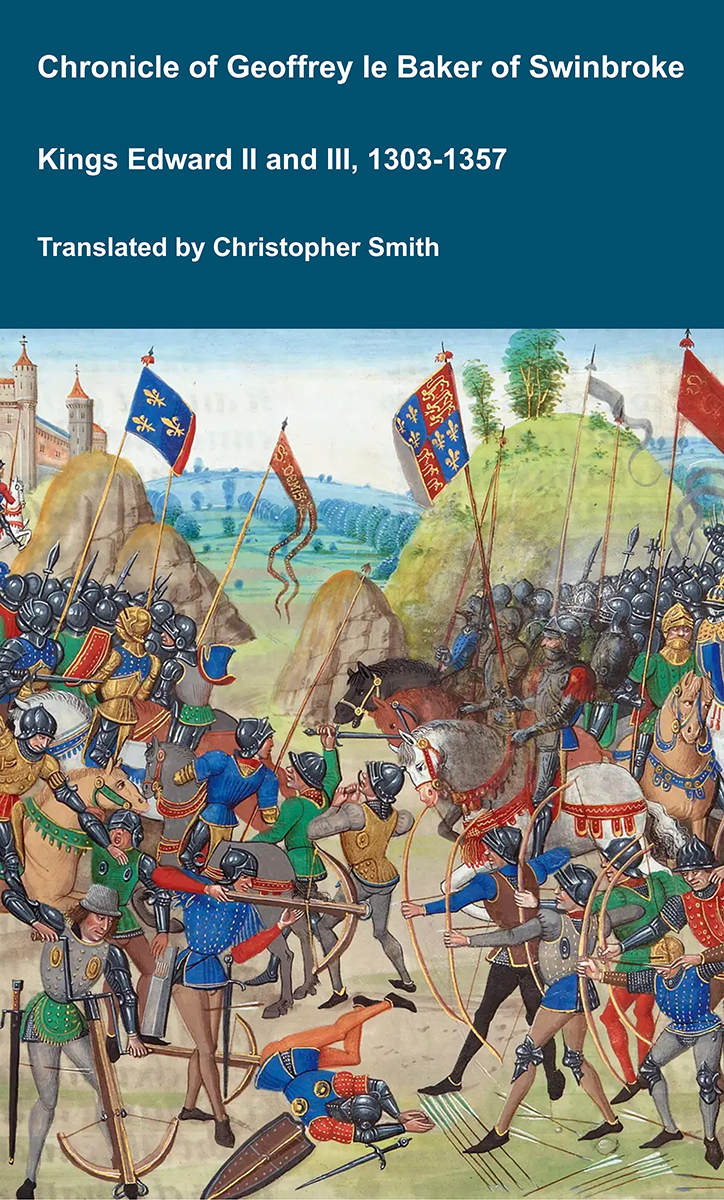 Chronicle of Geoffrey le Baker of Swinbroke [-1360]. In the year of Christ 1312,1 around the Feast of the Nativity of St. John the Baptist [24th June], for the defence of Piers Gaveston, he was removed from Bamburgh Castle [Map] and placed under the custody of Aymer de Valence (age 37), Earl of Pembroke. The Earl had sworn before the King, having taken the most sacred oath upon the altar, that he would protect Gaveston from all his enemies for a certain period, within which the King intended to reconcile him with the barons. However, envy, which corrupts even the greatest loyalties, and the desire to please Gaveston's enemies, led his guardian to abandon his oath through negligence. Eventually, Gaveston was taken against his will by one of his familiar enemies and delivered into the hands of his foes at Deddington Manor, located between Oxford and Warwick. There, neither natural hiding places nor fortifications could shield him from the proximity of the Earl of Warwick. That night, Pembroke departed from Gaveston, and at dawn, Guy de Beauchamp (age 40), Earl of Warwick, accompanied by a small force and great commotion, arrived. Gaveston was then taken to Warwick Castle, where, after deliberation with Thomas, Earl of Lancaster, and Humphrey, Earl of Hereford, he was executed in their presence at a place called Blacklow Hill [Map] on the 19th June 1312. His body was entrusted to an honourable burial2 in the Dominican friary at Langley [Map] by order of the King.
Anno Christi MCCCXJ, circa festum Nativitatis Ioannis Baptiste, pro defensione Petri, Petrus revocatus a castro de Bamborgh committitur custodie Adomari de Valence, comitis Penbrochie, adiurati coram rege, inspecto sancto sanctorum sacramento altaris, quod ipsum indempnem quatenus posset contra omnes adversarios suos custodiret ad certum tempus, citra quod intendebat rex alico modo Petrum regni proceribus reconciliasse. Set fidem invidia inter summa lacescens et amor placendi inimicis Petri tutorem ipsius contra iuramentum in negligenciam abduxerunt. Ducitur tandem Petrus quo non vellet per familiarem inimicum in mediam potestatem inimicorum, in manerium videlicet Dathintone, que est inter Oxoniam et Warewyc, ubi nec latibulum naturale nec castrum aut munimentum aliquod artificiale posset a vicinitate comitis Warewyc Petrum sequestrare, Adomarus nocte ab ipso Petro recessit, et in aurora Guido Warewyc cum comitiva mediocri et cum hutesio accessit. Petrum quoque ductum ad castrum Warewyk, habita deliberacione cum Thoma comite Lancastrie et comite Herefordie, in ipsorum conspectu in loco qui dicitur Caveresich XIX die mensis Iunii fecit decapitari; cuius corpus in ecclesia fratrum ordinis Predicatorum de Langliþe rex honourifice commisit sepulture.
Note 1. Baker has entirely omitted Gaveston's movements in 1311-12. He seems to have confused Bamburgh and Scarborough. By the Ordinances, Gaveston was again banished 1st November 1311. He went to Flanders, but returned almost immediately, and rejoined Edward at York at the beginning of the new year; the king's writ declaring his banishment illegal bearing date the 18th January 1312. Rymer's Fœdera 2.153; Annales Londonienses 203.
On the approach of the confederate lords Gaveston fled from Newcastle and took refuge in Scarborough early in May; was besieged, and surrendered, 19th May, to the earl of Pembroke. Annales Londonienses 204.
The Chronicle of Lanercost 217.
The story of his surrender and subsequent capture by Warwick is told by the Monk of Malmesbury, Vita Edward II, 177.
Warwick made Gaveston his prisoner at Deddington on the 10th June, Annales Londonienses 206.
He gave him over to Lancaster, who with his confederates led him out to execution, the earl of Warwick remaining in his castle. Murimuth (Rolls Series), p. 17, is evidently wrong in stating that Warwick dismissed him and that he was afterwards made prisoner again. In the following extract from the Annales Londonienses 207.
The nicknames which Gaveston gave, with such deadly offence, to certain lords are noticed by several of the chroniclers. All does not appear to have been properly explained. The Chronicle of Lanercost 216.
The prose Brute chronicle has also some interesting particulars on this point. This chronicle is extant in both a French and an English version. Of the French version there are two editions, both compiled in the reign of Edward III, and ending with the account of the battle of Halidon Hill in 1333. From the second edition of this French version the English version was translated; and to this translation further additions were subsequently made. The names of the writers are unknown, but it appears that one of the later editions of the English version is due to John Maundeville, rector of Burnham Thorp, co. Norfolk, 1427-1441 (Notes and Queries, 1856, p. 1.) To the authorship of the second edition of the French version perhaps a clue may be found in certain extracts, or rather translations, from a French chronicle, which are printed in Leland's Collectanea, 1.454. Many of these extracts prove that much of Pakington's chronicle must have been word for word the same as the revised edition of the French Brute. The English Brute chronicle was printed by Caxton in 1480, with the title Chronicles of England.
Caxton's Chronicles do not appear to have had the attention of modern historians as much as they deserve. Barnes, the writer of the History of Edward III, 1688, did not know the book; but he found in the library of Corpus Christi College, Cambridge, a MS. of the English Brute chronicle, and made ample use of it, referring to it as MS. Vet. Angl. in C.C.C. Cantab. Barnes's quotations have been cited by later writers, who have failed to recognize in them the text of Caxton. In the following notes I have printed some interesting passages from the English Brute, making use of Harley MS. 2279 and Egerton MS. 650.
Gaveston's nicknames for the barons are thus described: "Kyng Edward lovede Piers of Gavastone so moche that he mygte nougte forlete his companye; and so moche the kyng yaf and behigte to the peple of Engelonde that the exiling of the forsaide Piers shulde bene revokede atte Staunford thurj hem that him exilede. Wherfore Peris of Gavastone come ayen into Engelonde, and, when he was come ayen into this lande, he despisede the gretteste lordes of this lande, and callede sire Robert of Clare, erle of Gloucestre, horeson; and the erle of Nicole, sire Henry Lacy, brust bely; and sir Guy, erle of Warwyke, blak hounde of Arderne; and also he callede the noble erle and gentil Thomas of Lancastre cherle; and meny other scornes and shame hem saide, and by many other grete lordes of Engelonde. Wherfor thei were towardis him ful angry and sore annoyede." The terms for these names in the French version (Royal Ms. 20 A. 3) are 'filz a puteyne', 'boele crevee,' 'noir chien de Ardene,' and 'vielers.' This last word the English translator has not understood. In the extract in Leland's Collectanea there are additional words: 'vielers, porceo quil est greles et de bel entaille.' Misunderstanding the first two words of this sentence, Lingard has made out that Lancaster was called 'Old Hog.' But the words mean: 'Fiddler, because he is slim and tall.' This seems to be confirmed by Walsingham (Historia Anglicana, 1.115) who says that Gaveston called Lancaster 'histrionem,' and further that Pembroke was nicknamed 'Joseph the Jew,' the reason being 'quod pallidus erat et longus [because he was pale and tall].' The 'pallidus' and 'longus,' which do not appear to be specially descriptive of a Jew, would perhaps belong better to the 'Play-actor,' just as 'greles' and 'de bel entaille' are applied to the 'Fiddler.'
Note 2. Gaveston's body lay for two years at Oxford, Vita Edward II, 209: "A few days after Christmas, the lord King Edward had the body of Piers Gaveston, his former special friend, transferred from Oxford to Langley. For now more than two years had passed since Peter's beheading, and until this time he had lain unburied among the friars at Oxford. It is said that the king had intended first to avenge Peter's death, and only afterward to commit his body to burial. But now those from whom the king had once sought vengeance had been reconciled with him in friendship. So the king, at Langley, where he had previously established a house for the Dominican friars, had the body of his Peter buried with great honour.
See also Knighton 2533, Annales Londonienses 232 and Annales Paulini 273.
Annals Londonienses. Edward, by the grace of God, etc., to the sheriffs of London. Whereas Sir Piers Gaveston, Earl of Cornwall, was formerly exiled from our kingdom contrary to the laws and customs of the said kingdom, which we are bound to uphold and maintain by the oath we made at our coronation, and in which exile he was named other than good and loyal; and whereas the same earl, by our command, has now returned to us in our said kingdom, ready to appear before us against any who wish to accuse him of anything, according to the aforesaid laws and customs; therefore, we consider him good and loyal to our faith and our peace, and in no way do we regard him otherwise. We, by our royal authority, command you to hold him as such, and to have this declaration publicly proclaimed throughout your jurisdiction. Given at York, the 18th day of January, in the fifth year of our reign.
Edward par la grace de Dieu, etc., as viscontes de Londres:
Come monsieur Pieres de Gavastone conte de Cornwaille nadguers fuist exile hors de nostre roiaume contre les leys et les usages de meisme le roiaume, as queux garder et maintenir nous sumes tenuz par le serement qe nous feimes a notre coronement; en le quel exil il fuist nome autre qe bon et loial. E meisme cesti conte par notre maundement soit ja revenu a nous en notre dit roiaume, prest est d'ester devaunt nous a touz qe de rien luy vodront chalenger solom les leyes et les usages avantditz; par quey nous luy tenoms bon et loial a notre foi et a notre pees, et unqes pur autre ne luy tenoms, nous de notre roial poair vous comaundoms qe pur tiel lui tenez, e ceste chose facez par tut votre baillie puplier. Donez a Everwyke, le xviii. jour de Januer, lan du notre regne quint.
On 18th January 1357 Maria Burgundy Queen Consort Castile (age 44) died.
On 18th January 1367 Peter I King Portugal (age 46) died. His son Ferdinand (age 21) succeeded I King Portugal.
On 18th January 1425 Edmund Mortimer 5th Earl March 7th Earl of Ulster (age 33) died at Trim Castle. He was buried at Clare Priory, Suffolk [Map]. His nephew Richard (age 13) succeeded 6th Earl March, 5th Earl of Ulster, 8th Baron Mortimer of Wigmore.
On 18th January 1460 John Foix 1st Earl Kendal (age 50) was released after promising to pay 23,850 écus.
On 18th January 1486 King Henry VII of England and Ireland (age 28) and Elizabeth of York (age 19) were married at Westminster Abbey [Map]. She by marriage Queen Consort England. She the daughter of King Edward IV of England and Elizabeth Woodville Queen Consort England (age 49). He the son of Edmund Tudor 1st Earl Richmond and Margaret Beaufort Countess Richmond (age 42). They were third cousins. He a great x 3 grandson of King Edward III of England.


Croyland Chronicle 1486. ... and in due conformity with the ancient custom, the marriage was celebrated, which had from the first been hoped for, between him [King Henry VII] and the lady Elizabeth, the eldest daughter of king Edward the Fourth. This was duly solemnized , at the instance and urgent entreaty of all the three estates of the realm, in presence of the Church, on the [eighteenth day of the month of January, in the year of our Lord, according to the computation of the Roman Church, 1486; a dispensation having been first obtained from the Apostolic See on account of the fourth degree of consanguinity, within which the king and queen were related to each other.
Historia Regis Henrici Septimi by Bernado Andrea. [18th January 1486] Accordingly, when the matter had been brought before and the supreme council of all the leading men of the realm convened, it was decreed that from two families formerly burdened with mortal hatred one house should be made in unanimous concord. Therefore fitting ornaments are prepared for the marriage torches and the nuptial bed. And in this matter too, the mind hesitates and wavers when it comes to describing the display in accordance with its dignity. And for that reason I have deliberately passed over the great abundance of things so lavishly displayed at the royal wedding itself and at the coronation of the queen, gifts freely bestowed everywhere upon all with overflowing generosity; banquets, dances, and tournaments provided most lavishly for the illustration and enlargement of that joy; celebrations marked by munificence in gold, silver, rings, and gems.
Facto igitur, convocatoque omnium regni optimatium supremo consilio, decretum est ut ex duabus olim mortali odio laborantibus familiis una domus unanimi concordia fieret. Ergo tedis jugalibus toroque maritali congrua parantur ornamenta. Ft in hoc etiam apparatu pro dignitate perscribendo hæret ac dubitat animus. Et idcirco tantam rerum affluentiam in ipsis regiis nuptiis ac reginæ coronatione affatim exhibitam, largifluis cireumquaque muneribus liberaliter omnibus præstitis, conviviis, choreis, torneamentis ad id gaudii illustrandum amplificandumque largissimis, auri, argenti, annulorum, gemmarumque munificentia concelebratis, consulto prætermisi ...1
Note 1. Half a page blank in MS.
Chronicles of London Vitellius A XVI. [18th January 1486] In this yere was kyng Henry the VIJ maryed vnto Dame manage of Elizabeth, theldest Doughter of kyng Edward the IIIJ.
On 18th January 1501 Archbishop Thomas Savage (age 52) was appointed Archbishop of York.
On 18th January 1537 Francis Bigod (age 29)... "Though the commons at first had me in suspicion for my learning and conversation with such a lewd one as they judged were enemies both to Christ's Church and the commonwealth, and I was even in danger of my life at Pountefrett [Map], they have now the greatest confidence in me. Now messengers come from Bishopric, Richmondshire, and the West, for me to go forward with the commons, especially to bring John Halom, whom the mayor of Hull has imprisoned, to their great offence. I have sworn to go with the commons having good reason to doubt the Duke of Norfolk is coming rather to bring them to captivity like those of Lincolnshire than to fulfil our petitions. There is no man they trust so much as Constable whom Bygott would gladly join and follow his advice, if he will be true to them." He begs an answer and sends a copy of their oath.
Spanish Chronicle Chapter 54. [18th January 1547] The King ordered that the Earl should be tried at once, and if he were found guilty that he should be beheaded; so in order that everybody should see the trial, the judges came to the Guildhall of London, this being the first time that ever such a thing was seen as a gentleman being tried there, but always at Westminster. And twelve gentlemen of rank met there, and the Earl was brought from the Tower, escorted by three hundred halberdiers, and placed before the judges. It was fearful to see the enormous number of people in the streets. When the judges and the twelve gentlemen had taken their seats, the King's lawyer spoke and said, "My lords, for either of the offences which the Earl has committed he deserves death; first for usurping the Royal arms, which gives rise to suspicion that he hoped to become King, and the other for escaping from prison, whereby he showed his guilt." The Earl, with manly courage, said, "You are false, and to earn a piece of gold would condemn your own father. I never sought to usurp the King's arms, for everybody knows that my ancestors bore them. Go to the chtirch in Norfolk and you will see them there, for they have been ours for five hundred years." One of the lawyers said, "Why did you put the inscription on the garter?" to which the Earl replied, "I did not put the King's motto, so as to give no ground for suspicion, and you have no reason to blame me for using the words 'Till then thus,' for you all know, gentlemen, the great services my father has rendered, and I hoped, in recognition of them, that the King would return the arms to me. That was the reason I used the motto." Then up and spoke Secretary Paget, saying, "Hold your peace, my lord; your idea was to commit treason, and as the King is old you thought to become king." Then cried the Earl, "And thou, Catchpole! what hast thou to do with it? Thou hadst better hold thy tongue, for the kingdom has never been well since the King put mean creatures like thee into the government." He called him catchpole (which means bailiff) because his father had been a constable, and Paget was very much abashed, and held his peace.
Then spoke the Earl of Warwick, and said, "If you are not guilty and meant no harm, why did you put the cover over the painting, and why did you attempt to break out of prison?" "I tried to get out," said the Earl, "to prevent myself from coming to the pass in which I am now; and you, my lord, know well that however right a man may be they always find the fallen one guilty,"
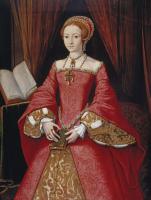
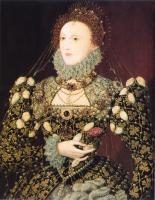
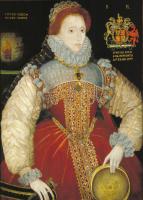
On 18th January 1549 agents were sent to interrogate co-conspirators including Princess Elizabeth (age 15). The regency council was sure of her complicity with Thomas, and sought to bully an easy confession from her. She was interrogated for weeks.




Jean de Waurin's Chronicle of England Volume 6 Books 3-6: The Wars of the Roses
Jean de Waurin was a French Chronicler, from the Artois region, who was born around 1400, and died around 1474. Waurin’s Chronicle of England, Volume 6, covering the period 1450 to 1471, from which we have selected and translated Chapters relating to the Wars of the Roses, provides a vivid, original, contemporary description of key events some of which he witnessed first-hand, some of which he was told by the key people involved with whom Waurin had a personal relationship.
Available at Amazon in eBook and Paperback format.

Henry Machyn's Diary. 18th January 1555. The sam day whent to the Towre [Map] my lord chansseler (age 72), and dyvers odur lordes and of the conselle, and delyvered a nomber presonars, as ther names folowes-ser James a Croft (age 37), ser Gorge Harper, ser Gawynn Carow, ser Necolas Frogmortun (age 40), master Vaghan, ser Edward Varner, Gybbs, the bysshope of Yorke, master Rogers (age 50), and dyvers odur presonars, and after ther was a gret shottyng of gones.
On 18th January 1602 Robert Stewart was born to King James I of England and Ireland and VI of Scotland (age 35) and Anne of Denmark Queen Consort Scotland England and Ireland (age 27). He died aged less than one years old.


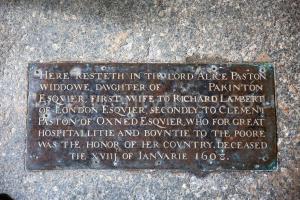
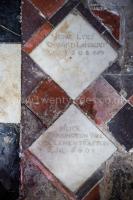
On 18th January 1608 Alice Pakington died. Wife of Admiral Clement Paston (second husband). Brass floorplate in the Church of St Michael, Oxnead [Map].
Alice Pakington: she was born to Humphrey Pakington. Richard Lambert and she were married. Before 18th February 1598 Admiral Clement Paston and she were married.
Admiral Clement Paston: Around 1521 he was born to William Paston and Bridget Heydon.

Diary of Anne Clifford. 18th January 1617. Upon the 18th being Saturday I went presently after dinner to the Queen to the Drawing Chamber where my Lady Derby told the Queen how my business stood and that I was to go to the King so she promised me she would do all the good in it she could. When I had stay'd but a little while there I was sent for out, my Lord (age 27) and I going through my Lord Buckingham's chamber who brought us into the King, being in the Drawing Chamber. He put out all that were there and my Lord and I kneeled by his chair sides when he persuaded us both to peace and to put the whole matter wholly into his hands, which my Lord consented to, but I beseech'd His Majesty to pardon me for that I would never part from Westmoreland while I lived upon any condition whatsoever. Sometimes he used fair means and persuasions and sometimes foul means but I was resolved before so as nothing would move me. From the King we went to the Queen's side. I brought my Lady St. fohn to her lodgings and so we went home. At this time I was much bound to my Lord for he was far kinder to me in all these businesses than I expected and was very unwilling that the King should do me any public disgrace1.
Note 1. The Queen gave me warning not to trust my matters absolutely to the King lest he should deceive me.
On 18th January 1645 John Maitland 1st Earl Lauderdale died. His son John (age 28) succeeded 2nd Earl Lauderdale, 2nd Viscount Maitland, 2nd Viscount Lauderdale.


Memoirs of Jean Francois Paul de Gondi Cardinal de Retz Book 1. On the 18th of January, 1649, I was admitted to a seat and vote in Parliament, and signed an alliance with the chief leaders of the party: M. de Beaufort (age 33), de Bouillon, de La Mothe, de Noirmoutier, de Vitri, de Brissac, de Maure, de Matha, de Cugnac, de Barnire, de Sillery, de La Rochefoucault, de Laigues, de Sevigny, de Bethune, de Luynes, de Chaumont, de Saint-Germain, d'Action, and de Fiesque.
Samuel Pepys' Diary. 18th January 1660. Wednesday. To my office and from thence to Will's, and there Mr. Sheply brought me letters from the carrier and so I went home. After that to Wilkinson's, where we had a dinner for Mr. Talbot, Adams, Pinkny and his son, but his son did not come. Here we were very merry, and while I was here Mr. Fuller (age 52) came thither and staid a little, while.
Samuel Pepys' Diary. 18th January 1660. After that we all went to my Lord's (age 34), whither came afterwards Mr. Harrison, and by chance seeing Mr. Butler coming by I called him in and so we sat drinking a bottle of wine till night. At which time Mistress Ann [Note. Probably Anne Montagu, daughter of Sir Edward Montagu, and sister to Mrs. Jem] came with the key of my Lord's study for some things, and so we all broke up and after I had gone to my house and interpreted my Lord's letter by his character [Note. The making of ciphers was a popular amusement about this time. Pepys made several for Montagu, Downing, and others.] I came to her again and went with her to her lodging and from thence to Mr. Crew's (age 62), where I advised with him what to do about my Lord's lodgings and what answer to give to Sir Ant. Cooper (age 38) and so I came home and to bed. All the world is at a loss to think what Monk (age 51) will do: the City saying that he will be for them, and the Parliament saying he will be for them.


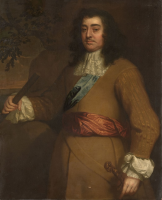

Samuel Pepys' Diary. 18th January 1662. Thence to the Wardrobe, and there hearing it would be late before they went to dinner, I went and spent some time in Paul's Churchyard among some books, and then returned thither, and there dined with my Lady and Sir H. Wright (age 25) and his lady, all glad of yesterday's mistake, and after dinner to the office, and then home and wrote letters by the post to my father, and by and by comes Mr. Moore to give me an account how Mr. Montagu (age 27) was gone away of a sudden with the fleet, in such haste that he hath left behind some servants, and many things of consequence; and among others, my Lord's commission for Embassador. Whereupon he and I took coach, and to White Hall to my Lord's lodgings, to have spoke with Mr. Ralph Montagu (age 23), his brother (and here we staid talking with Sarah and the old man); but by and by hearing that he was in Covent Garden [Map], we went thither: and at my Lady Harvy's (age 23), his sister, I spoke with him, and he tells me that the commission is not left behind. And so I went thence by the same coach (setting down Mr. Moore) home, and after having wrote a letter to my Lord at 12 o'clock at night by post I went to bed.

Samuel Pepys' Diary. 18th January 1665. Thence to my Lady Sandwich's (age 40), who sent for me this morning. Dined with her, and it was to get a letter of hers conveyed by a safe hand to my Lord's owne hand at Portsmouth, Hampshire [Map], which I did undertake. Here my Lady did begin to talk of what she had heard concerning Creed, of his being suspected to be a fanatique and a false fellow. I told her I thought he was as shrewd and cunning a man as any in England, and one that I would feare first should outwit me in any thing. To which she readily concurred.

Samuel Pepys' Diary. 18th January 1667. This morning come Captain. Cocke (age 50) to me, and tells me that the King (age 36) comes to the House this day to pass the Poll Bill and the Irish Bill; he tells me too that, though the Faction is very froward in the House, yet all will end well there. But he says that one had got a Bill ready to present in the House against Sir W. Coventry (age 39), for selling of places, and says he is certain of it, and how he was withheld from doing it. He says, that the Vice-chamberlaine (age 57) is now one of the greatest men in England again, and was he that did prevail with the King to let the Irish Bill go with the word "Nuisance".
Abbot John Whethamstede’s Chronicle of the Abbey of St Albans
Abbot John Whethamstede's Register aka Chronicle of his second term at the Abbey of St Albans, 1451-1461, is a remarkable text that describes his first-hand experience of the beginning of the Wars of the Roses including the First and Second Battles of St Albans, 1455 and 1461, respectively, their cause, and their consequences, not least on the Abbey itself. His text also includes Loveday, Blore Heath, Northampton, the Act of Accord, Wakefield, and Towton, and ends with the Coronation of King Edward IV. In addition to the events of the Wars of the Roses, Abbot John, or his scribes who wrote the Chronicle, include details in the life of the Abbey such as charters, letters, land exchanges, visits by legates, and disputes, which provide a rich insight into the day-to-day life of the Abbey, and the challenges faced by its Abbot.
Available at Amazon in eBook and Paperback format.
Samuel Pepys' Diary. 18th January 1667. At night I, by appointment, home, where W. Batelier and his sister Mary, and the two Mercers, to play at cards and sup, and did cut our great cake lately given us by Russell: a very good one. Here very merry late. Sir W. Pen (age 45) told me this night how the King (age 36) did make them a very sharp speech in the House of Lords to-day, saying that he did expect to have had more Bills1 that he purposes to prorogue them on Monday come se'nnight; that whereas they have unjustly conceived some jealousys of his making a peace, he declares he knows of no such thing or treaty: and so left them. But with so little effect, that as soon as he come into the House, Sir W. Coventry (age 39) moved, that now the King hath declared his intention of proroguing them, it would be loss of time to go on with the thing they were upon, when they were called to the King, which was the calling over the defaults of Members appearing in the House; for that, before any person could now come or be brought to town, the House would be up. Yet the Faction did desire to delay time, and contend so as to come to a division of the House; where, however, it was carried, by a few voices, that the debate should be laid by. But this shews that they are not pleased, or that they have not any awe over them from the King's displeasure. The company being gone, to bed.
Note 1. On this day "An Act for raising Money by a Poll and otherwise towards the maintenance of the present War", and "An Act prohibiting the Importation of Cattle from Ireland and other parts beyond the Sea, and Fish taken by Foreigners", were passed. The King. complained of the insufficient supply, and said, "'Tis high time for you to make good your promises, and 'tis high time for you to be in the country" ("Journals of the House of Lords", vol xii., p. 81).
Samuel Pepys' Diary. 18th January 1668. At the office all the morning busy sitting. At noon home to dinner, where Betty Turner (age 15) dined with us, and after dinner carried my wife, her and Deb. to the 'Change [Map], where they bought some things, while I bought "The Mayden Queene", a play newly printed, which I like at the King's house so well, of Mr. Dryden's (age 36), which he himself, in his preface, seems to brag of, and indeed is a good play.


On 18th January 1669 Maria Antonia of Austria was born to Leopold Habsburg Spain I Holy Roman Emperor (age 28) and Margaret Theresa Habsburg Holy Roman Empress (age 17). Coefficient of inbreeding 30.98%. She married 15th July 1685 her second cousin Maximilian Wittelsbach II Elector Bavaria and had issue.


Samuel Pepys' Diary. 18th January 1669. Thence to the Duke of York (age 35) on the King's side, with our Treasurers of the Navy, to discourse some business of the Navy, about the pay of the yards, and there I was taken notice of, many Lords being there in the room, of the Duke of York's conference with me; and so away, and meeting Mr. Sidney Montagu (age 18) and Sheres, a small invitation served their turn to carry them to London, where I paid Sheres his £100, given him for his pains in drawing the plate of Tangier fortifications, &c., and so home to my house to dinner, where I had a pretty handsome sudden dinner, and all well pleased; and thence we three and my wife to the Duke of York's playhouse, and there saw "The Witts", a medley of things, but some similes mighty good, though ill mixed; and thence with my wife to the Exchange [Map] and bought some things, and so home, after I had been at White Hall, and there in the Queen's (age 30) withdrawing-room invited my Lord Peterborough (age 47) to dine with me, with my Lord Sandwich (age 43), who readily accepted it.
Samuel Pepys' Diary. 18th January 1669. Up by candlelight, and with W. Hewer (age 27) walked to the Temple [Map], and thence took coach and to Sir William Coventry's (age 41), and there discoursed the business of my Treasurer's place, at Tangier, wherein he consents to my desire, and concurs therein, which I am glad of, that I may not be accountable for a man so far off. And so I to my Lord Sandwich's (age 43), and there walk with him through the garden, to White Hall, where he tells me what he had done about this Treasurer's place, and I perceive the whole thing did proceed from him: that finding it would be best to have the Governor have nothing to do with the pay of the garrison, he did propose to the Duke of York (age 35) alone that a pay-master should be there; and that being desirous to do a courtesy to Sir Charles Harbord (age 29), and to prevent the Duke of York's looking out for any body else, he did name him to the Duke of York. That when he come the other day to move this to the Board of Tangier, the Duke of York, it seems, did readily reply, that it was fit to have Mr. Pepys satisfied therein first, and that it was not good to make places for persons. This my Lord in great confidence tells me, that he do take very ill from the Duke of York, though nobody knew the meaning of these words but him; and that he did take no notice of them, but bit his lip, being satisfied that the Duke of York's care of me was as desirable to him, as it could be to have Sir Charles Harbord: and did seem industrious to let me see that he was glad that the Duke of York and he might come to contend who shall be the kindest to me, which I owned as his great love, and so I hope and believe it is, though my Lord did go a little too far in this business, to move it so far, without consulting me. But I took no notice of that, but was glad to see this competition come about, that my Lord Sandwich is apparently jealous of my thinking that the Duke of York do mean me more kindness than him. So we walked together, and I took this occasion to invite him to dinner one day to my house, and he readily appointed Friday next, which I shall be glad to have over to his content, he having never yet eat a bit of my bread.

On 18th January 1670 James Drummond 1st Duke Perth (age 22) and Jean Douglas (age 27) were married. She the daughter of William Douglas 1st Marquess Douglas and Mary Gordon Marchioness Douglas (age 70). He the son of James Drummond 3rd Earl Perth (age 55) and Anne Gordon. They were first cousin once removed.
John Evelyn's Diary. 18th January 1671. Of this young artist (age 22), together with my manner of finding him out, I acquainted the King (age 40), and begged that he would give me leave to bring him and his work to Whitehall Palace [Map], for that I would adventure my reputation with his Majesty that he had never seen anything approach it, and that he would be exceedingly pleased, and employ him. The King said he would himself go see him. This was the first notice his Majesty ever had of Mr. Gibbon.
John Evelyn's Diary. 18th January 1671. This day I first acquainted his Majesty (age 40) with that incomparable young man, Gibbon (age 22), whom I had lately met with in an obscure place by mere accident, as I was walking near a poor solitary thatched house, in a field in our parish, near Sayes Court, Deptford [Map]. I found him shut in; but looking in at the window, I perceived him carving that large cartoon, or crucifix, of Tintoretto, a copy of which I had myself brought from Venice, where the original painting remains. I asked if I might enter; he opened the door civilly to me, and I saw him about such a work as for the curiosity of handling, drawing, and studious exactness, I never had before seen in all my travels. I questioned him why he worked in such an obscure and lonesome place; he told me it was that he might apply himself to his profession without interruption, and wondered not a little how I found him out. I asked if he was unwilling to be made known to some great man, for that I believed it might turn to his profit; he answered, he was yet but a beginner, but would not be sorry to sell off that piece; on demanding the price, he said £100. In good earnest, the very frame was worth the money, there being nothing in nature so tender and delicate as the flowers and festoons about it, and yet the work was very strong; in the piece was more than one hundred figures of men, etc. I found he was likewise musical, and very civil, sober, and discreet in his discourse. There was only an old woman in the house. So, desiring leave to visit him sometimes, I went away.
On 18th January 1679 Christiane Charlotte Oldenburg was born to Christian V King of Denmark and Norway (age 32) and Charlotte Amalie Hesse-Kassel Queen Consort Denmark and Norway (age 28). She died aged ten in 1689.
On 18th January 1681 Charles "Don Carlo" Fitzcharles 1st Earl Plymouth was buried at Westminster Abbey [Map].
Chronicle of Abbot Ralph of Coggeshall
The Chronicle of Abbot Ralph of Coggeshall (Chronicon Anglicanum) is an indispensable medieval history that brings to life centuries of English and European affairs through the eyes of a learned Cistercian monk. Ralph of Coggeshall, abbot of the Abbey of Coggeshall in Essex in the early 13th century, continued and expanded his community’s chronicle, documenting events from the Norman Conquest of 1066 into the tumultuous reign of King Henry III. Blending eyewitness testimony, careful compilation, and the monastic commitment to record-keeping, this chronicle offers a rare narrative of political intrigue, royal power struggles, and social upheaval in England and beyond. Ralph’s work captures the reigns of pivotal figures such as Richard I and King John, providing invaluable insights into their characters, decisions, and the forces that shaped medieval rule. More than a simple annal, Chronicon Anglicanum conveys the texture of medieval life and governance, making it a rich source for scholars and readers fascinated by English history, monastic authorship, and the shaping of the medieval world.
Available at Amazon in eBook and Paperback format.
On 18th January 1688 Lionel Cranfield Sackville 1st Duke Dorset was born to Charles Sackville 6th Earl Dorset 1st Earl Middlesex (age 44) and Mary Compton Countess Dorset and Middlesex (age 19). He married January 1709 Elizabeth Colyear Duchess Dorset and had issue.


On 18th January 1689 Ernest Günther Oldenburg I Duke Schleswig Holstein Sonderburg Augustenburg (age 79) died. His son Frederick (age 20) succeeded William I Duke Schleswig Holstein Sonderburg Augustenburg.
John Evelyn's Diary. 18th January 1691. Lord Preston (age 41) condemned about a design to bring in King James (age 57) by the French. Ashton executed. The Bishop of Ely (age 53), Mr. Graham, etc., absconded.
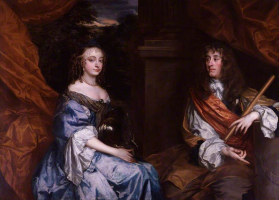


On 18th January 1701 Frederick I King Prussia (age 43) was created I King Prussia. Sophia Charlotte Hanover Queen Consort Prussia (age 32) by marriage Queen Consort Prussia.
On 18th January 1702 Petrus Johannes van Reysschoot was born at Ghent [Map].

On 18th January 1726 Frederick Henry Louis Hohenzollern was born to Frederick William "Soldier King" I King Prussia (age 37) and Sophia Dorothea Hanover Queen Consort Prussia (age 38). He a great x 3 grandson of King James I of England and Ireland and VI of Scotland. Coefficient of inbreeding 8.31%.
On 18th January 1760 Laurence Shirley 4th Earl Ferrers (age 39) shot his old family steward Johnson at Staunton Harold Hall Staunton Harold, Leicestershire. Thomas Kirkland (age 39) was called to attend the steward. He subsequently left the house covertly, brought a magistrate with armed men, and removed the wounded steward, Johnson, who soon died.
On 18th January 1803 Francis Grant was born to Francis Grant Laird of Kilgraston and Anne Oliphant of Rossie (age 37).
On 18th January 1805 Archbishop John Moore (age 74) died at Lambeth Palace [Map]. He was buried at St Mary at Lambeth Church, Surrey [Map].
On 18th January 1814 Frances Wheeler (age 88) died. She was buried at St Peter's Church, Ellastone.
Frances Wheeler: Around 1726 she was born.


Chronicle of a Bourgeois of Valenciennes
Récits d’un bourgeois de Valenciennes aka The Chronicle of a Bourgeois of Valenciennes is a vivid 14th-century vernacular chronicle written by an anonymous urban chronicler from Valenciennes in the County of Hainaut. It survives in a manuscript that describes local and regional history from about 1253 to 1366, blending chronology, narrative episodes, and eyewitness-style accounts of political, military, and social events in medieval France, Flanders, and the Low Countries. The work begins with a chronological framework of events affecting Valenciennes and its region under rulers such as King Philip VI of France and the shifting allegiances of local nobility. It includes accounts of conflicts, sieges, diplomatic manoeuvres, and the impact of broader struggles like the Hundred Years’ War on urban life in Hainaut. Written from the perspective of a burgher (bourgeois) rather than a monastery or royal court, the chronicle offers a rare lay viewpoint on high politics and warfare, reflecting how merchants, townspeople, and civic institutions experienced the turbulence of the 13th and 14th centuries. Its narrative style combines straightforward reporting of events with moral and civic observations, making it a valuable source for readers interested in medieval urban society, regional politics, and the lived experience of war and governance in pre-modern Europe.
Available at Amazon in eBook and Paperback format.
On 18th January 1817 Jane Austen (age 41) died. Memorial in Winchester Cathedral [Map].


The London Gazette 18326. War-Office, 18th January 1827
To be Lieutenant-Colonels of Infantry, by purchase.
Major John Earl of Wiltshire (age 30), from the 8th Light Dragoons. Dated 30th December 1826.
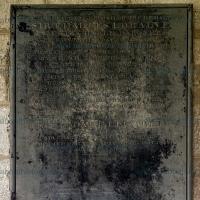
On 18th January 1833 Charles Loraine 5th Baronet (age 53) died. He was buried at St Wilfrid's Church, Kirkharle [Map] . His son William (age 31) succeeded 6th Baronet Loraine of Kirkharle in Northumberland.
Charles Loraine 5th Baronet: On 18th April 1779 he was born to William Loraine 4th Baronet and Hannah Allgood Lady Loraine. On 26th June 1800 Charles Loraine 5th Baronet and Elizabeth Campart Lady Loraine were married at the Church of St Nicholas, Chiswick by the Reverend Mr. Trebec, the rector.
William Lorraine 6th Baronet: On 9th April 1801 he was born to Charles Loraine 5th Baronet and Elizabeth Campart Lady Loraine. He was baptised on 6th May 1801 at Church of St Nicholas, Chiswick; his mother was visiting her family. Around 1840 Kirkharle Hall, Northumberland was sold by William Lorraine 6th Baronet to a local farmer; it was largely demolished. One wing was retained which was rebuilt as a farmhouse. On 29th May 1849 William Lorraine 6th Baronet died. His brother Charles succeeded 7th Baronet Loraine of Kirkharle in Northumberland.
On 18th January 1844 Francis Russell 9th Duke Bedford (age 24) and Elizabeth Sackville-West Duchess Bedford (age 25) were married. She by marriage Duchess Bedford. She the daughter of George Sackville-West 5th Earl De La Warr (age 52) and Elizabeth Sackville Countess De La Warr (age 48). They were third cousin once removed. He a great x 4 grandson of King Charles II of England Scotland and Ireland.
Queen Victoria's Journal 1848. 18th January 1848. Windsor Castle [Map]. A fine, frosty morning. — We took a walk after breakfast. — Poor Ld Powis (deceased) has died in a most melancholy way. The whole party were out shooting & his 3rd son (age 22) accidentally shot his father in the thigh. At 1st he went on well, but unfortunately mortification set in, & he died. It is too dreadful for the unfortunate son. — Vicky (age 7) sat to Dyce (age 41) [See image], who began a new drawing. — Mama (age 61) came to luncheon, & we walked out again afterwards. — Mama, &c — & Ld Liverpool (age 63) (staying till the end of the week) dined. —

18th January 1848. William Dyce (age 41). Portrait of Princess Victoria (age 7). See Queen Victoria's Journal.
On 18th January 1857 Frederick Fitzgerald was born to Charles William Fitzgerald Fitzgerald 4th Duke Leinster (age 37) and Caroline Leveson-Gower Duchess Leinster (age 29).
On 18th January 1858 William Cavendish 6th Duke Devonshire (age 67) died at Hardwick Hall, Derbyshire [Map]. He was buried in the Cavendish Plot, St Peter's Church, Edensor [Map]. His first cousin once removed William (age 49) succeeded 7th Duke Devonshire, 10th Earl Devonshire, 10th Baron Cavendish Hardwick. Baron Clifford abeyant.


On 18th January 1864 Henry Vane 2nd Duke Cleveland (age 76) died at the parish of St George's Church, Hanover Square. His brother William (age 71) succeeded 3rd Duke of Cleveland, 3rd Marquess of Cleveland, 5th Earl Darlington, 5th Viscount Barnard, 7th Baron Barnard, 3rd Baron Raby of Raby Castle in County Durham. Grace Caroline Lowther Duchess of Cleveland by marriage Duchess of Cleveland.

After 18th January 1867. Melbourne Cemetery, Derbyshire [Map]. Grave of Ensign Henry Edward Gooch of the Coldstream Guards, one of four men responsble for the pivotal closing of the gate at Hougomont Chateau during the Battle of Waterloo.
On 18th January 1871 William I King Prussia (age 73) was created I Emperor aka Kaiser.
Jean de Waurin's Chronicle of England Volume 6 Books 3-6: The Wars of the Roses
Jean de Waurin was a French Chronicler, from the Artois region, who was born around 1400, and died around 1474. Waurin’s Chronicle of England, Volume 6, covering the period 1450 to 1471, from which we have selected and translated Chapters relating to the Wars of the Roses, provides a vivid, original, contemporary description of key events some of which he witnessed first-hand, some of which he was told by the key people involved with whom Waurin had a personal relationship.
Available at Amazon in eBook and Paperback format.
On 18th January 1871 George Hayter (age 78) died.
On 26th September 1882 Walter Marsden was born to John Marsden at Church, Lancashire. He was baptised on 18th January 1883 at Church, Lancashire. His father's occupation on the 1891 census is Blacksmith. He married December 1916 Hilda Beatrice Hoare.

On 18th January 1890 Edward Henry Howard (age 57) died. Monument in Lichfield Cathedral [Map].
Edward Henry Howard: On 7th June 1832 he was born to Henry Edward John Howard.

On 14th January 1894 William John Butler (age 75) died. He was buried at Lincoln Cathedral [Map] on 18th January 1894. On 25th April 1896 a monument by Farmer & Brindley of red Verona marble with an alabaster effigy carved by Léon-Joseph Chavalliaud (age 35) was unveiled.

On 18th January 1899 Marie Melita Hohenlohe Langenburg Duchess Schleswig Holstein Sonderburg Glücksburg was born to Ernst Hohenlohe Langenburg II Prince (age 35) and Alexandra Windsor Princess (age 20) at Langenburg. She a great granddaughter of Queen Victoria of the United Kingdom. She married 5th February 1916 her fifth cousin Wilhelm Friedrich Christian Glücksburg Duke Schleswig Holstein Sonderburg Glücksburg, son of Friedrich Ferdinand Glücksburg Duke Schleswig Holstein Sonderburg Glücksburg and Victoria Friederike Oldenburg Duchess Schleswig Holstein Sonderburg Glücksburg, and had issue.
On 18th January 1919 Henry Arthur Mornington Wellesley 3rd Earl Cowley (deceased) was buried at Chippenham, Wiltshire [Map].
On 18th January 1928 Charles Gordon-Lennox 7th Duke Richmond (age 82) died. His son Charles (age 57) succeeded 8th Duke Richmond, 3rd Duke Gordon, 8th Earl March, 8th Baron Settrington. Hilda Madeline Brassey Duchess Richmond (age 55) by marriage Duchess Richmond, Duchess Gordon.
On 18th January 1958 Rosalind Cecilia Caroline Bingham Duchess Abercorn (age 88) died.
On 18th January 1980 Cecil Beaton (age 76) died.


On 18th January 1602 Robert Stewart was born to King James I of England and Ireland and VI of Scotland (age 35) and Anne of Denmark Queen Consort Scotland England and Ireland (age 27). He died aged less than one years old.
On 18th January 1608 Ferdinando Hastings 6th Earl Huntingdon was born to Henry Hastings 5th Earl Huntingdon (age 21) and Elizabeth Stanley Countess Huntingdon (age 20). He married 7th August 1623 his half sixth cousin Lucy Davies Countess Huntingdon and had issue.
On 18th January 1657 Simon Digby 4th Baron Digby was born to Kildare Digby 2nd Baron Digby (age 26). He married 27th August 1683 his fifth cousin Frances Noel Baroness Digby, daughter of Edward Noel 1st Earl Gainsborough and Elizabeth Wriothesley Countess Gainsborough, and had issue.
On 18th January 1659 Damaris Cudworth Lady Masham was born to Reverend Ralph Cudworth (age 42). She married 1685 Francis Masham 3rd Baronet, son of William Masham 2nd Baronet.
The Deeds of the Dukes of Normandy
The Gesta Normannorum Ducum [The Deeds of the Dukes of Normandy] is a landmark medieval chronicle tracing the rise and fall of the Norman dynasty from its early roots through the pivotal events surrounding the Norman Conquest of England. Originally penned in Latin by the monk William of Jumièges shortly before 1060 and later expanded at the behest of William the Conqueror, the work chronicles the deeds, politics, battles, and leadership of the Norman dukes, especially William’s own claim to the English throne. The narrative combines earlier historical sources with firsthand information and oral testimony to present an authoritative account of Normandy’s transformation from a Viking settlement into one of medieval Europe’s most powerful realms. William’s history emphasizes the legitimacy, military prowess, and governance of the Norman line, framing their expansion, including the conquest of England, as both divinely sanctioned and noble in purpose. Later chroniclers such as Orderic Vitalis and Robert of Torigni continued the history, extending the coverage into the 12th century, providing broader context on ducal rule and its impact. Today this classic work remains a foundational source for understanding Norman identity, medieval statesmanship, and the historical forces that reshaped England and Western Europe between 800AD and 1100AD.
Available at Amazon in eBook and Paperback format.
On 18th January 1669 Maria Antonia of Austria was born to Leopold Habsburg Spain I Holy Roman Emperor (age 28) and Margaret Theresa Habsburg Holy Roman Empress (age 17). Coefficient of inbreeding 30.98%. She married 15th July 1685 her second cousin Maximilian Wittelsbach II Elector Bavaria and had issue.
On 18th January 1676 John Annesley 4th Earl Anglesey was born to James Annesley 2nd Earl Anglesey (age 31) and Elizabeth Manners Countess Anglesey (age 22). He married 21st May 1706 Henrietta Stanley Countess Anglesey, daughter of William Stanley 9th Earl of Derby and Elizabeth Butler Countess Derby.
On 18th January 1679 Christiane Charlotte Oldenburg was born to Christian V King of Denmark and Norway (age 32) and Charlotte Amalie Hesse-Kassel Queen Consort Denmark and Norway (age 28). She died aged ten in 1689.
On 18th January 1688 Lionel Cranfield Sackville 1st Duke Dorset was born to Charles Sackville 6th Earl Dorset 1st Earl Middlesex (age 44) and Mary Compton Countess Dorset and Middlesex (age 19). He married January 1709 Elizabeth Colyear Duchess Dorset and had issue.
On 18th January 1691 William Finch was born to Daniel Finch 2nd Earl Nottingham 7th Earl Winchilsea (age 43) and Anne Hatton Countess Nottingham and Winchelsea. He married before 4th November 1752 his fourth cousin twice removed Charlotte Finch nee Fermor, daughter of Thomas Fermor 1st Earl Pomfret and Henriette Louise Jeffreys Countess Pomfret, and had issue.
On 18th January 1702 Petrus Johannes van Reysschoot was born at Ghent [Map].
On 18th January 1726 Frederick Henry Louis Hohenzollern was born to Frederick William "Soldier King" I King Prussia (age 37) and Sophia Dorothea Hanover Queen Consort Prussia (age 38). He a great x 3 grandson of King James I of England and Ireland and VI of Scotland. Coefficient of inbreeding 8.31%.
On 18th January 1734 Edward Bouverie was born to Jacob Bouverie 1st Viscount Folkestone (age 39) and Mary Clarke.
On 18th January 1752 Alexander Lindsay 6th Earl Balcarres 23rd Earl Crawford was born to James Lindsay 5th Earl Balcarres (age 60) and Anne Dalrymple Countess Balcarres (age 25). He married 1st June 1780 his first cousin Elizabeth Bradshaigh Dalrymple Countess Balcarres and had issue.
On 18th January 1772 Charlotte Maria Digby was born to Henry Digby 1st Earl Digby (age 40). She married 22nd July 1796 William Wingfield-Baker and had issue.
On 18th January 1775 Evelyn Henry Frederick Pierrepont was born to Charles Medows aka Pierrepont 1st Earl Manvers (age 37) and Anne Mills Countess Manvers (age 28).
On 18th January 1777 Henry Baring was born to Francis Baring 1st Baronet (age 36) and Harriet Herring Lady Baring (age 27). He married (1) 1802 Maria Matilda Bingham and had issue (2) 1825 Cecilia Anne Windham and had issue.
On 18th January 1803 Francis Grant was born to Francis Grant Laird of Kilgraston and Anne Oliphant of Rossie (age 37).
Chronicle of a Bourgeois of Valenciennes
Récits d’un bourgeois de Valenciennes aka The Chronicle of a Bourgeois of Valenciennes is a vivid 14th-century vernacular chronicle written by an anonymous urban chronicler from Valenciennes in the County of Hainaut. It survives in a manuscript that describes local and regional history from about 1253 to 1366, blending chronology, narrative episodes, and eyewitness-style accounts of political, military, and social events in medieval France, Flanders, and the Low Countries. The work begins with a chronological framework of events affecting Valenciennes and its region under rulers such as King Philip VI of France and the shifting allegiances of local nobility. It includes accounts of conflicts, sieges, diplomatic manoeuvres, and the impact of broader struggles like the Hundred Years’ War on urban life in Hainaut. Written from the perspective of a burgher (bourgeois) rather than a monastery or royal court, the chronicle offers a rare lay viewpoint on high politics and warfare, reflecting how merchants, townspeople, and civic institutions experienced the turbulence of the 13th and 14th centuries. Its narrative style combines straightforward reporting of events with moral and civic observations, making it a valuable source for readers interested in medieval urban society, regional politics, and the lived experience of war and governance in pre-modern Europe.
Available at Amazon in eBook and Paperback format.
On 18th January 1807 Captain John Neilson Gladstone was born to John Gladstone 1st Baronet (age 42) and Anne MacKenzie Robertson (age 35). He married 1839 Elizabeth Honoria Bateson, daughter of Robert Bateson 1st Baronet, and had issue.
On 18th January 1812 William Charles Wentworth-Fitzwilliam was born to Charles Wentworth-Fitzwilliam 5th and 3rd Earl Fitzwilliam (age 25) and Mary Dundas (age 24). Coefficient of inbreeding 6.25%. He married 15th August 1833 his sixth cousin Selina Jenkinson, daughter of Charles Jenkinson 3rd Earl Liverpool and Julia Evelyn Medley Shuckburgh-Evelyn, and had issue.
On 18th January 1815 Richard Wingfield 6th Viscount Powerscourt was born to Richard Wingfield 5th Viscount Powerscourt (age 24) and Frances Theodosia Jocelyn (age 20). He married 25th January 1836 his half first cousin Elizabeth Frances Jocelyn Viscountess Powerscout, daughter of Robert Jocelyn 3rd Earl Roden and Maria Frances Catherine Stapleton Countess Roden, and had issue.
On 18th January 1815 George Gough 2nd Viscount Gough was born to Hugh Gough 1st Viscount Gough (age 35) and Frances Maria Stephens. He married (1) 17th October 1841 Sarah-Elizabeth Palliser (2) 3rd June 1846 Jane Arbuthnot Viscountess Gough and had issue.
On 18th January 1830 Theophilus William Biddulph 7th Baronet was born to Theophilus Biddulph 6th Baronet (age 44) and Jane Rebecca Vyner Lady Biddulph (age 27). He married 18th June 1872 Mary Agnes Somerville Lady Biddulph and had issue.
On 18th January 1832 Henry Holroyd 3rd Earl Sheffield was born to George Augustus Frederick Charles Holroyd 2nd Earl Sheffield (age 29) and Harriet Lascelles Countess Sheffield (age 30) at Marylebone.
On 18th January 1838 Thomas Merthyr Guest was born to John Josiah Guest 1st Baronet (age 52) and Charlotte Elizabeth Bertie (age 25). He married 8th March 1877 Theodora Grosvenor, daughter of Richard Grosvenor 2nd Marquess Westminster and Elizabeth Mary Leveson-Gower Marchioness Westminster.
On 18th January 1857 Frederick Fitzgerald was born to Charles William Fitzgerald Fitzgerald 4th Duke Leinster (age 37) and Caroline Leveson-Gower Duchess Leinster (age 29).
On 18th January 1863 Charles Hepburn-Stuart-Forbes-Trefusis 21st Baron Clinton was born to Charles Hepburn-Stuart-Forbes-Trefusis 20th Baron Clinton (age 28) and Harriet Williamina Hepburn-Forbes Baroness Clinton (age 28). Coefficient of inbreeding 6.28%. He married 1st June 1886 his second cousin once removed Jane Grey McDonnell Baroness Clinton, daughter of Mark Kerr aka McDonnell 5th Earl of Antrim and Jane Macan Countess of Antrim, and had issue.
On 18th January 1871 Francis Lambton was born to George Frederick D'Arcy Lambton 2nd Earl Durham (age 42) and Beatrix Frances Hamilton Countess Durham.
On 18th January 1880 Sidney Patrick Shelley 8th Baronet was born to Charles Shelley 5th Baronet (age 41).
On 18th January 1881 Major Arthur Hamilton Cooper was born to William Charles Cooper 3rd Baronet Cooper (age 29). He married 25th January 1910 Mabel Alice Smith-Marriott, daughter of William Smith-Marriott 5th Baronet and Elizabeth Dorothy Cavendish.
On 18th January 1881 George Arthur Hamilton Beaumont 11th Baronet was born to George Howland William Beaumont 10th Baronet (age 29).
On 26th September 1882 Walter Marsden was born to John Marsden at Church, Lancashire. He was baptised on 18th January 1883 at Church, Lancashire. His father's occupation on the 1891 census is Blacksmith. He married December 1916 Hilda Beatrice Hoare.
On 18th January 1883 John Ernest de Grey Henniker-Major 7th Baron Henniker was born to John Major Henniker-Major 5th Baron Henniker (age 40) and Alice Mary Cuffe Baroness Henniker (age 38).
On 18th January 1890 Joseph Henry Bernard Doughty-Tichborne 13th Baronet was born to Henry Alfred Doughty-Tichborne 12th Baronet (age 23) and Mary Gwendoline Petre (age 24).
The History of William Marshal was commissioned by his son shortly after William’s death in 1219 to celebrate the Marshal’s remarkable life; it is an authentic, contemporary voice. The manuscript was discovered in 1861 by French historian Paul Meyer. Meyer published the manuscript in its original Anglo-French in 1891 in two books. This book is a line by line translation of the first of Meyer’s books; lines 1-10152. Book 1 of the History begins in 1139 and ends in 1194. It describes the events of the Anarchy, the role of William’s father John, John’s marriages, William’s childhood, his role as a hostage at the siege of Newbury, his injury and imprisonment in Poitou where he met Eleanor of Aquitaine and his life as a knight errant. It continues with the accusation against him of an improper relationship with Margaret, wife of Henry the Young King, his exile, and return, the death of Henry the Young King, the rebellion of Richard, the future King Richard I, war with France, the death of King Henry II, and the capture of King Richard, and the rebellion of John, the future King John. It ends with the release of King Richard and the death of John Marshal.
Available at Amazon in eBook and Paperback format.
On 18th January 1896 Walter James 4th Baron Northbourne was born to Walter James 3rd Baron Northbourne (age 26). He married 1925 Katherine Louise Nickerson Baroness Northbourne.
On 18th January 1896 Edward Crofton was born to Arthur Crofton 4th Baron Crofton (age 29).
On 18th January 1899 Marie Melita Hohenlohe Langenburg Duchess Schleswig Holstein Sonderburg Glücksburg was born to Ernst Hohenlohe Langenburg II Prince (age 35) and Alexandra Windsor Princess (age 20) at Langenburg. She a great granddaughter of Queen Victoria of the United Kingdom. She married 5th February 1916 her fifth cousin Wilhelm Friedrich Christian Glücksburg Duke Schleswig Holstein Sonderburg Glücksburg, son of Friedrich Ferdinand Glücksburg Duke Schleswig Holstein Sonderburg Glücksburg and Victoria Friederike Oldenburg Duchess Schleswig Holstein Sonderburg Glücksburg, and had issue.
On 18th January 1910 Guy Theophilus Halswell Campbell 5th Baronet was born to Guy Colin Campbell 4th Baronet (age 24) and Mary Arabella Swinnerton Kemeys-Tynte.
On 18th January 1928 Reverend John Olpherts Campbell Alleyne 5th Baronet was born to John Meynell Alleyne 4th Baronet (age 38).
On 18th January 1934 Hugh Cholmondeley 5th Baron Delamere was born to Thomas Cholmondeley 4th Baron Delamere (age 33) and Phyllis Anne Montagu-Douglas-Scott Baroness Delamere (age 30).
On 18th January 1943 John Richard Shelley 11th Baronet was born to John Shelley (age 27).
On 18th January 1945 Charles Henry Robert Dillon 21st Viscount Dillon was born to Lieutenant-Colonel Michael Eric Dillon 20th Viscount Dillon (age 33).
On 18th January 1486 King Henry VII of England and Ireland (age 28) and Elizabeth of York (age 19) were married at Westminster Abbey [Map]. She by marriage Queen Consort England. She the daughter of King Edward IV of England and Elizabeth Woodville Queen Consort England (age 49). He the son of Edmund Tudor 1st Earl Richmond and Margaret Beaufort Countess Richmond (age 42). They were third cousins. He a great x 3 grandson of King Edward III of England.
On 18th January 1640 Francis Drake 2nd Baronet (age 22) and Dorothy Pym were married at St Margaret's Church, Westminster [Map]. There was no issue from the marriage.
On 18th January 1670 James Drummond 1st Duke Perth (age 22) and Jean Douglas (age 27) were married. She the daughter of William Douglas 1st Marquess Douglas and Mary Gordon Marchioness Douglas (age 70). He the son of James Drummond 3rd Earl Perth (age 55) and Anne Gordon. They were first cousin once removed.
William of Worcester's Chronicle of England
William of Worcester, born around 1415, and died around 1482 was secretary to John Fastolf, the renowned soldier of the Hundred Years War, during which time he collected documents, letters, and wrote a record of events. Following their return to England in 1440 William was witness to major events. Twice in his chronicle he uses the first person: 1. when writing about the murder of Thomas, 7th Baron Scales, in 1460, he writes '… and I saw him lying naked in the cemetery near the porch of the church of St. Mary Overie in Southwark …' and 2. describing King Edward IV's entry into London in 1461 he writes '… proclaimed that all the people themselves were to recognize and acknowledge Edward as king. I was present and heard this, and immediately went down with them into the city'. William’s Chronicle is rich in detail. It is the source of much information about the Wars of the Roses, including the term 'Diabolical Marriage' to describe the marriage of Queen Elizabeth Woodville’s brother John’s marriage to Katherine, Dowager Duchess of Norfolk, he aged twenty, she sixty-five or more, and the story about a paper crown being placed in mockery on the severed head of Richard, 3rd Duke of York.
Available at Amazon in eBook and Paperback format.
On 18th January 1736 Gabriel Hanger 1st Baron Coleraine (age 39) and Elizabeth Bond Baroness Coleraine were married.
On 18th January 1844 Francis Russell 9th Duke Bedford (age 24) and Elizabeth Sackville-West Duchess Bedford (age 25) were married. She by marriage Duchess Bedford. She the daughter of George Sackville-West 5th Earl De La Warr (age 52) and Elizabeth Sackville Countess De La Warr (age 48). They were third cousin once removed. He a great x 4 grandson of King Charles II of England Scotland and Ireland.
On 18th January 1897 Bishop Leonard Jauncey White Thompson (age 33) and Margaret Adela Hepburn-Stuart-Forbes-Trefusis were married. They had three sons and a daughter.
On 18th January 1921 John Richard Duckworth-King 7th Baronet (age 21) and Norah Sybil Charlotte Levy were married. They were divorced in 1933.
On 18th January 1944 Edward Stanley 6th Baron Stanley, 6th Baron Sheffield, 5th Baron Eddisbury (age 36) and Sylvia Hawkes Baroness Stanley (age 39) were married. She by marriage Baroness Stanley Alderley.
On 18th January 1980 Merlin Hanbury-Tracy 7th Baron Sudeley (age 40) and Elizabeth Mairi Keppel Baroness Sudeley (age 38) were married. She by marriage Baroness Sudeley of Toddington in Gloucestershire.
On 18th January 1060 Bishop Duduc died.
On 18th January 1234 Philip Capet Count Boulogne (age 33) died.
On 18th January 1256 Maria Reginar Duchess Bavaria (age 30) was beheaded having been accused of adultery by her husband Louis "Strict" Wittelsbach II Duke Upper Bavaria (age 26) although there was no proof.
On 18th January 1326 Robert Fitzwalter 1st Baron Fitzwalter (age 79) died. His son Robert (age 26) succeeded 2nd Baron Fitzwalter. Not clear why his father Robert Fitzwalter 2nd Baron Fitzwalter didn't succeed? Joan de Multon Baroness Fitzwalter (age 22) by marriage Baroness Fitzwalter.
Chronicle of Geoffrey le Baker of Swinbroke
Baker was a secular clerk from Swinbroke, now Swinbrook, an Oxfordshire village two miles east of Burford. His Chronicle describes the events of the period 1303-1356: Gaveston, Bannockburn, Boroughbridge, the murder of King Edward II, the Scottish Wars, Sluys, Crécy, the Black Death, Winchelsea and Poitiers. To quote Herbert Bruce 'it possesses a vigorous and characteristic style, and its value for particular events between 1303 and 1356 has been recognised by its editor and by subsequent writers'. The book provides remarkable detail about the events it describes. Baker's text has been augmented with hundreds of notes, including extracts from other contemporary chronicles, such as the Annales Londonienses, Annales Paulini, Murimuth, Lanercost, Avesbury, Guisborough and Froissart to enrich the reader's understanding. The translation takes as its source the 'Chronicon Galfridi le Baker de Swynebroke' published in 1889, edited by Edward Maunde Thompson.
Available at Amazon in eBook and Paperback format.
On 18th January 1355 Piers Mauley 3rd Baron de Mauley (age 55) died at Mulgrave Castle. His son Piers (age 24) succeeded 4th Baron Mauley.
On 18th January 1357 Maria Burgundy Queen Consort Castile (age 44) died.
On 18th January 1367 Peter I King Portugal (age 46) died. His son Ferdinand (age 21) succeeded I King Portugal.
On 18th January 1425 Edmund Mortimer 5th Earl March 7th Earl of Ulster (age 33) died at Trim Castle. He was buried at Clare Priory, Suffolk [Map]. His nephew Richard (age 13) succeeded 6th Earl March, 5th Earl of Ulster, 8th Baron Mortimer of Wigmore.
On 18th January 1645 John Maitland 1st Earl Lauderdale died. His son John (age 28) succeeded 2nd Earl Lauderdale, 2nd Viscount Maitland, 2nd Viscount Lauderdale.
On 18th January 1650 Robert Ker 1st Earl Roxburghe (age 80) died at Floors Castle. His grandson William (age 27) succeeded 2nd Earl Roxburghe.
On 18th January 1673 Tristram Beresford 1st Baronet (age 78) died. His son Randal (age 37) succeeded 2nd Baronet Beresford of Coleraine in Londonderry. Catherine Annesley Lady Beresford (age 39) by marriage Lady Beresford of Coleraine in Londonderry.
On 18th January 1680 George Carteret 1st Baronet (age 70) died. His grandson George (age 12) succeeded 2nd Baronet Carteret of Metesches in Jersey.
On 18th January 1689 Ernest Günther Oldenburg I Duke Schleswig Holstein Sonderburg Augustenburg (age 79) died. His son Frederick (age 20) succeeded William I Duke Schleswig Holstein Sonderburg Augustenburg.
On 18th January 1697 Erasmus Philipps 3rd Baronet (age 74) died. His son John (age 31) succeeded 4th Baronet Philips of Picton Castle.
The History of William Marshal was commissioned by his son shortly after William’s death in 1219 to celebrate the Marshal’s remarkable life; it is an authentic, contemporary voice. The manuscript was discovered in 1861 by French historian Paul Meyer. Meyer published the manuscript in its original Anglo-French in 1891 in two books. This book is a line by line translation of the first of Meyer’s books; lines 1-10152. Book 1 of the History begins in 1139 and ends in 1194. It describes the events of the Anarchy, the role of William’s father John, John’s marriages, William’s childhood, his role as a hostage at the siege of Newbury, his injury and imprisonment in Poitou where he met Eleanor of Aquitaine and his life as a knight errant. It continues with the accusation against him of an improper relationship with Margaret, wife of Henry the Young King, his exile, and return, the death of Henry the Young King, the rebellion of Richard, the future King Richard I, war with France, the death of King Henry II, and the capture of King Richard, and the rebellion of John, the future King John. It ends with the release of King Richard and the death of John Marshal.
Available at Amazon in eBook and Paperback format.

On 18th January 1716 Robert Burdett 3rd Baronet (age 76) died. His grandson Robert succeeded 4th Baronet Burdett of Bramcote in Warwickshire. The title had originally been claimed by Walter, younger brother of Robert Burdett 3rd Baronet. However, Elizabeth Tracy (age 35), wife of Robert Burdett 3rd Baronet's son Robert, who had died sixteen days before his father, subsequently gave birth to a son who became the 4th Baronet.

On 18th January 1718 Elisabeth Nassau Beverweert Countess Arlington (age 84) died.
On 18th January 1725 Hugh Cholmondeley 1st Earl Cholmondeley (age 63) died. His brother George (age 59) succeeded 2nd Earl Cholmondeley in Cheshire, 2nd Viscount Malpas in Cheshire, 3rd Viscount Cholmondeley of Kells in County Meath, 2nd Baron Cholmondeley Nampwich in Cheshire.
On 18th January 1728 John Crispe 3rd Baronet (age 52) died. His son Nicholas (age 10) succeeded 4th Baronet Crispe of Hammersmith in Middlesex.
On 18th January 1753 Thomas Lyon 8th Earl Strathmore and Kinghorne (age 49) died. His son John (age 15) succeeded 9th Earl Strathmore and Kinghorne.
On 18th January 1756 Henrietta Chudleigh Lady Chudleigh died.
On 18th January 1768 Samuel Fludyer 1st Baronet (age 64) died. His son Samuel (age 8) succeeded 2nd Baronet Fludyer.
On 18th January 1772 William Maynard 4th Baronet (age 51) died. His son Charles (age 19) succeeded 5th Baronet Maynard of Walthamstow in Essex.
On 18th January 1805 Archbishop John Moore (age 74) died at Lambeth Palace [Map]. He was buried at St Mary at Lambeth Church, Surrey [Map].
On 18th January 1805 Richard Heron 1st Baronet (age 79) died. His nephew Robert (age 39) succeeded 2nd Baronet Heron of Newark upon Trent.
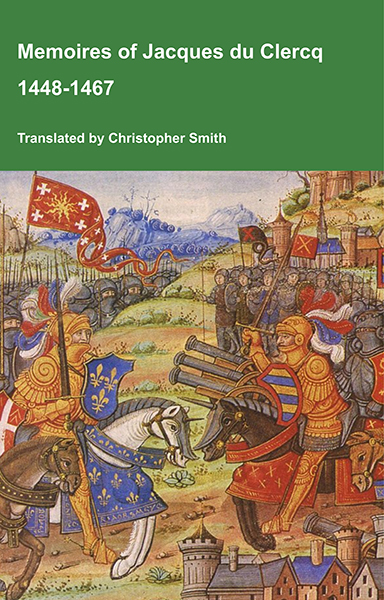
This is a translation of the 'Memoires of Jacques du Clercq', published in 1823 in two volumes, edited by Frederic, Baron de Reissenberg. In his introduction Reissenberg writes: 'Jacques du Clercq tells us that he was born in 1424, and that he was a licentiate in law and a counsellor to Philip the Good, Duke of Burgundy, in the castellany of Douai, Lille, and Orchies. It appears that he established his residence at Arras. In 1446, he married the daughter of Baldwin de la Lacherie, a gentleman who lived in Lille. We read in the fifth book of his Memoirs that his father, also named Jacques du Clercq, had married a lady of the Le Camelin family, from Compiègne. His ancestors, always attached to the counts of Flanders, had constantly served them, whether in their councils or in their armies.' The Memoires cover a period of nineteen years beginning in in 1448, ending in in 1467. It appears that the author had intended to extend the Memoirs beyond that date; no doubt illness or death prevented him from carrying out this plan. As Reissenberg writes the 'merit of this work lies in the simplicity of its narrative, in its tone of good faith, and in a certain air of frankness which naturally wins the reader’s confidence.' Du Clercq ranges from events of national and international importance, including events of the Wars of the Roses in England, to simple, everyday local events such as marriages, robberies, murders, trials and deaths, including that of his own father in Book 5; one of his last entries.
Available at Amazon in eBook and Paperback format.
On 18th January 1832 Anne North Countess Sheffield (age 71) died.
On 18th January 1833 Charles Loraine 5th Baronet (age 53) died. He was buried at St Wilfrid's Church, Kirkharle [Map] . His son William (age 31) succeeded 6th Baronet Loraine of Kirkharle in Northumberland.
Charles Loraine 5th Baronet: On 18th April 1779 he was born to William Loraine 4th Baronet and Hannah Allgood Lady Loraine. On 26th June 1800 Charles Loraine 5th Baronet and Elizabeth Campart Lady Loraine were married at the Church of St Nicholas, Chiswick by the Reverend Mr. Trebec, the rector.
William Lorraine 6th Baronet: On 9th April 1801 he was born to Charles Loraine 5th Baronet and Elizabeth Campart Lady Loraine. He was baptised on 6th May 1801 at Church of St Nicholas, Chiswick; his mother was visiting her family. Around 1840 Kirkharle Hall, Northumberland was sold by William Lorraine 6th Baronet to a local farmer; it was largely demolished. One wing was retained which was rebuilt as a farmhouse. On 29th May 1849 William Lorraine 6th Baronet died. His brother Charles succeeded 7th Baronet Loraine of Kirkharle in Northumberland.
On 18th January 1833 Frances Pratt Marchioness Londonderry (age 82) died.
On 18th January 1835 Thomas Colyear 4th Earl Portmore (age 62) died. Earl Portmore extinct.
On 18th January 1836 Henry Russell 1st Baronet (age 84) died. His son Henry (age 53) succeeded 2nd Baronet Russell of Swallowfield in Berkshire.
On 18th January 1843 Thomas Henry Foster aka Skeffington 2nd Viscount Ferrard (age 71) died. His son John (age 30) succeeded 3rd Viscount Ferrard, 3rd Baron Oriel, 3rd Baron Oriel of Ferrand in Louth.
On 18th January 1858 William Cavendish 6th Duke Devonshire (age 67) died at Hardwick Hall, Derbyshire [Map]. He was buried in the Cavendish Plot, St Peter's Church, Edensor [Map]. His first cousin once removed William (age 49) succeeded 7th Duke Devonshire, 10th Earl Devonshire, 10th Baron Cavendish Hardwick. Baron Clifford abeyant.
On 18th January 1864 Henry Vane 2nd Duke Cleveland (age 76) died at the parish of St George's Church, Hanover Square. His brother William (age 71) succeeded 3rd Duke of Cleveland, 3rd Marquess of Cleveland, 5th Earl Darlington, 5th Viscount Barnard, 7th Baron Barnard, 3rd Baron Raby of Raby Castle in County Durham. Grace Caroline Lowther Duchess of Cleveland by marriage Duchess of Cleveland.
On 18th January 1871 George Hayter (age 78) died.

On 18th January 1873 Edward George Bulwer-Lytton 1st Baron Lytton (age 69) died. His son Edward (age 41) succeeded 2nd Baron Lytton of Knebworth in Hertfordshire, 2nd Baronet Bulwer of Knebworth in Hertfordshire.
Chronicle of Abbot Ralph of Coggeshall
The Chronicle of Abbot Ralph of Coggeshall (Chronicon Anglicanum) is an indispensable medieval history that brings to life centuries of English and European affairs through the eyes of a learned Cistercian monk. Ralph of Coggeshall, abbot of the Abbey of Coggeshall in Essex in the early 13th century, continued and expanded his community’s chronicle, documenting events from the Norman Conquest of 1066 into the tumultuous reign of King Henry III. Blending eyewitness testimony, careful compilation, and the monastic commitment to record-keeping, this chronicle offers a rare narrative of political intrigue, royal power struggles, and social upheaval in England and beyond. Ralph’s work captures the reigns of pivotal figures such as Richard I and King John, providing invaluable insights into their characters, decisions, and the forces that shaped medieval rule. More than a simple annal, Chronicon Anglicanum conveys the texture of medieval life and governance, making it a rich source for scholars and readers fascinated by English history, monastic authorship, and the shaping of the medieval world.
Available at Amazon in eBook and Paperback format.
On 18th January 1874 Montague Cholmeley 2nd Baronet (age 71) died. His son Hugh (age 34) succeeded 3rd Baronet Cholmeley of Easton in Lincolnshire.
On 18th January 1885 Arthur Egerton 3rd Earl Wilton (age 52) died. His brother Seymour (age 45) succeeded 4th Earl Wilton, 4th Viscount Grey de Wilton. Laura Caroline Russell Countess Wilton (age 43) by marriage Countess Wilton. Baron Grey de Radclyffe in Lancashire extinct.
On 18th January 1891 Mathew Wilson 1st Baronet (age 88) died. His son Mathew (age 64) succeeded 2nd Baronet Wilson of Eshton Hall in Yorkshire.
On 14th January 1894 William John Butler (age 75) died. He was buried at Lincoln Cathedral [Map] on 18th January 1894. On 25th April 1896 a monument by Farmer & Brindley of red Verona marble with an alabaster effigy carved by Léon-Joseph Chavalliaud (age 35) was unveiled.
On 18th January 1902 Henry George Paston-Bedingfeld 7th Baronet (age 71) died. His son Henry (age 41) succeeded 8th Baronet Paston-Bedingfield of Oxburgh in Norfolk.
On 18th January 1904 Mabel Edith Hood Baroness Ashburton (age 37) died.
On 18th January 1905 Robert Alfred Cunliffe 5th Baronet (age 66) died. His son Foster (age 29) succeeded 6th Baronet Cunliffe of Liverpool in Lancaster.
On 18th January 1917 Victor Bruce 13th Earl Kincardine 9th Earl Elgin (age 67) died.
On 18th January 1918 Francis Edmund Cecil Byng 5th Earl Strafford (age 83) died. His son Edmund (age 55) succeeded 6th Earl Strafford, 6th Viscount Enfield of Enfield in Middlesex, 6th Baron Strafford of Harmondsworth in Middlesex. Mary Elizabeth Colebrooke Countess Strafford (age 54) by marriage Countess Strafford.
On 18th January 1923 Henry Berkeley Portman 3rd Viscount Portman (age 62) died. His brother Claud (age 58) succeeded 4th Viscount Portman, 4th Baron Portman.
On 18th January 1928 Charles Gordon-Lennox 7th Duke Richmond (age 82) died. His son Charles (age 57) succeeded 8th Duke Richmond, 3rd Duke Gordon, 8th Earl March, 8th Baron Settrington. Hilda Madeline Brassey Duchess Richmond (age 55) by marriage Duchess Richmond, Duchess Gordon.
The Deeds of the Dukes of Normandy
The Gesta Normannorum Ducum [The Deeds of the Dukes of Normandy] is a landmark medieval chronicle tracing the rise and fall of the Norman dynasty from its early roots through the pivotal events surrounding the Norman Conquest of England. Originally penned in Latin by the monk William of Jumièges shortly before 1060 and later expanded at the behest of William the Conqueror, the work chronicles the deeds, politics, battles, and leadership of the Norman dukes, especially William’s own claim to the English throne. The narrative combines earlier historical sources with firsthand information and oral testimony to present an authoritative account of Normandy’s transformation from a Viking settlement into one of medieval Europe’s most powerful realms. William’s history emphasizes the legitimacy, military prowess, and governance of the Norman line, framing their expansion, including the conquest of England, as both divinely sanctioned and noble in purpose. Later chroniclers such as Orderic Vitalis and Robert of Torigni continued the history, extending the coverage into the 12th century, providing broader context on ducal rule and its impact. Today this classic work remains a foundational source for understanding Norman identity, medieval statesmanship, and the historical forces that reshaped England and Western Europe between 800AD and 1100AD.
Available at Amazon in eBook and Paperback format.
On 18th January 1929 Reverend John Cæsar Hawkins 4th Baronet (age 91) died. His first cousin John (age 53) succeeded 5th Baronet Hawkins of Kelston in Somerset.
On 18th January 1932 William Willoughby Williams 5th Baronet (age 43) died. His brother Hugh (age 42) succeeded 6th Baronet Williams of Bodelwyddan in Flintshire.
On 18th January 1937 Frederick Pollock 3rd Baronet (age 91) died. His son Frederick (age 58) succeeded 4th Baronet Pollock of Hatton in Middlesex.

On 18th January 1949 Edward Partington 3rd Baron Doverdale (age 44) died. Baron Doverdale of Westwood Park in Worcestershire extinct.
On 18th January 1958 Esmé Grace Virginia Wolton Baroness Savile died.
On 18th January 1958 Rosalind Cecilia Caroline Bingham Duchess Abercorn (age 88) died.
On 18th January 1962 Charles Samuel Rowley 6th Baronet (age 70) died. His son Joshua (age 41) succeeded 7th Baronet Rowley of Tendring Hall in Suffolk.
On 18th January 1980 Cecil Beaton (age 76) died.
On 18th January 1985 Noel Lytton 4th Earl of Lytton (age 84) died. His son John (age 34) succeeded 5th Earl of Lytton in Derbyshire, 18th Baron Wentworth, 22nd Baron Despencer, 6th Baron Lytton of Knebworth in Hertfordshire, 6th Baronet Bulwer of Knebworth in Hertfordshire.
On 18th January 2004 Charles Hardinge 6th Viscount Hardinge (age 47) died. His brother Andrew (age 44) succeeded 7th Viscount Hardinge of Lahore and Kings Newton in Derbyshire.
On 18th January 2008 Timothy Edward Charles Hoare 8th Baronet (age 73) died. His son Charles (age 36) succeeded 9th Baronet Hoare of Annabella in County Cork.
Annals of the six Kings of England by Nicholas Trivet
Translation of the Annals of the Six Kings of England by that traces the rise and rule of the Angevin aka Plantagenet dynasty from the mid-12th to early 14th century. Written by the Dominican scholar Nicholas Trivet, the work offers a vivid account of English history from the reign of King Stephen through to the death of King Edward I, blending political narrative with moral reflection. Covering the reigns of six monarchs—from Stephen to Edward I—the chronicle explores royal authority, rebellion, war, and the shifting balance between crown, church, and nobility. Trivet provides detailed insight into defining moments such as baronial conflicts, Anglo-French rivalry, and the consolidation of royal power under Edward I, whose reign he describes with particular immediacy. The Annals combines careful year-by-year reporting with thoughtful interpretation, presenting history not merely as a sequence of events but as a moral and political lesson. Ideal for readers interested in medieval history, kingship, and the origins of the English state, this chronicle remains a valuable and accessible window into the turbulent world of the Plantagenet kings.
Available at Amazon in eBook and Paperback format.
On 18th January 2009 William Robertson 2nd Baron Robertson (age 78) died. His son William (age 33) succeeded 3rd Baron Robertson of Oakridge in Gloucestershire, 4th Baronet Robertson of Welbourn in Lincolnshire.