

Chronicle of Abbot Ralph of Coggeshall
The Chronicle of Abbot Ralph of Coggeshall (Chronicon Anglicanum) is an indispensable medieval history that brings to life centuries of English and European affairs through the eyes of a learned Cistercian monk. Ralph of Coggeshall, abbot of the Abbey of Coggeshall in Essex in the early 13th century, continued and expanded his community’s chronicle, documenting events from the Norman Conquest of 1066 into the tumultuous reign of King Henry III. Blending eyewitness testimony, careful compilation, and the monastic commitment to record-keeping, this chronicle offers a rare narrative of political intrigue, royal power struggles, and social upheaval in England and beyond. Ralph’s work captures the reigns of pivotal figures such as Richard I and King John, providing invaluable insights into their characters, decisions, and the forces that shaped medieval rule. More than a simple annal, Chronicon Anglicanum conveys the texture of medieval life and governance, making it a rich source for scholars and readers fascinated by English history, monastic authorship, and the shaping of the medieval world.
Available at Amazon in eBook and Paperback format.
18 Oct is in October.
1016 Battle of Assandun aka Ashingdon
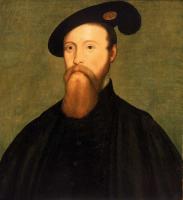
1470 Execution of John Tiptoft
Economium Emmae Reginae. Thus Edmund (age 26), for so was called the young man who had gathered the army, when Cnut had withdrawn, came with a host not merely great but innumerable, and entered the city with pomp and pride. Immediately all the people followed him, obeyed him, and favoured him, urging him to show himself a man of courage, saying that they would choose him rather than the prince of the Danes. The chief earl of his party was Eadric, a man abounding in counsel but full of cunning deceit, whom Edmund had set close beside his ear in all his counsels. It is said that the young man at that time challenged King Cnut, as he was departing, to single combat; but the wise king is said to have answered thus: "I will await the fitting time for battle, when, trusting not to chance but assured of victory, I shall fight. But you, who are eager for combat in the dead of winter, beware lest you fail when the season is more favorable." So the king, as has been said, spent the winter in Sheppey, which in Latin means the Isle of Sheep, as best he could. But Edmund, remaining in London, with his army dismissed, spent his last winter there.
Aedmund itaque – sic enim iuvenis qui exercitum colligerat dictus est – recedente Cnutone, cum populo non mediocri sed innumerabili veniens, civitatem pompatice ingreditur, et mox eum universi sequuntur, obtemperant et favent, et virum fortem fieri suadent, dicentes quod eum magis quam Danorum principem eligerent. Erat quoque eius partis comes primus Edricus, consiliis pollens sed tamen dolositate versipellis, quem sibi ad aurem posuerat Aedmund in omnibus negotiis. Fertur autem ipse iuvenis illo tempore domino Cnutoni recedenti singularem pugnam obtulisse; sed rex sapiens dicitur sic respondisse: Ego tempus luctae praestolabor congruae, dum non casum suspectus, certus fuero victoriae; tu vero, qui aves duellum in hieme, cave ne deficias etiam aptiori tempore. Sic rex ut dictum est Scepei, quod est dictum latine insula ovium, ut poterat hiemavit. Aedmund autem in Londonia, dimisso exercitu, ultimam hiemem duxit.
 Become a Member via our Buy Me a Coffee page to read more.
On 18th October 1016 Battle of Assandun aka Ashingdon was fought between the Danish army of King Cnut of England (age 21) and the English army commanded by King Edmund "Ironside" I of England (age 26) who was defeated. Following the battle King Edmund "Ironside" I of England was compelled to agree to King Cnut of England reigning over all Engliand except Wessex, and to mutual succession ie one will succeed whoever dies first.
Anglo-Saxon Chronicle. 18th October 1016. When the king (age 26) understood that the army was up, then collected he the fifth time all the English nation, and went behind them, and overtook them in Essex, on the down called Assingdon; where they fiercely came together. Then did Eadric Streona as he often did before-he first began the flight with the Maisevethians, and so betrayed his natural lord and all the people of England. There had Knute (age 21) the victory, though all England fought against him! There was then slain Bishop Ednoth, and Abbot Wulsy, and Alderman Elfric, and Alderman Godwin of Lindsey, and Ulfkytel of East-Anglia, and Ethelward, the son of Alderman Ethelsy59. And all the nobility of the English nation was there undone! After this fight went King Knute up with his army into Glocestershire, where he heard say that King Edmund was. Then advised Earldorman Eadric Streona, and the counsellors that were there assembled, that the kings should make peace with each other, and produce hostages. Then both the kings met together at Olney, Buckinghamshire [Map], south of Deerhurst, and became allies and sworn brothers. There they confirmed their friendship both with pledges and with oaths, and settled the pay of the army. With this covenant they parted: King Edmund took to Wessex, and Knute to Mercia and the northern district. The army then went to their ships with the things they had taken; and the people of London made peace with them, and purchased their security, whereupon they brought their ships to London, and provided themselves winter-quarters therein.
Note 59. There is a marked difference respecting the name of this alderman in MSS. Some have Ethelsy, as above; others, Elfwine, and Ethelwine. The two last may be reconciled, as the name in either case would now be Elwin; but Ethelsy, and Elsy are widely different. Florence of Worcester not only supports the authority of Ethelwine, but explains it "Dei amici."
Economium Emmae Reginae. [18th October 1016] When the winter season had passed, Edmund (age 26) once more gathered his army during the whole of Lent, and soon after Easter prepared to drive the king and the Danes out of the land of the English. Coming, therefore, with an innumerable multitude, he planned suddenly to attack them. But the report did not escape the Danes, who, leaving their ships behind, took to the land, and made ready to receive whatever might come against them. For they had a banner of wondrous portent, which, though I may believe it to seem incredible to the reader, yet, because it is true, I will insert into this true account. Indeed, though it was woven of the simplest and purest silk, and bore no image or figure embroidered upon it, yet at the time of battle there was always seen upon it a raven, as if woven within the fabric, when their side was to be victorious, the raven appeared with open beak, beating its wings, and standing unsteady upon its feet; but when their side was defeated, it was seen motionless and drooping in every part. When Thorkell, the leader of their first battle, saw this, he cried out: "Let us fight manfully, comrades! There shall be no danger for us, the restless raven of our prophetic standard bears witness to our victory!" Hearing this, the Danes became more daring, and, hardened in their iron armor, they advanced to meet the English in a place called Aescenedun, which we Latins may interpret as "the Hill of the Ash Trees." And there, even before the armies joined battle, Eadric, whom we said was the chief of Edmund's earls, spoke these words to his men: "Let us flee, comrades, and withdraw our lives from the death that threatens; otherwise we shall perish at once, for I know well the hardness of the Danes." And, veiling the standard which he carried in his right hand, he turned his back on the enemy, and by his flight defrauded the army of a great part of its strength. And, as some say, he did this not from fear, but from treachery, as later became clear; for, as many assert, he had secretly promised the Danes to do so, in return for some unknown reward. Then Edmund, seeing this and pressed on every side, cried out: "O Englishmen! Either you will fight today, or all together you will go into bondage. Fight therefore for freedom and for your country, brave men! As for those who flee, being cowardly, if they had not departed, they would only have hindered our army." Saying this, he charged into the midst of the enemy, cutting down the Danes on every side, and by his example made his own men, the nobles, more eager to fight.
Then was joined a fierce battle on foot, for the Danes, though fewer in number, chose annihilation rather than the peril of flight. They stood firm like men and fought bravely, and the combat, begun at the ninth hour of the day, lasted into the evening, not that they unwillingly met the swords of others, but rather that they pressed upon others with the points of their own. On both sides armed men fell, yet more from that host which had the greater numbers. And when the time of evening drew near and the shadows of night approached, their love of victory overcame the perils of darkness; for neither did they fear the coming of night, being consumed by a greater care, nor would they yield even to the darkness, while they still burned to prevail over the enemy. And unless the bright moon had shown them where the foe was, each man might have struck down his own comrade, thinking him an enemy resisting, and none of either side would have survived except those whom flight had saved. Meanwhile, the English began to grow weary and little by little to think of flight, when they saw that the Danes were resolved either to conquer or to perish to the last man together. For the Danes now seemed to them more numerous and, in that long-continued struggle, the stronger; they truly deemed them stronger, and with good reason, for now, stung by the goads of steel and angered by the fall of their comrades, they seemed rather to rage than to fight. Then the English, turning their backs, fled here and there without delay, falling before their adversaries, and so added glory to the honour of Cnut and his victory, while Edmund their prince fled in shame. Yet though overcome, he withdrew yielding only to the stronger, still not wholly despairing, and entrusted himself to safe places, intending, when he should gather a stronger host, to try again whether by chance fortune might favour him. But the Danes pursued the fugitives not far, for being unfamiliar with the country, they were hindered by the darkness of night. The English, however, knowing the ground well, quickly escaped from their hands, leaving the enemy to the spoils of the slain, and betaking themselves to ignoble refuges.
Recedente vero brumali tempore, tota quadragesima rursus militiam adunavit, et mox post pascales dies regem et Danos a finibus Anglorum deturbare paravit, et veniens cum innumerabili multitudine, eos subito cogitavit invadere. At sermo non latuit Danos, qui puppibus postpositis petunt arida, aptantes se excipere quaeque obvia. Erat namque eis vexillum miri portenti, quod licet credam posse esse incredibile lectori, tamen, quia verum est, verae inseram lectioni. Enimvero dum esset simplissimo candidissimoque intextum serico, nulliusque figurae in eo inserta esset imago, tempore belli semper in eo videbatur corvus ac siintextus, in victoria suorum quasi hians ore excutiensque alas, instabilisque pedibus; et suis devictis quietissimus totoque corpore demissus. Quod requirens Turchil, auctor primi prelii: Pugnemus inquit viriliter, sotii, nihil nobis erit periculi; hoc denique testatur instabilis corvus presagientis vexilli. Quo audito Dani audentiores effecti, ferratisque induviis indurati, occurrunt Anglis in Aesceneduno loco, quod nos Latini montem fraxinorum possumus interpretari. Ibique nondum congressione facta, Edric, quem primum comitum Aedmundi diximus, hec suis intulit affamina: Fugiamus, o sotii, vitamque subtrahamus morti imminenti, alioquin occumbemus ilico; Danorum enim duritiam nosco. Et velato vexillo quod dextra gestabat, dans tergum hostibus magnam partem militum bello fraudabat. Et ut quidam aiunt, hoc non causa egit timoris sed dolositatis, ut postea claruit; quia hoc eum clam Danis promisisse, nescio quo pro beneficio, assertio multorum dicit. Tunc Aedmund hoc intuitus et undique angustiatus: O Angli, inquit, aut hodie bellabitis, aut omnes una in deditionem ibitis. Pugnate ergo pro libertate et patria, viri cordati; hi quippe qui fugiunt, utpote formidolosi, si non abirent, essent impedimento exercitui. Et haec dicens in medios ingreditur hostes, circumquaque caedens Danos, nobiles hoc exemplo suos reddens ad bellandum proniores.
Commissum est ergo prelium pedestre gravissimum, dum Dani, licet pauciores, nescii cedere magis eligerent internetionem quam fugae periculum. Resistunt itaque viriliter, et prelium hora diei nona ceptum ducunt in vesperam, se gladiis haud sponte opponentes, sed gladiorum aculeis voluntarius alios urgentes. Cadunt utriusque partis armati, plus tamen eius quae erat numero eminentiori. At ubi iam advesperante noctis adessent tempora, vincit amor victoriae tenebrarum incommoda, quia neque horrebant tenebras instante cura maiore, neque etiam nocti dignabantur cedere, in hostem tantum dum ardebant prevalere. Et nisi luna clarescens ipsum monstraret hostem, cederet quisque suum commilitonem, ut inimicum resistentem, nullusque utriusque partis superviveret nisi quem fuga salvasset. Interea ceperunt Angli fatigari paulatimque fugam meditari, dum intuentur Danos in hoc conspiratos, quatenus aut vincerent aut usque ad unum omnes una perirent. Videbantur enim eis tunc numerosiores et in tam diutina conflictatione fortiores. Fortiores namque eos estimabant vera suspitione, quia iam stimulis ferri commoniti casuque suorum turbati, magis videbantur sevire quam bellare. Unde Angli terga vertentes, hac et illac fugitant absque mora, semper ante adversarios cadentes, adduntque decus honori Cnutonis et victoriae, decorato Aedmundo fugiente principe. Qui licet devictus valentioribus cedens recederet, tamen adhuc non penitus desperans, tutis se commisit locis, ut demum fortiori multitudine collecta iterum experiretur, si quid forte sibi boni succedere posset. At Dani fugientes non longe sunt persecuti, quia incogniti locorum noctis obscuritate sunt retenti. Angli vero loci non inscii, cito a manibus hostium sunt elapsi, eos relinquentes ad spolia, seseque dantes ad inhonesta refugia.
Become a Member via our Buy Me a Coffee page to read more.
Economium Emmae Reginae. Now Eadric, who earlier had withdrawn from the battle and fled, returned to his lord and to his comrades; and he was received, for he was a man considered to be of good counsel. Then, rising in the midst of the army, he addressed them all in these words: "Although I am almost hateful to you all, because I withdrew from the battle, yet if your minds were but willing to follow the advice of my counsel, you could by my plan become more victorious than if you resisted these men with all the arms in the land. For I, having well proved the victories of the Danes, know certainly that it is in vain for us to resist them any longer; and for this reason I withdrew from the battle, that I might afterward profit you by my counsel, not, as you imagine, because I was struck by fear. For when I saw that it was necessary to flee, what was the wiser choice, to withdraw wounded, or safe and sound? Without doubt, it is sometimes a sure victory to escape from a stronger enemy, when one cannot resist by arms. For indeed, alas, we who are here all have fled; but that such a misfortune may not again befall you, let us give our right hands to the Danes, that, having them as allies, we may at least avoid the perils of battle and of flight. Yet this cannot be done otherwise than by a division of our kingdom. And I judge it to be better that our king should possess half the realm in peace, than unwillingly lose the whole together."
Iam etiam Edric, qui antea a bello recessit profugus, ad dominum suum et ad socios rediit; et susceptus est, quia vir boni consilii fuit. Is surgens in medio agmine, omnes tali allocutus est sermone: Licet omnibus pene vobis sim invisus quia bello cessi, tamen si vestris sederet animis dictis parere mei consilii, victoriosiores effici meo consultu possetis, quam si totius terrae his viris resisteretis armis. Satis enim Danorum victorias expertus, frustra nos reniti omnino scio, et ob hoc me subtraxi a prelio, ut vobis postmodum prodessem consilio; non, ut vos estimatis, perculsus timore aliquo. Dum enim scirem necesse esse me fugere, quid satius fuit, aut vulneratum aut sanum recedere? Est proculdubio certa victoria, interdum ab fortiori hoste elabi fuga, cui nequit resisti per arma. Omnes enim qui adsumus proh dolor fugimus; sed ne hic casus vobis eveniat ulterius, dextras Danis demus, ut ipsos foederatos habentes fugam periculumque bellorum sic saltem declinemus. Attamen hoc aliter nequit fieri nisi divisione regni nostri. Et melius esse iudico, ut medietatem regni rex noster cum pace habeat, quam totum pariter invitus amittat.
Become a Member via our Buy Me a Coffee page to read more.
On 18th October 1035 Sancho "Great" III King Pamplona (age 41) died. His son Ramiro (age 28) succeeded I King Aragon.
 History of the Dukes of Normandy by William of Jumieges. Robert (age 66) surpassed all his brothers, who were themselves dukes and counts, in valour, wisdom, and greatness. For he subdued all Apulia, Calabria, and Sicily, and, having crossed the sea, he invaded the greater part of Greece and disgracefully put to flight Emperor Alexios, who had wickedly rebelled against his lord, Emperor Michael, after defeating his immense army in battle1.
Robertus autem fratres suos, qui omnes duces vel comites fuerunt, virtute et sensu ac sublimitate transcendit. Nam totam Apuliam, Calabriam, ac Siciliam sibi subjugavit et transmeato mari maximam partem Græciæ invasit et Alexium imperatorem, qui contra dominum suum Michaelem Augustum nequiter rebellaverat, bello turpiter cum immenso exercitu victum fugavit.
Note 1. The Battle of Dyrrhachium, 18th October 1081, Robert Guscard defeated Alexios I Komnenos, Emperor of Byzantium. Dyrrhachium, now Durrës in Albania, is opposite the heel of Italy. The Alexiad by Anna Comnena: "Then after a little preliminary skirmishing on either side, as Robert was leisurely following his men, and the distance between the armies was by now fairly short, some infantry and cavalry belonging to Amicetas' phalanx dashed out and attacked the extremities of Nabites' line. These however, resisted the attack very stoutly, so the others turned their backs (since they were not all picked men), threw themselves into the sea, and up to their necks in water, made their way to the Roman and Venetian ships and begged them for protection, which they did not receive. And now, as rumour relates, directly Gaïta, Robert's wife (who was riding at his side and was a second Pallas, if not an Athene) saw these soldiers running away, she looked after them fiercely and in a very powerful voice called out to them in her own language an equivalent to Homer's words, 'How far will ye flee? Stand, and quit you like men!' And when she saw they continued to run, she grasped a long spear and at full gallop rushed after the fugitives; and on seeing this they recovered themselves and returned to the fight. Meanwhile the axe-bearing barbarians and their leader Nabites had in their ignorance and in their ardour of battle advanced too quickly and were now a long way from the Roman lines, burning to engage battle with the equally brave Franks, for of a truth these barbarians are no less mad in battle than the Franks, and not a bit inferior to them. But they were already tired out and breathless, Robert noticed, and naturally so he thought, considering their rapid advance, their distance from their own lines and the weight of their weapons, and he ordered some of the foot to make a sudden attack on them. The barbarians having been previously wearied out, proved themselves inferior to the Franks, and thus the whole corps fell; a few escaped and took refuge in the chapel of Michael, the 'Captain of the Host,' as many as could crowded into the chapel itself, and the rest climbed on to the roof, being likely in this way, they imagined, to ensure their safety. But the Latins started a fire and burnt them down, chapel and all. Meanwhile the rest of the Roman army fought on bravely. But Robert like a winged horseman, dashed with his forces against the Roman phalanx, drove it back and split it up into several fragments. Consequently some of his opponents fell fighting in this battle, and others ensured their own safety by flight. But the Emperor Alexius stood fast like an impregnable tower, although he had lost many of his comrades, men pre-eminent for their birth or military skill. For instance, Constantius fell there, the son of the ex-Emperor, Constantine Ducas, not born while his father was still a private man, but born and reared in the purple and deemed worthy formerly by his father of the royal fillet. There fell too Nicephorus by name, but nicknamed Synadenus, a brave and very handsome man who strove to surpass all in fighting on that day. With him the aforementioned Constantius had often spoken about marrying his sister. Nay, Nicephorus the father of Palaeologus, and other well-known men fell too, and Zacharias received a blow in the chest which cost him his life. Aspietes and many other picked men also perished. The battle did not come to an end because the Emperor still maintained his resistance, therefore three of the Latins, one of whom was Amicetas already mentioned, the second Peter, son of Aliphas, as he himself asserted, and a third, not a whit inferior to these two, took long spears in their hands and at full gallop dashed at the Emperor. Amicetas missed the Emperor because his horse swerved a little; the second man's spear the Emperor thrust aside with his sword and then bracing his arm, struck him on the collarbone and severed his arm from his body. Then the third aimed straight at his face, but Alexius being of firm and steadfast mind was not wholly dismayed, but with his quick wit grasped in the flash of an instant the thing to do, and when he saw the blow coming, threw himself backwards on to his horse's tail. Thus the point of the spear only grazed the skin of his face a little and then, hitting against the rim of the helmet, tore the strap under the chin which held it on and knocked it to the ground. After this the Frank rode past the man he thought he had hurled from his horse, but the latter quickly pulled himself up again in his saddle and sat there calmly without having lost a single weapon. And he still clutched his naked sword in his right hand, his face was stained with his own blood, his head was bare, and his ruddy, gleaming hair was streaming over his eyes and worrying him, for his horse in its fright spurned the reins and by its jumping about tossed his curls in disorder over his face; however, he pulled himself together as much as possible and carried on his resistance to his foes. Soon however he saw the Turks fleeing and Bodinus, too, retreating without having fought at all. This ally had donned armour and arranged his army in battle-order and hovered about throughout the day as if to succour the Emperor, if need be, according to their mutual agreement; but evidently he was watching, purposing to help in the attack on the Franks if he saw victory incline to the Emperor; or, in the contrary case, to keep quite still and then beat a retreat. This being his intent, as events proved, directly he perceived that the Franks had gained a complete victory, he rode off home without having struck a single blow. The Emperor, seeing this and not finding any one to help him, turned his back upon the foe and fled. Thus did the Latins beat the Roman army."
Become a Member via our Buy Me a Coffee page to read more.
The Alexiad by Anna Comnena Book 4 Chapter 6. [18th October 1081] Then after a little preliminary skirmishing on either side, as Robert was leisurely following his men, and the distance between the armies was by now fairly short, some infantry and cavalry belonging to Amicetas' phalanx dashed out and attacked the extremities of Nabites' line. These however, resisted the attack very stoutly, so the others turned their backs (since they were not all picked men), threw themselves into the sea, and up to their necks in water, made their way to the Roman and Venetian ships and begged them for protection, which they did not receive. And now, as rumour relates, directly Gaïta, Robert's wife (who was riding at his side and was a second Pallas, if not an Athene) saw these soldiers running away, she looked after them fiercely and in a very powerful voice called out to them in her own language an equivalent to Homer's words, "How far will ye flee? Stand, and quit you like men!" And when she saw they continued to run, she grasped a long spear and at full gallop rushed after the fugitives; and on seeing this they recovered themselves and returned to the fight. Meanwhile the axe-bearing barbarians and their leader Nabites had in their ignorance and in their ardour of battle advanced too quickly and were now a long way from the Roman lines, burning to engage battle with the equally brave Franks, for of a truth these barbarians are no less mad in battle than the Franks, and not a bit inferior to them. But they were already tired out and breathless, Robert noticed, and naturally so he thought, considering their rapid advance, their distance from their own lines and the weight of their weapons, and he ordered some of the foot to make a sudden attack on them. The barbarians having been previously wearied out, proved themselves inferior to the Franks, and thus the whole corps fell; a few escaped and took refuge in the chapel of Michael, the 'Captain of the Host,' as many as could crowded into the chapel itself, and the rest climbed on to the roof, being likely in this way, they imagined, to ensure their safety. But the Latins started a fire and burnt them down, chapel and all. Meanwhile the rest of the Roman army fought on bravely. But Robert like a winged horseman, dashed with his forces against the Roman phalanx, drove it back and split it up into several fragments. Consequently some of his opponents fell fighting in this battle, and others ensured their own safety by flight. But the Emperor Alexius stood fast like an impregnable tower, although he had lost many of his comrades, men pre-eminent for their birth or military skill. For instance, Constantius fell there, the son of the ex-Emperor, Constantine Ducas, not born while his father was still a private man, but born and reared in the purple and deemed worthy formerly by his father of the royal fillet. There fell too Nicephorus by name, but nicknamed Synadenus, a brave and very handsome man who strove to surpass all in fighting on that day. With him the aforementioned Constantius had often spoken about marrying his sister. Nay, Nicephorus the father of Palaeologus, and other well-known men fell too, and Zacharias received a blow in the chest which cost him his life. Aspietes and many other picked men also perished. The battle did not come to an end because the Emperor still maintained his resistance, therefore three of the Latins, one of whom was Amicetas already mentioned, the second Peter, son of Aliphas, as he himself asserted, and a third, not a whit inferior to these two, took long spears in their hands and at full gallop dashed at the Emperor. Amicetas missed the Emperor because his horse swerved a little; the second man's spear the Emperor thrust aside with his sword and then bracing his arm, struck him on the collarbone and severed his arm from his body. Then the third aimed straight at his face, but Alexius being of firm and steadfast mind was not wholly dismayed, but with his quick wit grasped in the flash of an instant the thing to do, and when he saw the blow coming, threw himself backwards on to his horse's tail. Thus the point of the spear only grazed the skin of his face a little and then, hitting against the rim of the helmet, tore the strap under the chin which held it on and knocked it to the ground. After this the Frank rode past the man he thought he had hurled from his horse, but the latter quickly pulled himself up again in his saddle and sat there calmly without having lost a single weapon. And he still clutched his naked sword in his right hand, his face was stained with his own blood, his head was bare, and his ruddy, gleaming hair was streaming over his eyes and worrying him, for his horse in its fright spurned the reins and by its jumping about tossed his curls in disorder over his face; however, he pulled himself together as much as possible and carried on his resistance to his foes. Soon however he saw the Turks fleeing and Bodinus, too, retreating without having fought at all. This ally had donned armour and arranged his army in battle-order and hovered about throughout the day as if to succour the Emperor, if need be, according to their mutual agreement; but evidently he was watching, purposing to help in the attack on the Franks if he saw victory incline to the Emperor; or, in the contrary case, to keep quite still and then beat a retreat. This being his intent, as events proved, directly he perceived that the Franks had gained a complete victory, he rode off home without having struck a single blow. The Emperor, seeing this and not finding any one to help him, turned his back upon the foe and fled. Thus did the Latins beat the Roman army.
Become a Member via our Buy Me a Coffee page to read more.
During the night of 18th and 19th October 1216 King John of England (age 49) died at Newark Castle, Nottinghamshire [Map]. His son Henry (age 9) succeeded III King of England.
John Monmouth (age 34) was present.
On his deathbed, John appointed a council of thirteen executors to help Henry reclaim the kingdom and requested that his son be placed into the guardianship of William Marshal 1st Earl Pembroke (age 70).
King John's will is the earliest English royal will to survive in its original form. The document is quite small, roughly the size of a postcard and the seals of those who were present at the time would have been attached to it. Translation of the will taken from an article by Professor S.D. Church in the English Historical Review, June 2010:
I, John, by the grace of God king of England, lord of Ireland, duke of Normandy and Aquitaine, count of Anjou, hindered by grave infirmity and not being able at this time of my infirmity to itemize all my things so that I may make a testament, commit the arbitration and administration of my testament to the trust and to the legitimate administration of my faithful men whose names are written below, without whose counsel, even in good health, I would have by no means arranged my testament in their presence, so that what they will faithfully arrange and determine concerning my things as much as in making satisfaction to God and to holy Church for damages and injuries done to them as in sending succour to the land of Jerusalem and in providing support to my sons towards obtaining and defending their inheritance and in making reward to those who have served us faithfully and in making distribution to the poor and to religious houses for the salvation of my soul, be right and sure. I ask, furthermore, that whoever shall give them counsel and assistance in the arranging of my testament shall receive the grace and favour of God. Whoever shall infringe their arrangement and disposition, may he incur the curse and indignation of almighty God and the blessed Mary and all the saints.
In the first place, therefore, I desire that my body be buried in the church of St Mary and St Wulfstan at Worcester. I appoint, moreover, the following arbiters and administrators: the lord Guala, by the grace of God, cardinal-priest of the title of St Martin and legate of the apostolic see; the lord Peter bishop of Winchester; the lord Richard bishop of Chichester; the lord Silvester bishop of Worcester; Brother Aimery de St-Maur; William Marshal earl of Pembroke; Ranulf earl of Chester; William earl Ferrers; William Brewer; Walter de Lacy and John of Monmouth; Savaric de Mauléon; Falkes de Bréauté.
The signatories were:
Guala Bicchieri (age 66) (ca 1150 - 1227) Papal Legate.
Bishop Peter de Roches, Bishop of Winchester.
Richard le Poer (? - 1237), Bishop of Chichester.
Sylvester of Worcester, Bishop of Worcester.
Aimery de St-Maur (? -?1219), Master of the English Templars.
William Marshal 1st Earl Pembroke.
Ranulf de Blondeville Gernon 6th Earl Chester 1st Earl Lincoln (age 46).
William Ferrers 4th Earl of Derby (age 48).
William Brewer (? - 1226), 1st Baron Brewer.
Walter de Lacy (ca 1172-1241) Lord of Meath.
John: (1182 - 1248) Lord of Monmouth.
Savaric de Mauléon (? - 1236) Seneschal of Poitou from 1205.
Falkes de Bréauté (? - 1226) Seneschal of Cardiff Castle.
Become a Member via our Buy Me a Coffee page to read more.
Chronicum Anglicanum by Ralph Coggeshall. The king, learning that the barons had ceased from pursuing him, turned his reins and returned to Lynn, and there he placed Savaric de Mauleon, a Poitevin, in charge, and began to strengthen the town of Lynn1. But there, as it is said, through excessive gluttony, for his belly was ever insatiable, having gorged himself to the point of surfeit2, he was released by indigestion of the stomach into dysentery. Afterwards, when the flux had somewhat abated, he was blood-let at a village in Lindsey which is called Laxton. Then, when messengers came from those shut up in the castle of Dover and explained the cause of their coming, the sickness flared up again from the grief he conceived. Moreover, he was sorely afflicted with great distress because, on that journey, he had lost his chapel with its relics, and some of his sumpter-horses with various furnishings, near Wellstream [the Wash], and many of his household were drowned in the sea-waters and swallowed up in the quicksands there, because they had rashly and hastily pressed forward before the tide of the sea had receded. But his illness, increasing over a few days, carried him off intestate at Newark Castle [Map] on the feast of St. Luke the Evangelist [18th October 1216]. His body, disembowelled, was brought to Worcester and there buried in the church. But his household plundered everything he had with him, and fled from him in headlong flight, leaving nothing with the corpse from which the body could be decently covered; but the castellan of the place, so far as he could, took care of the exenterated and naked body.
But around the middle of the night, at the very hour when he died, such a crash of wind and storm resounded in the city alone that the citizens feared for the overthrow of their houses, as Lord John of Savigny told us he had heard from the townsmen. He, going out to the town at dawn of that night, met the household of the dead king, who would tell him nothing of his death. Then, being asked by the constable, he lingered for some time beside the disembowelled body, and there celebrated Mass for his soul. Many dreadful and fantastic visions concerning him were afterwards recounted by many, the tenor of which we here refrain from describing. He reigned, with much toil as is clear from what has been said, seventeen years and five months.
De morte regis Johannes.
Rex, comperto quod barones cessassent ab ejus insecutione, conversis habenis, reversus est ad Len, et præfecto ibidem Savarico de Malo-leone, Pictavino, cœpit firmare Len. Sed ibidem, ut dicitur, ex nimia voracitate qua semper insatiabilis erat venter ejus, ingurgitatus usque ad crapulam, ex ventris indigerie solutus est in dysenteriam. Postea vero cum paululum cessasset fluxus, phlebotomatus est apud villam in Lindessi, quæ dicitur Lacford. Huc ergo cum venissent nuncii inclusorum castri Doveræ, et intimassent causam adventus sui, morbus ex dolore concepto recruduit. Præterea maximus dolor eum angebat, quod capellam suam cum suis reliquiis, et quosdam summarios suos cum varia supellectili, in itinere illo amiserat apud Wellestrem, et multi de familia ejus submersi sunt in aquis marinis, et in vivo sabulone ibidem absorpti, quia incaute et præcipitanter se ingesserant, æstu maris nondum recedente. Ægritudo autem ejus per dies paucos invalescens, apud castellum de Neuwerc intestatus decessit, in festo Sancti Lucæ evangelistæ, cujus corpus exenteratum delatum est Wigorniam, ibique in ecclesia sepultum. Familia autem ejus, omnia quæ secum habuerat, diripuerunt, et concito cursu ab eo diffugerunt, nihil cum corpore relinquentes unde cadaver honeste operiri posset; sed castellanus ejusdem, in quantum potuit, de corpore exenterato et nudo procuravit.
Circa vero mediam noctem, hora scilicet qua decessit, tantus fragor venti et turbinis in urbe sola insonuit, quod cives timerent de subversione domorum suarum, sicut domnus Johannes Saviniensis a civibus se audisse nobis. narravit: qui, ad urbem in aurora illius noctis progrediens, obviam habuit regis defuncti familiam, qui nihil de ejus morte ei referre voluerunt; qui a constabulario rogatus, circa corpus extenteratum per aliquam horam moratus, missam pro anima ejus ibidem celebravit. Multæ autem horribiles et phantasticæ visiones a multis de eo postmodum narratæ sunt, quarum tenorem hic describere supersedimus. Regnavit autem satis laboriose, ut ex præmissis patet, decem ac septem annis ac quinque mensibus, cui successit Henricus filius ejus, decennis puer;
Note 1. On Sunday, 9th October 1216, the king arrived at King's Lynn from Spalding, and remained until the following Wednesday, when, having passed through Wisbeach, he reached Swineshead. He spent Thursday in the same place, and Friday and Saturday at Sleaford. On Sunday, 16th, we find him at Newark, where he spent the following two days, and there died on St Luke's day, 18th October 1216.
Note 2. Roger of Wendover: "But the severity of his sickness was increased by his harmful gluttony, for on that night he had gorged himself excessively on peaches and on new ale made from fresh beans, and so greatly inflamed and intensified the feverish heat within him. Nevertheless, at dawn he departed from there with difficulty, and went to lodge at the castle of Sleaford. There, being overcome by great bodily weakness, he came on the next day, carried on horseback, to the castle of Newark."
Chronica Majora by Matthew Paris. And in that place [Newark Castle, Nottinghamshire [Map]], as his illness grew worse, he received the counsel of confession and the Eucharist from the abbot of Croxton. Then he appointed his eldest son Henry as heir to his kingdom, and caused the kingdom of England to swear fealty to him. He also sent letters sealed with his own seal to all the sheriffs and castellans of the realm, commanding that each of them should henceforth be obedient to him. And when these things had been done, the abbot of Croxton asked him, since it was clear he must die, where he would choose to be buried. To whom the king, replying, said: "To God and Saint Wulfstan I commend my body and my soul." And afterwards, in the night [18th October 1216] which followed the day of Saint Luke the Evangelist, he departed from this life.
Quo in loco invalescente morbo, ab abbate de Crocstuna consilium confessionis et Eucbaristiam suscepit. Deinde Henricum filium suum primogenitum regni sui hæredem constituit, regnumque Angliæ illi jiu'are fecit. Litteras etiam sigillo suo munitas ad omnes vicecomites regni et castellanos direxit, præscipiens ut ei essent singuli intendentes. Et his ita gestis, sciscitavit ab eo abbas de Crocstuna, si ipsum mori contiugeret, ubi vellet eligere sepulturam. Cui rex respondens dixit, "Deo et sancto Wlstano corpus et animam nieam commendo." Qui postea, in nocte quæ diem sancti Lucæ Evaugelistæ proximo secuta est, ex hac vita migravit.
Note 1. The Feast Day of St Luke the Evangelist is the 18th October.
This is a translation of the 'Memoires of Jacques du Clercq', published in 1823 in two volumes, edited by Frederic, Baron de Reissenberg. In his introduction Reissenberg writes: 'Jacques du Clercq tells us that he was born in 1424, and that he was a licentiate in law and a counsellor to Philip the Good, Duke of Burgundy, in the castellany of Douai, Lille, and Orchies. It appears that he established his residence at Arras. In 1446, he married the daughter of Baldwin de la Lacherie, a gentleman who lived in Lille. We read in the fifth book of his Memoirs that his father, also named Jacques du Clercq, had married a lady of the Le Camelin family, from Compiègne. His ancestors, always attached to the counts of Flanders, had constantly served them, whether in their councils or in their armies.' The Memoires cover a period of nineteen years beginning in in 1448, ending in in 1467. It appears that the author had intended to extend the Memoirs beyond that date; no doubt illness or death prevented him from carrying out this plan. As Reissenberg writes the 'merit of this work lies in the simplicity of its narrative, in its tone of good faith, and in a certain air of frankness which naturally wins the reader’s confidence.' Du Clercq ranges from events of national and international importance, including events of the Wars of the Roses in England, to simple, everyday local events such as marriages, robberies, murders, trials and deaths, including that of his own father in Book 5; one of his last entries.
Available at Amazon in eBook and Paperback format.
Chronica Majora by Matthew Paris. David (age 29) had, as before stated, sworn to present himself before the king (age 34), saving his person and honour, and the persons and honour of his subjects, at London or elsewhere, as the king should determine; and had, moreover, given hostages to him for the fulfilment of his promise: he accordingly came to the king, at London, on the eighth day after Michaelmas, and after having sworn fealty and allegiance, and all security and good faith, he was dismissed in peace, as he was so near a relation of the king, and allowed to return home. Henry thus, under God's favour, triumphed over his enemies, and subdued Wales without bloodshed, and without having to tempt the doubtful chances of war. Wales, in this case, discovered that the words of our Lord, mentioned in the Gospel, were not without truth; namely, that "every kingdom divided against itself is brought to desolation."
Letters. 18th October 1280. Letter XIX. Eleanora Princess of Wales (age 28) to her cousin Edward I (age 41).
To the most excellent prince, and also her very dear cousin, the Lord Edward, by the grace of God king of England, lord of Ireland, duke of Aquitaine, his devoted Eleonora, princess of Wales, lady of Snowdon, sends health, with such sincere affection as becometh to so great a lord and so near a kinsman.
We make it known to your excellency by these presents, that we, blessed be God, enjoy good health and prosperity; which same we not only desire, but long to learn, concerning yourself.
And whereas it has been reported to us bj some that you propose to have it debated, in the present parliament, touching the relieving the condition of our very dear brother, the Lord Amalric (age 38), therefore, with clasped hands, and with bended knees and tearful groanings, we supplicate your majesty that, reverencing from your inmost soul the Divine mercy (which holds out the hand of pity to all, especially to those who seek Him with their whole heart), yoo would deign mercifully to jbake again to your grace and favour our aforesaid brother and your kinsman, who humbly craveth, as we understand, your kindness.
For if your excellency, as we have often known, mercifully condescends to strangers, with much more reason, as we think, ought you to hold out the hand of pity to one so near to you by the ties of nature.
May you long fare well in the Lord!
Given at Saint Anneir, on the feast of Saint Luke the Evangelist.
Become a Member via our Buy Me a Coffee page to read more.
Annals of Dunstable. In the same year Brother John (age 54), archbishop of Canterbury, visited the diocese of Lincoln for the first time. And on the feast of Saint Luke [18th October 1284] he turned aside to Dunstable for the purpose of visitation. And since he found everything there in good order, because the bishop of Lincoln had quite recently visited that house, he nevertheless stayed there one night. And he received from that monastery for his procuration four marks; and he departed. Also, to a certain canon of Dunstable who had incurred irregularity, the said archbishop gave the cross, and by the authority granted to those signed with the cross absolved the said canon from that irregularity, provided that on the first expedition he should make redemption of it, so far as he might be able to obtain the money from his own chamber or also from his friends, without loss to the monastery. On the following Sunday [22nd October 1284] the said archbishop consecrated Walter Scammel as bishop of Salisbury, namely in one of the manors1 of that bishop near Reading. Also, the inspection of our privileges concerning the appropriation of churches the same archbishop then postponed."
Eodem anno, frater Johannes, Cantuariensis archiepiscopus, primo visitavit Lincolniensem diocesim. Et die Sancti Lucæ apud Dunstaple causa visitationis divertit. Cumque ibi omnia prospere reperisset, eo quod Lincolniensis episcopus quasi recenter domum illam visitasset, una tamen nocte ibidem pernoctavit. Et recepit ab illo monasterio pro procuratione sua quatuor marcas; et discessit. Item, cuidam canonico de Dunstaple, qui irregularitatem contraxerat, dictus archiepiscopus dedit crucem, et auctoritate cruce signatis indulta, dictum canonicum ab ipsa irregularitate absolvit. Ita quod in prima expeditione faceret inde redemptionem, quatenus assequi posset pecuniam a sua propria camera, seu etiam ab amicis, sine monasterii læsione. Dominica proxima sequenti dictus archiepiscopus Walterum Scamal in episcopum Sarisburiensem Salisbury, consecravit; videlicet, in quodam manerio ipsius episcopi juxta Redingges. Item, inspectionem privilegioleges as to rum nostrorum super appropriatione ecclesiarum, idem archiepiscopus ad tunc posuit in respectum.
Note 1. The manor of Sunning, aka Sunninghill, in Berkshire.
Become a Member via our Buy Me a Coffee page to read more.
Annales Paulini. Meanwhile, on the feast of Saint Luke the Evangelist (18th October), the king caused it to be proclaimed in London, by his writ, that no one should be afraid just because he was marching against the said castle, and that all should keep the peace of the realm of England. Nevertheless, on the same day, it was also proclaimed that: Crossbowmen coming to the siege would be paid 8 pence per day, Archers 6 pence, Knights 2 shillings, Men-at-arms 12 pence. And the mayor of London granted the king, in his aid, 500 armed foot soldiers. From the county of Essex, a thousand men came. Such a multitude from many parts gathered and increased day by day, that, as was said, more than 30,000 were counted. This siege lasted until the eve of All Saints (31st October). At length, those who were holding the castle, namely, Sir Bartholomew de Burghersh, the wife of Lord Bartholomew de Badlesmere, Walter Culpepper, and many others, surrendered themselves to the king under the hope of peace, their lives and limbs being spared.
Interim, die Sancti Luca evangelist, dominus rex proclamare fecit Londoniis, per breve suum, quod nullus esset perterritus eo quod ipse esset iturus versus dictum castellum, et quod unusquisque observaret pacem regni Angliæ; tamen eodem die proclamatum fuit quod, si balistarii venirent ad dictum obsidium, haberent viii. denarios, sagittarii vi. denarios, miles ii solidos, armiger xii. denarios. Et concessum fuit per majorem Londoniensem domino regi in suo subsidio v.c. hominum peditum armatorum, ex comitatu de Essex Mm. hominum. Tanta multitndo de pluribus partibus ibidem conveniebat et crescebat de die in diem, quod plus quam xxx. millia numerabantur ut dicebatur. Et durabat hujusmodi obsidium usque ad vigiliam Omnium Sanctorum. Itaque illi qui illud castellum custodiebant, videlicet dominus Bartholommus de Burhasse miles, uxor domini Bartholommi de Badelesmere, Walterus Colpepir, et plures alii, sub spe pacis domino regi se reddiderunt salvis eis tamen vita et membris.
Become a Member via our Buy Me a Coffee page to read more.
 Chronicle of Walter of Guisborough. Dearest cousin, I have received and understood your letters, and, as you requested, I did not delay in presenting them to my most reverend lord, the King of England. Concerning these matters, you know well, and it cannot be hidden from you, since it is notorious and evident, that my lord the King of England has entered the kingdom of France and has remained there for more than three weeks; his stay is so well known and manifest that your lord, the King of France, if he had wished, could long ago have had battle. My lord the King of England, however, will remain in the said kingdom until the day assigned by you, for the purpose of joining battle, if your lord the king should wish to come. And therefore, by order of my lord the King of England, and with the consent of the Lord Marquis of Brandenburg, the Duke of Guelders, the Marquis of Jülich, Lord John of Hainaut, and other nobles, I have decided to announce this in words so that you and the magnates of your country may be aware of it; and I let you know that if, on your part, as your letters seem to indicate, you desire battle, you cannot fail in your request. May our Lord deign to guard you. Written near Orny Saint-Benoît, on the 18th day of October [1399].
Dilectissime consanguinee, literas vestras recepi et intellexi, reverentissimoque domino meo regi Angliæ illas, sicut rogastis, præsentare non distuli. Super quibus bene nostis, nec vos latere potest cum notorium sit et apertum, quod rex Angliæ dominus meus regnum Franciæ intravit, tribusque septimanis et amplius in illo mansit; mora sua ita est notoria et aperta quod dominus vester rex Franciæ, si voluisset, diu est quod bellum habuisset. Dominus meus vero rex Angliæ in dicto regno usque ad diem per vos assignatum causa bellum committendi, si rex dominus vester venire voluerit, adhuc moram faciet. Et hoc ergo, jussu domini mei regis Angliæ, de consensu domini marchionis de Brendebregh, ducis de Gelre, marchionis de Julers, domini Johannis de Hannonia, et aliorum nobilium, cum verbis decrevi nunciare dum penes vos et magnates de patria vestra cognitionem non habeant; et scire vos facio quod si ex parte vestra, sicut per literas vestras apparere videtur, bellum affectatis, in petitione vestra deficere non potestis. Dominus noster vos custodire dignetur. Scriptum juxta Orny Sancti Benedicti, XVIII die Octobris.
Become a Member via our Buy Me a Coffee page to read more.
On 18th October 1444 John Mowbray 4th Duke of Norfolk was born to John Mowbray 3rd Duke of Norfolk (age 29) and Eleanor Bourchier Duchess Norfolk (age 27). He a great x 2 grandson of King Edward III of England. Coefficient of inbreeding 2.08%. He married before 10th December 1472 his fourth cousin Elizabeth Talbot Duchess Norfolk, daughter of John "Old Talbot" Talbot 1st Earl of Shrewsbury and Margaret Beauchamp Countess Shrewsbury and Waterford, and had issue.
On 18th October 1458 Louis Valois was born to King Louis XI of France (age 35) and Queen Charlotte of Savoy (age 16). Coefficient of inbreeding 2.69%. He died aged one in 1460.
On 18th October 1470 John "Butcher of England" Tiptoft 1st Earl of Worcester (age 43) was beheaded at Tower Green, Tower of London [Map]. On 14th April 1471 His son Edward succeeded 2nd Earl Worcester, 3rd Baron Tiptoft.
Chronicle of Robert Fabyan [-1512]. In whose begyn'iyng of raedepcion, the erle of Worceter, whiche for his cruelnesse was called the bochier of Englande, was taken and put in streyght pryson. And vpon the XV daye of Octobre was the sayde erle aregned at Westmynster in the Whyte Halle, and there endyted of treason; and vpon the Mondaye folowyng adiugyd that he shuld go from ye same place vnto the Tower Hyll, & there to haue his hede smytten of. But as he was comynge from the sayd place of iugement towarde his execucion, the people presid so inportunatly vpon hym for to se and beholde hym, that the sheryffes were fayne to tourne into the Flete, & there to borowe gayoll for hym for that nyght. And vpon the morowe after at after noone, beynge seynt Lukys daye, and XVIII daye of Octobre [1470], he was ladde to the Tower Hylle, where he toke his deth full pacyently, whose corps was after borne with the hede vnto the Blacke Friers, and there honourably buryed in a chapel stiidynge in the body of the churche, which he before tyme had foundyd. And thenne was dayly awaytynge vpon the see syde for the landynge of quene Margarete and pry nee Edwarde her sone; and also prouycyon made for the defence of landynge of kynge Edwarde and his company.
Warkworth's Chronicle [1461-1474]. 18th October 1470. And thenne was takene the Earl of Worcetre (age 43), whiche was arested and areynede befor Sere Jhon Veere (age 28), the Earl of Oxenforde, sonne and heyre to the forseide Earl of Oxenforde whiche was behedede1 at the Toure Hille, as before wrytene; and so the Earl of Worcetre was juged be suche lawe as he dyde to other menne; and, whenne he was dede, his body and his hede was buryede togedyr at the Blacke Frerys in Londone, with alle the honoure and worschyppe that his frendes coude do.
Note 1. "Was behedede." "His diebus captus est ille trux carnifex, et hominum decollator horridus, Comes de Wacester, et in Turri Londonie incarceratus, et in breve prope dictam turrim decapitatus, et apud Fratres Predicatores, juxta Ludgate, obscure sepultus [In these days, that cruel executioner and dreadful decapitator of men, the Earl of Worcester, was captured and imprisoned in the Tower of London, shortly thereafter beheaded near the said tower, and buried in obscurity at the Dominican Friars, near Ludgate]." -MS. Arundel, Coll. Arm. 5, fol. 171, v°. This coming from a partizan of the same side with the Earl, at a period when party politics necessarily ran so high, is strikingly conclusive of that nobleman's character. Cf. Chron. p. 9, l. 13—21.
Collectanea by John Leland [1502-1552]. [18th October 1470] At this Parlament was arrestid the Erle of Wicestre, and jugid by Syr John Vere Erle of Oxford to Deth, and was behedid at Tour Hille, and was buried at the Blake Freres of London.This tyme fledde Quene Elizabeth owt of the Toure of London with her Childern to Westminstre, and there was brought a bedde of Prince Edwarde.
A Brief Latin Chronicle. 18th October 1470. In those days, that fierce executioner and dreadful beheader of men, the Earl of Worcester (age 43), was captured and imprisoned in the Tower of London, and soon after was beheaded near the said tower, and was obscurely buried at the Friars Preachers near Ludgate.
His diebus captus est ille trux carnifex et hominum decollator horridus, comes de Wiccester, et in Turri London. incarceratus, et in breve prope dictam turrim decapitatus, et apud Fratres Predicatores juxta Ludgate obscure sepultus.
Henrici Quinti, Angliæ Regis, Gesta, is a first-hand account of the Agincourt Campaign, and subsequent events to his death in 1422. The author of the first part was a Chaplain in King Henry's retinue who was present from King Henry's departure at Southampton in 1415, at the siege of Harfleur, the battle of Agincourt, and the celebrations on King Henry's return to London. The second part, by another writer, relates the events that took place including the negotiations at Troye, Henry's marriage and his death in 1422.
Available at Amazon in eBook and Paperback format.

On 18th October 1481 Bishop Richard Beauchamp (age 60) died. Monument in Salisbury Cathedral [Map].
Bishop Richard Beauchamp: Around 1421 he was born to Walter Beauchamp and Elizabeth Roches. In 1448 he was appointed Bishop of Hereford. In 1450 he was appointed Bishop of Salisbury.
Wriothesley's Chronicle [1508-1562]. 1510. This yeare, in August, Sir Richard Empson (age 60)d and Edmund Dudley (age 48) were beheaded at the Tower Hill [Map].e
Two heretiques burned in Smithfield on St. Luke's day.
Note d. In MS. incorrectly written Sir Thomas Empson, which mistake is also made by Arnold.
Note e. In MS. this and the preceding entry have been accidentally transposed.
On 18th October 1538 Germaine Foix Queen Consort Aragon (age 50) died.
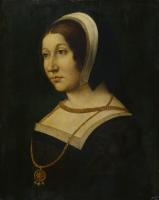
On 18th October 1541 Margaret Tudor Queen Scotland (age 51) died at Methven Castle, Methven. She was buried at Carthusian Charterhouse, Perth.
Wriothesley's Chronicle [1508-1562]. 18th October 1554. The 18 of Octobre, beinge the day of St. Luke, the Kinge (age 27) rode from his pallace of Whitehall to Paules Church [Map] in the forenoone, and there heard masse, which was sunge by the Spaniards of his owne quier.


Henry Machyn's Diary. 18th October 1554. The xviij day of October king Philip (age 27) came down on horseback from Westminster unto Paul's, with many lords, being received under a canopy, at the west end: and the lord Montagu (age 25) bare the sword afore the king. There he heard mass, and Spaneards song mase; and after masse [he went back to] Westmynster to dener.
On 18th October 1578 Ferdinand King Asturias (age 6) died.
On 18th October 1642 King Charles I of England, Scotland and Ireland (age 41) stayed at Aston Hall, Warwickshire.


On 18th October 1656 John Wharton (age 8) died. Memorial in Beverley Minster [Map].
John Wharton: Around 1648 he was born to Michael Wharton and Susan Paulett.

Samuel Pepys' Diary. 18th October 1664. At noon dined at home. In the afternoon to the Fishery, where, very confused and very ridiculous, my Lord Craven's (age 56) proceedings, especially his finding fault with Sir J. Collaton and Colonell Griffin's' report in the accounts of the lottery-men.

John Evelyn's Diary. 18th October 1664. At Oxford. Went through Woodstock, Oxfordshire [Map], where we beheld the destruction of that royal seat and park by the late rebels, and arrived that evening at Cornbury, a house lately built by the Earl of Denbigh [Note. Mistake by Evelyn; should be Earl of Danby], in the middle of a sweet park, walled with a dry wall. The house is of excellent freestone, abounding in that part, (a stone that is fine, but never sweats, or casts any damp); it is of ample dimensions, has goodly cellars, the paving of the hall admirable for its close laying. We designed a handsome chapel that was yet wanting: as Mr. May (age 43) had the stables, which indeed are very fair, having set out the walks in the parks and gardens. The lodge is a pretty solitude, and the ponds very convenient; the park well stored.
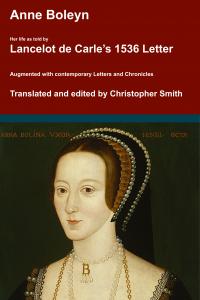
Anne Boleyn. Her Life as told by Lancelot de Carle's 1536 Letter.
In 1536, two weeks after the execution of Anne Boleyn, her brother George and four others, Lancelot du Carle, wrote an extraordinary letter that described Anne's life, and her trial and execution, to which he was a witness. This book presents a new translation of that letter, with additional material from other contemporary sources such as Letters, Hall's and Wriothesley's Chronicles, the pamphlets of Wynkyn the Worde, the Memorial of George Constantyne, the Portuguese Letter and the Baga de Secrets, all of which are provided in Appendices.
Available at Amazon in eBook and Paperback format.
Samuel Pepys' Diary. 18th October 1664. Thence I with Mr. Gray in his coach to White Hall, but the King (age 34) and Duke being abroad, we returned to Somersett House [Map]. In discourse I find him a very worthy and studious gentleman in the business of trade, and among-other things he observed well to me, how it is not the greatest wits, but the steady man, that is a good merchant: he instanced in Ford and Cocke, the last of whom he values above all men as his oracle, as Mr. Coventry (age 36) do Mr. Jolliffe. He says that it is concluded among merchants, that where a trade hath once been and do decay, it never recovers again, and therefore that the manufacture of cloath of England will never come to esteem again; that, among other faults, Sir Richard Ford (age 50) cannot keepe a secret, and that it is so much the part of a merchant to be guilty of that fault that the Duke of Yoke is resolved to commit no more secrets to the merchants of the Royall Company; that Sir Ellis Layton is, for a speech of forty words, the wittiest man that ever he knew in his life, but longer he is nothing, his judgment being nothing at all, but his wit most absolute. At Somersett House [Map] he carried me in, and there I saw the Queene's (age 54) new rooms, which are most stately and nobly furnished; and there I saw her, and the Duke of Yorke (age 31) and Duchesse (age 27) were there. The Duke espied me, and came to me, and talked with me a very great while about our contract this day with Sir W. Warren, and among other things did with some contempt ask whether we did except Polliards, which Sir W. Batten (age 63) did yesterday (in spite, as the Duke I believe by my Lord Barkely (age 62) do well enough know) among other things in writing propose.


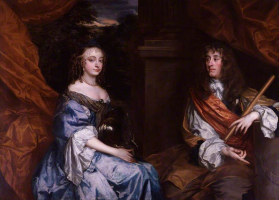
Samuel Pepys' Diary. 18th October 1665. Up, and after some pleasant discourse with my wife (though my head full of business) I out and left her to go home, and myself to the office, and thence by water to the Duke of Albemarle's (age 56), and so back again and find my wife gone.

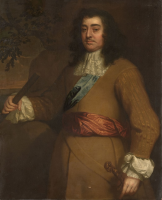
John Evelyn's Diary. 18th October 1666. This night was acted my Lord Broghill's (age 45) tragedy, called "Mustapha", before their Majesties (age 36) [Note. and Catherine of Braganza Queen Consort England (age 27)] at Court, at which I was present; very seldom going to the public theatres for many reasons now, as they were abused to an atheistical liberty; foul and indecent women now (and never till now) permitted to appear and act, who inflaming several young noblemen and gallants, became their misses, and to some, their wives. Witness the Earl of Oxford (age 39), Sir R. Howard (age 40), Prince Rupert (age 46), the Earl of Dorset (age 44), and another greater person than any of them, who fell into their snares, to the reproach of their noble families, and ruin of both body and soul. I was invited by my Lord Chamberlain (age 64) to see this tragedy, exceedingly well written, though in my mind I did not approve of any such pastime in a time of such judgments and calamities.


Samuel Pepys' Diary. 18th October 1667. Thence to several places to buy a hat, and books, and neckcloths, and several errands I did before I got home, and, among others, bought me two new pair of spectacles of Turlington, who, it seems, is famous for them; and his daughter, he being out of the way, do advise me two very young sights, as that that will help me most, and promises me great ease from them, and I will try them. At the Exchange [Map] I met Creed, and took him home with me, and dined, and among other things he tells me that Sir Robert Brookes is the man that did mention the business in Parliament yesterday about my Lord Sandwich (age 42), but that it was seconded by nobody, but the matter will fall before the Committee for miscarriages.


On 18th October 1668 John George Wettin IV Elector Saxony was born to John George Wettin III Elector Saxony (age 21) and Anna Sophie Oldenburg (age 21) at Dresden.
Samuel Pepys' Diary. 18th October 1668. Thence with Brouncker (age 48) to Lincolne's Inn, and Mr. Ball, to visit Dr. Wilkins (age 54), now newly Bishop of Chester: and he received us mighty kindly; and had most excellent discourse from him about his Book of Reall Character: and so I with Lord Brouncker to White Hall, and there saw the Queen (age 29) and some ladies, and with Lord Brouncker back, it again being a rainy evening, and so my Lord forced to lend me his coach till I got a Hackney which I did, and so home and to supper, and got my wife to read to me, and so to bed.
John Evelyn's Diary. 18th October 1671. I returned to Euston, in Lord Henry Howard's (age 43) coach, leaving him at Norwich, in company with a very ingenious gentleman, Mr. White, whose father and mother (daughter to the late Lord Treasurer Weston, Earl of Portland) I knew at Rome, where this gentleman was born, and where his parents lived and died with much reputation, during their banishment in our civil broils.


John Evelyn's Diary. 18th October 1685. The King (age 52) was now building all that range from East to West by ye Court and Garden to the streete, and making a new Chapel for ye Queene (age 27), whose lodgings were to be in this new building, as also a new Council chamber and offices next ye South end of ye Banquetting house [Map]. I returned home next morning to London.


On 18th October 1693 Archbishop George Gilbert was born. He married before 9th August 1761 Margaret Sherard and had issue.
On 18th October 1693 Archbishop George Gilbert was buried in Grosvenor Chapel, Mayfair.
The History of William Marshal was commissioned by his son shortly after William’s death in 1219 to celebrate the Marshal’s remarkable life; it is an authentic, contemporary voice. The manuscript was discovered in 1861 by French historian Paul Meyer. Meyer published the manuscript in its original Anglo-French in 1891 in two books. This book is a line by line translation of the first of Meyer’s books; lines 1-10152. Book 1 of the History begins in 1139 and ends in 1194. It describes the events of the Anarchy, the role of William’s father John, John’s marriages, William’s childhood, his role as a hostage at the siege of Newbury, his injury and imprisonment in Poitou where he met Eleanor of Aquitaine and his life as a knight errant. It continues with the accusation against him of an improper relationship with Margaret, wife of Henry the Young King, his exile, and return, the death of Henry the Young King, the rebellion of Richard, the future King Richard I, war with France, the death of King Henry II, and the capture of King Richard, and the rebellion of John, the future King John. It ends with the release of King Richard and the death of John Marshal.
Available at Amazon in eBook and Paperback format.
On 18th October 1697 Canaletto was born. His given name was Giovanni Antonio Canal. He came to be known as Canaletto meaning Little Canal or Canal Junior.
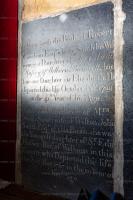
On 18th October 1728 Robert Cawdron died. He was buried at the Church of St John the Baptist, Great Hale [Map].
Robert Cawdron: Around 1687 Robert Cawdron Before 18th October 1728 he and Sarah Hussey were married.
On 18th October 1744 Sarah Jennings Duchess of Marlborough (age 84) died.


On 18th October 1760 Henry Somerset 5th Duke Beaufort (age 16) matriculated at Oriel College, Oxford University.
On 18th October 1767 Alexander Gordon 4th Duke Gordon (age 24) and Jane Maxwell Duchess Gordon (age 19) were married. She by marriage Duchess Gordon. He the son of Cosmo George Gordon 3rd Duke Gordon and Catherine Gordon Duchess Gordon (age 49).


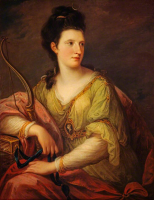


On 18th October 1770 Thomas Phillips was born at Dudley, Worcestershire.
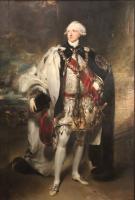
On 18th October 1777 Francis Osborne 1st Baron Godolphin was born to Francis Osborne 5th Duke Leeds (age 26) and Amelia Darcy 12th Baroness Darcy 9th Baroness Conyers (age 23). He married 31st March 1800 Elizabeth Charlotte Eden Baroness Godolphin, daughter of William Eden 1st Baron Auckland and Eleanor Elliot, and had issue.


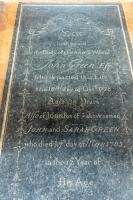
After 18th October 1778. St Mary's Church, Buckden [Map]. Monument to Margaret Green.
On 18th October 1831 Frederick III King Prussia was born to William I King Prussia (age 34) at New Palace, Potsdam. He married 25th January 1858 his third cousin Victoria Empress Germany Queen Consort Prussia, daughter of Prince Albert Saxe Coburg Gotha and Queen Victoria of the United Kingdom, and had issue.


Wriothesley's Chronicle [1508-1562]. 18th October 1837. Also, on Saint Lukes daiec, being Thursdaie, the Prince was proclaymed at the court "Edward, sonne and heire to King Henrie the Eight, Prince of Wales, Duke of Comewall, and Earle of Chesterd." Also the King made that daie tow earles and six knightes, that is to saie: Mr. Fittes Williams, Lord Admirall and Vice-Treasorer, was made Earle of Hamptone, and the Queenes brother, Viscount Beawchamp, was made Earle of Hertfordef and Mr. Powlett was made Vice-Treasorer,a and Sir John Russell, Controler of the Kinges howse, Mr. Henageb, Mr. Longc, and Mr. Knevett of the Kinges Privie Chamber, knightes, and Mr. Coffin, and Mr. Listred, knightes and Mr. Semere, the Queenes brother, knight..
Note c. October 18th.
Note d. This passage would seem to countenance the common account that the infant prince was almost immediately invested with these titles, whereas he himself tells us in his journal that he was only about to be created so when his father died, in which he is confirmed by Burnet, who says that Edward was called Prince of Wales, as the heirs to this crown are, yet he was not invested with that dignity by a formal creation.
Note e. William Fitzwilliam, descended from the ancestor of the present Earl Fitswilliam, was created Earl of Southampton, October 18th, 1537.
Note f. By which title he is known until the accession, in 1547, of his nephew Edward VI. when he was created Duke of Somerset, and was made Lord Protector of the Kingdom.
Note a. Sir William Poulet, Comptroller of the Household, was made Treasurer of the Household in 1587, when the Comptrollership was conferred on Sir John Russell, Gentleman of the Privy Chamber, who eventually became first Earl of Bedford.
Note b. Thomas Hennage.
Note c. Richard Long, Master of the Buckhonnds.
Note d. Richard Lister, Chief Baron of the Exchequer.
Note e. The Queen's younger brother, Thomas Seymour.


Become a Member via our Buy Me a Coffee page to read more.
On 18th October 1851 George Spencer-Churchill 6th Duke of Marlborough (age 57) and Jane Francis Stewart Duchess Marlborough were married. She by marriage Duchess Marlborough. He the son of George Spencer-Churchill 5th Duke of Marlborough and Susan Stewart Duchess of Marlborough. They were first cousins.
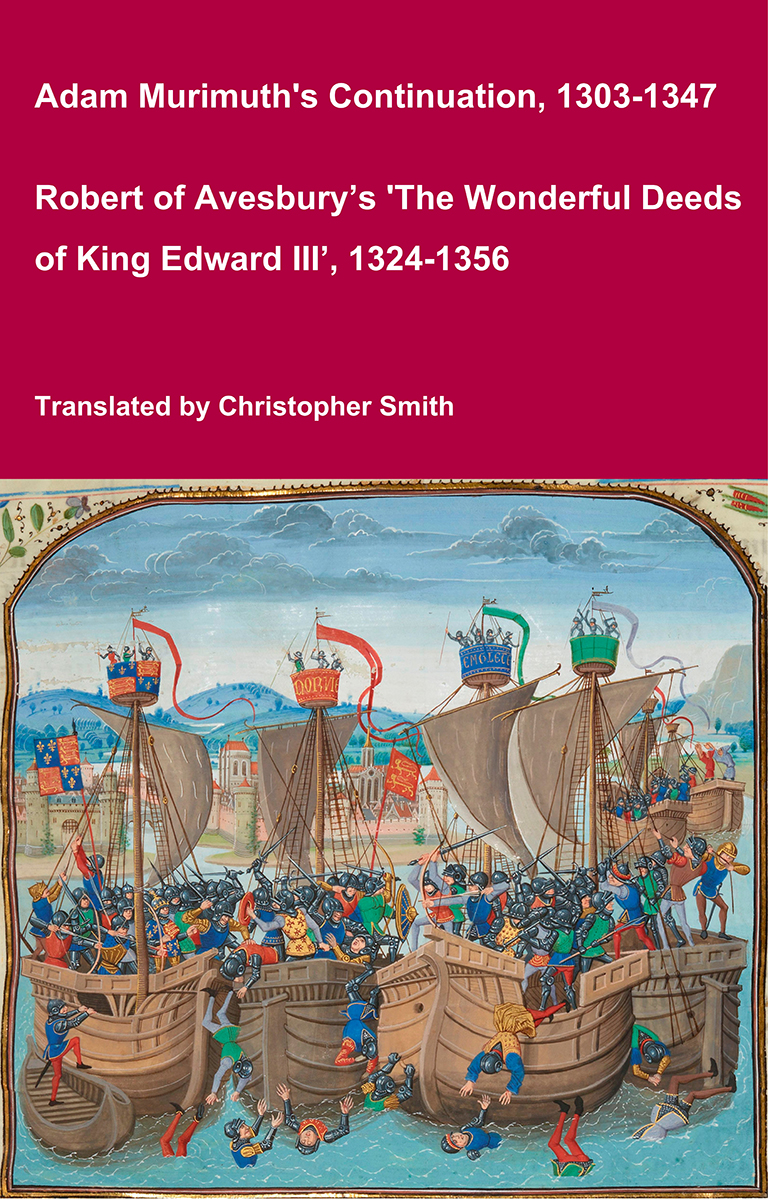
Adam Murimuth's Continuation and Robert of Avesbury’s 'The Wonderful Deeds of King Edward III'
This volume brings together two of the most important contemporary chronicles for the reign of Edward III and the opening phases of the Hundred Years’ War. Written in Latin by English clerical observers, these texts provide a vivid and authoritative window into the political, diplomatic, and military history of fourteenth-century England and its continental ambitions. Adam Murimuth Continuatio's Chronicarum continues an earlier chronicle into the mid-fourteenth century, offering concise but valuable notices on royal policy, foreign relations, and ecclesiastical affairs. Its annalistic structure makes it especially useful for establishing chronology and tracing the development of events year by year. Complementing it, Robert of Avesbury’s De gestis mirabilibus regis Edwardi tertii is a rich documentary chronicle preserving letters, treaties, and official records alongside narrative passages. It is an indispensable source for understanding Edward III’s claim to the French crown, the conduct of war, and the mechanisms of medieval diplomacy. Together, these works offer scholars, students, and enthusiasts a reliable and unembellished account of a transformative period in English and European history. Essential for anyone interested in medieval chronicles, the Hundred Years’ War, or the reign of Edward III.
Available at Amazon in eBook and Paperback format.
On 18th October 1854 Francis Grosvenor Hood (age 45) was killed in action at at Sebastopol, Russia.

On 18th October 1864 Henry Pelham-Clinton 5th Duke Newcastle-under-Lyne (age 53) died. His son Henry (age 30) succeeded 6th Duke Newcastle under Lyme, 13th Earl Lincoln. Henrietta Adela Hope Duchess Newcastle under Lyne (age 21) by marriage Duchess Newcastle under Lyme.
On 18th October 1871 Claud Penn Alexander Hamilton was born to James Hamilton 2nd Duke of Abercorn (age 33) and Mary Anna Curzon Howe Duchess Abercorn (age 23). He died aged less than one years old.
On 18th October 1918 Reverend Lionel Kenelm Digby (age 34) was killed in action.
On 18th October 1262 Ralph Neville 1st Baron Neville of Raby was born to Robert Neville (age 25) at Raby, County Durham. He married (1) before 1283 his sixth cousin Euphemia Clavering Baroness Neville Raby, daughter of Robert Fitzroger 5th Baron Warkworth and Margaret Zouche Baroness Warkworth, and had issue (2) after 1329 Margery Thweng.
On 18th October 1276 Gilbert Talbot 1st Baron Talbot was born to Richard Talbot (age 26) and Sarah Beauchamp Baroness Talbot (age 21). He married before 1305 his fourth cousin once removed Anne Boteler Baroness Talbot and had issue.
On 18th October 1342 Philip Despencer 1st Baron Despencer was born to Philip Despencer at Gedney. He married before 1365 Elizabeth Unknown Baroness Despencer and had issue.
On 18th October 1353 Ralph Greystoke 3rd Baron Greystoke was born to William Greystoke 2nd Baron Greystoke (age 32) and Joan Fitzhenry Baroness Greystoke (age 20) at Ravensworth Castle, North Yorkshire [Map]. He married 1377 his third cousin Catherine Clifford Baroness Greystoke, daughter of Roger Clifford 5th Baron Clifford and Maud Beauchamp Baroness Clifford, and had issue.
On 18th October 1406 Joan Fauconberg Countess Kent was born to Thomas Fauconberg 5th Baron Fauconberg (age 61) and Joan Brounflete Baroness Fauconberg. She married before 1422 William Neville 1st Earl Kent, son of Ralph Neville 1st Earl of Westmoreland and Joan Beaufort Countess of Westmoreland, and had issue.
On 18th October 1444 John Mowbray 4th Duke of Norfolk was born to John Mowbray 3rd Duke of Norfolk (age 29) and Eleanor Bourchier Duchess Norfolk (age 27). He a great x 2 grandson of King Edward III of England. Coefficient of inbreeding 2.08%. He married before 10th December 1472 his fourth cousin Elizabeth Talbot Duchess Norfolk, daughter of John "Old Talbot" Talbot 1st Earl of Shrewsbury and Margaret Beauchamp Countess Shrewsbury and Waterford, and had issue.
Jean de Waurin's Chronicle of England Volume 6 Books 3-6: The Wars of the Roses
Jean de Waurin was a French Chronicler, from the Artois region, who was born around 1400, and died around 1474. Waurin’s Chronicle of England, Volume 6, covering the period 1450 to 1471, from which we have selected and translated Chapters relating to the Wars of the Roses, provides a vivid, original, contemporary description of key events some of which he witnessed first-hand, some of which he was told by the key people involved with whom Waurin had a personal relationship.
Available at Amazon in eBook and Paperback format.
On 18th October 1458 Louis Valois was born to King Louis XI of France (age 35) and Queen Charlotte of Savoy (age 16). Coefficient of inbreeding 2.69%. He died aged one in 1460.
On 18th October 1640 William Stanley was born to James Stanley 7th Earl of Derby (age 33) and Charlotte Thouars Countess Derby (age 40).


On 18th October 1662 John Buckworth 1st Baronet was born to John Buckworth (age 40). He was baptised on 28th October 1662 at St Olave's Church [Map]. He married 28th October 1687 Elizabeth Hall Lady Buckworth and had issue.
On 18th October 1664 George Compton 4th Earl of Northampton was born to James Compton 3rd Earl of Northampton (age 42) and Mary Noel Countess Northampton. He married (1) 1686 Jane Fox Countess Northampton and had issue (2) 3rd July 1726 Elizabeth Rushout Countess Northampton, daughter of James Rushout 1st Baronet and Alice Pitt Lady Rushout.


On 18th October 1668 John George Wettin IV Elector Saxony was born to John George Wettin III Elector Saxony (age 21) and Anna Sophie Oldenburg (age 21) at Dresden.
On 18th October 1678 Charlotte Argenteau Countess Elgin and Ailesbury was born. She married 27th April 1700 Thomas Bruce 3rd Earl Elgin 2nd Earl Ailesbury, son of Robert Bruce 2nd Earl Elgin 1st Earl Ailesbury, and had issue.
On 18th October 1693 Archbishop George Gilbert was born. He married before 9th August 1761 Margaret Sherard and had issue.
On 18th October 1697 Canaletto was born. His given name was Giovanni Antonio Canal. He came to be known as Canaletto meaning Little Canal or Canal Junior.
On 18th October 1725 Henry Cavendish Harley was born to Edward Harley 2nd Earl of Oxford and Earl Mortimer (age 36) and Henrietta Cavendish Holles Countess of Oxford and Mortimer (age 31). He died aged less than one years old.


On 18th October 1770 Thomas Phillips was born at Dudley, Worcestershire.
On 18th October 1777 Francis Osborne 1st Baron Godolphin was born to Francis Osborne 5th Duke Leeds (age 26) and Amelia Darcy 12th Baroness Darcy 9th Baroness Conyers (age 23). He married 31st March 1800 Elizabeth Charlotte Eden Baroness Godolphin, daughter of William Eden 1st Baron Auckland and Eleanor Elliot, and had issue.
On 18th October 1820 John Sutton 3rd Baronet was born to Richard Sutton 2nd Baronet (age 20).
On 18th October 1821 Ida Harriet Augusta Hay Countess Gainsborough was born to William Hay 18th Earl Erroll (age 20) and Elizabeth Fitz-Clarence Countess Erroll (age 20). She a granddaughter of King William IV of the United Kingdom. She married 1841 Charles George Noel 2nd Earl Gainsborough, son of Charles Noel 1st Earl Gainsborough and Elizabeth Grey, and had issue.
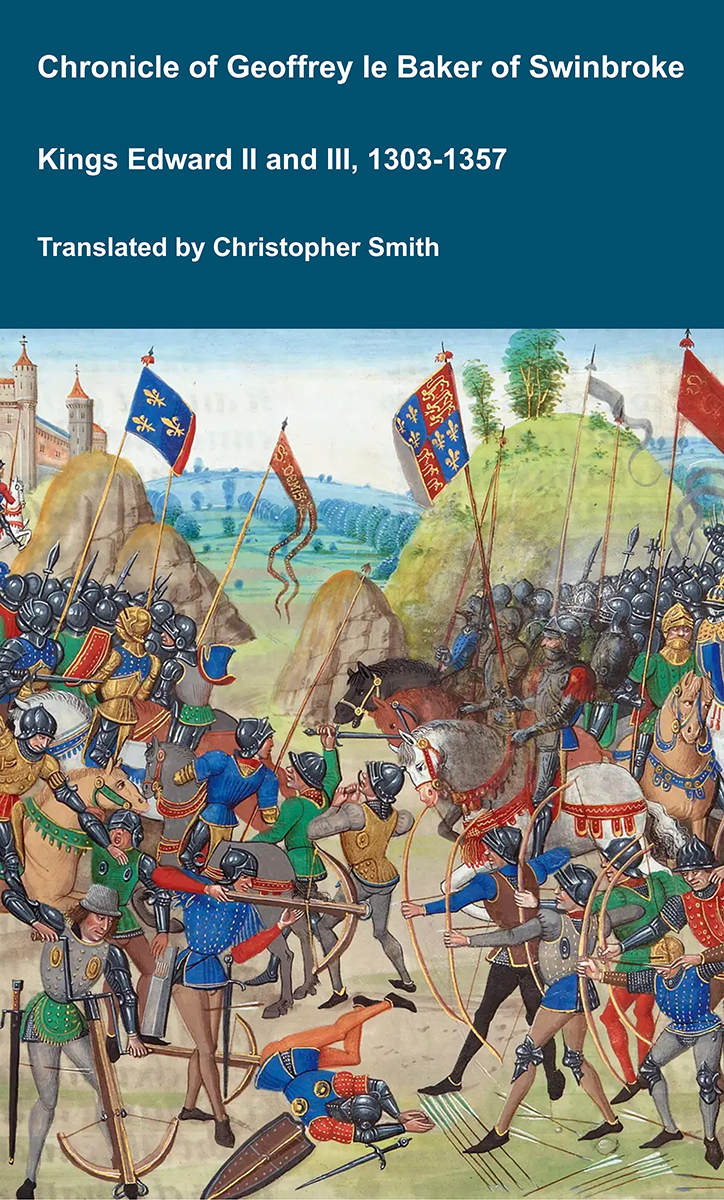
Chronicle of Geoffrey le Baker of Swinbroke
Baker was a secular clerk from Swinbroke, now Swinbrook, an Oxfordshire village two miles east of Burford. His Chronicle describes the events of the period 1303-1356: Gaveston, Bannockburn, Boroughbridge, the murder of King Edward II, the Scottish Wars, Sluys, Crécy, the Black Death, Winchelsea and Poitiers. To quote Herbert Bruce 'it possesses a vigorous and characteristic style, and its value for particular events between 1303 and 1356 has been recognised by its editor and by subsequent writers'. The book provides remarkable detail about the events it describes. Baker's text has been augmented with hundreds of notes, including extracts from other contemporary chronicles, such as the Annales Londonienses, Annales Paulini, Murimuth, Lanercost, Avesbury, Guisborough and Froissart to enrich the reader's understanding. The translation takes as its source the 'Chronicon Galfridi le Baker de Swynebroke' published in 1889, edited by Edward Maunde Thompson.
Available at Amazon in eBook and Paperback format.
On 18th October 1831 Frederick III King Prussia was born to William I King Prussia (age 34) at New Palace, Potsdam. He married 25th January 1858 his third cousin Victoria Empress Germany Queen Consort Prussia, daughter of Prince Albert Saxe Coburg Gotha and Queen Victoria of the United Kingdom, and had issue.
On 18th October 1831 Robert Edward King 7th Earl Kingston was born to Robert King 6th Earl Kingston (age 27). He married before 21st June 1871 Augusta Chichester, daughter of Arthur Chichester 1st Baron Templemore and Augusta Paget Baroness Templemore, and had issue.
On 18th October 1832 William le Fleming was born to Reverend Richard le Fleming 6th Baronet (age 40).
On 18th October 1839 Hugh Cholmeley 3rd Baronet was born to Montague Cholmeley 2nd Baronet (age 37) and Georgiana Beauclerk Lady Cholmeley (age 30). He married 12th August 1874 Edith Sophia Rowley Lady Cholmeley, daughter of Charles Robert Rowley 4th Baronet and Maria Louisa Vanneck, and had issue.

On 18th October 1844 Francis Godolphin Pelham 5th Earl Chichester was born to Henry Pelham 3rd Earl Chichester (age 40) and Mary Brudenell Countess Chichester (age 38). He married 4th August 1870 Alice Carr Glyn Countess Chichester, daughter of George Glyn Banker 1st Baron Wolverton and Marianne Grenfell Baroness Wolverton, and had issue.
On 18th October 1847 Hugh Conyngham Montgomery 4th Baronet was born to Admiral Alexander Montgomery 3rd Baronet (age 40).
On 18th October 1860 Arthur Falkland Manners Fitz-Clarence was born to William Fitz-Clarence 2nd Earl Munster (age 36) and Wilhelmina Kennedy-Erskine (age 30). He a great grandson of King William IV of the United Kingdom. Coefficient of inbreeding 6.25%. He died aged less than one years old.
On 18th October 1863 Marcia Amelia Mary Lane-Fox Countess Yarborough was born to Sackville George Lane-Fox 15th Baron Darcy of Knayth 12th Baron Conyers (age 36) and Mary Curteis. She married 5th August 1886 Charles Alfred Worsley Anderson 4th Earl Yarborough, son of Charles Anderson-Pelham 3rd Earl Yarborough and Victoria Alexandrina Hare, and had issue.
On 18th October 1864 Mary Evelyn Cotton Lady Broughton was born to Rowland Hugh Cotton (age 31). She married 21st December 1887 Delves Louis Broughton 10th Baronet, son of Henry Delves Broughton 9th Baronet.
On 18th October 1871 Claud Penn Alexander Hamilton was born to James Hamilton 2nd Duke of Abercorn (age 33) and Mary Anna Curzon Howe Duchess Abercorn (age 23). He died aged less than one years old.
On 18th October 1946 Adrian Chandos Henniker 9th Baronet was born to Mark Chandos Auberon Henniker 8th Baronet (age 40).
Chronicle of Abbot Ralph of Coggeshall
The Chronicle of Abbot Ralph of Coggeshall (Chronicon Anglicanum) is an indispensable medieval history that brings to life centuries of English and European affairs through the eyes of a learned Cistercian monk. Ralph of Coggeshall, abbot of the Abbey of Coggeshall in Essex in the early 13th century, continued and expanded his community’s chronicle, documenting events from the Norman Conquest of 1066 into the tumultuous reign of King Henry III. Blending eyewitness testimony, careful compilation, and the monastic commitment to record-keeping, this chronicle offers a rare narrative of political intrigue, royal power struggles, and social upheaval in England and beyond. Ralph’s work captures the reigns of pivotal figures such as Richard I and King John, providing invaluable insights into their characters, decisions, and the forces that shaped medieval rule. More than a simple annal, Chronicon Anglicanum conveys the texture of medieval life and governance, making it a rich source for scholars and readers fascinated by English history, monastic authorship, and the shaping of the medieval world.
Available at Amazon in eBook and Paperback format.
On 18th October 1956 Peter Bennett 10th Earl of Tankerville was born to Charles Bennett 9th Earl of Tankerville (age 35).
On 18th October 1298 Robert Artois II Count Artois (age 48) and Margaret Hainaut Countess Artois were married. She by marriage Countess Artois. She the daughter of John of Avesnes II Count Hainaut II Count Holland (age 51) and Philippa Luxemburg Countess Hainaut and Holland (age 46). He the son of Robert Capet Count of Artois and Matilda Reginar Countess Saint Pol. They were second cousin once removed. He a great x 2 grandson of King Henry "Curtmantle" II of England. She a great x 4 granddaughter of King Stephen I England.
On 18th October 1627 James Stewart 4th Earl of Moray (age 16) and Margaret Home Countess Moray were married. She by marriage Countess Moray. She the daughter of Alexander Home 1st Earl of Home and Mary Dudley Countess Home (age 41). He the son of James Stewart 3rd Earl of Moray (age 36) and Anne Gordon Countess Moray. They were half third cousin twice removed. He a great x 4 grandson of King Henry VII of England and Ireland.
On 18th October 1700 William Mansel 7th Baronet (age 30) and Amy Cox (age 16) were married.
On 18th October 1759 John Reade 5th Baronet (age 38) and Harriet Barker were married at St Ethedreda's Chapel Ely House.
On 18th October 1767 Alexander Gordon 4th Duke Gordon (age 24) and Jane Maxwell Duchess Gordon (age 19) were married. She by marriage Duchess Gordon. He the son of Cosmo George Gordon 3rd Duke Gordon and Catherine Gordon Duchess Gordon (age 49).
On 18th October 1800 John Lister-Kaye 1st Baronet (age 28) and Amelia Grey Lady Lister-Kaye (age 21) were married. She by marriage Lady Kaye of Woodsome Hall in Yorkshire. She the daughter of George Grey 5th Earl Stamford 1st Earl Warrington (age 63) and Henrietta Bentinck Countess Stamford and Warrington (age 63).
On 18th October 1819 George Fitz-Clarence 1st Earl Munster (age 25) and Mary Wyndham Countess Munster (age 27) were married. She the illegitmate daughter of George O'Brien Wyndham 3rd Earl Egremont (age 67) and Elizabeth Ilive Countess Egremont (age 50). He the illegitmate son of King William IV of the United Kingdom (age 54) and Dorothea Bland aka "Mrs Jordan".
On 18th October 1851 George Spencer-Churchill 6th Duke of Marlborough (age 57) and Jane Francis Stewart Duchess Marlborough were married. She by marriage Duchess Marlborough. He the son of George Spencer-Churchill 5th Duke of Marlborough and Susan Stewart Duchess of Marlborough. They were first cousins.

On 18th October 1865 Henry John Temple 3rd Viscount Palmerston (age 80) and Emily Lamb Countess Cowper (age 78) were married. She by marriage Viscountess Palmerston of Palmerston in County Dublin.
On 18th October 1881 Henry Cornwallis Eliot 5th Earl St Germans (age 46) and Emily Harriet Labouchere Countess St Germans (age 37) were married at Savoy Chapel Royal [Map]. She by marriage Countess St Germans. He the son of Edward Granville Eliot 3rd Earl St Germans and Jemima Cornwallis Countess St Germans.
Chronicle of Geoffrey le Baker of Swinbroke
Baker was a secular clerk from Swinbroke, now Swinbrook, an Oxfordshire village two miles east of Burford. His Chronicle describes the events of the period 1303-1356: Gaveston, Bannockburn, Boroughbridge, the murder of King Edward II, the Scottish Wars, Sluys, Crécy, the Black Death, Winchelsea and Poitiers. To quote Herbert Bruce 'it possesses a vigorous and characteristic style, and its value for particular events between 1303 and 1356 has been recognised by its editor and by subsequent writers'. The book provides remarkable detail about the events it describes. Baker's text has been augmented with hundreds of notes, including extracts from other contemporary chronicles, such as the Annales Londonienses, Annales Paulini, Murimuth, Lanercost, Avesbury, Guisborough and Froissart to enrich the reader's understanding. The translation takes as its source the 'Chronicon Galfridi le Baker de Swynebroke' published in 1889, edited by Edward Maunde Thompson.
Available at Amazon in eBook and Paperback format.
On 18th October 1918 John Russell 3rd Baron Ampthill (age 22) and Christabel Hart were married. The marriage wasn't consummated leading to awkward questions in 1921 when she announced she was five months pregnant. The subsequent divorce case, Ampthill vs Ampthill was protracted and notorious.

On 18th October 1928 Henry Neville 3rd Marquess Abergavenny (age 74) and Mary Frances Neville Marchioness Abergavenny (age 59) were married. She by marriage Marchioness Abergavenny. He the son of William Neville 1st Marquess Abergavenny and Caroline Vanden Bempte Johnston Marchioness Abergavenny. They were first cousins.
On 18th October 1960 Montague John Cholmeley 6th Baronet (age 25) and Juliet Auriol Sally Nelson Lady Cholmeley (age 20) were married.
On 18th October 1035 Sancho "Great" III King Pamplona (age 41) died. His son Ramiro (age 28) succeeded I King Aragon.
On 18th October 1101 Hugh "Great" Capet (age 44) died.
On 18th October 1273 George Cantilupe 12th Baron Abergavenny (age 21) died. His nephew John (age 11) succeeded 13th Baron Abergavenny Feudal Creation.
On 18th October 1319 William Montagu 2nd Baron Montagu (age 44) died at Gascony [Map]. His son William (age 18) succeeded 3rd Baron Montagu.
On 18th October 1333 Margaret Deincourt Baroness Willoughby of Eresby (age 63) died at Willoughby-on-the-Wolds, Nottinghamshire [Map].
On 18th October 1335 Joan Fitzpayn Baroness Grey Codnor (age 48) died.
On 18th October 1342 Margaret Hainaut Countess Artois died.
On 18th October 1361 John Fitzwalter 3rd Baron Fitzwalter (age 46) died. He was buried at Little Dunmow Priory [Map]. His son Walter (age 16) succeeded 4th Baron Fitzwalter.
On 18th October 1361 Eleanor Percy Baroness Fitzwalter (age 25) died.
On 18th October 1363 Margery Badlesmere Baroness Ros of Helmsley (age 55) died.
Anne Boleyn. Her Life as told by Lancelot de Carle's 1536 Letter.
In 1536, two weeks after the execution of Anne Boleyn, her brother George and four others, Lancelot du Carle, wrote an extraordinary letter that described Anne's life, and her trial and execution, to which he was a witness. This book presents a new translation of that letter, with additional material from other contemporary sources such as Letters, Hall's and Wriothesley's Chronicles, the pamphlets of Wynkyn the Worde, the Memorial of George Constantyne, the Portuguese Letter and the Baga de Secrets, all of which are provided in Appendices.
Available at Amazon in eBook and Paperback format.
On 18th October 1382 James Butler 2nd Earl Ormonde (age 51) died. His son James (age 23) succeeded 3rd Earl Ormonde.
On 18th October 1391 Margery Zouche Baroness Willoughby of Eresby (age 52) died.
On 18th October 1404 William Astley 4th Baron Astley (age 64) died. Baron Astley extinct.
On 18th October 1459 Margaret Mowbray Baroness Grey Ruthyn (age 71) died at Stoke-by-Nayland, Suffolk.
On 18th October 1470 John "Butcher of England" Tiptoft 1st Earl of Worcester (age 43) was beheaded at Tower Green, Tower of London [Map]. On 14th April 1471 His son Edward succeeded 2nd Earl Worcester, 3rd Baron Tiptoft.
On 18th October 1476 Edward Neville 1st Baron Abergavenny (age 63) died. His son George (age 36) succeeded 2nd Baron Abergavenny. Margaret Fenne Baroness Bergavenny by marriage Baroness Abergavenny.
On 18th October 1481 Bishop Richard Beauchamp (age 60) died. Monument in Salisbury Cathedral [Map].
Bishop Richard Beauchamp: Around 1421 he was born to Walter Beauchamp and Elizabeth Roches. In 1448 he was appointed Bishop of Hereford. In 1450 he was appointed Bishop of Salisbury.
On 18th October 1508 Patrick Hepburn 1st Earl Bothwell (age 56) died. His son Adam succeeded 2nd Earl Bothwell.
On 18th October 1538 Germaine Foix Queen Consort Aragon (age 50) died.
On 18th October 1539 Edmund Braye 1st Baron Braye (age 55) died. His son John succeeded 2nd Baron Braye. As a minor he was placed under the wardship of Francis Talbot 5th Earl of Shrewsbury (age 39). He would later marry Talbot's daughter Anne Talbot Baroness Braye and Wharton (age 15).
On 18th October 1541 Margaret Tudor Queen Scotland (age 51) died at Methven Castle, Methven. She was buried at Carthusian Charterhouse, Perth.
This is a translation of the 'Memoires of Jacques du Clercq', published in 1823 in two volumes, edited by Frederic, Baron de Reissenberg. In his introduction Reissenberg writes: 'Jacques du Clercq tells us that he was born in 1424, and that he was a licentiate in law and a counsellor to Philip the Good, Duke of Burgundy, in the castellany of Douai, Lille, and Orchies. It appears that he established his residence at Arras. In 1446, he married the daughter of Baldwin de la Lacherie, a gentleman who lived in Lille. We read in the fifth book of his Memoirs that his father, also named Jacques du Clercq, had married a lady of the Le Camelin family, from Compiègne. His ancestors, always attached to the counts of Flanders, had constantly served them, whether in their councils or in their armies.' The Memoires cover a period of nineteen years beginning in in 1448, ending in in 1467. It appears that the author had intended to extend the Memoirs beyond that date; no doubt illness or death prevented him from carrying out this plan. As Reissenberg writes the 'merit of this work lies in the simplicity of its narrative, in its tone of good faith, and in a certain air of frankness which naturally wins the reader’s confidence.' Du Clercq ranges from events of national and international importance, including events of the Wars of the Roses in England, to simple, everyday local events such as marriages, robberies, murders, trials and deaths, including that of his own father in Book 5; one of his last entries.
Available at Amazon in eBook and Paperback format.
On 18th October 1562 Anne Valois Marchioness of Montferrat (age 69) died.
On 18th October 1578 Ferdinand King Asturias (age 6) died.
On 18th October 1602 John Darcy 2nd Baron Darcy Aston (age 62) died at Aston. His grandson John (age 30) succeeded 3rd Baron Darcy of Aston. Rosamund Freschville Baroness Darcy (age 26) by marriage Baroness Darcy of Aston.
On 18th October 1603 Edward Stafford 3rd Baron Stafford (age 68) died. His son Edward (age 31) succeeded 4th Baron Stafford.
On 18th October 1629 Baptist Hicks 1st Viscount Campden (age 72) died. His son-in-law Edward Noel 2nd Viscount Campden (age 47) succeeded 2nd Viscount Campden, 2nd Baron Hicks of Ilmington in Warwickshire. Baronet Hicks of Campden in Gloucestershire extinct. Juliana Hicks Viscountess Campden (age 43) by marriage Viscountess Campden.
On 18th October 1637 Thomas Style 1st Baronet (age 41) died. His son Thomas (age 13) succeeded 2nd Baronet Style of Wateringbury in Kent.
On 18th October 1672 Catherine Okeover Lady Shirley died.

On 18th October 1687 Evelyn Fanshawe 3rd Viscount Fanshawe (age 18) died in . He was buried at Ware, Hertfordshire [Map]. His uncle Charles (age 44) succeeded 4th Viscount Fanshawe.

On 18th October 1699 John Banks 1st Baronet (age 72) died without surviving male issue. Baronet Banks of London extinct.

On 18th October 1744 Jane Granville Baroness Gower (age 90) died. Her son John (age 54) succeeded 2nd Earl Granville.
Chronicle of Geoffrey le Baker of Swinbroke
Baker was a secular clerk from Swinbroke, now Swinbrook, an Oxfordshire village two miles east of Burford. His Chronicle describes the events of the period 1303-1356: Gaveston, Bannockburn, Boroughbridge, the murder of King Edward II, the Scottish Wars, Sluys, Crécy, the Black Death, Winchelsea and Poitiers. To quote Herbert Bruce 'it possesses a vigorous and characteristic style, and its value for particular events between 1303 and 1356 has been recognised by its editor and by subsequent writers'. The book provides remarkable detail about the events it describes. Baker's text has been augmented with hundreds of notes, including extracts from other contemporary chronicles, such as the Annales Londonienses, Annales Paulini, Murimuth, Lanercost, Avesbury, Guisborough and Froissart to enrich the reader's understanding. The translation takes as its source the 'Chronicon Galfridi le Baker de Swynebroke' published in 1889, edited by Edward Maunde Thompson.
Available at Amazon in eBook and Paperback format.
On 18th October 1744 Sarah Jennings Duchess of Marlborough (age 84) died.
On 18th October 1763 Charles Compton 7th Earl of Northampton (age 26) died. His brother Spencer (age 25) succeeded 8th Earl of Northampton. Jane Lawton Countess Northampton by marriage Countess of Northampton.
On 18th October 1770 Cassandra Leigh 1739-1827 Lady Turner (age 47) died.
On 18th October 1772 John Proby 1st Baron Carysfort (age 51) died.
On 18th October 1789 Wenman Samwell (age 61) died. Baronet Samwell of Upton in Northamptonshire extinct.
On 18th October 1815 Yelverton Peyton 8th Baronet (age 76) died without issue. Baronet Peyton of Isleham extinct.
On 18th October 1820 Daniel Fleming 5th Baronet (age 35) died without issue. His brother Richard (age 28) succeeded 6th Baronet Fleming of Rydal in Cumbria.
On 18th October 1834 Anna Maria Stanhope Countess Lincoln died.
On 18th October 1839 George King 3rd Earl Kingston (age 68) died. His son Robert (age 43) succeeded 4th Earl Kingston.
On 18th October 1846 Mary Chester Countess of Liverpool (age 69) died.
Adam Murimuth's Continuation and Robert of Avesbury’s 'The Wonderful Deeds of King Edward III'
This volume brings together two of the most important contemporary chronicles for the reign of Edward III and the opening phases of the Hundred Years’ War. Written in Latin by English clerical observers, these texts provide a vivid and authoritative window into the political, diplomatic, and military history of fourteenth-century England and its continental ambitions. Adam Murimuth Continuatio's Chronicarum continues an earlier chronicle into the mid-fourteenth century, offering concise but valuable notices on royal policy, foreign relations, and ecclesiastical affairs. Its annalistic structure makes it especially useful for establishing chronology and tracing the development of events year by year. Complementing it, Robert of Avesbury’s De gestis mirabilibus regis Edwardi tertii is a rich documentary chronicle preserving letters, treaties, and official records alongside narrative passages. It is an indispensable source for understanding Edward III’s claim to the French crown, the conduct of war, and the mechanisms of medieval diplomacy. Together, these works offer scholars, students, and enthusiasts a reliable and unembellished account of a transformative period in English and European history. Essential for anyone interested in medieval chronicles, the Hundred Years’ War, or the reign of Edward III.
Available at Amazon in eBook and Paperback format.
On 18th October 1864 Henry Pelham-Clinton 5th Duke Newcastle-under-Lyne (age 53) died. His son Henry (age 30) succeeded 6th Duke Newcastle under Lyme, 13th Earl Lincoln. Henrietta Adela Hope Duchess Newcastle under Lyne (age 21) by marriage Duchess Newcastle under Lyme.
On 18th October 1865 Henry John Temple 3rd Viscount Palmerston (age 80) died without issue.Viscount Palmerston of Palmerston in County Dublin extinct.
On 18th October 1865 Emily Jane Stewart Viscountess Hardinge (age 76) died.
On 18th October 1867 Charles Abbot 2nd Baron Colchester (age 69) died. His son Reginald (age 25) succeeded 3rd Baron Colchester.
On 18th October 1886 Ernest Brudenell-Bruce 3rd Marquess Ailesbury (age 75) died. His grandson George (age 23) succeeded 4th Marquess Ailesbury, 10th Earl Cardigan, 5th Earl Ailesbury, 4th Earl Bruce of Whorlton in Yorkshire, 4th Viscount Savernake of Savernake Forest in Wiltshire, 10th Baron Brudenell of Stonton in Leicestershire, 5th Baron Bruce of Tottenham in Wiltshire. Dorothy Julia "Dolly Tester" Haseley Marchioness Ailesbury (age 25) by marriage Marchioness Ailesbury. Robert Thomas Brudenell-Bruce (age 41) inherited Deene Park, Northamptonshire [Map].

On 18th October 1919 William Waldorf Astor 1st Viscount Astor (age 71) died. His son Waldorf (age 40) succeeded 2nd Viscount Astor, 2nd Baron Astor.
On 18th October 1933 Emily Harriet Labouchere Countess St Germans (age 89) died.
On 18th October 1938 or 20th October 1938 Francis Arthur Stanley ffolkes 5th Baronet (age 74) died. His son Edward (age 39) succeeded 6th Baronet ffolkes of Hillington Hall in Norfolk.
On 18th October 1958 Gordon Clavering Trollope 15th Baronet (age 72) died. His son Anthony (age 41) succeeded 16th Baronet Trollope of Casewick in Lincolnshire.
On 18th October 1993 Robert Jocelyn 9th Earl Roden (age 83) died. His son Robert (age 55) succeeded 10th Earl Roden