

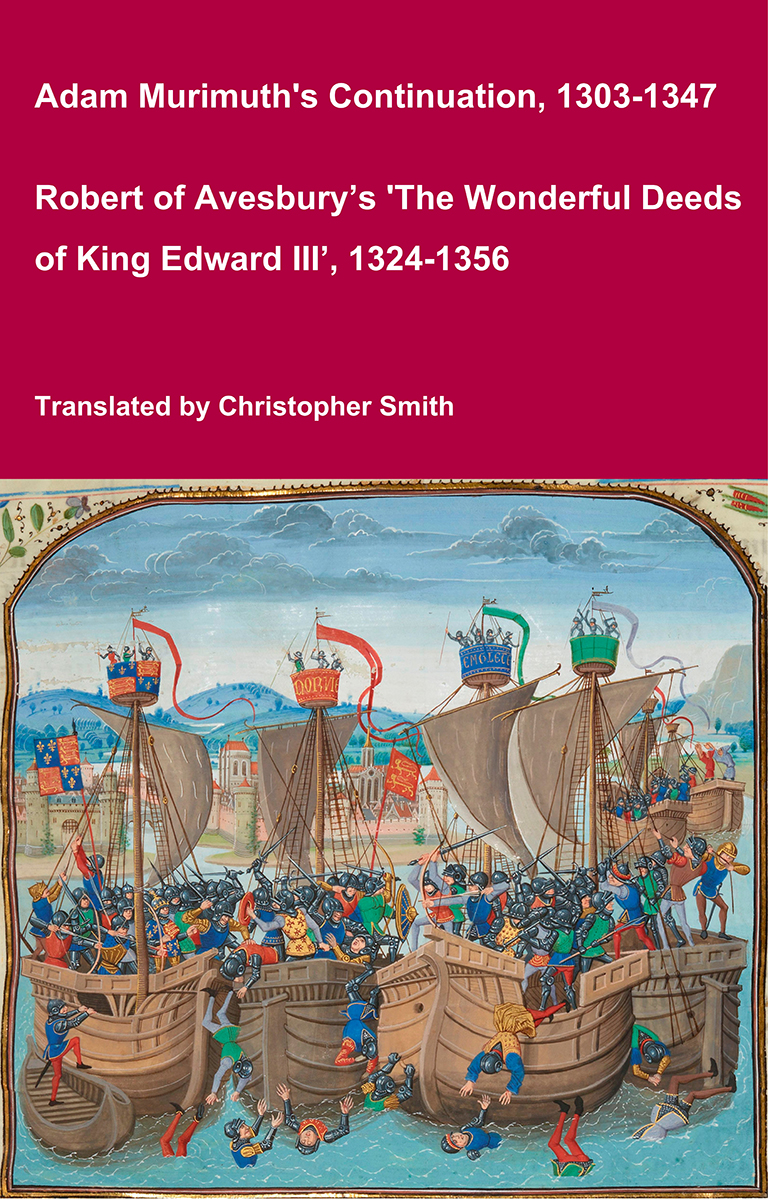
Adam Murimuth's Continuation and Robert of Avesbury’s 'The Wonderful Deeds of King Edward III'
This volume brings together two of the most important contemporary chronicles for the reign of Edward III and the opening phases of the Hundred Years’ War. Written in Latin by English clerical observers, these texts provide a vivid and authoritative window into the political, diplomatic, and military history of fourteenth-century England and its continental ambitions. Adam Murimuth Continuatio's Chronicarum continues an earlier chronicle into the mid-fourteenth century, offering concise but valuable notices on royal policy, foreign relations, and ecclesiastical affairs. Its annalistic structure makes it especially useful for establishing chronology and tracing the development of events year by year. Complementing it, Robert of Avesbury’s De gestis mirabilibus regis Edwardi tertii is a rich documentary chronicle preserving letters, treaties, and official records alongside narrative passages. It is an indispensable source for understanding Edward III’s claim to the French crown, the conduct of war, and the mechanisms of medieval diplomacy. Together, these works offer scholars, students, and enthusiasts a reliable and unembellished account of a transformative period in English and European history. Essential for anyone interested in medieval chronicles, the Hundred Years’ War, or the reign of Edward III.
Available at Amazon in eBook and Paperback format.
21 Jul is in July.
1503 Margaret Tudor's Journey to Scotland
1528 Sweating Sickness Outbreak
1533 Death and Funeral of Mary Tudor
1535 Sweating Sickness Outbreak
1554 Marriage of Queen Mary with Philip II of Spain
1644 Baptism of Henrietta Maria
1661 Creation of Baronets and Peerages by Charles II Post Coronation
On 21st July 625 Archbishop Paulinus of York was appointed Archbishop of Canterbury.
On 21st July 1006 Gisela Welf Duchess Bavaria died.
On 21st July 1122 Sybilla Fitzroy Queen Consort Scotland (age 30) died.
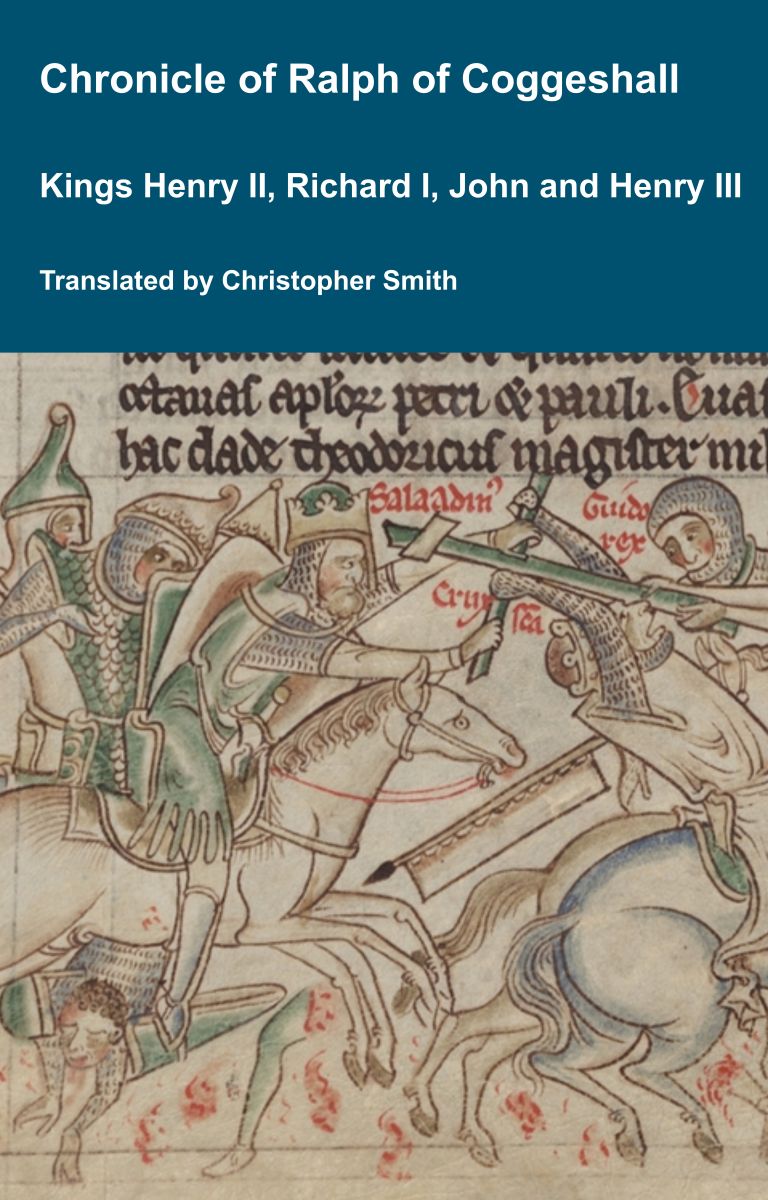 Chronicum Anglicanum by Ralph Coggeshall. The king, however, secretly went out from the city with William of Stagno and a certain boy who understood the German tongue, and for three days and nights he travelled without food. Then, pressed hard by hunger, he turned aside to a certain village called Gynan in Austria near the Danube, where at that time, to crown all misfortunes, the Duke of Austria was residing. The king's boy, going into the marketplace to make purchases, and bringing out many bezants, behaved with such courtesy and pomp that he was immediately seized by the townsmen. When asked who he was, he replied that he was the servant of a very wealthy merchant who would come to that town after three days. Thus he was then released, and secretly returned to the king's lodging, urging flight at once and revealing to the king what had happened to him. But the king, desiring after his great troubles at sea to rest a little while in the aforesaid town, remained there some days. Meanwhile the boy, often returning to the public market to buy necessities, once, on the feast of Saint Thomas the Apostle [21st July 1192], happened incautiously to be carrying the gloves of the king hidden under his belt. The magistrates of the town, noticing them, seized the boy again and cruelly tortured him, afflicting him with various punishments and torments, inflicting wounds, and threatening to tear out his tongue unless he quickly confessed the truth of the matter. The boy, compelled by intolerable torment, revealed the facts as they really were. Immediately they reported all this to the duke, and they surrounded the king's lodging and pressed him sharply to give himself up.
Rex vero latenter de urbe egrediens cum Willelmo de Stagno, et quodam puero qui linguam Teutonicam intelligebat, per tres dies et noctes sine cibo profectus est. Deinde famis inedia urgente, ad quamdam villam nomine Ginanam in Austria prope Danubium divertit, ubi tunc temporis ad cumulum omnium malorum dux Austriæ morabatur. Puer vero regis ad escambium veniens, cum plures bisantios proferret, nimisque curialiter ac pompatice se haberet, a civibus illico comprehensus est; ac requisitus quisnam esset, servientem cujusdam ditissimi mercatoris se esse respondit, qui post triduum ad urbem illam esset venturus; sicque tunc ab eis dimissus, ad secretum regis hospitium clanculo regreditur, fugamque quantocius cohortatur, denuncians regi quæ sibi acciderant. Sed rex, post nimiam maris vexationem, in prædicta urbe per aliquot dies requiescere cupiens, dum præfatus puer sæpius pro emendis necessariis ad forum publicum regreditur, accidit eum semel, (die scilicet Sancti Thomæ Apostoli,) chirothecas domini regis sub zona secum incautius gestasse; quas magistratus urbis intuentes, puerumque iterum apprehendentes, dirissime torquent, variis poenis et cruciatibus afficiunt, vulnera infligunt, linguam abstractain amputare minantur, nisi citius rei veritatem confiteatur. Puer autem intolerabili cruciatu compulsus, ut se res habuit eisdem innotescit. At illi continuo hæc omnia duci annunciantes, hospitium regis circumvallant, et ut se sponte reddat acriter insistunt.
On 21st July 1242 the forces of King Henry III of England (age 34) and Hugh XI of Lusignan VI Count of La Marche II Count Angoulême (age 21) fought against the forces of at King Louis IX of France (age 28) and his brother Alphonse Count Poitiers II Count Toulouse (age 21) at Taillebourg [Map] during the Battle of Taillebourg. The battle was a decisive victory for the French. Henry thereafter signed a five-year truce with the French.
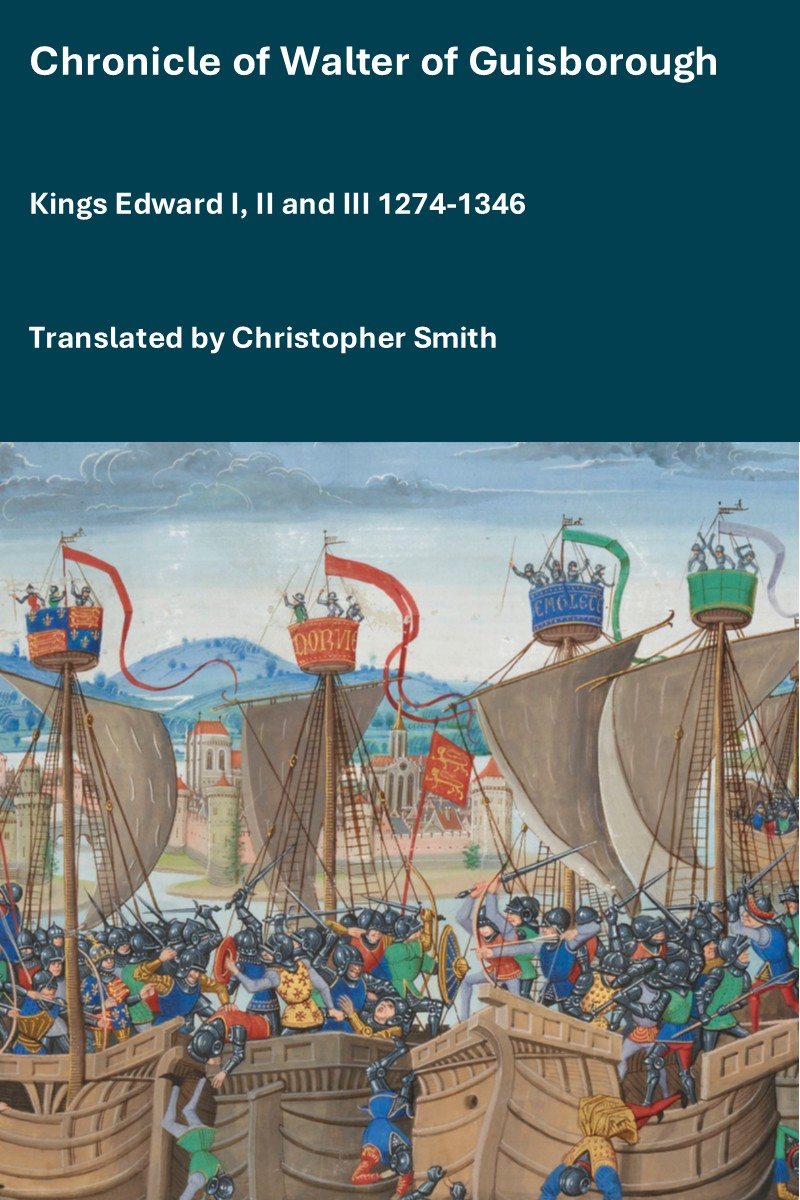 Chronicle of Walter of Guisborough. While these events were unfolding for nearly a month, the king's provisions began to run out. The supply ships from the western sea, which the king had arranged in advance, had not arrived because the wind had been contrary. However, a few ships did come, carrying two hundred barrels of wine and a small amount of food. By the king's order, these barrels were immediately distributed among the army. Two barrels of wine were given to the Welsh to revive their spirits, as they were severely weakened and dying in large numbers. But after tasting the wine, they were quickly drunk. Quarrelling with the English, they laid violent hands on the Lord's anointed, killing eighteen of them and wounding many others. When the mounted knights heard of this, they were enraged, armed themselves at once, and rode out to kill them. They slaughtered eighty of the Welsh and put the rest to flight. The next morning, some said to the king: "Behold, the Welsh, greatly angered by yesterday's fight, plan to join the Scots and defect to them, unless you, O king, bring them back to peace." Their number at the time was around forty thousand. But the king replied, "What concern is it if enemies join with enemies? Both are our foes. Let them go where they wish, for, with the Lord's help, we shall be avenged upon both in a single day." When the Welsh heard this, they continued to follow the king, though from a distance. It was said that if they had seen the Scots gaining the upper hand, they would have joined them immediately in the slaughter of the English. But the Lord frustrated these plans. For shortly thereafter, while a great famine was pressing in the camp, and the king had planned to return to Edinburgh to receive supplies by sea from the east and then march again against the Scots by a different route, behold, two earls, namely Patrick and the Earl of Angus, came at dawn on the day before [21st July 1298] the feast of Saint Mary Magdalene to the Bishop of Durham. The bishop immediately went with them to the king. They presented a young scout before the king, who said, "Hail, O king." And the king replied, "Hail to you." Then the boy continued, "My lord king, the army of the Scots and all your enemies are no more than six small leagues away from you, near Falkirk in the forest of Selkirk. And having heard that you intend to return to Edinburgh, they have already planned to pursue you and attack your camp the following night, or at least to assault and plunder its outer edges." The king responded, "As the Lord lives, who has rescued me from every trouble until now, there will be no need for them to follow me for I will go to meet them this very day." He immediately ordered that all should arm themselves, but did not say where he intended to go. The king himself, armed before all others, mounted his horse and urged the rest to take up arms. He personally spoke to the merchants, telling them to calmly pack up their goods and follow him, and not to be afraid. With everything thus prepared, the king set out around the third hour from that place called Kirkliston, directing his march toward the place named Falkirk. Everyone wondered at his sudden change of plan, and he advanced slowly and in scattered formation, without any haste.
Dum fere per mensem talia gererentur, defecerunt victualia regi. Non enim venerant naves per mare occidentis, sicut præordinaverat rex, quia contrarius fuerat eis ventus; venerant tamen quædam cum ducentis doliis vini et victualibus paucis. Quæ quidem dolia, statim, ex præcepto regis, distributa sunt per exercitum. Dataque sunt Wallensibus duo dolia vini ad refocillandas eorum animas, eo quod valde defecerant et moriebantur glomeratim. Qui cum degustassent, continuo inebriati sunt; et rixantes cum Anglicis extenderunt manus noxias in christos Domini, perimentes ex eis octodecim personas, et aliis quamplurimis vulneratis. Quod cum audissent equestres turbati sunt, et armati continuo processerunt in mortem eorum, occisisque octoginta Wallensibus reliquos in fugam converterunt. Mane quidem facto dixerunt quidam regi: "Ecce Wallenses supra modum irati propter rixam hesternam se Scotis conjungere et dare disponunt, nisi per te, O rex, ad bonum pacis revocentur." Et erat tunc eorum numerus quasi quadraginta millia. Et ait rex, "Quæ cura si hostes hostibus conjungantur? Uterque enim eorum hostis noster est; vadant ergo quo voluerint, quoniam, auctore Domino, in uno die vindicabimur de utrisque." Quod cum audissent illi, secuti sunt regem, sed tamen a longe. Dicebatur enim quod si vidissent Scotos in aliquo prævalere, se statim ipsis conjunxissent in mortem Anglorum. Dissipavit tamen Dominus imaginationes has. Nam cito post, cum ingrueret in castris fames valida, et disposuisset rex redire ad Edinburgh, ut per mare orientis reciperent victualia, et alia via contra Scotos graderentur, ecce! duo comites, Patricius scilicet et de Anegos, die proxima ante festum Mariæ Magdalenæ summo diluculo ad episcopum Dunolmensem venientes, et cum eis episcopus statim ad regem, statuerunt puerum exploratorem coram rege qui diceret, "Salve rex," et rex ad eum, "Salveris;" et intulit, "Domine mi rex, exercitus Scotorum et omnes hostes tui non distant a te nisi per sex leucas modicas, juxta Faukyrke in foresta de Selkyrk. Et audito hoc quod redire disponis ad Edenburgh, jam statuerunt sequi te, et irruere in castra tua nocte sequenti, vel saltem cædere et diripere extrema castrorum tuorum." Et ait rex, "Vivit Dominus qui usque jam eruit me ab omni angustia, quia non erit necesse ut sequantur me, quoniam procedam eis in obviam etiam die hac." Statimque præcepit ut armarentur omnes, nec tamen diceretur quo procedere vellet. Ipse autem rex armatus præ cæteris ascendit in equum, et exhortabatur alios ad arma capienda; et ore proprio loquebatur ad eos qui vendebant mercimonia, ut deliberate componerent sarcinulas suas et sequerentur eum, nec expavescerent. Omnibus itaque præparatis, processit rex hora quasi tertia a loco illo Templehiston, dirigens gressus suos versus locum nominatum de Faukirke. Et mirabantur omnes quod mutasset propositum, et lente passimque procedebat absque festinatione ulla.
On 21st July 1338 King Charles V of France was born to King John "The Good" II of France (age 19) and Bonne Luxemburg Queen Consort France (age 23). He married 8th April 1350 his half first cousin once removed Joanna Bourbon Queen Consort France, daughter of Peter Bourbon Duke Bourbon and Isabella Valois Duchess Bourbon, and had issue.
On 21st July 1342 Louis I King Hungary King Poland (age 16) was crowned I King Hungary. Margaret Bohemia Queen Consort Hungary (age 7) was crowned Queen Consort Hungary.

On 21st July 1403 King Henry IV of England (age 36), with his son the future King Henry V of England (age 16), defeated the rebel army of Henry "Hotspur" Percy (age 39) at the Battle of Shrewsbury at the site now known as Battlefield, Shrewsbury [Map]. King Henry V of England took an arrow to the side of his face. John Stanley (age 53) was wounded in the throat. Thomas Strickland (age 36) fought and was awarded £38 and two of the rebel Henry's horses. Richard Beauchamp 13th Earl Warwick (age 21) fought for the King. Walter Blount (age 55), the King's Standard Bearer, was killed by Archibald Douglas 1st Duke Touraine (age 31).
Thomas Wendesley (age 59), Edmund Cockayne (age 47) and Robert Goushill were killed.
Edmund Stafford 5th Earl Stafford (age 25) was killed. His son Humphrey Stafford succeeded 6th Earl Stafford, 7th Baron Stafford.
Hugh Shirley (age 52) was killed; he was one of four knights dressed as King Henry IV of England.
Of the rebels, Henry "Hotspur" Percy, Madog Kynaston (age 43) and John Clifton were killed.
Thomas Percy 1st Earl of Worcester (age 60) was beheaded after the battle. Earl Worcester extinct.
Richard Vernon 11th Baron Shipbrook (age 48) was hanged. Baron Shipbrook forfeit.
John Rossall was killed. His sister Eleanor Rossall (age 26) inherited a half-share in the Rossall Shrewsbury [Map] estates.
John Massey (age 65) was killed.
Chronicle of Adam of Usk [~1352-1430]. 21st July 1401 In the next year, on behalf of the crown of England claimed for the earl of March, as is said, a deadly quarrel arose between the king and the house of Percy of Northumberland, as kin to the same earl, to the great agitation of the realm as it took part with one side or the other; and a field being pitched for the morrow of Saint Mary Magdalene (23rd July), the king, by advice of the earl of Dunbar of Scotland, because the father of the lord Henry Percy and Owen Glendower were then about to come against the king with a great host, anticipating the appointed day, brought on a most fearful battle against the said lord Henry and the lord Thomas Percy, then earl of Worcester. And, after that there had fallen on either side in most bloody slaughter to the number of sixteen thousand men, in the field of Berwick1 where the king afterwards founded a hospice for the souls of those who there fell two miles from Shrewsbury, on the eve of the said feast, victory declared for the king who had thus made the onslaught. In this battle the said lord Percy, the flower and glory of the chivalry of Christendom, fell, alas!, and with him his uncle. Whereby is the prophecy fulfilled: 'The cast-off beast shall carry away the two horns of the moon.'2 There fell also two noble knights in the king's armour, each made conspicuous as though a second king, having been placed for the king's safety in the rear line of battle. Whereat the earl of Douglas of Scotland, then being in the field with the said lord Henry, as his captive, when he heard victory shouted for king Henry, cried in wonder: 'Have I not slain two king Henries (meaning the said knights) with mine own hand? Tis an evil hour for us that a third yet lives to be our victor.'3
Note 1. Berwick was the village where Hotspur passed the night before the battle of Shrewsbury.
Note 2. The application of the 'two horns of the moon' to the two Percys who fell is no doubt suggested by the Percy badge, a crescent. See a memorandum in Nicolas, Acts of the Privy Council, i. 209, in which the Percy retainers are described at this very time as wearing the badge: 'et pluseurs chivachent devers lui, leur cressans as braas' i.e. 'and several rode toward him, their crests on their arms.'
Note 3. "This battell lasted three long houres, with indifferent fortune on both parts, till at length, the king crieng Saint George! victorie! brake the arraie of his enemies, and adventured so farre, that (as some write) the earle Dowglas strake him downe, and at that instant slue sir Walter Blunt, and three other, apparelled in the king's sute and clothing, saieng: I marvell to see so many kings thus suddenlie arise one in the necke of an other." Holinshed, iij. 26. "Another king! they grow like Hydra's heads." Shakespeare's Henry IV, pt. I, act V. sc. iv.
Chronicle of Gregory [1400-1467]. 21st July 1403. And that year, the year of our lord Mcccc iiij, was the batylle of Shrouysbury, that was uppon Mary Mawdelyn Evyn, in the whyche bataylle Syr Harry Percy (age 39) was sayle1, and Thomas Percy (age 60) was i-takynne and kept iij dayes aftyr, and thenne he was drawe, hanggyd, quarteryd, and be-heddyd; and the quarters was sende one unto London Brygge. And in the same bataylle was the Prynce (age 16) shotte thorowe the hedde with an arowe, and the Erle of Stafforde (age 25) was i-slayne in the kyngys cote armure undyr his baner, and many mo lordys and knyghtes lost there lyvys, and squyers and many a goode yemon. For hit was one of the wyrste bataylys that evyr came to Inglonde, and unkyndyst, for there was the fadyr a-yenst the son and the son ayenste the fadyr, and brother and cosyn a-yenste eche othyr.
Note 1. sayle. So in MS., but the reading ought certainly to have been slain.
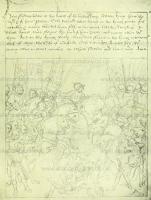
Beauchamp Pageant. [21st July 1403] 7. Here shewes howe at the batell of Shrewesbury betwen Kyng Henry the iiijth and Sir Henry Percy Erle Richard (age 21) there beyng on the kynges party ful notably and manly behaved hym self to his greet lawde and worship In which batell was slayne the said Sir Henry Percy and many other with him. And on the kynges party there was slayne in the kynges cote armour chef of other, the Erle of Safford. Earl Richardes Auntes son with many others in greet nombre. on whos sowles God have mercy Amen.
Note. This plate refers to the battle of Shrewsbury fought on 21st. July, 1403 between King Henry IV. and Sir Henry Percy. On the left side are seen the forces of the King with the royal banner and that of the Earl of Warwick, who is recognisable by his helmet crest of the bear and ragged staff; the three other horsemen have no distinguishing mark. Beneath them are the English archers in salades, jacks, and shirts of chain mail. One foot soldier with a spear stands over a fallen archer of the enemy's party. On the right are the forces of Percy, the horsemen in retreat; while one mounted man staggers from a lance thrust delivered by the Earl of Warwick, and Hotspur, with the Percy crescent as a crest, himself falls backward pierced in the breast by an English arrow. The archers of Percy, armed and equipped like the King's troops, and bearing small buckles on their sword hilts, are making a stand against the English archers. The banner of Percy's troops is reversed, and accordingly the lions rampant in the first and fourth quarters are in wrong positions. In plate 40 the same mistake is made with the Earl's banner. Strutt in his engraving has carelessly placed the arrow of one of the English archers on the right or wrong side of the bow. A similar mistake is made on plate 40. The Percy banner (reversed as before stated), bears 1 and 4, gold a lion rampant azure, the ancient arms of the Dukes of Brabant and Lovaine, and 2 and 3 gules three lucies hauriant silver for Lucy, the arms of Hotspur's stepmother.
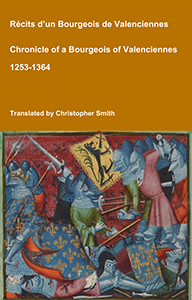
Chronicle of a Bourgeois of Valenciennes
Récits d’un bourgeois de Valenciennes aka The Chronicle of a Bourgeois of Valenciennes is a vivid 14th-century vernacular chronicle written by an anonymous urban chronicler from Valenciennes in the County of Hainaut. It survives in a manuscript that describes local and regional history from about 1253 to 1366, blending chronology, narrative episodes, and eyewitness-style accounts of political, military, and social events in medieval France, Flanders, and the Low Countries. The work begins with a chronological framework of events affecting Valenciennes and its region under rulers such as King Philip VI of France and the shifting allegiances of local nobility. It includes accounts of conflicts, sieges, diplomatic manoeuvres, and the impact of broader struggles like the Hundred Years’ War on urban life in Hainaut. Written from the perspective of a burgher (bourgeois) rather than a monastery or royal court, the chronicle offers a rare lay viewpoint on high politics and warfare, reflecting how merchants, townspeople, and civic institutions experienced the turbulence of the 13th and 14th centuries. Its narrative style combines straightforward reporting of events with moral and civic observations, making it a valuable source for readers interested in medieval urban society, regional politics, and the lived experience of war and governance in pre-modern Europe.
Available at Amazon in eBook and Paperback format.
Holinshed's Chronicle [1525-1582]. 21st July 1403. It was reported for a truth, that now when the king had condescended unto all that was resonable at his hands to be required, and seemed to humble himselfe more than was meet for his estate, the earle of Worcester (upon his returne to his nephue) made relation cleane contrarie to that the king had said, in such sort that he set his nephues hart more in displeasure towards the king, than ever it was before, driving him by that meanes to fight whether he would or not: then suddenlie blew the trumpets, the kings part crieng S. George upon them, the adversaries cried Esperance Persie, and so the two armies furiouslie joined. The archers on both sides shot for the best game, laieng on such load with arrowes, that manie died, and were driven downe that never rose againe.
The Scots (as some write) which had the fore ward on the Persies side, intending to be revenged of their old displeasures doone to them by the English nation, set so fiercelie on the kings fore ward, led by the earle of Stafford, that they made the same draw backe, and had almost broken their adversaries arraie. The Welshmen also which before had [...]aine lurking in the woods, mounteines, and marishes, heari[...]g of this battell toward, came to the aid of the Persies, and refreshed the wearied people with new succours. The king perceiving that his men were thus put to distresse, what with the violent impression of the Scots, and the tempestuous stormes of arrowes, that his adversaries discharged freely against him and his people, it was no need to will him to stirre: for suddenlie with his fresh battell, he approched and relieved his men; so that the battell began more fierce than before. Here the lord Henrie Persie, and the earle Dowglas, a right stout and hardie capteine, not regarding the shot of the kings battell, nor the close order of the ranks, pressing forward togither bent their whole forces towards the kings person, comming upon him with speares and swords so fiercelie, that the earle of March the Scot, perceiving their purpose, withdrew the king from that side of the field (as some write) for his great benefit and safegard (as it appeared) for they gave such a violent onset upon them that stood about the kings standard, that slaieng his standard-bearer sir Walter Blunt, and overthrowing the standard, they made slaughter of all those that stood about it, as the earle of Stafford, that daie made by the king constable of the realme, and diuerse other.
The prince that daie holpe his father like a lustie yoong gentleman: for although he was hurt in the face with an arrow, so that diverse noble men that were about him, would have conueied him foorth of the field, yet he would not suffer them so to doo, least his departure from amongst his men might happilie have striken some feare into their harts: and so without regard of his hurt, he continued with his men, & never ceassed, either to fight where the battell was most hot, or to incourage his men where it seemed most need. This battell lasted three long houres, with indifferent fortune on both parts, till at length, the king crieng saint George victorie, brake the arraie of his enimies, and aduentured so farre, that (as some write) the earle Dowglas strake him downe, & at that instant slue sir Walter Blunt, and three other, apparelled in the kings sute and clothing, saieng: I maruell to see so many kings thus suddenlie arise one in the necke of an other. The king in deed was raised, & did that daie manie a noble feat of armes, for as it is written, he slue that daie with his owne hands six and thirtie persons of his enimies.
The other on his part incouraged by his doings, fought valiantlie, and slue the lord Persie, called sir Henrie Hotspurre. To conclude, the kings enimies were vanquished, and put to flight, in which flight, the earle of Dowglas, for hast, falling from the crag of an hie mounteine, brake one of his cullions, and was taken, and for his valiantnesse, of the king frankelie and freelie deliuered.
There was also taken the earle of Worcester, the procuror and setter foorth of all this mischeefe, sir Richard Vernon, and the baron of Kinderton, with diverse other. There were slaine upon the kings part, beside the earle of Stafford, to the number of ten knights, sir Hugh Shorlie, sir John Clifton, sir John Cokaine, sir Nicholas Gausell, sir Walter Blunt, sir John Caluerleie, sir John Massie of Podington, sir Hugh Mortimer, and sir Robert Gausell, all the which receiued the same morning the order of knighthood: sir Thomas Wendesleie was wounded to death, and so passed out of this life shortlie after. There died in all upon the kings side sixteene hundred, and foure thousand were greevouslie wounded. On the contrarie side were slaine, besides the lord Persie, the most part of the knights and esquiers of the countie of Chester, to the number of two hundred, besides yeomen and footmen, in all there died of those that fought on the Persies side, about five thousand. This battell was fought on Marie Magdalene even, being saturdaie. Upon the mondaie folowing, the earle of Worcester, the baron of Kinderton, and sir Richard Vernon knights, were condemned and beheaded. The earles head was sent to London, there to be set on the bridge.
Chronicle of John Benet. 21st July 1403. In the year of our Lord 1403, a great battle took place near Shrewsbury between King Henry and Henry Percy, the son of the Earl of Northumberland. On the king's side, the Earl of Stafford was slain, and on the opposing side, Henry Percy was killed. The Lord granted victory to the king on the eve of the feast of Saint Mary Magdalene.
Anno Domini MCCCCIII fuit grande bellum iuxta Solopiam inter regem Henricum et Henricum de Percey filium comitis de Northumberland, et ex latere regis interfectus est comes Stafordie et ex alia latere Henricus Percey, et victoriam dedit Dominus Regi in vigilia sancte Marie Magdalene.
After 21st July 1403 Thomas Wendesley (deceased) was buried at All Saint's Church, Bakewell, Derbyshire [Map]. Camail and Jupon Period armour. IHC NASARE Lettering. His Coat of Arms just visible. Lancastrian Esses Collar.


Chronicle of Dieulacres Abbey. After 21st July 1403. Henry Percy, who had been buried at Whitchurch, was exhumed on the following Sunday, and his body was brought back to Shrewsbury, so that the people would not believe he had escaped alive. The said body, naked, was placed upon a pointed stone set on a millstone, to be displayed in view of passersby. For the King had often said to Henry Percy before the beginning of the war: 'I shall call you to account on the Day of Judgment for the shedding of human blood, slain against my will, as though by your own fault.' On the following Monday, his supporters were condemned as traitors. The body of the said Henry was quartered, that is, divided into four parts. One quarter was sent to Chester, where it hung for a long time above the eastern gate of the city.
Henricus Percy, qui apud Whitchurcb fuerat sepultus, in crastino die Dominico exhumatus est, ejusque corpus Salopiæ reductum, ne putaretur a populo vivus evasisse, positumque corpus prædictum nudum supra unam apicem in mola positam in conspectu transeuntium intuendum. Loquebatur siquidem Rex, ut sæpius ante initium belli Henrico Percy, 'Quasi vitio ego appello te in die Judicii de humano sanguine, me invite, perempto.' Die vero Lunæ sequenti dampnati sunt fideles quasi proditores: corpus dicti Henrici quarteriatum sive quadripartitum, unumque quarterium Cestriæ missum, diuque super orientalem portam civitatis pendebatur.
After 21st July 1403 Edmund Cockayne (deceased) was buried at St Oswald's Church, Ashbourne [Map]. Monument to Edmund Cockayne and his first wife Margaret Longford. Camail and Jupon Period. Cockerel Crest. St Oswald's Church, Ashbourne [Map]. Chest with Weepers holding Shields.
Edmund Cockayne: Edmund Cockayne and Elizabeth Harthill were married. In 1356 he was born to John Cockayne and Cecilia Vernon at Ashbourne, Derbyshire [Map].
Margaret Longford: Before 1410 John Cockayne and she were married.


On 21st July 1457 Henry Pierrepont (age 49) was murdered at Papplewick Moor, Sherwood by John Grene, an in-law of William Plumpton, with whom Henry was fighting a bitter land dispue. Grene was killed later the same day by Henry's brother John Pierrepont of Radmanthwaite.
Patent Rolls. 21st July 1461. Westminster Palace [Map]. The like to John Howard (age 36), king's knight, the office of the constableship and custody of Norwich Castle [Map] from Exeter lats, with the fees as in the times of Edward III and Richard II from the issues of the counties of Norfolk and Suffolk.
On 21st July 1476 Anne Sforza was born to Galeazzo Maria Sforza 5th Duke Milan (age 32) and Bona of Savoy (age 26). She married (1) January 1491 Alfonso Este I Duke Ferrara, Modena and Reggio, son of Ercole Este I Duke Ferrara (2) Alfonso Este I Duke Ferrara, Modena and Reggio, son of Ercole Este I Duke Ferrara.
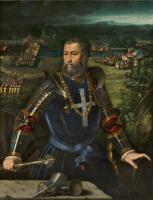
On 21st July 1476 Alfonso Este I Duke Ferrara, Modena and Reggio was born to Ercole Este I Duke Ferrara (age 44). He married (1) January 1491 Anne Sforza, daughter of Galeazzo Maria Sforza 5th Duke Milan and Bona of Savoy (2) Anne Sforza, daughter of Galeazzo Maria Sforza 5th Duke Milan and Bona of Savoy (3) 1501 Lucrezia Borgia and had issue.
Collectanea by John Leland [1502-1552]. The XXIst, XXIId, and XXIIId Days of the said Monneth [21st, 22nd and 24th July 1503] sche sejourned in the said Place of Durham [Map], wher sche was well cheryscht, and hyr Costs borne by the said Byschop; who on the XXIIImd Day held holle Hali, and dowble Dynner, and dowble Soupper to all Commers worthy for to be ther. And in the said Hali was sett all the Noblesse, as well Spiritualis as Temporalis, grett and small, the wich was well come; for this was hys Day of Installacyon.
Letters and Papers Foreign and Domestic Henry VIII 1528. 21st July 1528. Love Letters XI. 4537. Henry VIII to Anne Boleyn.
The approach of the time which has been delayed so long delights me so much that it seems almost already come. Nevertheless, the entire accomplishment cannot be till the two persons meet; which meeting is more desired on my part than anything in the world, for what joy can be so great as to have the company of her who is my most dear friend, knowing likewise that she does the same. Judge then what will that personage do whose absence has given me the greatest pain in my heart, which neither tongue nor writing can express, and nothing but that can remedy. Tell your father (age 51) on my part that I beg him to abridge by two days the time appointed that he may be in court before the old term, or at least upon the day prefixed; otherwise I shall think he will not do the lover's turn as he said he would, nor answer my expectation. No more, for want of time. I hope soon to tell you by mouth the rest of the pains I have suffered in your absence. Written by the hand of the secretary, who hopes to be privately with you, &c.
Note. The full content of this letter may be found in the The Love Letters of Henry VIII to Anne Boleyn.
Jean de Waurin's Chronicle of England Volume 6 Books 3-6: The Wars of the Roses
Jean de Waurin was a French Chronicler, from the Artois region, who was born around 1400, and died around 1474. Waurin’s Chronicle of England, Volume 6, covering the period 1450 to 1471, from which we have selected and translated Chapters relating to the Wars of the Roses, provides a vivid, original, contemporary description of key events some of which he witnessed first-hand, some of which he was told by the key people involved with whom Waurin had a personal relationship.
Available at Amazon in eBook and Paperback format.
Letters and Papers Foreign and Domestic Henry VIII 1528. 21st July 1528. R.O. St. P.I. 321. 4536. Duke of Richmond (age 9) to Henry VIII (age 37).
I have received two of your letters, dated Tittenhanger, the 10th, desiring the preferment of Sir Giles Strangwisshe and Sir Edward Seymer, master of my horse, to rooms vacant by the death of Sir William Compton. I send a list of the offices and the fees appertaining. I presume you mean that one of the said gentlemen is to be preferred to the stewardship of Canforde.
It was signified to me by the Cardinal that it was your pleasure, when any office fell vacant, that I should dispose of it, considering the great number of my servants who have no other reward. Hearing, then, that the stewardship of my lands in Dorset and Somerset shires was void, I have disposed of one of them to Sir William Parre, and the other to George Coton, who attends upon me. Sheriffhutton, 21 July. Signed.
P.1. Add. Endd.
ii. Lordships belonging to my Lord of Richmond and Somerset.
Dorset.—Canforde, Corfe Castle, Cockden hundred and the Isle of Purbyke. The steward's fee is 100s.
Somerset.—The borough of Milborn Port. The manor of Kingesbury Regis and the hundred of Horethorn. The manor of Quene Cammell. The lordship of Martock. The hundred of Stone and Cattisayshe. The manor of Coryrevell. The hundred of Abdyke and Bulstone, and the borough of Langporte.
The steward's fee is £6 13s. 4d., besides 60s. for his clerk.


Letters and Papers Foreign and Domestic Henry VIII 1528. 21st July 1528. R. O. 4538. Hennege To Wolsey.
I have this day put the King in remembrance of the letter of his own hand, which he said he would write, but he complains of his head, and therefore is not disposed to write at present. Tomorrow he intends to go to Grafton, to stay the Thursday, and return on the Friday. I will get him to write without fail, when I can. I beseech you continue gracious to my poor brother the archdeacon of Oxford, for whom I thank you. Ampthill, 21 July. Signed.
P.S.—There is no news here. The King is well, saving his head. My Lady Rocheford (age 23) and Mrs. Anne (age 27) cometh this week to the Court. My lord Rocheford (age 25) was to have come, but because of the sweat he remains at home.
P. 1. Add. Endd.


Letters and Papers Foreign and Domestic Henry VIII 1528. 21st July 1528. Le Grand, III. 150. 4542. Du Bellay (age 36) To Montmorency.
Has informed Wolsey, by long letters directed to Vannes, of the contents of Francis's letters of the 9th and 13th. He is very glad of the news from Naples, and from Italy generally. The point of all my letters, Sir, is the contribution. The first time I sent to him he determined that it should commence in the middle of June. I applied to him again, and I think if I can speak to him tomorrow I shall gain my purpose, for he has consented that I shall go to the village of Hampton Court, when he will consider whether I shall speak by trumpet or by myself. I will do what I can about the advance of money, for I have not had a word yet in answer; but you must know the Angelots are worth here 69 sous, and I think they will deliver them to you for the weight, for they have no other money except these escus à la couronne, which are still worse. Let me know how to remit, or send a man to receive them. If you desire it I will try and get Wolsey to send the money to Calais free of cost.
The danger in this country begins to diminish hereabouts, and to increase elsewhere. In Kent it is very great. Mademoiselle de Boulan (age 27) and her father (age 51) have sweated, but have got over it. The day I sweated at my lord of Canterbury's there died 18 persons in four hours, and hardly anybody escaped but myself, who am not yet quite strong again. The King has gone further off than he was, uses great precautions, confesses himself every day, and receives Our Lord at every Feast. So also the Queen (age 42), who is with him, and Wolsey for his part. The notaries have had a fine time of it. I think 100,000 wills have been made off-hand, for those who were dying became quite foolish the moment they fell ill. The astrologers say this will not turn into a plague, but I think they dream. Has no doubt the King and Wolsey will be gratified with Francis's condolences on this visitation.
I have determined to send off this despatch, not to keep you in suspense till I have seen the Legate; but till next voyage I do not mean to put hand to pen (n'ay voulu mectre la main à la plume), that I may not cause suspicion to any one; for this is not a regular pestilence (n'est que belle peste), and the moment a man is dead "il en devient tout couvert sur le corps1."
Thanks for remittances, &c. I am quite content to stay here, or even in Turkey, if the interests of Francis require it, and to spend all my goods if need be. All I have is but 4,000 livres of rent, and the expence being here so great, you will have to provide for the excess after I and my friends have done what we can. If I were as rich as some other bishops, or were I at a place of small expence like Venice, you should hear no complaint from me. London, 21 July.
Fr. Add.
Note 1. he becomes all covered on his body.


The Love Letters of Henry VIII to Anne Boleyn. Letter 13. Henry VIII (age 37) to Anne Boleyn (age 27).
Darling, I heartily recommend me to you, ascertaining you that I am not a little perplexed with such things as your brother shall on my part declare unto you, to whom I pray you give full credence, for it were too long to write. In my last letters I wrote to you that I trusted shortly to see you, which is better known at London than with any that is about me, whereof I not a little marvel; but lack of discreet handling must needs be the cause thereof. No more to you at this time, but that I trust shortly our meetings shall not depend upon other men's light handlings, but upon our own.
Written with the hand of him that longeth to be yours.
H. R.
Note. The date of this letter is presumed to be middle July 1528.
On 21st July 1533 Mary Tudor Queen Consort France (deceased) was buried at Bury St Edmund's Abbey [Map]. Catherine Willoughby (age 14) was one of the chief mourners. She, Catherine, married Mary's former husband Charles Brandon 1st Duke of Suffolk (age 49), who held her wardship, ten weeks later.


Letters and Papers Foreign and Domestic Henry VIII 1535. 21st July 1535. R. O. 1080. Roland Lee (age 48), Bishop of Coventry and Lichfield, to Cromwell.
Thomas Rotheray has the measles. As the plague is in "Merisseis" (the Marches), I hintend to remove, and not go to Court till I know the King's pleasure. Write to the dean of the Chapel with my excuse. Wednesday.
Hol., p. 1. Add.: Mr. Secretary.
Henry Machyn's Diary. 21st July 1553. The xxj day of July was taken in Cambryg [Map] the duke of Northumberland (age 49), with dyvers lordes and knyghts; and that day qwen Mare (age 37) was proclamyd in Cambryg [Map], and [in-]contenent thrugh England.


Henry Machyn's Diary. 21st July 1554. The xxj day of July by x of the cloke [was proclaimed] thrug London that the prynche of Spayne (age 27) was [arrived at Southampton] and that evere pere and lord and lade shuld [resort] unto her grace['s] cete of Wynchester [Map] with all spede to her graceus weddyng.
Note. P. 66. Proclamation for attendance of peers, &c. at the queen's marriage. See this in the Soc. of Antiquaries' collection, vol. ii. p. 125.


Wriothesley's Chronicle [1508-1562]. 21st July 1554. The xxith of Julie proclamation was made in London that all noblemen, gentlemen, ladies, and other should repayre to the Cittie of Winchester, Hampshire [Map], there to doe their attendance at her graces marriage accordinge as they are appoynted. And that night were bonefyers made in everie parishe within the Cittie of London, with all the bells ringinge in everye parishe churche for the ioyfull tydinges of the Princes landinge in safetie.
Henry Machyn's Diary. 21st July 1556. The xxj day of July the Quen('s) (age 40) grace removyd from sant James in the ffelds unto Heltem [Map] thrugh the parke and thrugh Whyt-alle, and toke her barge, and so to Lambeth unto my lord cardenoll('s) place; and there here grace toke here charett, and so thrugh sant Gorge('s) ffeld unto Nuhyngton, so over the feldes to-wherd Eltem at v of the cloke at after-none; and ther wher of pepull a-boyff x m. pepull to se her grace; and my lord cardinoll (age 56) rod with her, and my lord of Penbroke (age 55) and my lord Montyguu (age 27) and dyvers lordes and knyghtes and mony lades and gentyll women a grett nombur rod with her grace.


On 21st July 1590 Stillborn Wettin was born to Friedrich Wilhelm Wettin I Duke Saxe Weimar (age 28) and Sophie of Württemberg Duchess of Saxe-Weimar (age 26).
On 21st July 1603 King James I of England and Ireland and VI of Scotland (age 37) created a number of new Baronies...
Thomas Egerton (age 63) was created 1st Baron Ellesmere. Alice Spencer Countess Derby (age 54) by marriage Baroness Ellesmere.
Robert Spencer (age 33) was created 1st Baron Spencer Wormleighton.
John Harrington (age 63) was created 1st Baron Harington of Exton. Anne Keilway Baroness Harington (age 49) by marriage Baroness Harington of Exton.


On 21st July 1638 Richard Brownlow (age 85) died in Enfield [Map]. Monument to Richard Brownlow in St Peter and St Paul Church, Belton [Map] sculpted by Joshua Marshall (age 10).
Richard Brownlow: On 2nd April 1553 he was born. On 12th April 1553 Richard Brownlow was baptised at St Andrew's Church, Holborn [Map]. On 9th October 1591 he was appointed Chief Prothonotary of the Court of Common Pleas which office he held until heis death which made him a very wealthy.
After 21st July 1643. Monument at St James' Church, Chipping Campden [Map] to Baptist Hicks 1st Viscount Campden and Elizabeth May Viscountess Campden (deceased).
Monument in St James' Church, Chipping Campden [Map]. A sumptuous marble canopied and collonaded. Possibly by Nicholas Stone (age 56).


On 21st July 1644 Princess Henrietta Stewart Duchess Orléans was baptised at Exeter Cathedral [Map]. John Berkeley 1st Baron Berkeley (age 42) attended. Elizabeth Villiers Countess Morton (age 35) was her godmother in whose care she was left.


In July 1661 King Charles II of England Scotland and Ireland (age 31) created new Baronetcies and Peerages...
10th July 1661 Christopher Guise 1st Baronet (age 44) was created 1st Baronet Guise of Elmore in Gloucestershire.
16th July 1661 Philip Parker 1st Baronet (age 43) was created 1st Baronet Parker of Arwarton in Suffolk. Rebecca Long Lady Parker by marriage Lady Parker of Arwarton in Suffolk.
21st July 1661 Charles Hussey 1st Baronet (age 35) was created 1st Baronet Hussey of Caythorpe in Lincolnshire.
21st July 1661 Edward Barkham 1st Baronet (age 31) was created 1st Baronet Barkham Waynflete.
25th July 1661 John Banks 1st Baronet (age 34) was created 1st Baronet Banks of London by King Charles I of England, Scotland and Ireland.
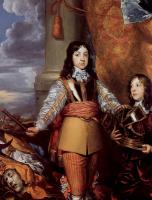


Samuel Pepys' Diary. 21st July 1664. After dinner to [give] my Chancellor (age 55) a good account of his business, and he is very well pleased therewith, and carries himself with great discretion to me, without seeming over glad or beholding to me; and yet I know that he do think himself very well served by me.


Jean de Waurin's Chronicle of England Volume 6 Books 3-6: The Wars of the Roses
Jean de Waurin was a French Chronicler, from the Artois region, who was born around 1400, and died around 1474. Waurin’s Chronicle of England, Volume 6, covering the period 1450 to 1471, from which we have selected and translated Chapters relating to the Wars of the Roses, provides a vivid, original, contemporary description of key events some of which he witnessed first-hand, some of which he was told by the key people involved with whom Waurin had a personal relationship.
Available at Amazon in eBook and Paperback format.
John Evelyn's Diary. 21st July 1664. I dined with my Lord Treasurer (age 57) at Southampton House, where his Lordship used me with singular humanity. I went in the afternoon to Chelsea, to wait on the Duke of Ormond (age 53), and returned to London.
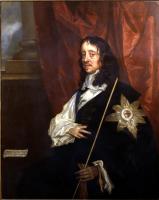


Samuel Pepys' Diary. 21st July 1665. So home and late at my chamber, setting some papers in order; the plague growing very raging, and my apprehensions of it great. So very late to bed.
Before 21st July 1683 Robert Sawyer (age 50) prosecuted members of the Rye House Plot.
On 21st July 1683 William Russell (age 43) was beheaded by Jack Ketch at Lincoln's Inn for his involvement in the Rye House Plot. The executioner was so inept that he took four axe blows to separate the head from the body. After the first failed blow his victim looked up and said "You dog, did I give you 10 guineas to use me so inhumanely?".


John Evelyn's Diary. 20th July 1683. Several of the conspirators of the lower form were executed at Tyburn [Map]; and the next day.
John Evelyn's Diary. 21st July 1683. Lord Russell (age 43) was beheaded in Lincoln's Inn Fields, the executioner giving him three butcherly strokes. The speech he made, and the paper which he gave the Sheriff of declaring his innocence, the nobleness of the family, the piety and worthiness of the unhappy gentleman, wrought much pity, and occasioned various discourses on the plot.
A True Account of the Horrid Conspiracy. Upon the whole Process he was found guilty of High Treason. But in stead of Drawing, Hanging and Quartering, the usual and legal Penalty of that Crime,the Execution was by his Majesties Clemency changed into that of Beheading. Though it is well known,this very Prerogative of the Kings having it in his Power to alter the Punishment of High Treason, had been vehemently disputed by the Party, and particularly by the Lord Russel himself in the Lord Stafford's Case.
The said Lord Russel (age 43) at the time of his Death, which was the 21st of that Month [21st July 1683], deliver'd a Paper to the Sheriffs, and left other Copies of it with his Friends, whereby it was immediately dispers'd amongst the People, the general drift of it being to make odious Insinuations against the Government, invidious Reflections on the Ministers of his Majesties Justice and undue Extenuations of his own Fault.

A History of the County of Buckingham: Volume 3: Parishes: Chenies. Lord William Russell (age 43), son of the fifth earl, is perhaps the most interesting figure in connexion with Chenies [Map]. As a member of the country party in the House of Commons he backed the Bill excluding the Duke of York from the throne. Being afterwards implicated in the Rye House Plot he was executed for treason in Lincoln's Inn Fields on 21 July 1683 and has earned for himself the name of 'patriot' or martyr of the Revolution52. He was buried at Chenies and his widow Lady Rachel Russell (age 47) visited the church in later years, when she decided to 'make a little monument' and erected the one to the fifth earl (age 66) and his wife (age 67) with medallions of their children, conspicuous among which is that of Lord William Russell, ranged in rows on either side54. Chenies has remained in the Russell family until the present day55, the present Duke of Bedford being lord of the manor, but it is many years since the family ceased to use the old manor-house as a residence.
Note 53. Dict. Nat. Biog.; G.E.C. Complete Peerage.
Note 54. Froude, op. cit. iv, 517.
Note 55. 55. Feet of F. Div. Co. Mich. 8 & 9 Eliz.; Chan. Inq. p.m. (Ser. 2), ccxi, 132; ccccxxxv, 118; Cal. S. P. Dom. 1581-90, p. 380; Acts of P.C. 1601-4, p. 145; Hist.MSS. Com. Rep. xii, App. v, 131; Recov. R. Hil. 11 Jas. I, m. 97; Mich. 14 Jas. I, m. 136; Mich. 6 Geo. II, m. 291; Mich. 1 Geo. III, m. 139; Trin. 49 Geo. III, m. 152; Fine R. 16 Jas. I, pt. i, no. 4; Lysons, Mag. Brit. i (3), 584.
On 21st July 1684 Elizabeth Preston Duchess Ormonde (age 68) died. On 24th July 1684 she was buried in the Duke of Ormonde Vault, King Henry VII Chapel, Westminster Abbey.
On 21st July 1688 James Butler 1st Duke Ormonde (age 77) died. His grandson James (age 23) de jure 2nd Duke Ormonde, 2nd Marquess Ormonde, 13th Earl Ormonde, 6th Earl Ossory. Mary Somerset Duchess Ormonde (age 24) by marriage Duchess Ormonde.


On 21st July 1693 Thomas Pelham Holles 1st Duke Newcastle-under-Lyne was born to Thomas Pelham 1st Baron Pelham of Laughton (age 40) and Grace Holles. He married 2nd April 1717 Henrietta Godolphin Duchess Newcastle under Lyne, daughter of Francis Godolphin 2nd Earl Godolphin and Henrietta Churchill 2nd Duchess of Marlborough.
On 21st July 1719 Marie Louise Élisabeth Bourbon Duchess Berry (age 23) died.
Chronicle of Abbot Ralph of Coggeshall
The Chronicle of Abbot Ralph of Coggeshall (Chronicon Anglicanum) is an indispensable medieval history that brings to life centuries of English and European affairs through the eyes of a learned Cistercian monk. Ralph of Coggeshall, abbot of the Abbey of Coggeshall in Essex in the early 13th century, continued and expanded his community’s chronicle, documenting events from the Norman Conquest of 1066 into the tumultuous reign of King Henry III. Blending eyewitness testimony, careful compilation, and the monastic commitment to record-keeping, this chronicle offers a rare narrative of political intrigue, royal power struggles, and social upheaval in England and beyond. Ralph’s work captures the reigns of pivotal figures such as Richard I and King John, providing invaluable insights into their characters, decisions, and the forces that shaped medieval rule. More than a simple annal, Chronicon Anglicanum conveys the texture of medieval life and governance, making it a rich source for scholars and readers fascinated by English history, monastic authorship, and the shaping of the medieval world.
Available at Amazon in eBook and Paperback format.
On 21st July 1723 Anthony Grey 3rd Baron Lucas (age 28) died by choking on an ear of barley the beard of which stuck in his throat. Monument at the De Grey Mausoleum, St John the Baptist Church, Flitton [Map]. His niece Jemima succeeded 4th Baroness Lucas of Crudwell.
Anthony Grey 3rd Baron Lucas: On 21st February 1695 he was born to Henry Grey 1st Duke Kent and Jemima Crew Marchioness Kent. On 17th February 1718 Anthony Grey 3rd Baron Lucas and Mary Tufton Countess Gower were married. She the daughter of Thomas Tufton 6th Earl of Thanet and Catherine Cavendish Countess Isle Thanet. He the son of Henry Grey 1st Duke Kent and Jemima Crew Marchioness Kent. They were sixth cousins. On 8th November 1718 Anthony Grey 3rd Baron Lucas by writ of acceleration 3rd Baron Lucas of Crudwell.


After 21st July 1731. Memorial at St Michael's Church, Lamplugh [Map] to Margaret Lamplugh (deceased).
Margaret Lamplugh: On 7th October 1693 she was born to Thomas Lamplugh and Frances Moline. Around 14th July 1731 Richard Brisco and she were married. She was dead a week later. The churchwarden at Lamplugh church explained this a possibly being a means for Richard to gain the estate of her father with whose wife, Margaret's mother, he Richard was conducting an affair. Alternatively it may have been a means by which Lamlugh Hall would retained by Richard Brisco. On 21st July 1731 Margaret Lamplugh died.
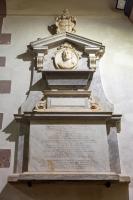
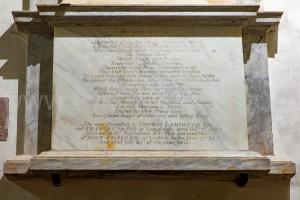
On 21st July 1761 Archibald Douglas 1st Duke of Douglas (age 66) died. Duke Douglas extinct. His half second cousin twice removed James (age 6) succeeded 3rd Marquess Douglas.
On 21st July 1775 George William Frederick Osborne 6th Duke Leeds was born to Francis Osborne 5th Duke Leeds (age 24) and Amelia Darcy 12th Baroness Darcy 9th Baroness Conyers (age 20). He married 17th August 1797 his sixth cousin Charlotte Townshend Duchess Leeds, daughter of George Townshend 1st Marquess Townshend and Anne Montgomery Marchioness Townshend, and had issue.

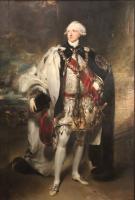

On 21st July 1797 Arthur William Devis (age 34) was recorded as living at 27 George Street.

Greville Memoirs. 21st July 1830. I came and established myself here last night after the Duchess of Bedford's ball. Lady Bathurst (age 64) told me that the Queen spoke to her yesterday morning about the King's walk and being followed, and said that for the future he must walk early in the morning, or in some less public place, so there are hopes that his activity may be tamed. He sent George Fitzclarence off from dinner in his silk stockings and cocked hat to Boulogne to invite the King of Würtemberg to come here; he was back in fifty-six hours, and might have been in less. He employs him in everything, and I heard Fitzclarence yesterday ask the Duke of Leeds for two of his father's horses to ride about on his jobs and relieve his own, which the Duke agreed to, but made a wry face. Mount Charles (age 63) has refused to be Lord of the Bedchamber; his wife (age 61) can't bear it, and he doesn't like to go to Windsor under such altered circumstances. I hardly ever record the scandalous stories of the day, unless they relate to characters or events, but what relates to public men is different from the loves and friendships of the idiots of society.
Ten Years' Digging. On the 21st of July we opened a small tumulus [Map] [Hurdlow Barrow [Map]] on a hill above the High Peak Railway, near Hurdlow, which had been cut through the centre, but the imperfect manner in which investigations of this kind were formerly executed, afforded a chance of our finding something. We discovered that the former excavators had removed one side of a small rectangular cist, which was placed a little to the side of their trench; its other sides were intact, and the earth inside did not seem to have been disturbed, yet we found nothing within but a horse's tooth, a bit of thin bronze, and a few imperfectly burnt bones.
Ten Years' Digging. On the afternoon we re-opened the barrow on Cronkstone Hill [Map] (the next eminence), which was examined by Mr. William Bateman, in 1825 (Vestiges, p. 33). A short distance east from the centre was a large irregularly shaped grave in the rock, the bottom of which was upwards of five feet below the apex of the mound, within it lay the skeleton of a full sized person who had suffered from a morbid enlargement of the head of the right humerus; as usual, in the early interments, he lay in a contracted posture, with a circular instrument of flint near the head, and surrounded by rats' bones. A few inches above this skeleton was a deposit of calcined human bones, apparently interred at the same time as it. There may probably be other interments in the mound, which is about 20 yards diameter.
On 21st July 1858 Maria Christina of Austria Queen Consort Spain was born to Archduke Karl Ferdinand of Austria (age 39) and Archduchess Elisabeth Franziska of Austria (age 27). Coefficient of inbreeding 6.52%. She married 29th November 1879 her third cousin Alfonso XII King Spain, son of Francisco de Asís King Consort Spain and Isabella II Queen Spain, and had issue.

On 21st July 1884 Joyce Collier was born to John Collier (age 34) and Marian "Mady" Huxley (age 25).
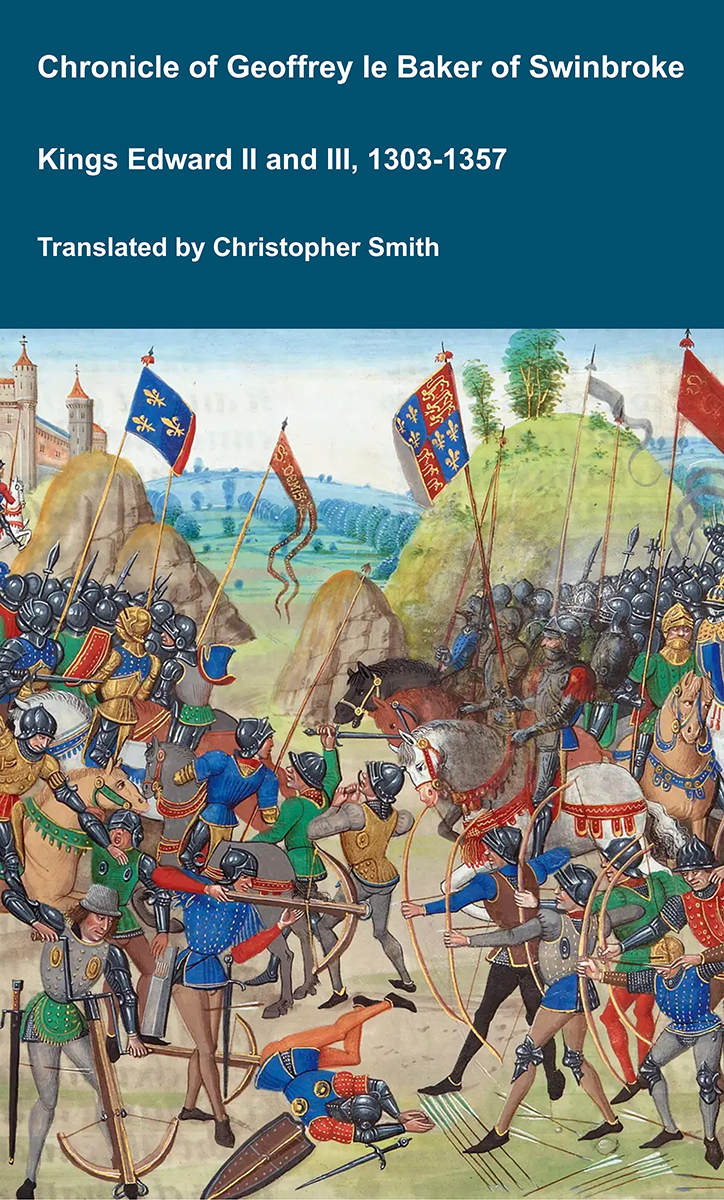
Chronicle of Geoffrey le Baker of Swinbroke
Baker was a secular clerk from Swinbroke, now Swinbrook, an Oxfordshire village two miles east of Burford. His Chronicle describes the events of the period 1303-1356: Gaveston, Bannockburn, Boroughbridge, the murder of King Edward II, the Scottish Wars, Sluys, Crécy, the Black Death, Winchelsea and Poitiers. To quote Herbert Bruce 'it possesses a vigorous and characteristic style, and its value for particular events between 1303 and 1356 has been recognised by its editor and by subsequent writers'. The book provides remarkable detail about the events it describes. Baker's text has been augmented with hundreds of notes, including extracts from other contemporary chronicles, such as the Annales Londonienses, Annales Paulini, Murimuth, Lanercost, Avesbury, Guisborough and Froissart to enrich the reader's understanding. The translation takes as its source the 'Chronicon Galfridi le Baker de Swynebroke' published in 1889, edited by Edward Maunde Thompson.
Available at Amazon in eBook and Paperback format.
On 26th April 1901 Dean William Clavell Ingram (age 66) died. Monument at Peterborough Cathedral [Map] sculpted by his brother Walter Rowlands Ingram (age 63) shortly before he died on 21st July 1903.
Dean William Clavell Ingram: On 11th August 1834 he was born to Reverend George Ingram. In 1900 he was appointed Dean of Peterborough.


On 21st July 1903 Walter Rowlands Ingram (age 65) died.
On 21st July 1915 Miles Stapleton Fitzalan Howard 17th Duke of Norfolk was born to Bernard Fitzalan Howard 3rd Baron Howard (age 30) and Mona Stapleton 11th Baroness Beaumont and Baroness Howard (age 20). He married 4th July 1949 Anne Constable-Maxwell Duchess Norfolk and had issue.
On 21st July 1928 Ellen Terry (age 81) died.


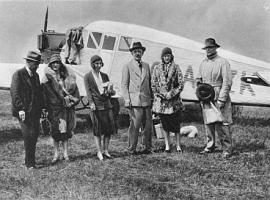
On 21st July 1930 Rosemary Millicent Sutherland-Leveson-Gower (age 36) died in a plane crash. She was booked on a flight from Le Touquet to Croydon. A seat became available on an earlier flight which she accepted. The flight departed in clear weather. At about at 2:30 pm in poor weather over Kent the tail unit failed, causing the aircraft to stall, which in turn caused the port wing to break away and the plane to crash. All the passengers fell from the aircraft through the hole created by the wing breaking away. The Viscountess' body was found in a meadow.
An inquest was opened on 23 July where the Viscountess was identified by her brother George (age 41). After the formal identifications, the inquest was adjourned for the Air Ministry technical investigation to take place. The inquest was resumed on 13 August at which the jury returned a verdict "that the victims met their death falling from an aeroplane, the cause of the accident being unknown".
Rosemary Millicent Sutherland-Leveson-Gower: On 9th August 1893 she was born to Cromartie Sutherland-Leveson-Gower 4th Duke of Sutherland and Millicent Fanny St Clair-Erskine Duchess of Sutherland. On 8th March 1919 William Humble Eric Ward 3rd Earl of Dudley and she were married. She the daughter of Cromartie Sutherland-Leveson-Gower 4th Duke of Sutherland and Millicent Fanny St Clair-Erskine Duchess of Sutherland. He the son of William Humble Ward 2nd Earl of Dudley. On 25th July 1930 an Memorial Service was held for Rosemary Millicent Sutherland-Leveson-Gower at St Margaret's Church, Westminster [Map].
George Sutherland-Leveson-Gower 5th Duke of Sutherland: On 29th August 1888 he was born to Cromartie Sutherland-Leveson-Gower 4th Duke of Sutherland and Millicent Fanny St Clair-Erskine Duchess of Sutherland. On 27th June 1913 Cromartie Sutherland-Leveson-Gower 4th Duke of Sutherland died. His son George succeeded 5th Duke Sutherland, 23rd Earl Sutherland, 7th Earl Gower, 8th Baron Gower, 12th Baronet Gower of Stittenham in Yorkshire. On 26th September 1931 Elizabeth Demarest died. Her daughter Elizabeth Sutherland 24th Countess of Sutherland became a ward of her uncle George Sutherland-Leveson-Gower 5th Duke of Sutherland. On 1st February 1963 George Sutherland-Leveson-Gower 5th Duke of Sutherland died. His third cousin once removed John succeeded 6th Duke Sutherland, 6th Marquess Stafford, 8th Earl Gower, 9th Baron Gower, 13th Baronet Gower of Stittenham in Yorkshire. Diana Evelyn Percy by marriage Duchess Sutherland.His niece Elizabeth succeeded 24th Countess Sutherland.
On 21st July 1930 Frederick Temple Hamilton-Temple-Blackwood 3rd Marquess of Dufferin and Ava (age 55) died in a plane crash. His son Basil (age 21) succeeded 4th Marquess of Dufferin and Ava, 4th Earl of Ava in County Down and Burma, 4th Earl of Dufferin in County Down, 4th Viscount Dufferin of Claneboye in County Down, 4th Baron Claneboye of Claneboye in County Down, 8th Baron Dufferin and Claneboye of Ballyleidy and Killyleagh in County Down, 8th Baronet Blackwood of Killyleagh in County Down. Maureen Constance Guinness Marchioness of Dufferin and Ava (age 23) by marriage Marchioness of Dufferin and Ava.
On 21st July 1930 Captain Edward Simons Ward 2nd Baronet (age 48) died. His brother Commander (age 45) succeeded 3rd Baronet Ward of Wilbraham Place in Chelsea.
On 21st July 1979 Ralph Percy 12th Duke of Northumberland (age 22) and Isobel Jane Richard Duchess of Northumberland (age 21) were married. He the son of Hugh Algernon Percy 10th Duke Northumberland (age 65) and Elizabeth Diana Montagu-Douglas-Scott Duchess Northumberland (age 57).
On 21st July 1247 Bogo de Clare was born to Richard de Clare 6th Earl Gloucester 5th Earl Hertford (age 24) and Maud Lacy Countess Gloucester and Hertford (age 24).
On 21st July 1338 King Charles V of France was born to King John "The Good" II of France (age 19) and Bonne Luxemburg Queen Consort France (age 23). He married 8th April 1350 his half first cousin once removed Joanna Bourbon Queen Consort France, daughter of Peter Bourbon Duke Bourbon and Isabella Valois Duchess Bourbon, and had issue.
On 21st July 1476 Anne Sforza was born to Galeazzo Maria Sforza 5th Duke Milan (age 32) and Bona of Savoy (age 26). She married (1) January 1491 Alfonso Este I Duke Ferrara, Modena and Reggio, son of Ercole Este I Duke Ferrara (2) Alfonso Este I Duke Ferrara, Modena and Reggio, son of Ercole Este I Duke Ferrara.
On 21st July 1476 Alfonso Este I Duke Ferrara, Modena and Reggio was born to Ercole Este I Duke Ferrara (age 44). He married (1) January 1491 Anne Sforza, daughter of Galeazzo Maria Sforza 5th Duke Milan and Bona of Savoy (2) Anne Sforza, daughter of Galeazzo Maria Sforza 5th Duke Milan and Bona of Savoy (3) 1501 Lucrezia Borgia and had issue.
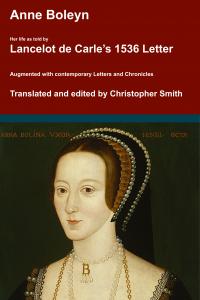
Anne Boleyn. Her Life as told by Lancelot de Carle's 1536 Letter.
In 1536, two weeks after the execution of Anne Boleyn, her brother George and four others, Lancelot du Carle, wrote an extraordinary letter that described Anne's life, and her trial and execution, to which he was a witness. This book presents a new translation of that letter, with additional material from other contemporary sources such as Letters, Hall's and Wriothesley's Chronicles, the pamphlets of Wynkyn the Worde, the Memorial of George Constantyne, the Portuguese Letter and the Baga de Secrets, all of which are provided in Appendices.
Available at Amazon in eBook and Paperback format.
On 21st July 1577 Anne Montafié Countess Soissons was born. She married 1601 Charles Bourbon Condé Count Soissons, son of Louis Bourbon Prince Condé and Francoise Valois Princess Condé, and had issue.
On 21st July 1590 Stillborn Wettin was born to Friedrich Wilhelm Wettin I Duke Saxe Weimar (age 28) and Sophie of Württemberg Duchess of Saxe-Weimar (age 26).
On 21st July 1632 Hugh Cholmley 4th Baronet was born to Hugh Cholmley 1st Baronet (age 31) and Elizabeth Twysden Lady Cholmley at Fyling Hall. He married 19th February 1666 Anne Compton Lady Rushout, daughter of Spencer Compton 2nd Earl of Northampton and Mary Beaumont Countess of Northampton, and had issue.
On 21st July 1693 Thomas Pelham Holles 1st Duke Newcastle-under-Lyne was born to Thomas Pelham 1st Baron Pelham of Laughton (age 40) and Grace Holles. He married 2nd April 1717 Henrietta Godolphin Duchess Newcastle under Lyne, daughter of Francis Godolphin 2nd Earl Godolphin and Henrietta Churchill 2nd Duchess of Marlborough.
On 21st July 1695 Thomas Archer 1st Baron Archer was born to Andrew Archer (age 35) and Elizabeth Dashwood. He married Catherine Tipping Baroness Archer, daughter of Thomas Tipping 1st Baronet and Anne Cheke, and had issue.
On 21st July 1704 Elisabeth Alexandrine Felicite Charlotte Gotfriede Salm was born to Louis Otto Salm Count Salm Salm (age 29) and Albertine Johannette Nassau Hadamar Countess Salm (age 29). She a great x 3 granddaughter of King James I of England and Ireland and VI of Scotland.
On 21st July 1722 James Colebrooke 1st Baronet was born to James Colebrooke (age 42).
On 21st July 1731 Henry Digby 1st Earl Digby was born to Edward Digby (age 38).
On 21st July 1740 John Hill 3rd Baronet was born to Rowland Hill 1st Baronet (age 34).
On 21st July 1760 Philadelphia Dyke was born to John Dixon Dyke 3rd Baronet (age 27). She married 20th May 1790 Beaumont Hotham, son of Beaumont Hotham 2nd Baron Hotham, and had issue.
The History of William Marshal was commissioned by his son shortly after William’s death in 1219 to celebrate the Marshal’s remarkable life; it is an authentic, contemporary voice. The manuscript was discovered in 1861 by French historian Paul Meyer. Meyer published the manuscript in its original Anglo-French in 1891 in two books. This book is a line by line translation of the first of Meyer’s books; lines 1-10152. Book 1 of the History begins in 1139 and ends in 1194. It describes the events of the Anarchy, the role of William’s father John, John’s marriages, William’s childhood, his role as a hostage at the siege of Newbury, his injury and imprisonment in Poitou where he met Eleanor of Aquitaine and his life as a knight errant. It continues with the accusation against him of an improper relationship with Margaret, wife of Henry the Young King, his exile, and return, the death of Henry the Young King, the rebellion of Richard, the future King Richard I, war with France, the death of King Henry II, and the capture of King Richard, and the rebellion of John, the future King John. It ends with the release of King Richard and the death of John Marshal.
Available at Amazon in eBook and Paperback format.
On 21st July 1763 George Seymour-Conway was born to Francis Seymour-Conway 1st Marquess Hertford (age 45) and Isabella Fitzroy Countess Hertford (age 36). He a great x 2 grandson of King Charles II of England Scotland and Ireland. He married 1795 Isabella Hamilton and had issue.


On 21st July 1775 George William Frederick Osborne 6th Duke Leeds was born to Francis Osborne 5th Duke Leeds (age 24) and Amelia Darcy 12th Baroness Darcy 9th Baroness Conyers (age 20). He married 17th August 1797 his sixth cousin Charlotte Townshend Duchess Leeds, daughter of George Townshend 1st Marquess Townshend and Anne Montgomery Marchioness Townshend, and had issue.
On 21st July 1778 Griselda Stanhope was born to Charles Stanhope 3rd Earl Stanhope (age 24) and Hester Pitt (age 22).
On 21st July 1787 William Lowther 2nd Earl Lonsdale was born to William Lowther 1st Earl Lonsdale (age 29) and Augusta Fane Countess Lonsdale (age 25).
On 21st July 1792 James Caleb Anderson 1st Baronet was born to John Anderson (age 45).
On 21st July 1824 Claude Bowes-Lyon 13th Earl Strathmore and Kinghorne was born to Thomas George Lyon Bowes (age 23) and Charlotte Grimstead (age 27) at Redbourn, Hertfordshire [Map]. He married 28th September 1853 Frances Dora Smith Countess Strathmore and Kinghorne and had issue.
On 21st July 1826 Edward Henry Stanley 15th Earl of Derby was born to Edward Smith-Stanley 14th Earl of Derby (age 27) and Emma Caroline Bootle-Wilbraham Countess Derby (age 21). He married 1870 Mary Catherine Sackville-West Marchioness Salisbury, daughter of George Sackville-West 5th Earl De La Warr and Elizabeth Sackville Countess De La Warr.


On 21st July 1840 Georgiana Macdonald Lady Burne-Jones was born to Reverend George Browne Macdonald (age 35) and Hannah Jones at Birmingham, Warwickshire. She married 9th June 1860 Edward Coley Burne-Jones 1st Baronet and had issue.


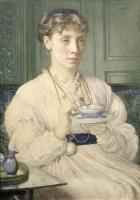


On 21st July 1858 Maria Christina of Austria Queen Consort Spain was born to Archduke Karl Ferdinand of Austria (age 39) and Archduchess Elisabeth Franziska of Austria (age 27). Coefficient of inbreeding 6.52%. She married 29th November 1879 her third cousin Alfonso XII King Spain, son of Francisco de Asís King Consort Spain and Isabella II Queen Spain, and had issue.
On 21st July 1864 Seymour Bathurst 7th Earl Bathurst was born to Allen Bathurst 6th Earl Bathurst (age 31) and Meriel Warren (age 25). He married 15th November 1893 Lilias Margaret Frances Borthwick Countess Bathurst Sussex and had issue.
On 21st July 1878 Hubert William Ponsonby 5th Baron de Mauley was born to Maurice John George Ponsonby 4th Baron de Mauley (age 32) and Madeline Emily Augusta Hanbury-Tracy Baroness de Mauley. He married 11th October 1920 his fourth cousin Elgiva Margaret Dundas Baroness de Mauley and had issue.
Chronicle of Geoffrey le Baker of Swinbroke
Baker was a secular clerk from Swinbroke, now Swinbrook, an Oxfordshire village two miles east of Burford. His Chronicle describes the events of the period 1303-1356: Gaveston, Bannockburn, Boroughbridge, the murder of King Edward II, the Scottish Wars, Sluys, Crécy, the Black Death, Winchelsea and Poitiers. To quote Herbert Bruce 'it possesses a vigorous and characteristic style, and its value for particular events between 1303 and 1356 has been recognised by its editor and by subsequent writers'. The book provides remarkable detail about the events it describes. Baker's text has been augmented with hundreds of notes, including extracts from other contemporary chronicles, such as the Annales Londonienses, Annales Paulini, Murimuth, Lanercost, Avesbury, Guisborough and Froissart to enrich the reader's understanding. The translation takes as its source the 'Chronicon Galfridi le Baker de Swynebroke' published in 1889, edited by Edward Maunde Thompson.
Available at Amazon in eBook and Paperback format.
On 21st July 1879 Evelyn Selina Louisa Crichton was born to John Crichton 4th Earl Erne (age 39). She married 7th November 1899 Gerald Ernest Francis Ward, son of William Ward 1st Earl of Dudley and Georgina Moncrieffe Countess Dudley.
On 21st July 1881 Richard Gerard Wellesley Williams-Bulkeley was born to Richard Henry Williams-Bulkeley 12th Baronet (age 18). He married before 5th October 1911 Victoria Alexandrina Stella Legge and had issue.
On 21st July 1884 Joyce Collier was born to John Collier (age 34) and Marian "Mady" Huxley (age 25).
On 21st July 1897 Francis Henry Manners 4th Baron Manners was born to John Manners-Sutton 3rd Baron Manners (age 45) and Constance Hamlyn-Fane Baroness Manners (age 35). He married 1921 Mary Edith Gascoyne-Cecil Baroness Manners and had issue.
On 21st July 1915 Miles Stapleton Fitzalan Howard 17th Duke of Norfolk was born to Bernard Fitzalan Howard 3rd Baron Howard (age 30) and Mona Stapleton 11th Baroness Beaumont and Baroness Howard (age 20). He married 4th July 1949 Anne Constable-Maxwell Duchess Norfolk and had issue.
On 21st July 1916 William Montague Style 12th Baronet was born to William Frederick Style 11th Baronet (age 29).
On 21st July 1932 John Roger Wilmot Onslow 8th Baronet was born to Richard Wilmot Onslow 7th Baronet (age 25).
On 21st July 1957 Rupert Edward Llewellyn Paget was born to George Charles Henry Victor Paget 7th Marquess Anglesey (age 34).
On 21st July 1964 William Edwardes 9th and 6th Baron Kensington was born to Hugh Ivor Edwardes 8th and 5th Baron Edwardes (age 30).
On 21st July 1448 Charles Artois Count of Eu (age 54) and Joan Saveuse Countess Eu were married. She by marriage Countess Eu. He the son of Philip Artois Count of Eu and Marie Valois I Duchess Auverge.
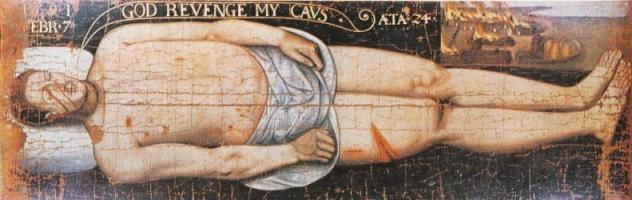
On 21st July 1581 George Gordon 1st Marquess Huntly (age 19) and Henrietta Stewart Marchioness Huntly (age 8) were married. She by marriage Countess Huntley. She the daughter of Esme Stewart 1st Duke Lennox (age 39) and Catherine Balsac Duchess Lennox. He the son of George Gordon 5th Earl Huntley and Anne Hamilton Countess Huntley. They were third cousin once removed.
On 21st July 1597 Thomas Knyvet 1st Baron Knyvet (age 52) and Elizabeth Hayward Baroness Knyvet (age 54) were married.
On 21st July 1641 Charles Rich 4th Earl Warwick (age 26) and Mary Boyle Countess Warwick (age 15) were married at the Church of St Nicholas Shepperton. Her father strongly disapproved due to her husband's lack of fortune. She the daughter of Richard Boyle 1st Earl Cork (age 74) and Catherine Fenton Countess Cork. He the son of Robert Rich 2nd Earl Warwick (age 54) and Frances Hatton Countess Warwick.
On 21st July 1646 Thomas Howard 2nd Baron Howard (age 20) and Elizabeth Mordaunt Baroness Howard were married. She the daughter of John Mordaunt 1st Earl Peterborough and Elizabeth Howard Countess Peterborough (age 43). They were half fourth cousin once removed.

On 21st July 1720 Horatio Walpole 1st Baron Walpole (age 41) and Mary Magdalen Lombard (age 25) were married.
Anne Boleyn. Her Life as told by Lancelot de Carle's 1536 Letter.
In 1536, two weeks after the execution of Anne Boleyn, her brother George and four others, Lancelot du Carle, wrote an extraordinary letter that described Anne's life, and her trial and execution, to which he was a witness. This book presents a new translation of that letter, with additional material from other contemporary sources such as Letters, Hall's and Wriothesley's Chronicles, the pamphlets of Wynkyn the Worde, the Memorial of George Constantyne, the Portuguese Letter and the Baga de Secrets, all of which are provided in Appendices.
Available at Amazon in eBook and Paperback format.
On 21st July 1783 Basil Feilding 5th Earl Desmond 6th Earl Denbigh (age 64) and Sarah Farnham Countess Desmond and Denbigh were married. She by marriage Countess Desmond, Countess Denbigh. He the son of William Feilding 4th Earl Desmond 5th Earl Denbigh and Isabella Jong Countess Desmond and Denbigh.
On 21st July 1818 Arthur George Onslow 3rd Earl Onslow (age 40) and Charlotte Hanmer Countess Onslow were married. He the son of Thomas Onslow 2nd Earl Onslow (age 64) and Arabella Mainwaring Ellerker.
On 21st July 1821 Rowland Hill 2nd Viscount Hill (age 21) and Anne Clegg Viscoutess Hill (age 6) were married.
On 21st July 1857 Henry Wilson 11th Baron Berners (age 60) and Henrietta Charlotte Cholmondeley Baroness Berners (age 34) were married. She by marriage Baroness Berners. The difference in their ages was 26 years.
On 21st July 1874 John Beresford 5th Marquess Waterford (age 30) and Blanche Somerset Marchioness of Waterford (age 18) were married. She by marriage Marchioness Waterford. She the daughter of Henry Charles Fitzroy Somerset 8th Duke Beaufort (age 50) and Georgiana Charlotte Curzon Howe Duchess Beaufort (age 49). He the son of John Beresford 4th Marquess Waterford and Christiana Leslie Marchioness of Waterford (age 54). They were half third cousin once removed.
On 21st July 1904 Orlando Bridgeman 5th Earl Bradford (age 30) and Margaret Cecilia Bruce Countess Bradford (age 21) were married. He the son of George Cecil Orlando Bridgeman 4th Earl Bradford (age 59) and Ida Frances Annabella Lumley Countess Bradford (age 55).
On 21st July 1937 Richard Neville Brooke 10th Baronet (age 22) and Mabel Jocelyn (age 22) were married. She the daughter of Robert Jocelyn 8th Earl Roden (age 53) and Elinor Jessie Parr Countess Roden.
On 21st July 1979 Ralph Percy 12th Duke of Northumberland (age 22) and Isobel Jane Richard Duchess of Northumberland (age 21) were married. He the son of Hugh Algernon Percy 10th Duke Northumberland (age 65) and Elizabeth Diana Montagu-Douglas-Scott Duchess Northumberland (age 57).
On 21st July 987 Geoffrey "Greygown" Ingelger 1st Count Anjou (age 48) died. His son Fulk (age 17) succeeded III Count Anjou.
On 21st July 1006 Gisela Welf Duchess Bavaria died.
On 21st July 1122 Sybilla Fitzroy Queen Consort Scotland (age 30) died.
Chronicle of Geoffrey le Baker of Swinbroke
Baker was a secular clerk from Swinbroke, now Swinbrook, an Oxfordshire village two miles east of Burford. His Chronicle describes the events of the period 1303-1356: Gaveston, Bannockburn, Boroughbridge, the murder of King Edward II, the Scottish Wars, Sluys, Crécy, the Black Death, Winchelsea and Poitiers. To quote Herbert Bruce 'it possesses a vigorous and characteristic style, and its value for particular events between 1303 and 1356 has been recognised by its editor and by subsequent writers'. The book provides remarkable detail about the events it describes. Baker's text has been augmented with hundreds of notes, including extracts from other contemporary chronicles, such as the Annales Londonienses, Annales Paulini, Murimuth, Lanercost, Avesbury, Guisborough and Froissart to enrich the reader's understanding. The translation takes as its source the 'Chronicon Galfridi le Baker de Swynebroke' published in 1889, edited by Edward Maunde Thompson.
Available at Amazon in eBook and Paperback format.
On 21st July 1349 John Strange 2nd Baron Strange Blackmere (age 43) died at Shropshire. His son Fulk (age 17) succeeded 3rd Baron Strange Blackmere.
On 21st July 1403 King Henry IV of England (age 36), with his son the future King Henry V of England (age 16), defeated the rebel army of Henry "Hotspur" Percy (age 39) at the Battle of Shrewsbury at the site now known as Battlefield, Shrewsbury [Map]. King Henry V of England took an arrow to the side of his face. John Stanley (age 53) was wounded in the throat. Thomas Strickland (age 36) fought and was awarded £38 and two of the rebel Henry's horses. Richard Beauchamp 13th Earl Warwick (age 21) fought for the King. Walter Blount (age 55), the King's Standard Bearer, was killed by Archibald Douglas 1st Duke Touraine (age 31).
Thomas Wendesley (age 59), Edmund Cockayne (age 47) and Robert Goushill were killed.
Edmund Stafford 5th Earl Stafford (age 25) was killed. His son Humphrey Stafford succeeded 6th Earl Stafford, 7th Baron Stafford.
Hugh Shirley (age 52) was killed; he was one of four knights dressed as King Henry IV of England.
Of the rebels, Henry "Hotspur" Percy, Madog Kynaston (age 43) and John Clifton were killed.
Thomas Percy 1st Earl of Worcester (age 60) was beheaded after the battle. Earl Worcester extinct.
Richard Vernon 11th Baron Shipbrook (age 48) was hanged. Baron Shipbrook forfeit.
John Rossall was killed. His sister Eleanor Rossall (age 26) inherited a half-share in the Rossall Shrewsbury [Map] estates.
John Massey (age 65) was killed.
On 21st July 1409 Blanche Mowbray Baroness Poynings died.
On 21st July 1506 Elizabeth Saye Baroness Mountjoy (age 27) died at Essendon, Hertfordshire.
On 21st July 1638 Richard Brownlow (age 85) died in Enfield [Map]. Monument to Richard Brownlow in St Peter and St Paul Church, Belton [Map] sculpted by Joshua Marshall (age 10).
Richard Brownlow: On 2nd April 1553 he was born. On 12th April 1553 Richard Brownlow was baptised at St Andrew's Church, Holborn [Map]. On 9th October 1591 he was appointed Chief Prothonotary of the Court of Common Pleas which office he held until heis death which made him a very wealthy.
On 21st July 1643 Elizabeth May Viscountess Campden (age 81) died.
On 21st July 1684 Elizabeth Preston Duchess Ormonde (age 68) died. On 24th July 1684 she was buried in the Duke of Ormonde Vault, King Henry VII Chapel, Westminster Abbey.
On 21st July 1688 James Butler 1st Duke Ormonde (age 77) died. His grandson James (age 23) de jure 2nd Duke Ormonde, 2nd Marquess Ormonde, 13th Earl Ormonde, 6th Earl Ossory. Mary Somerset Duchess Ormonde (age 24) by marriage Duchess Ormonde.

On 21st July 1688 Arthur Onslow 1st and 2nd Baronet (age 64) died. His son Richard (age 34) succeeded 2nd Baronet Onslow of West Clandon in Surrey, 3rd Baronet Foote of London.
On 21st July 1696 Bourchier Wrey 4th Baronet (age 43) died. His son Bourchier (age 14) succeeded 5th Baronet Wrey of Trebitch in Cornwall.
On 21st July 1698 Anne Yelverton Countess Manchester (age 68) died.
Abbot John Whethamstede’s Chronicle of the Abbey of St Albans
Abbot John Whethamstede's Register aka Chronicle of his second term at the Abbey of St Albans, 1451-1461, is a remarkable text that describes his first-hand experience of the beginning of the Wars of the Roses including the First and Second Battles of St Albans, 1455 and 1461, respectively, their cause, and their consequences, not least on the Abbey itself. His text also includes Loveday, Blore Heath, Northampton, the Act of Accord, Wakefield, and Towton, and ends with the Coronation of King Edward IV. In addition to the events of the Wars of the Roses, Abbot John, or his scribes who wrote the Chronicle, include details in the life of the Abbey such as charters, letters, land exchanges, visits by legates, and disputes, which provide a rich insight into the day-to-day life of the Abbey, and the challenges faced by its Abbot.
Available at Amazon in eBook and Paperback format.
On 21st July 1719 Marie Louise Élisabeth Bourbon Duchess Berry (age 23) died.
On 21st July 1723 Anthony Grey 3rd Baron Lucas (age 28) died by choking on an ear of barley the beard of which stuck in his throat. Monument at the De Grey Mausoleum, St John the Baptist Church, Flitton [Map]. His niece Jemima succeeded 4th Baroness Lucas of Crudwell.
Anthony Grey 3rd Baron Lucas: On 21st February 1695 he was born to Henry Grey 1st Duke Kent and Jemima Crew Marchioness Kent. On 17th February 1718 Anthony Grey 3rd Baron Lucas and Mary Tufton Countess Gower were married. She the daughter of Thomas Tufton 6th Earl of Thanet and Catherine Cavendish Countess Isle Thanet. He the son of Henry Grey 1st Duke Kent and Jemima Crew Marchioness Kent. They were sixth cousins. On 8th November 1718 Anthony Grey 3rd Baron Lucas by writ of acceleration 3rd Baron Lucas of Crudwell.
On 21st July 1726 William Caulfeild 2nd Viscount Charlemont (age 71) died. James Caulfeild 3rd Viscount Charlemont succeeded 3rd Viscount Charlemont in County Armagh, 6th Baron Caulfield.
On 21st July 1747 John Bridgeman 3rd Baronet (age 79) died. His son Orlando (age 52) succeeded 4th Baronet Bridgeman of Great Lever in Lancashire. Anne Newport Lady Bridgeman by marriage Lady Bridgeman of Great Lever in Lancashire.


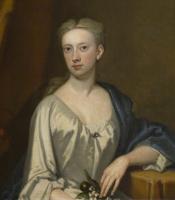
On 21st July 1761 Archibald Douglas 1st Duke of Douglas (age 66) died. Duke Douglas extinct. His half second cousin twice removed James (age 6) succeeded 3rd Marquess Douglas.
On 21st July 1764 Esther Hanmer Baroness Curzon (age 26) died.
On 21st July 1803 Captain William Abdy 6th Baronet (age 71) died. His son William (age 24) succeeded 7th Baronet Abdy of Felix Hall in Kelveden in Essex.
On 21st July 1809 Stewkley Schuckburgh 7th Baronet (age 57) died. His son Francis (age 20) succeeded 8th Baronet Schuckburgh of Schuckburgh in Warwickshire.
On 21st July 1812 Robert Ainslie 1st Baronet (age 82) died. His nephew Robert (age 55) succeeded 2nd Baronet Ainslie of Great Torrington in Lincolnshire.

On 21st July 1841 Price Blackwood 4th Baron Dufferin and Claneboye of Ballyleidy and Killyleagh in County Down (age 47) died. His son Frederick (age 15) succeeded 5th Baron Dufferin and Claneboye of Ballyleidy and Killyleagh in County Down, 5th Baronet Blackwood of Killyleagh in County Down.
On 21st July 1845 Charles Manners-Sutton 1st Viscount Canterbury (age 65) died at Southwick Crescent, Paddington. His son Charles (age 33) succeeded 2nd Viscount Canterbury of Canterbury, 2nd Baron Bottesford of Bottesford in Leicestershire.
William of Worcester's Chronicle of England
William of Worcester, born around 1415, and died around 1482 was secretary to John Fastolf, the renowned soldier of the Hundred Years War, during which time he collected documents, letters, and wrote a record of events. Following their return to England in 1440 William was witness to major events. Twice in his chronicle he uses the first person: 1. when writing about the murder of Thomas, 7th Baron Scales, in 1460, he writes '… and I saw him lying naked in the cemetery near the porch of the church of St. Mary Overie in Southwark …' and 2. describing King Edward IV's entry into London in 1461 he writes '… proclaimed that all the people themselves were to recognize and acknowledge Edward as king. I was present and heard this, and immediately went down with them into the city'. William’s Chronicle is rich in detail. It is the source of much information about the Wars of the Roses, including the term 'Diabolical Marriage' to describe the marriage of Queen Elizabeth Woodville’s brother John’s marriage to Katherine, Dowager Duchess of Norfolk, he aged twenty, she sixty-five or more, and the story about a paper crown being placed in mockery on the severed head of Richard, 3rd Duke of York.
Available at Amazon in eBook and Paperback format.
On 26th April 1901 Dean William Clavell Ingram (age 66) died. Monument at Peterborough Cathedral [Map] sculpted by his brother Walter Rowlands Ingram (age 63) shortly before he died on 21st July 1903.
Dean William Clavell Ingram: On 11th August 1834 he was born to Reverend George Ingram. In 1900 he was appointed Dean of Peterborough.
On 21st July 1903 Walter Rowlands Ingram (age 65) died.
On 21st July 1906 Frederick Gunning 6th Baronet (age 52) died. His brother Charles (age 46) succeeded 7th Baronet Gunning of Eltham in Kent. Ethel Finch-Hatton Lady Gunning by marriage Lady Gunning of Eltham in Kent.
On 21st July 1906 Bishop John Gott (age 75) died at his home Trenython, Cornwall.
On 21st July 1909 Caroline Eliza Leigh Baroness Saye and Sele (age 84) died.
On 21st July 1909 Henry Michael Hawley 5th Baronet (age 61) died. His son Henry (age 32) succeeded 6th Baronet Hawley of Leybourne Grange in Kent.
On 21st July 1910 Sybil Mary St Clair-Erskine Countess of Westmorland (age 38) died.


On 21st July 1928 Ellen Terry (age 81) died.
On 21st July 1930 Rosemary Millicent Sutherland-Leveson-Gower (age 36) died in a plane crash. She was booked on a flight from Le Touquet to Croydon. A seat became available on an earlier flight which she accepted. The flight departed in clear weather. At about at 2:30 pm in poor weather over Kent the tail unit failed, causing the aircraft to stall, which in turn caused the port wing to break away and the plane to crash. All the passengers fell from the aircraft through the hole created by the wing breaking away. The Viscountess' body was found in a meadow.
An inquest was opened on 23 July where the Viscountess was identified by her brother George (age 41). After the formal identifications, the inquest was adjourned for the Air Ministry technical investigation to take place. The inquest was resumed on 13 August at which the jury returned a verdict "that the victims met their death falling from an aeroplane, the cause of the accident being unknown".
Rosemary Millicent Sutherland-Leveson-Gower: On 9th August 1893 she was born to Cromartie Sutherland-Leveson-Gower 4th Duke of Sutherland and Millicent Fanny St Clair-Erskine Duchess of Sutherland. On 8th March 1919 William Humble Eric Ward 3rd Earl of Dudley and she were married. She the daughter of Cromartie Sutherland-Leveson-Gower 4th Duke of Sutherland and Millicent Fanny St Clair-Erskine Duchess of Sutherland. He the son of William Humble Ward 2nd Earl of Dudley. On 25th July 1930 an Memorial Service was held for Rosemary Millicent Sutherland-Leveson-Gower at St Margaret's Church, Westminster [Map].
George Sutherland-Leveson-Gower 5th Duke of Sutherland: On 29th August 1888 he was born to Cromartie Sutherland-Leveson-Gower 4th Duke of Sutherland and Millicent Fanny St Clair-Erskine Duchess of Sutherland. On 27th June 1913 Cromartie Sutherland-Leveson-Gower 4th Duke of Sutherland died. His son George succeeded 5th Duke Sutherland, 23rd Earl Sutherland, 7th Earl Gower, 8th Baron Gower, 12th Baronet Gower of Stittenham in Yorkshire. On 26th September 1931 Elizabeth Demarest died. Her daughter Elizabeth Sutherland 24th Countess of Sutherland became a ward of her uncle George Sutherland-Leveson-Gower 5th Duke of Sutherland. On 1st February 1963 George Sutherland-Leveson-Gower 5th Duke of Sutherland died. His third cousin once removed John succeeded 6th Duke Sutherland, 6th Marquess Stafford, 8th Earl Gower, 9th Baron Gower, 13th Baronet Gower of Stittenham in Yorkshire. Diana Evelyn Percy by marriage Duchess Sutherland.His niece Elizabeth succeeded 24th Countess Sutherland.
On 21st July 1930 Frederick Temple Hamilton-Temple-Blackwood 3rd Marquess of Dufferin and Ava (age 55) died in a plane crash. His son Basil (age 21) succeeded 4th Marquess of Dufferin and Ava, 4th Earl of Ava in County Down and Burma, 4th Earl of Dufferin in County Down, 4th Viscount Dufferin of Claneboye in County Down, 4th Baron Claneboye of Claneboye in County Down, 8th Baron Dufferin and Claneboye of Ballyleidy and Killyleagh in County Down, 8th Baronet Blackwood of Killyleagh in County Down. Maureen Constance Guinness Marchioness of Dufferin and Ava (age 23) by marriage Marchioness of Dufferin and Ava.
On 21st July 1930 Captain Edward Simons Ward 2nd Baronet (age 48) died. His brother Commander (age 45) succeeded 3rd Baronet Ward of Wilbraham Place in Chelsea.
Annals of the six Kings of England by Nicholas Trivet
Translation of the Annals of the Six Kings of England by that traces the rise and rule of the Angevin aka Plantagenet dynasty from the mid-12th to early 14th century. Written by the Dominican scholar Nicholas Trivet, the work offers a vivid account of English history from the reign of King Stephen through to the death of King Edward I, blending political narrative with moral reflection. Covering the reigns of six monarchs—from Stephen to Edward I—the chronicle explores royal authority, rebellion, war, and the shifting balance between crown, church, and nobility. Trivet provides detailed insight into defining moments such as baronial conflicts, Anglo-French rivalry, and the consolidation of royal power under Edward I, whose reign he describes with particular immediacy. The Annals combines careful year-by-year reporting with thoughtful interpretation, presenting history not merely as a sequence of events but as a moral and political lesson. Ideal for readers interested in medieval history, kingship, and the origins of the English state, this chronicle remains a valuable and accessible window into the turbulent world of the Plantagenet kings.
Available at Amazon in eBook and Paperback format.
On 21st July 1939 Granville Leveson-Gower 3rd Earl Granville (age 67) died without issue. His brother William (age 59) succeeded 4th Earl Granville, 4th Viscount Granville. Rose Constance Bowes-Lyon Countess Granville (age 49) by marriage Countess Granville.
On 21st July 1973 Lionel Bootle-Wilbraham 6th Baron Skelmersdale (age 76) died. His son Roger (age 28) succeeded 7th Baron Skelmersdale in Lancashhire.
On 21st July 1992 Letitia Sibell Winifred Brownlow-Cecil Baroness Hotham (age 88) died at Dalton Holme.
On 21st July 1993 John Crichton-Stuart 6th Marquess of Bute (age 60) died. His son John (age 35) succeeded 7th Marquis of the Isle of Bute, 10th Earl Bute, 7th Earl of Windsor, 7th Viscount Mountjoy of the Isle of Wight.