

Abbot John Whethamstede’s Chronicle of the Abbey of St Albans
Abbot John Whethamstede's Register aka Chronicle of his second term at the Abbey of St Albans, 1451-1461, is a remarkable text that describes his first-hand experience of the beginning of the Wars of the Roses including the First and Second Battles of St Albans, 1455 and 1461, respectively, their cause, and their consequences, not least on the Abbey itself. His text also includes Loveday, Blore Heath, Northampton, the Act of Accord, Wakefield, and Towton, and ends with the Coronation of King Edward IV. In addition to the events of the Wars of the Roses, Abbot John, or his scribes who wrote the Chronicle, include details in the life of the Abbey such as charters, letters, land exchanges, visits by legates, and disputes, which provide a rich insight into the day-to-day life of the Abbey, and the challenges faced by its Abbot.
Available at Amazon in eBook and Paperback format.
23 Jan is in January.
1045 Marriage of Edward "The Confessor" and Edith of Wessex
1570 James Stewart 1st Earl of Moray Assassinated by Firearm
1661 Charles II Continues to Reward those who Supported His Restoration
1874 Wedding of Prince Alfred and Grand Duchess Maria of Russia
On 23rd January 1002 Otto III King Italy III King Germany III Holy Roman Emperor (age 21) died.
On 23rd January 1045 King Edward "The Confessor" of England (age 42) and Edith of Wessex Queen Consort England (age 19) were married. She by marriage Queen Consort England. The difference in their ages was 23 years. She the daughter of Godwin 1st Earl Kent and Wessex (age 44) and Gytha Countess Kent and Wessex. He the son of King Æthelred II of England and Emma aka Ælfgyfu of Normandy Queen Consort England (age 60).
Anglo-Saxon Chronicle. 23rd January 1045. In the same year also King Edward (age 42) took to wife Edgitha (age 19), the daughter of Earl Godwin (age 44), ten nights before Candlemas.
| Godwin pensa par purvéance | Godwin by foresight thought | |
| Kl en fra grant aliance | That he should make a great alliance | |
| Par duner sa fille au roi; | In giving his daughter to the king; | |
| Cele par la bunté de soi | She by her own goodness, | 1180 |
| Pur sun sen e sa doctrine | Through her good sense and learning | |
| Eschisie ert ben a reine, | Might well be chosen for queen, | |
| E partant serra bein endormi | And thus completely at rest would be | |
| De ses murres la fame e cri. | The report and cry of his murders. | |
| Kar mut crent le rei Aedward | For much he fears that King Edward | 1185 |
| La mort sun frère e tempre e tart, | His brother’s death sooner or later | |
| E d'autres traisuns se venge, | And his other treasons will avenge; | |
| E gref vengance aucun tens prenge. | And at some time will take heavy vengeance. | |
| Par losenger e par promettre, | By flattery and by promises, | |
| Par duns, par despendre e mectre, | By gifts, by paying and by expending, | 1190 |
| Fist tant vers cunseillur lu roi, | He did so much with the king’s councillors, | |
| De sun desir k'aveit l’ottrei; | That he obtained his desire; | |
| Plus pur la bunté la pucele, | More by the goodness of the maiden | |
| Ki tant par fu c bone e bele, | Who was so good and beautiful, | |
| Ke le pére, cunte Godwin, | Than through the father, Count Godwin, | 1195 |
| Ki tant savoit art e engin. | Who so well knew art and stratagem. | |
| De cuntredisantz i out meint, | Of opponents he had in it many a one, | |
| Ke Godwin fu traitre ateint, | Because Godwin was an attainted traitor; | |
| Dutent ke li roisseus preinne | They fear that the streamlet take | |
| La savur de la funtaine, | The flavour of its spring, | 1200 |
| Ke la fille traie du père | That the daughter draw from the father | |
| Mau fruit de racine amére; | Evil fruit from bitter root; | |
| Mais la pucele est tant amée | But the maiden is so beloved, | |
| A bone e sage espruvée, | Proved to be good and wise, | |
| Ke ne put aver fuisun | That she can have no opposition, | 1205 |
| Ki deist de li ren si ben nun. | Since nothing ought to be said of her but good. | |
| Si est au roi espusée, | So she is married to the king1 | |
| E reine curunée; | And crowned queen; | |
| Faites su[n]t noces richement, | The nuptials are richly solemnized, | |
| Cum a roi e reine apent, | As befits king and queen; | 1210 |
| Asez i out chivalerie, | Enough of chivalry had they there, | |
| Asez bache[le]rie, | Enough of youth; | |
| Valetz de force e juvente | Knights of bravery and youth, | |
| De juer ki mettent entente, | Who set themselves to play, | |
| Li uns des briser ses lances, | The one to shiver their lances, | 1215 |
| Li autres de mener ces dances, | The other to conduct the dance; | |
| Chantent, balent, e vielent, | They sing, dance, and fiddle, | |
| Harpent, treschent, e sautelent, | Play the harp, frisk and leap; | |
| Mut i out de riches duns | Many rich gifts had she there | |
| Robes, jueus, e gareisuns; | Robes, jewels, and ornaments; | 1220 |
| Li drap de soie e jueus d'or | The dresses of silk and jewels of gold | |
| Muntent a un grant tresor. | Amount to a large treasure. |
Note 1. King Edward the Confessor and Edith were married on 23rd January 1045.
| Tunc florent, splendent, tune gaudent Anglica regna; | Then England’s realms flourish, gleam, and rejoice; | |
| Suadebant proceres uxorem ducere regni, | The nobles urge the king to take a wife, | |
| Ut soboles regis regalia sceptra tenerct. | So that the king’s offspring may hold the royal sceptre. | |
| Rex stupet et sibimet metuit, timet omnia cautus, | The king is astonished and fears even for himself; cautious, he fears all things, | |
| Præcavet insidias Sirenum, pocula Circes; | He guards against the snares of the Sirens, the cups of Circe. | 180 |
| Undique concutitur; magnates ducere suadent, | On every side he is shaken; the magnates urge him to marry. | |
| Propositi dissuadet honos; sed cedere tandem | His sense of honour argues against the plan; yet at last | |
| Cogitur, invitus assentit; quæritur ergo | He is compelled to yield—unwillingly he gives assent. | |
| Per mare, per terras, regi generosa propago, | And so, across sea and land, a noble lineage is sought for the king. | |
| Quæ proba regina, quæ tanto conjuge digna | One who might become a virtuous queen, one worthy of so great a husband. | 185 |
| Fiat. Commendat rex vitam, se quoque, Christo, | The king entrusts his life—and himself as well—to Christ, | |
| Qui Joseph, et Judith, Susannam vincere fecit | Who enabled Joseph, Judith, and Susanna | |
| Admotas faculas Veneris que libidinis ignes. | To overcome the kindled torches of Venus and the fires of lust. | |
| Conjugium celebrant; producitur inclita virgo, | The marriage is celebrated1; forth is led the noble maiden, | |
| Filia Godwini, quæ nomine fertur Editha. | The daughter of Godwin, who is said to bear the name Edith. | 190 |
| Penelopen' gremio facie gerit illa Lacænam; | In her bearing she displayed Penelope’s modest virtue; | |
| Lilia nupta rosis vultus pinxere favorem. | In her face she bore the beauty of a Spartan woman. | |
| Nec tamen inferior decoravit gratia formam, | Yet grace did not adorn her form less fully | |
| Partibus in reliquis, æquo sed compta decore; | In her other parts, but she was fashioned with balanced beauty. | |
| Nil meliorari quod posset jure reliquit, | She left nothing that could rightly be improved; | 195 |
| Cujus honor, species, virtus, et cætera summa | Her honour, beauty, virtue, and all her other excellences | |
| Describi nequeunt, sed ut aptius eloquar illam, | Cannot be described; but to speak of her more fittingly, | |
| Edwardo similis fulgebat in his et in illis: | She shone as Edward’s equal in these things and in those. | |
| Hanc solam Christus soli decreverat aptam: | Christ alone had decreed her alone to be fitting for him. | |
| Tironi proprio mores infantia cœpit. | From her earliest years, childhood began to shape her character for her own calling. | 200 |
| Quos divinus odor perflans dulcedine cœli | These qualities a divine fragrance, breathing the sweetness of heaven, | |
| Inspiravit, et erexit, firmavit, et auxit. | Inspired, uplifted, strengthened, and increased. |
Note 1. The marriage of King Edward the Confessor and Queen Edith was celebrated on 23rd January 1045.
History of the Dukes of Normandy by William of Jumieges. Fierce and skilled in deceit, Godwin, was at that time the most powerful earl in England, and held a great part of the kingdom of the English, which he had claimed by the nobility of his parents or seized by force or deceit. Edward, therefore, fearing that he might be harmed by the power of so great a man, by his usual craftiness, by the counsel of the Normans, whose loyal support sustained him, graciously forgave him the undeserved destruction of his brother Alfred. And so that firm love might remain between them continually, he [Edward] took his daughter Edith1 in name as his wife in name only. For in truth, as they say, both preserved perpetual virginity. Edward was a good man, gentle and humble, pleasant and patient, merciful, a protector of the poor, and a rightful restorer of the ancient English laws. Many times he saw divine mysteries and pronounced prophecies which were afterward proven by the course of events. He ruled the kingdom of the English happily for nearly twenty-three years.
Ferox dolique commentor Goduinus eo tempore comes in Anglia potentissimus erat, et magnam regni Anglorum partem fortiter tenebat, quam ex parentum nobilitate, seu vi vel fraudulentia vindicaverat. Edwardus itaque metuens tanti viri potentia lædi, dolove solito, Northmannorum consultu, quorum fido vigebat solatio, indignam Aluredi fratris sui pernicien ei benigniter indulsit. Ac ut inter eos firmus amor jugiter maneret, Editham filiam ejus Duxorem nomine tenus duxit. Nam revera, ut dicunt, ambo perpetuam virginitatem conservaverunt. Edwardus nempe vir bonus erat, mitis et humilis, jucundus et longanimis, clemens, pauperum tutor et Anglicarum legum legitimus restituor. Multoties divina mysteria vidit et vaticinia quæ rerum eventu postmodum comprobata sunt, deprompsit, regnumque Anglorum fere 23 annis feliciter rexit.
Note 1. Edward, the future King Edward the Confessor, married Edith, ~1025-1075, daughter of Earl Godwin on 23rd January 1045. There was no issue from the marriage.
 Chronicum Anglicanum by Ralph Coggeshall. 1172. Dreadful crashes of thunder were heard, and strange flashes of lightning were seen in the night of the Lord's Nativity throughout all England and Normandy. The ordination of Lord Simon1, bishop of Moray, on the tenth day before the Kalends of February [23rd January], formerly abbot of Coggeshall.
MCLXXII. Auditi sunt horrendi fragores tonitruorum, et coruscationes insolitæ fulminum visa in nocte Dominicæ Nativitatis per totam Angliam atque Normanniam. Ordinatio domni Simonis, episcopi Muraviensis, decimo calendas Februarii, quondam abbatis de Cogeshala.
Note 1. Bishop Simon de Tosny, died 1184.
On 23rd January 1302 Ferdinand IV King Castile IV King Leon (age 16) and Constance Burgundy Queen Consort Castile Queen Consort Leon (age 12) were married. She by marriage Queen Consort Castile, Queen Consort Leon. She the daughter of Denis I King Portugal (age 40) and Elisabeth Barcelona Queen Consort Portugal (age 31). He the son of Sancho IV King Castile IV King Leon and Maria Molina Queen Consort Castile Queen Consort Leon. They were half first cousin once removed. He a great x 4 grandson of King Henry "Curtmantle" II of England. She a great x 3 granddaughter of King Henry "Curtmantle" II of England.
On 23rd January 1305 Bishop Henry Woodlock was elected Bishop of Winchester.
Chronicle of Abbot Ralph of Coggeshall
The Chronicle of Abbot Ralph of Coggeshall (Chronicon Anglicanum) is an indispensable medieval history that brings to life centuries of English and European affairs through the eyes of a learned Cistercian monk. Ralph of Coggeshall, abbot of the Abbey of Coggeshall in Essex in the early 13th century, continued and expanded his community’s chronicle, documenting events from the Norman Conquest of 1066 into the tumultuous reign of King Henry III. Blending eyewitness testimony, careful compilation, and the monastic commitment to record-keeping, this chronicle offers a rare narrative of political intrigue, royal power struggles, and social upheaval in England and beyond. Ralph’s work captures the reigns of pivotal figures such as Richard I and King John, providing invaluable insights into their characters, decisions, and the forces that shaped medieval rule. More than a simple annal, Chronicon Anglicanum conveys the texture of medieval life and governance, making it a rich source for scholars and readers fascinated by English history, monastic authorship, and the shaping of the medieval world.
Available at Amazon in eBook and Paperback format.
On 23rd January 1378 Louis Wittelsbach III Elector Palatine was born to Rupert King Germany (age 25). He married (1) 6th July 1402 Blanche Lancaster Elector Palatinate (2) 30th November 1417 Matilda of Savoy and had issue.
On 23rd January 1423 Margaret Wittelsbach Duchess Burgundy (age 60) died.
On 23rd January 1484 Margaret Beaufort Countess Richmond (age 40) was subject to an attainder in the first Parliament of Richard III for her involvement. Whilst the Act was described as an Attainder Richard in effect transferred all of Margaret's property to her husband Thomas Stanley 1st Earl of Derby (age 49) as follows:
An act for the attainder of Margaret, countess of Richmond:
Because Margaret, countess of Richmond, mother of the king's great rebel and traitor, Henry, earl of Richmond, has lately conspired, leagued and committed high treason against our sovereign lord King Richard III in various ways, and in particular by sending messages, writings and tokens to the said Henry, urging, instigating and stirring him by them to come into this realm to make war upon our said sovereign lord; to which urging, instigation and stirring the said Henry applied himself, as experience has recently shown. Also, the said countess supplied great sums of money within the city of London as well as elsewhere in this realm to be employed in the execution of the said treason and malicious purpose; and the said countess also conspired, leagued and plotted the destruction of our said sovereign lord, and knew of and assented to, and assisted in the treason planned and committed by Henry, late Duke of Buckingham, and his supporters, for which he and some of his supporters have been attainted by an act in this present parliament. Nevertheless, our said sovereign lord, of his special grace, mindful of the good and faithful service which Thomas, Lord Stanley, has given and intends to give our said sovereign lord, and for the sincere love and trust which the king has in him, and for his sake, remits and will forbear the great punishment of attainting the said countess, which she or anyone else doing the same has deserved; and in consideration of the foregoing, our said sovereign lord wills that it be enacted, ordained and decreed, by the assent of the lords spiritual and temporal and the commons assembled in this present parliament, and by authority of the same, that the said countess henceforth shall be legally unable to have, inherit or enjoy any manors, lands or tenements, or other hereditaments or possessions whatsoever, and also henceforth shall be unable to bear or have any name of estate or dignity; and that the said countess shall forfeit to our said sovereign lord the king and his heirs all the castles, manors, lordships, lands, tenements, rents, services, reversions and other hereditaments and possessions, whatsoever they may be, of which the said countess, or anyone else to her use, is now seised or possessed of estate of fee-simple, fee-tail, term of life, in dower or otherwise. And be it ordained by the said authority that all the said castles, manors, lordships, lands, tenements, rents, services, reversions and other hereditaments with the appurtenances of which the said countess, or anyone else to her use, is now seised of estate of fee-simple or fee-tail, shall remain to the said Thomas for term of his life, and after his death to our said sovereign lord the king and his heirs. And moreover, all the lordships, manors, lands, tenements, rents, services and reversions of which the said countess, or any other person to her use, is now seised of estate, term of her life or in dower, shall remain to the said Thomas during her life. And if the said Thomas dies during the lifetime of the said countess, they shall remain to the king; saving to every person and persons, except the said countess and her heirs, their right, title and interest in the said lands and tenements.


Parliament Rolls Richard III. Be it remembered that on Friday, 23 January in the first year of the reign of King Richard the third (age 31) since the conquest, that is, on the first day of parliament, with the lord king sitting on the royal throne in the Painted Chamber [Map] within his palace of Westminster, then being present many lords spiritual and temporal, and the commons of the realm of England, assembled at the aforesaid parliament at the king's command, the venerable father John, Bishop of Lincoln, chancellor of England memorably declared and announced the reasons for summoning the aforesaid parliament, taking as his theme: 'In the body there are many limbs, but not all have the same function'. In which words he gravely and very astutely explained the fealty which subjects of the king and the functions individual members owe to the principal member, asserting that there are three kinds of body, namely the natural, the aggregate and the politic, and going on to suggest that one coin, the tenth, had been lost from the most precious fabric of the body politic of England and that to hunt for it and find it would require the king and all the lords spiritual and temporal to be very assiduous and diligent during this parliament; concluding that after the finding of the tenth coin, which signifies perfection, our body politic of England would endure gloriously and for a long time, healthy, safe and free from all damage or injury; the king, the great men of the realm and the commons eternally cherishing peace outward and inward and the author of that peace. At the end of which declaration and announcement, the aforesaid chancellor in the king's name firmly ordered the commons to assemble on the following day in their common house as usual and elect one of their number as their speaker, and to present the man thus elected to the same lord king. The same chancellor announced moreover that the said lord king, wishing justice to be done more swiftly both to denizens and aliens wishing to complain in the said parliament, had appointed and assigned certain receivers of the petitions to be presented in the same parliament in the following form ...
23rd January 1513. VENICE. [Copy of a letter received in February, 1512-13.] From Nicolo di Favri to Francesco Gradenigo, London, 23 Jan.-Description of English life and weather. Wrote on 10 Dec. that the camps were disarming. One was in Spain where the King of Spain failed to keep his promise of co-operation and the Spaniards shot at the English who went to eat grapes in a vineyard. Another, under the Lord Treasurer, was in Scotland, whose King made terms; and a third at sea. A French and an English ship were both burnt while fighting together, but whereas the French lost 200 gentlemen the English lost only the captain. Parliament (which met on All Saints Day), and continual resort of its members to the Ambassador's house. Great service done by the Ambassador. His straits for money. Frenchmen in England ill-treated. Taxation. The King and his affection for the Ambassador. News, just come, of four victories of the Spaniards over the French, and death of Mons. de la Palisse.
Note 2. [Note of letters received 1 March 1513.]From Andrea Badoer [, London], 23 Jan.-The King makes very great preparations against France, and the Council has decided that he may go in person. Every day he goes to hasten the Fleet and especially the great ship he is making. There is news that the Duke of Brunswick, captain of the Emperor and Madame Margaret, has been routed by the Duke of Guelders and lost two captains, one of whom, Mons. de Reselich, has been ransomed.
On 23rd January 1516 Ferdinand II King Aragon (age 63) died. His daughter Joanna (age 37) succeeded Queen Aragon.
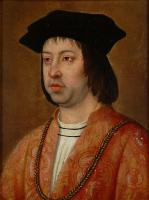


Wriothesley's Chronicle [1508-1562]. 23rd January 1516. The King of Spayne (age 63) died.
Wriothesley's Chronicle [1508-1562]. 23rd January 1552. Saterday, the 23 of January, beinge the first day of Hilary Tearme, and allso the first day of the Session of the Parliament at Westminster, Doctor Goodricke, Bishopp of Ely and custos of the Kinges great seale of England, was sworne in the Chauncery Lord Chauncellor of England, the Lord Treasurer of England giuinge him his oath.
Chronicle of Queen Jane and Two Years of Queen Mary 1554. 23rd January 1554. Note, that on tuyseday the xxiijth of January, the lorde Robert Dudley (age 21), sone to the late duke of Northumberland, was brought out of the Tower to the yeldhall, wher he was arrayned and condempned.


Chronicle of Greyfriars. 23rd January 1554. Item the xxiij. of Januarij was condemnyd at the yelde-halle of London lorde Robert Dudley (age 21).
On 23rd January 1570 Christoph Wittelsbach was born to William Wittelsbach V Duke Bavaria (age 21) and Renata Lorraine Duchess Bavaria (age 25). Coefficient of inbreeding 2.86%. He died aged less than one years old.
On 23rd January 1570 James Stewart 1st Earl of Moray Regent (age 39) was assassinated at Linlithgow by James Hamilton of Bothwellhaugh, a supporter of Mary Queen of Scots (age 27). His daughter Elizabeth (age 4) succeeded 2nd Countess Moray. As he was passing in a cavalcade in the main street below, Hamilton fatally wounded him with a carbine shot from a window of his uncle Archbishop Hamilton's (age 57) house. He was the first head of government to be assassinated by a firearm.


Diary of Anne Clifford. 23rd January 1617. Upon the 23rd my Lord (age 27) went up betimes to London again. The same day the Child put on her red baize coats.
Diary of Anne Clifford. 23rd January 1619. The 23rd I came from London to Knole in a litter, the Child riding all the way in her coach, I went through the City and over the bridge, but she crossed the water. We found my Lord (age 29) at Knole, who had stayed there all this time since his coming from London.
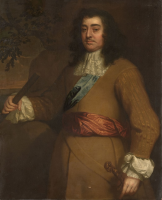
On 23rd January 1653 George Monck 1st Duke Albemarle (age 44) and Anne Clarges Duchess Albermarle (age 33) were married.

William of Worcester's Chronicle of England
William of Worcester, born around 1415, and died around 1482 was secretary to John Fastolf, the renowned soldier of the Hundred Years War, during which time he collected documents, letters, and wrote a record of events. Following their return to England in 1440 William was witness to major events. Twice in his chronicle he uses the first person: 1. when writing about the murder of Thomas, 7th Baron Scales, in 1460, he writes '… and I saw him lying naked in the cemetery near the porch of the church of St. Mary Overie in Southwark …' and 2. describing King Edward IV's entry into London in 1461 he writes '… proclaimed that all the people themselves were to recognize and acknowledge Edward as king. I was present and heard this, and immediately went down with them into the city'. William’s Chronicle is rich in detail. It is the source of much information about the Wars of the Roses, including the term 'Diabolical Marriage' to describe the marriage of Queen Elizabeth Woodville’s brother John’s marriage to Katherine, Dowager Duchess of Norfolk, he aged twenty, she sixty-five or more, and the story about a paper crown being placed in mockery on the severed head of Richard, 3rd Duke of York.
Available at Amazon in eBook and Paperback format.

On 23rd January 1655 John Mallorie of Studley Royal (age 45) died. He was buried in Ripon Cathedral [Map].
John Mallorie of Studley Royal: In 1610 he was born.
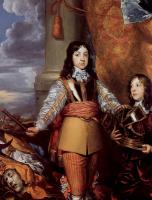
In early 1661 King Charles II of England Scotland and Ireland (age 30) rewarded of further tranche of those who supported his Restoration...
On 2nd January 1661 Henry Bedingfield 1st Baronet (age 46) was created 1st Baronet Bedingfield of Oxburgh in Norfolk.
On 10th January 1661 Andrew Rutherford 1st Earl Teviot was created 1st Baron Rutherford with special remainder to his heirs and assignees whatsoever, and that under what provisions, restrictions, and conditions the said Lord Rutherford should think fit.
On 23rd January 1661 John Cole 1st Baronet (age 41) was created Baronet Cole of Newland.
On 23rd February 1661 Edward Smythe 1st Baronet (age 41) was created 1st Baronet Smythe.
On 4th March 1661 Compton Reade 1st Baronet (age 36) was created 1st Baronet Reade of Barton in Berkshire. Mary Cornwall Lady Reade (age 31) by marriage Lady Reade of Barton in Berkshire.
On 10th March 1661 Brian Broughton 1st Baronet (age 42) was created 1st Baronet Broughton of Broughton in Staffordshire.
On 20th March 1661 Thomas Rich 1st Baronet (age 60) was created 1st Baronet Rich of Sonning in Berkshire.
On 29th March 1661 Robert Cholmondeley 1st Viscount Cholmondeley (age 21) was created 1st Viscount Cholmondeley of Kells in County Meath.
On 30th March 1661 James Butler 1st Duke Ormonde (age 50) was created 1st Duke Ormonde by King Charles II of England Scotland and Ireland. Elizabeth Preston Duchess Ormonde (age 45) by marriage Duchess Ormonde.
On 30th March 1661 John Fettiplace 1st Baronet (age 35) was created 1st Baronet Fettiplace of Childrey in Berkshire. Anne Wenman Lady Fettiplace (age 31) by marriage Lady Fettiplace of Childrey in Berkshire.


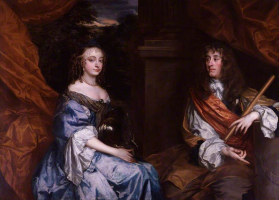
Samuel Pepys' Diary. 23rd January 1665. Up, and with Sir W. Batten (age 64) and Sir W. Pen (age 43) to White Hall; but there finding the Duke (age 31) gone to his lodgings at St. James's for all together, his Duchesse (age 27) being ready to lie in, we to him, and there did our usual business. And here I met the great newes confirmed by the Duke's own relation, by a letter from Captain Allen (age 53). First, of our own loss of two ships, the Phoenix and Nonesuch, in the Bay of Gibraltar: then of his, and his seven ships with him, in the Bay of Cales, or thereabouts, fighting with the 34 Dutch Smyrna fleete; sinking the King Salamon, a ship worth a £150,000 or more, some say £200,000, and another; and taking of three merchant-ships. Two of our ships were disabled, by the Dutch unfortunately falling against their will against them; the Advice, Captain W. Poole, and Antelope, Captain Clerke: The Dutch men-of-war did little service. Captain Allen did receive many shots at distance before he would fire one gun, which he did not do till he come within pistol-shot of his enemy. The Spaniards on shore at Cales did stand laughing at the Dutch, to see them run away and flee to the shore, 34 or thereabouts, against eight Englishmen at most. I do purpose to get the whole relation, if I live, of Captain Allen himself. In our loss of the two ships in the Bay of Gibraltar, it is observable how the world do comment upon the misfortune of Captain Moone of the Nonesuch (who did lose, in the same manner, the Satisfaction), as a person that hath ill-luck attending him; without considering that the whole fleete was ashore. Captain Allen led the way, and Captain Allen himself writes that all the masters of the fleete, old and young, were mistaken, and did carry their ships aground. But I think I heard the Duke say that Moone, being put into the Oxford, had in this conflict regained his credit, by sinking one and taking another. Captain Seale of the Milford hath done his part very well, in boarding the King Salamon, which held out half an hour after she was boarded; and his men kept her an hour after they did master her, and then she sunk, and drowned about 17 of her men.



Samuel Pepys' Diary. 23rd January 1666. Up and to the office and then to dinner. After dinner to the office again all the afternoon, and much business with me. Good newes beyond all expectation of the decrease of the plague, being now but 79, and the whole but 272. So home with comfort to bed. A most furious storme all night and morning.
Samuel Pepys' Diary. 23rd January 1667. Up, and with Sir W. Batten (age 66) and Sir W. Pen (age 45) to White Hall, and there to the Duke of York (age 33), and did our usual business. Having done there, I to St. James's, to see the organ Mrs. Turner (age 44) told me of the other night, of my late Lord Aubigney's; and I took my Lord Bruncker (age 47) with me, he being acquainted with my present Lord Almoner, Mr. Howard (age 38), brother to the Duke of Norfolke (age 38); so he and I thither and did see the organ, but I do not like it, it being but a bauble, with a virginal! joining to it: so I shall not meddle with it.


Samuel Pepys' Diary. 23rd January 1667. I staid till dinner was over, and there being no use of me I away after dinner without taking leave, and to the New Exchange, there to take up my wife and Mercer, and to Temple Bar to the Ordinary, and had a dish of meat for them, they having not dined, and thence to the King's house, and there saw "The Numerous Lieutenant", a silly play, I think; only the Spirit in it that grows very tall, and then sinks again to nothing, having two heads breeding upon one, and then Knipp's singing, did please us. Here, in a box above, we spied Mrs. Pierce; and, going out, they called us, and so we staid for them; and Knipp took us all in, and brought to us Nelly (age 16); a most pretty woman, who acted the great part of Coelia to-day very fine, and did it pretty well: I kissed her, and so did my wife; and a mighty pretty soul she is. We also saw Mrs. Halls which is my little Roman-nose black girl, that is mighty pretty: she is usually called Betty. Knipp made us stay in a box and see the dancing preparatory to to-morrow for "The Goblins", a play of Suckling's, not acted these twenty-five years; which was pretty; and so away thence, pleased with this sight also, and specially kissing of Nell.


Samuel Pepys' Diary. 23rd January 1667. Having done with the discourse, we away, and my Lord and I walking into the Park back again, I did observe the new buildings: and my Lord, seeing I had a desire to see them, they being the place for the priests and Fryers, he took me back to my Lord Almoner (age 38); and he took us quite through the whole house and chapel, and the new monastery, showing me most excellent pieces in wax-worke: a crucifix given by a Pope to Mary Queen of Scotts, where a piece of the Cross is1 two bits set in the manner of a cross in the foot of the crucifix: several fine pictures, but especially very good prints of holy pictures. I saw the dortoire [dormitory] and the cells of the priests, and we went into one; a very pretty little room, very clean, hung with pictures, set with books. The Priest was in his cell, with his hair clothes to his skin, bare-legged, with a sandal! only on, and his little bed without sheets, and no feather bed; but yet, I thought, soft enough. His cord about his middle; but in so good company, living with ease, I thought it a very good life. A pretty library they have. And I was in the refectoire, where every man his napkin, knife, cup of earth, and basin of the same; and a place for one to sit and read while the rest are at meals. And into the kitchen I went, where a good neck of mutton at the fire, and other victuals boiling. I do not think they fared very hard. Their windows all looking into a fine garden and the Park; and mighty pretty rooms all. I wished myself one of the Capuchins. Having seen what we could here, and all with mighty pleasure, so away with the Almoner in his coach, talking merrily about the difference in our religions, to White Hall, and there we left him. I in my Lord Bruncker's (age 47) coach, he carried me to the Savoy, and there we parted. I to the Castle Tavern, where was and did come all our company, Sir W. Batten (age 66), Sir W. Pen (age 45), Sir R. Ford (age 53), and our Counsel Sir Ellis Layton, Walt Walker, Dr. Budd, Mr. Holder, and several others, and here we had a bad dinner of our preparing, and did discourse something of our business of our prizes, which was the work of the day.
Note 1. Pieces of "the Cross" were formerly held in such veneration, and were so common, that it has been often said enough existed to build a ship. Most readers will remember the distinction which Sir W. Scott represents Louis XI (with great appreciation of that monarch's character), as drawing between an oath taken on a false piece and one taken on a piece of the true cross. Sir Thomas More, a very devout believer in relics, says ("Works", p. 119), that Luther wished, in a sermon of his, that he had in his hand all the pieces of the Holy Cross; and said that if he so had, he would throw them there as never sun should shine on them:-and for what worshipful reason would the wretch do such villainy to the cross of Christ? Because, as he saith, that there is so much gold now bestowed about the garnishing of the pieces of the Cross, that there is none left for poore folke. Is not this a high reason? As though all the gold that is now bestowed about the pieces of the Holy Cross would not have failed to have been given to poor men, if they had not been bestowed about the garnishing of the Cross! and as though there were nothing lost, but what is bestowed about Christ's Cross!" "Wolsey, says Cavendish, on his fall, gave to Norris, who brought him a ring of gold as a token of good will from Henry, "a little chaine of gold, made like a bottle chain, with a cross of gold, wherein was a piece of the Holy Cross, which he continually wore about his neck, next his body; and said, furthermore, 'Master Norris, I assure you, when I was in prosperity, although it seem but small in value, yet I would not gladly have departed with the same for a thousand pounds.'" Life, ed. 1852, p. 167. Evelyn mentions, "Diary", November 17th, 1664, that he saw in one of the chapels in St. Peter's a crucifix with a piece of the true cross in it. Amongst the jewels of Mary Queen (age 28) of Scots was a cross of gold, which had been pledged to Hume of Blackadder for £1000 (Chalmers's "Life", vol. i., p. 31 ). B.
Samuel Pepys' Diary. 23rd January 1668. At the Office all the morning; and at noon find the Bishop of Lincolne (age 60) come to dine with us; and after him comes Mr. Brisband; and there mighty good company. But the Bishop a very extraordinary good-natured man, and one that is mightily pleased, as well as I am, that I live so near Bugden, the seat of his bishopricke, where he is like to reside: and, indeed, I am glad of it. In discourse, we think ourselves safe for this year, by this league with Holland, which pleases every body, and, they say, vexes France; insomuch that D'Estrades; the French Embassador in Holland, when he heard it, told the States that he would have them not forget that his master is at the head of 100,000 men, and is but 28 years old; which was a great speech. The Bishop tells me he thinks that the great business of Toleration will not, notwithstanding this talk, be carried this Parliament; nor for the King's taking away the Deans' and Chapters' lands to supply his wants, they signifying little to him, if he had them, for his present service. He gone, I mightily pleased with his kindness, I to the office, where busy till night, and then to Mrs. Turner's (age 45), where my wife, and Deb., and I, and Batelier spent the night, and supped, and played at cards, and very merry, and so I home to bed. She is either a very prodigal woman, or richer than she would be thought, by her buying of the best things, and laying out much money in new-fashioned pewter; and, among other things, a new-fashioned case for a pair of snuffers, which is very pretty; but I could never have guessed what it was for, had I not seen the snuffers in it.
Samuel Pepys' Diary. 23rd January 1669. So to the office, where all the morning till noon, when word brought me to the Board that my Lord Sandwich (age 43) was come; so I presently rose, leaving the Board ready to rise, and there I found my Lord Sandwich, Peterborough, and Sir Charles Harbord (age 29); and presently after them comes my Lord Hinchingbrooke (age 21), Mr. Sidney (age 18), and Sir William Godolphin (age 33). And after greeting them, and some time spent in talk, dinner was brought up, one dish after another, but a dish at a time, but all so good; but, above all things, the variety of wines, and excellent of their kind, I had for them, and all in so good order, that they were mightily pleased, and myself full of content at it: and indeed it was, of a dinner of about six or eight dishes, as noble as any man need to have, I think; at least, all was done in the noblest manner that ever I had any, and I have rarely seen in my life better anywhere else, even at the Court.

John Evelyn's Diary. 23rd January 1678. Dined with the Duke of Norfolk (age 49), being the first time I had seen him since the death of his elder brother, who died at Padua in Italy, where he had resided above thirty years. The Duke had now newly declared his marriage to his concubine (age 35), whom he promised me he never would marry. I went with him to see the Duke of Buckingham (age 49), thence to my Lord Sunderland (age 36), now Secretary of State, to show him that rare piece of Vosterman's (son of old Vosterman), which was a view, or landscape of my Lord's palace, etc., at Althorpe [Map] in Northamptonshire.


John Evelyn's Diary. 23rd January 1683. Sir Francis North (age 45), son to the Lord North, and Lord Chief Justice, being made Lord Keeper on the death of the Earl of Nottingham, the Lord Chancellor, I went to congratulate him. He is a most knowing, learned, and ingenious man, and, besides being an excellent person, of an ingenious and sweet disposition, very skillful in music, painting, the new philosophy, and politer studies.


John Evelyn's Diary. 23rd January 1686. I din'd at my Lady Arlington's (age 52), groome of the stole to the Queene Dowager (age 47), at Somerset House [Map], where din'd the Countesses of Devonshire (age 40), Dover (age 76), &c. in all 11 ladys of quality, no man but myselfe being there.
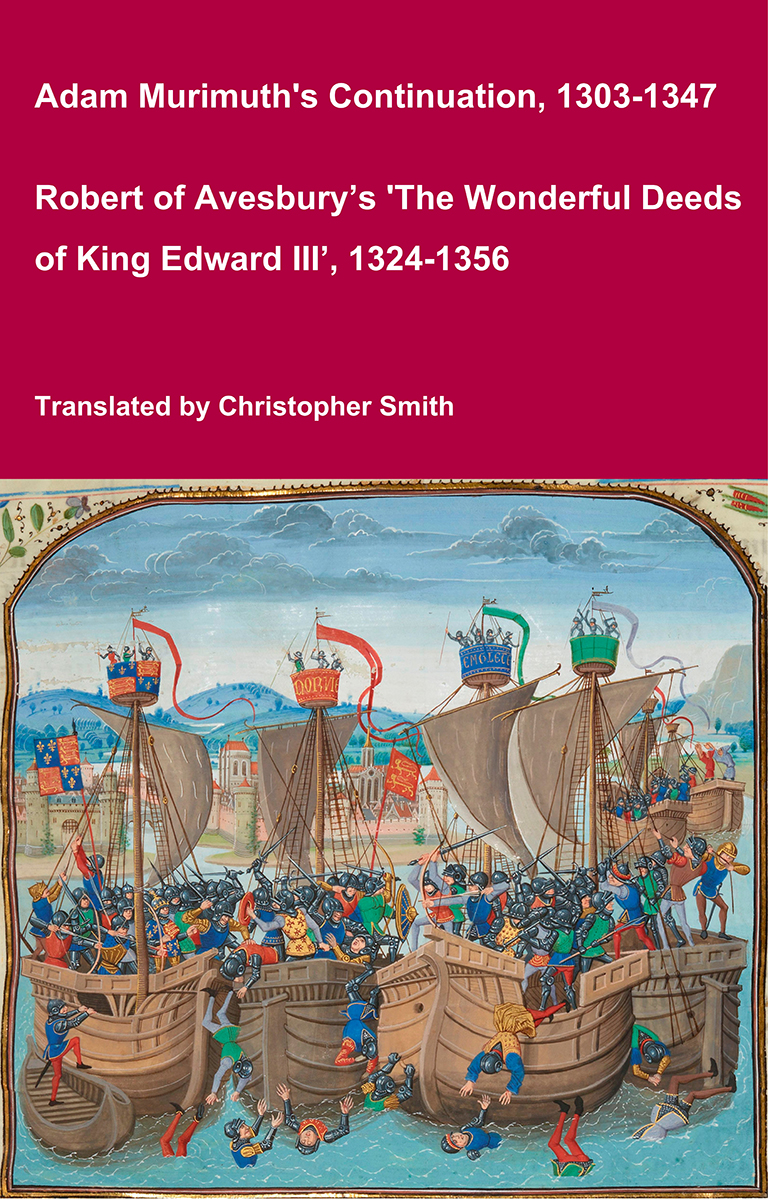
Adam Murimuth's Continuation and Robert of Avesbury’s 'The Wonderful Deeds of King Edward III'
This volume brings together two of the most important contemporary chronicles for the reign of Edward III and the opening phases of the Hundred Years’ War. Written in Latin by English clerical observers, these texts provide a vivid and authoritative window into the political, diplomatic, and military history of fourteenth-century England and its continental ambitions. Adam Murimuth Continuatio's Chronicarum continues an earlier chronicle into the mid-fourteenth century, offering concise but valuable notices on royal policy, foreign relations, and ecclesiastical affairs. Its annalistic structure makes it especially useful for establishing chronology and tracing the development of events year by year. Complementing it, Robert of Avesbury’s De gestis mirabilibus regis Edwardi tertii is a rich documentary chronicle preserving letters, treaties, and official records alongside narrative passages. It is an indispensable source for understanding Edward III’s claim to the French crown, the conduct of war, and the mechanisms of medieval diplomacy. Together, these works offer scholars, students, and enthusiasts a reliable and unembellished account of a transformative period in English and European history. Essential for anyone interested in medieval chronicles, the Hundred Years’ War, or the reign of Edward III.
Available at Amazon in eBook and Paperback format.

On 23rd January 1688 Ulrika Eleonora Palatinate Zweibrücken Queen Consort Sweden was born to Charles XI King Sweden (age 32) and Ulrika Eleonora Oldenburg (age 31). She married 1715 her fourth cousin once removed Frederick I King Sweden, son of Charles I Landgrave Hesse-Kassel and Maria Amalia of Courland Landgravine Hesse-Kassel.
On 23rd January 1698 Ernest Augustus Hanover Elector Brunswick-Lüneburg (age 68) died.

On 23rd January 1712 Thomas Pelham 1st Baron Pelham of Laughton (age 59) died. His son Thomas (age 18) succeeded 2nd Baron Pelham of Laughton, 5th Baronet Pelham of Laughton.
On 13th January 1724 or 23rd January 1724 Sophia Antonia Brunswick-Wolfenbüttel Duchess Saxe Coburg Saalfeld was born to Ferdinand Albert II Duke of Brunswick-Wolfenbüttel (age 43) and Princess Antoinette of Brunswick-Wolfenbüttel (age 27). She married 23rd April 1749 Ernest Frederick Saxe Coburg Saalfeld Duke Saxe Coburg Saalfeld, son of Francis Josias Saxe Coburg Saalfeld Duke Saxe Coburg Saalfeld and Duchess Anna Sophie Of Saxe-Coburg-Saalfeld, and had issue.
On 23rd January 1735 Francis Godolphin 2nd Earl Godolphin (age 56) was created 1st Baron Godolphin of Helston in Cornwall with a special remainder to heirs male of his uncle Henry Godolphin.


After 23rd January 1760. Church of St Mary Magdalene, Eardisley [Map]. Monument to William Barnesley of Eardisley Park (deceased) and his wife Elizabeth Price (age 53).
Elizabeth Price: In 1707 she was born to Walter Price of Kaevenblane. On 26th August 1723 William Barnesley of Eardisley Park and she were married at the Fleet Prison [Map]. There was no issue from the marriage. On 8th April 1773 she died. She was buried at the Church of St Mary Magdalene, Eardisley [Map]
On 23rd January 1770 Archbishop John Moore (age 39) and Catherine Eden (age 28) were married.
On 23rd January 1810 John Hoppner (age 51) died. William Owen (age 41) succeeded as portrait painter to the Prince of Wales (age 47).

On 23rd January 1820 Edward Augustus Hanover 1st Duke Kent and Strathearn (age 52) died at Woolbrook Cottage Sidmouth, Devon.
On 23rd January 1831 Horace Beckford aka Pitt-Rivers 3rd Baron Rivers (age 53) drowned himself in The Serpentine, Hyde Park having reneged on a pledge to never play cards again. His son George (age 20) succeeded 4th Baron Rivers of Sudeley Castle in Gloucestershire.
On 23rd January 1874 Prince Alfred Windsor (age 29) and Maria Holstein Gottorp Romanov (age 20) were married. He the son of Prince Albert Saxe Coburg Gotha and Queen Victoria of the United Kingdom (age 54). They were third cousin once removed.


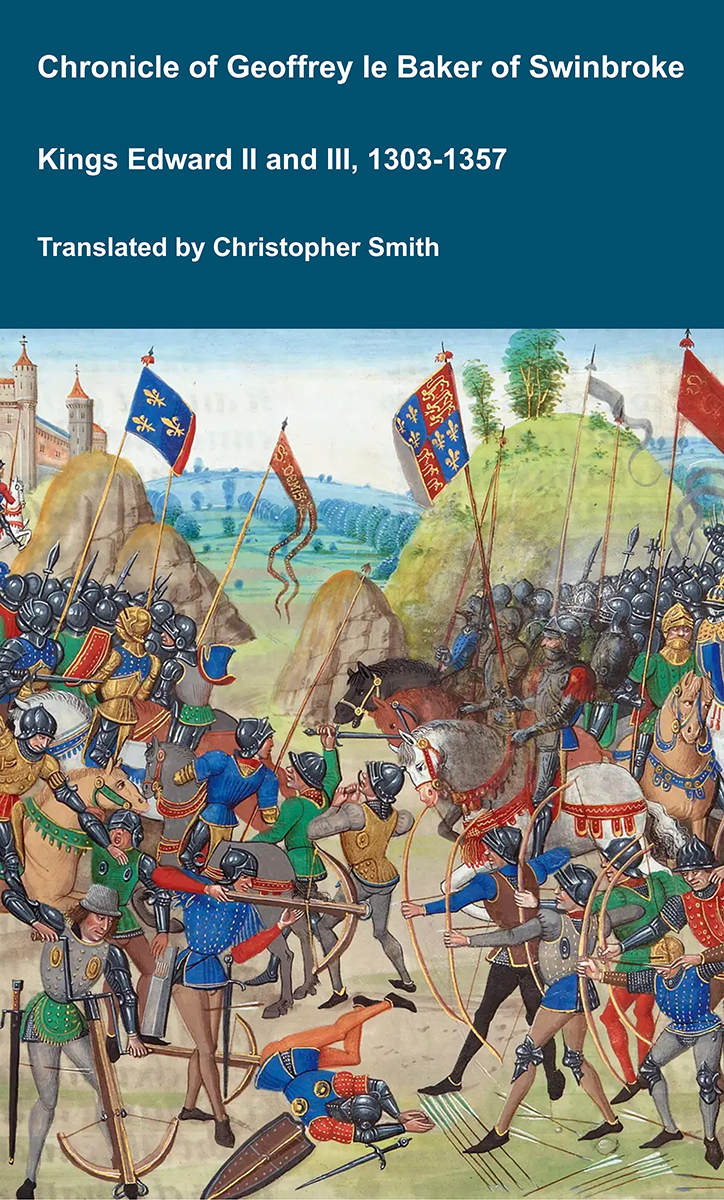
Chronicle of Geoffrey le Baker of Swinbroke
Baker was a secular clerk from Swinbroke, now Swinbrook, an Oxfordshire village two miles east of Burford. His Chronicle describes the events of the period 1303-1356: Gaveston, Bannockburn, Boroughbridge, the murder of King Edward II, the Scottish Wars, Sluys, Crécy, the Black Death, Winchelsea and Poitiers. To quote Herbert Bruce 'it possesses a vigorous and characteristic style, and its value for particular events between 1303 and 1356 has been recognised by its editor and by subsequent writers'. The book provides remarkable detail about the events it describes. Baker's text has been augmented with hundreds of notes, including extracts from other contemporary chronicles, such as the Annales Londonienses, Annales Paulini, Murimuth, Lanercost, Avesbury, Guisborough and Froissart to enrich the reader's understanding. The translation takes as its source the 'Chronicon Galfridi le Baker de Swynebroke' published in 1889, edited by Edward Maunde Thompson.
Available at Amazon in eBook and Paperback format.
On 23rd January 1874 Unknown Painter. The Wedding of Prince Alfred Windsor (age 29) and Maria Holstein Gottorp Romanov (age 20).

On 23rd January 1878 Alfonso XII King Spain (age 20) and Maria de las Mercedes Queen Consort Spain (age 17) were married. She by marriage Queen Consort Spain. She the daughter of Antoine Orléans Duke Montpensier (age 53) and Infanta Luisa Fernanda Duchess of Montpensier (age 45). He the son of Francisco de Asís King Consort Spain (age 55) and Isabella II Queen Spain (age 47). They were half first cousins.
22-23rd January 1879. The Battle of Rorke's Drift was an engagement in the Anglo-Zulu War in which the British successfully defended the mission station of Rorke's Drift, under the command of Lieutenants John Chard of the Royal Engineers and Gonville Bromhead, of the 24th Regiment of Foot.
On 23rd January 1889 Alexandre Cabanel (age 65) died in his hotel at 14 rue Alfred de Vigny, in the 8th arrondissement of Paris. His funeral was on 26th January 1889 at the Saint-Philippe du Roule church. He was buried at Saint Lazaire Cemetery.
On 23 and 24th January 1900 the Battle of Spion Kop was fought between British and Boer forces.
Robert Calverley Bewicke fought.
On 23rd January 1911 John Thomas Blight (age 75) died.
New York Times 23 Jan 1920. DUCHESS (age 44) MARRIED TO ARMY AVIATOR. Former Wife of Duke of Westminster Got Absolute Divorce Last Month.
ROMANCE OF WAR HOSPITAL. Bride Is Daughter of Col. Cornwallis West and Married the Duke. in 1901.
Special Cable to The New York Times.
LONDON, Jan. 23 [1920]—A society romance is revealed by the marriage of the Duchess of Wesiminster to Captain James Fitzpatrick Lewis, late of the Royal Air Force. The wedding took place at the Registry Office at Lyndhurst, where the Duchess has a country residence, on Jan. 14, a maid being the only witness.
Only a limited circle of intimate friends knew the marriage was to take place, and the actual ceremony was as secret as could be arranged. It was the Duchess’s wish that no announcement should be made until after she and her husband left for the Continent, where they are visiting her mother, Mrs. Cornwailis-West.
It was early in the war that Lewis first met the Duchess. He was then in the Royal Flying Corps, stationed near le Touquet, close to the hospital established by the Duchess. Early acquaintance ripened into deep friendship, and when the Captain was demobilized he became private secretary and agent of the Duchess. News of their marriage will be no surprise to their intimate friends. Lewis is about 30 years of age, a keen sportsman, and before the war was in business in London.
The Duchess obtained a divorce from the Duke (age 40) last June, the decree being made absolute Dec. 19 last. An extraordinary story of domestic unhappiness was revealed at the hearing of the case. The Duchess said it was in 1909 that her relations with the Duke first became unhappy. In the three years which followed she continued to occupy the same house, but they lived almost entirely separate lives. Then the Duke ceased to live with the Duchess and in spite of her repeated requests to him to return "for the children's sake if not for your own and mine."
He refused to come back and the Duchess finally instituted proceedines for divorce. Three children were born to the Duke and the Duchess. The son and heir died at the age of 5, in 1909. King Edward being godfather. Two daughters are Lady Ursula Grosvenor and Lady Mary Grosvenor.
The Duchess rendered hospital service in the war which earned mention in dispatches.

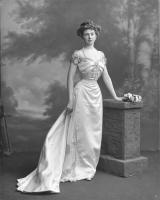

On 23rd January 1943 Richard Neville 8th Baron Braybrooke (age 25) was killed in action. He was unmarried. His first cousin Henry (age 45) succeeded 9th Baron Braybrooke of Braybrooke in Northamptonshire.
On 23rd January 1378 Louis Wittelsbach III Elector Palatine was born to Rupert King Germany (age 25). He married (1) 6th July 1402 Blanche Lancaster Elector Palatinate (2) 30th November 1417 Matilda of Savoy and had issue.
On 23rd January 1570 Christoph Wittelsbach was born to William Wittelsbach V Duke Bavaria (age 21) and Renata Lorraine Duchess Bavaria (age 25). Coefficient of inbreeding 2.86%. He died aged less than one years old.
On 23rd January 1612 George "Fairy Earl" Fitzgerald 16th Earl of Kildare was born to Edward Fitzgerald. He married 15th August 1630 Joan Boyle Countess Kildare, daughter of Richard Boyle 1st Earl Cork and Catherine Fenton Countess Cork, and had issue.
On 23rd January 1628 Francis Annesley was born to Francis Annesley 1st Viscount Valentia (age 42) and Jane Stanhope Viscountess Valentia (age 22).
Chronicle of Geoffrey le Baker of Swinbroke
Baker was a secular clerk from Swinbroke, now Swinbrook, an Oxfordshire village two miles east of Burford. His Chronicle describes the events of the period 1303-1356: Gaveston, Bannockburn, Boroughbridge, the murder of King Edward II, the Scottish Wars, Sluys, Crécy, the Black Death, Winchelsea and Poitiers. To quote Herbert Bruce 'it possesses a vigorous and characteristic style, and its value for particular events between 1303 and 1356 has been recognised by its editor and by subsequent writers'. The book provides remarkable detail about the events it describes. Baker's text has been augmented with hundreds of notes, including extracts from other contemporary chronicles, such as the Annales Londonienses, Annales Paulini, Murimuth, Lanercost, Avesbury, Guisborough and Froissart to enrich the reader's understanding. The translation takes as its source the 'Chronicon Galfridi le Baker de Swynebroke' published in 1889, edited by Edward Maunde Thompson.
Available at Amazon in eBook and Paperback format.
On 23rd January 1647 Seymour Shirley 5th Baronet was born to Robert Shirley 4th Baronet (age 18) and Catherine Okeover Lady Shirley. He married 29th January 1666 his sixth cousin Diana Bruce, daughter of Robert Bruce 2nd Earl Elgin 1st Earl Ailesbury and Diana Grey Countess Elgin and Ailesbury, and had issue.
On 23rd January 1688 Ulrika Eleonora Palatinate Zweibrücken Queen Consort Sweden was born to Charles XI King Sweden (age 32) and Ulrika Eleonora Oldenburg (age 31). She married 1715 her fourth cousin once removed Frederick I King Sweden, son of Charles I Landgrave Hesse-Kassel and Maria Amalia of Courland Landgravine Hesse-Kassel.
On 13th January 1724 or 23rd January 1724 Sophia Antonia Brunswick-Wolfenbüttel Duchess Saxe Coburg Saalfeld was born to Ferdinand Albert II Duke of Brunswick-Wolfenbüttel (age 43) and Princess Antoinette of Brunswick-Wolfenbüttel (age 27). She married 23rd April 1749 Ernest Frederick Saxe Coburg Saalfeld Duke Saxe Coburg Saalfeld, son of Francis Josias Saxe Coburg Saalfeld Duke Saxe Coburg Saalfeld and Duchess Anna Sophie Of Saxe-Coburg-Saalfeld, and had issue.
On 23rd January 1726 James Johnstone 4th Baronet was born to James Johnstone 3rd Baronet (age 28) and Barbara Murray. He married 1759 Anne Colclough.

On 23rd January 1738 John Perceval 3rd Earl Egmont was born to John Perceval 2nd Earl Egmont (age 26) and Catherine Cecil Countess Egmont (age 16). He married 4th June 1765 his first cousin once removed Isabella Powlett Countess Egmont and had issue.
On 23rd January 1738 Charles Tottenham aka Loftus 1st Marquess Ely was born to John Tottenham 1st Baronet (age 23) and Elizabeth Loftus. He married 1766 Jane Myhill Marchioness Ely and had issue.

On 23rd January 1748 Margaret Butler was born to Somerset Butler 1st Earl Carrick (age 29) and Juliana Boyle. She married 3rd October 1771 Armar Lowry-Corry 1st Earl Belmore and had issue.
On 23rd January 1753 Thomas Brooke-Pechell 2nd Baronet was born to Paul Pechell 1st Baronet (age 28) and Mary Brooke Lady Pechell. He married 28th April 1783 Charlotte Clavering Lady Pechell and had issue.
On 23rd January 1753 Charles Warwick Bampfylde 5th Baronet was born to Richard Warwick Bampfylde 4th Baronet (age 30) and Jane Codrington Lady Bampfylde (age 32).
On 23rd January 1761 Maria Forbes Countess Clarendon was born to John Forbes (age 46) and Mary Capell. She married 5th January 1791 her first cousin John Villiers 3rd Earl Clarendon, son of Thomas Villiers 1st Earl Clarendon and Charlotte Capell Countess Clarendon.
Henrici Quinti, Angliæ Regis, Gesta, is a first-hand account of the Agincourt Campaign, and subsequent events to his death in 1422. The author of the first part was a Chaplain in King Henry's retinue who was present from King Henry's departure at Southampton in 1415, at the siege of Harfleur, the battle of Agincourt, and the celebrations on King Henry's return to London. The second part, by another writer, relates the events that took place including the negotiations at Troye, Henry's marriage and his death in 1422.
Available at Amazon in eBook and Paperback format.
On 23rd January 1765 Henry Legge was born to William Legge 2nd Earl Dartmouth (age 33) and Frances Catherine Gounter Nicoll Countess Dartmouth (age 32).


On 23rd January 1765 Thomas Thynne 2nd Marquess of Bath was born to Thomas Thynne 1st Marquess of Bath (age 30) and Elizabeth Bentinck Marchioness Bath (age 29). He married 14th April 1794 his fifth cousin Isabella Elizabeth Byng Marchioness Bath, daughter of George Byng 4th Viscount Torrington and Lucy Boyle Viscountess Torrington, and had issue.
On 23rd January 1770 George Thynne 2nd Baron Carteret was born to Thomas Thynne 1st Marquess of Bath (age 35) and Elizabeth Bentinck Marchioness Bath (age 34). He married 9th May 1797 Harriet Courtenay Baroness Carteret, daughter of William Courtenay 8th Earl Devon and Frances Clack Countess Devon.
On 23rd January 1782 Thomas Stanley-Massey-Stanley 9th Baronet was born to Thomas Stanley-Massey-Stanley 7th Baronet (age 27).
On 23rd January 1783 George Thicknesse-Touchet 20th Baron Audley 17th Baron Tuchet was born to George Thicknesse 19th Baron Audley 16th Baron Tuchet (age 25) and Elizabeth Delaval Baroness Audley (age 26). He married 18th April 1816 Anne-Jane Donnelly Baroness Audley and had issue.


On 23rd January 1787 William Cust was born to Brownlow Cust 1st Baron Brownlow (age 42) and Frances Bankes Baroness Brownlow. He married 1819 Sophia Newnham and had issue.


On 23rd January 1790 Thomas Lister 2nd Baron Ribblesdale was born to Thomas Lister 1st Baron Ribblesdale (age 37) and Rebecca Fielding Baroness Ribblesdale (age 18). He married 9th February 1826 Adelaide Lister and had issue.
On 23rd January 1792 Charles Mills 1st Baronet was born to William Mills (age 41) and Elizabeth Digby (age 34).
On 23rd January 1795 Admiral Henry John Rous was born to John Rous 1st Earl Stradbroke (age 44) and Charlotte Maria Whittaker Countess of Stradbroke (age 25). He married 1838 Sophia Cuthbert.
On 23rd January 1807 Edward Thynne was born to Thomas Thynne 2nd Marquess of Bath (age 42) and Isabella Elizabeth Byng Marchioness Bath (age 33).
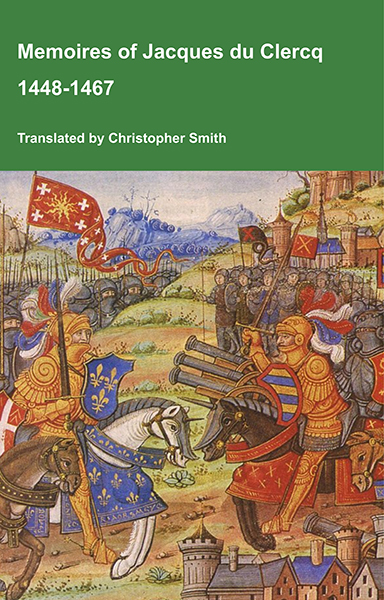
This is a translation of the 'Memoires of Jacques du Clercq', published in 1823 in two volumes, edited by Frederic, Baron de Reissenberg. In his introduction Reissenberg writes: 'Jacques du Clercq tells us that he was born in 1424, and that he was a licentiate in law and a counsellor to Philip the Good, Duke of Burgundy, in the castellany of Douai, Lille, and Orchies. It appears that he established his residence at Arras. In 1446, he married the daughter of Baldwin de la Lacherie, a gentleman who lived in Lille. We read in the fifth book of his Memoirs that his father, also named Jacques du Clercq, had married a lady of the Le Camelin family, from Compiègne. His ancestors, always attached to the counts of Flanders, had constantly served them, whether in their councils or in their armies.' The Memoires cover a period of nineteen years beginning in in 1448, ending in in 1467. It appears that the author had intended to extend the Memoirs beyond that date; no doubt illness or death prevented him from carrying out this plan. As Reissenberg writes the 'merit of this work lies in the simplicity of its narrative, in its tone of good faith, and in a certain air of frankness which naturally wins the reader’s confidence.' Du Clercq ranges from events of national and international importance, including events of the Wars of the Roses in England, to simple, everyday local events such as marriages, robberies, murders, trials and deaths, including that of his own father in Book 5; one of his last entries.
Available at Amazon in eBook and Paperback format.
On 23rd January 1816 Mary Agnes Blanche Ashburnham was born to George Ashburnham 3rd Earl Ashburnham (age 55) and Charlotte Percy Countess Ashburham (age 40).
On 23rd January 1830 Thomas Edward Lloyd-Mostyn was born to Edward Lloyd aka Lloyd-Mostyn 2nd Baron Mostyn (age 35). He married 19th July 1855 Henrietta Augusta Neville, daughter of William Neville 4th Earl Abergavenny and Caroline Leeke Countess Abergavenny, and had issue.
On 23rd January 1831 Somerset Gough-Calthorpe 7th Baron Calthorpe was born to Frederick Gough 4th Baron Calthorpe (age 40) and Charlotte Sophia Somerset Baroness Calthorpe (age 35).
On 23rd January 1842 William Tate 2nd Baronet was born to Henry Tate 1st Baronet (age 22). He married 18th November 1863 Caroline Glasgow Lady Tate and had issue.
On 23rd January 1851 Charles George Lascelles was born to Henry Thynne Lascelles 4th Earl Harewood (age 26) and Elizabeth Joanna Burgh (age 24).
On 23rd January 1869 Lieutenant Neville Windsor Hill-Trevor was born to Arthur Edwin Hill aka Hill-Trevor 1st Baron Trevor (age 49) and Mary Catherine Curzon Baroness Trevor (age 31).
On 23rd January 1875 Gerald Berkeley Portman 7th Viscount Portman was born to William Henry Portman 2nd Viscount Portman (age 45) and Mary Selina Wentworth-Fitzwilliam Viscountess Portman (age 39). He married in or before 1903 Dorothy May Sheffield Viscountess Portman, daughter of Robert Sheffield 5th Baronet and Priscilla Isabella Laura Dumaresq, and had issue.
On 23rd January 1885 William Hope Nelson was born to William Nelson 1st Baronet (age 33).
On 23rd January 1892 William Stephan Hyde Parker 11th Baronet was born to William Hyde Parker 10th Baronet (age 28).
On 23rd January 1906 Princess May of Teck was born to Alexander Teck 1st Earl Athlone (age 32) and Princess Alice Countess Athlone (age 22) at Claremont House Esher, Surrey. She a great granddaughter of Queen Victoria of the United Kingdom.


William of Worcester's Chronicle of England
William of Worcester, born around 1415, and died around 1482 was secretary to John Fastolf, the renowned soldier of the Hundred Years War, during which time he collected documents, letters, and wrote a record of events. Following their return to England in 1440 William was witness to major events. Twice in his chronicle he uses the first person: 1. when writing about the murder of Thomas, 7th Baron Scales, in 1460, he writes '… and I saw him lying naked in the cemetery near the porch of the church of St. Mary Overie in Southwark …' and 2. describing King Edward IV's entry into London in 1461 he writes '… proclaimed that all the people themselves were to recognize and acknowledge Edward as king. I was present and heard this, and immediately went down with them into the city'. William’s Chronicle is rich in detail. It is the source of much information about the Wars of the Roses, including the term 'Diabolical Marriage' to describe the marriage of Queen Elizabeth Woodville’s brother John’s marriage to Katherine, Dowager Duchess of Norfolk, he aged twenty, she sixty-five or more, and the story about a paper crown being placed in mockery on the severed head of Richard, 3rd Duke of York.
Available at Amazon in eBook and Paperback format.
On 23rd January 1914 Captain Michael Frederick Laud Robinson was born to Frederick Villiers Laud Robinson 10th Baronet (age 33).
On 23rd January 1916 Harold Hood 2nd Baronet was born to Joseph Hood 1st Baronet (age 52).
On 23rd January 1918 Richard Newton Rycroft 7th Baronet was born to Nelson Edward Oliver Rycroft 6th Baronet (age 31).
On 23rd January 1924 David William Anthony Blyth Macpherson 2nd Baron Strathcarron was born to James Ian Macpherson 1st Baron Strathcarron (age 43). He married (1) 10th February 1947 Valerie Cole Baroness Strathcarron (2) 18th May 1948 Diana Hawtrey Deane Baroness Strathcarron.
On 23rd January 1988 Edward Corfton 8th Baron Crofton was born to Patrick Crofton 7th Baron Crofton (age 36).
On 23rd January 1045 King Edward "The Confessor" of England (age 42) and Edith of Wessex Queen Consort England (age 19) were married. She by marriage Queen Consort England. The difference in their ages was 23 years. She the daughter of Godwin 1st Earl Kent and Wessex (age 44) and Gytha Countess Kent and Wessex. He the son of King Æthelred II of England and Emma aka Ælfgyfu of Normandy Queen Consort England (age 60).
On 23rd January 1302 Ferdinand IV King Castile IV King Leon (age 16) and Constance Burgundy Queen Consort Castile Queen Consort Leon (age 12) were married. She by marriage Queen Consort Castile, Queen Consort Leon. She the daughter of Denis I King Portugal (age 40) and Elisabeth Barcelona Queen Consort Portugal (age 31). He the son of Sancho IV King Castile IV King Leon and Maria Molina Queen Consort Castile Queen Consort Leon. They were half first cousin once removed. He a great x 4 grandson of King Henry "Curtmantle" II of England. She a great x 3 granddaughter of King Henry "Curtmantle" II of England.
On 23rd January 1581 James "The Bonnie Earl" Stewart 2nd Earl of Moray (age 16) and Elizabeth Stewart 2nd Countess Moray (age 15) were married. She by marriage Lord Doune. He by marriage 2nd Earl Moray. She the daughter of James Stewart 1st Earl of Moray Regent and Agnes Keith Countess Moray and Mar (age 50). They were third cousins. She a great x 2 granddaughter of King Henry VII of England and Ireland.
On 23rd January 1652 John Wray 3rd Baronet (age 32) and Elizabeth Willoughby Lady D'Ewes and Glentworth (age 27) were married. She by marriage Lady Wray of Glentworth in Lincolnshire.
On 23rd January 1653 George Monck 1st Duke Albemarle (age 44) and Anne Clarges Duchess Albermarle (age 33) were married.
On 23rd January 1691 John Newton 3rd Baronet (age 40) and Susanna Wharton Lady Newton (age 40) were married.
On 23rd January 1693 George Carpenter 1st Baron Carpenter (age 35) and Alice Caulfeild Baroness Carpenter (age 32) were married.
On 23rd January 1730 John Campbell 3rd Earl Breadalbaine and Holland (age 33) and Arbella Pershall Countess Breadalbaine and Holland were married. He the son of John Campbell 2nd Earl Breadalbaine and Holland (age 67) and Henrietta Villiers Countess Breadalbaine and Holland.
Chronicle of Abbot Ralph of Coggeshall
The Chronicle of Abbot Ralph of Coggeshall (Chronicon Anglicanum) is an indispensable medieval history that brings to life centuries of English and European affairs through the eyes of a learned Cistercian monk. Ralph of Coggeshall, abbot of the Abbey of Coggeshall in Essex in the early 13th century, continued and expanded his community’s chronicle, documenting events from the Norman Conquest of 1066 into the tumultuous reign of King Henry III. Blending eyewitness testimony, careful compilation, and the monastic commitment to record-keeping, this chronicle offers a rare narrative of political intrigue, royal power struggles, and social upheaval in England and beyond. Ralph’s work captures the reigns of pivotal figures such as Richard I and King John, providing invaluable insights into their characters, decisions, and the forces that shaped medieval rule. More than a simple annal, Chronicon Anglicanum conveys the texture of medieval life and governance, making it a rich source for scholars and readers fascinated by English history, monastic authorship, and the shaping of the medieval world.
Available at Amazon in eBook and Paperback format.
On 23rd January 1768 Charles Dormer 8th Baron Dormer (age 42) and Elizabeth Hamilton Baroness Dormer were married.
On 23rd January 1770 Archbishop John Moore (age 39) and Catherine Eden (age 28) were married.
On 23rd January 1873 Henry Bromley 5th Baronet (age 23) and Adela Richards Lady Bromley were married. She being the niece of his father's second wife Georgiana Fane Lady Bromley.
On 23rd January 1874 Prince Alfred Windsor (age 29) and Maria Holstein Gottorp Romanov (age 20) were married. He the son of Prince Albert Saxe Coburg Gotha and Queen Victoria of the United Kingdom (age 54). They were third cousin once removed.
On 23rd January 1878 Alfonso XII King Spain (age 20) and Maria de las Mercedes Queen Consort Spain (age 17) were married. She by marriage Queen Consort Spain. She the daughter of Antoine Orléans Duke Montpensier (age 53) and Infanta Luisa Fernanda Duchess of Montpensier (age 45). He the son of Francisco de Asís King Consort Spain (age 55) and Isabella II Queen Spain (age 47). They were half first cousins.
On 23rd January 1883 Arthur Chichester 8th Baronet (age 60) and Rosalie Amelia Chamberlayne were married.
On 23rd January 1883 Sydney Holland 2nd Viscount Knutsford (age 27) and Mary Ashburnham Viscountess Knutsford (age 23) were married at St George's Church, Hanover Square. She the daughter of Bertram Ashburnham 4th Earl Ashburnham and Katherine Charlotte Baillie Countess Ashburnham (age 63).
On 23rd January 1923 Robert Walker 4th Baronet (age 32) and Esme Ethel Alice d'Beaumont Lady Walker were married. She by marriage Lady Walker of Sand Hutton in Yorkshire.
On 23rd January 1002 Otto III King Italy III King Germany III Holy Roman Emperor (age 21) died.
On 23rd January 1324 Fulk Strange 1st Baron Strange Blackmere (age 57) died at Black Mere, Whitchurch. His son John (age 17) succeeded 2nd Baron Strange Blackmere. Ankaret Boteler Baroness Strange Blackmere (age 15) by marriage Baroness Strange Blackmere.
On 23rd January 1387 Maud Burghesh Baroness Grey Rotherfield (age 72) died at Henley on Thames, Oxfordshire [Map].
On 23rd January 1423 Margaret Wittelsbach Duchess Burgundy (age 60) died.
On 23rd January 1483 Elizabeth Ferrers 6th Baroness Ferrers Groby (age 64) died. Her grandson Thomas (age 28) succeeded 7th Baron Ferrers of Groby. Cecily Bonville Marchioness Dorset (age 22) by marriage Baroness Ferrers of Groby.
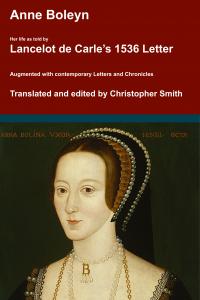
Anne Boleyn. Her Life as told by Lancelot de Carle's 1536 Letter.
In 1536, two weeks after the execution of Anne Boleyn, her brother George and four others, Lancelot du Carle, wrote an extraordinary letter that described Anne's life, and her trial and execution, to which he was a witness. This book presents a new translation of that letter, with additional material from other contemporary sources such as Letters, Hall's and Wriothesley's Chronicles, the pamphlets of Wynkyn the Worde, the Memorial of George Constantyne, the Portuguese Letter and the Baga de Secrets, all of which are provided in Appendices.
Available at Amazon in eBook and Paperback format.
On 23rd January 1516 Ferdinand II King Aragon (age 63) died. His daughter Joanna (age 37) succeeded Queen Aragon.
On 23rd January 1528 Helen Campbell Countess Eglinton (age 68) died.
On 23rd January 1544 William Fitzalan 11th or 18th Earl of Arundel (age 68) died. He was buried at Arundel Castle [Map]. His son Henry (age 31) succeeded 12th or 19th Earl Arundel, 9th Baron Maltravers, 9th Baron Arundel. Mary Arundell Countess Arundel by marriage Countess Arundel.


On 23rd January 1554 Elizabeth Hussey Baroness Hungerford (age 57) died.
On 23rd January 1570 James Stewart 1st Earl of Moray Regent (age 39) was assassinated at Linlithgow by James Hamilton of Bothwellhaugh, a supporter of Mary Queen of Scots (age 27). His daughter Elizabeth (age 4) succeeded 2nd Countess Moray. As he was passing in a cavalcade in the main street below, Hamilton fatally wounded him with a carbine shot from a window of his uncle Archbishop Hamilton's (age 57) house. He was the first head of government to be assassinated by a firearm.
On 23rd January 1576 Bishop James Pilkington (age 56) died at Bishop Auckland, County Durham [Map].
On 23rd January 1637 Alice Spencer Countess Derby (age 87) died.
On 23rd January 1650 Philip Herbert 4th Earl Pembroke 1st Earl Montgomery (age 65) died at Whitehall Palace [Map]. He was buried at Salisbury Cathedral [Map]. His son Philip (age 29) succeeded 5th Earl Pembroke, 2nd Earl Montgomery.


On 23rd January 1698 Ernest Augustus Hanover Elector Brunswick-Lüneburg (age 68) died.
On 23rd January 1705 Martha Carey Countess Middleton (age 70) died.
On 23rd January 1712 Thomas Pelham 1st Baron Pelham of Laughton (age 59) died. His son Thomas (age 18) succeeded 2nd Baron Pelham of Laughton, 5th Baronet Pelham of Laughton.
Chronicle of Walter of Guisborough
A canon regular of the Augustinian Guisborough Priory, Yorkshire, formerly known as The Chronicle of Walter of Hemingburgh, describes the period from 1066 to 1346. Before 1274 the Chronicle is based on other works. Thereafter, the Chronicle is original, and a remarkable source for the events of the time. This book provides a translation of the Chronicle from that date. The Latin source for our translation is the 1849 work edited by Hans Claude Hamilton. Hamilton, in his preface, says: 'In the present work we behold perhaps one of the finest samples of our early chronicles, both as regards the value of the events recorded, and the correctness with which they are detailed; Nor will the pleasing style of composition be lightly passed over by those capable of seeing reflected from it the tokens of a vigorous and cultivated mind, and a favourable specimen of the learning and taste of the age in which it was framed.'
Available at Amazon in eBook and Paperback format.
On 23rd January 1720 Thomas Southwell 1st Baron Southwell (age 55) died. His son Thomas (age 22) succeeded 2nd Baron Southwell of Castle Mattress in Limerick, 3rd Baronet Southwell of Castle Matress. Mary Coke Baroness Southwell by marriage Baroness Southwell of Castle Mattress in Limerick.
On 23rd January 1742 William Stawell 3rd Baron Stawell (age 60) died. His brother Edward succeeded 4th Baron Stawell of Somerton in Somerset.


On 23rd January 1747 Pattee Byng 2nd Viscount Torrington (age 47) died. He was buried at Bing Vault, All Saints Church, Southill. His brother George (age 45) succeeded 3rd Viscount Torrington.
On 23rd January 1752 John Wray 12th Baronet (age 62) died. He was buried at Ripon Cathedral [Map]. His son Cecil (age 17) succeeded 13th Baronet Wray of Glentworth in Lincolnshire.
On 23rd January 1795 John Hynde Cotton 4th Baronet (age 78) died. His son Charles (age 37) succeeded 5th Baronet Cotton of Landwade in Cambridgeshire.
On 23rd January 1810 John Hoppner (age 51) died. William Owen (age 41) succeeded as portrait painter to the Prince of Wales (age 47).
On 23rd January 1820 John Howard 15th Earl Suffolk 8th Earl Berkshire (age 80) died.
On 23rd January 1820 Edward Augustus Hanover 1st Duke Kent and Strathearn (age 52) died at Woolbrook Cottage Sidmouth, Devon.
On 23rd January 1820 John Howard 15th Earl Suffolk (age 80) died. His son Thomas (age 43) succeeded 16th Earl Suffolk, 9th Earl Berkshire, 9th Viscount Andover in Hampshire, 9th Baron Howard of Charlton in Wiltshire. Elizabeth Jane Dutton Countess Suffolk and Berkshire (age 45) by marriage Countess Suffolk, Countess Berkshire.
On 23rd January 1824 Brooke Boothby 6th Baronet (age 79) died at Boulogne sur Mer [Map]. His brother William (age 77) succeeded 7th Baronet Boothby of Broadlow Ash in Derbyshire. On 3rd February 1824 he was buried at St Oswald's Church, Ashbourne [Map].
Jean de Waurin's Chronicle of England Volume 6 Books 3-6: The Wars of the Roses
Jean de Waurin was a French Chronicler, from the Artois region, who was born around 1400, and died around 1474. Waurin’s Chronicle of England, Volume 6, covering the period 1450 to 1471, from which we have selected and translated Chapters relating to the Wars of the Roses, provides a vivid, original, contemporary description of key events some of which he witnessed first-hand, some of which he was told by the key people involved with whom Waurin had a personal relationship.
Available at Amazon in eBook and Paperback format.
On 23rd January 1831 Horace Beckford aka Pitt-Rivers 3rd Baron Rivers (age 53) drowned himself in The Serpentine, Hyde Park having reneged on a pledge to never play cards again. His son George (age 20) succeeded 4th Baron Rivers of Sudeley Castle in Gloucestershire.
On 23rd January 1833 Edward Pellew 1st Viscount Exmouth (age 75) died. He was buried at St James the Apostle Church, Christow. His son Pownoll (age 46) succeeded 2nd Viscount Exmouth, 2nd Baron Exmouth of Canonteign, 2nd Baronet Pellew of Treverry in Cornwall. He died in December of the same year. Georgiana Janet Dick Viscountess Pellew (age 33) by marriage Viscountess Exmouth.
On 23rd January 1841 Henry Perceval 5th Earl Egmont (age 45) died. His half first cousin once removed George (age 46) succeeded 6th Earl Egmont, 6th Viscount Perceval of Kanturk in County Cork, 6th Baron Perceval of Burton in County Cork, 10th Baronet Perceval of Kanturk in County Cork, 5th Baron Lovel and Holland of Enmore in Somerset.
On 23rd January 1844 Francis Burdett 5th Baronet (age 73) died ten days after the death of his wife Sophia Coutts Lady Burdett; he had refused food after she had died. His son Robert (age 47) succeeded 6th Baronet Burdett of Bramcote in Warwickshire.

On 23rd January 1854 Ralph Franco aka Lopes 2nd Baronet (age 65) died. His son Massey (age 35) succeeded 3rd Baronet Lopes of Maristow-House in Devon.

On 23rd January 1865 Corisande Armandine Sophie Léonie Hélène Gramont Countess Tankerville (age 82) died.
On 23rd January 1874 Edith Maud Rawdon-Hastings 10th Countess Loudon (age 40) died. Her son Charles (age 19) succeeded 11th Earl Loudon, 22nd Baron Botreaux, 21st Baron Hungerford, 19th Baron Moleyns and 19th Baron Hastings. Alice Elizabeth Fitzalan Howard Countess Loudon by marriage Countess Loudon.
On 23rd January 1874 Henry Villiers Stuart (age 70) died. Baron Stuart de Decies of Dromana within the Decies in County Waterford extinct as a consequence of there being uncertainty about the validity of his marriage to Theresia Pauline Ott. His son Henry Windsor Villiers-Stuart (age 46) was not allowed to inherit the title.

On 23rd January 1874 George Strickland 7th Baronet (age 91) died. His son Charles (age 54) succeeded 8th Baronet Strickland of Boynton in Yorkshire. Esther Ann Strickland inherited Whitby Manor
On 23rd January 1885 John Jervis 4th Viscount St Vincent (age 34) died. His brother Carnegie (age 29) succeeded 5th Viscount St Vincent of Meaford in Staffordshire.
On 23rd January 1889 Alexandre Cabanel (age 65) died in his hotel at 14 rue Alfred de Vigny, in the 8th arrondissement of Paris. His funeral was on 26th January 1889 at the Saint-Philippe du Roule church. He was buried at Saint Lazaire Cemetery.
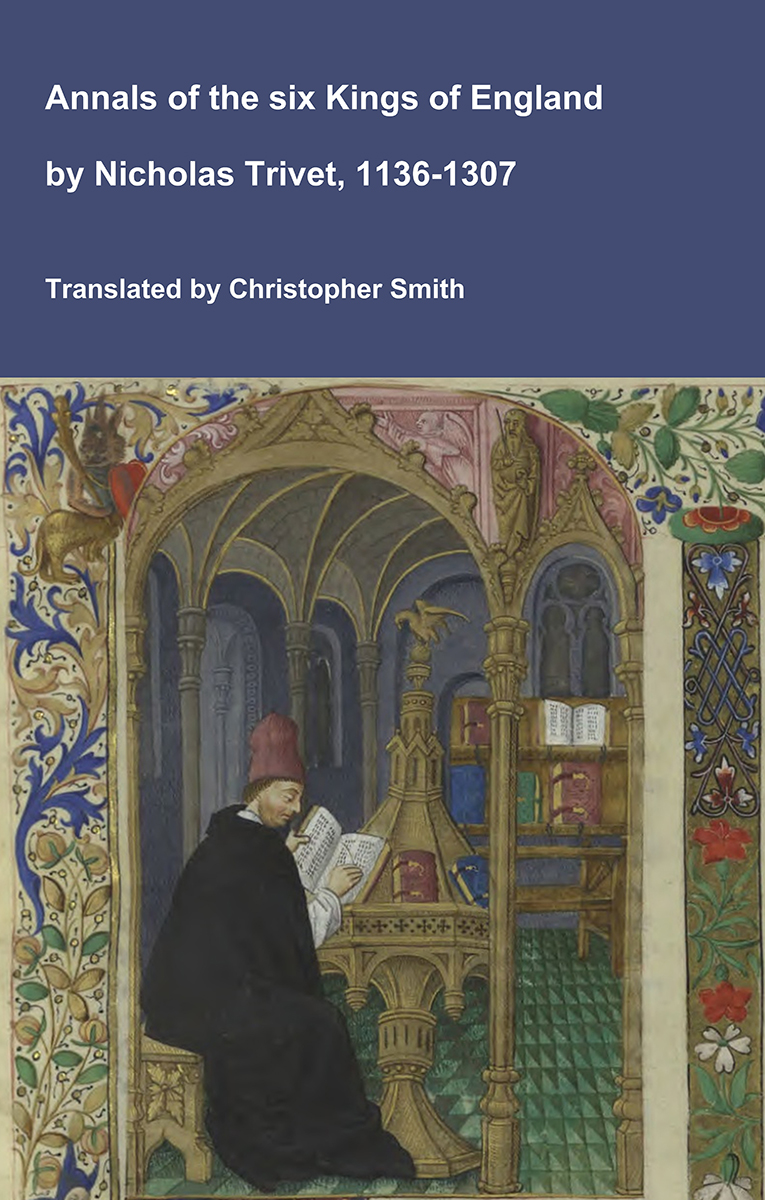
Annals of the six Kings of England by Nicholas Trivet
Translation of the Annals of the Six Kings of England by that traces the rise and rule of the Angevin aka Plantagenet dynasty from the mid-12th to early 14th century. Written by the Dominican scholar Nicholas Trivet, the work offers a vivid account of English history from the reign of King Stephen through to the death of King Edward I, blending political narrative with moral reflection. Covering the reigns of six monarchs—from Stephen to Edward I—the chronicle explores royal authority, rebellion, war, and the shifting balance between crown, church, and nobility. Trivet provides detailed insight into defining moments such as baronial conflicts, Anglo-French rivalry, and the consolidation of royal power under Edward I, whose reign he describes with particular immediacy. The Annals combines careful year-by-year reporting with thoughtful interpretation, presenting history not merely as a sequence of events but as a moral and political lesson. Ideal for readers interested in medieval history, kingship, and the origins of the English state, this chronicle remains a valuable and accessible window into the turbulent world of the Plantagenet kings.
Available at Amazon in eBook and Paperback format.
On 23rd January 1892 Henry Stapleton 9th Baron Beaumont (age 43) died without issue. His brother Miles (age 41) succeeded 10th Baron Beaumont.
On 23rd January 1902 William Parker 2nd Baronet (age 77) died. His son William (age 13) succeeded 3rd Baronet Parker of Shenstone.
On 23rd January 1910 William Jocelyn 6th Earl Roden (age 67) died unmarried. His brother Robert (age 64) succeeded 7th Earl Roden
On 23rd January 1911 John Thomas Blight (age 75) died.
On 23rd January 1916 Susan Isabel Elton Smith Countess Wilton (age 74) died.
On 23rd January 1916 John Leslie 1st Baronet (age 93) died. His son John (age 58) succeeded 2nd Baronet Leslie of Glaslough in County Monaghan. Leonie Blanche Jerome Lady Leslie (age 57) by marriage Lady Leslie of Glaslough in County Monaghan.
On 23rd January 1930 Catherine Penelope Cave-Browne-Cave Lady Salusbury-Trelawny died.

On 23rd January 1939 Evelyn Henrietta Leigh Baroness Alington died.
On 23rd January 1942 Albert Holden Illingworth 1st Baron Illingworth (age 76) died. Baron Illingworth of Denton in Yorkshire extinct.
On 23rd January 1943 Richard Neville 8th Baron Braybrooke (age 25) was killed in action. He was unmarried. His first cousin Henry (age 45) succeeded 9th Baron Braybrooke of Braybrooke in Northamptonshire.
The History of William Marshal was commissioned by his son shortly after William’s death in 1219 to celebrate the Marshal’s remarkable life; it is an authentic, contemporary voice. The manuscript was discovered in 1861 by French historian Paul Meyer. Meyer published the manuscript in its original Anglo-French in 1891 in two books. This book is a line by line translation of the first of Meyer’s books; lines 1-10152. Book 1 of the History begins in 1139 and ends in 1194. It describes the events of the Anarchy, the role of William’s father John, John’s marriages, William’s childhood, his role as a hostage at the siege of Newbury, his injury and imprisonment in Poitou where he met Eleanor of Aquitaine and his life as a knight errant. It continues with the accusation against him of an improper relationship with Margaret, wife of Henry the Young King, his exile, and return, the death of Henry the Young King, the rebellion of Richard, the future King Richard I, war with France, the death of King Henry II, and the capture of King Richard, and the rebellion of John, the future King John. It ends with the release of King Richard and the death of John Marshal.
Available at Amazon in eBook and Paperback format.
On 23rd January 1972 Dorothy Gough-Calthorpe Countess of Malmesbury (age 86) died.
On 23rd January 1989 John Lyon-Dalberg-Acton 3rd Baron Acton (age 81) died. His son Richard (age 47) succeeded 4th Baron Acton of Aldenham in Shropshire, 11th Baronet Acton of Aldenham Hall.
On 23rd January 2005 Morys George Lyndhurst Bruce 4th Baron Aberdare (age 85) died. His son Alastair (age 57) succeeded 5th Baron Aberdare of Duffryn in Glamorganshire.