


23 Jun is in June.
1467 Tournament Bastard of Burgundy
1509 Marriage and Coronation of Henry VIII and Catherine of Aragon
1528 Sweating Sickness Outbreak
On 23rd June 47BC Ptolemy XV Ceasar aka Caesarion 47BC 30BC was born to Gaius Julius Caesar 100BC 44BC and Cleopatra VII Philopator 69BC 30BC (age 22).
On 23rd June 679 Æthelthryth Wuffingas Queen Consort Deira and Northumbria (age 43) died. She was buried at Ely Abbey [Map].
On 23rd June 679 Seaxburh Wuffingas Queen Consort Kent was appointed Abbot Ely.
Anglo-Saxon Chronicle. After 23rd June 1016. It was within two nights after that the king (age 26) went over at Brentford [Map]; where he fought with the enemy, and put them to flight: but there many of the English were drowned, from their own carelessness; who went before the main army with a design to plunder. After this the king went into Wessex, and collected his army; but the enemy soon returned to London, and beset the city without, and fought strongly against it both by water and land. But the almighty God delivered them.
On 23rd June 1174 Reginald Fitz Jocelin 1192 was consecrated Bishop of Bath.
 Chronicum Anglicanum by Ralph Coggeshall. On the vigil [23rd June 1205] of St John the Baptist, Hubert de Burgh, chamberlain, was captured at Chinon by the army of the king of France. He had most faithfully defended that castle for a year after Normandy and Anjou had been taken. But when that castle, which had always seemed impregnable, had been for the most part almost destroyed by the besieging French, he went out into the field with his men, fighting manfully against the enemy, and was grievously wounded before he could be taken.
In vigilia Sancti Johannis-Baptiste, captus est Hubertus de Burgh camerarius, apud Chinun, ab exercitu regis Franciæ: qui prædictum castellum per annum probissime tutaverat post captam Normanniam et Andegaviam. Cum autem castellum illud, quod semper inexpugnabile visum est, magna ex parte ab obsidentibus Francis fere dirutum esset, transiit in campum cum suis, contra hostes viriliter dimicans, graviterque vulneratus est antequam capi potuisset.
Liber de Antiquis Legibus 1255. 23rd June 1255. This year, upon the Feast of Saint Eldreda [23 June] which was on a Sunday, the sister (age 14) of the King of Spain (age 33), wife of Sir Edward (age 16), eldest son of his lordship the King (age 47), came to London, and a countless multitude of Bishops, Earls, Barons, Knights, and citizens, went forth from the City to meet her, as also his lordship the King, in person; the City of London being most nobly tapestried and arrayed.
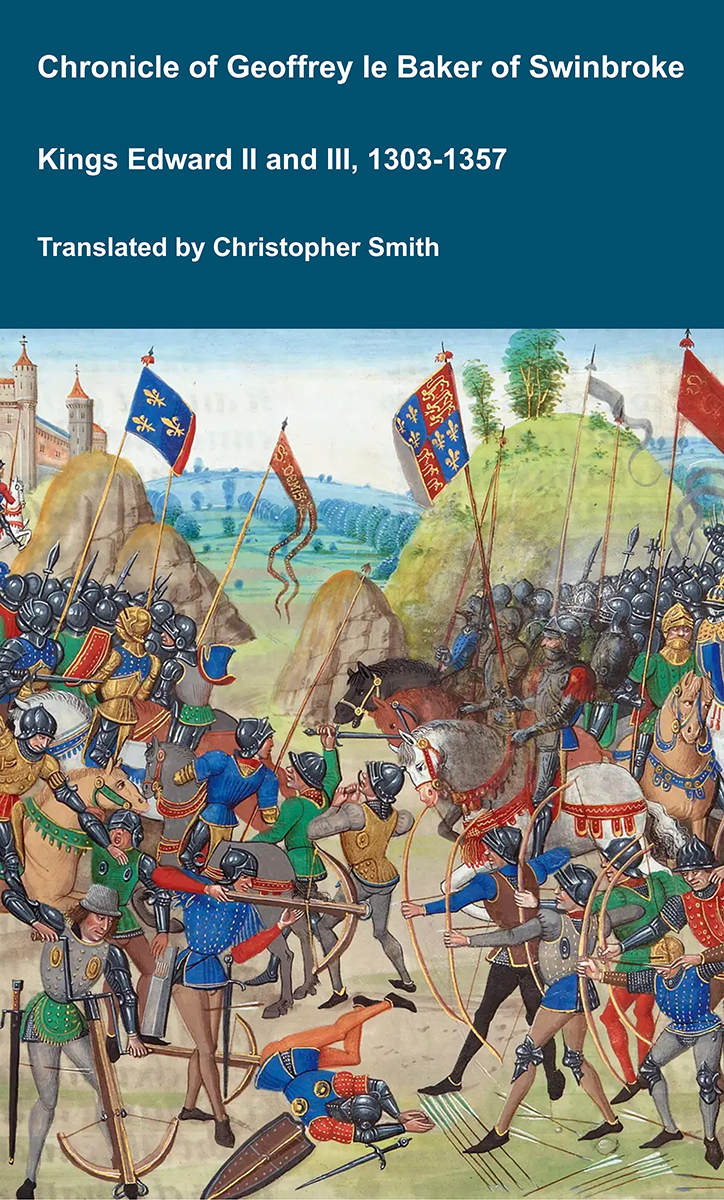 Chronicle of Geoffrey le Baker of Swinbroke [-1360]. In the year of Christ 1314, and the seventh year of the reign of the same king, the English army, growing impatient with the injuries inflicted by Robert the Bruce and the treacherous supporters of his conspiracy against the King of England in Scotland, gathered under the command of the king near the Scottish settlement called Stirling by the natives, on the eve of the Nativity of St. John the Baptist [23rd June 1314]. There, in great pomp, the English force, which had until then been accustomed to waging war on horseback, brought forth an array of galloping destriers, shining armour, and a vast host of knights. Their recklessly overconfident boldness, indulging itself with the promise of victory, which the Ruler of all customarily bestows upon those who despair in their own strength, was so assured of its own security that, beyond the necessary abundance of warhorses, arms, and provisions, they even brought with them golden and silver vessels,1 the kind used to adorn the feasts of worldly princes in times of peace, carrying them as though they were merely attending a banquet rather than marching to battle.
Anno Christi MCCCXIIIJ, et ipsius regis VIJ, Anglie milicia, impaciens iniuriarum quas Robertus le Bruys et sue conspirate infidelitatis contra regem Anglie prodiciosi fautores in Scocia perpetrarunt, sub ducatu regis iuxta pagum Scocie, quem Strivelyn indigene nuncuparunt, se coadunavit, in vigilia Nativitatis sancti Iohannis Baptiste. Illuc Anglicorum pompa, usque tunc solita in equis belligerare, copias adduxit cursantium dextrariorum, armorum radiancium, miliciamque copiosam, cuius temeritas nimium presumptuosa, sibi ipsi blandiendo promittens victoriam quam de suis viribus desperantibus solet Imperator universi conferre, de sua securitate adeo fuerat confisa ut, preter necessariam reii militari equorum et armorum atque victualium habundanciam, vasa quoque aurea et argentea, quibus qualibus pacis tempore solent mundi principum convivia luxuriare, secum facerent deferrii.
Note 1. The Monk of Malmesbury, Vita Edward II, 206.
Rymer's Fœdera Volume 2. Concerning the expenses in the capture of Thomas de Gournay.
The King, to his treasurer and chamberlains, greeting.
Deliver, from our treasury, to our beloved Ferand (Fernando) Ivaynes de Greynoun, squire, who lately came to us from the parts of Spain to announce to us the capture of Thomas Gurney, our enemy and traitor, fifty pounds for his expenses in coming to us, as said, and in returning to those parts.
Witness the King, at Norwich, the 23rd day of June [1331].
By the King himself.
Super expensis in captione Thoma de Gournay.
Rex, thesaurario & camerariis suis, salutem. Liberate, de thesauro nostro, dilecto nobis, Ferando Ivaynes de Greynoun, scutifero, qui nuper ad nos de partibus Ispanniæ venit, de nunciando nobis captionem Thomæ Gurney, inimici & proditoris nostri, quinquaginta libras super expensis suis, in veniendo ad nos, ut est dictum, & ad dictas partes redeundo.
Teste Rege, apud Norwicum, xxiii. die Junii.
Per ipsum Regem.
 Become a Member via our Buy Me a Coffee page to read more.
William of Worcester's Chronicle of England
William of Worcester, born around 1415, and died around 1482 was secretary to John Fastolf, the renowned soldier of the Hundred Years War, during which time he collected documents, letters, and wrote a record of events. Following their return to England in 1440 William was witness to major events. Twice in his chronicle he uses the first person: 1. when writing about the murder of Thomas, 7th Baron Scales, in 1460, he writes '… and I saw him lying naked in the cemetery near the porch of the church of St. Mary Overie in Southwark …' and 2. describing King Edward IV's entry into London in 1461 he writes '… proclaimed that all the people themselves were to recognize and acknowledge Edward as king. I was present and heard this, and immediately went down with them into the city'. William’s Chronicle is rich in detail. It is the source of much information about the Wars of the Roses, including the term 'Diabolical Marriage' to describe the marriage of Queen Elizabeth Woodville’s brother John’s marriage to Katherine, Dowager Duchess of Norfolk, he aged twenty, she sixty-five or more, and the story about a paper crown being placed in mockery on the severed head of Richard, 3rd Duke of York.
Available at Amazon in eBook and Paperback format.
On 23rd June 1385 Stephen Count Palatine Simmern 1385-1459-Zweibrücken was born to Rupert King Germany (age 33).
The Deposition of King Richard II. Then the mariners hoisted sail without delay, and in less than two days we came in sight of the tower of Waterford, in Ireland; where the wretched and filthy people, some in rags, others girt with a rope, had the one a hole, the other a hut for their dwelling. These were forced to carry great burdens, and to go into the water up to their waists, for the speedy unloading of the barges from the sea. For the king and his men were now in the city, where he was kindly received by the common people and merchants. He took the field six days after with the English, who rode boldly in close order to Kilkenny, eighty miles up the country, in the neighbourhood of the enemy. There the king and his friends waited fourteen days for the succours of the Earl of Rutland, who behaved in an evil and strange manner throughout the whole of his course. Every man at the outset had made the best provision that he could of bread, wine, and corn; and early on a summer's morning, the very vigil of Saint John,m [23rd June 1399] the king marched directly towards Macmore, who would neither submit, nor obey him in any way, but affirmed that he was the rightful king of Ireland, and that he would never cease from war and the defence of his country till his death; he said that the wish to deprive him of it by conquest was unlawful. Then the king prepared to go into the depth of the deserts in search of him. For his abode is in the woods,n where he is accustomed to dwell at all seasons; and he had with him, according to report, three thousand hardy men. Wilder people I never saw; they did not appear to me to be much dismayed at the English.
Note m. June 23d. He seems to have timed the commencement of his operations so as to enter upon them under the auspices and protection of Saint John the Baptist, who was his patron saint. Frequent allusions are found to this fact. Indeed he had two other patrons in the calendar, King Edmund, and Edward the Confessor. In an old picture painted in 1377, and engraved by Hollar in 1639, he is represented kneeling by these three saints, and addressing his devotions to the Virgin. His will is prefaced in the name of the Trinity, the Virgin, Saint John the Baptist, and Saint Edward the Confessor.
Note n. "As the woods and mountains were proper places for out-lawes and theeves, so were they their naturall castells and fortifications; thither they drave their preyes and stealthes; there they lurkt, and lay in waite to doe mischiefe. These fast-places they kept unknowne, by making the wayes and entries thereunto impassable; there they kept their creaghts or heardes of cattle, living by the milk of the cowe without husbandry or tillage. "Sylvis pro castris; paludibus utitur pro fossatis," i.e. "He uses woods for castles; he uses marshes for ditches." says Giraldus.
Become a Member via our Buy Me a Coffee page to read more.
On 23rd June 1456 Margaret Oldenburg Queen Consort Scotland was born to Christian I King of Denmark (age 30) and Dorothea of Brandenburg (age 25). She married July 1469 King James III of Scotland, son of King James II of Scotland and Mary of Guelders Queen Consort Scotland, and had issue.
Patent Rolls. 23rd June 1463. Inspeximus and confirmation to the mayor, bailiffs and burgesses of Clyfton, Dertmuth and Hardenesse of (1) letters patent dated 14 December, 2 Richard II. inspecting and confirming a charter dated at the Tower of London, 14 April, 15 Edward III. [Charter Roll, 15 Edward III. No. 18,] and (2) a charter dated at Westminster, 5 November, 17 Richard II. [Charter Noll, 15-17 Richard II. No. 10]; and grant that the adjoining township of Southtouudertemouth shall henceforth be annexed to the said borough of Cliftondertemouth Hardenasse, in consideration of the fact that the burgesses keep watches against invaders on the confines of the township and beyond at a place called 'Galions Boure' but the inhabitants of the township contribute nothing because they do not enjoy the liberties of the borough. The mayor and bailiffs shall have return of writs and execution thereof within the said township and the liberty of the borough, saving always the right of the lord of the fee of the township, and all pleas real and personal and attachments and fines and amercements, and also view of frauk-pledge and all that peitains to it. And they may acquire, in mortmain, after inquisition, lands, tenements, rents and other possessions, not held in chief, to the value of 201. yearly. Witnesses: Th. archbishop of Canterbury (age 45), W. archbishop of York (age 75), G. Bishop of Exeter (age 31), the chancellor, J. Bishop of Carlisle, the king's brothers George, duke of Clarence (age 13), and Richard, duke of Gloucester (age 10), the king's kinsmen Richard, Earl of Warwick (age 34), and John, Earl of Worcester (age 36), treasurer of England, Robert Styllyngton (age 43), king's clerk, keeper of the privy seal, and William Hastynges of Hastynges (age 32), the king's chamberlain, and John Wenlok of Wenlok (age 63), knights.
On 23rd June 1467 the Tournament was brought to a premature close following the announcement of the death of the Bastard's (age 46) father Philip "Good" Valois III Duke Burgundy (deceased).
Excerpta Historica Page 246. In the name of our Lord, Amen. I, Antony Widevile (age 43), &c. in hole mynd and fressh' memory, in the Castell of Shiryfhoton' [Map] the XXIIJ day of Juyn [23rd June 1483], and the vigill of Seint Joh'n Baptyst, the yere of our Lord M1 CCCCLXXXIIJ, make my testament and last will in the forme folowyng.
Furst I bequeith my soule unto the grete m'cy of Ih'u Crist, and to his dere moder our Lady Seint Mary, and to the glorious company of hevyn; and my hert to be had to our' Lady of Pewe beside Seint Stephyns College at Westmynster, there to be buried by thadvyse of the Deane and his brethern'; and if I dy be yend Trent, than to be buried before our' Lady of Pewe aforseid.
Also I will that all such land as was my lord my faders, remayne holy to his right heyres; wt my cupp of gold of columbyne, which was lefte me by bequest to that entent it shuld' remayne to the right heires of my seid lord my faders: and such londes as were the Lady Scalis my fyrst wyfe, be unto my brother Syr Edward and to his heyris male ; for faut of such heyres male, unto the right heyres of my seid lord my fadre. This is my will and entent therin, to take effecte as ferre as consciens and law will, and that to be sene and determyned by ij doctours of London and ij of Oxford and of Cambrigge, or doctors at the lest, wt ij of the chefe Juges and ij of theldest s'jauntes of the lawe: and if they fynde that this myn entent may not with conscience and lawe, and any part therof, that it be guydid after their' demyng: and if they think that my seid brother may have it all, or for fawt of hym ony of my seid lord my fadre heires, he that shal have the lond to pay or he have possession v. c. marcas, that to be employed for the soules of my last wyfe Lady Scalys and Thomas hyr brother, and the soules of all the Scales blode, in helping and refresshing hospitalles and other dedes charitable: and if all the land may not be so had, than to pay but aft' the rate of such lond as I may bequeith.
Also I will that all my goodes goo to the paying of my dettes. And all my fee simpill lond, that is to sey the maner of Tyrington hall in Middylton' with the hundreth of Frebrigge, the man' of Wolv'ton' wt thadvowson' in the counte of Norfolke, the maner of Rokey in Barway in the counte of Hertford; to be sold to the same entent, and for to make an hospitall at Rowchestyr for xiij pou' folkes, and other dedes of charite, as to pay prisoners fees and small dettes, to visett the prisones of London', and help to bury the dede, wt other werkes of mercy. And as for my dettes I knowlege I owe to the bisshop of Worcester lx li. which I will he be truely paid.
Also I knowlege that I owe a somme of mony to Lomner mercer of London, as it wele apperith both by his billes and by my boke in my closett at London', which I wyll be content after consciens.
Also I knowlege that I owe abowght xl li. to Ocles Mayce goldsmyth, as Butsyde of London' and Griffith my servaunt can' tell, which Coles I wilbe truely content.
Also I knowlege that I owe to the Mayo' of Lynne, and to divers creditours in Norfolk, and to Abrey drap of Norwich, s'teyn' sommes of money, as apperith by warauntes signid by my hand to Fyncham myn' receyvor, which shuld pay theym of my lyvelode and fees in Norfolk and Suffolk growing from Mychelmas last passid; which warantes I wilbe paid in any wyse.
Also I remembre there was a preest claymid to be executor to a boucheer of London' callid Lamye, as Andrew Dymmok knowith, and that I shuld owe the same bocheer money, which I will in any wyse be paid; and that therbe a preest founde a yere at our' Lady of Pewe, to pray for the sowle of the seid brocherer and all Cristen soules; and an other for the sowles of Syr Henry Lowes; and a preest to be fowde to syng at the Chapell of the Rodes in Grenewich, to pray for my soule and all Xp'en sowlys: and that my wyfe have all such plate as was the same Henry Lowes, and other of my plate to the valure of asmoche thing as I hadd of his; also that she have all such plate as was geven hyr at our' mariage, and the sparver of white sylke wt iiij peyre of shetes, ij payre of fustians, a federbed, j chambring of gresylde; and (except that stuffe) all other stuffe of howsehold in the Mote and at my place in the Vyntree, to be to my seid lord my faders heyres, advising theym on Goddes behalve that thabbot of Seint Jamys beside Northampton', and the Nonnes beside Caunturbury, be allwey dewley answerd of their' claymes, and Syr Joh'n Gilford to [be] contentet, as it apperith by the evidences that Richard Haute hath.
Also I will that Seint Mary of York have my grete gilt basons, and such a somme of money as myn executours shall think goode, to pray for my soule.
Also I owe to Syr Thomas Vaughan cc marc' wherof I have paid xx marc' here in the north, and he hath to plegge my balys in colombyne with v. perles.
Also I will that all my household serv'ntes in the chekyr roll' have trewly ther wages for Mydsom' quarter, and every one a blak gowne. And as I remembyr I owe Willam Butler xx.s' which I will he be paid. And as for myn evidences, Andrewe Dvmmok knowyth them, and canne shewe how all my lond standith: and if Will'm Aubrey, which was Coferer to the Kyng which now is whan he was Prince, Thomas Wytman, the seid Andrew Dymmok, Butsyde, and Joh'n Gryffyth, know any moo dettes that I shuld owe, I require them for to shew it : and I will myn executours in any wyse to pay to whom it be owyng; and I desire on Goddes behalve that no man int'rupt my seid executours in fulrilling this my will', as they will answere at the dredefull day of dome: geving to my seid executours power by this my seid will, to take a rekenyng and levy all such sommes of money as is owyng me, of my lyvelod, fees, annuitees, or otherwyse; and they to employe such goodes as shall come to their' handes, after this will and moost consciens, for the wele of my soule. And I will that all myn aray for my body and my horse harnes, be sold, and with the money therof be bought shyrtes and smokkes to pouer folkes: and my gowhe of tawney cloth of gold I geve to the Priour' of Royston', my trapper of blakk cloth of gold I geve to our' Lady of Walsingham.
Also I desire and charge on Goddes behalve and upon' payne of damnacion', that my feeffes make none astate nor relese, ne my tenauntes make no retorne but acording to theffect of this my last will.
Also I will that all such lond as I purchasid by the meane of Syr Jamys Molaynes preest, remayn' still wt the man' of Grafton' tovvard the fynding of the preest of tharmitage: also the londes that I purchased beside the Mote, to remayne to my lord my faders heyres.
Also I will that my Lady Willoughby, late the wyfe of Syr Gerveis Clyfton', be comond w' all by myne executours, towching such stuffes as Syr Ewan pson' of Wolverton' and other my servantes had awey from hyr place; and she to be delt wt therin and answerid acording to goode right and conscience. And I will in no wyse that the Nonnes of Blakborough' be hurt in such londes of theires as lieth w'in the Roche Fenne of Myddylton', which I late closid.
Also I will that Syr Jamys Molaynes, and Emson late Attorney of the Duchrie of Lancastre be comond w', and that it be sene if so be that I have occupied Bradon' w'out good right, that myn executours se the contentacion' and reformyng therof acording to right and conscience. And I will that thadvowson' of the parissh church of Bewdeley remayne the patronacion' therof to the right heires of my lord my fadre; theym to present to the benefice, whan it shall fawle voyde, an able preest to pray for the sowles of my seid lord my fadre, my lady my modre, my brother S' Joh'n, me, and all Cristen sowles.
Also I wull that Wyttyngton' College of London' have a somme of money to pray for my soule: and myn executours see that such tythes as I owt to have made, be answerid in the moost behofefull wyse for my sowle.
Also I will that Tybold my barbor have v mark. And I will my s'vant Jamys have xl. s.
Also I make myn executours, the Bisshop' of Lincoln' Chaunceler of Englond, the Bisshopp of Worcestyr, Husy the Chefe Juge of the Kinges Benche, Bryan the Chefe Juge of the Comyn Place, Will'm Tunstall, Robert Poynz, Richard Hawte, Wil'm Catesby, Andrew Dymmok, and Thomas Thorysby; to which all, and at the lest to thre of them, I geve full auctorite and power, and prey them at the reverence of Ih'u, to see this my will may be fulfillid. Over this, I besech humbly my Lord of Gloucestvr, in the worshipp of Cristes passhion' and for the meryte and wele of his sowle, to comfort help and assist, as supvisor (for very trust) of this testament, that myn executours may w' his pleasur' fulfill this my last will, which I have made the day aboveseid. In wittenes, Syr Thomas Gower knyght, Wil'm Tunstall, Doctor Lovell, Syr John' Esingwold vicar of Shyryfhoton', Syr Wil'm Teysedale, Thomas Wawer, preestes, and Richard Lexton' gentylman'. My will is now to be buried before an Image of our' blissid Lady Mary, w' my Lord Richard, in Pomfrete; and Ih'u have mercy of my soule, &c.
On 23rd June 1509 King Henry VIII of England and Ireland (age 17) created Knights of the Bath..
Robert Radclyffe 1st Earl of Sussex (age 26)
Henry Scrope 7th Baron Scrope of Bolton (age 27)
George Fitzhugh 7th Baron Fitzhugh (age 23)
William Blount 4th Baron Mountjoy (age 31)
Henry Daubeney 1st Earl Bridgewater (age 15)
Thomas Brooke 8th Baron Cobham (age 39)
Henry Clifford 1st Earl of Cumberland (age 16)
Maurice Berkeley 4th Baron Berkeley (age 42)
Thomas Knyvet (age 24)
Andrew Windsor 1st Baron Windsor (age 42)
Thomas Parr (age 26)
Thomas Boleyn 1st Earl Wiltshire and Ormonde (age 32)
Richard Wentworth 5th Baron Despencer (age 29)
Henry Ughtred 6th Baron Ughtred
Francis Cheney (age 28)
Henry Wyatt (age 49)
George Hastings 1st Earl Huntingdon (age 22)
Sir Thomas Metham of Metham, Yorkshire
Sir Thomas Bedingfield
John Shelton (age 32)
Either Giles Alington (age 26) or his son Giles Alington (age 10).
Sir John Trevanion
Sir William Crowmer
Sir John Heydon of Baconsthorpe in Norfolk
Henry Sacheverell (age 34).


Become a Member via our Buy Me a Coffee page to read more.
Letters and Papers Foreign and Domestic Henry VIII 1509. 23rd June 1509. 87. Edward Duke of Buckingham (age 31). To be Great Constable of England on 23 June only, viz., the day preceding the Coronation. S.B. [211.]
Letters and Papers Foreign and Domestic Henry VIII 1509. 23rd June 1509. 88. Thomas Earl of Surrey (age 66). To be Marshal of England on 23 and 24 June, the latter day being appointed for the Coronation. S.B. [212.]
Letters and Papers Foreign and Domestic Henry VIII 1528. 23rd June 1528. 4408. Thomas Hennege to Wolsey.
"Laud be Jesu, the King's grace is very merry since he came to this house, for there was none fell sick of the sweat since he came hither, and ever after dinner he shoth (shooteth?) to supper time. This morning is told me that Mistress Ann (age 27) and my Lord of Roxfort (age 25) had the sweat, and was past the danger thereof." Mr. Carre (deceased) begs you to be gracious to his sister, a nun in Wilton Abbey, to be prioress there, according to your promise. Mr. Tuke is here, and lies in the court under the King's privy chamber, so that he may come at the King's pleasure. At every meal the King sends him a dish from his table. The King will tarry here 14 days. Hunsdon [Map], 23 June.
This night, as the King went to bed, word came of the death of William Care.


Letters and Papers Foreign and Domestic Henry VIII 1528. 23rd June 1528. 4409. When I came to that part of your letter mentioning your counsel to the King for avoiding infection he thanked your Grace, and showed the manner of the infection; how folks were taken; how little danger there was if good order be observed; how few were dead of it; how Mistress Ann (Boleyn) (age 27) and my Lord Rochford (age 25) both have had it; what jeopardy they have been in by the turning in of the sweat before the time; of the endeavor of Mr. Buttes (age 42), who hath been with them in his return; and finally of their perfect recovery. He begs you will keep out of infection, and that you will use small suppers, drink little wine, "namely, that is big," and once in the week use the pills of Rasis; and if it come, to sweat moderately, and at the full time, without suffering it to run in, &c.


Letters and Papers Foreign and Domestic Henry VIII 1528. 23rd June 1528. 4409. His Highness marvellously commends the French king's religious demeanour on Corpus Christi Day against the damnable behavior of those, worse than Jews, that would do such despite to the blessed images; and he told the gentlemen of his Privy Chamber the whole manner of it, and desired me to read to them the clause concerning it in the Bishop of Bath's letter. When in the Bishop's letter I read the clause, that many noblemen in France were right sorry the king of France had not such a councillor [as Wolsey], the King said, "Yea, by God! I blame them never a deal." He liked the rest of the letter, and the French king's letter to the Pope, and to his ambassador resident in Rome, but thought the latter more effectually worded. He said he would send copies of them to Mistress Ann for her consolation. He likes the French king's letters to the Venetians for Ravenna and Cervia; and thinks, if they are put into the hands of Francis, the Pope will be more compliant, who, he is afraid, is now sticking for fear of the Emperor, by the tarrying of Mr. Stephen's letter. All being read by 11 o'clock at night, he said he would see the news about Spain today; but he has not yet come down. Generally, in going and coming, he turns into my chamber to talk with me about his book.
At this word his Highness came in, asking me how far I had done. Thereupon I put him in mind of the news from Spain, and to sign the king of Scots' letter, which he said he would do soon; and he is gone a-walking. Mr. Cary (deceased), whom I met after he had been with his wife (age 29) at Plashey [Map], is dead of the sweat. Will repair to Wolsey by short stages of ten miles, going by water through London Bridge. No earthly riches could persuade him to travel much now, as nothing causes the sweat more than much travel and the sun. Is worse than he was. Hunsdon [Map], Tuesday, 23 June 1528.
Letters and Papers Foreign and Domestic Henry VIII 1528. 23rd June 1528. Love Letters IX. 4410. Henry VIII to Anne Boleyn.
The cause of my writing at this time, good sweetheart, is only to understand of your good health and prosperity, whereof to know I would be as glad as in manner mine own; praying God that (and it be His pleasure) to send us shortly together, for I promise you I long for it, howbeit trust it shall not be long to; and seeing my darling is absent, I can no less do than to send her some flesh representing my name, which is hart's flesh for Henry, prognosticating that hereafter, God willing, you must enjoy some of mine, which, He pleased, I would were now. As touching your sister's (age 29) matter, I have caused Water Welze to write to my Lord my mind therein, whereby I trust that Eve shall not have power to deceive Adam; for surely, whatsoever is said, it cannot so stand with his honor but that he must needs take her his natural daughter now in her extreme necessity. No more to you at this time, mine own darling, but that a while I would we were together of an evening. With the hand of yours, &c.
Note. The full content of this letter may be found in the The Love Letters of Henry VIII to Anne Boleyn.
Letters and Papers Foreign and Domestic Henry VIII 1528. 23rd June 1528. R. O. 4413. R. Lord Fitzwater to Wolsey.
Care (deceased) died on Monday last, leaving vacant the stewardship of the duchy of Lancaster in Essex, the constableship of the Castle of Plashe [Map], the keeping of the two parks, and other offices in the King's gift. Asks Wolsey to obtain those above mentioned for him, as they are near his house. Signed.
Letters and Papers Foreign and Domestic Henry VIII 1540. R. O. Kaulek, 193. (The whole text.) 804. Marillac to Montmorency.
[London], 23 June [1540]: Had their posts made as good speed as the English courier, Montmorency should have known of the taking of Cromwell as soon as Wallop did. Nothing else is spoken of here, and in a week at latest the said prisoner is expected to be executed and treated as be deserves, as appears by the presages and arguments here following.
To commence with the day of his taking in the Council Chamber of the King's house at Westminster:—As soon as the Captain of the Guard declared his charge to make him prisoner, Cromwell in a rage cast his bonnet on the ground, saying to the duke of Norfolk and others of the Privy Council assembled there that this was the reward of his services, and that he appealed to their consciences as to whether he was a traitor; but since he was treated thus he renounced all pardon, as he had never thought to have offended, and only asked the King not to make him languish long. Thereupon some said he was a traitor, others that he should be judged according to the laws he had made, which were so sanguinary that often words spoken inadvertently with good intention had been constituted high treason. The duke of Norfolk having reproached him with some "villennyes" done by him, snatched off the order of St. George which he bore on his neck, and the Admiral, to show himself as great an enemy in adversity as he had been thought a friend in prosperity, untied the Garter. Then, by a door which opens upon the water, he was put in a boat and taken to the Tower without the people of this town suspecting it until they saw all the King's archers under Mr. Cheyney at the door of the prisoner's house, where they made an inventory of his goods, which were not of such value as people thought, although too much for a "compaignon de telle estoffe." The money was 7,000l. st., equal to 28,000 crs., and the silver plate, including crosses, chalices, and other spoils of the Church might be as much more. These movables were before night taken to the King's treasury—a sign that they will not be restored.
Become a Member via our Buy Me a Coffee page to read more.
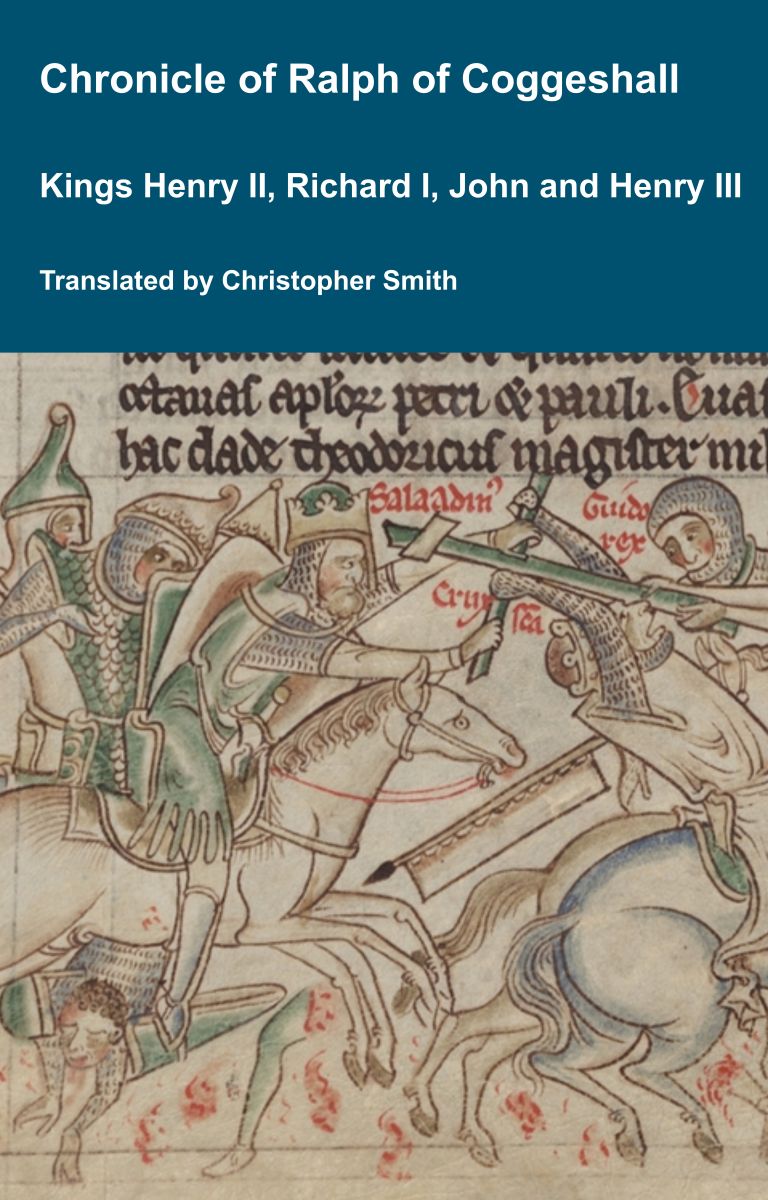
Chronicle of Abbot Ralph of Coggeshall
The Chronicle of Abbot Ralph of Coggeshall (Chronicon Anglicanum) is an indispensable medieval history that brings to life centuries of English and European affairs through the eyes of a learned Cistercian monk. Ralph of Coggeshall, abbot of the Abbey of Coggeshall in Essex in the early 13th century, continued and expanded his community’s chronicle, documenting events from the Norman Conquest of 1066 into the tumultuous reign of King Henry III. Blending eyewitness testimony, careful compilation, and the monastic commitment to record-keeping, this chronicle offers a rare narrative of political intrigue, royal power struggles, and social upheaval in England and beyond. Ralph’s work captures the reigns of pivotal figures such as Richard I and King John, providing invaluable insights into their characters, decisions, and the forces that shaped medieval rule. More than a simple annal, Chronicon Anglicanum conveys the texture of medieval life and governance, making it a rich source for scholars and readers fascinated by English history, monastic authorship, and the shaping of the medieval world.
Available at Amazon in eBook and Paperback format.
Henry Machyn's Diary. 23rd June 1559. The xxiij day of June was electyd vj nuw byshopes, com from beyond the see, master Parker (age 54) bysshope of Canturbere, master Gryndall (age 40) bysshope of London, docthur Score (age 49) bysshope of Harfford, Barlow (age 61) Chechastur, doctur Bylle of Salysbere [Note. Possibly a reference to William Bill (age 54) although he wasn't Bishop of Salisbury, doctur Cokes (age 66) (of) Norwyche [Note. He was elected but the Queen changed her mind and appointed him to Ely].


On 23rd June 1576 Levina Bening aka Teerlinc (age 61) died.
On 18th June 1603 William Skipwith (age 39) met Anne of Denmark Queen Consort Scotland England and Ireland (age 28) at Worksop Manor, and she and her son Prince Henry (age 9) went on to stay in his house at Leicester on 23rd June 1603, despite fears of plague. Princess Elizabeth (age 6) stayed at the house of Mr Pilkington.



On 23rd June 1605 Arthur Pole (age 30) was murdered in Rome, Italy [Map]. Fourteen years later his brother Geoffrey Pole (age 28) would also be murdered in Rome.

Diary of Anne Clifford. 23rd June 1616. Upon Sunday the 23rd my Lord (age 27) and I went to St. Bride's Church and heard a sermon.
Diary of Anne Clifford. 23rd June 1619. The 23rd my Lord (age 30) went up to London to take up certain bonds which he did discharge with part of my portion.
Samuel Pepys' Diary. 23rd June 1662. At noon to the Exchange [Map] to meet Dr. Williams, who sent me this morning notice of his going into the country tomorrow, but could not find him, but meeting with Frank Moore, my Lord Lambeth's man formerly, we, and two or three friends of his did go to a tavern, and there they drank, but I nothing but small beer. In the next room one was playing very finely of the dulcimer, which well played I like well, but one of our own company, a talking fellow, did in discourse say much of this Act against Seamen1, for their being brought to account; and that it was made on purpose for my Lord Sandwich (age 36), who was in debt £100,000, and hath been forced to have pardon oftentimes from Oliver for the same: at which I was vexed at him, but thought it not worth my trouble to oppose what he said, but took leave and went home, and after a little dinner to my office again, and in the evening Sir W. Warren came to me about business, and that being done, discoursing of deals, I did offer to go along with him among his deal ships, which we did to half a score, where he showed me the difference between Dram, Swinsound, Christiania, and others, and told me many pleasant notions concerning their manner of cutting and sawing them by watermills, and the reason how deals become dearer and cheaper, among others, when the snow is not so great as to fill up the values that they may pass from hill to hill over the snow, then it is dear carriage. From on board he took me to his yard, where vast and many places of deals, sparrs, and bulks, &c., the difference between which I never knew before, and indeed am very proud of this evening's work. He had me into his house, which is most pretty and neat and well furnished. After a glass, not of wine, for I would not be tempted to drink any, but a glass of mum, I well home by water, but it being late was forced to land at the Custom House and so home and to bed, and after I was a-bed, letters came from the Duke for the fitting out of four ships forthwith from Portsmouth, Hampshire [Map] (I know not yet for what) so I was forced to make Will get them wrote, and signed them in bed and sent them away by express. And so to sleep.
Note 1. In 1662 was passed "An Act for providing of carriage by land and by water for the use of His Majesty's Navy and Ordinance" (13-14 Gar. II, cap. 20), which gave power for impressing seamen, &c.


Become a Member via our Buy Me a Coffee page to read more.
Samuel Pepys' Diary. 23rd June 1664. So to the 'Change [Map], and then home to dinner and to my office, where till 10 at night very busy, and so home to supper and to bed. My cozen, Thomas Pepys, was with me yesterday and I took occasion to speak to him about the bond I stand bound for my Lord Sandwich (age 38) to him in £1000. I did very plainly, obliging him to secrecy, tell him how the matter stands, yet with all duty to my Lord my resolution to be bound for whatever he desires me for him, yet that I would be glad he had any other security. I perceive by Mr. Moore today that he hath been with my Lord, and my Lord how he takes it I know not, but he is looking after other security and I am mighty glad of it. W. Howe was with me this afternoon, to desire some things to be got ready for my Lord against his going down to his ship, which will be soon; for it seems the King (age 34) and both the Queenes (age 54) intend to visit him. The Lord knows how my Lord will get out of this charge; for Mr. Moore tells me to-day that he is £10,000 in debt and this will, with many other things that daily will grow upon him (while he minds his pleasure as he do), set him further backward. But it was pretty this afternoon to hear W. Howe mince the matter, and say that he do believe that my Lord is in debt £2000 or £3000, and then corrected himself and said, No, not so, but I am afraid he is in debt £1000. I pray God gets me well rid of his Lordship as to his debt, and I care not.


John Evelyn's Diary. 23rd June 1665. The Duke of York (age 31) told us that, when we were in fight, his dog sought out absolutely the very securest place in all the vessel. In the afternoon, I saw the pompous reception and audience of El Conde de Molino, the Spanish Ambassador, in the Banqueting-house [Map], both their Majesties [Note. King Charles II of England Scotland and Ireland (age 35) and Catherine of Braganza Queen Consort England (age 26)] sitting together under the canopy of state.


Samuel Pepys' Diary. 23rd June 1665. After the Committee was up, my Lord Sandwich (age 39) did take me aside, and we walked an hour alone together in the robe-chamber, the door shut, telling me how much the Duke (age 31) and Mr. Coventry (age 37) did, both in the fleete and here, make of him, and that in some opposition to the Prince (age 45); and as a more private message, he told me that he hath been with them both when they have made sport of the Prince and laughed at him: yet that all the discourse of the towne, and the printed relation, should not give him one word of honour my Lord thinks mighty strange; he assuring me, that though by accident the Prince was in the van the beginning of the fight for the first pass, yet all the rest of the day my Lord was in the van, and continued so. That notwithstanding all this noise of the Prince, he had hardly a shot in his side nor a man killed, whereas he hath above 30 in her hull, and not one mast whole nor yard; but the most battered ship of the fleet, and lost most men, saving Captain Smith of "The Mary". That the most the Duke did was almost out of gun-shot; but that, indeed, the Duke did come up to my Lord's rescue after he had a great while fought with four of them.

John Evelyn's Diary. 23rd June 1665. I dined with Sir Robert Paston (age 34), since Earl of Yarmouth, and saw the Duke of Verneuille (age 63), base brother to the Queen-Mother (age 55), a handsome old man, a great hunter.
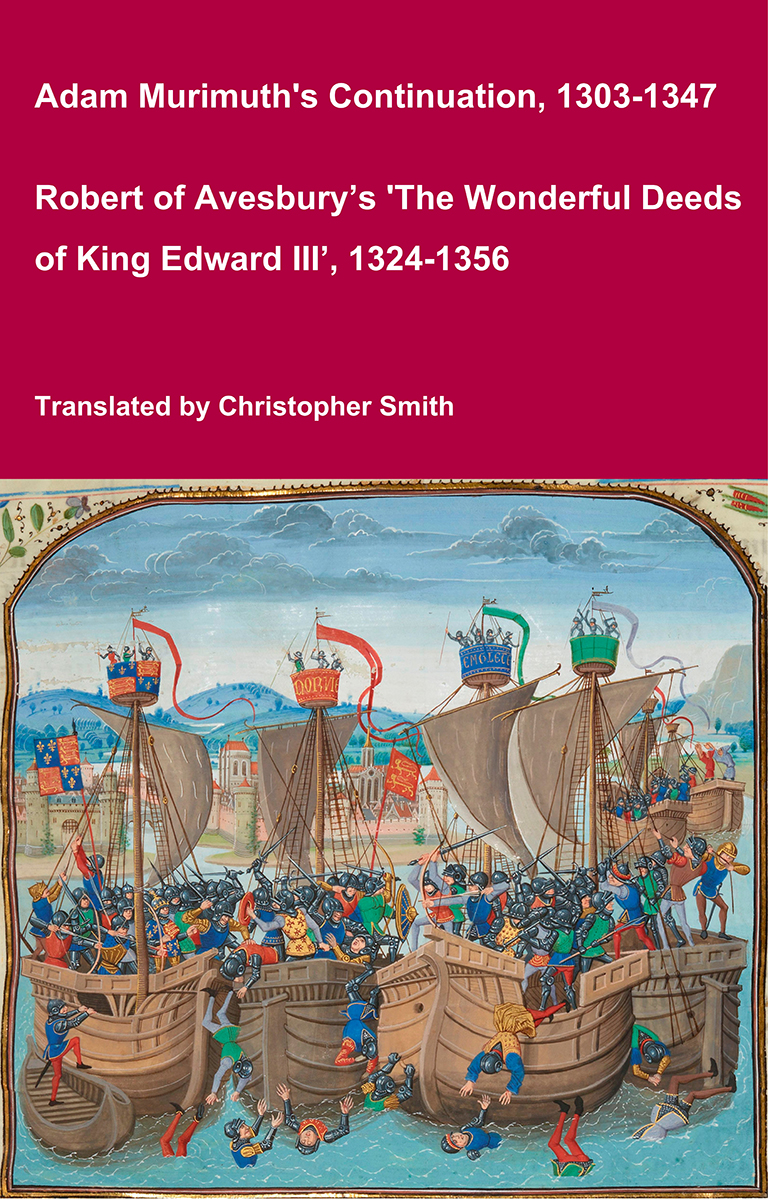
Adam Murimuth's Continuation and Robert of Avesbury’s 'The Wonderful Deeds of King Edward III'
This volume brings together two of the most important contemporary chronicles for the reign of Edward III and the opening phases of the Hundred Years’ War. Written in Latin by English clerical observers, these texts provide a vivid and authoritative window into the political, diplomatic, and military history of fourteenth-century England and its continental ambitions. Adam Murimuth Continuatio's Chronicarum continues an earlier chronicle into the mid-fourteenth century, offering concise but valuable notices on royal policy, foreign relations, and ecclesiastical affairs. Its annalistic structure makes it especially useful for establishing chronology and tracing the development of events year by year. Complementing it, Robert of Avesbury’s De gestis mirabilibus regis Edwardi tertii is a rich documentary chronicle preserving letters, treaties, and official records alongside narrative passages. It is an indispensable source for understanding Edward III’s claim to the French crown, the conduct of war, and the mechanisms of medieval diplomacy. Together, these works offer scholars, students, and enthusiasts a reliable and unembellished account of a transformative period in English and European history. Essential for anyone interested in medieval chronicles, the Hundred Years’ War, or the reign of Edward III.
Available at Amazon in eBook and Paperback format.
Samuel Pepys' Diary. 23rd June 1665. How poorly Sir John Lawson (age 50) performed, notwithstanding all that was said of him; and how his ship turned out of the way, while Sir J. Lawson himself was upon the deck, to the endangering of the whole fleete. It therefore troubles my Lord that Mr. Coventry (age 37) should not mention a word of him in his relation. I did, in answer, offer that I was sure the relation was not compiled by Mr. Coventry, but by L'Estrange, out of several letters, as I could witness; and that Mr. Coventry's letter that he did give the Duke of Albemarle (age 56) did give him as much right as the Prince (age 45), for I myself read it first and then copied it out, which I promised to show my Lord, with which he was somewhat satisfied. From that discourse my Lord did begin to tell me how much he was concerned to dispose of his children, and would have my advice and help; and propounded to match my Lady Jemimah to Sir G. Carteret's (age 55) eldest son, which I approved of, and did undertake the speaking with him about it as from myself, which my Lord liked. So parted, with my head full of care about this business.


Samuel Pepys' Diary. 23rd June 1665. Up and to White Hall to a Committee for Tangier, where his Royal Highness (age 35) was. Our great design was to state to them the true condition of this Committee for want of money, the want whereof was so great as to need some sudden help, and it was with some content resolved to see it supplied and means proposed towards the doing of it. At this Committee, unknown to me, comes my Lord of Sandwich (age 39), who, it seems, come to towne last night.
Samuel Pepys' Diary. 23rd June 1666. In the evening down to Tower Wharfe [Map]e thinking to go by water, but could not get watermen; they being now so scarce, by reason of the great presse; so to the Custome House, and there, with great threats, got a couple to carry me down to Deptford, Kent [Map], all the way reading Pompey the Great (a play translated from the French by several noble persons; among others, my Lord Buckhurst (age 23)), that to me is but a mean play, and the words and sense not very extraordinary.
Samuel Pepys' Diary. 23rd June 1667. The King of France (age 28), it is believed, is engaged for this year1 so that we shall be safe as to him. The great misery the City and kingdom is like to suffer for want of coals in a little time is very visible, and, is feared, will breed a mutiny; for we are not in any prospect to command the sea for our colliers to come, but rather, it is feared, the Dutch may go and burn all our colliers at Newcastle [Map]; though others do say that they lie safe enough there. No news at all of late from Bredagh what our Treaters do.
Note 1. Louis XIV was at this time in Flanders, with his Queen (age 28), his mistresses, and all his Court. Turenne commanded under him. Whilst Charles was hunting moths at Baroness Castlemaine's (age 26), and the English fleet was burning, Louis was carrying on the campaign with vigour. Armentieres was taken on the 28th May; Charleroi on the 2nd June, St. Winox on the 6th, Fumes on the 12th, Ath on the 16th, Toumay on the 24th; the Escarpe on the 6th July, Courtray on the 18th, Audenarde on the 31st; and Lisle on the 27th August. B.
John Evelyn's Diary. 23rd June 1673. To London, to accompany our Council who went in a body to congratulate the new Lord Treasurer (age 41), no friend to it because promoted by my Lord Arlington (age 55), whom he hated.


On 23rd June 1698 Nassau Powlett was born to Charles Paulet 2nd Duke Bolton (age 37) and Henrietta Scott aka Crofts (age 16). He a great grandson of King Charles II of England Scotland and Ireland. He married December 1731 his third cousin once removed Isabella Tufton, daughter of Thomas Tufton 6th Earl of Thanet and Catherine Cavendish Countess Isle Thanet, and had issue.


On 23rd June 1703 Marie Leszczyńska Queen Consort France was born. She married September 1725 Louis XV King France, son of Louis Bourbon Duke Burgundy and Maria Adelaide Savoy, and had issue.
On 23rd June 1733 William Villiers 3rd Earl Jersey (age 26) and Anne Egerton Duchess Bedford were married. She by marriage Countess Jersey. She the daughter of Scroop Egerton 1st Duke Bridgewater (age 51) and Elizabeth Churchill Countess Bridgewater. He the son of William Villiers 2nd Earl Jersey. They were fourth cousin once removed.
Letters of Horace Walpole. 23rd June 1752. Arlington Street. To The Hon H S Conway (age 31).
By a letter that I received from my Lady Ailesbury (age 31) two days ago, I flatter myself I shall not have occasion to write to you any more; yet I shall certainly see you with less pleasure than ever, as our meeting is to be attended with a resignation of my little charge (age 3).316 She is vastly well, and I think you will find her grown fat. I am husband enough to mind her beauty no longer, and perhaps you will say husband enough too, in pretending that my love is converted into friendship; but I shall tell you some stories at Park-place of her understanding that will please you, I trust, as much as they have done me.
My Lady Ailesbury says I must send her news, and the whole history of Mr. Seymour (age 22) and Lady Di. Egerton (age 21), and their quarrel, and all that is said on both sides. I can easily tell her all that is said on one side, Mr. Seymour's, who says, the only answer he has ever been able to get from the Duchess or Mr. Lyttelton was, that Di. has her caprices. The reasons she gives, and gave him, were, the badness of his temper and imperiousness of his letters; that he scolded her for the overfondness of her epistles, and was even so unsentimental as to talk of desiring to make her happy, instead of being made so by her. He is gone abroad, in despair, and with an additional circumstance, which would be very uncomfortable to any thing but a true lover; his father refuses to resettle the estate on him, the entail of which was cut off by mutual consent, to make way for the settlements on the marriage.
The Speaker told me t'other day, that he had received a letter from Lord Hyde, which confirms what Mr. Churchill writes me, the distress and poverty of France and the greatness of their divisions. Yet the King's expenses are incredible; Madame de Pompadour (age 30) is continually busied in finding out new journeys and diversions to keep him from falling into the hands of the clergy. The last party of pleasure she made for him, was a stag-hunting; the stag was a man in a skin and horns, worried by twelve men dressed like bloodhounds! I have read of Basilowitz, a Czar of Muscovy, who improved on such a hunt, and had a man in a bearskin worried by real dogs; a more kingly entertainment!
I shall make out a sad Journal of other news; yet I will be like any gazette, and scrape together all the births, deaths, and marriages in the parish. Lady Hartington (age 32) and Lady Rachel Walpole (age 25) are brought to bed of sons; Lord Burlington (age 58) and Lord Gower (age 57) have had new attacks of palsies: Lord Falkland (age 45) is to marry the Southwark Lady Suffolk;317 and Mr. Watson (age 23), Miss Grace Pelham (age 17). Lady Coventry (age 19) has miscarried of one or two children, and is going on with one or two more, and is gone to France to-day. Lady Townshend (age 44) and Lady Caroline Petersham (age 30) have had their anniversary quarrel, and the Duchess of Devonshire (age 53) has had her secular assembly, which she keeps once in fifty years: she was more delightfully vulgar at it than you can imagine; complained of the wet night, and how the men would dirty the rooms with their shoes; called out at supper to the Duke (age 53), "Good God! my lord, don't cut the ham, nobody will eat any!" and relating her private menage to Mr. Obnir, she said, "When there's only my lord and I, besides a pudding we have always a dish of Yeast!" I am ashamed to send you such nonsense, or to tell you how the good women at Hampton Court are scandalized at Princess Emily's (age 41) coming to chapel last Sunday in riding-clothes with a dog under her arm; but I am bid to send news: what can we do -,it such a dead time of year? I must conclude, as my Lady Gower did very well t'other day in a letter into the country, "Since the two Misses318 were hanged, and the two Misses319 were married, there is nothing at all talked of." Adieu! My best compliments and my wife's to your two ladies.
Note 315. Now first published.
Note 316. Their daughter, Ann Seymour Conway.
Note 317. Sarah, Duchess-dowager of Suffolk, daughter of Thomas Unwen, Esq. of Southwark.-E.
Note 318. Miss Blandy and Miss Jefferies.
Note 319. The Gunnings. [Maria Gunning Countess Coventry and Elizabeth Gunning Duchess Hamilton and Argyll (age 18)]
Become a Member via our Buy Me a Coffee page to read more.
On 23rd June 1768 William Henry Cavendish-Scott-Bentinck 4th Duke Portland was born to William Cavendish-Bentinck 3rd Duke Portland (age 30) and Dorothy Cavendish 3rd Duchess Portland (age 17). He married 4th August 1795 Henrietta Scott Duchess Portland and had issue.


On 23rd June 1798 Elizabeth Susan Somerset was born to Henry Charles Somerset 6th Duke Beaufort (age 31) and Charlotte Sophia Leveson-Gower Duchess Beaufort (age 27). She married Edward O'Brien and had issue.

On 23rd June 1803 John Russell 6th Duke Bedford (age 36) and Georgiana Gordon Duchess Bedford (age 21) were married. She by marriage Duchess Bedford. She the daughter of Alexander Gordon 4th Duke Gordon (age 60) and Jane Maxwell Duchess Gordon (age 55). They were sixth cousins. He a great x 2 grandson of King Charles II of England Scotland and Ireland.
The History of William Marshal was commissioned by his son shortly after William’s death in 1219 to celebrate the Marshal’s remarkable life; it is an authentic, contemporary voice. The manuscript was discovered in 1861 by French historian Paul Meyer. Meyer published the manuscript in its original Anglo-French in 1891 in two books. This book is a line by line translation of the first of Meyer’s books; lines 1-10152. Book 1 of the History begins in 1139 and ends in 1194. It describes the events of the Anarchy, the role of William’s father John, John’s marriages, William’s childhood, his role as a hostage at the siege of Newbury, his injury and imprisonment in Poitou where he met Eleanor of Aquitaine and his life as a knight errant. It continues with the accusation against him of an improper relationship with Margaret, wife of Henry the Young King, his exile, and return, the death of Henry the Young King, the rebellion of Richard, the future King Richard I, war with France, the death of King Henry II, and the capture of King Richard, and the rebellion of John, the future King John. It ends with the release of King Richard and the death of John Marshal.
Available at Amazon in eBook and Paperback format.
On 23rd June 1805 Albert Way was born to Lewis Way (age 33) and Mary Drewe at Bath, Somerset [Map].
On 23rd June 1812 Henry Beauclerk was born to William Beauclerk 8th Duke St Albans (age 45) and Maria Janetta Nelthorpe Duchess St Albans. He a great x 3 grandson of King Charles II of England Scotland and Ireland.
After 23rd June 1830 Monument to Hester Hornby.
On 23rd June 1835 Fanny Entwhistle aka Eaton was born at St Andrews, Jamaica. No father was named on Eaton's birth records, suggesting that she may have been illegitimate. Her mother Matilda Foster, a woman of African descent, was born into slavery on the Elim Estate in St Elizabeth parish, property of the Foster or Forster family. The death of a British soldier named James Entwistle, aged twenty, in nearby St Catherine's parish (burial in Spanish Town on 4 July 1835), eleven days after Fanny's birth, has been seen as suggestive that this soldier may have been Fanny's father; see Oxford Dictionary of National Biography. She married 1857 James Eaton.

The London Gazette 19629. Whitehall, June 23, 1838. The Queen has been pleased to direct letters patent to be passed under the Great Seal, granting the dignity of a Marquess of the United Kingdom of Great Britain and Ireland, unto Constantine Henry Earl of Mulgrave (age 41), and the heirs male of his body lawfully begotten, by the name, stile, and title of Marquess of Normanby, in the county of York. [Maria Liddell Marchioness Normanby (age 40) by marriage Marchioness Normanby.]
The Queen has also been pleased to direct letters patent to be passed under the Great Seal, granting the dignities of Viscount and Earl of the said United Kingdom, unto William Baron King (age 33), and the heirs male of his body lawfully begotten, by the names, stiles, and titles of Viscount Ockham, of Ockham, in the county of Surrey, and Earl of Lovelace. [Augusta Ada Byron Countess Lovelace (age 22) by marriage Countess Lovelace. She was a descendant of the previous Baron Lovelace of Hurley in Berkshire.]
The Queen has also been pleased to direct letters patent to be passed under the Great Seal, granting the dignity of an Earl of the said United Kingdom, unto Laurence Baron Dundas (age 72), and the heirs male of his body lawfully begotten, by the name, stile, and title of Earl of Zetland.
On 23rd June 1840 Arthur Pelham-Clinton was born to Henry Pelham-Clinton 5th Duke Newcastle-under-Lyne (age 29) and Susan Harriet Catherine Hamilton Duchess Newcastle under Lyne (age 26).


Ten Years' Digging. On the same day was opened a smaller barrow at Low Bent, situated on low ground about half-a-mile from the last. Near the centre was a deposit of calcined human bones, placed on the level of the natural soil, and surrounded by an irregular circle of sandstone boulders; accompanied by a piece of stag's horn worked into an oval shape, three good spear points, and two rather indefinite instruments of flint, all which had been submitted to intense heat, probably from having accompanied the remains of their owner on the funeral pile. The flints have acquired a glazed appearance from the fusion of their surfaces. At a short distance from this interment the ground appearing to have been cut out and refilled with stones, we removed them to the depth of 18 inches, when we found a second deposit of burnt human bones placed amongst the stones, without any article or weapon whatever. The ground still shewing proofs of its having been disturbed, the work was resumed, until about two feet more of stone and earth being thrown out, we had the satisfaction of arriving at the solid floor of the grave, on which lay another heap of calcined bones, with one solitary bead of jet amongst them, of very primitive form, being only a rough piece perforated. The entire depth, from the apex of the mound to the bottom of the grave, was about five feet, three feet being below the natural surface.
Ten Years' Digging. On the 23rd of June we made an unsuccessful examination of the third barrow at Booth Low, situated near the last [Note. Either Booth Low Barrow 2 [Map] or Booth Low Barrow 3 [Map]]. With the exception of a few pieces of charcoal, there were no indications of interment observed during the progress of a very large cutting through the centre, which was extended to a slight depression below the natural surface, making the entire depth from the top of the mound rather more than eight feet.
Ten Years' Digging. 23rd of June we opened a small low barrow [Probably Chelmorton Barrow 3 [Map]] in the neighbourhood of the last, which covered a rock grave three feet deep, the irregular shape of which was corrected by an interior lining of stone slabs. It was chiefly filled with stones, but had a layer of tempered earth above and below them: the latter had the nature of exceedingly tenacious clay, and in it was imbedded the skeleton of a tall man of middle age, who lay extended on his back with the head raised and pointing to the west; the hands, with the fingers extended, were placed on the thighs; an iron knife much corroded lay in an oblique direction across the left side of the pelvis, and was itself crossed by the bones of the wrist. The right femur had been fractured about 6 inches below the neck, but had firmly reunited, apparently with the effect of shortening the limb, Parallel with the right side of the body, for its whole length, was a ridge of dark-coloured earth so remarkably dense that we could not detect the substances of which it was composed in any part excepting between the right humerus and the ribs, where it contained remains of wood and of animal's skin, the earth separating with ease where the latter had been folded, and exhibiting a hairy surface almost as perfect as would be shown by a recent hide under the same circumstances of damp and pressure, colour alone excepted. Although there was a hard mass of tempered earth above the grave, a few water rats had left their bones near those of this Saxon.

On 23rd June 1861 Henry George Grosvenor was born to Hugh Lupus Grosvenor 1st Duke Westminster (age 35) and Constance Leveson-Gower Duchess Westminster (age 27). Coefficient of inbreeding 7.06%. He married 21st April 1887 Dora Mina Erskine-Wemyss and had issue.
William of Worcester's Chronicle of England
William of Worcester, born around 1415, and died around 1482 was secretary to John Fastolf, the renowned soldier of the Hundred Years War, during which time he collected documents, letters, and wrote a record of events. Following their return to England in 1440 William was witness to major events. Twice in his chronicle he uses the first person: 1. when writing about the murder of Thomas, 7th Baron Scales, in 1460, he writes '… and I saw him lying naked in the cemetery near the porch of the church of St. Mary Overie in Southwark …' and 2. describing King Edward IV's entry into London in 1461 he writes '… proclaimed that all the people themselves were to recognize and acknowledge Edward as king. I was present and heard this, and immediately went down with them into the city'. William’s Chronicle is rich in detail. It is the source of much information about the Wars of the Roses, including the term 'Diabolical Marriage' to describe the marriage of Queen Elizabeth Woodville’s brother John’s marriage to Katherine, Dowager Duchess of Norfolk, he aged twenty, she sixty-five or more, and the story about a paper crown being placed in mockery on the severed head of Richard, 3rd Duke of York.
Available at Amazon in eBook and Paperback format.
On 23rd June 1875 Evelyne Chandos-Pole (age 18) died. She was buried at St Andrew's Church, Radbourne [Map].
Evelyne Chandos-Pole: On 18th July 1856 she was born to Edward Sacheverell Chandos-Pole and Anna Caroline Stanhope.
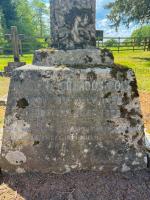
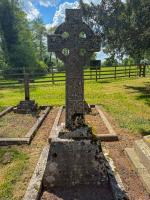
On 23rd June 1876 Matthew Noble (age 59) died at his home 43 Abingdon Villas, Kensington. He was buried at Brompton Cemetery, Kensington.
On 23rd June 1894 King Edward VIII of the United Kingdom was born to King George V of the United Kingdom (age 29) and Victoria Mary Teck Queen Consort England (age 27). Coefficient of inbreeding 1.86%. He married 3rd June 1937 Wallis Warfield aka Simpson Duchess of Windsor.


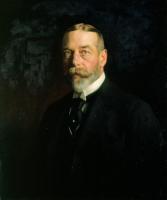


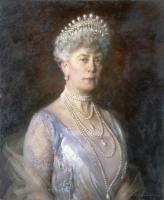


On 23rd June 1908 Jaime Bourbon was born to Alfonso XIII King Spain (age 22) and Victoria Eugénie Mountbatten Queen Consort Spain (age 20). She a great granddaughter of Queen Victoria of the United Kingdom.

On 23rd June 1909 George Poulett 8th Earl Poulett was born to William John Lydston Poulett 7th Earl Poulett (age 25) and Sylvia Storey Countess Poulett (age 19). He married (1) 1935 Muriel Mary Swinstead aka Oriel Ross Countess Poulett (2) 1941 Olga Lorraine Lawrence Countess Poulett (3) 1968 Margaret Christine Ball Countess Poulett.
On 23rd June 1923 Brigadier-General Alington Bewicke-Copley (age 68) died of pneumonia at Sprotbrough Hall.

On 23rd June 1941 Sarah Margaret Fitzalan was born to Bernard Fitzalan 16th Duke of Norfolk (age 33) and Lavinia Mary Strutt Duchess Norfolk (age 25).
On 23rd June 1987 Mary Cambridge Duchess Beaufort (age 90) died.
On 23rd June 47BC Ptolemy XV Ceasar aka Caesarion 47BC 30BC was born to Gaius Julius Caesar 100BC 44BC and Cleopatra VII Philopator 69BC 30BC (age 22).
On 23rd June 1385 Stephen Count Palatine Simmern 1385-1459-Zweibrücken was born to Rupert King Germany (age 33).
Anne Boleyn. Her Life as told by Lancelot de Carle's 1536 Letter.
In 1536, two weeks after the execution of Anne Boleyn, her brother George and four others, Lancelot du Carle, wrote an extraordinary letter that described Anne's life, and her trial and execution, to which he was a witness. This book presents a new translation of that letter, with additional material from other contemporary sources such as Letters, Hall's and Wriothesley's Chronicles, the pamphlets of Wynkyn the Worde, the Memorial of George Constantyne, the Portuguese Letter and the Baga de Secrets, all of which are provided in Appendices.
Available at Amazon in eBook and Paperback format.
On 23rd June 1456 Margaret Oldenburg Queen Consort Scotland was born to Christian I King of Denmark (age 30) and Dorothea of Brandenburg (age 25). She married July 1469 King James III of Scotland, son of King James II of Scotland and Mary of Guelders Queen Consort Scotland, and had issue.
On 23rd June 1620 Samuel Barnardiston 1st Baronet was born to Nathaniel Barnardiston (age 32) and Jane Soame.

On 23rd June 1622 Richard Cust 1st Baronet was born. He married 1644 Beatrice Pury Lady Dering and had issue.

On 23rd June 1654 Richard Onslow 1st Baron Onslow was born to Arthur Onslow 1st and 2nd Baronet (age 30) and Mary Foote (age 23). He married 31st August 1676 Elizabeth Tulse and had issue.
On 23rd June 1679 Cholmley Dering 4th Baronet was born to Edward Dering 3rd Baronet (age 29) and Elizabeth Cholmley Lady Dering (age 15). He married 17th July 1704 Ellen aka Mary Fisher Lady Dering and had issue.
On 23rd June 1689 George Henry Hay 8th Earl Kinnoull was born to Thomas Hay 7th Earl Kinnoull (age 29). He married 1st September 1709 Abigail Harley Countess Kinnoul, daughter of Robert Harley 1st Earl of Oxford and Earl Mortimer and Elizabeth Foley Countess of Oxford and Mortimer, and had issue.
On 23rd June 1698 Nassau Powlett was born to Charles Paulet 2nd Duke Bolton (age 37) and Henrietta Scott aka Crofts (age 16). He a great grandson of King Charles II of England Scotland and Ireland. He married December 1731 his third cousin once removed Isabella Tufton, daughter of Thomas Tufton 6th Earl of Thanet and Catherine Cavendish Countess Isle Thanet, and had issue.
On 23rd June 1703 Marie Leszczyńska Queen Consort France was born. She married September 1725 Louis XV King France, son of Louis Bourbon Duke Burgundy and Maria Adelaide Savoy, and had issue.
On 23rd June 1716 Fletcher Norton 1st Baron Grantley was born to Thomas Norton of Grantley in Yorkshire (age 33). He married 21st May 1741 Grace Chapple Baroness Grantley and had issue.
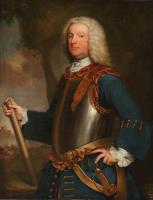
On 23rd June 1741 Richard Onslow 1st Baronet was born to Lieutenant-General Richard Onslow (age 44).
Jean de Waurin's Chronicle of England Volume 6 Books 3-6: The Wars of the Roses
Jean de Waurin was a French Chronicler, from the Artois region, who was born around 1400, and died around 1474. Waurin’s Chronicle of England, Volume 6, covering the period 1450 to 1471, from which we have selected and translated Chapters relating to the Wars of the Roses, provides a vivid, original, contemporary description of key events some of which he witnessed first-hand, some of which he was told by the key people involved with whom Waurin had a personal relationship.
Available at Amazon in eBook and Paperback format.
On 23rd June 1741 William Trench 1st Earl of Clancarty was born. He married 30th October 1762 Anne Gardiner.
On 23rd June 1742 Anne Hill Countess Mornington was born to Arthur Hill aka Hill-Trevor 1st Viscount Dungannon (age 48). She married 6th February 1759 Garrett Wellesley 1st Earl Mornington, son of Richard Colley aka Wesley 1st Baron Mornington and Elizabeth Sale, and had issue.
On 23rd June 1768 William Henry Cavendish-Scott-Bentinck 4th Duke Portland was born to William Cavendish-Bentinck 3rd Duke Portland (age 30) and Dorothy Cavendish 3rd Duchess Portland (age 17). He married 4th August 1795 Henrietta Scott Duchess Portland and had issue.

On 23rd June 1785 Charles Augustus North was born to Bishop Brownlow North (age 43) and Henrietta Maria Bannister (age 35).
On 23rd June 1798 Elizabeth Susan Somerset was born to Henry Charles Somerset 6th Duke Beaufort (age 31) and Charlotte Sophia Leveson-Gower Duchess Beaufort (age 27). She married Edward O'Brien and had issue.
On 23rd June 1800 George Edgecumbe was born to Richard Edgecumbe 2nd Earl of Mount Edgcumbe (age 35) and Sophia Hobart Countess Mount Edgcumbe (age 32). He married 19th May 1834 Fanny Lucy Shelley, daughter of John Shelley 6th Baronet and Frances Wickley Lady Shelley, and had issue.
On 23rd June 1805 Albert Way was born to Lewis Way (age 33) and Mary Drewe at Bath, Somerset [Map].
On 23rd June 1812 Henry Beauclerk was born to William Beauclerk 8th Duke St Albans (age 45) and Maria Janetta Nelthorpe Duchess St Albans. He a great x 3 grandson of King Charles II of England Scotland and Ireland.
On 23rd June 1829 Edmund George Petre was born to William Henry Francis Petre 11th Baron Petre (age 36) and Emma Agnes Howard (age 25).
On 23rd June 1829 Hedworth Jolliffe 2nd Baron Hylton was born to William Jolliffe 1st Baron Hylton (age 28) and Eleanor Paget. He married (1) 1858 his second cousin Agnes Mary Georgiana Byng, daughter of George Byng 2nd Earl Strafford and Agnes Paget, and had issue.
Anne Boleyn. Her Life as told by Lancelot de Carle's 1536 Letter.
In 1536, two weeks after the execution of Anne Boleyn, her brother George and four others, Lancelot du Carle, wrote an extraordinary letter that described Anne's life, and her trial and execution, to which he was a witness. This book presents a new translation of that letter, with additional material from other contemporary sources such as Letters, Hall's and Wriothesley's Chronicles, the pamphlets of Wynkyn the Worde, the Memorial of George Constantyne, the Portuguese Letter and the Baga de Secrets, all of which are provided in Appendices.
Available at Amazon in eBook and Paperback format.
On 23rd June 1835 Fanny Entwhistle aka Eaton was born at St Andrews, Jamaica. No father was named on Eaton's birth records, suggesting that she may have been illegitimate. Her mother Matilda Foster, a woman of African descent, was born into slavery on the Elim Estate in St Elizabeth parish, property of the Foster or Forster family. The death of a British soldier named James Entwistle, aged twenty, in nearby St Catherine's parish (burial in Spanish Town on 4 July 1835), eleven days after Fanny's birth, has been seen as suggestive that this soldier may have been Fanny's father; see Oxford Dictionary of National Biography. She married 1857 James Eaton.
On 23rd June 1840 Arthur Pelham-Clinton was born to Henry Pelham-Clinton 5th Duke Newcastle-under-Lyne (age 29) and Susan Harriet Catherine Hamilton Duchess Newcastle under Lyne (age 26).
On 23rd June 1841 Arthur Charles Lewin Cadogan was born to Henry Cadogan 4th Earl Cadogan (age 29) and Mary Sarah Wellesley Countess Cadogan (age 32). Coefficient of inbreeding 6.25%. He married 9th April 1870 Alice Charlotte Arabin.
On 23rd June 1857 Sibyl Marcia Graham Baroness Houghton was born to Frederick Ulric Graham 3rd Baronet (age 37) and Jane Hermione Seymour Lady Graham (age 25). Coefficient of inbreeding 3.57%. She married 3rd June 1880 Robert Offley Ashburton Crewe Milnes 1st Marquess of Crewe, son of Robert Moncton Milnes 1st Baron Houghton and Annabella Hungerford Crewe, and had issue.

On 23rd June 1857 Alice Marion Harbord Baroness Hillingdon was born to Charles Harbord 5th Baron Suffield (age 27) and Cecilia Annetta Baring Baroness Suffield (age 23). She married 1886 her half fourth cousin once removed Charles Mills 2nd Baron Hillingdon, son of Charles Mills 1st Baron Hillingdon and Louisa Isabella Lascelles Baroness Hillingdon, and had issue.
On 23rd June 1861 Henry George Grosvenor was born to Hugh Lupus Grosvenor 1st Duke Westminster (age 35) and Constance Leveson-Gower Duchess Westminster (age 27). Coefficient of inbreeding 7.06%. He married 21st April 1887 Dora Mina Erskine-Wemyss and had issue.
On 23rd June 1880 Archibald Montgomerie 16th Earl of Eglinton was born to George Montgomerie 15th Earl of Eglinton (age 32). He married (1) 1st June 1908 Beatrice Susan Dalrymple Countess Eglinton, daughter of John Dalrymple 11th Earl of Stair and Susan Harriet Grant-Suttie, and had issue.
On 23rd June 1894 King Edward VIII of the United Kingdom was born to King George V of the United Kingdom (age 29) and Victoria Mary Teck Queen Consort England (age 27). Coefficient of inbreeding 1.86%. He married 3rd June 1937 Wallis Warfield aka Simpson Duchess of Windsor.

On 23rd June 1904 Nigel Reginald Victor Glyn 5th Baron Wolverton was born to Frederic Glyn 4th Baron Wolverton (age 39) and Edith Amelia Ward Baroness Wolverton (age 31).
On 23rd June 1906 Mark Chandos Auberon Henniker 8th Baronet was born to Frederick Chandos Henniker (age 39).
On 23rd June 1907 Margaret Lane Countess Huntingdon was born. She married 14th February 1944 Francis Hastings 16th Earl Huntingdon, son of Warner Hastings 15th Earl Huntingdon and Maud Margaret Wilson Countess Huntingdon.
Henrici Quinti, Angliæ Regis, Gesta, is a first-hand account of the Agincourt Campaign, and subsequent events to his death in 1422. The author of the first part was a Chaplain in King Henry's retinue who was present from King Henry's departure at Southampton in 1415, at the siege of Harfleur, the battle of Agincourt, and the celebrations on King Henry's return to London. The second part, by another writer, relates the events that took place including the negotiations at Troye, Henry's marriage and his death in 1422.
Available at Amazon in eBook and Paperback format.
On 23rd June 1908 Jaime Bourbon was born to Alfonso XIII King Spain (age 22) and Victoria Eugénie Mountbatten Queen Consort Spain (age 20). She a great granddaughter of Queen Victoria of the United Kingdom.
On 23rd June 1909 George Poulett 8th Earl Poulett was born to William John Lydston Poulett 7th Earl Poulett (age 25) and Sylvia Storey Countess Poulett (age 19). He married (1) 1935 Muriel Mary Swinstead aka Oriel Ross Countess Poulett (2) 1941 Olga Lorraine Lawrence Countess Poulett (3) 1968 Margaret Christine Ball Countess Poulett.
On 23rd June 1926 Ian George Eden 9th Baron Auckland was born to Major Terence Eden 8th Baron Auckland (age 33) and Evelyn Vane Drummond of Cromlix Baroness Auckland (age 21). Coefficient of inbreeding 6.30%.
On 23rd June 1941 Sarah Margaret Fitzalan was born to Bernard Fitzalan 16th Duke of Norfolk (age 33) and Lavinia Mary Strutt Duchess Norfolk (age 25).
On 23rd June 1946 Virginia Carrington Baroness Ashcombe was born to Peter Carrington 6th Baron Carrington (age 27). She married (1) 1st January 1973 Henry Edward Cubitt 4th Baron Ashcombe, son of Roland Cubitt 3rd Baron Ashcombe and Sonia Rosemary Keppel.
On 23rd June 1303 Robert VII Auvergne XII Count Auvergne (age 21) and Blanche Bourbon (age 22) were married. She the daughter of Robert Bourbon 1st Count Clermont (age 47) and Beatrice Burgundy (age 46).
On 23rd June 1690 Joseph Alston 3rd Baronet (age 25) and Penelope Evelyn Lady Alston (age 17) were married. She by marriage Lady Alston of Chelsea. They had twenty-two children.
On 23rd June 1707 Brook Bridges 1st Baronet (age 27) and Margaret Marsham were married.
On 23rd June 1713 John Shute aka Barrington 1st Viscount Barrington (age 35) and Anne Daines Viscountess Barrington (age 23) were married.
On 23rd June 1730 Wyndham Knatchbull-Wyndham 5th Baronet (age 30) and Catherine Harris Lady Knatchbull were married. She by marriage Lady Knatchbull of Mersham Hatch in Kent.
The Deeds of the Dukes of Normandy
The Gesta Normannorum Ducum [The Deeds of the Dukes of Normandy] is a landmark medieval chronicle tracing the rise and fall of the Norman dynasty from its early roots through the pivotal events surrounding the Norman Conquest of England. Originally penned in Latin by the monk William of Jumièges shortly before 1060 and later expanded at the behest of William the Conqueror, the work chronicles the deeds, politics, battles, and leadership of the Norman dukes, especially William’s own claim to the English throne. The narrative combines earlier historical sources with firsthand information and oral testimony to present an authoritative account of Normandy’s transformation from a Viking settlement into one of medieval Europe’s most powerful realms. William’s history emphasizes the legitimacy, military prowess, and governance of the Norman line, framing their expansion, including the conquest of England, as both divinely sanctioned and noble in purpose. Later chroniclers such as Orderic Vitalis and Robert of Torigni continued the history, extending the coverage into the 12th century, providing broader context on ducal rule and its impact. Today this classic work remains a foundational source for understanding Norman identity, medieval statesmanship, and the historical forces that reshaped England and Western Europe between 800AD and 1100AD.
Available at Amazon in eBook and Paperback format.
On 23rd June 1733 William Villiers 3rd Earl Jersey (age 26) and Anne Egerton Duchess Bedford were married. She by marriage Countess Jersey. She the daughter of Scroop Egerton 1st Duke Bridgewater (age 51) and Elizabeth Churchill Countess Bridgewater. He the son of William Villiers 2nd Earl Jersey. They were fourth cousin once removed.
On 23rd June 1760 Henry Hoghton 6th Baronet (age 31) and Elizabeth Ashurst were married.
On 23rd June 1774 Edward Smith-Stanley 12th Earl of Derby (age 21) and Elizabeth Hamilton Countess Derby (age 21) were married. She the daughter of James Hamilton 6th Duke Hamilton 3rd Duke Brandon and Elizabeth Gunning Duchess Hamilton and Argyll (age 40).


On 23rd June 1782 Henry Russell 1st Baronet (age 30) and Anne Barbara Whitworth Lady Russell were married. They had six sons and five daughters.
On 23rd June 1803 John Russell 6th Duke Bedford (age 36) and Georgiana Gordon Duchess Bedford (age 21) were married. She by marriage Duchess Bedford. She the daughter of Alexander Gordon 4th Duke Gordon (age 60) and Jane Maxwell Duchess Gordon (age 55). They were sixth cousins. He a great x 2 grandson of King Charles II of England Scotland and Ireland.
On 23rd June 1824 George Wombwell 3rd Baronet (age 32) and Georgiana Hunter were married.
On 23rd June 1844 Charles Stanley Monck 4th Viscount Monck (age 24) and Elizabeth Louise Mary Monck were married. She the daughter of Henry Monck 1st Earl of Rathdowne (age 58). They were first cousins.
On 23rd June 1849 William Henry Paulett 6th Earl Paulett (age 21) and Elizabeth Lavinia Newman Countess Poulett were married.
On 23rd June 1863 James Walker 2nd Baronet (age 33) and Louisa Susan Marlborough Heron-Maxwell (age 22) were married at St James' Church, Piccadilly. They had nine children.
On 23rd June 679 Æthelthryth Wuffingas Queen Consort Deira and Northumbria (age 43) died. She was buried at Ely Abbey [Map].
Jean de Waurin's Chronicle of England Volume 6 Books 3-6: The Wars of the Roses
Jean de Waurin was a French Chronicler, from the Artois region, who was born around 1400, and died around 1474. Waurin’s Chronicle of England, Volume 6, covering the period 1450 to 1471, from which we have selected and translated Chapters relating to the Wars of the Roses, provides a vivid, original, contemporary description of key events some of which he witnessed first-hand, some of which he was told by the key people involved with whom Waurin had a personal relationship.
Available at Amazon in eBook and Paperback format.
On 23rd June 1324 Aymer de Valence 2nd Earl Pembroke (age 49) died. He was buried at Westminster Abbey [Map] where his tomb effigy can still be seen as a splendid example of late gothic architecture. Earl Pembroke extinct.
On 23rd June 1361 Bishop Thomas Lisle (age 63) died.
On 23rd June 1567 Marie Seton Countess Menteith and Sutherland died at Dunrobin Castle, Dunrobin.
On 23rd June 1567 John Gordon 11th Earl Sutherland (age 42) died at Dunrobin Castle, Dunrobin. His son Alexander (age 15) succeeded 12th Earl Sutherland. Jean Gordon Countess Bothwell and Sutherland (age 21) by marriage Countess Sutherland.
On 23rd June 1576 Levina Bening aka Teerlinc (age 61) died.
On 23rd June 1600 Bishop Richard Howand (age 59) died. He was buried at Peterborough Cathedral [Map] without memorial or epitaph.
On 23rd June 1609 Jean Fleming Countess Cassilis (age 55) died.
On 23rd June 1630 William Courtenay 3rd Earl Devon (age 77) died at London. He was buried at Powderham Church Powderham, Devon. His son Francis (age 54) de jure 4th Earl Devon. Elizabeth Seymour Countess Devon (age 23) by marriage Countess Devon.
On 23rd June 1632 Henry Savile 1st Baronet (age 53) died without surviving issue. Baronet Savile of Methley extinct.
On 23rd June 1643 Edward Dudley 5th Baron Dudley (age 75) died. His granddaughter Frances (age 31) succeeded 6th Baroness Dudley. Humble Ward 1st Baron Ward of Birmingham Baron Dudley (age 29) by marriage Baron Dudley. Humble Ward 1st Baron Ward of Birmingham Baron Dudley by marriage Baron Dudley.
On 23rd June 1693 John Tempest 1st Baronet (age 48) died. His son George (age 21) succeeded 2nd Baronet Tempest of Tong in Yorkshire.
On 23rd June 1717 John Verney 1st Viscount Fermanagh (age 76) died. His son Ralph (age 34) succeeded 2nd Viscount Fermanagh, 2nd Baron Verney of Belturbet in Cavan, 3rd Baronet Verney of Middle Claydon in Buckinghamshire.
On 23rd June 1719 Christopher Wandesford 2nd Viscount Castlecomer (age 35) died. His son Christopher (age 2) succeeded 3rd Viscount Castlecomer, 3rd Baron Wandesford, 4th Baronet Wandesford of Kirklington.
On 23rd June 1723 William Wilson 3rd Baronet (age 18) died. His uncle Thomas (age 41) succeeded 4th Baronet Wilson of Eastbourne in Sussex.
Anne Boleyn. Her Life as told by Lancelot de Carle's 1536 Letter.
In 1536, two weeks after the execution of Anne Boleyn, her brother George and four others, Lancelot du Carle, wrote an extraordinary letter that described Anne's life, and her trial and execution, to which he was a witness. This book presents a new translation of that letter, with additional material from other contemporary sources such as Letters, Hall's and Wriothesley's Chronicles, the pamphlets of Wynkyn the Worde, the Memorial of George Constantyne, the Portuguese Letter and the Baga de Secrets, all of which are provided in Appendices.
Available at Amazon in eBook and Paperback format.
On 23rd June 1741 Thomas Chudleigh 5th Baronet died. His second cousin John succeeded 6th Baronet Chudleigh of Ashton in Devon.
On 23rd June 1746 Elizabeth "Bessy" Savage Countess Barrymore died.
On 23rd June 1762 Charles Cornwallis 1st Earl Cornwallis (age 62) died. His son Charles (age 23) succeeded 2nd Earl Cornwallis, 6th Baron Cornwallis.


On 23rd June 1823 Elizabeth Waldegrave Countess Cardigan (age 65) died.

On 23rd June 1838 Georgina Charlotte Bertie Marchioness Cholmondeley (age 76) died.
On 23rd June 1860 Edmund Hayes 3rd Baronet (age 53) died.
On 23rd June 1868 John Henry Lowther 2nd Baronet (age 75) died unmarried. His brother Charles (age 64) succeeded 3rd Baronet Lowther of Swillington in West Yorkshire.
On 23rd June 1876 Matthew Noble (age 59) died at his home 43 Abingdon Villas, Kensington. He was buried at Brompton Cemetery, Kensington.
On 23rd June 1897 Edith Williams Countess Aylesford (age 53) died.
On 23rd June 1909 Tristram Tempest Tempest 4th Baronet (age 44) died. His uncle Frederick (age 51) succeeded 5th Baronet Ricketts of The Elms in Gloucestershire and Beaumont Leyes in Leicestershire.

On 23rd June 1938 Cecilia Nina Cavendish-Bentinck Countess of Strathmore and Kinghorne (age 75) died.

On 23rd June 1940 Frances Margaret Lawrance Baroness Vernon died.
Jean de Waurin's Chronicle of England Volume 6 Books 3-6: The Wars of the Roses
Jean de Waurin was a French Chronicler, from the Artois region, who was born around 1400, and died around 1474. Waurin’s Chronicle of England, Volume 6, covering the period 1450 to 1471, from which we have selected and translated Chapters relating to the Wars of the Roses, provides a vivid, original, contemporary description of key events some of which he witnessed first-hand, some of which he was told by the key people involved with whom Waurin had a personal relationship.
Available at Amazon in eBook and Paperback format.
On 23rd June 1942 Raymond Frederic Boileau 4th Baronet (age 73) died without issue. His first cousin Francis (age 70) succeeded 5th Baronet Boileau of Tacolneston Hall in Norfolk.
On 23rd June 1945 John Harbord 8th Baron Suffield (age 37) died unmarried. His first cousin once removed Geoffrey (age 83) succeeded 9th Baron Suffield, 10th Baronet Harbord of Suffield in Norfolk.
On 23rd June 1952 Gavin Hamilton 2nd Baron Hamilton of Dalzell (age 79) died.
On 23rd June 1957 Albert Nelson 6th Earl Nelson (age 66) died. His brother Henry (age 63) succeeded 7th Earl Nelson of Trafalgar and Merson in Surrey, 7th Viscount Merton, 8th Baron Nelson of the Nile and Hillborough in Norfolk.
On 23rd June 1971 Lyulph Stanley 7th Baron Stanley, 7th Baron Sheffield, 6th Baron Eddisbury (age 55) died. His first cousin Thomas (age 43) succeeded 8th Baron Stanley Alderley, 8th Baron Sheffield of Roscommon in Roscommon, 7th Baron Eddisbury of Winnington in Cheshire, 14th Baronet Stanley of Alderley in Cheshire.
On 23rd June 1987 Mary Cambridge Duchess Beaufort (age 90) died.