


Text this colour links to Pages. Text this colour links to Family Trees. Text this colour are links that disabled for Guests.
Place the mouse over images to see a larger image. Click on paintings to see the painter's Biography Page.
Mouse over links for a preview. Move the mouse off the painting or link to close the popup.
26 Oct is in October.
899 Death of King Alfred the Great
1326 Execution of the Despencers
1338 French Raid on Southampton
1529 Oct Wolsey surrenders the Great Seal
Bede. How Bishop John cured a dumb man by his blessing. [687 a.d.]
In the beginning of Aldfrid's reign, Bishop Eata died, and was succeeded in the bishopric of the church of Hagustald [Map] by the holy man John, of whom those that knew him well are wont to tell many miracles, and more particularly Berthun, a man worthy of all reverence and of undoubted truthfulness, and once his deacon, now abbot of the monastery called Inderauuda [Map], that is, "In the wood of the Deiri": some of which miracles we have thought fit to hand on to posterity. There is a certain remote dwelling [Map] enclosed by a mound, among scattered trees, not far from the church of Hagustald [Map], being about a mile and a half distant and separated from it by the River Tyne, having an oratory dedicated to St. Michael the Archangel, where the man of God used frequently, as occasion offered, and specially in Lent, to abide with a few companions and in quiet give himself to prayer and study. Having come hither once at the beginning of Lent to stay, he bade his followers find out some poor man labouring under any grievous infirmity, or want, whom they might keep with them during those days, to receive alms, for so he was always used to do.
On 26th October 760 Archbishop Cuthbert died.
Anglo-Saxon Chronicle. 899. This year died ALFRED (age 50), the son of Ethelwulf, six nights before the mass of All Saints [26th October 899]. He was king over all the English nation, except that part that was under the power of the Danes. He held the government one year and a half less than thirty winters; and then Edward (age 25) his son took to the government.
On 26th October 899 King Alfred "The Great" of Wessex (age 50) died at Winchester, Hampshire [Map]. He was buried at Hyde Abbey [Map]. His son Edward (age 25) succeeded King Anglo Saxons. Ecgwynn Unknown Queen Consort Anglo Saxons by marriage Queen Consort Anglo Saxons.
On 26th October 1132 Floris "The Black" Gerulfing I Count Holland (age 17) was murdered. He was buried at Rijnsburg Abbey.
Chronicle of Geoffrey le Baker of Swinbroke [-1360]. Having left Gloucester, the queen hastened with her army to the town of Bristol,1 which, as previously mentioned, was held by Hugh Despenser the Elder (age 65). She came intending to besiege both the town and the castle, if necessary. But despair, which often forces open even the strongest fortresses, compelled that noble earl to surrender himself and all he had into the mercy of the angry woman. Thus, the town and castle were surrendered. Upon entering, the virago2 ordered the said earl to be put to death without any trial or opportunity to answer for himself. The valiant knight was immediately bound, his arms and legs stretched out, and before his own eyes, his entrails were cruelly cut out from his opened belly and thrown into the fire. What remained of his body was then tied to horses and dragged, and finally hanged on the public gallows reserved for thieves.
Gloucestria relicta, ad villam Bristollie, quam, ut pretactum est, ocupavit Hugo Despenser pater, regina cum exercitu properavit, obsessura tam villam quam castrum, si oportuisset. Set loca munitissima solita reserare desperacio compulit generosum illum comitem in irate femine misericordiam se et sua cuncta commendare. Reddebantur igitur villa cum castro; quo ingressa, virago iussit comitem predictum sine questione seu responsione finali supplicio detorqueri. Alligatur confestim strenuus ille miles, brachiis et tibiis in longum protensis, et, in ipsius viventis conspectu, viscera propria de ventre insciso crudeliter extracta ignibus traduntur, residuum quoque corporis equis detractum in communi furca latronum fuerat suspensum.
Note 1. The queen occupied Bristol on the 26th October 1326, when the young Edward was proclaimed guardian of the kingdom. Rymer's Fœdera 2.646.
Note 2. Froissart 14. The form of the sentence passed on Despenser is given, in French, in Annales Paulini 317.
On 26th October 1327 Elizabeth Burgh Queen Consort Scotland (age 43) died.
Close Rolls 1339-41. 26th October 1339. The Tower. To the same. Order to discharge John Mauduyt, sheriff of Wilts, The Tower. Robert de Wodeford and Henry Burry, late receivers of wool in co. Wilts, of 270 sarplars of wool of the sort of co. Wilts, except 29 sarplars which afterwards came into the custody of Robert and Henry, and Thomas de Bynedon and Robert de Farnefeld, late receivers of wool co. Southampton, of 136 sacks, 40 cloves, 5 pounds of wool of co. Southampton, provided that answer is made to the king for the 29 sarplars by Robert and Henry and for 50 cloves of wool by Elias Farman of Hungerford and others mentioned below, as the king, being lately informed that several men of the town and county of Southampton and of co. Wilts both before alien enemies, entered that town and afterwards had carried away the king's wool there, appointed Edmund de la Beche, Robert Daundely and James de Wodestok to take an inquisition concerning the wool so taken, to take the wool into the king's hand and keep it safely until further order, and to find how much of the said wool had been burned or plundered by the said alien enemies; and now it is found by the inquisitions taken thereupon by Edmund and James that the said receivers in co. Wilts, under pretext of the king's commission to them, took from co. Wilts to Southampton, before Michaelmas in the 12th year of the reign, 270 sarplars of wool containing 332 sacks and 12 cloves, which were burned and carried away by the alien enemies on Monday after Michaelmas in the 12th year, except 29 sarplars containing 32 sacks 2 cloves, which afterwards came into the custody of Robert and Henry; and that the said receivers in co. Southampton received 136 sacks 40 cloves 5 pounds of the better sort of that county, according to the rate of the fifteenth, which were also burned and carried away by the said enemies, except 50 cloves thereof which were taken and carried away after the said burning by the following men, to wit, by Elias Farman sack, by John atte Strode, hayward of Bisshopestok 6 cloves, by William de Dambele of Nutshillyng 6 cloves, by William Sparewe and Robert Elys of Nyweton 6 cloves, by Alexander sometime hayward of Hugh de Cammoys, 6 cloves, and that those 50 cloves came into the hands of Elias and the others; and now John de Stonore has testified before the king in chancery that the premises contained in the inquisitions are the truth, wherefore the king wishes justice to be done to Robert, Henry, Thomas and Robert. By C.
 Become a Member via our Buy Me a Coffee page to read more.
Archaeologia Volume 35 1853 XXXIII. On the 26th of October she entertained the King (age 44) and Prince of Wales (age 27) in her own house in London; and we have recorded a gift of thirteen shillings and four pence to four minstrels who played in their presence.
On 26th October 1406 Philippa Lancaster Queen Consort Denmark (age 12) by marriage Queen Consort Denmark.
On 26th October 1406 King Eric of Norway, Denmark and Sweden (age 25) and Philippa Lancaster Queen Consort Denmark (age 12) were married. She the daughter of King Henry IV of England (age 39) and Mary Bohun.
On 26th October 1415, the day after the Battle of Agincourt, the Bishop of Thérouanne consecrated part of the battle ground as a grave-site for the fallen.
On 26th October 1420 Margery Archdekne (age 22) died. She was buried at St James' Church, Antony [Map].
Margery Archdekne: Around 1398 she was born. Around 1407 Thomas Arundell and she were married.


William of Worcester's Chronicle of England
William of Worcester, born around 1415, and died around 1482 was secretary to John Fastolf, the renowned soldier of the Hundred Years War, during which time he collected documents, letters, and wrote a record of events. Following their return to England in 1440 William was witness to major events. Twice in his chronicle he uses the first person: 1. when writing about the murder of Thomas, 7th Baron Scales, in 1460, he writes '… and I saw him lying naked in the cemetery near the porch of the church of St. Mary Overie in Southwark …' and 2. describing King Edward IV's entry into London in 1461 he writes '… proclaimed that all the people themselves were to recognize and acknowledge Edward as king. I was present and heard this, and immediately went down with them into the city'. William’s Chronicle is rich in detail. It is the source of much information about the Wars of the Roses, including the term 'Diabolical Marriage' to describe the marriage of Queen Elizabeth Woodville’s brother John’s marriage to Katherine, Dowager Duchess of Norfolk, he aged twenty, she sixty-five or more, and the story about a paper crown being placed in mockery on the severed head of Richard, 3rd Duke of York.
Available at Amazon in eBook and Paperback format.
On 26th October 1427 Sigismund Habsburg 4th Duke Austria was born to Frederick "Empty Pockets" Habsburg 4th Duke Austria (age 45) and Anna of Brunswick-Wolfenbüttel Duchess Austria at Innsbruck. He married 12th February 1449 Eleanor Stewart Duchess Austria, daughter of King James I of Scotland and Joan Beaufort Queen Consort Scotland.
On 26th October 1431 Ercole Este I Duke Ferrara was born to Niccolò Este III Marquis of Ferrara (age 47).
Letters and Papers Foreign and Domestic Henry VIII 1529. 25th October 1529. Rym. XIV. 349. 6025. Cardinal Wolsey (age 56).
Memorandum of the surrender of the Great Seal by Cardinal Wolsey, on 17 Oct., to the dukes of Norfolk (age 56) and Suffolk (age 45), in his gallery at his house at Westminster, at 6 o'clock p.m., in the presence of Sir William Fitzwilliam (age 39), John Tayler, and Stephen Gardiner (age 46). The same was delivered by Tayler to the King (age 38) at Windsor [Map], on the 20 Oct., by whom it was taken out and attached to certain documents, in the presence of Tayler and Gardiner, Henry Norris (age 47), Thomas Heneage (age 49), Ralph Pexsall, clerk of the Crown, John Croke, John Judd, and Thomas Hall, of the Hanaper.
On the 25th Oct. the seal was delivered by the King at East Greenwich to Sir Thomas More (age 51), in the presence of Henry Norres and Chr. Hales, Attorney General, in the King's privy chamber; and on the next day, Tuesday, 26 Oct., More took his oath as Chancellor in the Great Hall [Map] at Westminster, in presence of the dukes of Norfolk and Suffolk, Th. marquis of Dorset (age 52), Henry marquis of Exeter (age 33), John Earl of Oxford (age 58), Henry Earl of Northumberland (age 27), George Earl of Shrewsbury (age 61), Ralph Earl of Westmoreland (age 31), John Bishop of Lincoln (age 56), Cuthbert Bishop of London (age 55), John Bishop of Bath and Wells, Sir Rob. Radclyf, Viscount Fitzwater (age 46), Sir Tho. Boleyn, Viscount Rocheforde (age 52), Sir WilliamSandys, Lord and others.
Close Roll, 21 Henry VIII. m. 19d.
Letters and Papers Foreign and Domestic Henry VIII 1537. 26th October 1537. 988. Sir Thos. Palmer to Lord Lisle. R. O.
We have here heavy tidings. The bruit was that the Queen (deceased) died on Tuesday, but she was alive late on Wednesday night, "and if good prayers can save her, she is not like to die, for never lady was so much plained with every man, rich and poor." The King will be at York Place on Tuesday night. There is no time to sue, or the money would have been paid two days ago. I beg you to remember your promise for Thos. Appowell. I am sure you have a sufficient warrant both from the King and my lord Admiral, and also from my lord Privy Seal, by three of his letters. I trust Mr. Surveyor will not be against it so that he will have the next, for I spoke with him here in London. I will see you discharged when you admit him, or else count me the falsest man that ever was born. London, 26 Oct.
Hol., p. 1. Add.: Deputy of Calais.


Wriothesley's Chronicle [1508-1562]. The 23rd dale of October [1547] Sir William [Paulet], Lord Sainct John (age 64), and Lord Great Master of the Kinges howse, delivered the Great Seale of England to the Kinges Majestie (age 10) and my Lord Protector, which he had bene custos of synce the dismission of my Lord Wriothesley (age 41), late Chauncelor; and the same daie Sir Richard Rich (age 50), Lord Rich, was chosen Lord Chauncelor, and the Kinges great scale delivered unto him; and the 26th daie of October he was sworne Lord Chauncelor in the Chauncerie in Westminster Hall.


On 26th October 1576 Frederick III Elector Palatine (age 61) died. His son Louis (age 37) succeeded Count Palatine Simmern.
On 26th October 1580 Anna of Austria Queen Consort Spain (age 30) died.


On 26th October 1581 Frederick Oldenburg was born to John "Younger" Oldenburg Duke Schleswig Holstein Sonderburg (age 36) and Elisabeth of Brunswick-Grubenhagen (age 31).
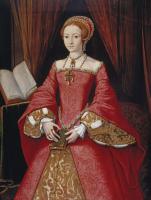
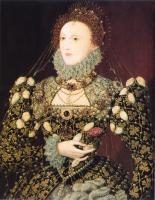
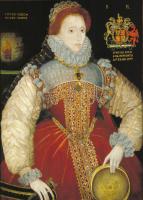
On 26th October 1591 Queen Elizabeth I of England and Ireland (age 58) arrived in Oatlands Palace, Surrey [Map].




On 26th October 1605 William Parker 4th Baron Monteagle 14th Baron Marshal 13th Baron Morley (age 30) received a letter warning of the Gunpowder Plot and showed it to Robert Cecil 1st Earl Salisbury (age 42) who then showed it to the King at Hoxton.


On 26th October 1608 Juan Pantoja de La Cruz (age 55) died.

Diary of Anne Clifford. 26th October 1619. The 26th I kept James Wray a day or two who told me of many old matters and the certain day of the death of my Brother Robert1.
Note 1. Son of George Earl of Cumberland, died in his childhood.
The 28th the Palsgrave was crowned King of Bohemia at Prague and the 25th the Lady Elizabeth was crowned Queen.
About the end of this month my Sister Beauchamp came from Glenham altogether and came to live with my Sister Sackville at the end of Dorset House which end my Brother Sackville and my Lord (age 30) did lately repair and make fine.
On 26th October 1640 the Treaty of Ripon was a peace treaty signed by King Charles I of England, Scotland and Ireland (age 39) to cease the war with Scotland in the North. Charles agreed the Scots could retain large parts of northern England, and to pay them £850 per day until the August 1641 1641 Treaty of London.


Samuel Pepys' Diary. 26th October 1660. Office. My father and Dr. Thomas Pepys (age 39) dined at my house, the last of whom I did almost fox with Margate ale. My father is mightily pleased with my ordering of my house. I did give him money to pay several bills. After that I to Westminster to White Hall, where I saw the Duke de Soissons go from his audience with a very great deal of state: his own coach all red velvet covered with gold lace, and drawn by six barbes, and attended by twenty pages very rich in clothes. To Westminster Hall [Map], and bought, among, other books, one of the Life of our Queen, which I read at home to my wife; but it was so sillily writ, that we did nothing but laugh at it: among other things it is dedicated to that paragon of virtue and beauty, the Duchess of Albemarle (age 41). Great talk as if the Duke of York do now own the marriage between him and the Chancellor's daughter.
Chronicle of Abbot Ralph of Coggeshall
The Chronicle of Abbot Ralph of Coggeshall (Chronicon Anglicanum) is an indispensable medieval history that brings to life centuries of English and European affairs through the eyes of a learned Cistercian monk. Ralph of Coggeshall, abbot of the Abbey of Coggeshall in Essex in the early 13th century, continued and expanded his community’s chronicle, documenting events from the Norman Conquest of 1066 into the tumultuous reign of King Henry III. Blending eyewitness testimony, careful compilation, and the monastic commitment to record-keeping, this chronicle offers a rare narrative of political intrigue, royal power struggles, and social upheaval in England and beyond. Ralph’s work captures the reigns of pivotal figures such as Richard I and King John, providing invaluable insights into their characters, decisions, and the forces that shaped medieval rule. More than a simple annal, Chronicon Anglicanum conveys the texture of medieval life and governance, making it a rich source for scholars and readers fascinated by English history, monastic authorship, and the shaping of the medieval world.
Available at Amazon in eBook and Paperback format.

Samuel Pepys' Diary. 26th October 1661. So at the office all the morning, and in the afternoon Sir W. Pen (age 40), my wife and I to the Theatre [Map], and there saw "The Country Captain", the first time it hath been acted this twenty-five years, a play of my Lord Newcastle's (age 68), but so silly a play as in all my life I never saw, and the first that ever I was weary of in my life.
Samuel Pepys' Diary. 26th October 1661. This morning Sir W. Pen (age 40) and I should have gone out of town with my Lady Batten, to have met Sir William coming back from Portsmouth, Hampshire [Map]; at Kingston, but could not, by reason that my Lord of Peterborough (age 39) (who is to go Governor of Tangier) came this morning, with Sir G. Carteret (age 51), to advise with us about completing of the affairs and preparacions for that place.
On 26th October 1662 William Cavendish 1st Duke Devonshire (age 22) and Mary Butler Duchess Devonshire (age 16) were married. She the daughter of James Butler 1st Duke Ormonde (age 52) and Elizabeth Preston Duchess Ormonde (age 47). He the son of William Cavendish 3rd Earl Devonshire (age 45) and Elizabeth Cecil Countess Devonshire (age 43). They were fifth cousins.


Samuel Pepys' Diary. 26th October 1663. Thence (I drinking no wine) after an hour's stay Sir W. Batten (age 62) and another, and he drinking, we home by coach, and so to my office and set down my Journall, and then home to supper and to bed, my washing being in a good condition over. I did give Dr. Williams 20s. tonight, but it was after he had answered me well to what I had to ask him about this business, and it was only what I had long ago in my petty bag book allotted for him besides the bill of near £4 which I paid him a good while since by my brother Tom (age 29) for physique for my wife, without any consideration to this business that he is to do for me, as God shall save me. Among the rest, talking of the Emperor (age 23)1 at table to-day one young gentleman, a pretty man, and it seems a Parliament man, did say that he was a sot; for he minded nothing of the Government, but was led by the Jesuites. Several at table took him up, some for saying that he was a sot in being led by the Jesuites, [who] are the best counsel he can take. Another commander, a Scott[ish] Collonell, who I believe had several under him, that he was a man that had thus long kept out the Turke till now, and did many other great things, and lastly Mr. Progers, one of our courtiers, who told him that it was not a thing to be said of any Soveraigne Prince, be his weaknesses what they will, to be called a sot, which methinks was very prettily said.
Note 1. Leopold I, the Holy Roman Emperor, was born June 9th, 1640. He became King of Hungary in 1655, and King of Bohemia in 1658, in which year he received the imperial crown. The Princes of the German Empire watched for some time the progress of his struggle with the Turks with indifference, but in 1663 they were induced to grant aid to Leopold after he had made a personal appeal to them in the diet at Ratisbon.
Samuel Pepys' Diary. 26th October 1663. Thence Creed and I to the King's Head ordinary, where much and very good company, among others one very talking man, but a scholler, that would needs put in his discourse and philosophy upon every occasion, and though he did well enough, yet his readiness to speak spoilt all. Here they say that the Turkes go on apace, and that my Lord Castlehaven is going to raise 10,000 men here for to go against him; that the King of France (age 25) do offer to assist the Empire upon condition that he may be their Generalissimo, and the Dolphin (age 1) chosen King of the Romans: and it is said that the King of France do occasion this difference among the Christian Princes of the Empire, which gives the Turke such advantages. They say also that the King of Spayne (age 58) is making all imaginable force against Portugall again.


Samuel Pepys' Diary. 26th October 1663. Waked about one o'clock in the morning.... My wife being waked rung her bell, and the mayds rose and went to washing, we to sleep again till 7 o'clock, and then up, and I abroad to look out Dr. Williams, but being gone out I went to Westminster, and there seeing my Lord Sandwich's (age 38) footman knew he was come to town, and so I went in and saw him, and received a kind salute from him, but hear that my father is very ill still.

Samuel Pepys' Diary. 26th October 1664. By and by the Queene (age 54) comes and her Mayds of Honour; one whereof, Mrs. Boynton, and the Duchesse of Buckingham (age 26), had been very siclee coming by water in the barge (the water being very rough); but what silly sport they made with them in very common terms, methought, was very poor, and below what people think these great people say and do.


John Evelyn's Diary. 26th October 1664. We came back to Beaconsfield, Buckinghamshire; next day to London, where we dined at the Lord Chancellor's (age 55), with my Lord Bellasis (age 50).


Samuel Pepys' Diary. 26th October 1665. The 'Change [Map] pretty full, and the town begins to be lively again, though the streets very empty, and most shops shut. So back again I and took boat and called for Sir Christopher Mings (age 39) at St. Katharine's, who was followed with some ordinary friends, of which, he says, he is proud, and so down to Greenwich, Kent [Map], the wind furious high, and we with our sail up till I made it be taken down. I took him, it being 3 o'clock, to my lodgings and did give him a good dinner and so parted, he being pretty close to me as to any business of the fleete, knowing me to be a servant of my Lord Sandwich's (age 40).

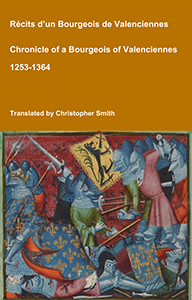
Chronicle of a Bourgeois of Valenciennes
Récits d’un bourgeois de Valenciennes aka The Chronicle of a Bourgeois of Valenciennes is a vivid 14th-century vernacular chronicle written by an anonymous urban chronicler from Valenciennes in the County of Hainaut. It survives in a manuscript that describes local and regional history from about 1253 to 1366, blending chronology, narrative episodes, and eyewitness-style accounts of political, military, and social events in medieval France, Flanders, and the Low Countries. The work begins with a chronological framework of events affecting Valenciennes and its region under rulers such as King Philip VI of France and the shifting allegiances of local nobility. It includes accounts of conflicts, sieges, diplomatic manoeuvres, and the impact of broader struggles like the Hundred Years’ War on urban life in Hainaut. Written from the perspective of a burgher (bourgeois) rather than a monastery or royal court, the chronicle offers a rare lay viewpoint on high politics and warfare, reflecting how merchants, townspeople, and civic institutions experienced the turbulence of the 13th and 14th centuries. Its narrative style combines straightforward reporting of events with moral and civic observations, making it a valuable source for readers interested in medieval urban society, regional politics, and the lived experience of war and governance in pre-modern Europe.
Available at Amazon in eBook and Paperback format.
Samuel Pepys' Diary. 26th October 1667. Up, and we met all this morning at Sir W. Pen's (age 46) roome, the office being fowle with the altering of our garden door. There very busy, and at noon home, where Mrs. Pierce and her daughter's husband and Mr. Corbet dined with me. I had a good dinner for them, and mighty merry. Pierce and I very glad at the fate of the officers of Ordnance, that they are like to have so much blame on them. Here Mrs. Pierce tells me that the two Marshalls at the King's house are Stephen Marshall's, the great Presbyterian's daughters: and that Nelly (age 17) and Beck Marshall, falling out the other day, the latter called the other my Lord Buckhurst's (age 24) whore. Nell answered then, "I was but one man's whore, though I was brought up in a bawdy-house to fill strong waters to the guests; and you are a whore to three or four, though a Presbyter's praying daughter!" which was very pretty. Mrs. Pierce is still very pretty, but paints red on her face, which makes me hate her, that I thank God I take no pleasure in her at all more.


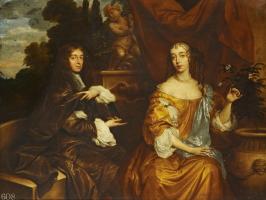
John Evelyn's Diary. 26th October 1667. My late Lord Chancellor was accused by Mr. Seymour in the House of Commons; and, in the evening, I returned home.
Samuel Pepys' Diary. 26th October 1668. Rose, and up and by water to White Hall, but with my mind mightily troubled for the poor girle, whom I fear I have undone by this, my [wife] telling me that she would turn her out of doors. However, I was obliged to attend the Duke of York (age 35), thinking to have had a meeting of Tangier to-day, but had not; but he did take me and Mr. Wren (age 39) into his closet, and there did press me to prepare what I had to say upon the answers of my fellow-officers to his great letter, which I promised to do against his coming to town again, the next week; and so to other discourse, finding plainly that he is in trouble, and apprehensions of the Reformers, and would be found to do what he can towards reforming, himself. And so thence to my Lord Sandwich's (age 43), where, after long stay, he being in talk with others privately, I to him; and there he, taking physic and keeping his chamber, I had an hour's talk with him about the ill posture of things at this time, while the King (age 38) gives countenance to Sir Charles Sidly and Lord Buckhurst, telling him their late story of running up and down the streets a little while since all night, and their being beaten and clapped up all night by the constable, who is since chid and imprisoned for his pains. He tells me that he thinks his matters do stand well with the King, and hopes to have dispatch to his mind; but I doubt it, and do see that he do fear it, too. He told me my Baroness Carteret's (age 66) trouble about my writing of that letter of the Duke of York's lately to the Office, which I did not own, but declared to be of no injury to G. Carteret (age 58), and that I would write a letter to him to satisfy him therein. But this I am in pain how to do, without doing myself wrong, and the end I had, of preparing a justification to myself hereafter, when the faults of the Navy come to be found out however, I will do it in the best manner I can.
Become a Member via our Buy Me a Coffee page to read more.
Calendar of State Papers Charles II 30 Sep 1670. 26th October 1670. Chatham, Kent [Map]. William Rand and Ph. Pett to Sir Jer. Smith and Sam. Pepys (age 37). We send a copy of Sir William Batten's account, but that wherein Commissioner Pett and Capt. Taylor made that extravagant allowance to themselves is in Mr. Shales' hands, who also had copies of the documents enclosed, they being letters of more than ordinary importance. We hope Commissioner Cox will be at the Council, and Capt. Brooke and Mr. Mynors waiting upon him, which will make a sufficient number to appear on the chest's behalf. We cannot send the letters which passed between the Board and our supervisors, they being committed to a chest with 5 locks, whose keys are distributed amongst so many persons that they cannot be readily collected; but we conceive there will be no need of them, the case being so evident by the accounts. [S.P. Dom., Car. IT. 286, No. 64.]


On 26th October 1680 Charles Oldenburg was born to Christian V King of Denmark and Norway (age 34) and Charlotte Amalie Hesse-Kassel Queen Consort Denmark and Norway (age 30).
John Evelyn's Diary. 26th October 1685. We return'd to London, having ben treated with all sorts of cheere and noble freedom by that most religious and vertuous lady. She was now preparing to go for Ireland with her husband, made Lord Deputy, and went to this country-house and antient seate of her father and family, to set things in order during her absence; but never were good people and neighbours more concern'd than all the country (the poor especialy) for the departure of this charitable woman; every one was in teares, and she as unwilling to part from them. There was amongst them a maiden of primitive life, the daughter of a poore labouring man, who had sustain'd her parents (sometime since dead) by her labour, and has for many years refus'd marriage, or to receive any assistance from the parish, besides ye little hermitage my lady gives her rent-free; she lives on foure pence a day, which she gets by spinning; says she abounds and can give almes to others, Jiving in greate humility and content, without any apparent affectation or singularity; she is continualy working, praying or reading, gives a good account of her knowledge in religion, visites the sick; is not in the least given to talke; very modest, of a simple not unseemly behaviour; of a comely countenance, clad very plaine, but cleane and tight. In sum, she appeares a saint of an extraordinary sort, in so religious a life as is seldom met with in villages now a-daies.
On 26th October 1686 John Egerton 2nd Earl Bridgewater (age 63) died. He was buried at St Peter and St Paul Church, Little Gaddesden. His son John (age 39) succeeded 3rd Earl Bridgewater, 4th Viscount Brackley, 4th Baron Ellesmere. Jane Paulet Countess Bridgewater (age 30) by marriage Countess Bridgewater.
John Egerton 3rd Earl Bridgewater: On 9th November 1646 he was born to John Egerton 2nd Earl Bridgewater and Elizabeth Cavendish Countess Bridgewater. On 7th November 1664 John Egerton 3rd Earl Bridgewater and Elizabeth Cranfield were married. She the daughter of James Cranfield 2nd Earl Middlesex and Anne Bourchier Countess Middlesex. He the son of John Egerton 2nd Earl Bridgewater and Elizabeth Cavendish Countess Bridgewater. They were fourth cousins. He a great x 5 grandson of King Henry VII of England and Ireland. On 2nd April 1673 John Egerton 3rd Earl Bridgewater and Jane Paulet Countess Bridgewater were married at St Dionis Backchurch. She the daughter of Charles Paulet 1st Duke Bolton and Mary Scrope 6th Marchioness Winchester. He the son of John Egerton 2nd Earl Bridgewater and Elizabeth Cavendish Countess Bridgewater. They were fourth cousin once removed. He a great x 5 grandson of King Henry VII of England and Ireland.


John Evelyn's Diary. 26th October 1690. Kinsale at last surrendered, meantime King James's party burn all the houses they have in their power, and among them that stately palace of Lord Ossory's (age 25), which lately cost, as reported, £40,000. By a disastrous accident, a third-rate ship, the Breda, blew up and destroyed all on board; in it were twenty-five prisoners of war. She was to have sailed for England the next day.
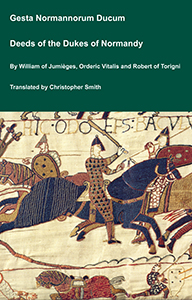
The Deeds of the Dukes of Normandy
The Gesta Normannorum Ducum [The Deeds of the Dukes of Normandy] is a landmark medieval chronicle tracing the rise and fall of the Norman dynasty from its early roots through the pivotal events surrounding the Norman Conquest of England. Originally penned in Latin by the monk William of Jumièges shortly before 1060 and later expanded at the behest of William the Conqueror, the work chronicles the deeds, politics, battles, and leadership of the Norman dukes, especially William’s own claim to the English throne. The narrative combines earlier historical sources with firsthand information and oral testimony to present an authoritative account of Normandy’s transformation from a Viking settlement into one of medieval Europe’s most powerful realms. William’s history emphasizes the legitimacy, military prowess, and governance of the Norman line, framing their expansion, including the conquest of England, as both divinely sanctioned and noble in purpose. Later chroniclers such as Orderic Vitalis and Robert of Torigni continued the history, extending the coverage into the 12th century, providing broader context on ducal rule and its impact. Today this classic work remains a foundational source for understanding Norman identity, medieval statesmanship, and the historical forces that reshaped England and Western Europe between 800AD and 1100AD.
Available at Amazon in eBook and Paperback format.
On 26th October 1718 Bishop Joseph Butler (age 26) was ordained a Deacon by William Talbot (age 60), Bishop of Salisbury, in his Bishop's Palace, Salisbury

On 26th October 1738 Richard Loraine (age 38) died of apoplexy. He was buried at St Wilfrid's Church, Kirkharle [Map]. His ledger stone has the inscription: "Here lyes the Body of Richard Loraine, Esq., who was a proper handsome man of good sense and behaviour: he dy'd a Batcheler of an Appoplexy walking in a green field near London, October 26th, 1738, in the 38 Year of his Age."
Richard Loraine: Around 1700 he was born to William Loraine 2nd Baronet and Anne Smith Lady Loraine.
On 26th October 1764 William Hogarth (age 66) died.
On 26th October 1803 Granville Leveson-Gower 1st Marquess Stafford (age 82) died. His son George (age 45) succeeded 2nd Marquess Stafford, 3rd Earl Gower, 4th Baron Gower, 8th Baronet Gower of Stittenham in Yorkshire. Elizabeth Sutherland Duchess Sutherland 19th Countess Sutherland (age 38) by marriage Marchioness Stafford.


The London Gazette 21997. 7th Regiment. Lieutenant William Hope. Date of Act of Bravery, 18th June, 1855.
After the troops had retreated on the morning of the 18th June, 1855, Lieutenant W. Hope being informed by the late Serjeant-Major William Bacon, who was himself wounded, that Lieutenant and Adjutant Hobson was lying outside the trenches badly wounded, went out to look for him, and found him lying in the old agricultural ditch running towards the left flank of the Redan. He then returned, and got four men to bring him in. Finding, however, that Lieutenant Hobson could not be removed without a stretcher, he then ran back across the open to Egerton's Pit, where he procured one, and carried it to where Lieutenant Hobson was lying.
All this was done under a very heavy fire from the Russian batteries.
7th Regiment. Assistant-Surgeon Thomas Egerton Hale, M.D. Date of Act of Bravery, 8th September, 1855
First. For remaining with an officer who was dangerously wounded, (Captain H. M. Jones, 7th Regiment), in the fifth parallel, on 8th September, 1855, when all the men in the immediate neighbourhood retreated, excepting Lieutenant W. Hope and Dr. Hale; and for endeavouring to rally the men, in conjunction with Lieutenant W. Hope, 7th Royal Fusiliers.
Secondly. For having, on 8th September, 1855, after the regiments had retired into the trenches, cleared the most advanced sap of the wounded, and carried, into the sap, under a heavy fire, several wounded men from the open ground, being assisted by Serjeant Charles Fisher, 7th Royal Fusiliers, Coldstream Guards (late of the 49th Regiment). Brevet-Major John Augustus Conolly Date of Act of Bravery, 26th October, 1854.
In the attack by the Russians against the position held by the Second Division, 26th October, 1854, Major Conolly, then a Lieutenant in the 49th Regiment, while in command of a company of that regiment, on outlying picket, made himself most conspicuous by the gallantry of his behaviour. He came particularly under the observation of the late Field-Marshal Lord Raglan (age 66), while in personal encounter with several Russians, in defence of his post. He ultimately fell, dangerously wounded. Lieutenant Conolly was highly praised in General Orders, and promoted into the Coldstream Guards, as a reward for his exemplary behaviour on this occasion.
Become a Member via our Buy Me a Coffee page to read more.

26th October 1860. Camille Silvy. Photograph of Florence Cecilia Paget Marchioness Hastings (age 18).
On 26th October 1896 Fanny Georgiana Pitt-Rivers Duchess Leeds (age 59) died.
On 26th October 1917 Francis Noel (age 28) was killed in action leading his men.

26th October 1918. Bassano Ltd. Photograph of Edith Chaplin Marchioness Londonderry (age 39)

On 26th October 1918 Cecil Herbert Edward Chubb 1st Baronet (age 42) gave Stonehenge to the nation with the following conditions:
First that the public shall have free access to the premises hereby conveyed and every part thereof on the payment of such reasonable sum per head not exceeding one shilling for each visit and subject to such conditions as the Commissioners of Works in the exercise and execution of their statutory powers and duties may from time to time impose Secondly that the premises shall so far as possible be maintained in their present condition Thirdly that no building or erection other than a pay box similar to the Pay Box now standing on the premises shall be erected on any part of the premises within four hundred yards of The Milestone marked "Amesbury 2" on the northern frontage of the premises and Fourthly that the Commissioners of Works will at all times save harmless and keep indemnified the Donors and each of them their and each of their estates and effects from and against all proceedings costs claims and expenses on account of any breach or non-observance of the covenants by the Donors to the like or similar effect contained in the Conveyance of the premises to the Donors.
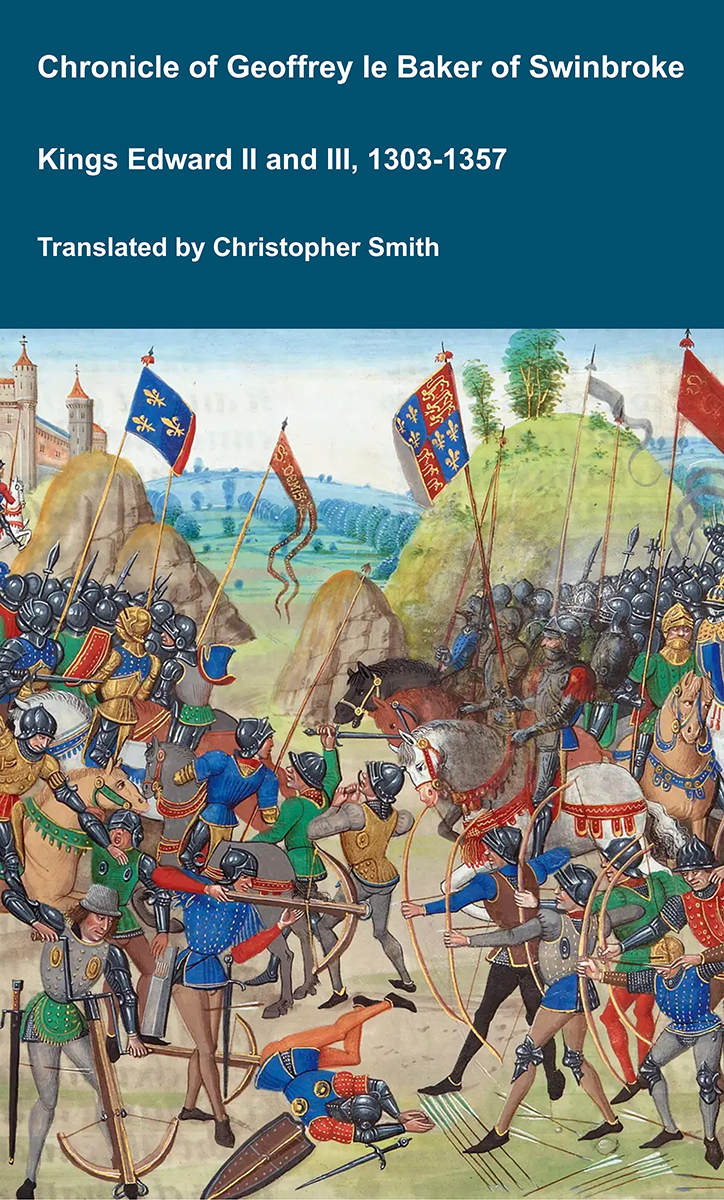
Chronicle of Geoffrey le Baker of Swinbroke
Baker was a secular clerk from Swinbroke, now Swinbrook, an Oxfordshire village two miles east of Burford. His Chronicle describes the events of the period 1303-1356: Gaveston, Bannockburn, Boroughbridge, the murder of King Edward II, the Scottish Wars, Sluys, Crécy, the Black Death, Winchelsea and Poitiers. To quote Herbert Bruce 'it possesses a vigorous and characteristic style, and its value for particular events between 1303 and 1356 has been recognised by its editor and by subsequent writers'. The book provides remarkable detail about the events it describes. Baker's text has been augmented with hundreds of notes, including extracts from other contemporary chronicles, such as the Annales Londonienses, Annales Paulini, Murimuth, Lanercost, Avesbury, Guisborough and Froissart to enrich the reader's understanding. The translation takes as its source the 'Chronicon Galfridi le Baker de Swynebroke' published in 1889, edited by Edward Maunde Thompson.
Available at Amazon in eBook and Paperback format.

26th October 1930. Tatler. Sir Oswald Mosley (age 33) with his first wife Lady Cynthia (age 32).
Cynthia Blanche Curzon Lady Ancoats: On 23rd August 1898 she was born to George Nathaniel Curzon 1st Marquess Kedleston and Mary Victoria Leiter Baroness Curzon Kedleston. On 16th May 1933 Cynthia Blanche Curzon Lady Ancoats died.
On 26th October 1942 Francis Hugh Peter Courtenay Wood (age 26) was killed in action.
On 26th October 1416 Edmund Grey 1st Earl Kent was born to John Grey (age 29) and Constance Holland Countess Norfolk and Nottingham (age 29). He a great x 2 grandson of King Edward III of England. He married before 1440 his half second cousin Katherine Percy, daughter of Henry Percy 2nd Earl of Northumberland and Eleanor Neville Countess Northumberland, and had issue.
On 26th October 1427 Sigismund Habsburg 4th Duke Austria was born to Frederick "Empty Pockets" Habsburg 4th Duke Austria (age 45) and Anna of Brunswick-Wolfenbüttel Duchess Austria at Innsbruck. He married 12th February 1449 Eleanor Stewart Duchess Austria, daughter of King James I of Scotland and Joan Beaufort Queen Consort Scotland.
On 26th October 1431 Ercole Este I Duke Ferrara was born to Niccolò Este III Marquis of Ferrara (age 47).
On 26th October 1496 Thomas Sandys 2nd Baron Sandys of the Vyne was born to William Sandys 1st Baron Sandys of the Vyne (age 26). He married in or before 1520 Elizabeth Manners Baroness Sandys Vyne, daughter of George Manners 11th Baron Ros Helmsley and Anne St Leger Baroness Ros of Helmsley, and had issue.
On 26th October 1519 John Bassett IV of Umberliegh was born to John Bassett of Tehidy and Umberleigh (age 57) and Honor Grenville Viscountess Lisle (age 25). He married 1535 Frances Plantagenet, daughter of Arthur Plantagenet 1st Viscount Lisle and Elizabeth Grey Viscountess Lisle, and had issue.
On 26th October 1529 Anna of Hesse aka Cleves was born to Landgrave Philip I of Hesse (age 24) and Christine of Saxony (age 23). She married 24th February 1545 her half second cousin Wolfgang Count Palatine of Zweibrücken and had issue.
On 26th October 1581 Frederick Oldenburg was born to John "Younger" Oldenburg Duke Schleswig Holstein Sonderburg (age 36) and Elisabeth of Brunswick-Grubenhagen (age 31).
Abbot John Whethamstede’s Chronicle of the Abbey of St Albans
Abbot John Whethamstede's Register aka Chronicle of his second term at the Abbey of St Albans, 1451-1461, is a remarkable text that describes his first-hand experience of the beginning of the Wars of the Roses including the First and Second Battles of St Albans, 1455 and 1461, respectively, their cause, and their consequences, not least on the Abbey itself. His text also includes Loveday, Blore Heath, Northampton, the Act of Accord, Wakefield, and Towton, and ends with the Coronation of King Edward IV. In addition to the events of the Wars of the Roses, Abbot John, or his scribes who wrote the Chronicle, include details in the life of the Abbey such as charters, letters, land exchanges, visits by legates, and disputes, which provide a rich insight into the day-to-day life of the Abbey, and the challenges faced by its Abbot.
Available at Amazon in eBook and Paperback format.
On 26th October 1612 Henry Wilmot 1st Earl Rochester was born to Charles Wilmot 1st Viscount Wilmot (age 40) and Sarah Anderson (age 14). He married 1644 Anne St John Countess Rochester, daughter of John St John 1st Baronet and Anne Leighton, and had issue.
On 26th October 1680 Charles Oldenburg was born to Christian V King of Denmark and Norway (age 34) and Charlotte Amalie Hesse-Kassel Queen Consort Denmark and Norway (age 30).
On 26th October 1694 George Oxenden 5th Baronet was born to George Oxenden (age 43) and Elizabeth Dixwell. He married May 1720 Elizabeth Dunch Lady Oxenden and had issue.
On 26th October 1733 Thomas Reynolds 2nd Baron Ducie was born to Francis Reynolds and Elizabeth Moreton. He married 20th February 1774 Margaret Ramsden Baroness Ducie, daughter of John Ramsden 3rd Baronet.
On 26th October 1756 Robert Jocelyn 2nd Earl Roden was born to Robert Jocelyn 1st Earl Roden (age 25) and Anne Hamilton Countess Roden (age 26).

On 26th October 1759 Francis Hely-Hutchinson was born to John Hely-Hutchinson (age 35) and Christiana Nixon 1st Baroness Donoughmore (age 27).
On 7th October 1762 Charles Abbott 1st Baron Tenterden was born to John Abbott of Centrebury. He was baptised at Canterbury Cathedral [Map] on 26th October 1762. He married 13th July 1795 Mary Lamotte and had issue.

On 26th October 1776 Elizabeth North Baroness Walsingham was born to Bishop Brownlow North (age 35) and Henrietta Maria Bannister (age 26). She married 12th August 1802 Thomas Grey 4th Baron Walsingham, son of Thomas Grey 2nd Baron Walsingham, and had issue.

On 26th October 1781 Charlotte Paget Countess Enniskillen was born to Henry Bayly-Paget 1st Earl Uxbridge (age 37) and Jane Champagné Countess Uxbridge (age 39). She married 1805 John Cole 2nd Earl Enniskillen, son of William Willoughby Cole 1st Earl Enniskillen and Anne Lowry-Corry Countess Enniskillen, and had issue.
The History of William Marshal was commissioned by his son shortly after William’s death in 1219 to celebrate the Marshal’s remarkable life; it is an authentic, contemporary voice. The manuscript was discovered in 1861 by French historian Paul Meyer. Meyer published the manuscript in its original Anglo-French in 1891 in two books. This book is a line by line translation of the first of Meyer’s books; lines 1-10152. Book 1 of the History begins in 1139 and ends in 1194. It describes the events of the Anarchy, the role of William’s father John, John’s marriages, William’s childhood, his role as a hostage at the siege of Newbury, his injury and imprisonment in Poitou where he met Eleanor of Aquitaine and his life as a knight errant. It continues with the accusation against him of an improper relationship with Margaret, wife of Henry the Young King, his exile, and return, the death of Henry the Young King, the rebellion of Richard, the future King Richard I, war with France, the death of King Henry II, and the capture of King Richard, and the rebellion of John, the future King John. It ends with the release of King Richard and the death of John Marshal.
Available at Amazon in eBook and Paperback format.
On 26th October 1791 George Sackville-West 5th Earl De La Warr was born to John West 4th Earl De La Warr (age 33). He married 21st June 1813 his fourth cousin once removed Elizabeth Sackville Countess De La Warr, daughter of John Frederick Sackville 3rd Duke Dorset and Arabella Diana Cope 3rd Duchess Dorset, and had issue.

On 26th October 1796 John Campbell 2nd Marquess Breadalbane was born to John Campbell 1st Marquess Breadalbane (age 34) in Dundee.
On 26th October 1801 Edward Strutt 1st Baron Belper was born to William Strutt (age 45) at St Helen's House King Street, Derby [Map]. He married 28th March 1837 Amelia Harriet Otter Baroness Belper, daughter of Bishop William Otter, and had issue.
On 26th October 1809 Walter Townsend-Farquhar 2nd Baronet was born to Robert Townsend Farquhar 1st Baronet (age 33) and Maria Frances Geslip de Lautour. He married 1835 Erica Catherine Mackay and had issue.
On 26th October 1814 Walter Burrell 5th Baronet was born to Charles Merrik Burrell 3rd Baronet (age 40) and Frances Wyndham Lady Burrell (age 25). He married 10th June 1847 Dorothea Jones Lady Burrell and had issue.

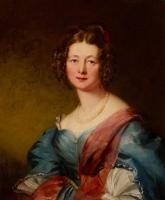
On 26th October 1817 Francis Crossley 1st Baronet was born. He married 11th December 1845 Martha Eliza Brinton and had issue.
On 26th October 1841 Willoughby Burrell 5th Baron Gwydyr was born to Peter Burrell 4th Baron Gwydyr (age 31).
On 26th October 1846 John Yarde-Buller 2nd Baron Churston was born to John Yarde-Buller (age 22) and Charlotte Chandos-Pole (age 16).
Jean de Waurin's Chronicle of England Volume 6 Books 3-6: The Wars of the Roses
Jean de Waurin was a French Chronicler, from the Artois region, who was born around 1400, and died around 1474. Waurin’s Chronicle of England, Volume 6, covering the period 1450 to 1471, from which we have selected and translated Chapters relating to the Wars of the Roses, provides a vivid, original, contemporary description of key events some of which he witnessed first-hand, some of which he was told by the key people involved with whom Waurin had a personal relationship.
Available at Amazon in eBook and Paperback format.
On 26th October 1849 Gerald William Lascelles was born to Henry Thynne Lascelles 4th Earl Harewood (age 25) and Elizabeth Joanna Burgh (age 23) at Goldsborough Hall, Knaresborough. He married 9th February 1875 Constance Augusta Mary Fitz-Clarence Phillipson and had issue.
On 26th October 1859 Walter Geoffrey Shakerley 3rd Baronet was born to Charles Watkin Shakerley 2nd Baronet (age 26).
On 26th October 1871 Ethel Sarah Emerson-Tennent Lady Langham was born to William Emerson-Tennent 2nd Baronet. She married 1st June 1893 Herbert Charles Arthur Langham 13th Baronet, son of Herbert Hay Langham 12th Baronet and Anna Maria Sandes, and had issue.
On 26th October 1899 Katherine Isobel McEwen Countess Scarborough was born to Robert Finnie McEwen. She married 12th July 1922 Roger Lumley 11th Earl of Scarbrough and had issue.
On 26th October 1908 Francis Jacob Dugdale Astley 6th Baronet was born to Reverend Anthony Aylmer Astley (age 58).
On 26th October 1925 John Methuen 6th Baron Methuen was born to Anthony Methuen 5th Baron Methuen (age 34).
On 26th October 1936 Harry Douglas St Lo Malet 9th Baronet was born to Colonel Edward St Lo Malet 8th Baronet (age 27).
On 26th October 1406 King Eric of Norway, Denmark and Sweden (age 25) and Philippa Lancaster Queen Consort Denmark (age 12) were married. She the daughter of King Henry IV of England (age 39) and Mary Bohun.
Chronicle of Abbot Ralph of Coggeshall
The Chronicle of Abbot Ralph of Coggeshall (Chronicon Anglicanum) is an indispensable medieval history that brings to life centuries of English and European affairs through the eyes of a learned Cistercian monk. Ralph of Coggeshall, abbot of the Abbey of Coggeshall in Essex in the early 13th century, continued and expanded his community’s chronicle, documenting events from the Norman Conquest of 1066 into the tumultuous reign of King Henry III. Blending eyewitness testimony, careful compilation, and the monastic commitment to record-keeping, this chronicle offers a rare narrative of political intrigue, royal power struggles, and social upheaval in England and beyond. Ralph’s work captures the reigns of pivotal figures such as Richard I and King John, providing invaluable insights into their characters, decisions, and the forces that shaped medieval rule. More than a simple annal, Chronicon Anglicanum conveys the texture of medieval life and governance, making it a rich source for scholars and readers fascinated by English history, monastic authorship, and the shaping of the medieval world.
Available at Amazon in eBook and Paperback format.
On 26th October 1439 Jean "Bastard of Orléans" Valois Count Dunois Count Longueville (age 36) and Marie Harcourt were married. He the son of Louis Valois I Duke Orléans and Mariette aka Yolande d'Enghien.
On 26th October 1662 William Cavendish 1st Duke Devonshire (age 22) and Mary Butler Duchess Devonshire (age 16) were married. She the daughter of James Butler 1st Duke Ormonde (age 52) and Elizabeth Preston Duchess Ormonde (age 47). He the son of William Cavendish 3rd Earl Devonshire (age 45) and Elizabeth Cecil Countess Devonshire (age 43). They were fifth cousins.
On 26th October 1744 Henry Dillon 11th Viscount Dillon (age 39) and Charlotte Lee Viscountess Dillon (age 20) were married. She the daughter of George Henry Lee 2nd Earl Lichfield and Frances Hales Countess Lichfield (age 47).

On 26th October 1845 Charles Edmund Isham 10th Baronet (age 25) and Emily Vaughan Lady Isham were married.
On 26th October 1847 John Trollope 1st Baron Kesteven (age 47) and Julia Maria Sheffield were married.
On 26th October 1858 William Henry Edgecumbe 4th Earl of Mount Edgcumbe (age 24) and Katherine Elizabeth Hamilton Countess Mount Edgcumbe (age 18) were married. She the daughter of James Hamilton 1st Duke of Abercorn (age 47) and Louisa Jane Russell Duchess Abercorn (age 46). He the son of Ernest Augustus Edgecumbe 3rd Earl of Mount Edgcumbe (age 61).
On 26th October 1891 Henry William Duff Gordon 6th Baronet (age 25) and Maud Emily Hammersley Lady-Duff-Gordon were married.
On 26th October 1946 John Knatchbull 7th Baron Brabourne (age 21) and Patricia Mountbatten 2nd Countess Mountbatten of Burma (age 22) were married. She the daughter of Louis Mountbatten 1st Earl Mountbatten of Burma (age 46) and Edwina Ashley Countess Mountbatten Burma (age 44).
On 26th October 1962 William Simon Pease 3rd Baron Wardington (age 37) and Elizabeth Jane Ormsby-Gore Baroness Wardington (age 32) were married.
On 26th October 686 Bishop Eata of Hexham died.
Chronicle of Geoffrey le Baker of Swinbroke
Baker was a secular clerk from Swinbroke, now Swinbrook, an Oxfordshire village two miles east of Burford. His Chronicle describes the events of the period 1303-1356: Gaveston, Bannockburn, Boroughbridge, the murder of King Edward II, the Scottish Wars, Sluys, Crécy, the Black Death, Winchelsea and Poitiers. To quote Herbert Bruce 'it possesses a vigorous and characteristic style, and its value for particular events between 1303 and 1356 has been recognised by its editor and by subsequent writers'. The book provides remarkable detail about the events it describes. Baker's text has been augmented with hundreds of notes, including extracts from other contemporary chronicles, such as the Annales Londonienses, Annales Paulini, Murimuth, Lanercost, Avesbury, Guisborough and Froissart to enrich the reader's understanding. The translation takes as its source the 'Chronicon Galfridi le Baker de Swynebroke' published in 1889, edited by Edward Maunde Thompson.
Available at Amazon in eBook and Paperback format.
On 26th October 686 Eata Prior Melrose died.
On 26th October 760 Archbishop Cuthbert died.
On 26th October 899 King Alfred "The Great" of Wessex (age 50) died at Winchester, Hampshire [Map]. He was buried at Hyde Abbey [Map]. His son Edward (age 25) succeeded King Anglo Saxons. Ecgwynn Unknown Queen Consort Anglo Saxons by marriage Queen Consort Anglo Saxons.
On 26th October 1132 Floris "The Black" Gerulfing I Count Holland (age 17) was murdered. He was buried at Rijnsburg Abbey.
On 26th October 1232 Ranulf de Blondeville Gernon 6th Earl Chester 1st Earl Lincoln (age 62) died at Wallingford Castle [Map]. His nephew John (age 25) succeeded 7th Earl Chester.
On 26th October 1317 Alice Hainaut Countess Norfolk died.
On 26th October 1327 Elizabeth Burgh Queen Consort Scotland (age 43) died.
On 26th October 1383 Alice Beauchamp Baroness Beauchamp Somerset died.
On 26th October 1436 Elizabeth Percy Countess of Westmoreland (age 41) died.
Henrici Quinti, Angliæ Regis, Gesta, is a first-hand account of the Agincourt Campaign, and subsequent events to his death in 1422. The author of the first part was a Chaplain in King Henry's retinue who was present from King Henry's departure at Southampton in 1415, at the siege of Harfleur, the battle of Agincourt, and the celebrations on King Henry's return to London. The second part, by another writer, relates the events that took place including the negotiations at Troye, Henry's marriage and his death in 1422.
Available at Amazon in eBook and Paperback format.
On 26th October 1576 Frederick III Elector Palatine (age 61) died. His son Louis (age 37) succeeded Count Palatine Simmern.
On 26th October 1580 Anna of Austria Queen Consort Spain (age 30) died.
On 26th October 1608 Juan Pantoja de La Cruz (age 55) died.
On 26th October 1631 Francis Englefield 1st Baronet (age 70) died. His son Francis (age 35) succeeded 2nd Baronet Englefield of Wootton Bassett in Wiltshire.
On 26th October 1631 Bishop Lewis Bayly died at Bangor.
On 26th October 1650 James Bellingham 2nd Baronet (age 27) died. Baronet Bellingham of Hilsington extinct.
On 26th October 1661 Robert Slingsby 1st Baronet (age 50) died. Baronet Slingsby of Newcells in Hertfordshire extinct.

On 26th October 1674 Lionel Cranfield 3rd Earl Middlesex (age 49) died without issue. Earl Middlesex, Baron Cranfield of Cranfield in Bedfordshire extinct.
Abbot John Whethamstede’s Chronicle of the Abbey of St Albans
Abbot John Whethamstede's Register aka Chronicle of his second term at the Abbey of St Albans, 1451-1461, is a remarkable text that describes his first-hand experience of the beginning of the Wars of the Roses including the First and Second Battles of St Albans, 1455 and 1461, respectively, their cause, and their consequences, not least on the Abbey itself. His text also includes Loveday, Blore Heath, Northampton, the Act of Accord, Wakefield, and Towton, and ends with the Coronation of King Edward IV. In addition to the events of the Wars of the Roses, Abbot John, or his scribes who wrote the Chronicle, include details in the life of the Abbey such as charters, letters, land exchanges, visits by legates, and disputes, which provide a rich insight into the day-to-day life of the Abbey, and the challenges faced by its Abbot.
Available at Amazon in eBook and Paperback format.
On 26th October 1678 Arthur Chichester 2nd Earl Donegal died. His son Arthur (age 12) succeeded 3rd Earl Donegal. Barbara Boyle Countess Donegall (age 16) by marriage Countess Donegal.
On 26th October 1686 John Egerton 2nd Earl Bridgewater (age 63) died. He was buried at St Peter and St Paul Church, Little Gaddesden. His son John (age 39) succeeded 3rd Earl Bridgewater, 4th Viscount Brackley, 4th Baron Ellesmere. Jane Paulet Countess Bridgewater (age 30) by marriage Countess Bridgewater.
John Egerton 3rd Earl Bridgewater: On 9th November 1646 he was born to John Egerton 2nd Earl Bridgewater and Elizabeth Cavendish Countess Bridgewater. On 7th November 1664 John Egerton 3rd Earl Bridgewater and Elizabeth Cranfield were married. She the daughter of James Cranfield 2nd Earl Middlesex and Anne Bourchier Countess Middlesex. He the son of John Egerton 2nd Earl Bridgewater and Elizabeth Cavendish Countess Bridgewater. They were fourth cousins. He a great x 5 grandson of King Henry VII of England and Ireland. On 2nd April 1673 John Egerton 3rd Earl Bridgewater and Jane Paulet Countess Bridgewater were married at St Dionis Backchurch. She the daughter of Charles Paulet 1st Duke Bolton and Mary Scrope 6th Marchioness Winchester. He the son of John Egerton 2nd Earl Bridgewater and Elizabeth Cavendish Countess Bridgewater. They were fourth cousin once removed. He a great x 5 grandson of King Henry VII of England and Ireland.
On 26th October 1717 Catherine Sedley Countess Dorchester and Portmore (age 59) died in Bath, Somerset [Map]. Earl Dorchester extinct.


On 26th October 1735 Willam Humphreys 1st Baronet died. He was buried at St Mildred's Church, Poultry [Map]. His son Orlando (age 31) succeeded 2nd Baronet Humphreys of London.
On 26th October 1764 William Hogarth (age 66) died.
On 26th October 1783 Charles Turner 1st Baronet (age 55) died. His son Charles (age 10) succeeded 2nd Baronet Turner of Kirkleatham.
On 26th October 1796 Mary Robinson Countess Abergavenny (age 36) died.
On 26th October 1803 Granville Leveson-Gower 1st Marquess Stafford (age 82) died. His son George (age 45) succeeded 2nd Marquess Stafford, 3rd Earl Gower, 4th Baron Gower, 8th Baronet Gower of Stittenham in Yorkshire. Elizabeth Sutherland Duchess Sutherland 19th Countess Sutherland (age 38) by marriage Marchioness Stafford.
Chronicle of a Bourgeois of Valenciennes
Récits d’un bourgeois de Valenciennes aka The Chronicle of a Bourgeois of Valenciennes is a vivid 14th-century vernacular chronicle written by an anonymous urban chronicler from Valenciennes in the County of Hainaut. It survives in a manuscript that describes local and regional history from about 1253 to 1366, blending chronology, narrative episodes, and eyewitness-style accounts of political, military, and social events in medieval France, Flanders, and the Low Countries. The work begins with a chronological framework of events affecting Valenciennes and its region under rulers such as King Philip VI of France and the shifting allegiances of local nobility. It includes accounts of conflicts, sieges, diplomatic manoeuvres, and the impact of broader struggles like the Hundred Years’ War on urban life in Hainaut. Written from the perspective of a burgher (bourgeois) rather than a monastery or royal court, the chronicle offers a rare lay viewpoint on high politics and warfare, reflecting how merchants, townspeople, and civic institutions experienced the turbulence of the 13th and 14th centuries. Its narrative style combines straightforward reporting of events with moral and civic observations, making it a valuable source for readers interested in medieval urban society, regional politics, and the lived experience of war and governance in pre-modern Europe.
Available at Amazon in eBook and Paperback format.
On 26th October 1803 Peter Ludlow 1st Earl Ludlow (age 73) died. His son Augustus succeeded 2nd Earl Ludlow, 2nd Viscount Preston of Ardsalaa in Meath, 2nd Baron Ludlow of Ardsalaa in Meath.
On 26th October 1827 George Augustus Herbert 11th Earl Pembroke 8th Earl Montgomery (age 68) died. His son Robert (age 36) succeeded 12th Earl Pembroke, 9th Earl Montgomery.
On 26th October 1845 Marianne James died.
On 26th October 1878 Theresa Stourton Baroness Arundel Wardour (age 66) died at North Court House, Abingdon.
On 26th October 1889 George Henry Roper-Curzon 16th Baron Teynham (age 91) died. His son Henry (age 66) succeeded 17th Baron Teynham of Teynham in Kent.
On 26th October 1896 Fanny Georgiana Pitt-Rivers Duchess Leeds (age 59) died.
On 26th October 1906 John Francis Arundell 12th Baron Arundel (age 74) died. His brother Everard (age 72) succeeded 13th Baron Arundel of Wardour in Wiltshire.
On 26th October 1915 Walter de Sodington Blount 9th Baronet (age 81) died. His son Walter (age 39) succeeded 10th Baronet Blount of Sodington.
Chronicle of Walter of Guisborough
A canon regular of the Augustinian Guisborough Priory, Yorkshire, formerly known as The Chronicle of Walter of Hemingburgh, describes the period from 1066 to 1346. Before 1274 the Chronicle is based on other works. Thereafter, the Chronicle is original, and a remarkable source for the events of the time. This book provides a translation of the Chronicle from that date. The Latin source for our translation is the 1849 work edited by Hans Claude Hamilton. Hamilton, in his preface, says: 'In the present work we behold perhaps one of the finest samples of our early chronicles, both as regards the value of the events recorded, and the correctness with which they are detailed; Nor will the pleasing style of composition be lightly passed over by those capable of seeing reflected from it the tokens of a vigorous and cultivated mind, and a favourable specimen of the learning and taste of the age in which it was framed.'
Available at Amazon in eBook and Paperback format.
On 26th October 1919 James Butler 3rd Marquess Ormonde (age 75) died. His brother James (age 70) succeeded 4th Marquess Ormonde, 22nd Earl Ormonde, 16th Earl Ossory, 4th Baron Ormonde of Llanthony in Monmouthshire. Ellen Stager Marchioness Ormonde by marriage Marchioness Ormonde.
On 26th October 1939 Montagu Harry Proctor-Beauchamp 7th Baronet (age 79) died. His son Ivor (age 39) succeeded 8th Baronet Beauchamp-Proctor of Langley Park in Norfolk.
On 26th October 1954 Algernon Arthur St Lawrence Lee Guinness 3rd Baronet (age 71) died. His nephew Kenelm (age 25) succeeded 4th Baronet Guinness of Ashford in Country Galway.
On 26th October 2020 Serena Belinda Rosemary Guinness Marchioness of Dufferin and Ava (age 79) died.