

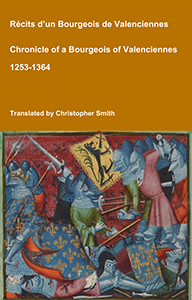
Chronicle of a Bourgeois of Valenciennes
Récits d’un bourgeois de Valenciennes aka The Chronicle of a Bourgeois of Valenciennes is a vivid 14th-century vernacular chronicle written by an anonymous urban chronicler from Valenciennes in the County of Hainaut. It survives in a manuscript that describes local and regional history from about 1253 to 1366, blending chronology, narrative episodes, and eyewitness-style accounts of political, military, and social events in medieval France, Flanders, and the Low Countries. The work begins with a chronological framework of events affecting Valenciennes and its region under rulers such as King Philip VI of France and the shifting allegiances of local nobility. It includes accounts of conflicts, sieges, diplomatic manoeuvres, and the impact of broader struggles like the Hundred Years’ War on urban life in Hainaut. Written from the perspective of a burgher (bourgeois) rather than a monastery or royal court, the chronicle offers a rare lay viewpoint on high politics and warfare, reflecting how merchants, townspeople, and civic institutions experienced the turbulence of the 13th and 14th centuries. Its narrative style combines straightforward reporting of events with moral and civic observations, making it a valuable source for readers interested in medieval urban society, regional politics, and the lived experience of war and governance in pre-modern Europe.
Available at Amazon in eBook and Paperback format.
30 Dec is in December.
On 30th December 987 Robert "Pious" II King of the Franks (age 15) was crowned II King France: Capet.
On 30th December 1115 Theodoric "Valiant" Metz II Duke Lorraine (age 60) died. His son Simon (age 39) succeeded I Duke Lorraine. Adelaide Reginar Duchess Lorraine by marriage Duchess Lorraine.
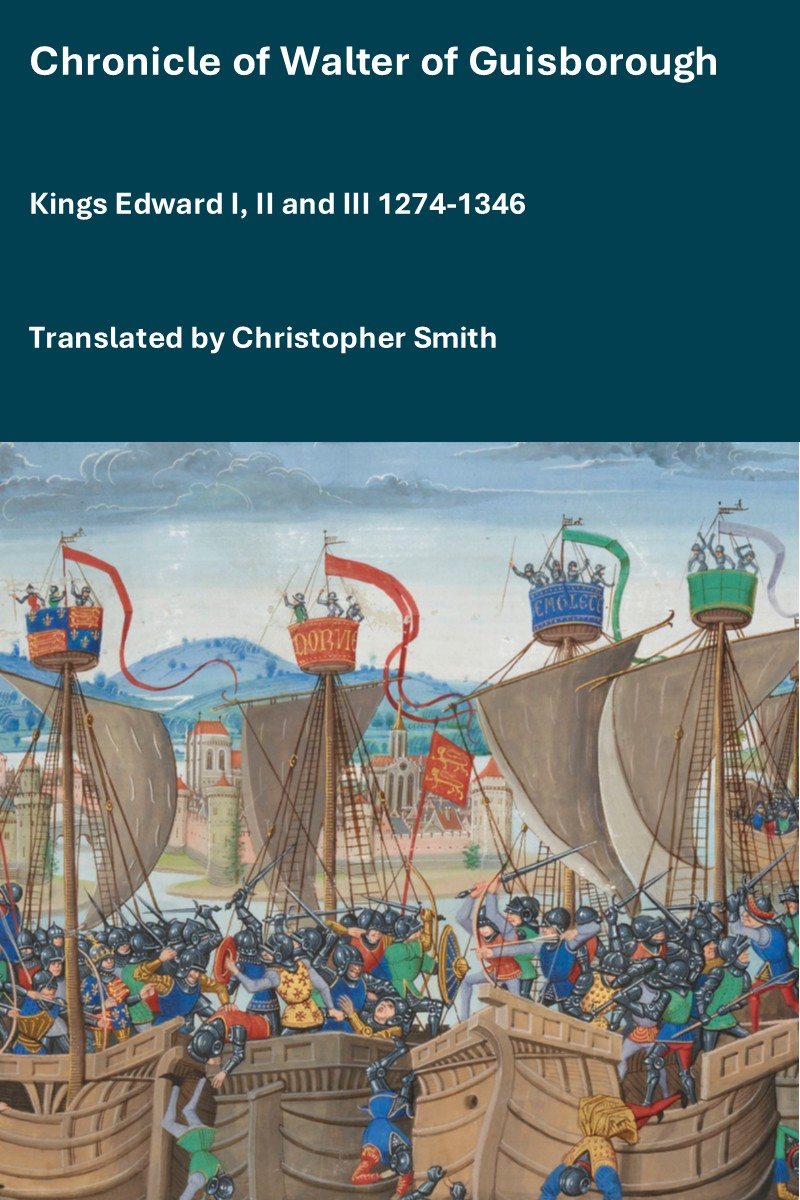 Chronicle of Walter of Guisborough. "Clement, bishop, servant of the servants of God, for the perpetual record of the matter. We believe that it has by now reached the knowledge of nearly everyone: the unspeakable crimes and detestable deeds of notorious heresy for which the Order of the Temple and its members have become infamous. They are said, on no light grounds, but on manifest evidence and forceful presumptions, to have denied our Lord and Saviour Jesus Christ, and to have committed the wicked, rash, presumptuous, and heretical act of spitting upon the image of the crucified Christ, as well as to be guilty of several other charges, which we do not think necessary to list here, since we believe them to be false. Yet, as the scandal increased and numerous serious consequences threatened, which could not lightly be ignored and which greatly discredited the whole Church, our conscience compelled us to act. We therefore ordered that they be arrested throughout the whole world, which was done some time ago. At length we ourselves began to inquire into these matters against them, calling to our assistance certain of our brothers to undertake this investigation with us diligently. Finally, a considerable number of these persons, men not of low but of high authority who had once been in the Order, priests, commanders, knights, and serving-brothers, were presented before us. By their own free confession and sworn depositions, given first in secret before us and then in the presence of the full council of our brothers, the cardinals of the Holy Roman Church, it became clear that, as far as these confessing persons were concerned, the said crimes and misdeeds were true. All of these confessors, recognising their error with humility, implored from us and from the Apostolic See not justice but mercy and pardon. Moreover, wishing to investigate these matters with our own eyes in regard to the Master and the chief commanders of the Order, we had them, namely, the Master of France, the lands overseas, Normandy, Aquitaine, and Poitou, as well as the major commanders of Poitou, brought before us. In our presence we commissioned three of our beloved sons, cardinals of the Holy Roman Church, priests of the titles of Saints Nereus and Achilleus, and of Saint Ciriacus in Thermis, and Landulf, deacon of Saint Angelo, men in whose prudence, experience, and fidelity we placed the highest confidence. We ordered them to make diligent inquiry into the truth of these charges, both against the said Master and commanders individually, and against the Order as a whole. In the presence of these three cardinals, four public notaries, and many other trustworthy men, the said Master and chief commanders, having first sworn on oath to tell the whole and complete truth, gave their testimony individually, freely, and voluntarily, without any coercion or fear. They deposed and confessed, among other things, that when they had been received into the Order of the Temple, they had denied Christ and spat upon the cross; and that some of them had themselves, in the same manner, received many other brothers into the Order. Some among them have also confessed to certain other horrible and shameful things, which, in order to spare them embarrassment for the present, we will pass over in silence. We therefore, wishing, as is our duty, to apply a suitable remedy to these matters, strictly forbid by apostolic authority that anyone from this time forward should knowingly, whether openly or in secret, give aid, counsel, or favour to these same Templars or to any one of them, or presume in any way to receive or harbour them, or to show them favour. Instead, they are to be completely avoided as persons suspected of heresy. By the same authority we further command all and each, whether ecclesiastical or secular persons, as well as princes, counts, barons, nobles, knights, and commoners, and the communities of cities, castles, towns, and other places, that they are to seize the said Templars and without any delay assign and deliver them to the local ordinaries (bishops or ecclesiastical judges) without any difficulty whatsoever. We, moreover, bind with the sentence of excommunication all and each, regardless of rank, dignity, order, condition, or status, even if they shine with pontifical dignity, who shall knowingly, whether openly or in secret, give aid, counsel, or favour to the aforesaid Templars or to any one of them, or who shall presume in any way to receive or harbour them, or to favour them as aforesaid. We likewise place under ecclesiastical interdict any cities, castles, lands, or places which shall knowingly receive or hold them or any one of them. Absolution from the aforesaid excommunication, except at the moment of death, and the lifting of such interdict we reserve to ourselves and to our successors, notwithstanding any privileges, indulgences, or apostolic letters whatsoever, granted under whatever form of words or expression, by which the force of the present letters might in any way be hindered. Therefore, let no one at all presume, with rash daring, to violate or oppose this page of our prohibition, command, excommunication, interdict, and reservation. Given at Toulouse, the third day before the Kalends of January [30th December 1308], on a Monday, in the fourth year of our pontificate. Wherefore, we command you by apostolic writ that you, or another or others, shall diligently and solemnly publish these sentences and the proceedings we send you under our bull, in every land, castle, and notable place within your cities and dioceses, in the presence of the clergy and the people, on Sundays and other feast days."
"Clemens episcopus, servus servorum Dei, ad Bull of Pope perpetuam rei memoriam. Ad omnium fere notitiam jam credimus pervenisse nefanda scelera et crimina abhorrenda hæresis notoriæ, supra quibus ordo et persona Templariorum, non levibus argumentis sed manifestis indiciis et violentis præsumptionibus, diffamati noscuntur, super abnegatione Domini Salvatoris nostri Jesu Christi, et super nefanda, temeraria et præsumptuosa et hæretica conspuitione super imaginem ejusdem crucifixi, necnon et super pluribus aliis articulis, quos, quia credimus fore inanitos, exprimi non oportet. Sicque crebrescente infamia, etiam imminentibus scandalis plurimis minime contemnendis, quæ non leviter totam scandalizabant ecclesiam, urgente conscientia, per totum orbem terrarum jamdudum ipsos capi mandavimus. Et tandem cœpimus super hiis contra eos inquirere per nos ipsos, nonnullis ex fratribus nostris accersitis ad inquisitionem prædictam nobiscum solicite peragendam. Et tandem præsentatis nobis personis eisdem non parvo sed grandi numero, non levis sed magnæ auctoritatis viris olim in ordine præfato, sacerdotibus, præceptoribus, militibus et servientibus, per eorum confessionem et depositiones, spontanee, libere factas coram nobis et fratribus nostris, in secreto prius et postmodum coram nobis totoque concilio fratrum nostrorum sanctæ Romanæ ecclesiæ cardinalibus, patuit manifeste, quoad personas ipsas confitentes, dicta crimina et scelera esse vera. Iidemque confitentes omnes et singuli, suum humiliter recognoscentes errorem, nostram et apostolicæ sedis non justitiam sed misericordiam et veniam implorarunt. Præterea, cum magistro et præceptoribus præcipuis præfati ordinis intendentes super præmissis inquirere per nos ipsos, ipsum magistrum, videlicet Franciæ, terræ ultramarinæ, Normanniæ, Aquitanniæ et Pictaviæ, præceptores majores Pictaviæ nobis existentibus mandavimus præsentari; tribus autem dilectis filiis nostris cardinalibus præsentibus, tituli Sancti Nerei et Achillei, et tituli Sancti Siriaci in Termis presbyteris, ac Landulpho Sancti Angeli diacono cardinalibus, de quorum prudentia et experientia et fidelitate indubitatam fiduciam obtinemus, commisimus et mandavimus ut ipsi cum præfato magistro et præceptoribus tam contra inquirerent et alias singulares personas dicti ordinis generaliter, quam etiam contra ipsum ordinem super præmissis diligentius veritatem; coram quibus idem magister et præceptores majores, de magna et plena veritate dicenda ab eis corporaliter præstito juramento, singulariter, libere ac sponte, absque coarctatione qualibet et terrore, coram ipsis tribus cardinalibus quatuorque tabellionibus publicis, et multis aliis probis viris deposuerunt et confessi fuerunt, inter cætera, Christi abnegationem et spuitionem super crucem cum in ordinem Templi recepti fuerunt et quidam ex eis se sub eadem forma fratres plurimos recepisse. Sunt etiam quidam ex eis quædam alia horribilia et inhonesta confessi, quæ, ut eorum ad præsens parcamus verecundiæ, subticemus. Nos igitur volentes super hiis, prout ad nos spectat, congruum remedium adhibere, auctoritate apostolica districtius inhibemus ne aliquis de cætero eisdem Templariis vel eorum alicui scienter vel publice vel occulte auxilium præstet, consilium vel favorem, seu alias ipsos vel aliquem eorum receptare seu retinere aut eis favere præsumat, sed eos tanquam suspectos de hæresi omnino devitet: mandantes nihilominus eadem auctoritate omnibus singulis ecclesiasticis, secularibusque personis, necnon principibus, comitibus, baronibus, nobilibus, militibus et plebeis, ac communitatibus civitatum, castrorum, villarum et aliorum locorum, quatenus dictos Templarios capiant, et eos locorum ordinariis sine difficultate qualibet assignare ac tradere non postponant. Nos autem omnes et singulos cujuscunque præeminentiæ, dignitatis, ordinis, conditionis ac status, etiam si pontificali præfulgeant dignitate, qui supradictis Templariis vel eorum alicui scienter, publice vel occulte præstabunt auxilium, consilium vel favorem, vel alias ipsos seu aliquem ipsorum receptare vel retinere, aut eis, ut præmittitur, favere præsumpserint, auctoritate præsentium excommunicationis sententia innodamus, ac civitates, castra, terras et loca, quæ ipsos vel aliquem eorum scienter susceperint vel tenuerint, ecclesiastico supponimus interdicto, absolutionem prædictorum præterquam in mortis articulo, ac relaxationem ipsius interdicti nobis nostrisque successoribus reservantes, non obstantibus quibuslibet privilegiis, indulgentiis et literis apostolicis quibuscunque et sub quacunque forma verborum vel expressione concessis, per quæ effectus Edward II præsentium posset quomodolibet impediri. Nulli igitur hominum liceat hanc paginam nostræ inhibitionis, mandati, excommunicationis, interdicti et reservationis infringere ausu temerario contraire. Datum Tholosæ III kalendas Januarii Monday, pontificatus nostri anno quarto. Quocirca vobis per apostolica scripta mandamus, quatenus senten- tias hujusmodi et processus quos vobis sub bulla nostra transmittimus, in singulis terris, castris et locis insignibus vestrarum civitatum et diœcesum, coram clero et populo, per vos vel aliquem seu aliquos, diebus Dominicis et festivis aliis, stu- deatis solemniter publicare."
On 30th December 1389 John Hastings 3rd Earl Pembroke (age 17) was killed in a tournament during the Christmas Court at Woodstock Palace, Oxfordshire [Map]. Earl Pembroke and Baron Manny, Baron Abergavenny Feudal Creation extinct. He was struck in the groin by the lance of Sir John Des.
John Hastings 6th Baron Hastings (age 61) de jure 6th Baron Hastings. His claim was contested by Reginald Grey 3rd Baron Grey Ruthyn (age 27) who was the son of Elizabeth Hastings Baroness Grey Ruthyn daughter of John Hastings 13th Baron Abergavenny 1st Baron Hastings his case being that he was of the full blood whereas John Hastings 6th Baron Hastings was of the half-blood ie Reginald Grey 3rd Baron Grey Ruthyn, like John Hastings 3rd Earl Pembroke, was descended from John Hastings 13th Baron Abergavenny 1st Baron Hastings and Isabel Valence Baroness Bergavenny Baroness Hastings, whereas John Hastings 6th Baron Hastings was descended from John Hastings 13th Baron Abergavenny 1st Baron Hastings and Isabel Despencer Baroness Hastings and Bergavenny.
On 30th December 1436 Louis Wittelsbach III Elector Palatine (age 58) died at Heidelburg.
Chronicle of Gregory [1400-1467]. Then come tydyngys of the comynge of þea Erle of Marche (age 18) unto London; then alle the cytte were fayne, and thonkyd God, and said that
He that had Londyn for sake
Wolde no more to them take,
and said, "Lette us walke in a newe wyne yerde, and lette us make us a gay gardon in the monythe of Marche with this fayre whyte ros and herbe, the Erle of Marche." And the Erle of Warwycke (age 32) mette with the Erle of Marche by-syde Oxforde, x myle out of hit, at a towne of his owne i-namyd Burford a-pon the Wolde [Map]; for the Erle of Marche come fro Walys, and was full sore a-ferde of the loste of the ij fyldys that were loste by-fore, Wakefylde that one, and Synt Albonys that othyr, and he sorowde sore for his fadyr the Duke of Yorke (age 49), and for his good brother the Erle of Rutlond (age 17), and for alle othyr lordys and comyns, &c.
Note a. the repeated in MS.
On 30th December 1460 the Lancastrian army took their revenge for the defeats of the First Battle of St Albans and the Battle of Northampton at the Battle of Wakefield near Sandal Castle [Map]. The Lancastrian army was commanded by Henry Holland 3rd Duke Exeter (age 30), Henry Beaufort 2nd or 3rd Duke of Somerset (age 24) and Henry Percy 3rd Earl of Northumberland (age 39), and included John Courtenay 7th or 15th Earl Devon (age 25) and William Gascoigne XIII (age 30), both knighted, and James Butler 1st Earl Wiltshire 5th Earl Ormonde (age 40), John "Butcher" Clifford 9th Baron Clifford (age 25), John Neville 1st Baron Neville of Raby (age 50), Thomas Ros 9th Baron Ros Helmsley (age 33), Henry Roos and Thomas St Leger (age 20).
The Yorkist army was heavily defeated.
Richard Plantagenet 3rd Duke of York (age 49) was killed. His son Edward (age 18) succeeded 4th Duke York, 7th Earl March, 9th Earl of Ulster, 3rd Earl Cambridge, 9th Baron Mortimer of Wigmore.
Thomas Neville (age 30), and Edward Bourchier were killed.
Father and son Thomas Harrington (age 60) and John Harrington (age 36) were killed, the former dying of his wounds the day after.
William Bonville 6th Baron Harington (age 18) was killed. His daughter Cecily succeeded 7th Baroness Harington.
Thomas Parr (age 53) fought in the Yorkist army.
Following the battle Richard Neville Earl Salisbury (age 60) was beheaded by Thomas "Bastard of Exeter" Holland. William Bonville (age 40) was executed.
Edmund York 1st Earl of Rutland (age 17) was killed on Wakefield Bridge [Map] by John "Butcher" Clifford. Earl of Rutland extinct.
Chronicle of Jean de Waurin Books 3-5 [1400-1474]. Chapter 3.40. How the Duke of York (age 49) and the Earl of Salisbury (age 60) were defeated and killed through the treachery of Andrew Trollope and several other noble men.
The Duke of York, therefore, being retreated to Wakefield, upon hearing news that Queen Margaret was coming with a great force of armed men to fight him, accompanied by the Duke of Somerset, was greatly astonished, as he did not have sufficient troops at the moment to resist such great power. He and the Earl of Salisbury, along with others in their company, spoke together to conclude their affairs. They sent for men from all sides, fortifying themselves to the best of their ability within the town. However, all this was in vain because at the moment they were attacked, most of their men had gone out for foraging. Additionally, Andrew Trollope, who was a very cunning military man, told the Duke of Somerset that he knew well that they could not force the Duke of York out of the town without a great loss of men. He found a way throughout the night to dress his men in coats bearing the badge of the Ragged Staff, which belonged to the Earl of Warwick (age 32) and were recognized as such, thus they appeared to be four hundred of the bravest men, well-instructed in what they had to do secretly. Their plan was to go straight to the town and tell the Duke of York that they came from the county of Lancashire to aid him.
When the Duke of York, who never suspected treachery, saw these companions approaching, he was very joyful and allowed them inside the town. That same night, the Duke of York ordered a strong guard because he knew well that the Duke of Somerset was in the fields, intending to confront him with all his might.
But when day broke, Andrew Trollope, accompanied by other soldiers all wearing the badge of the Ragged Staff, sent word to the Duke of York, without revealing his identity, that they were a large force come to his aid. The Duke was overjoyed and marched out of the town with the intention of engaging his enemies. At that moment, Andrew Trollope, the traitor, knowing that the Duke of Somerset was nearby, initiated the skirmish, and the Duke of Somerset, ready for action, charged fiercely upon the Duke of York and his men. Quickly, Andrew Trollope and his group, as well as those who had been sent by him into the town that night, turned against the Duke of York and his followers. In this battle, the Duke of York, the Earl of Rutland his son (age 17), the Earl of Salisbury, Sir Thomas Neville (age 30) his son, and many other noble men of their company were killed. This battle took place outside the town of Wakefield on the penultimate day of December in the year fourteen sixty. Queen Margaret was very joyful upon hearing this news, as were all those supporting her cause. On the other hand, the Earls of March and Warwick, who had lost their fathers in this battle, were deeply saddened and angered, but for the time being, they could not rectify the situation.
Chronicle of Enguerrand de Monstrelet [1400-1453]. 30th December 1460. This treaty was so contrary to the will and interests of the queen that she raised another army, of all who were inclined to her and her son the prince of Wales, and took the field, to offer battle to the duke of York, who had increased his army as strongly as possible, to defend his rights. On the first day of January, in this year, the battle took place, which was very bloody, and hardly contested; but this time, fortune turned against the duke, who was made prisoner, together with his second son and the earl of Salisbury. Shortly after, the queen had them beheaded, and their heads put on the points of three lances: and on the head of the duke was placed, by way of derision, a paper crown, to denote his eagerness to be king, and his having failed in the attempt. The earl of Warwick1 found means to escape after the battle, and quit the kingdom, which he did in a small boat, with great danger, and arrived safely at his government of Calais.
Note 1. The earl of Warwick — was not present at this battle, for he and the duke of Norfolk had the charge of king Henry and of the city of London. It was from the second battle of St Alban's, that he fled to Calais.
Chronicle of Robert Fabyan [-1512]. 30th December 1460. Wherof the quene with hyr lordys beynge ware, & hauynge with them a great strength of northerne, mette wt the duke of Yorke upon the. xxx. daye of December nere a towne in the northe callyd Wakefelde, were atwene them was foughten a sharpe fyght, in ye whiche the duke of Yorke was slayen, wt his sone callyd erle of Rutlande, & syr Thomas Neuyll, sone unto the erle of Salesbury, with many other, & ye erle of Salesbury was there taken on lyne with dyuerse other. Whan the lordys upon the quenys partye hadde gotten this vyctory, anon they sent theyr prysoners unto Pountfreyt, the whiche were after there behedyd, that is to meane, the erle of Salesbury, a man of Lodon, namyd lohn Harowe, and an other capytayne namyd Hanson, whose heddys were sent unto Yorke, and there set upon the gatys.
Chronicle of Gregory [1400-1467]. 30th December 1460. Ande the same year, the xxx [30] day of December, the Duke of Exceter (age 30), the Duke of Somersett (age 24), the Erle of Northehomberlond (age 39), the Lord Roos (age 33), the Lord Nevyle (age 50), the Lord ClyfForde (age 25), with many mo lordys, knyghtys, squyers, and gentyllys, and the commyns of the Quenys party, met with the Duke of Yorke (age 49) at Wakefylde [Map], and there they made a grete jorney a-pon the lord and Duke of Yorke, and toke him and the Erle of Saulysbury (age 60), the Erle of Rutlond (age 17), and the Lord Haryngdon (age 18), and Syr Thomas Nevyle (age 30), and Syr Thomas Haryngdon (age 60), and many mo knyghtys were take a slayne by syde alle the comyns. But this good Duke of Yorke with his lordys a-fore said loste her heddys; God have marcy on there soulys, for they loste in that jorneys the nombyr of xxvc [2500] men. And in the Quenys party were slay but ii c [200] men, &c.
Chronicle of Edward Hall [1496-1548]. 30th December 1460. Therle of Salisbury and other his frendes, seing his corage, resolued theselfes to his opinion, & ordered their men, and set them furth in Warlike fashion, for their moste aduauntage. The Duke of Somerset and other of the queues part, knowyng perfidy, that if the Duke gat the victory, their daies wer rninished, and their liuynges left bare, like men quickened and exasperate, for the safegard of their lifes, and defence of their goodes, determined to abide the chaunce, and to espie their moste aduauntage, and so appointed the lorde Clifford (age 25), to lye in the one stale, and the Erie of Wilshire in the other, and thei theimselfes kept the mayne battaill. The duke of Yorke with his people, discended doune the hill in good ordre and array, & was suffered to passe foreward, toward the mayne battaill: but when he was in the plain ground betwene his Castle and the toune of Wakefelde, he was enuironed on every side, like a fish in a net, or a deere in a buckestall: so that he manfully fightyng, was within halfe an houre slain and ded, and his whole army discomfited, & with hym died of his trusty frendes, his two bastard vncles, sir Ihon, & sir Hugh Mortimers, sir Dauy Halle his chief counsailor, sir Hugh Hastynges, sir Thomas Neuel, William and Thomas Aparre, bothe brethren, and twoo thousande and eight hundred other, wherof many wer young gentlemen, and heires of greate parentage in the Southe parte, whose linages revenged their dealhes, within foure Monethes, next and immediatly insuyng. In this conflicte was wounded and taken prisoner, Richarde Erie of Salisbury, sir Richard Lymbrike, Raufe Stanley, Ihon Harow, Capitain Hauson, and diverse other. While this battaill was in fightyng, a prieste called sir Robert Aspall, chappelain and schole master to the yong erle of Rutland ii. sonne to the aboue named duke of Yorke, scace of ye age of xii yeres, a faire gentletman, and a maydenlike person, perceiuyng yt flight was more sauegard, then tariyng, bothe for him and his master, secretly conueyed therle out of ye felde, by the lord Cliffordes bande, toward the towne, but or he coulde enter into a house, he was by the sayd lord Clifford espied, folowed, and taken, and by reson of his apparell, demaunded what he was. The yong gentelman dismaied, had not a word to speake, but kneled on his knees imploryng mercy, and desiryng grace, both with holding vp his handes and making dolorous countinance, for his speache was gone for feare. Saue him sayde his Chappelein, for he is a princes sonne, and peraduenture may do you good hereafter. With that word, the lord Clifford marked him and sayde: by Gods blode, thy father slew myne, and so wil I do the and all thy kyn, and with that woord, stacke the erle to ye hart with his dagger, and bad his Chappeleyn here the erles mother & brother worde what he had done, and sayde. In this acte the lord Clyffbrd was accompted a tyraunt, and no gentelman, for the propertie of the Lyon, which is a furious and an vnreasonable beaste, is to be cruell to them that withstaride hym, and gentle to such as prostrate or humiliate them selfes before him. Yet this cruell Clifforde, & deadly bloudsupper not content with this homicyde, or chyldkillyng, came to ye place wher the dead corps of the duke of Yorke lay, and caused his head to be stryken of, and set on it a croune of paper, & so fixed it on a pole, & presented it to the Quene, not lyeng farre from the felde, in great despite, and much derision, saiyng: Madame, your warre is done, here is your kinges raunsome, at which present, was much ioy, and great reioysing, but many laughed then, that sore lamented after, as the Quene her self, and her sonne: And many were glad then of other mens deaths, not knowing that their awne were nere at hande, as the lord Clifford, and other.
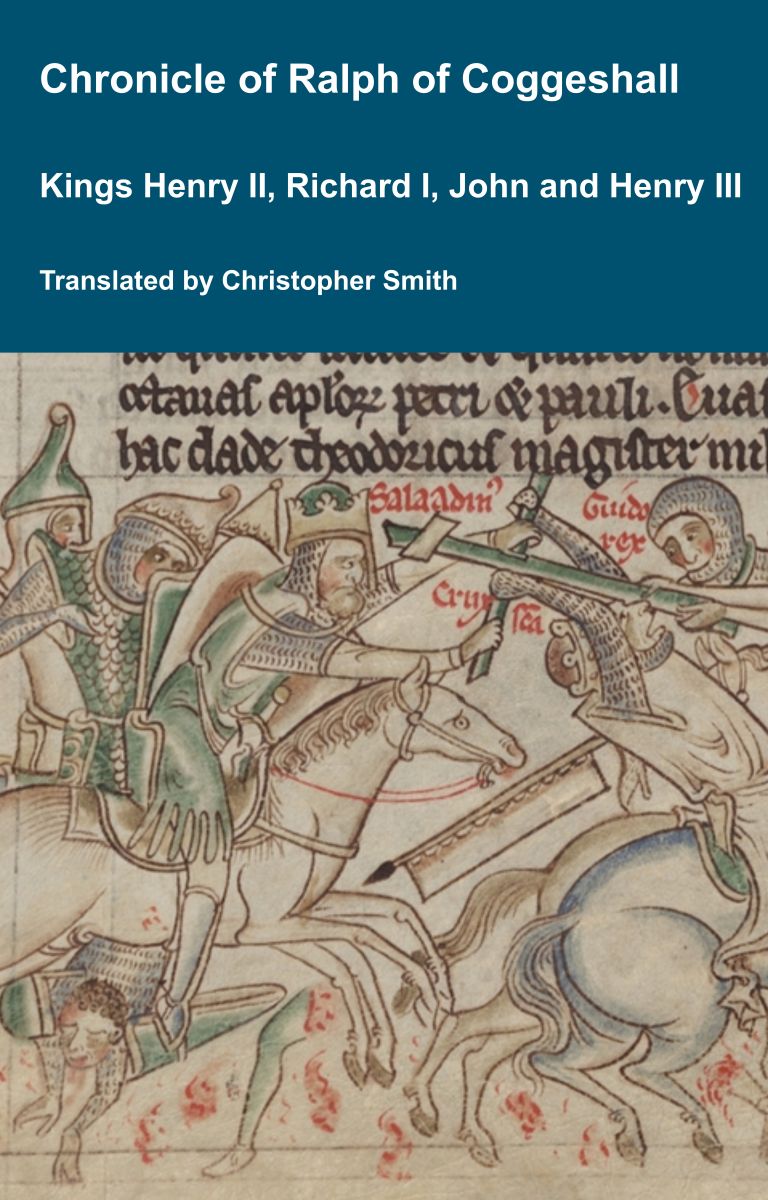
Chronicle of Abbot Ralph of Coggeshall
The Chronicle of Abbot Ralph of Coggeshall (Chronicon Anglicanum) is an indispensable medieval history that brings to life centuries of English and European affairs through the eyes of a learned Cistercian monk. Ralph of Coggeshall, abbot of the Abbey of Coggeshall in Essex in the early 13th century, continued and expanded his community’s chronicle, documenting events from the Norman Conquest of 1066 into the tumultuous reign of King Henry III. Blending eyewitness testimony, careful compilation, and the monastic commitment to record-keeping, this chronicle offers a rare narrative of political intrigue, royal power struggles, and social upheaval in England and beyond. Ralph’s work captures the reigns of pivotal figures such as Richard I and King John, providing invaluable insights into their characters, decisions, and the forces that shaped medieval rule. More than a simple annal, Chronicon Anglicanum conveys the texture of medieval life and governance, making it a rich source for scholars and readers fascinated by English history, monastic authorship, and the shaping of the medieval world.
Available at Amazon in eBook and Paperback format.
Holinshed's Chronicle [1525-1582]. 30th December 1460. Now she, hauing in hir companie the prince hir sonne the dukes of Excester and Summerset, the earle of Deuonshire, the lord Clifford, the lord Ros, and in effect all the lords of the north parts, with eightéene thousand men, or (as some write) two and twentie thousand, marched from Yorke to Wakefield, and bad base to the duke, euen before his castell gates. He hauing with him not fullie fiue thousand persons, contrarie to the minds of his faithfull councellors would needs issue foorth to fight with his enimies. The duke of Summerset and the quéenes part, casting upon their most aduantage, appointed the lord Clifford to lie in one stale, and the earle of Wilshire in another, and the duke with other to kéepe the maine battell. The duke of Yorke with his people descended downe the hill in good order and arraie, and was suffered to passe on towards the maine battell. But when he was in the plaine field betweene his castell and the towne of Wakefield, he was inuironed on everie side, like fish in a net, so that though he fought manfullie,The duke of Yorke slaine. yet was he within halfe an houre slaine and dead, and his whole armie discomfited: with him died of his trustie fréends, his two bastard vncles, sir John and sir Hugh Mortimers, sir Dauie Hall, sir Hugh Hastings, sir Thomas Neuill, William and Thomas Aparre, both brethren; and two thousand and eight hundred others, whereof manie were yoong gentlemen, and heires of great parentage in the south parts, whose kin revenged their deaths within foure moneths next, as after shall appeare.
Chronicle of St Albans by Abbot John Whethamstede [-1465]. 30th December 1460. Therefore, for a more immediate and recent recollection of the day, place, and year, the passing of the said Duke, along with the brevity of his hereditary name, is further chronicled here in brief metrical style, in these words:
In the thousandth years, one hundred four times, and six
Thrice ten days, in the twelfth months of December,
Near Wakefield, in the county of York,
The Duke, lord of the town,
Engaged in combat with the northern people,
And many lords led the way, and met them head on.
Where he learned fate is second to fortune,
And voids delay, The Duke and his son,
and the renowned Earl as well,
Together fell. The lots of chance, their fate foretold,
The heir to the throne was short-lived, as history unfolds.
Their passing mourned by many a soul,
A kingdom's right, the right was his.
(The names and surnames of those illustrious men who fell in the said battle, in the battle, namely, fought at Wakefield, are recorded elsewhere in another, slightly shorter register.)
Unde, in promptiorem recentioremque reminiscentiam de die, loco, et anno, decessus dicti Domini Ducis, superque brevitate nominis hæreditarii sui juris, scribitur hic ulterius de hiis omnibus brevi stilo metrico, sub hiis verbis:
Anno milleno, centum quater, X quoque seno,
Ter denoque die, duodeno mense Decembre,
Infra Eboracensem, juxta Wakefelde, Comitatum,
Dux, dominus villæ, fertur pugnans habuisse
Conflictum grandem contra gentem Borealem,
Ac proceres plures, præerant qui gentibus ipsis.
Quo docuit quia sors quod res fortuna secundas
Vitat habere moras, cecidit Dux, natus et ejus,
Ac Comes insignis. Sors belli, sors fait ipsis
Obvia, sicque satis regni fuerat brevis hæres,
Omen et id letum tulerat mutamine mœstum,
Deflendum multis; jus regni, jus fuit ejus.
(Nomina et cognomina illorum virorum illustrium, qui ceciderunt in bello dicto, in bello, videlicet, commisso apud Wakefelde, vide alibi in Registro altero, parumper breviori.)
Chronicle of St Albans by Abbot John Whethamstede [-1465]. 30th December 1460. Battle of Wakefield.
Hearing this, the northerners, and their leaders, who always schemed and plotted, sat diligently, and often mixing honey with gall and sweet marjoram with bitterness, observed how the southerners were somewhat lax in their camps. The southerners wandered in search of provisions, not being always on their guard, and not fully prepared in arms against the enemy's ambushes and invasions. Then, contrary to the promised faith and before the appointed day of battle, they rushed upon them, overwhelming them with the weight of their multitude, causing many to fall in the field and some to flee from the field; they captured two of the said lords in battle and treated them, especially the Duke of York, with much mockery. For they set him upon a small anthill and made a humble wreath made of marsh grass and placed it on his head in the manner of a crown, just like the Jews did before the Lord, they bent their knees before him, saying mockingly, "Hail, king without rule. Hail, king without inheritance. Hail, duke and prince, without any people at all, and without possession." With these and various other disgraceful and reproachful words against him, they finally compelled him to relinquish the claim of his rightful justice through the severing of his head.
Audientes autem Boreales, eorumque duces, qui semper in dolo, semper in insidiis, studiose sederant, frequentiusque favum cum felle, marrubium quoque cum melle, propinare consueverunt, quomodo Australes se in castris paulisper remisse regerent, vagarenturque in partibus pro cumulandis victualibus, nec se redderent omni hora bene cautos, ac plene paratos in armis adversus insidias hostium, et invasiones; mox, contra fidem præstitam, et citra diem belli appunctuatum, irruerunt super eos, moleque suæ multitudinis ipsos opprimentes, coegerunt plures in campo cadere, nonnullos de campo fugere; duos vero Dominos dictos ceperunt in bello ipsosque, et præcipue Ducem Eboracensem, multum ludibriose intractavere. Nam statuentes eum super unum parvum formicarium colliculum, et quoddam sertum vile, ex palustri gramine confectum, imponentes per modum coronæ super caput suum, non aliter quam Judæi coram Domino, incurvaverunt genua sua coram ipso, dicentes illusorie, "Ave, rex, sine regimine. Ave, rex, absque hæreditate. Ave, dux et princeps, absque omni populo penitus, et possessione." Et hiis, una cum aliis variis, in eum probrose opprobrioseque dictis, coegerunt ipsum demum, per capitis abscissionem, clameum relinquere suæ justitiæ vendicationis.
A Chronicle of London. 30th December 1460 ... and ayenst Cristmas went northward and was slayne at Wakefelde with other;
Croyland Chronicle 1460. 30th December 1460. After the conclusion of these matters, towards the close of the same year, it being the week of our Lord's Nativity, the said Richard, duke of York, incautiously engaged the northern army at Wakefield which was fighting for the king, without waiting to bring up the whole of his own forces; upon which, a charge was made by the enemy on his men, and he was without any mercy or respect relentlessly slain. There fell with him at the same place many noble and illustrious men; and countless numbers of the common people, who had followed him, met their deaths there, and all to no purpose.
Bale's Chronicle [1450-1460]. And on the morn after newe yeresday cam hevy word and tidings to the king and my lord of Warrewik that the duke of york, the Erie Rutland his sone and the Erie Salesbury wer trayterously and ageinst lawe of armes be taking of Tretys graunted, mordred and slain in the north beside pountfreite in a feld called wakefield1 by the fals meanes and power arrered by the duk of Somerset the Erie Northumberland the lorde Roos and the lord Clifford and the lorde Nevyll and andrewe trollop and ojiers. And they made their quarell in colour of that myschevous dede doing and they entended therby to have the king at large surmetting by lettres of deffiance that they sent to the mair and comones of london that the king was enprisoned at london which was fals and be that meanes they dispoilled divers places and robbed and slewe peple be yond the trent shamefull to rite.
Note 1. Two days before, December 30, 1460. The Epitaph for the Duke of York (Pol. Poems., ii. 256) expresses a view akin to that of Bale:
Ce noble Due a Wacquefelde mourut [This noble Duke died at Wakefield]
Doux paix traitant force sur luy courut. [While he was negotiating sweet peace, force rushed upon him.]
Chronicle of William of Worcester [1415-1482]. On the 29th of December1, at Wakefield, while the soldiers of the Duke of York (age 49) were wandering through the country seeking provisions, a dreadful battle occurred between the said Duke of Somerset (age 24), the Earl of Northumberland (age 39), and Lord Neville (age 50) with a large army, and the opposing party, where the Duke of York, Thomas Neville (age 30), son of the Earl of Salisbury (age 60), Thomas Harington (age 60), Thomas Parr, Edward Bourchier, James Pickering, and Henry Radford, as well as many other knights and esquires, and about two thousand commoners, were killed on the field. In the retreat after the battle, Lord Clifford killed, some say murdered, Lord Edmund, Earl of Rutland (age 17), son of the Duke of York, on the bridge at Wakefield [Map]. And on the same night, the Earl of Salisbury was captured by the servant of Andrew Trollope. On the next day, at Pontefract, the Bastard of Exeter killed the said Earl of Salisbury, where, by the counsel of the lords, the lifeless bodies of the Duke of York, the Earl of Salisbury, and Rutland, Thomas Neville, Edward Bowcher, Thomas Harington, Thomas Parre, James Pykeryng, and John Harrowe of London, mercer, were beheaded, and their heads were placed on various parts of York. They crowned the head of the Duke of York with a paper crown in mockery.
xxix. die mensis Decembris apud Wakfelde, gentibus ducis Eborum vagantibus per patriam pro victualibus quærendis, factum est execrabile bellum inter dictum ducem Somercetiæ, comitem Northumbriæ ac dominum Nevylle cum magno exercitu et partem aliam; ubi occubuerunt in campo dux Eboracensis, Thomas Nevil, filius comitis Sarum, Thomas Haryngtone, Thomas Parre, Edwardus Bowcher, Jacobus Pykeryng, et Henricus Rathforde, ac etiam multi alii milites et armigeri, et plebs ad duo millia. Et in fugiendo post campum super pontem apud Wakefelde dominus de Clyfforde occidit dominum Edmundum, comitem de Rutlande, filium ducis Eboraci. Et eadem nocte comes Sarum captus est per servientem Andreæ Trolloppe. Et in crastino apud Pountfrett bastardus Exoniæ occidit dictum comitem Sarum, ubi per consilium dominorum decollaverunt corpora mortua ducis Eboracensis, et comitis Sarum et Ruttland, Thomas Nevyle, Edwardi Boucher, Thomas Haryngton, Thomæ Parre, Jacobi Pykeryng, et Johannis Harrowe de London, mercer, posueruntque capita eorum super diversas partes Eboraci. Caput quoque ducis Eboraci in despectu coronaverunt carta.
Note. The Battle of Wakefield took place on the 30th of December 1460.
A Brief Latin Chronicle. When Parliament had been prorogued, the Duke of York (with his son Edward) and the Earl of Salisbury (with his son Thomas), with suitable retinue, set out for the northern parts to suppress the disturbances there and punish the wrongdoers. When they had come to the town of Wakefield in the holy week of the Lord's Nativity, on the morrow of St Thomas the Martyr [30th December 1460], they prepared themselves for battle. But as the day was already drawing to its close, either through their own carelessness and negligence, or through the treachery and desertion of a large part of their army, they were with many nobles and attendants slain by the Duke of Somerset, Lord Clifford, Lord Neville, and others, who with fierce warriors made a cruel assault upon them. The heads of those slain lords were, it is said, displayed shamefully and most disgracefully upon the gates of the city of York. At this time, custody of the Tower of London was entrusted to certain aldermen and citizens of the same city.
Prorogato parliamento, iste dux Eboracensis (cum filio suo Edwardo), et comes Sarum (cum filio suo Thoma), cum decenti apparatu iter ceperunt versus partes boreales ad sedandas turbulencias ibidem et malefactores castigandos; unde ad villam de Wakefeld venientes in sancta ebdomada Nativitatis Dominice, in crastino Sancti Thome Martiris ad pugnham se parabant. Sed declinante jam die, sive incuria et negligencia sua, sive fraude et fuga magne partis sui exercitus, cum proceribus et valettis plurimis interfecti sunt per ducem de Somersett, dominum Clifford, dominum Newyle, &c., qui cum ferocibus belligeris in illos crudeliter irruerunt; quorum dominorum interfectorum capita, ut dicitur, supre mucos civitatis Ebora. censis obprobiose et dissone (?) nimis sunt exposita. Hoc tmepore commissa est custodia Turris London. certis Aldermannis et civibus ejusdem civitatis.
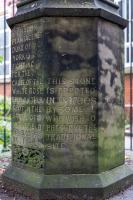
1897. Monument to Richard Plantagenet 3rd Duke of York (age 49) on Manygates Lane [Map] at the location where he is traditionally thought to have been killed at the Battle of Wakefield.




On 30th December 1469 George Neville 1st Baron Latimer of Snape (age 62) died at Well. He was buried at St Michaels Church, Well. His grandson Richard (age 1) succeeded 2nd Baron Latimer of Snape. Grave marker at the Beauchamp Chapel, St Mary's Church, Warwick [Map].
Letters and Papers Foreign and Domestic Henry VIII 1535. 30th December 1535. 1036. After I had taken leave of the King he recalled me by the Duke of Suffolk (age 51) to tell me news had just come that the Queen (age 50) was in extremis, and that I should hardly find her alive; moreover, that this would take away all the difficulties between your Majesty and him. I think the danger cannot be so great, because the physician did not represent the case to me as so urgent; nevertheless I took horse at once. I asked leave that the Princess (age 19) might see the Queen her mother,—which he at first refused, and on my making some remonstrance he said he would take advice on the subject.
The Princess had advised me to make this request. London, 30 Dec. 1535.
Fr., from a modern copy, pp. 6.


On 30th December 1546 Henry VIII (age 55) made his last revision to his will signed using the Dry Stamp that was used increasingly commonly. The will confirmed the succession as King Edward VI of England and Ireland (age 9), Queen Mary I of England and Ireland (age 30) and Queen Elizabeth I of England and Ireland (age 13).
The will appointed sixteen executors: Anthony Browne (age 46), Archbishop Thomas Cranmer (age 57), Anthony Denny (age 45), John Dudley 1st Duke Northumberland (age 42), William Herbert 1st Earl Pembroke (age 45), Edward Montagu (age 61), Edward North 1st Baron North (age 50), William Paget 1st Baron Paget Beaudasert (age 40), William Paulet 1st Marquess Winchester (age 63), John Russell 1st Earl Bedford (age 61), Edward Seymour 1st Duke of Somerset (age 46), Bishop Cuthbert Tunstall (age 72) and Thomas Wriothesley 1st Earl of Southampton (age 41).
On 30th December 1578 Prince Ulrik Oldenburg was born to Frederick II King of Denmark (age 44) and Sophie Mecklenburg-Schwerin Queen Consort Denmark (age 21).
On 30th December 1605 Francis Tresham died whilst imprisoned at the Tower of London [Map] for his part in the Gunpowder Plot. His brother Lewis Tresham 1st Baronet (age 30) inherited Rushton Hall.
On 30th December 1623 the fourth Parliament of James I (age 57) known as the Happy Parliament was summoned.
On 19th February 1624 the Happy Parliament held its first session.
Roland Egerton 1st Baronet (age 29) was elected MP Wootton Bassett.
Arthur Lake (age 25) was elected MP Minehead.
James Wriothesley (age 18) was elected MP Winchester.
Richard Edgecumbe (age 53) was elected MP Grampound.


John Evelyn's Diary. 30th December 1640. I saw his Majesty (age 40) (coming from his Northern Expedition) ride in pomp and a kind of ovation, with all the marks of a happy peace, restored to the affections of his people, being conducted through London with a most splendid cavalcade; and on the 3d of November following (a day never to be mentioned without a curse), to that long ungrateful, foolish, and fatal Parliament, the beginning of all our sorrows for twenty years after, and the period of the most happy monarch in the world: Quis talia fando!


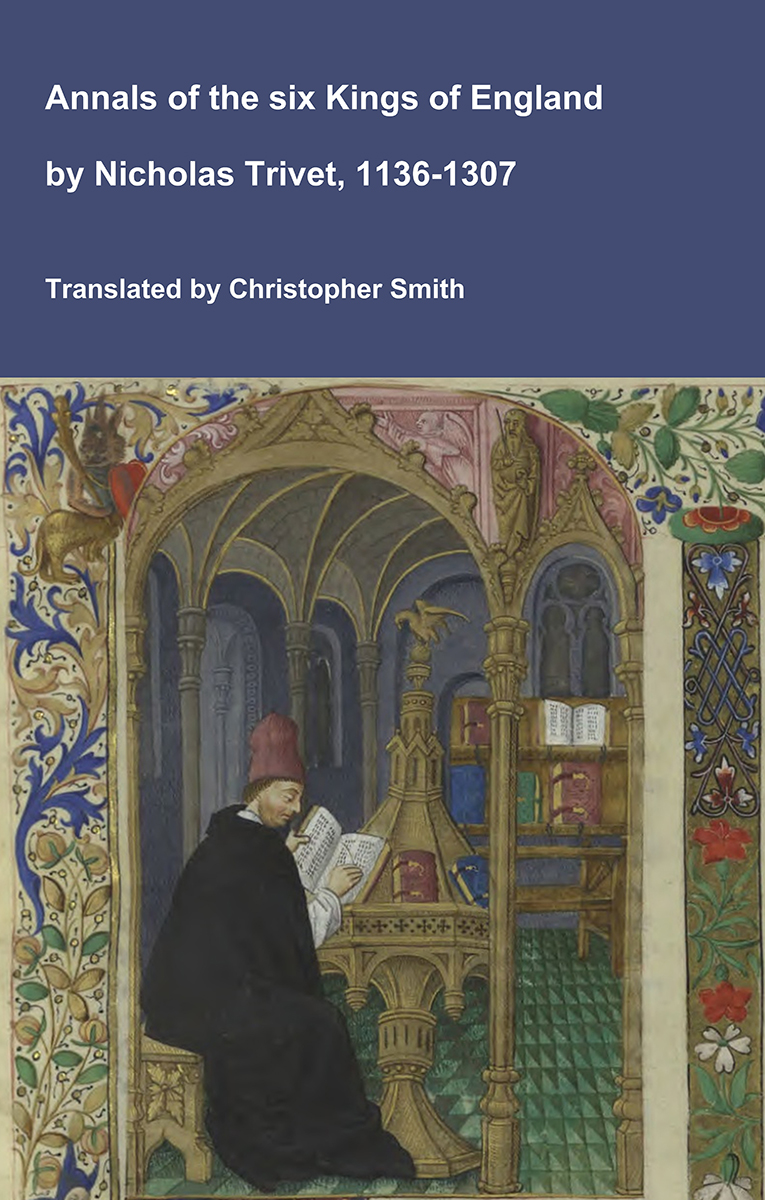
Annals of the six Kings of England by Nicholas Trivet
Translation of the Annals of the Six Kings of England by that traces the rise and rule of the Angevin aka Plantagenet dynasty from the mid-12th to early 14th century. Written by the Dominican scholar Nicholas Trivet, the work offers a vivid account of English history from the reign of King Stephen through to the death of King Edward I, blending political narrative with moral reflection. Covering the reigns of six monarchs—from Stephen to Edward I—the chronicle explores royal authority, rebellion, war, and the shifting balance between crown, church, and nobility. Trivet provides detailed insight into defining moments such as baronial conflicts, Anglo-French rivalry, and the consolidation of royal power under Edward I, whose reign he describes with particular immediacy. The Annals combines careful year-by-year reporting with thoughtful interpretation, presenting history not merely as a sequence of events but as a moral and political lesson. Ideal for readers interested in medieval history, kingship, and the origins of the English state, this chronicle remains a valuable and accessible window into the turbulent world of the Plantagenet kings.
Available at Amazon in eBook and Paperback format.
On 30th December 1654 Maria Anna Josepha Habsburg Spain was born to Ferdinand III Holy Roman Emperor (age 46) and Eleonora Gonzaga Queen Consort Bohemia (age 24). Coefficient of inbreeding 2.47%.


John Evelyn's Diary. 30th December 1656. Dined with me Sir William Paston's (age 46) son (age 25), Mr. Henshaw (age 38), and Mr. Clayton.
Samuel Pepys' Diary. 30th December 1662. Thence to White Hall, where I carried my wife to see the Queen (age 53) in her presence-chamber; and the maydes of honour and the young Duke of Monmouth (age 13) playing at cards. Some of them, and but a few, were very pretty; though all well dressed in velvet gowns.


Samuel Pepys' Diary. 30th December 1663. So leaving him at the Guiny House I to the Coffee House, whither came Mr. Grant (age 43) and Sir W. Petty (age 40), with whom I talked, and so did many, almost all the house there, about his new vessel, wherein he did give me such satisfaction in every point that I am almost confident she will prove an admirable invention.
Samuel Pepys' Diary. 30th December 1663. Up betimes and by coach to my Lord Sandwich (age 38), who I met going out, and he did aske me how his cozen, my wife; did, the first time he hath done so since his being offended, and, in my conscience, he would be glad to be free with me again, but he knows not how to begin. So he went out, and I through the garden to Mr. Coventry (age 35), where I saw Mr. Ch. Pett (age 43) bringing him a modell, and indeed it is a pretty one, for a New Year's gift; but I think the work not better done than mine. With him by coach to London, with good and friendly discourse of business and against Sir W. Batten (age 62) and his foul dealings.


Samuel Pepys' Diary. 30th December 1664. Lay very long in bed with my wife, it being very cold, and my wife very full of a resolution to keepe within doors, not so much as to go to church or see my Lady Sandwich (age 39) before Easter next, which I am willing enough to, though I seem the contrary. This and other talke kept me a-bed till almost 10 a'clock. Then up and made an end of looking over all my papers and books and taking everything out of my chamber to have all made clean.
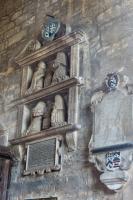
On 30th December 1665 Robert Cawdron died. Memorial at Church of St John the Baptist, Great Hale [Map]
Samuel Pepys' Diary. 30th December 1667. Thence to White Hall, and there to visit Sir G. Carteret (age 57), and there was with him a great while, and my Lady and they seem in very good humour, but by and by Sir G. Carteret and I alone, and there we did talk of the ruinous condition we are in, the King (age 37) being going to put out of the Council so many able men; such as my Lord Anglesey (age 53), Ashly (age 46), Hollis (age 68), Secretary Morrice (age 65) (to bring in Mr. Trevor), and the Archbishop of Canterbury (age 69), and my Lord Bridgewater (age 44). He tells me that this is true, only the Duke of York (age 34) do endeavour to hinder it, and the Duke of York himself did tell him so: that the King and the Duke of York do not in company disagree, but are friendly; but that there is a core in their hearts, he doubts, which is not to be easily removed; for these men do suffer only for their constancy to the Chancellor (age 58), or at least from the King's ill-will against him: that they do now all they can to vilify the clergy, and do accuse Rochester, Kent [Map] [Dolben]... and so do raise scandals, all that is possible, against other of the Bishops. He do suggest that something is intended for the Duke of Monmouth (age 18), and it may be, against the Queene (age 58) also: that we are in no manner sure against an invasion the next year: that the Duke of Buckingham (age 39) do rule all now, and the Duke of York comes indeed to the Caball, but signifies little there. That this new faction do not endure, nor the King, Sir W. Coventry (age 39); but yet that he is so usefull that they cannot be without him; but that he is not now called to the Caball. That my Lord of Buckingham, Bristoll (age 55), and Arlington (age 49), do seem to agree in these things; but that they do not in their hearts trust one another, but do drive several ways, all of them. In short, he do bless himself that he is no more concerned in matters now; and the hopes he hath of being at liberty, when his accounts are over, to retire into the country. That he do give over the Kingdom for wholly lost. So after some other little discourse, I away, meeting with Mr. Cooling. I with him by coach to the Wardrobe, where I never was since the fire in Hatton Garden [Map], but did not 'light: and he tells me he fears that my Lord Sandwich (age 42) will suffer much by Mr. Townsend's being untrue to him, he being now unable to give the Commissioners of the Treasury an account of his money received by many thousands of pounds, which I am troubled for.

Samuel Pepys' Diary. 30th December 1667. After dinner, I did understand from my Lady Jemimah that her brother Hinchingbroke's business was to be ended this day, as she thinks, towards his match, and they do talk here of their intent to buy themselves some new clothes against the wedding, which I am very glad of.

On 30th December 1669 Christopher Monck 2nd Duke Albemarle (age 16) and Elizabeth "Mad Duchess" Cavendish Duchess Albermarle Duchess of Montagu (age 15) were married at Whitehall Palace [Map]. She the daughter of Henry Cavendish 2nd Duke Newcastle upon Tyne (age 39) and Frances Pierrepont Duchess Newcastle upon Tyne (age 39). He the son of George Monck 1st Duke Albemarle (age 61) and Anne Clarges Duchess Albermarle (age 50).
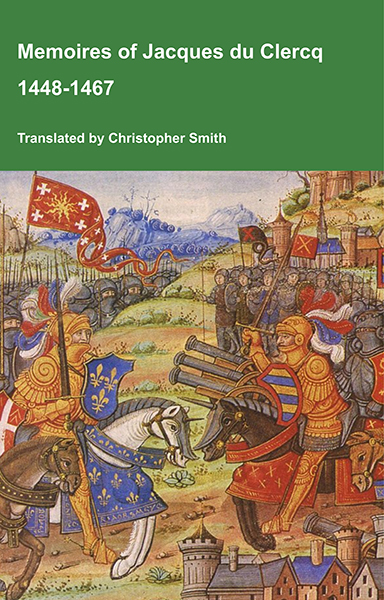
This is a translation of the 'Memoires of Jacques du Clercq', published in 1823 in two volumes, edited by Frederic, Baron de Reissenberg. In his introduction Reissenberg writes: 'Jacques du Clercq tells us that he was born in 1424, and that he was a licentiate in law and a counsellor to Philip the Good, Duke of Burgundy, in the castellany of Douai, Lille, and Orchies. It appears that he established his residence at Arras. In 1446, he married the daughter of Baldwin de la Lacherie, a gentleman who lived in Lille. We read in the fifth book of his Memoirs that his father, also named Jacques du Clercq, had married a lady of the Le Camelin family, from Compiègne. His ancestors, always attached to the counts of Flanders, had constantly served them, whether in their councils or in their armies.' The Memoires cover a period of nineteen years beginning in in 1448, ending in in 1467. It appears that the author had intended to extend the Memoirs beyond that date; no doubt illness or death prevented him from carrying out this plan. As Reissenberg writes the 'merit of this work lies in the simplicity of its narrative, in its tone of good faith, and in a certain air of frankness which naturally wins the reader’s confidence.' Du Clercq ranges from events of national and international importance, including events of the Wars of the Roses in England, to simple, everyday local events such as marriages, robberies, murders, trials and deaths, including that of his own father in Book 5; one of his last entries.
Available at Amazon in eBook and Paperback format.
John Evelyn's Diary. 30th December 1683. Dr. Sprat (age 48), now made Deane of Westminster, preached to the King (age 53) at Whitehall [Map], on 6 Matt. 24. Recollecting the passages of the past yeare, I gave God thanks for his mercies, praying his blessing for the future.
On 30th December 1687 Wriothesley Baptist Noel 2nd Earl Gainsborough (age 26) and Catherine Greville Duchess Buckingham and Normandby were married. He the son of Edward Noel 1st Earl Gainsborough (age 46) and Elizabeth Wriothesley Countess Gainsborough (age 41).

On 30th December 1702 Marie Gabrièle Charlotte Lorraine was born to Leopold Duke of Lorraine (age 23) and Élisabeth Charlotte Bourbon Duchess Lorraine (age 26). She a great x 3 granddaughter of King James I of England and Ireland and VI of Scotland. She died aged eight in 1711.
On 30th December 1731 Fulbeck Hall was mostly destroyed in a fire. It was rebuilt the following year.
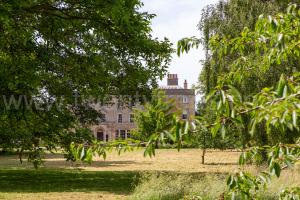
On 30th December 1783 Hamilton Douglas (age 20) died of exposure while commanding the barge of Assistance being caught in a snowstorm while looking for deserters and wrecked at Sandy Hook, Middletown Township, Monmouth County, New Jersey.
On 30th December 1797 David Martin (age 60) died.
On 30th December 1810 Archibald Seymour 13th Duke of Somerset was born to Edward Seymour 11th Duke of Somerset (age 35) and Charlotte Hamilton Duchess Somerset (age 38).
Peacock's Memoirs of Shelley. On the 30th of December, 1816, Shelley (age 24) married his second wife [Mary Godwin aka Shelley (age 19)]; and early in the ensuing year they took possession of their house at Marlow. It was a house with many large rooms and extensive gardens. He took it on a lease for twenty-one years, furnished it handsomely, fitted up a library in a room large enough for a ball-room, and settled himself down, as he supposed, for life. This was an agreeable year to all of us. Mr. Hogg was a frequent visitor. We had a good deal of rowing and sailing, and we took long walks in all directions. He had other visitors from time to time. Amongst them were Mr. Godwin and Mr. and Mrs. Leigh Hunt. He led a much more social life than he had done at Bishopgate; but he held no intercourse with his immediate neighbours. He said to me more than once, 'I am not wretch enough to tolerate an acquaintance.'


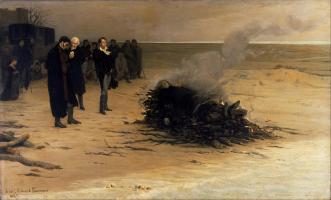


30th December 1816 Percy Bysshe Shelley (age 24) and Mary Godwin aka Shelley (age 19) were married.
1911 Encyclopædia Britannica. [Percy Bysshe Shelley (age 24)] The death of Harriet having removed the only obstacle to a marriage with Mary Godwin (age 19), the wedding ensued on the 30th of December 1816, and the married couple settled down at Great Marlow in Buckinghamshire.
On 30th December 1820 Agneta Johnson (age 80) died. Buried at St Andrew's Church, Wimpole [Map].
Inscription tablet flanked by pilasters with figures of her husband in robes of state and of two sons, and with medallion portrait at the head, all in white marble, signed 'J. FLAXMAN (age 65), R.A. Sculptor'
Agneta Johnson: On 11th November 1740 she was born to Henry Johnson of Berkhamstead in Hertfordshire. On 30th December 1762 Charles Yorke and she were married. He the son of Philip Yorke 1st Earl of Hardwicke and Margaret Cocks Countess Hardwicke.


On 30th December 1821 Joseph Farington (age 74) died. He was staying with his brother Richard at Parrs Wood House, Didsbury [Map], Manchester. While attending a New Year's Eve service at St James' Church, Didsbury [Map], Farrington fell down the steps of the church and died shortly thereafter.
Chronicle of Abbot Ralph of Coggeshall
The Chronicle of Abbot Ralph of Coggeshall (Chronicon Anglicanum) is an indispensable medieval history that brings to life centuries of English and European affairs through the eyes of a learned Cistercian monk. Ralph of Coggeshall, abbot of the Abbey of Coggeshall in Essex in the early 13th century, continued and expanded his community’s chronicle, documenting events from the Norman Conquest of 1066 into the tumultuous reign of King Henry III. Blending eyewitness testimony, careful compilation, and the monastic commitment to record-keeping, this chronicle offers a rare narrative of political intrigue, royal power struggles, and social upheaval in England and beyond. Ralph’s work captures the reigns of pivotal figures such as Richard I and King John, providing invaluable insights into their characters, decisions, and the forces that shaped medieval rule. More than a simple annal, Chronicon Anglicanum conveys the texture of medieval life and governance, making it a rich source for scholars and readers fascinated by English history, monastic authorship, and the shaping of the medieval world.
Available at Amazon in eBook and Paperback format.
On 30th December 1830 Elizabeth Mary Browne (age 63) died. Monument sculpted by Francis Leggatt Chantrey (age 49) in St Mary's Church, Easebourne, Sussex [Map].
Elizabeth Mary Browne: On 5th December 1767 she was born to Anthony Joseph Browne 7th Viscount Montagu and Frances Falconer Mackworth Viscountess Montague. On 1st September 1794 William Stephen Poyntz and she were married. On 7th July 1815 two sons of William Stephen Poyntz and Elizabeth Mary Brownedrowned at Bognor Regis, West Sussex.


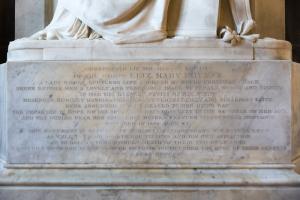


On 30th December 1836 James Graham 3rd Duke Montrose (age 81) died. His son James (age 37) succeeded 4th Duke Montrose. Caroline Agnes Horsley Beresford "Mr Manton" Duchess Montrose (age 18) by marriage Duchess Montrose.

On 30th December 1839 William Hilton (age 53) died. Monument at Lincoln Cathedral [Map].

On 30th December 1843 Henry Fitzherbert (age 3) died at Nice, France. Memorial at St Mary's Church, Tissington [Map].
Henry Fitzherbert: On 1st June 1840 he was born to William Fitzherbert 4th Baronet and Ann Alleyne Lady Fitzherbert.
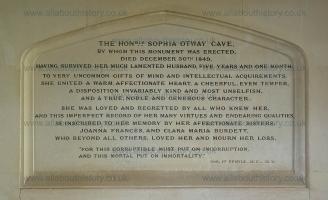
On 30th December 1849 Sophia Burdett died. She has a memorial on the monument to her late husband that she commissioned at St Nicholas' Church, Stanford-on-Avon [Map].
Sophia Burdett: she was born to Francis Burdett 5th Baronet and Sophia Coutts Lady Burdett. On 23rd October 1832 Robert Otway-Cave and she were married.
On 30th December 1851 John O'Connor (age 21) and Ann Butler Fairburn were married at St John the Evangelist in Upper Holloway. They had two sons they had two boys: Francis, born 1853, and John Peter, born 1854.

The Diary of George Price Boyce 1851. 30th December 1851. Called for John Seddon (age 24) at 10 0'clock, who accompanied me to St. Paul's Cathedral to witness Turner's (deceased) funeral. We first looked over the Cathedral and criticised the wretched taste of the greater part of the monuments, one by Behnes (age 56) seemed to be almost the only one that was simple, grand, and characteristic. The mourners, consisting of the Members of the Royal Academy and many personal friends, alighted at the west entrance and advanced slowly to the choir preceded by the choristers, etc. Seddon and I obtained a central place in the choir, close to the coffin. The beautiful and awe-striking service for the dead was then gone through, its influence being much augmented by the sublimity of the scene. The body was then conveyed into the vaults, followed by the mourners. Father, who had brought Joanna (age 20), bought a ticket which admitted us all three into the vaults. I remained to see the stone rolled over him and to assist in adjusting the same—they first threw a basket full of human bones on and beside the coffin before rolling the stone over it. It was placed between the resting places of James Barry, the painter (next to which was that of Sir Joshua Reynolds), and Constantia, the great grand-daughter of Sir Christopher Wren, next to the tomb of Sir Christopher himself.
The London Gazette 21397. St. James's-Palace, December 30, 1852. The Queen has been pleased to appoint John Robert (age 47) Viscount Sydney to be Captain of Her Majesty's Guard of Yeomen of the Guard, in the room of William-Lennox-Lascelles Lord de Ros (age 55), resigned
The Diary of George Price Boyce 1852. 30th December 1852. Went down to Dante G (age 24). and William Rossetti's chambers at 14 Chatham Place, Blackfriars Bridge. Met there Wells (age 24), J. P. Seddon (age 25), Clayton (age 25), and Mr. Munro (age 27), Mr. Stephens (age 25) and Mr. Hughes (age 20). Rossetti showed me his studio but none of his works (which is his way). He had for our entertainment a series of anastatic drawings designed and coloured by the Hon. Mrs. Boyle, some of which as beautiful in feeling, natural simplicity, and colour, and in poetical treatment as almost anything I have seen. They illustrate a nursery rhyme. Also a quantity of Gavarni's works, and a grand and most striking mask of Dante taken from a caste of his face in death; a tracing of his head in Giotto's fresco with the eye imperfect; a pen and ink sketch by Millais from Keats' "Isabella." In the physical way, roast chestnuts and coffee, honey, and hot spirits. His room has a jolly balcony overhanging the river, the reflection of the lights on the bridge and quays, etc., were charming. Conversation throughout delightful, resulting methought from the happy and gentlemanly freedom of the company generally. There was only one of D. G. Rossetti's works to be seen in the room, and that was a sketch, study of a man, back view. Gabriel Rossetti invited me to his studio next Thursday.


The London Gazette 21397. St. James's-Palace, December 30, 1852. The Queen has been pleased to appoint Thomas Henry Lord Foley (age 44) to be Captain of Her Majesty's Honourable Corps of Gentlemen at Arms, in the room of John-William (age 41), Earl of Sandwich, resigned.
The London Gazette 21397. St, James's-Palace, December 30, 1852. THE Queen has been pleased to appoint the Right Honourable Lord Ernest Augustus Charles Brudenell-Bruce (age 41), to be Vice-Chamberlain of Her Majesty's Household, in the room of the Right Honourable Orlando-George-Charles-Bridgeman (age 33), Viscount Newport, resigned.
Jean de Waurin's Chronicle of England Volume 6 Books 3-6: The Wars of the Roses
Jean de Waurin was a French Chronicler, from the Artois region, who was born around 1400, and died around 1474. Waurin’s Chronicle of England, Volume 6, covering the period 1450 to 1471, from which we have selected and translated Chapters relating to the Wars of the Roses, provides a vivid, original, contemporary description of key events some of which he witnessed first-hand, some of which he was told by the key people involved with whom Waurin had a personal relationship.
Available at Amazon in eBook and Paperback format.
On 30th December 1862 Frances Elizabeth Sarah Eveleigh-de-Moleyns Marchioness Conyngham
On 30th December 1870 Charles Gordon-Lennox 8th Duke Richmond was born to Charles Gordon-Lennox 7th Duke Richmond (age 25) and Amy Mary Ricardo (age 23). He married 8th June 1893 Hilda Madeline Brassey Duchess Richmond and had issue.
On 30th December 1874 James Graham 4th Duke Montrose (age 75) died. His son Douglas (age 22) succeeded 5th Duke Montrose.
On 30th December 1894 Walter Scott 8th Duke Buccleuch 10th Duke Queensberry was born to John Scott 7th Duke Buccleuch 9th Duke Queensberry (age 30) and Margaret Alice "Molly" Bridgeman Duchess Buccleuch Duchess Queensbury (age 22). He married 21st April 1921 his fourth cousin once removed Vreda Lascelles Duchess Buccleuch and Queensbury and had issue.
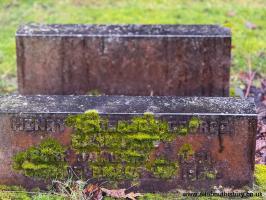
On 30th December 1909 Henry Algernon George Percy (age 38) died. He was buried at the Church of St Mary the Virgin, Lesbury [Map].
Henry Algernon George Percy: On 21st January 1871 he was born to Henry George Percy 7th Duke Northumberland and Edith Campbell Duchess Northumberland.
On 30th December 1913 Queen Sophia of Sweden and Norway (age 77) died.
On 30th December 1915 the SS Persia was torpedoed near without warning by the German U-boat U-38, commanded by Max Valentiner. It sank in five to ten minutes, killing 343 of the 519 aboard.
John Douglas-Scott-Montagu 2nd Baron Montagu of Beaulieu (age 49) survived. His mistress Eleanor Thornton (age 35) drowned.

On 17th December 1930 William Everard Browne ffolkes 4th Baronet (age 69) died. His brother Francis (age 67) succeeded 5th Baronet ffolkes of Hillington Hall in Norfolk. On 30th December 1917 William Rupert Browne ffolkes was killed in action. Memorial in the Church of St Mary, Hillington [Map].
William Everard Browne ffolkes 4th Baronet: In 1861 he was born to Reverend Henry Edward Browne ffolkes. On 9th May 1912 William ffolkes 3rd Baronet died. His first cousin William succeeded 4th Baronet ffolkes of Hillington Hall in Norfolk.
Francis Arthur Stanley ffolkes 5th Baronet: On 8th December 1863 he was born to Reverend Henry Edward Browne ffolkes. On 18th October 1938 or 20th October 1938 Francis Arthur Stanley ffolkes 5th Baronet died. His son Edward succeeded 6th Baronet ffolkes of Hillington Hall in Norfolk.
William Rupert Browne ffolkes: he was born to William Everard Browne ffolkes 4th Baronet.
On 30th December 1952 John Michael Edward Seymour 19th Duke of Somerset was born to Percy Hamilton Seymour 18th Duke of Somerset (age 42) and Gwendoline Collette Jane Thomas Duchess Somerset. He married 1978 Judith Rose Hull Duchess Somerset and had issue.

On 30th December 1578 Thomas Cecil was born to Thomas Cecil 1st Earl Exeter (age 36) and Dorothy Neville Countess Exeter (age 30). He married before 3rd December 1662 Ann Lee.
On 30th December 1578 Prince Ulrik Oldenburg was born to Frederick II King of Denmark (age 44) and Sophie Mecklenburg-Schwerin Queen Consort Denmark (age 21).
Henrici Quinti, Angliæ Regis, Gesta, is a first-hand account of the Agincourt Campaign, and subsequent events to his death in 1422. The author of the first part was a Chaplain in King Henry's retinue who was present from King Henry's departure at Southampton in 1415, at the siege of Harfleur, the battle of Agincourt, and the celebrations on King Henry's return to London. The second part, by another writer, relates the events that took place including the negotiations at Troye, Henry's marriage and his death in 1422.
Available at Amazon in eBook and Paperback format.

On 30th December 1607 James Harington 3rd Baronet was born to Edward Harington 2nd Baronet and Margaret Doyley (age 29). He married in or before 1635 Katherine Wright Lady Harington and had issue.
On 30th December 1654 Maria Anna Josepha Habsburg Spain was born to Ferdinand III Holy Roman Emperor (age 46) and Eleonora Gonzaga Queen Consort Bohemia (age 24). Coefficient of inbreeding 2.47%.
On 30th December 1684 Leopold Hesse-Kassel was born to Charles I Landgrave Hesse-Kassel (age 30) and Maria Amalia of Courland Landgravine Hesse-Kassel (age 31). Coefficient of inbreeding 6.66%.
On 30th December 1702 Marie Gabrièle Charlotte Lorraine was born to Leopold Duke of Lorraine (age 23) and Élisabeth Charlotte Bourbon Duchess Lorraine (age 26). She a great x 3 granddaughter of King James I of England and Ireland and VI of Scotland. She died aged eight in 1711.
On 30th December 1715 Thomas Watson 3rd Earl Rockingham was born to Edward Watson (age 29) and Catherine Tufton (age 23).
On 30th December 1722 Charles Yorke was born to Philip Yorke 1st Earl of Hardwicke (age 32) and Margaret Cocks Countess Hardwicke. He married (1) 19th May 1755 Catherine Blount Freeman and had issue (2) 30th December 1762 Agneta Johnson and had issue.


On 30th December 1741 James Sanderson 1st Baronet was born. He married before 21st June 1798 Elizabeth Skinner.
On 30th December 1752 Charles Warre Malet 1st Baronet was born to Alexander Malet (age 48). He married 17th September 1799 Susanna Wales Lady Malet and had issue.
On 30th December 1767 Frederick Patrick Townshend was born to George Townshend 1st Marquess Townshend (age 43) and Charlotte Compton 16th Baroness Ferrers Chartley 7th Baroness Compton.
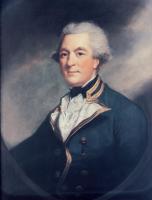
On 30th December 1779 Graham Hamond 2nd Baronet was born to Andrew Snape Hamond 1st Baronet (age 41) and Anne Graeme Lady Hamond. He married December 1806 Elizabeth Kimber Lady Hamond and had issue.
On 30th December 1799 Thomas Grosvenor 2nd Earl Wilton was born to Robert Grosvenor 1st Marquess Westminster (age 32) and Eleanor Egerton Marchioness Westminster (age 29). He married (1) 29th November 1821 Mary Smith-Stanley Countess Wilton, daughter of Edward Smith-Stanley 12th Earl of Derby and Elizabeth Farren Countess Derby, and had issue (2) 12th September 1863 Susan Isabel Elton Smith Countess Wilton.
On 30th December 1801 Harry Dent Goring 8th Baronet was born to Charles Forster Goring 7th Baronet (age 33).

On 30th December 1806 Wilbraham Egerton 1st Baron Egerton Tatton was born to Wilbraham Egerton (age 25) and Elizabeth Sykes (age 29). Coefficient of inbreeding 3.12%. He married 1830 Charlotte Elizabeth Loftus Baroness Egerton Tatton, daughter of John Loftus 2nd Marquess Ely, and had issue.
Chronicle of Geoffrey le Baker of Swinbroke
Baker was a secular clerk from Swinbroke, now Swinbrook, an Oxfordshire village two miles east of Burford. His Chronicle describes the events of the period 1303-1356: Gaveston, Bannockburn, Boroughbridge, the murder of King Edward II, the Scottish Wars, Sluys, Crécy, the Black Death, Winchelsea and Poitiers. To quote Herbert Bruce 'it possesses a vigorous and characteristic style, and its value for particular events between 1303 and 1356 has been recognised by its editor and by subsequent writers'. The book provides remarkable detail about the events it describes. Baker's text has been augmented with hundreds of notes, including extracts from other contemporary chronicles, such as the Annales Londonienses, Annales Paulini, Murimuth, Lanercost, Avesbury, Guisborough and Froissart to enrich the reader's understanding. The translation takes as its source the 'Chronicon Galfridi le Baker de Swynebroke' published in 1889, edited by Edward Maunde Thompson.
Available at Amazon in eBook and Paperback format.
On 30th December 1810 Archibald Seymour 13th Duke of Somerset was born to Edward Seymour 11th Duke of Somerset (age 35) and Charlotte Hamilton Duchess Somerset (age 38).
On 30th December 1837 John Murray Mordaunt was born to John Mordaunt 9th Baronet (age 29).
On 30th December 1848 Ronald Campbell was born to John Frederick Vaughan Campbell 2nd Earl Cawdor (age 31) and Sarah Mary Compton Cavendish Countess Cawdor (age 35). He was educated at Eton College [Map].
On 30th December 1849 Rear-Admiral William Domville 4th Baronet was born to James Graham Domville 3rd Baronet (age 37).
On 30th December 1856 Christopher Pleydell-Bouverie was born to Jacob Pleydell-Bouverie 4th Earl Radnor (age 41) and Mary Augusta Frederica Grimston (age 35).
On 30th December 1870 Charles Gordon-Lennox 8th Duke Richmond was born to Charles Gordon-Lennox 7th Duke Richmond (age 25) and Amy Mary Ricardo (age 23). He married 8th June 1893 Hilda Madeline Brassey Duchess Richmond and had issue.
On 30th December 1884 Frederick Philip Champion de Crespigny 7th Baronet was born to Philip Augustus Champion de Crespigny (age 34).
On 30th December 1888 Edward Manners Nightingale 14th Baronet was born to Edward Henry Nightingale (age 32).
On 30th December 1892 Elizabeth Mary Shirley was born to Walter Shirley 11th Earl Ferrers (age 28) and Mary Jane Moon Countess Ferrers. She died aged less than one years old.
On 30th December 1893 Marjorie Ellinor Trotter Countess Fortescue was born to Charles William Trotter (age 28) and Eleanor Hamilton (age 28). She married 10th June 1920 Denzil George Fortescue 6th Earl Fortescue, son of Hugh Fortescue 4th Earl Fortescue and Emily Ormsby-Gore Countess Fortescue, and had issue.
On 30th December 1894 Walter Scott 8th Duke Buccleuch 10th Duke Queensberry was born to John Scott 7th Duke Buccleuch 9th Duke Queensberry (age 30) and Margaret Alice "Molly" Bridgeman Duchess Buccleuch Duchess Queensbury (age 22). He married 21st April 1921 his fourth cousin once removed Vreda Lascelles Duchess Buccleuch and Queensbury and had issue.
Adam Murimuth's Continuation and Robert of Avesbury’s 'The Wonderful Deeds of King Edward III'
This volume brings together two of the most important contemporary chronicles for the reign of Edward III and the opening phases of the Hundred Years’ War. Written in Latin by English clerical observers, these texts provide a vivid and authoritative window into the political, diplomatic, and military history of fourteenth-century England and its continental ambitions. Adam Murimuth Continuatio's Chronicarum continues an earlier chronicle into the mid-fourteenth century, offering concise but valuable notices on royal policy, foreign relations, and ecclesiastical affairs. Its annalistic structure makes it especially useful for establishing chronology and tracing the development of events year by year. Complementing it, Robert of Avesbury’s De gestis mirabilibus regis Edwardi tertii is a rich documentary chronicle preserving letters, treaties, and official records alongside narrative passages. It is an indispensable source for understanding Edward III’s claim to the French crown, the conduct of war, and the mechanisms of medieval diplomacy. Together, these works offer scholars, students, and enthusiasts a reliable and unembellished account of a transformative period in English and European history. Essential for anyone interested in medieval chronicles, the Hundred Years’ War, or the reign of Edward III.
Available at Amazon in eBook and Paperback format.
On 30th December 1895 Henry Rainaud Gage 6th Viscount Gage was born to Henry Charles Gage 5th Viscount Gage (age 41). He married (1) 26th February 1931 Alexandra Imogen Clair Grenfell and had issue (2) 1971 Diana Cavendish.
On 30th December 1937 James Aubrey Watson 5th Baronet was born to Thomas Aubrey Watson 4th Baronet (age 26) and Ella Marguerite Farrar Lady Watson.
On 30th December 1937 Charles Evelyn Baring 2nd Baron Howick was born to Evelyn Baring 1st Baron Howick (age 34) and Mary Cecil Grey Baroness Howick Glendale (age 30).
On 30th December 1952 John Michael Edward Seymour 19th Duke of Somerset was born to Percy Hamilton Seymour 18th Duke of Somerset (age 42) and Gwendoline Collette Jane Thomas Duchess Somerset. He married 1978 Judith Rose Hull Duchess Somerset and had issue.
On 30th December 1958 Richard Leonard Vere Isham 15th Baronet was born to Norman Murray Crawford Isham 14th Baronet (age 28).
On 30th December 1962 Martin Smith-Marriott 13th Baronet was born to Peter Francis Smith-Marriott 12th Baronet (age 35).
On 30th December 1292 Henry Plantagenet 3rd Earl of Leicester 3rd Earl Lancaster (age 11) and Maud Chaworth (age 10) were married. He the son of Edmund "Crouchback" Plantagenet 1st Earl of Leicester 1st Earl Lancaster (age 47) and Blanche Capet Queen Navarre (age 44).
On 30th December 1577 John Hamilton 1st Marquess Hamilton (age 42) and Margaret Lyon Marchioness Hamilton were married. She by marriage Marchioness Hamilton. He the son of James Hamilton 2nd Earl Arran and Margaret Douglas Duchess Châtellerault. They were second cousins.
On 30th December 1656 Alexander Leslie 2nd Earl Leven (age 19) and Margaret Howard Countess Leven (age 21) were married. He the son of Alexander Leslie and Margaret Leslie Countess Buccleuch and Wemyss (age 36).
On 30th December 1669 Christopher Monck 2nd Duke Albemarle (age 16) and Elizabeth "Mad Duchess" Cavendish Duchess Albermarle Duchess of Montagu (age 15) were married at Whitehall Palace [Map]. She the daughter of Henry Cavendish 2nd Duke Newcastle upon Tyne (age 39) and Frances Pierrepont Duchess Newcastle upon Tyne (age 39). He the son of George Monck 1st Duke Albemarle (age 61) and Anne Clarges Duchess Albermarle (age 50).
Chronicle of Walter of Guisborough
A canon regular of the Augustinian Guisborough Priory, Yorkshire, formerly known as The Chronicle of Walter of Hemingburgh, describes the period from 1066 to 1346. Before 1274 the Chronicle is based on other works. Thereafter, the Chronicle is original, and a remarkable source for the events of the time. This book provides a translation of the Chronicle from that date. The Latin source for our translation is the 1849 work edited by Hans Claude Hamilton. Hamilton, in his preface, says: 'In the present work we behold perhaps one of the finest samples of our early chronicles, both as regards the value of the events recorded, and the correctness with which they are detailed; Nor will the pleasing style of composition be lightly passed over by those capable of seeing reflected from it the tokens of a vigorous and cultivated mind, and a favourable specimen of the learning and taste of the age in which it was framed.'
Available at Amazon in eBook and Paperback format.
On 30th December 1687 Wriothesley Baptist Noel 2nd Earl Gainsborough (age 26) and Catherine Greville Duchess Buckingham and Normandby were married. He the son of Edward Noel 1st Earl Gainsborough (age 46) and Elizabeth Wriothesley Countess Gainsborough (age 41).
On 30th December 1776 Thomas Onslow 2nd Earl Onslow (age 22) and Arabella Mainwaring Ellerker (age 21) were married. He the son of George Onslow 1st Earl Onslow (age 45) and Henrietta Shelley Countess Onslow (age 45).
On 30th December 1815 Henry Roper-Curzon 15th Baron Teynham (age 26) and Susan Harriet Bedingfield were married.
On 30th December 1851 John O'Connor (age 21) and Ann Butler Fairburn were married at St John the Evangelist in Upper Holloway. They had two sons they had two boys: Francis, born 1853, and John Peter, born 1854.
On 30th December 1875 Maurice John George Ponsonby 4th Baron de Mauley (age 29) and Madeline Emily Augusta Hanbury-Tracy Baroness de Mauley were married.
On 30th December 1903 Constantine Phipps 3rd Marquess Normanby (age 57) and Gertrude Stansfeld Foster Marchioness Normanby were married. She by marriage Marchioness Normanby. He the son of George Phipps 2nd Marquess Normanby and Laura Russell Marchioness Normanby.
On 30th December 1115 Theodoric "Valiant" Metz II Duke Lorraine (age 60) died. His son Simon (age 39) succeeded I Duke Lorraine. Adelaide Reginar Duchess Lorraine by marriage Duchess Lorraine.
On 30th December 1389 John Hastings 3rd Earl Pembroke (age 17) was killed in a tournament during the Christmas Court at Woodstock Palace, Oxfordshire [Map]. Earl Pembroke and Baron Manny, Baron Abergavenny Feudal Creation extinct. He was struck in the groin by the lance of Sir John Des.
John Hastings 6th Baron Hastings (age 61) de jure 6th Baron Hastings. His claim was contested by Reginald Grey 3rd Baron Grey Ruthyn (age 27) who was the son of Elizabeth Hastings Baroness Grey Ruthyn daughter of John Hastings 13th Baron Abergavenny 1st Baron Hastings his case being that he was of the full blood whereas John Hastings 6th Baron Hastings was of the half-blood ie Reginald Grey 3rd Baron Grey Ruthyn, like John Hastings 3rd Earl Pembroke, was descended from John Hastings 13th Baron Abergavenny 1st Baron Hastings and Isabel Valence Baroness Bergavenny Baroness Hastings, whereas John Hastings 6th Baron Hastings was descended from John Hastings 13th Baron Abergavenny 1st Baron Hastings and Isabel Despencer Baroness Hastings and Bergavenny.
On 30th December 1436 Louis Wittelsbach III Elector Palatine (age 58) died at Heidelburg.
On 30th December 1460 the Lancastrian army took their revenge for the defeats of the First Battle of St Albans and the Battle of Northampton at the Battle of Wakefield near Sandal Castle [Map]. The Lancastrian army was commanded by Henry Holland 3rd Duke Exeter (age 30), Henry Beaufort 2nd or 3rd Duke of Somerset (age 24) and Henry Percy 3rd Earl of Northumberland (age 39), and included John Courtenay 7th or 15th Earl Devon (age 25) and William Gascoigne XIII (age 30), both knighted, and James Butler 1st Earl Wiltshire 5th Earl Ormonde (age 40), John "Butcher" Clifford 9th Baron Clifford (age 25), John Neville 1st Baron Neville of Raby (age 50), Thomas Ros 9th Baron Ros Helmsley (age 33), Henry Roos and Thomas St Leger (age 20).
The Yorkist army was heavily defeated.
Richard Plantagenet 3rd Duke of York (age 49) was killed. His son Edward (age 18) succeeded 4th Duke York, 7th Earl March, 9th Earl of Ulster, 3rd Earl Cambridge, 9th Baron Mortimer of Wigmore.
Thomas Neville (age 30), and Edward Bourchier were killed.
Father and son Thomas Harrington (age 60) and John Harrington (age 36) were killed, the former dying of his wounds the day after.
William Bonville 6th Baron Harington (age 18) was killed. His daughter Cecily succeeded 7th Baroness Harington.
Thomas Parr (age 53) fought in the Yorkist army.
Following the battle Richard Neville Earl Salisbury (age 60) was beheaded by Thomas "Bastard of Exeter" Holland. William Bonville (age 40) was executed.
Edmund York 1st Earl of Rutland (age 17) was killed on Wakefield Bridge [Map] by John "Butcher" Clifford. Earl of Rutland extinct.
On 30th December 1469 George Neville 1st Baron Latimer of Snape (age 62) died at Well. He was buried at St Michaels Church, Well. His grandson Richard (age 1) succeeded 2nd Baron Latimer of Snape. Grave marker at the Beauchamp Chapel, St Mary's Church, Warwick [Map].
On 30th December 1494 Bishop John Russell died at Nettleham. He was buried at Lincoln Cathedral [Map].
On 30th December 1563 Henry Tuchet 10th Baron Audley, 7th Baron Tuchet died. He was buried at Betley, Staffordshire. His son George (age 12) succeeded 11th Baron Audley of Heighley in Staffordshire, 8th Baron Tuchet.

On 30th December 1595 William West 1st Baron De La Warr (age 69) died. His son Thomas (age 39) succeeded 2nd Baron De La Warr. Anne Knollys Baroness De La Warr (age 40) by marriage Baroness De La Warr.
On 30th December 1604 George Hastings 4th Earl Huntingdon (age 64) died. His grandson Henry (age 18) succeeded 5th Earl Huntingdon, 10th Baron Botreaux, 9th Baron Hungerford, 7th Baron Moleyns and 7th Baron Hastings. Elizabeth Stanley Countess Huntingdon (age 16) by marriage Countess Huntingdon.
On 30th December 1605 Francis Tresham died whilst imprisoned at the Tower of London [Map] for his part in the Gunpowder Plot. His brother Lewis Tresham 1st Baronet (age 30) inherited Rushton Hall.
Chronicle of Geoffrey le Baker of Swinbroke
Baker was a secular clerk from Swinbroke, now Swinbrook, an Oxfordshire village two miles east of Burford. His Chronicle describes the events of the period 1303-1356: Gaveston, Bannockburn, Boroughbridge, the murder of King Edward II, the Scottish Wars, Sluys, Crécy, the Black Death, Winchelsea and Poitiers. To quote Herbert Bruce 'it possesses a vigorous and characteristic style, and its value for particular events between 1303 and 1356 has been recognised by its editor and by subsequent writers'. The book provides remarkable detail about the events it describes. Baker's text has been augmented with hundreds of notes, including extracts from other contemporary chronicles, such as the Annales Londonienses, Annales Paulini, Murimuth, Lanercost, Avesbury, Guisborough and Froissart to enrich the reader's understanding. The translation takes as its source the 'Chronicon Galfridi le Baker de Swynebroke' published in 1889, edited by Edward Maunde Thompson.
Available at Amazon in eBook and Paperback format.
On 30th December 1672 Cicely Tufton Viscountess Hatton (age 24) died.
On 30th December 1688 Charles Cockayne 3rd Viscount Cullen (age 30) died. His son Charles (age 1) succeeded 4th Viscount Cullen.

On 30th December 1695 Samuel Morland 1st Baronet (age 70) died. His son Samuel succeeded 2nd Baronet Morland of Sulhamstead Banister.
On 30th December 1704 John Hay 12th Earl Erroll died. His son Charles succeeded 13th Earl Erroll.
On 30th December 1757 Anne Stafford Baroness Carbery (age 73) died.
On 30th December 1758 Philadelphia Lynch Lady Cotton (age 83) died.

On 30th December 1769 Mary Anne Drury Countess Buckinghamshire (age 29) died.
On 30th December 1777 Catherine Ramsden Lady Lowther (age 80) died.
On 30th December 1790 Archer Croft 3rd Baronet (age 59) died without male issue. His brother John (age 55) succeeded 4th Baronet Croft of Croft Castle in Herefordshire.

On 30th December 1794 Archibald Kennedy 11th Earl Cassilis (age 74) died. His son Archibald (age 24) succeeded 12th Earl Cassilis.
Henrici Quinti, Angliæ Regis, Gesta, is a first-hand account of the Agincourt Campaign, and subsequent events to his death in 1422. The author of the first part was a Chaplain in King Henry's retinue who was present from King Henry's departure at Southampton in 1415, at the siege of Harfleur, the battle of Agincourt, and the celebrations on King Henry's return to London. The second part, by another writer, relates the events that took place including the negotiations at Troye, Henry's marriage and his death in 1422.
Available at Amazon in eBook and Paperback format.

On 30th December 1796 Robert Hesketh 2nd Baronet (age 67) died. His grandson Thomas (age 19) succeeded 3rd Baronet Hesketh of Rufford in Lancashire.
On 30th December 1797 David Martin (age 60) died.
On 30th December 1808 James Grimston 3rd Viscount Grimston (age 61) died. His son James (age 33) succeeded 4th Viscount Grimston, 2nd Baron Verulam of Gorhambury in Hertfordshire, 8th Baronet Grimston of Little Waltham in Essex. Viscount Grimston by marriage Baron Verulam of Gorhambury in Hertfordshire.
On 30th December 1812 Denzil Cope 10th Baronet (age 46) died without issue. His brother John (age 44) succeeded 11th Baronet Cope of Hanwell in Oxfordshire.
On 30th December 1820 Agneta Johnson (age 80) died. Buried at St Andrew's Church, Wimpole [Map].
Inscription tablet flanked by pilasters with figures of her husband in robes of state and of two sons, and with medallion portrait at the head, all in white marble, signed 'J. FLAXMAN (age 65), R.A. Sculptor'
Agneta Johnson: On 11th November 1740 she was born to Henry Johnson of Berkhamstead in Hertfordshire. On 30th December 1762 Charles Yorke and she were married. He the son of Philip Yorke 1st Earl of Hardwicke and Margaret Cocks Countess Hardwicke.
On 30th December 1821 Joseph Farington (age 74) died. He was staying with his brother Richard at Parrs Wood House, Didsbury [Map], Manchester. While attending a New Year's Eve service at St James' Church, Didsbury [Map], Farrington fell down the steps of the church and died shortly thereafter.
On 30th December 1821 Jonathan Cope 4th Baronet (age 63) died without surviving male issue. Baronet Cope of Bruern in Oxfordshire extinct.

On 30th December 1822 Elizabeth Ilive Countess Egremont (age 53) died.
On 30th December 1830 Elizabeth Mary Browne (age 63) died. Monument sculpted by Francis Leggatt Chantrey (age 49) in St Mary's Church, Easebourne, Sussex [Map].
Elizabeth Mary Browne: On 5th December 1767 she was born to Anthony Joseph Browne 7th Viscount Montagu and Frances Falconer Mackworth Viscountess Montague. On 1st September 1794 William Stephen Poyntz and she were married. On 7th July 1815 two sons of William Stephen Poyntz and Elizabeth Mary Brownedrowned at Bognor Regis, West Sussex.
On 30th December 1831 Mary O'Brien 4th Countess Orkney (age 76) died. Her grandson Thomas (age 28) succeeded 5th Earl Orkney. Isabella Irby Countess Orkney (age 24) by marriage Countess Orkney.
On 30th December 1836 James Graham 3rd Duke Montrose (age 81) died. His son James (age 37) succeeded 4th Duke Montrose. Caroline Agnes Horsley Beresford "Mr Manton" Duchess Montrose (age 18) by marriage Duchess Montrose.
Henrici Quinti, Angliæ Regis, Gesta, is a first-hand account of the Agincourt Campaign, and subsequent events to his death in 1422. The author of the first part was a Chaplain in King Henry's retinue who was present from King Henry's departure at Southampton in 1415, at the siege of Harfleur, the battle of Agincourt, and the celebrations on King Henry's return to London. The second part, by another writer, relates the events that took place including the negotiations at Troye, Henry's marriage and his death in 1422.
Available at Amazon in eBook and Paperback format.
On 30th December 1839 William Hilton (age 53) died. Monument at Lincoln Cathedral [Map].
On 30th December 1852 Charles Wager Watson 2nd Baronet (age 52) died. His son Charles (age 24) succeeded 3rd Baronet Watson of Fulmer in Buckinghamshire.
On 30th December 1863 Arthur Annesley 10th Viscount Valentia (age 78) died.
On 30th December 1868 John Ralph Milbanke-Huskisson 8th Baronet (age 68) died. His son Peniston (age 21) succeeded 9th Baronet Milbanke of Halnaby in Yorkshire.
On 30th December 1874 James Graham 4th Duke Montrose (age 75) died. His son Douglas (age 22) succeeded 5th Duke Montrose.

On 30th December 1906 Angela Burdett-Coutts 1st Baroness Burdett-Coutts (age 92) died. Her estate was inherited by Francis Money-Coutts 5th Baron Latymer (age 54), son of her sister Clara Burdett, who adopted the name Coutts.
On 30th December 1913 Queen Sophia of Sweden and Norway (age 77) died.
On 30th December 1915 the SS Persia was torpedoed near without warning by the German U-boat U-38, commanded by Max Valentiner. It sank in five to ten minutes, killing 343 of the 519 aboard.
John Douglas-Scott-Montagu 2nd Baron Montagu of Beaulieu (age 49) survived. His mistress Eleanor Thornton (age 35) drowned.
On 17th December 1930 William Everard Browne ffolkes 4th Baronet (age 69) died. His brother Francis (age 67) succeeded 5th Baronet ffolkes of Hillington Hall in Norfolk. On 30th December 1917 William Rupert Browne ffolkes was killed in action. Memorial in the Church of St Mary, Hillington [Map].
William Everard Browne ffolkes 4th Baronet: In 1861 he was born to Reverend Henry Edward Browne ffolkes. On 9th May 1912 William ffolkes 3rd Baronet died. His first cousin William succeeded 4th Baronet ffolkes of Hillington Hall in Norfolk.
Francis Arthur Stanley ffolkes 5th Baronet: On 8th December 1863 he was born to Reverend Henry Edward Browne ffolkes. On 18th October 1938 or 20th October 1938 Francis Arthur Stanley ffolkes 5th Baronet died. His son Edward succeeded 6th Baronet ffolkes of Hillington Hall in Norfolk.
William Rupert Browne ffolkes: he was born to William Everard Browne ffolkes 4th Baronet.
On 30th December 1936 Henry Waldegrave 11th Earl Waldegrave (age 82) died. His son Geoffrey (age 31) succeeded 12th Earl Waldegrave, 13th Baron Waldegrave Chewton Somerset, 16th Baronet Waldegrave of Hever Castle.
On 30th December 1938 Anna Maria Gibbs Baroness Hunsdon died at Hunsdon Mill.
On 30th December 1942 Evelyn Grace Foster Marchioness Downshire died.


On 30th December 2000 Anthony Fitz-Clarence 7th Earl of Munster (age 74) died. Earl Munster, Viscount Fitzclarence and Baron Tewkesbury extinct.
Chronicle of Walter of Guisborough
A canon regular of the Augustinian Guisborough Priory, Yorkshire, formerly known as The Chronicle of Walter of Hemingburgh, describes the period from 1066 to 1346. Before 1274 the Chronicle is based on other works. Thereafter, the Chronicle is original, and a remarkable source for the events of the time. This book provides a translation of the Chronicle from that date. The Latin source for our translation is the 1849 work edited by Hans Claude Hamilton. Hamilton, in his preface, says: 'In the present work we behold perhaps one of the finest samples of our early chronicles, both as regards the value of the events recorded, and the correctness with which they are detailed; Nor will the pleasing style of composition be lightly passed over by those capable of seeing reflected from it the tokens of a vigorous and cultivated mind, and a favourable specimen of the learning and taste of the age in which it was framed.'
Available at Amazon in eBook and Paperback format.
On 30th December 2006 Antony Lambton 6th Earl of Durham (age 84) died. His son Edward (age 45) succeeded 7th Earl Durham.
On 30th December 2018 Mary Stourton Countess Gainsborough (age 93) died.