Henrici Quinti, Angliæ Regis, Gesta, is a first-hand account of the Agincourt Campaign, and subsequent events to his death in 1422. The author of the first part was a Chaplain in King Henry's retinue who was present from King Henry's departure at Southampton in 1415, at the siege of Harfleur, the battle of Agincourt, and the celebrations on King Henry's return to London. The second part, by another writer, relates the events that took place including the negotiations at Troye, Henry's marriage and his death in 1422.
Available at Amazon in eBook and Paperback format.
30 Mar is in March.
14th April 1471 Battle of Barnet
1485 Richard III publicly denies that he intended to marry his niece Elizabeth
1558 Funeral of Catherine of Aragon
1661 Charles II Continues to Reward those who Supported His Restoration
Chronicle of Roger de Hoveden. 30th March 1194. On the thirtieth day of March, a Wednesday, Richard, King of England, held the first day of his council at Nottingham. Present at this council were: Queen Eleanor [aged 72], his mother, Hubert [aged 34], Archbishop of Canterbury, who sat on the king's right, Geoffrey [aged 42], Archbishop of York, who sat on the king's left, Hugh [aged 69], Bishop of Durham, Hugh [aged 54], Bishop of Lincoln, William, Bishop of Ely, the king's chancellor, William, Bishop of Hereford, Henry, Bishop of Worcester, Henry [aged 46], Bishop of Exeter, John, Bishop of Whithorn (Candida Casa), Count David [aged 42], brother of the King of Scotland, Hamelin [aged 65], Earl of Warenne, Ranulf [aged 24], Earl of Chester, William [aged 26], Earl of Ferrers, William [aged 18], Earl of Salisbury, Roger Bigod [aged 50].
Tricesima die mensis Martii, feria quarta, Ricardus rex Angiiæ celebravit primum conciJii sui diem apud Notingliam; cui interfueiunt Alienor regina mater ejus, et Hubertus Cantuariensis arcbiepiscopus, qui in dextris regis sedebat in concilio illo, et Gaufridus Eboracensis arcbiepiscopus, qui a sinistris ejus sedebat, et Hugo Dunelmensis, et Hugo Lincolniensis, et Willelmus Eliensis regis cancellarius, et Willelmus Herefordensis, et Henriecus Wigornensis, et Henricus Exoniensis, et Johannes Candidæ Casæ episcopi; et comes David frater regis, Scotiæ, et Hamelinus comes de Warenna, et Ranulfus comes Cestriæ, et Willelmus comes de Ferreres, et Willelmus comes de Salesbiria, et Rogerus Bigot.
On 30th March 1296 the army of King Edward I captured Berwick-upon-Tweed, Northumberland [Map] from William "Hardy" Douglas 2nd Lord Douglas [aged 56]. Richard Cornwall [aged 44] was killed during the course of the siege. Robert Clifford 1st Baron Clifford [aged 21] fought.
See  Walter of Guisborough, Scotichronicon, Chronicle of William Rishanger and the Annals of Worcester.
Flowers of History. In the year of grace 1296, on the third day before the Kalends of April [30th March 1296], the town and castle of Berwick having been taken by the illustrious King Edward, the English slew all whom they found there, except for a few who afterwards abjured the town. [It is reported that sixty thousand persons of both sexes among the Scots were killed.] On the eighth day before the Ides of April [6th April], the king of Scotland, for himself and for all Scots holding any land in England, rendered homage to the king of England by written instrument.
Anno gratiæ MCCXCVI Tertio kalendas Aprilis per magnificum regem Edwardum villa et castro de Berewyk captis, omnes ibidem inventos Anglici peremerunt, paucis exceptis qui villam ipsam postmodum abjurarunt; [hominum autem Scotorum promiscui sexus peremptorum sexaginta milia referuntur]. Octavo idus Aprilis rex Scotie pro se et Scotis omnibus tenentibus terram quamcumque in Anglia homagium regi Anglie reddidit per scripturam.
Chronicle of Walter of Guisborough. On Wednesday in the same Easter week, after the Easter solemnity was reverently celebrated as was fitting, our king with his army entered the land of his enemies, crossing the river called the Tweed below the monastery of the holy nuns of Coldstream. And though the water was severely flooding, it happened almost miraculously that not one person perished, except for a single boy, who was separated from his horse and swept away by the surging waves. Meanwhile, the Bishop of Durham with his troops crossed the Tweed near Norham, not far from his castle. When the king had waited that whole day and the next for the burgesses of Berwick to accept peace, and they refused the peace he offered, on Friday [30th March 1296] he moved camp and pitched his tents at the nunnery opposite Berwick, about half a league away. As the sun grew hot and the army stood ready on the plain, the king knighted new men there, Henry de Percy among many others. When our sailors, who were waiting at sea with twenty-four warships before the port, saw the king's army armed and many banners unfurled, they believed the king was about to launch an immediate assault on the town. With the sea rising, they entered the port. One ship, raising her sail higher than the rest and driven toward the shore, ran aground. Surrounded by the Scots, the mariners defended themselves bravely for a long time, killing many with missiles and sword, but at last the Scots brought up scaling ladders and set fire to the ship, storming aboard and killing twenty-eight men, though many died on both sides. Another ship that also ran aground was soon consumed by devouring flames, though the sailors escaped in their boat. A third vessel, which carried men from the house and household of the Prior of Durham, held out powerfully from the first hour until the eleventh. But eventually she too grounded and, once set aflame, was destroyed. Many escaped in the boat, and the rest, staying until the end, leapt into the sea, trusting themselves more to the water than to the enemy. Miraculously, not one of them perished, but were saved with the boats of the other ships. The remaining thirty ships, as the tide receded, withdrew, occasionally launching missiles at the enemy when the opportunity arose. When such reports were brought to our king, still encamped in the field, and all beheld the smoke rising high from the ships, the king commanded the trumpets to sound and that the city be forcefully entered. At once, as the trumpets blared, they crossed a ditch the Scots had made, planked over with wooden boards, as though it were nothing, and entered upon the enemy, cutting down men on every side all the way to the sea. At their entrance, the Scots were struck dumb, there was not one among them who raised a sword or loosed a missile; instead, they stood stunned, like men beside themselves. Thirty Flemings, who had taken possession of a house called the Red Hall on the condition that they would defend it against the King of England at all times, held out bravely until evening. But when fire was finally set to it, they too perished in the flames along with the building. There fell also the brother [Richard [aged 44]] of the Earl of Cornwall [Edmund, 2nd Earl of Cornwall [aged 46]], a most valiant knight, who, as he raised his head boldly toward the enemy, was struck by a missile through the eye-slit of his helmet, and instantly fell and died. With the city thus taken, more than eight thousand of the enemy were slain. That same day, the strong men who were in the garrison of the castle surrendered, with their lives and limbs, lands, and goods preserved. Their captain, Sir William Douglas1, the king kept under custody until the end of that war. As for the 200 men who had been with him, after swearing an oath never to raise arms against the king or the kingdom of England, they were allowed to depart freely, bearing arms. The women of the city were, after a few days, sent out to their people and went away in peace. The king remained in that city for fifteen days and caused a new ditch to be constructed, eighty feet wide and forty feet deep.
Die Mercurii in eadem ebdomada Paschæ, peracta solemnitate Paschali reverentia qua deceret, rex noster cum exercitu suo terram inimicorum suorum ingressus est, aquam quæ Tweda dicitur transeundo subtus monasterium sanctarum monialium de Caldestrem, et aqua nimium inundante quasi miraculose contigit quod non periit nisi puer unus pro omni populo, qui separatus ab equo ab inundantibus fluctibus interceptus est. Episcopus autem Dunolmensis cum turma sua Twedam transiit juxta Norham non longe a castro suo. Cumque toto die illo et and lays sequente ipse rex noster burgenses de Berewyk Berwick, expectasset ad pacem, nec voluerunt amplecti pacem quam tetendit, ipso die Veneris castra movens fixit tentoria sua in domo monialium ex opposito de Berewyk per dimidiam leucam. Incalescenteque sole, et exercitu præparato in planitie, fecit ibidem rex novos milites Henricum scilicet de Percy cum aliis multis. Quod cum vidissent marinarii nostri, quicum XXIIII navibus bellicis expectabant in mari coram portu, credebant regem velle confestim insultum facere urbi, eo quod videbant armatum exercitum et multa vexilla explicata, moxque cum fluctibus maris redundantibus et ipsi portum ingressi sunt. Quarum una præ cæteris velum elevans in alto terræ affixa est, quam circumdantes Scoti, cum se marinarii diutissime defendissent multosque peremissent telis et gladio, tandem allatis scalis et igne apposito eam ingressi sunt, XXVIII personas mutua tamen cæde perimentes. Alteram etiam navem cito postea solo inhærentem vorax flamma consumpsit, fugientibus tamen nautis cum scapha sua. Tertia vero navis, in qua fuerant viri de domo et familia prioris Dunolmensis, cum ab hora prima usque horam undecimam potenter tueretur, tandem innixa solo et igne allato combusta est, fugientibus cum scapha plurimis, et cæteris qui usque in finem permanserant in aquas maris salientibus, potius se credentes aquæ quam hosti; et quasi miraculose contigit quod non periit eorum aliquis, sed cum batellis aliarum navium salvati sunt. Cæteræ vero triginta naves cum aqua retrahente et se retraxerunt, telas emittentes ad hostes cum se facultas offerret. Cumque regi nostro, adhuc in campo existenti, talia dicerentur, videntibusque cunctis fumum a navibus extendi in altum, præcepit rex ut tubæ canerent urbemque potenter ingrederentur. Moxque clangentibus tubis, fossatum quoddam quod Scoti fecerant, cum lignis tabulatis quasi pro nihilo transeuntes, super hostes ingressi sunt, cædentes hinc et inde usque ad mare. Ad quorum introitum attoniti Scoti, non erat ex eis qui gladium erigeret vel telum emitteret, immo stabant stupefacti velut homines extra se. Triginta vero Flandrenses, qui Aulam Rubeam sic nominatam tali conditione receperant ut eam contra regem Anglorum omni tempore tuerentur, domum eandem usque ad vesperum viriliter defenderunt; sed apposito tandem igne, et ipsi cum domo combusti sunt. Ibi corruit frater comitis Cornubiæ miles strenuissimus, qui cum ad hostes caput in altum erigeret, in ipsa oculari apertura galeæ percussus telo, confestim cecidit et expiravit. Capta itaque urbe, ceciderunt ex hostibus plusquam octo millia. Eodem etiam die viri fortes qui erant in præsidio castri dederunt se, salvis eis vita et membris, terris et catallis; quorum capitaneum, scilicet dominum Willelmum Duglas, retinuit ibidem rex usque in finem ejusdem guerræ suæ, ducentos vero viros qui cum eo fuerant, accepto prius juramento quod nunquam contra se vel regnum Angliæ manum erigerent, portantes arma libere abire permisit. Mulieres etiam ejusdem urbis post dies aliquot mittebantur ad populum suum, et abierunt in pace. Mansit autem rex in eadem urbe diebus XV et novum fecit construi fossatum latitudinis LXXX pedum et profunditatis XL.
Note 1. William Douglas [aged 56], 2nd Lord Douglas, died 1298, in the Tower of London.
On 30th March 1465 Isabella Clermont Queen Consort Naples [aged 41] died.
The Manuscripts of His Grace the Duke of Rutland Volume 1. 30th March 1471. The Duke of Clarence [aged 21] to Henry Vernon [aged 26].
[1471,] March 30. Malmesbury. — Henry, We can you right goode thanke for the goode devoir that ye have doon in sending furth men to understand of the rule and guyding of E[dward]-late King, and thanke you for the writing that ye laste sent to us, wherby we understande the goode and lovyng disposiccion towardes us of our cousin of Shrovesbury (offering to do us service erased), wherof we bee right glad. Praying you that ye will haste you towardes us as soon as ye may, making the mor spede and gretter haste inasmuch as it is nedeful and expedient as ye may wele conceyve. Warnyng all our servauntes nigh you and by the way as ye shall comme, that thay spede thaim to us in all haste possible, doing your feythefull devoir herin at this tyme, as our special trust is in you. Writen at Malmesbury [Map] the xxx day of March. (Signed: — ) Gr. Clarence. Signet.
Calendar of State Papers of Milan 1471. 26th April 1471. 30th March 1471. Potenze Estere. Francia. Milan Archives. 209. Sforza de Bettini of Florence, Milanese Ambassador in France to Galeazzo Maria Sforza, Duke of Milan.
There is no news of England except through the Burgundians, whom it is hard to believe because they only report things in their favour. They do not deny however that the Prince of Wales has had a great following, and many say that even if the prince should prove successful it would be more for them than for the king (dicono che quando ben el principe ottenesse chel saria più per loro che per el Rey).
Four days ago an English fellow arrived here, having recently come from England. He relates many miracles, but they are not credited. Among other things he says that King Edward was killed in a recent battle, and the Earl of Warwick is alive. His Majesty the King and every one else considers this an idle story. If this be true, and God grant it, it cannot remain long concealed. But all he says is discredited, because the Duke of Burgundy becomes more aggressive every moment.
Ham (Ahani), the 30th March, 1471. [Italian.]
On 30th March 1472 Amadeus "Happy" Savoy IX Duke Savoy [aged 37] died. His brother Philip [aged 34] succeeded II Duke Savoy.
On 30th March 1485 King Richard III of England [aged 32] at the Hospital of St John, Clerkenwell [Map] publicly rebutted rumours that he intended to marry his niece Elizabeth [aged 19] in front of the Mayor and citizens of London.


Croyland Chronicle 1485. 30th March 1485. The king's purpose and intention of contracting a marriage with his niece Elizabeth being mentioned to some who were opposed thereto, the king was obliged, having called a council together, to excuse himself with many words and to assert that such a thing had never once entered his mind. There were some persons, however, present at that same council, who very well knew the contrary. Those in especial who were unwilling that this marriage should take place, and to whose opinions the king hardly ever dared offer any opposition, were Sir Richard Ratclyffe and William Catesby, Esquire of his body. For by these persons the king was told to his face that if he did not abandon his intended purpose, and that, too, before the mayor and commons of the city of London, opposition would not be offered to him by merely the warnings of the voice; for all the people of the north, in whom he placed the greatest reliance, would rise in rebellion against him, and impute to him the death of the queen, the daughter and one of the heirs of the earl of Warwick, through whom he had first gained his present high position; in order that he might, to the extreme abhorrence of the Almighty, gratify an incestuous passion for his said niece. Besides this, they brought to him more than twelve Doctors of Divinity, who asserted that the pope could grant no dispensation in the case of such a degree of consanguinity. It was supposed by many, that these men, together with others like them, threw so many impediments in the way, for fear lest, if the said Elizabeth should attain the rank of queen, it might at some time be in her power to avenge upon them the death of her uncle, earl Antony, and her brother Richard, they having been the king's especial advisers in those matters. The king, accordingly, followed their advice a little before Easter, in presence of the mayor and citizens of London, in the great hall of the Hospital of Saint John [Map], by making the said denial in a loud and distinct voice; more, however, as many supposed, to suit the wishes of those who advised him to that effect, than in conformity with his own.
On 30th March 1486 Cardinal Thomas Bourchier [aged 68] died at Knole House, Sevenoaks. He was buried at Canterbury Cathedral [Map].
Extracts from The Life of Anne Boleyn. [30th March 1534] And after this again, at the prorogation of the parliament, the thirtieth of March13, he had every lord, knight, and burgess sworn to an act of succession, and their names subscribed to a schedule fixed to the same statute, where it was enacted, that his daughter princess Elizabeth, he having none other heir male, should succeed him to the crown. And after were commissioners sent to all parts of the realm to take the like oath of all men and women in the land. Neither also were her virtues only enclosed in her own breast or shut up in her own person. She had procured to her chaplains14, men of great learning and of no less honest conversing, whom she with hers heard much, and privately she heard them willingly and gladly to admonish her, and them herself exhorted and encouraged so to do. Also at the first, she had in court drawn about her, to be attending on her, ladies15 of great honour, and yet of greater choice for reputation of virtue, undoubted witnesses of her spousal integrity, whom she trained upon with all commendations of well ordered government, though yet above all by her own example she shined above them all, as a torch that all might take light of, being itself still more bright. Those that have seen at Hampton Court the rich and exquisite works by her self, for the greater part wrought by her own hand and needle, and also of her ladies, esteem them the most precious furniture that are to be accounted amongst the most sumptuous that any prince may be possessed of. And yet far more rich and precious were those works in the sight of God which she caused her maids and those about her daily to work in shirts and smocks for the poor. But not staying here her eye of charity, her hand of bounty passed through the whole land; each place felt that heavenly flame burning in her; all times will remember it, no place leaving for vain flames, no times for idle thoughts. Her ordinary amounted to fifteen hundred pounds at the least, yearly, to be bestowed on the poor. Her provisions of stock for the poor in sundry needy parishes were very great. Out of her privy purse went not a little to like purposes. To Scholars in exhibition very much: so as in three quarters of a year her alms was summed to fourteen or fifteen thousand pounds.
Note 13. A. D. 1534.
Note 14. Shaxton and Latimer.
Note 15. To every one of these she gave a little book of devotions, neatly written on vellum, and bound in covers of solid gold enamelled, with a ring to each cover to hang it at their girdles for their constant use and meditation.
One of these little volumes, traditionally said to have been given by the queen when on the scaffold to her attendant, one of the Wyatt family, and preserved by them through several generations, was described by Vertue as being seen by him in the possession of Mr. George Wyatt of Charterhouse Square, in 1721. Vide Walpole's Miscellaneous Antiquities, printed at Strawberry Hill, 1772, No. II. p. 13. It was a diminutive volume, consisting of one hundred and four leaves of vellum, one and seven-eighths of an inch long by one and five-eights of an inch broad; containing a metrical version of parts of thirteen Psalms: and bound in pure gold richly chased, with a ring to append it to the neck-chain or girdle. It was in Mr. Triphook's possession in the year 1817.
William of Worcester's Chronicle of England
William of Worcester, born around 1415, and died around 1482 was secretary to John Fastolf, the renowned soldier of the Hundred Years War, during which time he collected documents, letters, and wrote a record of events. Following their return to England in 1440 William was witness to major events. Twice in his chronicle he uses the first person: 1. when writing about the murder of Thomas, 7th Baron Scales, in 1460, he writes '… and I saw him lying naked in the cemetery near the porch of the church of St. Mary Overie in Southwark …' and 2. describing King Edward IV's entry into London in 1461 he writes '… proclaimed that all the people themselves were to recognize and acknowledge Edward as king. I was present and heard this, and immediately went down with them into the city'. William’s Chronicle is rich in detail. It is the source of much information about the Wars of the Roses, including the term 'Diabolical Marriage' to describe the marriage of Queen Elizabeth Woodville’s brother John’s marriage to Katherine, Dowager Duchess of Norfolk, he aged twenty, she sixty-five or more, and the story about a paper crown being placed in mockery on the severed head of Richard, 3rd Duke of York.
Available at Amazon in eBook and Paperback format.
Spanish Chronicle Chapter 8. As soon as the King was married to Anne the Archbishop of Canterbury died, and Anne asked the King to grant her the boon of giving the archbishopric to a chaplain of her father's called Thomas Cranmer [aged 63]. The King granted it and summoned the chaplain, to whom he said, "Chaplain, I grant you the boon of the archbishopric of Canterbury." It may well be imagined that this news was received with joy by the Chaplain, who knelt down and kissed the King's hand. "Give your thanks to the Queen, Archbishop," said the King, and when the Archbishop thanked her, the Queen replied, "Cranmer, you have well deserved it for the good service you have rendered to my father."


On 30th March 1553 Archbishop Thomas Cranmer [aged 63] was consecrated as Archbishop of Canterbury at St Stephen's Chapel, Westminster Palace [Map] by Bishop John Longland, Bishop John Vesey aka Harman [aged 91] and Bishop Henry Standish.
On 30th March 1555 Bishop Robert Ferrar was burned at the stake at the Market Square, Carmarthen.
Foxe's Book of Martyrs. Thus this godly bishop, being condemned and degraded, was committed to the secular power, who not long after was brought to the place of execution in the town of Caermarthen, where he, in the market place in the south side of the market-cross, the thirtieth day of March [1555], being Saturday next before Passion Sunday, most constantly sustained the torments and passion of the fire.
Touching the which constancy of this blessed martyr, this is moreover to be added and noted, that one named Richard Jones, a knight's son, coming to Master Ferrar a little before his death, seemed to lament the painfulness of the death he had to suffer: unto whom the bishop answered again to this effect, saying, that if he saw him once to stir in the pains of his burning, he should then give no credit to his doctrine. And as he said, so he right. well performed the same; for so patiently he stood that he never moved, but even as he stood, (holding up his stumps,) so still he continued, till one Richard Gravell with a staff dashed him upon the head, and so struck him down.
On 30th March 1558 Katherine's daughter Queen Mary I of England and Ireland [aged 42] wrote her will in which specified that "I will that the body of the vertuous Lady and my most dere and well-beloved mother of happy memory, Quene Kateryn, whych lyeth now buried at Peterborowh [Map], shall within as short tyme as conveniently yt may after my burial, be removed, brought and layde nye the place of my sepulture, in wch place I will my Executors to cawse to be made honorable tombs or monuments for a decent memory of us." See The History of Queen Mary I Appendix H


The History of Queen Mary I Appendix H. 30th March 1558. Mary The Quene [aged 42].
In the name of God, Amen. I Marye by the Grace of God Quene of Englond, Spayne, France, both Sicelles, Jerusalem and Ireland, Defender of the Faythe, Archduchesse of Austriche, Duchesse of Burgundy, Millayne and Brabant, Countesse of Hapsburg, Flanders and Tyroll, and lawful wife to the most noble and virtuous Prince Philippe, by the same Grace of God Kynge of the said Realms and Domynions of England, &c. Thinking myself to be with child in lawful marriage between my said dearly beloved husband and Lord, altho' I be at this present (thankes be unto Almighty God) otherwise in good helthe, yet foreseeing the great danger which by Godd's ordynance remaine to all whomen in ther travel of children, have thought good, both for discharge of my conscience and continewance of good order within my Realmes and domynions to declare my last will and testament; and by these presents revoking all other testaments and last Wills by me at onny time heretofore made or devised by wryting or otherwise, doe with the full consent, agreement and good contentment of my sayd most Dere Le and Husband, ordeyn and make my sayd last will and testament in manner and forme following.
On 30th March 1562 Cardinal Charles Bourbon Conti was born to Louis Bourbon Prince Condé [aged 31] and Eléanor de Roucy de Roye Princess Condé [aged 27].
On 30th March 1610 Thomas Gorges of Longford Castle [aged 74] died. On 14th May 1635 Helena Snakenbourg Marchioness Northampton [aged 61] was buried in Salisbury Cathedral [Map].
Thomas Gorges of Longford Castle: In 1536 he was born to Edward Gorges and Mary Poyntz in Wraxall, Somerset [Map]. In 1573 Thomas Gorges of Longford Castle acquired the manor of Longford, Wiltshire [Map] which had been owned by the Servington aka Cervington family. In 1576 after his marriage to Helena Snakenbourg Marchioness Northampton they commissioned the building of a house on the triangular Swedish style on the banks of the Wiltshire River Avon with money from a shipwreck of the Spanish Armada. In 1576 Thomas Gorges of Longford Castle and Helena Snakenbourg Marchioness Northampton were married secretly. In 1586 Thomas Gorges of Longford Castle was knighted at Beddington, Surrey.


Diary of Anne Clifford. 30th March 1617. The 30th I spent in walking and sitting in the Park having my mind more contented than it was before my Lord [aged 28] came from Buckhurst.
On 30th March 1655 James Stewart 4th Duke Lennox 1st Duke Richmond [aged 42] died. His son Esmé [aged 6] succeeded 2nd Duke Richmond, 5th Duke Lennox, 3rd Earl March, 4th Baron Clifton of Leighton Bromswold in Huntingdonshire.
In early 1661 King Charles II of England Scotland and Ireland [aged 30] rewarded of further tranche of those who supported his Restoration...
On 2nd January 1661 Henry Bedingfield 1st Baronet [aged 46] was created 1st Baronet Bedingfield of Oxburgh in Norfolk.
On 10th January 1661 Andrew Rutherford 1st Earl Teviot was created 1st Baron Rutherford with special remainder to his heirs and assignees whatsoever, and that under what provisions, restrictions, and conditions the said Lord Rutherford should think fit.
On 23rd January 1661 John Cole 1st Baronet [aged 41] was created Baronet Cole of Newland.
On 23rd February 1661 Edward Smythe 1st Baronet [aged 41] was created 1st Baronet Smythe.
On 4th March 1661 Compton Reade 1st Baronet [aged 36] was created 1st Baronet Reade of Barton in Berkshire. Mary Cornwall Lady Reade [aged 31] by marriage Lady Reade of Barton in Berkshire.
On 10th March 1661 Brian Broughton 1st Baronet [aged 42] was created 1st Baronet Broughton of Broughton in Staffordshire.
On 20th March 1661 Thomas Rich 1st Baronet [aged 60] was created 1st Baronet Rich of Sonning in Berkshire.
On 29th March 1661 Robert Cholmondeley 1st Viscount Cholmondeley [aged 21] was created 1st Viscount Cholmondeley of Kells in County Meath.
On 30th March 1661 James Butler 1st Duke Ormonde [aged 50] was created 1st Duke Ormonde by King Charles II of England Scotland and Ireland. Elizabeth Preston Duchess Ormonde [aged 45] by marriage Duchess Ormonde.
On 30th March 1661 John Fettiplace 1st Baronet [aged 35] was created 1st Baronet Fettiplace of Childrey in Berkshire. Anne Wenman Lady Fettiplace [aged 31] by marriage Lady Fettiplace of Childrey in Berkshire.
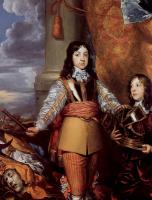


Samuel Pepys' Diary. 30th March 1663. So to my office where all the morning and at the Glass-house, and after dinner by coach with Sir W. Pen [aged 41] I carried my wife and her woman to Westminster, they to visit Mrs. Ferrers and Clerke, we to the Duke, where we did our usual business, and afterwards to the Tangier Committee, where among other things we all of us sealed and signed the Contract for building the Mole with my Lord Tiviott, Sir J. Lawson [aged 48], and Mr. Cholmley. A thing I did with a very ill will, because a thing which I did not at all understand, nor any or few of the whole board. We did also read over the propositions for the Civill government and Law Merchant of the town, as they were agreed on this morning at the Glasshouse by Sir R. Ford [aged 49] and Sir W. Rider, who drew them, Mr. Povy [aged 49] and myself as a Committee appointed to prepare them, which were in substance but not in the manner of executing them independent wholly upon the Governor consenting to.


Chronicle of Abbot Ralph of Coggeshall
The Chronicle of Abbot Ralph of Coggeshall (Chronicon Anglicanum) is an indispensable medieval history that brings to life centuries of English and European affairs through the eyes of a learned Cistercian monk. Ralph of Coggeshall, abbot of the Abbey of Coggeshall in Essex in the early 13th century, continued and expanded his community’s chronicle, documenting events from the Norman Conquest of 1066 into the tumultuous reign of King Henry III. Blending eyewitness testimony, careful compilation, and the monastic commitment to record-keeping, this chronicle offers a rare narrative of political intrigue, royal power struggles, and social upheaval in England and beyond. Ralph’s work captures the reigns of pivotal figures such as Richard I and King John, providing invaluable insights into their characters, decisions, and the forces that shaped medieval rule. More than a simple annal, Chronicon Anglicanum conveys the texture of medieval life and governance, making it a rich source for scholars and readers fascinated by English history, monastic authorship, and the shaping of the medieval world.
Available at Amazon in eBook and Paperback format.
Samuel Pepys' Diary. 30th March 1663. Thence to see my Lord Sandwich [aged 37], who I found very merry and every day better and better.

Samuel Pepys' Diary. 30th March 1665. Up, and to my Lord Ashly [aged 43], but did nothing, and to Sir Ph. Warwicke [aged 55] and spoke with him about business, and so back to the office, where all the morning.


Samuel Pepys' Diary. 30th March 1666. Thence home and eat one mouthful, and so to Hales's [aged 66], and there sat till almost quite darke upon working my gowne, which I hired to be drawn in; an Indian gowne, and I do see all the reason to expect a most excellent picture of it.
Samuel Pepys' Diary. 30th March 1667. At noon home to dinner, and thence with my wife's knowledge and leave did by coach go see the silly play of my Lady Newcastle's [aged 44], called "The Humourous Lovers"; the most silly thing that ever come upon a stage. I was sick to see it, but yet would not but have seen it, that I might the better understand her. Here I spied Knipp and Betty, of the King's house, and sent Knipp oranges, but, having little money about me, did not offer to carry them abroad, which otherwise I had, I fear, been tempted to. So with Sir W. Pen [aged 45] home (he being at the play also), a most summer evening, and to my office, where, among other things, a most extraordinary letter to the Duke of York [aged 33] touching the want of money and the sad state of the King's service thereby, and so to supper and to bed.
Samuel Pepys' Diary. 30th March 1668. Up betimes, and so to the office, there to do business till about to o'clock, and then out with my wife and Deb. and W. Hewer [aged 26] by coach to Common-garden Coffee-house, where by appointment I was to meet Harris [aged 34]; which I did, and also Mr. Cooper, the great painter, and Mr. Hales [aged 68]: and thence presently to Mr. Cooper's house, to see some of his work, which is all in little, but so excellent as, though I must confess I do think the colouring of the flesh to be a little forced, yet the painting is so extraordinary, as I do never expect to see the like again. Here I did see Mrs. Stewart's [aged 20] picture as when a young maid, and now just done before her having the smallpox: and it would make a man weep to see what she was then, and what she is like to be, by people's discourse, now. Here I saw my Lord Generall's picture, and my Lord Arlington [aged 50] and Ashly's, and several others; but among the rest one Swinfen, that was Secretary to my Lord Manchester [aged 66], Lord Chamberlain, with Cooling, done so admirably as I never saw any thing: but the misery was, this fellow died in debt, and never paid Cooper [aged 59] for his picture; but, it being seized on by his creditors, among his other goods, after his death, Cooper himself says that he did buy it, and give £25 out of his purse for it, for what he was to have had but £30. Being infinitely satisfied with this sight, and resolving that my wife shall be drawn by him when she comes out of the country, I away with Harris and Hales to the Coffee-house, sending my people away, and there resolve for Hales to begin Harris's head for me, which I will be at the cost of.


Samuel Pepys' Diary. 30th March 1669. Up, and to Sir W. Coventry [aged 41], to see and discourse with him; and he tells me that he hath lately been with my Lord Keeper, and had much discourse about the Navy; and particularly he tells me that he finds they are divided touching me and my Lord Brouncker [aged 49]; some are for removing; and some for keeping us. He told my Lord Keeper that it would cost the King [aged 38] £10,000 before he hath made another as fit to serve him in the Navy as I am; which, though I believe it is true, yet I am much pleased to have that character given me by W. Coventry, whatever be the success of it. But I perceive they do think that I know too much, and shall impose upon whomever shall come next, and therefore must be removed, though he tells me that Sir T. Clifford [aged 38] is inclined well enough to me, and Sir T. Osborne [aged 37]; by what I have lately done, I suppose. This news do a little trouble me, but yet, when I consider it, it is but what I ought not to be much troubled for, considering my incapacity, in regard to my eyes, to continue long at this work, and this when I think of and talk with my wife do make me the less troubled for it. After some talk of the business of the navy more with him, I away and to the Office, where all the morning; and Sir W. Pen [aged 47], the first time that he hath been here since his being last sick, which, I think, is two or three months; and I think will be the last that he will be here as one of the Board, he now inviting us all to dine with him, as a parting dinner, on Thursday next, which I am glad of, I am sure; for he is a very villain.


John Evelyn's Diary. 30th March 1673. At the sermon coram Rege, preached by Dr. Sparrow [aged 61], Bishop of Exeter, to a most crowded auditory; I stayed to see whether, according to custom, the Duke of York [aged 39] received the Communion with the King [aged 42]; but he did not, to the amazement of everybody. This being the second year he had forborne, and put it off, and within a day of the Parliament sitting, who had lately made so severe an Act against the increase of Popery, gave exceeding grief and scandal to the whole nation, that the heir of it, and the son of a martyr for the Protestant religion, should apostatize. What the consequence of this will be, God only knows, and wise men dread.
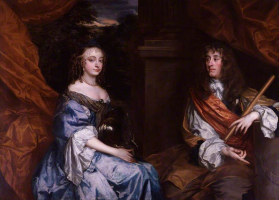


John Evelyn's Diary. 30th March 1676. Dining with my Lady Sunderland [aged 30], I saw a fellow swallow a knife, and divers great pebble stones, which would make a plain rattling one against another. The knife was in a sheath of horn.
John Evelyn's Diary. 30th March 1676. Dr. North [aged 30], son of my Lord North [aged 74], preached before the King [aged 45], on Isaiah liii. 57, a very young but learned and excellent person. Note. This was the first time the Duke [aged 42] appeared no more in chapel, to the infinite grief and threatened ruin of this poor nation.

John Evelyn's Diary. 30th March 1684. Easter day. The Bp. of Rochester [Dr. Turner] [aged 46] preach'd before, the King [aged 53] after which his Ma*, accompanied with three of his natural sonns, the Dukes of Northumberland [aged 18], Richmond [aged 11], and St. Alban's [aged 13] (sons of Cleaveland [aged 43], Portsmouth [aged 34] and Nelly [aged 34] respectively), went up to the Altar; ye three boyes entering before the King within the railes, at the right hand, and three Bishops on the left, viz. London [aged 52] (who officiated), Durham [aged 51], and Rochester, with the Sub-dean Dr. Holder. the King kneeling before the Altar, taking his offering, the Bishop first receiv'd, and then his Ma* after which he retir'd to a canopied seate on the right hand. Note, there was perfume burnt before the Office began. I had receiv'd ye Sacrament at Whitehall early with the Lords and Household, ye Bp. of London officiating. Then went to St. Martin's [Map], where Dr. Tenison [aged 47] preach'd (recover'd from ye small-pox); then went againe to Whitehall as above. In the afternoone went to St. Martin's againe.
On 30th March 1691 Charles Hamilton Comte d'Arran was born illegitimately to James Hamilton Duke Hamilton, 1st Duke Brandon [aged 32] and Barbara Fitzroy [aged 18] at Cleveland Row.
Chronicle of Abbot Ralph of Coggeshall
The Chronicle of Abbot Ralph of Coggeshall (Chronicon Anglicanum) is an indispensable medieval history that brings to life centuries of English and European affairs through the eyes of a learned Cistercian monk. Ralph of Coggeshall, abbot of the Abbey of Coggeshall in Essex in the early 13th century, continued and expanded his community’s chronicle, documenting events from the Norman Conquest of 1066 into the tumultuous reign of King Henry III. Blending eyewitness testimony, careful compilation, and the monastic commitment to record-keeping, this chronicle offers a rare narrative of political intrigue, royal power struggles, and social upheaval in England and beyond. Ralph’s work captures the reigns of pivotal figures such as Richard I and King John, providing invaluable insights into their characters, decisions, and the forces that shaped medieval rule. More than a simple annal, Chronicon Anglicanum conveys the texture of medieval life and governance, making it a rich source for scholars and readers fascinated by English history, monastic authorship, and the shaping of the medieval world.
Available at Amazon in eBook and Paperback format.
John Evelyn's Diary. 30th March 1694. I went to the Duke of Norfolk [aged 39], to desire him to make cousin Evelyn of Nutfield [aged 52] one of the Deputy-Lieutenants of Surrey, and entreat him to dismiss my brother [aged 76], now unable to serve by reason of age and infirmity. The Duke granted the one, but would not suffer my brother to resign his commission, desiring he should keep the honor of it during his life, though he could not act. He professed great kindness to our family.
John Evelyn's Diary. 30th March 1699. The Duke of Devon [aged 59] lost £1,900 at a horse race at Newmarket, Suffolk.


John Evelyn's Diary. 30th March 1699. The King [aged 48] preferring his young favorite Earl of Albemarle [aged 29] to be first Commander of his Guard, the Duke of Ormond [aged 33] laid down his commission. This of the Dutch Lord passing over his head, was exceedingly resented by everybody.

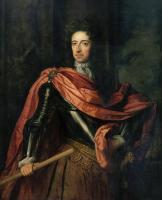
St Mary the Virgin Church, Edelsborough [Map]. Grave in the Chancel, and memorial, of Margaret Pym, died 30th March 1701, wife of Thomas Bayley, Principal of New Inn Hall, Oxford University. And also of her first husband John Theed, and their eldest son John Theed of Horton Hall.
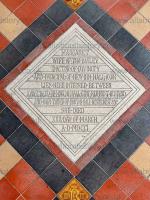
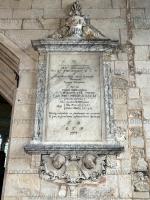
On 30th March 1746 Francisco Goya was born.
On 30th March 1746 William Gordon 2nd Earl Aberdeen [aged 67] died. His son George [aged 23] succeeded 3rd Earl Aberdeen. Catherine Elizabeth Hanson Couness Aberdeen [aged 16] by marriage Countess Aberdeen.
On 30th March 1763 George Markham was born to Archbishop William Markham [aged 44]. He married (1) 1789 Elizabeth Evelyn Sutton, daughter of Richard Sutton 1st Baronet and Anne Williams Baroness Sutton, and had issue.

On 30th March 1768 Robert Henley 2nd Earl Northington [aged 21] was elected MP Hampshire which seat he held until he succeeded to his father's title on 14th Jan 1772.
After 30th March 1775. Monument to William Irby 1st Baron Boston [deceased] at St Nicholas Church, Whiston [Map] sculpted by Joseph Nollekens [aged 37].


On 30th March 1782 Georgiana Augusta Frederica Seymour was born to King George IV of Great Britain and Ireland [aged 19] and Grace Elliott. Alternatively she may have been the daughter of George Cholmondeley 1st Marquess Cholmondeley [aged 32]; both men claimed paternity. Paternity was also claimed by Charles William Wyndham [aged 21] among others. She married 21st September 1808 Charles Cavendish-Bentinck, son of William Cavendish-Bentinck 3rd Duke Portland and Dorothy Cavendish 3rd Duchess Portland.
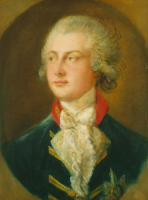


Jean de Waurin's Chronicle of England Volume 6 Books 3-6: The Wars of the Roses
Jean de Waurin was a French Chronicler, from the Artois region, who was born around 1400, and died around 1474. Waurin’s Chronicle of England, Volume 6, covering the period 1450 to 1471, from which we have selected and translated Chapters relating to the Wars of the Roses, provides a vivid, original, contemporary description of key events some of which he witnessed first-hand, some of which he was told by the key people involved with whom Waurin had a personal relationship.
Available at Amazon in eBook and Paperback format.
On 30th March 1791 Mary Beauclerk Countess Coventry was born to Aubrey Beauclerk 6th Duke St Albans [aged 25] and Jane Moses [aged 23]. She a great x 3 granddaughter of King Charles II of England Scotland and Ireland. She married 6th November 1811 George Coventry 8th Earl Coventry, son of George Coventry 7th Earl Coventry and Margaret "Peggy" Pitches Countess Coventry, and had issue.

On 30th March 1803 Aglae de Polignac "Guichette" Duchess Gramont [aged 34] died in a house fire at her home in Edinburgh.

On 30th March 1806 Georgiana Spencer Duchess Devonshire [aged 48] died at Devonshire House [Map]. She was buried at Derby Cathedral [Map]. Her husband William Cavendish 5th Duke Devonshire [aged 58], her mother Margaret Georgiana Poyntz Countess Spencer [aged 68], her sister Henrietta Frances Spencer Countess Bessborough [aged 44] and her eight months pregnant daughter Georgiana Cavendish Countess Carlisle [aged 22] were present, as was Elizabeth Christiana Hervey Duchess Devonshire [aged 48], her husband's mistress and future wife.
On 30th March 1819 Charles William Fitzgerald Fitzgerald 4th Duke Leinster was born to Augustus Fitzgerald 3rd Duke Leinster [aged 27] and Charlotte Augusta Stanhope Duchess Leinster [aged 26]. He a great x 4 grandson of King Charles II of England Scotland and Ireland. He married 12th October 1847 his half fifth cousin once removed Caroline Leveson-Gower Duchess Leinster, daughter of George Sutherland Leveson-Gower 2nd Duke Sutherland and Harriet Elizabeth Georgiana Howard Duchess Sutherland, and had issue.
The London Gazette 19842. Whitehall, March 30, 1840.
The Queen has been pleased to direct letters patent to be passed under the Great Seal, granting the dignity of a Duchess of the United Kingdom of Great Britain and Ireland unto the Right Honourable Lady Cecilia Letitia Underwood [aged 55] (eldest surviving daughter of Arthur Saunders, second Earl of Arran, by Elizabeth, his third wife, daughter of Richard Underwood, late of the city of Dublin,Esq.), and the heirs male of her body lawfully begotten, by the name, style, and title of Duchess of Inverness.
On 30th March 1842 Élisabeth Louise Vigée Le Brun [aged 86] died in Paris [Map].
Ten Years' Digging. March 30th [1848]. Another barrow about a mile from the preceding, and very much resembling it in every respect but the height, was opened: it was about four feet in elevation at the thickest part, and appeared perfect and undisturbed; yet by digging it proved the contrary, as the bones of two skeletons were found in a heap upon the level of the ground, lower than which no one had penetrated since the mound was formed. Around the bones were many fragments of iron which had been broken and left as worthless by former excavators, they appear to have been principally nails or rivets, and buckles; one piece of larger size is evidently part of a flat ring or disk, which has been riveted upon wood, the grain being very visible on one side. - These have probably been the metal fittings of a shield.
About the centre of the barrow were two large limestones, covering an oval cist, sunk down about three feet through the easily removed upper beds of the limestone rock; in which depository were calcined bones, forming the original interment; with them was a very neatly ornamented food vase, which, owing to the grave being full of large stones, had long been crushed - it is now repaired, all the pieces having been carefully gathered up - there was also a piece of stag's horn inside the grave, but no implements or weapons whatever.
30th March 1848, Saturday. Marylebone. – Extraordinary Charge Of Indecent Assault Against The Earl Of Kingston [aged 51]. – Yesterday, amongst the charges brought up by Inspector Tedman from the Marylebone-lane Station-house (D division) was one of a very extraordinary and serious nature, preferred against no less a personage than Robert King, Earl of Kingston, 35, Alpha-road, Regent's Park, and of Mickelstown Castle, county Cork, for having indecently assaulted a young man named Cull, with intent to commit an unnatural offence. – The accused, when brought in, was placed at the bar; he was attired in black, and appeared to be about sixty years of age. He was asked if he had any witnesses, and the answer he made was, "No, I have none; I deny it all." – Mr. Long remarked that as the case was one of misdemeanour, the defendant was at liberty to leave the situation in which he was placed, and stand in front of the bar, which he did. A gentleman, said to be a Member of the House of Commons, sat close to him during the proceedings, pending which he more than once addressed Sir James Hamilton, who attended to be sworn in as a special constable, and who sat near the worthy magistrate. The noble defendant seemed by no means ill at ease, although he was locked up all night at the station, and had not provided himself with the assistance of his own private solicitor. Mr. Justins, from the firm of Maples, Stevens, and Co., Old Jewry, happened, however, to be sitting at the attorneys' table owing to an engagement which he had respecting a railway robbery, and he was upon the instant specially engaged to conduct the case for his Lordship.
William of Worcester's Chronicle of England
William of Worcester, born around 1415, and died around 1482 was secretary to John Fastolf, the renowned soldier of the Hundred Years War, during which time he collected documents, letters, and wrote a record of events. Following their return to England in 1440 William was witness to major events. Twice in his chronicle he uses the first person: 1. when writing about the murder of Thomas, 7th Baron Scales, in 1460, he writes '… and I saw him lying naked in the cemetery near the porch of the church of St. Mary Overie in Southwark …' and 2. describing King Edward IV's entry into London in 1461 he writes '… proclaimed that all the people themselves were to recognize and acknowledge Edward as king. I was present and heard this, and immediately went down with them into the city'. William’s Chronicle is rich in detail. It is the source of much information about the Wars of the Roses, including the term 'Diabolical Marriage' to describe the marriage of Queen Elizabeth Woodville’s brother John’s marriage to Katherine, Dowager Duchess of Norfolk, he aged twenty, she sixty-five or more, and the story about a paper crown being placed in mockery on the severed head of Richard, 3rd Duke of York.
Available at Amazon in eBook and Paperback format.

On 30th March 1855 Duchess Maria Dorothea of Württemberg [aged 57] died from childbirth having given birth to twins the day before.
On 30th March 1863 George I King Greece [aged 17] succeeded I King Greece.

On 30th March 1864 Hermione Wilhelmina Duncombe Duchess Leinster was born to William Duncombe 1st Earl Feversham [aged 35] and Mabel Violet Graham Countess Feversham [aged 31]. Coefficient of inbreeding 1.57%. She married 17th January 1884 her sixth cousin Gerald Fitzgerald 5th Duke Leinster, son of Charles William Fitzgerald Fitzgerald 4th Duke Leinster and Caroline Leveson-Gower Duchess Leinster, and had issue.

On 30th March 1864 John Scott 7th Duke Buccleuch 9th Duke Queensberry was born to William Scott 6th Duke Buccleuch 8th Duke Queensberry [aged 32] and Louisa Jane Hamilton Duchess Buccleuch and Queensbury [aged 27]. He married 30th January 1893 his third cousin once removed Margaret Alice "Molly" Bridgeman Duchess Buccleuch Duchess Queensbury, daughter of George Cecil Orlando Bridgeman 4th Earl Bradford and Ida Frances Annabella Lumley Countess Bradford, and had issue.
On 30th March 1868 Frederick Richard Say [aged 63] died.
On 12th January 1884 Robert Nicholas Hamond [aged 74] died. On 1st March 1893 his wife Sophia Caroline Musters [aged 71] died.
On 13th December 1869 Anthony Hamond [aged 65] died. On 31st January 1900 his wife Mary Anne Musters [aged 63] died.
On 30th March 1895 Anthony Hamond [aged 61] died.
Memorials in All Saints Church, West Acre [Map].
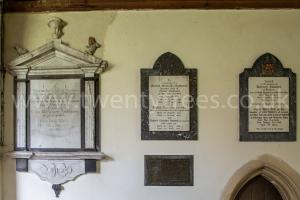

On 30th March 1895 Arthur Gore 6th Earl of Arran [aged 26] was commissioned a Captain in the Royal Horse Guards.
On 30th March 1903 Joseph John Elliott [aged 67] died
On 30th March 1907 Sarah Cox aka Fanny Cornforth [aged 72] was admitted to the West Sussex County Lunatic Asylum, the records of which state that she was suffering from "senile mania, confusion, weak-mindedness and an inability to sustain a rational conversation, a poor memory and sleeplessness."


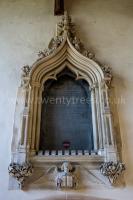
On 20th August 1914 Reverend Edmund Thomas Daubeney [aged 74] died. On 30th March 1926 Mary Castle [aged 74] died. They were buried in churchyard of Church of St George, South Acre [Map].
Reverend Edmund Thomas Daubeney: On 14th July 1840 he was born to Edmund Joseph Daubeney. Before 20th August 1914 he and Mary Castle were married.
Mary Castle: Around 1840 she was born.
Abbot John Whethamstede’s Chronicle of the Abbey of St Albans
Abbot John Whethamstede's Register aka Chronicle of his second term at the Abbey of St Albans, 1451-1461, is a remarkable text that describes his first-hand experience of the beginning of the Wars of the Roses including the First and Second Battles of St Albans, 1455 and 1461, respectively, their cause, and their consequences, not least on the Abbey itself. His text also includes Loveday, Blore Heath, Northampton, the Act of Accord, Wakefield, and Towton, and ends with the Coronation of King Edward IV. In addition to the events of the Wars of the Roses, Abbot John, or his scribes who wrote the Chronicle, include details in the life of the Abbey such as charters, letters, land exchanges, visits by legates, and disputes, which provide a rich insight into the day-to-day life of the Abbey, and the challenges faced by its Abbot.
Available at Amazon in eBook and Paperback format.
On 30th March 1917 Captain Lawrence Ughtred Kay-Shuttleworth [aged 29] was killed in action at Vimy Ridge. He was buried at the Villers Station Cemetery, CWGC Cemetery/Memorial, Villers Au Bois, France.
On 30th March 1918 Lieutenant Edward Wodehouse [aged 19] was killed in action during the First Battle of Villers-Bretonneux, part of the German Spring Offensive on the Western Front.
The History of the Sixteenth, the Queen’s Light Dragoon Guards, the events of 30 March are described thus: "During the night the enemy occupied the wood at Moreuil, and as a breakthrough at this point threatened to turn the right of the defence line it was urgently necessary to dislodge them. The 2nd Cavalry Division and the Canadian Brigade were hurried up from Cattenchy at daybreak, and the 16th, 4th Hussars, and the Canadians were sent on to drive the Germans out of the wood...The enemy were prevented from making any further advance and the position was held until 10 pm when the 16th and 4th were relieved and sent back to Thennes on the Amiens- Montdidier road, where they remained for the night. The 16th casualties this day were Lieuts Maxwell and Wodehouse an one other ranks killed, Captain Allen and 18 others wounded [Capt Allen subsequently died of his wounds]"
He was awarded the Military Cross: "For conspicuous gallantry and devotion to duty on 25th March 1918, near Menessis. During fighting in a fog he went out on several patrols, and managed to bring in parties who had been cut off by the enemy passing through unobserved. When the position had to be abandoned, he led a counter-attack, drawing fire off the main body, who got back safely. Throughout the day his example and resource kept the men steady in trying circumstances". His body was never found. He is commemorated on the Pozieres Memorial, France.
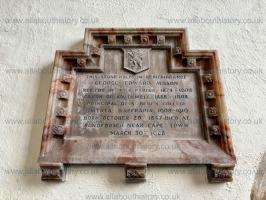
Memorial to George Edward Mason, Rector of the Church of St Lawrence, Whitwell [Map] 1874-1908, Conon of Southwell Minster [Map] 1888-1908, Principal of St Bede's College, Umtata Kaffraria, 1908-1919. Died at Rondebosch near Cape Town, 30th March 1928.
On 30th March 1945 Major Thomas Freeman-Mitford [aged 36] was killed in action. He was buried at Taukkyan War Cemetery, Myanmar, Grave 70341.
On 30th March 1962 Andrew Ian Henry Russell 15th Duke Bedford was born to Henry Robin Ian Russell 14th Duke Bedford [aged 22] and Henrietta Joan Tiarks Duchess Bedford [aged 22].
On 30th March 1973 Air Commodore Douglas Douglas-Hamilton 14th Duke of Hamilton 11th Duke Brandon [aged 70] died. His son Angus [aged 34] succeeded 15th Duke Hamilton, 12th Duke Brandon of Suffolk, 12th Baron Dutton of Cheshire.
On 30th March 1562 Cardinal Charles Bourbon Conti was born to Louis Bourbon Prince Condé [aged 31] and Eléanor de Roucy de Roye Princess Condé [aged 27].
On 30th March 1691 Charles Hamilton Comte d'Arran was born illegitimately to James Hamilton Duke Hamilton, 1st Duke Brandon [aged 32] and Barbara Fitzroy [aged 18] at Cleveland Row.
On 30th March 1746 Francisco Goya was born.
On 25 or 30th March 1750 Jane Tollemache was born to Lionel Tollemache 4th Earl Dysart [aged 41] and Grace Carteret Countess Dysart [aged 36]. She married in or before 1772 Major John Delap-Halliday and had issue.


On 30th March 1750 John Tollemache was born to Lionel Tollemache 4th Earl Dysart [aged 41] and Grace Carteret Countess Dysart [aged 36]. He married 3rd December 1773 Bridget Henley, daughter of Robert Henley 1st Earl Northington and Jane Huband, and had issue.

On 30th March 1762 John Campbell 1st Marquess Breadalbane was born to Colin Campbell of Carwhin [aged 58].
Henrici Quinti, Angliæ Regis, Gesta, is a first-hand account of the Agincourt Campaign, and subsequent events to his death in 1422. The author of the first part was a Chaplain in King Henry's retinue who was present from King Henry's departure at Southampton in 1415, at the siege of Harfleur, the battle of Agincourt, and the celebrations on King Henry's return to London. The second part, by another writer, relates the events that took place including the negotiations at Troye, Henry's marriage and his death in 1422.
Available at Amazon in eBook and Paperback format.
On 30th March 1763 George Markham was born to Archbishop William Markham [aged 44]. He married (1) 1789 Elizabeth Evelyn Sutton, daughter of Richard Sutton 1st Baronet and Anne Williams Baroness Sutton, and had issue.
On 30th March 1773 John Hayford Thorold 10th Baronet was born to John Thorold 9th Baronet [aged 38] and Jane Hayford Lady Thorold. He married (1) 1st October 1811 Mary Kent Lady Thorold, daughter of Charles Egleton aka Kent 1st Baronet and Mary Wordsworth Lady Kent, and had issue (2) 12th July 1830 Mary Anne Cary Lady Thorold.
On 30th March 1782 Georgiana Augusta Frederica Seymour was born to King George IV of Great Britain and Ireland [aged 19] and Grace Elliott. Alternatively she may have been the daughter of George Cholmondeley 1st Marquess Cholmondeley [aged 32]; both men claimed paternity. Paternity was also claimed by Charles William Wyndham [aged 21] among others. She married 21st September 1808 Charles Cavendish-Bentinck, son of William Cavendish-Bentinck 3rd Duke Portland and Dorothy Cavendish 3rd Duchess Portland.
On 30th March 1785 Henry Hardinge 1st Viscount Hardinge was born.
On 30th March 1791 Mary Beauclerk Countess Coventry was born to Aubrey Beauclerk 6th Duke St Albans [aged 25] and Jane Moses [aged 23]. She a great x 3 granddaughter of King Charles II of England Scotland and Ireland. She married 6th November 1811 George Coventry 8th Earl Coventry, son of George Coventry 7th Earl Coventry and Margaret "Peggy" Pitches Countess Coventry, and had issue.

On 30th March 1805 Henrietta Laura Wodehouse was born to John Wodehouse 2nd Baron Wodehouse [aged 34] and Charlotte Norris Baroness Woodhouse.
On 30th March 1809 John Pelly 2nd Baronet was born to John Henry Pelly 1st Baronet [aged 31].
On 30th March 1811 William Petty-Fitzmaurice was born to Henry Petty-Fitzmaurice 3rd Marquess Lansdowne [aged 30] and Louisa Emma Fox-Strangways Marchioness of Lansdowne [aged 25] at Lansdowne House Mayfair. He married 1834 his sixth cousin Augusta Lavinia Priscilla Ponsonby, daughter of John Ponsonby 4th Earl Bessborough and Maria Fane, and had issue.
On 30th March 1819 Charles William Fitzgerald Fitzgerald 4th Duke Leinster was born to Augustus Fitzgerald 3rd Duke Leinster [aged 27] and Charlotte Augusta Stanhope Duchess Leinster [aged 26]. He a great x 4 grandson of King Charles II of England Scotland and Ireland. He married 12th October 1847 his half fifth cousin once removed Caroline Leveson-Gower Duchess Leinster, daughter of George Sutherland Leveson-Gower 2nd Duke Sutherland and Harriet Elizabeth Georgiana Howard Duchess Sutherland, and had issue.
On 30th March 1824 John Alexander Campbell 6th Earl Breadalbaine and Holland was born to Lieutenant Colonel William John Lamb Campbell of Glenfalloch [aged 36].
On 30th March 1849 Cecil Molyneux Howard was born to Charles Howard 17th Earl Suffolk 10th Earl Berkshire [aged 43] and Isabella Catherine Mary Howard-Molyneux-Howard Countess Suffolk and Berkshire [aged 42].
On 30th March 1852 George Montagu Bennet 7th Earl Tankerville was born to Charles Bennet 6th Earl Tankerville [aged 42] and Olivia Montagu Countess Tankerville [aged 21] at Claridge's Hotel, Brook Street. He married 23rd October 1895 Leonora Sophia van Marter Countess of Tancerville and had issue.
On 30th March 1859 Almeric Edmund Frederic Rich 5th Baronet was born to Frederick Dampier Rich [aged 41] and Jacinthia Catherine Hesketh Lethbridge [aged 39]. Coefficient of inbreeding 3.12%.
On 30th March 1859 Arthur Edward Sebright was born to Thomas Gage Saunders Sebright 8th Baronet [aged 57].
On 30th March 1861 Edith Maria Hill-Trevor was born to Arthur Edwin Hill aka Hill-Trevor 1st Baron Trevor [aged 41] and Mary Catherine Curzon Baroness Trevor [aged 23]. She married before 2nd August 1929 Augustus William West.
William of Worcester's Chronicle of England
William of Worcester, born around 1415, and died around 1482 was secretary to John Fastolf, the renowned soldier of the Hundred Years War, during which time he collected documents, letters, and wrote a record of events. Following their return to England in 1440 William was witness to major events. Twice in his chronicle he uses the first person: 1. when writing about the murder of Thomas, 7th Baron Scales, in 1460, he writes '… and I saw him lying naked in the cemetery near the porch of the church of St. Mary Overie in Southwark …' and 2. describing King Edward IV's entry into London in 1461 he writes '… proclaimed that all the people themselves were to recognize and acknowledge Edward as king. I was present and heard this, and immediately went down with them into the city'. William’s Chronicle is rich in detail. It is the source of much information about the Wars of the Roses, including the term 'Diabolical Marriage' to describe the marriage of Queen Elizabeth Woodville’s brother John’s marriage to Katherine, Dowager Duchess of Norfolk, he aged twenty, she sixty-five or more, and the story about a paper crown being placed in mockery on the severed head of Richard, 3rd Duke of York.
Available at Amazon in eBook and Paperback format.
On 30th March 1864 John Scott 7th Duke Buccleuch 9th Duke Queensberry was born to William Scott 6th Duke Buccleuch 8th Duke Queensberry [aged 32] and Louisa Jane Hamilton Duchess Buccleuch and Queensbury [aged 27]. He married 30th January 1893 his third cousin once removed Margaret Alice "Molly" Bridgeman Duchess Buccleuch Duchess Queensbury, daughter of George Cecil Orlando Bridgeman 4th Earl Bradford and Ida Frances Annabella Lumley Countess Bradford, and had issue.
On 30th March 1864 Hermione Wilhelmina Duncombe Duchess Leinster was born to William Duncombe 1st Earl Feversham [aged 35] and Mabel Violet Graham Countess Feversham [aged 31]. Coefficient of inbreeding 1.57%. She married 17th January 1884 her sixth cousin Gerald Fitzgerald 5th Duke Leinster, son of Charles William Fitzgerald Fitzgerald 4th Duke Leinster and Caroline Leveson-Gower Duchess Leinster, and had issue.
On 30th March 1866 Susan Alice Portman was born to William Henry Portman 2nd Viscount Portman [aged 36] and Mary Selina Wentworth-Fitzwilliam Viscountess Portman [aged 30].
On 30th March 1886 Irene Lubbock was born to John Lubbock 1st Baron Avebury [aged 51] and Alice Lane Fox-Pitt Baroness Avebury [aged 24] She married 5th December 1905 Edward Henry Pelham.


On 30th March 1896 Charles Leicester 9th Baronet was born to Major William Frederic Leicester [aged 64]. He died aged less than one years old.
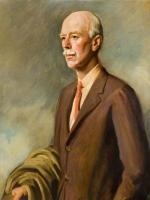
On 30th March 1900 Thomas Brand 4th Viscount Hampden was born to Thomas Brand 3rd Viscount Hampden [aged 31] and Katharine Mary Montagu-Douglas-Scott [aged 25]. He married 26th July 1923 Leila Seely Viscountess Hampden and had issue.
On 30th March 1901 Serena Lumley was born to Aldred Beresford Lumley 10th Earl Scarborough [aged 43] and Lucy Cecilia Dunn-Garnder Countess Scarborough. She married 23rd July 1923 her fifth cousin once removed Robert James, son of Walter Henry James 2nd Baron Northbourne and Edith Emeline Mary Lane Baroness Northbourne, and had issue.


On 30th March 1902 George Hay 14th Earl of Kinnoull was born to Edmund Hay [aged 22].
On 30th March 1904 Walter Peel Grove was born to Walter John Grove 2nd Baronet [aged 51] and Agnes Geraldine Lane Fox-Pitt Lady Grove [aged 41].
On 30th March 1908 Anne Hicks-Beach Baroness Leigh was born to Ellis Hicks-Beach [aged 33]. She married 27th April 1931 Rupert Leigh 4th Baron Leigh and had issue.
William of Worcester's Chronicle of England
William of Worcester, born around 1415, and died around 1482 was secretary to John Fastolf, the renowned soldier of the Hundred Years War, during which time he collected documents, letters, and wrote a record of events. Following their return to England in 1440 William was witness to major events. Twice in his chronicle he uses the first person: 1. when writing about the murder of Thomas, 7th Baron Scales, in 1460, he writes '… and I saw him lying naked in the cemetery near the porch of the church of St. Mary Overie in Southwark …' and 2. describing King Edward IV's entry into London in 1461 he writes '… proclaimed that all the people themselves were to recognize and acknowledge Edward as king. I was present and heard this, and immediately went down with them into the city'. William’s Chronicle is rich in detail. It is the source of much information about the Wars of the Roses, including the term 'Diabolical Marriage' to describe the marriage of Queen Elizabeth Woodville’s brother John’s marriage to Katherine, Dowager Duchess of Norfolk, he aged twenty, she sixty-five or more, and the story about a paper crown being placed in mockery on the severed head of Richard, 3rd Duke of York.
Available at Amazon in eBook and Paperback format.
On 30th March 1921 Elizabeth Sutherland 24th Countess of Sutherland was born to Alastair Sutherland-Leveson-Gower [aged 31] and Elizabeth Demarest [aged 28]. Her father died a month later.
On 30th March 1936 Katherine Mary Alice Baring was born to Evelyn Baring 1st Baron Howick [aged 32] and Mary Cecil Grey Baroness Howick Glendale [aged 29].
On 30th March 1960 John Salusbury-Trelawny 14th was born to John Barry Salusbury-Trelawny 13th Baronet [aged 25].
On 30th March 1962 Andrew Ian Henry Russell 15th Duke Bedford was born to Henry Robin Ian Russell 14th Duke Bedford [aged 22] and Henrietta Joan Tiarks Duchess Bedford [aged 22].
On 30th March 1965 Garret Graham Wellesley 8th Earl Cowley was born to Garret Wellesley 7th Earl Cowley [aged 30].
On 30th March 1231 Richard of Cornwall 1st Earl Cornwall [aged 22] and Isabel Marshal Countess Cornwall, Gloucester and Hertford [aged 30] were married at Fawley, Lambourn. She by marriage Countess Cornwall. She the daughter of William Marshal 1st Earl Pembroke and Isabel Clare Countess Pembroke. He the son of King John of England and Isabella of Angoulême Queen Consort England [aged 43]. They were fifth cousins.

On 30th March 1751 Henry Herbert 1st Earl Powis [aged 47] and Barbara Herbert Countess Powis [aged 15] were married. She by marriage Countess Powis. The difference in their ages was 32 years.
On 30th March 1752 Thomas Villiers 1st Earl Clarendon [aged 42] and Charlotte Capell Countess Clarendon were married. She the daughter of William Capell 3rd Earl Essex and Jane Hyde Countess Essex. He the son of William Villiers 2nd Earl Jersey. They were second cousin once removed.
On 30th March 1761 Richard Henry Bedingfield 4th Baronet [aged 40] and Mary Browne [aged 39] were married. They were half fourth cousins.
On 30th March 1761 Thomas Woods Knollys 7th Earl Banbury [aged 33] and Mary Porter [aged 18] were married at St Thomas Church, Winchester. He the son of Charles Knollys 5th Earl Banbury [aged 58] and Martha Hughes [aged 57].
William of Worcester's Chronicle of England
William of Worcester, born around 1415, and died around 1482 was secretary to John Fastolf, the renowned soldier of the Hundred Years War, during which time he collected documents, letters, and wrote a record of events. Following their return to England in 1440 William was witness to major events. Twice in his chronicle he uses the first person: 1. when writing about the murder of Thomas, 7th Baron Scales, in 1460, he writes '… and I saw him lying naked in the cemetery near the porch of the church of St. Mary Overie in Southwark …' and 2. describing King Edward IV's entry into London in 1461 he writes '… proclaimed that all the people themselves were to recognize and acknowledge Edward as king. I was present and heard this, and immediately went down with them into the city'. William’s Chronicle is rich in detail. It is the source of much information about the Wars of the Roses, including the term 'Diabolical Marriage' to describe the marriage of Queen Elizabeth Woodville’s brother John’s marriage to Katherine, Dowager Duchess of Norfolk, he aged twenty, she sixty-five or more, and the story about a paper crown being placed in mockery on the severed head of Richard, 3rd Duke of York.
Available at Amazon in eBook and Paperback format.
On 30th March 1772 Archibald Montgomerie 11th Earl Eglinton [aged 45] and Jean aka Jane Lindsay Countess Eglinton were married. She by marriage Countess Eglinton. She the daughter of George Lindsay Crawford 21st Earl Crawford 5th Earl Lindsay [aged 49]. He the son of Alexander Montgomerie 9th Earl Eglinton and Susanna Kennedy Countess Winton [aged 82].


On 30th March 1797 William Feilden 1st Baronet [aged 25] and Mary Haughton Jackson [aged 19] were married at St Martin in the Fields Church [Map].
On 30th March 1799 James Archibald Stuart-Wortley-Mackenzie 1st Baron Wharncliffe [aged 22] and Elizabeth Caroline Mary Crichton Baroness Wharncliffe [aged 21] were married. She the daughter of John Crichton 1st Earl Erne [aged 68] and Mary Caroline Hervey Countess Erne [aged 46]. They were fifth cousin once removed.
On 30th March 1844 William Frederick Pollock 2nd Baronet [aged 28] and Juliet Creed were married.
On 30th March 1875 Archibald Lamb 3rd Baronet [aged 29] and Louisa Mary Caroline Durrant Lady Lamb were married. She by marriage Lady Burges of Burghfield.
On 30th March 1909 Guy Larnach Neville 4th Marquess Abergavenny [aged 25] and Isabel "Nellie" Larnach Marchioness Abergavenny [aged 18] were married.
On 30th March 1978 Edward Charles Fitzroy 7th Baron Southampton [aged 22] and Rachel Caroline Vincent Millett Baroness Southampton were married. She by marriage Baroness Southampton.
On 30th March 987 Arnulf II Count Flanders [aged 27] died. His son Baldwin [aged 7] succeeded IV Count Flanders.
On 30th March 1290 Joyce Zouche Baroness Mortimer [aged 50] died at Worcester, Worcestershire [Map]. She was buried at Worcester Cathedral [Map].
On 30th March 1463 David Fleming 6th Baron Slane [aged 40] died. His first cousin James [aged 21] succeeded 7th Baron Slane. Elizabeth Welles Countess Kildare by marriage Countess Kildare.
On 30th March 1465 Isabella Clermont Queen Consort Naples [aged 41] died.
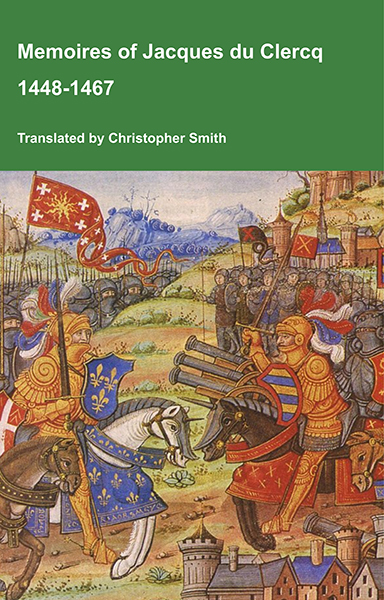
This is a translation of the 'Memoires of Jacques du Clercq', published in 1823 in two volumes, edited by Frederic, Baron de Reissenberg. In his introduction Reissenberg writes: 'Jacques du Clercq tells us that he was born in 1424, and that he was a licentiate in law and a counsellor to Philip the Good, Duke of Burgundy, in the castellany of Douai, Lille, and Orchies. It appears that he established his residence at Arras. In 1446, he married the daughter of Baldwin de la Lacherie, a gentleman who lived in Lille. We read in the fifth book of his Memoirs that his father, also named Jacques du Clercq, had married a lady of the Le Camelin family, from Compiègne. His ancestors, always attached to the counts of Flanders, had constantly served them, whether in their councils or in their armies.' The Memoires cover a period of nineteen years beginning in in 1448, ending in in 1467. It appears that the author had intended to extend the Memoirs beyond that date; no doubt illness or death prevented him from carrying out this plan. As Reissenberg writes the 'merit of this work lies in the simplicity of its narrative, in its tone of good faith, and in a certain air of frankness which naturally wins the reader’s confidence.' Du Clercq ranges from events of national and international importance, including events of the Wars of the Roses in England, to simple, everyday local events such as marriages, robberies, murders, trials and deaths, including that of his own father in Book 5; one of his last entries.
Available at Amazon in eBook and Paperback format.
On 30th March 1472 Amadeus "Happy" Savoy IX Duke Savoy [aged 37] died. His brother Philip [aged 34] succeeded II Duke Savoy.
On 30th March 1486 Cardinal Thomas Bourchier [aged 68] died at Knole House, Sevenoaks. He was buried at Canterbury Cathedral [Map].
On 30th March 1543 Andrew Windsor 1st Baron Windsor [aged 76] died. His son William [aged 44] succeeded 2nd Baron Windsor of Stanwell in Buckinghamshire. Margaret Sambourne Baroness Windsor [aged 42] by marriage Baroness Windsor of Stanwell in Buckinghamshire.
On 30th March 1555 Bishop Robert Ferrar was burned at the stake at the Market Square, Carmarthen.
On 30th March 1610 Thomas Gorges of Longford Castle [aged 74] died. On 14th May 1635 Helena Snakenbourg Marchioness Northampton [aged 61] was buried in Salisbury Cathedral [Map].
Thomas Gorges of Longford Castle: In 1536 he was born to Edward Gorges and Mary Poyntz in Wraxall, Somerset [Map]. In 1573 Thomas Gorges of Longford Castle acquired the manor of Longford, Wiltshire [Map] which had been owned by the Servington aka Cervington family. In 1576 after his marriage to Helena Snakenbourg Marchioness Northampton they commissioned the building of a house on the triangular Swedish style on the banks of the Wiltshire River Avon with money from a shipwreck of the Spanish Armada. In 1576 Thomas Gorges of Longford Castle and Helena Snakenbourg Marchioness Northampton were married secretly. In 1586 Thomas Gorges of Longford Castle was knighted at Beddington, Surrey.
On 30th March 1636 Dorothy Devereux Lady Shirley [aged 36] died.
On 30th March 1655 James Stewart 4th Duke Lennox 1st Duke Richmond [aged 42] died. His son Esmé [aged 6] succeeded 2nd Duke Richmond, 5th Duke Lennox, 3rd Earl March, 4th Baron Clifton of Leighton Bromswold in Huntingdonshire.
On 30th March 1665 Thomas Fanshawe 1st Viscount Fanshawe [aged 69] died. His son Thomas [aged 33] succeeded 2nd Viscount Fanshawe. Sarah Evelyn Viscountess Fanshawe and Castleton [aged 23] by marriage Viscountess Fanshawe.


On 30th March 1673 John Tyrrell 1st Baronet [aged 38] died. His son Charles [aged 13] succeeded 2nd Baronet Tyrrell of Springfield.
On 30th March 1677 Robert Jenkinson 1st Baronet [aged 56] died. His son Robert [aged 22] succeeded 2nd Baronet Jenkinson of Walcot in Oxfordshire and of Hawkesbury in Gloucestershire.

On 30th March 1695 Francis Howard 5th Baron Howard [aged 51] died at Lingfield, Surrey. He was buried at St Giles' in the Fields Church [Map]. His son Thomas [aged 13] succeeded 6th Baron Howard of Effingham.
On 30th March 1699 William Whitmore 2nd Baronet [aged 61] died without issue. Baronet Whitmore of Apley extinct.
Chronicle of a Bourgeois of Valenciennes
Récits d’un bourgeois de Valenciennes aka The Chronicle of a Bourgeois of Valenciennes is a vivid 14th-century vernacular chronicle written by an anonymous urban chronicler from Valenciennes in the County of Hainaut. It survives in a manuscript that describes local and regional history from about 1253 to 1366, blending chronology, narrative episodes, and eyewitness-style accounts of political, military, and social events in medieval France, Flanders, and the Low Countries. The work begins with a chronological framework of events affecting Valenciennes and its region under rulers such as King Philip VI of France and the shifting allegiances of local nobility. It includes accounts of conflicts, sieges, diplomatic manoeuvres, and the impact of broader struggles like the Hundred Years’ War on urban life in Hainaut. Written from the perspective of a burgher (bourgeois) rather than a monastery or royal court, the chronicle offers a rare lay viewpoint on high politics and warfare, reflecting how merchants, townspeople, and civic institutions experienced the turbulence of the 13th and 14th centuries. Its narrative style combines straightforward reporting of events with moral and civic observations, making it a valuable source for readers interested in medieval urban society, regional politics, and the lived experience of war and governance in pre-modern Europe.
Available at Amazon in eBook and Paperback format.
On 30th March 1721 Robert Eden 1st Baronet died. His son John [aged 43] succeeded 2nd Baronet Eden of West Auckland.
On 30th March 1746 William Gordon 2nd Earl Aberdeen [aged 67] died. His son George [aged 23] succeeded 3rd Earl Aberdeen. Catherine Elizabeth Hanson Couness Aberdeen [aged 16] by marriage Countess Aberdeen.
On 30th March 1759 William Molyneux 7th Viscount Molyneux [aged 74] died. His nephew Charles [aged 10] succeeded 8th Viscount Molyneux, 9th Baronet Molyneux of Sefton.
On 30th March 1775 William Irby 1st Baron Boston [aged 68] died. His son Frederick [aged 25] succeeded 2nd Baron Boston, 3rd Baronet Irby of Whaplode and Boston.
On 30th March 1795 Lewis Watson 1st Baron Sondes [aged 66] died. His son Lewis [aged 40] succeeded 2nd Baron Sondes.
On 30th March 1803 Aglae de Polignac "Guichette" Duchess Gramont [aged 34] died in a house fire at her home in Edinburgh.
On 30th March 1804 Charles Dormer 8th Baron Dormer [aged 78] died. His son Charles [aged 51] succeeded 9th Baron Dormer of Wyng in Buckinghamshire, 9th Baronet Dormer of Wyng in Buckinghamshire.
On 30th March 1806 Georgiana Spencer Duchess Devonshire [aged 48] died at Devonshire House [Map]. She was buried at Derby Cathedral [Map]. Her husband William Cavendish 5th Duke Devonshire [aged 58], her mother Margaret Georgiana Poyntz Countess Spencer [aged 68], her sister Henrietta Frances Spencer Countess Bessborough [aged 44] and her eight months pregnant daughter Georgiana Cavendish Countess Carlisle [aged 22] were present, as was Elizabeth Christiana Hervey Duchess Devonshire [aged 48], her husband's mistress and future wife.


On 30th March 1810 James Stopford 2nd Earl of Courtown [aged 78] died. His son James [aged 44] succeeded 3rd Earl of Courtown. Mary Scott Countess of Courtown [aged 40] by marriage Countess of Courtown.

On 30th March 1819 Walter Farquhar 1st Baronet [aged 80] died. He was buried at St Martin in the Fields Church [Map]. His son Thomas [aged 43] succeeded 2nd Baronet Farquhar of Cadogan House in Middlesex.
Chronicle of a Bourgeois of Valenciennes
Récits d’un bourgeois de Valenciennes aka The Chronicle of a Bourgeois of Valenciennes is a vivid 14th-century vernacular chronicle written by an anonymous urban chronicler from Valenciennes in the County of Hainaut. It survives in a manuscript that describes local and regional history from about 1253 to 1366, blending chronology, narrative episodes, and eyewitness-style accounts of political, military, and social events in medieval France, Flanders, and the Low Countries. The work begins with a chronological framework of events affecting Valenciennes and its region under rulers such as King Philip VI of France and the shifting allegiances of local nobility. It includes accounts of conflicts, sieges, diplomatic manoeuvres, and the impact of broader struggles like the Hundred Years’ War on urban life in Hainaut. Written from the perspective of a burgher (bourgeois) rather than a monastery or royal court, the chronicle offers a rare lay viewpoint on high politics and warfare, reflecting how merchants, townspeople, and civic institutions experienced the turbulence of the 13th and 14th centuries. Its narrative style combines straightforward reporting of events with moral and civic observations, making it a valuable source for readers interested in medieval urban society, regional politics, and the lived experience of war and governance in pre-modern Europe.
Available at Amazon in eBook and Paperback format.
On 30th March 1842 Élisabeth Louise Vigée Le Brun [aged 86] died in Paris [Map].
On 30th March 1855 Gustavus Hamilton 6th Viscont Boyne [aged 77] died. His son Gustavus [aged 57] succeeded 7th Viscount Boyne.
On 30th March 1868 Frederick Richard Say [aged 63] died.
On 30th March 1868 Charles John Salusbury 3rd Baronet [aged 76] died unmarried. Baronet Salusbury of Llanwern in Monmouthshire extinct.
On 30th March 1879 Penelope Smyth Baroness Tenterden [aged 39] died.
On 30th March 1894 Nelson Rycroft 4th Baronet [aged 63] died. His son Richard [aged 34] succeeded 5th Baronet Rycroft of Calton in Yorkshire.
On 30th March 1895 Frederick Beauchamp Paget Seymour-Conway 1st Baron Alcester [aged 73] died unmarried. Baron Alcester in Warwickshire extinct.
On 30th March 1895 Rowland Hill aka Clegg-Hill 3rd Viscount Hill [aged 61] died. His son Rowland [aged 32] succeeded 4th Viscount Hill of Hawkestone and Hardwicke in Shropshire, 4th Baron Hill of Almaraz and of Hawkestone in Shropshire, 6th Baronet Hill of Hawkestone in Shropshire.
On 30th March 1903 Joseph John Elliott [aged 67] died
On 30th March 1913 Sidney Herbert 14th Earl Pembroke 11th Earl Montgomery [aged 60] died in Rome, Italy [Map]. His son Reginald [aged 32] succeeded 15th Earl Pembroke, 12th Earl Montgomery, 4th Baron Herbert Lea. Beatrice Eleanor Paget Countess Pembroke and Montgomery [aged 29] by marriage Countess Pembroke, Countess Montgomery.
On 30th March 1913 Julia Frances Somerville Lady Blackett [aged 69] died.
Abbot John Whethamstede’s Chronicle of the Abbey of St Albans
Abbot John Whethamstede's Register aka Chronicle of his second term at the Abbey of St Albans, 1451-1461, is a remarkable text that describes his first-hand experience of the beginning of the Wars of the Roses including the First and Second Battles of St Albans, 1455 and 1461, respectively, their cause, and their consequences, not least on the Abbey itself. His text also includes Loveday, Blore Heath, Northampton, the Act of Accord, Wakefield, and Towton, and ends with the Coronation of King Edward IV. In addition to the events of the Wars of the Roses, Abbot John, or his scribes who wrote the Chronicle, include details in the life of the Abbey such as charters, letters, land exchanges, visits by legates, and disputes, which provide a rich insight into the day-to-day life of the Abbey, and the challenges faced by its Abbot.
Available at Amazon in eBook and Paperback format.
On 30th March 1917 George Byron 9th Baron Byron [aged 61] died. His brother Frederick [aged 56] succeeded 10th Baron Byron of Rochdale in Lancashire.
On 30th March 1920 Feodorowna Cecilia Wellesley Viscountess Bertie Thame [aged 82] died.
On 30th March 1923 Edward Green 1st Baronet [aged 92] died. His son Edward [aged 62] succeeded 2nd Baronet Green of Wakefield in Yorkshire and of Ken Hill in Norfolk. Ethel Mary Wilson Lady Green [aged 58] by marriage Lady Green of Wakefield in Yorkshire and of Ken Hill in Norfolk.
On 30th March 1929 John Douglas-Scott-Montagu 2nd Baron Montagu of Beaulieu [aged 62] died. His son Edward [aged 2] succeeded 3rd Baron Montagu of Beaulieu.
On 30th March 1935 Georgina Harriet Deffell Lady Pollock died.
On 30th March 1939 Gerald Arthur Arundell 15th Baron Arundel [aged 77] died. His son John [aged 31] succeeded 16th Baron Arundel of Wardour in Wiltshire.
On 30th March 1942 Mabel Addington Lady Orr-Ewing died.
On 30th March 1954 Guy Larnach Neville 4th Marquess Abergavenny [aged 70] died. His son John [aged 39] succeeded 5th Marquess Abergavenny, 9th Earl Abergavenny, 9th Viscount Neville, 5th Earl Lewes. Mary Patricia Harrison Marchioness Abergavenny [aged 38] by marriage Marchioness Abergavenny.
On 30th March 1955 Reverend Aubrey Neville St John-Mildmay 10th Baronet [aged 90] died. His son Verus [aged 49] succeeded 11th Baronet St John-Mildmay of Farley in Southampton. It appears he never claimed the title.
On 30th March 1956 John Ryder 5th Earl of Harrowby [aged 91] died. His son Dudley [aged 63] succeeded 6th Earl of Harrowby, 7th Baron Harrowby of Harrowby in Lincolnshire.
On 30th March 1967 William Hay 11th Marquess of Tweeddale [aged 82] died.
On 30th March 1973 Air Commodore Douglas Douglas-Hamilton 14th Duke of Hamilton 11th Duke Brandon [aged 70] died. His son Angus [aged 34] succeeded 15th Duke Hamilton, 12th Duke Brandon of Suffolk, 12th Baron Dutton of Cheshire.
Annals of the six Kings of England by Nicholas Trivet
Translation of the Annals of the Six Kings of England by that traces the rise and rule of the Angevin aka Plantagenet dynasty from the mid-12th to early 14th century. Written by the Dominican scholar Nicholas Trivet, the work offers a vivid account of English history from the reign of King Stephen through to the death of King Edward I, blending political narrative with moral reflection. Covering the reigns of six monarchs—from Stephen to Edward I—the chronicle explores royal authority, rebellion, war, and the shifting balance between crown, church, and nobility. Trivet provides detailed insight into defining moments such as baronial conflicts, Anglo-French rivalry, and the consolidation of royal power under Edward I, whose reign he describes with particular immediacy. The Annals combines careful year-by-year reporting with thoughtful interpretation, presenting history not merely as a sequence of events but as a moral and political lesson. Ideal for readers interested in medieval history, kingship, and the origins of the English state, this chronicle remains a valuable and accessible window into the turbulent world of the Plantagenet kings.
Available at Amazon in eBook and Paperback format.
On 30th March 1990 Humphrey Thomas Tollemache 6th Baronet [aged 92] died. His son Lyonel [aged 58] succeeded 7th Baronet Tollemache of Hanby Hall in Lincolnshire.