

Jean de Waurin's Chronicle of England Volume 6 Books 3-6: The Wars of the Roses
Jean de Waurin was a French Chronicler, from the Artois region, who was born around 1400, and died around 1474. Waurin’s Chronicle of England, Volume 6, covering the period 1450 to 1471, from which we have selected and translated Chapters relating to the Wars of the Roses, provides a vivid, original, contemporary description of key events some of which he witnessed first-hand, some of which he was told by the key people involved with whom Waurin had a personal relationship.
Available at Amazon in eBook and Paperback format.
Paternal Family Tree: Hamilton
In or before 1490 Thomas Hay Master of Yester [aged 23] and [his mother] Elizabeth Home Countess Arran were married.
Before 28th April 1490 [his father] James Hamilton 1st Earl Arran [aged 15] and [his mother] Elizabeth Home Countess Arran were married. She by marriage Lord Hamilton.
Around 1516 James Hamilton 2nd Earl Arran was born to James Hamilton 1st Earl Arran [aged 41] and Elizabeth Home Countess Arran.
On 30th April 1520 a skirmish took place on the High Street Edinburgh in which around five hundred supporters of [his father] James Hamilton 1st Earl Arran [aged 45] fought with a similar number of supporters of Archibald Douglas 6th Earl Angus [aged 31], chiefs of Clan Hamilton and Douglas respectively, over who had control over King James V of Scotland [aged 8].
Around eighty of the Hamilton's were killed with the Douglases victorious as a consequence of around eight hundred more supporters arriving under the leadership of Angus' brother William Douglas Prior of Coldingham [aged 27].
John Montgomerie Master of Eglinton [aged 37] was killed.


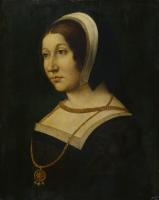
On 4th September 1526 the Battle of Linlithgow Bridge was fought between supporters of Margaret Tudor Queen Scotland [aged 36], the king's mother, commanded by John Stewart 3rd Earl Lennox [aged 36] and supporters of Archibald Douglas 6th Earl Angus [aged 37] commanded by [his father] James Hamilton 1st Earl Arran [aged 51], over who would have control over King James V of Scotland [aged 14] in his minority.
John Stewart 3rd Earl Lennox was killed possibly after surrendering. His son Matthew [aged 9] succeeded 4th Earl Lennox.
William Cunningham 4th Earl Glencairn [aged 33] was captured.
In 1529 [his father] James Hamilton 1st Earl Arran [aged 54] died. His son James [aged 13] succeeded 2nd Earl Arran.
Around 1530 [his brother-in-law] Alexander Cunningham 5th Earl Glencairn and [his sister] Janet Hamilton Countess Glencairn [aged 15] were married. She the daughter of [his father] James Hamilton 1st Earl Arran and [his mother] Elizabeth Home Countess Arran. He the son of William Cunningham 4th Earl Glencairn [aged 36] and Catherine Borthwick.
In 1532 James Hamilton 2nd Earl Arran [aged 16] and Margaret Douglas Duchess Châtellerault were married. She by marriage Countess Arran. She the daughter of James Douglas 3rd Earl Morton and Catherine Stewart Countess Morton [aged 37]. He the son of James Hamilton 1st Earl Arran and Elizabeth Home Countess Arran. They were second cousin once removed. He a great x 5 grandson of King Edward III of England. She a great x 5 granddaughter of King Edward III of England.
Around 1532 [his son] James Hamilton 3rd Earl Arran was born to James Hamilton 2nd Earl Arran [aged 16] and [his wife] Margaret Douglas Duchess Châtellerault.
Around 1535 [his son] John Hamilton 1st Marquess Hamilton was born to James Hamilton 2nd Earl Arran [aged 19] and [his wife] Margaret Douglas Duchess Châtellerault. He married 30th December 1577 his second cousin Margaret Lyon Marchioness Hamilton and had issue.
Around 1535 [his daughter] Anne Hamilton Countess Huntley was born to James Hamilton 2nd Earl Arran [aged 19] and [his wife] Margaret Douglas Duchess Châtellerault. She married 12th March 1558 her second cousin George Gordon 5th Earl Huntley, son of George Gordon 4th Earl Huntley, and had issue.
Around September 1543 James Hamilton 2nd Earl Arran [aged 27] was created 1st Duke Châtellerault. [his wife] Margaret Douglas Duchess Châtellerault by marriage Duchess Châtellerault. He was awrded the Duchy for having arranged the marriage of Mary Queen of Scots and the Dauphin.


On 16th March 1544 the First Battle of Glasgow was fought between an army of Matthew Stewart 4th Earl Lennox [aged 27], who supported a marriage between King Edward VI of England and Ireland [aged 6] and Mary Queen of Scots [aged 1], and an army of James Hamilton 2nd Earl Arran [aged 28] who opposed it.
Robert Boyd 4th Lord Boyd [aged 59] fought for James Hamilton 2nd Earl Arran for which was rewarded with the family lands (which he held in tack), as well as the restoration of his family's title of Lord Boyd.
On 4th May 1544, Sunday, around 10,000 English soldiers landed unopposed at Leith and Granton. The ships had been sighted the day before. Cardinal Beaton [aged 50] and Regent James Hamilton 2nd Earl Arran [aged 28] left Edinburgh. The Scots, with Cardinal Beaton, George Gordon 4th Earl Huntley [aged 30] and James Stewart 1st Earl of Moray attempted unsuccessfully to prevent the English forces at Granton joining those at Leith. The English then entered Leith unopposed where they found two ships of King James V of Scotland: the Salamander of Leith and the Unicorn.
Around 24th May 1544 the Second Battle of Glasgow was fought between James Hamilton 2nd Earl Arran [aged 28], who opposed a marriage between King Edward VI of England and Ireland [aged 6] and Mary Queen of Scots [aged 1], and an army of James Hamilton 2nd Earl Arran who supported the marriage. and William Cunningham 4th Earl Glencairn [aged 51]
Andrew Cunningham was killed.
On 27th February 1545 a Scottish army defeated an English army at the Battle of Ancrum Moor at Jedburgh. The Scots Archibald Douglas 6th Earl Angus [aged 56], John Lindsay 5th Lord Lindsay of the Byres [aged 63] and James Hamilton 2nd Earl Arran [aged 29] fought.
Brian Leyton and Ralph Eure were killed.
Chronicle of Walter of Guisborough
A canon regular of the Augustinian Guisborough Priory, Yorkshire, formerly known as The Chronicle of Walter of Hemingburgh, describes the period from 1066 to 1346. Before 1274 the Chronicle is based on other works. Thereafter, the Chronicle is original, and a remarkable source for the events of the time. This book provides a translation of the Chronicle from that date. The Latin source for our translation is the 1849 work edited by Hans Claude Hamilton. Hamilton, in his preface, says: 'In the present work we behold perhaps one of the finest samples of our early chronicles, both as regards the value of the events recorded, and the correctness with which they are detailed; Nor will the pleasing style of composition be lightly passed over by those capable of seeing reflected from it the tokens of a vigorous and cultivated mind, and a favourable specimen of the learning and taste of the age in which it was framed.'
Available at Amazon in eBook and Paperback format.
Letters and Papers Foreign and Domestic Henry VIII 1545. 3 March [1545]. Add.MS. 32,656 f 180. B.M. Hamilton Papers. ii., No.418. 301. Shrewsbury, Tunstall and Sadler to Henry VIII.
Send letters received from the Wardens of the East and West marches and Sir Cuthbert Ratclyff; and also a letter from Parson Ogle, the bringer of which related the words spoken by the Governor [Regent] [aged 29], of which the said Parson writes. It seems that Vicar Ogle, a friend of the said Parson's, being taken by one of Anguisshe's servants, was asked by the Governor [Regent], after the battle, if he knew the Warden [Ralph Eure]. On his answer that he did, the Governor [Regent] led him by the hand to where the dead bodies lay and he identified the Warden. "God have mercy on him (quod the Governor [Regent]) for he was a fell cruel man and over cruel, which many a man and fatherless bairn might rue; and, welaway (quod he) that ever such slaughter and bloodshedding should be amongst Christian men." And the tears trickled down his cheeks. Anguisshe then came up and asked the Governor [Regent] if he were merry, who answered. "My lord, I am much the merrier for you"; and took him about the neck and kissed him 20 times, saying he repented having ever mistrusted him, who had that day done so much for Scotland. Whereunto Anguisshe answered that God knew his loyalty to his native country.
Such as were at the conflict report that the overthrow proceeded of the treason of the assured Scots of Tyvydale, whose advice, and chiefly the laird of Bonjedwourth's, Sir Ralph Evres followed. They killed and took more Englishmen than did any of the enemies; and yet, but for disorder among our men at the joining of the battle, victory might have been ours, for the Scots were not so numerous as is said. Hear so many sundry tales that they cannot yet write the certainty. Newcastle, 3 March. Signed.
Before 9th June 1546 [his son] Claud Hamilton 1st Lord Paisley was born to James Hamilton 2nd Earl Arran [aged 30] and [his wife] Margaret Douglas Duchess Châtellerault. He married after 16th June 1574 his third cousin once removed Margaret Seton Lady Paisley and had issue.
On 10th September 1547 an English army commanded by Edward Seymour 1st Duke of Somerset [aged 47] defeated a Scottish army commanded by James Hamilton 2nd Earl Arran [aged 31] and Archibald Douglas 6th Earl Angus [aged 58] at the Battle of Pinkie Cleugh at Musselburgh.
The English army included John Dudley 1st Duke Northumberland [aged 43], Francis Talbot 5th Earl of Shrewsbury [aged 47], Miles Partridge and Thomas Wentworth 2nd Baron Wentworth [aged 22]. John Thynne [aged 32] and Edmund Brydges 2nd Baron Chandos [aged 25] were knighted.
William Cecil 1st Baron Burghley [aged 26] accompanied Edward Seymour 1st Duke of Somerset.
Edward Shelley of Worminghurst Park [aged 44] was killed.
John Forbes 6th Lord Forbes [aged 82], Christopher Coningsby [aged 31] and Edward Clere were killed.
John Thynne was knighted after the battle.
George Sandes [aged 29] was killed.
The Scottish army included John Gordon 11th Earl Sutherland [aged 22] who commanded the Rearguard and Gilbert Kennedy 3rd Earl Cassilis [aged 32]. John Stewart, Robert Douglas [aged 41], John Livingston, Thomas Hamilton of Priestfield and Hugh Montgomerie were killed. John Hay 4th Lord Hay was captured but soon released.
Malcolm Fleming 3rd Lord Fleming [aged 53] was killed. His son [his future son-in-law] James [aged 13] succeeded 4th Lord Fleming. [his daughter] Barbara Hamilton Lady Fleming by marriage Lord Fleming.
Robert Graham Master of Montrose and James Gordon of Lochinvar were killed.


In March 1548 William Cunningham 4th Earl Glencairn [aged 54] died. His son [his brother-in-law] Alexander succeeded 5th Earl Glencairn. [his sister] Janet Hamilton Countess Glencairn [aged 33] by marriage Countess Glencairn.
After 22nd December 1553 [his son-in-law] James Fleming 4th Lord Fleming [aged 19] and Barbara Hamilton Lady Fleming were married. She the daughter of James Hamilton 2nd Earl Arran [aged 37] and Margaret Douglas Duchess Châtellerault. They were half first cousin once removed. He a great x 5 grandson of King Edward III of England.
In 1554 [his son-in-law] Hugh Montgomerie 3rd Earl Eglinton [aged 23] and Jean Hamilton Countess Eglinton were married. She by marriage Countess Eglinton. She the daughter of James Hamilton 2nd Earl Arran [aged 38] and Margaret Douglas Duchess Châtellerault. He the son of Hugh Montgomerie 2nd Earl Eglinton and Marion Seton Countess Eglinton [aged 59]. They were third cousins.
On 12th March 1558 [his son-in-law] George Gordon 5th Earl Huntley and Anne Hamilton Countess Huntley [aged 23] were married. She the daughter of James Hamilton 2nd Earl Arran [aged 42] and Margaret Douglas Duchess Châtellerault. He the son of George Gordon 4th Earl Huntley [aged 44]. They were second cousins.
On 10th September 1559 [his son] James Hamilton 3rd Earl Arran [aged 27] met his father James Hamilton 2nd Earl Arran [aged 43] at Hamilton Palace, Hamilton.
On 25th June 1562 [his son-in-law] Hugh Montgomerie 3rd Earl Eglinton [aged 31] and [his daughter] Jean Hamilton Countess Eglinton were divorced. See Memorials of the Montgomeries Pages 183-185.
Around 1574 [his sister] Janet Hamilton Countess Glencairn [aged 59] died.
After 17th April 1574 [his daughter] Anne Hamilton Countess Huntley [deceased] died.

After 16th June 1574 Claud Hamilton 1st Lord Paisley [aged 28] and Margaret Seton Lady Paisley [aged 17] were married. He the son of James Hamilton 2nd Earl Arran [aged 58] and Margaret Douglas Duchess Châtellerault. They were third cousin once removed.
On 22nd January 1575 James Hamilton 2nd Earl Arran [aged 59] died. His son James [aged 43] succeeded 3rd Earl Arran.
Anne Boleyn. Her Life as told by Lancelot de Carle's 1536 Letter.
In 1536, two weeks after the execution of Anne Boleyn, her brother George and four others, Lancelot du Carle, wrote an extraordinary letter that described Anne's life, and her trial and execution, to which he was a witness. This book presents a new translation of that letter, with additional material from other contemporary sources such as Letters, Hall's and Wriothesley's Chronicles, the pamphlets of Wynkyn the Worde, the Memorial of George Constantyne, the Portuguese Letter and the Baga de Secrets, all of which are provided in Appendices.
Available at Amazon in eBook and Paperback format.
On 24th May 1579 [his former wife] Margaret Douglas Duchess Châtellerault died.
[his daughter] Barbara Hamilton Lady Fleming was born to James Hamilton 2nd Earl Arran and Margaret Douglas Duchess Châtellerault. She married after 22nd December 1553 her half first cousin once removed James Fleming 4th Lord Fleming, son of Malcolm Fleming 3rd Lord Fleming and Janet Stewart Lady Fleming, and had issue.
[his daughter] Jean Hamilton Countess Eglinton was born to James Hamilton 2nd Earl Arran and Margaret Douglas Duchess Châtellerault. She married (1) 1554 her third cousin Hugh Montgomerie 3rd Earl Eglinton, son of Hugh Montgomerie 2nd Earl Eglinton and Marion Seton Countess Eglinton.
Letters and Papers Foreign and Domestic Henry VIII 1547. 29 Jan. 756. Chapuys to Mary of Hungary. Spanish Calendar, viii., No. 386.
Received yesterday afternoon hers of the 27th requiring his opinion upon the two extracts sent. To deal with such a subject a wit unclouded by gout (of which he had a renewed attack two days ago) and personal consideration on the spot are requisite, for the English change continually. This she has foreseen by sending the present ambassador, who must now know them well. If the King favours these stirrers of heresy, the Earl of Hertford and Lord Admiral, which is to be feared both for the reasons given by the Ambassador and because the Queen, instigated by the Duchess of Suffolk, Countess of Hertford and the Admiral's wife, shows herself infected, words and exhortations, even in the name of the Emperor, would only make him the more obstinate to show his absolute power and independence, and might engender a coolness towards the Emperor which at present is undesirable. Nevertheless the Ambassador might, of himself, take occasion to praise his decrees promulgated some months ago for the extinction of heresy, and say that so dangerous a malady needed the ceaseless vigilance of all concerned since every case could not be brought to his (the King's) personal notice. The Ambassador might then lay before the King some of the evils of religious innovation, as he has already stated them to some of the Councillors. He might also confer with some of the Councillors, although he will hardly find any of them disposed to act against the Earl and Admiral, seeing the violent and injurious words used recently by the Earl against the Lord Chancellor and by the Admiral against Winchester. When Chapuys was last in England Winchester would have been sent to the Tower by the Earl and Admiral but for the intercession of Norfolk. To "hold a candle to the Devil," the Ambassador might, after speaking with the King, repeat his discourse to the Earl and Admiral, although their malady is incurable and they confirmed in it by their plans to obtain the government of the Prince. To gain a party they drag the whole country into this damnable error, to which there is no counteracting influence among the secular nobility except Norfolk, who has great power with the people of the North; and this seems to be the cause of his detention and that of his son, who is also called a man of great courage. Their only other obstacle is the authority of the bishops, and it is therefore to be feared that in the coming Parliament these will be divested of their property and given pensions out of the King's coffers. Hertford was taught this plan by Cromwell who, doubting his ability to reconcile the Emperor with the King, adopted heresy in order to place the whole realm against the Emperor; which before was so devoted to him that he might have done anything in favour of the Queen almost without effort. Neither French nor Scots are feared, because of the natural hatred of Englishmen to them, and since the Emperor did not attack when he had ample cause, for the advancement of the Princess, nothing that he says now will affect them (the English rulers); indeed they would turn fair words to their own profit, for, as Seneca says, Qui frigide rogat docet negare. The King's death would be more inopportune for us now than twenty years ago, and the Earl and Admiral are the only nobles of age and ability to undertake affairs. Disturbances might take place, and in these the Ambassador could use his dexterity. Will only suggest that if the King dies before the injuries of the Emperor's subjects are redressed, a ready means of both securing compensation and irritating the English against their Governor [Regent]s would be an embargo like that of two years ago. With this end the English merchants should be encouraged to come hither; and no doubt it would perplex the Governor [Regent]s, for last time the King himself was much upset by it and by the complaints of the people.
If Parliament enjoyed its ancient liberties, when it met to punish kings, a remonstrance might be addressed to Parliament; but now if St. Peter and St. Paul were to return to earth the King would not let them enter, as he once said to the writer who wished to be present when the legitimacy of the Princess Mary was under discussion. No man there dare open his mouth against the will of the King and Council. Still, no harm could be done by Granvelle addressing a remonstrance to the bp. of Winchester, to be used and amplified by the Ambassador. At present it is advisable for the Emperor to avoid action either spiritual or temporal; for doctors tell us that the Pope or other prelate should refrain from censures when such a course threatens to aggravate the malady, and physicians say that the best cure in some cases is to leave the evil untouched.
Louvain, 29 Jan. 1547.
[his son] David Hamilton was born to James Hamilton 2nd Earl Arran and Margaret Douglas Duchess Châtellerault.
Kings Wessex: Great x 14 Grand Son of King Edmund "Ironside" I of England
Kings Gwynedd: Great x 10 Grand Son of Owain "Great" King Gwynedd
Kings Seisyllwg: Great x 16 Grand Son of Hywel "Dda aka Good" King Seisyllwg King Deheubarth
Kings Powys: Great x 11 Grand Son of Maredudd ap Bleddyn King Powys
Kings Godwinson: Great x 15 Grand Son of King Harold II of England
Kings England: Great x 5 Grand Son of King Edward III of England
Kings Scotland: Great x 13 Grand Son of King Duncan I of Scotland
Kings Franks: Great x 21 Grand Son of Charles "Charlemagne aka Great" King of the Franks King Lombardy Holy Roman Emperor
Kings France: Great x 8 Grand Son of Philip V King France I King Navarre
Kings Duke Aquitaine: Great x 19 Grand Son of Ranulf I Duke Aquitaine
Great x 1 Grandfather: James Hamilton
GrandFather: James Hamilton 1st Lord Hamilton
Father: James Hamilton 1st Earl Arran 4 x Great Grand Son of King Edward III of England
Great x 4 Grandfather: King Robert II of Scotland  3 x Great Grand Son of King John of England
Great x 3 Grandfather: King Robert III of Scotland 4 x Great Grand Son of King John of England
Great x 4 Grandmother: Elizabeth Mure Queen Consort Scotland
Great x 2 Grandfather: King James I of Scotland 5 x Great Grand Son of King John of England
Great x 4 Grandfather: John Drummond of Stobhall 11th Thane of Lennox
Great x 3 Grandmother: Annabella Drummond Queen Consort Scotland
Great x 4 Grandmother: Mary Margaret Montifex
Great x 1 Grandfather: King James II of Scotland 2 x Great Grand Son of King Edward III of England
Great x 4 Grandfather: John of Gaunt 1st Duke Lancaster Son of King Edward III of England
Great x 3 Grandfather: John Beaufort 1st Marquess Somerset and Dorset  Grand Son of King Edward III of England
Great x 4 Grandmother: Katherine Swynford aka Roet Duchess Lancaster 
Great x 2 Grandmother: Joan Beaufort Queen Consort Scotland Great Grand Daughter of King Edward III of England
Great x 4 Grandfather: Thomas Holland 2nd Earl Kent Great Grand Son of King Edward I of England
Great x 3 Grandmother: Margaret Holland Duchess Clarence  2 x Great Grand Daughter of King Edward I of England
Great x 4 Grandmother: Alice Fitzalan Countess Kent  2 x Great Grand Daughter of King Henry III of England
GrandMother: Mary Stewart Countess Arran 3 x Great Grand Daughter of King Edward III of England
Great x 4 Grandfather: Arnold Egmont
Great x 3 Grandfather: John Egmont
Great x 2 Grandfather: Arnold Egmont Duke Guelders
Great x 1 Grandmother: Mary of Guelders Queen Consort Scotland 6 x Great Grand Daughter of King Edward I of England
Great x 4 Grandfather: Adolph de la Marck 6 x Great Grand Son of King Stephen I England
Great x 3 Grandfather: Adolph de la Marck I Duke Cleves 7 x Great Grand Son of King Stephen I England
Great x 4 Grandmother: Margaret Jülich Countess Cleves and Mark 6 x Great Grand Daughter of King Stephen I England
Great x 2 Grandmother: Catherine de la Marck 5 x Great Grand Daughter of King Edward I of England
Great x 4 Grandfather: John "Fearless" Valois Duke Burgundy  3 x Great Grand Son of King Edward I of England
Great x 3 Grandmother: Marie Valois Duchess Cleves 4 x Great Grand Daughter of King Edward I of England
Great x 4 Grandmother: Margaret Wittelsbach Duchess Burgundy  5 x Great Grand Daughter of King Henry "Curtmantle" II of England
James Hamilton 2nd Earl Arran 5 x Great Grand Son of King Edward III of England
Great x 4 Grandfather: Thomas Home of Home
Great x 3 Grandfather: Alexander Home of Home and Dunglas
Great x 2 Grandfather: Alexander Home 1st Lord Home
Great x 1 Grandfather: Alexander Home
GrandFather: Alexander Home 2nd Lord Home
Mother: Elizabeth Home Countess Arran