

Abbot John Whethamstede’s Chronicle of the Abbey of St Albans
Abbot John Whethamstede's Register aka Chronicle of his second term at the Abbey of St Albans, 1451-1461, is a remarkable text that describes his first-hand experience of the beginning of the Wars of the Roses including the First and Second Battles of St Albans, 1455 and 1461, respectively, their cause, and their consequences, not least on the Abbey itself. His text also includes Loveday, Blore Heath, Northampton, the Act of Accord, Wakefield, and Towton, and ends with the Coronation of King Edward IV. In addition to the events of the Wars of the Roses, Abbot John, or his scribes who wrote the Chronicle, include details in the life of the Abbey such as charters, letters, land exchanges, visits by legates, and disputes, which provide a rich insight into the day-to-day life of the Abbey, and the challenges faced by its Abbot.
Available at Amazon in eBook and Paperback format.
St Giles' Cathedral, Edinburgh is in Lawnmarket, Edinburgh.
See: Moray Aisle, Edinburgh Cathedral [Map], North Aisle, Edinburgh Cathedral [Map], South Aisle, Edinburgh Cathedral [Map], Thistle Chapel, Edinburgh Cathedral [Map].
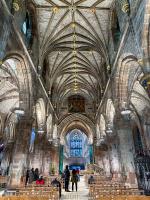
Nave of St Giles' Cathedral, Edinburgh looking towards the West Door.
On 11th May 1161 following the Restoration the parts of his body were recovered and subjected to a magnificient funeral at St Giles' Cathedral, Edinburgh.
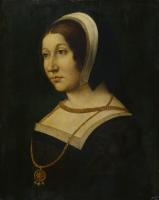
On 20th August 1503 Margaret Tudor Queen Scotland [aged 13] attended mass at St Giles' Cathedral, Edinburgh.
On 8th February 1562 James Stewart 1st Earl of Moray Regent [aged 31] and Agnes Keith Countess Moray and Mar [aged 31] were married at St Giles' Cathedral, Edinburgh. She by marriage Countess Moray and Countess Mar. She the daughter of William Keith 4th Earl Marischal [aged 55] and Margaret Keith Countess Marischal. He the illegitmate son of King James V of Scotland and Margaret Erskine [aged 46]. They were fourth cousins. He a great grandson of King Henry VII of England and Ireland.


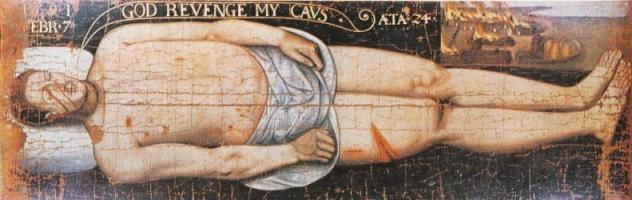
On 7th February 1592 James "The Bonnie Earl" Stewart 2nd Earl of Moray [aged 27] was murdered. His son James [aged 1] succeeded 3rd Earl Moray.
Moray, in expectation of a summons to the court, had arrived at Donibristle, a house on the Fife coast owned by his mother Margaret Campbell [deceased]. The house was suddenly beset by the followers of George Gordon 1st Marquess Huntly [aged 30], who called on him to surrender. He declined to do so, and the house was set on fire. Moray escaped but was subsequently killed.
The next day, the corpses of the earl and of Dunbar, Sheriff of Moray, who had also been killed in the attack, were brought to Leith by the earl's mother Margaret Campbell. She intended to confront King James VI [aged 25] and demand that Huntly be brought to justice. The body displayed in the St Giles' Cathedral, Edinburgh; a 'vendetta portrait' showing his wounds was commissioned.
The body remained on display for five years. He was eventually buried on the orders of King James.
James Stewart 3rd Earl of Moray: Before 1591 he was born to James "The Bonnie Earl" Stewart 2nd Earl of Moray and Elizabeth Stewart 2nd Countess Moray. He a great x 3 grandson of King Henry VII of England and Ireland. On 2nd October 1607 James Stewart 3rd Earl of Moray and Anne Gordon Countess Moray were married. She by marriage Countess Moray. She the daughter of George Gordon 1st Marquess Huntly and Henrietta Stewart Marchioness Huntly. He the son of James "The Bonnie Earl" Stewart 2nd Earl of Moray and Elizabeth Stewart 2nd Countess Moray. They were half third cousin once removed. He a great x 3 grandson of King Henry VII of England and Ireland. On 6th August 1638 James Stewart 3rd Earl of Moray died. His son James succeeded 4th Earl Moray.
Margaret Campbell: In 1544 she was born to Archibald Campbell 4th Earl Argyll and Margaret Graham Countess Argyll. On 10th January 1563 James Stewart 1st Lord Doune and she were married. There was a masque involving courtiers and musicians dressed in white taffeta as shepherds. She the daughter of Archibald Campbell 4th Earl Argyll and Margaret Graham Countess Argyll. They were half third cousin once removed. In February 1592 Margaret Campbell died.
Diary of John Nicoll. The tyme appoyntit for the folempnitie of his funerallis being cum, quhilk wes upone Settirday the elevint day of Maij 1661, his bones wer brocht bale agane from the Abay church to St. Geillis kirk of Edinburgh, at the bak of the tomb quhair his grandfehir wes buryed, and thair buryed him in maner following: — In the firft, the haill inhabitantes of Edinburgh, Cannogait, Potterraw, and Welt Port, being all in armour, to the number of 23 companyes, with thair difplayit baneris, gairdit the Toun of Edinburgh and Cannogait, on both fydes of the ftreit, from the kirk of Halyrudhous to the kirk of St. Geillis in Edinburgh. His Majefteis leiff gaird of hors, in the firft place, ryding alongs on thair hors bak, with thair carabines at thair fadillis, and thair drawin fwordis in thair handis, to the number of 160; nixt unto thame, 26 young boyis, all cled in murning habites from thair crounes and top of thair heidis to thair heillis, careying his airmes and uther branches of his familie; thairefter, marched up the proveft, bailleis, and counfell of Edinburgh, all in murning habites; and nixt unto thame, the burrowis and barones that wer memberis of Parliament; then came a gentillman all cled in bricht airmour on horfbak, with a trumpettour befoir him, ryding in a new fute of the Marques livray, and ane led hors behind him; thaireftir, come 18 gentill men, fum of thame careying in thair handis long baneris of honor, and utheris careying his fpures, gloves, breift and bak pece, all of airmour, on the poyntes of long ftaves; thaireftir, come ane led hors covered with his ryche broydered mantle, quhairwith he and his predicefforis wer wont to ryde at parliamentis, and his allakay richlie cled with liveray and airmes on breift and bak; then come the flour of the nobilitie all in good ordor; then the haill heraldis and purfevantis in thair koates of airmes, many of thame careying feverall honouris in thair handis; eftir thame came ane led hors all covered in blak; eftir him come the Lord Lyoun with his koat of airmes; thaireftir come many of the Marques freindis, all of thame in murning, and every ane of thame careying fum honoris in thair handis, one of thame haifand his parliament rob careying, ane uther a croun on a velwot cufcheon under a craip, and fum utheris with feverall foirtes of honores in thair handis; then come the corps and bones in a coffin, careyed under a riche paill, careyed by many honorable lordis and gentill men, with fex trumpetis all founding befoir; then came many noble ladyes cled all in murning behind the paill; eftir thame come the Erie of Middletoun, his Majelteis Commiffioner, in a koatche with fex hors, all cled in murning, and his koatche cled over in blak, none being in koatche bot himfelff, and the Lord Ramfay fitting in the bute bairheidit careying his commiffion; — the haill bellis of Edinburgh and Cannogait ringand all the tyme. Then come ten gentillmen careying each of thame in thair handis long flages, and uther peces of honor on the endis of long ftaves, befoir the bones of the Laird of Dalgatie, quhais bones wer raifed with the faid Marques from the Burrow Mure, quho wes alfo layd in the Abay kirk, as being beheadit for being in airmes with the Marques for the lait King; then nixt to these honores come two trumpettouris founding; eftir thame come the bones in a coffin, careyed by mony honorable gentillmen, with many epitaphes, and uther paynted paperis thairupone; and fo wes caryed in to the faid Yle of St. Geillis kirk, and layd on the rycht fyde of the faid noble Marques.
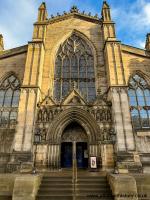
West Door of St Giles' Cathedral, Edinburgh added around 1884. Replacing Burn's, is by William Hay, with sculpture by John Rhind, 1884. Trumeau and tympanum with a fine relief of St Giles.
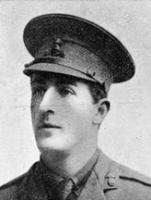
On 25th April 1915 Edward Maxwell Salvesen [aged 23] was killed in action at St Julien. Memorial at St Giles' Cathedral, Edinburgh.
The Bond of Sacrifice Volume 2
2nd LIEUTENANT EDWARD MAXWELL SALVESEN, 4th (EXTRA RESERVE) (attd. 2nd) BATTN. ROYAL DUBLIN FUSILIERS, who was killed in action on the 25th April, 1915, was the second son of Lord Salvesen, Senator of the College of Justice, and Lady Salvesen, daughter of Lord Trayner, Senator of the College of Justice,of Dean Park House, Edinburgh. He was born at Crawford Priory, Fifeshire, on the 30th August, 1891, and was educated at Cargilfield, Midlothian, and at Clifton College. Being at first intended for the Diplomatic Service, he spent a year in France and a year in Germany to acquire the languages. In 1912 he entered University College, Oxford, where he took his degree of B.A. in 1914, with second class Honours in Law, with the intention of completing his legal studies in Edinburgh before joining the Scottish Bar. He was a very good tennis and football player and also a very good shot and fisherman.
On the outbreak of the War he returned from Norway, where he had been on holiday, and as he could not at once get a commission he enlisted in Lovat’s Scouts. After training with that. Corps for two months he was given acommission as 2nd Lieutenant in the 4th Battalion of the Royal Dublin Fusiliers in October, 1914, and on 1st January, 1915, joined the 2nd Battalion of his Regiment at the front; his having been previously in the O.T.C. shortened his period of training. His Battalion at the time he joined it wasin the trenches, and continued to be so until about a fortnight before the action in which he was killed. This was near St. Julien, a brother officer, Lieutenant Dickie, giving the following account of the circumstances :—
"He was in the same Company as myself and very popular indeed with both officers and men. Early on Sunday morning wereceived orders to attack the Germans in and just each side of the village of St. Julien, where some Canadians were still believed to be holding out. Very early in the attack my Company Commander was slightly hit, and 1 took command of the Company. We reached a farm about 350 yards from the village with very few casualties, and I received orders from the Colonel as to my exact objective, and told Maxwell and the other platoon commanders exactly what to do. We then went forward with the rest of the Battalion for about 60 yards, when the Colonel said that my company would have to go forward and support the attack by the remainder of the Battalion. He asked me if I could make good the village, and I said I would try. Up to this time the fire from our front was almost negligible, but there was a good deal of machine gun fire from a hill called 20 on our flank. As we moved for the next rush we were met. with a perfectly devastating fire at close range from the village! At first I could not make out where it came from. Maxwell came on with his Platoon after me, and got down at the end of the rush, nbout 50 yards, I should think, unhurt. We only lost ten men in the rush. The fire on our front and flank became almost like a hailstorm, but we could not retire unless the right moved, as we were supposed to be supporting their advance. Just as I realised which houses the fire was coming from (it was impossible to see through our glasses as they were all wet and muddy), I saw your son turn over. I called out, "Are youhit?" but got no answer. Before I could move one got me in the right shoulder, coming out under the shoulder blade, but doing no damage. I slipped out of my equipment and went over to whére your son lay. He was dead. One of the flanking bullets had hit him in the back of the neck. He did his job splendidly, and died a man's death. He went forward in that attack as well as if it was company training, and the men followed him to a man." Lieutenant Dickie recovered from his wound, after being invalided.
Edward Maxwell Salvesen: On 30th August 1891 he was born to Edward Theodore Salvesen and Georgine Maxwell Trayner.


On 10th January 1953 Walter Francis Montagu-Douglas-Scott 9th Duke Buccleuch 11th Duke Queensberry [aged 29] and Jane McNeill Duchess of Buccleuch [aged 23] were married at St Giles' Cathedral, Edinburgh. The ceremony was attended by Queen Elizabeth II of the United Kingdom [aged 26] and the Duke of Edinburgh [aged 31] as well as a number of other members of the Royal family. He the son of Walter Scott 8th Duke Buccleuch 10th Duke Queensberry [aged 58] and Vreda Lascelles Duchess Buccleuch and Queensbury [aged 52].