All About History Books on Amazon

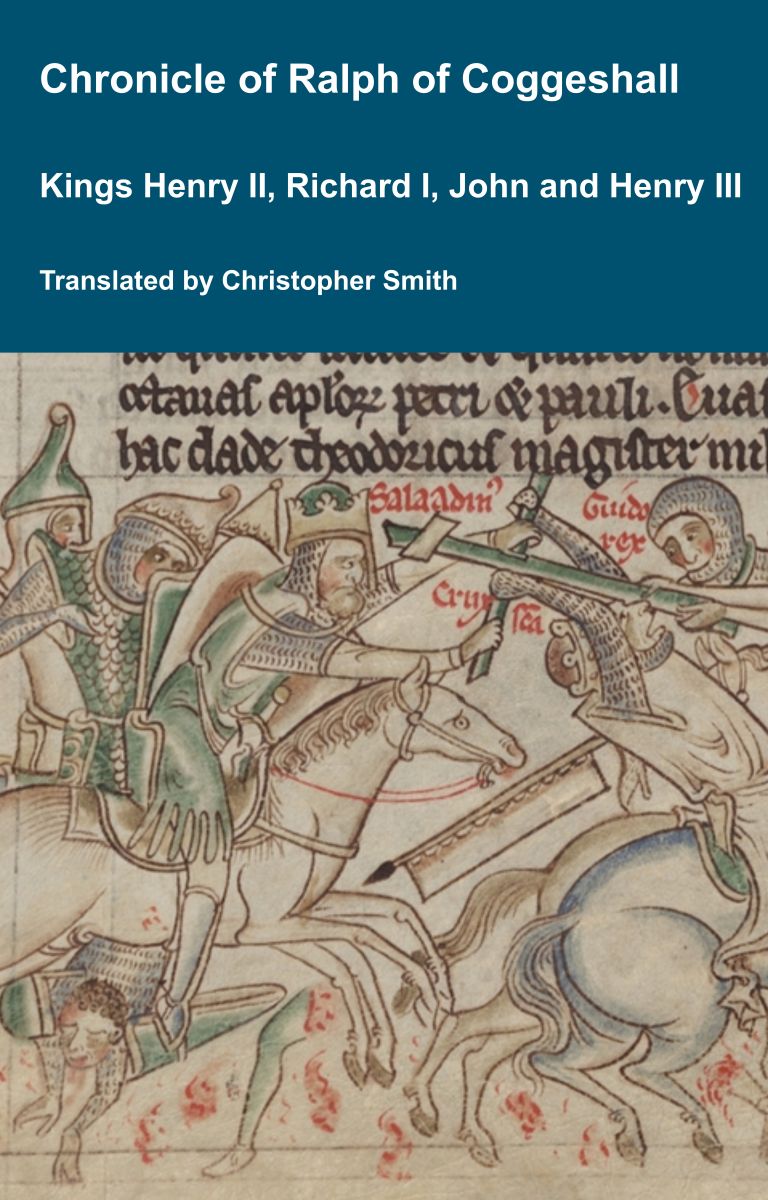
Chronicle of Abbot Ralph of Coggeshall

The Chronicle of Abbot Ralph of Coggeshall (Chronicon Anglicanum) is an indispensable medieval history that brings to life centuries of English and European affairs through the eyes of a learned Cistercian monk. Ralph of Coggeshall, abbot of the Abbey of Coggeshall in Essex in the early 13th century, continued and expanded his community’s chronicle, documenting events from the Norman Conquest of 1066 into the tumultuous reign of King Henry III. Blending eyewitness testimony, careful compilation, and the monastic commitment to record-keeping, this chronicle offers a rare narrative of political intrigue, royal power struggles, and social upheaval in England and beyond. Ralph’s work captures the reigns of pivotal figures such as Richard I and King John, providing invaluable insights into their characters, decisions, and the forces that shaped medieval rule. More than a simple annal, Chronicon Anglicanum conveys the texture of medieval life and governance, making it a rich source for scholars and readers fascinated by English history, monastic authorship, and the shaping of the medieval world.

Available at Amazon in eBook and Paperback format.

1258-1269 Second Baron's War

1258-1269 Second Baron's War is in 13th Century Events.

Annals of Six Kings of England by Nicholas Trivet [1258-1328]. 1263. Edward, son of the King of England, having gathered a great army against the Prince of Wales, and he, fleeing into wooded and marshy places, refusing battle, was recalled into England by his father. Simon, Earl of Leicester, having been made leader of the barons rising against the king, began to plunder the goods of those who adhered to the king, and especially of those who, belonging to the queen [Eleanor of Provence], had been brought into England through her, whom they called foreigners. Certain men also of the barons' party seized Peter, Bishop of Hereford, a Burgundian by birth, in his own cathedral church, and led him to the castle of Eardisley, dividing his treasure among themselves.

1263. EDWARDUS filius regis Angliæ, cum exercitum copiosum contra principem Walliæ collegisset, et ille, ad nemorosa et palustria fugiens, copiam pugnæ non faceret, a patre in Angliam revocatur. Symon Leicestriæ comes, capitaneus baronum contra regem insurgentium factus, prædari cœperat bona regi adhærentium; et præcipue eorum qui, reginæ attinentes, per eam introducti fuerant in Angliam, quos alienigenas appellabant. Quidam etiam de parte baronum Herefordensem episcopum Petrum, natione Bargundum, in ecclesia sua cathedrali captum, duxerunt ad castrum de Erdesleya, thesaurum ejus inter se pariliter dividentes.

Provisions of Oxford

Annals Londonienses. A parliament was held at Oxford after the feast of the Holy Trinity [19th May], where discord arose between the barons on the one side and Aymer, Bishop-elect of Winchester, William de Valence, Guy and Geoffrey de Lusignan, [half] brothers of the lord king, on the other, because of their many and grave offences. There also provisions and statutes were made through which England, unless the Most High should come to its aid, will be thrown into confusion for ever. In the same parliament, the lord king swore that in all things, as he justly ought, he would abide by and act according to the will, counsel and ordinance of the barons. It was therefore provided that the aforesaid four brothers of the lord king should be summoned to Winchester on the feast of Saint John [24th June] to answer for their offences. When the parliament at Winchester had begun, the aforesaid brothers were ordered on behalf of the barons to take care to make satisfaction to the king and kingdom for their transgressions, or else that two of them should remain in the custody of the barons and two should depart entirely from the kingdom until they had made satisfaction according to law, as stated above. The aforesaid brothers, however, unwilling to live according to the laws of England or duly to obey those laws, chose that they would all rather leave England entirely and at once than remain under the conditions set out above. Thus, by their own choice, within a short time they were escorted towards Dover and carried across the sea. In the same parliament, Hugh Bigod was made Justiciar of England.

Parliamentum apud Oxoniam post festum Sanctæ Trinitatis, ubi orta est discordia inter barones ex una parte et Adomarum de Wyntonia electum, Willelmum de Walence, Guidonem et Gaufridum de Lizinan, fratres domini regis ex altera, pro eorum multis enormibusque delictis Ibi etiam factæ sunt provisiones et statuta, per quæ Anglia, nisi ei Altissimus succurrat, imperpetuum erit confusa. In eodem parliamento juravit dominus rex, quod in omnibus, prout juste debuit, staret et faceret per voluntatem et consilium et ordinationem baronum: provisum est igitur, quod prædicti quatuor fratres domini regis citentur apud Wyntoniam, in festo Sancti Johannis, super eorum delicta responsuri. Incepto igitur parliamento apud Wyntoniam, dictis fratribus ex parte baronum demandatum est quod ipsi de transgressibus eorum regi et regno satisfacere curent, vel quod duo eorum sub baronum custodia remaneant, et duo eorum ex toto a regno recedant, donec secundum legem, ut prius dictum est, satisfecerint. Dicti vero fratres secundum jura Anglicana vivere nolentes, nec prout decuit legibus obedire volentes, elegere se omnes ex toto ab Anglia citius velle exire, quam sub forma prætacta remanere. Sicque per eorum electionem, infra tempus breve, versus Doveriam sunt conducti, et ultra mare transvecti. In eodem parliamento, factus est Hugo Bigot justitiarius Angliæ.

Click to read more ...

Annals of Six Kings of England by Nicholas Trivet [1258-1328]. 1258. The King of England summoned a parliament at Oxford, at which, the prelates, earls, and barons having assembled, statutes were made which are to this day called the 'Provisions of Oxford'; and the king was compelled to swear a corporal oath to observe them inviolably, almost all likewise taking the same oath. Aymer, Bishop-elect of Winchester, William de Valence, Guy and Geoffrey de Lusignan, the king's uterine brothers, refusing to swear with the others, withdrew, and the barons pursuing them with some horsemen and arms, they at once crossed the sea towards France. Walter, Archdeacon of Surrey, was made Bishop of Exeter.

1259 Treaty of Paris aka Abbeville

On 4th December 1259 King Henry III of England [aged 52] and King Louis IX of France [aged 45] signed the Treaty of Paris aka Abbeville. The Treaty Under the treaty, Henry acknowledged the loss of the Duchy of Normandy. Henry agreed to renounce control of Maine, Anjou, Touraine and Poitou, which had also been lost under the reign of King John, but Henry remained Duke of Aquitaine as a vassal to Louis. In exchange, Louis withdrew his support for English rebels.

Battle of Callann

In August 1261 at the Battle of Callann John Fitzthomas Fitzgerald 1st Baron Desmond and his son Maurice Fitzjohn Fitzgerald were killed.

Battle of Northampton

On 6th April 1264 the future King Edward I of England [aged 24], Philip Marmion 5th Baron Marmion [aged 30] and Roger Leybourne [aged 49] fought for the King at Northampton Castle [Map] during the Battle of Northampton. Simon de Montfort 6th Earl of Leicester 1st Earl Chester [aged 56] fought for the rebels with his son Simon "Younger" Montfort [aged 24] who was captured.

Annals of Six Kings of England by Nicholas Trivet [1258-1328]. Henry, the king, having returned from France, came to Oxford and in person, for the sake of prayer, visited Saint Frideswide1. Armed with right faith, he did not fear the superstitious opinion of those who think it unlawful for kings to enter the town, the virgin being believed to exercise vengeance upon them. When his son came to him, having gathered an army, he prepared to drive back the enemy with a strong force. Meanwhile the men of London, seizing the king’s justiciars and the barons of the Exchequer, committed them to prison. The king, having with him illustrious princes, namely his brother Richard, King of the Romans, his son Edward, William de Valence his uterine brother, and renowned knights, John Comyn of Scotland with a multitude of Scots, John de Balliol, lord of Galloway, Robert de Brus, lord of Annandale, Roger de Clifford, Philip Marmion, John de Vaux, Roger de Leybourne, Henry de Percy, Philip Basset, and Roger de Mortimer, advancing with an army, besieged the town of Northampton, which on Passion Sunday [6th April 1264] he entered after breaking the wall. There he took fifteen banner-bearing knights, namely Simon [de Montfort] the younger, William de Ferrers, Peter de Montfort, Baldwin Wake, Adam of Newmarket, Roger Bertram, Simon, son of Simon who had first raised the banner against the king, Berenger of Waterville, Hugh Gubion, Thomas Maunsell, Roger Boutevilain, Nicholas Wake, Robert of Newenton, Philip of Driby, and Grimbald of Pauncevout; of these he sent Simon the younger to the castle of Windsor, and the others to various castles as prisoners. About forty other knights of lesser rank were also taken, and many squires.

Henricus rex de Francia reversus, Oxoniam veniens, personaliter orationis gratia sanctam adiit Frideswidam. Armatus nempe fide recta, non veritus est superstitiosam opinionem illorum qui putant illicitum regibus intrare villam, ultionem in eos virgine exercente. Ad quem cum venisset filius ejus, coadunato exercitu, disposuit hostes in manu valida propulsare. Interim Londonienses justitiarios regis et barones de scaccario capientes, carceri manciparunt. Rex vero habens secum illustres principes, Ricardum germanum suum regem Alemanniæ ac fillum suum Edwardum, Willelimumque de Valentiis fratrem uterinum, clarissimosque milites Joannem Comyn de Scotia cum multitudine Scotorum, Joannem de Balliolo dominum Galwidiæ, Robertum de Brus dominum Vallis-Anandiæ, Rogerum de Clifford, Philippum Marmioun, Joannem de Vallibus, Rogerum de Leyborne, Henricum de Percy, Philippum Basseth, Rogerum de Mortuo-mari, cum exercitu progrediens villam Northamptoniæ obsedit, quam Dominica in Passione effracto muro intravit: cepitque in illa milites vexilliferos quindecim; videlicet Symonem juniorem, Willelmum de Ferrariis, Petrum de Monte-forti, Baldewinum Wake, Adam de Novo-mercato, Rogerum Bertrandi, Symonem filium Symonis qui primo vexillum erexerat contra regem, Berengarium de Watervile, Hugonem Gubion, Thomam Maunsel, Rogerum Boutevileyn, Nicolaum Wake, Robertum de Newentonia, Philippum de Dribi, Grimbaldum de Paunsevout; de quibus Symonem juniorem ad castrum de Windelsore, reliquos vero ad alia castra transmisit captivos. Capti sunt et alii milites minoris gradus circiter quadraginta, scutiferique non pauci.

Note 1. 'Frideswidam' i.e. 'Frideswide'’, died 10th October 727, which day is her Feast Day, daughter of King Didan of Mercia and Safrida. She was buried at the Priory of St Frideswide, Oxford, of which she was Abbess, now Christ Church Cathedral, Oxford. Legend has it that when King Æthelbald of Mercia sought to marry her, despite her vow of celibacy, she fled to Oxford, and when he entered Oxford to find her, he was struck blind.

Click to read more ...

Battle of Lewes

On 14th May 1264 the army of Simon de Montfort 6th Earl of Leicester 1st Earl Chester [aged 56] including Gilbert "Red Earl" Clare 7th Earl Gloucester 6th Earl Hertford [aged 20], Henry Hastings [aged 29] and Nicholas Segrave 1st Baron Segrave [aged 26] defeated the army of King Henry III of England [aged 56] during the Battle of Lewes at Lewes [Map].

King Henry III of England, his son, the future, King Edward I of England [aged 24], Humphrey Bohun 2nd Earl Hereford 1st Earl Essex [aged 60], Richard of Cornwall 1st Earl Cornwall [aged 55], John "Red" Comyn 1st Lord Baddenoch [aged 44], Philip Marmion 5th Baron Marmion [aged 30] and John Giffard 1st Baron Giffard Brimpsfield [aged 32] were captured. John Warenne 6th Earl of Surrey [aged 33], John Balliol [aged 56], Robert Bruce 5th Lord Annandale [aged 49], Roger Leybourne [aged 49] and William de Valence 1st Earl Pembroke fought for the King. Guy Lusignan was killed. Fulk IV Fitzwarin [aged 44] drowned. Bishop Walter de Cantelupe [aged 73] was present and blessed the Montfort army before the battle.

Annals of Six Kings of England by Nicholas Trivet [1258-1328]. The aforesaid earls, approaching the town of Lewes [on 14th May 1264] with an armed force, attacked the king’s followers who had gone out to seek fodder for the horses, and slew many of them. The king, being forewarned of the sudden arrival of the earls and barons, went out to meet them with his army divided into three parts: over the first was Edward, the king’s firstborn, with William de Valence, Earl of Pembroke, and John de Warenne, Earl of Surrey and Sussex; over the second, the King of the Romans with his son Henry; over the third, the king himself, Henry. The army of the barons, however, was divided into four parts: over the first was Henry de Montfort with the Earl of Hereford; over the second, Gilbert de Clare with John fitz John and William de Montchesney; over the third, in which were the men of London, Nicholas de Segrave; over the fourth, Earl Simon himself with Thomas of Pelveston. Edward, therefore, with his division rushed upon the enemy with such force that he compelled them to retreat, and many of them, fleeing, were drowned, as some write, to the number of sixty knights. The men of London also were put to flight, and while Edward pursued them for a distance of four miles, inflicting very heavy slaughter, being separated from the rest of the army, he weakened its strength. Meanwhile many of the king’s division were slain, and the King of the Romans, Robert de Brus, and John Comyn, who had brought the Scots, were captured; King Henry also, his horse having been killed, was taken and confined under guard in the priory. Edward, returning, was met with a fierce battle, and the Earl of Warenne, William de Valence, Guy de Lusignan, the king’s uterine brothers, and Hugh Bigod, with a force amounting to four hundred men in armour, fled, all making for the castle of Pevensey.

Appropinquantes autem ad villam de Lewes comites prædicti in manu armata, regios satellites, qui pro quæritando equorum pabulo egressi faerant, invadentes plurimos peremerunt. Præmunitus rex de adventu subito comitum et baronum, obviam pergit cum exercitu in tres partes diviso: quarum primæ præerat Edwardus regis primogenitus, cum Willelmo de Valentiis Penebrochiæ, et Joanne de Warenna Surreyæ et Susexiæ, comitibus; secundæ rex Alemanniæ cum filio suo Henrico; tertiæ vero rex ipse Henricus. Baronum vero exercitus in quatuor partes divisus erat: quaram primæ Henricus de Monte-forti cum comite Herfordiæ; secundæ Gilebertus de Clare cum Joanne filio Joannis, et Willelmo de Monte-canisii; tertiæ, in qua erant Londonienses, Nicolaus de Segrave; quar-tæ ipse comes Symon cum Thoma de Pelvestone præfuerunt. [Edwardus igitur cum acie sua tanto impetu in hostes irruit, ut eos retrocedere cogeret: quorum multi fugientes submersi sunt, ut scribunt aliqui, usque ad numerum militum sexaginta. Londonienses etiam in fugam versi sunt, quos dum insequitur] Edwardus ad quatuor milliarium spatium, gravissimam cædem inferendo, a reliquo separatus exercitu diminuit robur ejus. Interim vero multi de acie regis occisi sunt, captique rex Alemanniæ, Robertus de Brus et Joannes Comyn qui Scotos adduxerant: rex etiam Henricus dextrario ejus occiso captus, et in prioratu apposita custodia est reclusus. Reversus Edwardus gravi prælio excipitur, fugeruntque comes Warennæ, Willelmus de Valentiiss Guido de Lisiniaco fratres regis uterini, Hugo Bigod cum militia quæ ad quadringentos loricatos adscendit, omnes ad castrum de Peuvensie tendentes.

Click to read more ...

Chronicle of Walter of Guisborough. Meanwhile the royalists went out to battle [on 14th May 1264], arranging themselves in three divisions. The first was led by the king's son Edward, with the Earl of Warenne and William de Valence, the king's brother; the second by the king of Germany with his son Henry; the third by the king himself with his magnates. A fourth division the king did not set up, since he had left behind many standard-bearers to guard the town and castle of Tonbridge against the Earl of Gloucester; and there was the flower of almost all his youthful knighthood, for the king had not believed that the barons' approach was so near. When therefore the lines of battle were prepared on either side, they exhorted one another to fight bravely; and with the clash of a fierce encounter many foot soldiers fell almost in an instant. At once the king's son Edward with his line, being a young man bold and a vigorous knight, charged into the enemy with such force that he compelled them to retreat a great distance; so that some of those behind, believing from the retreat that the front ranks had fallen, fled in large numbers, and about sixty knights, trying to ford the waters to escape, were drowned. And when some had been slain, the men of London, who had begged for the first blows of battle, though ignorant of its dangers, immediately took to flight. Edward pursued them with his troop, cutting down the hindmost for two or three miles; for he hated them, because they had deserted his father and had dishonoured his mother when she was travelling by water from Westminster to the royal Tower along the Thames, throwing mud and stones from the bridge into her boat and shouting words of insult. Meanwhile, while he thus pursued the fugitives, the barons charged into the king's second division, of which the greater part perished, and the king of Germany was captured, along with Robert de Brus and John Comyn, who had brought a numerous host of Scots. The king's own division was broken through, and his war-horse was slain; and when his men saw many fallen and many others fleeing, they led the king back into the abbey from which he had set out, shutting the gates and setting a guard with many knights. The barons entered the town, the victory being won; nor could it easily be told for a long time, by reason of the multitude of wounded, who were royalists and who were baronial. While these things were happening, Edward the king's son returned with his troop, and when his men saw in the plain the war-cart which Earl Simon had had made for riding, standing there without driver or guide, they rushed upon it and in a moment tore it to pieces; and they slew with the sword two burgesses whom they found in it. But as they came near the place of the slain and looked upon the great slaughter, their hearts were shaken and their fierce countenances grew pale. Yet their hearts were strengthened by that bold leader, the king's son, who urged them by every means to be brave men. As they approached the town, the barons came out against them, and with a fierce battle fought, many fell on both sides. Then the Earl of Warenne fled with the king's two brothers, William de Valence and Guy his brother, followed by more than seven hundred picked men-at-arms of their household and company; and on that same day, setting out as far as Pevensey, they crossed the sea. Hugh Bigod also fled with many others, and they madly abandoned the king's son, though he was fighting manfully. Seeing this, he circled back around the town to the castle, and not finding his father there, returned to him in the abbey.

Interim egressi sunt regales ad pugnam, se præparantes per tres turmas, quarum primam ducebat filius regis Edwardus, cum comite de Warenna, et Willelmo de Valence fratre regis; secundam vero rex Alemanniæ cum filio suo Henrico; tertiam autem ipse rex cum magnatibus suis; quartam vero aciem non constituit rex, eo quod plures vexillarios reliquerat post se ad custodiendum villam et castrum de Tunebrige contra comitem Gloucestriæ, et erat ibi juvenilis ætas quasi totius militiæ suæ, non enim credebat rex adventum baronum tam propinquum: præparatis itaque hinc et inde aciebus exhortabantur ad invicem ad strenue militandum, et conserto gravi prælio corruerunt multi pedestres quasi in momento; statimque filius regis Edwardus cum acie sua, utpote juvenis acer et miles strenuus, irruit in hostes cum tanto impetu quod eos retrocedere compulit spatio magno, ita quod posteriores quidam ex retrocessione credentes primos corruisse, fugerunt plures, et aquæ se credentes ut transirent submersi sunt milites circiter LX cæsisque aliquibus fugerunt statim Londonienses qui primos ictus petierant, belli discrimina ignorantes, quos insequebatur Edwardus cum turma sua, cædens extremos eorum spatio duorum vel trium milliarium, eos enim habebat exosos pro eo quod recesserant a patre, et matrem suam dehonestaverant cum a Westmonasterio usque regiam turrem per aquam Thamesim navigaret, projicientes ex ponte in navem ipsius lutum et lapides, et contumeliosa verba protulerant; interim vero dum sic sequeretur fugientes irruerunt barones in aciem regis secundam, periitque ejus pars maxima et captus est rex Alemanniæ cum Roberto de Bruys et Johanne Comyn qui Scotos adduxerant numerosos, perforataque est acies ipsius regis et dextrarius ejus occisus; cumque vidissent sui multos corruisse et quamplures fugam iniisse, reduxerunt regem in abbatiam unde prius exierat, claudentes portas et custodiam adhibentes cum multis militibus; ingressique sunt barones in urbem, obtenta victoria; nec facile discerni poterat per longum spatium, præ multitudine vulneratorum, qui dicerentur regales et qui baronales: dumque fierent hæc Edwardus filius regis cum turma sua reversus, et videntes sui in planicie currum quem fieri fecerat comes Simon ad equitandum stantem cum eis absque auriga vel duce itineris, cucurrerunt, et quasi in momento dilaceraverunt eum, duos etiam burgenses quos invenerunt in eo gladio peremerunt; appropinquantes autem ad locum occisorum et stragem intuentes permaximam, expavit cor eorum et ferocis animi vultus deperiit; confortabat tamen corda eorum dux ille strenuus regis filius, et ut essent viri robusti modis omnibus animabat, appropinquantibus ipsis ad urbem exierunt barones obviam eis, et conserto gravi prælio corruerunt hinc et inde, fugitque comes de Warenna cum duobus regis fratribus Willelmo de Valence et Gwydone fratre ejus, et sequebantur eos plusquam septingenti armati electi qui erant de domo et familia eorum; et eadem die proficiscentes usque Pevensay mare transierunt: fugit etiam Hugo Bygot cum multis aliis, et filium regis strenue militantem vecorditer reliquerunt; quod videns ipse denuo circumduxit villam usque castrum, et ibi non invento patre reversus est ad eum in abbatiam.

Click to read more ...

Annals Londonienses. On that same day, that is, on the second day before the Ides [14th] of May, the army of the barons moved towards a certain mill near Lewes, against the lord king, whom they saw approaching against them with his army and with the dragon standard raised. When the battle had begun, the Londoners for the most part fled. While the lord Edward pursued them as they fled, without overtaking them, the king's standard was overthrown and his army, torn apart, was thrown into confusion. One part fell by the sword, another turned to flight, another was unhappily drowned while fleeing, while the greater part, although well armed, conscious of their fear of the barons, took refuge in the churches. Thus, fortune favouring the barons, they gained the victory. The king, deprived of the aid of his men, surrendered himself into the hands of the barons. Within a short space of time, the King of Germany, together with his son Henry, Philip Basset, Robert le Brus and other noble bannerets were captured. At length the lord Edward also returned. Finding so many dead upon the field, he believed that the lord king had gained the victory over the barons. But, perceiving more clearly the imminent and fearful danger of death, he hastened towards the church of Lewes. Afterwards, whether willingly or unwillingly, he came out of it and surrendered himself to the barons as a hostage for the king. He was therefore conducted, together with the son of the King of Germany, to Dover Castle, there to remain under the custody of the lord Henry de Montfort until it should be decided what was to be done with them. The King of Germany, found in a mill, was captured and placed in the Tower of London.

Die etiam eodem, id est, secundo idus Maii, motus est exercitus baronum versus quoddam molendinum circa Lewes, versus dominum regem, [quem] cum suo exercitu, dracone erecto, contra eos venire inspexerant. Bello igitur inchoato, Londonienses pro majori parte fugerunt; quos cum dominus Edwardus fugiendo non attingendo insequitur, regis signum prosternitur, ejus exercitus divulsus concutitur: pars enim quædam gladio corruit, quædam conversa est in fugam, quædam vero in fugiendo prospere submersa est, quædam vero pars maxima, licet bene armata, metu baronum in ecclesiis se tenebat consciosa; et sic fortuna favente baronum, victoria potiti sunt. Et rex suorum auxilio destitutus, in manibus baronum commissum se tradidit; et modico temporis spatio rex Alemanniæ cum Henrico filio suo, Philippus Basset, Robertus le Brus, et alii vexilliferi nobiles capti sunt. Tandem etiam reversus est dominus Edwardus, qui, tantum mortuos in campo inveniens, credidit dominum regem super barones victoriam habuisse. Sed verius intuens mortis imminens periculum formidandum, versus ecclesiam de Lewes iter suum cum festinatione direxit; et, sponte vel invitus, ab eadem exiens, demum baronibus se obsidem pro rege reddidit. Conductus est ergo una cum filio Alemanni regis apud castellum de Dovere, ibi sub custodia domini Henrici de Monteforti, donec provisum fuerit quid de eis sit agendum, remansurus. Rex vero Alemanniæ in anolendino inventus capitur, et in Turri Londoniensi ponitur.

Click to read more ...

1264 Great Comet

All About History Books on Amazon

Deeds of King Henry V

Henrici Quinti, Angliæ Regis, Gesta, is a first-hand account of the Agincourt Campaign, and subsequent events to his death in 1422. The author of the first part was a Chaplain in King Henry's retinue who was present from King Henry's departure at Southampton in 1415, at the siege of Harfleur, the battle of Agincourt, and the celebrations on King Henry's return to London. The second part, by another writer, relates the events that took place including the negotiations at Troye, Henry's marriage and his death in 1422.

Available at Amazon in eBook and Paperback format.

Annals of Six Kings of England by Nicholas Trivet [1258-1328]. In this year there appeared a comet1 so remarkable that, as Brother Martin writes in his chronicles, no one then living had ever seen the like before. Rising from the east with great brightness, it drew a shining tail as far as the middle of the hemisphere towards the west; and although it may perhaps have signified many things in different parts of the world, this one thing is certainly known, that since it lasted for more than three months, when it first appeared Pope Urban began to fall ill, and on the same night [2nd October 1264] on which the pope died the comet disappeared. He died at Perugia and was buried there. Clement the Fourth succeeded Urban, a native of Provence, who, having first had a wife and children, had been a renowned advocate and counsellor of the King of France. After the death of his wife, on account of his good, holy, and praiseworthy life, he was first made Bishop of Le Puy, then Archbishop of Narbonne, and finally, having been raised to the cardinalate, became Bishop of Sabina; and when he had been sent by Pope Urban as legate into England for the restoration of peace, he was elected pope in his absence. At this time there flourished at Paris distinguished doctors, Brother Thomas Aquinas among the Friars Preachers, and Bonaventure among the Friars Minor.

Hoc anno apparuit cometa tam notabilis, ut scribit frater Martinus in chronicis suis, quod nullus tunc vivens talem ante viderit. Ab oriente enim cum magno fulgore surgens usque ad medium hemisphærii versus occidentem comam perlucidam pertrahebat; et licet in diversis mundi partibus multa forte significaverit, hoc tamen unum pro certo compertum est, ut cum plusquam per tres menses duraverit, ipso primo apparente papa Urbanus infirmari cœpit, et eadem nocte qua papa mortuus est cometa disparuit. Obiit autem Perusii et sepultus est ibidem. Urbano successit Clemens quartus, natione Provincialis; qui primo uxorem habens et filios, famosus fuit advocatus et consiliarius regis Francorum. Mortua vero uxore, propter vitam bonam, sanctam, et laudabilem, primo. Podiensis episcopus efficitur, ac deinde archiepiscopus Narbonensis, tandem ad cardinalatum assumptus, fit episcopus Sabinensis; qui cum a papa Urbano missus fuisset legatus in Angliam pro pacis reformatione, absens electus est in papam. Clarent his temporibus Parisiis doctores eximii frater Thomas de Aquino inter Prædicatores, Bonaventura inter Minores.

Note 1. Martin of Opava aka Martin Polonus refers to the comet of 1264 in his 'Chronicon Pontificum et Imperatorum' i.e. 'Chronicle of Popes and Emperors' in which he writes: 'In the year of our Lord 1264, a comet appeared so remarkable that no one then living had ever seen the like. For, rising in the east with great brightness, it drew a shining tail as far as the middle of the sky towards the west; and although it may perhaps have signified many things in different parts of the world, this one thing is certainly known, that since it lasted for more than three months, when it first appeared Pope Urban began to fall ill, and on the same night on which the pope died, the comet disappeared.'

Click to read more ...

Prince Edward's Escape from Hereford

On 28th May 1265 King Edward I of England [aged 25], with the help of Roger Leybourne [aged 50], escaped from Hereford [Map] whilst on a hunting trip. He had been held there as a hostage following the Battle of Lewes as a condition of the Mise of Lewes (the now lost peace treaty).

Rymer's Fœdera Volume 1. The summoning of an army against Edward, the king’s son, who had escaped from the hands of his guards.

The king to John d’Eyville, greeting. Since we and certain of our magnates and faithful men, being in the region of Hereford and having for some time been engaged in securing the tranquillity and peace of those parts, have laboured with all our strength, as the condition of those parts requires, hoping to find our son Edward a principal helper in this matter and more zealous than all others,

The same Edward, on Thursday [28th May 1265] in the week of Pentecost, at about the evening hour, suddenly and unexpectedly withdrew from the company of knights whom he had taken with him to ride outside Hereford, accompanied by two knights and four squires who were privy to his purpose, disregarding our counsel and that of our aforesaid magnates and faithful men.

As we firmly believe, he intends to join John de Warenne, William de Valence and their accomplices, who recently landed in the region of Pembroke without our knowledge or consent and against our peace, and also certain Marcher lords who are our rebels and disturbers of our peace, so that from there he may go overseas, or send others there to arrange for the coming of foreigners into our kingdom through the region of Pembroke, since no other entry is open to them, to the confusion of ourselves and our kingdom.

And because our aforesaid rebels, although they are still few, might thereby increase their power and strength unless their insolence is swiftly restrained before it grows further,

We, placing special confidence in your loyalty and steadfastness, command you, by the faith, homage and affection by which you are bound to us, under peril of losing everything that you hold in our kingdom, and under the obligation of the oath by which each and every person in our kingdom is specially bound in this matter, and which we wish to be firmly observed, strictly enjoining you that, immediately upon seeing these letters, setting aside all other business, you come to us at Worcester with horses, arms, all the service which you owe us and your entire power, with all haste, travelling by day and night, prepared thereafter to go with us in strong force against the aforesaid men.

Do not fail to do this in any way, as you wish to avoid your own destruction and the perpetual confusion of our kingdom, and as you value your own life.

Nor are you to make the shortness of time an excuse concerning the summoning of the army, because the most urgent necessity permits no further delay, lest, through the coming of the foreigners whom our aforesaid rebels expect, their strength should increase to the destruction of us and our kingdom. While they are still few, they may easily be subdued by us.

Witness the king at Hereford, on the thirtieth day of May.

The same writ was sent to all who held of the king in chief, namely bishops, abbots, priors, earls, barons, knights and all others, except those who were of the party of the Earl of Gloucester.

Summonitio exercitûs contra Edwardum filium Regis, qui à manibus custodum evaserat.

Rex Johanni de Eyvill, salutem. Cum nos, & quidam magnates, & fideles nostri in partibus Hereford, circa tranquilitatem & pacem partium illarum jam pridem agentes, pro viribus laboraverimus, prout status partium earundem requirit, sperantes Edwardum fillum nostrum ad hoc adjutorem præcipium & ferventiorem præ cæteris invenisse;

Idem Edwardus, die Jovis, in ebdomade Pentecostes, circa horam vespertinam, à militum comitivÂ, quos secum ad spatiandum extra Hereford' duxerat, cum duobus militibus & quatuor scutiferis, propositi sui consciis, spreto consilio nostro, & magnatum, & fidelium nostrorum prædictorum, subità & ex inopinato recessit ;

Volens, ut pro certo credimus, se ad Johannem de Warenna, & Willielmum de Valentia, & complices suos, qui nuper, absque conscientià nostrâ & voluntate, & contra pacem nostram, applicuerunt in partibus Pembroc’ ac etlam ad quosdam marchiones, rebelles nostros, & pacis nostræ perturbatores transferre, ut exinde partes adeat transmarinas, vel alios illuc mittat, qui adventum alienigenarum in regnum nostrum per partes Pembroc’ cum alibi non pateat eis aditus, ad nostram & regni nostri confusionem procurent.

Et, quia præfati rebelles nostri, licet adhuc pauci existant, per hoc potestatem & vires suas augere possent, nisi eorum insolentia, antequam ulterius invalescat, citius reprimatur ;

Nos, de vestrà & aliorum fidelium nostrorum fidelitate & constantiâ specialiter confidentes, vobis mandamus, in fide, homagio, & dilectione, quibus nobis estis astricti ; & sub periculo amissionis omnium, quæ in regno nostro tenetis; ac sub debito sacramenti, quo omnes & singuli de regno nostro sunt ad hoc specialiter obligati, & quod volumus rmitér observari, firmiter injungentes, quatinus statim, visis litteris istis, omnibus aliis prætermissis, cum equis, & armis, & toto servitio vestro, nobis de- bito, necnon & toto posse vestro, sub omni festinatione, de die & nocte, usque Wygorniam veniatis, parati exindè in manu forti ire nobi a ve prædictos ; & hoc, sicut pet ner vestram, & perpetuam regni nostri confusionem vitare volueritis & vitam propriam diligitis, nullo modo omittatis.

Nec de summonitione exercitûs brevitatem temporis allecetis quia urgentissima necessitas tempus non patitur ulterius he Le moras, per adventum alienigenarum, quos ïidem rebelles nostri expectant eorundem vires in nostri & regni nostri perniciem augeri contingat ; qui adhuc, dum pauci existunt, de facili nobis poterunt subjugari.

Teste Rege, apud Hereford, tricesimo die Maii.

Eodem modo scribitur omnibus tenentibus de Rege in capite, tam videlicet episcopis, abbatibus, prioribus, quam comitibus, baronibus, militibus & omnibus aliis; exceptis illis qui sunt pro parte comitis Gloucestriæ.

Click to read more ...
Annals Londonienses. At that time, the lord Simon went with the lord king and Edward to Hereford, intending to accomplish his purpose through the assistance of the Welsh and the strength of his own army. While they were celebrating Pentecost there, on the fifth day of the week, namely, on the seventh day of May1, the lord Edward, pretending that he wished to observe the speed of his coursers, relied upon a cunning plan, mounted the best of them and, bidding farewell to the companions appointed to guard him, rode at great speed to Wigmore Castle. There he found the Earl of Gloucester with his army, and they resolved, together with Roger de Mortimer, to act with one mind, binding themselves by oath. When this became known, Robert Walerand, Warin de Bassingbourn and many other members of the lord Edward's household, who meanwhile had not laid aside their arms, although previously bound by oath to the lord Simon, gathered armed from every direction around the lord Edward. Within a short time, the lord Edward subjected to his power the county of Chester, which had been occupied by the lord Simon, as has been said, together with the castles of Bridgnorth, Worcester and Gloucester.

Adivit tunc temporis dominus Simon una cum domino rege et Edwardo apud Hereforde, ut per opem Wallensium, necnon per potentiam exercitus proprii, propositum suum consummaret. Celebrantibus ergo illis ibidem festum Pentccostes, feria v videlicet, vii die Maii, dominus Edwardus dextrariorum suorum cursum fingens se velle videre, callido fretus consilio, meliorem ascendit, et, valedicens sociis custodiæ suæ deputatis, cursu velociori ad castrum de Wegemor pervenit; ubi comitem Gloverniæ cum exercitu suo invenit et Rogero de Mortuomari unanimi consilio per sacramentum uti statuerunt. Quo audito Robertus Walfraund, Warinus de Basingbourne, ceterique plures domini Edwardi familiares, qui tempore medio arma non distulerunt, per sacramentum domino Simoni prius astricti, ad dominum Edwardum undique cum armis confluxerunt, et in brevi dominus Edwardus comitatum Cestriæ, a domino Simone, ut prædictum est, occupatum, nec non castra de Bruges, Wygorniæ et Gloverniæ, potentiæ suæ subjugavit.

Note 1. In 1265 Pentecost was on 24th May. The date inconsistent with the Rymer's Fœdera 1.455-456: "The same Edward, on Thursday in the week of Pentecost [28th May 1265], at about the evening hour, suddenly and unexpectedly withdrew from the company of knights whom he had taken with him to ride outside Hereford, accompanied by two knights and four squires who were privy to his purpose, disregarding our counsel and that of our aforesaid magnates and faithful men."

Click to read more ...

Chronicle of Walter of Guisborough. As the king's party declined and the earl's party grew stronger, the earl [Simon de Montfort] became the more difficult to deal with, because both the king and all that belonged to him now depended upon the earl's power and favour. Therefore they carried the king's son about to stronger castles, until nearly all the castles of the land were delivered into the earl's hand; and from then on they guarded him more strictly than before. And when rumour grew that the king's son was being held in chains, they urged him to take part in a tournament so that he might be seen among the people; but he, having been warned beforehand and fearing a rising, did not trust them. Meanwhile, the earl's sons, Henry, Simon, Guy, and Amaury, being puffed up with pride, committed many outrages which displeased the Earl of Gloucester. Among other things, Henry the eldest had been bound to joust with the Earl of Gloucester at Northampton, but failed to do so, because they feared that worse might arise from it. The earl, offended, sent word to their father Simon, and demanded that the notable captives whom he himself had taken in the battle of Lewes should be given into his keeping, of whom the king of Germany [Richard of Cornwall] was named the chief. But Simon sent back answer that it ought to suffice him that his lands had been spared on the day of battle; therefore he would not send them. Instead, he kept the more important captives in Dover Castle, among whom was Philip Basset, who at the battle of Northampton had undermined the wall, as mentioned above. So the Earl of Gloucester, angered at this reply, at once sent word to Sir Roger de Mortimer, who had always steadfastly adhered to the king's party, that they should confer together for the good of the king and the realm. Mortimer, however, fearing lest he might not be truly faithful, demanded a hostage, and obtained one. When at last they came together, the earl told him everything that had been done, and declared that he repented of having sinned against the king and wished to wipe out the stain of his sin by doing all in his power to secure the king's liberation. Then they secretly sent word to Robert, the earl's brother, who was dwelling with Simon de Montfort and held in high favor among his first supporters, how they had agreed together and that he should carefully press forward with the release of the king's son when an opportunity should present itself. Roger de Mortimer also sent to the king's son a fine horse, a swift courser, on which he might rely when he should see the time to escape. When Edward learned this1, he asked Simon de Montfort, by Robert's counsel, for leave to ride abroad and test the chargers, since he might have to joust, as they sometimes desired. At that time both the king and the earl were at Hereford, for the earl always kept the king with him, and with honour. So leave being given, after he had already tried several horses and wearied them, at length he mounted that chosen horse which Mortimer had sent him. And because of this plan, he had first sent ahead a boy who was in his confidence, carrying two swords and mounted on an excellent horse. Then Edward, turning to his keeper Robert de Ros and the other companions standing round him, said: "My dearest lords, for some time have I remained in your custody; but being unwilling to remain longer, I commend you to God." And turning his reins, he departed in haste2. Those who pursued him could not seize him, and at last, seeing Roger de Mortimer coming from his castle of Wigmore with many armed men to meet him, as had been arranged beforehand, they returned empty-handed, having been outwitted. In that same year, namely 1264, Pope Urban died, and was succeeded by Clement IV.

Decrescente parte regis et roborata parte comitis difficiliorem se comes exhibuit, eo quod rex et omnia sua in potestate comitis et gratia dependebant; circumduxerunt ergo filium regis ad fortiora castella quousque quasi omnia castra terræ in potestatem comitis traderentur, et extunc arctius solito custodiebant eum; cumque crebresceret fama quod filius regis in vinculis teneretur, excitaverunt eum ut tornearet, ut videretur in populo: at ille præmunitus et seditionem timens non se credebat eis, filii autem comitis qui erant quatuor, scilicet Henricus, Simon, Gwido, et Emericus in superbiam erecti fecerunt multa mala quæ displicuerunts comiti Gloucestriæ; inter quæ Henricus ille primogenitus cum ipso comite Gloucestriæ torneasse debuerat apud Norhamtonam, sed defecit, eo quod timebant plures inde posse deterius evenire; motusque comes misit ad patrem eorum comitem Simonem, et petiit sibi mitti insignes captivos quos ipse ceperat in bello de Lewes, inter quos rex Alemanniæ nominabatur primus; at ille remandans respondit sibi sufficere debere quod ei terras salvaverat in ipso die belli, noluit ergo mittere; sed nobiliores servavit in castro Doverniæ, inter quos fuit ipse Philippus Basset, qui in conflictu Norhamtonæ murum confoderat, ut supra continetur. Indignatus ergo comes Gloucestriæ, accepto responso, misit continuo ad dominum Rogerum de Mortimer qui parti regis semper absque mutatione adhæserat, quod mutuo loquerentur sibi pro utilitate regis et regni, at ille timens ne forte vere fidelis esset petiit obsidem et obtinuit: convenientibus tandem ipsis dixit ei comes omnia quæ facta sunt, et quod pœnituit eum peccasse in regem et peccati maculam delere velle in liberatione ipsius pro posse; miserunt ergo secreto ad Robertum fratrem ipsius comitis Gloucestriæ qui cum comite Simone morabatur, et inter primos ipsius magnus tenebatur, quomodo unanimes effecti sunt, et quod ad liberationem filii regis cautius instaret cum ad id se offerret opportuna facultas: misitque prædictus Rogerus de Mortimer ad filium regis equum optimum et cursorem velocissimum in quo confidere posset cum sibi videret tempus opportunum. Quibus cognitis petiit Edwardus de consilio prædicti Roberti a comite Simone licentiam spatiandi et probandi dextrarios, si forte torneare deberet sicut et aliquando voluissent: et erant tunc apud Herefordiam et rex et comes, semper enim regem secum tenuit comes, et honore: accepta itaque licentia, cum jam currisset equos aliquos et eos lassos reddidisset, tandem ascendit illum equum electum quem prædictus Rogerus de Mortimer ei miserat; et ob hanc causam præmisso interim puero qui ei consenserat, cum duobus gladiis et in equo optimo, conversusque ipse ad custodem suum Robertum de Ros cæterosque socios circumstantes dixit, "Domini charissimi, aliquantisper mansi in custodia vestra, et ulterius manere nolens ad Dominum vos commendo;" et conversis loris cum festinatione abiit: insequentes autem eum cæteri comprehendere non potuerunt, et demum videntes Rogerum de Mortimer a castro suo de Wyggemore cum multis armatis venientem ei obviam, sicut primitus condixerant, reversi sunt vacui et sic illusi. Eodem anno scilicet MCCLXIV obiit Urbanus papa; cui successit Clemens quartus.

Note 1. In a parliament summoned by the Earl of Leicester at the commencement of the year 1265, an order was passed for the liberation of Prince Edward, on condition that he should remain with his father (then a prisoner in the earl's hands) and obey him in all things. Edward was accordingly removed from his confinement in Dover Castle and delivered to his father. Rot, Cart. 49 Hen. III. m. 5.

Note 2. The Earl of Leicester, in order to prevent the increase of Prince Edward's forces, caused the king to address a summons to his tenants in capite, commanding them, on pain of treason, to come immediately armed to Worcester to oppose his son, and also procured from him letters addressed to the bishops of the province of Canterbury, enjoining them to excommunicate that prince and all his adherents. From the first of these documents, dated on the 30th of May, we learn that Edward escaped from the barons on Thursday in the week of Pentecost (May 28) in the afternoon; accompanied by two knights and four esquires. Rot. Claus. 49 Hen. III. m. 4, d.; Rot. Pat. 49 Hen. III. n. 54; Rymer, Fœdera, 1.455, 456.

Click to read more ...

Battle of Benevento

On 26th February 1266 the Battle of Benevento was fought between King Charles Capet of Sicily [aged 38] and Manfred King Sicily [aged 34]. Manfred King Sicily was killed. His fifth cousin Charles succeeded King Sicily. Beatrice Provence Queen Consort Sicily [aged 35] by marriage Queen Consort Sicily.

Battle of Chesterfield

On 15th May 1266 Henry "Almain" Cornwall [aged 30] and John Warenne 6th Earl of Surrey [aged 35] fought for the King at Chesterfield, Derbyshire [Map] during the Battle of Chesterfield. Henry Hastings [aged 31], John Clinton, Roger Mandeville, John Eyvil, Baldwin Wake [aged 28] all fought on the rebel side.

Robert Ferrers 6th Earl of Derby [aged 27] was captured; Earl Derby forfeit.

Annals of Six Kings of England by Nicholas Trivet [1258-1328]. 1266. The castle of Dover was surrendered to Edward, into which he brought Guy de Montfort to be held in custody. The legate Ottobono, having convened a council at Northampton, pronounced a sentence of excommunication against all bishops and clerics who had given aid or favour to Earl Simon against the king; and specifically against John of Winchester, Walter of Worcester, Henry of London, and Stephen of Chichester. Of these, the Bishop of Worcester soon after died, on the sixth day before the Nones of February [31st January 1266], and Nicholas de Ely, the king’s chancellor, succeeded him. The other three aforesaid bishops, going to Rome, awaited the favour of the pope. By the same sentence he also publicly bound all others opposing the king; there too he published the pope’s grant that a tenth of the English Church should be paid to the king for the following year. The keeper of Guy de Montfort in the castle of Dover, having been corrupted, released him after Easter, and he crossed the sea with him. Guy, going into the parts of Tuscany, attached himself to Count Rufus; and, since he was renowned in warfare, he took as wife his daughter and heiress. His brother Simon, a little earlier, in Lent, having escaped from prison, fled into France. The king appointed in each county a captain who, together with the sheriff, might restrain the violence of robbers, who were very numerous. On the vigil of Pentecost [15th May 1266], Robert de Ferrers, Earl of Derby, was captured near the town called Chesterfield by royal knights, his companions whom he had summoned for plunder being scattered in flight. Some of the disinherited, occupying the Isle of Axholme, were soon compelled to surrender by Lord Edmund, the king’s brother. A certain knight in the parts of Winchester, called Adam, surnamed Gurdon, being disinherited with others who had adhered to Earl Simon, refused to come to the king’s peace and settled with his followers near the road between the town of Alton and the castle of Farnham, which at that time ran winding through wooded heights in a valley, and was therefore well suited to robbers; and he harried the country with raids, especially the lands of those who adhered to the king’s party. Edward, wishing to test the strength and prowess of this man, of which he had heard by report, came upon him with a strong force as he was preparing for battle, and ordered his men that none should interfere with their single combat. Thus engaging, they struck repeated blows, and, with equal fortune, neither yielding to the other, they fought for a long time. At length Edward, delighted with the knight’s valour and spirit, while they were fighting advised him to surrender, promising him life and fortune. The knight agreeing, immediately cast down his arms and surrendered himself; and that same night Edward sent him to Guildford to be presented to the queen mother with earnest recommendation. Afterwards restored to his inheritance, Edward always held him dear and loyal.

1266. CASTRUM Dovoriæ redditum est Edwardo, in quod Guidonem de Monte-forti transtulit sub custodia detinendum. Ottobonus legatus, vocato concilio apud Northamptoniam, sententiam excommunicationis tulit in omnes episcopos et clericos, qui comiti Symoni contra regem præstiterant auxilium aut favorem; et nominatim in Joannem Wintoniensem, Walterum Wigorniensem, Henricum Londoniensem, Stephanum Cicestrensem; de quibus Wigorniensis cito post obiit ’sexto nonas Februarii, cui Nicolaus de Hely, cancellarius regis, successit. Reliqui vero tres præfati episcopi, Romam adeuntes, domini papæ gratiam expectabant. Eadem etiam sententia ceteros quosque regi adversantes publice innodavit; ibi etiam concessionem domini papæ de decima ecclesiæ Anglicanæ solvenda regi per annum sequentem proximo publicavit. Custos Guidonis de Monte-forti in castro Dovoriæ corruptus, ipsum post Pascha liberum dimisit, mare transiens cum eodem. Guido partes Tusciæ adiens, comiti Rufo adhæsit; cujus cum in militia famosus esset, uxorem accepit filiam et heredem. Symon vero frater ejus senior paulo ante, tempore Quadragesimali, de carcere evadens transfugit in Gallias. Rex in singulis comitatibus capitaneum unum constituit, qui una cum vicecomite prædonum, qui plurimum abundabant, violentias coerceret. In vigilia Pentecostes Robertus de Ferrariis, comes Derbeiæ, apud oppidum, quod Cestrefelde dicitur, captus est per milites regios, sociis quos ad prædandum acciverat per fugam dispersis. Exheredatorum quidam, insulam de Axeholme occupantes, per dominum Eadmundum, fratrem regis, in brevi ad deditionem coguntur. Miles quidam in partibus Wintoniæ Adam dictus, cognomento Gurdoun, exheredatus cum ceteris qui comiti Symoni adhæserant, ad pacem regis renuens venire, juxta viam inter villam de Aultonia, et castrum de Fernham, quam tunc in valle promuntoria nemorosa reddebant tortuosam, ac per hoc prædonibus opportunam, cum suis resedit patriam rapinis infestans, et præcipue terras illorum qui parti regiæ adhærebant. Cujus vires et probitatem ex fama cognitas cupiens Edwardus experiri, cum in manu forti supervenisset eidem se ad pugnam paranti, præcepit suis, ne quis inter eos impediret singulare certamen. Congressi itaque mutuos ictus ingeminant; parique sorte, neutro cedente alteri, diutius dimicant. Delectatus tandem Edwardus militis virtute et animo, inter pugnandum consulit ei ut se redderet, vitam pollicens et fortunam. Cui miles adquiescens, abjectis armis se illico reddidit, quem eadem nocte Gildfordiam Edwardus transmisit, reginæ matri cum recommendatione supplici præsentandum, quem postea hereditati restitutum, Edwardus semper carum habuit atque fidum.

Click to read more ...

Annals Londonienses. On the vigil of that feast [15th May 1266], John de Balliol, Warin de Bassingbourn and many others of the lord king's party came to Chesterfield and made a violent assault upon the Earl of Ferrers, Baldwin Wake and John d'Eyville, who had a great army there. They caused great slaughter, killing knights and many others, and took the Earl of Ferrers captive to the lord king. The lord king, because of the charge laid against the earl, sent him to be imprisoned at Windsor. John d'Eyville and Baldwin Wake were not found in the battle at Chesterfield, but were walking about hunting that day in a wood not far away, and so escaped unharmed. They did not cease to devastate the land with fire and sword. Shortly afterwards, however, Baldwin Wake, moved by repentance for his transgression, obtained peace from the lord king.

In vigilia ejusdem festi, Johannes de Baliol, Warinus de Bassingbourne, et alii plures ex parte domini regis apud Chesterfend venientes, in comitem de Ferrariis, Baldewynum Wake, Johannem de Eyvile, qui ibidem magnum exercitum hahebant, insultum ideo per vim fecerunt, et, stragem magnam facientes, milites et alios multos interfecerunt, comitemque de Ferrariis captum secum ad dominum regem duxerunt; quem dominus rex pro crimine sibi imposito, apud Wyndelshore incarcerandum transmisit. Johannes vero de Eyvile et Baldewynus Wake apud Cestrefeud in bello non inventi, sed in quodam nemore non multum distante, eo dio circa venationem spatiantes, illæsi evaserunt, terram ferro ot flamma devastare non cessantes: inbrevi tamen tempore subsequente, Baldewynus Wake de transgressu, pœnitentia ductus, pacem a domino rege procuravit.

Dictum of Kenilworth

On 31st October 1266 the Dictum of Kenilworth was issued. The Dictum was a peace agreement between King Henry III of England [aged 59] and the rebels who were besieged in the impregnable Kenilworth Castle [Map]. The committee included: Bishop Walter Branscombe [aged 46], Archbishop Walter Giffard [aged 41], Bishop Nicholas of Ely, Gilbert de Clare 8th Earl Gloucester 7th Earl Hertford, Humphrey Bohun 2nd Earl Hereford 1st Earl Essex [aged 62], Philip Basset [aged 82], John Balliol [aged 58], Robert Walerand, Alan Zouche [aged 63], Roger Somery 2nd Baron Dudley [aged 76], and Warin Bassingbourne.

Robert Ferrers 6th Earl of Derby [aged 27] and Henry Hastings [aged 31] were fined seven times their annual income. The Dictum, however, required the rebels to pay their fines before being restored to their lands; something of a Catch-22 since if they weren't restored to their lands, they would have no income to pay the fine.

On 14th December 1266 the garrison at Kenilworth Castle [Map] surrendered some six weeks after the signing of the Dictum of Kenilworth.

All About History Books on Amazon

Chronicle of the Abbey of Evesham

The Chronicle of the Abbey of Evesham is a remarkable medieval history of one of England’s great Benedictine monasteries. Beginning with the abbey’s legendary and royal foundations, it traces the fortunes of Evesham through centuries of religious devotion, political conflict, legal struggle, rebuilding, reform, and royal patronage. At the heart of the chronicle is the abbey’s determination to defend its ancient liberties. Its monks record disputes with bishops, appeals to popes and papal legates, contested elections of abbots, lawsuits over lands and privileges, and the long struggle to preserve Evesham’s exemption from episcopal control. Alongside these institutional battles are vivid accounts of saints and miracles, including St Ecgwine, St Odulf and the royal martyr St Wistan, whose relics and cult formed an important part of the abbey’s identity. The chronicle also preserves a wealth of detail about everyday monastic life. It describes the building and repair of churches, cloisters, chapels, halls, mills, granges and fishponds; the acquisition of estates and revenues; the making of vestments, shrines, bells and liturgical books; and the provision of food, clothing, recreation and medical care for the monks. Successive abbots emerge not merely as religious superiors but as administrators, builders, patrons, diplomats and defenders of the community. Extending into the later Middle Ages, the narrative reflects the changing political world around Evesham, from the Norman Conquest and the Angevin kings to the Wars of the Roses and the reign of Henry VIII. The result is both a history of a single monastery and a richly detailed record of medieval English religious, legal, economic and political life. This edition offers modern readers direct access to one of the most important monastic chronicles of medieval England, revealing how the monks of Evesham understood their saints, their privileges, their rulers and their place in history.

Available at Amazon in eBook and Paperback format.

Annals of Six Kings of England by Nicholas Trivet [1258-1328]. In the same year many of the disinherited entered the castle of Kenilworth and fortified it with provisions and arms, intending to defend it against the king. The king, hastening there, on the day [25th June 1266] after the feast of Saint John the Baptist laid siege to the castle. While the siege continued, the king caused twelve persons to be chosen, to whom he entrusted the task of providing for the peace of the king and the realm, and of moderating the sentence pronounced against the disinherited, swearing that he would in all things observe their ordinances. The persons thus chosen, meeting at Coventry, unanimously decreed that the disinherited should redeem their inheritances by a monetary penalty from those who had received them by the king’s grant; provided, however, that this redemption should not exceed seven years’ revenue of the lands, nor be less than one year’s revenue, but should be assessed within these limits according to the degree of the offence. From this redemption, however, the sons of Earl Simon and Robert, Earl of Derby, whose disinheritance they judged to be perpetual, were excluded. Those who were to be fined in this manner, if they could not pay the assessed redemption, were to leave their lands in the hands of the possessors until the redemption should be raised from the profits thereof. The castle of Kenilworth was surrendered to the king before Christmas, want of provisions compelling it, with life, limb, and necessary goods preserved to those who had held it.

Eodem anno multi de exheredatis castrum de Kenilworthe ingressi victualibus munierunt et armis, disponentes illud defendere contra regem Rex autem illuc properans, in crastino S. Joannis Baptistæ obsidionem posuit circa castram. Qua durante rex personas 'duodecim eligi fecit, quibus commisit ut providendæ paci regis et regni, latam in exheredatos sententiam moderarentur, jurejurando spondens se eorum ordinationes per omnia servaturum. Convenientes igitur personæ electæ apud Coventreiam unanimi decreverunt assensu, ut exheredati pœna pecuniaria suas hereditates redimerent ab his qui eas occupaverant dono regis; ita tamen quod hæc redemptio proventus hereditatum in septennium non excederet, nec unius anni proventibus minor esset; sed intra hos taxarent terminos secundum quantitatem delicti Ab hac tamen redemptione filii comitis Symonis et Robertus comes Derebeiæ, quorum exheredationem censuerunt fore perpetuam, excluduntur. Qui autem modo prætaxato multandi essent pecunia, si taxatam redemptionem solvere nequirent, terras suas in manibus possessorum relinquerent, quousque de earum fructibus redemptio levaretur. Castrum de Kenilworthe ante Natalem [Domini] regi redditum est, penuria victualium compellente, vita et membris ac supellectili necessaria his qui tenuerant illud salvis.

Click to read more ...

Annals Londonienses. Shortly after the feast of Saint Michael [29th September 1266], the lord king, perceiving that he was undertaking costly labours in the siege of Kenilworth Castle, earnestly considered, together with the counsel of the legate and the other magnates who adhered to him, by what means and in what easier manner he might pacify the kingdom and have the castle surrendered to him. Twelve nobles were therefore appointed to make ordinances concerning the condition of all the disinherited throughout the kingdom. The lord king bound himself by oath to observe their ordinance in all things, although the consent of the disinherited had not been sought. On the day after the Commemoration of All Souls [2nd November], the aforesaid arbitrators proclaimed their judgement, namely, that none of the aforesaid disinherited should be disinherited for ever, but that some should remain so for seven years and others for five years, according to the seriousness of their offence. The assessed value of their lands, according to their true worth, was to be paid to those upon whom the lord king had previously conferred them. Once that valuation had been paid in full, they were to recover their possessions and lands completely. When this decree had been published, those thus besieged in the aforesaid castle gave hostages to the lord king, undertaking that, after forty full days, they would submit to the aforesaid provision unless in the meantime they obtained relief through Simon de Montfort. When the same Simon provided no assistance within the appointed period, they, oppressed by hunger, sickness and various infirmities, surrendered the aforesaid castle to the lord king on the day after the feast of Saint Lucy [14th December], which was the fortieth day. The following nobles surrendered it, together with a great multitude of common people:

Richard de Grey, Adam de Newmarket, William de Munchensy, Baldwin Wake, Hugh de Neville, John, son of Richard de Grey, John le Despenser, Gilbert de Gant and Giles d'Argentan.

Cito post festum Sancti Michaelis, dominus rex perpendens quod circa obsidionem castri de Kenilworth labores faceret sumptuosos, instanter studuit, una cum consilio legati aliorumque magnatum sibi adhærentiurm, qua arte et modo faciliori regnum pacificaret, eique castrum redderetur. Provisi sunt ergo xii. nobiles, qui de statu omnium exheredatorum per totum regnum ordinarent; quorum ordinationem dominus rex in omnibus se observaturum juramento astrinxit, consensu tamen exheredatorum irrequisito. In crastino autem commemorationis Animarum, prædicti provisores dictum suum promulgarunt, videlicet, ut nullus dictorum exheredatorum imperpetuum exheredaretur: sed quidam eorum per septennium, quidam eorum per quinquennium, secundum sui delicti quantitatem: æstimatio terrarum suarum secundum suum valorem, illis quibus dominus rex eas prius contulerat, debeatur: qua æetimatione plene persoluta, possessiones suas et terras ad plenum recuperarunt. Quo publicato decreto, in dicto castro sic obsessi obsides domino regi tradiderunt, ut dictæ provisioni, post quadraginta dies completos nisi per Simonem de Monteforti interim suceursum obtinerent [se submitterent]. Eodem quoque Simone nullum remedium infra dictum tempus adhibente; fame, ægritudinibus variisque langoribus oppressi, dictum castrum, in crastino Sanctæ Luciæ, qui dies fuerat quadragesimus, domino regi restituerunt. Reddiderunt isti infrascripti proceres cum multitudine plebeiorum copiosa:—

Ricardus le Grei, Adam de Novomercato, Willelmus de Muncansei, Baldewynus Wake, Hugo de Nevile, Johannes filius Ricardi le Grei, Johannes le Despeneer, Gilbertus le Gant, [Egidius de] Argentain.

Click to read more ...

Treaty of Montgomery

The Treaty of Montgomery was signed on 29th September 1297 by King Henry III of England and Llywelyn ap Gruffudd, acknowledging Llywelyn as the Prince of Wales, and a vassal of King Henry. It ended the Second Barons' War.

Battle of Tagliacozzo

Annals of Six Kings of England by Nicholas Trivet [1258-1328]. Conrad, grandson of the former Emperor Frederick through his son Conrad, after the death of his uncle Manfred, aspiring to the kingdom of Sicily with the aid of the Germans, joined also by many Lombards and Tuscans, came as far as Rome; where, having been received with imperial ceremony, and having associated with himself Henry, brother of the King of Castile, who was senator of the city, and many Romans, he entered Apulia with a strong force against King Charles. But after a hard-fought battle [on 23rd August 1268] in the open field, Conrad, as his men turned to flight, was captured, and, together with many nobles of his blood, was beheaded by order of King Charles. Henry, brother of the King of Castile, fled from the battle to the castle of Cassino; afterwards, being surrendered to Charles, he was committed to prison.

Conradinus, nepos Frederici olim imperatoris ex filio Conrado, patruo suo Manfredo mortuo, aspirans ad regnum Siciliæ auxilio Teutonicorum, adjunctis eis quamplurimis Lumbardis et Tuscis, Romam usque pervenit: ubi cum imperiali more solemniter fuisset receptus, associato sibi senatore urbis Henrico fratre regis Castellæ, et Romanis quamplurimis, contra regem Carolum in manu forti Apuliam intravit; sed post durum campestre bellum, Conradinus cum suis terga vertentibus capitur, et cum multis de sanguine suo nobilibus, jussu regis Caroli, decollatur. Henricus autem frater regis Castellæ de prælio ad castrum fugit Cassinum; qui postea Carolo redditus carceri mancipatur.

Translation of the Relics of Edward the Confessor

On 13th October 1269 the remains of King Edward "The Confessor" of England were moved to a chapel east of the sanctuary in Westminster Abbey [Map]. King Alexander III of Scotland [aged 28] and Margaret Queen of Scotland [aged 29] attended.

Annals Londonienses. When a golden shrine, suitably adorned with precious stones and gems, had been prepared, although it was not yet fully completed, the lord king summoned as many of the English magnates as he could and celebrated with immense joy the second translation of Saint Edward [the Confessor, on 13th October 1269]. The same king, who had received the clerical tenth for three years, exacted a twentieth from the goods of the laity throughout all England.

Feretro aureo lapidibus et gemmis pretiosis decenter ornato, nondum tamen complete parato, dominus rex omnes quotquot potuit Anglis magnates convocavit, et Sancti Edwardi iteratam translationem cum ingenti gaudio celebravit. Idem rex de bonis laicorum, qui decimam clericorum per triennium acceperat, per totam Angliam vicesimam extorsit.