All About History Books on Amazon

Anne Boleyn. Her Life as told by Lancelot de Carle's 1536 Letter.

In 1536, two weeks after the execution of Anne Boleyn, her brother George and four others, Lancelot du Carle, wrote an extraordinary letter that described Anne's life, and her trial and execution, to which he was a witness. This book presents a new translation of that letter, with additional material from other contemporary sources such as Letters, Hall's and Wriothesley's Chronicles, the pamphlets of Wynkyn the Worde, the Memorial of George Constantyne, the Portuguese Letter and the Baga de Secrets, all of which are provided in Appendices.

Available at Amazon in eBook and Paperback format.

John Evelyn's Diary January 1649 Sayes Court, Deptford Painted Chamber John Evelyn's Diary February 1649 Wotton, Surrey John Evelyn's Diary March 1649 Paul's Wharf John Evelyn's Diary May 1649 Warley Magna, Essex John Evelyn's Diary June 1649 Putney, Surrey John Evelyn's Diary July 1649 Gravesend, Kent Dover, Kent

John Evelyn's Diary 1649

John Evelyn's Diary 1649 is in John Evelyn's Diary 1640s.

John Evelyn's Diary January 1649

1st January 1649. I had a lodging and some books at my father-in-law's house, Sayes Court, Deptford [Map].

2nd January 1649. I went to see my old friend and fellow-traveler, Mr. Henshaw, who had two rare pieces of Stenwyck's perspective.

17th January 1649. To London. I heard the rebel, Peters, incite the rebel powers met in the Painted Chamber [Map], to destroy his Majesty [aged 48]; and saw that archtraitor, Bradshaw [aged 46], who not long after condemned him.

19th January 1649. I returned home, passing an extraordinary danger of being drowned by our wherries falling foul in the night on another vessel then at anchor, shooting the bridge at three quarters' ebb, for which His mercy God Almighty be praised.

21st January 1649. Was published my translation of Liberty and Servitude, for the preface of which I was severely threatened.

22nd January 1649. I went through a course of chemistry, at Sayes Court, Deptford [Map]. Now was the Thames frozen over, and horrid tempests of wind.

22nd January 1649. The villany of the rebels proceeding now so far as to try, condemn, and murder our excellent King [aged 48] on the 30th of this month, struck me with such horror, that I kept the day of his martyrdom a fast, and would not be present at that execrable wickedness; receiving the sad account of it from my brother George [aged 31], and Mr. Owen, who came to visit me this afternoon, and recounted all the circumstances.

John Evelyn's Diary February 1649

1st February 1649. Now were Duke Hamilton [aged 42], the Earl of Norwich [aged 63], Lord Capell [aged 40], etc., at their trial before the rebels' New Court of Injustice.

15th February 1649. I went to see the collection of one Trean, a rich merchant, who had some good pictures, especially a rare perspective of Stenwyck; from thence, to other virtuosos.

15th February 1649. The painter, La Neve has an Andromeda, but I think it a copy after Vandyke from Titian, for the original is in France. Webb, at the Exchange, has some rare things in miniature, of Breughel's, also Putti, in twelve squares, that were plundered from Sir James Palmer [aged 64].

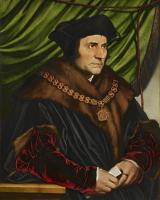
15th February 1649. At Du Bois, we saw two tables of Putti, that were gotten, I know not how, out of the Castle of St. Angelo, by old Petit, thought to be Titian's; he had some good heads of Palma, and one of Stenwyck. Bellcar showed us an excellent copy of his Majesty's Sleeping Venus and the Satyr, with other figures; for now they had plundered, sold, and dispersed a world of rare paintings of the King's, and his loyal subjects. After all, Sir William Ducy showed me some excellent things in miniature, and in oil of Holbein's; Sir Thomas More's head, and a whole-length figure of Edward VI., which were certainly his Majesty's; also a picture of Queen Elizabeth; the Lady Isabella Thynne [aged 25]; a rare painting of Rothenhamer, being a Susanna; and a Magdalen, of Quintin, the blacksmith; also a Henry VIII., of Holbein; and Francis I., rare indeed, but of whose hand I know not.

16th February 1649. Paris [Map] being now strictly besieged by the Prince de Condé [aged 27], my wife [aged 14] being shut up with her father [aged 44] and mother [aged 39], I wrote a letter of consolation to her: and, on the 22d, having recommended Obadiah Walker [aged 33], a learned and most ingenious person, to be tutor to, and travel with, Mr. Hillyard's two sons, returned to Sayes Court, Deptford [Map].

All About History Books on Amazon

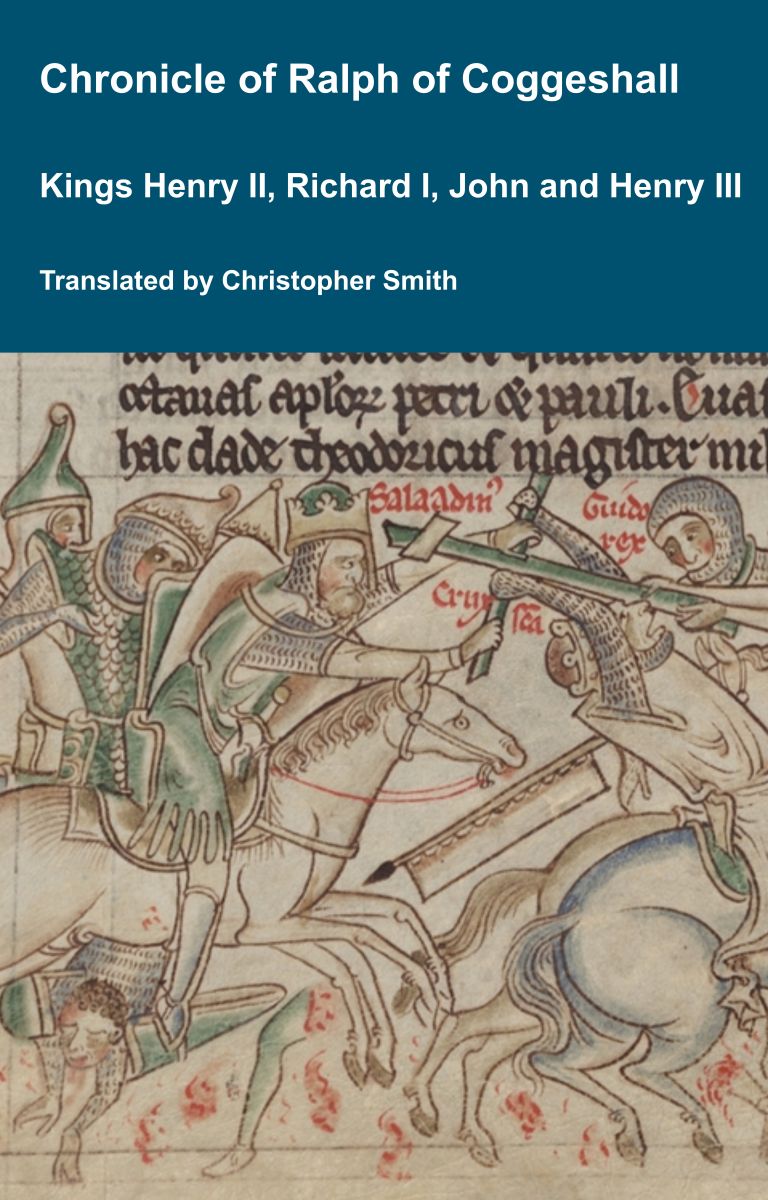
Chronicle of Abbot Ralph of Coggeshall

The Chronicle of Abbot Ralph of Coggeshall (Chronicon Anglicanum) is an indispensable medieval history that brings to life centuries of English and European affairs through the eyes of a learned Cistercian monk. Ralph of Coggeshall, abbot of the Abbey of Coggeshall in Essex in the early 13th century, continued and expanded his community’s chronicle, documenting events from the Norman Conquest of 1066 into the tumultuous reign of King Henry III. Blending eyewitness testimony, careful compilation, and the monastic commitment to record-keeping, this chronicle offers a rare narrative of political intrigue, royal power struggles, and social upheaval in England and beyond. Ralph’s work captures the reigns of pivotal figures such as Richard I and King John, providing invaluable insights into their characters, decisions, and the forces that shaped medieval rule. More than a simple annal, Chronicon Anglicanum conveys the texture of medieval life and governance, making it a rich source for scholars and readers fascinated by English history, monastic authorship, and the shaping of the medieval world.

Available at Amazon in eBook and Paperback format.

25th February 1649. Came to visit me Dr. Joyliffe [aged 28], discoverer of the lymphatic vessels, and an excellent anatomist.

26th February 1649. Came to see me Captain George Evelyn, my kinsman, the great traveler, and one who believed himself a better architect than really he was; witness the portico in the Garden at Wotton, Surrey [Map]; yet the great room at Albury is somewhat better understood. He had a large mind, but over-built everything.

27th February 1649. Came out of France my wife's [aged 14] uncle (Paris still besieged), being robbed at sea by the Dunkirk pirates: I lost, among other goods, my wife's picture, painted by Monsieur Bourdon.

John Evelyn's Diary March 1649

9th March 1649. Now were the Lords murdered in the Palace Yard. [Note. The original entry was dated 05 Mar 1649 whereas most sources agree on the date of their execution being 09 Mar 1649?]

18th March 1649. Mr. Owen, a sequestered and learned minister, preached in my parlor, and gave us the blessed Sacrament, now wholly out of use in the parish churches, on which the Presbyterians and fanatics had usurped.

21st March 1649. I received letters from Paris from my wife [aged 14], and from Sir Richard [Browne], with whom I kept up a political correspondence, with no small danger of being discovered.

25th March 1649. I heard the Common Prayer (a rare thing in these days) in St. Peter's, at Paul's Wharf [Map], London; and, in the morning, the Archbishop of Armagh, that pious person and learned man, Usher [aged 68], in Lincoln's Inn Chapel.

John Evelyn's Diary April 1649

2nd April 1649. To London, and inventoried my movables that had hitherto been dispersed for fear of plundering: wrote into France, touching my sudden resolutions of coming over to them. On the 8th, again heard an excellent discourse from Archbishop Usher [aged 68], on Ephes. 4, v. 26-27.

2nd April 1649. My Italian collection being now arrived, came Moulins, the great chirurgeon, to see and admire the Tables of Veins and Arteries, which I purchased and caused to be drawn out of several human bodies at Padua.

11th April 1649. Received news out of France that peace was concluded; dined with Sir Joseph Evelyn, at Westminster; and on the 13th I saw a private dissection at Moulins's house.

17th April 1649. I fell dangerously ill of my head; was blistered and let bleed behind the ears and forehead: on the 23d, began to have ease by using the fumes of camomile on embers applied to my ears, after all the physicians had done their best.

All About History Books on Amazon

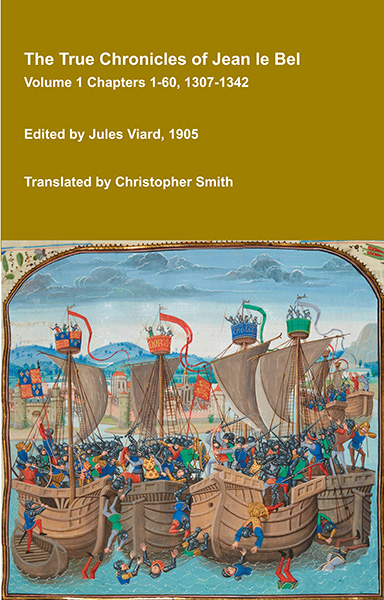
The True Chronicles of Jean le Bel Volume 1 Chapters 1-60 1307-1342

The True Chronicles of Jean le Bel offer one of the most vivid and immediate accounts of 14th-century Europe, written by a knight who lived through the events he describes, and experienced some of them first hand. Covering the early decades of the Hundred Years’ War, this remarkable chronicle follows the campaigns of Edward III of England, the politics of France and the Low Countries, and the shifting alliances that shaped medieval warfare. Unlike later historians, Jean le Bel writes with a strong sense of eyewitness authenticity, drawing on personal experience and the testimony of fellow soldiers. His narrative captures not only battles and sieges, but also the realities of military life, diplomacy, and the ideals of chivalry that governed noble society. A key source for Jean Froissart, Le Bel’s chronicle stands on its own as a compelling and insightful work, at once historical record and literary achievement. This translation builds on the 1905 edition published in French by Jules Viard, adding extensive translations from other sources Rymer's Fœdera, the Chronicles of Adam Murimuth, William Nangis, Walter of Guisborough, a Bourgeois of Valenciennes, Geoffrey le Baker of Swinbroke and Richard Lescot to enrich the original text and Viard's notes.

Available at Amazon in eBook and Paperback format.

29th April 1649. I saw in London a huge ox bred in Kent, 17 feet in length, and much higher than I could reach.

John Evelyn's Diary May 1649

12th May 1649. I purchased the manor of Warley Magna, Essex [Map], in Essex: in the afternoon went to see Gildron's collections of paintings, where I found Mr. Endymion Porter [aged 62], of his late Majesty's bedchamber.

17th May 1649. Went to Putney by water, in the barge with divers ladies, to see the schools, or colleges, of the young gentlewomen.

19th May 1649. To see a rare cabinet of one Delabarr, who had some good paintings, especially a monk at his beads.

30th May 1649. Unkingship was proclaimed, and his Majesty's statues thrown down at St. Paul's Portico, and the Exchange.

John Evelyn's Diary June 1649

7th June 1649. I visited Sir Arthur Hopton [aged 61] (brother [Note. Nephew?] to Sir Ralph, Lord Hopton [aged 53], that noble hero), who having been Ambassador extraordinary in Spain, sojourned some time with my father-in-law [aged 44] at Paris, a most excellent person. Also Signora Lucretia, a Greek lady, whom I knew in Italy, now come over with her husband, an English gentleman. Also, the Earl and Countess of Arundel [aged 18], taking leave of them and other friends now ready to depart for France. This night was a scuffle between some rebel soldiers and gentlemen about the Temple.

10th June 1649. Preached the Archbishop of Armagh [aged 68] in Lincoln's-Inn, from Romans 5, verse 13. I received the blessed Sacrament, preparatory to my journey.

13th June 1649. I dined with my worthy friend, Sir John Owen [aged 49], newly freed from sentence of death among the lords that suffered. With him was one Carew, who played incomparably on the Welsh harp; afterward I treated divers ladies of my relations, in Spring Garden.

13th June 1649. This night was buried with great pomp, Dorislaus, slain at the Hague, the villain who managed the trial against his sacred Majesty.

17th June 1649. I got a pass from the rebel Bradshaw [aged 46], then in great power.

All About History Books on Amazon

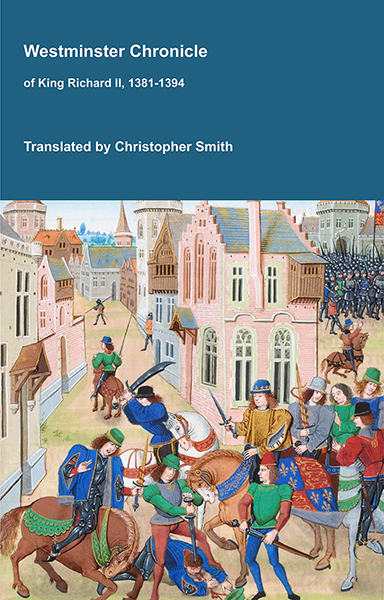
Westminster Chronicle of King Richard II, 1381-1394

The Westminster Chronicle is one of the most vivid and important narrative sources for the reign of Richard II. Written by an anonymous chronicler closely connected with Westminster Abbey, it covers the years 1381 to 1394, from the Peasants’ Revolt to the political tensions, court ceremonies, diplomatic negotiations, royal progresses, and public crises of Richard’s later reign. Rich in detail the chronicle records major events such as the conflicts between the King and Lords Appellant, King and the City of London, negotiations with France and Scotland, the death and funeral of Queen Anne of Bohemia, the illness of Charles VI of France, and the changing fortunes of leading nobles including John of Gaunt, Thomas of Gloucester, Robert de Vere, and the Earl of Arundel. The Chronicle offers readers a remarkable window into late fourteenth-century England, combining political observation, courtly spectacle, urban drama, ecclesiastical affairs, and moral judgement. It is an essential source for anyone interested in medieval monarchy, London, Westminster, and the troubled reign of Richard II.

Available at Amazon in eBook and Paperback format.

20th June 1649. I went to Putney, Surrey [Map], and other places on the Thames, to take prospects in crayon, to carry into France, where I thought to have them engraved.

John Evelyn's Diary July 1649

2nd July 1649. I went from Wotton, Surrey [Map] to Godstone, Surrey (the residence of Sir John Evelyn [aged 58]), where was also Sir John Evelyn of Wilts. [aged 47], when I took leave of both Sir Johns and their ladies. Mem. the prodigious memory of Sir John of Wilts' daughter, since married to Mr. W. Pierrepont [Note. Mr R Pierrepoint], and mother of the present Earl of Kingston. I returned to Sayes Court, Deptford [Map] this night.

4th July 1649. Visited Baroness Hatton [aged 37], her lord [aged 44] sojourning at Paris [Map] with my father-in-law [aged 44].

9th July 1649. Dined with Sir Walter Pye, and my good friend, Mr. Eaton, afterward a judge, who corresponded with me in France.

11th July 1649. Came to see me old Alexander Rosse, the divine historian and poet; Mr. Henshaw, Mr. Scudamore, and other friends to take leave of me.

12th July 1649. It was about three in the afternoon, I took oars for Gravesend, Kent [Map]., accompanied by my cousin, Stephens, and sister, Glanville, who there supped with me and returned; whence I took post immediately to Dover, Kent [Map], where I arrived by nine in the morning; and, about eleven that night, went on board a barque guarded by a pinnace of eight guns; this being the first time the Packet-boat had obtained a convoy, having several times before been pillaged. We had a good passage, though chased for some hours by a pirate, but he dared not attack our frigate, and we then chased him till he got under the protection of the castle at Calais. It was a small privateer belonging to the Prince of Wales. I carried over with me my servant, Richard Hoare, an incomparable writer of several hands, whom I afterward preferred in the Prerogative Office, at the return of his Majesty. Lady Catherine Scott, daughter of the Earl of Norwich [aged 64], followed us in a shallop, with Mr. Arthur Slingsby [aged 26], who left England incognito. At the entrance of the town, the Lieutenant Governor, being on his horse with the guards, let us pass courteously. I visited Sir Richard Lloyd, an English gentleman, and walked in the church, where the ornament about the high altar of black marble is very fine, and there is a good picture of the Assumption. The citadel seems to be impregnable, and the whole country about it to be laid under water by sluices for many miles.

16th July 1649. We departed from Paris, in company with that very pleasant lady, Lady Catherine Scott, and others. In all this journey we were greatly apprehensive of parties, which caused us to alight often out of our coach and walk separately on foot, with our guns on our shoulders, in all suspected places.

John Evelyn's Diary August 1649

1st August 1649. At three in the afternoon we came to St. Denis, saw the rarities of the church and treasury; and so to Paris that evening.

1st August 1649. The next day, came to welcome me at dinner the Lord High Treasurer Cottington [aged 70], Sir Edward Hyde, Chancellor [aged 40], Sir Edward Nicholas, Secretary of State, Sir George Carteret, Governor of Jersey [aged 39], and Dr. Earle [aged 48], having now been absent from my wife [aged 14] above a year and a half.

18th August 1649. I went to St. Germains, to kiss his Majesty's [aged 19] hand; in the coach, which was my Lord Wilmot's [aged 36], went Mrs. Barlow [aged 19], the King's mistress and mother to the Duke of Monmouth, a brown, beautiful, bold, but insipid creature.

19th August 1649. I went to salute the French King [aged 10] and the Queen Dowager [aged 47]; and, on the 21st, returned in one of the Queen's coaches with my Lord Germain, Duke of Buckingham [aged 21], Lord Wentworth [aged 37], and Mr. Croftes [aged 38], since Lord Croftes.

John Evelyn's Diary September 1649

All About History Books on Amazon

Chronicles of the Reigns of Edward I and II Volume 1 Annals of London and Annals of St Paul's

This volume brings together two important medieval chronicles of the reigns of Edward I and Edward II: the Annals of London (Annales Londonienses) and the Annals of St Paul’s (Annales Paulini). Written close to the events they describe, these chronicles offer a vivid contemporary record of English political, military, ecclesiastical and civic life from the late thirteenth to the early fourteenth century. Their particular strength lies in their London perspective, recording not only the affairs of kings, nobles and bishops, but also parliaments, royal proclamations, civic disputes, elections of mayors and sheriffs, executions, tournaments, religious ceremonies, fires, floods, disturbances and the everyday concerns of the capital. The chronicles cover some of the most dramatic events of the period, including the wars of Edward I, conflict with Scotland, the turbulent reign of Edward II, the rise and fall of Piers Gaveston and the Despensers, the rebellion of Thomas of Lancaster, Queen Isabella’s invasion of England, the deposition of Edward II, and the accession of Edward III. The Annales Paulini, associated with St Paul’s Cathedral, is particularly rich in detailed observations of London and its clergy and citizens. An essential primary source for students and readers interested in medieval England, London history, Edward I, Edward II, Edward III, the Scottish wars, medieval politics, and ecclesiastical history, this volume provides an unusually immediate view of a kingdom undergoing profound political upheaval.

Available at Amazon in eBook and Paperback format.
7th September 1649. Went with my wife [aged 14] and dear Cousin to St. Germains, and kissed the Queen-Mother's [aged 39] hand; dined with my Lord Keeper and Lord Hatton [aged 44]. Divers of the great men of France came to see the King [aged 19]. The next day, came the Prince of Condé [aged 27]. Returning to Paris, we went to see the President Maison's palace, built castle-wise, of a milk-white fine freestone; the house not vast, but well contrived, especially the staircase, and the ornaments of Putti, about it. It is environed in a dry moat, the offices under ground, the gardens very excellent with extraordinary long walks, set with elms, and a noble prospect toward the forest, and on the Seine toward Paris. Take it altogether, the meadows, walks, river, forest, corn-ground, and vineyards, I hardly saw anything in Italy to exceed it. The iron gates are very magnificent. He has pulled down a whole village to make room for his pleasure about it.

12th September 1649. Dr. Crighton, a Scotchman, and one of his Majesty's chaplains, a learned Grecian who set out the Council of Florence, preached.

13th September 1649. The King [aged 19] invited the Prince of Condé [aged 28] to supper at St. Cloud; there I kissed the Duke of York's [aged 15] hand in the tennis court, where I saw a famous match between Monsieur Saumeurs and Colonel Cooke, and so returned to Paris. It was noised about that I was knighted, a dignity I often declined.

John Evelyn's Diary October 1649

1st October 1649. Went with my cousin Tuke [aged 34] (afterward Sir Samuel), to see the fountains of St. Cloud and Ruel; and, after dinner, to talk with the poor ignorant and superstitious anchorite at Mount Calvary, and so to Paris.

2nd October 1649. Came Mr. William Coventry [aged 21] (afterward Sir William) and the Duke's secretary, etc., to visit me.

5th October 1649. Dined with Sir George Ratcliffe, the great favorite of the late Earl of Stratford, formerly Lord Deputy of Ireland, decapitated.

7th October 1649. To the Louvre, to visit the Countess of Moreton [aged 40], governess to Madame [aged 5].

15th October 1649. Came news of Drogheda being taken by the rebels, and all put to the sword, which made us very sad, forerunning the loss of all Ireland.

21st October 1649. I went to hear Dr. d'Avinson's lecture in the physical garden, and see his laboratory, he being Prefect of that excellent garden, and Professor Botanicus.

30th October 1649. I was at the funeral of one Mr. Downes, a sober English gentleman. We accompanied his corpse to Charenton, where he was interred in a cabbage-garden, yet with the office of our church, which was said before in our chapel at Paris. Here I saw also where they buried the great soldier, Gassion, who had a tomb built over him like a fountain, the design and materials mean enough. I returned to Paris with Sir Philip Musgrave [aged 42], and Sir Marmaduke Langdale, since Lord Langdale. Memorandum. This was a very sickly and mortal autumn.

John Evelyn's Diary November 1649

5th November 1649. I received divers letters out of England, requiring me to come over about settling some of my concerns.

7th November 1649. Dr. George Morley [aged 51] (since Bishop of Winchester) preached in our chapel on Matthew 4, verse 3.

18th November 1649. I went with my father-in-law [aged 44] to see his audience at the French Court, where next the Pope's Nuncio, he was introduced by the master of ceremonies, and, after delivery of his credentials, as from our King, since his father's murder, he was most graciously received by the King of France and his mother, with whom he had a long audience. This was in the Palais Cardinal.

All About History Books on Amazon

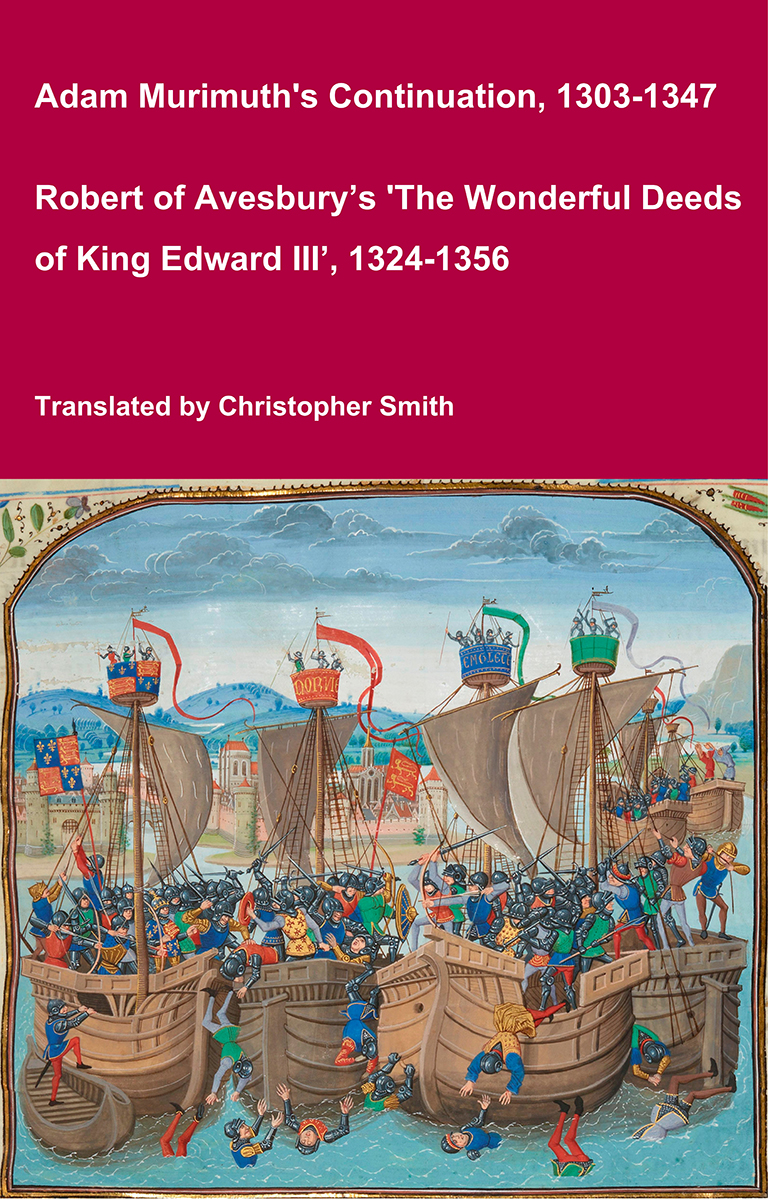
Adam Murimuth's Continuation and Robert of Avesbury’s 'The Wonderful Deeds of King Edward III'

This volume brings together two of the most important contemporary chronicles for the reign of Edward III and the opening phases of the Hundred Years’ War. Written in Latin by English clerical observers, these texts provide a vivid and authoritative window into the political, diplomatic, and military history of fourteenth-century England and its continental ambitions. Adam Murimuth Continuatio's Chronicarum continues an earlier chronicle into the mid-fourteenth century, offering concise but valuable notices on royal policy, foreign relations, and ecclesiastical affairs. Its annalistic structure makes it especially useful for establishing chronology and tracing the development of events year by year. Complementing it, Robert of Avesbury’s De gestis mirabilibus regis Edwardi tertii is a rich documentary chronicle preserving letters, treaties, and official records alongside narrative passages. It is an indispensable source for understanding Edward III’s claim to the French crown, the conduct of war, and the mechanisms of medieval diplomacy. Together, these works offer scholars, students, and enthusiasts a reliable and unembellished account of a transformative period in English and European history. Essential for anyone interested in medieval chronicles, the Hundred Years’ War, or the reign of Edward III.

Available at Amazon in eBook and Paperback format.

18th November 1649. After this, being presented to his Majesty [aged 19] and the Queen Regent I went to see the house built by the late great Cardinal de Richelieu. The most observable thing is the gallery, painted with the portraits of the most illustrious persons and single actions in France, with innumerable emblems between every table. In the middle of the gallery, is a neat chapel, rarely paved in work and devices of several sorts of marble, besides the altar-piece and two statues of white marble, one of St. John, the other of the Virgin Mary, by Bernini. The rest of the apartments are rarely gilded and carved, with some good modern paintings. In the presence hang three huge branches of crystal. In the French King's bedchamber, is an alcove like another chamber, set as it were in a chamber like a movable box, with a rich embroidered bed. The fabric of the palace is not magnificent, being but of two stories; but the garden is so spacious as to contain a noble basin and fountain continually playing, and there is a mall, with an elbow, or turning, to protract it. So I left his Majesty on the terrace, busy in seeing a bull-baiting, and returned home in Prince Edward's coach with Mr. Paul, the Prince Elector's agent.
19th November 1649. Visited Mr. Waller [aged 43], where meeting Dr. Holden, an English Sorbonne divine, we fell into some discourse about religion.

John Evelyn's Diary December 1649

28th December 1649. Going to wait on Mr. Waller [aged 43], I viewed St. Stephen's church; the building, though Gothic, is full of carving; within it is beautiful, especially the choir and winding stairs. The glass is well painted, and the tapestry hung up this day about the choir, representing the conversion of Constantine, was exceedingly rich.

28th December 1649. I went to that excellent engraver, Du Bosse, for his instruction about some difficulties in perspective which were delivered in his book.

28th December 1649. I concluded this year in health, for which I gave solemn thanks to Almighty God.

29th December 1649. I christened Sir Hugh Rilie's child with Sir George Radcliffe in our chapel, the parents being so poor that they had provided no gossips, so as several of us drawing lots it fell on me, the Dean of Peterborough (Dr. Cousin [aged 55]) officiating: we named it Andrew, being on the eve of that Apostle's day.