All About History Books on Amazon
Chronicle of a Bourgeois of Valenciennes
Récits d’un bourgeois de Valenciennes aka The Chronicle of a Bourgeois of Valenciennes is a vivid 14th-century vernacular chronicle written by an anonymous urban chronicler from Valenciennes in the County of Hainaut. It survives in a manuscript that describes local and regional history from about 1253 to 1366, blending chronology, narrative episodes, and eyewitness-style accounts of political, military, and social events in medieval France, Flanders, and the Low Countries. The work begins with a chronological framework of events affecting Valenciennes and its region under rulers such as King Philip VI of France and the shifting allegiances of local nobility. It includes accounts of conflicts, sieges, diplomatic manoeuvres, and the impact of broader struggles like the Hundred Years’ War on urban life in Hainaut. Written from the perspective of a burgher (bourgeois) rather than a monastery or royal court, the chronicle offers a rare lay viewpoint on high politics and warfare, reflecting how merchants, townspeople, and civic institutions experienced the turbulence of the 13th and 14th centuries. Its narrative style combines straightforward reporting of events with moral and civic observations, making it a valuable source for readers interested in medieval urban society, regional politics, and the lived experience of war and governance in pre-modern Europe.
Available at Amazon in eBook and Paperback format.
Paternal Family Tree: Avranches
Around 1047 Hugh of Avranches 1st Earl Chester was born to Richard le Goz Viscount Avranches and Emma Mortain Viscountess Avranches.
Deeds of the Dukes of Normandy. Robert, Count of Mortain, built the monastery of Grestain1; and Hugh [aged 13], who afterwards became Earl of Chester, the abbey of Saint Sever2. Eudo also built the church of the Holy Trinity at Lessay3 along with its chapel; Baldwin of Reviers another monastery at Montbourg; and Nigel, Viscount of the Cotentin, the monastery of Saint Savior4. The monastery of Saint Mary at Lonlay was founded from the ground up by William Talvas the elder, who, having cleared the forest on a certain hill, built there the castle called Domfront. The church of Saint Stephen of Fontenay was built by Ralph Tesson and his brother Ernauld; and the monastery of Saint Peter of Castillon by Ralph of Tosny.
Monasterium Gresteni Robertus comes Moritolii fecit: Hugo vero, postea comes Cestrensis, abbatiam sancti Severi. At ecclesiam Sanctæ Trimitatis Exaquei Eudo cum capello feeit: Balduinus etiam de Revers aliam apud Montisburgum: Nigellus vicecomes Constantiniensis cœnobinm Sancti Salvatoris. Monasterium vero Sanctæ Mariæ Lonleii Willelmus Talavacius primus, qui exciso nemore, in monte quodam castrum nomine Damfrontem construxerat a fundamentis ædificavit. Ecclesiam Sancti Stephani Fontanenti Rodulfus Taisson et Erneisus frater ejus construxerunt: Monasterium autem Sancti Petri Castellionis Rodulfus de Toenio.
Note 1. Grestain Abbey, on the south side of the Seine estuary, seven kilometres east of Honfleur.
Note 2. The Abbey of Sainte-Marie-et-Saint-Sever, Calvados, Normandy, founded by Hugh of Avranches, 1st Earl of Chester, around 1047-1101. Some sources suggest his mother was Emma of Mortain, maternal half-sister of Duke William.
Note 3. The Abbey of the Holy Trinity at Lessay in north-west Normandy, founded by Eudes au Capel, seneschal, i.e. steward, of Duke William's household. Construction commenced in 1064.
Note 4. The Abbey of Saint-Sauveur-le-Vicomte in the Cotentin peninsula of north-west Normandy, founded by Nigel II Saint-Sauveur in 1067.
After 1066 Hugh of Avranches 1st Earl Chester [aged 19] was given command of Tutbury Castle, Staffordshire [Map].
Around 1071 Hugh of Avranches 1st Earl Chester [aged 24] was created 1st Earl Chester.
In 1081 King Gruffudd ap Cynan of Gwynedd [aged 26] was imprisoned by Hugh of Avranches 1st Earl Chester [aged 34] at Chester Castle [Map].
In 1082 Hugh of Avranches 1st Earl Chester [aged 35] succeeded Viscount Avranches.
In 1082 [his father] Richard le Goz Viscount Avranches died.
Around 1090. Mountsorrel Castle [Map] is a Norman earthwork motte and bailey fortress, probably founded by Hugh Lupus [aged 43], earl of Chester. A stone castle of the earl of Leicester, it was confiscated by King Henry II in 1174 and the tower over the walls and other buildings were repaired in the late 12th century. Repaired again in King John's reign, only to be abandoned in 1217 after being razed to the ground, early in the reign of King Henry III. Standing on the northern part of a granite outcrop is a scarped circular motte, with the remaining platform becoming a now mutilated bailey. The motte is partly quarried away and crowned by a war memorial, with the remains of a wide bailey ditch to the south.
Before 1094 Hugh of Avranches 1st Earl Chester [aged 46] and Ermentrude Clermont Countess Chester [aged 35] were married. She by marriage Countess Chester. She the daughter of Hugh Clermont Count of Clermont-en-Beauvaisis [aged 63].
In 1094 [his son] Richard Avranches 2nd Earl Chester was born to Hugh of Avranches 1st Earl Chester [aged 47] and [his wife] Ermentrude Clermont Countess Chester [aged 36]. He married in or before 1120 his half second cousin Lucia Mahaut Blois Countess Chester, daughter of Stephen Blois II Count Blois and Chartres and Adela Normandy Countess Blois.
On 27th July 1101 Hugh of Avranches 1st Earl Chester [aged 54] died.
All About History Books on Amazon
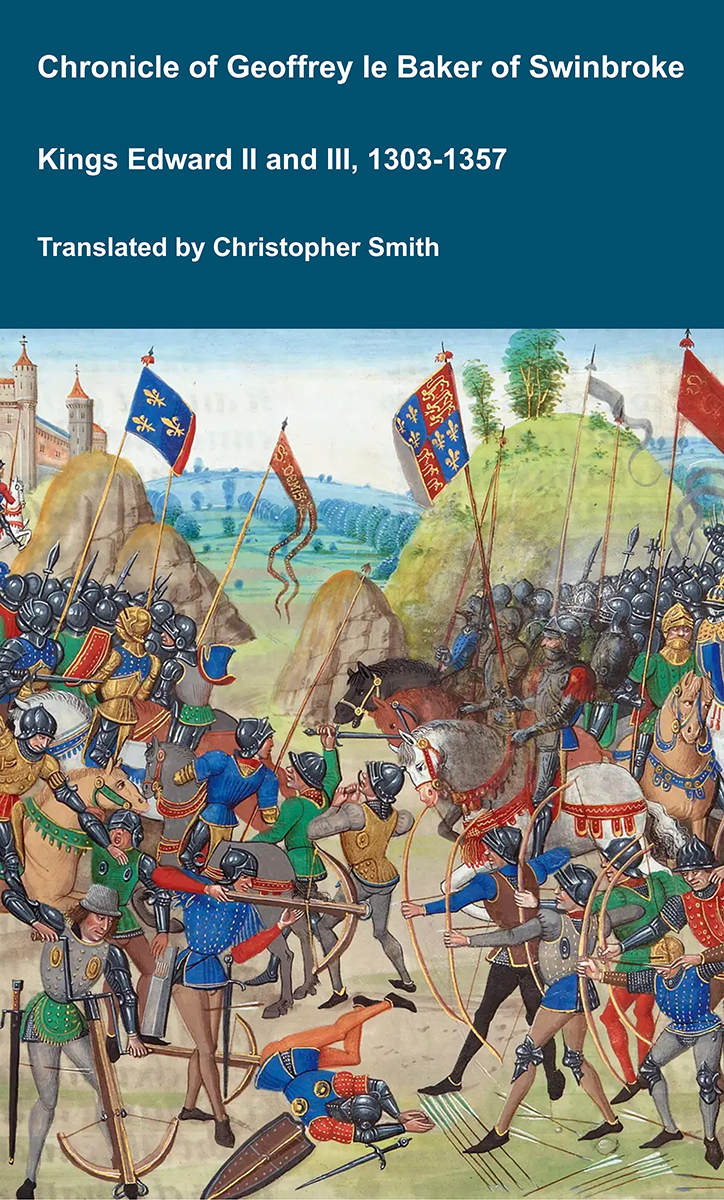
Chronicle of Geoffrey le Baker of Swinbroke
Baker was a secular clerk from Swinbroke, now Swinbrook, an Oxfordshire village two miles east of Burford. His Chronicle describes the events of the period 1303-1356: Gaveston, Bannockburn, Boroughbridge, the murder of King Edward II, the Scottish Wars, Sluys, Crécy, the Black Death, Winchelsea and Poitiers. To quote Herbert Bruce 'it possesses a vigorous and characteristic style, and its value for particular events between 1303 and 1356 has been recognised by its editor and by subsequent writers'. The book provides remarkable detail about the events it describes. Baker's text has been augmented with hundreds of notes, including extracts from other contemporary chronicles, such as the Annales Londonienses, Annales Paulini, Murimuth, Lanercost, Avesbury, Guisborough and Froissart to enrich the reader's understanding. The translation takes as its source the 'Chronicon Galfridi le Baker de Swynebroke' published in 1889, edited by Edward Maunde Thompson.
Available at Amazon in eBook and Paperback format.
After 13th May 1106 [his former wife] Ermentrude Clermont Countess Chester [deceased] died.
[his son] Robert Avranches was born to Hugh of Avranches 1st Earl Chester and Ermentrude Clermont Countess Chester.
[his daughter] Helga Avranches was born to Hugh of Avranches 1st Earl Chester and Ermentrude Clermont Countess Chester.
[his daughter] Geva Avranches was born to Hugh of Avranches 1st Earl Chester and Ermentrude Clermont Countess Chester. She married Geoffrey Ridel.
[his son] Hugh Avranches was born to Hugh of Avranches 1st Earl Chester and Ermentrude Clermont Countess Chester.
[his son] Fitzhugh Avranches was born to Hugh of Avranches 1st Earl Chester.
[his son] Unamed Avranches was born to Hugh of Avranches 1st Earl Chester.
[his son] Ottiwel Avranches was born to Hugh of Avranches 1st Earl Chester.
[his son] Robert Avranches was born to Hugh of Avranches 1st Earl Chester.
[his son] Robert Avranches was born to Hugh of Avranches 1st Earl Chester and Ermentrude Clermont Countess Chester.
[his daughter] Matilda Avranches was born to Hugh of Avranches 1st Earl Chester and Ermentrude Clermont Countess Chester.
All About History Books on Amazon
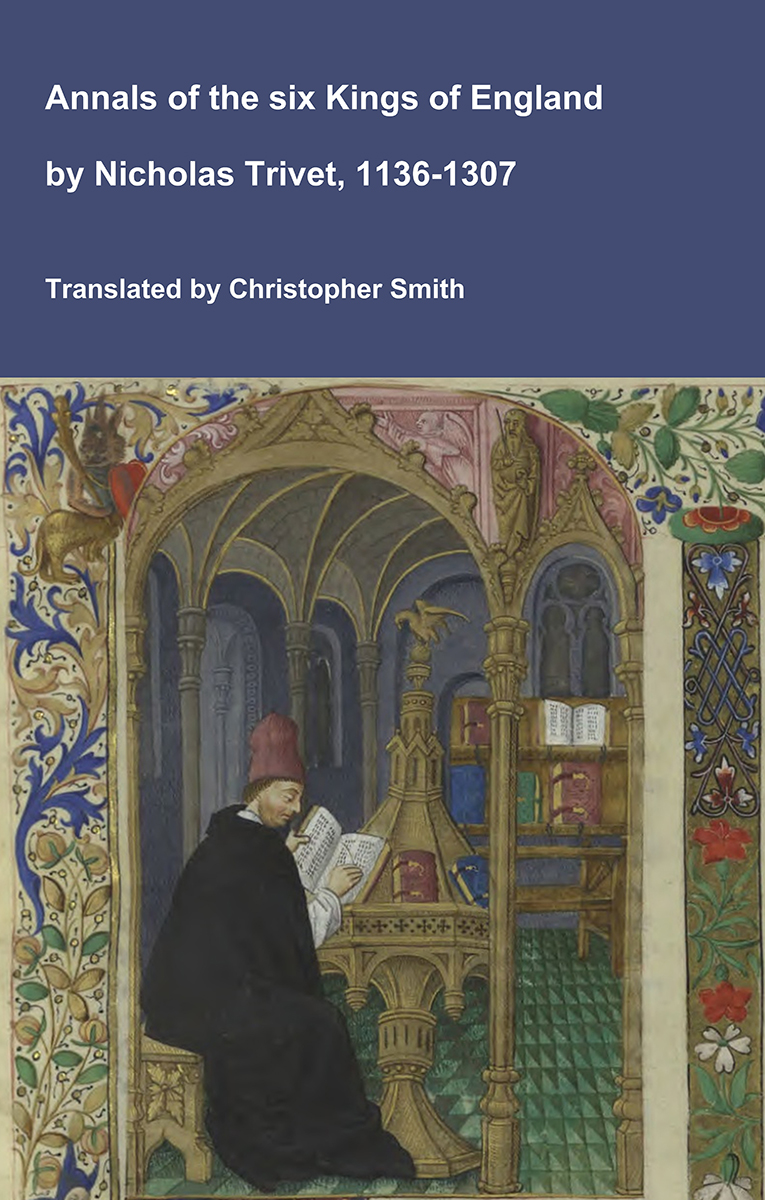
Annals of the six Kings of England by Nicholas Trivet
Translation of the Annals of the Six Kings of England by that traces the rise and rule of the Angevin aka Plantagenet dynasty from the mid-12th to early 14th century. Written by the Dominican scholar Nicholas Trivet, the work offers a vivid account of English history from the reign of King Stephen through to the death of King Edward I, blending political narrative with moral reflection. Covering the reigns of six monarchs—from Stephen to Edward I—the chronicle explores royal authority, rebellion, war, and the shifting balance between crown, church, and nobility. Trivet provides detailed insight into defining moments such as baronial conflicts, Anglo-French rivalry, and the consolidation of royal power under Edward I, whose reign he describes with particular immediacy. The Annals combines careful year-by-year reporting with thoughtful interpretation, presenting history not merely as a sequence of events but as a moral and political lesson. Ideal for readers interested in medieval history, kingship, and the origins of the English state, this chronicle remains a valuable and accessible window into the turbulent world of the Plantagenet kings.
Available at Amazon in eBook and Paperback format.
[his father] Richard le Goz Viscount Avranches and [his mother] Emma Mortain Viscountess Avranches were married. She by marriage Viscountess Avranches.
[his daughter] Giofu Avranches was born to Hugh of Avranches 1st Earl Chester.
Great x 1 Grandfather: Ansfred "Dane" Avranches
Grandfather: Thorstein Avranches Viscount Avranches
Hugh of Avranches 1st Earl Chester
Grandfather: Herluin de Conteville
Mother: Emma Mortain Viscountess Avranches
Great x 1 Grandfather: Father of Beatrix and Herleva
Grandmother: Herleva of Falaise