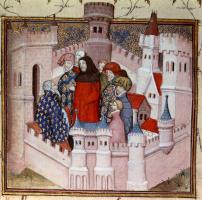
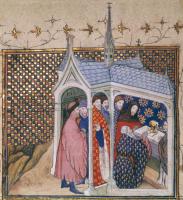
Annals of Kings Richard II and Henry IV. The Earl of Kent [aged 26], however, with the Earl of Salisbury [aged 50] and Lord [....] Lumley1, and others following them, fleeing with the greatest speed under arms, reached Cirencester when night had already fallen. The men of the said town, regarding so great an armed force with suspicion and thinking, as was indeed the case, that their rumour was a lie, secretly blocked all the exits and entrances of their lodging during the night. They, however, fearing that if they remained there until morning danger would threaten them, tried at midnight to go out and depart secretly. But when they saw that all the exits had been blocked with beams and heavier pieces of timber, they began to act with lances and arrows, so as to drive back the townsmen who were standing in their way. The townsmen, gathering together, themselves began to shoot into the lodgings through the windows, through the doors, and through the entrances, so that no safe place was allowed to them, either for going out or for looking out. This fight lasted from midnight until the third hour of the following day. At that time they surrendered, giving themselves up to the townsmen, and humbly begging that they might be saved from death until they had had speech with the king. They were therefore led into the abbey, where they heard Mass and breakfasted that day. After none, around the hour of vespers, a certain priest of their household set fire to some houses in a certain street of the said town, so that, with the townsmen occupied in extinguishing the fire, the earls might have an opportunity to escape. But in vain, for the townsmen, foreseeing this trick, left the houses to the flames and the fire, and rushed to the abbey to hold those whom they had captured with so much labour. Lord Thomas Berkeley [aged 48]2 was then present there, and he had prepared to conduct them to the king, and indeed he would have done so if fire had not been set in the town. But this misfortune so stirred up the townsmen and others, who had already streamed in from parts of Gloucestershire and other places, that they could not be calmed by any speech without arming themselves completely for the killing of the earls. They even threatened Lord Berkeley himself with death unless he allowed the king’s traitors to be brought out to them. They were therefore brought out, now almost around sunset, and the Earls of Kent and Salisbury were beheaded [on 7th January 1400] by the hands of the commons, the Lord of vengeance rendering to them the punishments deserved by their bad faith and unbelief. For each of them had been faithless to his king, who had saved them, and, what is worse, ungrateful to him who had given them such great grace. The Earl of Salisbury, who had been a supporter of the Lollards throughout his life, a despiser of images, and a mocker of the sacraments, miserably ended his life without the sacrament of confession, if what is commonly said is true.
Comes vero Canciæ, cum Comite Sarum et Domino [....] Bunney, et aliis sequentibus, arma sua velocissime fugiens, jam cæca nocte pervenit Cirecestriam. Viri vero dictæ villæ, suspectum habentes tantum apparatum, et putantes, prout erat, rumorem eorum mendacium, præstruxerunt omnes [exitus] et aditus hospitii eorundem nocte secrete. Illi vero, timentes, si usque mane moram ibidem-haberent, imminere sibi periculum, nocte media moliebantur egredi, discedereque latenter. Sed cum exitus omnes præstructos cernerent trabibus et lignis grossioribus, cæperunt lanceis et sagittis rem agere, ut obstantes eis villanos repellerent. Villani vero glomerati, et ipsi sagittare cœperunt intra hospitia per fenestras, per fores, per ostia, ita quod nullus locus tutus dabatur eis, nec ad exitum nec ad prospectum. Duravit iste congressus a media nocte usque ad horam tertiam sequentis diei, quo tempore manus dederunt, villanis se reddentes, et submisse precantes ut salvarentur a nece, donec cum Rege colloquium habuissent. Ducti sunt ergo in Abbathiam, ubi et Missam audierunt et jentabantur ipso die. Post nonam vero, circiter horam Vesperarum, quidam sacerdos, de eorum familia, immisit ignem in quasdam domos cujusdam stratæ dictæ ville, ut, occupatis villanis circa ignis extinctionem, Comites habere possent evadendi occasionem. Sed frustra; nam villani, hanc cautelam prævidentes, domos dimiserunt conflagrationi et incendio, [et] ad Abbathiam convolaverunt, ut eos retinerent quos ceperant labore tanto, Affuit tune ibidem Dominus Thomas de Berklee, qui conduxisse paraverat eos ad Regem, et utique sic fecisset, si non fuisset ignis in villam missus. Sed hoc infortunium tantum commovit villanos et alios, qui jam confluxerant de partibus Gloucestriæ, et locis aliis quod nulla sedari potuerunt oratione, quin omnino in necem Comitum armarentur; ipsique Domino de PBerkele mortem minati sunt, nisi produci permitteret ad eosdem Regis proditores. Producti sunt ergo jam pene circa solis occasum, et decollati Comites Canciæ atque Sarum per manus communium; malæ fidei et incredulitatis suæ meritas eis reddente pœnas Domino ultionum. Nam uterque infidelis Regi suo fuerat, qui salvavit eos; et, quod pejus est, ingratus ei qui tantam gratiam dedit eis Comes autem Sarum, qui Lollardorum fantor fuerat in tota vita, et imaginum vilipensor, sacramentorumque derisor, sine sacramento confessionis, si verum est quod vulgo dicitur, miserabiliter vitam finivit.
Note 1. Ralph Lumley [aged 40], 1360-1399, Baron Lumley, who was also executed in Cirencester on 7th January 1400.
Note 2. Thomas Berkeley, 1352-1417, 5th Baron Berkeley, jure uxoris [by right of his wife] Baron Lisle. He lived at Berkeley Castle, thirty-five kilometres from Cirencester.
Click to read more ...