All About History Books on Amazon

The True Chronicles of Jean le Bel Volume 1 Chapters 1-60 1307-1342

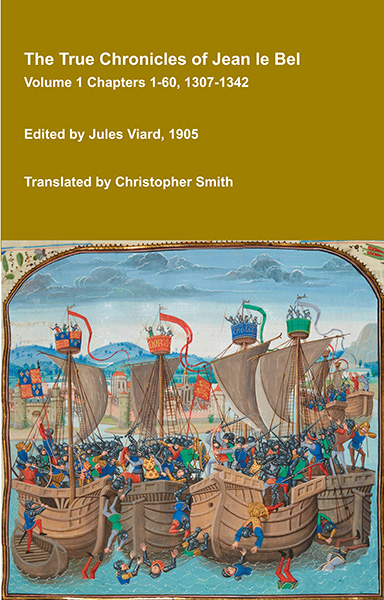
The True Chronicles of Jean le Bel offer one of the most vivid and immediate accounts of 14th-century Europe, written by a knight who lived through the events he describes, and experienced some of them first hand. Covering the early decades of the Hundred Years’ War, this remarkable chronicle follows the campaigns of Edward III of England, the politics of France and the Low Countries, and the shifting alliances that shaped medieval warfare. Unlike later historians, Jean le Bel writes with a strong sense of eyewitness authenticity, drawing on personal experience and the testimony of fellow soldiers. His narrative captures not only battles and sieges, but also the realities of military life, diplomacy, and the ideals of chivalry that governed noble society. A key source for Jean Froissart, Le Bel’s chronicle stands on its own as a compelling and insightful work, at once historical record and literary achievement. This translation builds on the 1905 edition published in French by Jules Viard, adding extensive translations from other sources Rymer's Fœdera, the Chronicles of Adam Murimuth, William Nangis, Walter of Guisborough, a Bourgeois of Valenciennes, Geoffrey le Baker of Swinbroke and Richard Lescot to enrich the original text and Viard's notes.

Available at Amazon in eBook and Paperback format.

Hubert de Burgh Count Mortain 1st Earl Kent 1170-1243

Paternal Family Tree: Burgh

In or before 1160 [his father] Walter Burgh [aged 29] and [his mother] Alice Unknown were married.

Around 1170 Hubert de Burgh Count Mortain 1st Earl Kent was born to Walter Burgh [aged 40] and Alice Unknown.

In 1172 Richard Clare 3rd Earl Hertford [aged 19] and [his future sister-in-law] Amice Fitzrobert Countess Hertford were married. She by marriage Countess Hertford. She the daughter of William Fitzrobert 2nd Earl Gloucester and Hawise Beaumont Countess Gloucester. He the son of Roger Clare 2nd Earl Hertford [aged 56] and Maud St Hilary Countess Hertford. They were half fourth cousin once removed. She a great granddaughter of King Henry I "Beauclerc" England.

Around April 1200 King John of England [aged 33] and [his future wife] Isabella Fitzrobert 3rd Countess Gloucester and Essex [aged 27] marriage annulled due to consanuinity but more likely because John's new status as heir to the English throne mean't he had better prospects. He may have already decided to marry Isabella of Angoulême Queen Consort England [aged 12] who he married on 24th August 1200.

Before 1202 Hubert de Burgh Count Mortain 1st Earl Kent [aged 31] was appointed Count Mortain Mortagne, and as Constable of Dover Castle, Constable of Windsor Castle, Constable of Chinon Castle.

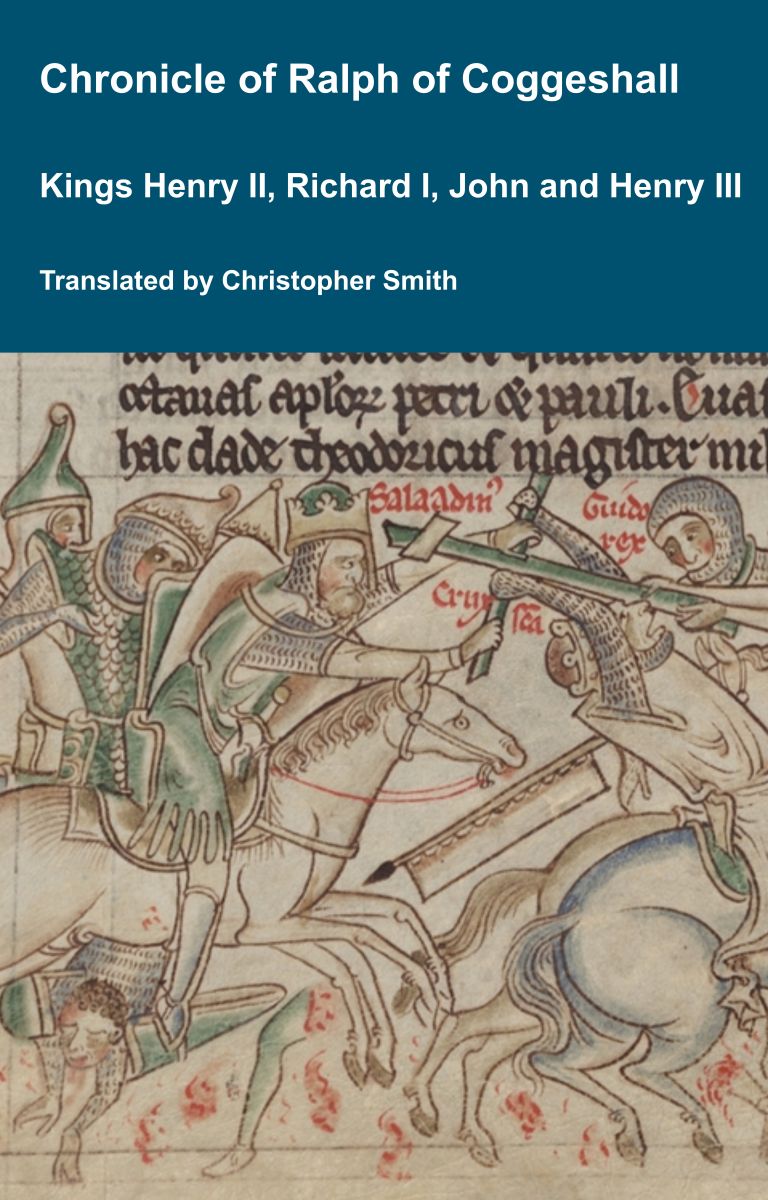
Chronicum Anglicanum by Ralph Coggeshall. On the vigil [23rd June 1205] of St John the Baptist, Hubert de Burgh [aged 35], chamberlain, was captured at Chinon by the army of the king of France. He had most faithfully defended that castle for a year after Normandy and Anjou had been taken. But when that castle, which had always seemed impregnable, had been for the most part almost destroyed by the besieging French, he went out into the field with his men, fighting manfully against the enemy, and was grievously wounded before he could be taken.

In vigilia Sancti Johannis-Baptiste, captus est Hubertus de Burgh camerarius, apud Chinun, ab exercitu regis Franciæ: qui prædictum castellum per annum probissime tutaverat post captam Normanniam et Andegaviam. Cum autem castellum illud, quod semper inexpugnabile visum est, magna ex parte ab obsidentibus Francis fere dirutum esset, transiit in campum cum suis, contra hostes viriliter dimicans, graviterque vulneratus est antequam capi potuisset.

In 1206 [his father] Walter Burgh [aged 76] died.

On 20th January 1214 Geoffrey Mandeville 2nd Earl Essex [aged 23] and [his future wife] Isabella Fitzrobert 3rd Countess Gloucester and Essex [aged 41] were married. She by marriage Countess Essex, Countess Gloucester. She the daughter of William Fitzrobert 2nd Earl Gloucester and Hawise Beaumont Countess Gloucester. He the son of Geoffrey Fitzpeter 1st Earl Essex and Beatrice Saye.

All About History Books on Amazon

Adam Murimuth's Continuation and Robert of Avesbury’s 'The Wonderful Deeds of King Edward III'

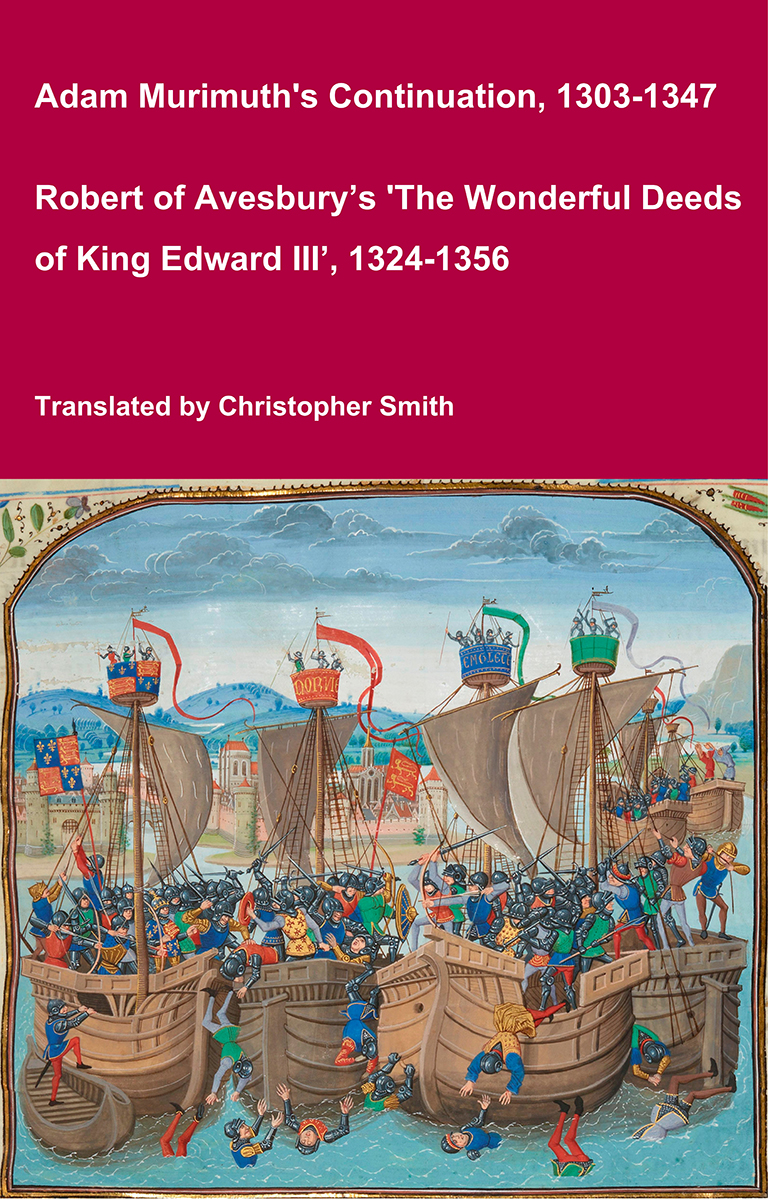
This volume brings together two of the most important contemporary chronicles for the reign of Edward III and the opening phases of the Hundred Years’ War. Written in Latin by English clerical observers, these texts provide a vivid and authoritative window into the political, diplomatic, and military history of fourteenth-century England and its continental ambitions. Adam Murimuth Continuatio's Chronicarum continues an earlier chronicle into the mid-fourteenth century, offering concise but valuable notices on royal policy, foreign relations, and ecclesiastical affairs. Its annalistic structure makes it especially useful for establishing chronology and tracing the development of events year by year. Complementing it, Robert of Avesbury’s De gestis mirabilibus regis Edwardi tertii is a rich documentary chronicle preserving letters, treaties, and official records alongside narrative passages. It is an indispensable source for understanding Edward III’s claim to the French crown, the conduct of war, and the mechanisms of medieval diplomacy. Together, these works offer scholars, students, and enthusiasts a reliable and unembellished account of a transformative period in English and European history. Essential for anyone interested in medieval chronicles, the Hundred Years’ War, or the reign of Edward III.

Available at Amazon in eBook and Paperback format.

On 18th December 1214 [his future wife] Beatrice Warenne [aged 40] died.

Before 1217 Hubert de Burgh Count Mortain 1st Earl Kent [aged 46] and Beatrice Warenne were married.

On 24th August 1217 Hubert de Burgh Count Mortain 1st Earl Kent [aged 47] commanded the King's forces at Sandwich, Kent [Map] during the Battle of Sandwich aka Dover. French re-enforcements had left Calais to join with the future Prince Louis's [aged 29] forces who were in short supply following the Second Battle of Lincoln aka Lincoln's Fair. Hubert Burgh's men routed the French ships. The battle marked the end of Prince Louis's invasion with the Treaty of Kingston aka Lambeth being signed shortly afterwards.

In September 1217 Hubert de Burgh Count Mortain 1st Earl Kent [aged 47] and Isabella Fitzrobert 3rd Countess Gloucester and Essex [aged 44] were married. She died a month later. She the daughter of William Fitzrobert 2nd Earl Gloucester and Hawise Beaumont Countess Gloucester.

On 14th October 1217 [his wife] Isabella Fitzrobert 3rd Countess Gloucester and Essex [aged 44] died.

In 1221 Hubert de Burgh Count Mortain 1st Earl Kent [aged 51] and Margaret Dunkeld Countess Kent [aged 28] were married. She by marriage Countess Kent. The difference in their ages was 23 years. She the daughter of King William I of Scotland and Ermengarde Beaumont Sarthe Queen Consort Scotland [aged 51].

Annals Londonienses. In the same year [1221], Hubert de Burgh [aged 51], Justiciar of England, married the sister [[his wife] Margaret [aged 28]] of the King of Scots at Holy Trinity, London. In the same year, William d'Aubigny, Earl of Arundel, died while returning from the Holy Land. He was buried at Wymondham, which he had founded. In the same year, the castle of Montgomery was fortified by the lord Henry.

Eodem anno, Hubertus de Burgo, justiciarius Angliæ, sororem regis Scotiæ apud Sanctum Trinitatem Londoniis desponsavit. Eodem anno Willelmus de Albineto comes de Arundel obiit, de Terra Sancta rediens; apud Wymundham, cujus fundator extitit, tamulatur. Eodem anno castrum de Monte Gomeri firmatur a domino Henrico.

On 25th June 1221 [his brother-in-law] King Alexander II of Scotland [aged 22] and Joan Plantagenet Queen of Scotland [aged 10] were married at York Minster [Map]. She by marriage Queen Consort Scotland. She the daughter of King John of England and Isabella of Angoulême Queen Consort England [aged 33]. He the son of King William I of Scotland and [his mother-in-law] Ermengarde Beaumont Sarthe Queen Consort Scotland [aged 51]. They were half third cousins. He a great x 2 grandson of King Henry I "Beauclerc" England.

Around 1222 [his daughter] Margaret Burgh Countess Gloucester and Hertford was born to Hubert de Burgh Count Mortain 1st Earl Kent [aged 52] and [his wife] Margaret Dunkeld Countess Kent [aged 29]. She a great x 3 granddaughter of King Henry I "Beauclerc" England. She married before November 1237 her half third cousin once removed Richard de Clare 6th Earl Gloucester 5th Earl Hertford, son of Gilbert Clare 5th Earl Gloucester 4th Earl Hertford and Isabel Marshal Countess Cornwall, Gloucester and Hertford.

Annals Londonienses. In the year of the Lord 1224, the hearts of the English nobles turned against King Henry because, despite their entreaties, he refused to remove Hubert de Burgh [aged 54], the justiciar, from his office, although he was administering the commonwealth badly. When Louis learnt of this through spies, he took confidence from the division within the kingdom and led a great army to La Rochelle, intending to subdue it by force of arms. When Falkes, Earl of Bedford, who had already come to hate the King of England, heard this, he called him a fool and informed Louis that he should pursue his purpose boldly, since Falkes himself would begin a war in the heart of England, with the agreement of many nobles. Falkes therefore began to rebel. He seized Henry de Braybrooke, one of the king's justices, upon the king's highway and imprisoned him at Bedford. When news of this was heard, Louis attacked the people of La Rochelle, and the citizens, hearing that war was raging in England, surrendered themselves to him. Louis then appointed his faithful supporters both within and outside the city, to preserve peace in the region on his behalf. Afterwards, before the Assumption of the Blessed Virgin Mary, he expelled the guardians of the King of England and brought almost the whole of Poitou under his control as he wished. When the king heard that the said Falkes had seized and imprisoned his justice in this manner, he issued threats against him. Falkes was eventually captured and brought to London, where he abjured the kingdom, never to return. In the same year, throughout England, the clergy and laity granted the king two shillings from every carucate of land. Bedford Castle was razed to the ground by the king.

Anno Domini MCCXXIIII aversa sunt corda nobilium Angliæ a rege Henrico, quia nolebat ad instantiam illoram Hubertum de Burgo justitiarium, rempublicam male pertractantem, ab officio sno amovere. Cumque hoc percepisset Lodowious per exploratores, sumens de divisione regni confidentiam, duxit exercitum grandem ad Rupellam, ut illam armis subjugaret. Quod audiens Falcasius comes Bedfordiæ, qui jam regem Anglorum in odio habuit, vocaVit eum fatuum, significavit Lodowico, quod audaciter propositum suum consequeretur, quod ipse guerram in medio Angliæ moveret, cum, multis nobilibus ad hoc consentientibus. Incipiens ergo Felcasius recalcitrare, cepit Henricum de Braibrok unum ex justitiariis regis in strata regis, et ipsum apud Bedeford incarceravit: quo rumore audito, Lodowicus Rupellanos est aggressus, ao cives, audientes guerram in Anglia famigare, se Ladowico reddidernt. Tuno rex tam in civitate, quam extra civitatem, suos fideles statuit, ex parte una pacem in regno conservaturos. Et consequenter, ante Assumptionem Beatæ Mariæ, custodes regis Angliæ [expellendo], fere omnem Pictaviam sibi ad votam subjugavit. Audito vero, quod dictus Falcasius justitiarium suum it& captum incarceraverat, comminatus est. Et tandem captus est et ductus Londoniss, abjurans regnum, irrediturus. Eodem anno concessum est regi per totam Angliam, a cClericis et laicis, de qualibet carucata terræ ii. solidi. Castram de Bedeford per regem solotenus conplanatur.

Click to read more ...
Around May 1225 Roger Bigod 4th Earl Norfolk [aged 16] and [his sister-in-law] Isabella Dunkeld Countess Norfolk [aged 30] were married. She by marriage Countess Norfolk. She the daughter of King William I of Scotland and [his mother-in-law] Ermengarde Beaumont Sarthe Queen Consort Scotland [aged 55]. He the son of Hugh Bigod 3rd Earl Norfolk and Maud Marshal Countess Norfolk and Surrey [aged 31]. They were half second cousin twice removed. She a great x 2 granddaughter of King Henry I "Beauclerc" England.

In 1226 Hubert de Burgh Count Mortain 1st Earl Kent [aged 56] was created 1st Earl Kent.

All About History Books on Amazon

The True Chronicles of Jean le Bel Volume 1 Chapters 1-60 1307-1342

The True Chronicles of Jean le Bel offer one of the most vivid and immediate accounts of 14th-century Europe, written by a knight who lived through the events he describes, and experienced some of them first hand. Covering the early decades of the Hundred Years’ War, this remarkable chronicle follows the campaigns of Edward III of England, the politics of France and the Low Countries, and the shifting alliances that shaped medieval warfare. Unlike later historians, Jean le Bel writes with a strong sense of eyewitness authenticity, drawing on personal experience and the testimony of fellow soldiers. His narrative captures not only battles and sieges, but also the realities of military life, diplomacy, and the ideals of chivalry that governed noble society. A key source for Jean Froissart, Le Bel’s chronicle stands on its own as a compelling and insightful work, at once historical record and literary achievement. This translation builds on the 1905 edition published in French by Jules Viard, adding extensive translations from other sources Rymer's Fœdera, the Chronicles of Adam Murimuth, William Nangis, Walter of Guisborough, a Bourgeois of Valenciennes, Geoffrey le Baker of Swinbroke and Richard Lescot to enrich the original text and Viard's notes.

Available at Amazon in eBook and Paperback format.

Annals Londonienses. In the same year [1226], William, Earl of Salisbury, brother of Kings Richard and John, died. Louis, King of France, took the cross against the Albigensians. Richard Marsh, Bishop of Durham, died, and the Bishop of Salisbury succeeded him. In the same year, Louis, King of France, after destroying the city of Avignon and preparing to return, was taken ill and died in Auvergne on the sixth day before the Ides [8th] of November. His son Louis was crowned at Rheims by the Bishop of Soissons, while the see of Rheims was vacant, on the feast of Saint Andrew the Apostle [30th November]. Benedict [of Sausetun], Bishop of Rochester, died on the fourteenth day before the Kalends of January [19th January 1227]. In the same year, Pandulf, Bishop of Norwich, died at Rome. Thomas de Blunville succeeded him and was consecrated at Westminster. Hubert de Burgh [aged 56] was made Earl of Kent. William Brewer the Elder died.

Eodem anno obiit Willelmus comes Sarisburie, frater regis Ricardi et Johannis. Ludowicus rex Francis cruce signatur super Albigenses. Obiit Ricardus de Marisco, Dunolmensis episcopus, cui successit episcopus Sarisberiensis. Eodem anno Lodowicus rex Francis, eversa urbe Avinione, redire disponens, morbo correptus obiit in Auvernia, sexto idus Novembris. Coronatur Lodowycus filius ejus apud urbem Remensem ab episcopo Sesonico, vacante sede Remense, die sancti Andre» apostoli. Obiit Benedictus Roffensis episcopus, quartodecimo kalendas Januarii Eodem anno obiit Pandulphus Norwicensis apud Romam, cui successit Thomas de Blumvillia, consecratus apud Westmonasterium. Effectus est Hubertus de Burgo comes Cantie. Obiit Willelmus Brewere senior.

On 7th March 1226 William Longespée Earl Salisbury [aged 50] died at Old Sarum [Map]. Roger of Wendover in his Flowers of History writes that some accused Hubert de Burgh Count Mortain 1st Earl Kent [aged 56] of having poisoned him.

Effigy at Salisbury Cathedral [Map].

Annals Londonienses. In the year of the Lord 1229, the Archbishop of Bordeaux came to England, having been sent to the lord king by the magnates of Gascony, Aquitaine and Poitou. Distinguished envoys from Normandy also came to him. Their common message was that the king should come safely to the lands overseas, knowing for certain that their magnates would stand unwaveringly with him in recovering all the rights which he had lost there. When Hubert de Burgh [aged 59] heard this, he postponed the matter until a more favourable time should arise. The envoys, receiving no other answer, returned home as though they had been deceived. In this year, Walter, the monk of Canterbury who had been elected archbishop, was removed, and Richard [Grant] was elected at the Roman Curia through the efforts of Masters Alexander of Stainsby, Bishop of Coventry and Lichfield, and Henry of Sandford, Bishop of Rochester. Martin of Pattishall, Dean of Saint Paul's, died on the eighteenth day before the Kalends of December [14th November], a man of remarkable prudence and highly skilled in the laws of the kingdom. Henry Mauclerc, Count of Brittany, came to England. In the same year, Archbishop Richard received from the lord pope the pallium which had been sent to him.

Anno Domini MCCXXIX. Eodem anno venit in Angliam Archiepiscopus Burdegalensis, ad dominum regem missus a magnatibus Vasconiwm, Aquitanis, et Pictavis. Venerunt etiam ad eum sollempnes nuntii de Normannia, quorüm omnium communis erat suggestio, ut rex ad partes transmarinas securus veniret, sciturus pro Certo quod eorum magnates inmutabiliter Siarent ad omnia jura sua, que ibidem amisit, recuperanda. Quod cum audiret Hubertus de Burgo distulit negotium in futurum, doneo clementius tempus arrideret. Nuntii vero, aliud non habentes in responsis, ad propria quasi delusi remeabant. Hoc anno cassetus est Walterus monachus Cantuariensis electus: et [Ricardus] electus est in ouria Romana, procurantibus magistris Alexandro de Stanesbie Cestrensi et Henrico de Saunford Roffensi episcopis. Obiit Martinus de Pateshale, decanus Sancti Pauli, XVIII kalendas Decembris, vir mir; prudentis et legum regni peritissimus. Venit in Angliam Henricus Mauclerke, comes Britannie. Eodem anno suscepit archiepiscopus Ricardus & domino pape pallium sibi transmissum.

Click to read more ...

Annals Londonienses. In the year of the Lord 1230, a dispute arose between the lord King Henry and Hubert de Burgh [aged 60], the justiciar, with the result that Hubert was pursued, surrounded and captured in the chapel at Brentwood, and afterwards imprisoned in the Tower of London.

Anno Domini MCCXXX. Eodem anno orta est, discordia inter dominum Henricum regem et Hubertum de Burgo justitiarium, ita quod persecutus est et conprehensus et vallatus in capella apud Boseum Arsum, et postea incarceratus in turri Londoniensi.

Flowers of History by Roger of Wendover 1232. When people saw the king's regard for Hubert [aged 61], whom he had once so particularly favoured, changed into hatred, many of his enemies rose against him and accused him of many enormous crimes. Some accused him of having caused the death of the two nobles, William earl of Salisbury and William Marshal earl of Pembroke, by poison, and that he had killed Falcasius and Richard archbishop of Canterbury by the same wicked means. The citizens of London laid a complaint before the king that the said Hubert had hung their fellow citizen Constantine unjustly, and without any trial, for which crime they demanded justice; the king therefore issued a proclamation throughout London, calling on all who had any complaint against Hubert, for any injury to them soever, to come to him when they should have justice done them. When Hubert heard of this, he fled in alarm to the church at Merton, where he concealed himself amongst the canons.

Annals Londonienses. In the same year 1232, the lord king removed Ralph le Breton from the office of treasurer of his chamber and, placing him under severe pressure, compelled him to pay a very heavy ransom. In the same year, the lord king removed Hubert de Burgh [aged 62] from the office of Justiciar of England, although Hubert possessed a royal charter granting him that office for life. The king appointed Stephen de Segrave as justiciar. The king charged Hubert de Burgh with treason against the Crown. The citizens of London accused Hubert of responsibility for the hanging of their fellow citizen Constantine and demanded that justice be done to them for so great an injury. Hubert fled to the church at Merton. The king then ordered the mayor of London, immediately upon seeing his letters, to assemble all the citizens of the city capable of bearing arms, advance against Hubert as enemies at the church in Merton, and drag him out, alive or dead. Obeying the royal command, they hastened there. Meanwhile, the king was told that such an action would violate the peace of the Church. On learning this, he hurriedly recalled the citizens.

Eodem anno deposuit dominus rex Radulphum le Bretun ab officio thesanrarii cameræ suæ, tenensque eum in artho, ad gravissimam compalit redemptionem. Eodem anno deposuit dominus rex Hubertum de Burgo de justiciario Angliæ, licet cartam regis haberet, ballivæ suæ sibi perpetuandæ. Rex Stephanum de Segrave fecit justitiarium. Rex imposuit Huberto de Burgo crimen læsæ majestatis. Cives Londonienses appellabant Hubertum sceleris super suspendio concivis sui Constantini, postulantes sibi de tali injuria justitiam exhiberi. Hubertus fagit ad ecclesiam de Mertone, quo facto rex mandavit majori Londonisram, quod statim visis litteris, sibi conjunctis universis civibus urbis, qui arma movere possent, hostiliter apud Mertone in ecclesia in Hubertum ruerent, et eum vivam vel mortaum extraherent; qui mandato regio obedientes illuc properaverunt. Interim dictum erat regi quod sic violaret pacem ecolesiæ: quo intellecto cives festinanter revocavit.

Click to read more ...

In 1232 Hubert de Burgh Count Mortain 1st Earl Kent [aged 62] was imprisoned at Devizes Castle [Map].

Annals Londonienses. In the year of the Lord 1232, Saint Edmund1 was consecrated Archbishop of Canterbury, and Hubert de Burgh [aged 62] was recalled through his intervention.

Anno Domini MCCXXXII. Consecratus est Sanctus Edmundus in archiepiscopum Cantuariensem, et Hubertus de Burgo per eum revocatur.

Note 1. The Chronicle here is incorrect. Edmund Rich of Abingdon [aged 59] was elected in 1233, as in described below, and consecrated Archbishop of Canterbury on 2nd April 1234. He was canonised in1 246 six years after his death.

Annals Londonienses. In the same year [1232], Hubert was apprehended and seized in a certain chapel near Brentwood, and imprisoned in the Tower of London. When Roger, Bishop of London, heard of this, he complained of so grave a violation and steadfastly secured Hubert's return to the chapel from which he had been taken. After this had been done, Hubert, seeing that a most shameful death threatened him, voluntarily left the chapel, wishing to place himself at the king's mercy. In the same year, in the autumn, Master John Blund [aged 57], who taught theology at Oxford, was elected Archbishop of Canterbury. Having been accepted by the king, he set out for Rome. Ranulf, Earl of Chester, died. The king seized all Hubert de Burgh's [aged 62] goods which had been deposited at the New Temple. In the same year, Roger, Bishop of London, having been accused of consenting to the persecution of the Romans, travelled to the Apostolic See to clear himself of the charge. Pope Gregory appointed visitors over religious communities throughout the whole world.

Eodem anno comprehensus est Hubertus et captus in quadam capella juxta Boscum Arsum, et incarceratus in Turri Londoniarum: quo audito Rogerus episcopus Londoniensis, de enormi violatione conquestus, constanter procuravit, ut reduceretur in capells, qua captus fuerat. Quo facto, Hubertus videns mortem turpissimam gibi imminere, sponte de capella exivit, Volens regis misericordiam experiri. Eodem anno tempore autumpnali, electus est magister Johannes Blundus, legens Oxoniæ in theologia, in archiepiscopum Cantuariensem; qui a rege susceptus Romam profectus est. Obiit Randulphus comes Cestriæ. Rex omnia bona Huberti de Burgo apud Novum Templum deposita disripuit. Eodem anno Rogerus Londoniensis episcopus, accusatus de consensu super districtione fragum Romanorum, ad sedem apostolicam profectus est, ut suam purgaret innocentiam. Papa Gregorius constituit visitatores super religiosos per universum orbem constitutos.

Click to read more ...

Flowers of History by Roger of Wendover 1233. How Hubert [aged 62] was dragged by violence from the church and imprisoned.

When the garrison awoke and found that Hubert was not in the usual place, they were greatly alarmed, and sallying forth in troops with lanthorns and weapons, they traversed the country round in search of him; after some time they heard that Hubert was in the church, released from his fetters, on which they tuinultuously rushed thither and found him before the great altar, with the holy cross in his hands; they at once fiercely seized him, and striking and driving him along with their weapons and fists, they took him back to the castle as well as his two liberators, where they confined him more strictly than before. When this event reached the ears of Robert bishop of Salisbury [aged 52], he went to the castle and ordered these violators of the church at once to release Hubert and to restore him to the sanctuary of the church in the same condition as they found him; but the castellans noisily told him they would rather that Hubert should be hung than they; on which, as they refused to give him up, the bishop, by virtue of the power entrusted to him, excommunicated by name all those who detained him and who had laid violent hands on him. The said bishop then, accompanied by Roger bishop of London, went to the king and laid a complaint before him of the injury inflicted on Hubert, and did not leave the king till he had obtained his release; so on the 18th of October he was sent back to the church much against the king's wish, who sent orders by letter to the sheriff of that county to blockade the church'in order to starve Hubert to death.

Flowers of History by Roger of Wendover 1233. Of the escape of Hubert de Burgh [aged 63].

About this time Peter bishop of Winchester, who above all things desired the death of Hubert de Burgh, who was a prisoner in Devizes castle [Map], without mentioning Hubert's name, earnestly begged of the king to give him charge of the said castle, being, as was said, in hopes of thus obtaining a chance of putting him to death. Hubert however was forewarned of all these plans by his friends at the king's court, and disclosed them to two retainers of the garrison of the castle who attended on him, and they, pitying his sufferings, devised a plan by which he might escape from death. They therefore watched their opportunity, and on the night of Michaelmas eve, when the garrison were asleep, one of them, whilst the other kept watch, took Hubert, fettered as he was, on his shoulders, and descended from the tower carrying his pious theft with which he passed entirely through the castle, unheard by the garrison, till he reached the great gate, where he went out, and, crossing a deep trench, though with much difficulty, made his way to the parochial church, and did not set down his burden till he arrived before the great altar. The two men who had set Hubert at liberty then refused to leave him, considering that it would be to their glory if they should suffer a temporal death for preserving the life of such a great man.

Flowers of History by Roger of Wendover 1233. About this same time Hubert de Burgh [aged 63] the ex-justiciary, was taken away from the church at Devizes by some armed men, and, after being properly clad in knightly apparel, was carried into Wales, where he joined the enemies of the king about the first hour of the day on the 30th of October.

All About History Books on Amazon

Deeds of King Henry V

Henrici Quinti, Angliæ Regis, Gesta, is a first-hand account of the Agincourt Campaign, and subsequent events to his death in 1422. The author of the first part was a Chaplain in King Henry's retinue who was present from King Henry's departure at Southampton in 1415, at the siege of Harfleur, the battle of Agincourt, and the celebrations on King Henry's return to London. The second part, by another writer, relates the events that took place including the negotiations at Troye, Henry's marriage and his death in 1422.

Available at Amazon in eBook and Paperback format.

Chronica Majora by Matthew Paris. March 1237. About the same time, the king's anger was again kindled against the earl of Kent, Hubert de Burgh [aged 67], because [his future son-in-law] Richard, earl of Gloucester [aged 14], still a boy, under the king's care, secretly married Earl Hubert's daughter Margaret [aged 15], without his, the king's, permission or connivance. For he had determined (as it was stated) to unite the said youth, the earl of Gloucester, together with his county and all his honours, to a young lady, a near relative of William, bishop elect of Valentia, a native of Provence. The king's anger was, however, at length set at rest by the intercession of a great many people, and on Hubert's declaring that he had not been aware of it, and that it had not been done by him, and on his promising a sum of money to the king. In the same year, by the management of the emperor Frederick [aged 42], another senator was created at Rome, in order that, by the united skill and power of two senators, the insolence of the Romans might be checked, and the city be pacified, and governed more safely, and easily ruled by their counsels.

Before November 1237 [his son-in-law] Richard de Clare 6th Earl Gloucester 5th Earl Hertford [aged 15] and Margaret Burgh Countess Gloucester and Hertford [aged 15] were married. She by marriage Countess Gloucester, Countess Hertford. She the daughter of Hubert de Burgh Count Mortain 1st Earl Kent [aged 67] and Margaret Dunkeld Countess Kent [aged 44]. He the son of Gilbert Clare 5th Earl Gloucester 4th Earl Hertford and Isabel Marshal Countess Cornwall, Gloucester and Hertford [aged 37]. They were half third cousin once removed. He a great x 3 grandson of King Henry I "Beauclerc" England. She a great x 3 granddaughter of King Henry I "Beauclerc" England.

In November 1237 [his daughter] Margaret Burgh Countess Gloucester and Hertford [aged 15] died.

In May 1239 [his brother-in-law] King Alexander II of Scotland [aged 40] and Marie Coucy Queen Consort of Scotland [aged 21] were married. She by marriage Queen Consort Scotland. He the son of King William I of Scotland and [his mother-in-law] Ermengarde Beaumont Sarthe Queen Consort Scotland. They were third cousin once removed. He a great x 2 grandson of King Henry I "Beauclerc" England.

Before 5th May 1243 Hubert de Burgh Count Mortain 1st Earl Kent [aged 73] died at Banstead, Surrey. He was buried at Blackfriars Church Holborn. Earl Kent extinct.

In 1259 [his former wife] Margaret Dunkeld Countess Kent [aged 66] died. She was buried at Blackfriars Church Holborn.

[his son] Hubert Burgh was born to Hubert de Burgh Count Mortain 1st Earl Kent and Margaret Dunkeld Countess Kent. He a great x 3 grandson of King Henry I "Beauclerc" England.

[his son] John Burgh was born to Hubert de Burgh Count Mortain 1st Earl Kent and Beatrice Warenne. He married Hawise Valey and had issue.

Royal Descendants of Hubert de Burgh Count Mortain 1st Earl Kent 1170-1243
Number after indicates the number of unique routes of descent. Descendants of Kings and Queens not included.

Elizabeth Burgh Queen Consort Scotland [1]

King Edward IV of England [1]

King Richard III of England [1]

Queen Anne Boleyn of England [1]

Queen Jane Seymour [1]

Jane Grey I Queen England and Ireland [2]

George Wharton [7]

Brigadier-General Charles Fitz-Clarence [25]

Queen Elizabeth II of the United Kingdom [112]

Queen Consort Camilla Shand [30]

Diana Spencer Princess Wales [282]

Catherine Middleton Princess of Wales [1]