All About History Books on Amazon
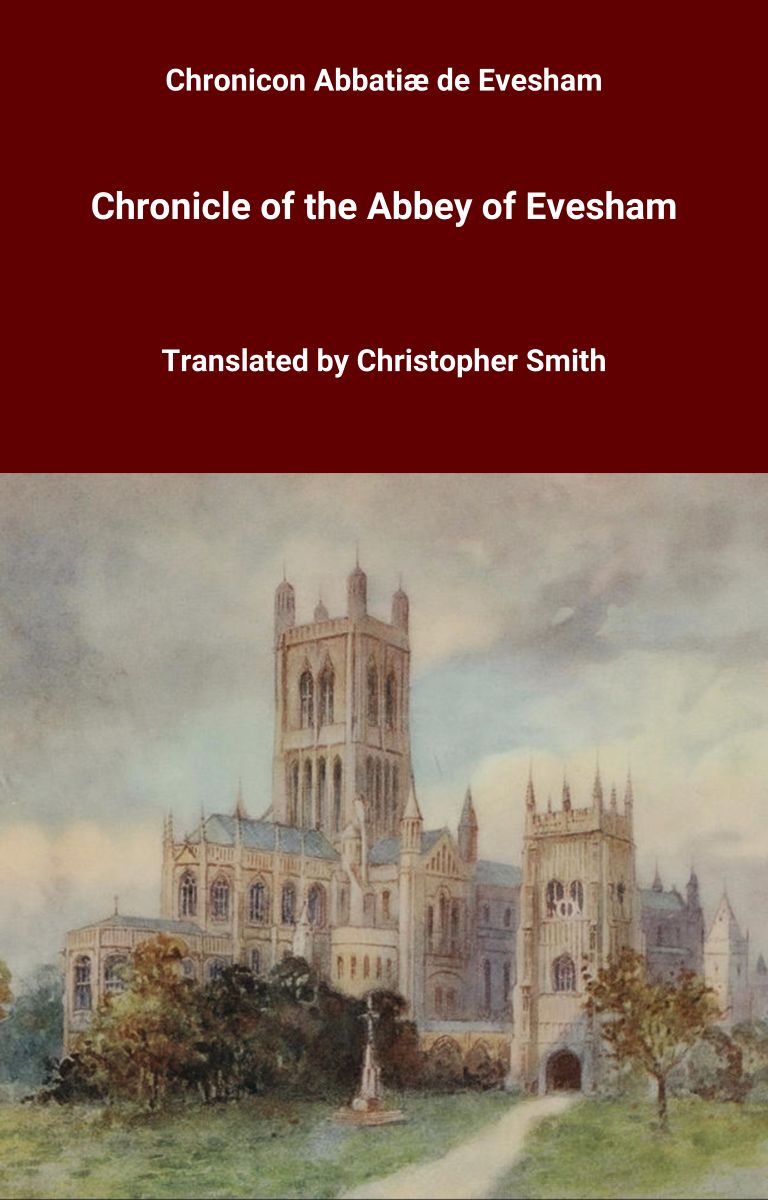
Chronicle of the Abbey of Evesham
The Chronicle of the Abbey of Evesham is a remarkable medieval history of one of England’s great Benedictine monasteries. Beginning with the abbey’s legendary and royal foundations, it traces the fortunes of Evesham through centuries of religious devotion, political conflict, legal struggle, rebuilding, reform, and royal patronage. At the heart of the chronicle is the abbey’s determination to defend its ancient liberties. Its monks record disputes with bishops, appeals to popes and papal legates, contested elections of abbots, lawsuits over lands and privileges, and the long struggle to preserve Evesham’s exemption from episcopal control. Alongside these institutional battles are vivid accounts of saints and miracles, including St Ecgwine, St Odulf and the royal martyr St Wistan, whose relics and cult formed an important part of the abbey’s identity. The chronicle also preserves a wealth of detail about everyday monastic life. It describes the building and repair of churches, cloisters, chapels, halls, mills, granges and fishponds; the acquisition of estates and revenues; the making of vestments, shrines, bells and liturgical books; and the provision of food, clothing, recreation and medical care for the monks. Successive abbots emerge not merely as religious superiors but as administrators, builders, patrons, diplomats and defenders of the community. Extending into the later Middle Ages, the narrative reflects the changing political world around Evesham, from the Norman Conquest and the Angevin kings to the Wars of the Roses and the reign of Henry VIII. The result is both a history of a single monastery and a richly detailed record of medieval English religious, legal, economic and political life. This edition offers modern readers direct access to one of the most important monastic chronicles of medieval England, revealing how the monks of Evesham understood their saints, their privileges, their rulers and their place in history.
Available at Amazon in eBook and Paperback format.
Cheshunt, Hertfordshire is in Hertfordshire.
See: Cedars Park, Cheshunt.
In 1526 Honora Denny was born to Anthony Denny [aged 24] and Joan Champernowne [aged 13] at Cheshunt, Hertfordshire. She married before 1562 her half third cousin once removed Thomas Wingfield of Kimbolton Castle and had issue.
In 1528 Anne Denny was born to Anthony Denny [aged 26] and Joan Champernowne [aged 15] at Cheshunt, Hertfordshire.
In 1530 Mary Denny was born to Anthony Denny [aged 28] and Joan Champernowne [aged 17] at Cheshunt, Hertfordshire.
In 1534 Anthony Denny was born to Anthony Denny [aged 32] and Joan Champernowne [aged 21] at Cheshunt, Hertfordshire.
Around 1534 Douglas Denny was born to Anthony Denny [aged 32] and Joan Champernowne [aged 21] at Cheshunt, Hertfordshire. She married 24th November 1562 John Dive.
In 1536 Charles Denny was born to Anthony Denny [aged 34] and Joan Champernowne [aged 23] at Cheshunt, Hertfordshire.
In or before 1537 John Carey [aged 45] and Joyce Denny [aged 30] were married at Cheshunt, Hertfordshire. They were fifth cousin once removed. He a great x 4 grandson of King Edward III of England.
In 1540 Henry Denny was born to Anthony Denny [aged 38] and Joan Champernowne [aged 27] at Cheshunt, Hertfordshire. He married 1. 1560 Honora Grey, daughter of William Grey 13th Baron Grey of Wilton and Mary Somerset Baroness Grey Wilton, and had issue 2. 1570 Elizabeth Grey and had issue.
In 1547 Edward Denny was born to Anthony Denny [aged 45] and Joan Champernowne [aged 34] at Cheshunt, Hertfordshire. He married 1583 Margaret Edgecombe and had issue.
On 10th September 1549 Anthony Denny [aged 48] died at Cheshunt, Hertfordshire.
All About History Books on Amazon
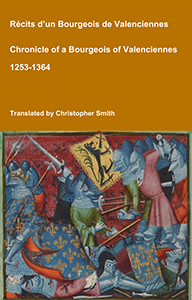
Chronicle of a Bourgeois of Valenciennes
Récits d’un bourgeois de Valenciennes aka The Chronicle of a Bourgeois of Valenciennes is a vivid 14th-century vernacular chronicle written by an anonymous urban chronicler from Valenciennes in the County of Hainaut. It survives in a manuscript that describes local and regional history from about 1253 to 1366, blending chronology, narrative episodes, and eyewitness-style accounts of political, military, and social events in medieval France, Flanders, and the Low Countries. The work begins with a chronological framework of events affecting Valenciennes and its region under rulers such as King Philip VI of France and the shifting allegiances of local nobility. It includes accounts of conflicts, sieges, diplomatic manoeuvres, and the impact of broader struggles like the Hundred Years’ War on urban life in Hainaut. Written from the perspective of a burgher (bourgeois) rather than a monastery or royal court, the chronicle offers a rare lay viewpoint on high politics and warfare, reflecting how merchants, townspeople, and civic institutions experienced the turbulence of the 13th and 14th centuries. Its narrative style combines straightforward reporting of events with moral and civic observations, making it a valuable source for readers interested in medieval urban society, regional politics, and the lived experience of war and governance in pre-modern Europe.
Available at Amazon in eBook and Paperback format.
In February 1594 John Cheney [aged 44] died at Cheshunt, Hertfordshire.
On 30th November 1725 Edward Henry Calvert [aged 24] and Margaret Meynell were married at Cheshunt, Hertfordshire.
Autobiography Simon D'Ewes. 9th January 1622. The beginning of January, bringing with it the end of the festival days, I spent in discourses, visits, and such like recreations. Upon Wednesday, the 9th day of January, came out a proclamation for the abortive dissolving of the Parliament, which gave a tincture of sadness to most men's countenances, their hope of the delivery of Clod's Church in Germany being thereby quite dashed, and the poor distressed Protestants of France left to the execution of their merciless enemies. And it fell out very strangely the next day, that the King riding or hunting at Theobald's, was cast headlong from his horse into a pond, and narrowly escaped drowning1.
Note 1. "On Wednesday his Majesty rode by coach to Theobald's to dinner, not intending, as the speech is, to return till towards Easter. After dinner, riding on horseback abroad, his hone stumbled, and catt his Majesty into the New River, where the ice brake; he fell in so that nothing but his boots were seen. Sir Richard Young [aged 42] was next, who alighted, went into the water, and lifted him out. There came much water out of his mouth and body. His Majesty rode back to Theobald's, went into a warm bed, and, as we hear, is well, which God continue," - Harl. MSS. This is also quoted by Sir Henry Ellis.
On 2nd July 1908 Henry Arthur Cadogan [aged 40] died of cancer at Temple House, Theobalds Park.