

See Painters.
Before 5th November 1851 [his father] Edward Hughes [aged 23] and [his mother] Harriet Foord [aged 25] were married. His brother [his uncle] Arthur Hughes [aged 19] would marry to her younger sister [his aunt] Tryphena Foord [aged 22]. An example of Marriage of Two Sets of Siblings.
On 5th November 1851 Edward Robert Hughes was born to Edward Hughes [aged 23] and Harriet Foord [aged 25] at 29 Wilmington Square, Clerkenwell. His uncle was the painter Arthur Hughes [aged 19].
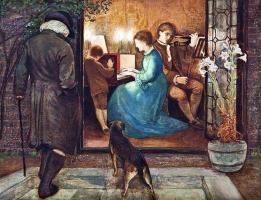
1871. Edward Robert Hughes [aged 19]. "Evensong".

1872. Edward Robert Hughes [aged 20]. "A Rainy Sunday" aka "Sabbath Morn".
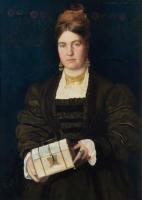
1873. Edward Robert Hughes [aged 21]. Portrait of Caroline Hill.
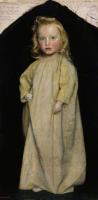
1873. [his uncle] Arthur Hughes [aged 40]. Portrait of the artists's nephew Edward Robert Hughes [aged 21].
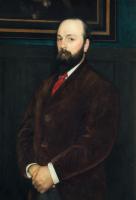
1874. Edward Robert Hughes [aged 22]. Portrait of Gray Hill.
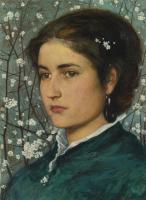
1875. Edward Robert Hughes [aged 23]. "A Young Beauty".
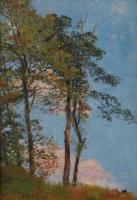
1880. Edward Robert Hughes [aged 28]. "Landscape with Trees".
In 1883 Edward Robert Hughes [aged 31] and Emily Eliza Davies [aged 37] were married.
All About History Books on Amazon
Abbot John Whethamstede’s Chronicle of the Abbey of St Albans
Abbot John Whethamstede's Register aka Chronicle of his second term at the Abbey of St Albans, 1451-1461, is a remarkable text that describes his first-hand experience of the beginning of the Wars of the Roses including the First and Second Battles of St Albans, 1455 and 1461, respectively, their cause, and their consequences, not least on the Abbey itself. His text also includes Loveday, Blore Heath, Northampton, the Act of Accord, Wakefield, and Towton, and ends with the Coronation of King Edward IV. In addition to the events of the Wars of the Roses, Abbot John, or his scribes who wrote the Chronicle, include details in the life of the Abbey such as charters, letters, land exchanges, visits by legates, and disputes, which provide a rich insight into the day-to-day life of the Abbey, and the challenges faced by its Abbot.
Available at Amazon in eBook and Paperback format.

1887. Edward Robert Hughes [aged 35]. "Portrait of a Lady". Possibly Florence Jane Helen Wellesley Baroness Nunburnholme [aged 34].

1888 to 1905. William Holman Hunt [aged 60] assisted by Edward Robert Hughes [aged 36]. "Lady of Shalott". Part 3 Stanza 5: "Out flew the web and floated wide; The mirror crack'd from side to side".

1892. Edward Robert Hughes [aged 40]. "Portrait of a Lady". Possibly Lucy Cecilia Dunn-Garnder Countess Scarborough.
Lucy Cecilia Dunn-Garnder Countess Scarborough: she was born to Cecil Mina Dunn-Gardner. In 1887 Robert Ashton and she were married. On 8th April 1899 Aldred Beresford Lumley 10th Earl Scarborough and she were married at Christ Church, Mayfair. She by marriage Countess of Scarborough. He the son of Richard Lumley 9th Earl Scarborough and Adeliza Drummond Countess Scarborough. On 24th December 1931 she died.
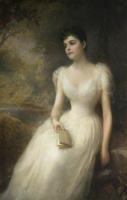
1893. Edward Robert Hughes [aged 41]. Portrait of Adele Beach Grant Countess Essex [aged 26].
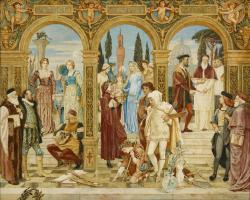
An Artist's Reminiscences Chapter 8. I was fortunate enough to have some beautiful ladies in my Florentine and Venetian groups. Miss Lisa Stillmann [aged 29] was Fiammetta. Miss Galloway of Manchester was the Paris Bordone lady. Miss Lisa Lehmann [aged 32] was my Beatrice. (Mr. Stock, R.I., the artist, was an admirable Dante.) Mr. W. A. S. Benson was Niccolo Pisano. My wife [Mary Frances Andrews [aged 48]] took the part of Laura. My little daughter was an early Italian angel. My eldest son personated the young Giotto, and I represented Cimabue myself, in the white costume in which Leighton painted him, taken from the fresco of Simone Memmi at Florence.
Sir James Linton was Veronese in my Venetian group, the late Mr. J. H. Mole, R.I., personating Titian. The late Mr. John O'Connor made an excellent Michael Angelo, and Mr. E. R. Hughes [aged 43] presented a lifelike and artistic portrait of the young Raphael.
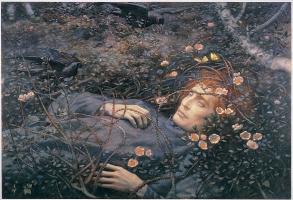
Around 1895. Edward Robert Hughes [aged 43]. "Oh, What's That in the Hollow?".

1895. Edward Robert Hughes [aged 43]. "Bertuccio's Bride".
Bertuccio uses his inheritance to ransom the body of a man from his murderers, and to free a maiden from robbers. The maiden turns out to be a princess, who makes a contract of betrothal with him before she returns to her kingdom. Bertuccio then meets a mysterious knight, with whom he changes clothes, and goes in quest of his bride. When he is returning home with her, they meet the knight again, and Bertuccio offers to divide with the knight the wedding gifts, in return for the help which the knight provided. However, the knight turns out to be the spirit of the murdered man, whose body he ransomed, and declines the gifts.
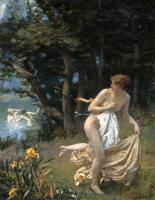
1896. Edward Robert Hughes [aged 44]. "Diana's Maidens" aka "A Coward".

1896. Edward Robert Hughes [aged 44]. "The Shrew Katherina".

1896. Edward Robert Hughes [aged 44]. "Summer Fantasy".
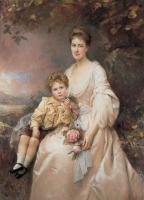
1898. Edward Robert Hughes [aged 46]. Portrait of Laura Gwendolen Galton [aged 38] and her son Alvery Douglas Frederick Trench-Gascoigne [aged 5].
Laura Gwendolen Galton: Around 1860 she was born to Douglas Strutt Galton. In 1892 Frederick Richard Thomas Trench-Gascoigne and she were married. On 10th July 1949 she died.
Alvery Douglas Frederick Trench-Gascoigne: In 1893 he was born to Frederick Richard Thomas Trench-Gascoigne and Laura Gwendolen Galton.
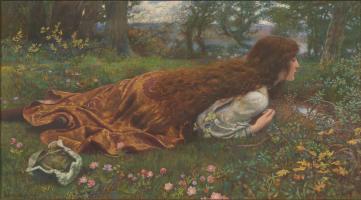
Around 1901. Edward Robert Hughes [aged 49]. "The Princess out of School".
All About History Books on Amazon
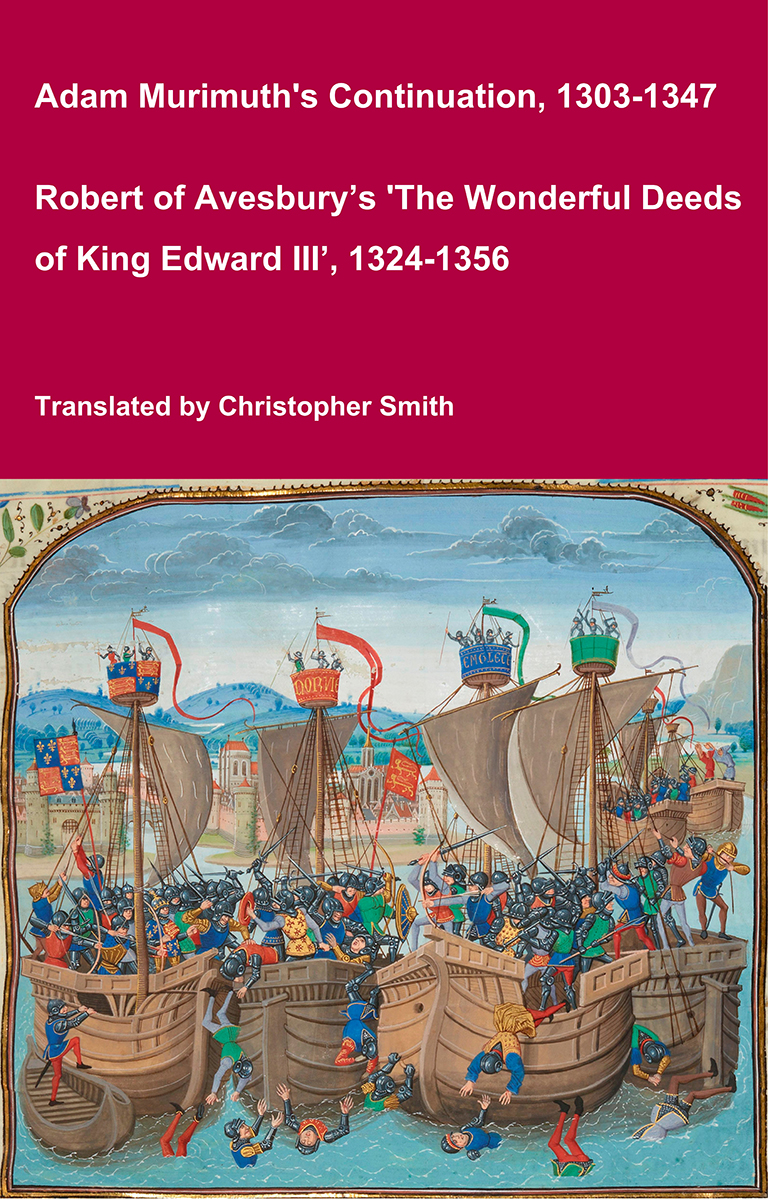
Adam Murimuth's Continuation and Robert of Avesbury’s 'The Wonderful Deeds of King Edward III'
This volume brings together two of the most important contemporary chronicles for the reign of Edward III and the opening phases of the Hundred Years’ War. Written in Latin by English clerical observers, these texts provide a vivid and authoritative window into the political, diplomatic, and military history of fourteenth-century England and its continental ambitions. Adam Murimuth Continuatio's Chronicarum continues an earlier chronicle into the mid-fourteenth century, offering concise but valuable notices on royal policy, foreign relations, and ecclesiastical affairs. Its annalistic structure makes it especially useful for establishing chronology and tracing the development of events year by year. Complementing it, Robert of Avesbury’s De gestis mirabilibus regis Edwardi tertii is a rich documentary chronicle preserving letters, treaties, and official records alongside narrative passages. It is an indispensable source for understanding Edward III’s claim to the French crown, the conduct of war, and the mechanisms of medieval diplomacy. Together, these works offer scholars, students, and enthusiasts a reliable and unembellished account of a transformative period in English and European history. Essential for anyone interested in medieval chronicles, the Hundred Years’ War, or the reign of Edward III.
Available at Amazon in eBook and Paperback format.
1902. Edward Robert Hughes [aged 50]. "Dream Idyll (A Valkyrie)".

1905. Edward Robert Hughes [aged 53]. "Wings of the Morning".
1905. Edward Robert Hughes [aged 53]. "Midsummer's Eve".

1907. Edward Robert Hughes [aged 55]. "Heart of Snow".
1911. Edward Robert Hughes [aged 59]. "Summer Fantasy".
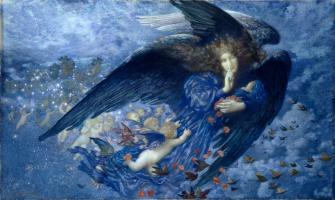
1912. Edward Robert Hughes [aged 60]. "Night with her Train of Stars".
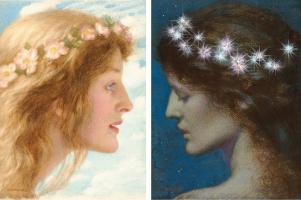
Before 1914. Edward Robert Hughes [aged 62]. "Day, and Night".

Before 1914. Edward Robert Hughes [aged 62]. "Reverie".
Before 1914. Edward Robert Hughes [aged 62]. "Idle Tears".
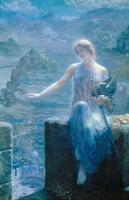
Before 1914. Edward Robert Hughes [aged 62]. "The Valkyrie's Vigil".
All About History Books on Amazon
Abbot John Whethamstede’s Chronicle of the Abbey of St Albans
Abbot John Whethamstede's Register aka Chronicle of his second term at the Abbey of St Albans, 1451-1461, is a remarkable text that describes his first-hand experience of the beginning of the Wars of the Roses including the First and Second Battles of St Albans, 1455 and 1461, respectively, their cause, and their consequences, not least on the Abbey itself. His text also includes Loveday, Blore Heath, Northampton, the Act of Accord, Wakefield, and Towton, and ends with the Coronation of King Edward IV. In addition to the events of the Wars of the Roses, Abbot John, or his scribes who wrote the Chronicle, include details in the life of the Abbey such as charters, letters, land exchanges, visits by legates, and disputes, which provide a rich insight into the day-to-day life of the Abbey, and the challenges faced by its Abbot.
Available at Amazon in eBook and Paperback format.
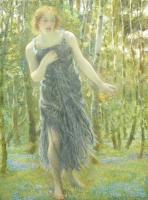
Before 1914. Edward Robert Hughes [aged 62]. "The Nymph Callisto".
On 23rd April 1914 Edward Robert Hughes [aged 62] died at his home 3 Romeland after an operation for appendicitis. He was buried at Hatfield Road Cemetery, St Albans. His funeral in St Albans Cathedral [Map] was the largest ever held there, attended by his many friends, fellow artists, and pupils from his life-drawing class in London.
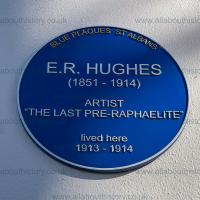
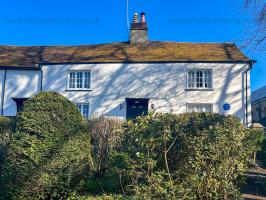
On 8th February 1925 [his former wife] Emily Eliza Davies [aged 79] died. She was buried at Hatfield Road Cemetery, St Albans.
Grandfather: Edward Hughes
Father: Edward Hughes
Grandfather: Robert Foord
Mother: Harriet Foord