

Jean de Waurin's Chronicle of England Volume 6 Books 3-6: The Wars of the Roses
Jean de Waurin was a French Chronicler, from the Artois region, who was born around 1400, and died around 1474. Waurin’s Chronicle of England, Volume 6, covering the period 1450 to 1471, from which we have selected and translated Chapters relating to the Wars of the Roses, provides a vivid, original, contemporary description of key events some of which he witnessed first-hand, some of which he was told by the key people involved with whom Waurin had a personal relationship.
Available at Amazon in eBook and Paperback format.
Windsor, Berkshire is in Berkshire.
Windsor, Berkshire [Map] and Eton [Map] are separated by the River Thames.
Chronicon ex Chronicis by Florence and John of Worcester. 23rd May 1070. On Whitsunday [3rd May] the king [aged 42], at Windsor, Berkshire [Map], gave the archbishopric of York to the venerable Thomas, canon of Bayeux, and the bishopric of Winchester to his chaplain, Walkeline. On the following day, by the king's command, Ermenfrid, bishop of Sion, held a synod, [the other legates] the cardinals John and Peter having returned to Rome. At this synod, Ethelric, bishop of Sussex, was uncanonically deposed; and although he was guilty of no crime, the king soon afterwards placed him in confinement at Marlborough, Wiltshire [Map]; several abbots were also deprived. After these depositions, the king gave the bishopric of East-Anglia to Arfast, and the bishopric of Sussex to Stigand79, who were both his chaplains; which Stigand transferred his see to Chichester, the chief city in his diocese: the king also gave abbeys to some Norman monks. The archbishop of Canterbury being degraded, and the archbishop of York dead, Walkeline was, by the king's command, consecrated by the same Ermenfrid, bishop of Sion, on the octave of Whitsunday [30th May].
Note 79. This first bishop of Chichester must not be confounded with the archbishop of the same name.
In 1120 Gerald Windsor was born at Windsor, Berkshire [Map].
In 1251 Gwladus verch Llewelyn "Dark Eyed" Aberffraw [aged 56] died at Windsor, Berkshire [Map].

On 17th December 1399 the conspirators met at Abbey House Westminster Abbey [Map] including Thomas Blount [aged 47], Thomas Despencer 1st Earl Gloucester [aged 26], Thomas Holland 1st Duke Surrey [aged 25], John Holland 1st Duke Exeter [aged 47], Ralph Lumley 1st Baron Lumley [aged 39], John Montagu 3rd Earl Salisbury [aged 49], Edward 2nd Duke of York 1st Duke Albemarle [aged 26], Bernard Brocas [aged 45]. They plotted to capture King Henry IV of England [aged 32] at a Tournament in Windsor, Berkshire [Map] on the Feast of Epiphany hence the Epiphany Rising.
On 25th March 1483 King Edward IV of England [aged 40] returned to Westminster [Map] from Windsor, Berkshire [Map]. A few days later he became sufficiently unwell to add codicils to his will, and to have urged reconciliation between William Hastings 1st Baron Hastings [aged 52] and Thomas Grey 1st Marquess Dorset [aged 28]; it isn't clear what the cause of the friction between the two men was although it appears well known that Hastings resented the Woodville family.
On 20th June 1527 Thomas Wharton 1st Baron Wharton [aged 32] was knighted at Windsor, Berkshire [Map].
In 1530 the Prior of Llanthony Priory [Map] sent cheese, carp and baked lampreys to Henry VIII [aged 38] at Windsor, Berkshire [Map].


Chronicle of Edward Hall [1496-1548]. Around October 1536. In this time of insurrection, and in the rage of hurley burley, even when the King's army and the rebels were ready to join, the King's banner being displayed, and the King's Majesty then living at Winsore [Map], there was a butcher dwelling within five mile of Wynsore [Map] which caused a priest to preach that all such which took part with the Yorkshiremen whom he named God's people, did fight and defend God's quarrel and farther the said butcher in selling of his meat, one did bid him a less price of a sheep then he made of it, he answered nay by God's soul, I had rather the good fellows of the north had it among them and a score more of the best I have: this priest and butcher were accused to the King's Majesty's Counsell, of the treasons abovesaid on the Monday in the morning and the same day were both sent for, which confessed there treasons and so according to the law marshal they were adjudged to die: and so the said Monday they were both examined, condemned and hanged, the bocher was hanged on a new pair of gallows set at the bridge end before the castle gate: and the priest was hanged on a tree at the foot of Winsore [Map] bridge.
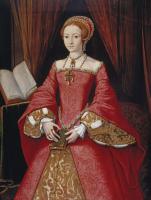
Henry Machyn's Diary. 20th May 1554. The xx day of May my lade Elsabeth [aged 20] the quen('s) [aged 38] syster cam owt of the Towre, and toke her barge at Towre warfe [Map], and so to Rychemond [Map], and from thens unto Wyndsor [Map], and so to Wodstoke [Map].




On 9th July 1603 Amyas Bampfylde of Poltimore and North Molton [aged 43] was knighted at Windsor, Berkshire [Map].
On 3rd April 1630 Christopher Villiers 1st Earl Anglesey [aged 37] died at Windsor, Berkshire [Map]. He was buried at St George's Chapel, Windsor Castle [Map]. His son Charles succeeded 2nd Earl Anglesey, 2nd Baron Villiers of Daventry.

John Evelyn's Diary. 8th June 1654.. my wife [aged 19] and I set out in a coach and four horses, in our way to visit relations of hers in Wiltshire, and other parts, where we resolved to spend some months. We dined at Windsor [Map], saw the Castle and Chapel of St. George, where they have laid our blessed Martyr, King Charles, in the vault just before the alter. The church and workmanship in stone is admirable. The Castle itself is large in circumference; but the rooms melancholy, and of ancient magnificence. The keep, or mount, hath, besides its incomparable prospect, a very profound well; and the terrace toward Eton, with the park, meandering Thames, and sweet meadows, yield one of the most delightful prospects. That night, we lay at Reading. Saw my Lord Craven's [aged 46] house at Causam [Caversham], now in ruins, his goodly woods felling by the Rebels.
In 1664 William Heveningham [aged 60] was imprisoned at Windsor, Berkshire [Map].
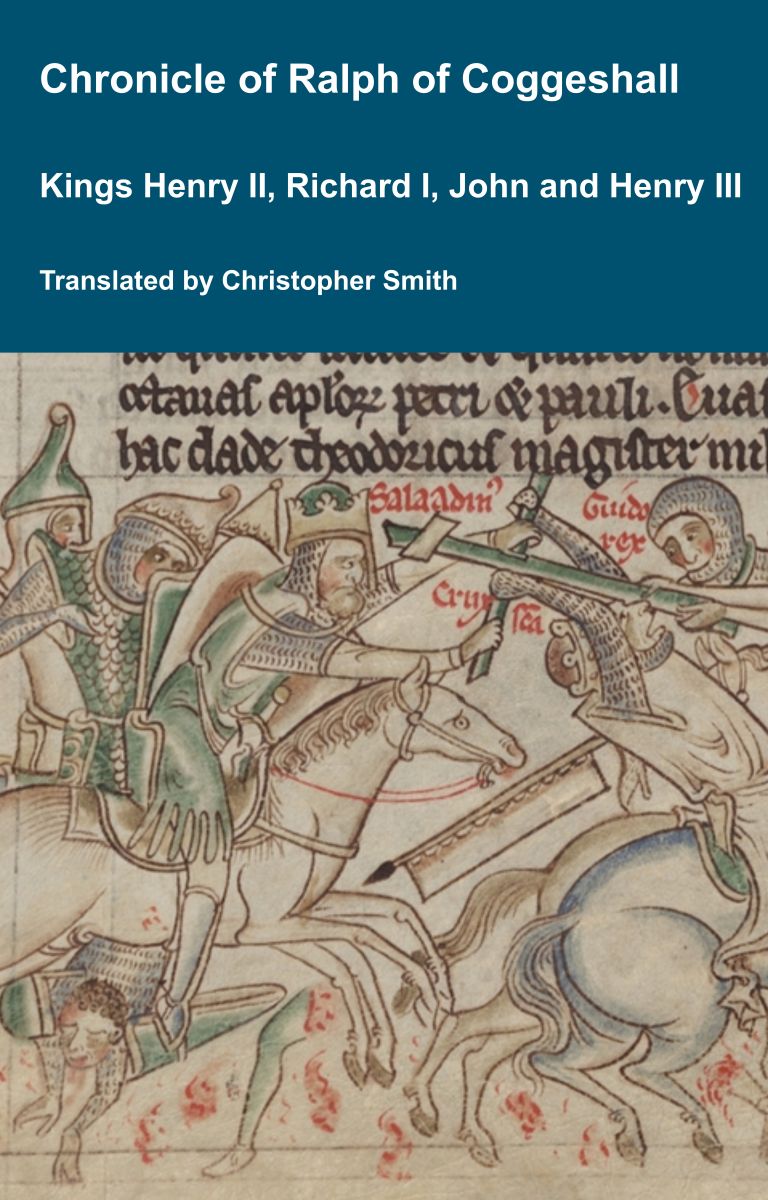
Chronicle of Abbot Ralph of Coggeshall
The Chronicle of Abbot Ralph of Coggeshall (Chronicon Anglicanum) is an indispensable medieval history that brings to life centuries of English and European affairs through the eyes of a learned Cistercian monk. Ralph of Coggeshall, abbot of the Abbey of Coggeshall in Essex in the early 13th century, continued and expanded his community’s chronicle, documenting events from the Norman Conquest of 1066 into the tumultuous reign of King Henry III. Blending eyewitness testimony, careful compilation, and the monastic commitment to record-keeping, this chronicle offers a rare narrative of political intrigue, royal power struggles, and social upheaval in England and beyond. Ralph’s work captures the reigns of pivotal figures such as Richard I and King John, providing invaluable insights into their characters, decisions, and the forces that shaped medieval rule. More than a simple annal, Chronicon Anglicanum conveys the texture of medieval life and governance, making it a rich source for scholars and readers fascinated by English history, monastic authorship, and the shaping of the medieval world.
Available at Amazon in eBook and Paperback format.
Samuel Pepys' Diary. 25th February 1666. Lord's Day. My wife up between three and four of the clock in the morning to dress herself, and I about five, and were all ready to take coach, she and I and Mercer, a little past five, but, to our trouble, the coach did not come till six. Then with our coach of four horses I hire on purpose, and Leshmore to ride by, we through the City to Branford [Map] and so to Windsor, Berkshire [Map], Captain Ferrers overtaking us at Kensington, being to go with us, and here drank, and so through, making no stay, to Cranborne, about eleven o'clock, and found my Lord and the ladies at a sermon in the house; which being ended we to them, and all the company glad to see us, and mighty merry to dinner. Here was my Lord, and Lord Hinchingbrooke [aged 18], and Mr. Sidney [aged 15], Sir Charles Herbert [aged 26], and Mr. Carteret [aged 25], my Baroness Carteret [aged 64], my Lady Jemimah, and Lady Slaning.
John Evelyn's Diary. 15th July 1669. Having two days before had notice that the University intended me the honor of Doctorship, I was this morning attended by the beadles belonging to the Law, who conducted me to the Theater, where I found the Duke of Ormond [aged 58] (now Chancellor of the University) with the Earl of Chesterfield [aged 35] and Mr. Spencer [aged 40] (brother to the late Earl of Sunderland). Thence, we marched to the Convocation House, a convocation having been called on purpose; here, being all of us robed in the porch, in scarlet with caps and hoods, we were led in by the Professor of Laws, and presented respectively by name, with a short eulogy, to the Vice-Chancellor, who sat in the chair, with all the Doctors and Heads of Houses and masters about the room, which was exceedingly full. Then, began the Public Orator his speech, directed chiefly to the Duke of Ormond, the Chancellor; but in which I had my compliment, in course. This ended, we were called up, and created Doctors according to the form, and seated by the Vice-Chancellor among the Doctors, on his right hand; then, the Vice-Chancellor made a short speech, and so, saluting our brother Doctors, the pageantry concluded, and the convocation was dissolved. So formal a creation of honorary Doctors had seldom been seen, that a convocation should be called on purpose, and speeches made by the Orator; but they could do no less, their Chancellor being to receive, or rather do them, this honor. I should have been made Doctor with the rest at the public Act, but their expectation of their Chancellor made them defer it. I was then led with my brother Doctors to an extraordinary entertainment at Doctor Mewes's, head of St John's College, Oxford University, and, after abundance of feasting and compliments, having visited the Vice-Chancellor and other Doctors, and given them thanks for the honor done me, I went toward home the 16th, and got as far as Windsor, Berkshire [Map], and so to my house the next day.


 Become a Member via our Buy Me a Coffee page to read more.
John Evelyn's Diary. 20th August 1670. At Windsor, Berkshire [Map] I supped with the Duke of Monmouth [aged 21]; and, the next day, invited by Lord Arlington [aged 52], dined with the same Duke and divers Lords. After dinner my Lord and I had a conference of more than an hour alone in his bedchamber, to engage me in the History. I showed him something that I had drawn up, to his great satisfaction, and he desired me to show it to the Treasurer [aged 40].


On 14th July 1674 Pelham Humfrey [aged 27] died in Windsor, Berkshire [Map].
John Evelyn's Diary. 22nd July 1674. I went to Windsor, Berkshire [Map] with my wife [aged 39] and son [aged 19] to see my daughter Mary [aged 9], who was there with my Lady Tuke and to do my duty to his Majesty [aged 44]. Next day, to a great entertainment at Sir Robert Holmes's [aged 52] at Cranbourne Lodge, Windsor, in the Forest; there were his Majesty, the Queen [aged 35], Duke [aged 40], Duchess [aged 15], and all the Court. I returned in the evening with Sir Joseph Williamson [aged 40], now declared Secretary of State. He was son of a poor clergyman somewhere in Cumberland, brought up at Queen's College, Oxford, of which he came to be a fellow; then traveled with ... and returning when the King was restored, was received as a clerk under Mr. Secretary Nicholas. Sir Henry Bennett [aged 56] (now Lord Arlington) succeeding, Williamson is transferred to him, who loving his ease more than business (though sufficiently able had he applied himself to it) remitted all to his man Williamson; and, in a short time, let him so into the secret of affairs, that (as his Lordship himself told me) there was a kind of necessity to advance him; and so, by his subtlety, dexterity, and insinuation, he got now to be principal Secretary; absolutely Lord Arlington's creature, and ungrateful enough. It has been the fate of this obliging favorite to advance those who soon forgot their original. Sir Joseph was a musician, could play at Jeu de Goblets, exceedingly formal, a severe master to his servants, but so inward with my Lord O'Brien [aged 32], that after a few months of that gentleman's death, he married his widow [aged 34], who, being sister and heir of the Duke of Richmond, brought him a noble fortune. It was thought they lived not so kindly after marriage as they did before. She was much censured for marrying so meanly, being herself allied to the Royal family.
John Evelyn's Diary. 28th June 1678. I went to Windsor, Berkshire [Map] with my Lord Chamberlain [aged 60] (the castle now repairing with exceeding cost) to see the rare work of Verrio [aged 42], an incomparable carving of Gibbons [aged 30].
John Evelyn's Diary. 25th August 1678. I went this evening with my Lord Duke [aged 50] to Windsor, Berkshire [Map], where was a magnificent Court, it being the first time of his Majesty's [aged 48] removing thither since it was repaired.


John Evelyn's Diary. 22nd July 1679. Dined at Clapham, Surrey, at Sir D. Gauden's; went thence with him to Windsor, Berkshire [Map], to assist him in a business with his Majesty [aged 49]. I lay that night at Eton College [Map], the Provost's lodgings (Dr. Craddock), where I was courteously entertained.
John Evelyn's Diary. 23rd July 1679. I went to Clifden [Map], that stupendous natural rock, wood, and prospect, of the Duke of Buckingham's [aged 51], and buildings of extraordinary expense. The grots in the chalky rocks are pretty: it is a romantic object, and the place altogether answers the most poetical description that can be made of solitude, precipice, prospect, or whatever can contribute to a thing so very like their imaginations. The stand, somewhat like Frascati as to its front, and on the platform is a circular view to the utmost verge of the horizon, which, with the serpenting of the Thames, is admirable. The staircase is for its materials singular; the cloisters, descents, gardens, and avenue through the wood, august and stately; but the land all about wretchedly barren, and producing nothing but fern. Indeed, as I told his Majesty [aged 49] that evening (asking me how I liked Clifden) without flattery, that it did not please me so well as Windsor, Berkshire [Map] for the prospect and park, which is without compare; there being but one only opening, and that narrow, which led one to any variety; whereas that of Windsor is everywhere great and unconfined.


John Evelyn's Diary. 23rd July 1679. To Court: after dinner, I visited that excellent painter, Verrio [aged 43], whose works in fresco in the King's [aged 49] palace, at Windsor, Berkshire [Map], will celebrate his name as long as those walls last. He showed us his pretty garden, choice flowers, and curiosities, he himself being a skillful gardener.
John Evelyn's Diary. 13th September 1679. To Windsor, Berkshire [Map], to congratulate his Majesty [aged 49] on his recovery; I kissed the Duke's [aged 45] hand, now lately returned from Flanders to visit his brother the King, on which there were various bold and foolish discourses, the Duke of Monmouth [aged 30] being sent away.


Chronicle of Walter of Guisborough
A canon regular of the Augustinian Guisborough Priory, Yorkshire, formerly known as The Chronicle of Walter of Hemingburgh, describes the period from 1066 to 1346. Before 1274 the Chronicle is based on other works. Thereafter, the Chronicle is original, and a remarkable source for the events of the time. This book provides a translation of the Chronicle from that date. The Latin source for our translation is the 1849 work edited by Hans Claude Hamilton. Hamilton, in his preface, says: 'In the present work we behold perhaps one of the finest samples of our early chronicles, both as regards the value of the events recorded, and the correctness with which they are detailed; Nor will the pleasing style of composition be lightly passed over by those capable of seeing reflected from it the tokens of a vigorous and cultivated mind, and a favourable specimen of the learning and taste of the age in which it was framed.'
Available at Amazon in eBook and Paperback format.
John Evelyn's Diary. 24th July 1680. Went with my wife [aged 45] and daughter to Windsor, Berkshire [Map], to see that stately court, now near finished. There was erected in the court the King [aged 50] on horseback, lately cast in copper, and set on a rich pedestal of white marble, the work of Mr. Gibbons [aged 32], at the expense of Toby Rustate, a page of the back stairs, who by his wonderful frugality had arrived to a great estate in money, and did many works of charity, as well as this of gratitude to his master, which cost him £1,000. He is very simple, ignorant, but honest and loyal creature.
John Evelyn's Diary. 2nd September 1680. I had an opportunity, his Majesty [aged 50] being still at Windsor, Berkshire [Map], of seeing his private library at Whitehall [Map], at my full ease. I went with expectation of finding some curiosities, but, though there were about 1,000 volumes, there were few of importance which I had not perused before. They consisted chiefly of such books as had from time to time been dedicated, or presented to him; a few histories, some Travels and French books, abundance of maps and sea charts, entertainments and pomps, buildings and pieces relating to the navy, some mathematical instruments; but what was most rare, were three or four Romish breviaries, with a great deal of miniature and monkish painting and gilding, one of which is most exquisitely done, both as to the figures, grotesques, and compartments, to the utmost of that curious art. There is another in which I find written by the hand of King Henry VII., his giving it to his dear daughter, Margaret, afterward Queen of Scots, in which he desires her to pray for his soul, subscribing his name at length. There is also the process of the philosophers' great elixir, represented in divers pieces of excellent miniature, but the discourse is in high Dutch, a MS. There is another MS. in quarto, of above 300 years old, in French, being an institution of physic, and in the botanical part the plants are curiously painted in miniature; also a folio MS. of good thickness, being the several exercises, as Themes, Orations, Translations, etc., of King Edward VI., all written and subscribed by his own hand, and with his name very legible, and divers of the Greek interleaved and corrected after the manner of schoolboys' exercises, and that exceedingly well and proper; with some epistles to his preceptor, which show that young prince to have been extraordinarily advanced in learning, and as Cardan, who had been in England affirmed, stupendously knowing for his age. There is likewise his journal, no less testifying his early ripeness and care about the affairs of state.
Become a Member via our Buy Me a Coffee page to read more.

John Evelyn's Diary. 16th June 1683. I went to Windsor, Berkshire [Map], dining by the way at Chiswick, at Sir Stephen Fox's [aged 56], where I found Sir Robert Howard (that universal pretender), and Signor Verrio [aged 47], who brought his draught and designs for the painting of the staircase of Sir Stephen's new house.
On 6th August 1686 Thomas Rawlinson [aged 39] was knighted at Windsor, Berkshire [Map].

On 2nd September 1688 Robert Vyner 1st Baronet [aged 57] died at Windsor, Berkshire [Map]. Baronet Vyner of London extinct.
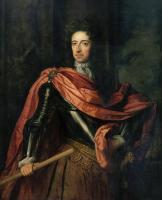
John Evelyn's Diary. 13th December 1688. The Prince of Orange [aged 38] is advanced to Windsor, Berkshire [Map], is invited by the King [aged 55] to St. James's [Map], the messenger sent was the Earl of Faversham [aged 47], the General of the Forces, who going without trumpet, or passport, is detained prisoner by the Prince, who accepts the invitation, but requires his Majesty to retire to some distant place, that his own guards may be quartered about the palace and city. This is taken heinously and the King goes privately to Rochester, Kent [Map]; is persuaded to come back; comes on the Sunday; goes to mass, and dines in public, a Jesuit saying grace (I was present).


John Evelyn's Diary. 8th July 1701. My grandson [aged 19] went to Sir Simon Harcourt [aged 39], the Solicitor General, to Windsor, Berkshire [Map], to wait on my Lord Treasurer. There had been for some time a proposal of marrying my grandson to a daughter [aged 26] of Mrs. Boscawen [aged 58], sister of my Lord Treasurer [aged 56], which was now far advanced.
John Evelyn's Diary. 1st January 1704. The King of Spain [aged 20] landing at Portsmouth, Hampshire [Map], came to Windsor, Berkshire [Map], where he was magnificently entertained by the Queen [aged 38], and behaved himself so nobly, that everybody was taken with his graceful deportment. After two days, having presented the great ladies, and others, with valuable jewels, he went back to Portsmouth, Hampshire [Map], and immediately embarked for Spain.


On 19th December 1712 John Berkeley 4th Viscount Fitzhardinge [aged 62] died at Windsor, Berkshire [Map]. Viscount Fitzhardinge of Berehaven in Kerry, Baronet Berkeley of Bruton in Somerset extinct. He was buried in Westminster Abbey [Map].
On 29th January 1733 Henry Godolphin [aged 84] died at Windsor, Berkshire [Map]. He was buried at Eton College Chapel [Map].
On 2nd September 1880 Hugh Richard Lawrie Sheppard was born in Windsor, Berkshire [Map].
In July 1691 William Chiffinch [aged 89] died at Philiberts' Manor Holyport Bray, Windsor.
On 1st September 1466 John Norreys [aged 66] died. He was buried in the Norreys Chapel St Michael's Church, Bray.
On 6th November 1396 Hugh Hastings 7th Baron Hastings [aged 46] died at Eton [Map]. His son Edward [aged 14] de jure 8th Baron Hastings. Muriel Dynham Baroness Hastings [aged 14] by marriage Baroness Hastings.
Abbot John Whethamstede’s Chronicle of the Abbey of St Albans
Abbot John Whethamstede's Register aka Chronicle of his second term at the Abbey of St Albans, 1451-1461, is a remarkable text that describes his first-hand experience of the beginning of the Wars of the Roses including the First and Second Battles of St Albans, 1455 and 1461, respectively, their cause, and their consequences, not least on the Abbey itself. His text also includes Loveday, Blore Heath, Northampton, the Act of Accord, Wakefield, and Towton, and ends with the Coronation of King Edward IV. In addition to the events of the Wars of the Roses, Abbot John, or his scribes who wrote the Chronicle, include details in the life of the Abbey such as charters, letters, land exchanges, visits by legates, and disputes, which provide a rich insight into the day-to-day life of the Abbey, and the challenges faced by its Abbot.
Available at Amazon in eBook and Paperback format.
Samuel Pepys' Diary. 26th February 1666. This being done, to the King's house, and to observe the neatness and contrivance of the house and gates: it is the most romantique castle that is in the world. But, Lord! the prospect that is in the balcone in the Queene's [aged 56] lodgings, and the terrace and walk, are strange things to consider, being the best in the world, sure. Infinitely satisfied I and my wife with all this, she being in all points mightily pleased too, which added to my pleasure; and so giving a great deal of money to this and that man and woman, we to our taverne, and there dined, the Doctor with us; and so took coach and away to Eton [Map], the Doctor [aged 60] with me.


Samuel Pepys' Diary. 26th February 1666. Before we went to Chappell this morning, Kate Joyce, in a stage-coach going toward London, called to me. I went to her and saluted her, but could not get her to stay with us, having company. At Eton [Map] I left my wife in the coach, and he and I to the College, and there find all mighty fine. The school good, and the custom pretty of boys cutting their names in the struts of the window when they go to Cambridge, by which many a one hath lived to see himself Provost and Fellow, that had his name in the window standing. To the Hall, and there find the boys' verses, "De Peste"; it being their custom to make verses at Shrove-tide. I read several, and very good ones they were, and better, I think, than ever I made when I was a boy, and in rolls as long and longer than the whole Hall, by much. Here is a picture of Venice hung up given, and a monument made of Sir H. Wotton's giving it to the College.
On 29th June 1794 George Waldegrave 5th Earl Waldegrave [aged 9] drowned whilst swimming in the River Thames near Eton [Map]. His brother John [aged 8] succeeded 6th Earl Waldegrave, 7th Baron Waldegrave Chewton Somerset, 10th Baronet Waldegrave of Hever Castle.

Before 1825. Myles Birket Foster. "The Old Cottage at Eton [Map]".
Windsor, Berkshire [Map] and Eton [Map] are separated by the River Thames.
On 18th December 1862 Prince Albert Saxe Coburg Gotha was buried at Frogmore Estate Home Park Windsor, Berkshire.


On 16th March 1861 Marie Luise Victoria Saxe Coburg Gotha Duchess Kent and Strathearn [aged 74] died. She was buried at Duchess of Kent's Mausoleum Frogmore Estate Home Park Windsor, Berkshire.


On 8th January 1864 Prince Albert Victor "Eddy" Windsor was born to King Edward VII of the United Kingdom [aged 22] and Alexandra of Denmark Queen Consort England [aged 19] at Frogmore House, Windsor.


On 28th October 1928 Rupert Teck was reburied at Royal Burial Ground Frogmore Estate Home Park Windsor, Berkshire.
On 30th August 1968 Princess Marina Glücksburg Duchess Kent [deceased] funeral was held at St George's Chapel, Windsor Castle [Map]. She was buried in the Royal Burial Ground Frogmore Estate Home Park Windsor, Berkshire.


Chronicle of Walter of Guisborough
A canon regular of the Augustinian Guisborough Priory, Yorkshire, formerly known as The Chronicle of Walter of Hemingburgh, describes the period from 1066 to 1346. Before 1274 the Chronicle is based on other works. Thereafter, the Chronicle is original, and a remarkable source for the events of the time. This book provides a translation of the Chronicle from that date. The Latin source for our translation is the 1849 work edited by Hans Claude Hamilton. Hamilton, in his preface, says: 'In the present work we behold perhaps one of the finest samples of our early chronicles, both as regards the value of the events recorded, and the correctness with which they are detailed; Nor will the pleasing style of composition be lightly passed over by those capable of seeing reflected from it the tokens of a vigorous and cultivated mind, and a favourable specimen of the learning and taste of the age in which it was framed.'
Available at Amazon in eBook and Paperback format.
On 28th May 1972 King Edward VIII of the United Kingdom [aged 77] died. He was buried at Royal Burial Ground Frogmore Estate Home Park Windsor, Berkshire.
On 16th April 1981 George Cambridge 2nd Marquess Cambridge [aged 85] died without male issue at Little Abington. He was buried at Royal Burial Ground Frogmore Estate Home Park Windsor, Berkshire. Marquess Cambridge extinct.
On 29th May 1994 Princess May of Teck [aged 88] died. She was buried at Royal Burial Ground Frogmore Estate Home Park Windsor, Berkshire.

On 1st October 1914 Alfred Jerome Vassalli [aged 33] died of pneumonia contracted while in camp at Slough (or possibly of wounds) at the King Edward VII Hospital, Windsor. He was buried at St Michael's Church, Muncaster [Map]. He was Corporal with the 2nd King Edward's Horse.
The Times. 4th February 1905.
We have to announce the death of Florence, Marchioness of Hastings [aged 64], wife of Sir George Chetwynd, Bart., which took place on Sunday morning at Long Walk House, Windsor, after a few days' illness. The funeral will take place at Grendon, Atherstone, on Thursday next, at 2 o'clock.


Runnymede [Map] is a water-meadow alongside the River Thames.
On 15th June 1215 King John of England [aged 48] met with his Baron's at Runnymede [Map] where he agreed to the terms of the Magna Carta which attempted to reduce the King's authority through political reform. Those who signed as surety included:
Roger Bigod 2nd Earl Norfolk [aged 71]
his son Hugh Bigod 3rd Earl Norfolk [aged 33]
Henry Bohun 1st Earl Hereford [aged 39]
Richard Clare 3rd Earl Hertford [aged 62]
his son Gilbert Clare 5th Earl Gloucester 4th Earl Hertford [aged 35]
William "The Younger" Marshal 2nd Earl Pembroke [aged 25]
William Mowbray 6th Baron Thirsk [aged 42]
Saer Quincy 1st Earl Winchester [aged 45]
Robert Ros [aged 43], Richard Percy 5th Baron Percy Topcliffe [aged 45]
Robert de Vere 3rd Earl of Oxford [aged 50]
Eustace Vesci [aged 46]
John Fitzrobert 3rd Baron Warkworth [aged 25]
John Lacy Earl Lincoln [aged 23].
William de Albini [aged 64], Geoffrey Mandeville 2nd Earl Essex [aged 24]
William Forz 3rd Earl Albemarle
William Hardell
William Huntingfield
William Llanvallei
William Malet 1st Baron Curry Mallet
Roger Montbegon, Richard Montfichet
Geoffrey Saye [aged 60] signed as surety the Magna Carta.
Ranulf de Blondeville Gernon 6th Earl Chester 1st Earl Lincoln [aged 45] witnessed.
Become a Member via our Buy Me a Coffee page to read more.
The Times. 24th December 1861. Yesterday, with little of the pomp and pageantry of a State ceremonial, but with every outward mark of respect, and with all the solemnity which befitted his high station and his public virties, the mortal remains of the husband [deceased] of our Queen [aged 42] were interred in the last resting-place of England's Sovereigns-the Chapel Royal of St. George's, Windsor [Map]. By the express desire of his Royal Highness the funeral was of the plainest and most private character; but in the Chapel, to do honour to his obsequies, were assembled all the chiefest men of the State, and throughout England, by every sign of sorrow and imourning, the nation manifested its sense of the loss wlhich it has sustaiined. Windsor itself wore an aspect of the most profound gloom. Every shop was closed and every blind drawn down. The streets were silent and almost deserted, and all wvho appeared abroad were dressed in the deepest mourning. The great bell of Windsor Castle [Map] clanged out: its doleful sound at intervals from an early hour, and minute bells were tolled also at St. John's Church. At the parish church of Cleover and at St. John's there were services in the morning and: aternoon, and the day was observed throughout the Royal borough in the strictest manner. The weather was in character with the occasion, a chill, damp air, with a dull leaden sky above, increased the gloom which hung over all. There were but few visitors in the town, for the procession did not pass beyond the immediate precincts of the Chapel and Castle, and none were admitted except those connected with the Castle andi their friends. At 11 o'clock a strong force of the A division took possession of the avenues leading to the Chapel Royal, and from that time only the guests specially invited and those who were to take part in the ceremonial were allowed to pass. Shortly afterwards a of honour of the Grenadier Guards, of which regiment his Royal Highness was Colonel, with the colonrs of the regiment shrouded in crape, marched in and took up its position before the principal entrance to the Chapel Royal. Another guard of honour from the same regiment was also on duty in the Quadrangle at the entrance to the State apartments. They were speedily followed by a squadron of the 2nd Life Guards dismounted, and by two companies of the Fusileer Guards, who were drawn uip in single file along each side of the road by which the procession was to pass, from the Norman gateway to the Chapel door. The officers wore the deepest military mourning-scarves, sword-knots, and rosettes of crape. In the Rome Park was stationed a troop of Horse Artillery, which commenced firing minute guns at the end of the Long Walk, advancing slowly until it reached the Castle gates just at the close of the ceremony. The Ministers, the officers of the Queen's Household, and other distinguished personages who had been honoured with an invitation to attend the ceremonial, reached Windsor a special train from Paddington. They were met by carriages provided for them at the station, and began to arrive at the Chapel Royal soon after 11 o'clock. The Earl of Derby [aged 62], the Archbishop of Canterbury [aged 81], Earl Russell [aged 69], and the Duke of Buccleuch were among the first to make their appearance, and as they alighted at the door of the Chapel they were received by the proper officials and conducted to the seats appointed for them in the Choir. In the Great Quadrangle were drawn up the hearse and the mourning coaches, and, all the preparations having been completed within the Castle, the procession began to be formed shortly before 12 o'clock. It had been originally intended that it should leave the Castle by the St. George's gate, and, proceeding down Castle-hill, approach the Chapel through Henry VII.'s gateway, but at a late hour this arrangement was changed, and the shorter route by the Norman gatewvay was chosen.
The crowd which had gradually collected at the foot of Castle-hill, owing to this change, saw nothing of the procession but the empty carriages as they returned to the Castle after setting down at the Chapel. The few spectators who were fortunate enough to gain admission to the Lower Ward stood in a narrow fringe along the edge of the flags in front of the houses of the Poor Knights, and their presence was the only exception to the strict privacy of the ceremonial. The Prince of Wales [aged 20] and the other Royal mourners assembled in the Oak Room, but did not form part of the procession. They were conveyed to the Chapel in private carriages before the coffin was placed in the hearse, passing through St. George's gatewayinto the Lower Ward. In the first carriage were the Prince of Wales, Prince Arthur [aged 11], and the Duke of Saxe Coburg [aged 8]. The Crown Prince of Prussia [aged 30], the Duke of Brabant [aged 26], and the Count of Flanders [aged 24] followed in the next; and in the others were the Duke de Nemours [aged 47], Prince Louis of Hesse [aged 24], Prince Edward of Saxe-Weimar [aged 38], and the Maharajah Dhuleep Singh, with the gentlemen of their respective suites. Scarcely had they alighted at the door of Wolsey's Chapel, from which they were conducted through the Chapter Room to the door of the Chapel Royal to be in readiness to meet the coffin, when the first minute gun fired in tlhe distance, and the rattle of the troops reversing arms announced that the procession had started, and exactly at 12 o'clock the first mourning coach moved from under the Norman gateway. First came nine mourning coaches, each drawn by four horses, conveying the Physicians, Equerries, and other members of the household of the late Prince. In the last were the Lord Steward [aged 63] (Earl St. Germans), the Lord Chamberlain [aged 56] (Viscount Sidney), and the Master of the Horse [aged 57] (the Marquis of Ailesbury). The carriages and trappings were of the plainest description; the horses had black velvet housings and feathers, but on the carriages there, were no feathers or ornaments of any kind. The mourning coaches were followed by one of the Queen's carriages, drawn by six horses, and attended by servants in State liveries, in which was the Groom of the Stole [aged 26], Earl Spencer, carrying the crown, and a Lord of the Bedchamber, Lord George Lennox, carrying the baton, sword, and hat of his late Royal Highness. Next escorted by a troop of the 2nd Life Guards, came the hearse, drawn by six black horses, which, like the carriages, was quite plain and unornamented. On the housings of the horses and on the sides of the hearse were emblazoned the scutcheons of Her Majesty and of the Prince, each surmounted by a, crown, the Prince's arms being in black and Her Majesty's in white. The procession was closed by four State carriages.
Become a Member via our Buy Me a Coffee page to read more.
On 9th April 2005 Prince Charles [aged 56] and Queen Consort Camilla Shand [aged 57] were married at Windsor Guildhall. He the son of Philip Mountbatten Duke Edinburgh [aged 83] and Queen Elizabeth II of the United Kingdom [aged 78].