


The History of William Marshal was commissioned by his son shortly after William’s death in 1219 to celebrate the Marshal’s remarkable life; it is an authentic, contemporary voice. The manuscript was discovered in 1861 by French historian Paul Meyer. Meyer published the manuscript in its original Anglo-French in 1891 in two books. This book is a line by line translation of the first of Meyer’s books; lines 1-10152. Book 1 of the History begins in 1139 and ends in 1194. It describes the events of the Anarchy, the role of William’s father John, John’s marriages, William’s childhood, his role as a hostage at the siege of Newbury, his injury and imprisonment in Poitou where he met Eleanor of Aquitaine and his life as a knight errant. It continues with the accusation against him of an improper relationship with Margaret, wife of Henry the Young King, his exile, and return, the death of Henry the Young King, the rebellion of Richard, the future King Richard I, war with France, the death of King Henry II, and the capture of King Richard, and the rebellion of John, the future King John. It ends with the release of King Richard and the death of John Marshal.
Available at Amazon in eBook and Paperback format.
Merged with the Crown Dukedoms of England is in Dukedoms of England.
On 30th September 1399 King Henry IV of England [aged 32] became King of England usurping the throne of his cousin Richard II [aged 32] and Richard's heir, the seven year old Edmund Mortimer 5th Earl of March [aged 7] who was descended from Edward III's second son Lionel of Antwerp Duke of Clarence. This second usurption was to have far reaching consequences since it subsequently became the descent by which the House of York claimed precedence over the House of Lancaster being one of the causes of the Wars of the Roses. Duke Lancaster, Duke of Hereford, Earl Derby, Earl Lancaster and Earl of Leicester merged with the Crown.
Ralph Neville 1st Earl of Westmoreland [aged 35] was appointed Earl Marshal.


On 9th April 1413 King Henry V of England [aged 26] was crowned V King of England by Archbishop Thomas Fitzalan aka Arundel [aged 60] at Westminster Abbey [Map]. Duke Lancaster merged with the Crown.
Richard Beauchamp 13th Earl Warwick [aged 31] was appointed Lord High Steward. Henry Fitzhugh 3rd Baron Fitzhugh [aged 55] was appointed Constable of England.
On 28th June 1461 King Edward IV of England [aged 19] was crowned IV King of England. Duke York, Earl March, Earl of Ulster, Earl Cambridge, Baron Mortimer of Wigmore merged with the Crown. Cardinal Thomas Bourchier [aged 43] was assisted by Archbishop William Booth [aged 73] at Westminster Abbey [Map].
On 21st April 1509 King Henry VII of England and Ireland [aged 52] died of tuberculosis at Richmond Palace [Map]. His son Henry VIII [aged 17] succeeded VIII King of England. Duke York and Earl Chester merged with the Crown.


On 27th March 1625 King James I of England and Ireland and VI of Scotland [aged 58] died at Theobalds House, Hertfordshire. His son Charles [aged 24] succeeded I King England Scotland and Ireland. Duke York merged with the Crown.


On 6th February 1685 King Charles II of England Scotland and Ireland [aged 54] died around midday the morning at Whitehall Palace [Map] attended by Charles Scarburgh [aged 69]. His brother James [aged 51] succeeded II King England Scotland and Ireland. Duke York merged with the Crown. Mary of Modena Queen Consort England Scotland and Ireland [aged 26] by marriage Queen Consort England Scotland and Ireland. His brother King James II of England Scotland and Ireland, William Chiffinch [aged 83], Richard Mason [aged 52] and Archbishop William Sancroft [aged 68] were present.
The time of his death reported differtently by different contemporary sources: John Evelyn's Diary 'at halfe an houre after eleven in the morning', the Anonymous Letter to Reverend Roper: 'Yesterday noon', Ambassador Barillon's Account: 'and at noon, he died without any struggle or convulsion.' and Charl;es Scarburgh's Manuscript: 'He expired on February the Sixth soon after noon'.
According to Mark Bryant's book "Private Lives: Curious Facts about the Famous and Infamous' King Charles is supposed to have said the much repested phrase: "I am sorry, gentlemen, for being such a time a-dying." This doesn't appear to come from a contemporary source. Macaulay in his 'History of England', writing much later has "He apologised to those who had stood round him all night for the trouble which he had caused. He had been, he said, a most unconscionable time dying; but he hoped that they would excuse it." Perhaps the nearest we can find in a contemporary source is the Anonymous Letter to Reverend Roper: 'and beg the pardon of the standers by, and those that were employed about him, that he gave them so much trouble: that he hoped the work was almost over...'
On 25th October 1760 King George II of Great Britain and Ireland [aged 76] died at Kensington Palace. His grandson George [aged 22] succeeded III King Great Britain and Ireland. Duke Cambridge merged with the Crown.
On 26th June 1830 King George IV of Great Britain and Ireland [aged 67] died. His brother William [aged 64] succeeded IV King Great Britain and Ireland. Duke Clarence and St Andrews merged with the Crown. Queen Adelaide of England [aged 37] by marriage Queen Consort England.
He was attended by Jonathan Wathen Phipps aka Waller 1st Baronet [aged 60].
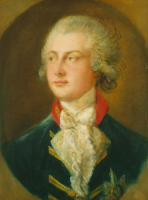


On 20th January 1936 King George V of the United Kingdom [aged 70] died. His son Edward [aged 41] succeeded VIII King of the United Kingdom. Duke York merged with the crown.

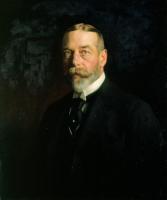


On 11th December 1936 King Edward VIII of the United Kingdom [aged 42] abdicated VIII King of the United Kingdom. King George VI of the United Kingdom [aged 40] succeeded VI King of the United Kingdom. Duke York merged with the Crown.