

The True Chronicles of Jean le Bel Volume 1 Chapters 1-60 1307-1342
The True Chronicles of Jean le Bel offer one of the most vivid and immediate accounts of 14th-century Europe, written by a knight who lived through the events he describes, and experienced some of them first hand. Covering the early decades of the Hundred Years’ War, this remarkable chronicle follows the campaigns of Edward III of England, the politics of France and the Low Countries, and the shifting alliances that shaped medieval warfare. Unlike later historians, Jean le Bel writes with a strong sense of eyewitness authenticity, drawing on personal experience and the testimony of fellow soldiers. His narrative captures not only battles and sieges, but also the realities of military life, diplomacy, and the ideals of chivalry that governed noble society. A key source for Jean Froissart, Le Bel’s chronicle stands on its own as a compelling and insightful work, at once historical record and literary achievement. This translation builds on the 1905 edition published in French by Jules Viard, adding extensive translations from other sources Rymer's Fœdera, the Chronicles of Adam Murimuth, William Nangis, Walter of Guisborough, a Bourgeois of Valenciennes, Geoffrey le Baker of Swinbroke and Richard Lescot to enrich the original text and Viard's notes.
Available at Amazon in eBook and Paperback format.
01 Jun is in June.
1346 Commencement of the Crécy Campaign
1533 Coronation of Anne Boleyn
1536 Marriage of Henry VIII and Jane Seymour
1536 Execution of George Boleyn, Brereton, Norris, Smeaton and Weston
1610 Prince Henry invested as Prince of Wales and Earl Chester
On 1st June 1134 Geoffrey Plantagenet Count Nantes was born to Geoffrey Plantagenet Duke Normandy (age 20) and Empress Matilda (age 32) at Rouen, France [Map] or Argentan. He a grandson of King Henry I "Beauclerc" England.
On 1st June 1146 Ermengarde Anjou Duchess Brittany and Aquitaine (age 78) died.
On 1st June 1283 the Treaty of Rheinfelden was the first treaty to determine the Habsburg order of succession.
On 1st June 1300 Thomas of Brotherton 1st Earl Norfolk was born to King Edward I of England (age 60) and Margaret of France Queen Consort England (age 21) at Brotherton [Map]. Coefficient of inbreeding 3.81%. He married (1) before 12th October 1326 Alice Hales Countess Norfolk and had issue (2) before 4th April 1336 his half second cousin twice removed Mary Brewes Countess Norfolk.
 Chronicle of Walter of Guisborough. "Clement, bishop, servant of the servants of God, for a perpetual record. The most holy Roman Church, ever solicitous for the care of all the faithful, diligently watches and strives for the salvation of souls, and takes timely measures to guard against the dangers that threaten them; and with regard to those things from which it foresees such dangers to arise, it carefully and usefully seeks to forestall them with suitable remedies. Some time ago, our predecessor of happy memory, Pope Benedict XII, for the well-being and reform of the Order of Black Monks, issued certain statutes and ordinances, which he commanded and willed to be observed in that Order for all future time, further decreeing various spiritual censures and penalties against those who transgressed them. But since, as we have learned from the testimony of many trustworthy prelates and other reputable members of the same Order, who earnestly desire its peace and prosperity, both from the report made to us and from actual experience, these penalties and censures prove to be excessively severe, and often become a snare to souls (for many prelates and their subjects in that Order are said to have incurred sentences of excommunication, suspension, and interdict, as well as disabilities, irregularities, and other penalties, because of the transgression of those statutes and ordinances), the said prelates, together with several abbots and many other members of the same Order, having appeared personally before us on this account, have humbly entreated that we might be pleased to provide, in this matter, an appropriate remedy for the condition of their Order and the salvation of souls. We therefore, wishing, with a father's affection, to provide for the salvation of the souls of the members of this Order (of which we ourselves are also alumni and professed members) and to guard against future spiritual dangers; and considering that subjects are guided into the way of righteousness not only by severity of penalties but also by the gentleness of leniency, by the authority of the Apostolic See, hereby suspend all and every penalty and sentence, both spiritual and temporal, contained in the said statutes and ordinances. We absolve, from the aforesaid sentences, all those who, because of transgressing the statutes and ordinances, may in any way have incurred them, and who humbly petition us to be absolved; this includes the prelates and other persons of the Order who have appeared before us as aforesaid. We also mercifully dispense them from any stain of irregularity or incapacity which they may have incurred by daring to celebrate divine offices or to engage in them while bound by those sentences, or from any other penalty incurred on account of such transgressions. Furthermore, we grant to the confessors chosen for this purpose by the abbots and other absent prelates of the same Order, whose subjects have incurred these penalties and sentences by transgressing the statutes, the power, by Apostolic authority, to absolve those abbots and prelates from such penalties and sentences according to the form of the Church, and to dispense with them in regard to any irregularity or incapacity thereby contracted. And likewise we grant to those same abbots and prelates, whether they themselves have been bound by the said sentences and penalties and have been absolved, or whether they have not been so bound, the full and free power, by the authority aforesaid, to absolve, from all penalties and sentences incurred under the said statutes, all and each of their subjects, and to dispense with them in the same way regarding any irregularity or incapacity contracted from these causes or their occasions, imposing salutary penance and such other measures as they shall see to be expedient. Let no man therefore, etc. Given at Avignon, the Kalends of June [1st June 1342], in the first year of our pontificate."
"Clemens episcopus servus servorum Dei, ad perpetuam rei memoriam. Sacrosancta Romana ecclesia, de cunctorum fidelium cura sollicita, circa animarum salutem sedulo vigilat et intendit ac salubriter obviat periculis animarum eorundem, et super hiis ex quibus ipsa pericula prospicit provenire, opportunis remediis studet salubriter et utiliter prævenire. Dudum siquidem felicis recordationis Benedictus papa XII prædecessor noster, pro statu et reformatione religionis Nigrorum Monachorum, nonnulla statuta et ordinationes edidit, quæ mandavit et voluit in eadem religione perpetuis futuris temporibus observari, in transgressores eorum diversas sententias variasque pœnas spirituales nihilominus promulgando. Verum quia, sicut habetur multorum prælatorum et aliorum professorum fidedignorum et proborum virorum religionis ejusdem, zelantium statum ejus prosperum et tranquillum, expositio facta nobis, et experientia facti docet, hujusmodi pœnæ et sententiæ periculosæ nimium fore dignoscuntur et frequenter præparant laqueum animabus: cum multi prælati et eorum subditi religionis ejusdem asserantur excommunicationum, suspensionum et interdictorum sententias, necnon inhabilitatum et irregularitatum maculas, aliasque poenas, propter transgressionem statutorum et ordinationum hujusmodi incurrisse; prædicti et nonnulli abbates et quamplures alii ejusdem religionis professores, in nostra præsentia personaliter propter ea constituti, nobis humiliter supplicarunt ut suo et aliarum personarum religionis ejusdem statui, et animarum saluti in hac parte de opportuno providere remedio dignaremur. Nos igitur, personarum dictæ religionis, cujus etiam nos alumni et professores existimus, animarum saluti affectu paterno consulere et animarum obviare periculis in futurum salubriter intendentes; considerantes etiam quod nedum exaggeratione pœnarum quinimmo immansuetudine et dulcedine lenitatis subditi in viam rectitudinis et justitiæ diriguntur, omnes et singulas pœnas et sententias, spirituales et temporales, in ordinationibus et statutis contentas, apostolica auctoritate præsentium tenore suspendimus. Omnes qui temporales pœnas quas prælati et personæ prædicti per ordinationes et statuta nobis, ut præmittitur, constitutos, ac petentes a nobis ab eisdem sententiis, si quas, occasione transgressionis statutorum et ordinationum hujusmodi, quomodolibet incurrerint, humiliter se absolvi, a sententiis absolvimus memoratis, cum prælatis et personis prædictis, præsentibus, ut præmittitur, nobis etiam super irregularitatis macula et inhabilitate, si qua pro eo quia sic ligati prædictis sententiis præsumpserunt celebrare divina, vel se immiscere eisdem, seu pœnam alias, occasione transgressionis statutorum ipsorum quomodolibet incurrerunt misericorditer dispensantes, et nihilominus confessoribus quos abbates et prælati prædicti absentes religionis ejusdem, qui pœnas et sententias statutorum et ordinationum hujusmodi per transgressionem eorum incurrerunt, elegerunt in hac parte, ipsos abbates et prælatos, a pœnis et sententiis hujusmodi auctoritate apostolica, juxta formam ecclesiæ, absolvendi, et cum eis super irregularitate et inhabilitatibus, præmissorum occasione contractis, auctoritate prædicta dispensandi, et tam eisdem, ligatis prædictis sententiis atque pœnis, post absolutionem hujusmodi, quam aliis abbatibus et prælatis dictæ religionis, præfatis pœnis et sententiis non ligatis, ex nunc universos et singulos eorum subditos ab omnibus pœnis et sententiis quas per constitutiones et statuta hujusmodi incurrisse noscuntur, auctoritate prædicta absolvendi, et cum ipsis subditis super irregularitate et inhabilitatibus, si quas ex præmissis vel eorum occasione, forsitan contraxerunt, auctoritate prædicta modo simili dispensandi, injunctis eis salutari pœnitentia, et aliis quæ viderint expedire, plenam et liberam, tenore præsentium, concedimus potestatem. Nulli ergo omnino homini, etc. Datum Avinione kalendas Junii, pontificatus nostri anno primo."
 Chronicle of Geoffrey le Baker of Swinbroke [-1360]. Afterwards, the lord king hastened his passage into Normandy,1 where his fleet was awaiting him at Portsmouth and Porchester. Thus, accompanied by the earls of Northampton, Arundel, Warwick, and the lord of Harcourt, as well as the earls of Huntingdon, Oxford, and Suffolk, the bishop of Durham, and Sir William de Kyllesby, a cleric, each of whom brought with him a large force of armed men and archers, the king remained at the aforementioned ports from the calends of June [1st June] until the fifth day of July, awaiting a wind, slow but favourable. At last, with a fleet of a thousand ships, pinnaces, and transports, they began to sail in remarkable fashion. The royal council was kept secret: indeed, even the shipmasters, having left port, did not know where the fleet was to be directed, but were ordered to follow the admiral. However, on that same day, the king sent messengers from his own ship to the other vessels, already far from shore, instructing their captains to follow the admiral and steer toward the port of Hogue in Normandy.
Postea dominus rex suum passagium in Neustriam properavit, ipsum apud Portusmutham et Porcestriam navigio expectante. Igitur cum comitibus Norhamptonie, Arundelie, Warwykie, et domino de Harecourt, Huntyndonie, Oxenfordie, et Suffolchie, et episcopo Dunelmensi, et domino Willelmo de Kyllesby, clerico, quorum quilibet copiosam massam armatorum atque sagittariorum secum deduxit, dominus rex ad predictos portus a kalendis Iunii usque ad quintum diem mensis Iulii ventum tardum set prosperum expectavit. Tandem cum mille navibus, spinaciis, atque cariariis inceperunt velificare mirabiliter. Secretum tenebatur tunc concilium regale; magistri nempe navium adhuc de portu amoti nescierunt quo deberent naves dirigere, set iussi sequebantur amirallum. Attamen eodem die rex de sua nave emisit nuncios ad cetera vasa, iam longe ab litore distancia, precipiens eorum rectoribus ut sequerentur amirallum, ad portum de Hoggis in Normannia naves directuri.
Note 1. Stow Annales 377.
On 1st June 1418 Bishop Benedict Nichols received possession of the temporalities at St David's Cathedral, Pembrokeshire [Map].
On 1st June 1449 Muriella Keith Duchess Albany (age 91) died.
Patent Rolls. 1st June 1453. Grant to Jasper, earl of Pembroke (age 21), in tail male, of the lordships and manors of Whitley and Warpeaden, co. Surrey, with all appurtenances; in lieu of a grant to him and Edmund, earl of Richemurd, of the lordship snd manor of Whitley for twelve years by letters patent dated 28 March last, surrendered. By K. etc.
On 1st June 1455 Anne of Savoy was born to Amadeus "Happy" Savoy IX Duke Savoy (age 20) and Yolande Valois Duchess Savoy (age 20). She married 11th September 1478 her fourth cousin Frederick IV King Naples, son of Ferdinand I King Naples and Isabella Clermont Queen Consort Naples, and had issue.
Adam Murimuth's Continuation and Robert of Avesbury’s 'The Wonderful Deeds of King Edward III'
This volume brings together two of the most important contemporary chronicles for the reign of Edward III and the opening phases of the Hundred Years’ War. Written in Latin by English clerical observers, these texts provide a vivid and authoritative window into the political, diplomatic, and military history of fourteenth-century England and its continental ambitions. Adam Murimuth Continuatio's Chronicarum continues an earlier chronicle into the mid-fourteenth century, offering concise but valuable notices on royal policy, foreign relations, and ecclesiastical affairs. Its annalistic structure makes it especially useful for establishing chronology and tracing the development of events year by year. Complementing it, Robert of Avesbury’s De gestis mirabilibus regis Edwardi tertii is a rich documentary chronicle preserving letters, treaties, and official records alongside narrative passages. It is an indispensable source for understanding Edward III’s claim to the French crown, the conduct of war, and the mechanisms of medieval diplomacy. Together, these works offer scholars, students, and enthusiasts a reliable and unembellished account of a transformative period in English and European history. Essential for anyone interested in medieval chronicles, the Hundred Years’ War, or the reign of Edward III.
Available at Amazon in eBook and Paperback format.
Chronicle of Edward Hall [1496-1548]. 1st June 1522. The morrow after, these princes removed to Sytingborne [Map], and the next day to Rochester [Map], where the Bishop (age 52) received them with the whole Covent, and on Monday they came to Gravesende [Map] by one of the clock, where they took their barges, and there were thirty barges appointed, for the strangers, and so by six of the clock they landed at Grenewiche [Map], the same Monday, the second day of June, where the Emperor (age 22) was of the King newly welcomed, and al his nobility, and at the hall door the Queen (age 36) and the Prynces (age 6), and all the Ladies received and welcomed him: and he asked the Queen blessing (for that is the fashion of Spain, between the aunt and the nephew) the Emperor had great joy to see the Queen his aunt, and in especially his young cousin German [first-cousin] the lady Mary. The Emperor was lodged in the King's lodging, which was so richly hanged, that the Spaniards wondered at it, and specially at the rich cloth of estate: nothing lacked that might be gotten, to cheer the Emperor and his lords, and all that came in his company, were highly feasted.


The Love Letters of Henry VIII to Anne Boleyn. Letter 2. Henry VIII (age 35) to Anne Boleyn (age 26).
Though it is not fitting for a gentleman to take his lady in the place of a servant, yet, complying with your desire, I willingly grant it you, if thereby you can find yourself less uncomfortable in the place chosen by yourself, than you have been in that which I gave you, thanking you cordially that you are pleased still to have some remembrance of me. 6. n. A. I de A. o. na. v. e. z1. Henry R.
Note 1. The meaning of "6. n. A. I de A. o. na. v. e. z" is unknown.


On 1st June 1533 the six months pregnant Queen Anne Boleyn of England (age 32) was crowned Queen Consort England by Archbishop Thomas Cranmer (age 43) at Westminster Abbey [Map]. See Coronation of Anne Boleyn.
John de Vere 15th Earl of Oxford (age 62) bore the Crown. Henry Grey 1st Duke of Suffolk (age 16) carried the Salt. Margaret Wotton Marchioness Dorset (age 46) rode in the procession. William Coffin (age 38) was appointed Master of the Horse. Robert Radclyffe 1st Earl of Sussex (age 50) served as Lord Sewer. Henry Parker (age 20) and William Coffin were knighted. Thomas Berkeley 6th Baron Berkeley (age 28), Thomas Stanley 2nd Baron Monteagle (age 26) and Henry Capell (age 27) were created Knight of the Bath. Margaret Wotton Marchioness Dorset rode in the procession. Arthur Hopton (age 44) attended.
Thomas More (age 55) refused to attend. Shortly thereafter, More was charged with accepting bribes, but the charges had to be dismissed for lack of any evidence.
Anne Braye Baroness Cobham (age 32) was the attendant horsewoman.
Charles Wriothesley (age 25) attended.


The Noble Triumphant Coronacyon of Quene Anne. 1st June 1532. Also all the pavements of the cyte from Charyncrosse to the towre was ouer couerde and caste with grauell. And the same Saturday beyng Whytson euen the mayre with all the aldermen and the craftes of the cyte prepared aray in a good order to stande and receyue her and with rayles for euery crafte to stande and leane from prease of people. The mayre mette the quenes grace at her comyng forthe of ye towre and all his bretherne and aldermen standyng in chepe. And upon the same Saturday the quene came forth from the towre towarde Westmynster in goodly aray as here after foloweth. She passed the stretes first with certayne straungers then horses trapped with blewe sylke and them selves in blewe veluet with white fethers acompanyed two and two. Lykewise squiers knights barons and baronetts knightes of the bath clothed in vyolet garmentes edged with armyns lyke iuges. Than folowyng the juges of the lawe and abbottes. All these estats were to the nombre of two hundred cople with more two and two accompanyed. And than folowed bysshops two and two: and tharch bysshops of Yorke and Caterbury the ambassaders of Fraunce and Venyce the lorde mayre with a mace mayster garter the kyng of heraudes and the kings cote armour upon him with the offycers of armes apoyntyng euery estate in their degre. Than folowed two aunciente knights with olde fassion hattes poudred on their heedes disgysed who dyd represent the duke of Normandy and of Guyen after an olde custome: the lorde constable of Englande for the tyme beyng the duke of Suffolke the lorde Willyam Hawarde the deputie for the tyme to the lorde marshall duke of Norfolke. Than folowed the qucnes grace in her lytter costly and rychly besene with a ryche canape ouer her which bare the lordes of the fyue portes: after her folowyng the mayster of her horse with a whyte spare palfray ledde in his hande rychly apoynted. Than folowed her noble ladyes of estate rychly clothed in crymosyn poudred with armyns to the nobre of twelve. Than the mayster of the garde with the garde on both sydes of the strets in good aray and all the constables well besene in veluet and damaske cotes with whyte stanes in their handes settynge euery man in araye and orner in the stretes untyll she came to Westminster. Than folowed four ryche charyottes with ladyes of honour after than folowed thirty ladyes and gentylwomen r(ich)ly1 garnysshcd and so the seruyng men after them. And a(s)2 t she was departed from ye towne a meruaylous great shot of gonnes was there fyred and shot. So this moste noble company passed till her grace came to fanchurch where was a pagent fayre and semly with certayne chyldren which saluted her grace with great honour and prayse after a goodly fassyon: and so passed forthe to Grase churche where was a ryght costly pagent of Apollo with the nyne muses amonge the mountaynes syttyng on the mount of Pernasus and euery of them hauynge theyr instruments and apparayle acordyng to the descryption of poets and namely of Uirgyll with many goodly verses to her great prayse and honour. And so she passed forth through gracyous3 strete unto leaden hall where was buylded a sumptuous and a costly pagent in maner of a castell wherein was fasshyoned an heuenly roufe and under it vpon a grene was a roote or a stocke whereout spronge a multytude of whyte roses and reed curyously wrought so from the heuenly roufe descended a whyte faucon and lighted upon the said stocke and roote and incontynent descended an angell with goodly armony hauynge a close crowne bytwene his handes and set it on the faucons heed: and on the said flour sate saynt Anne in the hyest place on that one syde her progeny with scripture that is to wete the thre Marys with theyr issue that is to vnderstande: Mary the mother of Christ Mary Solome the mother4 of Zebedee with the two chyldren of them also Mary Cleophe with her husbande Alphee with their four chyldren on the other syde with other poetycall verses sayd and songe with a balade in englisshe to her great prayse (and)5 honour and to al her progeny also. And so she passed (for)th5 from thence through cornehill and at the condyt was a sumptuous pagent of the thre graces: and at the comynge of the quenes grace a poete declared the nature of all those thre ladyes and gave hye prayses vnto the quene. And after his preamble fynysshed every lady partyculer spake great honour and hye prayse of the quenes grace: And so she passed forth with all her nobles tyll she came in chepe and at the great condyt was made a costly fountayne whereout ranne whyte wyne claret and reed great plenty all that after noone: and ther was great melody with speches. And so passed forthe through chepe to the standarde whiche was costly and sumptuously garnisshed with gold and asure with armes and stories wher was great armony and melody: and so passed she forth by the crosse in chepe whiche was newe garnisshed and so through chepe towarde the lesser condyt. And in the mydwaye bytwene the recorder of London receyved her afore the Aldermen with great reuerence and honour salutynge her grace with a louyng and humble preposycion presentynge her grace with a ryche and costly purse of golde and in it a thousande marke in golde coyne gyuen vnto her as a free gyfte of honour: to whom she gaue great thankes bothe with herte and mynde. And so her grace passed a lytell further and at the lesser condyt was a costly and a ryche pagent where as was goodly armonye of musyke and other mynstrels with syngyng: And within that pagent was fyue costly seates wherin was set these fyue personages that is to wete Juno Pallas Mercury and Venus and Parys hauyng a ball of golde presentyng it to her grace with certayne verses of great honour and chyldren syngyng a balade to her grace and prayse to all her ladyes and so passed forth to Poules gate where was a proper and a sumptuous pagent that is to wete ther sat three fayre ladyes virgyns costly arayde with a fayre rounde trone ouer their heedes where aboute was written this. Regina Anna prospere precede et regna that is in englysshe Quene Anne prospere precede and reygne. The lady that sate in the myddes hauynge a table of golde in her hande wrytten with letters of asure. Ueni arnica coronaberis. Come my loue thou shallbe crowned. And two aungels hauyng a close crowne of golde bytwene their handes. And the lady on the ryght hande had a table of syluer wherein was writte. Domine dirige gressos meos. Lorde god dyrecte my wayes. The other on the lyfte hande had in another table of syluer written thus. Confide in domino. Trust in god. And vnder theyr fete was a longe rol wherin was written this. Regina Anna nouum regis de sanguine natum cum paries populis aurea secla tuis. Quene Anne whan you shalte beare a newe sone of the kynges bloode there shalbe a golden worlde vnto thy people. And so the ladyes caste ouer her heede a multytude of wafers with rose leaues and about the wafers were written with letters of gold this posay6. And so her grace passed forth into Poules chyrchyarde and at the eest ende of the chyrch agaynst the schole was a great scaffblde whereon stode the nombre of two hundred chyldren well befene who receyued with poetes verses to her noble honour whan they had fynisshed she sayd Amen with ioyful smylyng countenaunce and so passed forth thrugh the longe chyrchyarde and so to Ludgate whiche was costly and sumptuously garnysshed with golde colours and asure with swete armony of ballades to her greate prayse and honour with dyuerse swete instrumentes. And thus her grace came thorowe the cyte with great honour and royaltye and passed thorowe Flete strete tyll she came to the Standarde and condyth where was made a fayre toure with foure tourrettes with fanes there within great plenty of swete instrumentes with chyldren syngyng the standarde of mason warke costly made with ymages and aungels costly gylted with golde and asure with other colours and dyuerse fortes of armes costly set out shall there contynue and remayne and within the standarde a vyce with a chyme. Also there ranne out of certayne small pypes great plenty of wyne all that afternoone. And so her grace passed through the cyte to temple barre and so to Charyng crosse and so thorowe Westmynster into Westmynster hall where that was well and rychly hanged with cloth of Arras with a meruaylous ryche cupborde of plate and there was a voyde7 of spyce plates and wyne. And that done the quenes grace withdrewe her in to the whyte hall for that nyght and so to Yorke place by water.
Note 1. In the original copy, in the British Museum, the corner is torn off after the letter "r" but the three missing letters are of course "ich."
Note 2. The missing letter is as evidently "s."
Note 3. Gracechurch Street.
Note 4. Wife.
Note 5. Torn away.
Note 6. The posy is not given in the original.
Note 7. Collation.
Chronicle of Edward Hall [1496-1548]. 1st June 1533. Sonday being Whit Sunday the first day of June and the day of her Coronation.
On Sunday the Mayor clad in crimson velvet and with his collar and all the Aldermen and Sheriffs in Scarlet and the counsel of the city took their barge at the Crane by seven of the clock and came to Westminster where they were welcomed and brought into the hall by Master Treasurer and other of the King's house, and so gave their attendance till the Queen should come forth. Between eight and nine she came into the Hall and stood under the clothe of estate, and then came in the King's Chapel and the monks of Westminster all in rich copes and many Bishops and Abbots in copes and mitres which went into the midst of the hall, and there stood a season. Then was there a ray clothe spread from the Queen's standing in the hall through the palace and sanctuary, which was railed on both sides to the high Altar of Westminster. After that the ray clothe was cast, the Officers of Armes appointed the order accustomed. First went gentlemen, then esquires, then knights, then the Aldermen of the city in their cloaks of scarlet, after them the Judges in their mantles of scarlet and coifs. Then followed the Knights of the Bathe being no Lords, every man having a white lace on his left sleeve. Then followed Barons and Viscounts in their parliament robes of scarlet. After them came Earles, Marquesses and Dukes in their robes of estate of crimson velvet furred with ermine powdered according to their degrees. After them came the Lord Chancellor in a robe of scarlet open before bordered with lettice: after him came the King's Chapel and the monks solemnly singing with procession, then came Abbots and Bishops mitred, then Sergeants and Officers of Armes, then after them went the Mayor of London with his mace and garter in his coat of arms. Then went the Marquess Dorset in a robe of estate which bare the sceptre of gold, and the Earl of Arundel which bare the rod of Ivory with the Dove both together. Then went alone the Earl of Oxford High Chamberlain of England which bare the crown, after him went the duke of Suffolk in his robe of estate also for that day being High Steward of England, having a long white rod in his hand, and the Lord William Howard with the Rod of the Marshalship, and every Knight of the Garter had on his collar of the order. Then preceded forth the Queen in a circot and robe of purple velvet furred with ermine in her hair coif and circlet as she had the Saturday, and over her was borne the canopy by four of the five [Cinque] Portes all crimson with points of blue and red hanging on their sleeves, and the Bishops of London and Winchester bare up the lappets of the Queen's robe. The Queen's train which was very long was borne by the old Duchess of Norfolk (age 56) after her followed ladies being Lord's wives which had circots of scarlet with narrow sleeves, the breast all lettice with bars of borders according to their degrees. And over that they had mantels of scarlet furred, and every mantle had lettice about the neck like a neckerchief likewise powdered, so that by the powderings their degree was known. Then followed ladies being Knight's wives in gowns of scarlet with narrow sleeves without trains only edged with lettice, and likewise had all the Queen's gentlewomen. When she was thus brought to the high place made in the midst of the church between the choir and the high altar she was set in a riche chair. And after that she had rested a while she descended down to the High Altar and there prostrate herself while the Archbishop of Canterbury said certain collettes: then she rose and the bishop anointed her on the head and on the breast, and then she was led up again, where after diverse Orisons said, the Archbishop set the crown of Saint Edward on her head, and then delivered her the sceptre of gold in her right hand, and the rod of Ivory with the Dove in the left hand, and then all the choir sang Te Deum, §c. Which done the bishop took of the crown of Saint Edward being heavy and set on the crown made for her, and so went to Masse. And when the offertory was begun she descended down and offered being crowned, and so ascended up again and sate in her chair till Agnus. And then she went down and kneeled before the altar where she received of the Archbishop the holy sacrament and then went up to her place again. After that Masse was done she went to Saint Edwardes shrine and there offered, after which offering done she withdrew her into a little place made for the nuns on the one side of the choir. Now in the mean season every Duchess had put on their bonnets a corona of gold wrought with flowers, and every Marquesses put on a demy Coronal of gold, every Countess a plain circlet of gold wrought with flowers, and every King of Armes put on a crown of copper and gilt all which were worn till night. When the Queen had a little reposed her the company returned in the same order that they set forth, and the Queen went crowned and so did the Ladies aforesaid. Her right hand was sustained by the Earl of Wiltshire (age 56) her father, and her left hand by the Lord Talbot deputy for the Earl of Shrewsbury and Lord Furnival his father. And when she was out of the Sanctuary and appeared within the palace the trumpets played marvellous freshly, and so she was brought to Westminster Hall, and so to her withdrawing chamber, during which time the Lords, Judges, Mayor and Aldermen put of their robes, Mantels and Cloaks, and took their hoods from their necks and cast them about their shoulders, and the Lords sat only in their circots and the Judges and Aldermen in their gowns. And all the Lords that served that day served in their circots and their hoods about their shoulders. Also, diverse officers of the King's house being no Lords had circots and hoods of scarlet edged with miniver, as the Treasurer, Controller and Master of the Jewel House, but their circots were not gilt.
Chronicle of Edward Hall [1496-1548]. 1st June 1533. The order and sitting at diner.
While the Queen was in her chamber, every lord and other that ought to do service at coronation did prepare them according to their duty, as the duke of Suffolk High Steward of England which was richly apparelled, his doublet and jacket set with orient pearl, his gown of crimson velvet embroidered, his courser trapped with a cloth trapper head and all to the ground of crimson velvet set full of letters of gold of goldsmith's work having a long white rod in his hand, on his left hand rode the Lord William, deputy for his brother as Earl Marshal with the Marshal's rod, whose gown was crimson velvet, and his horse trapper purple velvet cut on white satin embroidered with white lions. The Earl of Oxford was High Chamberlain, the Earl of Essex carver, the Earl of Sussex sewer, the Earl of Arundel chief butler on who twelve citizens of London did give their attendance at the cupboard. The Earl of Derby Cupbearer, the Viscount Lisle Panter, the Lorde of Burgayne chief larder, the Lord Bray almoner for him and his coperteners, and the Mayor of Oxford kept the buttery bar, and Thomas Wyatt was chief eurer for sir Henry Wyatt his father. When all thing was ready, the Queen under her canopy came to the Hall and washed and sat down in the midst of the table under the cloth of estate. On the right side of the chair stood the Countess of Oxford widow, and on the left side stood the Countess of Worcester all the dinner season, which diverse times in the dinner time did hold a fine cloth before the Queen's face when she list to spit or do otherwise at her pleasure. At the tables end sat the Archbishop of Canterbury on the right hand of the Queen, and in the midst between the Archbishop and the Countess of Oxford stood the Earl of Oxford with a white staff all diner time, and at the Queen's feet under the table sat two gentlewomen all dinner time. When all these things were thus ordered came in the Duke of Suffolk and the Lord William Howard on horseback and the Sergeants of Arms before them, and after them the Sewer, and then the Knights of the Bath bringing in the first course which was twenty-eight dishes beside subtleties and ships made of wax marvellous gorgeous to behold, all which time of service the trumpets standing in the window at the nether end of the hall played melodiously. When her grace was served of two dishes, then the Archbishop service was set down, whose Sewer came equal with the third dish of the Queen's service on his left hand. After that the Queen and the Archbishop was served, the Barons of the Portes began the table on the right hand next the wall, next them at the table sat the masters and clerks of the chancery, and beneath them at the table other doctors and gentlemen. The table next the wall on the left hand by the cupboard was begun by the Mayor and Aldermen the chamberlain and the counsel of the City of London, and beneath them sat substantial merchants, and so downward other worshipful persons. At the table on the right hand in the midst of the hall sat the Lord Chancellor and other temporal Lords on the right side of the table, in their circots. And on the left side of the same table, sat Bishops and Abbots in their Parliament robes, beneath them sat the Judges, Servantes, and the King's Counsel, beneath the Knights of the Bathe. At the table on the left hand, in the middle part, sat Duchesses, Marquesses, Countesses, Baronesses, in their robes, and other ladies in circots, and gentle women in gowns. All which ladies and gentle women, sat on the left side of the table a long, and none on the right side: and when all were thus set, they were incontinent served and so quickly, that it was marvel, for the servitors gave such good attendance, that meat or drink ne anything else needed not to be called for, which in so great a multitude was marvel. As touching the fare there could be devised, no more costlier dishes nor subtleties. The Mayor of London was served with, twenty-three dishes at two courses, and so were all his brethren, and such as sat at his table. The Queen had at her second course, twenty-four dishes, and thirty at the third course: and between the two last courses, the Kings of Arms cried arges [?], in three parts of the hall and after stood in their place, which was in the bekins [?] the King's Bench. And on the right hand, out of the Cloister of St Stephen's, was made a little closet, in which the King with diverse Ambassadors, stood to behold the service. The Duke of Suffolk and the Lord William, rode oftentimes about the hall, cheering the lords, ladies, and the Mayor and his brethren. After they all had dined, they had wafers and Hippocras, and then they washed, and were commanded to rise, and to stand still in their places, before the table or on the forms until the Queen had washed: when she had taken wafers and Hippocras, the table was taken up, and the Earl of Rutland brought up the surnap, and laid it at the Lord's end, which immediately was drawn, and cast by Master Rode, Marshal of the hall: and the Queen washed, and after the Archbishop, and after the surnap was drawn of, she arose and stood in the midst of the Hall place: to whom the Earl of Sussex in a goodly spice plate, brought a void of spice and comfits. After him the Mayor of London, brought a standing Cup of gold, set in a Cup of assay of gold, and after that she had drunk, she gave the Mayor the Cup, with the Cuppe of assay, because there was no leyar [?], according to the claim of the city, than King him and all his brethren, of their pain. Then she under her Canopy, departed to her Chamber, and at the entry of her Chamber, she gave the Canopy with bells and all, to the Barons of the Portes, according to their claim, with great thanks. Then the Mayor of London bearing his Cup in his hand, with his brethren went through the hall to their barge, and so did all other noble men and gentlemen, for it was six of the clock.
Wriothesley's Chronicle [1508-1562]. 1st June 1533. Memorandum, the first dale of June,d Queene Anne (age 32) was brought from Westminster Hall to the Abbey of Sainct Peeter's [Map] with procession, all the monkes of Westminster going in rytch copes of golde with 13 abbotts mitred; and after them all the Kinges Chappell in rych copes with fower bushopps and tow archbishopps mittred, and all the Lordes going in their Perliament roabes,e and the crowne borne afore her by the Duke of Suffolke (age 49), and her tow sceptres by tow Earles, and she herself going under a rytch canapie of cloath of golde, apparailed in a kirtell of crymson velvett powdred with ermyns, and a robe of purple velvett furred with powdred ermines over that, and a rich cronett with a calla of pearles and stones on her hedde, and the olde Dutches of Norfolke (age 56)b bearing upp her traine in a robe of scarlett with a cronett of golde on her bonett, and the Lorde Boroughe,c the Queenes Chamberlaine, staying the traine in the middes; and after her tenne ladies following in robes of scarlett furred with ermins and rounde cronettes of golde on their heades; and next after theim all the Queenes maides in gownes of scarlett edged with white lettushe furre; and so was shee brought to Sainct Peeters Church [Map] at Westminster, and their sett in her seate riall, which was made on a high scaffolde before the highe aulter; and their shee was anoynted and crowned Queene of Englande by the Archbishopp of Canterberied1 and the Archbishoppe of Yorke, and so sate crowned in her seate riall all the masse, and offred also at the said masse; and the masse donne, they departed everie man in their degrees to Westminster Hall [Map], she going still under the cannapie crowned with towe septers in hir handes, my Lorde of Wilshire, her father,e1 and the Lorde Talbottf leadinge her, and so theire dynned; wheras was made the most honorable feast that hath beene seene.
The great hall at Westminster was rytchlie hanged with rych cloath of Arras, and a table sett at the upper ende of the hall, going upp twelve greeses,a2 where the Queene dyned; and a rytch cloath of estate hanged over her heade; and also fower other tables alongest the hall; and it was rayled on everie side, from the highe deasse in Westminster Hall to the scaffold in the church in the Abbaj.
And when she went to church to her coronation their was a raye cloath,b2 blew, spreed from the highe dessesc of the Kinges Benche unto the high alter of Westminster, wheron she wente.
Note B. the Lorde William Howard, Lord Chamberlen (age 23), in a purse of crymsen silk and gold knytt, in dimy soveraignes £10 0s 0d.
And when the Queenes grace had washed her handes, then came the Duke of Suffolke, High Constable that daie and stewarde of the feast, ryding on horsebacke rytchlie apparailed and trapped, and with him, also ridinge on horsebacke, the Lorde William Howarde as deputie for the Duke of Norfolke (age 60) in the romthd2 of the Marshall of Englande, and the Queenes servicee2 following them with the Archbishopps, a certaine space betwene which was bornef2 all by knightes, the Archbishopp sitting at the Queenes borde, at the ende, on her left hande.g2 The Earle of Sussex (age 50) was sewer, the Earle of Essex carver, the Earle of Darbie (age 24) cuppbearer, the Earle of Arrondell (age 57) butler, the Viscount Lisle (age 69) pantler, the Lord Gray almoner.
Att one of the fower tables sate all the noble ladies all on one side of the hall, at the second table the noble men, at the thirde table the Major of Londonh2 with the Aldermen, att the fowerth table the Barons of the Fortes with the Masters of the Chauncerie. The goodlie dishes with the delicate meates and the settles which were all gilt, with the noble service that daie done by great men of the realme, the goodlie sweete armonie of minstrells with other thinges were to long to expresse, which was a goodlie sight to see and beholde.
And when shee had dined and washed her handes she stoode a while under the canopie of estate, and behelde throwghe the hall, and then were spices brought with other delicates, which were borne all in great high plates of gold, wherof shee tooke a litle refection, and the residue geavinge among the lordes and ladies; and that donne she departed up to the White Hall, and their changed her apparell, and so departed secreetlie by water to Yorke Place [Map], which is called White Hall, and their laie all night.
Note d. Whitsanday. Compare this with the account of the receiving and coronation of Anne Boleyn in MS. Harleian. Cod. 41, arts. 2-5, and MS. Harleian. 543, fol. 119.
Note e. Henry's (age 41) first wife, Katharine of Aragon (age 47), was crowned with him, and a magnificent ceremony was ordained for her successful rival Anne Boleyn, but none of the other wives of Henry were honoured with a coronation.
Note a. A caul was a kind of net in which women inclosed their hair.
Note b. Grandmother of Anne Boleyn, being widow of Thomas Howard, Duke of Norfolk, whose daughter Elizabeth (age 53) married Sir Thomas Boleyn (age 56), afterwards Earl of Wiltshire, the father of Anne.
Note. b, immediately above, appears to be a mistake? The grandmother of Anne Boleyn was Elizabeth Tilney Countess of Surrey, first wife of Thomas Howard 2nd Duke of Norfolk. He, Thomas, married secondly his first wife's first cousin Agnes Tilney Duchess Norfolk who must be the old Duchess of Norfolk referred to since Elizabeth Tilney Countess of Surrey died in Apr 1497.
Note c. Thomas, Lord Bnrgh of Gainsboroogh (age 45).
d1. In Sir Henry Ellis's Collection of Original Letters occurs a very interesting letter written by Cranmer to the English ambassador at the Emperor's court, giving his own account of the pronouncing of sentence on Katharine and of the coronation of Anne Boleyn.
e1. Anne Boleyn's father had been created Earl of Wiltshire and Ormond on the 8th December, 1529.
a2. Steps or stain, Latin gressus.
b2. Striped cloth.
Note c. Desks.
d2. Room.
e2. Suite.
f2. Occupied.
g2. Stow expressly states that Archbishop Cranmer sat on the right hand of the Queen at the table's end. Ed. 1631, p. 567.
h2. Sir Stephen Pecocke.


Ellis' Letters. 1st June 1533. Nowe than on Soundaye was the Coronacion, which allso was of such a maner.
In the mornynge ther assembled withe me at Westminster Churche the bysshop of Yorke, the Bishop of London (age 58), the Bishop of Wynchester (age 50), the Bishop of Lyncoln (age 60), the Bishop of Bathe, and the Bishop of Saint Asse (age 58), the Abbote of Westminstre with x or xij moo Abbottes, whiche all revestred ourselfs in our pontificalibus, and, soo furnysshed, withe our Crosses and Crossiers, procedid oute of th' Abbey in a procession unto Westminstre Hall, where we receyved the Queene (age 32) apareled in a Robe of purple velvet, and all the ladyes and gentillwomen in robes and gownes of scarlet accordyng to the maner vsed before tyme in such besynes: and so her Grace sustayned of eche syde with ij to bysshops, the Bysshope of London ande the Bysshop of Wynchester, came furthe in processyon unto the Churche of Westminster, she in her here, my Lord of Suffolke (age 49) berying before herr the Crowne, and ij to other Lords beryng also before her a Ceptur and a white Rodde, and so entred up into the highe Alter, where diverse Ceremoneys used aboute her, I did sett the Crowne on her hedde, and then was songe Te Deum, &c. And after that was song a solempne Masse, all which while her grace sjatt crowned upon a scaffold whiche was made betwene the Highe Alter and the Qwyer in Westminstre Churche; which Masse and ceremonyes donne and fynysshed, all the Assemble of noble men broughte her into Westminstre Hall agayne, where was kepte a great solempne feaste all that daye; the good ordre therof were to longe to wrytte at this tyme to you. But nowe Sir you may nott ymagyn that this Coronacion was before her mariege, for she was maried muche about sainte Paules daye last, as the condicion therof dothe well appere by reason she ys nowe sumwhat bygg with chylde. Notwithstandyng yt hath byn reported thorowte a greate parte of the realme that I (age 43) maried her; whiche was playnly false, for I myself knewe not therof a fortenyght after yt was donne. And many other thyngs be also reported of me, whiche be mere lyes and tales.
Other newys have we none notable, but that one Fryth, whiche was in the Tower in pryson, was appoynted by the Kyngs grace to be examyned befor me, my Lorde of London, my lorde of Wynchestre, my Lorde of Suffolke, my Lorde Channcelour, and my Lorde of Wylteshere, whose opynion was so notably erroniouse, that we culde not dyspache hym but was fayne to leve hym to the determynacion of his Ordinarye, whiche ys the bishop of London. His said opynyon ys of suche nature that he thoughte it nat necessary to be beleved as an Article of our faythe, that ther ys the very corporall presence of Christe within the Oste and Sacramente of the Alter, and holdethe of this poynte muste after the Opynion of Oecolampadious. And suerly I myself sent for hym iij or iiij tymes to perswade hym to leve that his Imaginacion, but for all that we could do therin he woulde not applye to any counsaile, notwithstandyng nowe he ys at a fynall ende with all examinacions, for my Lorde of London hathe gyven sentance and delyuerd hym to the secular power, where he loketh every daye to goo unto the fyer. And ther ys also condempned with hym one Andrewe a taylour of London for the said self same opynion.
And thus farr you well, from my manor of Croydon the xvij. daye of June.
Note a. Hall, Chron. edit. 1809. p. 794. Holinsh. edit. 1808. vol. iii. p. 777.
Note b. Queen Elizabeth was born on September the 7th. 1533.
Note c. Stow, Ann. edit. 1631. p. 562.
Note d. Herb. Life of Hen. VIII. edit. 1649. p. 341. Bumet in his History of the Reformation has likewise fallen into this error.
Note e. Lingard's Hist Engl. 1st. edit. vol. iv. p. 190.
a1. re-journying.
a2. shaums.
b2. all day.
Letters and Papers. 1 June [1536]. Otho. C. x. 278. B.M. Hearne's Sylloge, 147. 1022. Princess Mary (age 20) to [Henry VIII.]
Begs as humbly as child can for his daily blessing—her chief desire in this world. Acknowledges all her offences since she had first discretion to offend till this hour, and begs forgiveness. Will submit to him in all things next to God, "humbly beseeching your Highness to consider that I am but a woman, and your child, who hath committed her soul only to God, and her body to be ordered in this world as it shall stand with your pleasure." Rejoices to hear of the marriage between his Grace and the Queen (age 27) now being. Desires leave to wait upon the latter and do her Grace service. Trusts to Henry's mercy to come into his presence. As he has always shown pity, "as much or more than any prince christened," hopes he will show it to his humble and obedient daughter. Prays God to send him a prince. Hounsdon, 1 June.
Hol., mutilated.

Letters and Papers. 1st June 1536. Corpus Reform. iv., 1036. 1035. Melancthon to Wolfgang Bock.
Has not a copy of Bucer's opinion, and it is not fit that it should be published yet, as nothing is yet settled about agreement. The matter is to be referred to more on both sides. He may tell the Prince that there is good hope of concord, and that Bucer declared the same opinion that he had previously written to the people of Munster (Monasterienses), and which some people in Silesia have followed. Thinks the word of revocation should be avoided; there are many serious things. Does not wish him to disturb lightly the Prince's mind. Hopes the Prince will be pleased with Bucer's declaration. The last queen of England (deceased) has been beheaded in May for adultery, with others. Lat.
Letters and Papers. 1st June 1536. Corpus Reform. iii., 90. 1033. Melancthon to John Agricola Islebiensis.
She (Anne Boleyn (deceased)) is said to have had connexion with her own brother (deceased) and others, and to have conspired the death of the King and another prince [Henry Fitzroy 1st Duke Richmond and Somerset (age 16)]. Her brother and father (age 59) have been arrested with her, as well as some bishops who were cognisant of her plans. See how dreadfully this calamity will dishonour the King. Such evil has the divorce brought. The daughter of the former Queen has been restored to her former dignity. What a great change has suddenly been made. Lat.
On 1st June 1610 Prince Frederick (age 16) was created Prince of Wales and 1st Earl Chester. Peregrine Bertie (age 26) was appointed Knight of the Bath.


Diary of Anne Clifford. 1st June 1616. Upon the 1st being Saturday my Lord (age 27) left all the company at Buckhurst and came hither about 7 o'clock in the morning and so went to bed and slept till 12 when I made Rivers write my letters to Sir Christopher Pickering, Mr Woolrich, Mr Dombuill, and Ralph Couniston wherein I told him that my Lord had determined to take possession for my right and to desire that the body might be wrapp'd in lead till they heard from me. About 4 my Lord went to London.
John Evelyn's Diary. 1st June 1645. This morning, the Earl of Arundel (age 59), now in this city, a famous collector of paintings and antiquities, invited me to go with him to see the garden of Mantua, where, as one enters, stands a huge colosse of Hercules. From hence to a place where was a room covered with a noble cupola, built purposely for music; the fillings up, or cove, between the walls, were of urns and earthen pots, for the better sounding; it was also well painted. After dinner, we walked to the Palace of Foscari all' Arena, there remaining yet some appearances of an ancient theater, though serving now for a court only before the house. There were now kept in it two eagles, a crane, a Mauritanian sheep, a stag, and sundry fowls, as in a vivary.


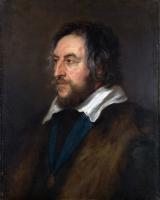

Jean de Waurin's Chronicle of England Volume 6 Books 3-6: The Wars of the Roses
Jean de Waurin was a French Chronicler, from the Artois region, who was born around 1400, and died around 1474. Waurin’s Chronicle of England, Volume 6, covering the period 1450 to 1471, from which we have selected and translated Chapters relating to the Wars of the Roses, provides a vivid, original, contemporary description of key events some of which he witnessed first-hand, some of which he was told by the key people involved with whom Waurin had a personal relationship.
Available at Amazon in eBook and Paperback format.
Samuel Pepys' Diary. 26th July 1662. Thence to Mrs. Sarah, and there looked over my Lord's lodgings, which are very pretty; and White Hall garden and the Bowling-ally (where lords and ladies are now at bowles), in brave condition. Mrs. Sarah told me how the falling out between my Baroness Castlemaine's (age 21) and her Lord was about christening of the child lately1, which he would have, and had done by a priest: and, some days after, she had it again christened by a minister; the King (age 32), and Lord of Oxford, and Duchesse of Suffolk, being witnesses: and christened with a proviso, that it had not already been christened. Since that she left her Lord, carrying away every thing in the house; so much as every dish, and cloth, and servant but the porter. He is gone discontented into France, they say, to enter a monastery; and now she is coming back again to her house in Kingstreet. But I hear that the Queen (age 23) did prick her out of the list presented her by the King;2 desiring that she might have that favour done her, or that he would send her from whence she come: and that the King was angry and the Queen discontented a whole day and night upon it; but that the King hath promised to have nothing to do with her hereafter. But I cannot believe that the King can fling her off so, he loving her too well: and so I writ this night to my Lady to be my opinion; she calling her my lady, and the lady I admire. Here I find that my Lord hath lost the garden to his lodgings, and that it is turning into a tennis-court. Hence by water to the Wardrobe to see how all do there, and so home to supper and to bed.
Note 1. The boy was born in June at Baroness Castlemaine's house in King Street. By the direction of Lord Castlemaine, who had become a Roman Catholic, the child was baptized by a priest, and this led to a final separation between husband and wife. Some days afterwards the child was again baptized by the rector of St. Margaret's, Westminster [Map], in presence of the godparents, the King, Aubrey De Vere (age 35), Earl of Oxford, and Barbara, Countess of Suffolk (age 40), first Lady of the Bedchamber to the Queen and Baroness Castlemaine's aunt. The entry in the register of St. Margaret's [Map] is as follows: "1662 June 18 Charles Palmer Ld Limbricke, s. to ye right honorble Roger Earl of Castlemaine by Barbara" (Steinman's "Memoir of Barbara, Duchess of Cleveland", 1871, p. 33). The child was afterwards called Charles Fitzroy, and was created Duke of Southampton in 1674. He succeeded his mother in the dukedom of Cleveland in 1709, and died 1730.
Note 2. By the King's command Lord Clarendon (age 54), much against his inclination, had twice visited his royal mistress with a view of inducing her, by persuasions which he could not justify, to give way to the King's determination to have Baroness Castlemaine's of her household.... Lord Clarendon has given a full account of all that transpired between himself, the King and the Queen, on this very unpleasant business ('Continuation of Life of Clarendon,' 1759, ff. 168-178). Steinman's Memoir of Duchess of Cleveland, p. 35. The day at length arrived when Baroness Castlemaine's was to be formally admitted a Lady of the Bedchamber. The royal warrant, addressed to the Lord Chamberlain (age 61), bears date June 1, 1663, and includes with that of her ladyship, the names of the Duchess of Buckingham (age 24), the Countesses of Chesterfield and Bath (age 22), and the Countess Mareshall. A separate warrant of the same day directs his lordship to admit the Countess of Suffolk as Groom of the Stole and first Lady of the Bedchamber, to which undividable offices she had, with the additional ones of Mistress of the Robes and Keeper of the Privy Purse, been nominated by a warrant dated April 2, 1662, wherein the reception of her oath is expressly deferred until the Queen's household shall be established. We here are furnished with the evidence that Charles would not sign the warrants for the five until Catherine had withdrawn her objection to his favourite one. Addenda to Steinman's Memoir of Duchess of Cleveland (privately printed), 1874, p. i.
Samuel Pepys' Diary. 1st June 1663. So home to supper and to bed. This day I hear at Court of the great plot which was lately discovered in Ireland, made among the Presbyters and others, designing to cry up the Covenant, and to secure Dublin Castle and other places; and they have debauched a good part of the army there, promising them ready money1. Some of the Parliament there, they say, are guilty, and some withdrawn upon it; several persons taken, and among others a son of Scott's, that was executed here for the King's murder. What reason the King (age 33) hath, I know not; but it seems he is doubtfull of Scotland: and this afternoon, when I was there, the Council was called extraordinary; and they were opening the letters this last post's coming and going between Scotland and us and other places. Blessed be God, my head and hands are clear, and therefore my sleep safe.
Note 1. This was known as "Blood's Plot", and was named after Colonel Thomas Blood (age 45), afterwards notorious for his desperate attack upon the Duke of Ormond (age 52) in St. James's Street (1670) and for his robbery of the crown jewels in the Tower (1671). He died August 24th, 1680.


Samuel Pepys' Diary. 1st June 1664. Home at noon, and my little girl got me my dinner, and I presently out by water and landed at Somerset stairs, and thence through Covent Garden [Map], where I met with Mr. Southwell (Sir W. Pen's (age 43) friend), who tells me the very sad newes of my Lord Tiviott's and nineteen more commission officers being killed at Tangier [Map] by the Moores, by an ambush of the enemy upon them, while they were surveying their lines; which is very sad, and, he says, afflicts the King (age 34) much.
Samuel Pepys' Diary. 1st June 1664. Up, having lain long, going to bed very late after the ending of my accounts. Being up Mr. Hollyard (age 55) came to me, and to my great sorrow, after his great assuring me that I could not possibly have the stone again, he tells me that he do verily fear that I have it again, and has brought me something to dissolve it, which do make me very much troubled, and pray to God to ease me.
From 1st June 1666 to 04 Jun 1666 the English and Dutch fleets engaged in battle. The English lost ten ships and 1000 men. The Dutch lost four ships and 1500 men.
On 1st June 1666 William Berkeley (age 27) was killed.
The Gloucester took part.
John Evelyn's Diary. 1st June 1666. Being in my garden at 6 o'clock in the evening, and hearing the great guns go thick off, I took horse and rode that night to Rochester, Kent [Map]; thence next day toward the Downs and seacoast, but meeting the Lieutenant of the Hampshire frigate, who told me what passed, or rather what had not passed, I returned to London, there being no noise, or appearance at Deal, Kent [Map], or on that coast of any engagement. Recounting this to his Majesty (age 36), whom I found at St James' Park [Map], impatiently expecting, and knowing that Prince Rupert (age 46) was loose about three at St. Helen's Point at N. of the Isle of Wight, it greatly rejoiced him; but he was astonished when I assured him they heard nothing of the guns in the Downs, nor did the Lieutenant who landed there by five that morning.


Samuel Pepys' Diary. 1st June 1667. Up; and there comes to me Mr. Commander, whom I employ about hiring of some ground behind the office, for the building of me a stable and coach-house: for I do find it necessary for me, both in respect to honour and the profit of it also, my expense in Hackney-coaches being now so great, to keep a coach, and therefore will do it. Having given him some instructions about it, I to the office, where we sat all the morning; where we have news that our peace with Spayne, as to trade, is wholly concluded, and we are to furnish him with some men for Flanders against the French. How that will agree with the French, I know not; but they say that he also hath liberty, to get what men he pleases out of England. But for the Spaniard, I hear that my Lord Castlehaven (age 50) is raising a regiment of 4000 men, which he is to command there; and several young gentlemen are going over in commands with him: and they say the Duke of Monmouth (age 18) is going over only as a traveller, not to engage on either side, but only to see the campagne, which will be becoming him much more than to live whoreing and rogueing, as he now do.


Samuel Pepys' Diary. 1st June 1668. So to dinner, and then with Sir J. Minnes (age 69) to White Hall, and there attended the Lords of the Treasury and also a committee of Council with the Duke of York (age 34) about the charge of this year's fleete, and thence I to Westminster and to Mrs. Martin's, and did hazer what je would con her, and did once toker la thigh de su landlady, and thence all alone to Fox Hall, and walked and saw young Newport (age 23), and two more rogues of the town, seize on two ladies, who walked with them an hour with their masks on; perhaps civil ladies; and there I left them, and so home, and thence to Mr. Mills's, where I never was before, and here find, whom I indeed saw go in, and that did make me go thither, Mrs. Hallworthy and Mrs. Andrews, and here supped, and, extraordinary merry till one in the morning, Mr. Andrews (age 36) coming to us: and mightily pleased with this night's company and mirth I home to bed. Mrs. Turner (age 45), too, was with us.
On 1st June 1673 Louise Françoise Bourbon was born illegitimately to Louis "Sun King" XIV King France (age 34) and Françoise Athénaïs Marquise Montespan (age 32). She married her fourth cousin once removed Louis Bourbon Condé, son of Henri Jules Bourbon Condé Prince Condé and Anne Henriette Palatinate Simmern, and had issue.
On 1st June 1676 George Hamilton Comte d'Hamilton was killed in action while commanding Luxembourg's rear-guard at the Col de Saverne.
The London Gazette 2458. Whitehall, June 1 [1689].
His Majesty has been graciously pleased to Create the Right Honourable Arthur Herbert (age 41) Esq; Admiral of Their Majesties Fleet, Earl of Torrington, and Baron Herbert of Torbay in the County of Devon. [The Barony of Herbert was possibly created with a special remainder to his brother Charles Herbert who predeceased him.]
On1st June 1710 Admiral David Mitchell (age 60) died. He was buried at St Etheldreda's Church, Hatfield [Map].

The True Chronicles of Jean le Bel Volume 1 Chapters 1-60 1307-1342
The True Chronicles of Jean le Bel offer one of the most vivid and immediate accounts of 14th-century Europe, written by a knight who lived through the events he describes, and experienced some of them first hand. Covering the early decades of the Hundred Years’ War, this remarkable chronicle follows the campaigns of Edward III of England, the politics of France and the Low Countries, and the shifting alliances that shaped medieval warfare. Unlike later historians, Jean le Bel writes with a strong sense of eyewitness authenticity, drawing on personal experience and the testimony of fellow soldiers. His narrative captures not only battles and sieges, but also the realities of military life, diplomacy, and the ideals of chivalry that governed noble society. A key source for Jean Froissart, Le Bel’s chronicle stands on its own as a compelling and insightful work, at once historical record and literary achievement. This translation builds on the 1905 edition published in French by Jules Viard, adding extensive translations from other sources Rymer's Fœdera, the Chronicles of Adam Murimuth, William Nangis, Walter of Guisborough, a Bourgeois of Valenciennes, Geoffrey le Baker of Swinbroke and Richard Lescot to enrich the original text and Viard's notes.
Available at Amazon in eBook and Paperback format.
On 1st June 1726 Frederik Christian Oldenburg was born to Frederick IV King of Denmark and Norway (age 54). He died aged less than one years old.
On 1st June 1732 Benedict Leonard Calvert died of tuberculosis.
On 1st June 1754 Archduke Ferdinand Karl of Austria-Este was born to Francis I Holy Roman Emperor (age 45) and Maria Theresa Habsburg Spain Holy Roman Empress (age 37).
1st June 1759. Kew Bridge [Map] is a bridge over the River Thames. The original bridge was constructed before 1759. The first bridge was built by Robert Tunstall of Brentford who previously owned the ferry on the site. The bridge was inaugurated on 1 June 1759 by the Prince of Wales (age 20) driving over it with his mother (age 39) and a number of other royals, and was opened to the public three days later.


On 1st June 1780 Frances Fitzroy Baroness Churchill Wychwood was born to Augustus Henry Fitzroy 3rd Duke Grafton (age 44) and Elizabeth Wrottesley Duchess Grafton (age 34). She a great x 3 granddaughter of King Charles II of England Scotland and Ireland. She married 25th November 1800 her second cousin Francis Almeric Spencer 1st Baron Churchill, son of George Spencer 4th Duke of Marlborough and Caroline Russell Duchess of Marlborough, and had issue.


On 1st June 1782 William Fitzroy was born to Augustus Henry Fitzroy 3rd Duke Grafton (age 46) and Elizabeth Wrottesley Duchess Grafton (age 36). He a great x 3 grandson of King Charles II of England Scotland and Ireland.
On 1st June 1789 Georgiana Elizabeth Mundy Duchess Newcastle under Lyne was born to Edward Miller Mundy (age 38). She married 18th July 1807 Henry Pelham-Clinton 4th Duke Newcastle-under-Lyne, son of Thomas Pelham-Clinton 3rd Duke Newcastle-under-Lyne and Anna Maria Stanhope Countess Lincoln, and had issue.
On 1st June 1818 Adolphus Hanover 1st Duke Cambridge (age 44) and Princess Augusta Hesse-Kassel Duchess Cambridge (age 20) were married. She by marriage Duchess Cambridge. The difference in their ages was 23 years. He the son of King George III of Great Britain and Ireland (age 79) and Charlotte Mecklenburg Strelitz Queen Consort England (age 74). They were second cousins. She a great granddaughter of King George II of Great Britain and Ireland.


On 1st June 1819 Catherine Lucy Wilhelmina Stanhope Duchess of Cleveland was born to Philip Henry Stanhope 4th Earl Stanhope (age 37) and Catherine Lucy Smith Countess Stanhope. She married (1) 20th September 1843 Archibald John Primrose, son of Archibald Primrose 4th Earl Rosebery and Harriett Bouverie Countess Camden, and had issue (2) 2nd August 1854 Harry George Powlett 4th Duke Cleveland, son of William Henry Vane 1st Duke Cleveland and Catharine Margaret Powlett Countess Darlington.
The Gentleman's Magazine Volume 93. 1st June 1823. Mr. Urban, June 1.
There seems to have been an error which has crept into all our Histarians, respecting the fate of the Lady Katharine Grey, youngest daughter of Henry Grey Duke of Suffolk, and the Lady Frances, daughter of Charles Brandon. The main points of her history are well known, and no doubt, correctly detailed; but it is of her death and burial that I am now speaking. Dr. Fuller, in his quaint way, gives us the following account:
"She was born at Bradgate, and (when her father was in height) married to Henry Lord Herbert, son and heir to the Earl of Pembroke; but the politic old Earl, perceiving the case altered, and what was the high way to honour, turned into the ready road to ruin, got pardon from Queen Mary, and broke the marriage quite off. This Heraclita, or Lady of Lamentation, thus repudiated, was seldom seen with dry eyes for some years together, sighing out her sorrowful condition; so that though the roses in her cheeks looked very wan and pale, it was not for want of watering. Afterwards Edward Seymour, Earl of Hertford, married her privately without the Queen's licence, and concealed it till her pregnancy diseovered it. Queen Elizabeth beheld her with a jealous eye, unwilling she should match either foreign Prince or English Peer, but follow the pattern she set her of constant virginity. For their presumption this Earl was fined £15,000 imprisoned with his lady in the Tower, and severely forbidden her company; but love and money will find or force a passage. By bribing the keeper, he bought (what was his own) his wife's embraces, and had by her a surviving son, Edward, ancestor to the Duke of Somerset. She died Jan. 26, 1567, a prisoner in the Tower, after nine years durance there."
It appers from Bayley's "History of the Tower,", p. 91, that on the 5th Sept. 1562, 4 Eliz. "the Ladie Katherine Grey, and the Erle of Hartford," were prisoners there: but from the following note, copied from a MS by Reyce, now in the College of Arms, relating to Suffolk Antiquities, it is equally clear that she did not die there: the note is as follows:
There lie buried in the Church and Chancel at Yoxford, the bowels of ye Lady Katherine, wife of Edward Seimour Earl of Hardford. She was daughter of Henry Grey Duke of Suffolk, and of Mary the French Queen, the younger of the two daughters of King Henry VII:—of the elder, K. James and K. Charles were descended. This lady Katharine had been committed prisoner to Sir Owen Hopton, Lieftenant of the Tower, for marrying without the Queen's knowledge, and was by him kept at Cockfield Hall, in Yoxford, being his house, where she died. I have been often told by aged people in Yoxford, that after her death, a little dog she had, would never more eat any meat, but lay and died upon her grave."
This statement is corroborated by the following entry in the Parish Register of Yoxford:
The Lady Katherine Gray, buried 21st Feb. 1567." D.A.Y.


Thomas Bateman 1824. June 1st, 1824, an ineffectual attempt was made to open the immense tumulus [Map] forming part of the temple of Arbor Lowe [Map]. A deeper cutting was made in the same direction as the one made by Major Rooke in 1782, which was equally abortive; the only articles found by the Major being the almost universal rats' bones and part of a stag's horn; on the later attempt nothing occurred but one human tooth and some animal bones.
Derbyshire Archaeological Journal Volume 30 1908 Page 155. [Fol.4r.] "Memorandum. Opening of Haddon barrow [Map], June 1st 18241.
"With the permission and kind assistance of Dr. Ewer Colie Esqr, I opened the barrow situate on the hill above the Eastern bank of the river Lathkill in Haddon pasture, in the County of Derby which, having been disturbed some years before with the view of procuring stone to build the adjoining fences, had been found to contain human bones, &c. The men who were employed on that occasion, broke into a vault or coffin walled round with loose stone, containing two human bodies, together with a rude urn of unbaked clay, and about 30 Roman coins (one Gallienus) now deposited in Haddon Hall, on finding which they were ordered to desist from their search.
"On the 2nd attempt to open it, I ordered a trench to be cut from the N.W. boundary to the centre, as well as an excavation to be made in the place where the vault was originally broken into. We discovered the vault marked out by stones rudely piled together on each side, and at the ends, which pointed about S.W. and N.E., the head of the skeleton2 lying at the N.E. end of it. Among the rubbish we discovered many human bones, fragments of bones, some pieces of calcined bones, with several Roman coins. The teeth of a dog, and a number of heads and bones of rats and other small animals were discovered here and in other parts of the mound. In the section from N.W. the mound was found full of stones, which seemed to extend through the whole barrow. Among these stones, which were intermixed with earth, we discovered, about 3 yds. from the centre of the tumulus, a quantity of scattered Roman coins, to the number of 703, with some pieces of lead ore, and a portion of glass, which seemed to have formed part of an urn of the same material. The decayed remains of an oaken board4, of about ¾in. thick, were found near the centre of the mount. We couid not discover any other vault than the one described, in the whole tumulus. From the fragrnents found in this excdvation, as well as the former, there must have been at least 4 earthen urns deposited in the barrow5. The coins found were Urbs Roma, one; Constantius, 9; Constantinus, 9; Constantinopolis, 2; Constans, 17; Valentinianus, 5; Valens, 12; Gratianus, 3; and the remainder iliegible. The mound was about 6o ft. in diameter and elevated 4 feet from the level of the ground. I have no doubt of its being constructed in the reign of the emperor Gratian, who was assassinated in the year 3836."
Note 1. Vestiges, p. 30, but the date given as May 31st, 1824, and without any mention of Mr. Mitchell or Dr. Colie.
Note 2. Vestiges, "the bodies were laid with their heads towards the north-east."
Note 3. Ibid. "eighty-two (quere 71)."
Note 4. Ibid. "traces of decayed wood" in the vault.
Note 5. These are said to have been in the vault, Vestiges.
Note 6. The mound, of course, was much more ancient, and the coins part of a hoard hidden in it at the time of Gratian or later. Derbyshire has supplied many instances of Neolithic and Bronze age barrows, which received at later periods deposits, sepulchral or otherwise.
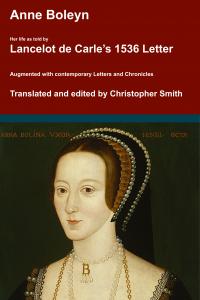
Anne Boleyn. Her Life as told by Lancelot de Carle's 1536 Letter.
In 1536, two weeks after the execution of Anne Boleyn, her brother George and four others, Lancelot du Carle, wrote an extraordinary letter that described Anne's life, and her trial and execution, to which he was a witness. This book presents a new translation of that letter, with additional material from other contemporary sources such as Letters, Hall's and Wriothesley's Chronicles, the pamphlets of Wynkyn the Worde, the Memorial of George Constantyne, the Portuguese Letter and the Baga de Secrets, all of which are provided in Appendices.
Available at Amazon in eBook and Paperback format.
Derbyshire Archaeological Journal Volume 30 1908 Page 155. [Fol. 42] June 1st, 1824. Arborlow.2.
"Opened the tumulus at Arborlow [Arbor Low Henge Barrow [Map]] by driving a level thro, the N.W. side next to the ditch. We found the whole mass as described by Mr Mander of Bakewell (the companion of Major Rooke on its first examination 29th, June 1782) composed of common vachill or loose stones and earth, intermixed occasionally with lumps of clay. A few heads and jaw bones of rats were scattered among the stones, with a human tooth, some fragments of bone probably human, and some small remains of charcoal. We penetrated 2 or 3 ft. below the depth to which Major Rooke had previously excavated it, when we came to a sandy soil with a stratum of clay beneath it, same as that of the natural soil around the tumulus. We cleared away the whole centre of the mound without making any discovery, or meeting with any circumstance, which would induce us to suppose it had been a place of sepulture. I feel certain, that whatever (from the circumstance of our finding a few bones, and a human tooth) might have been its destination in later times, its original design was not as a place of burial, but was some necessary appendage to the temple."
Briefly referred to, Vestiges, p. 31, and again on p. 64, where Mr. Mitchell is stated to have been associated with Mr. W. Bateman. The second of these pages gives an account of the successful opening of this barrow by Mr. T. Bateman on May 23rd, 1845 when a cist containing burnt human bones and two small vases were found.
Derbyshire Archaeological Journal Volume 30 1908 Page 155. [Fol. 43.] June 1st and 2nd 18241.
The large barrow [Gib Hill Barrow [Map]] situate 4 or 500 yds. from Arborlow, in a field called Gib hill [Map], belonging to Mr. Thos. Bateman of Middleton by Youlgreave, was opened by Mr W. Bateman (age 37), and myself, by driving a level through the S.E. side to the centre. The first covering which was about 2 yard in depth consisted of loose stones and earth, (but not so stoney as the Arborlow) under which a thin layer of tuft stone. Beneath this was a stratum similar to the first of about 1½ yards in thickness with a second thin bed of tuft stone. To this succeeded a stiff reddish brown clay, completely saturated with what we supposed to be animal matter, and having evident marks of fire. This clay was laid on the natural soil, about 1½ yds. in thickness, and 3 or 4 yards in diameter, and was throughout its whole circumference full of burnt bones and charcoal, disposed apparently in layers. A stratum of tuft stone which we supposed had been changed into a yellow ochry substance by the action of the fire, was placed under this; beneath which we penetrated to the solid rock 5 or 6 yds. in perpendicular height from the summit of the mount. We carefully examined the clayey stratum but could find no traces of an urn having ever been deposited; we found in the clay a small arrow head of flint, and a stone of somewhat peculiar shape, much broken, which might have been made use of as a hatchet2, some pieces of burnt bones (whether human or not cannot be ascertained) and a (very) few bones of rats were found3.
The mount has, no doubt, been raised over the funeral pile of some family, in which the bodies were entirely consumed, perhaps before the introduction of urn burial. The tumulus has evidently been connected with the adjoining temple by a small rampire of earth which runs Southward from the vallum of the Arborlow, round this barrow to the Westward; but may not be coeval with the original foundation of the temple. The remains found are in the possession of Mr. W. Bateman of Middleton.
One of the men employed in this excavation stated positively that he and a John Broomhead, had, under the direction of Mr. B. Thornhill, of Stanton, dug down into the centre of this barrow many years before, when they found the bones of a human hand, and several Coins, some of which were silver, and that on their arrival at some large stones, they desisted. The coins were taken away by Mr. Thornhill. The stones appear to have been considerably above the stratum of burnt bones, &c. mentioned. On Mr. Bateman's application to Mr. Thornhill on the subject, he denied having any recollection of opening the barrow at all.
Samuel Mitchell (age 21) Junior.
Note 1. Vestiges, pp. 31-2, and briefly in Ten Years' Diggings, pp. 17-20, in both of which the above exploration is attributed to Mr. W. Bateman only. These pages in Ten Years' Diggings record the opening of this great-barrow by Mr T. Bateman, January 10th-17th, 1848, when a huge cist containing burnt human bones and a vase were found near the summit.
Note 2. "A battered celt of basaltic stone"- Ten Years' Diggings, p. 20. In addition to the "finds" enumerated above, a small iron fibula was found in the upper part of the mound.
Note 3. Mr. Mitchell's account of the opening of this barrow is valuable, as his description of the construction is more detailed antl explicit than that of Vestiges, p. 31. The exploration of 1848 proved that the upper portion of the mound had been raised over four small ones of clay, placed square-wise. The present writer has recently suggested that these may simply represent the mode of constructing a square mound like that near the south-west side of the great circle at Dove Holes [Map], and that the upper material of stones and earth represents a subsequent enlarging of the barrow when the cist was introduced (Reliquary, 1908). Derbyshire has supplied other examples of barrows which have been raised or otherwise enlarged upon the occasion of later burials.
Derbyshire Archaeological Journal Volume 30 1908 Page 155. [Fol. 44.]
June 1st 1824. Examined William Normanshaw of Middleton aged 74 years, son of W. Normanshaw mentioned by Pegge. He says he has repeatedly heard his father (who died about 20 years ago at the age of 90) say that he remembered the stones in the circle at Arborlow [Map]; many of them standing, more erect than they do now1. Does not think they have undergone much alteration in position in his own remembrance. Recollects Major Rook opening the low they found the horns of a stag - once dug into the side of the barrow belonging to T. Bateman Esquire for stone, when he found the scull of a human being.
Note 1. This tends to confirm Pilkington's statement: I have been informed, that a very old man, living in Middleton, remembers, when he was a boy, to have seen them (the stones), standing obliquely upon one end." - A View of the Present State of Derbyshire, II., p. 460 ( 1789). Statements of this sort, however, must be accepted tun grano salis [with a grain of salt]. An old man employed in Mr. H. St. George Gray's recent excavation assured him that he had seen five of the stones standing when he was a boy and had sheltered under them. But it should be noticed that none of these statements imply that any of these stones were seen standing vertically on end. They simply imply that in comparatively recent times some were obliquely elevated, a conceivable attitude in the process of gradual subsidence.
Port Eliot, Cornwall. The Seat of Lord Elliot. No. 42. of R. Ackermann's Repository of Arts & c. Pub. June 1, 1826.
On 1st June 1831 John Jackson (age 53) died.

On 1st June 1838 Edith Somerset Countess Londesborough was born to Henry Somerset 7th Duke Beaufort (age 46) and Emily Frances Smith Duchess Beaufort (age 38). She married 1863 her third cousin William Henry Forester Denison 1st Earl Londesborough, son of Albert Conygham aka Denison 1st Baron Londesborough and Henrietta Maria Weld-Forester, and had issue.
On 1st June 1855 Edmund Bernard Fitzalan Howard 1st Viscount Fitzalan Derwent Derby was born to Henry Granville Fitzalan 14th Duke of Norfolk (age 40) and Augusta Mary Minna Catherine Lyons Duchess Norfolk (age 33). He married 5th August 1879 his half second cousin once removed Mary Caroline Bertie Viscountess Fitzalan Derwent Derby, daughter of Montagu Arthur Bertie 7th Earl of Abingdon and Caroline Theresa Towneley, and had issue.
On 1st June 1856 Herbert Gustav Schmalz aka Carmichael was born to Gustave Schmalz and Margaret Carmichael. His father was the German Consul to England. He studied at the South Kensington Art School and the Royal Academy of Arts, where he studied with Frank Dicksee (age 2), Stanhope Forbes and Arthur Hacker. He married on or after 24th April 1889 Edith Ellen Pullen.
Letters of Dante Gabriel Rossetti 1858. On 1st June 1858 Dante Gabriel Rossetti (age 30) wrote to William Bell Scott (age 47):
I am in the stunning position this morning of expecting the actual visit, at ½ past 11, of a model whom I have been longing to paint for years - Miss Herbert (age 27) of the Olympic Theatre - who has the most varied and highest expression I ever saw in a woman's face, besides abundant beauty, golden hair, etc. Did you ever see her? O my eye! she has sat to me now and will sit to me for Mary Magdalene in the picture I am beginning. Such luck!'.
On 1st June 1868 Walter Cecil Chetwynd-Talbot aka Carpenter (age 34) assumed the surname Carpenter, in lieu of those of Talbot, in accordance with the testamentary injunction of Sarah, Countess of Tyrconnell, widow of John Delavel Carpenter, last Earl of Tyrconnell.
From 31st May 1916 to 1st June 1916 the Battle of Jutland was fought between the British and German fleets.
On 1st June 2016 Bishop John Bernard Taylor (age 87) died at the Hospice of St Francis, Berkhamsted. he was buried at St Albans Cathedral [Map].
On 1st June 1134 Geoffrey Plantagenet Count Nantes was born to Geoffrey Plantagenet Duke Normandy (age 20) and Empress Matilda (age 32) at Rouen, France [Map] or Argentan. He a grandson of King Henry I "Beauclerc" England.
Abbot John Whethamstede’s Chronicle of the Abbey of St Albans
Abbot John Whethamstede's Register aka Chronicle of his second term at the Abbey of St Albans, 1451-1461, is a remarkable text that describes his first-hand experience of the beginning of the Wars of the Roses including the First and Second Battles of St Albans, 1455 and 1461, respectively, their cause, and their consequences, not least on the Abbey itself. His text also includes Loveday, Blore Heath, Northampton, the Act of Accord, Wakefield, and Towton, and ends with the Coronation of King Edward IV. In addition to the events of the Wars of the Roses, Abbot John, or his scribes who wrote the Chronicle, include details in the life of the Abbey such as charters, letters, land exchanges, visits by legates, and disputes, which provide a rich insight into the day-to-day life of the Abbey, and the challenges faced by its Abbot.
Available at Amazon in eBook and Paperback format.
On 1st June 1300 Thomas of Brotherton 1st Earl Norfolk was born to King Edward I of England (age 60) and Margaret of France Queen Consort England (age 21) at Brotherton [Map]. Coefficient of inbreeding 3.81%. He married (1) before 12th October 1326 Alice Hales Countess Norfolk and had issue (2) before 4th April 1336 his half second cousin twice removed Mary Brewes Countess Norfolk.
On 1st June 1451 Giles Daubeney 1st Baron Daubeney was born to William Daubeney (age 27) and Alice Stourton (age 19). He married before December 1493 Elizabeth Arundell Baroness Offaly and had issue.
On 1st June 1455 Anne of Savoy was born to Amadeus "Happy" Savoy IX Duke Savoy (age 20) and Yolande Valois Duchess Savoy (age 20). She married 11th September 1478 her fourth cousin Frederick IV King Naples, son of Ferdinand I King Naples and Isabella Clermont Queen Consort Naples, and had issue.
On 1st June 1563 Robert Cecil 1st Earl Salisbury was born to William Cecil 1st Baron Burghley (age 42) and Mildred Cooke Baroness Burghley (age 37). He married 1589 Elizabeth Brooke, daughter of William Brooke 10th Baron Cobham and Frances Newton Baroness Cobham, and had issue.


On 1st June 1673 Louise Françoise Bourbon was born illegitimately to Louis "Sun King" XIV King France (age 34) and Françoise Athénaïs Marquise Montespan (age 32). She married her fourth cousin once removed Louis Bourbon Condé, son of Henri Jules Bourbon Condé Prince Condé and Anne Henriette Palatinate Simmern, and had issue.
On 1st June 1726 Frederik Christian Oldenburg was born to Frederick IV King of Denmark and Norway (age 54). He died aged less than one years old.
On 1st June 1731 Richard Temple 7th Baronet was born to Peter Temple 6th Baronet (age 36). He married 24th June 1758 his first cousin Anne Sophia Temple, daughter of William Temple 5th Baronet.
On 1st June 1742 David Erskine 11th Earl of Buchan was born to Henry Erskine 10th Earl of Buchan (age 32) and Agnes Steuart.
On 1st June 1754 Archduke Ferdinand Karl of Austria-Este was born to Francis I Holy Roman Emperor (age 45) and Maria Theresa Habsburg Spain Holy Roman Empress (age 37).
On 1st June 1759 John Fane 10th Earl of Westmoreland was born to John Fane 9th Earl of Westmoreland (age 31) and Augusta Bertie (age 27). He married (1) 20th May 1782 Sarah Anne Child Countess of Westmoreland and had issue (2) 1800 Jane Huck Saunders Countess of Westmoreland and had issue.


The History of William Marshal was commissioned by his son shortly after William’s death in 1219 to celebrate the Marshal’s remarkable life; it is an authentic, contemporary voice. The manuscript was discovered in 1861 by French historian Paul Meyer. Meyer published the manuscript in its original Anglo-French in 1891 in two books. This book is a line by line translation of the first of Meyer’s books; lines 1-10152. Book 1 of the History begins in 1139 and ends in 1194. It describes the events of the Anarchy, the role of William’s father John, John’s marriages, William’s childhood, his role as a hostage at the siege of Newbury, his injury and imprisonment in Poitou where he met Eleanor of Aquitaine and his life as a knight errant. It continues with the accusation against him of an improper relationship with Margaret, wife of Henry the Young King, his exile, and return, the death of Henry the Young King, the rebellion of Richard, the future King Richard I, war with France, the death of King Henry II, and the capture of King Richard, and the rebellion of John, the future King John. It ends with the release of King Richard and the death of John Marshal.
Available at Amazon in eBook and Paperback format.
On 1st June 1769 Brooke Henry Bridges was born to Brook Bridges 3rd Baronet (age 35) and Fanny Fowler (age 22).
On 1st June 1769 Urania Anabella Wallop was born to John Wallop 2nd Earl Portsmouth (age 26) and Urania Fellowes (age 27).
On 1st June 1770 Charles Colden Farrington was born to Anthony Farrington 1st Baronet (age 28) and Elizabeth Colden.
On 1st June 1773 Robert Annesley was born to Richard Annesley 2nd Earl Annesley (age 28).
On 1st June 1777 Henrietta Leslie Pepys Countess Devon was born to Lucas Pepys 1st Baronet (age 35) and Jane Elizabeth Leslie 12th Countess of Rothes (age 27). She married before 14th April 1807 William Courtenay 10th Earl Devon, son of Bishop Reginald Courtenay and Elizabeth Howard, and had issue.
On 1st June 1780 Frances Fitzroy Baroness Churchill Wychwood was born to Augustus Henry Fitzroy 3rd Duke Grafton (age 44) and Elizabeth Wrottesley Duchess Grafton (age 34). She a great x 3 granddaughter of King Charles II of England Scotland and Ireland. She married 25th November 1800 her second cousin Francis Almeric Spencer 1st Baron Churchill, son of George Spencer 4th Duke of Marlborough and Caroline Russell Duchess of Marlborough, and had issue.
On 1st June 1782 William Fitzroy was born to Augustus Henry Fitzroy 3rd Duke Grafton (age 46) and Elizabeth Wrottesley Duchess Grafton (age 36). He a great x 3 grandson of King Charles II of England Scotland and Ireland.
On 1st June 1789 Georgiana Elizabeth Mundy Duchess Newcastle under Lyne was born to Edward Miller Mundy (age 38). She married 18th July 1807 Henry Pelham-Clinton 4th Duke Newcastle-under-Lyne, son of Thomas Pelham-Clinton 3rd Duke Newcastle-under-Lyne and Anna Maria Stanhope Countess Lincoln, and had issue.
On 1st June 1792 James Graham 2nd Baronet was born to James Graham 1st Baronet (age 31) and Catherine Stewart Lady Graham (age 27). at Naworth, Brampton. He married 8th July 1819 Frances "Fanny" Callander Lady Graham and had issue.
On 1st June 1804 Alexander Murray 6th Earl Dunmore was born to George Murray 5th Earl Dunmore (age 42) and Susan Hamilton Countess Dunmore (age 30). Coefficient of inbreeding 6.30%. He married 27th September 1836 Catherine Herbert Countess Dunmore, daughter of George Augustus Herbert 11th Earl Pembroke 8th Earl Montgomery and Yekaterina Semyonovna Vorontsova Countess Pembroke and Montgomery, and had issue.
On 1st June 1819 Catherine Lucy Wilhelmina Stanhope Duchess of Cleveland was born to Philip Henry Stanhope 4th Earl Stanhope (age 37) and Catherine Lucy Smith Countess Stanhope. She married (1) 20th September 1843 Archibald John Primrose, son of Archibald Primrose 4th Earl Rosebery and Harriett Bouverie Countess Camden, and had issue (2) 2nd August 1854 Harry George Powlett 4th Duke Cleveland, son of William Henry Vane 1st Duke Cleveland and Catharine Margaret Powlett Countess Darlington.

On 1st June 1826 Jane Conyngham Baroness Churchill was born to Francis Nathaniel Conyngham 2nd Marquess Conyngham (age 28) and Jane Paget Marchioness Conyngham (age 27). She married 19th May 1849 her fourth cousin once removed Francis George Spencer 2nd Baron Churchill, son of Francis Almeric Spencer 1st Baron Churchill and Frances Fitzroy Baroness Churchill Wychwood, and had issue.
On 1st June 1838 Edith Somerset Countess Londesborough was born to Henry Somerset 7th Duke Beaufort (age 46) and Emily Frances Smith Duchess Beaufort (age 38). She married 1863 her third cousin William Henry Forester Denison 1st Earl Londesborough, son of Albert Conygham aka Denison 1st Baron Londesborough and Henrietta Maria Weld-Forester, and had issue.
Abbot John Whethamstede’s Chronicle of the Abbey of St Albans
Abbot John Whethamstede's Register aka Chronicle of his second term at the Abbey of St Albans, 1451-1461, is a remarkable text that describes his first-hand experience of the beginning of the Wars of the Roses including the First and Second Battles of St Albans, 1455 and 1461, respectively, their cause, and their consequences, not least on the Abbey itself. His text also includes Loveday, Blore Heath, Northampton, the Act of Accord, Wakefield, and Towton, and ends with the Coronation of King Edward IV. In addition to the events of the Wars of the Roses, Abbot John, or his scribes who wrote the Chronicle, include details in the life of the Abbey such as charters, letters, land exchanges, visits by legates, and disputes, which provide a rich insight into the day-to-day life of the Abbey, and the challenges faced by its Abbot.
Available at Amazon in eBook and Paperback format.
On 1st June 1840 Henry Fitzherbert was born to William Fitzherbert 4th Baronet (age 31) and Ann Alleyne Lady Fitzherbert (age 25). He died aged three in 1843.
On 1st June 1844 Mary Blanche Farquhar Baroness Raglan was born to Walter Rockliffe Farquhar 3rd Baronet (age 33) and Mary Octavia Somerset Lady Farquhar (age 29). She married 11th October 1871 her first cousin once removed Richard Henry Fitzroy Somerset 2nd Baron Raglan, son of Fitzroy James Henry Somerset 1st Baron Raglan and Emily Harriet Wellesley-Pole Baroness Raglan.
On 1st June 1855 Edmund Bernard Fitzalan Howard 1st Viscount Fitzalan Derwent Derby was born to Henry Granville Fitzalan 14th Duke of Norfolk (age 40) and Augusta Mary Minna Catherine Lyons Duchess Norfolk (age 33). He married 5th August 1879 his half second cousin once removed Mary Caroline Bertie Viscountess Fitzalan Derwent Derby, daughter of Montagu Arthur Bertie 7th Earl of Abingdon and Caroline Theresa Towneley, and had issue.
On 1st June 1856 Herbert Gustav Schmalz aka Carmichael was born to Gustave Schmalz and Margaret Carmichael. His father was the German Consul to England. He studied at the South Kensington Art School and the Royal Academy of Arts, where he studied with Frank Dicksee (age 2), Stanhope Forbes and Arthur Hacker. He married on or after 24th April 1889 Edith Ellen Pullen.
On 1st June 1857 Delves Louis Broughton 10th Baronet was born to Henry Delves Broughton 9th Baronet (age 48) at Tillotson Place Waterloo Road Lambeth, Surrey. He married (1) 26th April 1881 Rosamond Broughton and had issue (2) 21st December 1887 Mary Evelyn Cotton Lady Broughton.
On 1st June 1858 Arnold Keppel 8th Earl Albermarle was born to William Keppel 7th Earl Albermarle (age 26) and Sophia Mary MacNab of Dundurn Castle (age 25). He married 1881 Gertrude Egerton Countess Albemarle, daughter of Wilbraham Egerton 1st Earl Egerton and Mary Amherst Baroness Egerton, and had issue.
On 1st June 1889 Francis Savile Crossley 2nd Baron Somerleyton was born to Savile Crossley 1st Baron Somerleyton (age 31) and Phyllis de Bathe. He married 1st July 1924 Bridget Hoare Baroness Somerleyton and had issue.
On 1st June 1907 Colonel Andrew Horsbrugh-Porter 3rd Baronet was born to John Scott Horsbrugh-Porter 2nd Baronet (age 35).
On 1st June 1913 George Edwin Douglas Duntze 6th Baronet was born to George Puxley Duntze 5th Baronet (age 39).
On 1st June 1918 Gavin Astor 2nd Baron Astor was born to John Jacob Astor 1st Baron Astor (age 32) and Violet Mary Elliot-Murray-Kynynmound Baroness Astor (age 29). He married 4th October 1945 Irene Haig Baroness Astor.
On 1st June 1927 John Henry Kilian Brunner 4th Baronet was born to Felix Brunner 3rd Baronet (age 29).
Chronicle of Walter of Guisborough
A canon regular of the Augustinian Guisborough Priory, Yorkshire, formerly known as The Chronicle of Walter of Hemingburgh, describes the period from 1066 to 1346. Before 1274 the Chronicle is based on other works. Thereafter, the Chronicle is original, and a remarkable source for the events of the time. This book provides a translation of the Chronicle from that date. The Latin source for our translation is the 1849 work edited by Hans Claude Hamilton. Hamilton, in his preface, says: 'In the present work we behold perhaps one of the finest samples of our early chronicles, both as regards the value of the events recorded, and the correctness with which they are detailed; Nor will the pleasing style of composition be lightly passed over by those capable of seeing reflected from it the tokens of a vigorous and cultivated mind, and a favourable specimen of the learning and taste of the age in which it was framed.'
Available at Amazon in eBook and Paperback format.
On 1st June 1939 Robert Edgcumbe 8th Earl of Mount Edgcumbe was born to George Edgecumbe (age 32).
On 1st June 1940 Francis Anthony Hartwell 6th Baronet was born to Brodrick William Hartwell 5th Baronet (age 30).
On 1st June 1941 Tobias Tennant was born to Christopher Tennant 2nd Baron Glenconner (age 42). He married 3rd September 1963 Emma Cavendish, daughter of Andrew Cavendish 11th Duke Devonshire and Deborah Vivien Mitford Duchess Devonshire, and had issue.
On 1st June 1953 Timothy Charles Noel 12th Earl Portland was born to Henry Charles Bentinck 11th Earl of Portland (age 33).
On 1st June 1601 Henry Montagu 1st Earl Manchester (age 38) and Catherine Spencer (age 15) were married. The difference in their ages was 23 years.
On 1st June 1662 William Douglas 9th Earl Morton and Grizel Middleton Countess Morton were married. She by marriage Countess Morton. She the daughter of John Middleton 1st Earl Middleton (age 54) and Grizel Durham Countess Middleton. He the son of Robert Douglas 8th Earl Morton and Elizabeth Villiers Countess Morton.

On 1st June 1728 John Dutton 2nd Baronet (age 44) and Mary Keck Lady Dutton were married with a settlement of £20000. She by marriage Lady Dutton of Sherborne in Gloucestershire.
On 1st June 1780 Alexander Lindsay 6th Earl Balcarres 23rd Earl Crawford (age 28) and Elizabeth Bradshaigh Dalrymple Countess Balcarres were married. She by marriage Countess Balcarres. They had five children He the son of James Lindsay 5th Earl Balcarres and Anne Dalrymple Countess Balcarres (age 53). They were first cousins.
On 1st June 1793 Archibald Kennedy 1st Marquess of Ailsa (age 23) and Margaret Erskine Marchioness Ailsa (age 21) were married. He the son of Archibald Kennedy 11th Earl Cassilis (age 73).


On 1st June 1794 Charles Edmonstone 2nd Baronet (age 30) and Emma Wilbraham-Bootle were married.
On 1st June 1801 Charles Des Voeux 2nd Baronet (age 21) and Christina Hird were married.
On 1st June 1818 Adolphus Hanover 1st Duke Cambridge (age 44) and Princess Augusta Hesse-Kassel Duchess Cambridge (age 20) were married. She by marriage Duchess Cambridge. The difference in their ages was 23 years. He the son of King George III of Great Britain and Ireland (age 79) and Charlotte Mecklenburg Strelitz Queen Consort England (age 74). They were second cousins. She a great granddaughter of King George II of Great Britain and Ireland.
The True Chronicles of Jean le Bel Volume 1 Chapters 1-60 1307-1342
The True Chronicles of Jean le Bel offer one of the most vivid and immediate accounts of 14th-century Europe, written by a knight who lived through the events he describes, and experienced some of them first hand. Covering the early decades of the Hundred Years’ War, this remarkable chronicle follows the campaigns of Edward III of England, the politics of France and the Low Countries, and the shifting alliances that shaped medieval warfare. Unlike later historians, Jean le Bel writes with a strong sense of eyewitness authenticity, drawing on personal experience and the testimony of fellow soldiers. His narrative captures not only battles and sieges, but also the realities of military life, diplomacy, and the ideals of chivalry that governed noble society. A key source for Jean Froissart, Le Bel’s chronicle stands on its own as a compelling and insightful work, at once historical record and literary achievement. This translation builds on the 1905 edition published in French by Jules Viard, adding extensive translations from other sources Rymer's Fœdera, the Chronicles of Adam Murimuth, William Nangis, Walter of Guisborough, a Bourgeois of Valenciennes, Geoffrey le Baker of Swinbroke and Richard Lescot to enrich the original text and Viard's notes.
Available at Amazon in eBook and Paperback format.
On 1st June 1827 Arthur Charles Legge (age 26) and Maria Josepha Holroyd Baroness Stanley Alderley were married. She the daughter of John Baker Holroyd 1st Earl Sheffield and Abigail Way Countess Sheffield. He the son of George Legge 3rd Earl Dartmouth and Frances Finch Countess Dartmouth (age 66).
On 1st June 1875 William Randall McDonnell 6th Earl of Antrim (age 24) and Louisa Grey Countess of Antrim (age 20) were married. She by marriage Countess Antrim 2C. He the son of Mark Kerr aka McDonnell 5th Earl of Antrim and Jane Macan Countess of Antrim (age 50).
On 1st June 1886 Charles Hepburn-Stuart-Forbes-Trefusis 21st Baron Clinton (age 23) and Jane Grey McDonnell Baroness Clinton (age 22) were married. She the daughter of Mark Kerr aka McDonnell 5th Earl of Antrim and Jane Macan Countess of Antrim (age 61). They were second cousin once removed.
On 1st June 1893 Herbert Charles Arthur Langham 13th Baronet (age 23) and Ethel Sarah Emerson-Tennent Lady Langham (age 21) were married.
On 1st June 1908 Archibald Montgomerie 16th Earl of Eglinton (age 27) and Beatrice Susan Dalrymple Countess Eglinton were married. She the daughter of John Dalrymple 11th Earl of Stair (age 59) and Susan Harriet Grant-Suttie (age 49). He the son of George Montgomerie 15th Earl of Eglinton (age 60).
On 1st June 1920 Alfred Charlemagne Lambart and Anne Belcher were married.
On 1st June 1926 Edmund Pery 5th Earl of Limerick (age 37) and Angela Olivia Trotter Countess of Limerick (age 29) were married;. He the son of William Pery 3rd Earl of Limerick and Isabella Colquhoun Countess of Limerick.
On 1st June 1931 William Edward Harcourt 2nd Viscount Harcourt (age 22) and Maud Elizabeth Grosvenor Viscountess Harcourt (age 22) were married. She by marriage Viscountess Harcourt of Stanton Harcourt in Oxfordshire.
On 1st June 1935 Robert Chalmers 1st Baron Chalmers (age 76) and Iris Florence Biles Baroness Chalmers were married. She by marriage Baroness Chalmers of Northiam in Sussex.
On 1st June 1954 John Spencer 8th Earl Spencer (age 30) and Frances Ruth Roche Countess Spencer (age 18) were married at Westminster Abbey [Map]. He the son of Albert Edward John Spencer 7th Earl Spencer (age 62) and Cynthia Elinor Beatrix Hamilton Countess Spencer (age 57).
Henrici Quinti, Angliæ Regis, Gesta, is a first-hand account of the Agincourt Campaign, and subsequent events to his death in 1422. The author of the first part was a Chaplain in King Henry's retinue who was present from King Henry's departure at Southampton in 1415, at the siege of Harfleur, the battle of Agincourt, and the celebrations on King Henry's return to London. The second part, by another writer, relates the events that took place including the negotiations at Troye, Henry's marriage and his death in 1422.
Available at Amazon in eBook and Paperback format.
On 1st June 1139 Robert Ferrers 1st Earl of Derby (age 76) died at Chartley Stowe, Staffordshire. His son Robert succeeded 2nd Earl Derby.
On 1st June 1146 Ermengarde Anjou Duchess Brittany and Aquitaine (age 78) died.
On 1st June 1220 Henry Bohun 1st Earl Hereford (age 44) died in the Middle East. His son Humphrey (age 16) succeeded 2nd Earl Hereford.
On 1st June 1315 Joan D'Engayne Baroness Welles and Ughtred died.
On 1st June 1413 Ankaret Strange 7th Baroness Strange Blackmere, Baroness Talbot (age 52) died.
On 1st June 1449 Muriella Keith Duchess Albany (age 91) died.
On 1st June 1454 Margaret Grey Baroness Darcy Knayth died.
On 1st June 1487 Ralph Greystoke 5th Baron Greystoke (age 73) died. His granddaughter Elizabeth (age 15) succeeded 6th Baroness Greystoke.
On 1st June 1583 George Carew (age 85) died. He was buried at St Giles' in the Fields Church [Map].
On 1st June 1677 Mary Montgomerie Countess Winton died.
William of Worcester's Chronicle of England
William of Worcester, born around 1415, and died around 1482 was secretary to John Fastolf, the renowned soldier of the Hundred Years War, during which time he collected documents, letters, and wrote a record of events. Following their return to England in 1440 William was witness to major events. Twice in his chronicle he uses the first person: 1. when writing about the murder of Thomas, 7th Baron Scales, in 1460, he writes '… and I saw him lying naked in the cemetery near the porch of the church of St. Mary Overie in Southwark …' and 2. describing King Edward IV's entry into London in 1461 he writes '… proclaimed that all the people themselves were to recognize and acknowledge Edward as king. I was present and heard this, and immediately went down with them into the city'. William’s Chronicle is rich in detail. It is the source of much information about the Wars of the Roses, including the term 'Diabolical Marriage' to describe the marriage of Queen Elizabeth Woodville’s brother John’s marriage to Katherine, Dowager Duchess of Norfolk, he aged twenty, she sixty-five or more, and the story about a paper crown being placed in mockery on the severed head of Richard, 3rd Duke of York.
Available at Amazon in eBook and Paperback format.
On 1st June 1688 Henry Barnewall 2nd Viscount Barnewall died. His son Nicholas (age 20) succeeded 3rd Viscount Barnewall, 3rd Baron Turvey. Mary Hamilton Viscountess Barnewall by marriage Viscountess Barnewall.
On 1st June 1730 Nicholas Crispe 4th Baronet (age 12) died unmarried. His uncle Charles (age 50) succeeded 5th Baronet Crispe of Hammersmith in Middlesex.
On 1st June 1769 Frances Poole Viscountess Palmerston (age 40) died.
On 1st June 1794 Alicia Carpenter Countess Egremont (age 68) died.


On 1st June 1821 John Dalrymple 6th Earl of Stair (age 72) died without issue. His first cousin John (age 36) succeeded 7th Earl of Stair.
On 1st June 1821 John Campbell 1st Baron Cawdor (age 68) died at Bath, Somerset [Map]. He was buried at Bath Abbey [Map]. His son John (age 30) succeeded 2nd Baron Cawdor of Castlemartin in Pembrokeshire. Elizabeth Thynne Countess Cawdor (age 26) by marriage Baroness Cawdor of Castlemartin in Pembrokeshire.
On 1st June 1828 George Berney Brograve 2nd Baronet (age 56) died. Baronet Brograve of Worstead House in Norfolk extinct.
On 1st June 1829 William Burroughs 1st Baronet (age 76) died. Baronet Burroughs of Castle Bagshaw in County Wicklow extinct.
On 1st June 1830 Richard Cavendish 2nd Baron Waterpark (age 64) died. His son Henry (age 36) succeeded 3rd Baron Waterpark, 4th Baronet Cavendish of Doveridge Hall.
On 1st June 1831 John Jackson (age 53) died.
On 1st June 1833 Edmund Mark Winn 7th Baronet (age 70) died. His third cousin Charles (age 48) succeeded 8th Baronet Winn of Nostel in Yorkshire.
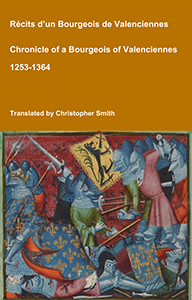
Chronicle of a Bourgeois of Valenciennes
Récits d’un bourgeois de Valenciennes aka The Chronicle of a Bourgeois of Valenciennes is a vivid 14th-century vernacular chronicle written by an anonymous urban chronicler from Valenciennes in the County of Hainaut. It survives in a manuscript that describes local and regional history from about 1253 to 1366, blending chronology, narrative episodes, and eyewitness-style accounts of political, military, and social events in medieval France, Flanders, and the Low Countries. The work begins with a chronological framework of events affecting Valenciennes and its region under rulers such as King Philip VI of France and the shifting allegiances of local nobility. It includes accounts of conflicts, sieges, diplomatic manoeuvres, and the impact of broader struggles like the Hundred Years’ War on urban life in Hainaut. Written from the perspective of a burgher (bourgeois) rather than a monastery or royal court, the chronicle offers a rare lay viewpoint on high politics and warfare, reflecting how merchants, townspeople, and civic institutions experienced the turbulence of the 13th and 14th centuries. Its narrative style combines straightforward reporting of events with moral and civic observations, making it a valuable source for readers interested in medieval urban society, regional politics, and the lived experience of war and governance in pre-modern Europe.
Available at Amazon in eBook and Paperback format.
On 1st June 1858 Henry FitzHerbert 3rd Baronet (age 74) died. His son William (age 49) succeeded 4th Baronet Fitzherbert of Tissington in Derbyshire.
On 1st June 1866 George Stanhope 6th Earl Chesterfield (age 61) died. His son George (age 34) succeeded 7th Earl Chesterfield, 7th Baron Stanhope of Shelford in Nottinghamshire.
On 1st June 1874 Frances Diana Manners-Sutton Baroness Hastings died.
On 1st June 1876 William Jolliffe 1st Baron Hylton (age 75) died. His son Hedworth (age 46) succeeded 2nd Baron Hylton of Hylton in County Durham.
On 1st June 1902 Mary Florence Baring Marchioness Northampton (age 41) died in Castle Ashby, Northamptonshire [Map].
On 1st June 1947 John Charles Peniston Milbanke 11th Baronet (age 45) died. His brother Ralph (age 40) succeeded 12th Baronet Milbanke of Halnaby in Yorkshire.
On 1st June 1977 Denzil George Fortescue 6th Earl Fortescue (age 83) died. His son Richard (age 55) succeeded 7th Earl Fortescue, 7th Viscount Ebrington of Ebrington in Gloucestershire, 9th Baron Fortescue of Castle Hill.
On 1st June 1993 John Alwyne Pelly 6th Baronet (age 74) died. His nephew Richard (age 42) succeeded 7th Baronet Pelly of Upton in Essex.
On 1st June 2016 Bishop John Bernard Taylor (age 87) died at the Hospice of St Francis, Berkhamsted. he was buried at St Albans Cathedral [Map].
On 1st June 2018 John Julius Cooper 2nd Viscount Norwich (age 88) died. His son Jason (age 59) succeeded 3rd Viscount Norwich of Aldwick in Sussex.
Chronicle of a Bourgeois of Valenciennes
Récits d’un bourgeois de Valenciennes aka The Chronicle of a Bourgeois of Valenciennes is a vivid 14th-century vernacular chronicle written by an anonymous urban chronicler from Valenciennes in the County of Hainaut. It survives in a manuscript that describes local and regional history from about 1253 to 1366, blending chronology, narrative episodes, and eyewitness-style accounts of political, military, and social events in medieval France, Flanders, and the Low Countries. The work begins with a chronological framework of events affecting Valenciennes and its region under rulers such as King Philip VI of France and the shifting allegiances of local nobility. It includes accounts of conflicts, sieges, diplomatic manoeuvres, and the impact of broader struggles like the Hundred Years’ War on urban life in Hainaut. Written from the perspective of a burgher (bourgeois) rather than a monastery or royal court, the chronicle offers a rare lay viewpoint on high politics and warfare, reflecting how merchants, townspeople, and civic institutions experienced the turbulence of the 13th and 14th centuries. Its narrative style combines straightforward reporting of events with moral and civic observations, making it a valuable source for readers interested in medieval urban society, regional politics, and the lived experience of war and governance in pre-modern Europe.
Available at Amazon in eBook and Paperback format.
On 1st June 2020 Charles Theodore Gunning 9th Baronet (age 84) died. His brother John (age 75) de jure 10th Baronet Gunning of Eltham in Kent. As of Jan 2023 the Official Roll of the Baronetage describes the baronetcy as Vacant.