

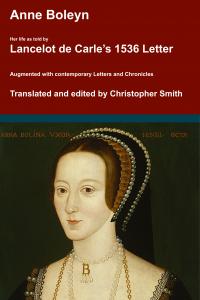
Anne Boleyn. Her Life as told by Lancelot de Carle's 1536 Letter.
In 1536, two weeks after the execution of Anne Boleyn, her brother George and four others, Lancelot du Carle, wrote an extraordinary letter that described Anne's life, and her trial and execution, to which he was a witness. This book presents a new translation of that letter, with additional material from other contemporary sources such as Letters, Hall's and Wriothesley's Chronicles, the pamphlets of Wynkyn the Worde, the Memorial of George Constantyne, the Portuguese Letter and the Baga de Secrets, all of which are provided in Appendices.
Available at Amazon in eBook and Paperback format.
02 Sep is in September.
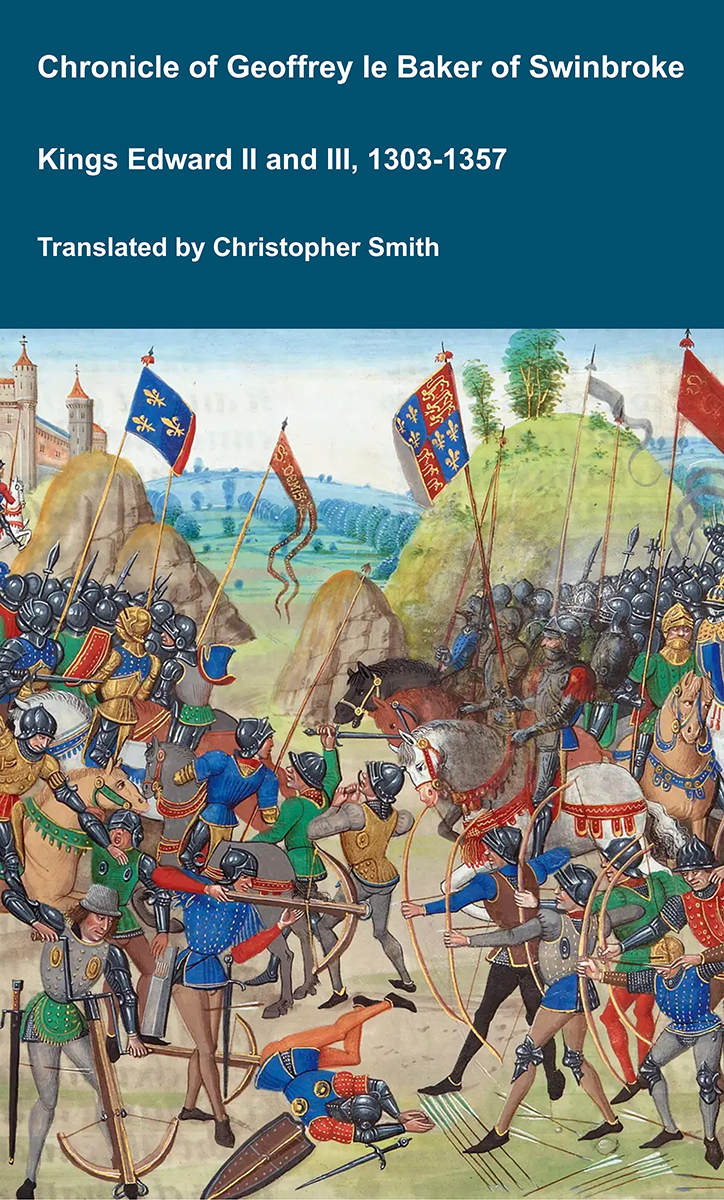 Chronicle of Geoffrey le Baker of Swinbroke [-1360]. The king therefore issued a charter1 to his aforementioned son granting him the aforesaid duchy and county, to have and to hold for himself and his heirs, the kings of England. He added that, if the son were to die while his father was still alive, the said lands would revert to the father's domain. He also included certain conditions to prevent the King of France from marrying off Edward or subjecting him to any guardian or tutor. This arrangement was made with the consent of the prelates and other nobles of the realm at Dover, on the day after the Nativity of the Blessed Mary, in the eighteenth year of the king's reign. And on the following Thursday, the aforementioned Edward, the king's firstborn, set sail, accompanied by Walter, Bishop of Exeter, and a suitable number of other nobles. Thereafter, around the feast of Saint Matthew, he performed homage to his uncle, the King of France, with formal protestations made by both sides.
Fecit itaque rex prefato filio suo cartam de prefatis ducatu et comitatu, habendis et tenendis sibi et heredibus suis, regibus Anglorum, addens quod, si, patre suo superstite, filius moreretur, predia prefata in patris dominium reverterentur, cavens eciam per quasdam condiciones ne rex Francie posset ipsum Edwardum maritare aut tutori sive curatori cuiquam submittere. Hec ordinacio fuit facta ex consensu prelatorum et aliorum regni nobilium apud Dovoriam, in crastino Nativitatis beate Marie, anno regni regis XVIIJ Et die Iovis sequente prenominatus Edwardus regis primogenitus cepit enavigare, habens secum Walterum episcopum Exoniensem et alios nobiles in numero competent. Exinde, circa festum sancti Mathei, fecit homagium avunculo suo regi Francie, sub protestacionibus factis ex utraque parte.
Note 1. Ponthieu was transferred by charter, 2nd September 1325; Aquitaine, 10th September 1325. Rymer's Fœdera 2.605, 2.607. Young Edward left England on the 12th September.
On 2nd September 1381 Frederick Wittelsbach Duke Bavaria (age 42) and Maddalena Visconti Duchess Bavaria (age 15) were married. She by marriage Duchess Bavaria. The difference in their ages was 27 years. He the son of Stephen Wittelsbach II Duke Bavaria and Elisabeth Barcelona Duchess Bavaria.
On 2nd September 1489 Charles Valois IV Duke Alençon was born to Rene Valois Duke Alençon (age 35) and Margaret Lorraine Duchess Alençon (age 26).
Tudor Tracts Chapter 4. Friday the 2nd of September [1547]. Upon commandment generally given, by sound of trumpet, all save the council, departed the town; and encamped a two flight-shots off, upon the sea-side, toward Scotland.
This day, my Lord Clinton (age 35) with his fleet took the seas from Berwick toward Scotland, and herefore the rather, that though they might not have always wind at will to keep their course still with us; yet, and it were but with the driving of tides, they might, upon any our need of munition or victail, not be long from us.
My Lord Lieutenant and Master Treasurer, who remained at Newcastle after my Lord's Grace, for the full despatch of the rest of the army, came this day to Berwick.


On 2nd September 1597 Queen Elizabeth I of England and Ireland (age 63) granted licence to the executors of Sir Rowland Hayward to sell King's Place [Map] in the Hackney in north London to Elizabeth Trentham, her brother Francis Trentham of Rocester (age 33), her uncle Ralph Sneyd (age 70), and her cousin, Giles Yonge (age 43). The acquisition of King's Place by Elizabeth Trentham and her relatives placed it 'beyond the reach of Oxford's creditors'.


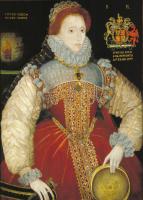


In 2nd September 1642 David Barry 1st Earl Barrymore (age 37) led a regiment at the Battle of Liscarroll.
Lewis Boyle 1st Viscount Boyle (age 23) was killed. His brother Richard (age 29) succeeded 2nd Viscount Boyle of Kinalmeaky.
On 2nd September 1648 Duchess Magdalena Sibylle of Saxe Gotha Altenburg was born to Augustus Duke of Saxe Weissenfels (age 34) and Anna Maria of Mecklenburg-Schwerin (age 21). She married 14th November 1669 her third cousin once removed Frederick Saxe Coburg Altenburg I Duke Saxe Gotha Altenburg, son of Ernest "The Pious" Saxe Gotha I Duke Saxe Gotha and Elisabeth Sophie Saxe Altenburg Duchess Saxe Gotha, and had issue.
On 2nd September 1660 Johanna Elisabeth Saxe Gotha was born to Ernest "The Pious" Saxe Gotha I Duke Saxe Gotha (age 58) and Elisabeth Sophie Saxe Altenburg Duchess Saxe Gotha (age 40) at Gotha. Coefficient of inbreeding 3.17%. She died aged less than one years old.
Samuel Pepys' Diary. 2nd September 1663. He being gone, I to my office, where late, putting things in order, and so home to supper and to bed. Going through the City, my Lord Mayor (age 48) told me how the piller set up by Exeter House [Map] is only to show where the pipes of water run to the City; and observed that this City is as well watered as any city in the world, and that the bringing the water to the City hath cost it first and last above £300,000; but by the new building, and the building of St. James's by my Lord St. Albans (age 58)1, which is now about (and which the City stomach I perceive highly, but dare not oppose it), were it now to be done, it would not be done for a million of money.
Note 1. It was at this time that the Earl of St. Albans planned St. James's Square, which was first styled "The Piazza". The "Warrant for a grant to Baptist May and Abraham Cowley (age 46) on nomination of the Earl of St. Albans of several parcels of ground in Pall Mall [Map] described, on rental of £80, for building thereon a square of 13 or 14 great and good houses", was dated September 24th, 1664.


From 2nd September 1666 to 6th September 1666 the Great Fire of London destroyed around 13000 properties in the medieval City of London as well as 87 parish churches and St Paul's Cathedral [Map]. The fire is estimated to have left 80% of the city's residents homeless.
Samuel Pepys' Diary. 2nd September 1666. Lord's Day. Some of our mayds sitting up late last night to get things ready against our feast to-day, Jane called us up about three in the morning, to tell us of a great fire they saw in the City. So I rose and slipped on my nightgowne, and went to her window, and thought it to be on the backside of Marke-lane [Map] at the farthest; but, being unused to such fires as followed, I thought it far enough off; and so went to bed again and to sleep. About seven rose again to dress myself, and there looked out at the window, and saw the fire not so much as it was and further off.
Samuel Pepys' Diary. 2nd September 1666. By and by Jane comes and tells me that she hears that above 300 houses have been burned down to-night by the fire we saw, and that it is now burning down all Fish-street [Map], by London Bridge [Map]. So I made myself ready presently, and walked to the Tower [Map], and there got up upon one of the high places, Sir J. Robinson's (age 51) little son going up with me; and there I did see the houses at that end of the bridge all on fire, and an infinite great fire on this and the other side the end of the bridge; which, among other people, did trouble me for poor little Michell and our Sarah on the bridge. So down, with my heart full of trouble, to the Lieutenant of the Tower, who tells me that it begun this morning in the King's baker's' house in Pudding-lane, and that it hath burned St. Magnus's Church [Map] and most part of Fish-street [Map] already.
Henrici Quinti, Angliæ Regis, Gesta, is a first-hand account of the Agincourt Campaign, and subsequent events to his death in 1422. The author of the first part was a Chaplain in King Henry's retinue who was present from King Henry's departure at Southampton in 1415, at the siege of Harfleur, the battle of Agincourt, and the celebrations on King Henry's return to London. The second part, by another writer, relates the events that took place including the negotiations at Troye, Henry's marriage and his death in 1422.
Available at Amazon in eBook and Paperback format.
Samuel Pepys' Diary. 2nd September 1666. So I down to the water-side, and there got a boat and through bridge, and there saw a lamentable fire. Poor Michell's house, as far as the Old Swan [Map], already burned that way, and the fire running further, that in a very little time it got as far as the Steeleyard [Map], while I was there. Everybody endeavouring to remove their goods, and flinging into the river or bringing them into lighters that layoff; poor people staying in their houses as long as till the very fire touched them, and then running into boats, or clambering from one pair of stairs by the water-side to another. And among other things, the poor pigeons, I perceive, were loth to leave their houses, but hovered about the windows and balconys till they were, some of them burned, their wings, and fell down.
Samuel Pepys' Diary. 2nd September 1666. Having staid, and in an hour's time seen the fire: rage every way, and nobody, to my sight, endeavouring to quench it, but to remove their goods, and leave all to the fire, and having seen it get as far as the Steele-yard [Map], and the wind mighty high and driving it into the City; and every thing, after so long a drought, proving combustible, even the very stones of churches, and among other things the poor steeple by which pretty Mrs.----lives, and whereof my old school-fellow Elborough is parson, taken fire in the very top, an there burned till it fell down: I to White Hall (with a gentleman with me who desired to go off from the Tower, to see the fire, in my boat); to White Hall, and there up to the Kings closett in the Chappell, where people come about me, and did give them an account dismayed them all, and word was carried in to the King (age 36).
Samuel Pepys' Diary. 2nd September 1666. So I was called for, and did tell the King (age 36) and Duke of Yorke (age 32) what I saw, and that unless his Majesty did command houses to be pulled down nothing could stop the fire. They seemed much troubled, and the King commanded me to go to my Lord Mayor (age 46)1 from him, and command him to spare no houses, but to pull down before the fire every way. The Duke of York bid me tell him that if he would have any more soldiers he shall; and so did my Lord Arlington (age 48) afterwards, as a great secret2.
Note 1. Sir Thomas Bludworth. See June 30th, 1666.
Note 2. Sir William Coventry wrote to Lord Arlington on the evening of this day, "The Duke of York fears the want of workmen and tools to-morrow morning, and wishes the deputy lieutenants and justices of peace to summon the workmen with tools to be there by break of day. In some churches and chapels are great hooks for pulling down houses, which should be brought ready upon the place to-night against the morning" (Calendar of State Papers, 1666-66, p. 95).


Samuel Pepys' Diary. 2nd September 1666. Here meeting, with Captain Cocke (age 49), I in his coach, which he lent me, and Creed with me to Paul's, and there walked along Watlingstreet, as well as I could, every creature coming away loaden with goods to save, and here and there sicke people carried away in beds. Extraordinary good goods carried in carts and on backs. At last met my Lord Mayor (age 46) in Canningstreet, like a man spent, with a handkercher about his neck. To the King's message he cried, like a fainting woman, "Lord! what can I do? I am spent: people will not obey me. I have been pulling down houses; but the fire overtakes us faster than we can do it". That he needed no more soldiers; and that, for himself, he must go and refresh himself, having been up all night.
Samuel Pepys' Diary. 2nd September 1666. Having seen as much as I could now, I away to White Hall by appointment, and there walked to St. James's Parks, and there met my wife and Creed and Wood and his wife, and walked to my boat; and there upon the water again, and to the fire up and down, it still encreasing, and the wind great. So near the fire as we could for smoke; and all over the Thames, with one's face in the wind, you were almost burned with a shower of firedrops. This is very true; so as houses were burned by these drops and flakes of fire, three or four, nay, five or six houses, one from another. When we could endure no more upon the water; we to a little ale-house on the Bankside, over against the Three Cranes, and there staid till it was dark almost, and saw the fire grow; and, as it grew darker, appeared more and more, and in corners and upon steeples, and between churches and houses, as far as we could see up the hill of the City, in a most horrid malicious bloody flame, not like the fine flame of an ordinary fire. Barbary and her husband away before us.
John Evelyn's Diary. 2nd September 1666. This fatal night, about ten, began the deplorable fire, near Fish Street Hill [Map], in London.
Samuel Pepys' Diary. 2nd September 1666. So he left me, and I him, and walked home, seeing people all almost distracted, and no manner of means used to quench the fire. The houses, too, so very thick thereabouts, and full of matter for burning, as pitch and tarr, in Thames-street; and Ware, Hertfordshire [Map] houses of oyle, and wines, and brandy, and other things. Here I saw Mr. Isaake Houblon, the handsome man, prettily dressed and dirty, at his door at Dowgate, receiving some of his brothers' (age 37) things, whose houses were on fire; and, as he says, have been removed twice already; and he doubts (as it soon proved) that they must be in a little time removed from his house also, which was a sad consideration. And to see the churches all filling with goods by people who themselves should have been quietly there at this time.
Samuel Pepys' Diary. 2nd September 1666. By this time it was about twelve o'clock; and so home, and there find my guests, which was Mr. Wood and his wife Barbary Sheldon, and also Mr. Moons: she mighty fine, and her husband; for aught I see, a likely man. But Mr. Moone's design and mine, which was to look over my closett and please him with the sight thereof, which he hath long desired, was wholly disappointed; for we were in great trouble and disturbance at this fire, not knowing what to think of it. However, we had an extraordinary good dinner, and as merry, as at this time we could be. While at dinner Mrs. Batelier come to enquire after Mr. Woolfe and Stanes (who, it seems, are related to them), whose houses in Fish-street [Map] are all burned; and they in a sad condition. She would not stay in the fright. Soon as dined, I and Moone away, and walked, through the City, the streets full of nothing but people and horses and carts loaden with goods, ready to run over one another, and, removing goods from one burned house to another.
Samuel Pepys' Diary. 2nd September 1666. They now removing out of Canning-streets (which received goods in the morning) into Lumbard-streets [Map], and further; and among others I now saw my little goldsmith, Stokes, receiving some friend's goods, whose house itself was burned the day after. We parted at Paul's; he home, and I to Paul's Wharf, where I had appointed a boat to attend me, and took in Mr. Carcasse and his brother, whom I met in the streets and carried them below and above bridge to and again to see the fire, which was now got further, both below and above and no likelihood of stopping it. Met with the King (age 36) and Duke of York (age 32) in their barge, and with them to Queenhith and there called Sir Richard Browne (age 61) to them. Their order was only to pull down houses apace, and so below bridge the water-side; but little was or could be done, the fire coming upon them so fast. Good hopes there was of stopping it at the Three Cranes above, and at Buttolph's Wharf below bridge, if care be used; but the wind carries it into the City so as we know not by the water-side what it do there. River full of lighters and boats taking in goods, and good goods swimming in the water, and only I observed that hardly one lighter or boat in three that had the goods of a house in, but there was a pair of Virginalls1 in it.
Note 1. The virginal differed from the spinet in being square instead of triangular in form. The word pair was used in the obsolete sense of a set, as we read also of a pair of organs. The instrument is supposed to have obtained its name from young women, playing upon it.
Samuel Pepys' Diary. 2nd September 1666. We staid till, it being darkish, we saw the fire as only one entire arch of fire from this to the other side the bridge, and in a bow up the hill for an arch of above a mile long: it made me weep to see it. The churches, houses, and all on fire and flaming at once; and a horrid noise the flames made, and the cracking of houses at their ruins.
2nd September 1666. St Nicholas Acons Church was destroyed in the Great Fire of London; it was not rebuilt.
The London Gazette 85. 2nd September 1666. On the second instant, at one of the clock in the Morning, there hapned to break out, a sad in deplorable Fire in Pudding-lane, neer New Fishstreet, which falling out at that hour of the night, and in a quarter of the Town so close built with wooden pitched houses spread itself so far before day, and with such distraction to the inhabitants and Neighbours, that care was not taken for the timely preventing the further diffusion of it, by pulling down houses, as ought to have been; so that this lamentable Fire in a short time became too big to be mastred by any Engines or worKing neer it, It fell out most unhappily too, That a violent Easterly wind fomented it, and kept it burning all that day, and the night following spreading itself up to Grace-church-street and downwards from Cannon-street to the Water-side, as far as the Three Cranes in the Vintrey [Map].
William of Worcester's Chronicle of England
William of Worcester, born around 1415, and died around 1482 was secretary to John Fastolf, the renowned soldier of the Hundred Years War, during which time he collected documents, letters, and wrote a record of events. Following their return to England in 1440 William was witness to major events. Twice in his chronicle he uses the first person: 1. when writing about the murder of Thomas, 7th Baron Scales, in 1460, he writes '… and I saw him lying naked in the cemetery near the porch of the church of St. Mary Overie in Southwark …' and 2. describing King Edward IV's entry into London in 1461 he writes '… proclaimed that all the people themselves were to recognize and acknowledge Edward as king. I was present and heard this, and immediately went down with them into the city'. William’s Chronicle is rich in detail. It is the source of much information about the Wars of the Roses, including the term 'Diabolical Marriage' to describe the marriage of Queen Elizabeth Woodville’s brother John’s marriage to Katherine, Dowager Duchess of Norfolk, he aged twenty, she sixty-five or more, and the story about a paper crown being placed in mockery on the severed head of Richard, 3rd Duke of York.
Available at Amazon in eBook and Paperback format.
2nd September 1666. St Leonard Eastcheap Church [Map] was destroyed in the Great Fire of London. It wasn't rebuilt being combined with St Benet Gracechurch [Map].
2nd September 1666. St Martin Vintry [Map] was one of the eight-six parish churches destroyed in the Great Fire of London.
2nd September 1666. Pie Corner is the corner of Cock Lane and Giltspur Street that is traditionally the furthest extent of the Great Fire of London which is commemorated by the Golden Boy of Pye Corner.
Samuel Pepys' Diary. 2nd September 1666. So home with a sad heart, and there find every body discoursing and lamenting the fire; and poor Tom Hater come with some few of his goods saved out of his house, which is burned upon Fish-streets Hill [Map]. I invited him to lie at my house, and did receive his goods, but was deceived in his lying there, the newes coming every moment of the growth of the fire; so as we were forced to begin to pack up our owne goods; and prepare for their removal; and did by moonshine (it being brave dry, and moon: shine, and warm weather) carry much of my goods into the garden, and Mr. Hater and I did remove my money and iron chests into my cellar, as thinking that the safest place. And got my bags of gold into my office, ready to carry away, and my chief papers of accounts also there, and my tallys into a box by themselves. So great was our fear, as Sir W. Batten (age 65) hath carts come out of the country to fetch away his goods this night. We did put Mr. Hater, poor man, to bed a little; but he got but very little rest, so much noise being in my house, taking down of goods.
Samuel Pepys' Diary. 2nd September 1667. This day is kept in the City as a publick fast for the fire this day twelve months: but I was not at church, being commanded, with the rest, to attend the Duke of York (age 33); and, therefore, with Sir J. Minnes (age 68) to St. James's, where we had much business before the Duke of York, and observed all things to be very kind between the Duke of York and W. Coventry (age 39), which did mightily joy me. When we had done, Sir W. Coventry called me down with him to his chamber, and there told me that he is leaving the Duke of York's service, which I was amazed at. But he tells me that it is not with the least unkindness on the Duke of York's side, though he expects, and I told him he was in the right, it will be interpreted otherwise, because done just at this time; "but", says he, "I did desire it a good while since, and the Duke of York did, with much entreaty, grant it, desiring that I would say nothing of it, that he might have time and liberty to choose his successor, without being importuned for others whom he should not like:" and that he hath chosen Mr. Wren, which I am glad of, he being a very ingenious man; and so Sir W. Coventry says of him, though he knows him little; but particularly commends him for the book he writ in answer to "Harrington's (age 56) Oceana", which, for that reason, I intend to buy. He tells me the true reason is, that he, being a man not willing to undertake more business than he can go through, and being desirous to have his whole time to spend upon the business of the Treasury, and a little for his own ease, he did desire this of the Duke of York. He assures me that the kindness with which he goes away from the Duke of York is one of the greatest joys that ever he had in the world. I used some freedom with him, telling him how the world hath discoursed of his having offended the Duke of York, about the late business of the Chancellor (age 58). He do not deny it, but says that perhaps the Duke of York might have some reason for it, he opposing him in a thing wherein he was so earnest but tells me, that, notwithstanding all that, the Duke of York does not now, nor can blame him; for he tells me that he was the man that did propose the removal of the Chancellor; and that he did still persist in it, and at this day publickly owns it, and is glad of it; but that the Duke of York knows that he did first speak of it to the Duke of York, before he spoke to any mortal creature besides, which was fair dealing: and the Duke of York was then of the same mind with him, and did speak of it to the King (age 37); though since, for reasons best known to himself, he was afterwards altered. I did then desire to know what was the great matter that grounded his desire of the Chancellor's removal? He told me many things not fit to be spoken, and yet not any thing of his being unfaithful to the King; but, 'instar omnium', he told me, that while he was so great at the Council-board, and in the administration of matters, there was no room for any body to propose any remedy to what was amiss, or to compass any thing, though never so good for the Kingdom, unless approved of by the Chancellor, he managing all things with that greatness which now will be removed, that the King may have the benefit of others' advice. I then told him that the world hath an opinion that he hath joined himself with my Baroness Castlemayne's (age 26) faction in this business; he told me, he cannot help it, but says they are in an errour: but for first he will never, while he lives, truckle under any body or any faction, but do just as his own reason and judgment directs; and, when he cannot use that freedom, he will have nothing to do in public affairs but then he added, that he never was the man that ever had any discourse with my Baroness Castlemayne, or with others from her, about this or any public business, or ever made her a visit, or at least not this twelvemonth, or been in her lodgings but when called on any business to attend the King there, nor hath had any thing to do in knowing her mind in this business. He ended all with telling me that he knows that he that serves a Prince must expect, and be contented to stand, all fortunes, and be provided to retreat, and that that he is most willing to do whenever the King shall please. And so we parted, he setting me down out of his coach at Charing Cross [Map], and desired me to tell Sir W. Pen (age 46) what he had told me of his leaving the Duke of York's service, that his friends might not be the last that know it.
Samuel Pepys' Diary. 2nd September 1667. I took a coach and went homewards; but then turned again, and to White Hall, where I met with many people; and, among other things, do learn that there is some fear that Mr. Bruncker is got into the King's favour, and will be cherished there; which will breed ill will between the King (age 37) and Duke of York (age 33), he lodging at this time in White Hall since he was put away from the Duke of York: and he is great with Bab. May (age 39), my Baroness Castlemayne (age 26), and that wicked crew. But I find this denied by Sir G. Carteret (age 57), who tells me that he is sure he hath no kindness from the King; that the King at first, indeed, did endeavour to persuade the Duke of York from putting him away; but when, besides this business of his ill words concerning his Majesty in the business of the Chancellor (age 58), he told him that he hath had, a long time, a mind to put him away for his ill offices, done between him and his wife, the King held his peace, and said no more, but wished him to do what he pleased with him; which was very noble.


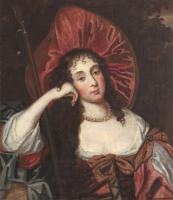


Samuel Pepys' Diary. 2nd September 1667. After dinner comes in Mr. Townsend; and there I was witness of a horrid rateing, which Mr. Ashburnham (age 63), as one of the Grooms of the King's Bedchamber, did give him for want of linen for the King's person; which he swore was not to be endured, and that the King (age 37) would not endure it, and that the King his father, would have hanged his Wardrobe-man should he have been served so the King having at this day no handkerchers, and but three bands to his neck, he swore. Mr. Townsend answered want of money, and the owing of the linen-draper £5000; and that he hath of late got many rich things made-beds, and sheets, and saddles, and all without money, and he can go no further but still this old man, indeed, like an old loving servant, did cry out for the King's person to be neglected. But, when he was gone, Townsend told me that it is the grooms taking away the King's linen at the quarter's end, as their fees, which makes this great want: for, whether the King can get it or no, they will run away at the quarter's end with what he hath had, let the King get more as he can. All the company gone, Sir G. Carteret (age 57) and I to talk: and it is pretty to observe how already he says that he did always look upon the Chancellor (age 58) indeed as his friend, though he never did do him any service at all, nor ever got any thing by him, nor was he a man apt, and that, I think, is true, to do any man any kindness of his own nature; though I do know that he was believed by all the world to be the greatest support of Sir G. Carteret with the King of any man in England: but so little is now made of it! He observes that my Lord Sandwich (age 42) will lose a great friend in him; and I think so too, my Lord Hinchingbrooke (age 19) being about a match calculated purely out of respect to my Chancellor's family.


Samuel Pepys' Diary. 2nd September 1667. By and by Sir G. Carteret (age 57), and Townsend, and I, to consider of an answer to the Commissioners of the Treasury about my Lord Sandwich's (age 42) profits in the Wardrobe; which seem, as we make them, to be very small, not £1000 a-year; but only the difference in measure at which he buys and delivers out to the King (age 37), and then 6d. in the pound from the tradesmen for what money he receives for him; but this, it is believed, these Commissioners will endeavour to take away. From him I went to see a great match at tennis, between Prince Rupert (age 47) and one Captain Cooke (age 51), against Bab. May (age 39) and the elder Chichly (age 53); where the King was, and Court; and it seems are the best players at tennis in the nation. But this puts me in mind of what I observed in the morning, that the King, playing at tennis, had a steele-yard carried to him, and I was told it was to weigh him after he had done playing; and at noon Mr. Ashburnham (age 63) told me that it is only the King's curiosity, which he usually hath of weighing himself before and after his play, to see how much he loses in weight by playing: and this day he lost 4 lbs.
Samuel Pepys' Diary. 2nd September 1667. I met with Fenn; and he tells me, as I do hear from some others, that the business of the Chancellor's (age 58) had proceeded from something of a mistake, for the Duke of York (age 33) did first tell the King (age 37) that the Chancellor had a desire to be eased of his great trouble; and that the King, when the Chancellor come to him, did wonder to hear him deny it, and the Duke of York was forced to deny to the King that ever he did tell him so in those terms: but the King did answer that he was sure that he did say some such thing to him; but, however, since it had gone so far, did desire him to be contented with it, as a thing very convenient for him as well as for himself (the King), and so matters proceeded, as we find. Now it is likely the Chancellor might, some time or other, in a compliment or vanity, say to the Duke of York, that he was weary of this burden, and I know not what; and this comes of it. Some people, and myself among them, are of good hope from this change that things are reforming; but there are others that do think but that it is a hit of chance, as all other our greatest matters are, and that there is no general plot or contrivance in any number of people what to do next, though, I believe, Sir W. Coventry (age 39) may in himself have further designs; and so that, though other changes may come, yet they shall be accidental and laid upon [not] good principles of doing good. Mr. May shewed me the King's new buildings, in order to their having of some old sails for the closing of the windows this winter. I dined with Sir G. Carteret (age 57), with whom dined Mr. Jack Ashburnham and Dr. Creeton, who I observe to be a most good man and scholar. In discourse at dinner concerning the change of men's humours and fashions touching meats, Mr. Ashburnham (age 63) told us, that he remembers since the only fruit in request, and eaten by the King and Queen (age 28) at table as the best fruit, was the Katharine payre, though they knew at the time other fruits of France and our own country.

John Evelyn's Diary. 2nd September 1669. I was this day very ill of a pain in my limbs, which continued most of this week, and was increased by a visit I made to my old acquaintance, the Earl of Norwich (age 54), at his house in Epping Forest, Essex, where are many good pictures put into the wainscot of the rooms, which Mr. Baker, his Lordship's predecessor there, brought out of Spain; especially the History of Joseph, a picture of the pious and learned Picus Mirandula, and an incomparable one of old Breugel. The gardens were well understood, I mean the potager. I returned late in the evening, ferrying over the water at Greenwich, Kent [Map].
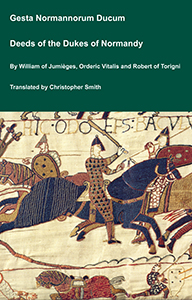
The Deeds of the Dukes of Normandy
The Gesta Normannorum Ducum [The Deeds of the Dukes of Normandy] is a landmark medieval chronicle tracing the rise and fall of the Norman dynasty from its early roots through the pivotal events surrounding the Norman Conquest of England. Originally penned in Latin by the monk William of Jumièges shortly before 1060 and later expanded at the behest of William the Conqueror, the work chronicles the deeds, politics, battles, and leadership of the Norman dukes, especially William’s own claim to the English throne. The narrative combines earlier historical sources with firsthand information and oral testimony to present an authoritative account of Normandy’s transformation from a Viking settlement into one of medieval Europe’s most powerful realms. William’s history emphasizes the legitimacy, military prowess, and governance of the Norman line, framing their expansion, including the conquest of England, as both divinely sanctioned and noble in purpose. Later chroniclers such as Orderic Vitalis and Robert of Torigni continued the history, extending the coverage into the 12th century, providing broader context on ducal rule and its impact. Today this classic work remains a foundational source for understanding Norman identity, medieval statesmanship, and the historical forces that reshaped England and Western Europe between 800AD and 1100AD.
Available at Amazon in eBook and Paperback format.
John Evelyn's Diary. 2nd September 1676. I paid £1,700 to the Marquis de Sissac, which he had lent to my Lord Berkeley (age 48), and which I heard the Marquis lost at play in a night or two.
John Evelyn's Diary. 2nd September 1680. There are besides many pompous volumes, some embossed with gold, and intaglios on agates, medals, etc. I spent three or four entire days, locked up, and alone, among these books and curiosities. In the rest of the private lodgings contiguous to this, are divers of the best pictures of the great masters, Raphael, Titian, etc., and in my esteem, above all, the "Noli me tangere" of our blessed Savior to Mary Magdalen after his Resurrection, of Hans Holbein; than which I never saw so much reverence and kind of heavenly astonishment expressed in a picture.
On 2nd September 1684 Lancelot Blackburne (age 25) and Catherine Talbot were married at the Savoy Chapel Royal [Map].
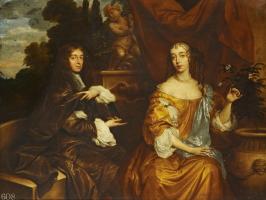
John Evelyn's Diary. 2nd September 1685. Lord Clarendon (Lord Privy Seale) wrote to let me know that the King being pleas'd to send him Lord Lieutenant into Ireland, was also pleas'd to nominate me one of the Commissrs to execute ye office of Privy Seale during his Lieutenancy there, it behoving me to wait upon his Ma* to give him thanks for this greate honour.
On 2nd September 1685 Alice Beaconshore Lady Lisle (age 67) was beheaded outside The Eclipse Inn, Winchester Marketplace [Map] from whose window she stepped onto the scaffold. The last judicial execution of a woman by beheading in England.

On 2nd September 1692 Sarah Alston Duchess Somerset (age 50) died.
On 19th November 1698 Henry Spelman of Wickmere (age 69) died. On 2nd September 1729 Margaret Spelman (age 50). Monument and chest tomb in Church of St Andrew, Wickmere [Map].
Henry Spelman of Wickmere: On 14th July 1629 he was born to Clement Spelman.
Margaret Spelman: Around 1648 she was born to Clement Spelman.


John Evelyn's Diary. 2nd September 1701. The death of King James (age 67), happening on the 15th of this month, N. S., after two or three days' indisposition, put an end to that unhappy Prince's troubles, after a short and unprosperous reign, indiscreetly attempting to bring in Popery, and make himself absolute, in imitation of the French, hurried on by the impatience of the Jesuits; which the nation would not endure.
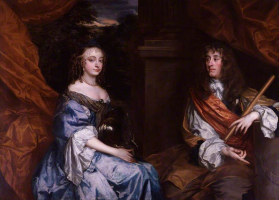


John Evelyn's Diary. 2nd September 1701. Died the Earl of Bath (deceased), whose contest with Lord Montague (age 40) about the Duke of Albemarle's estate, claiming under a will supposed to have been forged, is said to have been worth £10,000 to the lawyers. His eldest son shot himself a few days after his father's death; for what cause is not clear. He was a most hopeful young man, and had behaved so bravely against the Turks at the siege of Vienna, that the Emperor made him a Count of the Empire. It was falsely reported that Sir Edward Seymour (age 68) was dead, a great man; he had often been Speaker, Treasurer of the Navy, and in many other lucrative offices. He was of a hasty spirit, not at all sincere, but head of the party at any time prevailing in Parliament.
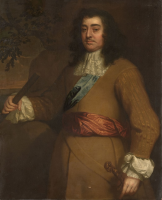

Calendar of Treasury Warrants 1718 Sep. 2nd September 1718. Royal sign manual for 1,000l. to Paty Byng, Esq.: without account: as a mark of royal favour in consideration of his service in bringing letters from our Admiral Sir George Byng (age 55) with a particular account of the engagement [1718 Battle of Cape Passaro] with the Spanish Fleet off Cape Passaro the 31st July last. (Money warrant dated Sept. 3 hereon.) (Money order dated Sept. 3 hereon.) (Letter of direction dated Sept. 5 hereon.) King's Warrant Book XXIX, p. 104. Order Book X, p. 157. Disposition Book XXIV, p. 147.


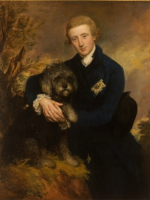
On 2nd September 1746 Henry Scott 3rd Duke Buccleuch was born to Francis Scott (age 25) and Caroline Campbell 1st Baroness Greenwich (age 28). He baptised at St George's Church, Hanover Square on 29th September 1746. He a great x 3 grandson of King Charles II of England Scotland and Ireland. He married 2nd May 1767 his fourth cousin Elizabeth Montagu Duchess Buccleuch, daughter of George Brudenell aka Montagu 1st Duke Montagu and Mary Montagu Duchess of Montagu, and had issue.
On 2nd September 1752 Great Britain and Ireland adopted the Gregorian Calendar and corrected the date losing eleven days. Wednesday 2nd September 1752 was followed by Thursday 14th September 1752. The tax year requiring 365 days slipped from commencing on 25 March, Lady Day, to 05 April as a consequence.
On 2nd September 1753 Maria Joséphine of Savoy was born to Victor Amadeus III King Sardinia (age 27) and Infanta Maria Antonia Spain (age 23). She a great x 3 granddaughter of King Charles I of England, Scotland and Ireland. She married 14th May 1771 her second cousin once removed Louis XVIII King France.


On 2nd September 1784 William George Henry Somerset was born to Henry Somerset 5th Duke Beaufort (age 39) and Elizabeth Boscawen Duchess Beaufort (age 37). He married 29th June 1813 Elizabeth Molyneux, daughter of General Thomas Molyneau 5th Baronet and Elizabeth Perrin Lady Molyneux.
On 2nd September 1788 George Montagu 4th Duke Manchester (age 51) died. His son William (age 16) succeeded 5th Duke Manchester, 8th Earl Manchester, 8th Viscount Mandeville, 8th Baron Montagu of Kimbolton.
William of Worcester's Chronicle of England
William of Worcester, born around 1415, and died around 1482 was secretary to John Fastolf, the renowned soldier of the Hundred Years War, during which time he collected documents, letters, and wrote a record of events. Following their return to England in 1440 William was witness to major events. Twice in his chronicle he uses the first person: 1. when writing about the murder of Thomas, 7th Baron Scales, in 1460, he writes '… and I saw him lying naked in the cemetery near the porch of the church of St. Mary Overie in Southwark …' and 2. describing King Edward IV's entry into London in 1461 he writes '… proclaimed that all the people themselves were to recognize and acknowledge Edward as king. I was present and heard this, and immediately went down with them into the city'. William’s Chronicle is rich in detail. It is the source of much information about the Wars of the Roses, including the term 'Diabolical Marriage' to describe the marriage of Queen Elizabeth Woodville’s brother John’s marriage to Katherine, Dowager Duchess of Norfolk, he aged twenty, she sixty-five or more, and the story about a paper crown being placed in mockery on the severed head of Richard, 3rd Duke of York.
Available at Amazon in eBook and Paperback format.
On 2nd September 1795 Gilbert Stuart Newton was born.
On 2nd September 1831 Mary Isabella Somerset Duchess Rutland (age 75) died.
Ten Years' Digging. On the 2nd of September [Note. This is probably December], we resumed the examination. Whilst still within the central bason, we found, near to its western limit, some bones of a full-grown human skeleton, a horse's tooth, one instrument of calcined flint, and many unburnt flakes of the same. The lower part of the barrow in this direction was chiefly composed of large stones, with but little earth amongst them, which led us to suppose that there was no interment in their vicinity, as all the other skeletons were surrounded by small stones, mixed with earth. The east side, untouched before from want of time, was next examined, where, at the depth of two feet six inches, we found the disturbed remains of a young person, covered with small stones and earth, lying on the natural surface and accompanied by rats' bones, a piece of earthenware, and some small flints. We found that this skeleton had been disturbed by the formation of a grave close to it, cut nine inches deep in the rock, for the reception of a later interment, which was discovered immediately after. This grave was irregular both in form and depth, being deepest in the middle, so that the skull and opposite extremities were on a higher level than the rest of the bones. The skeleton, which was that of a tall young man whose femur measures 19½ inches, lay on the left side in the usual contracted position, embedded in earth which presented the appearance and was actually of the consistence of mud, arising from the percolation of water through the overlying mound. A rude piece of black flint lay under the upper part of the body, and at a higher level, above the right shoulder, was an elegantly-shaped bronze dagger, 4¾ inches long, with two rivets attached, between which are two holes that have never been filled with metal, but which may have served to bind the dagger more securely to its handle, by thongs of leather or sinews of animals. It presents the corrugated surface usual on bronze instruments that have been buried in their leather sheaths, and is further enriched by the impressions of a few maggots or larvae of insects. Several small pieces of flint wers found in this grave, which at one point was only about a yard from the second discovered by the first day's excavation.

2nd September 1898. James Lafayette (age 45). Photograph of Mary Theresa "Daisy" Cornwallis-West (age 25).
Mary Theresa "Daisy" Cornwallis-West: On 28th June 1873 she was born to William Cornwallis-West and Mary "Patsy" Fitzpatrick at Ruthin Castle [Map]. On 29th June 1943 Mary Theresa "Daisy" Cornwallis-West died.
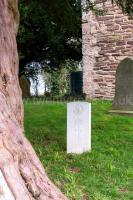
After 2nd September 1915. St Andrew's Church, Bredwardine [Map]. Grave of Tom Gammon. Born in Bredwarine. King's Shropshire Light Infantry "C" Coy. 8th Bn. Died from an abscess aged twenty-three at the Cambridge Hospital in Aldershot where the battalion was training. The date of his daeth either 1st of September, as recorded on his grave, or the 2nd, as recorded on the memorial inside the Church. He was born in Bredwardine on June 25, 1892, to Thomas Arthur Gammond (died 1939) and Jane, née Davies (died 1935).
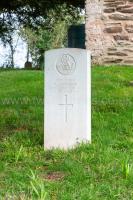
On 2nd September 1919 Georges Clairin (age 75) died.
On 2nd September 1920 Daphne Crommelin Russell was born to Hastings William Russell 12th Duke Bedford (age 31) and Louisa Crommelin Roberta Jowitt Whitwell Duchess Bedford.
On 2nd September 1966 Nell Vere Stead Duchess Manchester (age 64) died.
On 2nd September 1243 Gilbert "Red Earl" Clare 7th Earl Gloucester 6th Earl Hertford was born to Richard de Clare 6th Earl Gloucester 5th Earl Hertford (age 21) and Maud Lacy Countess Gloucester and Hertford (age 20). He married (1) 1253 his half fifth cousin Alice or Alix Lusignan Countess Gloucester and Hertford, daughter of Hugh XI of Lusignan VI Count of La Marche II Count Angoulême and Yolande Capet Countess Lusignan, La Marche and Angoulême, and had issue (2) 2nd May 1290 his half fifth cousin Joan of Acre Countess Gloucester and Hertford, daughter of King Edward I of England and Eleanor of Castile Queen Consort England, and had issue.
On 2nd September 1360 Richard Cornwall 5th Baron Burford was born to Geoffrey Cornwall 3rd Baron Burford (age 24) at Burford, Shropshire [Map].
On 2nd September 1489 Charles Valois IV Duke Alençon was born to Rene Valois Duke Alençon (age 35) and Margaret Lorraine Duchess Alençon (age 26).
On 2nd September 1648 Duchess Magdalena Sibylle of Saxe Gotha Altenburg was born to Augustus Duke of Saxe Weissenfels (age 34) and Anna Maria of Mecklenburg-Schwerin (age 21). She married 14th November 1669 her third cousin once removed Frederick Saxe Coburg Altenburg I Duke Saxe Gotha Altenburg, son of Ernest "The Pious" Saxe Gotha I Duke Saxe Gotha and Elisabeth Sophie Saxe Altenburg Duchess Saxe Gotha, and had issue.
The History of William Marshal was commissioned by his son shortly after William’s death in 1219 to celebrate the Marshal’s remarkable life; it is an authentic, contemporary voice. The manuscript was discovered in 1861 by French historian Paul Meyer. Meyer published the manuscript in its original Anglo-French in 1891 in two books. This book is a line by line translation of the first of Meyer’s books; lines 1-10152. Book 1 of the History begins in 1139 and ends in 1194. It describes the events of the Anarchy, the role of William’s father John, John’s marriages, William’s childhood, his role as a hostage at the siege of Newbury, his injury and imprisonment in Poitou where he met Eleanor of Aquitaine and his life as a knight errant. It continues with the accusation against him of an improper relationship with Margaret, wife of Henry the Young King, his exile, and return, the death of Henry the Young King, the rebellion of Richard, the future King Richard I, war with France, the death of King Henry II, and the capture of King Richard, and the rebellion of John, the future King John. It ends with the release of King Richard and the death of John Marshal.
Available at Amazon in eBook and Paperback format.
On 2nd September 1660 Johanna Elisabeth Saxe Gotha was born to Ernest "The Pious" Saxe Gotha I Duke Saxe Gotha (age 58) and Elisabeth Sophie Saxe Altenburg Duchess Saxe Gotha (age 40) at Gotha. Coefficient of inbreeding 3.17%. She died aged less than one years old.
On 2nd September 1710 Charles Cockayne 5th Viscount Cullen was born to Charles Cockayne 4th Viscount Cullen (age 23). He married (1) 18th April 1732 Ann Warren Viscountess Cullen and had issue (2) 16th December 1754 Sophia Baxter Viscountess Cullen and had issue.
On 2nd September 1726 Edward Harley 4th Earl of Oxford and Earl Mortomer was born to Edward Harley 3rd Earl of Oxford and Earl Mortimer (age 27) and Martha Morgan Countess of Oxford and Mortimer (age 27). He married 1751 Susanna Archer Countess of Oxford and Mortimer.
On 2nd September 1746 Henry Scott 3rd Duke Buccleuch was born to Francis Scott (age 25) and Caroline Campbell 1st Baroness Greenwich (age 28). He baptised at St George's Church, Hanover Square on 29th September 1746. He a great x 3 grandson of King Charles II of England Scotland and Ireland. He married 2nd May 1767 his fourth cousin Elizabeth Montagu Duchess Buccleuch, daughter of George Brudenell aka Montagu 1st Duke Montagu and Mary Montagu Duchess of Montagu, and had issue.
On 2nd September 1753 Admiral John Borlase Warren 1st Baronet was born to John Borlase Warren (age 53). He married 12th December 1780 Caroline Clavering Lady Warren and had issue.
On 2nd September 1753 Maria Joséphine of Savoy was born to Victor Amadeus III King Sardinia (age 27) and Infanta Maria Antonia Spain (age 23). She a great x 3 granddaughter of King Charles I of England, Scotland and Ireland. She married 14th May 1771 her second cousin once removed Louis XVIII King France.

On 2nd September 1761 George Fludyer was born to Samuel Fludyer 1st Baronet (age 57) and Caroline Brudenell Lady Fludyer. He married before 5th June 1794 Mary Fane, daughter of John Fane 9th Earl of Westmoreland and Susan Gordon Countess of Westmoreland, and had issue.

On 2nd September 1765 Elizabeth Kerr Baroness Dormer was born to William John Kerr 5th Marquess Lothian (age 28) and Elizabeth Fortescue 5th Marchioness Lothian (age 20). She married 20th November 1795 John Evelyn Pierrepont Dormer 10th Baron Dormer, son of Charles Dormer 8th Baron Dormer and Elizabeth Hamilton Baroness Dormer.
On 2nd September 1766 Elizabeth Courtenay was born to William Courtenay 8th Earl Devon (age 23) and Frances Clack Countess Devon. She married 7th June 1788 Charles Henry Somerset, son of Henry Somerset 5th Duke Beaufort and Elizabeth Boscawen Duchess Beaufort, and had issue.
On 2nd September 1781 Bishop John Jenkinson was born to Colonel John Jenkinson (age 47) and Frances Barker. He married 8th April 1813 Frances Augusta Pechell and had issue.
On 2nd September 1782 Harriet Pleydell-Bouverie was born to Jacob Pleydell-Bouverie 2nd Earl Radnor (age 32) and Anne Duncombe Countess Radnor (age 24).


Chronicle of Walter of Guisborough
A canon regular of the Augustinian Guisborough Priory, Yorkshire, formerly known as The Chronicle of Walter of Hemingburgh, describes the period from 1066 to 1346. Before 1274 the Chronicle is based on other works. Thereafter, the Chronicle is original, and a remarkable source for the events of the time. This book provides a translation of the Chronicle from that date. The Latin source for our translation is the 1849 work edited by Hans Claude Hamilton. Hamilton, in his preface, says: 'In the present work we behold perhaps one of the finest samples of our early chronicles, both as regards the value of the events recorded, and the correctness with which they are detailed; Nor will the pleasing style of composition be lightly passed over by those capable of seeing reflected from it the tokens of a vigorous and cultivated mind, and a favourable specimen of the learning and taste of the age in which it was framed.'
Available at Amazon in eBook and Paperback format.
On 2nd September 1784 William George Henry Somerset was born to Henry Somerset 5th Duke Beaufort (age 39) and Elizabeth Boscawen Duchess Beaufort (age 37). He married 29th June 1813 Elizabeth Molyneux, daughter of General Thomas Molyneau 5th Baronet and Elizabeth Perrin Lady Molyneux.
On 2nd September 1784 Leicester FitzGerald Charles Stanhope 5th Earl of Harrington was born to Charles Stanhope 3rd Earl of Harrington (age 31) and Jane Fleming Countess Harrington (age 29). He a great x 3 grandson of King Charles II of England Scotland and Ireland. He married 23rd April 1831 Elizabeth Green Countess Harrington and had issue.


On 2nd September 1785 James Whalley-Smythe-Gardiner 3rd Baronet was born to James Whalley-Smythe-Gardiner 2nd Baronet (age 36). He married 17th August 1807 Frances Mosley Lady Whalley-Smythe-Gardiner and had issue.
On 2nd September 1793 Major-General Henry Floyd 2nd Baronet was born to John Floyd 1st Baronet (age 45).
On 2nd September 1794 George Finch was born illegitimately to George Finch 9th Earl Winchilsea 4th Earl Nottingham (age 41). He married (1) 1819 Jane Tollemache (2) 22nd October 1832 his fifth cousin once removed Louisa Elizabeth Somerset, daughter of Henry Charles Somerset 6th Duke Beaufort and Charlotte Sophia Leveson-Gower Duchess Beaufort, and had issue.
On 2nd September 1794 John Peter Boileau 1st Baronet was born to John Peter Boileau and Henrietta Pollen. He married 1825 Catherine Sarah Elliot-Murray-Kynynmound Lady Boileau, daughter of Gilbert Elliot 1st Earl Minto and Anna-Maria Amyand Countess Minto, and had issue.
On 2nd September 1795 Gilbert Stuart Newton was born.
On 2nd September 1798 Thomas Elmsley Croft 7th Baronet was born to Richard Croft 6th Baronet (age 36) and Margaret Denman.

On 2nd September 1803 Charlotte Laura Wodehouse was born to John Wodehouse 2nd Baron Wodehouse (age 32) and Charlotte Norris Baroness Woodhouse.

On 2nd September 1805 Charles Evelyn Pierrepont was born to Charles Herbert Pierrepont 2nd Earl Manvers (age 27) and Mary Laetitia Eyre Countess Manvers (age 20). He married 16th August 1832 Emily Littleton, daughter of Edward John Walhouse aka Littleton 1st Baron Hatherton and Hyacinthe Mary Wellesley Baroness Hatherton.
On 2nd September 1809 Clementina Drummond Willoughby 24th Baroness Willoughby of Eresby Baroness Aveland was born to Peter Drummond Burrell 2nd Baron Gwydyr 22nd Baron Willoughby (age 27) and Clementina Sarah Drummond Baroness Gwydyr and Willoughby (age 23). She married 8th October 1827 her sixth cousin Gilbert John Heathcote 1st Baron Aveland, son of Gilbert Heathcote 4th Baronet and Catherine Sophia Manners Lady Heathcote, and had issue.
On 2nd September 1812 Henry William St Pierre Bunbury was born to Henry Edward Bunbury 7th Baronet (age 34) and Louisa Amelia Fox. He married 30th November 1852 his second cousin once removed Cecila Caroline Napier and had issue.
Chronicle of Abbot Ralph of Coggeshall
The Chronicle of Abbot Ralph of Coggeshall (Chronicon Anglicanum) is an indispensable medieval history that brings to life centuries of English and European affairs through the eyes of a learned Cistercian monk. Ralph of Coggeshall, abbot of the Abbey of Coggeshall in Essex in the early 13th century, continued and expanded his community’s chronicle, documenting events from the Norman Conquest of 1066 into the tumultuous reign of King Henry III. Blending eyewitness testimony, careful compilation, and the monastic commitment to record-keeping, this chronicle offers a rare narrative of political intrigue, royal power struggles, and social upheaval in England and beyond. Ralph’s work captures the reigns of pivotal figures such as Richard I and King John, providing invaluable insights into their characters, decisions, and the forces that shaped medieval rule. More than a simple annal, Chronicon Anglicanum conveys the texture of medieval life and governance, making it a rich source for scholars and readers fascinated by English history, monastic authorship, and the shaping of the medieval world.
Available at Amazon in eBook and Paperback format.
On 2nd September 1822 Charles Stewart Hardinge 2nd Viscount Hardinge was born to Henry Hardinge 1st Viscount Hardinge (age 37) and Emily Jane Stewart Viscountess Hardinge (age 33). He married 10th April 1856 Lavinia Bingham Viscountess Hardinge, daughter of George Charles Bingham 3rd Earl Lucan and Anne Brudenell Countess Lucan, and had issue.
On 2nd September 1826 William Parker 9th Baronet was born to Vice-Admiral Hyde Parker (age 42) and Caroline Eden (age 25).
On 2nd September 1836 Henry Brougham 3rd Baron Brougham and Vaux was born to William Brougham 2nd Baron Brougham and Vaux (age 40) and Emily Frances Taylor Lady Brougham. He married 1882 Adora Frances Olga Wells Lady Musgrave and Baroness Brougham and had issue.
On 2nd September 1837 George Henry Waller 3rd Baronet was born to Thomas Wathen Phipps Waller 2nd Baronet (age 32). He married before 11th June 1880 Beatrice Katherine Frances Tower Lady Waller and had issue.
On 2nd September 1845 Conrad Adderly Dillon was born to Arthur Edmund Denis Dillon 16th Viscount Dillon (age 33) He married before 4th November 1901 Ellen Louisa Dashwood, daughter of Henry William Dashwood 5th Baronet, and had issue.

On 2nd September 1854 Henry Neville 3rd Marquess Abergavenny was born to William Neville 1st Marquess Abergavenny (age 27) and Caroline Vanden Bempte Johnston Marchioness Abergavenny. He married (1) 12th September 1876 Violet Streatfeild and had issue (2) December 1880 Maud Augusta Beckett Dickinson and had issue (3) 18th October 1928 his first cousin Mary Frances Neville Marchioness Abergavenny.
On 2nd September 1860 Ardyn Mary Tyrwhitt Viscountess Knollys was born to Henry Thomas Tyrwhitt-Jones 3rd Baronet (age 36) and Emma Harriet Wilson 12th Baroness Berners (age 24). She married 11th April 1887 Francis Knollys 1st Viscount Knollys and had issue.
On 2nd September 1868 Frederick Frankland 10th Baronet was born to Colonel William Adolphus 9th Baronet (age 31). He married in or before 1906 Mary Cecil Curzon 17th Baroness Zouche and had issue.
On 2nd September 1869 Walter James 3rd Baron Northbourne was born to Walter Henry James 2nd Baron Northbourne (age 23) and Edith Emeline Mary Lane Baroness Northbourne.
On 2nd September 1879 Charles Edward Ponsonby 1st Baronet was born to Edwin Charles William Ponsonby (age 27). He married 23rd July 1912 Winifred Gibbs, daughter of Herbert Gibbs 1st Baron Hunsdon and Anna Maria Gibbs Baroness Hunsdon, and had issue.
On 2nd September 1890 Albert Nelson 6th Earl Nelson was born to Edward Nelson 5th Earl Nelson (age 30).
William of Worcester's Chronicle of England
William of Worcester, born around 1415, and died around 1482 was secretary to John Fastolf, the renowned soldier of the Hundred Years War, during which time he collected documents, letters, and wrote a record of events. Following their return to England in 1440 William was witness to major events. Twice in his chronicle he uses the first person: 1. when writing about the murder of Thomas, 7th Baron Scales, in 1460, he writes '… and I saw him lying naked in the cemetery near the porch of the church of St. Mary Overie in Southwark …' and 2. describing King Edward IV's entry into London in 1461 he writes '… proclaimed that all the people themselves were to recognize and acknowledge Edward as king. I was present and heard this, and immediately went down with them into the city'. William’s Chronicle is rich in detail. It is the source of much information about the Wars of the Roses, including the term 'Diabolical Marriage' to describe the marriage of Queen Elizabeth Woodville’s brother John’s marriage to Katherine, Dowager Duchess of Norfolk, he aged twenty, she sixty-five or more, and the story about a paper crown being placed in mockery on the severed head of Richard, 3rd Duke of York.
Available at Amazon in eBook and Paperback format.
On 2nd September 1911 Guy Cunard 7th Baronet was born to Alick May Cunard (age 29).
On 2nd September 1920 Daphne Crommelin Russell was born to Hastings William Russell 12th Duke Bedford (age 31) and Louisa Crommelin Roberta Jowitt Whitwell Duchess Bedford.
On 2nd September 1942 Robin Maurice Fox-Strangways 10th Earl of Ilchester was born to Raymond George Fox-Strangways.
On 2nd September 1381 Frederick Wittelsbach Duke Bavaria (age 42) and Maddalena Visconti Duchess Bavaria (age 15) were married. She by marriage Duchess Bavaria. The difference in their ages was 27 years. He the son of Stephen Wittelsbach II Duke Bavaria and Elisabeth Barcelona Duchess Bavaria.
On 2nd September 1684 Lancelot Blackburne (age 25) and Catherine Talbot were married at the Savoy Chapel Royal [Map].
On 2nd September 1696 William Gresley 3rd Baronet (age 34) and Barbara Walcot were married.
On 2nd September 1725 Henry Vane 1st Earl Darlington (age 20) and Grace Fitzroy Countess Darlington (age 28) were married. She the daughter of Charles Fitzroy 1st Duke Southampton 2nd Duke Cleveland (age 63) and Anne Pulteney Duchess Southampton Duchess of Cleveland (age 61).
On 2nd September 1750 Vice-Admiral Peter Denis 1st Baronet (age 37) and Elizabeth Pappet were married.
On 2nd September 1824 Edward Granville Eliot 3rd Earl St Germans (age 26) and Jemima Cornwallis Countess St Germans (age 20) were married at St James' Church, Piccadilly. She the daughter of Charles Cornwallis 2nd Marquess Cornwallis and Louisa Gordon Marchioness Cornwallis (age 47). He the son of William Eliot 2nd Earl St Germans (age 57) and Georgiana Augusta Leveson-Gower.
On 2nd September 1873 Robert Bermingham Clements 4th Earl of Leitrim (age 26) and Winifred Coke Countess of Leitrim (age 22) were married at Walsingha, possibly Walsingham Priory [Map]. She the daughter of Thomas Coke 2nd Earl of Leicester (age 50) and Juliana Whitbread Countess Leicester.
On 2nd September 1885 William Cecil (age 30) and Mary Rothes Tyssen-Amherst 2nd Baroness Amherst (age 28) were married. He the son of William Alleyne Cecil 3rd Marquess Exeter (age 60).
On 2nd September 1939 George Townshend 7th Marquess Townshend (age 23) and Elizabeth Luby Marchioness Townshend were married. She by marriage Marchioness Townshend. He the son of John Townshend 6th Marquess Townshend and Gwladys Sutherst Marchioness Townshend (age 55).
On 2nd September 1953 Eric Lubbock 4th Baron Avebury (age 24) and Kina-Maria O'Kelly de Gallagh Baroness Avebury were married.
On 2nd September 1967 Andrew Cosmo Lewis Duff-Gordon 8th Baronet (age 33) and Grania Mary Villiers-Stuart Lady Duff-Gordon (age 26) were married. She by marriage Lady Duff of Halkin in Aberdeenshire.
On 2nd September 1277 Maurice Fitzgerald 4th Lord Offaly (age 39) died at Ross, County Wexford. His nephew John (age 27) succeeded 4th Lord Offaly.
Chronicle of a Bourgeois of Valenciennes
Récits d’un bourgeois de Valenciennes aka The Chronicle of a Bourgeois of Valenciennes is a vivid 14th-century vernacular chronicle written by an anonymous urban chronicler from Valenciennes in the County of Hainaut. It survives in a manuscript that describes local and regional history from about 1253 to 1366, blending chronology, narrative episodes, and eyewitness-style accounts of political, military, and social events in medieval France, Flanders, and the Low Countries. The work begins with a chronological framework of events affecting Valenciennes and its region under rulers such as King Philip VI of France and the shifting allegiances of local nobility. It includes accounts of conflicts, sieges, diplomatic manoeuvres, and the impact of broader struggles like the Hundred Years’ War on urban life in Hainaut. Written from the perspective of a burgher (bourgeois) rather than a monastery or royal court, the chronicle offers a rare lay viewpoint on high politics and warfare, reflecting how merchants, townspeople, and civic institutions experienced the turbulence of the 13th and 14th centuries. Its narrative style combines straightforward reporting of events with moral and civic observations, making it a valuable source for readers interested in medieval urban society, regional politics, and the lived experience of war and governance in pre-modern Europe.
Available at Amazon in eBook and Paperback format.
On 2nd September 1375 Margaret Percy Baroness Ferrers Groby (age 45) died.
On 2nd September 1399 Humphrey Plantagenet 2nd Earl Buckingham (age 18) died. He was buried at Waldon Priory and Abbey [Map]. Earl Buckingham extinct.
On 2nd September 1473 Elizabeth Scales Countess Rivers died. Baron Scales extinct.
On 2nd September 1574 Anne Wentworth Baroness Wentworth died.
On 2nd September 1607 Dorothy Port Countess Huntingdon died.
On 2nd September 1609 Thomas Scrope 10th Baron Scrope of Bolton (age 42) died at Langar, Nottinghamshire. His son Emanuel (age 25) succeeded 11th Baron Scrope of Bolton.
On 2nd September 1680 Francis Wenman 1st Baronet (age 50) died. His son Richard (age 23) succeeded 2nd Baronet Wenman of Caswell.

On 2nd September 1688 Robert Vyner 1st Baronet (age 57) died at Windsor, Berkshire [Map]. Baronet Vyner of London extinct.
On 2nd September 1691 Isabella Stafford-Howard Marchioness Winchester died.
On 2nd September 1692 Sarah Alston Duchess Somerset (age 50) died.
On 2nd September 1705 Charles Shuckburgh 2nd Baronet (age 46) died. His son John (age 22) succeeded 3rd Baronet Schuckburgh of Schuckburgh in Warwickshire.
Chronicle of Walter of Guisborough
A canon regular of the Augustinian Guisborough Priory, Yorkshire, formerly known as The Chronicle of Walter of Hemingburgh, describes the period from 1066 to 1346. Before 1274 the Chronicle is based on other works. Thereafter, the Chronicle is original, and a remarkable source for the events of the time. This book provides a translation of the Chronicle from that date. The Latin source for our translation is the 1849 work edited by Hans Claude Hamilton. Hamilton, in his preface, says: 'In the present work we behold perhaps one of the finest samples of our early chronicles, both as regards the value of the events recorded, and the correctness with which they are detailed; Nor will the pleasing style of composition be lightly passed over by those capable of seeing reflected from it the tokens of a vigorous and cultivated mind, and a favourable specimen of the learning and taste of the age in which it was framed.'
Available at Amazon in eBook and Paperback format.
On 2nd September 1740 John Chichester 4th Baronet (age 52) died. His son John (age 19) succeeded 5th Baronet Chichester of Raleigh in Devon.
On 2nd September 1753 Henry Bacon 7th Baronet (age 58) died. His brother Richard (age 58) succeeded 8th Baronet Bacon of Mildenhall in Suffolk.
On 2nd September 1754 Tancred Robinson 3rd Baronet (age 69) died. He was buried at St Crux Church, York [Map] where there was a sarcophagus with Lord Mayor's regalia in relief on side, surmounted by seated cherub with portrait medallion, cross-staff, anchors, cannon etc., obelisk-shaped marble slab behind with cartouche-of-arms of Robinson with escutcheon of pretence of Norton, and below shaped apron with inscription, signed Robt. Avray Eboraci Sculpt. His son William (age 41) succeeded 4th Baronet Robinson of Newby in Yorkshire.
On 2nd September 1760 Henry L'Estrange 6th Baronet died. His first cousin twice removed Roger (age 78) succeeded 7th Baronet Strange of Hunstanton in Norfolk.
On 2nd September 1768 Mary Lepell Baroness Hervey (age 68) died.


On 2nd September 1770 William Annesley 1st Viscount Glerawly (age 60) died. His son Francis (age 29) succeeded 2nd Viscount Glerawly of County Fermanagh, 2nd Baron Annesley of Castle Wellan in County Down.
On 2nd September 1773 Richard Schuckburgh (age 50) died. He appears to have died three weeks after his brother Charles Schuckburgh 5th Baronet (deceased) in which case should have become 6th Baronet?
On 2nd September 1784 Robert Eden 1st Baronet (age 42) died. His son Frederick (age 18) succeeded 2nd Baronet Eden of Maryland.
On 2nd September 1788 George Montagu 4th Duke Manchester (age 51) died. His son William (age 16) succeeded 5th Duke Manchester, 8th Earl Manchester, 8th Viscount Mandeville, 8th Baron Montagu of Kimbolton.
On 2nd September 1831 Mary Isabella Somerset Duchess Rutland (age 75) died.
On 2nd September 1884 Elizabeth Frances Jocelyn Viscountess Powerscout (age 70) died.
Chronicle of Abbot Ralph of Coggeshall
The Chronicle of Abbot Ralph of Coggeshall (Chronicon Anglicanum) is an indispensable medieval history that brings to life centuries of English and European affairs through the eyes of a learned Cistercian monk. Ralph of Coggeshall, abbot of the Abbey of Coggeshall in Essex in the early 13th century, continued and expanded his community’s chronicle, documenting events from the Norman Conquest of 1066 into the tumultuous reign of King Henry III. Blending eyewitness testimony, careful compilation, and the monastic commitment to record-keeping, this chronicle offers a rare narrative of political intrigue, royal power struggles, and social upheaval in England and beyond. Ralph’s work captures the reigns of pivotal figures such as Richard I and King John, providing invaluable insights into their characters, decisions, and the forces that shaped medieval rule. More than a simple annal, Chronicon Anglicanum conveys the texture of medieval life and governance, making it a rich source for scholars and readers fascinated by English history, monastic authorship, and the shaping of the medieval world.
Available at Amazon in eBook and Paperback format.
On 2nd September 1919 Georges Clairin (age 75) died.
On 2nd September 1925 William Charles Cooper 3rd Baronet Cooper (age 73) died. His son William (age 47) succeeded 4th Baronet Cooper of Woollahra in New South Wales.
On 2nd September 1926 Edith Georgiana Turnor Countess Cawdor (age 82) died.
On 2nd September 1938 Henry Lopes 2nd Baron Ludlow (age 69) died. Baron Ludlow of Heywood in Wiltshire extinct.
On 2nd September 1966 Nell Vere Stead Duchess Manchester (age 64) died.
On 2nd September 1971 Mungo Murray 7th and 6th Earl of Mansfield (age 71) died. His son William (age 41) succeeded 8th Earl Mansfield in Middlesex, 7th Earl Mansfield in Nottinghamshire, 12th Viscount Stormont.