


08 Aug is in August.
1503 Marriage of James IV of Scotland and Margaret Tudor
1540 Marriage of Henry VIII and Catherine Howard
On 8th August 869 Lothair II King Lotharingia (age 34) died.
Anglo-Saxon Chronicle. 8th August 1065. This year, before Lammas, ordered Earl Harold (age 43) his men to build at Portskeweth in Wales. But when he had begun, and collected many materials, and thought to have King Edward (age 62) there for the purpose of hunting, even when it was all ready, came Caradoc, son of Griffin, with all the gang that he could get, and slew almost all that were building there; and they seized the materials that were there got ready. Wist we not who first advised the wicked deed. This was done on the mass-day of St. Bartholomew.
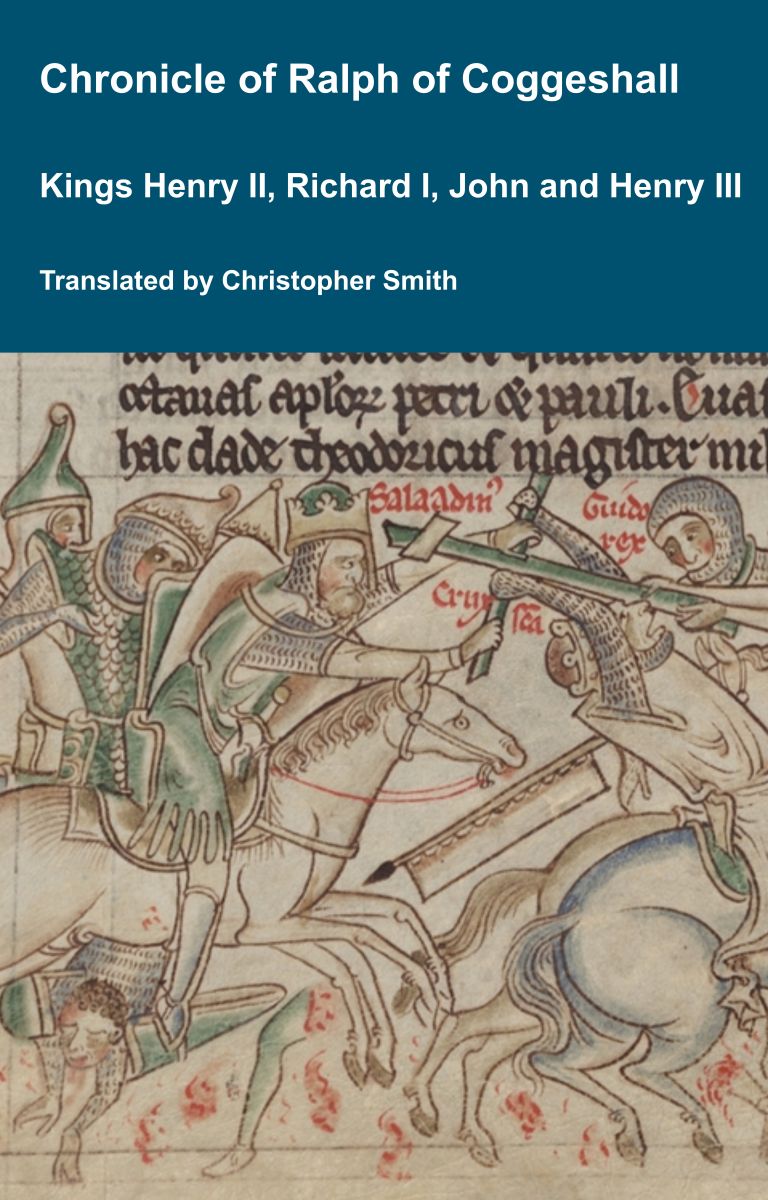 Chronicum Anglicanum by Ralph Coggeshall. [8th August 1192] While the king was resting with his weary army at Acre for scarcely three days, and was considering his speedy return, behold, sorrowful messengers arrived, sent from Jaffa to the king, announcing that Saladin with his whole army had besieged Jaffa; and that the city would very quickly be captured, and all the knights and servants whom he had stationed there for its defence would be slaughtered, unless by swift relief he should bring aid to the besieged. On hearing this, the entire army of the Christians groaned deeply and was very greatly terrified. But King Richard (age 34), greatly dismayed in spirit by such news, tried, both by himself and through others, to recall the Duke of Burgundy, who was offended, to peace and concord, and earnestly begged him to bring some help to so great a calamity. But the duke, disdaining to listen to their pleas, and unwilling to be troubled by their importunate request, set out by night with his men on the road toward Tyre. When he arrived there, immediately, by divine judgment, he was struck terribly, and with his mind deranged, ended his life by a miserable death. Meanwhile, the king at once, and a certain part of his army, boarded prowed ships, and committed their sails to the winds. But the ships, driven back in the opposite direction by the force of the winds and the violence of the waves, were for a long time carried toward Cyprus. Seeing this, those who had remained on land were struck with excessive grief and fear, and secretly suspected that the king was retreating homeward. But the king, with those who were with him, violently rowing against the fury of the winds, plowed the sea obliquely, and on the third day, as the dawn was already glowing, landed at the port of Joppa with only three ships.
Rege autem apud Ptolomaida cum fesso exercitu vix per triduum quiescente, atque de celeri ejus reditu providente, adsunt flebiles nuncii a Jope usque ad regem directi, nunciantes Saláádinum cum universo exercitu Jopen obsedisse; civitatemque celeriter fore capiendam, omnesque milites et servos, quos ob custodiam ibi collocaverat, trucidandos, nisi celeri subventione obsessis præsidium ferat. Quo audito, omnis Christianorum exercitus graviter ingemuit, valdeque perterritus est. Rex vero Ricardus, de tali rumore valde animo consternatus, ducem Burgundiæ offensum, tum per se, tum per alios, ad pacem et concordiam revocare studuit, atque obnixius rogavit ut tantæ calamitati aliquod subsidium ferat; quorum preces dux audire dedignans, eorumque importuna postulatione inquietari nolens, nocte iter cum suis versus Tyrum arripuit. Quo dum perveniret, confestim divino judicio terribiliter percussus, menteque alienatus, vitam miserabili morte terminavit. Rex autem illico et quædam pars exercitus sui rostratas naves conscendunt, ac vela ventis committunt. Sed naves, vi ventorum ac sævitia fluctuum in contrarium retortæ, versus Cyprum diutius impelluntur; quod videntes qui in terra remanserant, nimio dolore ac timore perculsi, regem latenter repatriare suspicantur. Rex vero et qui cum eo erant, contra rabiem ventorum violento remigio æquora ex obliquo sulcantes, cum tribus tantum navibus tertia die, rutilante jam aurora, in portu Jopensi applicuerunt.
 Chronicle of Walter of Guisborough. Nor was it a wonder, it is believed, that the dispute arose over the manner of visitation, for they fell into the snare which they had long before prepared. For the canons of Durham had refused for many years to admit the visitation of the Archbishop of York, whoever held that office, though they ought to have received it obediently and as dutiful sons. For Archbishop Walter Giffard, wishing to make a visitation, was turned away. His successor, William Wickwane, continuing the same business, sent letters for the purpose of making a visitation during the time of Robert de Insula, then Bishop of Durham, but was diverted therefrom. For the chapter, raising exceptions, declared that according to the form of that constitution Romana ecclesia, De Censibus, Exactionibus, et Procurationibus,1 they were ready to receive him, but only if he had first visited his own church and province; since he had not done so, they appealed and refused to admit him. He, in turn, excommunicated them and departed. When at length the said Robert de Insula died, the same Archbishop William sent his letters there in order to make a visitation, not as archbishop, but as bishop, since during the time of vacancy the spiritual jurisdiction belonged to him. But they replied that they were ready to admit his visitation only according to a certain agreement made between themselves and one Richard le Poor,2 formerly Bishop of Durham, namely, that he should visit with only a single cleric, both for himself and for his successors, and not otherwise. Unaware of this agreement, he came there and requested admission on the sixth day before the Ides of August [8th August], in the year of our Lord 1282.
Nec fuit mirum, ut creditur, quod propter visitationis formam fiebat altercatio, quia ceciderunt in laqueum quem diu ante contexerant. Visitationem enim domini archiepiscopi Eborum, qui pro tempore fuerit, quam obedienter et filialiter recepisse debuerant, multis retro temporibus noluerunt admittere Dunolmenses. Archiepiscopus enim Walterus Giffard visitare volens, repulsus est. Successor autem ejus Willelmus Wikkewan idem continuando negotium, missis literis causa visitationis faciendæ, tempore Roberti de Insula, tunc Dunolmensis episcopi, declinavit ibidem. Qui excipiendo proponentes, quod secundum formam illius constitutionis "Romana ecclesia," De Censibus, Exactionibus, et Procurationibus, parati erant recipere eum, si tamen primo suam ecclesiam et provinciam visitasset; sed quia non fecerat hoc, appellarunt, et eum admittere noluerunt. Ipse vero excommunicavit eos, et recessit. Mortuo tandem prædicto Roberto de Insula, idem archiepiscopus Willelmus direxit ibidem literas suas ut visitaret non tanquam archiepiscopus sed tanquam episcopus, eo quod tempus vacationis pertinebat ad eum in spiritualitate. At illi responderunt ei, quod parati erant visitation of eum admittere secundum quandam formam inter ipsos et quendam Ricardum le Pover, quondam Dunolmensem episcopum, initam, (quæ fuit, quod cum uno solo clerico visitaret) pro se et successoribus suis, et alias non. Qui, hujus compositionis ignorans, venit ibidem, et petiit se admitti, sexto scilicet idus Augusti, anno Domini MCCLXXXII.
Note 1. See the Liber Sextus Decretalium domini Bonifacii Papæ VIII, lib. 3.20, Nurem. 1486.
Note 2. This bishop, generally known as Richard Poore, was translated from Salisbury to Durham on the 22nd of July, 1228, and died on the 15th of April, 1237.
 Become a Member via our Buy Me a Coffee page to read more.
Chronicle of Walter of Guisborough. But if they should disdain to appear as aforesaid, nevertheless proceedings will be taken against them, to investigate, to pass sentence, or to make provision, concerning their contumacy, with the divine presence filling us, taking into account the nature of the matter, justice, and equity. In order that our summons of this kind may be brought to the common knowledge of all the persons of the aforesaid Order, we shall have it read publicly in the Apostolic Palace, in the presence of a great multitude of the faithful, and proclaimed in a public audience. We shall also have the charters and parchments containing this summons affixed to the doors or upon the thresholds of the greater church of Poitiers, which will, as it were, by loud proclamation and open notice, make this summons public, so that those whom this summons concerns can have no excuse to claim that such a summons has not reached them, or that they were unaware of it; since it is not believable that what is so openly proclaimed to all should remain unknown or concealed from them. Given at Poitiers, on the sixth Ides of August [8th August 1308], in the third year of our pontificate. And when these bulls had been read, the archbishop added that he had received certain letters from his proctor in the Roman court on the previous day, stating that the lord pope, with the advice of his cardinals, had postponed the matter until the following year; whereupon he dismissed each person to his own place.
Quod si prædictis contempserint comparere, nihilominus contra ipsos ad inquirendum et sententiandum seu ordinandum eorum contumaciam, divina replente præsentia, procedetur, negotii qualitate, justitia et æquitate pensatis. Ut autem hujusmodi nostra citatio ad communem omnium personarum prædicti ordinis notitiam deducatur, eam in palatio apostolico publice, præsente fidelium multitudine copiosa, et in audientia publica legi et publicari, necnon chartas et membranas, citationem continentes eandem, in majoris ecclesiæ Pictaviæ affigi ostiis seu super liminaribus faciemus, quæ citationem ipsam sic quasi sonoro præconio et patulo indicio publicabunt, ita quod hii, quos citatio ipsa continget, nullam possint excusationem prætendere quod ad eos talis citatio non pervenerit, vel quod ignoraverint eandem, cum non sit verisimile remanere quoad ipsos incognitum vel occultum quod tam patenter omnibus publicetur. Thursday, Datum Pictavis vi. idus Augusti, pontificatus nostri anno tertio. Lectisque sic bullis prædictis, adjecit archiepiscopus quod a procuratore suo, in curia Romana constituto, literas acceperat certas die proximo præcedente, quod dominus papa, de consilio cardinalium suorum, prolongaverat usque in annum sequentem, propter quod dimisit unumquemque in locum suum.
Become a Member via our Buy Me a Coffee page to read more.
Rymer's Fœdera Volume 3. For Alice Perrers (age 25), formerly a damsel of Philippa the Queen.
The King, to all to whom, etc., greeting. Know that we have granted to our beloved Alice Perrers, lately one of the ladies of the chamber of our dearest consort Philippa, late Queen of England, all the jewels, goods, and chattels which belonged to us or to our said late consort, and which came into the hands of Euphemia, who was the wife of Walter de Heselarton, knight, and which were afterwards by the said Alice received from the same Euphemia to our use, to have all the aforesaid jewels, goods, and chattels as our gift.
And moreover we acquit and discharge forever both the aforesaid Alice, and her heirs, executors, and tenants whatsoever, of all the aforesaid jewels, goods, and chattels.
In witness whereof, etc.
Witness the King, at Woodstock, the eighth day of August [1373]. By writ of privy seal.
Pro Alicia Perrers, domicellá Philippa nuper Reginæ.
Rex, omnibus ad quos, &c. salutem. Sciatis quod concessimus dilectæ nobis Aliciæ Perrers, nuper uni domicellarum cameræ carissimæ consortis nostræ Philippæ nuper Reginæ Angliæ, omnia jocalia, bona, et catalla quæ nostri vel ipsius nuper consortis nostræ fuerint, et ad manus Eufamiæ, quæ fuit uxor Walteri de Heselarton militis, devenerunt, et postmodum per dictam Aliciam ab eadem Eufamia ad opus nostrum recepta extiterunt, habenda omnia jocalia, bona, et catella prædicta præfatæ Alicia de dono nostro;
Et insuper tam præfatam Aliciam, quam hæredes, executores, et terræ tenentes ejusdem Aliciæ quoscumque, de omnibus jocalibus, bonis, et catallis prædictis acquietamus et exoneramus imperpetuùm.
In cujus, &c.
Teste Rege, apud Wodestok, viii. die Augusti. Per breve de privato sigillo.
Become a Member via our Buy Me a Coffee page to read more.
Patent Rolls. 8th August 1457. Westminster. Commission to Jasper, earl of Pembroke (age 25), James, earl of Wiltshire (age 36), Ralph de Sudeley (age 68), knight, John Beauchamp of Powyk (age 48), knight, and the sheriff of Gloucester, reciting that whereas the king at the suit of Alice Veell, widow, caused writs to be directed to Thomas de la Hay, Thomas Holte, William Tyffyn, Nicholas Kyng, Maurice Kyng and Roger Clyff to appear before the king and council on a certain day to answer touching riots and offences done to her by them, and because Thomas de la Hay received his writ and the others withdrew in order that the writs should not be delivered to them, and they appeared not, the king by other writs caused proclamation to be made in London and the said county that they should appear before the council or chancellor within a month after the last day of proclamation, pursuant to the ordinance made in the Parliament held at Redyng in 31 Henry VI, which writs were duly returned by the sheriffs of London and Gloucestershire, yet they appeared not; and appointing the said commissioners to arrest and bring them before the king in Chancery to answer touching the premises. By the Chancellor.
On 8th August 1478 Cardinal John Morton (age 58) was appointed Bishop of Ely.
On 8th August 1482 Margaret Beauchamp Duchess Somerset (age 72) died. She was buried at Wimborne Minster, Dorset [Map].
On 8th August 1482 Francesco Balzo II Duke Andria (age 72) died.
Chronicle of Abbot Ralph of Coggeshall
The Chronicle of Abbot Ralph of Coggeshall (Chronicon Anglicanum) is an indispensable medieval history that brings to life centuries of English and European affairs through the eyes of a learned Cistercian monk. Ralph of Coggeshall, abbot of the Abbey of Coggeshall in Essex in the early 13th century, continued and expanded his community’s chronicle, documenting events from the Norman Conquest of 1066 into the tumultuous reign of King Henry III. Blending eyewitness testimony, careful compilation, and the monastic commitment to record-keeping, this chronicle offers a rare narrative of political intrigue, royal power struggles, and social upheaval in England and beyond. Ralph’s work captures the reigns of pivotal figures such as Richard I and King John, providing invaluable insights into their characters, decisions, and the forces that shaped medieval rule. More than a simple annal, Chronicon Anglicanum conveys the texture of medieval life and governance, making it a rich source for scholars and readers fascinated by English history, monastic authorship, and the shaping of the medieval world.
Available at Amazon in eBook and Paperback format.
On 8th August 1493 Christoph Duke Wittelsbach I Duke Bavaria (age 44) died. His great uncle William succeeded III Duke Bavaria.
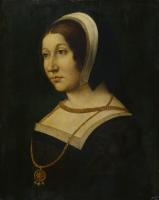
On 8th August 1503 King James IV of Scotland (age 30) and Margaret Tudor (age 13) were married at Holyrood Abbey [Map]. She by marriage Queen Consort Scotland. Thomas Howard 2nd Duke of Norfolk (age 60) and James Hamilton 1st Earl Arran (age 28) were present. She the daughter of King Henry VII of England and Ireland (age 46) and Elizabeth York Queen Consort England. He the son of King James III of Scotland and Margaret Oldenburg Queen Consort Scotland. They were third cousins. He a great x 4 grandson of King Edward III of England.
Cuthbert Cunningham 3rd Earl Glencairn (age 27) was restored 3rd Earl Glencairn.
Collectanea by John Leland [1502-1552]. The VIIIth Day of the said Monneth [8th August 1503] every Man apoynted hymselfe rychly, for the Honor of the noble Maryage. Bet twyx VIII and IX oth Clock everychon was rady, nobly apperyld; and the Ladyes abouffe said came rychly arayd, sum in Gownys of Cloth of Gold, the others of Cremsyn Velvet and Blak. Others of Satyn and of Tynsell, of Damaske, and of Chamlet of many Colours, Hoods, Chaynnes and Collers apon ther Neks, acompayned of ther Gentylwomen arayd honnestly after ther Gyle, for to hold Company to the sayd Qwene.
After cam the Byschop of Morrey (age 38), to fetche my Lordes th Archbyschop of York (age 54) and the Byschop of Durham; the wiche war varey honnestly arayd in ther Estat; as also the Erle of Surrey (age 60), who was rychely arayde in a longe Gowne of Clothe of Gold, with his ryche Coller of the Gartere, acompayned of many Lordes, as the Lords Gray, Latemer, Dacres, and Scrop, honourably arayd; with many noble Knyghts, as Syr Richard Poulle, Knyght of the Garter, rychly arayd in his Coller, Syr Davy Owen, waring a varey riche Channe, Syr William Conyars, arayd in a Gowne of Clothe of Goid, Syr Thomas Darcy in another, with riches Chaynnes, Syr John Huse, and many other Knyghts and Gentylmen rychly and honnestly arayd and in lyk wys waring goods Chainnes.
In that Mannere the said Lords war brought by the said Byschop of Morrey to the Kynge, the wiche was within his grett Chammer, apon hys Feet; and at the Commyng of the said Lordes maid Reverence to every Man, hys Bonnet allway in hys Haunde. The Kynge then caused them to sitt apon a Form before hym, agenst hymselfe, and desyred them to couver ther Heds. The said Archbyschop was placed at the Right Haund, and the Erle of Surrey at the Lefte Haund. The Kynge sit in a Chayre of Cramsyn Velvett, the Pannells of that sam gylte, under hys Cloth of Astat, of Blew Velvet fygured of Gold.
He was acompayned on his Right Haund by the Right Reverend Father in God the Archbishop of Saunt Andrew (age 27), hys Brother, and by ali the Prelats, as on the Day precedent, as likewise by the Prior of Saunt John, and many notables Personnes, as wel Ecclesiastiks as Seculers, all setting. On the Lefte Syde war the Lordes and Erles before named, with others grett Lordes, noble Knyghts, and Gentylmen, of the Two Partes. So that it was a noble Thynge to se the the sayd Chammer so nobly fournyshed. Ther war also the Officers of Armes of Inglaund in their Cotes, and non of Scotlaund for that sam Hour.
After Scylence maid, and everychon sit in Ordre, the Doftor Raulins, Doctor in Divynite, began the Preposicyon, who well and wisely, and with good Maner, demeanyd him in hys Utteraunce of the same, and at every Worde requysitt made honorable Reverence. Thys doon, the Kyng comaunded Maister Doctor Moreched, hvs Secretary, to gyffe short Answar. The wiche Thynge he did varey reverently, in bryeff Conclusyon.
After thos Preposicyons doon, every Man dyd Reverence to the Kyng, as did the said Kyng lyke wys to them in his drawynged into hys awn Chammer. And then the said Archbyschop hys Brother, and the Byschop of Abberdeen conveyed the beforesaid Lords and Company ageyn to the Lodgynge of the Qwene.
A lytyll after, the Qwene was by the said Lords and Company brought from her Chammer to the Church, cronned with a varey ryche Cronne of Gold garnished with Pierrery and Perles. Sche was led on the Right Hand by th Archbyschop of York, and on the Left Hand by the Erle of Surrey. Hyr Trayne was born by the Contesse of Surrey (age 26), a Gentylman Huscher helpyng hyr. The said Qwene was nobiy acompeyned with her Ladyes rychly arayd; that is to weytt, the said Contesse of Surrey arayd in a rych Robbe, of Cloth of Gold; the Two Ladyes Nevill, the Lady Liile, the Lady Stanneley, and the Lady Guiileford, in riche Apparell; and all the others followynge had ryche Collers and Channes apon ther neks; and good Juells. It was ordonned by the said Erle of Surrey, That Two of the grettest Ladyes of Ingland goinge togeders shold take with thaim Two of the grettest Ladyes of Scotland, and so all Foure to go togeder on a Row: And so sewingly alwais Two of the best Ladyes and Gentylwomen of Ingland and Two of Scotland to goe togeder as before, wher they had rome so to do: And thus they dede dayly.
Thus the fayde Qwene was conveyde to the sayde Churche [Map], and placed neere to the Font; Maistresse Denton, hyr Maistresse, being allwayes ny hyr; and ali hyr noble Company standing in Ordre on the Left Syd of the Churche. Incontynent cam the Right Reverend Father in God my Lord th Archbyschop of Glasco, acompayned with the Prelats, ali in Pontificalis, and other notables Folks of the Churche.
Then the Kynge was brought by a varey fayre Company, consisting of hys said Brother and of the Lordes abouffe said, hys Steward, Chammerlayn, the Constable, and the Marischall, with all their Staffs of their Offices, and other Nobles, Knyghts, Squyers, and Gentylmen, richely and honnestly arayd and with good Chaynnes. The Lord of Hamylton barre his Swerde before hym. His Officers of Armes war in their Cotts, and all his Nobles Rode in Ordre on the Right Syd of the Church.
Then the Kyng commyn neere to the Qwene, maid Reverence, and she to hym varey humbly. The Kyng was in a Gowne of Whit Damaske, figured with Gold and lynned with Sarfenet. He had on a Jakette with Slyffs of Cramsyn Satyn, the Lists of Blak Velvett, under that sam a Dowblet of Cioth of Gold, and a Payre of Scarlatte Hosys. Hys Shurt broded with Thred of Gold, hys Bonnet Blak, with a ryche Balay, and hys Swerd about hym.
The Qwene was arayd in a rich Robbe, lyke Hymselfe, borded of Cramsyn Velvet, and lyned of the self. Sche had a varey riche Coiler of Gold, of Pyerrery and Perles, ronnd her Neck, and the Cronne apon hyr Hed: Her Hayre hangyng. Betwyx the said Cronne and the Hayres was a varey riche Coyfe hangyng downe behynde the whole Length of the Body.
Then the noble Maryage was performed by the said Arch Byschop of Glasco; and th' Arch Byschop of York, in Presence of ali, red the Bulles of our Holly Father the Pope of Rom, consentynge thereto.
Thys doon, the Trompetts blew for Joy; and the King, being bareheded and holdyng her by the Ryght Haund, was conveyd through the said Company to the Hygh Awter. Before the wich was drest a Place for them Two to knell apon ryches Cuschyns of Cloth of Gold. But this the Kyng wold never doe, previously paying her the most grett Humilitie and Reverence, as possible might be. After ther Oraysons doon, and lastyng the Letany, wich was songe and said by the Arch Byschop, the Kynge withdrew himself to his Travers, of Blew and Red fraunged, wich stod on the Left Syde, and ther setted himself in a ryche Chayre. In such wys, the Qwene into her awne Travers of Black, wich was on the Right Side, and satt downe in a ryche Chayre also. The Letany ended, the sayd Arch Byschop beganne the Masse; and so they retourned into the Place wher they war before, abydynge there during the Tyme of the Masse.
At the Gospell they maid their Offryng, and before the Saunt Canon she was anoynted. After wich the Kynge gaffe hyr the Septre in hyr Haund. Then was songen Te Deum Laudamus, &c. and two Prelatts helde the Cloth apon them duryng the Remanent of the Masse. That and all the Ceremonyes accomplysched, ther was brought by the Lordes, Bred and Wyn in ryche Potts and ryche Cupps.
After the Collacyon, ychon was putt in Ordre according to his Birth. And the Kynge lydyng the Qwene, as before, conveyd hyr to hyr Chammer, and then departed from her, and went to hys Awne, where he helded Astat Royal for that Day.
Become a Member via our Buy Me a Coffee page to read more.
Collectanea by John Leland [1502-1552]. [8th August 1503] At Dynner the Qwene was served before the Kyng, with all th' Onner that myght be doon, the Officers of Armes, and the Sergants at Armes, proceeding before the Meys. On that Day Syr John Villars was Sewar, Syr Davye Owen Kerver, and Syr Edward Stanneley Cupbarrer; and with hyr dynned the said Archbyschop of Glasco. The Chammer in wich she dined was rychly drest, and the Cloth of Estat wher she satt, was of Clothe of Golde varey riche.
At the furst Course, sche was served of a wyld Borres Hed gylt, within a fayr Platter, then with a fayr Pece of Brane, and in the thyrd Place with a Gambon, wich wer followed by divers other Dyshys, to the Nombre of XII, of many Sortes, in fayre and ryche Vesselle.
After this tbe Kyng was served in Vesselle gylt as the Qwene. Hys Panneters wer my Lord the Son of the Erle of Bothwells Brother, and my Lord Grayes Son; and his Cupberrer was the Lord of Hamylton. Th Archbyschops of Saunt Andrew (age 27) and of York (age 54), the Byschop of Durham, and the Erle of Surrey (age 60) dyned with hym. The Chammer was haunged of red and of blew, and in it was a Cyll of a State of Cloth of Gold; bot the King was not under for that sam Day. Ther wer also in the sam Chammer a riche Bed of Astat, and a riche Dressor after the Guyse of the Countre, and the Lord Grays the Father served the King with Water for to wash, and the Erle of Hunteley berred the Towaylle.
At the second Service, the Qwene was served very honourably of XL or L Meys. The Kyng was likewys served of many Vyaunds; after wich the Officers of Armes presented themselves for to crye Largesse. Whereupon the Kinge comaunded Marchemont, Pryncipall Herauld — Goo ye, Cry toward the Qwene fyrst, that is to weytt, Largesse, To the high and mighty Princesse Margarete, by the Grace of God, Qwene of Scotlaund, and fyrst Daughter engendred of the varey hygh and varey mighty Prince Henry the VIJth, by that sam selfe Grace, Kynge of Inglaund. In the Largesse of the Gyft of the Kynge ther wer XL Crounes of lyght Gold. And because there was noe more then three Cotts of Armes of Inglaund, the Kyng wold not suffer more thenne thre of his awne.
The sam was cryed thre Tymes in the Kings Chammer, in the grett Chammer, that is ny, and in the Halle of the Kyng and of the Qwene; but he would not have his Largesse cryed, ne intituled, saying, that it souffysed [sufficed] to cry hers.
In the grett Chammer, ther satt the Ladyes of the sayd Qwene, togeder the other Ladyes of the Countrey. At the next Bord satt my Lord the Qwenes Chammerlayn, acompayned of many Nobles and Knyghts. In the thyrd satt other Ladyes and Gentylwomen. And the IIIJth was filled with Gentylmen, varey well served. The Hangynge of this Chamer represented the Ystory of Troy Towne, and in the Glassys Wyndowes wer the Armes of Scotland and of Inglaund byperted, with the Differences before sayd, to which, a Chardon [thistle], and a Rosse interlassed thorough a Crowne was added.
The Kings grett Chammer had one Table, wher was satt hys Chammerlayn, the grett Sqyer, and many others, well served, the wich Chammer was haunged about with the Story of Hercules, togeder with other Ystorys.
In the Kings Hall war thre Rowes of Tables, and one abouff in the Front, wher was satt the Prelatts, and conseqwantly the grett Lordes, Nobles, Knyghts, Squyers, Gentylmen, and other honorable Personnes, at double Dynner. This sam Chammer was haunged of th Ystory of the old Troy. Six grett Syerges of Wax wer haunged in the same Halle for to lyght at Even, and there was a riche Dressor, and welle served.
In the Hall wher the Qwene's Company wer satt in lyke as in the other, and wich was haunged of the Hislory of Hercules, wer old Syerges, for to lyght at Even, a ryche Dressor, good Chere, and good Wyn.
The Trompetts as well of the Kynge as of the Qwene, theyr Mynstrells of many Sortes, and Johannes and his Company dyd their Devoir for that Day, as well in the Mornynge, as at the Dynnar, and after at the Soupper, and also on the Dayes followwyng.
After Dynnar the Mynstrells played, and the Kynge and the Qwene, the Ladyes, Knyghts, Gentylmen, and Gentylwornen daunced; also some good bodys maid Games of Passe Passe, and dyd varey well.
At the Hour of Even Songe, the Kynge acompayned of hys Noblesse, and those of the Qwene, but without hyr, war conveyd to the Churche, wher the Abbot of the Place did the Service. When they retourned agayn, they wer served as at the Dinner, bott the Qwene the furst, and the Personnages abouffe sayd ageyn held ther Places. The King, before that he satt down, sent hys Gowne of Marriage to the Officers of Armes of Englaunde, and put on another of blak Velvet, long and fourred of Martens, the wich Robbe Somerset Herauld acompayned of his Companions, bore the next Day in Court, and for the wich they thanked the Kynge.
After the Soupper, the Nyght approched therefor ychon withdrew hym to his Lodgyng for to take hys Rest, and the Kinge had the Quene (age 13) aparte, and they went togeder. God by his Grace will hold them in long Prosperitye. At Even grett Numbre of Fyers wer maid thorough the Towne of Edenbowrgh.
Become a Member via our Buy Me a Coffee page to read more.
Chronicle of Edward Hall [1496-1548]. The eight day of August [8th August 1540], was the Lady Catherine Howard (age 17), niece to the duke of Norfolk (age 67), and daughter to the Lord Edmund Howard, showed openly as Queen at Hampton Court [Map], which dignity she enjoyed not long, as after you shall hear.
Wriothesley's Chronicle [1508-1562]. This yeare, the eight daie of Awgust [1540], being Sondaie, the King (age 49) was maried to [Note. The marriage was made public] Katherin Hawarde (age 17), daughter of the late Edmond Hawarda deceased, and brother to the Duke of Norfolke (age 67)b, at his manner of Hampton Court [Map], and that dale she dined in her great chamber under the cloath of estate, and was their proclaymed Queene of Englande.
Note a. By Joyce, daughter of Sir Richard Culpepper, knt. She was also cousin to Anne Boleyn, but of very different character and persuasion, being a zealous partisan of the Church of Rome, and wholly under the guidance of her bigoted uncle the Duke of Norfolk.
Note b. Lord Edmund Howard was son of Thomas second Duke of Norfolk, and brother to Thomas third Duke.


Diary of Edward VI. 8th August 1549. The French king (age 30), perceiving this, caused warr to be proclaimed1, and, hearing that our shippes lay at Jersey, sent a great nombre of his galeis, and certein shippes to surprend our shippes; but thei laying at anker bett the French, that they war fain to retir, with the losse of a 1000 of their men. At the sam time the French king passed by Boulein to Newhaven with his army, and toke Blakeness by treason, and the Alman camp;2 wich don, Newhaven surrendred.
Note 1. "Aug. 8. The French ambassador declared his revocation and the opening of the warres to my lord's Grace." (Privy Council Register.) On the following day, he "came to the court, and proclaimed open war with a herald and trumpeter." (Chron. of the Grey Friars of London, p. 61.) The consequent proceedings of the French king and his army will be found related by Foxe and Holinshed. He passed by the English fort of Boulogne lierg on the 19th August
Note 2. The Almaine Camp was the name given to one of the English forts, built about a mile from Ambleteuse. The "treason" which the King alludes to "was reported to be begun by one Sturton, a bastard sonne of the lord Sturton's, which had betrayed Newhaven, and went himselfe to the French king's service." This is Stowe's account; but it is not entirely confirmed by Holinshed. That chronicler, quoting "Le Chroniques de Aquitaine," relates that little more than two hours after the French artillery had begun to batter this fort, "Charles Sturton, capteine of that peece, and George Willoughbie, a gentleman associat with him, came foorth to parlée with the conestable, offering to yeeld the fort into his hand, upon condition they might depart with bag and baggage." The French at that moment thrust forward, and entered the fort. This happened on the 24th of August. The castle of Ambleteuse, otherwise called Newhaven, was surrendered on the 26th by lord John Grey; and the fort of Blackness on the 27th. These forts had been btiilt by the English in 1546. See Holinshed, edit. 1808, iii. 854.


Become a Member via our Buy Me a Coffee page to read more.
Diary of Edward VI. 8th August 1550. Mons. Henadoy toke his leave to depart to Callais [Map], and so upon the paiment to be delivered home; and Tremouille (age 29), being sike, went in a horslitter to Dover.4
Note 4. Hunaudaye, Tremouille, and the vidame of Chartres (age 28) had been residing in England at perfect liberty from the 7th of May, on which day the council, "Being determined for divers good consideracions to take the faith of monsieur Tremoyle and the other ij Frenche hostaiges, that they shulde be trewe hostaiges having their libertie within the realme, the lorde privye seale and the lorde Paget were appoincted to go unto them to receave their faith and promise in that behalfe." (Council Book.) On the 7th Aug. the council addressed "A lettre to sir Maurice Denys (age 42) to prepare lodgings for the French hostaiges now sent to Caleys [Map] for th'enoounter of the second payment, and not onely to entretaine them well, but also to be sure of them that they escape not before the money received." (Ibid)

Henry Machyn's Diary. 8th August 1553. The sam day, the wyche was the viij day of August, cam to London [the go]od yerle of Darbe (age 44), with iiijxx in cottes of velvet and oder ij C. xviij yomen in a leveray, and so to Westmynster.
On 8th August 1553 King Edward VI of England and Ireland (deceased) was buried at King Henry VII Chapel, Westminster Abbey [Map].


Henry Machyn's Diary. 8th August 1553. The viij day of August was bered the nobull kyng Edward the vj (deceased), and vij yere of ys rayne; and at ys bere[ing was] the grettest mone mad for hym of ys deth [as ever] was hard or sene, boyth of all sorts of pepull, wepyng and lamentyng; and furst of alle whent a grett company of chylderyn in ther surples, and clarkes syngyng, and then ys father('s) bedmen, and then ij harolds, and then a standard with a dragon, and then a grett nombur of ys servants in blake, and then anodur standard with a whyt greyhond, and then after a grett nombur of ys of[ficers,] and after them comys mo harolds, and then a standard with the hed offesars of ys howse; and then harolds, Norey bare the elmett and the crest on horsbake, and then ys grett baner of armes in-brobery, and with dyvers odur baners, and then cam rydyng maister Clarensshuws with ys target, with ys garter, and ys sword, gorgyusly and ryche, and after Garter with ys cotte armur in brodery, and then mor [harolds] of armes; and then cam the charett with grett horsses trapyd with velvet to the grond, and hevere horse havyng [a man] on ys bake in blake, and ever on beyryng a banar-roll [of] dyvers kynges armes, and with schochyon(s) on ther horses, and then the charett kovered with cloth of gold, and on the [charett] lay on a pycture lyeng recheussly with a crown of gold, and a grett coler, and ys septur in ys hand, lyheng in ys robes [and the garter about his leg, and a coat in embroidery of gold; about the corps were borne four banners, a banner of the order, another of the red rose, another of queen Jane (Seymour), another of the queen's mother. After him went a goodly horse, covered with cloth of gold unto the ground, and the master of the horse, with a man of arms in armour, which] was offered, boyth the man and the horsse. [There was set up a go]odly hersse in Westmynster abbay with banar [-rolls] and pensells, and honge with velvet a-bowt.
Note. Funeral of king Edward the Sixth. The ceremonial of this funeral is preserved in the College of Arms, I. 11, f. 117 b, and an abstract is given by Strype, Memorials, vol. ii. p. 431. The painters' charges are preserved in a paper bound in I. 10, in Coll. Arm. f. 117, of which Sandford has given the heads in his Genealogical History of the Kings of England, 1677, p. 472. Archbishop Cranmer and bishop Day were permitted to perform the service and a communion in English (see Burnet, vol. ii. p. 244). "The Funeralles of king Edward the Sixt," a poem, by William Baldwin, was reprinted by the Rev. J. W. Dodd, for the Roxburghe club, in 1817. Extracts had been given in the British Bibliographer.
Become a Member via our Buy Me a Coffee page to read more.
On 8th August 1588 Alonso Sánchez Coello (age 57) died.
On 8th August 1602 Fulke Onslow (age 88) died. He was buried at St Etheldreda's Church, Hatfield [Map].
Fulke Onslow: In 1514 he was born. Before 11th January 1564 Fulke Onslow and Mary Whetenall.
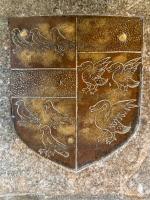
On 8th August 1641 Henry Bourchier 5th Earl Bath (age 54) was appointed to the Privy Council.
William of Worcester's Chronicle of England
William of Worcester, born around 1415, and died around 1482 was secretary to John Fastolf, the renowned soldier of the Hundred Years War, during which time he collected documents, letters, and wrote a record of events. Following their return to England in 1440 William was witness to major events. Twice in his chronicle he uses the first person: 1. when writing about the murder of Thomas, 7th Baron Scales, in 1460, he writes '… and I saw him lying naked in the cemetery near the porch of the church of St. Mary Overie in Southwark …' and 2. describing King Edward IV's entry into London in 1461 he writes '… proclaimed that all the people themselves were to recognize and acknowledge Edward as king. I was present and heard this, and immediately went down with them into the city'. William’s Chronicle is rich in detail. It is the source of much information about the Wars of the Roses, including the term 'Diabolical Marriage' to describe the marriage of Queen Elizabeth Woodville’s brother John’s marriage to Katherine, Dowager Duchess of Norfolk, he aged twenty, she sixty-five or more, and the story about a paper crown being placed in mockery on the severed head of Richard, 3rd Duke of York.
Available at Amazon in eBook and Paperback format.
On 8th August 1646 Godfrey Kneller was born.
Samuel Pepys' Diary. 8th August 1660. We met at the office, and after that to dinner at home, and from thence with my wife by water to Catan Sterpin, with whom and her mistress Pye we sat discoursing of Kate's marriage to Mons. Petit, her mistress and I giving the best advice we could for her to suspend her marriage till Mons. Petit had got some place that may be able to maintain her, and not for him to live upon the portion that she shall bring him. From thence to Mr. Butler's to see his daughters, the first time that ever we made a visit to them. We found them very pretty, and Coll. Dillon (age 33) there, a very merry and witty companion, but methinks they live in a gaudy but very poor condition. From thence, my wife and I intending to see Mrs. Blackburne, who had been a day or two again to see my wife, but my wife was not in condition to be seen, but she not being at home my wife went to her mother's and I to the Privy Seal. At night from the Privy Seal, Mr. Woodson and Mr. Jennings and I to the Sun Tavern till it was late, and from thence to my Lord's, where my wife was come from Mrs. Blackburne's to me, and after I had done some business with my Lord, she and I went to Mrs. Hunt's, who would needs have us to lie at her house to-night, she being with my wife so late at my Lord's with us, and would not let us go home to-night. We lay there all night very pleasantly and at ease...
Samuel Pepys' Diary. 8th August 1663. Thence to the Exchange [Map] about several businesses, and so home to dinner, and in the afternoon took my brother John (age 22) and Will down to Woolwich, Kent [Map] by water, and after being there a good while, and eating of fruit in Sheldon's (age 65) garden, we began our walk back again, I asking many things in physiques of my brother John, to which he gives me so bad or no answer at all, as in the regions of the ayre he told me that he knew of no such thing, for he never read Aristotle's philosophy and Des Cartes ownes no such thing, which vexed me to hear him say. But I shall call him to task, and see what it is that he has studied since his going to the University.
Calendar of State Papers Charles II 1665 08 Aug 1665. 8th August 1665. Salisbury. The King (age 35) to the Lord General (age 56). Alderman Backwell (age 47) being in great straits for the second payment he has to make for the service in Flanders, as much tin is to be transmitted to him as will raise the sum. Has authorized him and Sir George Carteret (age 55) to treat with the tin farmers for 500 tons of tin to be speedily transported under good convoy; but if on consulting with Alderman Backwell, this plan of the tin seems insufficient, then without further difficulty, he is to dispose for that purpose of the £10,000. assigned for pay of the Guards, not doubting that before that comes due, other ways will be found for supplying it; the payment in Flanders is of such importance that some means must be found of providing for it. [Ent. Book 17, pp. 122-3.]
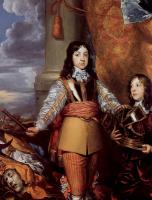


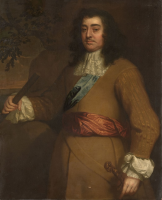
John Evelyn's Diary. 8th August 1665. I waited on the Duke of Albemarle (age 56), who was resolved to stay at the Cock-pit, in St. James's Park. Died this week in London, 4,000.
Calendar of State Papers Charles II 1665 08 Aug 1665. 8th August 1665. Salisbury. 65. The King (age 35) to the Lord General (age 56) and Sir George Carteret (age 55). Authorizes them to treat with the farmers of tin for the sale or deposit for a year of 500 tons of tin, to be sent to Flanders and sold to meet the second payment which Alderman Backwell (age 47) has to make there. They are to agree with the farmers as best they can, giving tallies on the Royal aid to secure repayment, to conclude the contract at once, the pressing importance of the service admitting no delay, and to have vessels and convoys ready to transmit the tin to Ostend. [Ent. Book 17, p. 125.]
Calendar of State Papers Charles II 1665 08 Aug 1665. 8th August 1665. Salisbury. 63. Draft of the above. The King to the Farmers of tin. Having determined to raise money beyond seas by sale of tin, has authorized the Duke of Albemarle (age 56) and Sir George Carteret (age 55) to treat with them for sale or deposit of 500 tons, on good security for their forbearance. The occasion being pressing, admits of no return nor reply. [£nt. Book 17, p. 124.]
Samuel Pepys' Diary. 8th August 1665. So to my office a little, and then to the Duke of Albemarle's (age 56) about some business. The streets mighty empty all the way, now even in London, which is a sad sight. And to Westminster Hall [Map], where talking, hearing very sad stories from Mrs. Mumford; among others, of Mrs. Michell's son's family. And poor Will, that used to sell us ale at the Hall-door, his wife and three children died, all, I think, in a day.
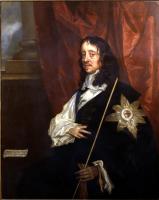
Samuel Pepys' Diary. 8th August 1666. There I left them, and myself by coach to St. James's, where we attended with the rest of my fellows on the Duke (age 32), whom I found with two or three patches upon his nose and about his right eye, which come from his being struck with the bough of a tree the other day in his hunting; and it is a wonder it did not strike out his eye. After we had done our business with him, which is now but little, the want of money being such as leaves us little to do but to answer complaints of the want thereof, and nothing to offer to the Duke, the representing of our want of money being now become uselesse, I into the Park, and there I met with Mrs. Burroughs by appointment, and did agree (after discoursing of some business of her's) for her to meet me at New Exchange, while I by coach to my Lord Treasurer's (age 59), and then called at the New Exchange, and thence carried her by water to Parliament stayres, and I to the Exchequer about my Tangier quarter tallys, and that done I took coach and to the west door of the Abby, where she come to me, and I with her by coach to Lissen-greene where we were last, and staid an hour or two before dinner could be got for us, I in the meantime having much pleasure with her, but all honest.
Samuel Pepys' Diary. 8th August 1666. And by and by dinner come up, and then to my sport again, but still honest; and then took coach and up and down in the country toward Acton, and then toward Chelsy, and so to Westminster, and there set her down where I took her up, with mighty pleasure in her company, and so I by coach home, and thence to Bow, with all the haste I could, to my Lady Pooly's, where my wife was with Mr. Batelier and his sisters, and there I found a noble supper, and every thing exceeding pleasant, and their mother, Mrs. Batelier, a fine woman, but mighty passionate upon sudden news brought her of the loss of a dog borrowed of the Duke of Albemarle's (age 57) son to line a bitch of hers that is very pretty, but the dog was by and by found, and so all well again, their company mighty innocent and pleasant, we having never been here before.
Samuel Pepys' Diary. 8th August 1667. After dinner to the office a while, and then with my wife to the Temple [Map], where I light and sent her to her tailor's. I to my bookseller's; where, by and by, I met Mr. Evelyn (age 46), and talked of several things, but particularly of the times: and he tells me that wise men do prepare to remove abroad what they have, for that we must be ruined, our case being past relief, the Kingdom so much in debt, and the King (age 37) minding nothing but his lust, going two days a-week to see my Baroness Castlemayne (age 26) at Sir D. Harvy's (age 35).
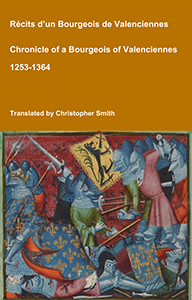
Chronicle of a Bourgeois of Valenciennes
Récits d’un bourgeois de Valenciennes aka The Chronicle of a Bourgeois of Valenciennes is a vivid 14th-century vernacular chronicle written by an anonymous urban chronicler from Valenciennes in the County of Hainaut. It survives in a manuscript that describes local and regional history from about 1253 to 1366, blending chronology, narrative episodes, and eyewitness-style accounts of political, military, and social events in medieval France, Flanders, and the Low Countries. The work begins with a chronological framework of events affecting Valenciennes and its region under rulers such as King Philip VI of France and the shifting allegiances of local nobility. It includes accounts of conflicts, sieges, diplomatic manoeuvres, and the impact of broader struggles like the Hundred Years’ War on urban life in Hainaut. Written from the perspective of a burgher (bourgeois) rather than a monastery or royal court, the chronicle offers a rare lay viewpoint on high politics and warfare, reflecting how merchants, townspeople, and civic institutions experienced the turbulence of the 13th and 14th centuries. Its narrative style combines straightforward reporting of events with moral and civic observations, making it a valuable source for readers interested in medieval urban society, regional politics, and the lived experience of war and governance in pre-modern Europe.
Available at Amazon in eBook and Paperback format.
Samuel Pepys' Diary. 8th August 1667. He gone, I met with Mr. Moore, who tells me that my Lord Hinchingbrooke (age 19) is now with his mistress (age 22), but not that he is married, as W. Howe come and told us the other day.
John Evelyn's Diary. 8th August 1667. Visited Mr. Oldenburg (age 48), a close prisoner in the Tower [Map], being suspected of writing intelligence. I had an order from Lord Arlington (age 49), Secretary of State, which caused me to be admitted. This gentleman was secretary to our Society, and I am confident will prove an innocent person.


On 8th August 1677 Henry Howard 7th Duke of Norfolk (age 22) and Mary Mordaunt Duchess Norfolk (age 18) were married. She the daughter of Henry Mordaunt 2nd Earl Peterborough (age 55) and Penelope O'Brien Countess Peterborough (age 55). He the son of Henry Howard 6th Duke of Norfolk (age 49) and Anne Somerset Countess Norfolk. They were third cousin twice removed.
John Evelyn's Diary. 9th August 1677. Dined at the Earl of Peterborough's (age 55) the day after the marriage of my Lord of Arundel (age 22) to Lady Mary Mordaunt (age 18), daughter of the Earl of Peterborough.
John Evelyn's Diary. 8th August 1679. I went this morning to show my Lord Chamberlain (age 61), his Lady (age 45), and the Duchess of Grafton (age 11), the incomparable work of Mr. Gibbon (age 31), the carver, whom I first recommended to his Majesty (age 49), his house being furnished like a cabinet, not only with his own work, but divers excellent paintings of the best hands. Thence, to Sir Stephen Fox's (age 52), where we spent the day.


John Evelyn's Diary. 8th August 1686. Our vicar gone to dispose of his country living in Rutlandshire, having St. Dunstan in the east given him by the Archbishop of Canterbury (age 69).
On 8th August 1750 Charles Lennox 2nd Duke Richmond (age 49) died. His son Charles (age 15) succeeded 3rd Duke Richmond, 3rd Earl March, 3rd Baron Settrington.


On 8th August 1772 Friedrich Hesse-Kassel was born to William Elector of Hesse (age 29) and Electress Wilhelmina Caroline Oldenburg (age 25). He a great grandson of King George II of Great Britain and Ireland. Coefficient of inbreeding 6.89%. He died aged eleven in 1784.


On 8th August 1805 Richard Worsley 7th Baronet (age 54) died of apoplexy at Appuldurcombe House, Isle of Wight. He was buried at All Saint's Church, Godshill. His fourth cousin Henry (age 49) succeeded 8th Baronet Worsley of Appuldurcombe.
On 8th August 1819 Horatia Isabella Harriet Morier Duchess Somerset was born. She married 17th May 1845 Algernon St Maur 14th Duke of Somerset, son of Edward Seymour 11th Duke of Somerset and Charlotte Hamilton Duchess Somerset, and had issue.
William of Worcester's Chronicle of England
William of Worcester, born around 1415, and died around 1482 was secretary to John Fastolf, the renowned soldier of the Hundred Years War, during which time he collected documents, letters, and wrote a record of events. Following their return to England in 1440 William was witness to major events. Twice in his chronicle he uses the first person: 1. when writing about the murder of Thomas, 7th Baron Scales, in 1460, he writes '… and I saw him lying naked in the cemetery near the porch of the church of St. Mary Overie in Southwark …' and 2. describing King Edward IV's entry into London in 1461 he writes '… proclaimed that all the people themselves were to recognize and acknowledge Edward as king. I was present and heard this, and immediately went down with them into the city'. William’s Chronicle is rich in detail. It is the source of much information about the Wars of the Roses, including the term 'Diabolical Marriage' to describe the marriage of Queen Elizabeth Woodville’s brother John’s marriage to Katherine, Dowager Duchess of Norfolk, he aged twenty, she sixty-five or more, and the story about a paper crown being placed in mockery on the severed head of Richard, 3rd Duke of York.
Available at Amazon in eBook and Paperback format.
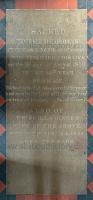
St Mary the Virgin Church, Edelsborough [Map]. Memorial to Thomas Ginger, died 8th August 1819, aged 49 years and his wife, Priscilla, died 24th November 1853, aged 75.
On 8th August 1825 Evelyn Leveson-Gower was born to George Sutherland Leveson-Gower 2nd Duke Sutherland (age 38) and Harriet Elizabeth Georgiana Howard Duchess Sutherland (age 19). Coefficient of inbreeding 3.22%. She married 4th October 1843 Charles Stuart 12th Lord Blantyre.


On 8th August 1839 Charles Burroughs-Paulet 13th Marquess Winchester (age 75) added the name of Burroughs to his own, when he inherited the property of Dame Sarah Salusbury (née Burroughs), under the terms of her will.
Cracroft states... This was under the will of Dame Sarah Salisbury, of Offley place, Herts, widow (d. June 1804), da. and h. of Samuel Burroughs, one of the Masters of the Court of Chancery, by Mary, da. of Thomas Morley, Sergt, at Law, to which Thomas, the Marquess was heir at law, and, as such, became entitled in Aug. 1837, to the estates devised by the said will.
On 8th August 1841 Charlotte Isabelle Innes-Kerr was born to James Innes-Kerr 6th Duke Roxburghe (age 25). She married 28th October 1862 George William Russell.
Vestiges of the Antiquities of Derbyshire. About the close of the last or the commencement of the present century, a very large barrow, situated upon Brassington Moor, and now called Stoney Lowe [Map], though sometimes written Stanhope Lowe, was removed, in order that its time-honoured materials might assist in Macadamising some lanes or roads in the immediate neighbourhood. In the course of this work of destruction a large cist was discovered, in which lay three human skeletons, ranged side by side, one of which is said to have had one half of its skull clothed with hair. In another part of this barrow an urn was found, and taken out only to be broken to pieces. On attentively surveying the site of this noble tumulus, which, previous to its demolition, was connected with a small cirque of stones adjoining to it, and destroyed at the same time, the edges of several large stones, placed in a cist-like form, and appearing above the turf, suggested an idea, that, by digging into the interior of these vaults, something might yet be recovered. This was put to the proof on the 8th of August, 1843, and produced the following results: the first vault was a square of about three yards, and contained earth and stones for about a foot in depth, which was indeed the entire depth of the vault itself when cleared out. These debris were minutely scrutinised, and were found to contain the following remains, all in the utmost disorder: no less than 161 human teeth, a large quantity of human bones, a small piece of an urn, various kinds of animals bones and rats bones in abundance. The second vault was of more irregular form, but was very similar to the first in the confusion visible amongst its contents, which were the remains of two human skeletons, apparently of females, with which a delicately-formed arrow-head was found, which, as is frequently the case, had been calcined. The number of interments originally deposited in this tumulus must have been enormous, as the teeth before mentioned vary from those of very juvenile subjects to those of persons of very advanced age, some of the latter are worn almost to a level with the jaw, and yet do not exhibit the least symptom of decay.
Become a Member via our Buy Me a Coffee page to read more.
On 8th August 1871 Olga de Meyer was born at 14 William Street Lowndes Square. Possibly a daughter of the Prince of Wales (age 29).


Wiltshire Archaeological Magazine 1872 V13 Pages 339-342. On Long Barrows and Round Barrows by John Thurnam (age 61), Esq, M.D., F.S.A. Report of an Address delivered on Bratton Down, during an Execursion of the Society, August 8th, 1872.
On 8th August 1872 George Godolphin Osborne 8th Duke Leeds (age 70) died. His son George (age 43) succeeded 9th Duke Leeds, 9th Earl of Danby, 9th Viscount Osborne, 9th Viscount Latimer, 9th Baron Osborne of Kinderton, 10th Baronet Osborne of Kiveton, 3rd Baron Godolphin of Farnham Royal in Buckinghamshire. Fanny Georgiana Pitt-Rivers Duchess Leeds (age 35) by marriage Duchess Leeds.
On 8th August 1880 Corisande Emma Louise Ida de Gramont was born to Antoine Alfred Agénor de Gramont 11th Duc de Gramont (age 28) and Marguerite de Rothschild Duchess Gramont (age 24). She married 1901 Hélie Guillaume Hubert de Noailles.


On 8th August 1894 Wilbraham Egerton 1st Earl Egerton (age 62) and Alice Graham-Montgomery Duchess Buckingham and Chandos (age 47) were married.


William of Worcester's Chronicle of England
William of Worcester, born around 1415, and died around 1482 was secretary to John Fastolf, the renowned soldier of the Hundred Years War, during which time he collected documents, letters, and wrote a record of events. Following their return to England in 1440 William was witness to major events. Twice in his chronicle he uses the first person: 1. when writing about the murder of Thomas, 7th Baron Scales, in 1460, he writes '… and I saw him lying naked in the cemetery near the porch of the church of St. Mary Overie in Southwark …' and 2. describing King Edward IV's entry into London in 1461 he writes '… proclaimed that all the people themselves were to recognize and acknowledge Edward as king. I was present and heard this, and immediately went down with them into the city'. William’s Chronicle is rich in detail. It is the source of much information about the Wars of the Roses, including the term 'Diabolical Marriage' to describe the marriage of Queen Elizabeth Woodville’s brother John’s marriage to Katherine, Dowager Duchess of Norfolk, he aged twenty, she sixty-five or more, and the story about a paper crown being placed in mockery on the severed head of Richard, 3rd Duke of York.
Available at Amazon in eBook and Paperback format.
On 8th August 1940 Richard Kay-Shuttleworth 2nd Baron Shuttleworth (age 26) was killed in action when his Hawker Hurricane went missing during a battle over a convoy in the English Channel, south of the Isle of Wight. He was a Flying Officer with 145 Sqdn. Royal Air Force Volunteer Reserve; Service No: 70356. His brother Ronald (age 22) succeeded 3rd Baron Shuttleworth of Gawthorpe in Lancashire, 4th Baronet Kay-Shuttleworth of Gawthorpe Hall in Lancashire.


On 8th August 1943 Major Alec Hambro (age 33) was killed in action while serving with the Reconnaissance Corps. He was buried at the Tripoli War Cemetery.
On 8th August 1974 American President Richard Nixon made a televised speech to the American people announcing his decision to resign the following day as a consequence of the "long and difficult period of Watergate".
On 9th August 1974 Preseident Nixon sent his resignation letter to Secretary of State Henry Kissinger; he remains the only American president to resign from office.
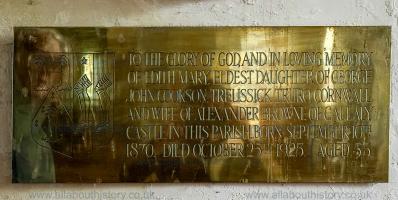
St Bartholomew's Church, Whittingham [Map]. Monuments to Alexander Simon Cadogan Browne, died 26th May 1987, and his wife Dorothy Mary Howard, died 8th August 1979, both of Callaly Castle, Whittingham [Map], and Edith Mary Cookson, wife of Alexander Browne of Callaly Castle, Whittingham [Map].
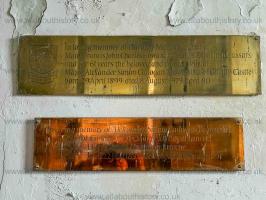

8th August 1999. St Oswald's Church, Brereton [Map]. Memorial to William Brereton 2nd Baron Brereton. Bellringer and Donor of three bells in honour of his marriage to Elizabeth Goring Baroness Brereton. A special event took place at St Oswald's.Church, Brereton on 8th August 1999: the dedication of a plaque to the memory of William, 2nd Lord Brereton, founding member and first Master in 1637 of one of the oldest English change ringing societies, the Ancient Society of College Youths, which still flourishes nationally and internationally from its base in London.
On 8th August 1558 George Clifford 3rd Earl of Cumberland was born to Henry Clifford 2nd Earl of Cumberland (age 41) and Anne Dacre Countess Cumberland (age 37). He married 1577 his third cousin Margaret Russell Countess Cumberland, daughter of Francis Russell 2nd Earl Bedford and Margaret St John Countess Bedford, and had issue.


On 8th August 1605 Cecil Calvert 2nd Baron Baltimore was born to George Calvert 1st Baron Baltimore (age 25) and Anne Mynne. He married 1628 Ann Arundell Baroness Baltimore, daughter of Thomas Arundell 1st Baron Arundel and Anne Philipson Baroness Arundel Wardour, and had issue.
On 8th August 1646 Godfrey Kneller was born.
On 8th August 1706 Galfridus Mann was born to Robert Mann (age 29). He was a twin with his brother Horace Mann 1st Baronet.
On 8th August 1706 Horace Mann 1st Baronet was born to Robert Mann (age 29). He was a twin with his brother Galfridus Mann.
On 8th August 1716 Thomas Foley 1st Baron Foley was born to Thomas Foley (age 21). He married 28th March 1740 Grace Granville, daughter of George Granville 1st Baron Lansdowne and Mary Villiers Baroness Lansdowne, and had issue.
The History of William Marshal was commissioned by his son shortly after William’s death in 1219 to celebrate the Marshal’s remarkable life; it is an authentic, contemporary voice. The manuscript was discovered in 1861 by French historian Paul Meyer. Meyer published the manuscript in its original Anglo-French in 1891 in two books. This book is a line by line translation of the first of Meyer’s books; lines 1-10152. Book 1 of the History begins in 1139 and ends in 1194. It describes the events of the Anarchy, the role of William’s father John, John’s marriages, William’s childhood, his role as a hostage at the siege of Newbury, his injury and imprisonment in Poitou where he met Eleanor of Aquitaine and his life as a knight errant. It continues with the accusation against him of an improper relationship with Margaret, wife of Henry the Young King, his exile, and return, the death of Henry the Young King, the rebellion of Richard, the future King Richard I, war with France, the death of King Henry II, and the capture of King Richard, and the rebellion of John, the future King John. It ends with the release of King Richard and the death of John Marshal.
Available at Amazon in eBook and Paperback format.
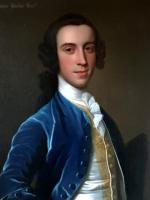
On 8th August 1722 Howe Hicks 6th Baronet was born to Howe Hicks. He married 28th July 1739 Martha Browne Lady Hicks and had issue.
On 8th August 1751 Henry Russell 1st Baronet was born. He married 23rd June 1782 Anne Barbara Whitworth Lady Russell and had issue.

On 8th August 1771 Henry Boyle 3rd Earl Shannon was born to Richard Boyle 2nd Earl Shannon (age 44) and Catherine Ponsonby Countess Shannon.
On 8th August 1772 Friedrich Hesse-Kassel was born to William Elector of Hesse (age 29) and Electress Wilhelmina Caroline Oldenburg (age 25). He a great grandson of King George II of Great Britain and Ireland. Coefficient of inbreeding 6.89%. He died aged eleven in 1784.
On 8th August 1779 Henry Howard 13th Earl Suffolk 6th Earl Berkshire was born to Henry Howard 12th Earl Suffolk 5th Earl Berkshire and Charlotte Finch Countess Suffolk and Berkshire (age 25). Coefficient of inbreeding 6.66%. He died aged less than one years old.
On 8th August 1781 Charles Anderson-Pelham 1st Earl Yarborough was born to Charles Anderson-Pelham 1st Baron Yarborough (age 32) and Sophia Aufrère.
On 8th August 1791 Henry William Hobhouse was born to Benjamin Hobhouse 1st Baronet (age 34) and Charlotte Cam.
On 8th August 1796 Thomas Shiffner was born to George Shiffner 1st Baronet (age 33).
On 8th August 1802 Mary Isabella Lyon Bowes was born to Thomas Lyon Bowes 11th Earl Strathmore and Kinghorne (age 29) and Mary Louisa Elizabeth Rodney Carpenter (age 19).
On 8th August 1803 Charles Abbott was born to Charles Abbott 1st Baron Tenterden (age 40) and Mary Lamotte. He married 9th January 1834 Emily Frances Stuart and had issue.
Henrici Quinti, Angliæ Regis, Gesta, is a first-hand account of the Agincourt Campaign, and subsequent events to his death in 1422. The author of the first part was a Chaplain in King Henry's retinue who was present from King Henry's departure at Southampton in 1415, at the siege of Harfleur, the battle of Agincourt, and the celebrations on King Henry's return to London. The second part, by another writer, relates the events that took place including the negotiations at Troye, Henry's marriage and his death in 1422.
Available at Amazon in eBook and Paperback format.
On 8th August 1803 Thomas Fitzmaurice 5th Earl Orkney was born to John Fitzmorris (age 24). He married 14th March 1826 Isabella Irby Countess Orkney, daughter of George Irby 3rd Baron Boston and Rachel Ives Drake Baroness Boston, and had issue.
On 8th August 1813 Sarah Bowes-Lyon was born to Thomas Lyon Bowes 11th Earl Strathmore and Kinghorne (age 40) and Eliza Northcote.
On 8th August 1819 Horatia Isabella Harriet Morier Duchess Somerset was born. She married 17th May 1845 Algernon St Maur 14th Duke of Somerset, son of Edward Seymour 11th Duke of Somerset and Charlotte Hamilton Duchess Somerset, and had issue.
On 8th August 1822 Arthur John Otway 3rd Baronet was born to Robert Waller Otway 1st Baronet (age 52) and Clementia Holloway Lady Otway (age 40).
On 8th August 1825 Evelyn Leveson-Gower was born to George Sutherland Leveson-Gower 2nd Duke Sutherland (age 38) and Harriet Elizabeth Georgiana Howard Duchess Sutherland (age 19). Coefficient of inbreeding 3.22%. She married 4th October 1843 Charles Stuart 12th Lord Blantyre.
On 8th August 1831 Edmund William Pollen Boileau was born to John Peter Boileau 1st Baronet (age 36) and Catherine Sarah Elliot-Murray-Kynynmound Lady Boileau (age 33).
On 8th August 1841 Charlotte Isabelle Innes-Kerr was born to James Innes-Kerr 6th Duke Roxburghe (age 25). She married 28th October 1862 George William Russell.

On 8th August 1844 Beatrix Jane Craven Countess Cadogan was born to William Craven 2nd Earl Craven (age 34) and Emily Mary Grimston Countess Craven (age 28). She married 16th January 1865 George Cadogan 5th Earl Cadogan, son of Henry Cadogan 4th Earl Cadogan and Mary Sarah Wellesley Countess Cadogan, and had issue.
On 8th August 1849 Anthony Cecil Ashley-Cooper was born to Anthony Ashley-Cooper 7th Earl Shaftesbury (age 48) and Emily Caroline Catherine Frances Cowper Countess Shaftesbury.


On 8th August 1857 John Shiffner 5th Baronet was born to George Croxton-Shiffner 4th Baronet (age 37). He married 11th January 1894 Elsie Burrows and had issue.
Jean de Waurin's Chronicle of England Volume 6 Books 3-6: The Wars of the Roses
Jean de Waurin was a French Chronicler, from the Artois region, who was born around 1400, and died around 1474. Waurin’s Chronicle of England, Volume 6, covering the period 1450 to 1471, from which we have selected and translated Chapters relating to the Wars of the Roses, provides a vivid, original, contemporary description of key events some of which he witnessed first-hand, some of which he was told by the key people involved with whom Waurin had a personal relationship.
Available at Amazon in eBook and Paperback format.
On 8th August 1867 Rachel Anne Gurney Countess Dudley was born to Charles Henry Gurney (age 33) and Alice Maria Prinsep (age 23). She married 1891 William Humble Ward 2nd Earl of Dudley, son of William Ward 1st Earl of Dudley and Georgina Moncrieffe Countess Dudley.


On 8th August 1870 Algernon Kerr Butler Osborn 7th Baronet was born to Henry John Robert Osborn (age 30).
On 8th August 1871 Olga de Meyer was born at 14 William Street Lowndes Square. Possibly a daughter of the Prince of Wales (age 29).
On 8th August 1876 Maurice Bromley-Wilson 7th Baronet was born to Henry Bromley 5th Baronet (age 27) and Adela Richards Lady Bromley.
On 8th August 1880 Corisande Emma Louise Ida de Gramont was born to Antoine Alfred Agénor de Gramont 11th Duc de Gramont (age 28) and Marguerite de Rothschild Duchess Gramont (age 24). She married 1901 Hélie Guillaume Hubert de Noailles.
On 8th August 1888 Richard Christopher Brooke 9th Baronet was born to Richard Marcus Brooke 8th Baronet (age 37).
On 8th August 1906 Peter Ross was born to Arthur John Ross and Una Mary Dawson 25th Baroness de Ros of Helmsley (age 26).
On 8th August 1907 Henry Gerald Valerian Francis Wellesley was born to Henry Arthur Mornington Wellesley 3rd Earl Cowley (age 41) and Millicent Florence Eleanor Wilson Countess Cowley (age 34).
On 8th August 1909 Charles Lyttelton 10th Viscount Cobham was born to John Cavendish Lyttelton 9th Viscount Cobham (age 27) and Violet Leonard Viscountess Cobham.

On 8th August 1914 Unity Valkyrie Mitford was born to David Freeman-Mitford 2nd Baron Redesdale (age 36) and Sydney Bowles (age 34).
On 8th August 1924 Jocelyn Charles Roden Buxton 7th Baronet was born to Captain Roden Henry Victor Buxton (age 33).
Chronicle of Abbot Ralph of Coggeshall
The Chronicle of Abbot Ralph of Coggeshall (Chronicon Anglicanum) is an indispensable medieval history that brings to life centuries of English and European affairs through the eyes of a learned Cistercian monk. Ralph of Coggeshall, abbot of the Abbey of Coggeshall in Essex in the early 13th century, continued and expanded his community’s chronicle, documenting events from the Norman Conquest of 1066 into the tumultuous reign of King Henry III. Blending eyewitness testimony, careful compilation, and the monastic commitment to record-keeping, this chronicle offers a rare narrative of political intrigue, royal power struggles, and social upheaval in England and beyond. Ralph’s work captures the reigns of pivotal figures such as Richard I and King John, providing invaluable insights into their characters, decisions, and the forces that shaped medieval rule. More than a simple annal, Chronicon Anglicanum conveys the texture of medieval life and governance, making it a rich source for scholars and readers fascinated by English history, monastic authorship, and the shaping of the medieval world.
Available at Amazon in eBook and Paperback format.
On 8th August 1927 Richard Hely-Hutchinson 8th Earl of Donoughmore was born to John Hely-Hutchinson 7th Earl of Donoughmore (age 24).
On 8th August 1929 Michael Wellington Stapleton-Cotton 5th Viscount Combermere was born to Francis Stapleton-Cotton 4th Viscount Combermere (age 42) and Constance Marie Katherine Williams-Drummond (age 36).
On 8th August 1503 King James IV of Scotland (age 30) and Margaret Tudor (age 13) were married at Holyrood Abbey [Map]. She by marriage Queen Consort Scotland. Thomas Howard 2nd Duke of Norfolk (age 60) and James Hamilton 1st Earl Arran (age 28) were present. She the daughter of King Henry VII of England and Ireland (age 46) and Elizabeth York Queen Consort England. He the son of King James III of Scotland and Margaret Oldenburg Queen Consort Scotland. They were third cousins. He a great x 4 grandson of King Edward III of England.
Cuthbert Cunningham 3rd Earl Glencairn (age 27) was restored 3rd Earl Glencairn.

On 8th August 1637 Richard Vaughan 2nd Earl Carbery (age 37) and Frances Altham Countess Carbery (age 16) were married at Acton. She by marriage Countess Carbery. The difference in their ages was 21 years. He the son of John Vaughan 1st Earl Carbery.
On 8th August 1650 John Hotham 2nd Baronet (age 18) and Elizabeth Beaumont (age 25) were married.
On 8th August 1677 Henry Howard 7th Duke of Norfolk (age 22) and Mary Mordaunt Duchess Norfolk (age 18) were married. She the daughter of Henry Mordaunt 2nd Earl Peterborough (age 55) and Penelope O'Brien Countess Peterborough (age 55). He the son of Henry Howard 6th Duke of Norfolk (age 49) and Anne Somerset Countess Norfolk. They were third cousin twice removed.
On 8th August 1695 Thomas Southwell 1st Baron Southwell (age 30) and Meliora Coningsby (age 19) were married. She the daughter of Thomas Coningsby 1st Earl Coningsby (age 38) and Barbara Gorges (age 38).
On 8th August 1719 Emanuel Howe 2nd Viscount Howe (age 19) and Sophia Von Keilmansegg Viscountess Howe (age 15) were married. She by marriage Viscountess Howe.
On 8th August 1756 Cornwallis Maude 1st Viscount Hawarden (age 26) and Letitia Vernon were married.
On 8th August 1759 Charles Cocks 1st Baron Somers (age 34) and Elizabeth Eliot were married.
On 8th August 1769 Frederick Evelyn 3rd Baronet (age 35) and Mary Turton Lady Evelyn (age 24) were married at St Marylebone Church. She by marriage Lady Evelyn of Wotton in Surrey. There was no issue from the marriage.
On 8th August 1814 William Francis Spencer Ponsonby 1st Baron de Mauley (age 27) and Barbara Ashley-Cooper Baroness Mauley (age 25) were married. She the daughter of Anthony Ashley-Cooper 5th Earl Shaftesbury and Barbara Webb Countess Shaftesbury (age 52). He the son of Frederick Ponsonby 3rd Earl Bessborough (age 56) and Henrietta Frances Spencer Countess Bessborough (age 53).
On 8th August 1826 Henry Benedict Arundell 11th Baron Arundel (age 21) and Lucy Smythe Baroness Arundel Wardour were married. She by marriage Baroness Arundel of Wardour in Wiltshire.
On 8th August 1863 William Henry Wellesley 2nd Earl Cowley (age 28) and Emily Gwendoline Williams Countess Cowley (age 24) were married. He the son of Henry Richard Charles Wellesley 1st Earl Cowley (age 59).
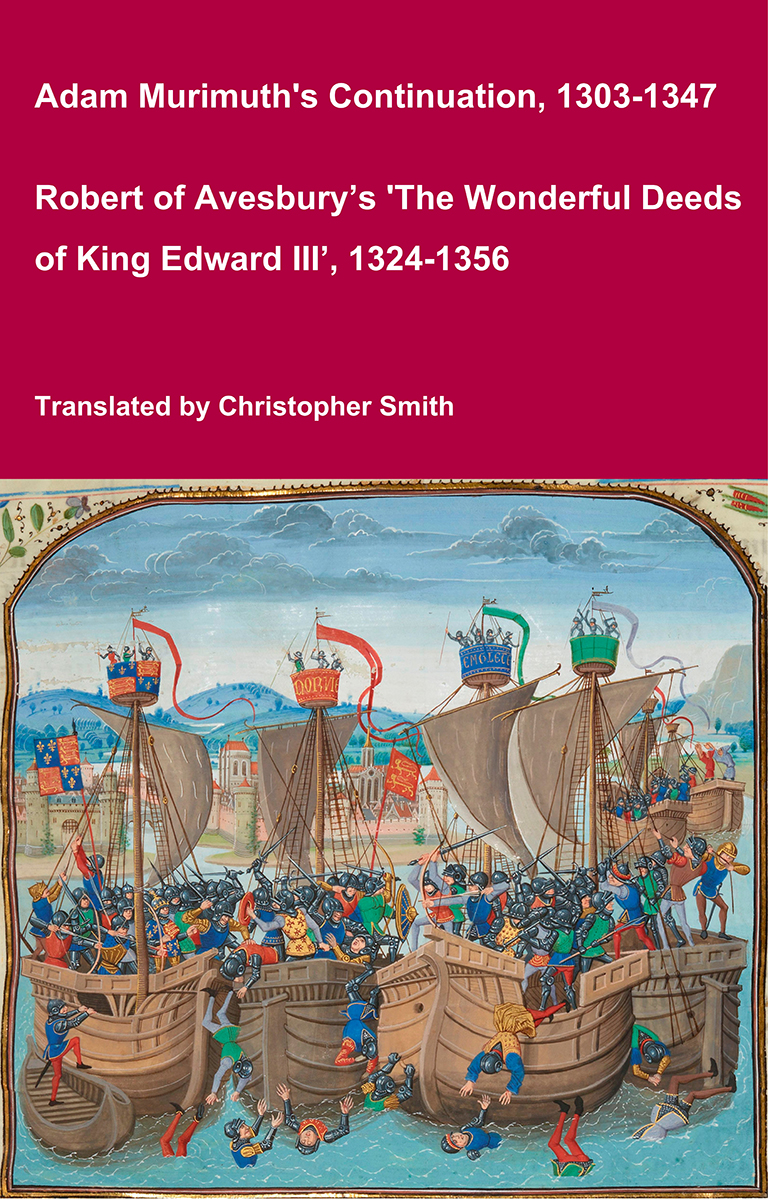
Adam Murimuth's Continuation and Robert of Avesbury’s 'The Wonderful Deeds of King Edward III'
This volume brings together two of the most important contemporary chronicles for the reign of Edward III and the opening phases of the Hundred Years’ War. Written in Latin by English clerical observers, these texts provide a vivid and authoritative window into the political, diplomatic, and military history of fourteenth-century England and its continental ambitions. Adam Murimuth Continuatio's Chronicarum continues an earlier chronicle into the mid-fourteenth century, offering concise but valuable notices on royal policy, foreign relations, and ecclesiastical affairs. Its annalistic structure makes it especially useful for establishing chronology and tracing the development of events year by year. Complementing it, Robert of Avesbury’s De gestis mirabilibus regis Edwardi tertii is a rich documentary chronicle preserving letters, treaties, and official records alongside narrative passages. It is an indispensable source for understanding Edward III’s claim to the French crown, the conduct of war, and the mechanisms of medieval diplomacy. Together, these works offer scholars, students, and enthusiasts a reliable and unembellished account of a transformative period in English and European history. Essential for anyone interested in medieval chronicles, the Hundred Years’ War, or the reign of Edward III.
Available at Amazon in eBook and Paperback format.
On 8th August 1894 Wilbraham Egerton 1st Earl Egerton (age 62) and Alice Graham-Montgomery Duchess Buckingham and Chandos (age 47) were married.
On 8th August 1901 Philip Wilbraham Baker Wilbraham 6th Baronet (age 25) and Joyce Christabel Kennaway Lady Wilbraham (age 24) were married.
On 10th June 1920 Denzil George Fortescue 6th Earl Fortescue (age 26) and Marjorie Ellinor Trotter Countess Fortescue (age 26) were married. They were divorced before 8th August 1941. He the son of Hugh Fortescue 4th Earl Fortescue (age 66) and Emily Ormsby-Gore Countess Fortescue (age 60).
On 8th August 1941 Denzil George Fortescue 6th Earl Fortescue (age 48) and Sybil Mary Hardinge Countess Fortescue (age 42) were married. She by marriage Countess Fortescue. She the daughter of Henry Charles Hardinge 3rd Viscount Hardinge and Mary Frances Neville Marchioness Abergavenny (age 72). He the son of Hugh Fortescue 4th Earl Fortescue and Emily Ormsby-Gore Countess Fortescue.
On 8th August 869 Lothair II King Lotharingia (age 34) died.
On 8th August 1086 Conrad Luxemburg Count Luxemburg died.
On 8th August 1171 Bishop Henry of Blois (age 73) died.
On 8th August 1205 Savaric FitzGeldewin died at Civitavecchia or Siena while visiting the papacy in Rome on business for Peter des Roches, Bishop-elect of Winchester.
On 8th August 1309 John Strange 1st Baron Strange Knockin (age 56) died at Walton, Warwickshire. His son John (age 27) succeeded 2nd Baron Strange Knockin.
On 8th August 1482 Margaret Beauchamp Duchess Somerset (age 72) died. She was buried at Wimborne Minster, Dorset [Map].
On 8th August 1482 Francesco Balzo II Duke Andria (age 72) died.
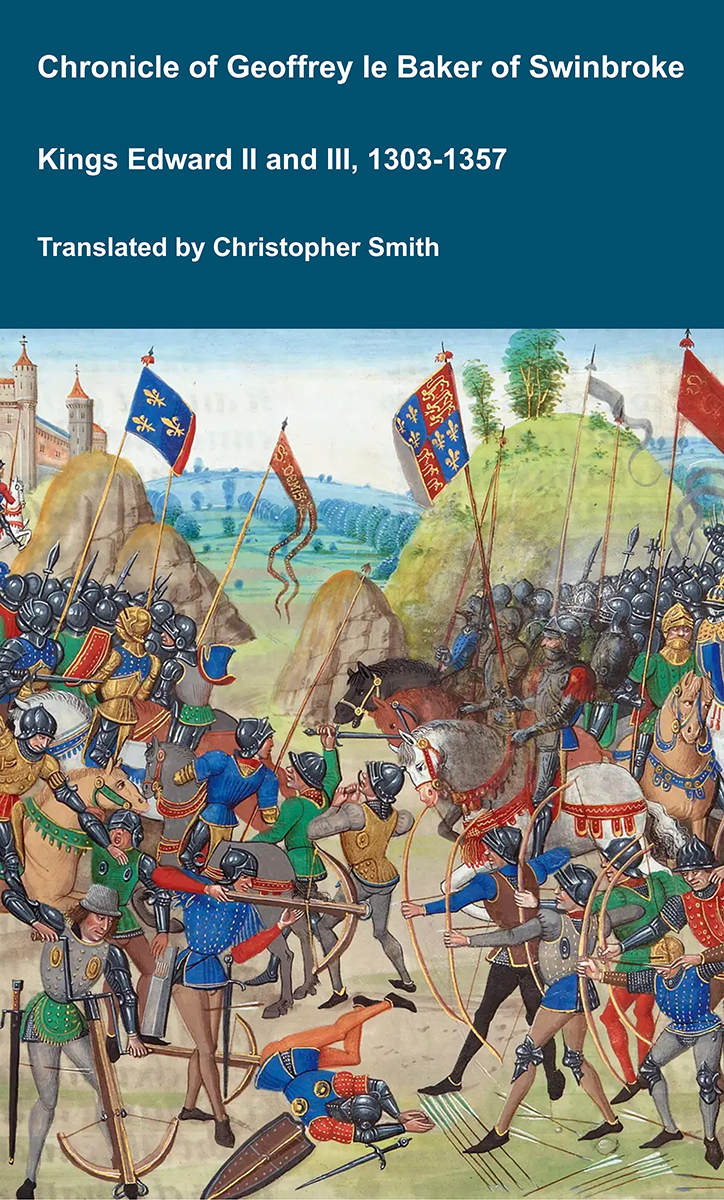
Chronicle of Geoffrey le Baker of Swinbroke
Baker was a secular clerk from Swinbroke, now Swinbrook, an Oxfordshire village two miles east of Burford. His Chronicle describes the events of the period 1303-1356: Gaveston, Bannockburn, Boroughbridge, the murder of King Edward II, the Scottish Wars, Sluys, Crécy, the Black Death, Winchelsea and Poitiers. To quote Herbert Bruce 'it possesses a vigorous and characteristic style, and its value for particular events between 1303 and 1356 has been recognised by its editor and by subsequent writers'. The book provides remarkable detail about the events it describes. Baker's text has been augmented with hundreds of notes, including extracts from other contemporary chronicles, such as the Annales Londonienses, Annales Paulini, Murimuth, Lanercost, Avesbury, Guisborough and Froissart to enrich the reader's understanding. The translation takes as its source the 'Chronicon Galfridi le Baker de Swynebroke' published in 1889, edited by Edward Maunde Thompson.
Available at Amazon in eBook and Paperback format.
On 8th August 1493 Christoph Duke Wittelsbach I Duke Bavaria (age 44) died. His great uncle William succeeded III Duke Bavaria.
On 8th August 1588 Alonso Sánchez Coello (age 57) died.
On 8th August 1607 Richard Power 4th Baron Power (age 54) died.
On 8th August 1616 Henry Lennard 12th Baron Dacre Gilsland (age 46) died. His son Richard (age 20) succeeded 13th Baron Dacre Gilsland, 13th Baron Multon of Gilsland.
On 8th August 1667 Frances Aylesbury Countess Clarendon (age 50) died. She was buried in the Hyde Vault, Crypt, Westminster Abbey.
On 8th August 1672 John Borlase 1st Baronet (age 52) died. His son John (age 30) succeeded 2nd Baronet Borlase of Bockmer in Buckinghamshire
On 8th August 1684 George Booth 1st Baron Delamer (age 61) died at Dunham Massey, Cheshire [Map]. His son Henry (age 32) succeeded 2nd Baron Delamer, 3rd Baronet Booth of Dunham Massey.


On 8th August 1689 Ralph Stawell 1st Baron Stawell (age 48) died at Low Ham, Somerset. His son John (age 20) succeeded 2nd Baron Stawell of Somerton in Somerset. Margaret Cecil Countess Ranelagh (age 17) by marriage Baroness Stawell of Somerton in Somerset.
On 8th August 1706 John Kaye 2nd Baronet (age 65) died. His son Arthur (age 36) succeeded 3rd Baronet Kaye of Woodsome Hall in Yorkshire.
On 8th August 1725 Charlotte Butler Baroness Cornwallis (age 46) died.
On 8th August 1730 Dean Robert Booth (age 68) died.
Chronicle of a Bourgeois of Valenciennes
Récits d’un bourgeois de Valenciennes aka The Chronicle of a Bourgeois of Valenciennes is a vivid 14th-century vernacular chronicle written by an anonymous urban chronicler from Valenciennes in the County of Hainaut. It survives in a manuscript that describes local and regional history from about 1253 to 1366, blending chronology, narrative episodes, and eyewitness-style accounts of political, military, and social events in medieval France, Flanders, and the Low Countries. The work begins with a chronological framework of events affecting Valenciennes and its region under rulers such as King Philip VI of France and the shifting allegiances of local nobility. It includes accounts of conflicts, sieges, diplomatic manoeuvres, and the impact of broader struggles like the Hundred Years’ War on urban life in Hainaut. Written from the perspective of a burgher (bourgeois) rather than a monastery or royal court, the chronicle offers a rare lay viewpoint on high politics and warfare, reflecting how merchants, townspeople, and civic institutions experienced the turbulence of the 13th and 14th centuries. Its narrative style combines straightforward reporting of events with moral and civic observations, making it a valuable source for readers interested in medieval urban society, regional politics, and the lived experience of war and governance in pre-modern Europe.
Available at Amazon in eBook and Paperback format.
On 8th August 1736 William Byron 4th Baron Byron (age 66) died. His son William (age 13) succeeded 5th Baron Byron of Rochdale in Lancashire.
On 8th August 1750 Charles Lennox 2nd Duke Richmond (age 49) died. His son Charles (age 15) succeeded 3rd Duke Richmond, 3rd Earl March, 3rd Baron Settrington.
On 8th August 1757 Mary Palmer Countess Winchelsea and Nottingham (age 44) died.
On 8th August 1766 Robert Jenkinson 5th Baronet (age 45) died. His brother Banks (age 45) succeeded 6th Baronet Jenkinson of Walcot in Oxfordshire and of Hawkesbury in Gloucestershire.
On 7th March 1779 Henry Howard 12th Earl Suffolk 5th Earl Berkshire (age 39) died at Bath, Somerset [Map]. He was buried at All Saints Church, Charlton-All-Saints [Map]. On 8th August 1779 his postumous son His son Henry succeeded 13th Earl Suffolk, 6th Earl Berkshire, 6th Viscount Andover in Hampshire, 6th Baron Howard of Charlton in Wiltshire although he died two days later.
On 8th August 1784 Henry St John-Mildmay 2nd Baronet (age 47) died. His son Henry (age 19) succeeded 3rd Baronet St John-Mildmay of Farley in Southampton.
On 8th August 1788 Richard Wingfield 3rd Viscount Powerscourt (age 57) died. His son Richard (age 25) succeeded 4th Viscount Powerscourt.
On 8th August 1805 Richard Worsley 7th Baronet (age 54) died of apoplexy at Appuldurcombe House, Isle of Wight. He was buried at All Saint's Church, Godshill. His fourth cousin Henry (age 49) succeeded 8th Baronet Worsley of Appuldurcombe.
On 8th August 1836 James Blackwood 2nd Baron Dufferin and Claneboye of Ballyleidy and Killyleagh in County Down (age 81) died. His brother Hans (age 78) succeeded 3rd Baron Dufferin and Claneboye of Ballyleidy and Killyleagh in County Down, 4th Baronet Blackwood of Killyleagh in County Down.

On 8th August 1858 Georgiana Cavendish Countess Carlisle (age 75) died.
Chronicle of Geoffrey le Baker of Swinbroke
Baker was a secular clerk from Swinbroke, now Swinbrook, an Oxfordshire village two miles east of Burford. His Chronicle describes the events of the period 1303-1356: Gaveston, Bannockburn, Boroughbridge, the murder of King Edward II, the Scottish Wars, Sluys, Crécy, the Black Death, Winchelsea and Poitiers. To quote Herbert Bruce 'it possesses a vigorous and characteristic style, and its value for particular events between 1303 and 1356 has been recognised by its editor and by subsequent writers'. The book provides remarkable detail about the events it describes. Baker's text has been augmented with hundreds of notes, including extracts from other contemporary chronicles, such as the Annales Londonienses, Annales Paulini, Murimuth, Lanercost, Avesbury, Guisborough and Froissart to enrich the reader's understanding. The translation takes as its source the 'Chronicon Galfridi le Baker de Swynebroke' published in 1889, edited by Edward Maunde Thompson.
Available at Amazon in eBook and Paperback format.
On 8th August 1862 Colonel Allan Napier MacNab 1st Baronet (age 64) died. Baronet MacNab of Dundurn Castle extinct.
On 8th August 1870 Emma Foljambe Lady Anderson (age 66) died.
On 8th August 1872 George Godolphin Osborne 8th Duke Leeds (age 70) died. His son George (age 43) succeeded 9th Duke Leeds, 9th Earl of Danby, 9th Viscount Osborne, 9th Viscount Latimer, 9th Baron Osborne of Kinderton, 10th Baronet Osborne of Kiveton, 3rd Baron Godolphin of Farnham Royal in Buckinghamshire. Fanny Georgiana Pitt-Rivers Duchess Leeds (age 35) by marriage Duchess Leeds.

On 8th August 1885 Charles Wood 1st Viscount Halifax (age 84) died. His son Charles (age 46) succeeded 2nd Viscount Halifax, 4th Baronet Wood of Barnsley in Yorkshire. Agnes Elizabeth Courtenay Viscountess Halifax (age 47) by marriage Viscountess Halifax.
On 8th August 1896 William Pery 3rd Earl of Limerick (age 56) died. His son William (age 32) succeeded 4th Earl Limerick.
On 8th August 1940 Richard Kay-Shuttleworth 2nd Baron Shuttleworth (age 26) was killed in action when his Hawker Hurricane went missing during a battle over a convoy in the English Channel, south of the Isle of Wight. He was a Flying Officer with 145 Sqdn. Royal Air Force Volunteer Reserve; Service No: 70356. His brother Ronald (age 22) succeeded 3rd Baron Shuttleworth of Gawthorpe in Lancashire, 4th Baronet Kay-Shuttleworth of Gawthorpe Hall in Lancashire.
On 8th August 1953 George William Rowley 5th Baronet (age 57) died. His uncle William (age 62) succeeded 6th Baronet Rowley of Hill House in Berkshire.
On 8th August 1957 Judith Blunt-Lytton 16th Baroness Wentworth (age 84) died. Her son Noel (age 57) succeeded 17th Baron Wentworth, 21st Baron Despencer.
On 8th August 1972 Henry Nelson 7th Earl Nelson (age 78) died. His brother George (age 67) succeeded 8th Earl Nelson of Trafalgar and Merson in Surrey, 8th Viscount Merton, 9th Baron Nelson of the Nile and Hillborough in Norfolk.
On 8th August 1975 Edward Bellew 5th Baron Bellew (age 86) died. His brother Bryan (age 85) succeeded 6th Baron Bellew of Barmeath in Louth, 12th Baronet Bellew of Barmeath in Louth.
Adam Murimuth's Continuation and Robert of Avesbury’s 'The Wonderful Deeds of King Edward III'
This volume brings together two of the most important contemporary chronicles for the reign of Edward III and the opening phases of the Hundred Years’ War. Written in Latin by English clerical observers, these texts provide a vivid and authoritative window into the political, diplomatic, and military history of fourteenth-century England and its continental ambitions. Adam Murimuth Continuatio's Chronicarum continues an earlier chronicle into the mid-fourteenth century, offering concise but valuable notices on royal policy, foreign relations, and ecclesiastical affairs. Its annalistic structure makes it especially useful for establishing chronology and tracing the development of events year by year. Complementing it, Robert of Avesbury’s De gestis mirabilibus regis Edwardi tertii is a rich documentary chronicle preserving letters, treaties, and official records alongside narrative passages. It is an indispensable source for understanding Edward III’s claim to the French crown, the conduct of war, and the mechanisms of medieval diplomacy. Together, these works offer scholars, students, and enthusiasts a reliable and unembellished account of a transformative period in English and European history. Essential for anyone interested in medieval chronicles, the Hundred Years’ War, or the reign of Edward III.
Available at Amazon in eBook and Paperback format.
On 8th August 1976 Leila Cecilia Clayton Lady Clayton (age 94) died.
On 8th August 2010 Martha Butler Lady Ponsonby (age 84) died.