


Abbot John Whethamstede’s Chronicle of the Abbey of St Albans
Abbot John Whethamstede's Register aka Chronicle of his second term at the Abbey of St Albans, 1451-1461, is a remarkable text that describes his first-hand experience of the beginning of the Wars of the Roses including the First and Second Battles of St Albans, 1455 and 1461, respectively, their cause, and their consequences, not least on the Abbey itself. His text also includes Loveday, Blore Heath, Northampton, the Act of Accord, Wakefield, and Towton, and ends with the Coronation of King Edward IV. In addition to the events of the Wars of the Roses, Abbot John, or his scribes who wrote the Chronicle, include details in the life of the Abbey such as charters, letters, land exchanges, visits by legates, and disputes, which provide a rich insight into the day-to-day life of the Abbey, and the challenges faced by its Abbot.
Available at Amazon in eBook and Paperback format.
11 Feb is in February.
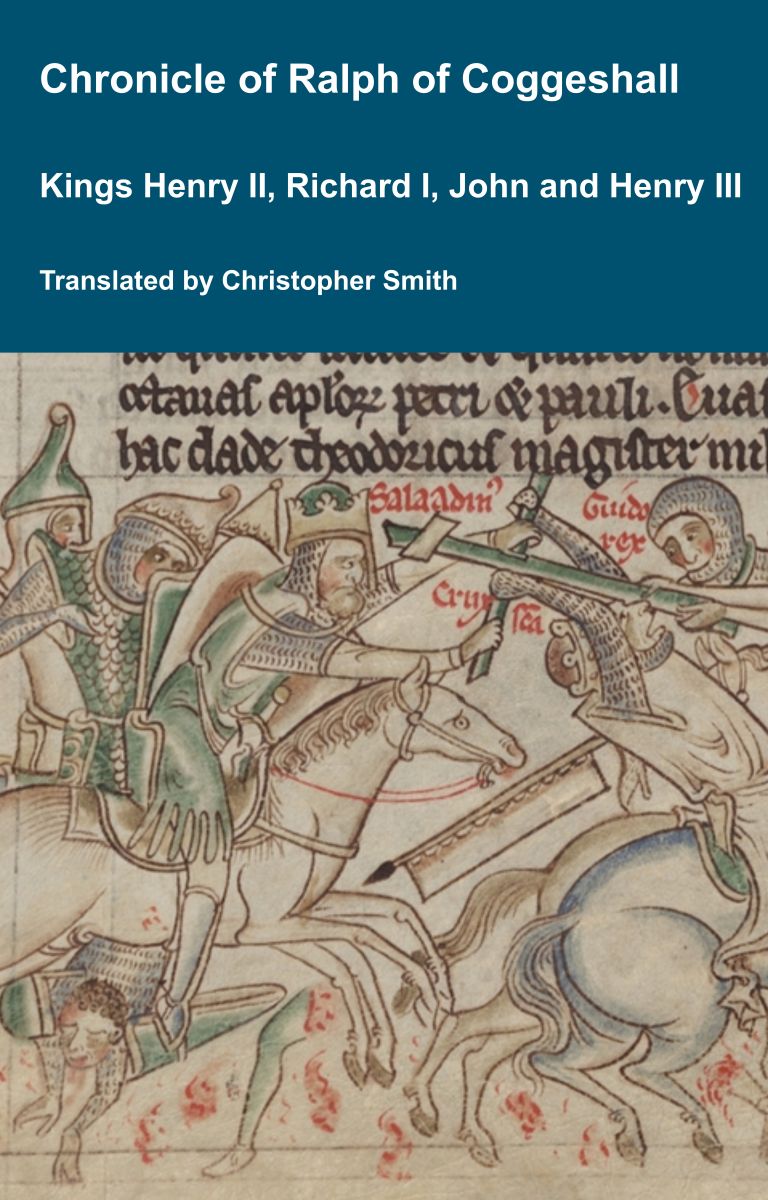 Chronicum Anglicanum by Ralph Coggeshall. In the year 1194, King Richard, having already paid the greater part of his ransom, and having given many hostages for the remainder that was still to be paid, on the feast of the Purification of the Blessed Mary [2nd February]1 was freed from all custody of the emperor, and was permitted to return to his own kingdom. Journeying with his mother and the chancellor through the land of the Duke of Louvain toward the British sea, he waited for a long time at Antwerp for a suitable time to cross. On the Sunday after the feast of Saint Gregory [11th February] he landed in England at the port of Sandwich, with great rejoicing. And at the very hour when the king arrived with his company, namely, the second hour of the day, the sun shining with great brightness, there appeared a most serene and unusual radiance, not far distant from the sun, about the height and breadth of a human body, containing within itself a shining whiteness and a reddish hue, like the likeness of a rainbow. Many who gazed upon this brightness declared that the king had come ashore in England. The king immediately set out for Canterbury, where devoutly he visited Blessed Thomas; then proceeding to London, he was received by the citizens of London with the greatest pomp of joy, the whole city being adorned in many ways and decorated with countless riches in anticipation of the king's arrival. And when news of the king's coming spread, both nobles and commoners hastened eagerly to meet the returning king, longing greatly to see him come back from captivity, whom they had feared would never return.
Anno MCXCIV. Rex Ricardus, maxima jam parte redemptionis suæ persoluta, datisque pluribus obsidibus pro reliqua parte quæ restabat persolvenda, die Purificationis beatæ Mariæ ab omni custodia imperatoris liber effectus est, et ad proprium regnum redire permissus. Qui cum matre sua et cancellario per terram ducis Luvanæ ad mare Britannicum proficiscens, apud Andeworpe aptum tempus transfretandi diutius exspectavit; qui in die Dominica post festum Sancti Gregorii in Angliam cum magno gaudio ad portum Sandwicensem applicuit. Hora autem qua rex cum suis applicuit, scilicet secunda hora diei, sole clarius rutilante, apparuit quidam serenissimus atque insolitus splendor, non longius a sole distans, quasi ad longitudinem et latitudinem humani corporis, candorem præfulgidum atque rubedinem quasi species iridis in se continens; quem splendorem plures intuentes, pronunciabant regem in Anglia fore appulsum. Rex autem illico Cantuariam profectus, beatum Thomam devotus expetiit; deinde Londoniam proficiscens, a civibus Londoniæ cum maxima lætitiæ pompa exceptus est, universa civitate contra regis adventum innumerabilium opum varietate decorata atque multiformiter adornata. Audito autem regis adventu, nobiles pariter et ignobiles adventanti regi cum magna alacritate occurrunt, cernere plurimum cupientes a captivitate regressum, quem pertimuerant nunquam reversurum.
Note 1. The letter from Walter, archbishop of Rouen to Ralph de Diceto has the 4th February: "Let your love know that after we had come to our most beloved lord, the illustrious king of the English, we wrote to no one in England, nor up to the morrow [4th February 1194] of Saint Blaise did we hear anything worth reporting and worthy to be written to you. But on that day the merciful Lord visited his people at Mainz in the liberation of our lord the king. For while we were standing by the lord king until the ninth hour, the archbishops of Mainz and Cologne, speaking before the lord emperor and the lord king and the duke of Austria concerning the king's release, after many anxieties and labours, the same archbishops, who had devoted the greatest effort to securing the king's release, came before the lady queen, and before us, and the bishops of Bath, Ely, and Saintes, and many other nobles, and approached the lord king, bringing him a brief but joyful word. It was this: that the lord emperor signified to him that, though he had long held him in his custody, yet he now released him and set him free, that henceforth he might have power over himself."
Chronica Majora by Matthew Paris. 11th February 1236. When the nuptial rejoicings were concluded, the king (age 28) left London and went to Merton [Map], where he summoned the nobles to hear a message lately brought from the emperor (age 41), and to discuss the business of the kingdom. For messengers had come direct from the emperor to the king with letters, asking him without delay to send his brother Richard, earl of Cornwall (age 27), whose circumspect skill report had spread far and wide, to make war on the king of the French. He also promised, by way of assistance, to send all the Imperial forces, especially in order to enable the English king not only to recover his continental possessions, but also, when they were regained, to extend his former possessions. To this, the king and the nobles there assembled, after due deliberation, replied that it would not be safe or prudent to send one so young out of the kingdom and to expose him to the doubtful chances and dangers of war, since he was the only apparent heir of the king and kingdom, and the hopes of all were centred in him next to the king. For the king, although he was married, had no children, and the queen his wife (age 13) was still young, and did not know whether she was fruitful or barren. But if it was agreeable to his excellency the emperor to summon any other brave man he chose, from amongst the nobles of the kingdom, for the purpose, they, the king, and all his friends and subjects, in accordance with his request, would at once render him all the assistance in their power. The messengers, on receiving this reply, returned to inform their lord.
On 11th February 1252 Ottokar "Iron King" II King Bohemia (age 19) and Margarete von Babenberg (age 48) were married. The difference in their ages was 29 years; she, unusually, being older than him.
On 11th February 1261 Otto Wittelsbach III Duke Bavaria was born to Henry Wittelsbach I Duke Lower Bavaria I Duke Bavaria (age 25) and Elizabeth Duchess Bavaria (age 25). He a great x 3 grandson of King Henry "Curtmantle" II of England.
Annals of Dunstable. At length, in the chapter of Flitton, held in the same year on the third Ides of February [11th February 1284] at Flitwick, the aforesaid vicars of Shefford and Houghton made due satisfaction to us concerning the matters demanded, and paid in full all arrears to Brother John of Maidenbury and Master Walter of Wotton, their proctors.
Tandem in capitulo de Flitta, eodem anno, iii. id. Februarii apud Flittewic celebrato, prædicti vicarii de Searrears genho et Husseburne super petitis nobis satisfecerunt competenter, fratrique Johanni de Maydenbure et magistro W[altero] de Wottone procuratoribus, omnia arreragia numerabant.
On 11th February 1466 Elizabeth York Queen Consort England was born to King Edward IV of England (age 23) and Elizabeth Woodville Queen Consort England (age 29) at Westminster Palace [Map]. She married 18th January 1486 her third cousin King Henry VII of England and Ireland, son of Edmund Tudor 1st Earl Richmond and Margaret Beaufort Countess Richmond, and had issue.


On 2nd February 1503 Katherine Tudor was born to King Henry VII of England and Ireland (age 46) and Elizabeth York Queen Consort England (age 36) at the Tower of London [Map]. She died eight days later on 11th February 1503.
On 11th February 1503 (her birthday) Elizabeth York Queen Consort England died from childbirth.


The Antiquarian Repertory. 11th February 1503. Remembrance for the enterment of the right high right excellent and most Christen Princese Elizabeth Queene of England and of France Lady of Ireland (age 37) and the Eldest daughter of king Edward the fourth wife to the most hygh most puyssant and most victorious king Henry the viith (age 46) our most dread Souveraigne Lord the which deceased in childbed in the Tower of London [Map] the xith day of Februarye which was upon Saturday and the xviiith yeare of the reigne of our said Soveraigne Lord the king her most dearest husband whose departing was as heveye and dolorous to the kings highuess as hath been sene or heard of. And also in likeyse to all the Estates of this Realme as well Citizens as Comnyns for she was one of the most gracious and best, beloved princesses in the world in her tyme beinge.
Then the king of his wisdom ordeyned certaine of his Counsell for the ordering of her buryall to be at Westminster. That is to say The Erle of Surry (age 60) Treasurer of England and Sr Richard Guilford (age 53) Comptrowler of his noble household And himselfe tooke with him certain of his secretest and prevely departed to a solitary place to passe his sorrows and would no man should resort to him but such his grace appointed untill such tyme it should please him to showe his pleasure and over yt every Officer to give their Attendance upon the said Councellours And over yt in his Departing ordeyned Incontinent the next day following for vi [6] Hundredth and xxxvi hole masses said in London and by Sr Charles Somerset (age 43) and Sr Richard Guilford sent the best comfort to all the Queens servants that hath bene sene of a soveraigne Lord with as good words.
Also then were ronngen the bells of London everye one and after that through out the Realme with solomne Dyrgies and Masses of Requiems and everye Religious place collegs and Churches.
Wriothesley's Chronicle [1508-1562]. 11th February 1503. This yeare, in Februarie, died Queene Elizabeth (age 37) at the Towre of London [Map], lyeinge in childebedd of a daughter named Katherine (the 8th day after her birth), and was buried at Westminster [Map];c
Note c. Elizabeth, the eldest child of Edward IV by Elizabeth Woodville his wife, was heiress of the house of York. She was born at Westminster [Map] on the 11th February, 1466, and died on her thirty-seventh birthday in the Tower of London [Map], having been delivered of a daughter on the second of the same month, who died soon after its mother.
On 11th February 1524 Isabella Trastámara Duchess Milan (age 53) died.
Statutes of the Realm Volume 3 Chapter 21. The Bill of Atteynder of Mestres Katherin Hawarde (age 19) late Quene of England, and divers other psonnes her complices.
Note 1. From the Original Act in the Parliament Office in the Bundle of the Thirty-seventh Year of this Reign. See the Note at the Beginning of this Year; and Note to Chapter XX.
Note 2. This Act was first read to Parliament on 21st January 1542, see House of Lords Journal, read for a second time on 6th February 1542, see House of Lords Journal and 7th February 1542, see House of Lords Journal, and a third time on 8th February 1542, see House of Lords Journal. The Act was given assent on 11th February 1542, see House of Lords Journal
Chronicle of Edward Hall [1496-1548]. 11th February 1542. And on Saterdaie beyng the [e]leventh daie of February, the Kyng sent his royall assent, by his greate Seale: and then all the Lordes were in their Robes, and the Common house called up, and there the acte redde, and his assent declared.
The History of William Marshal was commissioned by his son shortly after William’s death in 1219 to celebrate the Marshal’s remarkable life; it is an authentic, contemporary voice. The manuscript was discovered in 1861 by French historian Paul Meyer. Meyer published the manuscript in its original Anglo-French in 1891 in two books. This book is a line by line translation of the first of Meyer’s books; lines 1-10152. Book 1 of the History begins in 1139 and ends in 1194. It describes the events of the Anarchy, the role of William’s father John, John’s marriages, William’s childhood, his role as a hostage at the siege of Newbury, his injury and imprisonment in Poitou where he met Eleanor of Aquitaine and his life as a knight errant. It continues with the accusation against him of an improper relationship with Margaret, wife of Henry the Young King, his exile, and return, the death of Henry the Young King, the rebellion of Richard, the future King Richard I, war with France, the death of King Henry II, and the capture of King Richard, and the rebellion of John, the future King John. It ends with the release of King Richard and the death of John Marshal.
Available at Amazon in eBook and Paperback format.
House of Lords Journal Volume 1 1542. The nineteenth day of Parliament.
MEMORANDUM, that on Saturday, namely the 11th day of February [1542], the Lords, both Spiritual and Temporal, whose names are written below, were present:
The Most Reverend Father in Christ, the Archbishop of Canterbury, the Archbishop of York, the Bishop of London, the Lord Bishop of Durham, the Lord Bishop of Winchester, the Bishop of Exeter, the Lord Bishop of Lincoln, the Bishop of Bath and Wells, the Lord Bishop of Ely, the Bishop of Chichester, the Bishop of Norwich, the Lord Bishop of St Davids (Menevia), the Bishop of St Asaph, the Lord Bishop of Llandaff, the Lord Bishop of Carlisle, the Lord Bishop of Salisbury, the Lord Bishop of Worcester, the Bishop of Coventry and Lichfield, the Lord Bishop of Hereford, the Lord Bishop of Rochester, the Lord Bishop of Westminster, the Lord Bishop of Gloucester, the Bishop of Peterborough, the Lord Bishop of Chester.
The Lord Audley of Walden, Lord Chancellor, the Duke of Norfolk, Lord High Treasurer of England, the Duke of Suffolk, Lord Great Steward of the King’s Household, the Earl of Southampton, Lord Privy Seal, the Marquess of Dorset, the Earl of Sussex, Lord Great Chamberlain of England, the Earl of Arundel, the Earl of Oxford, the Earl of Westmorland, the Earl of Shrewsbury (Salop), the Earl of Derby, the Earl of Worcester, the Earl of Cumberland, the Earl of Rutland, the Earl of Huntingdon, the Earl of Bath, the Earl of Hertford, the Earl of Bridgewater.
The Lord Russell, Lord High Admiral of England, Lord Audley, Lord Zouche, the Lord De La Warr, the Lord Morley, the Lord Dacre, the Lord Cobham, Lord Mantravers, the Lord Ferrers, the Lord Poyntz, Lord Clinton, the Lord Stourton, the Lord Scrope, the Lord Latimer, Lord Grey of Wilton, the Lord Mountjoy, Lord Lumley, Lord Monteagle, Lord Sands, the Lord Windsor, the Lord Wentworth, the Lord Burgh, Lord Mordaunt, the Lord Saint John, Lord Parr, the Lord Cromwell.
Today the Lord Chancellor produced two Statutes, concerning which a conclusion had been reached in this Session, both among the Lords and among the Commons: one, concerning the Attainder of the Queen and of her confederates; the other, concerning the manner of proceeding against lunatics who, before their insanity, had acknowledged the crime of treason.
And each Statute was signed by the Royal Hand, together with the Royal Assent, under the Great Seal of England, likewise signed by the Royal Hand and affixed to the said Statutes; which Statutes, when the Chancellor had displayed them and the Lords had duly examined them, it seemed good to all that the Commons should be summoned, so that, in the presence of both Houses and of the whole Parliamentary Council, legal force and authority might be imposed upon the said Statutes; which was also done.
Report from the Committee that was ordered to attend the Queen.
Meanwhile, in the course of events, the Commons were summoned, and the Duke of Suffolk, Lord Great Steward of the King’s Household, in a most weighty speech, declared that he, together with his colleagues, had discharged the commission entrusted to them in their dealings with the Queen.
And that she had first acknowledged and openly confessed her crime, which she had committed against God Almighty, against her gracious Prince, and finally against the whole English nation; then had sought pardon first from God and afterwards from others; had humbly petitioned His Royal Majesty that her crime might not be imputed to her whole kin or family; but that His Majesty, although she herself was in her own person utterly unworthy to obtain anything at all, would nevertheless not disdain to extend and exercise his immense mercy and singular beneficence toward her brothers as well.
Lastly, she had begged His Royal Majesty that she might be permitted to bestow some portion of her garments upon those maidservants whom she had had as companions from the beginning of her confinement, for whom otherwise she had no means by which she could recompense their labours.
Which speech the Earl of Southampton, Lord Privy Seal, confirmed in almost the same words.
Decimus nonus dies Parliamenti.
MEMORANDUM, quod die Sabbati, videlicet, 11 die Februarii, Proceres tam Spirituales quam Temporales, quorum nomina subscribuntur, presentes fuerunt:
p. Reverendissimus in Christo Pater Archiepus. Cant. p. Archiepus. Eboracen. Epus. London. p. Epus. Dunelmen. p. Epus. Winton. Epus. Exon. p. Epus. Lincoln. Epus. Bath. et Wellen. p. Epus. Elien. Epus. Cicesiren. Epus. Norwicen. p. Epus. Meneven. p. Epus. Assaven. p. Epus. Landaven. p. Epus. Carliolen. p. Epus. Sar. p. Epus. Wigorn. p. Epus. Coven. et Lich. p. Epus. Hereforden. p. Epus. Roffen. p. Epus. Westm. p. Epus. Glouc. p. Epus. Peterburgen. p. Epus. Cestren. p. Ds. Audeley de Walden, Cancellarius. p. Dux Norff. Magnus Thesaur. Anglie. p. Dux Suff. Magnus Magister Hospitii Dni. Regis. p. Comes Southampton, Ds. Privati Sigilli. p. Marchio Dorss. Comes Sussex, Magnus Camerarius Anglie. Comes Arundell. Comes Oxon. Comes Westmerland. p. Comes Salop. p. Comes Derby. Comes Wigorn. Comes Cumb'rland. p. Comes Rutland. p. Comes Huntingdon. Comes Bath. p. Comes Hertford. p. Comes Bridgwater. p. Ds. Russell, Magnus Admirallus Anglie. Ds. Audeley. Ds. Zouche. p. Ds. Dallawarr. p. Ds. Morley. p. Ds. Dacres. Ds. Cobham. p. Ds. Mantravers. p. Ds. Ferrers. p. Ds. Poys. p. Ds. Clynton. p. Ds. Stourton. p. Ds. Scrope. p. Ds. Latymer. Ds. Gray de Wilton. p. Ds. Mountjoy. Ds. Lomley. Ds. Mountegle. Ds. Sands. p. Ds. Windesor. p. Ds. Wentworth. p. Ds. Burgh. Ds. Mordaunt. p. Ds. Saint John. Ds. Parr. p. Ds. Crumwell.
King grants his Commission for giving the Royal Assent to two Acts.
HODIE Dominus Cancellarius produxit duo Statuta, de quibus in hac Sessione conclusum est, tam inter Proceres, quam inter Communes; alterum, de Attinctura Regine, et suorum Confederatorum; alterum, de modo procedendi contra Lunaticos, qui ante ipsorum Insaniam agnoverunt Crimen Lese Majestatis.
Et utrumque Statutum Regia Manu signatum, simul cum Regio Assensu, sub Magno Sigillo Anglie, Regia etiam Manu signato, et dictis Statutis annexo; que quidem quum Cancellarius ostendisset, et Magnates ex equo perpendissent, omnibus visum est Communes accersere, ut in presentia utriusque Domus, et totius Parliamentaris Consilii, dictis Statutis Legis Vigor et Authoritas imponatur; quod et factum est.
Report from the Committee that was ordered to attend the Queen.
Interea autem temporis Communes accersuntur, Dux Suff. Magnus Magister Hospitii Domini Regis, gravissima Oratione, declarabat, se, cum suis Collegis, delegatam sibi functionem apud Reginam prestitisffe.
Atque eam primo agnoscere et palam confiteri Crimen suum, quod patravit in Deum Optimum Maximum, in benignum Principem, denique in totam Gentem Anglicanam; tum Veniam a Deo, deinde a ceteris postulare; supplicare Regie Majestati, ut ne suum Crimen universo ipsius Generi aut Familie imputetur; sed ut ejus Majestas, tametsi ipsa per se indignissima sit, que aliquid omnino debeat impetrare, immensam tamen ejus Misericordiam, et in omnes singularem Beneficentiam, in Fratres quod ipsius extendere pariter et exercere non gravetur. Postremo orare Regiam Majestatem, ut liceat sibi aliquid suarum Vestium impartire illis Ancillis, quas ab initio Ablegationis sue Comites habuit, quibus alioqui non habet quo ipsarum Labores queat demereri.
Quam quidem Orationem Comes Southt. Privati Sigilli, totidem pene verbis confirmavit.
 Become a Member via our Buy Me a Coffee page to read more.
On 11th February 1586 Augustus Wettin Elector of Saxony (age 59) died. His son Christian (age 25) succeeded Elector Saxony.
On 19th January 1589 John Radclyffe of Ordsall Hall (age 53) died at Ordsall Hall, Lancashire [Map]. On 11th February 1589 he was buried in Manchester Church [Map].

Calendar of State Papers James I 1608. Feb. 11. [1608] London. 26. John Chamberlain to Dud. Carleton. Domestic affairs. Tobie Matthew ordered to depart the realm. Harry Constable (age 46) and Rich. Carey committed to prison. A marriage and masque at Court, and presents to the bride [Lady Eliz. Ratcliffe]. The King gave them a pension of £600 a year, and wished the bridegroom [Visct. Haddington (age 28)] as much happiness as he himself had, the day he delivered him from the Gowrie conspiracy. Progress of the treaty of peace between Flanders and Holland. The Pope has commanded Sir Rob. Dudley (age 33) to forsake his mistress (age 24), &c.
On 11th February 1651 Anne Scott Duchess Monmouth and Buccleuch was born to Francis Scott 2nd Earl Buccleuch (age 24) and Margaret Leslie Countess Buccleuch and Wemyss (age 30). She married (1) 20th April 1663 her fifth cousin James Scott 1st Duke Monmouth 1st Duke Buccleuch and had issue (2) after 28th February 1681 Charles Cornwallis 3rd Baron Cornwallis, son of Charles Cornwallis 2nd Baron Cornwallis and Margaret Playstead.
On 11th February 1657 Ferdinand Josef Alois Habsburg Spain Archduchess Austria was born to Ferdinand III Holy Roman Emperor (age 48) and Eleonora Gonzaga Queen Consort Bohemia (age 27). Coefficient of inbreeding 2.47%. She died aged one in 1658.


Samuel Pepys' Diary. 11th February 1660. Thence we took coach for the City to Guildhall, where the Hall was full of people expecting Monk (age 51) and Lord Mayor (age 27) to come thither, and all very joyfull. Here we stayed a great while, and at last meeting with a friend of his we went to the 3 Tun tavern and drank half a pint of wine, and not liking the wine we went to an alehouse, where we met with company of this third man's acquaintance, and there we drank a little. Hence I went alone to Guildhall to see whether Monk was come again or no, and met with him coming out of the chamber where he had been with the Mayor and Aldermen, but such a shout I never heard in all my life, crying out, "God bless your Excellence". Here I met with Mr. Lock, and took him to an alehouse, and left him there to fetch Chetwind; when we were come together, Lock told us the substance of the letter that went from Monk to the Parliament; wherein, after complaints that he and his officers were put upon such offices against the City as they could not do with any content or honour, that there are many members now in the House that were of the late tyrannical Committee of Safety. That Lambert (age 40) and Vane (age 46) are now in town, contrary to the vote of Parliament. That there were many in the House that do press for new oaths to be put upon men; whereas we have more cause to be sorry for the many oaths that we have already taken and broken. That the late petition of the fanatique people presented by Barebone (age 62), for the imposing of an oath upon all sorts of people, was received by the House with thanks. That therefore he do desire that all writs for filling up of the House be issued by Friday next, and that in the mean time, he would retire into the City and only leave them guards for the security of the House and Council. The occasion of this was the order that he had last night to go into the City and disarm them, and take away their charter; whereby he and his officers say that the House had a mind to put them upon things that should make them odious; and so it would be in their power to do what they would with them. He told us that they [the Parliament] had sent Scott and Robinson to him this afternoon, but he would not hear them. And that the Mayor and Aldermen had offered him their own houses for himself and his officers; and that his soldiers would lack for nothing. And indeed I saw many people give the soldiers drink and money, and all along in the streets cried, "God bless them!" and extraordinary good words. Hence we went to a merchant's house hard by, where Lock wrote a note and left, where I saw Sir Nich. Crisp (age 61), and so we went to the Star Tavern (Monk being then at Benson's), where we dined and I wrote a letter to my Lord from thence. In Cheapside there was a great many bonfires, and Bow bells and all the bells in all the churches as we went home were a-ringing. Hence we went homewards, it being about ten o'clock. But the common joy that was every where to be seen! The number of bonfires, there being fourteen between St. Dunstan's [Map] and Temple Bar, and at Strand Bridge' I could at one view tell thirty-one fires. In King-street seven or eight; and all along burning, and roasting, and drinking for rumps. There being rumps tied upon sticks and carried up and down. The butchers at the May Pole in the Strand [Map] rang a peal with their knives when they were going to sacrifice their rump. On Ludgate Hill [Map] there was one turning of the spit that had a rump tied upon it, and another basting of it. Indeed it was past imagination, both the greatness and the suddenness of it. At one end of the street you would think there was a whole lane of fire, and so hot that we were fain to keep still on the further side merely for heat. We came to the Chequers at Charing Cross, where Chetwind wrote a letter and I gave him an account of what I had wrote for him to write. Thence home and sent my letters to the posthouse in London, and my wife and I (after Mr. Hunt was gone, whom I found waiting at my house) went out again to show her the fires, and after walking as far as the Exchange we returned and to bed.



Become a Member via our Buy Me a Coffee page to read more.
John Evelyn's Diary. 11th February 1660. During this sickness came divers of my relations and friends to visit me, and it retarded my going into the country longer than I intended; however, I wrote and printed a letter in defence of his Majesty (age 29), against a wicked forged paper, pretended to be sent from Brussels to defame his Majesty's person and virtues and render him odious, now when everybody was in hope and expectation of the General (age 51) and Parliament recalling him, and establishing the Government on its ancient and right basis. The doing this toward the decline of my sickness, and sitting up long in my bed, had caused a small relapse, out of which it yet pleased God also to free me, so as by the 14th I was able to go into the country, which I did to my sweet and native air at Wotton, Surrey [Map].
John Evelyn's Diary. 11th February 1660. A signal day. Monk (age 51), perceiving how infamous and wretched a pack of knaves would have still usurped the supreme power, and having intelligence that they intended to take away his commission, repenting of what he had done to the city, and where he and his forces were quartered, marches to Whitehall [Map], dissipates that nest of robbers, and convenes the old Parliament, the Rump Parliament (so called as retaining some few rotten members of the other) being dissolved; and for joy whereof were many thousands of rumps roasted publicly in the streets at the bonfires this night, with ringing of bells, and universal jubilee. This was the first good omen.
Samuel Pepys' Diary. 11th February 1660. Saturday. This morning I lay long abed, and then to my office, where I read all the morning my Spanish book of Rome. At noon I walked in the Hall, where I heard the news of a letter from Monk (age 51), who was now gone into the City again, and did resolve to stand for the sudden filling up of the House, and it was very strange how the countenance of men in the Hall was all changed with joy in half an hour's time. So I went up to the lobby, where I saw the Speaker (age 68) reading of the letter; and after it was read, Sir A. Haselrigge (age 59) came out very angry, and Billing (age 37) standing at the door, took him by the arm, and cried, "Thou man, will thy beast carry thee no longer? thou must fall!" The House presently after rose, and appointed to meet again at three o'clock. I went then down into the Hall, where I met with Mr. Chetwind, who had not dined no more than myself, and so we went toward London, in our way calling at two or three shops, but could have no dinner. At last, within Temple Bar, we found a pullet ready roasted, and there we dined. After that he went to his office in Chancery Lane [Map], calling at the Rolls, where I saw the lawyers pleading. Then to his office, where I sat in his study singing, while he was with his man (Mr. Powell's son) looking after his business.
John Evelyn's Diary. 11th February 1662. I saw a comedy acted before the Duchess of York (age 24) at the Cockpit [Map]. The King (age 31) was not at it.


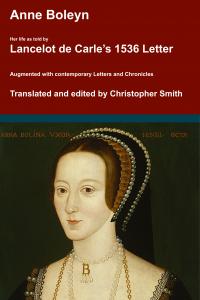
Anne Boleyn. Her Life as told by Lancelot de Carle's 1536 Letter.
In 1536, two weeks after the execution of Anne Boleyn, her brother George and four others, Lancelot du Carle, wrote an extraordinary letter that described Anne's life, and her trial and execution, to which he was a witness. This book presents a new translation of that letter, with additional material from other contemporary sources such as Letters, Hall's and Wriothesley's Chronicles, the pamphlets of Wynkyn the Worde, the Memorial of George Constantyne, the Portuguese Letter and the Baga de Secrets, all of which are provided in Appendices.
Available at Amazon in eBook and Paperback format.
Samuel Pepys' Diary. 11th February 1666. Lord's Day. Up, and put on a new black cloth suit to an old coate that I make to be in mourning at Court, where they are all, for the King of Spayne1. To church I, and at noon dined well, and then by water to White Hall, carrying a captain of the Tower (who desired his freight thither); there I to the Parke, and walked two or three turns of the Pell Mell [Map] with the company about the King (age 35) and Duke (age 32); the Duke speaking to me a good deal. There met Lord Bruncker (age 46) and Mr. Coventry (age 38), and discoursed about the Navy business; and all of us much at a loss that we yet can hear nothing of Sir Jeremy Smith's fleete, that went away to the Streights the middle of December, through all the storms that we have had since, that have driven back three or four of them with their masts by the board. Yesterday come out the King's Declaration of War against the French, but with such mild invitations of both them and the Dutch to come over hither with promise of their protection, that every body wonders at it.
Note 1. Philip IV., who died September 17th, 1665.


Samuel Pepys' Diary. 11th February 1667. Thence with Creed to Westminster Hall [Map], and there up and down, and heard that Prince Rupert (age 47) is still better and better; and that he did tell Dr. Troutbecke expressly that my Lord Sandwich (age 41) is ordered home. I hear, too, that Prince Rupert hath begged the having of all the stolen prize-goods which he can find, and that he is looking out anew after them, which at first troubled me; but I do see it cannot come to anything, but is done by Hayes, or some of his little people about him. Here, among other newes, I bought the King's speech at proroguing the House the other day, wherein are some words which cannot but import some prospect of a peace, which God send us! After walking a good while in the Hall, it being Term time, I home by water, calling at Michell's and giving him a fair occasion to send his wife to the New Exchange to meet my wife and me this afternoon.


Samuel Pepys' Diary. 11th February 1667. Up, and by water to the Temple [Map], and thence to Sir Ph. Warwicke's (age 57) about my Tangier warrant for tallies, and there met my Lord Bellasses (age 52) and Creed, and discoursed about our business of money, but we are defeated as to any hopes of getting [any] thing upon the Poll Bill, which I seem but not much troubled at, it not concerning me much.


Calendar of the State Papers of William and Mary 1693 Febaruary. 11th February 1693. Whitehall. The Earl of Nottingham (age 45) to the Lord Lieutenant of Ireland.
The King has been moved on behalf of Captain Garret Coahlan (?) and Captain George Darcy for commissions to be captains in one of the two regiments now to be raised in Ireland, and commands me to recommend them to you for that purpose. They were formerly captains in Ireland and Roman eatholics, but I am told are now turned protestants, though they have not yet declared it, and the King thinks it may be for the service to give them those employments that if may be an encouragement to others in that kingdom to come in and concur in the establishment of the protestant interest. By his Majesty's commands I have written to you, recommending Lieut. Colonel Oliver Long to be lieutenant-colonel to Colonel Echlin. [S.P. Ireland, King's Letter Book 1, p. 446.]
Calendar of the State Papers of William and Mary 1693 Febaruary. 11th February 1693. Whitehall. The Earl of Nottingham (age 45) to the Lord Lieutenant.
For some time there has been a design for settling a colony of French protestants in Ireland. The King has appointed a committee of lords to consider the best ways and means of establishing this, and they have made their report. His Majesty has commanded me to send you the enclosed extract from it, that you may consider what there is proposed and return an answer to the questions in it. Encloswre not entered. [Ibid., p. 447.]
Calendar of the State Papers of William and Mary 1693 Febaruary. 11th February 1693. Whitehall. The Earl of Nottingham (age 45) to Capt. Greenhill.
The King commands me to acquaint you that he wishes you to give notice to all the privateers of Zealand who go to Plymouth, or near it, that orders are issued for their departure to Zealand. [H. O. Letter Bool: (Secretary's) 2, p. 615.]
On 11th February 1694 Henrietta Cavendish Holles Countess of Oxford and Mortimer was born to John Holles 1st Duke Newcastle upon Tyne (age 32) and Margaret Cavendish Duchess Newcastle upon Tyne (age 32). Coefficient of inbreeding 6.45%. She married 31st August 1713 Edward Harley 2nd Earl of Oxford and Earl Mortimer, son of Robert Harley 1st Earl of Oxford and Earl Mortimer and Elizabeth Foley Countess of Oxford and Mortimer, and had issue.

John Evelyn's Diary. 11th February 1694. Now was the great trial of the appeal of Lord Bath (age 65) and Lord Montagu (age 55) before the Lords, for the estate of the late Duke of Albemarle.
On 11th February 1704 Catherine Greville Duchess Buckingham and Normandby was buried at Westminster Abbey [Map].
On 11th February 1715 Margaret Cavendish Harley 2nd Duchess Portland was born to Edward Harley 2nd Earl of Oxford and Earl Mortimer (age 25) and Henrietta Cavendish Holles Countess of Oxford and Mortimer (age 21). She married 11th June 1734 her sixth cousin William Bentinck 2nd Duke Portland, son of Henry Bentinck 1st Duke Portland and Elizabeth Noel Duchess Portland, and had issue.


Minutes of the Society of Antiquaries. 11th February 1719. It was ordered that every Member for his last years contributions beside two prints of Richard II already ordered shall have three prints of the Font and two of Ulphus's Horn.
My Lord Oxford sent a brass old seal for the Inspection of the Society belonging to the Fraternity of St Lazarus of Jerusalem in England.
Dr Knight brought an old dye of a coin of Queen Elizabeth of a sixpence, found immured at Oakeley in Essex.


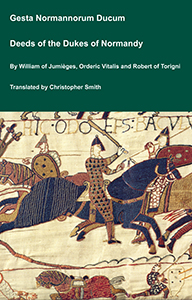
The Deeds of the Dukes of Normandy
The Gesta Normannorum Ducum [The Deeds of the Dukes of Normandy] is a landmark medieval chronicle tracing the rise and fall of the Norman dynasty from its early roots through the pivotal events surrounding the Norman Conquest of England. Originally penned in Latin by the monk William of Jumièges shortly before 1060 and later expanded at the behest of William the Conqueror, the work chronicles the deeds, politics, battles, and leadership of the Norman dukes, especially William’s own claim to the English throne. The narrative combines earlier historical sources with firsthand information and oral testimony to present an authoritative account of Normandy’s transformation from a Viking settlement into one of medieval Europe’s most powerful realms. William’s history emphasizes the legitimacy, military prowess, and governance of the Norman line, framing their expansion, including the conquest of England, as both divinely sanctioned and noble in purpose. Later chroniclers such as Orderic Vitalis and Robert of Torigni continued the history, extending the coverage into the 12th century, providing broader context on ducal rule and its impact. Today this classic work remains a foundational source for understanding Norman identity, medieval statesmanship, and the historical forces that reshaped England and Western Europe between 800AD and 1100AD.
Available at Amazon in eBook and Paperback format.
On 11th February 1733 Frances Wyndham (age 28) died in childbirth.

On 11th February 1773 Elizabeth Somerset was born to Henry Somerset 5th Duke Beaufort (age 28) and Elizabeth Boscawen Duchess Beaufort (age 25). She married before 28th February 1823 Dean Charles Talbot and had issue.
On 11th February 1784 Charles Manners 4th Duke Rutland (age 29) was appointed Lord Lieutenant of Ireland.

On 11th February 1797 Richard Temple-Nugent-Brydges-Chandos-Grenville 2nd Duke of Buckingham and Chandos was born to Richard Temple-Nugent-Brydges-Chandos-Grenville 1st Duke of Buckingham and Chandos (age 20) and Anne Elizabeth Brydges Duchess Buckingham and Chandos (age 18) at Stowe House, Buckinghamshire. He married (1) 1819 Mary Campbell Duchess Buckingham and Chandos, daughter of John Campbell 1st Marquess Breadalbane, and had issue.
On 11th February 1804 Agnes Paget was born to Henry William Paget 1st Marquess Anglesey (age 35) and Caroline Elizabeth Villiers Duchess Argyll (age 29). She married 7th March 1829 George Byng 2nd Earl Strafford, son of John Byng 1st Earl Strafford and Mary Stevens Mackenzie, and had issue.


The London Gazette 15888. Whitehall, February 11, 1806.
The King has been pleased .to appoint the Right Honorable Henry Earl of Carnarvon (age 64) to be Master of the Horse to His Majesty.

On 11th February 1813 George Nugent Temple Grenville 1st Marquess Buckingham (age 59) died. His son Richard (age 36) succeeded 2nd Marquess Buckingham, 4th Earl Temple, 3rd Earl Nugent, 5th Viscount Cobham. Anne Elizabeth Brydges Duchess Buckingham and Chandos (age 34) by marriage Marchioness Buckingham.
On 11th February 1819 Archbishop William Thomson was born.
On 11th February 1822 Arthur William Devis (age 59) died of apoplexy at Caroline Street Bedford Square Camden. He was buried at St Giles' in the Fields Church [Map].
On 11th February 1825 Duke Frederick IV of Saxe Coburg Altenburg (age 50) died at Gotha.
Chronicle of Abbot Ralph of Coggeshall
The Chronicle of Abbot Ralph of Coggeshall (Chronicon Anglicanum) is an indispensable medieval history that brings to life centuries of English and European affairs through the eyes of a learned Cistercian monk. Ralph of Coggeshall, abbot of the Abbey of Coggeshall in Essex in the early 13th century, continued and expanded his community’s chronicle, documenting events from the Norman Conquest of 1066 into the tumultuous reign of King Henry III. Blending eyewitness testimony, careful compilation, and the monastic commitment to record-keeping, this chronicle offers a rare narrative of political intrigue, royal power struggles, and social upheaval in England and beyond. Ralph’s work captures the reigns of pivotal figures such as Richard I and King John, providing invaluable insights into their characters, decisions, and the forces that shaped medieval rule. More than a simple annal, Chronicon Anglicanum conveys the texture of medieval life and governance, making it a rich source for scholars and readers fascinated by English history, monastic authorship, and the shaping of the medieval world.
Available at Amazon in eBook and Paperback format.

On 11th February 1829 Francis Henry Egerton 8th Earl Bridgewater (age 72) died. He was buried at Bridgewater Chapel, St Peter and St Paul Church, Little Gaddesden. Monument sculpted by Richard Westmacott (age 53). Earl Bridgewater, Viscount Brackley, Baron Ellesmere extinct.
Francis Henry Egerton 8th Earl Bridgewater: On 11th November 1756 he was born to Bishop John Egerton and Anne Sophia Grey. Coefficient of inbreeding 6.25%. On 8th November 1781 Francis Henry Egerton 8th Earl Bridgewater was elected Fellow of the Royal Society. On 31st March 1791 Francis Henry Egerton 8th Earl Bridgewater was elected Fellow of the Society of Antiquaries of London.
After 11th February 1834. Monument to Anne Bankes nee Truman at St Denys' Church, Sleaford [Map] sculpted by Richard Westmacott (age 58).


11th February 1840. Tuesday. Supplement to the London Gazette.
St James's Palace [Map]. February 10, 1840.
THIS day the Marriage of the QUEEN'S MOST EXCELLENT MAJESTY (age 20) with Field Marshal His ROYAL HIGHNESS FRANCIS ALBERT AUGUSTUS CHARLES EMANUEL, DUKE OF SAXE, PRINCE OF SAXE COBOURG AND GOTHA, Knight of the Most Noble Order of the Garter (age 20), was solemnized at the Chapel Royal, St James's Palace.
Field Marshal His Royal Highness the Prince Albert, attended by his Suite, proceeded from Buckingham-Palace [Map] this day, about half past eleven o'clock, to St. James's-Palace [Map], in the following order:
The first Carriage,.
Conveying General Sir George Anson, G.C.B. (age 43); George Edward Anson, Esq (age 27); and Francis Seymour, Esq (age 26); the Bridegroom's Gentlemen of Honour.
The second Carriage,.
Conveying the Lord Chamberlain of the Household, the Earl of Uxbridge (age 42) (who afterwards returned to Buckingham-Palace [Map], to attend in Her Majesty's Procession), and the Officers of the Suite of His Serene Highness the Reigning Duke of Saxe Cobourg and Gotha, and the Hereditary Prince of Saxe Cobourg and Gotha, viz. Count Kolowrath (age 62), Baron Alvensleben, and Baron De Lowenfels.
The third Carriage,.
Conveying His Royal Highness the Prince Albert, His Serene Highness the Reigning Duke of Saxe Colourg and Gotha (age 56) (father), and the Hereditary Prince of Saxe Cobourg and Gotha (age 21) (elder brother).
Her Majesty, attended by Her Royal Household, accompanied by Her Royal Highness the Duchess of Kent (age 53), proceeded, at twelve o'clock, from Buckingham-Palace [Map] to St James's Palace [Map], in the following order:
The first Carriage,
Conveying two Gentlemen Ushers, Charles Heneage, Esq (age 33) and the Honourable Heneage Legge (age 51); Yeoman of the Yeomen of the Guard, Charles Hancock, Esq,; and the Groom of the Robes, Captain Francis Seymour (age 51).
The second Carriage,.
Conveying the Equerry in Waiting, Lord Alfred Paget (age 23); two Pages of Honour, Charles T. Wemyss, Esq and Henry William John Byng (age 8), Esq j and the Groom in Waiting, the Honourable George Keppel.
The third Carriage,.
Conveying the Clerk Marshal, Colonel the Honourable H. E. G. Cavendish (age 50); the Vice-Chamberlain, the Earl of Belfast, G. C. H. (age 43); and the Comptroller of the Household, the Right Honourable George Stevens Byng (age 33).
The fourth Carriage,.
Conveying the Woman of the Bedchamber in Waiting, Mrs. Brand (age 60); the Captain of the Yeomen of the Guard, the Earl of Ilchester (age 52); the Master of the Buck Hounds, Lord Kinaird; and the Treasurer of the Household, the Earl of Surrey (age 48).
The fifth Carriage,.
Conyeying the Maid of Honour in Waiting, the Honourable Caroline Cocks (age 45); the Duchess of Kent's Lady in Waiting, Lady K Howard; the Gold Stick, General Lord Hill, G. C.B., G. C. H.; and the Lord in Waiting, Viscount Torrington (age 27).
The sixth Carriage,.
Conveying the Lady of the Bedchamber in Waiting, the Countess of Sandwich (age 27); the Master of the Horse, the Earl of Albemarle, G. C.H. (age 67); the Lord Steward, the Earl of Erroll, K.T. G.C.H. (age 38); and the Lord Chamberlain, the Earl of Uxbridge.
The seventh Carriage,.
Conveying Her Most Excellent Majesty the QUEEN; Her Royal Highness the Duchess of Kent; and the Duchess of Sutherland, the Mistress of the Robes to Her Majesty (age 33).
The illustrious Personages, and others composing the Procession, then assembled in the Throneroom, and, having been called over by Garter Principal King of Arms, the Processions, moyed in the following order, to the Chapel Royal:
THE PROCESSION OF THE BRIDEGROOM.
Drums and Trumpets.
Serjeant Trumpeter.
Master of the Ceremonies, Sir Robert Chester, Knt.
Lancaster Herald, George Frederick Beltz, Esq K.H (age 65), York Herald, Charles George Young, Esq (age 44).
The Bridegroom's Gentlemen of Honour, viz. Francis Seymour, Esq Gen. Sir George Anson, G.C B. George Edward Anson, Esq.
Vice-Chamberlain of Her Majesty's Household, The Earl of Belfast, G.C.H., Lord Chamberlain of Her Majesty's Household, The Earl of Uxbridge.
Continues...
THE QUEEN. Wearing the Collar of the Order of the Garter.
Her Majesty's Train borne by the following twelve unmarried Ladies, viz.
Lady Adelaide Paget (age 20), Lady Caroline Amelia Gordon-Lennox (age 20), Lady Sarah Frederica Caroline Villiers (age 18), Lady Elizabeth Anne Georgiana Dorothea Howard (age 23), Lady Frances Elizabeth Cowper (age 20), Lady Ida Harriet Augusta Hay (age 18), Lady Elizabeth West (age 21), Lady Catherine Lucy Wilhelmina Stanhope, Lady Mary Augusta Frederica Grimston (age 20), Lady Jane Harriet Bouverie (age 20), Lady Eleanora Caroline Paget (age 12), Lady Mary Charlotte Howard (age 18).
Assisted by the Groom of the Robes, Captain Francis Seymour.
Master of the Horse, The Earl of Albemarle, G.C.H., Mistress of the Robes, The Duchess of Sutherland.
Ladies of the Bedchamber, The Marchioness of Normanby (age 41), The Duchess of Bedford (age 56), The Countess of Burlington (age 28), The Countess of Sandwich, The Baroness Portman (age 30), The Dowager Lady Lyttleton (age 52), The Lady Barham (age 25).
Maids of Honour, The Hon. Amelia Murray, The Hon. Harriet Pitt, The Hon. Caroline Cocks, The Hon. Henrietta Anson, The Hon. Matilda Paget, The Hon. Harriet Lister, The Hon. Sarah Mary Cavendish.
Become a Member via our Buy Me a Coffee page to read more.
On 11th February 1847 Hugh Percy 3rd Duke Northumberland (age 61) died without issue at Alnwick, Northumberland [Map].
Algernon Percy 4th Duke Northumberland (age 54) succeeded 4th Duke Northumberland, 4th Baron Lovain, 5th Baron Percy, 7th Baronet Smithson of Stanwick in Yorkshire. Eleanor Grosvenor Duchess Northumberland (age 26) by marriage Duchess Northumberland.


On 11th February 1848 Archbishop William Howley (age 81) died.


On 11th February 1857 Thomas Clement Thompson (age 77) died of bronchitis.
The Diary of George Price Boyce 1860. 11th February 1860. Annie Miller (age 25) sat to me. Rossetti (age 31) came in towards dusk and touched on my oil portrait of her begun, and went away with her.
On 11th February 1862 at twenty past seven in the morning Elizabeth Siddal (age 32) overdosed on laudanum at 14 Chatham Place. Possibly suicide - there may have been a note that said "look after Harry (her invalid brother)" which Ford Madox Brown (age 40) persuaded Dante Gabriel Rossetti (age 33) to burn. Shortly after her death Sarah Cox aka Fanny Cornforth (age 27) moved into the family home to become housekeeper to Dante Gabriel Rossetti.
The Times. 13th February 1867. DEATH OF LORD FEVERSHAM. We regret to announce the death, after a short illness, of Lord Feversham (deceased), which occurred on Monday night at his residence in Great Cumberland Street. The late William Duncombe Baron Feversham, of Dancombe Park, County York, in the Peerage of the United Kingdom, was son of Charles first Lord by his marriage with Lady Charlotte Legge, only daughter of William, second Earl of Dartmouth. He was born on the 14th of January, 1798, so that he was in his 69th year. The deceased nobleman was educted at Eton [Map], and afterwards proceeded to Christ Church, Oxford. He married l8th of December, 1823, Lady Louisa Stewart (age 63), third daughter of George, eighth Earl of Galloway, by whom,who survives his Lordship, he leaves issue the Hon. Wiliam E. Duncombe (age 38), M.P., and Captain the Hon. Cecil Duncombe, of the 1st Life Guards, and three daughters, the Hon Jane, married l1th of April, 1849, to the Hon. Laurence Parsons; the Hon. Gertrude (age 39), married 27th of November 1&19, to Mr. Francis Horatio Fitzroy (age 43); and the Hon. Helen, married 18th of July, 1855, to Mr. William Becket Denison. Previously to his accession to the peerage on the death of his father in July, 1841, he represented Yorkshire in the House of Commons from 1826 to 1830. At the general election in 1831 he was unsuceessful candidate for the coenty, but was returned for the North Riding in the following year, which he continued to represent till 18S1. He voted against the Reforzn Bill of 1832, and was uniformly in favour of agricultural protection. He took great interest in agricultural pursuit, And was a distinguished member of the Royal Agricultural Society, of which he was one of the trustees The deceased noblemna is succeded by his eldest son, the Hon. Wiliam Ernest Duncombe, above mentioned, who was born January 28 1829, and married, August 7, 1851, Mabel Violet (age 33), second daughter of the late Right Hon. Sir James Graham, of Netherby. He was M.P. for East Retford from February, 1852, to 1857 and elected for the North Riding of Yorkshire inI 1859, anA was also returned at the last general election After a sharp contest, being second on the poll. He is Captain of the Yorkshire Yeomianry (Hussars) Cavalry, and Lientenent Colonel of the 2d North Riding like his deceased father, he is a supporter of Lord Derby, but in favour of such a measure of Parliamentary Reforms would give no undue preponderance to any one class, but would ensure to a fair distribution of political privileges.


Become a Member via our Buy Me a Coffee page to read more.
On 11th February 1872 Harold Speed was born.
On the on the 11th February 1873, at the age of thirty-two and at the height of his artistic career, Solomon (age 32) was arrested with George Roberts, a sixty-year-old illiterate stableman in a public urinal, by police constable William Mitchell, around the corner from Marylebone Lane Police Station, in Stratford Place Mews, off Oxford Street. On the following day magistrate, Lieutenant L. T. D'Eyncourt, of the Marylebone Police Court, read the charge that both men had "unlawfully attempt feloniously to commit the abominable crime of buggery". Roberts protested that it was a false charge and when prompted, Solomon acquiesced that it was "equally so" with him. Despite their protests, both men were found guilty of attempted sodomy, but after his six week detainment in the Clerkenwell House of Detention, the artist was subsequently released to the care of his cousin Myer Salaman on a surety of £100, and the promise that he behaved himself.


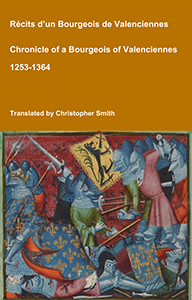
Chronicle of a Bourgeois of Valenciennes
Récits d’un bourgeois de Valenciennes aka The Chronicle of a Bourgeois of Valenciennes is a vivid 14th-century vernacular chronicle written by an anonymous urban chronicler from Valenciennes in the County of Hainaut. It survives in a manuscript that describes local and regional history from about 1253 to 1366, blending chronology, narrative episodes, and eyewitness-style accounts of political, military, and social events in medieval France, Flanders, and the Low Countries. The work begins with a chronological framework of events affecting Valenciennes and its region under rulers such as King Philip VI of France and the shifting allegiances of local nobility. It includes accounts of conflicts, sieges, diplomatic manoeuvres, and the impact of broader struggles like the Hundred Years’ War on urban life in Hainaut. Written from the perspective of a burgher (bourgeois) rather than a monastery or royal court, the chronicle offers a rare lay viewpoint on high politics and warfare, reflecting how merchants, townspeople, and civic institutions experienced the turbulence of the 13th and 14th centuries. Its narrative style combines straightforward reporting of events with moral and civic observations, making it a valuable source for readers interested in medieval urban society, regional politics, and the lived experience of war and governance in pre-modern Europe.
Available at Amazon in eBook and Paperback format.
The Times. 14th February 1873. DEATH OF Baroness Cadogan. We have to announce the death of the Countess Cadogan (deceased), which occurred on Tuesday at Cadogan House, Belgravia. The deceased, who had long been an invalid, was the third daughter of the late Hon. and Rev. Gerald V. Wesley D.D., and Lady Emily, eldest daughter of the first Earl Cadogan. She was born in February, 1812 [NOTE. Sources state 16th January 1808], and married July 13, 1836, her cousin, the present Lord Cadogan (age 60), then Viscount Chelsea. She leaves issue four sons and a daughter.
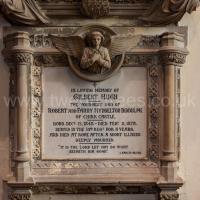
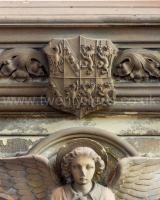
After 11th February 1878. St Mary's Church, Chirk [Map]. Memorial to Gilbert Hugh Myddleton-Biddulph (deceased).
Gilbert Hugh Myddleton-Biddulph: On 15th December 1848 he was born to Colonel Robert Myddelton-Biddulph and Fanny Mostyn-Owen. On 11th February 1878 he died at Rome.
On 11th February 1917 Henry Fitzalan Howard 15th Duke of Norfolk (age 69) died. His son Bernard (age 8) succeeded 16th Duke Norfolk, 27th or 34th Earl Arundel, 17th Earl Surrey, 14th Earl Norfolk, 24th Baron Maltravers, 24th Baron Arundel.

On 11th February 1918 Lieutenant Colonel Neville Bowes Elliott-Cooper VC (age 29) died whilst a prisoner of war. He had been awarded the Victoria Cross for his actions at the Battle of Cambrai the citation reading ...
For most conspicuous bravery and devotion to duty. Hearing that the enemy had broken through our outpost line, he rushed out of his dug-out, and on seeing them advancing across the open he mounted the parapet and dashed forward calling upon the Reserve Company and details of the Battalion Headquarters to follow. Absolutely unarmed, he made straight for the advancing enemy, and under his direction our men forced them back 600 yards. While still some forty yards in front he was severely wounded. Realising that his men were greatly outnumbered and suffering heavy casualties, he signalled to them to withdraw, regardless of the fact that he himself must be taken prisoner. By his prompt and gallant leading he gained time for the reserves to move up and occupy the line of defence.
Monument in Ripon Cathedral [Map].
Lieutenant Colonel Neville Bowes Elliott-Cooper VC: On 22nd January 1889 he was born to Robert Elliott-Cooper.
On 11th February 1921 Richard Charles Percy was born to Alan Ian Percy 8th Duke Northumberland (age 40) and Helen Gordon-Lennox Duchess Northumberland (age 34).


On 11th February 1921 William Blake Richmond (age 78) died at his home, Beavor Lodge, in Hammersmith.

On 11th February 1958 Élaine Greffulhe Duchess Gramont (age 75) died.
On 11th February 1965 James Edward Herbrand Russell was born to Henry Robin Ian Russell 14th Duke Bedford (age 25) and Henrietta Joan Tiarks Duchess Bedford (age 24).
On 11th February 1261 Otto Wittelsbach III Duke Bavaria was born to Henry Wittelsbach I Duke Lower Bavaria I Duke Bavaria (age 25) and Elizabeth Duchess Bavaria (age 25). He a great x 3 grandson of King Henry "Curtmantle" II of England.
On 11th February 1466 Elizabeth York Queen Consort England was born to King Edward IV of England (age 23) and Elizabeth Woodville Queen Consort England (age 29) at Westminster Palace [Map]. She married 18th January 1486 her third cousin King Henry VII of England and Ireland, son of Edmund Tudor 1st Earl Richmond and Margaret Beaufort Countess Richmond, and had issue.
On 2nd February 1503 Katherine Tudor was born to King Henry VII of England and Ireland (age 46) and Elizabeth York Queen Consort England (age 36) at the Tower of London [Map]. She died eight days later on 11th February 1503.
On 11th February 1503 (her birthday) Elizabeth York Queen Consort England died from childbirth.
Jean de Waurin's Chronicle of England Volume 6 Books 3-6: The Wars of the Roses
Jean de Waurin was a French Chronicler, from the Artois region, who was born around 1400, and died around 1474. Waurin’s Chronicle of England, Volume 6, covering the period 1450 to 1471, from which we have selected and translated Chapters relating to the Wars of the Roses, provides a vivid, original, contemporary description of key events some of which he witnessed first-hand, some of which he was told by the key people involved with whom Waurin had a personal relationship.
Available at Amazon in eBook and Paperback format.
On 11th February 1651 Anne Scott Duchess Monmouth and Buccleuch was born to Francis Scott 2nd Earl Buccleuch (age 24) and Margaret Leslie Countess Buccleuch and Wemyss (age 30). She married (1) 20th April 1663 her fifth cousin James Scott 1st Duke Monmouth 1st Duke Buccleuch and had issue (2) after 28th February 1681 Charles Cornwallis 3rd Baron Cornwallis, son of Charles Cornwallis 2nd Baron Cornwallis and Margaret Playstead.
On 11th February 1651 Ralph Assheton 2nd Baronet was born to Ralph Assheton 1st Baronet. He married before 1694 Mary Vavasour Lady Assheton and had issue.
On 11th February 1657 Ferdinand Josef Alois Habsburg Spain Archduchess Austria was born to Ferdinand III Holy Roman Emperor (age 48) and Eleonora Gonzaga Queen Consort Bohemia (age 27). Coefficient of inbreeding 2.47%. She died aged one in 1658.
On 11th February 1694 Henrietta Cavendish Holles Countess of Oxford and Mortimer was born to John Holles 1st Duke Newcastle upon Tyne (age 32) and Margaret Cavendish Duchess Newcastle upon Tyne (age 32). Coefficient of inbreeding 6.45%. She married 31st August 1713 Edward Harley 2nd Earl of Oxford and Earl Mortimer, son of Robert Harley 1st Earl of Oxford and Earl Mortimer and Elizabeth Foley Countess of Oxford and Mortimer, and had issue.
On 11th February 1709 William Courtenay 7th Earl Devon was born to William Courtenay 6th Earl Devon (age 32) and Anne Bertie Countess Devon. He married 2nd April 1741 Frances Finch Countess Devon, daughter of Heneage Finch 2nd Earl Aylesford and Mary Fisher Countess Aylesford, and had issue.
On 11th February 1715 Margaret Cavendish Harley 2nd Duchess Portland was born to Edward Harley 2nd Earl of Oxford and Earl Mortimer (age 25) and Henrietta Cavendish Holles Countess of Oxford and Mortimer (age 21). She married 11th June 1734 her sixth cousin William Bentinck 2nd Duke Portland, son of Henry Bentinck 1st Duke Portland and Elizabeth Noel Duchess Portland, and had issue.
On 11th February 1726 James Mure-Campbell 5th Earl Loudon was born to James Campbell (age 48).
On 11th February 1732 Thomas Moncrieffe 4th Baronet was born.

On 11th February 1749 Frederick Augustus Perceval was born to John Perceval 2nd Earl Egmont (age 37) and Catherine Cecil Countess Egmont (age 27). He died aged seven in 1757.
On 11th February 1756 John Palmer-Acland 1st Baronet was born to Arthur Palmer Acland (age 34).
On 11th February 1773 Elizabeth Somerset was born to Henry Somerset 5th Duke Beaufort (age 28) and Elizabeth Boscawen Duchess Beaufort (age 25). She married before 28th February 1823 Dean Charles Talbot and had issue.

On 11th February 1776 Mary Lucy Fox-Strangways was born to Henry Thomas Fox-Strangways 2nd Earl of Ilchester (age 28) and Mary Theresa O'Grady Countess of Ilchester (age 21).
William of Worcester's Chronicle of England
William of Worcester, born around 1415, and died around 1482 was secretary to John Fastolf, the renowned soldier of the Hundred Years War, during which time he collected documents, letters, and wrote a record of events. Following their return to England in 1440 William was witness to major events. Twice in his chronicle he uses the first person: 1. when writing about the murder of Thomas, 7th Baron Scales, in 1460, he writes '… and I saw him lying naked in the cemetery near the porch of the church of St. Mary Overie in Southwark …' and 2. describing King Edward IV's entry into London in 1461 he writes '… proclaimed that all the people themselves were to recognize and acknowledge Edward as king. I was present and heard this, and immediately went down with them into the city'. William’s Chronicle is rich in detail. It is the source of much information about the Wars of the Roses, including the term 'Diabolical Marriage' to describe the marriage of Queen Elizabeth Woodville’s brother John’s marriage to Katherine, Dowager Duchess of Norfolk, he aged twenty, she sixty-five or more, and the story about a paper crown being placed in mockery on the severed head of Richard, 3rd Duke of York.
Available at Amazon in eBook and Paperback format.
On 11th February 1778 Anne MacDonnell 2nd Countess of Antrim was born to Randal William MacDonnell 1st Marquess of Antrim (age 28). She married 25th April 1799 Henry Vane-Tempest 2nd Baronet, son of Henry Vane 1st Baronet and Frances Tempest.
On 11th February 1782 Frederick Rogers 7th Baronet was born to Frederick Rogers 5th Baronet (age 35). He was baptised on 27th February 1782 at Cornwood, Devon.
On 11th February 1797 Richard Temple-Nugent-Brydges-Chandos-Grenville 2nd Duke of Buckingham and Chandos was born to Richard Temple-Nugent-Brydges-Chandos-Grenville 1st Duke of Buckingham and Chandos (age 20) and Anne Elizabeth Brydges Duchess Buckingham and Chandos (age 18) at Stowe House, Buckinghamshire. He married (1) 1819 Mary Campbell Duchess Buckingham and Chandos, daughter of John Campbell 1st Marquess Breadalbane, and had issue.

On 11th February 1799 Thomas Hesketh 4th Baronet was born to Thomas Dalrymple Hesketh 3rd Baronet (age 22) and Sophia Hinde Lady Hesketh (age 21). He married 3rd April 1824 Annette Maria Bomford Lady Hesketh and had issue.
On 11th February 1804 Agnes Paget was born to Henry William Paget 1st Marquess Anglesey (age 35) and Caroline Elizabeth Villiers Duchess Argyll (age 29). She married 7th March 1829 George Byng 2nd Earl Strafford, son of John Byng 1st Earl Strafford and Mary Stevens Mackenzie, and had issue.
On 11th February 1806 Flora Elizabeth Rawdon-Hastings was born to Francis Rawdon-Hastings 1st Marquess Hastings (age 51) and Flora Mure-Campbell Marchioness of Hastings (age 26).


On 11th February 1807 Jane Hamilton-Gordon was born to George Hamilton-Gordon 4th Earl Aberdeen (age 23) and Catherine Elizabeth Hamilton Countess Aberdeen (age 23).
On 11th February 1812 Francis George Hugh Seymour-Conway 5th Marquess Hertford was born to Admiral George Francis Seymour-Conway (age 24) and Georgina Mary Berkeley. He married 9th May 1839 Frances Elizabeth Anson Marchioness Hertford, daughter of Thomas Anson 1st Viscount Anson and Anne Margaret Coke Viscountess Anson, and had issue.
On 11th February 1812 Reverend Charles Walter Bagot was born to Bishop Richard Bagot (age 29) and Harriet Villiers (age 24).
On 11th February 1814 Edward Revell Eardley-Wilmot was born to John Eardley-Wilmot 1st Baronet (age 30).
On 11th February 1819 Archbishop William Thomson was born.
Chronicle of a Bourgeois of Valenciennes
Récits d’un bourgeois de Valenciennes aka The Chronicle of a Bourgeois of Valenciennes is a vivid 14th-century vernacular chronicle written by an anonymous urban chronicler from Valenciennes in the County of Hainaut. It survives in a manuscript that describes local and regional history from about 1253 to 1366, blending chronology, narrative episodes, and eyewitness-style accounts of political, military, and social events in medieval France, Flanders, and the Low Countries. The work begins with a chronological framework of events affecting Valenciennes and its region under rulers such as King Philip VI of France and the shifting allegiances of local nobility. It includes accounts of conflicts, sieges, diplomatic manoeuvres, and the impact of broader struggles like the Hundred Years’ War on urban life in Hainaut. Written from the perspective of a burgher (bourgeois) rather than a monastery or royal court, the chronicle offers a rare lay viewpoint on high politics and warfare, reflecting how merchants, townspeople, and civic institutions experienced the turbulence of the 13th and 14th centuries. Its narrative style combines straightforward reporting of events with moral and civic observations, making it a valuable source for readers interested in medieval urban society, regional politics, and the lived experience of war and governance in pre-modern Europe.
Available at Amazon in eBook and Paperback format.
On 11th February 1826 John Cogill 4th Baronet was born to Josiah Coghill Coghill 3rd Baronet (age 53). He married before 7th February 1853 Katherine Frances Plunket Lady Coghill, daughter of John Span Plunket 3rd Baron Plunket and Charlotte Bushe, and had issue.
On 11th February 1835 Henry Cornwallis Eliot 5th Earl St Germans was born to Edward Granville Eliot 3rd Earl St Germans (age 36) and Jemima Cornwallis Countess St Germans (age 31). He married 18th October 1881 Emily Harriet Labouchere Countess St Germans, daughter of Henry Labouchere 1st Baron Taunton and Frances Baring, and had issue.
On 11th February 1841 Algernon Greville-Nugent 2nd Baron Greville was born to Fulke Southwell Greville-Nugent 1st Baron Greville (age 19) and Rosa Emily Nugent Baroness Greville (age 27). He married 16th December 1863 his sixth cousin Beatrice Violet Graham, daughter of James Graham 4th Duke Montrose and Caroline Agnes Horsley Beresford "Mr Manton" Duchess Montrose, and had issue.
On 11th February 1844 Thomas Taylour was born to Thomas Taylour 3rd Marquess of Headfort (age 21) and Amelia Thompson. He married 9th October 1867 Alice Maria Hill, daughter of Arthur Hill 4th Marquess Downshire and Caroline Stapleton-Cotton Marchioness Downshire, and had issue.
On 11th February 1846 Edward Villiers 5th Earl Clarendon was born to George William Villiers 4th Earl Clarendon (age 46) and Katherine Grimston Countess Clarendon (age 35) at the Vice Regal Lodge, Dublin. He married (1) 6th September 1876 his sixth cousin Caroline Elizabeth Agar Countess Clarendon, daughter of James Charles Agar 3rd Earl Normanton and Caroline Susan Augusta Barrington Countess Normanton, and had issue (2) 5th August 1908 Emma Hatch Countess of Clarendon.
On 11th February 1848 Ernest Ambrose Vivian 2nd Baron Swansea was born to Henry Vivian 1st Baron Swansea (age 26) and Jessie Dalrymple Goddard (age 23). His mother died a few weeks later.
On 11th February 1870 Frederick Hervey-Bathurst 5th Baronet was born to Frederick Hervey-Bathurst 4th Baronet (age 36).
On 11th February 1872 Harold Speed was born.
On 11th February 1873 Eleanor Mabel Howard was born to Henry Charles Howard 18th Earl Suffolk 11th Earl Berkshire (age 39) and Mary Eleanor Coventry Countess Suffolk and Berkshire (age 25). She married 1902 her fourth cousin twice removed Lionel Francis George Byng, son of George Byng 2nd Earl Strafford and Harriet Cavendish Countess Strafford.
On 11th February 1888 William Willoughby Williams 5th Baronet was born to William Grenville Williams 4th Baronet (age 43) and Ellinor Harriet Hurt Sitwell Lady Williams.
On 11th February 1896 Nigel Courtenay Musgrave 13th Baronet was born to Richard George Musgrave 12th Baronet (age 23) and Eleanor Harbord Lady Musgrave (age 28).
On 11th February 1907 John Roseberry Monson 10th Baron Monson was born to Augustus Debonnaire John Monson 9th Baron Monson (age 38).
On 11th February 1921 Richard Charles Percy was born to Alan Ian Percy 8th Duke Northumberland (age 40) and Helen Gordon-Lennox Duchess Northumberland (age 34).
Anne Boleyn. Her Life as told by Lancelot de Carle's 1536 Letter.
In 1536, two weeks after the execution of Anne Boleyn, her brother George and four others, Lancelot du Carle, wrote an extraordinary letter that described Anne's life, and her trial and execution, to which he was a witness. This book presents a new translation of that letter, with additional material from other contemporary sources such as Letters, Hall's and Wriothesley's Chronicles, the pamphlets of Wynkyn the Worde, the Memorial of George Constantyne, the Portuguese Letter and the Baga de Secrets, all of which are provided in Appendices.
Available at Amazon in eBook and Paperback format.
On 11th February 1922 Norton Knatchbull 6th Baron Brabourne was born to Michael Knatchbull 5th Baron Brabourne (age 26) and Doreen Browne Baroness Brabourne (age 25).
On 11th February 1929 Neil Primrose 7th Earl of Rosebery 3rd Earl Midlothian was born to Albert Archibald Primrose 6th Earl Rosebery 2nd Earl Midlothian (age 47) and Eva Isabel Countess Rosebery (age 36).
On 11th February 1955 Hugh Francis Blackett 12th Baronet was born to Francis Hugh Bleckett 11th Baronet (age 47).
On 11th February 1957 Jane Spencer Baroness Fellowes was born to John Spencer 8th Earl Spencer (age 33) and Frances Ruth Roche Countess Spencer (age 21). She married 20th April 1978 Robert Fellowes 1st Baron Fellowes.
On 11th February 1965 James Edward Herbrand Russell was born to Henry Robin Ian Russell 14th Duke Bedford (age 25) and Henrietta Joan Tiarks Duchess Bedford (age 24).
On 11th February 1252 Ottokar "Iron King" II King Bohemia (age 19) and Margarete von Babenberg (age 48) were married. The difference in their ages was 29 years; she, unusually, being older than him.
On 11th February 1651 Edward Conway 1st Earl Conway (age 28) and Anne Finch (age 19) were married.
On 11th February 1672 Robert Leke 3rd Earl Scarsdale (age 17) and Mary Lewis Countess Scarsdale (age 14) were married. He the son of Nicholas Leke 2nd Earl Scarsdale (age 60) and Frances Rich Countess Scarsdale.
On 11th February 1705 Nanfan Coote 2nd Earl Bellomont (age 24) and Lucia Anna van Nassau (age 21) were married. He the son of Richard Coote 1st Earl Bellomont.
On 11th February 1752 Paul Pechell 1st Baronet (age 27) and Mary Brooke Lady Pechell were married.
On 11th February 1809 Peter Parker 2nd Baronet (age 22) and Marianne Dallas (age 18) were married.
Abbot John Whethamstede’s Chronicle of the Abbey of St Albans
Abbot John Whethamstede's Register aka Chronicle of his second term at the Abbey of St Albans, 1451-1461, is a remarkable text that describes his first-hand experience of the beginning of the Wars of the Roses including the First and Second Battles of St Albans, 1455 and 1461, respectively, their cause, and their consequences, not least on the Abbey itself. His text also includes Loveday, Blore Heath, Northampton, the Act of Accord, Wakefield, and Towton, and ends with the Coronation of King Edward IV. In addition to the events of the Wars of the Roses, Abbot John, or his scribes who wrote the Chronicle, include details in the life of the Abbey such as charters, letters, land exchanges, visits by legates, and disputes, which provide a rich insight into the day-to-day life of the Abbey, and the challenges faced by its Abbot.
Available at Amazon in eBook and Paperback format.

On 11th February 1819 Thomas William Anson 1st Earl Lichfield (age 23) and Louisa Barbara Catherine Phillips Countess Lichfield (age 19) were married.
On 11th February 1847 Edmund Antrobus 3rd Baronet (age 28) and Marianne Georgiana Dashwood Lady Antrobus were married. They had six children.
On 11th February 1850 John Lygon 3rd Earl Beauchamp (age 66) and Catherine Otway (age 41) were married. The difference in their ages was 24 years. He the son of William Lygon 1st Earl Beauchamp and Catherine Denn Countess Beauchamp.
On 11th February 1873 William Wallace Rhoderic Onslow 5th Baronet (age 27) and Octavia Katherine Knox-Gore (age 20) were married.
On 11th February 1886 Richard Nelson Rycroft 5th Baronet (age 26) and Dorothea Hester Bluett Wallop Lady Rycroft were married. She by marriage Lady Rycroft of Calton in Yorkshire. She the daughter of Isaac Newton Wallop 5th Earl of Portsmouth (age 61) and Eveline Howard Herbert Countess Portsmouth (age 51). They were second cousins.
On 11th February 1907 Albert Edward Astley 21st Baron Hastings (age 25) and Marguerite Helen Neville Baroness Hastings (age 20) were married. She by marriage Baroness Hastings. She the daughter of Henry Neville 3rd Marquess Abergavenny (age 52) and Maud Augusta Beckett Dickinson (age 42). They were fourth cousin once removed.


On 11th February 1920 Frank Meyer 2nd Baronet (age 33) and Marjorie Seeley Lady Meyer were married.


On 11th February 1950 Francis David Somerville Head 5th Baronet (age 33) and Susan Patricia Ramsay Lady Head (age 23) were married. She by marriage Lady Head of Rochester in Kent.
On 11th February 1524 Isabella Trastámara Duchess Milan (age 53) died.
On 11th February 1586 Augustus Wettin Elector of Saxony (age 59) died. His son Christian (age 25) succeeded Elector Saxony.
On 11th February 1612 Gerald Fitzgerald 14th Earl of Kildare died at Maynooth, County Kildare. His son Gerald (age 1) succeeded 15th Earl Kildare.
On 11th February 1673 George Ramsay 2nd Earl Dalhousie (age 51) died.
On 11th February 1684 Thomas Peyton 2nd Baronet (age 70) died. Baronet Peyton of Knowlton in Kent extinct. He left four daughters, who sold Knowlton Court to Admiral Sir John Narborough.
Abbot John Whethamstede’s Chronicle of the Abbey of St Albans
Abbot John Whethamstede's Register aka Chronicle of his second term at the Abbey of St Albans, 1451-1461, is a remarkable text that describes his first-hand experience of the beginning of the Wars of the Roses including the First and Second Battles of St Albans, 1455 and 1461, respectively, their cause, and their consequences, not least on the Abbey itself. His text also includes Loveday, Blore Heath, Northampton, the Act of Accord, Wakefield, and Towton, and ends with the Coronation of King Edward IV. In addition to the events of the Wars of the Roses, Abbot John, or his scribes who wrote the Chronicle, include details in the life of the Abbey such as charters, letters, land exchanges, visits by legates, and disputes, which provide a rich insight into the day-to-day life of the Abbey, and the challenges faced by its Abbot.
Available at Amazon in eBook and Paperback format.
On 11th February 1695 John Bennet 1st Baron Ossulston (age 78) died. He was buried at Harlington. His son Charles (age 21) succeeded 2nd Baron Ossulston of Ossulston in Middlesex.
On 11th February 1701 Jane Palmer Lady Palmer died.
On 11th February 1723 Hildebrand Alington 3rd and 5th Baron Alington (age 81) died. Baron Alington of Killard and Baron Alington of Wymondley in Hertfordshire extinct.
On 11th February 1738 Clotworthy Skeffington 4th Viscount Massereene died. His son Clotworthy (age 23) succeeded 5th Viscount Massereene, 5th Baron Lough Neagh, 7th Baronet Skeffington of Fisherwick in Staffordshire.

On 11th February 1772 Jocosa Drury Lady Cust (age 22) died, probably of childbirth, since her daughter was born in 1771.
On 11th February 1777 Gilbert Elliot 3rd Baronet (age 54) died. His son Gilbert (age 25) succeeded 4th Baronet Elliot of Minto.
On 11th February 1808 George Evelyn Boscawen 3rd Viscount Falmouth (age 49) died. His son Edward (age 20) succeeded 4th Viscount Falmouth.


On 11th February 1810 Thomas Gascoigne 8th Baronet (age 64) died. His death believed to have been in part caused by the death of his only child Thomas Charles Gascoigne in a hunting accident four months earlier.Baronet Gascoigne of Barnbow and Parlington in Yorkshire extinct.
On 11th February 1813 George Nugent Temple Grenville 1st Marquess Buckingham (age 59) died. His son Richard (age 36) succeeded 2nd Marquess Buckingham, 4th Earl Temple, 3rd Earl Nugent, 5th Viscount Cobham. Anne Elizabeth Brydges Duchess Buckingham and Chandos (age 34) by marriage Marchioness Buckingham.
On 11th February 1817 John Palmer 5th Baronet (age 81) died. His grandson Thomas (age 18) succeeded 6th Baronet Palmer of Carlton in Northampton.
On 11th February 1822 Arthur William Devis (age 59) died of apoplexy at Caroline Street Bedford Square Camden. He was buried at St Giles' in the Fields Church [Map].
On 11th February 1825 Duke Frederick IV of Saxe Coburg Altenburg (age 50) died at Gotha.
On 11th February 1829 Francis Henry Egerton 8th Earl Bridgewater (age 72) died. He was buried at Bridgewater Chapel, St Peter and St Paul Church, Little Gaddesden. Monument sculpted by Richard Westmacott (age 53). Earl Bridgewater, Viscount Brackley, Baron Ellesmere extinct.
Francis Henry Egerton 8th Earl Bridgewater: On 11th November 1756 he was born to Bishop John Egerton and Anne Sophia Grey. Coefficient of inbreeding 6.25%. On 8th November 1781 Francis Henry Egerton 8th Earl Bridgewater was elected Fellow of the Royal Society. On 31st March 1791 Francis Henry Egerton 8th Earl Bridgewater was elected Fellow of the Society of Antiquaries of London.
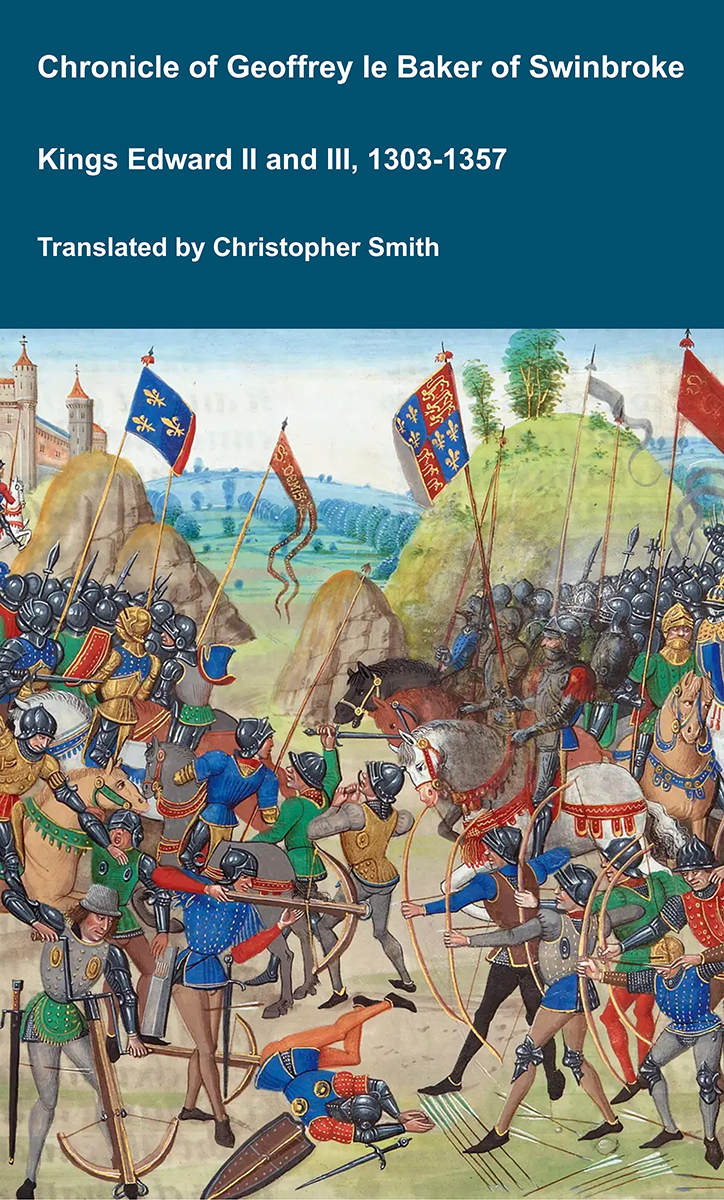
Chronicle of Geoffrey le Baker of Swinbroke
Baker was a secular clerk from Swinbroke, now Swinbrook, an Oxfordshire village two miles east of Burford. His Chronicle describes the events of the period 1303-1356: Gaveston, Bannockburn, Boroughbridge, the murder of King Edward II, the Scottish Wars, Sluys, Crécy, the Black Death, Winchelsea and Poitiers. To quote Herbert Bruce 'it possesses a vigorous and characteristic style, and its value for particular events between 1303 and 1356 has been recognised by its editor and by subsequent writers'. The book provides remarkable detail about the events it describes. Baker's text has been augmented with hundreds of notes, including extracts from other contemporary chronicles, such as the Annales Londonienses, Annales Paulini, Murimuth, Lanercost, Avesbury, Guisborough and Froissart to enrich the reader's understanding. The translation takes as its source the 'Chronicon Galfridi le Baker de Swynebroke' published in 1889, edited by Edward Maunde Thompson.
Available at Amazon in eBook and Paperback format.
On 11th February 1833 Charlotte Fitzwilliam Baroness Dundas (age 86) died.
On 11th February 1847 Hugh Percy 3rd Duke Northumberland (age 61) died without issue at Alnwick, Northumberland [Map].
Algernon Percy 4th Duke Northumberland (age 54) succeeded 4th Duke Northumberland, 4th Baron Lovain, 5th Baron Percy, 7th Baronet Smithson of Stanwick in Yorkshire. Eleanor Grosvenor Duchess Northumberland (age 26) by marriage Duchess Northumberland.
On 11th February 1848 Archbishop William Howley (age 81) died.
On 11th February 1857 Thomas Clement Thompson (age 77) died of bronchitis.
On 11th February 1862 at twenty past seven in the morning Elizabeth Siddal (age 32) overdosed on laudanum at 14 Chatham Place. Possibly suicide - there may have been a note that said "look after Harry (her invalid brother)" which Ford Madox Brown (age 40) persuaded Dante Gabriel Rossetti (age 33) to burn. Shortly after her death Sarah Cox aka Fanny Cornforth (age 27) moved into the family home to become housekeeper to Dante Gabriel Rossetti.
On 11th February 1867 William Duncombe 2nd Baron Feversham (age 69) died. His son William (age 38) succeeded 3rd Baron Feversham of Duncombe Park in Yorkshire. Mabel Violet Graham Countess Feversham (age 33) by marriage Baroness Feversham of Duncombe Park in Yorkshire.
On 11th February 1873 Mary Sarah Wellesley Countess Cadogan (age 64) died.
On 11th February 1873 George Beresford 2nd Baronet (age 61) died. His nephew Henry (age 22) succeeded 3rd Baronet Beresford of Bagnall in County Waterford.
On 11th February 1874 Francis Jarvis Stapleton 7th Baronet (age 66) died. His son Francis (age 42) succeeded 8th Baronet Stapleton of Leeward Islands.
On 11th February 1875 Edmund Saunderson Prideaux 9th Baronet (age 82) died. Baronet Prideaux of Netherton in Devon extinct.
Anne Boleyn. Her Life as told by Lancelot de Carle's 1536 Letter.
In 1536, two weeks after the execution of Anne Boleyn, her brother George and four others, Lancelot du Carle, wrote an extraordinary letter that described Anne's life, and her trial and execution, to which he was a witness. This book presents a new translation of that letter, with additional material from other contemporary sources such as Letters, Hall's and Wriothesley's Chronicles, the pamphlets of Wynkyn the Worde, the Memorial of George Constantyne, the Portuguese Letter and the Baga de Secrets, all of which are provided in Appendices.
Available at Amazon in eBook and Paperback format.
On 11th February 1876 Edward Pellew 3rd Viscount Exmouth (age 64) died without issue. His nephew Edward (age 14) succeeded 4th Viscount Exmouth, 4th Baron Exmouth of Canonteign, 4th Baronet Pellew of Treverry in Cornwall.
On 11th February 1902 Herbert George Denman Croft 9th Baronet (age 63) died. His son Herbert (age 33) succeeded 10th Baronet Croft of Croft Castle in Herefordshire
On 11th February 1915 Edmund Antrobus 4th Baronet (age 66) died at his home Amesbury Abbey, Wiltshire [Map]. His brother Cosmo (age 55) succeeded 5th Baronet Antrobus of Antrobus in Cheshire, and inherited the Amesbury Abbey, Wiltshire [Map] estate including Stonehenge.
On 11th February 1917 Henry Fitzalan Howard 15th Duke of Norfolk (age 69) died. His son Bernard (age 8) succeeded 16th Duke Norfolk, 27th or 34th Earl Arundel, 17th Earl Surrey, 14th Earl Norfolk, 24th Baron Maltravers, 24th Baron Arundel.
On 11th February 1919 Terence John Temple Hamilton-Temple-Blackwood 2nd Marquess of Dufferin and Ava (age 52) died. His brother Frederick (age 43) succeeded 3rd Marquess of Dufferin and Ava, 3rd Earl of Ava in County Down and Burma, 3rd Earl of Dufferin in County Down, 3rd Viscount Dufferin of Claneboye in County Down, 3rd Baron Claneboye of Claneboye in County Down, 7th Baron Dufferin and Claneboye of Ballyleidy and Killyleagh in County Down, 7th Baronet Blackwood of Killyleagh in County Down.
On 11th February 1921 William Blake Richmond (age 78) died at his home, Beavor Lodge, in Hammersmith.
On 11th February 1922 Joseph Spearman 2nd Baronet (age 65) died. His son Alexander (age 40) succeeded 3rd Baronet Spearman of Hanwell in Middlesex.
On 11th February 1930 Robert Walker 4th Baronet (age 39) died. His son James (age 15) succeeded 5th Baronet Walker of Sand Hutton in Yorkshire.
On 11th February 1939 John Scott Cæsar Hawkins 5th Baronet (age 63) died unmarried. His first cousin once removed Villiers (age 48) succeeded 6th Baronet Hawkins of Kelston in Somerset.
On 11th February 1941 Vere Isham 11th Baronet (age 78) died. His son Gyles (age 37) succeeded 12th Baronet Isham of Lamport in Northamptonshire.
On 11th February 1949 Charles Vane-Tempest-Stewart 7th Marquess of Londonderry (age 70) died. His son Edward (age 46) succeeded 8th Marquess Londonderry.


On 11th February 1958 Élaine Greffulhe Duchess Gramont (age 75) died.
Chronicle of Abbot Ralph of Coggeshall
The Chronicle of Abbot Ralph of Coggeshall (Chronicon Anglicanum) is an indispensable medieval history that brings to life centuries of English and European affairs through the eyes of a learned Cistercian monk. Ralph of Coggeshall, abbot of the Abbey of Coggeshall in Essex in the early 13th century, continued and expanded his community’s chronicle, documenting events from the Norman Conquest of 1066 into the tumultuous reign of King Henry III. Blending eyewitness testimony, careful compilation, and the monastic commitment to record-keeping, this chronicle offers a rare narrative of political intrigue, royal power struggles, and social upheaval in England and beyond. Ralph’s work captures the reigns of pivotal figures such as Richard I and King John, providing invaluable insights into their characters, decisions, and the forces that shaped medieval rule. More than a simple annal, Chronicon Anglicanum conveys the texture of medieval life and governance, making it a rich source for scholars and readers fascinated by English history, monastic authorship, and the shaping of the medieval world.
Available at Amazon in eBook and Paperback format.
On 11th February 1959 Alexander Young Spearman 3rd Baronet (age 77) died. His son Alexander (age 41) succeeded 4th Baronet Spearman of Hanwell in Middlesex.
On 11th February 1962 Elinor Jessie Parr Countess Roden died.
On 11th February 1978 Andrew St John 21st Baron St John of Bletso (age 59) died. His son Anthony (age 20) succeeded 22nd Baron St John of Bletso, 19th Baronet St John of Woodford in Northamptonshire.
On 11th February 2014 Andrew Hardinge 7th Viscount Hardinge (age 54) died. His son Thomas (age 20) succeeded 8th Viscount Hardinge of Lahore and Kings Newton in Derbyshire.
On 11th February 2015 John Beresford 8th Marquess of Waterford (age 81) died. His son Henry (age 56) succeeded 9th Marquess Waterford.