

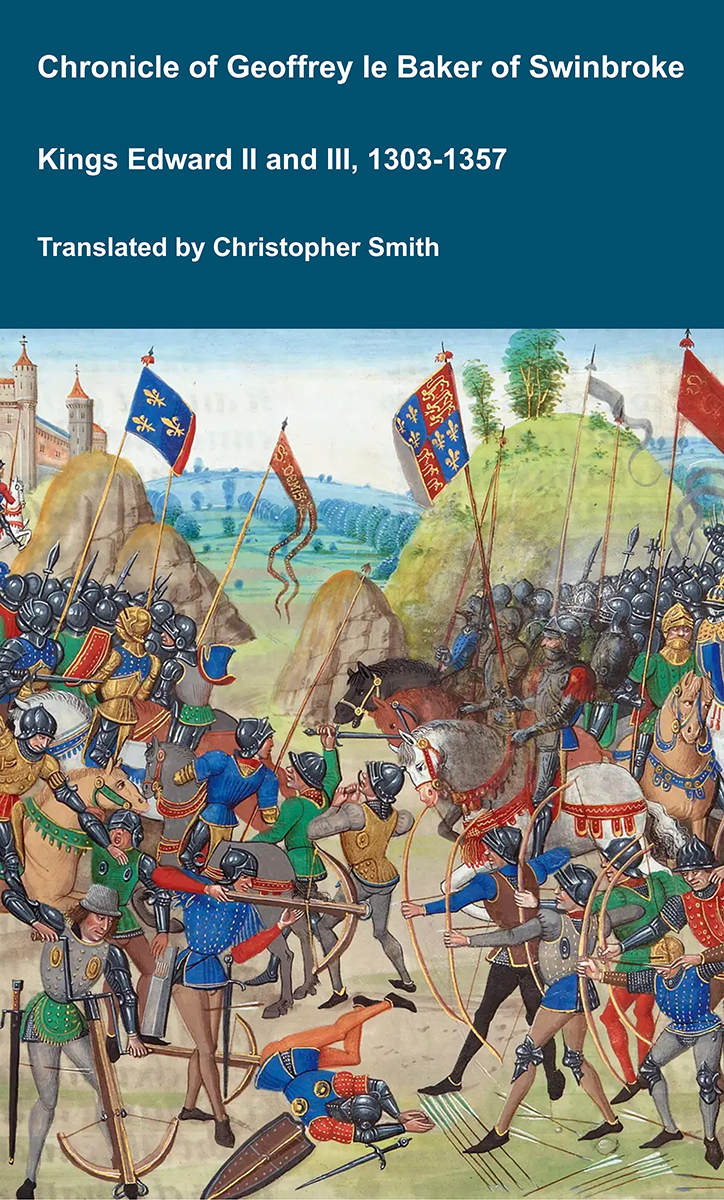
Chronicle of Geoffrey le Baker of Swinbroke
Baker was a secular clerk from Swinbroke, now Swinbrook, an Oxfordshire village two miles east of Burford. His Chronicle describes the events of the period 1303-1356: Gaveston, Bannockburn, Boroughbridge, the murder of King Edward II, the Scottish Wars, Sluys, Crécy, the Black Death, Winchelsea and Poitiers. To quote Herbert Bruce 'it possesses a vigorous and characteristic style, and its value for particular events between 1303 and 1356 has been recognised by its editor and by subsequent writers'. The book provides remarkable detail about the events it describes. Baker's text has been augmented with hundreds of notes, including extracts from other contemporary chronicles, such as the Annales Londonienses, Annales Paulini, Murimuth, Lanercost, Avesbury, Guisborough and Froissart to enrich the reader's understanding. The translation takes as its source the 'Chronicon Galfridi le Baker de Swynebroke' published in 1889, edited by Edward Maunde Thompson.
Available at Amazon in eBook and Paperback format.
11 Jul is in July.
1302 Battle of the Golden Spurs aka Courtrai
1469 Marriage of George Duke of Clarence and Isabel Neville
1503 Margaret Tudor's Journey to Scotland
1517 Sweating Sickness Outbreak
1528 Sweating Sickness Outbreak
On 11th July 937 Rudolph "Pious" II King Burgundy II King Italy (age 57) died. His son Conrad (age 12) succeeded I King Burgundy.
On 11th July 1119 Archbishop Ralph d'Escures suffered a stroke. He was left partially paralysed and unable to speak clearly from that time until his death three years later.
On 11th July 1174 Almaric I King Jerusalem (age 38) died. His son Baldwin (age 13) succeeded IV King Jerusalem.
On 11th July 1183 Otto Wittelsbach I Duke Bavaria (age 66) died. His son Louis (age 9) succeeded I Duke Bavaria.
On 11th July 1238 Dafydd ap Gruffudd Aberffraw Prince of Wales was born to Gruffydd ap Llewellyn Aberffraw (age 40) and Senana ferch Caradog (age 40). He a great grandson of King John of England. He married after 1265 his half fifth cousin Elizabeth Ferrers, daughter of William Ferrers 5th Earl of Derby and Margaret Quincy Countess Derby.
On 11th July 1274 King Robert the Bruce I of Scotland was born to Robert Bruce Earl Carrick (age 31) and Marjorie Carrick 3rd Countess Carrick (age 21) at Turnberry Castle. He married (1) 1296 his fifth cousin Isabella Mar, daughter of Donald Mar 7th Earl of Mar and Elen ferch Llewellyn Aberffraw Countess Huntingdon and Mar, and had issue (2) 1302 his fifth cousin once removed Elizabeth Burgh Queen Consort Scotland, daughter of Richard "Red Earl" Burgh 2nd Earl of Ulster and Margaret Burgh Countess Ulster, and had issue.
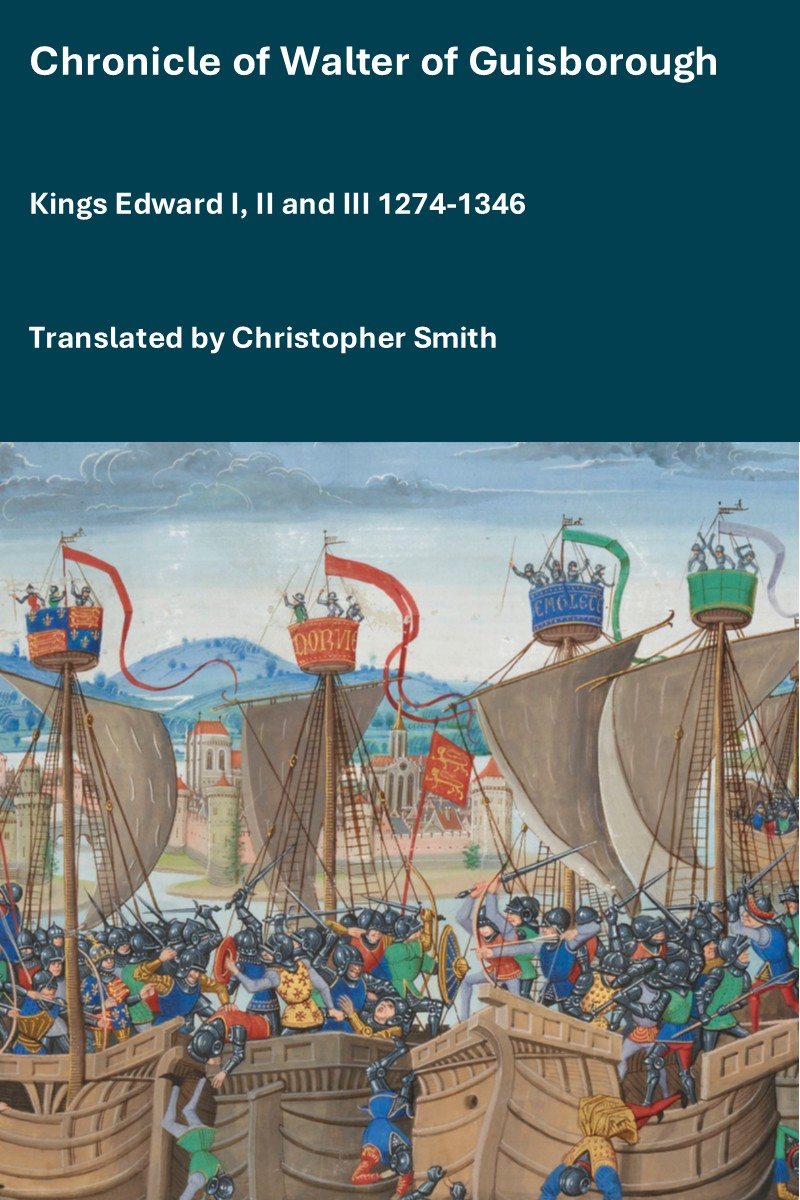 Chronicle of Walter of Guisborough. In the year of our Lord 1297, the king, steadfast in his plan to cross to the continent, ordered that all those who owed him military service, and anyone who held £20 worth of land in England (a standard baronial threshold), were to assemble in London on the feast of St. Peter in Chains [1st August 1297]1, fully prepared with horses and arms, ready to cross the sea without delay or excuse. When they gathered, and many saw the king firm in his purpose, some of the magnates said to him: "It is not wise, O King, nor good to cross the sea in this state, unless you are first reconciled with your spiritual father, the Archbishop of Canterbury, and with your barons. Only then will you be truly seen as counted among the bosom of Holy Mother Church." The king, realizing the justice and reason of this, called for the Archbishop of Canterbury, who was nearby. Setting aside all rancour, he received the archbishop back into special favour2, even augmenting his previous standing. Trusting in the archbishop's goodness and loyalty, the king entrusted to him the care of his son Edward [the future Edward II] and the governance of England, jointly with Sir Reginald de Grey, before the entire people. He ordered that all the archbishop's possessions, even down to the last farthing, be restored. Thus, by God's favour, the archbishop who had been cast out and had faced persecution for the honour of God was restored with dignity. All the magnates present then swore fealty to Prince Edward at the king's command, and with raised hands, he was loudly proclaimed by the people as the true heir and future lord of the realm. The king also explained and excused himself for the taxes and forced requisitions he had exacted from the people, saying he could not pursue his campaigns without their generous support, especially since he acted not for himself alone but for the entire realm, as their protector and defender. He asked the people for their forgiveness and prayers, and while some prayed for him openly, others cursed him in secret. The Earls of Hereford and Norfolk Earl Marshal], who had withdrawn from royal service and refused to obey the king's commands, were stripped of their hereditary offices, which were then given to others more willing to serve. The two earls, angered by this, especially because they claimed to be defending not only their own rights but those of the whole commonwealth, said to the king's mediators: "It is not just our cause, but that of the entire realm that is being trampled, because of unjust oppressions, forced tallages (taxes), and seizures, especially because the king is acting contrary to the liberties of the Magna Carta." Seeing the king immovable in his will, and unwilling to struggle indefinitely under such uncertainty, they sent messengers to him, requesting that he remedy the articles listed below, both for themselves and the people. They added that if the king would confirm the Charter of Liberties and amend those grievances, they would be ready to follow him into life or death.
Anno Domini MCCXCVII rex, in suo proposito in permanens, præcepit ut omnes qui servitium sibi debebant, et omnes alii qui viginti libratas terræ a quocunque tenerent infra regnum Angliæ, essent Londoniis in festo beati Petri ad Vincula, parati cum equis et armis ad transfretandum cum eo absque dilatione qualibet vel excusatione. Cumque venissent ibidem, multique viderent regem in incepto proposito permanere, dixerunt ei magnatum quidam, "Non expedit, O rex, nec bonum est sic transfretare, nisi, primo reconciliato patre tuo spirituali Cantuariensi archiepiscopo et magnatibus tuis, inveniaris et ipse in sinu matris ecclesiæ numeratus." At ille in se reversus, et videns hoc justum esse et rationi consonum, mox accersito Cantuariensi archiepiscopo, qui præsens aderat, et omni rancoure deposito, ipsum cum suis in specialitatem recepit pristinam et majorem adauxit, confidens enim de bonitate ipsius et constantia curam et custodiam Edwardi filii sui et totius terræ Angliæ, adjuncto sibi domino Reginaldo de Gray, coram omni populo commisit, præcepitque ut omnia sibi restituerentur, etiam usque ad ultimum quadrantem. Sicque, favente Deo, cum honore reductus est, qui mortem non metuens pro honore Dei certavit ad mortem, omnesque magnates qui ibi aderant, ipso regis filio, ex præcepto patris, fidelitatem faciebant, et ab omni populo levatis Edward. dextris verus conclamabatur hæres, futurus dominus, et regni successor. Excusavit etiam se rex de exactionibus et prisis quas a populo susceperat, dicens se incepta prosequi non posse nisi eorum subveniret larga manus, præcipue cum non suam tantum immo totius populi ageret causam, tanquam protector eorum et defensor. Rogavitque populum, accepta licentia, ut omnia condonarentur ei, et orarent pro eo. Et orabant quidam publice, alii autem maledicebant in occulto. Prædicti vero comites Herefordensis et marescallus a rege se subtrahentes, cum votis ipsius non parerent ab eorum officiis absoluti sunt, deditque rex eorum officia aliis quibusdam qui ministrarent ei. Quod ipsi grave ferentes, præcipue cum non tantum propriam sed etiam totius communitatis causam agerent, dicentes mediatoribus pacis, qui inter ipsos et regem equitabant, quod non solum ipsi sed tota communitas terræ gravata erat, et ultra modum, de injustis vexationibus, talliagiis, et prisis, et maxime quod non secundum libertates Magnæ Cartæ ducerentur; cumque regis animum viderent immobilem, et diutius sub incerto ventum verberare nolentes, missis ad regem nunciis, rogaverunt eum ut subscriptos articulos pro se et pro populo emendare juberet, adjicientes quod si Cartam Libertatum confirmare vellet et articulos corrigere, parati erant omnes eum sequi in vitam vel in mortem.
Note 1. This date is supported by Walsingham, but according to the writ entered on the Rot. Claus. 25 Edward I m. 14, d. they were summoned to be ready at London on Sunday next after the Octaves of St. John the Baptist, 7th July.
Note 2. The writ commanding the restoration of the archbishop's lay fees is dated at Westminster on the 11th of July 1297, and, shortly after, the King wrote to the sheriffs to protect and defend the clergy in general from all injury and molestation.
On 11th July 1302 the army of Flanders unexpectedly defeated the army of France at Kortrijk during the Battle of the Golden Spurs aka Courtrai. Robert Artois II Count Artois (age 51), Raoul II de Clermont (age 57), Raoul Nesle and Godfrey Reginar were killed.
Jacques Chatillon was killed.
Simon de Clermont-Nesle (age 47) died.
Chronicle of Walter of Guisborough. In the same year, the Flemings defeated the French three times in the field. The Count of Artois (age 51), a man of great renown and the seneschal of France, together with the lord of Nesle, more than forty chosen standard-bearers, and an innumerable multitude of armed men and foot soldiers, fell in a single day [11th July 1302]; and the flower of their knighthood perished, to their everlasting shame. Yet they still would not cease from the fury they had begun; for the king, assembling a great army, went there with thirty thousand fully armed horsemen, not counting the other riders and infantry beyond number. And in the following year many fell, and they retreated; and they made a truce for a time, yet they were always at a disadvantage. For they were excommunicated along with their king by Pope Boniface, and their land was laid under ecclesiastical interdict. The king of France had claimed for himself, and actually given away, the prebends and dignities of those in his realm who were elected and confirmed or consecrated in the papal court, appointments which the pope had always been accustomed to confer. For this reason, the lord pope first and second time warned him to desist from his error, and not to attempt such things, to the peril of his soul and the prejudice of his mother, the Roman Church. But because he refused to obey the warnings, at last the pope sent the archbishop of Narbonne, with canonical powers of coercion, to compel him and check his error. When the king heard this, he grew angry, and ordered him to be buried alive. The pope was greatly stirred by this deed, and also by the imprisonment of certain bishops and clerics; so that, by reason of the king's demerits, he excommunicated him and placed his kingdom under ecclesiastical interdict. After the death of Pope Boniface, the king swore an oath that he would abide by the commands of the Church, and he was absolved by Pope Benedict, who soon died, and thus the king's crime afterwards remained unpunished.
Eodem anno Flandrenses devicerunt Francos tribus vicibus in campo. Et comes de Arthoys, homo magni nominis et senescallus Franciæ, una cum domino de Neel, et plusquam XL vexillariis electis, et innumerosa plebe armatorum et peditum, corruerunt in una die; ceciditque flos militiæ suæ, in eorum opprobrium sempiternum, Et adhuc ab incepto furore noluerunt quiescere; rex enim, congregato exercitu copioso, perrexit ibidem, cum XXX millibus armatorum in equis armatis, præter alios equitantes et pedestres absque ullo numero. Et in anno sequenti corruerunt multi, et retrorsum abierunt; inieruntque treugas ad tempus, et de teriorem partem semper habuerunt. Erant enim excommunicati cum rege eorum per papam Bonifacium, et terra eorum ecclesiastico supposita interdicto. Rex enim Franciæ præbendas et dignitates electorum terræ suæ, qui confirmabantur et consecrabantur in curia, quas dominus papa semper conferre consueverat, ipse novo more dare voluit et dedit; propter quod dominus papa primo et secundo monuit eum ut ab incepto errore desisteret, et non aggrederetur talia, in periculum animæ suæ et præjudicium Romanæ ecclesiæ matris suæ. Sed quia monitis parere noluit, misit tandem papa archiepiscopum de Nerbone, cum coercione canonica, ut compelleret eum et errantem reprimeret. Quod audiens rex, iratus est, et jussit eum humari vivum. Et commotus est papa in hoc facto, et pro incarceratione etiam quorundam episcoporum et clericorum, ita quod, exigentibus ipsius demeritis, excommunicavit eum, et regnum ejus ecclesiastico supposuit interdicto. Post mortem autem Bonifacii papæ, præstito sacramento quod staret mandatis ecclesiæ, per papam Benedictum absolutus est, qui cito obiit, et crimen regis remansit subsequenter impunitum.
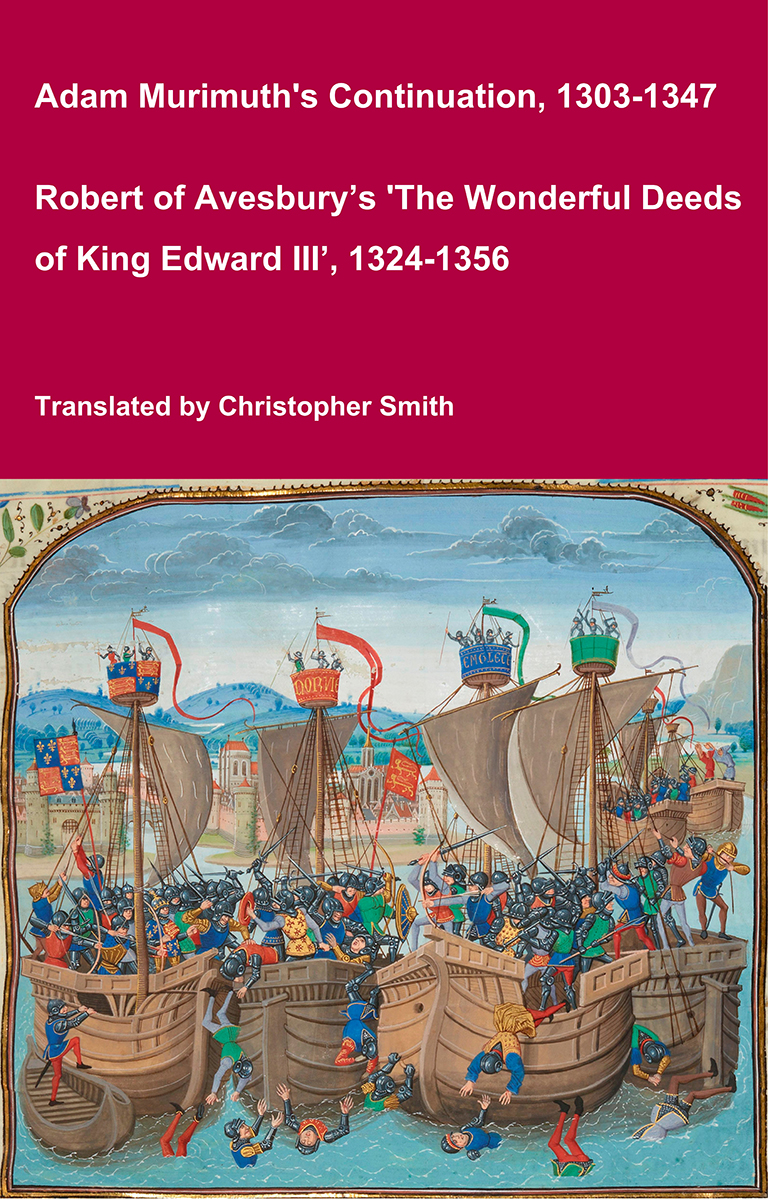
Adam Murimuth's Continuation and Robert of Avesbury’s 'The Wonderful Deeds of King Edward III'
This volume brings together two of the most important contemporary chronicles for the reign of Edward III and the opening phases of the Hundred Years’ War. Written in Latin by English clerical observers, these texts provide a vivid and authoritative window into the political, diplomatic, and military history of fourteenth-century England and its continental ambitions. Adam Murimuth Continuatio's Chronicarum continues an earlier chronicle into the mid-fourteenth century, offering concise but valuable notices on royal policy, foreign relations, and ecclesiastical affairs. Its annalistic structure makes it especially useful for establishing chronology and tracing the development of events year by year. Complementing it, Robert of Avesbury’s De gestis mirabilibus regis Edwardi tertii is a rich documentary chronicle preserving letters, treaties, and official records alongside narrative passages. It is an indispensable source for understanding Edward III’s claim to the French crown, the conduct of war, and the mechanisms of medieval diplomacy. Together, these works offer scholars, students, and enthusiasts a reliable and unembellished account of a transformative period in English and European history. Essential for anyone interested in medieval chronicles, the Hundred Years’ War, or the reign of Edward III.
Available at Amazon in eBook and Paperback format.
Chronicle of Walter of Guisborough. After this, on the fifth day before the Ides of July [11th July 1333], all the nobles of Scotland, with a very great army assembled to relieve the town of Berwick, advanced as far as Tweedmouth. But, being hindered by the English so that they could in no way aid the besieged, they burned parts of Northumberland for six days, inflicting whatever harm they could, devastating the inhabitants, and then withdrew.
Post hæc vero, quinto scilicet idus Julii, omnes proceres Scotiæ cum exercitu maximo congregati ad succurrendum villæ Berewici usque Twedemouth accesserunt; quibus ne obsessis quoquomodo succurrere possent per Anglicos impeditis, partes Northumbriæ per sex dies comburendo, et mala quæ poterant inferendo ac incolas devastando, redierunt.
Chronicle of Geoffrey le Baker of Swinbroke [-1360]. The cardinals, pleased with this response, departed believing that the war was now ended. On the feast of the Translation of Saint Benedict [11th July 1338], they set sail, taking with them John, Archbishop of Canterbury, Richard, Bishop of Durham, and Sir Geoffrey Scrope, knight, to deliver the King of England's response to the tyrant of France and to conduct peace negotiations on his authority. Yet, so many and such reasonable offers could never soften the heart of that tyrant, who trusted that, through the help of the Scots, he would powerfully disinherit the King [of England] of his kingdom and every possession he held.
Cum ista responsione leti recesserunt cardinales, estimantes guerram iam finiri; et in festo proximo Translacionis sancti Benedicti ingressi mare, secum habuerunt Iohannem archiepiscopum Cantuariensem et Ricardum Dunelmensem et dominum Galfridum Scrop, militem, responsionem regis Anglorum tiranno Francorum delaturos et habentes autoritatem de pace tractare. Tot et tam racionabiles oblaciones nunquam potuerunt animum tiranni demollire, habentis fiduciam per auxilium Scotorum regem de regno Anglie et qualibet sua possessione potenter exheredare.
On 11th July 1372 Edmund of Langley 1st Duke of York (age 31) and Isabella of Castile Duchess York (age 17) were married at Wallingford, Oxfordshire [Map]. She by marriage Countess Cambridge. She being the younger sister of Constance (age 18) who had married Edmund's older brother John of Gaunt 1st Duke Lancaster (age 32) a year before. An example of Marriage of Two Sets of Siblings. She the illegitmate daughter of Peter "Cruel" I King Castile and Maria Padilla. He the son of King Edward III of England (age 59) and Philippa of Hainaut Queen Consort England. They were half third cousin twice removed.
On 11th July 1469 George York 1st Duke of Clarence (age 19) and Isabel Neville Duchess Clarence (age 17) were married by Archbishop George Neville (age 37) at the Église Notre-Dame de Calais [Map] witnessed by Richard "Kingmaker" Neville Earl Warwick, 6th Earl Salisbury (age 40). She by marriage Duchess Clarence. She the daughter of Richard "Kingmaker" Neville Earl Warwick, 6th Earl Salisbury and Anne Beauchamp 16th Countess Warwick (age 42). He the son of Richard Plantagenet 3rd Duke of York and Cecily "Rose of Raby" Neville Duchess York (age 54). They were first cousin once removed. He a great x 2 grandson of King Edward III of England. She a great x 3 granddaughter of King Edward III of England.
Chronicle of Jean de Waurin Books 3-5 [1400-1474]. [11th July 1469] I could see clearly that he was preoccupied with some significant matters, and it was the marriage that was being arranged for his daughter to the Duke of Clarence, brother to King Edward, which was completed five or six days after my departure, within the castle of Calais where he had few people. The celebration lasted only two days, as he got married on a Tuesday and the following Sunday crossed the sea because he had received news that the Welsh were in the fields with great force.
Je veoie bien quil estoit embesongnie daulcunes grosses matieres et cestoit le mariage quy se traitoit de sa fille au duc de Clarence, frere au roy Edouard, lesqueles se parfirent chincq ou six jours aprez mon partement, dedens le chastel de Callaix ou il navoit gueres de gens, si ne dura la feste que deux jours, car il espousa ung mardy et le dimence ensievant passa la mer pour ce quil avoit eu nouvelles que ceulz de Galles estoient sur les champz a grant puissance.
Warkworth's Chronicle [1461-1474]. 11th July 1469. And in the ix. yere of the regne of Kynge Edwarde, at myssomere, the Duke of Clarence (age 19) passede the see to Caleis to the Earl of Warwick (age 40), and there weddede his doughter (age 17) by the ArcheBishop of Yorke (age 37) the Earl of Warwick brothere, and afterwarde come overe ayene.
Chronicle of Edward Hall [1496-1548]. [11th July 1469] When all these thynges wer thus determined, and in grave counsaill allowed, the erle and the duke sailed directly to Caleis: where thei were solempnely received, and joyously interteined of the Countesse and of her twoo daughters. And after that the duke had sworne on the Sacrament to kepe his promise and pacte inviolate made and concluded with the erle of Warwicke, he maried the Lady Isabell, eldest daughter to the saied erle, in our Lady Churche at Caleis, with greate pompe and solempnitie. After whiche mariage so solempnized, the duke and therle consulted sadly together, by what meanes they, should continue the warre (whiche as it was by theim appoynted) was recently and within fewe dales begonne in Yorkeshire, not without great rurnore and disturbaunce, of all quietnes in that countrey.
Collectanea by John Leland [1502-1552]. [11th July 1469] In the ix.Yere the Duke of Clarance went to Calays, and there weddid the Erle of Warwikes Doughtter by the Archebishop of York, the Erle of Warwikes Brother.
Collectanea by John Leland [1502-1552]. The XIth Day of the fayd Monneth [11th July 1503] the sayd Quene (age 13) departed from Newerke, hyr noble Trayne befor hyr from better to better rychly drest; and the sayd Bally, Bourges, and Habitaunts conveyed her out of their Franchises, and ther they toke ther Leve.
Thenn she toke her Way to Tuxford, at the wich Place cam to hyr the Vicarr and other Church Folks, revested according to the precedent Custume. For that Tym the Bishop of Morrey gaff her the Crosse for to kysse, and so she was convayd to her Lodgyng att the Signe of the Crowne [Map].
And ther was many honest Personnes, next Neybours of the said Place, all on Horseback, honnestly drest, for to se the sayd Qnene, wyth many other Personages a Foot in grett Nomber; lykewys the next Morning att hyfr departyng.
Letters and Papers Foreign and Domestic Henry VIII 1518. 11th July 1518. R. O. 4308. Pace (age 36) to WOLSEY.
It was fortunately devised between the King and Wolsey that the King should leave Woodstock at this time, as two persons are dead of the sickness: more are infected, one of them a servant to a yeoman of the King's guard. Tomorrow the King and Queen will lodge at Ewelme, and not stop by the way, as the place appointed for their lodging is infected. Very few of the household will follow, but lodge at Wallyngton. "The Duke of Southfolke arrived here yesternight, and this morning he did speak with me very effectually of one the same matter which I have declared unto your grace in time past, viz. of faithful amity to be established between your grace and him, confirming with solemn oaths, in most humble manner, the most faithful love and servitude that he intendeth to use towards your grace during his life in all manner of cases touching your honor. And he said that he doubted but little but this thing should come to good pass if such persons did not let it, by untrue and evil relation." Pace gave a general answer. Woodstock, 11 July.
Hol., pp. 2. Add.: To my Lord Cardinal's grace.
Letters and Papers Foreign and Domestic Henry VIII 1528. 11th July 1528. R. O. St. P. I. 315. 4497. HENNAGE to WOLSEY.
Received your letter this morning at 4, and showed it to the King as soon as he was up. His Highness is glad to hear of your health, and recommends you, as the plague is near, to remove to Anworth, thence to Dicton, and so to Easthampstead. He is not best content with the election of the abbess of Wilton, as you will learn by Dr. Bell's letters, for of all women he would not have had her, nor Caryys eldest sister. He has showed Mr. Herytage such buildings as he desires at Tittenhanger [Map], and is sorry for the death of Mr. Redman, his mason. 11 July. Signed and sealed.
P. 1. Add. Endd.
Letters and Papers Foreign and Domestic Henry VIII 1528. 11th July 1528. R. O. 4501. Sir Edward Guldeford (age 54) to Wolsey.
On Sunday last, 5 July, Roger Horne, of Kenerton, and John Bell, of Apuldre, came to me at Hallden, and showed me the lewd sayings of Sir John Crake, parish priest of Brensett in Romney Marsh. Sends a bill of it. Has committed the priest to Maidstone gaol until Wolsey's pleasure be known, as it was not meet to trouble him with strangers in the time of this plague. Has been ill of it himself. Would be glad to have one of the late Sir Wm. Compton's (deceased) offices. Hallden, 11 July. Signed.
P. 1. Add. Endd.
On 11th July 1535 Joachim "Nestor" Hohenzollern Elector Brandenburg (age 51) died.
Diary of Edward VI. 11th July 1550. The bishop of London (age 50), the secretary Petre (age 45), mr. Cicel, and Goderik, wer commaundid to make certein articles according to the lawis, and put them in the submission.2
Note 2. See "the copy of the last articles sent to the bishop of Winchester," in Foxe (edit. Cattley), vi. 82.
Diary of Edward VI. 11th July 1551. It [the Sweating Sickness] grue so much, for in London the 10 day ther died 70 in the liberties, and this day 120, and also one of my gentlemen, another of my gromes, fell sike and died, that I removed to Ampton court [Map] with very few with me.
Note. The epidemic called the sweating sickness, which remains a mystery today, had visited England before but this was the last major outbreak to occur, and thereafter vanished.
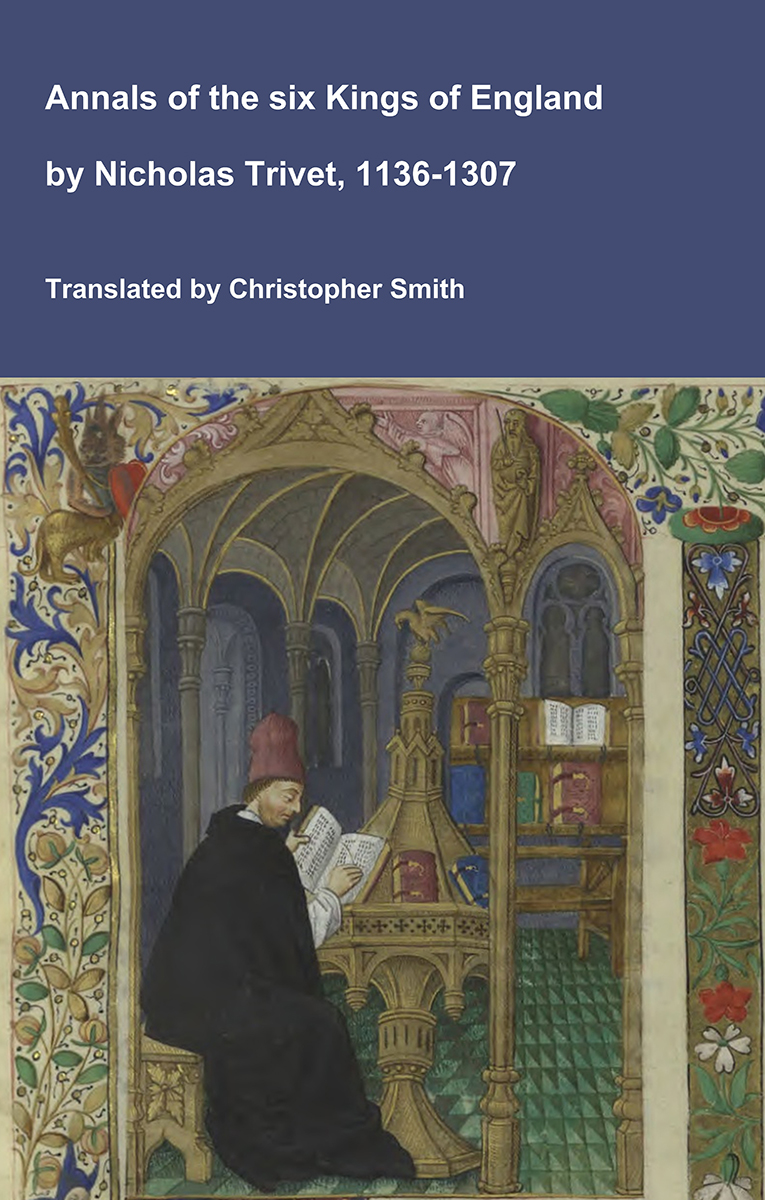
Annals of the six Kings of England by Nicholas Trivet
Translation of the Annals of the Six Kings of England by that traces the rise and rule of the Angevin aka Plantagenet dynasty from the mid-12th to early 14th century. Written by the Dominican scholar Nicholas Trivet, the work offers a vivid account of English history from the reign of King Stephen through to the death of King Edward I, blending political narrative with moral reflection. Covering the reigns of six monarchs—from Stephen to Edward I—the chronicle explores royal authority, rebellion, war, and the shifting balance between crown, church, and nobility. Trivet provides detailed insight into defining moments such as baronial conflicts, Anglo-French rivalry, and the consolidation of royal power under Edward I, whose reign he describes with particular immediacy. The Annals combines careful year-by-year reporting with thoughtful interpretation, presenting history not merely as a sequence of events but as a moral and political lesson. Ideal for readers interested in medieval history, kingship, and the origins of the English state, this chronicle remains a valuable and accessible window into the turbulent world of the Plantagenet kings.
Available at Amazon in eBook and Paperback format.
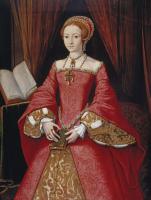
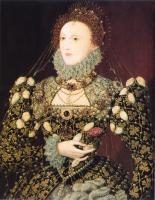
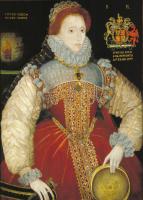
Henry Machyn's Diary. 11th July 1559. The xj day of July ther was mad a plasse [for the queen's] pensyoners to rune with-owt a tyltt with spayrers [spears]. [There were three] chalengers, my lord of Urmon (age 27), and ser John Paratt (age 30), and master [North], and ther wher (blank) deffenders boyth with spares [spears] and sw[ords.] Abowt v [5] of the cloke at after-non the Quen('s) (age 25) grace [came,] and the inbassadurs, and dyver lordes and lades stode [over the] gatt for to se; and after thay rane one chassy[ng the other], and after the Quen('s) grace cam down in-to the parke [and] toke her horse, and rod up to the bankett howse, [with] the inbassadurs and the lordes and lades, and so to soper [and] a maske, and after a grett bankett, and after grett castyng [of fire] and shutyng of gunes tyll xij [12] at nyght.




Diary of Anne Clifford. 11th July 1616. Upon the 11th Ralph brought me word that it could not be buried at Appleby so I sent Rivers away presently who got their consents. About 5 o'clock came my Coz. William Howard and 5 or 6 of his. About 8 we set forward, the body going in my Lady's own coach with 4 horses and myself following it in my own coach with two horses and most of the men and women on horseback so as there was about 4o in the company and we came to Appleby about 4 an hour after eleven and about 12 the body was put into the ground. About 3 o'clock in the morning we came home, where I shew'd my Coz. Howard the letter I writ to my Lord (age 27).
On 11th July 1637 William Russell 1st Duke Bedford (age 20) and Anne Carr Countess of Bedford (age 21) were married. She the daughter of Robert Carr 1st Earl Somerset (age 50) and Frances Howard Countess Essex and Somerset. He the son of Francis Russell 4th Earl Bedford (age 44) and Catherine Brydges Countess Bedford (age 57).


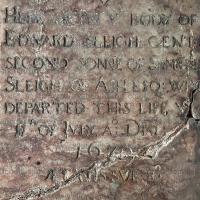
On 11th July 1639 Edward Sleigh of Ash (age 8) died. He was buried at St Michael's Church, Sutton-on-the-Hill [Map].
Edward Sleigh of Ash: Around 1631 he was born to Samuel Sleigh of Ash and Etwall and Judith Boys.
On 11th July 1643 Charles Amadeus Duke of Nemours (age 19) and Élisabeth Bourbon Vendôme (age 28) were married. She by marriage Duchess Nemours. She the daughter of César Bourbon Vendôme 1st Duke Vendôme (age 49) and Françoise Lorraine Duchess Vendôme (age 50). He the son of Henri I Duke of Nemours. They were second cousin once removed.
John Evelyn's Diary. 11th July 1654. Was the Latin sermon, which I could not be at, though invited, being taken up at All Souls, where we had music, voices, and the orbos, performed by some ingenious scholars. After dinner, I visited that miracle of a youth, Mr. Christopher Wren (age 30), nephew to the Bishop of Ely. Then Mr. Barlow (age 46) (since Bishop of Lincoln), bibliothecarius of the Bodleian Library, my most learned friend. He showed us the rarities of that most famous place, manuscripts, medals, and other curiosities. Among the MSS. an old English Bible, wherein the Eunuch mentioned to be baptized by Philip, is called the Gelding: "and Philip and the Gelding went down into the water", etc. The original Acts of the Council of Basil 900 years since, with the bulla, or leaden affix, which has a silken cord passing through every parchment; a MS. of Venerable Bede of 800 years antiquity; the old Ritual secundum usum Sarum exceeding voluminous; then, among the nicer curiosities, the "Proverbs of Solomon", written in French by a lady, every chapter of a several character, or hand, the most exquisite imaginable; an hieroglyphical table, or carta, folded up like a map, I suppose it painted on asses' hide, extremely rare; but, what is most illustrious, there were no less than 1,000 MSS. in nineteen languages, especially Oriental, furnishing that new part of the library built by Archbishop Laud, from a design of Sir Kenelm Digby (age 51) and the Earl of Pembroke (age 33). In the closet of the tower, they show some Indian weapons, urns, lamps, etc., but the rarest is the whole Alcoran, written on one large sheet of calico, made up in a priest's vesture, or cope, after the Turkish and Arabic character, so exquisitely written, as no printed letter comes near it; also, a roll of magical charms, divers talismans, and some medals.


On 11th July 1657 Frederick I King Prussia was born to Frederick William "Great Elector" Hohenzollern Elector Brandenburg (age 37) and Luise Henriette Orange Nassau (age 29). He married (1) before 1680 his first cousin Elisabeth Henriëtte Hesse-Kassel, daughter of Wilhelm "The Just" VI Hesse-Kassel and Hedwig Sophia Hohenzollern, and had issue (2) before 1685 his second cousin Sophia Charlotte Hanover Queen Consort Prussia, daughter of Ernest Augustus Hanover Elector Brunswick-Lüneburg and Electress Sophia Palatinate Simmern, and had issue (3) 1708 his fourth cousin Sophia Louise Mecklenburg-Schwerin Queen Consort Prussia.


On 11th July 1662 Maximilian Wittelsbach II Elector Bavaria was born to Ferdinand Maria Wittelsbach (age 26) and Henriette Adelaide Savoy. He married (1) 15th July 1685 his second cousin Maria Antonia of Austria, daughter of Leopold Habsburg Spain I Holy Roman Emperor and Margaret Theresa Habsburg Holy Roman Empress, and had issue (2) 12th January 1694 Theresa Kunegunda Sobieska.
Samuel Pepys' Diary. 11th July 1663. Thence, it raining as hard as it could pour down, home to the Hillhouse, and anon to supper, and after supper, Sir J. Minnes (age 64) and I had great discourse with Captain Cox and Mr. Hempson about business of the yard, and particularly of pursers' accounts with Hempson, who is a cunning knave in that point. So late to bed and, Mr. Wayth being gone, I lay above in the Treasurer's (age 56) bed and slept well. About one or two in the morning the curtains of my bed being drawn waked me, and I saw a man stand there by the inside of my bed calling me French dogg 20 times, one after another, and I starting, as if I would get out of the bed, he fell a-laughing as hard as he could drive, still calling me French dogg, and laid his hand on my shoulder. At last, whether I said anything or no I cannot tell, but I perceived the man, after he had looked wistly upon me, and found that I did not answer him to the names that he called me by, which was Salmon, Sir Carteret's clerk, and Robt. Maddox, another of the clerks, he put off his hat on a suddaine, and forebore laughing, and asked who I was, saying, "Are you Mr. Pepys?" I told him yes, and now being come a little better to myself, I found him to be Tom Willson, Sir W. Batten's (age 62) clerk, and fearing he might be in some melancholy fit, I was at a loss what to do or say. At last I asked him what he meant. He desired my pardon for that he was mistaken, for he thought verily, not knowing of my coming to lie there, that it had been Salmon, the Frenchman, with whom he intended to have made some sport. So I made nothing of it, but bade him good night, and I, after a little pause, to sleep again, being well pleased that it ended no worse, and being a little the better pleased with it, because it was the Surveyor's clerk, which will make sport when I come to tell Sir W. Batten of it, it being a report that old Edgeborough, the former Surveyor, who died here, do now and then walk.

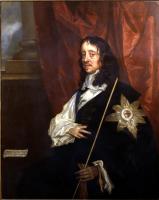
Samuel Pepys' Diary. 11th July 1665. So I to the Duke of Albemarle's (age 56), and there with much ado did get his consent in part to my having the money promised for Tangier, and the other part did not concur. So being displeased with this, I back to the office and there sat alone a while doing business, and then by a solemn invitation to the Trinity House, Deptford [Map], where a great dinner and company, Captain Dobbin's feast for Elder Brother. But I broke up before the dinner half over and by water to the Harp and Ball, and thence had Mary meet me at the New Exchange, and there took coach and I with great pleasure took the ayre to Highgate, and thence to Hampstead, much pleased with her company, pretty and innocent, and had what pleasure almost I would with her, and so at night, weary and sweaty, it being very hot beyond bearing, we back again, and I set her down in St. Martin's Lane, and so I to the evening 'Change [Map], and there hear all the towne full that Ostend is delivered to us, and that Alderman Backewell (age 47)1 did go with £50,000 to that purpose. But the truth of it I do not know, but something I believe there is extraordinary in his going. So to the office, where I did what I could as to letters, and so away to bed, shifting myself, and taking some Venice treakle, feeling myself out of order, and thence to bed to sleep.
Note 1. Among the State Papers is a letter from the King (age 35) to the Lord General (dated August 8th, 1665): "Alderman Backwell being in great straits for the second payment he has to make for the service in Flanders, as much tin is to be transmitted to him as will raise the sum. Has authorized him and Sir George Carteret (age 55) to treat with the tin farmers for 500 tons of tin to be speedily transported under good convoy; but if, on consulting with Alderman Backwell, this plan of the tin seems insufficient, then without further difficulty he is to dispose for that purpose of the £10,000 assigned for pay of the Guards, not doubting that before that comes due, other ways will be found for supplying it; the payment in Flanders is of such importance that some means must be found of providing for it" (Calendar, Domestic, 1664-65, pp. 508, 509).

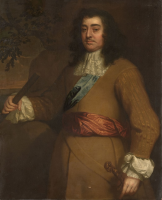
Samuel Pepys' Diary. 11th July 1665. At 6 o'clock up and to Westminster (where and all the towne besides, I hear, the plague encreases), and, it being too soon to go to the Duke of Albemarle (age 56), I to the Harp and Ball, and there made a bargain with Mary to go forth with me in the afternoon, which she with much ado consented to.
Samuel Pepys' Diary. 11th July 1666. Thence to Westminster, doing several things by the way, and there failed of meeting Mrs. Lane, and so by coach took up my wife at her sister's, and so away to Islington [Map], she and I alone, and so through Hackney, and home late, our discourse being about laying up of some money safe in prevention to the troubles I am afeard we may have in the state, and so sleepy (for want of sleep the last night, going to bed late and rising betimes in the morning) home, but when I come to the office, I there met with a command from my Lord Arlington (age 48), to go down to a galliott at Greenwich, Kent [Map], by the King's particular command, that is going to carry the Savoy Envoye over, and we fear there may be many Frenchmen there on board; and so I have a power and command to search for and seize all that have not passes from one of the Secretarys of State, and to bring them and their papers and everything else in custody some whither. So I to the Tower, and got a couple of musquetiers with me, and Griffen and my boy Tom and so down; and, being come, found none on board but two or three servants, looking to horses and doggs, there on board, and, seeing no more, I staid not long there, but away and on shore at Greenwich, Kent [Map], the night being late and the tide against us; so, having sent before, to Mrs. Clerke's and there I had a good bed, and well received, the whole people rising to see me, and among the rest young Mrs. Daniel, whom I kissed again and again alone, and so by and by to bed and slept pretty well,


Chronicle of a Bourgeois of Valenciennes
Récits d’un bourgeois de Valenciennes aka The Chronicle of a Bourgeois of Valenciennes is a vivid 14th-century vernacular chronicle written by an anonymous urban chronicler from Valenciennes in the County of Hainaut. It survives in a manuscript that describes local and regional history from about 1253 to 1366, blending chronology, narrative episodes, and eyewitness-style accounts of political, military, and social events in medieval France, Flanders, and the Low Countries. The work begins with a chronological framework of events affecting Valenciennes and its region under rulers such as King Philip VI of France and the shifting allegiances of local nobility. It includes accounts of conflicts, sieges, diplomatic manoeuvres, and the impact of broader struggles like the Hundred Years’ War on urban life in Hainaut. Written from the perspective of a burgher (bourgeois) rather than a monastery or royal court, the chronicle offers a rare lay viewpoint on high politics and warfare, reflecting how merchants, townspeople, and civic institutions experienced the turbulence of the 13th and 14th centuries. Its narrative style combines straightforward reporting of events with moral and civic observations, making it a valuable source for readers interested in medieval urban society, regional politics, and the lived experience of war and governance in pre-modern Europe.
Available at Amazon in eBook and Paperback format.
Samuel Pepys' Diary. 11th July 1666. Up, and by water to Sir G. Downing's (age 41), there to discourse with him about the reliefe of the prisoners in Holland; which I did, and we do resolve of the manner of sending them some. So I away by coach to St. James's, and there hear that the Duchesse (age 29) is lately brought to bed of a boy.


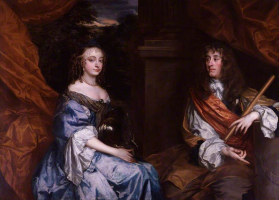
On or before 11th July 1671 Adriaen Hanneman (age 68) died. He was buried on 11th July 1671 .

On 11th July 1673 Penelope Barkham (age 8) died. She was buried at Church of St George, South Acre [Map]. Inscription: Hic jacet Penelope, filia Domini Edwardi Barkham Baronetti (age 45), et Franciscæ (age 40) uxor is sue, qui quidem Penelope, Ætate Puellula, sed Prudentiâ, Pietate, Virtute Matrona omnibus satis, Parentibus nimis, et Deo maxime chara, terras reliquit, ad Nuptias Agni vocata Julij 11, 1673, Annoq; Ætatis suæ, Octavo.
Penelope Barkham: In 1665 she was born to Edward Barkham 2nd Baronet and Frances Napier Lady Barkham.
Edward Barkham 2nd Baronet: In 1628 he was born to Edward Barkham 1st Baronet and Francis Berney. On 28th June 1660 Edward Barkham 2nd Baronet and Frances Napier Lady Barkham were married. She by marriage Edward Barkham 2nd Baronet. On 2nd August 1667 Edward Barkham 1st Baronet died. He was buried at Church of St George, South Acre [Map]. His son Edward succeeded 2nd Baronet Barkham of South Acre in Norfolk. Frances Napier Lady Barkham by marriage Lady Barkham of South Acre in Norfolk. In 1688 Edward Barkham 2nd Baronet died. His brother William succeeded 3rd Baronet Barkham of South Acre in Norfolk.
John Evelyn's Diary. 11th July 1675. In this journey, went part of the way Mr. James Graham (age 26) (since Privy Purse to the Duke (age 41)), a young gentleman exceedingly in love with Mrs. Dorothy Howard (age 24), one of the maids of honor in our company. I could not but pity them both, the mother not much favoring it. This lady was not only a great beauty, but a most virtuous and excellent creature, and worthy to have been wife to the best of men. My advice was required, and I spoke to the advantage of the young gentleman, more out of pity than that she deserved no better match; for, though he was a gentleman of good family, yet there was great inequality.


On 11th October 1675 Maria Josepha Clementina Habsburg Spain was born to Leopold Habsburg Spain I Holy Roman Emperor (age 35) and Claudia Felicitas of Holy Roman Empress (age 22). On 11th July 1676 Maria Josepha Clementina Habsburg Spain died. Coefficient of inbreeding 5.35%.


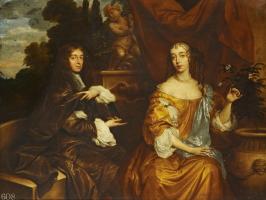
John Evelyn's Diary. 11th July 1689. I dined at Lord Clarendon's, it being his lady's wedding day, when about three in the afternoon there was an unusual and violent storm of thunder, rain, and wind; many boats on the Thames were overwhelmed, and such was the impetuosity of the wind as to carry up the waves in pillars and spouts most dreadful to behold, rooting up trees and ruining some houses.

John Evelyn's Diary. 11th July 1689. The Countess of Sunderland (age 43) afterward told me that it extended as far as Althorpe [Map] at the very time, which is seventy miles from London. It did no harm at Deptford [Map], but at Greenwich [Map] it did much mischief.
John Evelyn's Diary. 11th July 1691. I dined with Mr. Pepys (age 58), where was Dr. Cumberland (age 59), the new Bishop of Norwich [Note. Should be John Moore Bishop], Dr. Lloyd (age 54) having been put out for not acknowledging the Government. Cumberland [Note. John Moore Bishop 1646-1707] is a very learned, excellent man. Possession was now given to Dr. Tillotson (age 60), at Lambeth, by the Sheriff; Archbishop Sancroft was gone (age 74), but had left his nephew to keep possession; and he refusing to deliver it up on the Queen's message (age 29), was dispossessed by the Sheriff, and imprisoned. This stout demeanor of the few Bishops who refused to take the oaths to King William (age 40), animated a great party to forsake the churches, so as to threaten a schism; though those who looked further into the ancient practice, found that when (as formerly) there were Bishops displaced on secular accounts, the people never refused to acknowledge the new Bishops, provided they were not heretics. The truth is, the whole clergy had till now stretched the duty of passive obedience, so that the proceedings against these Bishops gave no little occasion of exceptions; but this not amounting to heresy, there was a necessity of receiving the new Bishops, to prevent a failure of that order in the Church. I went to visit Lord Clarendon in the Tower, but he was gone into the country for air by the Queen's permission, under the care of his warden.


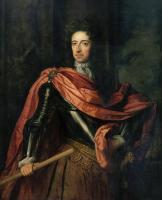
On 11th July 1708 Arnold Keppel 1st Earl Albermarle (age 38) was present at Oudenaarde during the Battle of Oudenarde.
John Wallop 1st Earl Portsmouth (age 18) fought as a volunteer.
After 11th July 1708 Arnold Keppel 1st Earl Albermarle (age 38) distinguished himself at Lille during the Siege of Lille.
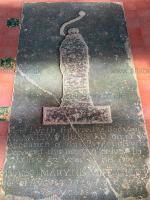
St Albans Cathedral [Map]. Ledger stone originally containing a brass to Mathew Hubbard, Alderman of St Albans, died 11th July 1713 aged 53, and Mary his wife.
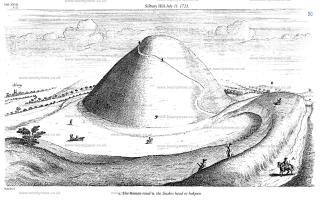
Avebury by William Stukeley. 11th July 1723. Table XXVII. Silbury Hill [Map] July 11. 1723. A. The Roman road. B. the Snakes head or hakpen.
Annals of the six Kings of England by Nicholas Trivet
Translation of the Annals of the Six Kings of England by that traces the rise and rule of the Angevin aka Plantagenet dynasty from the mid-12th to early 14th century. Written by the Dominican scholar Nicholas Trivet, the work offers a vivid account of English history from the reign of King Stephen through to the death of King Edward I, blending political narrative with moral reflection. Covering the reigns of six monarchs—from Stephen to Edward I—the chronicle explores royal authority, rebellion, war, and the shifting balance between crown, church, and nobility. Trivet provides detailed insight into defining moments such as baronial conflicts, Anglo-French rivalry, and the consolidation of royal power under Edward I, whose reign he describes with particular immediacy. The Annals combines careful year-by-year reporting with thoughtful interpretation, presenting history not merely as a sequence of events but as a moral and political lesson. Ideal for readers interested in medieval history, kingship, and the origins of the English state, this chronicle remains a valuable and accessible window into the turbulent world of the Plantagenet kings.
Available at Amazon in eBook and Paperback format.
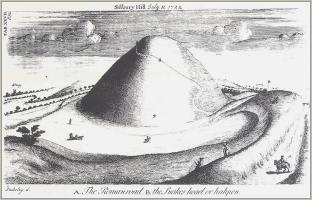
On 11th July 1723 William Stukeley (age 35) drew Silbury Hill [Map] and wrote that a skeleton and bridle had been discovered during tree planting on the summit. The feature noted 'B' or the Snakes Head or Hakpen is The Sanctuary [Map].
On 11th July 1751 Caroline Matilda Hanover Queen Consort Denmark and Norway was born to Frederick Louis Hanover Prince of Wales and Augusta Saxe Coburg Altenburg (age 31). She a granddaughter of King George II of Great Britain and Ireland. She married 8th November 1766 her first cousin Christian VII King of Denmark and Norway, son of Frederick V King of Denmark and Norway and Louise Hanover Queen Consort Denmark and Norway, and had issue.


On 11th July 1771 Karoline Amalie Hesse-Kassel Duchess Saxe Gotha Altenburg was born to William Elector of Hesse (age 28) and Electress Wilhelmina Caroline Oldenburg (age 24). She a great granddaughter of King George II of Great Britain and Ireland. Coefficient of inbreeding 6.89%. She married 24th April 1802 her fifth cousin once removed Duke Augustus of Saxe Coburg Altenburg, son of Duke Ernest of Saxe Coburg Altenburg and Charlotte Saxe Meiningen Duchess Saxe Gotha Altenburg.


On 16th April 1780 or 11th July 1780 Antoine 8th Duke Gramont (age 24) and Aglae de Polignac "Guichette" Duchess Gramont (age 11) were married at the Palace of Versailles. She the daughter of Jules 1st Duke of Polignac (age 33) and Yolande Martine Gabrielle Polastron Duchess Gramont (age 30). He the son of Antoine 7th Duke Gramont (age 58).
On 11th July 1784 George Lamb was born to Penistone Lamb 1st Viscount Melbourne (age 39) and Elizabeth Milbanke Viscountess Melbourne (age 32). Some sources suggest his father may have been King George IV (age 21) who became his godfather. He married 17th May 1809 Caroline St Jules, daughter of William Cavendish 5th Duke Devonshire and Elizabeth Christiana Hervey Duchess Devonshire.


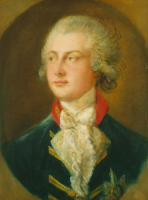


On 11th July 1787 Nicholas Read (age 54) died. His will was read the next day.
On 11th July 1818 King William IV of the United Kingdom (age 52) and Queen Adelaide of England (age 25) were married at Kew, Surrey. She by marriage Duchess Clarence and St Andrews. The difference in their ages was 26 years. He the son of King George III of Great Britain and Ireland (age 80).


On 11th July 1818 Edward Augustus Hanover 1st Duke Kent and Strathearn (age 50) and Marie Luise Victoria Saxe Coburg Gotha Duchess Kent and Strathearn (age 31) were married at Kew Palace Kew, Surrey.


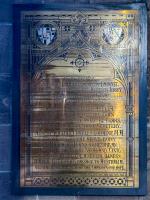
On 11th July 1852 John Lambton Loraine 10th Baronet (age 67) died. His son Lambton (age 13) succeeded 11th Baronet Loraine of Kirkharle in Northumberland. Memorial at Cathedral Church St Nicholas, Newcastle upon Tyne [Map].
John Lambton Loraine 10th Baronet: On 30th July 1784 he was born to William Loraine 4th Baronet and Hannah Allgood Lady Loraine.
11th July 1863. The Spectator, page 2: Marquisate of Donegal (age 41), has this week appeared in the Divorce Court for the third time. He was co-respondent in the ease of "Lloyd v. Lloyd and Chichester," and then in that of "Mare v. Mure and Chichester." The decree dissolving the latter marriage was pronounced on lstSuly, 1859. On 9th August Mr. Chichester married Mrs. Mure, and he has now applied to the Court to declare the union void. The- application was, of course, granted, as no divorcee can marry within three months of judgment—a fact Mr. Chichester, with his large experience in such cases, would, one would think, have known. His solicitors, however, assert, in a letter te. the Morning Post, that he was about to apply for a divorce from his wile on account of her conduct, and then first learned that the marriage was null and void. Even with this excuse, the case is just one of those which create the vulgar belief that the. class to which Mr. Chichester belongs is exceptionally immoral.

On 11th July 1866 Irene Hesse Darmstadt was born to Prince Louis Hesse Darmstadt IV Grand Duke (age 28) and Princess Alice Saxe Coburg Gotha (age 23). She a granddaughter of Queen Victoria of the United Kingdom. She married 24th May 1888 her first cousin Prince Henry Hohenzollern, son of Frederick III King Prussia and Victoria Empress Germany Queen Consort Prussia, and had issue.
Chronicle of a Bourgeois of Valenciennes
Récits d’un bourgeois de Valenciennes aka The Chronicle of a Bourgeois of Valenciennes is a vivid 14th-century vernacular chronicle written by an anonymous urban chronicler from Valenciennes in the County of Hainaut. It survives in a manuscript that describes local and regional history from about 1253 to 1366, blending chronology, narrative episodes, and eyewitness-style accounts of political, military, and social events in medieval France, Flanders, and the Low Countries. The work begins with a chronological framework of events affecting Valenciennes and its region under rulers such as King Philip VI of France and the shifting allegiances of local nobility. It includes accounts of conflicts, sieges, diplomatic manoeuvres, and the impact of broader struggles like the Hundred Years’ War on urban life in Hainaut. Written from the perspective of a burgher (bourgeois) rather than a monastery or royal court, the chronicle offers a rare lay viewpoint on high politics and warfare, reflecting how merchants, townspeople, and civic institutions experienced the turbulence of the 13th and 14th centuries. Its narrative style combines straightforward reporting of events with moral and civic observations, making it a valuable source for readers interested in medieval urban society, regional politics, and the lived experience of war and governance in pre-modern Europe.
Available at Amazon in eBook and Paperback format.
On 11th July 1884 Olga Hanover was born to Ernest Augustus Hanover 3rd Duke Cumberland and Teviotdale (age 38) and Thyra Glücksburg Duchess Cumberland and Teviotdale (age 30). She a great x 2 granddaughter of King George III of Great Britain and Ireland.
The London Gazette 25953. Whitehall, July 11, 1889. The Queen has been pleased to direct Letters Patent to be passed under the Great Seal of the United Kingdom of Great Britain and Ireland, granting the dignity of a Baronet of the said United Kingdom unto Joseph Boehm (age 55), of Wetherby Gardens, in the parish of St. Mary Abbots, Kensington, in the county of London, Esq., Royal Academician, Sculptor in Ordinary to the Queen, and the heirs male of his body lawfully begotten.
On 11th July 1915 Lieutenant Rupert Edward Gascoyne-Cecil (age 20) was killed in action. About 7.15 the Germans exploded a very large mine between two trenches and then continued to shell heavily. On hearing the explosion Rupert immediately tried to get up to the fire trench of which he was in charge, but unfortunately he was struck on the head by a fragment of shell and was killed instantly. He was buried close to the Ypres-Cominis line, in the Brigade headquarters cemetery. Captain Curtis Wrote "He was always beloved by all his fellow officers, and above all his men, who had great respect for him. We shall feel the loss which the regiment has sustained by his death but we are proud, he was doing his duty so nobly when he was killed. A good many men were stunned and confused by the exsplosion, but 2nd Lieutenant Cecil remained cool and met his death going to his post".
A memorial service was held at St Ethaldred's Church, Hatfield. It was conducted by G K A Bell, chaplin to the Archbishop of Canterbury and Lieutenant Cecils greatest friend.
The congregation consisted of many titled family and friends and G K A Bell gave a brief address from the chancel steps in which he said "we have come together as a family of friends to remember one for whom they could have but a single thought, one whose life was gentle and pure, whose lovable nature drew all hearts to him, and who gave his life for his friend. He died at his post of duty in a foreign land; he was taken before he was tainted with sin. He gave his body in service of his country, but his pure soul to his Captain whom he both loved and served well". Mr H W Harrison then played Beethoven's Funeral March whilst the congregation stood, followed by March from Seipio (Handel) as a voluntary. The Hatfield College Youths rang a muffled peal on the bells after the service in memory of one of their number. Rupert Cecil was a member of the society, and took a keen interest in bell-ringing. His commanding officer wrote" He was only with us a short time, but had endeared himself to all who knew him by his cheerfulness and soldierly qualities".
On 11th July 1918 Second Lieutenant Edward Valentinee Austin was killed in action during a bombing raid. His formation of four machines from 98 Squadron was attacked by fourteen enemy machines over France at 7:30am. Austin was an observer/ gunner in a De Haviland D H 9 but was hit by anti-aircraft battery shrapnel. Despite this he kept firing and shot down a second enemy aircraft. He then collapsed from loss of blood and was dead before his plane touched down.
11th July 1921. New York Times: ""

On 11th July 1931 Jean-Louis Forain (age 78) died.
On 11th July 1946 Paul Nash (age 57) died.
On 11th July 1956 Dorothy Violet Ashton Duchess Wellington (age 66) died.
On 11th July 1238 Dafydd ap Gruffudd Aberffraw Prince of Wales was born to Gruffydd ap Llewellyn Aberffraw (age 40) and Senana ferch Caradog (age 40). He a great grandson of King John of England. He married after 1265 his half fifth cousin Elizabeth Ferrers, daughter of William Ferrers 5th Earl of Derby and Margaret Quincy Countess Derby.
On 11th July 1274 King Robert the Bruce I of Scotland was born to Robert Bruce Earl Carrick (age 31) and Marjorie Carrick 3rd Countess Carrick (age 21) at Turnberry Castle. He married (1) 1296 his fifth cousin Isabella Mar, daughter of Donald Mar 7th Earl of Mar and Elen ferch Llewellyn Aberffraw Countess Huntingdon and Mar, and had issue (2) 1302 his fifth cousin once removed Elizabeth Burgh Queen Consort Scotland, daughter of Richard "Red Earl" Burgh 2nd Earl of Ulster and Margaret Burgh Countess Ulster, and had issue.
On 11th July 1610 William Widdrington 1st Baron Widdrington was born to Henry Widdrington of Widdington in Northumberland (age 43). He married 1629 Mary Thorold and had issue.

On 11th July 1616 Edward Montagu 2nd Baron Montagu was born to Edward Montagu 1st Baron Montagu (age 53) and Frances Cotton (age 38) at Weekley, Leicestershire. He married after 1633 Anne Winwood and had issue.
The Deeds of the Dukes of Normandy
The Gesta Normannorum Ducum [The Deeds of the Dukes of Normandy] is a landmark medieval chronicle tracing the rise and fall of the Norman dynasty from its early roots through the pivotal events surrounding the Norman Conquest of England. Originally penned in Latin by the monk William of Jumièges shortly before 1060 and later expanded at the behest of William the Conqueror, the work chronicles the deeds, politics, battles, and leadership of the Norman dukes, especially William’s own claim to the English throne. The narrative combines earlier historical sources with firsthand information and oral testimony to present an authoritative account of Normandy’s transformation from a Viking settlement into one of medieval Europe’s most powerful realms. William’s history emphasizes the legitimacy, military prowess, and governance of the Norman line, framing their expansion, including the conquest of England, as both divinely sanctioned and noble in purpose. Later chroniclers such as Orderic Vitalis and Robert of Torigni continued the history, extending the coverage into the 12th century, providing broader context on ducal rule and its impact. Today this classic work remains a foundational source for understanding Norman identity, medieval statesmanship, and the historical forces that reshaped England and Western Europe between 800AD and 1100AD.
Available at Amazon in eBook and Paperback format.
On 11th July 1657 Frederick I King Prussia was born to Frederick William "Great Elector" Hohenzollern Elector Brandenburg (age 37) and Luise Henriette Orange Nassau (age 29). He married (1) before 1680 his first cousin Elisabeth Henriëtte Hesse-Kassel, daughter of Wilhelm "The Just" VI Hesse-Kassel and Hedwig Sophia Hohenzollern, and had issue (2) before 1685 his second cousin Sophia Charlotte Hanover Queen Consort Prussia, daughter of Ernest Augustus Hanover Elector Brunswick-Lüneburg and Electress Sophia Palatinate Simmern, and had issue (3) 1708 his fourth cousin Sophia Louise Mecklenburg-Schwerin Queen Consort Prussia.
On 11th July 1662 Maximilian Wittelsbach II Elector Bavaria was born to Ferdinand Maria Wittelsbach (age 26) and Henriette Adelaide Savoy. He married (1) 15th July 1685 his second cousin Maria Antonia of Austria, daughter of Leopold Habsburg Spain I Holy Roman Emperor and Margaret Theresa Habsburg Holy Roman Empress, and had issue (2) 12th January 1694 Theresa Kunegunda Sobieska.
On 11th July 1663 James Ogilvy 1st Earl Seafield 4th Earl Findlater was born to James Ogilvy 3rd Earl Findlater.

On 11th July 1671 Lionel Boyle 3rd Earl Orrery was born to Roger Boyle 2nd Earl Orrery (age 24) and Mary Sackville Countess Orrery (age 23). He married his first cousin Mary Sackville Countess Orrery, daughter of Charles Sackville 6th Earl Dorset 1st Earl Middlesex.
On 11th October 1675 Maria Josepha Clementina Habsburg Spain was born to Leopold Habsburg Spain I Holy Roman Emperor (age 35) and Claudia Felicitas of Holy Roman Empress (age 22). On 11th July 1676 Maria Josepha Clementina Habsburg Spain died. Coefficient of inbreeding 5.35%.

On 11th July 1700 Charles Townshend 3rd Viscount Townsend was born to Charles Townshend 2nd Viscount Townsend (age 26) and Elizabeth Pelham Viscountess Townsend. He married 29th May 1723 Audrey aka Etheldreda Harrison and had issue.
On 11th July 1710 John Morgan 4th Baronet was born to Thomas Morgan 3rd Baronet (age 25). He married 17th December 1750 Anne Jacobsen Lady Morgan.
On 11th July 1740 John Leveson-Gower was born to John Leveson-Gower 1st Earl Gower (age 45) and Mary Tufton Countess Gower. He married 5th July 1773 Frances Boscawen and had issue.
On 11th July 1751 Caroline Matilda Hanover Queen Consort Denmark and Norway was born to Frederick Louis Hanover Prince of Wales and Augusta Saxe Coburg Altenburg (age 31). She a granddaughter of King George II of Great Britain and Ireland. She married 8th November 1766 her first cousin Christian VII King of Denmark and Norway, son of Frederick V King of Denmark and Norway and Louise Hanover Queen Consort Denmark and Norway, and had issue.
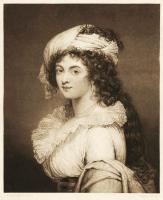
On 11th July 1759 Sarah Bazett Countess Essex was born to William Bazett of St Helena. She married 6th June 1786 George Capell Coningsbury 5th Earl Essex, son of William Anne Capell 4th Earl Essex and Frances Hanbury Williams Countess Essex.
Annals of the six Kings of England by Nicholas Trivet
Translation of the Annals of the Six Kings of England by that traces the rise and rule of the Angevin aka Plantagenet dynasty from the mid-12th to early 14th century. Written by the Dominican scholar Nicholas Trivet, the work offers a vivid account of English history from the reign of King Stephen through to the death of King Edward I, blending political narrative with moral reflection. Covering the reigns of six monarchs—from Stephen to Edward I—the chronicle explores royal authority, rebellion, war, and the shifting balance between crown, church, and nobility. Trivet provides detailed insight into defining moments such as baronial conflicts, Anglo-French rivalry, and the consolidation of royal power under Edward I, whose reign he describes with particular immediacy. The Annals combines careful year-by-year reporting with thoughtful interpretation, presenting history not merely as a sequence of events but as a moral and political lesson. Ideal for readers interested in medieval history, kingship, and the origins of the English state, this chronicle remains a valuable and accessible window into the turbulent world of the Plantagenet kings.
Available at Amazon in eBook and Paperback format.
On 11th July 1766 John Grey Egerton 8th Baronet was born to Philip Egerton of Oulton (age 28) and Mary Eyles-Styles (age 21). He was born John Egerton. He adopted the name Grey when he succeeded to the Baronetcy in 1814. Coefficient of inbreeding 6.25%. He married 9th April 1795 Maria Jackson.
On 11th July 1768 Charles Forster Goring 7th Baronet was born to Harry Goring 6th Baronet (age 29).
On 11th July 1771 Karoline Amalie Hesse-Kassel Duchess Saxe Gotha Altenburg was born to William Elector of Hesse (age 28) and Electress Wilhelmina Caroline Oldenburg (age 24). She a great granddaughter of King George II of Great Britain and Ireland. Coefficient of inbreeding 6.89%. She married 24th April 1802 her fifth cousin once removed Duke Augustus of Saxe Coburg Altenburg, son of Duke Ernest of Saxe Coburg Altenburg and Charlotte Saxe Meiningen Duchess Saxe Gotha Altenburg.
On 11th July 1774 Somerset Lowry-Corry 2nd Earl Belmore was born to Armar Lowry-Corry 1st Earl Belmore (age 34) and Margaret Butler (age 26) at Sackville Street Dublin. He married 20th October 1800 his first cousin Juliana Butler Countess Belmore and had issue.


On 11th July 1779 William à Court 1st Baron Heytesbury was born to William Pierce Ashe à Court 1st Baronet (age 32) and Laetitia Wyndham Lady à Court. He married 3rd October 1808 Maria Rebecca Bouverie Baroness Heytesbury and had issue.
On 11th July 1781 Charlotte Cadogan Marchioness Anglesey was born to Charles Sloane Cadogan 1st Earl Cadogan (age 52) and Mary Churchill Countess Cadogan (age 23). She married (1) 20th September 1803 Henry Wellesley 1st Baron Cowley, son of Garrett Wellesley 1st Earl Mornington and Anne Hill Countess Mornington, and had issue (2) after 19th December 1810 Henry William Paget 1st Marquess Anglesey, son of Henry Bayly-Paget 1st Earl Uxbridge and Jane Champagné Countess Uxbridge, and had issue.
On 11th July 1784 George Lamb was born to Penistone Lamb 1st Viscount Melbourne (age 39) and Elizabeth Milbanke Viscountess Melbourne (age 32). Some sources suggest his father may have been King George IV (age 21) who became his godfather. He married 17th May 1809 Caroline St Jules, daughter of William Cavendish 5th Duke Devonshire and Elizabeth Christiana Hervey Duchess Devonshire.
On 11th July 1794 Humphrey St John-Mildmay was born to Henry Paulet St John-Mildmay 3rd Baronet (age 29) and Jane Mildmay Lady St-John Mildmay (age 29). He married Anne Eugenia Baring, daughter of Alexander Baring 1st Baron Ashburton and Ann Louisa Bingham Baroness Ashburton, and had issue.
On 11th July 1797 Dean Francis Close was born in Frome, Somerset [Map].
On 11th July 1809 William à Court-Holmes 2nd Baron Heytesbury was born to William à Court 1st Baron Heytesbury (age 30) and Maria Rebecca Bouverie Baroness Heytesbury (age 25). He married 3rd October 1833 Elizabeth Holmes Baroness Heytesbury, daughter of Leonard Worsley-Holmes 9th Baronet, and had issue.
On 11th July 1810 Arthur Trollope was born to John Trollope 6th Baronet (age 44) and Anne Thorold.
Chronicle of Walter of Guisborough
A canon regular of the Augustinian Guisborough Priory, Yorkshire, formerly known as The Chronicle of Walter of Hemingburgh, describes the period from 1066 to 1346. Before 1274 the Chronicle is based on other works. Thereafter, the Chronicle is original, and a remarkable source for the events of the time. This book provides a translation of the Chronicle from that date. The Latin source for our translation is the 1849 work edited by Hans Claude Hamilton. Hamilton, in his preface, says: 'In the present work we behold perhaps one of the finest samples of our early chronicles, both as regards the value of the events recorded, and the correctness with which they are detailed; Nor will the pleasing style of composition be lightly passed over by those capable of seeing reflected from it the tokens of a vigorous and cultivated mind, and a favourable specimen of the learning and taste of the age in which it was framed.'
Available at Amazon in eBook and Paperback format.
On 11th July 1827 Henry Edward Stanley 3rd Baron Stanley 2nd Baron Eddisbury was born to Edward John Stanley 2nd Baron Stanley and 1st Baron Eddisbury (age 24) and Henrietta Maria Dillon Baroness Stanley Alderley and Eddisbury (age 19). He married 1862 Fabia San Roman of Seville.
On 11th July 1833 Dean Herbert Mortimer Luckock was born to Reverend Thomas George Mortimer Luckock and Harriet Chune at Great Barr, Staffordshire.
On 11th July 1839 Henry Charles Manners-Sutton 4th Viscount Canterbury was born to John Manners-Sutton 3rd Viscount Canterbury (age 25) and Georgiana Tompson Viscountess Centerbury.
On 11th July 1841 Reginald Chetwynd-Talbot was born to Henry John Chetwynd-Talbot 3rd Earl Talbot 18th Earl of Shrewsbury (age 37) and Sarah Elizabeth Beresford Countess Talbot Shrewsbury Waterford (age 33). He married 8th May 1877 Margaret Jane Stuart-Wortley.


On 11th July 1859 Charles Edwin Lowther was born to Henry Lowther 3rd Earl Lonsdale (age 41).
On 11th July 1866 Irene Hesse Darmstadt was born to Prince Louis Hesse Darmstadt IV Grand Duke (age 28) and Princess Alice Saxe Coburg Gotha (age 23). She a granddaughter of Queen Victoria of the United Kingdom. She married 24th May 1888 her first cousin Prince Henry Hohenzollern, son of Frederick III King Prussia and Victoria Empress Germany Queen Consort Prussia, and had issue.
On 11th July 1869 Frederick Cradock-Hartopp 7th Baronet was born to John William Cradock-Hartopp 4th Baronet (age 40).
On 11th July 1871 Alfred Ernest Yorke was born to John Manners Yorke 7th Earl of Hardwicke (age 30) and Edith Mary Oswald Countess of Hardwicke.
On 11th July 1880 William Leveson-Gower 4th Earl Granville was born to Granville Leveson-Gower 2nd Earl Granville (age 65) and Sophia Castila Rosamund Campbell Countess Granville (age 32). He married 24th May 1916 his third cousin once removed Rose Constance Bowes-Lyon Countess Granville, daughter of Claude Bowes-Lyon 14th Earl Strathmore and Kinghorne and Cecilia Nina Cavendish-Bentinck Countess of Strathmore and Kinghorne, and had issue.


On 11th July 1882 Henry Champion de Crespigny 6th Baronet was born to Philip Augustus Champion de Crespigny (age 31).
On 11th July 1884 Olga Hanover was born to Ernest Augustus Hanover 3rd Duke Cumberland and Teviotdale (age 38) and Thyra Glücksburg Duchess Cumberland and Teviotdale (age 30). She a great x 2 granddaughter of King George III of Great Britain and Ireland.
On 11th July 1887 William Frederick Style 11th Baronet was born to Frederick Montague Style 10th Baronet (age 30).
This is a translation of the 'Memoires of Jacques du Clercq', published in 1823 in two volumes, edited by Frederic, Baron de Reissenberg. In his introduction Reissenberg writes: 'Jacques du Clercq tells us that he was born in 1424, and that he was a licentiate in law and a counsellor to Philip the Good, Duke of Burgundy, in the castellany of Douai, Lille, and Orchies. It appears that he established his residence at Arras. In 1446, he married the daughter of Baldwin de la Lacherie, a gentleman who lived in Lille. We read in the fifth book of his Memoirs that his father, also named Jacques du Clercq, had married a lady of the Le Camelin family, from Compiègne. His ancestors, always attached to the counts of Flanders, had constantly served them, whether in their councils or in their armies.' The Memoires cover a period of nineteen years beginning in in 1448, ending in in 1467. It appears that the author had intended to extend the Memoirs beyond that date; no doubt illness or death prevented him from carrying out this plan. As Reissenberg writes the 'merit of this work lies in the simplicity of its narrative, in its tone of good faith, and in a certain air of frankness which naturally wins the reader’s confidence.' Du Clercq ranges from events of national and international importance, including events of the Wars of the Roses in England, to simple, everyday local events such as marriages, robberies, murders, trials and deaths, including that of his own father in Book 5; one of his last entries.
Available at Amazon in eBook and Paperback format.
On 11th July 1904 Daphne Vivian Marchioness Bath was born to George Vivian 4th Baron Vivian (age 26) and Barbara Cicely Fanning Baroness Vivian at Westminster [Map]. She married (1) 27th October 1927 Henry Frederick Thynne 6th Marquess of Bath, son of Thomas Henry Thynne 5th Marquess of Bath and Violet Caroline Mordaunt Marchioness Bath, and had issue (2) 11th July 1953 Alexander Wallace Fielding.
On 11th July 1908 Malcolm Douglas-Pennant 6th Baron Penrhyn was born to Frank Douglas-Pennant 5th Baron Penrhyn (age 42) and Alice Nellie Cooper.
On 11th July 1912 Simon Lycett Green 5th Baronet was born to Edward Arthur Lycett Green 3rd Baronet (age 26).
On 11th July 1925 Robin George Colborne Nugent 5th Baronet was born to George Guy Bulwer Nugent 4th (age 32).
On 11th July 1929 Richard William Orde-Powlett 7th Baron Bolton was born to Nigel Amyas Orde-Powlett 6th Baron Bolton (age 29) and Victoria Mary Villiers (age 25). He married (1) 31st July 1951 his fifth cousin once removed Christine Helene Weld-Forester Baroness Bolton, daughter of Cecil George Weld-Forester 7th Baron Forester, and had issue.
On 11th July 1943 Francis Michael Blake 3rd Baronet was born to Francis Edward Colquhoun Blake 2nd Baronet (age 49).
On 11th July 1352 John "Sans Terre" Artois 1st Count of Eu (age 30) and Isabeau Melun Countess Eu (age 24) were married. She by marriage Countess Eu. She the daughter of John Melun 1st Count Tancarville (age 62). He the son of Robert III Artois and Joan Valois Countess Zeeland Holland Avesnes and Hainaut.
On 11th July 1372 Edmund of Langley 1st Duke of York (age 31) and Isabella of Castile Duchess York (age 17) were married at Wallingford, Oxfordshire [Map]. She by marriage Countess Cambridge. She being the younger sister of Constance (age 18) who had married Edmund's older brother John of Gaunt 1st Duke Lancaster (age 32) a year before. An example of Marriage of Two Sets of Siblings. She the illegitmate daughter of Peter "Cruel" I King Castile and Maria Padilla. He the son of King Edward III of England (age 59) and Philippa of Hainaut Queen Consort England. They were half third cousin twice removed.
On 11th July 1469 George York 1st Duke of Clarence (age 19) and Isabel Neville Duchess Clarence (age 17) were married by Archbishop George Neville (age 37) at the Église Notre-Dame de Calais [Map] witnessed by Richard "Kingmaker" Neville Earl Warwick, 6th Earl Salisbury (age 40). She by marriage Duchess Clarence. She the daughter of Richard "Kingmaker" Neville Earl Warwick, 6th Earl Salisbury and Anne Beauchamp 16th Countess Warwick (age 42). He the son of Richard Plantagenet 3rd Duke of York and Cecily "Rose of Raby" Neville Duchess York (age 54). They were first cousin once removed. He a great x 2 grandson of King Edward III of England. She a great x 3 granddaughter of King Edward III of England.
On 11th July 1637 William Russell 1st Duke Bedford (age 20) and Anne Carr Countess of Bedford (age 21) were married. She the daughter of Robert Carr 1st Earl Somerset (age 50) and Frances Howard Countess Essex and Somerset. He the son of Francis Russell 4th Earl Bedford (age 44) and Catherine Brydges Countess Bedford (age 57).
On 20th July 1639, some sources say 11th July 1639, Henry Spencer 1st Earl of Sunderland (age 18) and Dorothy Sidney Countess Sunderland (age 21) were married at Penhurst Rother. She by marriage Baroness Spencer Wormleighton. Her long-term suitor, she was the 'Sacharissa' of his poems, Edmund Waller (age 33) wrote a letter to the bride's sister (age 12) on the occasion of the wedding. She the daughter of Robert Sidney 2nd Earl of Leicester (age 43) and Dorothy Percy Countess Leicester (age 41). They were third cousins.
Madam,
In this common joy at Penshurst, I know none to whom complaints may come less unseasonably than to your ladyship, the loss of a bedfellow being almost equal to that of a mistress; and therefore you ought at least to pardon, if you consent not to the imprecations of, the deserted, which just Heaven no doubt will hear. May my lady Dorothy, if we may yet call her so, suffer as much, and have the like passion for this young lord, whom she has preferred to the rest of mankind, as others have had for her; and may his love, before the year go about, make her taste of the first curse imposed upon womankind, the pains of becoming a mother. May her first born be none of her own sex, nor so like her but that he may resemble her lord as much as herself. May she that always affected silence and retirement have the house filled with the noise and number of her children, and hereafter of her grandchildren; and then may she arrive at that great curse, so much declined by fair ladies, old age; may she live to be very old and yet seem young; be told so by her glass, and have no aches to inform her of the truth; and when she shall appear to be mortal, may her lord not mourn for her, but go hand in hand with her to that place where we are told there is neither marrying nor giving in marriage, that being there divorced we may all have an equal interest in her again! My revenge being immortal, I wish all this may befall her posterity to the world's end and afterwards! To you, madam, I wish all good things, and that this loss may in good time be happily supplied with a more constant bedfellow of the other sex. Madam, I humbly kiss your hands, and beg pardon for this trouble, from
Your ladyship's
most humble servant,
E. Waller.


The History of William Marshal was commissioned by his son shortly after William’s death in 1219 to celebrate the Marshal’s remarkable life; it is an authentic, contemporary voice. The manuscript was discovered in 1861 by French historian Paul Meyer. Meyer published the manuscript in its original Anglo-French in 1891 in two books. This book is a line by line translation of the first of Meyer’s books; lines 1-10152. Book 1 of the History begins in 1139 and ends in 1194. It describes the events of the Anarchy, the role of William’s father John, John’s marriages, William’s childhood, his role as a hostage at the siege of Newbury, his injury and imprisonment in Poitou where he met Eleanor of Aquitaine and his life as a knight errant. It continues with the accusation against him of an improper relationship with Margaret, wife of Henry the Young King, his exile, and return, the death of Henry the Young King, the rebellion of Richard, the future King Richard I, war with France, the death of King Henry II, and the capture of King Richard, and the rebellion of John, the future King John. It ends with the release of King Richard and the death of John Marshal.
Available at Amazon in eBook and Paperback format.
On 11th July 1643 Charles Amadeus Duke of Nemours (age 19) and Élisabeth Bourbon Vendôme (age 28) were married. She by marriage Duchess Nemours. She the daughter of César Bourbon Vendôme 1st Duke Vendôme (age 49) and Françoise Lorraine Duchess Vendôme (age 50). He the son of Henri I Duke of Nemours. They were second cousin once removed.
On 11th July 1678 William Caulfeild 2nd Viscount Charlemont (age 23) and Anne Margetson (age 21) were married at St Michan's Church, Dublin. His sister Alice Caulfeild Baroness Carpenter (age 17) had married her brother John Margetson (age 22) six months before.
On 11th July 1715 Philip Parker 3rd Baronet (age 33) and Martha East Lady Parker were married. She by marriage Lady Parker of Arwarton in Suffolk.
On 16th April 1780 or 11th July 1780 Antoine 8th Duke Gramont (age 24) and Aglae de Polignac "Guichette" Duchess Gramont (age 11) were married at the Palace of Versailles. She the daughter of Jules 1st Duke of Polignac (age 33) and Yolande Martine Gabrielle Polastron Duchess Gramont (age 30). He the son of Antoine 7th Duke Gramont (age 58).
On 11th July 1791 Nelson Rycroft 2nd Baronet (age 30) and Charlotte Read Lady Rycroft (age 20) were married. She by marriage Lady Rycroft of Calton in Yorkshire.
On 11th July 1818 King William IV of the United Kingdom (age 52) and Queen Adelaide of England (age 25) were married at Kew, Surrey. She by marriage Duchess Clarence and St Andrews. The difference in their ages was 26 years. He the son of King George III of Great Britain and Ireland (age 80).
On 11th July 1822 Thomas Webb 6th Baronet (age 43) and Martha Matilda Somerville Lady Webb were married. She by marriage Lady Webb of Odstock in Wiltshire.
On 11th July 1857 Robert Gascoyne-Cecil (age 27) and Georgina Anderson (age 30) were married. He the son of James Brownlow William Gascoyne-Cecil 2nd Marquess Salisbury (age 66) and Frances Mary Gascoyne Marchioness Salisbury.


On 11th July 1899 Hugh Cholmondeley 3rd Baron Delamere (age 29) and Florence Ann Cole Baroness Delamere (age 21) were married. She the daughter of Lowry Cole 4th Earl Enniskillen (age 53) and Charlotte Marion Baird Countess of Enniskillen (age 47).
On 11th July 1901 Lieutenant-Colonel Gilbert Redvers Heathcote 8th Baronet (age 46) and Mabel Frances Silvertop Lady Heathcote were married.
On 11th July 1911 Thomas Edward Anson 4th Earl Lichfield (age 27) and Evelyn Maud Keppel Countess Lichfield (age 24) were married at St George's Church, Hanover Square. He the son of Thomas Francis Anson 3rd Earl Lichfield (age 55) and Mildred Coke Countess Lichfield (age 57). They were fourth cousin once removed. She a great x 5 granddaughter of King Charles II of England Scotland and Ireland.
On 11th July 1933 Charles Greville 7th Earl of Warwick (age 22) and Rosa Bingham Countess Warwich and Brooke (age 20) were married. She by marriage Countess Warwick, Countess Brooke Warwick Castle. He the son of Leopold Guy Greville 6th Earl Warwick 6th Earl Brooke and Elfrida Marjorie Eden Countess Warwick and Brooke (age 46). They were half second cousins.
Chronicle of Abbot Ralph of Coggeshall
The Chronicle of Abbot Ralph of Coggeshall (Chronicon Anglicanum) is an indispensable medieval history that brings to life centuries of English and European affairs through the eyes of a learned Cistercian monk. Ralph of Coggeshall, abbot of the Abbey of Coggeshall in Essex in the early 13th century, continued and expanded his community’s chronicle, documenting events from the Norman Conquest of 1066 into the tumultuous reign of King Henry III. Blending eyewitness testimony, careful compilation, and the monastic commitment to record-keeping, this chronicle offers a rare narrative of political intrigue, royal power struggles, and social upheaval in England and beyond. Ralph’s work captures the reigns of pivotal figures such as Richard I and King John, providing invaluable insights into their characters, decisions, and the forces that shaped medieval rule. More than a simple annal, Chronicon Anglicanum conveys the texture of medieval life and governance, making it a rich source for scholars and readers fascinated by English history, monastic authorship, and the shaping of the medieval world.
Available at Amazon in eBook and Paperback format.
On 11th July 1953 Alexander Wallace Fielding (age 34) and Daphne Vivian Marchioness Bath (age 49) were married.
On 11th July 1959 Hugo Philipps 3rd Baron Milford and Mary Makins (age 24) were married.
On 11th July 937 Rudolph "Pious" II King Burgundy II King Italy (age 57) died. His son Conrad (age 12) succeeded I King Burgundy.
On 11th July 1004 Theobald Blois II Count Blois (age 19) died. His brother Odo (age 21) succeeded II Count Blois.
On 11th July 1110 Elias I Count Maine died.
On 11th July 1174 Almaric I King Jerusalem (age 38) died. His son Baldwin (age 13) succeeded IV King Jerusalem.
On 11th July 1183 Otto Wittelsbach I Duke Bavaria (age 66) died. His son Louis (age 9) succeeded I Duke Bavaria.
On 11th July 1231 Agnes of Beaujeu Countess Savoy died.
On 11th July 1302 the army of Flanders unexpectedly defeated the army of France at Kortrijk during the Battle of the Golden Spurs aka Courtrai. Robert Artois II Count Artois (age 51), Raoul II de Clermont (age 57), Raoul Nesle and Godfrey Reginar were killed.
Jacques Chatillon was killed.
Simon de Clermont-Nesle (age 47) died.
On 11th July 1302 John Brienne II Count of Eu died. His son Raoul succeeded I Count Eu.
On 11th July 1509 William II Landgrave of Hesse (age 40) died. His son Landgrave (age 4) succeeded I Landgrave Hesse.
On 11th July 1535 Joachim "Nestor" Hohenzollern Elector Brandenburg (age 51) died.
On 11th July 1648 Anne Crouch Baroness Montagu (age 75) died.
On 11th July 1661 Kildare Digby 2nd Baron Digby (age 30) died. His son Robert (age 7) succeeded 3rd Baron Digby of Geashill in County Offaly.
Anne Boleyn. Her Life as told by Lancelot de Carle's 1536 Letter.
In 1536, two weeks after the execution of Anne Boleyn, her brother George and four others, Lancelot du Carle, wrote an extraordinary letter that described Anne's life, and her trial and execution, to which he was a witness. This book presents a new translation of that letter, with additional material from other contemporary sources such as Letters, Hall's and Wriothesley's Chronicles, the pamphlets of Wynkyn the Worde, the Memorial of George Constantyne, the Portuguese Letter and the Baga de Secrets, all of which are provided in Appendices.
Available at Amazon in eBook and Paperback format.
On 11th July 1673 Penelope Barkham (age 8) died. She was buried at Church of St George, South Acre [Map]. Inscription: Hic jacet Penelope, filia Domini Edwardi Barkham Baronetti (age 45), et Franciscæ (age 40) uxor is sue, qui quidem Penelope, Ætate Puellula, sed Prudentiâ, Pietate, Virtute Matrona omnibus satis, Parentibus nimis, et Deo maxime chara, terras reliquit, ad Nuptias Agni vocata Julij 11, 1673, Annoq; Ætatis suæ, Octavo.
Penelope Barkham: In 1665 she was born to Edward Barkham 2nd Baronet and Frances Napier Lady Barkham.
Edward Barkham 2nd Baronet: In 1628 he was born to Edward Barkham 1st Baronet and Francis Berney. On 28th June 1660 Edward Barkham 2nd Baronet and Frances Napier Lady Barkham were married. She by marriage Edward Barkham 2nd Baronet. On 2nd August 1667 Edward Barkham 1st Baronet died. He was buried at Church of St George, South Acre [Map]. His son Edward succeeded 2nd Baronet Barkham of South Acre in Norfolk. Frances Napier Lady Barkham by marriage Lady Barkham of South Acre in Norfolk. In 1688 Edward Barkham 2nd Baronet died. His brother William succeeded 3rd Baronet Barkham of South Acre in Norfolk.
On 11th July 1700 William Williams 1st Baronet (age 66) died. He was buried at Llansilin. His son William (age 35) succeeded 2nd Baronet Williams of Gray's Inn.
On 11th July 1700 Thomas Haselrigge 4th Baronet (age 36) died unmarried. His uncle Robert (age 60) succeeded 5th Baronet Haselrigge of Noseley Hall in Leicestershire.
On 11th July 1785 Elizabeth Delaval Baroness Audley (age 28) died.


On 11th July 1787 Nicholas Read (age 54) died. His will was read the next day.
On 11th July 1831 Marcus Somerville 4th Baronet died. His son William (age 29) succeeded 5th Baronet Somerville of Somerville in County Meath.
On 11th July 1843 Louisa Cathcart 2nd Countess Mansfield (age 85) died. Her grandson William (age 37) succeeded 3rd Earl Mansfield in Nottinghamshire.
On 11th July 1852 John Lambton Loraine 10th Baronet (age 67) died. His son Lambton (age 13) succeeded 11th Baronet Loraine of Kirkharle in Northumberland. Memorial at Cathedral Church St Nicholas, Newcastle upon Tyne [Map].
John Lambton Loraine 10th Baronet: On 30th July 1784 he was born to William Loraine 4th Baronet and Hannah Allgood Lady Loraine.
On 11th July 1886 Edward Kerrison 2nd Baronet (age 65) died at Brome Hall. Baronet Kerrison of Wyke-House in Sussex extinct.
On 11th July 1892 John Wilson aka Wilson-Patten 1st Baron Winmarleigh (age 90) died. Baron Winmarleigh of Winmarleigh in Lancashire extinct.
Chronicle of a Bourgeois of Valenciennes
Récits d’un bourgeois de Valenciennes aka The Chronicle of a Bourgeois of Valenciennes is a vivid 14th-century vernacular chronicle written by an anonymous urban chronicler from Valenciennes in the County of Hainaut. It survives in a manuscript that describes local and regional history from about 1253 to 1366, blending chronology, narrative episodes, and eyewitness-style accounts of political, military, and social events in medieval France, Flanders, and the Low Countries. The work begins with a chronological framework of events affecting Valenciennes and its region under rulers such as King Philip VI of France and the shifting allegiances of local nobility. It includes accounts of conflicts, sieges, diplomatic manoeuvres, and the impact of broader struggles like the Hundred Years’ War on urban life in Hainaut. Written from the perspective of a burgher (bourgeois) rather than a monastery or royal court, the chronicle offers a rare lay viewpoint on high politics and warfare, reflecting how merchants, townspeople, and civic institutions experienced the turbulence of the 13th and 14th centuries. Its narrative style combines straightforward reporting of events with moral and civic observations, making it a valuable source for readers interested in medieval urban society, regional politics, and the lived experience of war and governance in pre-modern Europe.
Available at Amazon in eBook and Paperback format.
On 11th July 1918 William John Lydston Poulett 7th Earl Poulett (age 34) died in the flu pandemic. His son George (age 9) succeeded 8th Earl Poulett, 11th Baron Poulett.
On 11th July 1931 Jean-Louis Forain (age 78) died.
On 11th July 1938 John Harvey Blunt 9th Baronet (age 65) died. His son John (age 30) succeeded 10th Baronet Blunt of the City of London.
On 11th July 1946 Paul Nash (age 57) died.
On 11th July 1951 Charles Cospatrick Douglas-Home 13th Earl of Home (age 77) died.
On 11th July 1956 Dorothy Violet Ashton Duchess Wellington (age 66) died.
On 11th July 1960 Edward Hilton Young 1st Baron Kennet (age 81) died. His son Wayland (age 36) succeeded 2nd Baron Kennet of the Dene Wiltshire.
On 11th July 1968 Philip Humphrey Antrobus 6th Baronet (age 91) died. His second cousin once removed Philip (age 60) succeeded 7th Baronet Antrobus of Antrobus in Cheshire. Dorothy May Davis Lady Antrobus by marriage Lady Antrobus of Antrobus in Cheshire.
On 11th July 1976 William Francis Gresley 13th Baronet (age 78) died. Baronet Gresley of Drakelow in Derbyshire extinct.
On 11th July 1992 Robert William Gerard 4th Baron Gerard (age 74) died. His second cousin once removed Anthony (age 42) succeeded 5th Baron Gerard of Bryn in Lancashire, 17th Baronet Gerard of Bryn in Lancashire.
Chronicle of a Bourgeois of Valenciennes
Récits d’un bourgeois de Valenciennes aka The Chronicle of a Bourgeois of Valenciennes is a vivid 14th-century vernacular chronicle written by an anonymous urban chronicler from Valenciennes in the County of Hainaut. It survives in a manuscript that describes local and regional history from about 1253 to 1366, blending chronology, narrative episodes, and eyewitness-style accounts of political, military, and social events in medieval France, Flanders, and the Low Countries. The work begins with a chronological framework of events affecting Valenciennes and its region under rulers such as King Philip VI of France and the shifting allegiances of local nobility. It includes accounts of conflicts, sieges, diplomatic manoeuvres, and the impact of broader struggles like the Hundred Years’ War on urban life in Hainaut. Written from the perspective of a burgher (bourgeois) rather than a monastery or royal court, the chronicle offers a rare lay viewpoint on high politics and warfare, reflecting how merchants, townspeople, and civic institutions experienced the turbulence of the 13th and 14th centuries. Its narrative style combines straightforward reporting of events with moral and civic observations, making it a valuable source for readers interested in medieval urban society, regional politics, and the lived experience of war and governance in pre-modern Europe.
Available at Amazon in eBook and Paperback format.
On 11th July 1997 Charles Spencer Richard Graham 6th Baronet (age 77) died. His son James (age 50) succeeded 7th Baronet Graham of Netherby in Cumberland.

On 11th July 2003 Robert Gascoyne-Cecil 6th Marquess of Salisbury (age 86) died. His son Robert (age 56) succeeded 7th Marquess Salisbury in Wiltshire, 13th Earl Salisbury.
On 11th July 2011 George Henry Hubert Lascelles 7th Earl Harewood (age 88) died. He was buried at All Saints Church Harewood [Map] on 15th July 2011. His son David (age 60) succeeded 8th Earl Harewood in Yorkshire, 8th Viscount Lascelles, 8th Baron Harewood of Harewood in Yorkshire.
On 11th July 2012 Henry Saxon Tate 5th Baronet (age 80) died. His son Edward (age 46) succeeded 6th Baronet Tate of Park Hill in Streatham in London. Edward Nicholas Tate has not successfully proven his succession and is therefore not on the Official Roll of the Baronetage, with the baronetcy considered 'Vacant'.
