


13 Nov is in November.
1160 Louis VII marries Adela of Blois
1362 Edward III Creates two sons as Dukes
1441 Trial and Punishment of Eleanor Cobham
On 13th November 1002 King Æthelred II of England (age 36) ordered the St Brice's Day Massacre. Its isn't clear how many died.
Anglo-Saxon Chronicle. 1002. This year the king (age 36) and his council agreed that tribute should be given to the fleet, and peace made with them, with the provision that they should desist from their mischief. Then sent the king to the fleet Alderman Leofsy, who at the king's word and his council made peace with them, on condition that they received food and tribute; which they accepted, and a tribute was paid of 24,000 pounds. In the meantime Alderman Leofsy slew Eafy, high-steward of the king; and the king banished him from the land. Then, in the same Lent, came the Lady Elfgive Emma, Richard's daughter, to this land. And in the same summer died Archbishop Eadulf; and also, in the same year the king gave an order to slay all the Danes that were in England. This was accordingly done on the mass-day of St. Brice; because it was told the king, that they would beshrew him of his life, and afterwards all his council, and then have his kingdom without any resistance.
Chronicon ex Chronicis by Florence and John of Worcester. [13th November 1002] The same year king Ethelred gave orders for the massacre of all the Danes of every age and both sexes, in consequence of their having conspired to deprive him and his nobles of their life and kingdom and reduce the whole of England under their dominion.
Chronicle of William of Malmesbury Book 2 Chapter 9. 13th November 1002. For, besides the English, whom he King Æthelred (age 36) despoiled of their hereditary possessions without any cause, or defrauded of their property for supposititious crimes: besides the Danes, whom, from light suspicion only, he ordered to be all butchered on the same day throughout England; which was a dreadful spectacle to behold; each one compelled to betray his dearest guests, now become dearer from the tenderest connexions of affinity, and to cut short their embraces with the sword: yet besides all this, I say, he was so inconstant towards his wife [Emma aka Ælfgyfu of Normandy Queen Consort England (age 17)], that he scarcely deigned her his bed, and degraded the royal dignity by his intercourse with harlots. She too, a woman, conscious of her high descent, became indignant at her husband, as she found herself endeared to him neither by her blameless modesty nor her fruitfulness; for she had borne him two children, Elfred and Edward. She was the daughter of Richard, earl of Normandy, the son of William, who, after his father, presided over that earldom for fifty-two years, and died in the twenty-eighth year of this king. He lies at the monastery of Fescamp, which he augmented with certain revenues, and which he adorned with a monastic order, by means of William, formerly abbot of Dijon. Richard was a distinguished character, and had also often harassed Ethelred: which, when it became known at Rome, the holy see, not enduring that two Christians should be at enmity, sent Leo, bishop of Treves, into England, to restore peace: the epistle describing this legation was as follows:- "John the fifteenth, pope of the holy Roman church, to all faithful people, health. Be it known to all the faithful of the holy mother church, and our children spiritual and secular, dispersed through the several climates of the world, that inasmuch as we had been informed by many of the enmity between Ethelred, king of the West-Saxons, and Richard the marquis, and were grieved sorely at this, on account of our spiritual children; taking, therefore, wholesome counsel, we summoned one of our legates, Leo, bishop of the holy church of Treves, and sent him with our letters, admonishing them, that they should return from their ungodliness. He, passing vast spaces, at length crossed the sea, and, on the day of the Lord's nativity, came into the presence of the said king; whom, having saluted on our part, he delivered to him the letters we had sent. And all the faithful people of his kingdom, and senators of either order, being summoned, he granted, for love and fear of God Almighty, and of St. Peter, the chief of the apostles, and on account of our paternal admonition, the firmest peace for all his sons and daughters, present and future, and all his faithful people, without deceit. On which account he sent Edelsin, prelate of the holy church of Sherborne, and Leofstan, son of Alfwold, and Edelnoth, son of Wulstan, who passed the maritime boundaries, and came to Richard, the said marquis. He, peaceably receiving our admonitions, and hearing the determination of the said king, readily confirmed the peace for his sons and daughters, present and future, and for all his faithful people, with this reasonable condition, that if any of their subjects, or they themselves, should commit any injustice against each other, it should be duly redressed; and that peace should remain for ever unshaken and confirmed by the oath of both parties: on the part of king Ethelred, to wit, Edelsin, prelate of the holy church of Sherborne; Leofstan, the son of Alfwold; Edelnoth, the son of Wulstan. On the part of Richard, Roger, the bishop; Rodolph, son of Hugh; Truteno, the son of Thurgis. "Done at Rouen, on the kalends of March, in the year of our Lord 991, the fourth of the indiction. Moreover, of the king's subjects, or of his enemies, let Richard receive none, nor the king of his, without their respective seals".
 Become a Member via our Buy Me a Coffee page to read more.
The Deeds of the Dukes of Normandy. While, in the condition described above, the prosperity of Normandy flourished under so noble a ruler, King Æthelred of the English stained the kingdom, which had long flourished in the great glory of most powerful kings, with such a wicked act of treacherous cruelty during his reign, that even pagans judged so detestable a crime to be horrific. For the Danes, who dwelt throughout the whole kingdom in peaceful agreement with him, suspecting no danger of death, he suddenly ordered to be killed in one day by a fury; and he commanded that the women should be buried up to their waists in the earth, and that the fiercest dogs, being set upon them, should cruelly tear the breasts from their chests; and that the suckling infants should be dashed against the doorposts of houses so that their brains were shattered, without any guilt of crimes. While, therefore, in London on that appointed day [13th November 1002], this great heap of massacred victims was being increased beyond measure by the cruelty of the executioners, certain young men, swift in their agility, fled to a ship and sought safety in flight, making for the open sea by rapid rowing along the channel of the Thames. Having crossed the long expanse of the deep, at last they landed at the desired harbour of Denmark, and reported to King Swein the bloody destruction of their people. Then the king, deeply grieved within, summoned all the chiefs of his realm, and laid the whole matter before them, inquiring earnestly what should be done. And they, moved by the suffering and grief of their friends and kinsmen, all declared with one voice that their blood must be avenged with all their strength.
Dum in statu supra intellecto sub tam præclaro rectore Northmanniæ felicitas polleret, Eldredus Anglorum rex regnum quod sub magna potentissimorum regum gloria diu floruerat, tanto nefariæ proditionis scelere regiminis sui tempore polluit, ut et pagani tam exsecrabile nefas horrendum judicarent. Nam Danos per omne regnum unanimi concordia suum cohabitantes, mortis periculum minime suspicanles, subito furore sub una die perimi, mulieres quoque alvo tenus terræ csse defossas, et ferocissimis canibus concitatis mamillas ab earum pectoribus crudeliter extorqueri, lactentes vero pueros ad domorum postes allisos excerebrari, jussit, nullis criminum existentibus culpis. Dum igitur apud Lundoniam sub hujus decretis die hæc congeries peremptorum lictorum sævitia in immensum cumularetur, quidam juvenes agilitate pernices ad quamdam navim se contulerunt, et fugæ præsidium per Thamisæ alveum celeri remigio maris sinum petierunt. Permenso autem prolixi ponti spatio, novissime cupitum Danamarchæ portum applicant, regique Sueno cruenta gentis suæ exitia nuntiant. Tunc rex nimio dolore tactus intrinsecus, totius regni sui ascitis principibus, cunctam ei seriem illis deponit, quidque agendum consulerent, diligenter inquirit. Qui amicorum et propinquorum ærumnis et luctu moti, quasi ex uno ore omnes eorum sanguinem decreverunt debere totis viribus ulcisci.
Become a Member via our Buy Me a Coffee page to read more.
Anglo-Saxon Chronicle. 1020. This year came King Knute (age 25) back to England; and there was at Easter a great council at Cirencester, Gloucestershire [Map], where Alderman Ethelward was outlawed, and Edwy, king of the churls. This year went the king to Assingdon; with Earl Thurkyll, and Archbishop Wulfstan, and other bishops, and also abbots, and many monks with them; and he ordered to be built there a minster of stone and lime, for the souls of the men who were there slain, and gave it to his own priest, whose name was Stigand; and they consecrated the minster at Assingdon. And Ethelnoth the monk, who had been dean at Christ's church, was the same year on the ides of November consecrated Bishop of Christ's church by Archbishop Wulfstan.
On 13th November 1020 Archbishop Æthelnoth was consecrated Archbishop of Canterbury by Archbishop Wulfstan.
On 13th November 1093 the Battle of Alnwick was fought at Alnwick, Northumberland [Map] between the forces of King Malcolm III of Scotland (age 62) and Robert de Mowbray 1st Earl Northumbria.
King Malcolm III of Scotland was killed at The Peth Alnwick [Map]. His son Duncan (age 33) succeeded II King Scotland. He died a year minus day later.
Malcolm's son Edward Dunkeld was killed.
Edward Dunkeld: he was born to King Malcolm III of Scotland and Margaret Wessex Queen Consort Scotland. On 16th November 1093 Margaret Wessex Queen Consort Scotland died three days after her husband King Malcolm III of Scotland and her son Edward Dunkeld were killed at the Battle of Alnwick.


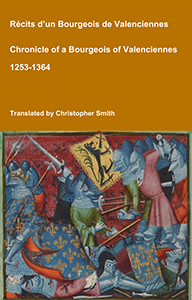
Chronicle of a Bourgeois of Valenciennes
Récits d’un bourgeois de Valenciennes aka The Chronicle of a Bourgeois of Valenciennes is a vivid 14th-century vernacular chronicle written by an anonymous urban chronicler from Valenciennes in the County of Hainaut. It survives in a manuscript that describes local and regional history from about 1253 to 1366, blending chronology, narrative episodes, and eyewitness-style accounts of political, military, and social events in medieval France, Flanders, and the Low Countries. The work begins with a chronological framework of events affecting Valenciennes and its region under rulers such as King Philip VI of France and the shifting allegiances of local nobility. It includes accounts of conflicts, sieges, diplomatic manoeuvres, and the impact of broader struggles like the Hundred Years’ War on urban life in Hainaut. Written from the perspective of a burgher (bourgeois) rather than a monastery or royal court, the chronicle offers a rare lay viewpoint on high politics and warfare, reflecting how merchants, townspeople, and civic institutions experienced the turbulence of the 13th and 14th centuries. Its narrative style combines straightforward reporting of events with moral and civic observations, making it a valuable source for readers interested in medieval urban society, regional politics, and the lived experience of war and governance in pre-modern Europe.
Available at Amazon in eBook and Paperback format.
Chronicon ex Chronicis by Florence and John of Worcester. Malcolm, king of the Scots (age 62), and his eldest son, Edward, with many others, were slain by the troops of Robert, earl of Northumbria, on the feast-day of St. Brice [13th November 1093]1. Margaret (age 48), queen of the Scots, was so deeply affected by the news of their death, that she fell dangerously ill. Calling the priests to attend her without delay, she went into the church, and confessing her sins to them, caused herself to be anointed with oil and strengthened with the heavenly viaticum; beseeching God with earnest and diligent prayers that he would not suffer her to live longer in this troublesome world. Nor was it very long before her prayers were heard, for three days after the king's death she was released from the bonds of the flesh, and translated, as we doubt not, to the joys of eternal salvation. For while she lived, she devoted herself to the exercise of piety, justice, peace, and charity; she was frequent in prayer, and chastened her body by watchings and fastings; she endowed churches and monasteries; loved and reverenced the servants and handmaids of God; broke bread to the hungry, clothed the naked, gave shelter, food, and raiment to all the pilgrims who came to her door; and loved God with all her heart2.
Note 1. Cf. Ordericus Vitalis, vol. ii., p. 11.
Note 2. Ibid, pp. 12, 13.
Chronicle of Henry of Huntingdon 1093. [13th November 1093] The same year Malcolm, king of the Scots, making a predatory inroad into England, was intercepted imawares and slain, together with his son Edward, who would have inherited his crown. When Queen Margaret received these tidings, her heart was troubled even imto death at her double loss; and going to the church she confessed and commimicated, and commending herself in prayer to God gave up the ghost. The Scots elected Duvenal, Malcolm's brother, king; but Duncan, the late king's son, who was residing as a hostage in the court of King William, by the help of that king drove out Duneval and was received as king: the following year the Scots, at the instigation of Duneval, treacherously put Duncan to death.
The Deeds of the Dukes of Normandy. While this same William ruled the kingdom of England, Morel, nephew of Robert of Mowbray, Earl of Northumbria, slew Malcolm [13th November 1093], King of Scotland, who was making incursions into England, together with his eldest son and a great part of his army, in the borders of England. But Robert, when he afterward attempted to seize certain royal strongholds adjoining his county against the king's will, was captured by King William's soldiers, and by the king's command remained long in chains, and, while King Henry already reigned, at last died in prison. Many have said that this fate befell him as just payment, because he had treacherously slain the King of Scotland, father of the most noble Matilda, who afterward became Queen of England. The lands which he had held in Normandy, and the greater part of his earldom, King Henry, once he was king, gave to Nigel of Aubigby, a truly noble and worthy man. Nigel afterward married Gundred, daughter of Gerald of Gournay, from whom he begot a son Roger of Mowbray, who, still a child, succeeded him when Nigel, having become a monk at Bec, granted to the same monastery great properties in England. The same Gerald, at the request of Hugh of Gournay, his father, who was also a monk of Bec, gave many things to that church, and at last, journeying to Jerusalem with his wife Edith, sister of William, Earl of Warenne, died on the way. The wife, returning, married Drogo of Monceaux, by whom she had one son, also named Drogo. To Gerald succeeded his son Hugh, who, by the sister of Ralph of Peronne, Count of Vermandois, begot one son, named Augeon. These things, concerning friends and benefactors of the Abbey of Bec, we have briefly mentioned here by anticipation. Now let us return to the proper order of the history.
Eodem Willelmo regnum Angliæ procurante, Morellus nepos Roberti de Moubraio comitis Northumbrelandiæ prædictum Malcomum regem Scotia irruptiones in Anglia facientem et filium ejus primogenitum, cum maxima parte sui exercitus in finibus Anglorum trucidavit. Hic autem Robertus, cum quasdam munitiones regias suo comitatui colliminantes contra voluntatem domini sui attentasset occupare, captus a militibus Willelmi regis, ipsoque jubente in ipsis vinculis diutius perseverans regnante jam Henrico rege, tandem in ipso ergastulo deficiens mortuus est. Dictum est a pluribus hunc talionem sibi redditum fuisse, quia regem Scotiæ, patrem videlicet nobilissimæ Mathildis postea reginæ Anglorum, dolose peremerat. Illius autem terram quam habebat in Northmannia et maximam partem prædicti sui comitatus, Henricus jam rex factus dedit Nigello de Albinneio, vero illustri et probo. Duxit postea idem Nigellus Gundredam filiam Giraldi de Gornaco, ex qua genuit filium nomine Rogerium de Moubraio, qui tandem adhuc parvulus patri suo facto monacho Beccensi et eidem loco magnam possessionem in Anglia conferenti, successit. Ipse etiam Giraldus, rogatu Hugonis de Gornaco patris sui monachi vero Beccensis, plura dedit eidem ecclesiæ, et tandem Hierusalem petens cum uxore sua Edithua sorore Willelmi comitis de Warenna, in ipso itinere mortuus est. Uxor vero inde rediens nupsit Drogoni de Monceio, ex qua idem Drogo suscepit unum filium nomine Drogonem. Successit prædicto Giraldo filius ejus nomine Hugo, qui ex sorore Rodulfi de Parrona comilis Viromandorum genuit unum filium nomine Augonem.Hæc per anticipationem de amicis ac benefactoribus Beccensis monasterii hic breviter commemoravimus, nunc ad ordinem historiæ redeamus.
Become a Member via our Buy Me a Coffee page to read more.
On 13th November 1137 Ramiro "Monk" II King Aragon (age 51) abdicated. Petronilla Jiménez Queen Aragon (age 1) succeeded Queen Aragon.
On 13th November 1143 Fulk "Young" King Jerusalem (age 54) died in a hunting accident. His wife Melisende Queen of Jerusalem (age 38) continued to reign in her own right with their son Baldwin III King Jerusalem (age 13).
A History of Deeds Done Beyond the Sea by William of Tyre Book 15 Chapter 27. [13th November 1143]. It happened, however, in those days that, when the lord king [Fulk "Young" King Jerusalem (age 54)], along with the lady queen [Melisende Queen of Jerusalem (age 38)], after autumn had passed, was staying in the city of Acre, the queen wished, to relieve her boredom, to go out of the city to certain suburban places, irrigated by springs, for the sake of recreation; whereupon the lord king, so that the queen might not lack company, decided also himself, with his usual retinue, to set forth. And while they were going along, it happened by chance that the boys who were going before the ranks and retinue stirred up a hare lying in the furrows, which, as it fled, was pursued by the clamor of all. The king, however, seizing a lance, in order to pursue this same hare, driven by a stroke of bad luck, began to urge his horse toward those parts, and to press on the chase vigorously. Finally, as the horse rushed forward heedlessly, it was driven headlong; and falling to the ground, threw the king headlong, and to the one lying there, stunned by the pain of the fall, the saddle crushed his head, so that the brain was emitted both through his ears and even through his nostrils. At this accident, the entire retinue, both those going before and those following, terrified by the harshness of the event, turned around, and wanting to bring help to the one lying there, found him lifeless, for he had neither voice nor sense.
Accidit autem illis diebus, quod cum dominus rex, una cum domina regina transcurso autumno, in civitate Acconense moram faceret, voluit regina, sublevandi gratia fastidii, extra urbem ad loca quaedam suburbana, fontibus irrigua, causa recreationis exire: quo dominus rex, ut solatium reginae non deesset, adjecit etiam ipse, cum solito comitatu proficisci. Dumque inter eundum esset, accidit casu ut qui agmina et comitatum praeibant pueri, leporem in sulcis jacentem excitarent, quem fugientem clamor prosecutus est universorum. Rex autem, arrepta lancea, ut eumdem leporem insectaretur, sinistro actus casu, equum ad illas coepit urgere partes, et cursui vehementer instare. Tandem inconsulte festinans equus in praeceps agitur; corruensque in terram, regem dedit praecipitem, jacentique prae casus dolore attonito, sella caput obtrivit, ita ut cerebrum tam per aures, quam per nares etiam emitteretur. Ad hunc casum, universus qui praeibat et qui sequebatur, facti acerbitate perterritus, conversus est comitatus, et jacenti opem ferre volentes, exanimem reperiunt, cui neque vox erat, neque sensus.
Become a Member via our Buy Me a Coffee page to read more.
On 13th November 1160 Louis VII King of the Franks (age 40) and Adèle Queen of the Franks were married a month or so after his second wife (deceased) had died in childbirth; Louis needed an heir. She the daughter of Theobald Blois II Count Champagne IV Count Blois and Matilda Carinthia Countess Champagne and Blois. He the son of Louis VI King of the Franks and Adelaide Savoy Queen Consort France. They were third cousin once removed. She a great granddaughter of King William "Conqueror" I of England.
On 13th November 1175 Henry Capet Archbishop of Reims (age 54) died.
On 13th November 1307 Archbishop Walter Reynolds was elected Bishop of Worcester.
Chronicle of Geoffrey le Baker of Swinbroke [-1360]. In the year of Christ 1312, the sixth year of Edward II, on the feast day of Saint Brice the Confessor [13th November 1312], there was born to the king (age 28) at Windsor by Queen Isabella (age 17) a magnificent victor over the French, a conqueror of the Scots, a rightful heir to the royal bloodline of both England and France, who in his time would be called Edward III after the Conquest. In this year, due to the joy of his son's birth and the love he bore for his queen, whom he cherished deeply and tenderly, the king concealed the grief he felt over the death of Peter, being uncertain in his own judgment and unsure to whom he could safely entrust his secret counsels or even his life in times of peril. Many were thus distanced, whether openly or secretly, from his friendship due to Peter's death. Consequently, the king, neglecting arms, sometimes indulged in genuine pleasures, at other times in feigned distractions. Meanwhile, as the nobles of the realm were preoccupied with enacting a timely punishment for Peter's death, Robert de Bruce seized almost all the castles and fortresses of Scotland, removing or executing the wardens who had been appointed by the king and his father.
Anno Christi MCCCXIJ, Edwardi secundi anno VJ, die sancti Bricii confessoris, apud Wyndesore natus est regi ex Isabella regina magnificus Gallorum triumfator, Scotorum consternator, rectilineari propagacione de sanguine regali Anglie et Francie utriusque regni heres futurus, suo tempore vocatus tercius Edwardus post conquestum. Hoc anno leticia nati filii et regine quam nimium dilexit et tenerrime confovit, ne quidquam molestie eii inferret, rex dissimulavit quam moleste gessit mortem Petri, ancipite quoque sua providencia, nescia cuius fidei sui concilia secreta aut vitam in periculis posset commendare amicabiliter; a cuius amicicia manifeste vel occulte Petri interitus sequestravit multos. Ipso propterea, armis neclectis, vacante solaciis quandoque veris nonnunquam simulatis, regni quoque proceribus in necem Petri oportune infligendam ocupatis, Robertus de Bruys fere omnia castra atque fortalicia Scocie adquisivit, et custodes deputatos per regem et ipsius patrem amovit vel peremit.
On 13th November 1312 King Edward III of England was born to King Edward II of England (age 28) and Isabella of France Queen Consort England (age 17) at Windsor Castle [Map]. He was christened on 17th November 1312 with Archbishop Walter Reynolds being one of his godfathers. Coefficient of inbreeding 2.17%. He married 24th January 1328 his second cousin Philippa of Hainaut Queen Consort England, daughter of William of Avesnes I Count Hainaut III Count Avesnes III Count Holland II Count Zeeland and Joan Valois Countess Zeeland Holland Avesnes and Hainaut, and had issue.
William of Worcester's Chronicle of England
William of Worcester, born around 1415, and died around 1482 was secretary to John Fastolf, the renowned soldier of the Hundred Years War, during which time he collected documents, letters, and wrote a record of events. Following their return to England in 1440 William was witness to major events. Twice in his chronicle he uses the first person: 1. when writing about the murder of Thomas, 7th Baron Scales, in 1460, he writes '… and I saw him lying naked in the cemetery near the porch of the church of St. Mary Overie in Southwark …' and 2. describing King Edward IV's entry into London in 1461 he writes '… proclaimed that all the people themselves were to recognize and acknowledge Edward as king. I was present and heard this, and immediately went down with them into the city'. William’s Chronicle is rich in detail. It is the source of much information about the Wars of the Roses, including the term 'Diabolical Marriage' to describe the marriage of Queen Elizabeth Woodville’s brother John’s marriage to Katherine, Dowager Duchess of Norfolk, he aged twenty, she sixty-five or more, and the story about a paper crown being placed in mockery on the severed head of Richard, 3rd Duke of York.
Available at Amazon in eBook and Paperback format.
Chronicle of Walter of Guisborough. In the same year, on the feast of Saint Brice [13th November 1327], King Edward III held a parliament at Westminster, in which he freely granted to the citizens of London all the liberties previously lost, and also new ones besides, including that all persons captured in the liberty of London for theft or homicide should be tried before the mayor in the common hall1.
Eodem anno in festo Sancti Bricii rex Edwardus tertius tenuit parliamentum apud Westmonasterium, in quo civibus Londoniarum omnes libertates prius perditas, et de novo alias, ac etiam quod omnes pro latrocinio vel homicidio in libertate Londoniarum capti coram majori in domo communi adjudicarentur, libere concessit.
Note 1. At this parliament the King also granted to the citizens the fee-farm of London, in consideration of three hundred pounds per annum, and that the lawful franchises of the City should not be seized into the King's hands, but only on occasion of abuse or misusage, or for treason or rebellion countenanced or done by the whole city. Coke, Second Institut, f, 20.
Chronicle of Geoffrey le Baker of Swinbroke [-1360]. Also, the king received the vicariate of the empire from the aforementioned Duke of Bavaria, who held himself as emperor; concerning this, the pope wrote him letters of rebuke and exhortation, quite sternly worded, dated the Ides of November,1 in the fourth year of his pontificate, while the king was still postponing the war to be begun overseas for his right.
Item, rex suscepit vicariatum imperii a prefato duce Bavarie, qui se tenuit pro imperatore, super quo papa scripsit eii literas redargucionis et exortacionis satis dure conceptas, de dato idibus Novembris, pontificatus sui anno quarto, adhuc rege taliter in partibus transmarinis guerram suam pro suo iure incoandam suspendente.
Note 1. Pope Benedict's remonstrance was dated the 13th November 1338. Rymer's Fœdera 2.1063.
Chronicle of Walter of Guisborough. Benedict, bishop, servant of the servants of God, to his dearest son in Christ, Edward, etc. Not long ago, dearest son, desiring you to imitate the bright footsteps of your forebears, the kings of England, who, toward God and the most holy Roman Church, like her special wards and devoted sons, shone forth in the fullness of devotion and faith, and wishing the splendour of your lineage to be preserved from any darkening by the cloud of harmful contagion, and to shine more clearly in you, we remember that, from the affection of paternal charity and love with which we cherish you and your estate, we sent our letters to your highness. In them, among other things, we recalled how the excesses committed by the nobleman Louis of Bavaria, formerly, as was claimed, discordantly elected king of the Romans, against God, against the same Roman Church, and against our predecessor of happy memory, Pope John XXII, by the accumulation of many and atrocious offences, could not escape your hearing; which excesses, as being notorious to the whole world, we did not recount all, since their narration would have been too long and tedious, but of them we judged it fitting to recount certain ones in those same letters, as follows. For the same Louis, against the processes of that predecessor [Pope John XXII] and his inhibitions, made and issued with the counsel of his brothers, the cardinals of the same Roman Church, processes containing various spiritual and temporal penalties and sentences, entered Italy, and admitted into the fellowship of public participation certain heretics publicly and notoriously condemned for heresy. Asserting manifest heresies, and favouring and holding in his company heretics who publicly preached these detestable and dreadful errors of the aforesaid heresies, he knowingly, and indeed rather madly, approved heretical doctrines, and, to make this approval manifest, brought them to the public knowledge of others through various letters sealed with his well-known seal. He also later presumed, with detestable rashness, to usurp the imperial name for himself and to administer the rights of the empire in the same Italy and Germany, against the aforesaid processes and inhibitions, thereby, besides other penalties, incurring the sentences of excommunication and anathema. At length, daring yet greater daring and piling excess upon excess, he did not shrink from coming to the city [Rome], where he broke out into that madness of wickedness that, intending to stir up for city and world alike the disaster of a universal schism, he contrived to set up in the apostolic see, as Roman pontiff, a certain hypocrite, a man of diabolical presumption, by name Peter de Corbara, an image, as it were, of dreadful abomination; and this, so far as in him lay, he carried into effect. That man was venerated as pope, and received, rather, execrated, the consecration, and there accepted in fact the imperial crown, as of many other insane, indeed detestable, excesses, committed with heretical presumption by the same Louis and Peter, we shall forbear to speak. For these things, that predecessor declared the aforesaid Louis to be, by the Lord's judgment, deprived of all honour and dignity; and, wielding the sword of apostolic power against him, so entangled in the stains of such great heresies and schisms, together with all who adhered to him or gave him aid, counsel, or favour, or knowingly held, maintained, or named him as Roman king or emperor, promulgated against them not only the sentences of excommunication and anathema, but also other penalties and sentences, as against favourers of heretics and schismatics, and declared them to have been issued in law, as is set forth more fully in the various processes held by that predecessor. Now, with regard to these penalties, however much they were deserved by Louis himself and promulgated against him by the just judgment of the Church, had he truly repented and humbled himself to seek kindly grace, he would have found that same Church ready to receive him, like the prodigal son returning from afar, into her bosom with outstretched arms, ready to offer on his behalf, in the abundance of divine praise, the fatted calf. We further added in the aforesaid letters that, although we had had, and still have, knowledge both of the aforesaid excesses and of the processes held, in accordance with justice, by the said predecessor against the said Louis, yet in order that we might be able to deliver him, freed from the bonds of his sins, from the jaws of eternal death, after we were assumed to the summit of the supreme apostolate we had, on several occasions and at various times, received his envoys, sent to us by him, kindly; and for the purpose of obtaining his reconciliation, by meriting it through the fruit of true penitence, we had held various conferences with them. At that time there were still further meetings pending by fixed appointments, in which, without doubt, it was not through us that further progress was not made in the business of his reconciliation. Wherefore, dearest son, we judged it right, and thought fit, in those same letters, to request and entreat your serenity, prudently considering, and bringing into the treasury of inward reflection, the weight of the penalties into which they fall, and the sentences which they incur, and into what great dangers and perils they are plunged, those who would presume to associate themselves with the aforesaid Louis, so notoriously and publicly condemned for the depravity of heresy and for a schism so hateful to all Christendom, before he had merited the grace of reconciliation with the same Church; or who would presume to give him aid, counsel, or favour, or knowingly assign to him, as emperor or king of the Romans, the homage of reverence or the title of royal or imperial name; and that you should take care utterly to withdraw and wholly abstain from contracting any bond of association with him, or from offering to him, as king or emperor, any reverence or honour, until such time as the said Louis should have merited to obtain the grace of reconciliation with the same Church, so that the integrity of your good name and the unsullied splendour of your lineage might be preserved to you. But now a restless and very troubling report has reached us in these days, that you, son, paying no heed to our aforesaid requests and entreaties, which were indeed salutary and sprang from the very fountain of charity, have, not without harm to your salvation and reputation (as we report with sorrow), not only entered into association and confederation with the aforesaid Louis, who has not yet been reconciled to the Church, nor freed from the penalties and sentences in which, on account of the aforesaid matters and many other grave offences, he is known to have been entangled by our said predecessor; nor even released from the processes of the aforesaid predecessor, by which, as stated above, against all and each, of whatever eminence, dignity, condition, or status, even if they should shine with pontifical, royal, or any other ecclesiastical or worldly dignity, who should adhere to the said Louis or give him directly or indirectly, publicly or secretly, counsel, aid, or favour, or who should show him reverence as emperor or king of the Romans, or assign or ascribe to him the title of royal or imperial name, grave spiritual and temporal penalties and sentences are imposed, and remain in full force and effect, …but, what is more harmful, alas! and more damnable (if truth supports the reports), you are known to have in fact accepted from the same Louis, under the title of the imperial name, as is said, the office of vicar over all Germany and Alemannia, and over all and each of their provinces or parts, although the said Louis is, as aforesaid, neither king nor emperor. And under this pretext, it is said that you have, by your letters, under threat of heavy penalties, commanded and strictly enjoined certain prelates of churches and ecclesiastical persons established in the lands of the empire, and persisting in the devotion and loyalty due to us and to the said Church, to come to you, as vicar in Germany and Alemannia and the aforesaid parts of the same Louis, to hear the justice of the sentences and judgments of the said Louis and of your mandates, and to render to the same Louis, or to you in his name, recognitions and homages for the lands, goods, and rights which they hold from the empire. Concerning you, then, son, we are at a loss to understand where your prudence, and that of your counsellors, can be, especially since, as we have heard, in order to recover those rights which you claim to pertain to you, you have taken care to journey into the parts of Germany, not without the perils of great persons and with a great outpouring of expenses and costs, and have made many preparations for this; and now, spurning the processes of the said predecessor, and bringing into damnable contempt the aforesaid penalties and sentences, in which, without doubt, you have entangled yourself, if the things reported to us are true, not without a horrible blot which greatly dims the brightness of your lineage. And this, notwithstanding that we have never offended you, nor done anything against you; although we understand that it has been falsely and mendaciously suggested to you, by those who care nothing for your safety or honour, that we gave to our dearest son in Christ, Philip, the illustrious king of France, a vast sum of money from our treasury in aid of his war, and that we had granted to him the right of appointing ecclesiastical persons in all the churches of his kingdom. These things are known to be entirely devoid of truth; for such things have never been requested of us, nor would we have granted them in any way, however urgently they might have been sought. Nor have we granted tithes to the king of France against you, but rather against the Germans adhering to the aforesaid Louis and against the enemies of the same Roman Church, who, as public and notorious report had it, were preparing to invade the kingdom of France, as is expressly contained in the grant of those same tithes. It was by no means our intention to provide fuel for discord against you, or to support it by the administration of any aid; rather, desiring with our highest wishes that your kingdom and also the kingdom of France might enjoy the prosperity and unity of peace and concord, we have often laboured toward this end, by letters sent from us to your serenity and to the said king of France, and also by messengers, namely, cardinals of the holy Roman Church, sent to those parts from our side, and we have laboured, and will not cease to labour with ardent desire, so that between you and the same king, and between both your kingdoms, the serenity of peace and unity may shine forth. You, however, dearest son, having, as it seems, placed faith in the aforesaid false and deceitful suggestions, are making yourself the persecutor and enemy of us and of the same Roman Church, seeking to invade and occupy our rights and those of the same Church, rights to which, when the empire of the Romans is vacant, as it is now known to be vacant, the rule and administration pertain by full right, by harassing prelates and ecclesiastical persons who, as said above, persist in the devotion and loyalty due to us and to the said Church, and by striving, as stated, to draw and induce them, through coercive pressures and admonitions, to obedience to the said Louis, who, as has been said, has been by definitive sentence condemned for various heresies and schisms and other crimes, and has been deprived by the just judgment of God and the Church of whatever right to the kingdom or empire might perhaps have belonged or even did belong to him, and to make to him, or to you in his name, this act of recognition and homage. Would that you, son, before you involve yourself further in these matters so dangerous and detestable, might carefully consider and, after mature deliberation, set before the eyes of your mind the perilous and tangled snares into which certain persons, concerned more with their own business and advantage than with yours, have tried, with cunning devices and ingenious deceits, to entangle you beforehand by the things aforesaid; and how they have sought to impose upon you a burden, which they themselves would in some measure wish to cast off, and which, if you carefully consider the circumstances, is by no means light, and which they strive to impose not without danger of your own downfall. Nor do we wish it to be hidden from you that the aforesaid predecessor [Pope John XXII] once, by a certain constitution issued with the counsel of his brothers, the cardinals, decreed against all and each, of whatever status, dignity, or condition they might be, even if they should shine with patriarchal or any other higher, pontifical, or royal dignity, that those who, without the special licence of the Apostolic See, should presume, during a vacancy of the empire, as was the case then and, as stated above, is also the case now, to assume the name of vicar or of any other office in the aforesaid lands of the empire, or to retain such an office for more than two months if assumed, or in any way to reassume it if resigned, and those who should obey, support, or attend upon them, should incur sentences of excommunication and other grave penalties. We, therefore, who have not been able to close the bowels of paternal love toward you, son, and are inwardly touched with grief of heart when we perceive such things being contrived to the loss of your honour, rank, safety, and reputation, ask your highness, require of you, and earnestly exhort you in the Lord, while at the same time offering you sound and fatherly counsel, that you bring what we have set forth above, and other matters that may occur to you in connection with them, into the test of right deliberation and discussion; and moreover, that you hold it as certain and give heed that the said Louis, as we have said, is neither king nor emperor, nor have any acts which he has done or will do, so long as he shall have been and shall be entangled in the said processes, penalties, and sentences, any force, nor are or were they of any authority, strength, or validity. And that it is for you perilous and greatly to be feared to subject yourself to the hazards of war, especially if you should be involved in the aforesaid processes, penalties, and sentences, from which you could not be freed except by the Apostolic See, which has expressly reserved to itself the power of absolution therefrom, and so be made a persecutor and enemy of God and of the same Roman Church. May the Lord of mercies protect and defend you from these things. And considering further, with careful attention, that although it is human to sin, yet persistence in sins must be judged diabolical, you should utterly draw back from each of the aforesaid dreadful paths, if perhaps you have turned aside to them, deceived by the serpent's guile, before they grow into something more ruinous, or before they stink more foully and rot more grievously in the sight of God and men; and you should not delay to guide your feet as quickly as possible back to the straight way, pleasing to God and fitting for your rank, safety, and honour, acquiescing in the counsel of those same cardinals, who sincerely love you and your estate, for the making of peace between you and the said king, to the mutual pleasure of God and to what is amiable to men. Indeed, it seems that even if the aforesaid office of vicar could lawfully be assigned, still, for you, so great and mighty a king and prince as you are, and known throughout the world to be marked with so great a name and royal title, it would be unfitting honour to be called the vicar of any temporal lord; how much less, then, should it have been or befit your excellency to be called the vicar of one who, as has so often been said above, holds no authority, but, alas!, is bespattered with the stain of so many crimes, and is entangled, together with all his adherents, in such grave penalties and sentences. Know, dearest son, that if you will agree in effect to our wholesome counsels of this sort, we will extend to you, thus supported lest you fall, a kindly hand to lift you up, as far as we can with God's help. But otherwise, we will not be able to desist, since the office of apostolic service demands it of us, from taking suitable measures in the matter aforesaid, proceeding against you, which will be very grievous and distressing to us, should it be necessary (which God forbid), as justice shall require and as may and ought to be done. Given at Avignon, on the Ides of November [13th November 1339], in the fourth year of our pontificate.
Benedictus episcopus servus servorum Dei Benedict, in carissimo in filio Christo Edwardo etc. Dudum te, fili carissime, clara imitari vestigia progenitorum tuorum regum Angliæ, qui erga Deum et sacrosanctam Romanam ecclesiam velut peculiares ejus alumni et devoti filii, plenitudine devotionis et fidei claruerunt, tuæque splendorem prosapiæ a quavis obfuscatione nebulosi contagii præservari, eaque in te prælucere cupientes clarius, et ex paternæ caritatis et dilectionis affectu quo te statumque tuum prosequimur nostras tuæ celsitudini literas detexisse meminimus, inter cætera recensentes qualiter excessus per nobilem virum Ludovicum de Bavaria, olim, ut asserebatur, discorditer in regem Romanorum electum, adversus Deum et eandem Romanam ecclesiam, ac fœlicis recordationis Johannem papam XXII prædecessorem nostrum, per coacervationem multiplicium et atrocium offensarum, nequiter perpetrati, tuum præterire nequibant auditum; quos velut toti mundo notorios, non omnes, cum longa et prolixa nimis eorum narratio extitisset, sed ex eis aliquos, in eisdem literis providimus, ut sequitur, recitandos. Idem namque Ludovicus, contra processus prædecessoris ejusdem et inhibitiones ipsius, de consilio fratrum suorum, ejusdem Romanæ ecclesiæ cardinalium, factos et habitos, diversas spirituales et temporales pœnas et sententias continentes, intravit Italiam, et nonnullos hæreticos de hæresi publice et notorie condemnatos in consortium publicæ participationis admisit, et asserens hæreses manifestas, ac favendo secumque tenendo hæreticos publice dogmatizantes prædictarum hæresium detestabiles et horrendos errores, hæretica quoque dogmata scienter, immo potius dementer, approbans, et in evidentiam approbationis hujusmodi, ea per diversas literas, sigillo suo noto munitas, deduxit in aliorum publicam notionem. Sibi etiam nomen imperiale postmodum usurpare, et administrare jura imperii in eadem Italia et Almannia, contra processus et inhibitiones prædictos, detestabili temeritate præsumpsit, ex hiis, præter poenas alias, excommunicationis et anathematis sententias incurrendo; et tandem ausus ausibus, et excessus accumulando excessibus, se conferre non expavit ad urbem, ubi in illam nequitiæ prorupit insaniam ut meditatus urbi et orbi universali schismatis suscitare dispendium, quendam hypocritam, diabolicæ præsumptionis virum, nomine Petrum de Corbaria, velut abominationis horrendæ simulacrum, in apostolica sede pro Romano pontifice statuere moliretur; idque, quantum in eo fuit, produxit in actum; fuit veneratus in papam, consecrationemque, immo verius execrationem, ac diadema imperiale de facto recepit ibidem, ut de multis insanis aliis processibus, quinimmo detestandis excessibus, per eosdem Ludovicum et Petrum, præsumptione perpetratis hæretica, taceretur. Propter quæ dictus prædecessor præfatum Ludovicum fore a Domino denunciavit omni honore et dignitate privatum, et in eum, tantarum hæresium et schismatum maculis irretitum, exercens gladium apostolicæ potestatis, cum omnibus qui adhærerent eidem vel præstarent auxilium, consilium, vel favorem, seu pro Romano rege aut imperatore scienter haberent, tenerent, vel nominarent eundem, non solum excommunicationis et anathematis, sed etiam alias pœnas et sententias, tanquam in fautores, hæreticos et schismaticos promulgavit, et a jure declaravit prolatas, sicut in diversis processibus, per præfatum prædecessorem habitis, seriosius continetur. Super quibus quidem pœnis, quantumcunque per ipsum Ludovicum promeritis, et in eum justo ecclesiæ judicio promulgatis, si vere pœnitens se humiliasset ad gratiam benignam, reperisset eandem ecclesiam, quæ ipsum, tanquam filium prodigum de longinquo redeuntem, ad suum gremium apertis brachiis recepisset, immolatura pro eo, in ubertate divinæ laudis, vitulum saginatum. Rursus adjecimus in literis supradictis, quod, quanquam tam prædictorum excessuum quam eorundem processuum, per dictum prædecessorem contra dictum Ludovicum, exigente justitia, postmodum habitorum notitiam habuissemus et etiam habemus; ut tamen ipsum, a peccatorum nexibus liberatum, de faucibus sempiternæ mortis possemus eripere, postquam fuimus ad apostolatus summi apicem assumpti, diversos nuncios ejus, diversis vicibus et temporibus ad nos missos, receperamus benigne, ac pro reconciliatione ipsius, per fructum veræ pœnitentiæ promerenda, prolocutiones varias habueramus cum eis, et tunc pendebat etiam ad proloquendum ulterius, terminis assignatis, in quo, proculdubio, per nos non stetit quominus ulterius fuerit super negotio reconciliationis ejusdem processum. Quare, fili dilectissime, serenitatem tuam requirendam tunc duximus per easdem literas et rogandam, ut prudenter advertens, et in scrinium internæ considerationis adducens, gravitatem pœnarum in quas inciderent, et sententiarum quas incurrerent, quantisque periculis et discriminibus implicarentur, qui præfato Ludovico, sic notorie et publice de pravitate hæresis et sic odiosi toti Christianitati schismatis condemnato, antequam reconciliationis gratiam ejusdem ecclesiæ meruisset, participare præsumerent, sibique impenderent auxilium, consilium, et favorem, vel sibi, tanquam imperatori vel regi Romanorum, reverentiæ cultum, seu titulum regalis vel imperialis nominis assignarent scienter, ac cujuslibet participationis foedere contrahendo cum ipso, et exhibitione reverentiæ et honoris sibi, tanquam regi vel imperatori, quousque dictus Ludovicus reconciliationis ejusdem ecclesiæ meruisset gratiam obtinere, penitus te retrahere et totaliter abstinere curares, ut tibi famæ integritas et illibata tui generis claritas servarentur. Cum autem rumor implacidus et admodum infestus ad nos perduxerit hiis diebus, quod tu, fili, requisitionibus et rogationibus nostris hujusmodi, utique salutaribus et de fonte prodeuntibus caritatis, non sine detrimento tuæ salutis et famæ, quod dolentes referimus, obauditis; non solum cum prædicto Ludovico, nondum eidem reconciliato ecclesiæ, nec a pœnis et sententiis, quibus propter præmissa et alia multa gravia commissa, per ipsum prædecessorem nostrum implicatus esse noscitur, liberato; nec etiam processibus sæpefati prædecessoris, per quos, ut præmittitur, adversus omnes et singulos cujuscunque præminentiæ, dignitatis, conditionis, vel status, etiamsi pontificali, regali, vel quacunque alia ecclesiastica seu mundana dignitate fulgerent, præfato Ludovico adhærentes seu præstantes directe vel indirecte, publice vel occulte, consilium, auxilium, vel favorem, vel sibi, tanquam imperatori aut regi Romanorum, reverentiam exhibentes, seu titulum regalis vel imperialis nominis assignantes seu ascribentes, graves, spirituales ac temporales pœnæ ac sententiæ infliguntur, nequaquam relaxatis, immo sui roboris efficacia perdurantibus, participationes, confoederationes inire sibique adhærere, ac præstare favorem, auxilium, et consilium præsumpsisti; immo, quod perniciosius, proh dolor! et damnabilius noscitur existere, si veritas relatibus suffragetur, vicariatus officium per totam Almanniam et Germaniam, ac universas et singulas earum provincias sive partes, ab eodem Ludovico, sub imperialis nominis titulo, ut asseritur, suscepisti de facto, cum ipse Ludovicus nec rex nec imperator sit, ut præfertur. Cujus prætextu nonnullis prælatis ecclesiarum et personis ecclesiasticis in terris imperii constitutis, ac in nos. tra et ecclesiæ memoratæ devotione ac fidelitate debitis persistentibus, sub pœnis gravibus, per tuas eis literas comminatis, mandasse diceris et districtius injunxisse, ut ad te, tanquam ejusdem Ludovici in Almannia et Germania et partibus supradictis vicarium, et audituri sententiarum et judiciorum ipsius Ludovici tuorumque mandatorum rectitudinem, ac præstituri eidem Ludovico, vel tibi ejus nomine, recognitiones, homagia de terris, bonis, et juribus, quæ tenent ab imperio, convenirent. De te igitur, fili, ubi sit tua tuorum que consiliariorum prudentia ex eo præsertim non sufficimus admirari, quod cum tu, sicut audivimus, pro illorum repetitione jurium, quæ ad te asseris. pertinere, non sine grandium personarum periculis, ac expensarum et sumptuum profluviis, peregrinari ad partes Almanniæ curaveris, et multos super hoc feceris apparatus, nunc spretis ejusdem prædecessoris processibus, et deductis damnabiliter in contemptum pœnis et sententiis supradictis, quibus te manifeste, si quæ nobis referuntur vera sint, non absque horrenda nota, quæ non parum obfuscat tui claritatem generis, proculdubio implicasti. Et nihilominus, quamvis nos te nunquam offenderimus, nec contra te aliquid fecerimus; quanquam et intelleximus falso et mendaciter suggestum tibi per eos qui te, salutem et honorem tuum minime diligunt fuerit, quod nos carissimo in Christo filio nostro Philippo regi Franciæ illustri, in auxilium guerræ suæ, ingentem pecuniæ quantitatem de nostra camera dederimus, quodque institutionem personarum ecclesiasticarum concesseramus eidem in omnibus ecclesiis regni sui, quæ omnimoda carere veritate noscuntur; talia namque nunquam postulata fuerunt a nobis, nec ea concessissemus quomodolibet cum quantacunque instantia petita fuissent; nec decimas contra te regi Franciæ concessimus, sed adversus Teutonicos Ludovico adhærentes prædicto, ipsiusque ecclesiæ Romanæ inimicos, qui ad invasionem regni Franciæ se, ut habebat rumor publicus et notorius, disponebant, sicut in concessione decimarum ipsarum continetur expresse. Non fuit nempe nostræ intentionis adversus te fomentum ministrare discordiæ vel eam alicujus subsidii administratione fulcire; quinimmo statum regni tui et etiam regni Franciæ, pacis et concordiæ prosperitate et unanimitate potiri summis desideriis affectantes, ad hoc, serenitati tuæ et dicto regi Franciæ per nos sæpe directis literis, et etiam nunciis, videlicet sanctæ Romanæ ecclesiæ cardinalibus ad partes illas de latere nostro missis, votis ardentibus laboramus, et labore non cessamus, nec cessabimus, ut inter te et regem eundem et utriusque regna, pacis et unitatis serenitas illucescat. Tu tamen, fili carissime, fide, ut videtur, adhibita prædictis falsis suggestionibus et mendosis, te nostrum et ejusdem Romanæ ecclesiæ ecclesiæ persecutorem et hostem, invadere ac occupare honores et jura nostra et ejusdem ecclesiæ, ad quos regimen et administratio imperii Romanorum, eo vacante, sicut nunc vacare noscitur, pertinent pleno jure, moliris, molestando prælatos et personas ecclesiasticas in nostra et ipsius ecclesiæ devotione ac fidelitate debitis, ut præmittitur, persistentes, ipsosque ad obedientiam dicti Ludovici, de diversis, ut præmittitur, hæresibus et schismatibus aliisque criminibus sententialiter condemnati, ac jure regio et imperii, si quod forsan ad eum competierat, vel etiam competebat, justo Dei et ecclesiæ judicio privati, ac præstationem hujus recognitionis et homagii sibi, vel tibi ejus nomine, faciendam, attrahere et inducere, coactivis impulsibus et commonitionibus satagendo. Utinam, fili, antequam de hiis tam periculosis et detestandis te involvas amplius, attente consideres, et matura deliberatione prævia constituas ante oculos mentis tuæ circuitus periculosos et nodosos laqueos, quibus te, subtilibus ingeniis et fraudibus exquisitis, aliqui, de suis potius quam de tuis solliciti negotiis et commodis, præmissis involvere, tibique onus, quod a se quodammodo rejicere cupiunt, non minus leve, si diligenter circumstantias attenderis, imponere moliti sunt, et non sine periculo tui præcipitii moliuntur. Nec te latere volumus quod præfatus prædecessor olim, per quandam constitutionem ab ipso de dictorum fratrum suorum editam consilio, in omnes et singulos, cujuscunque status, dignitatis, vel conditionis existerent, etiamsi patriarchali vel quavis alia superiori aut pontificali vel regali dignitate fulgerent, et qui, absque sedis apostolicæ licentia speciali, vicarii seu cujuscunque alterius officii nomen in prædicti terris imperii, eo vacante, sicut tunc vacabat, et nunc etiam vacat, ut præmissum est, assumere, vel assumptum ultra terminum duorum mensium præsumerent retinere, seu dimissum reassumere quoquomodo, ac in obedientes, parentes et intendentes eisdem, excommunicationes ac alias graves sententias promulgavit. Nos itaque, qui erga te, fili, claudere viscera paternæ dilectionis nequivimus, et cordis dolore tangimur intrinsecus cum talia percipimus ad tuum tuique honoris, status, salutis, et famæ dispendium machinari, tuam rogamus magnificentiam, requirimus, et in Domino attentius exhortamur, sano paternoque tibi nihilominus consilio suadentes, quatinus ea quæ præmisimus, et alia quæ circa illa tibi possunt occurrere, deducens in rectæ deliberationis et discussionis examen, ac insuper tenens certius et attendens quod dictus Ludovicus, ut præmisimus, nec rex nec imperator est, nec aliqua quæ ipse fecerit vel faciet quamdiu fuerit et erit dictis processibus ac pœnis et sententiis irretitus, quicquam valuerunt vel valent, nec sunt aut fuerunt alicujus auctoritatis, roboris, vel momenti, quodque tibi periculosum est, et multipliciter formidandum, te bellorum subjicere discriminibus, maxime si esses supradictis processibus, pœnis, et sententiis, a quibus liberari non posses, nisi duntaxat per sedem apostolicam, quæ absolutionem earum sibi expresse retinuit, involutus, ac Dei et ejusdem Romanæ ecclesiæ persecutor et hostis effectus, a quibus te misericordiarum Dominus protegat et defendat. Consideransque præterea diligenter, quod licet humanum sit peccare, in peccatis tamen perseverantia diabolica est censenda, te a præmissis singulis sic horrendis deviis, si ad illa forsan declinaveris serpentina deceptione seductus, antequam invalescant perniciosius, seu in conspectu Dei et hominum foeteant deterius et putrescant, resilire penitus, pedesque tuos ad viam rectam, Deo placitam ac tuis statui, saluti et honori congruam, dirigere quantocius non postponas; eorundem cardinalium, qui te statumque tuum sincere diligunt, super reformatione pacis inter te et dictum regem mutuo placabili Deo et amabili hominibus adquiescens. Videtur equidem quod si etiam prædicti vicariatus valeret officium assignari, adhuc tamen tuum, qui tam magnus tantusque rex et princeps existis, tantoque nomine ac titulo regio existere nosceris insignitus in orbe, non deceret honorem quod nominareris vicarius alicujus domini temporalis; quanto minus ergo tuam decuit vel decet excellentiam illius vicarium appellari, qui auctoritate nulla, sicut sæpedictum est superius, præminet, sed, proh dolor! tantorum existit respersus labe criminum, tamque gravibus pœnis et sententiis, cum omnibus sibi adhærentibus implicatus. Sciturus, fili amantissime, quod si monitis nostris hujusmodi salutaribus adquieveris cum effectu, tibi sic impulso ut caderes manum benignam porrigemus quantum cum Deo poterimus, sublevantem; alias autem non poterimus desistere, cum id a nobis exigat officium apostolicæ servitutis, quominus super prædictis providere de opportunis remediis, procedendo contra te, quod molestum et grave et grave nobis erit admodum, si necesse, quod absit, fuerit, prout, exigente justitia, debebit et poterit fieri, procuremus. Datum apud Avinionem idibus Novembris, pontificatus nostri anno quarto.
Become a Member via our Buy Me a Coffee page to read more.
Chronicle of Geoffrey le Baker of Swinbroke [-1360]. On Friday, the army set out along a long, rocky road with no water, and lodged at Lamyane, though poorly, due to the scarcity of both houses and water. On Saturday, as they returned toward Gascony, they left to their right the lake of Esebon, Carcassonne, and their previous route entirely. The rearguard lodged at a fine town called Alieir, and the middle division at Puchsiaucier, where a defended tower was captured. The Prince lodged beyond the bridge near a beautiful river, and on both sides of that river, the countryside was being laid waste by fire, including the fine town of Pezence, where the vanguard lodged.
Die Veneris exercitus, profectus per longum iter petrosum et inaquosum, ospitabatur apud Lamyane, set male pro penuria domuum et aquarum. Sabbato revertentes versus Vasconiam, reliqtierunt a dextris piscinam de Esebon et Carkasonam et totum iter pristinum, et retro-custodia ospitabatur apud bonam villam vocatam Alieir, et media apud Puchsiaucier, ubi turris defensa fuit conquisita; set princeps iacuit ultra pontem ijuxta pulcrum rivum aquarum, ex cuius utraque parte patria ignibus vastabatur, cum bona villa de Pezence, ubi prima custodia fuit ospitata.
On 13th November 1362, his fiftieth birthday, King Edward III of England (age 50) created two sons as Dukes...
Lionel of Antwerp 1st Duke of Clarence (age 23) was created 1st Duke Clarence. Elizabeth Burgh Duchess of Clarence (age 30) by marriage Duchess Clarence.
John of Gaunt 1st Duke Lancaster (age 22) was created 1st Duke Lancaster. Blanche Duchess of Lancaster (age 20) by marriage Duchess Lancaster.
On 13th November 1386 Thomas Beauchamp 11th Earl Warwick (age 73) died of plague. His son Thomas (age 48) succeeded 12th Earl Warwick. Margaret Ferrers Countess Warwick (age 39) by marriage Countess Warwick.
On 13th November 1432 Anne Valois Duchess of Bedford (age 28) died at the Hôtel de Bourbon, Paris. She was buried at the Couvent des Célestins. In 1847 bones and other remains, with a plaque bearing her name, were found during archeological exploration of the Couvent, were identified as being those of Anne. In 1853, these remains were re-buried in the grave of her grandfather, Philip the Bold, in Saint Bégnine cathedral in Dijon. Her husband John Lancaster 1st Duke Bedford (age 43) remarried Jacquetta of Luxemburg Duchess Bedford (age 17) six months later.
Chronicle of Gregory [1400-1467]. 13th November 1432. And the same year deyde the Duchyes of Bedforde (age 28) in Fraunce, the wife of the Regyaunte (age 43), whos terment was solempny holde at Syn Poulys [Map] in London.
On 13th November 1440 Joan Beaufort Countess of Westmoreland (age 61) died at Howden. She was buried at Lincoln Cathedral [Map] next to her mother Katherine Swynford aka Roet Duchess Lancaster.


Chronicle of Gregory [1400-1467]. 13th November 1441. Ande in that same year the Lady of Glouceter (age 41) for the same treson she was juggyde by the spyrytualle lawe to iij sondyr or dyvers placys, that is to wete, on Mondaye, the xiij daye of Novembyr, to Powlys; and on the Wanysday i-sygnyd unto Crychyrche; and on the Fryday nexte folowyng to Synt Mychellys in Cornehylle.
Henrici Quinti, Angliæ Regis, Gesta, is a first-hand account of the Agincourt Campaign, and subsequent events to his death in 1422. The author of the first part was a Chaplain in King Henry's retinue who was present from King Henry's departure at Southampton in 1415, at the siege of Harfleur, the battle of Agincourt, and the celebrations on King Henry's return to London. The second part, by another writer, relates the events that took place including the negotiations at Troye, Henry's marriage and his death in 1422.
Available at Amazon in eBook and Paperback format.
On 13th November 1493 William Wittelsbach IV Duke Bavaria was born to Albert Wittelsbach IV Duke Bavaria (age 45) and Kunigunde Habsburg Duchess Bavaria (age 28). He married 1522 his second cousin once removed Marie Jakobaea Baden Duchess Bavaria, daughter of Philip Baden 1st Margrave Baden and Elisabeth of the Palatinate, and had issue.
Calais in the Hands of the English. 13th November 1532.... and the xiij. of Novembar toke shipe with lady Anne Boleyne (age 31) marchiones of Pembroke, who bare a greate rome with hym, and what she wolde have done was shortly finished; he made hir marchiones of Pembroke, and hir fathar ser Thomas Bolen erle of Wilshere: they landyd at Dovar the same daye.


On 13th November 1536 Robert Pakington (age 47) was shot and killed with a handgun; probably the first person to be murdered in England with a gun.
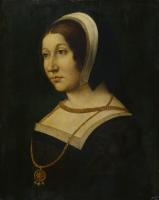
Letters and Papers Foreign and Domestic Henry VIII 1537. 13th November 1537. 1079. Queen Margaret (age 47) to Henry VIII (age 46).
Rejoices that he has a prince. Hopes he is informed both by her own writings sent with the herald Master Svallo and the information sent to Sir Tomas Qwarton, how she is treated. Trusts Henry will not let her be wronged daily. Would sooner be dead than remain in such trouble as she has been in since Master Sadler's departure. Desires only to "brwk" her lands given her by the King her father and confirmed by the three estates of this realm; of which she is only debarred by lord Meffen (age 42). Has her sentence of divorce ready to be pronounced written and concluded with forty "famos prewes" (proofs), but the King her son (age 25) supports Meffen, as her husband, in possession of her lands. When she passed to her land the forest of Ettrick the King her son accused her of intending to marry "him that was Earl of Angus," which Henry knows she had never a mind to do. Her son will only let her "depart bed and bwred," which is unjust, and fears she will pass into England. Trusts Henry will for his own honor refuse redress on the Borders till she has her due. Is now 49 years old and should not travel like a poor gentlewoman, following her son from place to place as she has done for 20 weeks past. 13 Oct.


Wriothesley's Chronicle [1508-1562]. 13th November 1541. This yeare, the 13th daye of November, Sir Thomas Wriothesly, knight, and Secretary to the Kinge, came to Hampton Court to the Quene, and called all the ladies and gentlewomen and her servauntes into the Great Chamber, and there openlye afore them declared certeine offences that she had done in misusing her bodye with certeine persons afore the Kinges tyme, wherefore he there discharged all her househould; and the morrowe after she was had to Sion, and my Lady Bainton and 2 other gentlewomen, with certeine of her servauntes to wayte on her there till the Kinges further pleasure;a and divers persons were had to the Tower of London, as my Lady Rochford (age 36), Mr. Culpepper (age 27), one of the Kinges Privie Chamber, with other.
Note a. A letter from the Council to Archbishop Cranmer, signifying the King's pleasure as to the remove of Qneen Katharine Howard, and the discharge of her household, is printed in State Papers, Heniy VIII. rol. i. part ii. pp. 691-8.
Holinshed's Chronicle [1525-1582]. [13th November 1541]. Whereupon, the thirteenth of Nouember, sir Thomas Wriothesleie knight the kings secretarie, came to Hampton court unto the said quéene [Queen Catherine Howard of England (age 18)], and called all hir ladies, gentlewomen, and seruants into hir great chamber, & there openlie in presence of them all, declared hir offenses committed in abusing of hir bodie before hir mariage, & therwith he discharged hir houshold.
Chronicle of Queen Jane and Two Years of Queen Mary 1553. 13th November 1553. The xiijth daie of November were ledd out of the Tower on foot, to be arrayned, to yeldhall, with the axe before theym, from theyr warde, Thomas Cranmer (age 64), archbushoppe of Canterbury, between (blank)
Next followed the lorde Gilforde Dudley (age 18), between (blank)
Next followed the lady Jane (age 17), between (blank), and hir ij. gentyllwomen following hir.
Next followed the lorde Ambrose Dudley (age 23) and the lorde Harry Dudley (age 27).
The lady Jane was in a blacke gowne of cloth, tourned downe; the cappe lyned with fese velvett, and edget about with the same, in a French hoode, all black, with a black byllyment, a black velvet boke hanging before hir, and another boke in hir hande open, holding hir (the entry breaks off).


Henry Machyn's Diary. 13th November 1553. [The 13th of November were arraigned at Guildhall doctor Cranmer (age 64), archbishop of Canterbury, the lord] Gylfford Dudlay (age 18), the sune of the duke of Northumberland and my lade Jane (age 17) ys wyff, the doythur of the duke of Suffoke-Dassett (age 36), and the lord Hambrosse Dudlay (age 23), [and the] lord Hare Dudlay (age 22), the wyche lade Jane was proclamyd [Queen]: they all v wher cast for to dee.
Henry Machyn's Diary. 13th November 1554. The xiij day of November was commondyd by the bysshope of London (age 54) to all clarkes in the dyoses [dioceses] of London for to have sant Necolas and to go a-brod, as mony as wold have ytt.
Henry Machyn's Diary. 13th November 1555. [The xiij day of November doctor Gardiner (deceased), bishop of Winchester, and lord chancellor of England, died in the morning, between twelve and one of the clock, at the King's] plasse, the wyche ys callyd Whyt-hall; [and by] iij of the cloke he was browt by water [to his own] plasse by sant Mary Overes [Map]; and by v of the [clock his bow]elles was taken owt, and bered a-fore the he [high] [altar; and] at vj the knyll begane ther, and at durge and masse contenuyd ryngyng alle the belles till vij at nyght.
Abbot John Whethamstede’s Chronicle of the Abbey of St Albans
Abbot John Whethamstede's Register aka Chronicle of his second term at the Abbey of St Albans, 1451-1461, is a remarkable text that describes his first-hand experience of the beginning of the Wars of the Roses including the First and Second Battles of St Albans, 1455 and 1461, respectively, their cause, and their consequences, not least on the Abbey itself. His text also includes Loveday, Blore Heath, Northampton, the Act of Accord, Wakefield, and Towton, and ends with the Coronation of King Edward IV. In addition to the events of the Wars of the Roses, Abbot John, or his scribes who wrote the Chronicle, include details in the life of the Abbey such as charters, letters, land exchanges, visits by legates, and disputes, which provide a rich insight into the day-to-day life of the Abbey, and the challenges faced by its Abbot.
Available at Amazon in eBook and Paperback format.

The Huntingdon Peerage Chapter IX Ferdinando Sixth Earl of Huntingdon. FERDINANDO, sixth Earl of Huntingdon, heir and successor of Henry the fifth Earl (age 21), was born at Ashby [Map], January 11th, 1608. In March, 1627, he was returned to serve in Parliament for the county of Leicester, and two years after was joined with his father in the Lieutenancy of the counties of Leicester and Rutland. By indenture, dated May, 1638, he and his brother Henry, in consideration of the sum of 4,50l. granted, to John Earl of Bridgewater (age 29) and Thomas Davies, a moiety of the rectory of Mould, otherwise Mouldesdale, in Flintshire. On the 13th of November, 1641, his father being then still living, he had summons to Parliament amongst the barons of the realm; and in 1643 he succeeded to the family honours. He married Lucy, daughter and sole heir to Sir John Davys (age 38), of Englefield, Berks, Knt. (Premier Serjeant at Law to James the First, and Charles the First, as also Solicitor, and afterwards Attorney General in Ireland, and finally Lord Chief Justice of the King's Bench,) by his wife Lady Eleanor (age 18), youngest daughter of George Lord Audley, Earl of Castlehaven (age 57), and, settling at Donnington Park, had by her four sons; Henry, John, Ferdinando, and Theophilus, born after the decease of his three brothers; and likewise six daughters, Alice, Eleanor, both of whom died young; Elizabeth, married to Sir James Laughan, of Cottesbroke, in Nottinghamshire, Bart, being his second wife, and dying without issue; Lucy, who died unmarried; Mary, espoused to Sir William Joliffe, of Caverswell Castle in Staffordshire, Knt.; and lastly Christiana.
On 13th November 1628 Thomas Richardson (age 59) ruled that it was illegal to use the rack to elicit confession from John Felton (age 33), the murderer of Duke of Buckingham. His opinion had the concurrence of his colleagues and marks a significant point in the history of English criminal jurisprudence.
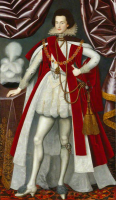


Samuel Pepys' Diary. 13th November 1661. By appointment, we all went this morning to wait upon the Duke of York (age 28), which we did in his chamber, as he was dressing himself in his riding suit to go this day by sea to the Downs. He is in mourning for his wife's grandmother (deceased), which is thought a great piece of fondness1. After we had given him our letter relating the bad condition of the Navy for want of money, he referred it to his coming back and so parted, and I to Whitehall and to see la belle Pierce, and so on foot to my Lord Crew's, where I found him come to his new house, which is next to that he lived in last; here I was well received by my Lord and Sir Thomas, with whom I had great talk: and he tells me in good earnest that he do believe the Parliament (which comes to sit again the next week), will be troublesome to the Court and Clergy, which God forbid! But they see things carried so by my Lord Chancellor (age 52) and some others, that get money themselves, that they will not endure it.
Note 1. Fondness, foolishness. "Fondness it were for any, being free, To covet fetters, tho' they golden be". Spenser, Sonnet 37,-M. B.


Calendar of State Papers Charles II 13 Nov 1664. 13th November 1664. 93. William Coventry (age 36) to [Sec. Bennet (age 46)]. Hopes the wind will change, and bring the Charles and the other ships out of the river; will not then fear what Opdam can do, though the men are raw, and need a little time at sea. The Ruby and Happy Return have brought some supernumeraries, but 500 more are wanted; 200 are expected from Plymouth, but till some runaways are hanged, the ships cannot be kept well manned. Sends a list of some fit to be made examples of in the several counties where they were pressed, with the names of those who pressed them. The Dutch ship named before is brought in, and two others are stayed at Cowes, Isle of Wight by virtue of the embargo, the order in Council making no exception for foreigners, The King's pleasure should be known therein, as the end, which is to gather seamen, does not seem to require the stopping of foreigners. Prize officers must- be sent speedily to [Portsmouth], Dover, and Deal. Those at Deal, Kent [Map] should have men in readiness to carry prizes up the river, that the men belonging to the fleet be not scattered. Persons should also be hastened to 'take care of the sick and wounded. The Duke (age 31) intends to appoint Erwin captain of the ship hired to go to St. Helena; he is approved by the East India Company, which is important, trade being intermixed with convoy, and they find fault if a commander of the King's ships bring home any little matter privately bought. The Duke has divided the fleet into squadrons, assigning to each a vice and rear adiniral; Sir John Lawson (age 49) and Sir William Berkeley to his own, Mennes (age 65) and Sansum to Prince Rupert's (age 44), Sir George Aiscue (age 48) [Ayscough] and Teddeman to the Earl of Sandwich. Hopes in a few days to be in much better order, if good men can be got. Will send a list of the squadrons. The Guernsey is damaged by running aground. Rear-Admiral Teddeman, with 4 or 5 ships, has gone to course in the Channel, and if he meet any refractory Dutchmen, will teach them their duty. The King's declaration for encouraging seamen has much revived the men, and added to their courage. [Four pages.]
Become a Member via our Buy Me a Coffee page to read more.
Samuel Pepys' Diary. 13th November 1666. At the office all the morning, at noon home to dinner, and out to Bishopsgate Street, and there bought some drinking-glasses, a case of knives, and other things, against tomorrow, in expectation of my Lord Hinchingbroke's (age 18) coming to dine with me.
Samuel Pepys' Diary. 13th November 1666. So home, and having set some things in the way of doing, also against to-morrow, I to my office, there to dispatch business, and do here receive notice from my Lord Hinchingbrooke (age 18) that he is not well, and so not in condition to come to dine with me to-morrow, which I am not in much trouble for, because of the disorder my house is in, by the bricklayers coming to mend the chimney in my dining-room for smoking, which they were upon almost till midnight, and have now made it very pretty, and do carry smoke exceeding well.
Samuel Pepys' Diary. 13th November 1667. So to supper and then to bed. This day Mr. Chichly (age 53) told me, with a seeming trouble, that the House have stopped his son Jack (Sir John) (age 27) his going to France, that he may be a witness against my Lord Sandwich (age 42): which do trouble me, though he can, I think, say little.


Samuel Pepys' Diary. 13th November 1667. By and by I met with Mr. Wren (age 38), who tells me that the Duke of York (age 34) is in as good condition as is possible for a man, in his condition of the smallpox. He, I perceive, is mightily concerned in the business of my Chancellor (age 58), the impeachment against whom is gone up to the House of Lords; and great differences there are in the Lords' House about it, and the Lords are very high one against another.

Samuel Pepys' Diary. 13th November 1668. Thence I home, and there to talk, with great pleasure all the evening, with my wife, who tells me that Deb, has been abroad to-day, and is come home and says she has got a place to go to, so as she will be gone tomorrow morning. This troubled me, and the truth is, I have a good mind to have the maidenhead of this girl, which I should not doubt to have if je could get time para be con her. But she will be gone and I not know whither. Before we went to bed my wife told me she would not have me to see her or give her her wages, and so I did give my wife £10 for her year and half a quarter's wages, which she went into her chamber and paid her, and so to bed, and there, blessed be God! we did sleep well and with peace, which I had not done in now almost twenty nights together. This afternoon I went to my coachmaker and Crow's (age 51), and there saw things go on to my great content. This morning, at the Treasury-chamber, I did meet Jack Fenn, and there he did shew me my Lord Anglesey's (age 54) petition and the King's answer: the former good and stout, as I before did hear it: but the latter short and weak, saying that he was not, by what the King (age 38) had done, hindered from taking the benefit of his laws, and that the reason he had to suspect his mismanagement of his money in Ireland, did make him think it unfit to trust him with his Treasury in England, till he was satisfied in the former.
Jean de Waurin's Chronicle of England Volume 6 Books 3-6: The Wars of the Roses
Jean de Waurin was a French Chronicler, from the Artois region, who was born around 1400, and died around 1474. Waurin’s Chronicle of England, Volume 6, covering the period 1450 to 1471, from which we have selected and translated Chapters relating to the Wars of the Roses, provides a vivid, original, contemporary description of key events some of which he witnessed first-hand, some of which he was told by the key people involved with whom Waurin had a personal relationship.
Available at Amazon in eBook and Paperback format.
Samuel Pepys' Diary. 13th November 1668. Thence I to the Three Tuns Tavern, by Charing Cross, and there dined with W. Pen (age 47), Sir J. Minnes (age 69), and Commissioner Middleton; and as merry as my mind could be, that hath so much trouble upon it at home. And thence to White Hall, and there staid in Mr. Wren's chamber with him, reading over my draught of a letter, which Mr. Gibson then attended me with; and there he did like all, but doubted whether it would be necessary for the Duke to write in so sharp a style to the Office, as I had drawn it in; which I yield to him, to consider the present posture of the times and the Duke of York (age 35) and whether it were not better to err on that hand than the other. He told me that he did not think it was necessary for the Duke of York to do so, and that it would not suit so well with his nature nor greatness; which last, perhaps, is true, but then do too truly shew the effects of having Princes in places, where order and discipline should be. I left it to him to do as the Duke of York pleases; and so fell to other talk, and with great freedom, of public things; and he told me, upon my several inquiries to that purpose, that he did believe it was not yet resolved whether the Parliament should ever meet more or no, the three great rulers of things now standing thus:-The Duke of Buckingham (age 40) is absolutely against their meeting, as moved thereto by his people that he advises with, the people of the late times, who do never expect to have any thing done by this Parliament for their religion, and who do propose that, by the sale of the Church-lands, they shall be able to put the King (age 38) out of debt: my Lord Keeper is utterly against putting away this and choosing another Parliament, lest they prove worse than this, and will make all the King's friends, and the King himself, in a desperate condition: my Lord Arlington (age 50) know not which is best for him, being to seek whether this or the next will use him worst. He tells me that he believes that it is intended to call this Parliament, and try them with a sum of money; and, if they do not like it, then to send them going, and call another, who will, at the ruin of the Church perhaps, please the King with what he will for a time. And he tells me, therefore, that he do believe that this policy will be endeavoured by the Church and their friends-to seem to promise the King money, when it shall be propounded, but make the King and these great men buy it dear, before they have it. He tells me that he is really persuaded that the design of the Duke of Buckingham is, by bringing the state into such a condition as, if the King do die without issue, it shall, upon his death, break into pieces again; and so put by the Duke of York, who they have disobliged, they know, to that degree, as to despair of his pardon. He tells me that there is no way to rule the King but by brisknesse, which the Duke of Buckingham hath above all men; and that the Duke of York having it not, his best way is what he practices, that is to say, a good temper, which will support him till the Duke of Buckingham and Lord Arlington fall out, which cannot be long first, the former knowing that the latter did, in the time of the Chancellor (age 59), endeavour with the Chancellor to hang him at that time, when he was proclaimed against. And here, by the by, he told me that the Duke of Buckingham did, by his friends, treat with my Chancellor, by the mediation of Matt. Wren (age 39) and Matt. Clifford, to fall in with my Chancellor; which, he tells me, he did advise my Chancellor to accept of, as that, that with his own interest and the Duke of York's, would undoubtedly have assured all to him and his family; but that my Chancellor was a man not to be advised, thinking himself too high to be counselled: and so all is come to nothing; for by that means the Duke of Buckingham became desperate, and was forced to fall in with Arlington, to his [the Chancellor's] ruin.

Become a Member via our Buy Me a Coffee page to read more.
Samuel Pepys' Diary. 13th November 1668. Up, and with Sir W. Pen (age 47) by coach to White Hall, where to the Duke of York (age 35), and there did our usual business; and thence I to the Commissioners of the Treasury, where I staid, and heard an excellent case argued between my Lord Gerard (age 50) and the Town of Newcastle [Map], about a piece of ground which that Lord hath got a grant of, under the Exchequer Seal, which they were endeavouring to get of the King (age 38) under the Great Seal. I liked mightily the Counsel for the town, Shaftow, their Recorder, and Mr. Offly. But I was troubled, and so were the Lords, to hear my Lord fly out against their great pretence of merit from the King, for their sufferings and loyalty; telling them that they might thank him for that repute which they have for their loyalty, for that it was he that forced them to be so, against their wills, when he was there: and, moreover, did offer a paper to the Lords to read from the Town, sent in 1648; but the Lords would not read it; but I believe it was something about bringing the King to trial, or some such thing, in that year.
John Evelyn's Diary. 11th November 1677. I was all this week composing matters between old Mrs. Howard (age 51) and Sir Gabriel Sylvius, upon his long and earnest addresses to Mrs. Anne (age 24), her second daughter, maid of honor to the Queen (age 38). My friend, Mrs. Godolphin (age 25) (who exceedingly loved the young lady) was most industrious in it, out of pity to the languishing knight; so as though there were great differences in their years, it was at last effected, and they were married the 13th, in Henry VII.'s Chapel [Map], by the Bishop of Rochester (age 52), there being besides my wife (age 42) and Mrs. Graham (age 26), her sister, Mrs. Godolphin, and very few more. We dined at the old lady's, and supped at Mr. Graham's (age 28) at St. James's.


John Evelyn's Diary. 13th November 1695. Famous fireworks and very chargeable, the King (age 45) being returned from his progress. He stayed seven or eight days at Lord Sunderland's (age 54) at Althorpe [Map], where he was mightily entertained. These fireworks were shown before Lord Romney (age 54), Master of the Ordnance, in St. James's great square, where the King stood.


On 13th November 1697 William Manners was born to John Manners 2nd Duke Rutland (age 21) and Catherine Russell Duchess Rutland (age 21).

On 13th November 1701 Louise Christine Lorraine was born to Leopold Duke of Lorraine (age 22) and Élisabeth Charlotte Bourbon Duchess Lorraine (age 25). She a great x 3 granddaughter of King James I of England and Ireland and VI of Scotland. She died aged less than one years old.
On 13th November 1708 Prince George of Denmark 1st Duke Cumberland (deceased) was buried at Westminster Abbey [Map].


On 13th November 1715 John Campbell 2nd Duke Argyll (age 35) commanded a british army against an army of Jacobites commanded by John Erskine 23rd Earl of Mar (age 40). The outcome of the battle was inconclusive.
John Lyon 5th Earl Strathmore and Kinghorne (age 19) was killed fighting for the Jacobites. His brother Charles (age 16) succeeded 6th Earl Strathmore and Kinghorne.
On 13th November 1717 George William Hanover was born to King George II of Great Britain and Ireland (age 34) and Caroline Hohenzollern Queen Consort England (age 34). He died aged less than one years old.


Jean de Waurin's Chronicle of England Volume 6 Books 3-6: The Wars of the Roses
Jean de Waurin was a French Chronicler, from the Artois region, who was born around 1400, and died around 1474. Waurin’s Chronicle of England, Volume 6, covering the period 1450 to 1471, from which we have selected and translated Chapters relating to the Wars of the Roses, provides a vivid, original, contemporary description of key events some of which he witnessed first-hand, some of which he was told by the key people involved with whom Waurin had a personal relationship.
Available at Amazon in eBook and Paperback format.

Minutes of the Society of Antiquaries. 13th November 1718. Mr Norroy (age 57) brought us an old roll in Parchment of the Blazon of the Coats of Aarms of all the County of Norfolk in the time of Henry VII said to be done by the Botton[?] herald to Sir John Falstaff. An old deed upon parchment of Edward the Confessor, a piece of great antiquity. Its a donation of a Mannor [Manor] in Great Swell [Map] in Gloucestershire to the Abby of Evesham [Map]. Likewise two curious old books of seals of the nobility, with many ancient deeds, &c.
On 13th November 1726 Sophia Dorothea of Celle (age 60) died shortly before midnight. An autopsy revealed liver failure and gall bladder occlusion due to 60 gallstones. Her former husband King George I (age 66) died seven months later.


On 13th November 1727 Charles Mordaunt 4th Earl Peterborough 2nd Earl Monmouth (age 19) commenced his education at Balliol College, Oxford University.
After 13th November 1746. Hasting's Chapel, St Helen's Church, Ashby-de-la-Zouch [Map]. Monument to Theophilus Hastings 9th Earl Huntingdon (deceased). The bust in the roundel of his wife Selina Shirley Countess Huntingdon (age 39) sculpted by John Michael Rysbrack (age 52). The monument was designed by William Kent. The obelisk sculpted by Joseph Pickford. The epitaph was written by Henry St John 1st Viscount Bolingbroke (age 68).


On 13th November 1760 George Tollemache (age 16) drowned on a voyage to Lisbon after falling from the mizzen topmast head of HMS Modeste.
On 13th November 1780 Elizabeth Howard Duchess Rutland was born to Frederick Howard 5th Earl Carlisle (age 32) and Margaret Caroline Leveson-Gower Countess Carlisle. She married 22nd April 1799 her fourth cousin John Henry Manners 5th Duke Rutland, son of Charles Manners 4th Duke Rutland and Mary Isabella Somerset Duchess Rutland, and had issue.


On 13th November 1794 Frederick Christian Oldenburg I Duke Schleswig Holstein Sonderburg Augustenburg (age 73) died. His son Frederick (age 29) succeeded Christian II Duke Schleswig Holstein Sonderburg Augustenburg. Louise Auguste Oldenburg Duchess Schleswig Holstein Sonderburg Augustenburg (age 23) by marriage Duchess Schleswig Holstein Sonderburg Augustenburg.

On 13th November 1837 Susan Harriet Innes-Kerr was born to James Innes-Kerr 6th Duke Roxburghe (age 21). She married 6th August 1857 James Grant-Suttie 6th Baronet and had issue.
On 13th November 1849 William Etty (age 62) died.
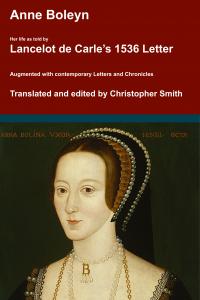
Anne Boleyn. Her Life as told by Lancelot de Carle's 1536 Letter.
In 1536, two weeks after the execution of Anne Boleyn, her brother George and four others, Lancelot du Carle, wrote an extraordinary letter that described Anne's life, and her trial and execution, to which he was a witness. This book presents a new translation of that letter, with additional material from other contemporary sources such as Letters, Hall's and Wriothesley's Chronicles, the pamphlets of Wynkyn the Worde, the Memorial of George Constantyne, the Portuguese Letter and the Baga de Secrets, all of which are provided in Appendices.
Available at Amazon in eBook and Paperback format.
The Diary of George Price Boyce 1851. 13th November 1851. After Clipstone Street spent the evening with Wells (age 22) at John (age 24) and Thomas Seddon's (age 30), 7 Percy Street; G. Rossetti (age 23), F. M. Brown (age 30) and G. Truefitt (age 27) were there.


On 13th November 1866 Admiral William Parker 1st Baronet (age 84) died. Monument in Lichfield Cathedral [Map]. His son William (age 42) succeeded 2nd Baronet Parker of Shenstone.
William Parker 2nd Baronet: On 14th August 1824 he was born to Admiral William Parker 1st Baronet and Frances Anne Biddulph. On 6th June 1885 William Parker 2nd Baronet and Jane Constance Biddulph were married. They were first cousins. On 23rd January 1902 William Parker 2nd Baronet died. His son William succeeded 3rd Baronet Parker of Shenstone.


On 13th November 1871 Charles Richard John Spencer-Churchill 9th Duke of Marlborough was born to George Charles Spencer-Churchill 8th Duke of Marlborough (age 27) and Albertha Frances Anne Hamilton Duchess of Marlborough (age 24) at Simla. He married (1) 6th November 1895 Consuelo Vanderbilt Duchess of Marlborough and had issue (2) 2nd January 1921 Gladys Marie Deacon Duchess of Marlborough.
On 13th November 1872 John Byam Liston Shaw was born in Madras aka Chennai, India. The son of John Shaw, registrar of the High Court at Madras, and his wife, Sophia Alicia Byam Gunthorpe. He married 1899 Evelyn Caroline Eunice Pyke-Nott.
On 13th November 1872 Margaret Sarah Carpenter nee Geddes (age 79) died.

After 13th November 1888. Church of St Michael and All Angels, Edenham [Map]. Monument to Clementina Drummond Willoughby 24th Baroness Willoughby of Eresby Baroness Aveland (deceased).
On 13th November 1893 Margaret Ida Montagu-Douglas-Scott was born to John Scott 7th Duke Buccleuch 9th Duke Queensberry (age 29) and Margaret Alice "Molly" Bridgeman Duchess Buccleuch Duchess Queensbury (age 21).
New York Times 13 Nov 1904. 13th November 1904. VAL PRINSEP (deceased), R. A., DEAD. Well-Known English Artist Was Born in India in 1838.
LONDON, Nov. 12.—Valantine Cameron Prinsep, R. A., better known as Val Prinsep, Professor of Painting to the Royal Academy, died yesterday from the effects of an operation.
It was thought in 1896 that Val Prinsep would be elected President of the Royal Academy, but Sir Edward Poynter was (age 68) the successful candidate.
Mr. Prinsep was born in India in 1838. but was educated in England, returning to the land of his birth in 1876 to paint what is perhaps his best-known work, the "Declaration of the Queen as Empress" at the famous Delhi Durbar. A pupil of Watts and Gleyre, Prinsep exhibited his first picture at the Academy in 1862, when he was twenty-four years old. He achieved rapid success and became an A. R. A. in and an R. A. in 1894. He was an author and playwright as well as a painter.
Mr. Prinsep married a daughter [Florence Leyland (age 45)] of the late F. R. Leyland, the patron of Whistler and Rossetti. When Mr. Leyland died there was a good deal of criticism of the Prinseps because the "Peacock Room" in his London house was not preserved where the public could see it. This work of Whistler, who was a fellow-pupil of Prinsep under Gleyre, has recently been bought by an American.



Chronicle of Walter of Guisborough
A canon regular of the Augustinian Guisborough Priory, Yorkshire, formerly known as The Chronicle of Walter of Hemingburgh, describes the period from 1066 to 1346. Before 1274 the Chronicle is based on other works. Thereafter, the Chronicle is original, and a remarkable source for the events of the time. This book provides a translation of the Chronicle from that date. The Latin source for our translation is the 1849 work edited by Hans Claude Hamilton. Hamilton, in his preface, says: 'In the present work we behold perhaps one of the finest samples of our early chronicles, both as regards the value of the events recorded, and the correctness with which they are detailed; Nor will the pleasing style of composition be lightly passed over by those capable of seeing reflected from it the tokens of a vigorous and cultivated mind, and a favourable specimen of the learning and taste of the age in which it was framed.'
Available at Amazon in eBook and Paperback format.
On 9th November 1911 Henry Hall Scott (age 77) died at Edinburgh. He was buried in Lesbury Churchyard [Map] on Monday, 13th November 1911. The coffin was conveyed from Hispburn to Lesbury on a draped lorry, and the burial service was conducted by the Reverend Canon Moore of Alnwick, and the Reverend G. Bray, of Lesbury.
Will of Sir Henry Hall Scott has been proved, the gross value of his estate being declared at £421,790. The testator makes the following charitable bequests:- To the poor of Lochearron £1,000, and to the poor of Glenelg and Arnisdale £1,000. Sir Henry also directed the payment of £50 to each of his shepherds and farm stewards in Northumberland who at his death has been eight years in his service: one year's wages to each of the maids who had been four years in his service: £50 each to his coachman and chauffeur, and various legacies to other employees. He also makes provision for the widows of old servants.
His will was questioned by his wife Dame Henrietta, the plaintiff, and the defendants were Adam Scott, George Henry Hall Scott (age 29), Janet May Hebeler and Margaret Christabel Scott. The point in question was the wording was 'The whole of my income' and whether the whole of the residue was divisible as income among the testator's children, or whether part of it ought to be capitalised. Mr Justice Joyce held that the children of the testator were entitled to receive the whole of the residue in equal shares.
Henrietta Gaukroger: she was born to George Gaukroger and Margaret Gibson. In or before 1873 Henry Hall Scott and she were married.
On 13th November 1950 Rowena Wall Duchess Somerset (age 89) died.
On 13th November 1312 King Edward III of England was born to King Edward II of England (age 28) and Isabella of France Queen Consort England (age 17) at Windsor Castle [Map]. He was christened on 17th November 1312 with Archbishop Walter Reynolds being one of his godfathers. Coefficient of inbreeding 2.17%. He married 24th January 1328 his second cousin Philippa of Hainaut Queen Consort England, daughter of William of Avesnes I Count Hainaut III Count Avesnes III Count Holland II Count Zeeland and Joan Valois Countess Zeeland Holland Avesnes and Hainaut, and had issue.
On 13th November 1493 William Wittelsbach IV Duke Bavaria was born to Albert Wittelsbach IV Duke Bavaria (age 45) and Kunigunde Habsburg Duchess Bavaria (age 28). He married 1522 his second cousin once removed Marie Jakobaea Baden Duchess Bavaria, daughter of Philip Baden 1st Margrave Baden and Elisabeth of the Palatinate, and had issue.
On 13th November 1504 Landgrave Philip I of Hesse was born to William II Landgrave of Hesse (age 35). He married 11th December 1523 his third cousin Christine of Saxony and had issue.
On 13th November 1615 Mary Carey was born to Henry Carey 1st Earl Dover (age 35) and Judith Pelham Countess Dover (age 25). She married in or before 1647 her second cousin Thomas Wharton and had issue.

On 13th November 1681 James Lee was born to Edward Lee 1st Earl Lichfield (age 18) and Charlotte Fitzroy Countess Lichfield (age 17). He a grandson of King Charles II of England Scotland and Ireland.
On 13th November 1693 Thomas Watson 1st Marquess Rockingham was born to Thomas Watson (age 28).
On 13th November 1697 William Manners was born to John Manners 2nd Duke Rutland (age 21) and Catherine Russell Duchess Rutland (age 21).
Anne Boleyn. Her Life as told by Lancelot de Carle's 1536 Letter.
In 1536, two weeks after the execution of Anne Boleyn, her brother George and four others, Lancelot du Carle, wrote an extraordinary letter that described Anne's life, and her trial and execution, to which he was a witness. This book presents a new translation of that letter, with additional material from other contemporary sources such as Letters, Hall's and Wriothesley's Chronicles, the pamphlets of Wynkyn the Worde, the Memorial of George Constantyne, the Portuguese Letter and the Baga de Secrets, all of which are provided in Appendices.
Available at Amazon in eBook and Paperback format.
On 13th November 1701 Louise Christine Lorraine was born to Leopold Duke of Lorraine (age 22) and Élisabeth Charlotte Bourbon Duchess Lorraine (age 25). She a great x 3 granddaughter of King James I of England and Ireland and VI of Scotland. She died aged less than one years old.
On 13th November 1717 George William Hanover was born to King George II of Great Britain and Ireland (age 34) and Caroline Hohenzollern Queen Consort England (age 34). He died aged less than one years old.
On 13th November 1718 John Montagu 4th Earl Sandwich was born to Edward Montagu Viscount Hinchingbrooke (age 26) and Elizabeth Popham Viscountess Hinchingbrooke (age 25). He married 14th March 1741 Dorothy Fane Countess Sandwich, daughter of Charles Fane 1st Viscount Fane and Mary Stanhope Viscountess Fane, and had issue.


On 13th November 1733 Richard Bagot aka Howard was born to Walter Wagstaffe Bagot 5th Baronet (age 31) and Barbara Legge Baroness Bagot (age 24). He married 25th February 1783 Frances Howard and had issue.

On 13th November 1757 George Capell Coningsbury 5th Earl Essex was born to William Anne Capell 4th Earl Essex (age 25) and Frances Hanbury Williams Countess Essex. He married 6th June 1786 Sarah Bazett Countess Essex.
On 13th November 1760 Washington Shirley 8th Earl Ferrers was born to Robert Shirley 6th Earl Ferrers (age 37) and Catherine Cotton Countess Ferrers (age 41). He married 24th July 1781 Frances Ward and had issue.
On 13th November 1771 Josias Henry Stracey 4th Baronet was born to Edward Stracey 1st Baronet (age 30).
On 13th November 1775 Richard Butler 1st Earl Glengall was born.
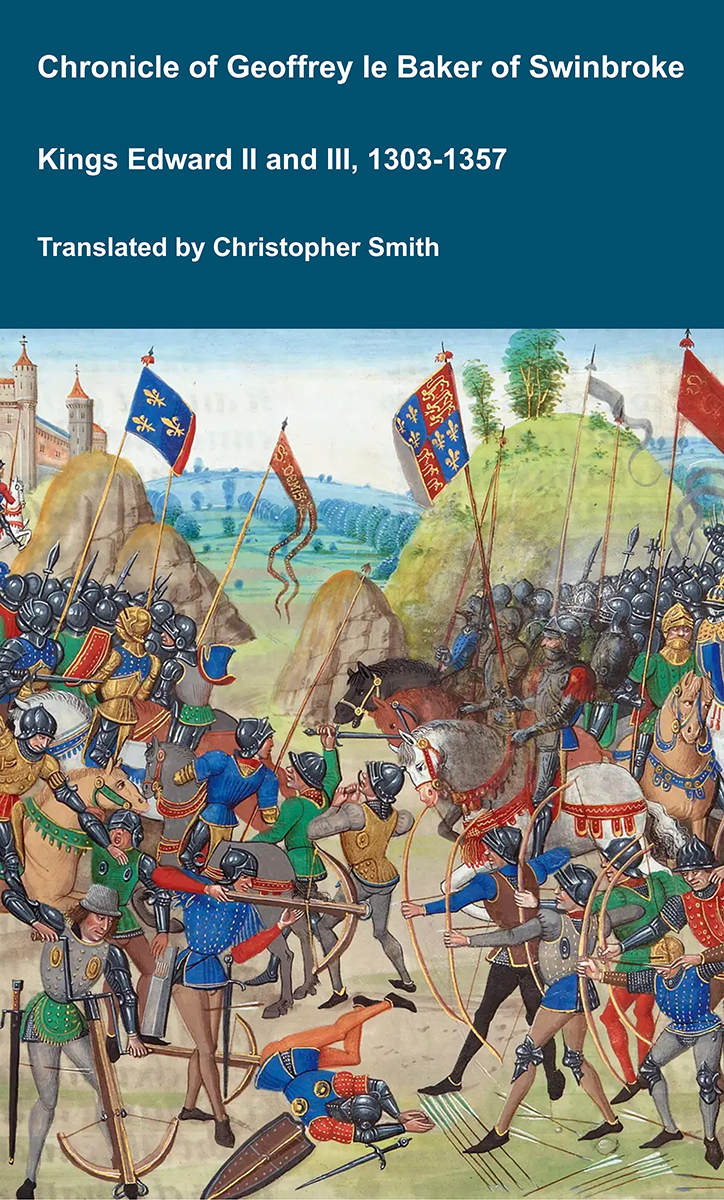
Chronicle of Geoffrey le Baker of Swinbroke
Baker was a secular clerk from Swinbroke, now Swinbrook, an Oxfordshire village two miles east of Burford. His Chronicle describes the events of the period 1303-1356: Gaveston, Bannockburn, Boroughbridge, the murder of King Edward II, the Scottish Wars, Sluys, Crécy, the Black Death, Winchelsea and Poitiers. To quote Herbert Bruce 'it possesses a vigorous and characteristic style, and its value for particular events between 1303 and 1356 has been recognised by its editor and by subsequent writers'. The book provides remarkable detail about the events it describes. Baker's text has been augmented with hundreds of notes, including extracts from other contemporary chronicles, such as the Annales Londonienses, Annales Paulini, Murimuth, Lanercost, Avesbury, Guisborough and Froissart to enrich the reader's understanding. The translation takes as its source the 'Chronicon Galfridi le Baker de Swynebroke' published in 1889, edited by Edward Maunde Thompson.
Available at Amazon in eBook and Paperback format.
On 13th November 1780 Elizabeth Howard Duchess Rutland was born to Frederick Howard 5th Earl Carlisle (age 32) and Margaret Caroline Leveson-Gower Countess Carlisle. She married 22nd April 1799 her fourth cousin John Henry Manners 5th Duke Rutland, son of Charles Manners 4th Duke Rutland and Mary Isabella Somerset Duchess Rutland, and had issue.
On 13th November 1785 Caroline Ponsonby aka Lamb was born to Frederick Ponsonby 3rd Earl Bessborough (age 27) and Henrietta Frances Spencer Countess Bessborough (age 24). She married 1805 William Lamb 2nd Viscount Melbourne, son of Penistone Lamb 1st Viscount Melbourne and Elizabeth Milbanke Viscountess Melbourne.


On 13th November 1794 William Leonard Addington 2nd Viscount Sidmouth was born to Henry Addington 1st Viscount Sidmouth (age 37).


On 13th November 1797 Jacob Astley 16th Baron Hastings was born to Jacob Astley 5th Baronet (age 41) and Hester Browne Lady Astley (age 29). He married 1819 Georgiana Carolina Dashwood Lady Astley, daughter of Henry Watkin Dashwood 3rd Baronet and Helen Graham, and had issue.


On 13th November 1802 William Owen Stanley was born to John Stanley 1st Baron Stanley Alderley (age 35) and Maria Josepha Holroyd Baroness Stanley Alderley. He married 1832 Ellin Williams.
On 13th November 1802 Edward John Stanley 2nd Baron Stanley and 1st Baron Eddisbury was born to John Stanley 1st Baron Stanley Alderley (age 35) and Maria Josepha Holroyd Baroness Stanley Alderley. He married 7th October 1826 Henrietta Maria Dillon Baroness Stanley Alderley and Eddisbury, daughter of Henry Augustus Dillon Lee 13th Viscount Dillon, and had issue.
On 13th November 1802 James Hay Langham 11th Baronet was born to James Langham 10th Baronet (age 26) and Elizabeth Burdett Lady Langham. He married 19th June 1828 Margaret Emma Kenyon.
On 13th November 1805 Eleanor Bridges was born to Brook William Bridges 4th Baronet (age 38) and Eleanor Foote (age 34). She married 10th April 1828 Reverend Henry Western Plumptre and had issue.
On 13th November 1806 Philip de Malpas Grey-Egerton 10th Baronet was born to Philip Egerton 9th Baronet (age 39) and Rebecca Du Pre Lady Egerton (age 26).
The Deeds of the Dukes of Normandy
The Gesta Normannorum Ducum [The Deeds of the Dukes of Normandy] is a landmark medieval chronicle tracing the rise and fall of the Norman dynasty from its early roots through the pivotal events surrounding the Norman Conquest of England. Originally penned in Latin by the monk William of Jumièges shortly before 1060 and later expanded at the behest of William the Conqueror, the work chronicles the deeds, politics, battles, and leadership of the Norman dukes, especially William’s own claim to the English throne. The narrative combines earlier historical sources with firsthand information and oral testimony to present an authoritative account of Normandy’s transformation from a Viking settlement into one of medieval Europe’s most powerful realms. William’s history emphasizes the legitimacy, military prowess, and governance of the Norman line, framing their expansion, including the conquest of England, as both divinely sanctioned and noble in purpose. Later chroniclers such as Orderic Vitalis and Robert of Torigni continued the history, extending the coverage into the 12th century, providing broader context on ducal rule and its impact. Today this classic work remains a foundational source for understanding Norman identity, medieval statesmanship, and the historical forces that reshaped England and Western Europe between 800AD and 1100AD.
Available at Amazon in eBook and Paperback format.
On 13th November 1811 Reverend William Henry Egerton was born to Philip Egerton 9th Baronet (age 44) and Rebecca Du Pre Lady Egerton (age 31).
On 13th November 1815 Charles Sackville-West 6th Earl De La Warr was born to George Sackville-West 5th Earl De La Warr (age 24) and Elizabeth Sackville Countess De La Warr (age 20).
On 13th November 1823 Gilbert East Gilbert East 2nd Baronet was born to East George Clayton-East 1st Baronet (age 29).
On 13th November 1837 Susan Harriet Innes-Kerr was born to James Innes-Kerr 6th Duke Roxburghe (age 21). She married 6th August 1857 James Grant-Suttie 6th Baronet and had issue.
On 13th November 1853 Frederick Gunning 6th Baronet was born to George Gunning 5th Baronet (age 25).
On 13th November 1856 Brooke Boothby 10th Baronet was born to Reverend Brooke William Boothby 9th Baronet (age 47) and Martha Serena Boothby. Coefficient of inbreeding 3.12%.
On 13th November 1860 Charles Chetwynd-Talbot 20th Earl of Shrewsbury 5th Earl Talbot was born to Charles Chetwynd-Talbot 19th Earl of Shrewsbury 4th Earl Talbot (age 30) and Anna Theresa Cockerell Countess Shrewsbury and Waterford (age 24). He married June 1882 Ellen Palmer Morewood Countess Shrewsbury Waterford Talbot and had issue.


On 13th November 1868 Grosvenor Hood 5th Viscount Hood was born to Francis Wheler Hood 4th Viscount Hood (age 30) and Edith Lydia Drummond Ward Viscountess Hood (age 20). He married 28th February 1911 Jane Primrose Stapleton-Cotton Viscountess Hood.
William of Worcester's Chronicle of England
William of Worcester, born around 1415, and died around 1482 was secretary to John Fastolf, the renowned soldier of the Hundred Years War, during which time he collected documents, letters, and wrote a record of events. Following their return to England in 1440 William was witness to major events. Twice in his chronicle he uses the first person: 1. when writing about the murder of Thomas, 7th Baron Scales, in 1460, he writes '… and I saw him lying naked in the cemetery near the porch of the church of St. Mary Overie in Southwark …' and 2. describing King Edward IV's entry into London in 1461 he writes '… proclaimed that all the people themselves were to recognize and acknowledge Edward as king. I was present and heard this, and immediately went down with them into the city'. William’s Chronicle is rich in detail. It is the source of much information about the Wars of the Roses, including the term 'Diabolical Marriage' to describe the marriage of Queen Elizabeth Woodville’s brother John’s marriage to Katherine, Dowager Duchess of Norfolk, he aged twenty, she sixty-five or more, and the story about a paper crown being placed in mockery on the severed head of Richard, 3rd Duke of York.
Available at Amazon in eBook and Paperback format.
On 13th November 1871 Charles Richard John Spencer-Churchill 9th Duke of Marlborough was born to George Charles Spencer-Churchill 8th Duke of Marlborough (age 27) and Albertha Frances Anne Hamilton Duchess of Marlborough (age 24) at Simla. He married (1) 6th November 1895 Consuelo Vanderbilt Duchess of Marlborough and had issue (2) 2nd January 1921 Gladys Marie Deacon Duchess of Marlborough.
On 13th November 1872 John Byam Liston Shaw was born in Madras aka Chennai, India. The son of John Shaw, registrar of the High Court at Madras, and his wife, Sophia Alicia Byam Gunthorpe. He married 1899 Evelyn Caroline Eunice Pyke-Nott.
On 13th November 1889 Wenefryde Agatha Scott 10th Countess of Dysart was born to Charles Norman Lindsay Tollemache Scott and Agnes Mary Manners Tollemache (age 34).

On 13th November 1890 Victor Alexander Herbert Huia Onslow was born to William Onslow 4th Earl Onslow (age 37) and Florence Coulston Gardner Countess Onslow (age 37). He married 3rd February 1919 Muriel Wheldale.
On 13th November 1892 Margaret Helen Beaumont Countess Fortescue was born to Wentworth Canning Blackett Beaumont 1st Viscount Allendale (age 31) and Alexandrina Louise Maud Vane-Tempest Viscountess Allendale (age 29). She married 8th February 1917 Hugh William Fortescue 5th Earl Fortescue, son of Hugh Fortescue 4th Earl Fortescue and Emily Ormsby-Gore Countess Fortescue, and had issue.
On 13th November 1893 Margaret Ida Montagu-Douglas-Scott was born to John Scott 7th Duke Buccleuch 9th Duke Queensberry (age 29) and Margaret Alice "Molly" Bridgeman Duchess Buccleuch Duchess Queensbury (age 21).

On 13th November 1894 Hugo Denison 4th Earl of Londesborough was born to William Henry Francis Denison 2nd Earl Londesborough (age 30) and Grace Adelaide Fane Countess Londesborough (age 34). He married 7th September 1935 Marigold Lubbock Countess Londesborough and had issue.

On 13th November 1901 Edward Sackville-West 5th Baron Sackville was born to Charles Sackville-West 4th Baron Sackville (age 31).
Chronicle of Walter of Guisborough
A canon regular of the Augustinian Guisborough Priory, Yorkshire, formerly known as The Chronicle of Walter of Hemingburgh, describes the period from 1066 to 1346. Before 1274 the Chronicle is based on other works. Thereafter, the Chronicle is original, and a remarkable source for the events of the time. This book provides a translation of the Chronicle from that date. The Latin source for our translation is the 1849 work edited by Hans Claude Hamilton. Hamilton, in his preface, says: 'In the present work we behold perhaps one of the finest samples of our early chronicles, both as regards the value of the events recorded, and the correctness with which they are detailed; Nor will the pleasing style of composition be lightly passed over by those capable of seeing reflected from it the tokens of a vigorous and cultivated mind, and a favourable specimen of the learning and taste of the age in which it was framed.'
Available at Amazon in eBook and Paperback format.
On 13th November 1948 Wentworth Beaumont 4th Viscount Allendale was born to Wentworth Beaumont 3rd Viscount Allendale (age 26).
On 13th November 1950 Charles Alexander Vaughan Paget 8th Marquess Anglesey was born to George Charles Henry Victor Paget 7th Marquess Anglesey (age 28).
On 13th November 1160 Louis VII King of the Franks (age 40) and Adèle Queen of the Franks were married a month or so after his second wife (deceased) had died in childbirth; Louis needed an heir. She the daughter of Theobald Blois II Count Champagne IV Count Blois and Matilda Carinthia Countess Champagne and Blois. He the son of Louis VI King of the Franks and Adelaide Savoy Queen Consort France. They were third cousin once removed. She a great granddaughter of King William "Conqueror" I of England.
On 13th November 1654 Edward Watson 2nd Baron Rockingham (age 24) and Anne Wentworth Baroness Rockingham (age 25) were married. She the daughter of Thomas Wentworth 1st Earl Strafford and Arabella Holles. They were fifth cousin once removed.
On 13th November 1797 Henry Hoghton 7th Baronet (age 29) and Susannah Brooke Lady Hoghton (age 35) were married. She by marriage Lady Hoghton of Hoghton Tower in Lancashire.
On 13th November 1860 Wilfrid Lawson 2nd Baronet (age 31) and Mary Pocklington Senhouse (age 20) were married. They had four boys and four girls.

On 13th November 1866 Richard Horner Paget 1st Baronet (age 34) and Caroline Isabel Surtees (age 18) were married.
On 13th November 1093 the Battle of Alnwick was fought at Alnwick, Northumberland [Map] between the forces of King Malcolm III of Scotland (age 62) and Robert de Mowbray 1st Earl Northumbria.
King Malcolm III of Scotland was killed at The Peth Alnwick [Map]. His son Duncan (age 33) succeeded II King Scotland. He died a year minus day later.
Malcolm's son Edward Dunkeld was killed.
Edward Dunkeld: he was born to King Malcolm III of Scotland and Margaret Wessex Queen Consort Scotland. On 16th November 1093 Margaret Wessex Queen Consort Scotland died three days after her husband King Malcolm III of Scotland and her son Edward Dunkeld were killed at the Battle of Alnwick.
On 13th November 1143 Fulk "Young" King Jerusalem (age 54) died in a hunting accident. His wife Melisende Queen of Jerusalem (age 38) continued to reign in her own right with their son Baldwin III King Jerusalem (age 13).
On 13th November 1175 Henry Capet Archbishop of Reims (age 54) died.
On 13th November 1239 Henry of Bar II Count of Bar died. His son Theobald (age 18) succeeded II Count Bar.
Chronicle of Abbot Ralph of Coggeshall
The Chronicle of Abbot Ralph of Coggeshall (Chronicon Anglicanum) is an indispensable medieval history that brings to life centuries of English and European affairs through the eyes of a learned Cistercian monk. Ralph of Coggeshall, abbot of the Abbey of Coggeshall in Essex in the early 13th century, continued and expanded his community’s chronicle, documenting events from the Norman Conquest of 1066 into the tumultuous reign of King Henry III. Blending eyewitness testimony, careful compilation, and the monastic commitment to record-keeping, this chronicle offers a rare narrative of political intrigue, royal power struggles, and social upheaval in England and beyond. Ralph’s work captures the reigns of pivotal figures such as Richard I and King John, providing invaluable insights into their characters, decisions, and the forces that shaped medieval rule. More than a simple annal, Chronicon Anglicanum conveys the texture of medieval life and governance, making it a rich source for scholars and readers fascinated by English history, monastic authorship, and the shaping of the medieval world.
Available at Amazon in eBook and Paperback format.
On 13th November 1299 Bishop Oliver Sutton (age 80) died at Nettleham.
On 13th November 1386 Thomas Beauchamp 11th Earl Warwick (age 73) died of plague. His son Thomas (age 48) succeeded 12th Earl Warwick. Margaret Ferrers Countess Warwick (age 39) by marriage Countess Warwick.
On 13th November 1396 John Devereux 2nd Baron Devereux (age 18) died. His sister Joan (age 17) succeeded 3rd Baroness Devereux.
On 13th November 1397 Anne Welles Countess Ormonde (age 37) died.
On 13th November 1432 Anne Valois Duchess of Bedford (age 28) died at the Hôtel de Bourbon, Paris. She was buried at the Couvent des Célestins. In 1847 bones and other remains, with a plaque bearing her name, were found during archeological exploration of the Couvent, were identified as being those of Anne. In 1853, these remains were re-buried in the grave of her grandfather, Philip the Bold, in Saint Bégnine cathedral in Dijon. Her husband John Lancaster 1st Duke Bedford (age 43) remarried Jacquetta of Luxemburg Duchess Bedford (age 17) six months later.
On 13th November 1440 Joan Beaufort Countess of Westmoreland (age 61) died at Howden. She was buried at Lincoln Cathedral [Map] next to her mother Katherine Swynford aka Roet Duchess Lancaster.
On 13th November 1507 George Lumley 2nd Baron Lumley (age 62) died. His grandson Richard (age 30) succeeded 3rd Baron Lumley.
On 13th November 1640 Nicholas Saundeson 2nd Viscount Castleton died. His son Nicholas (age 14) succeeded 3rd Viscount Castleton.
On 13th November 1695 William Byron 3rd Baron Byron (age 59) died. His son William (age 25) succeeded 4th Baron Byron of Rochdale in Lancashire.
On 13th November 1715 John Campbell 2nd Duke Argyll (age 35) commanded a british army against an army of Jacobites commanded by John Erskine 23rd Earl of Mar (age 40). The outcome of the battle was inconclusive.
John Lyon 5th Earl Strathmore and Kinghorne (age 19) was killed fighting for the Jacobites. His brother Charles (age 16) succeeded 6th Earl Strathmore and Kinghorne.
On 13th November 1726 Sophia Dorothea of Celle (age 60) died shortly before midnight. An autopsy revealed liver failure and gall bladder occlusion due to 60 gallstones. Her former husband King George I (age 66) died seven months later.
Chronicle of Abbot Ralph of Coggeshall
The Chronicle of Abbot Ralph of Coggeshall (Chronicon Anglicanum) is an indispensable medieval history that brings to life centuries of English and European affairs through the eyes of a learned Cistercian monk. Ralph of Coggeshall, abbot of the Abbey of Coggeshall in Essex in the early 13th century, continued and expanded his community’s chronicle, documenting events from the Norman Conquest of 1066 into the tumultuous reign of King Henry III. Blending eyewitness testimony, careful compilation, and the monastic commitment to record-keeping, this chronicle offers a rare narrative of political intrigue, royal power struggles, and social upheaval in England and beyond. Ralph’s work captures the reigns of pivotal figures such as Richard I and King John, providing invaluable insights into their characters, decisions, and the forces that shaped medieval rule. More than a simple annal, Chronicon Anglicanum conveys the texture of medieval life and governance, making it a rich source for scholars and readers fascinated by English history, monastic authorship, and the shaping of the medieval world.
Available at Amazon in eBook and Paperback format.
On 13th November 1733 Charlotte Herbert Viscountess Windsor (age 57) died at Reigate, Surrey [Map].

On 13th November 1760 James Dalrymple 3rd Earl of Stair (age 61) died. His brother William (age 61) succeeded 4th Earl of Stair.
On 13th November 1771 Elizabeth Chapman Countess Gainsborough (age 63) died.
On 13th November 1774 Robert Rochfort 1st Earl of Belvedere (age 66) died. His son George (age 36) succeeded 2nd Earl Belvedere, 2nd Viscount Belfield, 2nd Baron Belfield.

On 13th November 1778 John Douglas 3rd Baronet (age 70) died. His son William (age 48) succeeded 4th Baronet Kelhead.
On 13th November 1794 Frederick Christian Oldenburg I Duke Schleswig Holstein Sonderburg Augustenburg (age 73) died. His son Frederick (age 29) succeeded Christian II Duke Schleswig Holstein Sonderburg Augustenburg. Louise Auguste Oldenburg Duchess Schleswig Holstein Sonderburg Augustenburg (age 23) by marriage Duchess Schleswig Holstein Sonderburg Augustenburg.
On 13th November 1797 Reverend Mark Browne 9th Viscount Montagu (age 52) died. Viscount Montagu extinct.

On 13th November 1806 John Stewart 7th Earl Galloway (age 70) died. His son George (age 38) succeeded 8th Earl Galloway, 7th Baronet Stewart of Corsewall, 6th Baronet Stewart of Burray in Orkney. Jane Paget Countess Galloway (age 32) by marriage Countess Galloway.
On 13th November 1807 John Smith 1st Baronet (age 63) died. His son John (age 37) succeeded 2nd Baronet Smith of Sydling St Nicholas. Elizabeth Anne Marriot Lady Smith (age 40) by marriage Lady Smith of Sydling St Nicholas.
On 13th November 1828 Baldwin Leighton 6th Baronet (age 81) died. His son Baldwin (age 23) succeeded 7th Baronet Leighton of Wattlesborough.
On 13th November 1844 Gregory Eardley-Twisleton-Fiennes 8th or 14th Baron Saye and Sele (age 75) died. His son William (age 46) succeeded 9th or 15th Baron Saye and Sele.
Chronicle of Walter of Guisborough
A canon regular of the Augustinian Guisborough Priory, Yorkshire, formerly known as The Chronicle of Walter of Hemingburgh, describes the period from 1066 to 1346. Before 1274 the Chronicle is based on other works. Thereafter, the Chronicle is original, and a remarkable source for the events of the time. This book provides a translation of the Chronicle from that date. The Latin source for our translation is the 1849 work edited by Hans Claude Hamilton. Hamilton, in his preface, says: 'In the present work we behold perhaps one of the finest samples of our early chronicles, both as regards the value of the events recorded, and the correctness with which they are detailed; Nor will the pleasing style of composition be lightly passed over by those capable of seeing reflected from it the tokens of a vigorous and cultivated mind, and a favourable specimen of the learning and taste of the age in which it was framed.'
Available at Amazon in eBook and Paperback format.
On 13th November 1847 Hester Granville Countess Fortescue (age 81) died.
On 13th November 1849 William Etty (age 62) died.
On 13th November 1855 Richard Sutton 2nd Baronet (age 55) died. His son John (age 35) succeeded 3rd Baronet Sutton of Norwood Park in Nottinghamshire.
On 13th November 1864 Sarah Douglas Marchioness Queensbury died.
On 13th November 1866 Admiral William Parker 1st Baronet (age 84) died. Monument in Lichfield Cathedral [Map]. His son William (age 42) succeeded 2nd Baronet Parker of Shenstone.
William Parker 2nd Baronet: On 14th August 1824 he was born to Admiral William Parker 1st Baronet and Frances Anne Biddulph. On 6th June 1885 William Parker 2nd Baronet and Jane Constance Biddulph were married. They were first cousins. On 23rd January 1902 William Parker 2nd Baronet died. His son William succeeded 3rd Baronet Parker of Shenstone.
On 13th November 1872 Margaret Sarah Carpenter nee Geddes (age 79) died.
On 13th November 1888 Clementina Drummond Willoughby 24th Baroness Willoughby of Eresby Baroness Aveland (age 79) died. Her son Gilbert (age 58) succeeded 25th Baron Willoughby de Eresby. Evelyn Elizabeth Gordon Countess Ancaster (age 42) by marriage Baroness Willoughby de Eresby.

On 13th November 1904 Harriet Jacqueline Buller Lady Salusbury-Trelawny (age 83) died.
Chronicle of Abbot Ralph of Coggeshall
The Chronicle of Abbot Ralph of Coggeshall (Chronicon Anglicanum) is an indispensable medieval history that brings to life centuries of English and European affairs through the eyes of a learned Cistercian monk. Ralph of Coggeshall, abbot of the Abbey of Coggeshall in Essex in the early 13th century, continued and expanded his community’s chronicle, documenting events from the Norman Conquest of 1066 into the tumultuous reign of King Henry III. Blending eyewitness testimony, careful compilation, and the monastic commitment to record-keeping, this chronicle offers a rare narrative of political intrigue, royal power struggles, and social upheaval in England and beyond. Ralph’s work captures the reigns of pivotal figures such as Richard I and King John, providing invaluable insights into their characters, decisions, and the forces that shaped medieval rule. More than a simple annal, Chronicon Anglicanum conveys the texture of medieval life and governance, making it a rich source for scholars and readers fascinated by English history, monastic authorship, and the shaping of the medieval world.
Available at Amazon in eBook and Paperback format.
On 13th November 1918 Robert Grosvenor 2nd Baron Ebury (age 84) died. His son Robert (age 50) succeeded 3rd Baron Ebury.
On 13th November 1928 Dudley Stanhope 9th Earl of Harrington (age 69) died. His son Charles (age 41) succeeded 10th Earl Harrington, 10th Viscount Petersham, 10th Baron Harrington.
On 13th November 1931 Hugh Cholmondeley 3rd Baron Delamere (age 61) died. His son Thomas (age 31) succeeded 4th Baron Delamere of Vale Royal in Cheshire. Phyllis Anne Montagu-Douglas-Scott Baroness Delamere (age 27) by marriage Baroness Delamere of Vale Royal in Cheshire.
On 13th November 1939 Alexander Cecil Montgomery 5th Baronet (age 79) died. Baronet Montgomery of The Hall in County Donegal extinct.
On 13th November 1940 Captain John Ralph Starkey 1st Baronet (age 81) died. His son William (age 40) succeeded 2nd Baronet Starkey of Norwood Park in Nottinghamshire.
On 13th November 1942 John Edwards 3rd Baronet (age 53) died. His brother Charles (age 49) succeeded 4th Baronet Edwards of Pyenest in West Yorkshire.
On 13th November 1950 Rowena Wall Duchess Somerset (age 89) died.
On 13th November 1952 Henry Holmes Miller 9th Baronet (age 85) died. His son Ernest (age 55) succeeded 10th Baronet Miller of Chichester in Sussex.
Chronicle of Walter of Guisborough
A canon regular of the Augustinian Guisborough Priory, Yorkshire, formerly known as The Chronicle of Walter of Hemingburgh, describes the period from 1066 to 1346. Before 1274 the Chronicle is based on other works. Thereafter, the Chronicle is original, and a remarkable source for the events of the time. This book provides a translation of the Chronicle from that date. The Latin source for our translation is the 1849 work edited by Hans Claude Hamilton. Hamilton, in his preface, says: 'In the present work we behold perhaps one of the finest samples of our early chronicles, both as regards the value of the events recorded, and the correctness with which they are detailed; Nor will the pleasing style of composition be lightly passed over by those capable of seeing reflected from it the tokens of a vigorous and cultivated mind, and a favourable specimen of the learning and taste of the age in which it was framed.'
Available at Amazon in eBook and Paperback format.

On 13th November 1954 Frances Louisa Spencer-Churchill Lady Gresley (age 84) died.
On 13th November 1960 Hugh Douglas Blackett 8th Baronet (age 87) died. He was buried at Holy Trinity Church, Matfen. His son Charles (age 56) succeeded 9th Baronet Blackett of Newcastle in Northumberland.
On 13th November 1969 Edward Littleton 5th Baron Hatherton (age 69) died. His brother John (age 63) succeeded 6th Baron Hatherton.
On 13th November 1991 Francis George Blackwood 10th Baron Dufferin and Clandeboye (age 75) died. His son John (age 47) succeeded 11th Baron Dufferin and Claneboye of Ballyleidy and Killyleagh in County Down, 8th Baronet Blackwood of the Navy.
On 13th November 2012 Robert Shirley 13th Earl Ferrers (age 83) died. His son Robert (age 59) succeeded 14th Earl Ferrers, 20th Baronet Shirley of Staunton Harold in Leicestershire.